This episode is sponsored by PrayLatin.com. PrayLatin.com offers Latin prayer cards to learn and share prayers in the sacred language. Learn your basic prayers in Latin conveniently on the go. Practice your pronunciation with easy-to-follow English phonetic renderings of Latin words. PrayLatin.com offers prayer cards in various formats, including Latin-English rosary pamphlets with the traditional 15 mysteries. Shop for additional Latin resources like missal booklets, server response cards, and more. Visit PrayLatin.com today.
Among the quiet losses of the mid-twentieth-century calendar reforms was a feast that spoke not of triumph or spectacle, but of intimacy: the Apparition of St. Agnes, traditionally kept on January 28, one week after her principal feast. Its disappearance - among many others - with the Novus Ordo Calendar may seem inconsequential when measured against the sweeping changes, yet this secondary commemoration preserved something profoundly Catholic — the Church’s habit of remembering her martyrs not only in their death, but in their continuing presence among the living.
St. Agnes, virgin and martyr, belongs to the earliest stratum of Roman sanctity. Her cult predates the Peace of Constantine and is attested by St. Ambrose, St. Jerome, and Pope St. Damasus, whose epigrams adorned her tomb on the Via Nomentana. Her martyrdom, traditionally dated to the persecution of Diocletian, made her one of the most beloved saints of the Roman Church, invoked especially as a model of purity and fearless fidelity. The principal feast of St. Agnes on January 21 commemorated her martyrdom itself. The Apparition of St. Agnes, however, preserved a more tender memory — one rooted not in her death, but in her consolation of the living Church.
According to ancient Roman tradition, after her martyrdom St. Agnes appeared to her parents, who were praying at her tomb. She reassured them of her happiness in heaven and urged them not to grieve. This apparition, recorded in early hagiographical sources and echoed by St. Ambrose, expressed a deeply Catholic instinct: that the saints are not distant figures of the past, but living members of the Church triumphant who remain bound to us in charity. The Roman calendar enshrined this belief not abstractly, but liturgically, by granting a distinct feast to this moment of heavenly consolation.
The existence of a second feast for St. Agnes was not unusual in the traditional calendar. Many early martyrs were commemorated more than once — often on the day of martyrdom and again on the day of the translation of relics, a notable apparition, or another event that testified to their ongoing role in the life of the Church. Such duplications were not redundancies; they were expressions of a theology of presence. The Church did not remember her saints merely as historical figures, but as active intercessors whose lives continued beyond the grave.
The Mass and Office for the Apparition of St. Agnes reflected this gentle emphasis. While retaining the gravity appropriate to a virgin martyr, the texts subtly shifted the focus from suffering to glory. Agnes was praised not only for her steadfastness unto death, but for her nearness to Christ and her continuing concern for those still on pilgrimage. In this way, the feast harmonized beautifully with the liturgical season of late January — a time still within Christmastide in the older calendar, when the Church lingered on the mystery of the Incarnation and the destiny it opened for those who followed Christ faithfully.
The placement of the Apparition nearly one week after the martyrdom was itself significant. The Roman Rite often allowed time to pass between an event and its fuller contemplation. Just as octaves permitted the Church to dwell on great mysteries, secondary feasts allowed the faithful to return to a saint with deeper affection, no longer absorbed by the drama of martyrdom, but attentive to its fruits. In the case of St. Agnes, the Apparition feast taught that martyrdom does not end in loss, but in joy — not only for the saint, but for the Church who loves her.
This theology stands in sharp contrast to modern tendencies to compress memory into a single annual observance. The older calendar assumed that human hearts need repetition, return, and revisitation. Love does not content itself with one glance. The Apparition of St. Agnes gave the Church permission to linger — to mourn, to rejoice, and then to rejoice again with a more peaceful joy. It embodied what might be called the pastoral patience of tradition, which formed souls gradually rather than efficiently.
The rationale offered for the suppression of this feast was simplification. Yet in practice, simplification often meant the loss of precisely those feasts that conveyed the Church’s emotional and relational memory. What was removed was not excess, but texture. The Church’s calendar became leaner, but also less personal.
It is worth noting that the Church did not deny the historical basis of the apparition, nor did she condemn its devotion. The feast was simply removed from the universal calendar. As with many such suppressions, the faithful were left poorer, not because the doctrine changed, but because the pedagogy disappeared. The calendar no longer taught, year after year, that saints console as well as inspire, that they remain close to those who grieve, and that heaven bends tenderly toward earth.
The loss of the Apparition of St. Agnes also signals a shift in how martyrdom itself is perceived. In the traditional liturgical imagination, martyrdom was never merely heroic endurance. It was nuptial, victorious, and fruitful. The virgin martyr who appears to her parents after death embodies the Church’s conviction that sacrifice borne in love yields peace, not trauma. In removing such commemorations, the modern calendar unintentionally narrowed the meaning of martyrdom to a historical event rather than a living reality.
Yet, as with so many lost feasts, the memory of the Apparition of St. Agnes has not vanished entirely. It survives in older missals, in the writings of the Fathers, and in the devotion of those who continue to pray with the Church’s older rhythms. Families may still recall her story on January 21. And the faithful, by learning what was once celebrated, may recover something essential: the sense that the saints are not only examples, but companions. And above all, Catholics who attend the Traditional Latin Mass will hear the second collect on January 28 in honor of St. Agnes.
In an age marked by isolation and forgetfulness, the Apparition of St. Agnes speaks with surprising relevance. It reminds us that holiness is relational, that death does not sever charity, and that the Church on earth is never truly alone. The young martyr who once stood fearlessly before her persecutors still stands near those who call upon her — a quiet witness to the Church’s enduring belief in the communion of saints.
The removal of her apparition feast did not erase that belief, but it muted one of its most tender expressions. To recover this lost commemoration is not to indulge nostalgia, but to reclaim a vision of the Church as a family that remembers, revisits, and loves her saints with patience and depth. In doing so, we recover not only a feast, but a way of remembering that forms the heart as well as the mind.
St. Agnes, ora pro nobis!
This is Episode 139 of the A Catholic Life Podcast. In today’s episode I discuss Catholic etiquette in our churches and in the presence of the Blessed Sacrament. Restoring Catholic etiquette is not nostalgia – it is an act of fidelity. It protects faith, fosters devotion, and honors Christ in the Blessed Sacrament. Every genuflection, silence, kneeling posture, and modest garment declares a single truth: God is here. If Catholics recover reverent behavior, belief will follow. And if belief is restored, etiquette will no longer need to be enforced—it will arise naturally from faith. Some resources on this topic:
- How to Make a Proper Genuflection
- Catholic Modesty in Dress Explained
- Laypeople Should Not Touch Sacred Vessels
- Respect for the Altar as a Symbol of Christ
I would like to thank MyCatholicWill.com for sponsoring this episode. My Catholic Will provides simple and effective tools to pass on the heritage of faith and positively impact future generations of Catholics across the country. Ensure your legacy and family are protected while also leaving behind a way to support the Church. Use discount code catholiclife20 to save on your order.
Subscribe to the podcast on Buzzsprout, Apple Podcasts, Spotify, I-tunes, and many other platforms!
“For from the rising of the sun even to the going down, My name is great among the Gentiles, and in every place there is sacrifice, and there is offered to My name a clean oblation.” (Mal. 1:11)
There are certain truths Catholics can confess with the lips for years, and yet never fully live with the heart. The Holy Sacrifice of the Mass is one of them.
We know (at least in theory) that the Mass is the supreme act of worship on earth; that it is the unbloody renewal of Calvary; that it is the true and propitiatory Sacrifice of Christ; that in the Eucharist Our Lord is present—Body, Blood, Soul, and Divinity—under the sacramental veils. And yet, as the modern world grows louder and more frenzied, it becomes easier—even for practicing Catholics—to treat the Mass as one more “event” on the weekly schedule: attended, fulfilled, and quickly forgotten.
This is precisely why the old Catholic writers remain so valuable. They do not merely repeat doctrine; they press it into the imagination and the conscience until we are forced to ask: Do I actually believe what I say I believe?
Among those writers stands Father Michael Mueller (1825–1899), a Redemptorist priest and prolific nineteenth-century author whose works aimed to explain and defend Catholic doctrine clearly, firmly, and devotionally. His book on the Mass—first published in 1874 and recently re-typeset and edited—was warmly commended in its own day and deserves renewed attention in ours. Mueller writes with the conviction of a priest who believes the Mass is not merely the heart of Catholic life, but the remedy for Catholic tepidity.
What follows is a single, consolidated meditation drawn from earlier installments published through Catholic Family News now adapted for publication here - focusing on three foundational themes: (1) the hidden treasure of the Mass, (2) the restless promise God fulfills in the Eucharist, and (3) the Eucharist as the greatest Gift God could give. In this revised form, I will rely less on extended quotations and more on explanation and application, while still allowing Mueller’s voice to appear at key moments.
I. The Mass as a Treasure Hiding in Plain Sight
Mueller begins with an image that is as haunting as it is fitting: the story of St. Alexius, who returned to his father’s house in poverty and obscurity, living unknown in the very place where he belonged. The parallel is obvious—and uncomfortable. Christ returns to His house as well. He comes to His Church. He comes to His altars. And He often remains “unknown,” not because He is absent, but because He is hidden.
This is not poetic exaggeration. Catholic doctrine compels us to admit something truly staggering: that the God Who created the galaxies makes Himself present—really present—under appearances so humble that even priests can grow accustomed to them, and even faithful laity can drift into routine.
Mueller captures this with striking force:
“God is a more hidden God in the Eucharist than anywhere else. His greatness lies concealed under the littleness of a host…”
The tragedy is not that Christ is hidden. The tragedy is that we can stand before the hidden God and remain unmoved.
Here we should pause and examine ourselves with honesty. How many times have we asked God for “clarity,” for “guidance,” for “something tangible”—while ignoring the greatest tangible gift He has already given? How many of us long to have lived at the time of Christ, to have seen Him, heard Him, watched Him work miracles—while giving little attention to the truth that the same Christ is present in our churches?
Indeed, the visible presence of Our Lord in Galilee was localized. But His Eucharistic presence is universal. He is not in one town only. He is present on countless altars across the world.
This is why the Mass is not merely a devotional practice among many; it is the central mystery around which Catholic life must be rebuilt.
II. Our Hearts Are Restless on Earth
Mueller’s first full chapter turns toward a reality every honest soul recognizes: nothing created fully satisfies the human heart.
We can fill life with work, travel, entertainment, projects, ambitions—even noble ones—and still discover, at surprising moments, that something remains missing. The world can distract us, but it cannot complete us.
This is not merely psychology; it is theology. The human soul is made for God. And therefore it bears within itself a kind of holy dissatisfaction until it rests in Him.
To illustrate this, Mueller draws upon the figure of King Solomon, who possessed what many modern men think would “solve” their unhappiness: wealth, beauty, achievement, pleasure, acclaim. And yet, after tasting it all, Solomon confesses it is “vanity and vexation of mind” (cf. Eccles. 2).
Solomon’s lesson is not that created goods are evil; it is that created goods are insufficient. They are not proportioned to the hunger of the immortal soul.
And this is where the Catholic Faith reveals something wondrous: God does not merely command the soul to seek Him from afar. He comes near. He comes so near that He gives Himself as Food.
The baptized Catholic in the state of grace already possesses an unimaginable dignity: God dwells in the soul through sanctifying grace. But the promise does not end there. God does not merely dwell in us spiritually; He gives Himself to us sacramentally in Holy Communion.
Thus the Eucharist is not an optional “extra” in the spiritual life. It is the divine answer to the heart’s deepest need.
III. The Wonderful Gift of God
If the Eucharist fulfills the soul’s hunger, we must ask the obvious question: What is this Gift, exactly? What happens at Mass? What do we receive in Holy Communion?
The answer is as simple as it is terrifying: we receive God.
At the consecration, the substance of bread and wine is changed into the Body and Blood of Christ. The appearances remain, but the reality is utterly transformed. This is not metaphor. This is not mere symbolism. This is the miracle of Transubstantiation, taught by the Church with unwavering clarity.
The Council of Trent condemned the idea that bread and wine remain alongside Christ’s Body and Blood. The Church’s teaching is not “both-and” (bread and Christ), but “change”: bread and wine become Christ.
And because Christ is not divided, whoever receives under one species receives the whole Christ—Body, Blood, Soul, and Divinity. This is why the Church has always recognized that Communion under one kind is full Communion.
Here Mueller’s emphasis is especially important for our time: Christ is present in the Eucharist in a manner that is real and substantial, but sacramental and hidden—beyond the senses. This demands faith. It humbles the intellect. It tests whether we will accept the word of Christ and the teaching of His Church more than the testimony of our eyes.
And it brings us to a profoundly consoling truth: Our Lord did not leave us orphans.
At the Last Supper He promised He would remain with His own. The Eucharist is the fulfillment of that promise—not as a vague “spiritual memory,” but as a literal, objective, sacramental Presence.
The Mass, therefore, is not merely something we “attend.” It is something we are permitted to enter. The Upper Room is not locked in the past. Calvary is not distant. The gift of the Eucharist gathers all the mysteries of Christ into one living reality offered to the Father—and offered to us.
IV. A Word on the Passover and the “Completion” of the Sacrifice
One of the most illuminating ways to deepen Eucharistic faith is to see the Mass against its biblical backdrop: the Passover.
The Passover is not a random meal. It is liturgy. It is sacrifice. It is covenant. And Christ deliberately chose that setting to institute the New Covenant in His Blood.
Many have noted the traditional structure of the Passover meal, including the cups of wine associated with God’s promises to Israel. Without trying to force every detail, the overarching point is clear: the Last Supper is oriented toward Calvary, and Calvary completes what was begun in the Upper Room. The Mass holds this unity together—not by reenacting it as theater, but by making present the one Sacrifice in sacramental form.
This is why Catholics do not speak of “another sacrifice,” as though Christ must die again. Rather, the Mass is the same Sacrifice made present in an unbloody manner, applying its fruits to souls across time and space.
V. Practical Application: How to Live as Though We Believe This
All of this doctrine must land somewhere concrete—or it remains only an idea.
If the Mass is truly the Clean Oblation offered from sunrise to sunset; if the Eucharist is truly Christ Himself; if Holy Communion is truly God given to man—then the only reasonable response is reverence, gratitude, and conversion.
Here are a few direct, practical conclusions that follow:
- We should desire the Mass more than we desire entertainment. Not because joy is evil, but because the Mass is heaven touching earth.
- We should prepare for Mass and for Communion deliberately. Silence, recollection, custody of the eyes, and a sincere effort to reject venial sin are not “scruples”—they are sanity.
- We should fight distraction as a matter of love. If Christ is on the altar, then distraction is not merely “unfortunate”—it is a wound in friendship.
- We should recover Eucharistic devotion outside of Mass. Visits to the Blessed Sacrament, time in adoration, and thanksgiving after Communion are not pious ornaments; they are how Catholic life becomes coherent.
- We should let the Eucharist reorder our priorities. The Mass is not something fit into life. Life is meant to be built around the Mass.
Conclusion
The modern world constantly tells us to look elsewhere: for fulfillment, for meaning, for rescue, for peace. The Mass quietly tells us the truth: Christ is here. The Sacrifice is here. The Gift is here. The Promise is here.
And so the question is not whether God has drawn near. The question is whether we will draw near to Him—with faith, with humility, and with a heart awakened. Let us conclude with the prayer I have used throughout this series, uniting ourselves to the Holy Sacrifice offered throughout the world:
Eternal Father, we humbly offer You our poor presence and that of the whole of humanity from the beginning to the end of the world at all the Masses that ever have or ever will be prayed. We offer You all the pains, sufferings, prayers, sacrifices, joys and relaxations of our lives, in union with those of our dear Lord Jesus here on earth. May the Most Precious Blood of Christ, all His blood and wounds and agony save us, through the Sorrowful and Immaculate Heart of Mary. Amen!
This is Episode 138 of the A Catholic Life Podcast. In today’s episode I discuss the immemorial practice of Wednesday and Friday abstinence and how we can restore Wednesday abstinence to our lives while also keeping Friday abstinence which remains obligatory. See the following resources for more information:
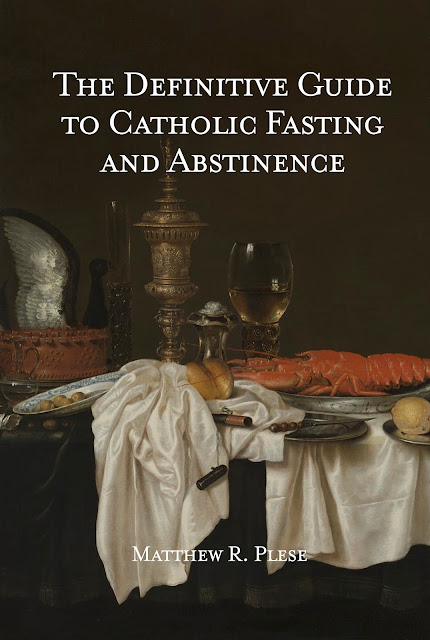
- The Definitive Guide to Catholic Fasting and Abstinence
- The Fellowship of St. Nicholas
- 2026 Fasting and Abstinence Opportunity Calendar
I would like to thank CatechismClass.com for sponsoring this episode. CatechismClass.com, the leader in online Catholic catechism classes, has everything from online K-12 programs, RCIA classes, adult continuing education, marriage preparation, baptism preparation, confirmation prep, quince prep classes, catechist training courses, and more. It is never too late to study the fullness of the Catholic Faith, and CatechismClass.com is the gold standard in authentic Catholic formation online. Their Catholic Liturgical Year Course for a one-time cost of $129.95 includes lessons throughout the entire liturgical year on many forgotten days.
Subscribe to the podcast on Buzzsprout, Apple Podcasts, Spotify, I-tunes, and many other platforms!
This episode is sponsored by PrayLatin.com. PrayLatin.com offers Latin prayer cards to learn and share prayers in the sacred language. Learn your basic prayers in Latin conveniently on the go. Practice your pronunciation with easy-to-follow English phonetic renderings of Latin words. PrayLatin.com offers prayer cards in various formats, including Latin-English rosary pamphlets with the traditional 15 mysteries. Shop for additional Latin resources like missal booklets, server response cards, and more. Visit PrayLatin.com today.
Disclosure of Material Connection: Some of the links on this blog are “affiliate links.” This means if you click on the link and purchase the item, I will receive an affiliate commission. As an Amazon Associate, for instance, I earn a small commission from qualifying purchases made by those who click on the Amazon affiliate links included on this website. I am disclosing this in accordance with the Federal Trade Commission’s 16 CFR, Part 255: “Guides Concerning the Use of Endorsements and Testimonials in Advertising.”
Support A Catholic Life. Your Patronage Helps Keep Us Updated and Online!
Become a Patron! Support Me On Patreon And Get Access to Exclusive Content, Free Catholic Books, Access to Discounts, and Much More!