Sunday, July 19, 2026
A Catholic Life Podcast: Episode 160

This is Episode 160 of the A Catholic Life Podcast. In today’s episode I discuss liturgical customs for the Feast of St. Mary Magdalene as well dispelling the modern controversies around her.

This episode is sponsored by PrayLatin.comPrayLatin.com offers Latin prayer cards to learn and share prayers in the sacred language. Learn your basic prayers in Latin conveniently on the go. Practice your pronunciation with easy-to-follow English phonetic renderings of Latin words. PrayLatin.com offers prayer cards in various formats, including Latin-English rosary pamphlets with the traditional 15 mysteries. Shop for additional Latin resources like missal booklets, server response cards, and more. Visit PrayLatin.com today.

Subscribe to the podcast on Buzzsprout, Apple Podcasts, Spotify, I-tunes, and many other platforms!

Read more >>
Thursday, July 16, 2026
The Brown Scapular and the Sabbatine Privilege Explained

Among the most widespread sacramentals in Catholic history is the Brown Scapular of Our Lady of Mount Carmel. For centuries, saints, popes, clergy, and laity alike have worn it as a sign of consecration to the Blessed Virgin Mary and confidence in her maternal protection. Yet in modern times, confusion surrounds both the scapular itself and the so-called Sabbatine Privilege. Some dismiss these traditions as superstition, while others speak of them in overly simplistic ways detached from their proper theological context.

To understand this devotion correctly, Catholics must return to its historical origins, papal endorsements, and the spiritual obligations tied to wearing the scapular.

The Origins of the Brown Scapular

The Brown Scapular originates from the Carmelite Order, which traces its spiritual roots to hermits living on Mount Carmel in the Holy Land. These hermits had a special devotion to the Blessed Virgin Mary and eventually became known as the Order of Our Lady of Mount Carmel.

According to longstanding Carmelite tradition, on July 16, 1251, the Blessed Virgin Mary appeared to St. Simon Stock, an English Carmelite superior. She presented him with the scapular and said: “Receive, my beloved son, this habit of thy order; this shall be to thee and to all Carmelites a privilege, that anyone dying in this habit shall not suffer eternal fire.”

This promise has been understood by the Church not as a guarantee of salvation irrespective of one’s moral life, but as a sign of Mary’s special protection for those who faithfully wear the scapular and strive to live in God’s grace.

What the Scapular Is

The Brown Scapular is a sacramental—an object blessed by the Church that disposes the faithful to receive grace and inspires holiness. It is not a magical object. Merely wearing the scapular while living in mortal sin does not guarantee salvation. Rather, the scapular represents:

  • Consecration to Our Lady 
  • Confidence in her protection 
  • A commitment to live chastely according to one’s state in life 
  • Fidelity to prayer and the Catholic Faith 

Pope Pius XII emphasized this clearly: “Let it be to them a sign of consecration to the most Sacred Heart of the Immaculate Virgin.”

The scapular should be worn with devotion, not superstition.

The Sabbatine Privilege

The most debated aspect of scapular devotion is the Sabbatine Privilege, which refers to the belief that Our Lady will assist certain scapular wearers by delivering them from Purgatory—traditionally on the first Saturday after death.

This tradition is connected to a document known as the Sabbatine Bull, attributed to Pope John XXII in the fourteenth century. According to this tradition, Our Lady promised special assistance to those who:

  • Faithfully wore the Brown Scapular 
  • Observed chastity according to their state in life 
  • Prayed the Little Office of the Blessed Virgin Mary (or another approved substitute) 

Historical debates exist regarding the authenticity of the original bull. Even so, the Church has repeatedly permitted belief in the substance of the privilege.

In 1613, the Holy Office allowed Carmelites to preach that the faithful may piously believe that Our Lady assists scapular wearers after death, particularly through her prayers and merits.

The Church did not define the exact timing or mechanism of this assistance, but she permitted confidence in Mary’s special intercession.

What the Church Actually Approves

The Church approves enrollment in the Brown Scapular and strongly encourages Marian devotion. Catholics may legitimately believe that Our Lady offers special assistance to those devoted to her through this sacramental.

However, the Church rejects exaggerated claims that treat the scapular as an automatic escape from Hell or Purgatory regardless of how one lives. Like all sacramentals, the scapular requires proper disposition. St. Alphonsus Liguori summarized this beautifully when he wrote that Marian devotions benefit those who sincerely strive to avoid sin and remain faithful to God.

The Scapular and Final Perseverance

One of the greatest benefits associated with the Brown Scapular is confidence in obtaining the grace of final perseverance. This aligns with the Church’s longstanding teaching that devotion to Our Lady helps souls remain faithful at the hour of death. It is no coincidence that Catholics pray daily: “Holy Mary, Mother of God, pray for us sinners, now and at the hour of our death.”

The scapular serves as a constant reminder to live in a state of grace and remain close to Our Lady.

Why This Devotion Matters Today

In a world marked by impurity, indifference, and spiritual confusion, the Brown Scapular remains deeply relevant. It reminds Catholics that:

  • They belong to Mary 
  • Purity matters 
  • Purgatory is real 
  • Death can come unexpectedly 
  • Final perseverance must be prayed for 

The scapular is a quiet but powerful witness of Marian devotion.

Conclusion

The Brown Scapular and the Sabbatine Privilege should be understood with both faith and balance. They are not superstitions, nor are they guarantees detached from repentance and holiness. Rather, they are profound reminders of Our Lady’s maternal care for her children.

Those who faithfully wear the scapular, strive to remain in grace, and cultivate genuine devotion to Mary may confidently entrust themselves to her protection—both in life and at the hour of death. And that confidence has comforted Catholic souls for centuries.

Read more >>
Wednesday, July 15, 2026
Hallowed Be Thy Name: The First Petition of the Lord’s Prayer

This is quoted with permission from The Roman Catechism Explained for the Modern World published by Our Lady of Victory Press

The first petition of the Lord’s Prayer begins with praise, adoration, and holy reverence for the most adorable Name of God: “Hallowed be Thy Name.” In these few words, Our Lord teaches us the proper order of prayer. Before we ask for our daily bread, before we ask for forgiveness, before we ask to be delivered from temptation and evil, we first ask that God Himself be honored, praised, and glorified.

This is not accidental. The Our Father was given to us by Christ Himself, the true Author of all perfect prayer. And in placing the honor of God first, He shows us that the glory of God must be nearer to our hearts than all earthly goods, all personal desires, and even all our own needs.

The Roman Catechism, also known as the Catechism of the Council of Trent, explains this order beautifully:

“What we are to ask of God and in what order, the Master and Lord of all has Himself taught and commanded. For prayer is the ambassador and interpreter of our thoughts and desires; and consequently, we pray well and properly when the order of our petitions follows the order in which the things sought are desirable.”

The Catechism continues by reminding us that true charity directs the whole soul to God, Who alone is the supreme Good. Since all good things come from Him, we must love Him above all things. And if we truly love Him above all things, then His honor and glory must come before every created good.

For this reason, Our Lord placed the petition concerning God’s glory at the head of the Our Father. Before asking anything for ourselves, we first ask that God’s Name be sanctified, honored, and made known.

The Catechism of St. Pius X says the same with admirable simplicity:

“We first of all ask that the Name of God may be sanctified, because the glory of God should be nearer our hearts than all other goods and interests.”

This is a lesson urgently needed in our own time. Modern man is trained to put himself first. Even many Catholics have been influenced by a spirit of self-centered religion in which prayer becomes primarily a means of obtaining comfort, help, or earthly success. But Our Lord teaches otherwise. Prayer begins not with man, but with God.

Can We Add Anything to God’s Glory?

At first, one may ask: how can God’s Name be “hallowed” by us? God is infinitely perfect. He is the Creator, Redeemer, and Sanctifier. He possesses all perfection in Himself. He does not need our praise. Nothing can be added to His divine nature.

This truth belongs to what theology calls the aseity of God: God exists in and of Himself. He depends on nothing. He receives no increase from creation. He is not made greater by our prayers, nor diminished by our neglect.

And yet, this does not make prayers of adoration useless. Quite the contrary. The Roman Catechism carefully explains that when we pray for God’s Name to be sanctified, we are not asking that anything be added to God intrinsically, as though His divine nature could increase. Rather, we pray for His external glory to be manifested more fully among men:

“We must remember that the things we ask of God on God’s own account are extrinsic and concern His exterior glory.”

Thus, when we say “Hallowed be Thy Name,” we pray that God may be better known, more reverently adored, more faithfully obeyed, and more widely loved throughout the world. We pray that His Kingdom may be extended, that souls may submit to His holy will, and that His Church may be recognized as the one ark of salvation.

St. Augustine expressed the same truth in his letter to Proba:

“When we say: Hallowed be Thy Name, we are reminding ourselves to desire that His Name, which in fact is always holy, should also be considered holy among men. I mean that it should not be held in contempt. But this is a help for men, not for God.”

God’s Name is holy whether men honor it or not. But men are saved by honoring Him, and they are lost by despising Him.

The Five Sanctifications of God’s Name

The Roman Catechism identifies five principal ways in which we pray for God’s Name to be sanctified:

  1. That the faithful may glorify Him.

  2. That unbelievers may be converted.

  3. That sinners may repent.

  4. That God may be thanked for His favors.

  5. That the Church may be recognized by all.

These five intentions reveal the great depth contained in this first petition of the Lord’s Prayer.

That the Faithful May Glorify God

First, we pray that the faithful may glorify God. Those united in “one Lord, one faith, one baptism” must worship Him not only with the lips, but with the heart, the soul, the mind, and the body.

The Roman Catechism teaches:

“We pray that our minds, our souls and our lips may be so devoted to the honor and worship of God as to glorify Him with all veneration both interior and exterior.”

This is a reminder that Catholic worship is not merely internal. The honor due to God must be rendered both inwardly and outwardly. We glorify Him by faith, hope, and charity; by reverent prayer; by assisting devoutly at the Holy Sacrifice of the Mass; by bending the knee before the Blessed Sacrament; by making the Sign of the Cross with attention; by keeping Sunday holy; by avoiding blasphemy, irreverence, and careless speech.

To pray “Hallowed be Thy Name” while living irreverently is a contradiction. If we ask that God’s Name be honored, we must begin by honoring it ourselves.

The Catechism of St. Pius X states:

“In the First Petition, Hallowed be Thy Name, we ask that God may be known, loved, honored and served by the whole world and by ourselves in particular.”

That last phrase is essential: by ourselves in particular. The sanctification of God’s Name begins not in some abstract world, but in our own souls.

That Unbelievers May Be Converted

Second, we pray that unbelievers may come to the knowledge of the true God. This intention is largely forgotten today, when religious indifferentism has convinced many that all religions are more or less equal paths to God.

But this is not the Catholic Faith.

Our Lord commanded the Apostles to teach all nations, baptizing them in the Name of the Father, and of the Son, and of the Holy Ghost. The Church has always prayed for the conversion of those outside the Faith, because she knows that salvation comes through Christ and through the Church He founded.

The Roman Catechism teaches that in this petition we pray:

“That all nations may come to know, worship, and reverence God; that all without a single exception may embrace the Christian religion.”

This is not harshness. It is charity. To desire the conversion of unbelievers is to desire their eternal salvation. It is to desire that they come to know Him Who is Truth itself.

The Catechism of St. Pius X makes the same point directly:

“We intend to beg that infidels may come to the knowledge of the Lord God.”

When we pray the Our Father thoughtfully, we are therefore praying for missionary work, for conversions, for the spread of the Gospel, and for the triumph of the true Faith over every falsehood.

That Sinners May Repent

Third, we pray that sinners may be converted. Mortal sin is not a light matter. A soul that dies in mortal sin is lost forever. Our Lord wept over Jerusalem because its inhabitants rejected the hour of visitation. The thought of souls dying apart from God should likewise move us to prayer, sacrifice, and reparation.

The Catechism of St. Pius X explains that in the first petition we pray:

“That sinners may repent, and that the just may persevere in well-doing.”

This includes not only public sinners and notorious enemies of the Church, but also our family members, our friends, our neighbors, and ourselves. Every Catholic must pray daily for final perseverance. No one is saved by accident. No one should presume upon grace.

To say “Hallowed be Thy Name” is to ask that God’s Name no longer be profaned by sin, sacrilege, blasphemy, impurity, unbelief, or lukewarmness. It is to ask that those far from God may return to Him before death.

That God May Be Thanked for His Favors

Fourth, this petition reminds us to thank God for all His blessings, both spiritual and temporal. Every good thing comes from Him. Life, health, food, family, peace, grace, the Sacraments, the Faith, the Church, and every opportunity for repentance are all gifts from the Father of lights.

The Roman Catechism says:

“Every best gift and every perfect gift coming from the Father of lights is conferred on us by Him.”

Even natural blessings come from God. The light of the sun, the fruits of the earth, the order of creation, the peace preserved by just rulers, and the ordinary means of human life are all signs of His goodness.

To pray “Hallowed be Thy Name” is therefore to reject ingratitude. It is to acknowledge God as the source of every blessing. It is to live with the profound awareness that we have nothing good which we have not received.

A Catholic who prays well must also give thanks well.

That the Church May Be Recognized by All

Fifth, and most especially, we pray that the Church may be recognized by all as the true Church of Christ.

This point is perhaps the most neglected in our age. The modern world praises religious liberty and indifferentism in such a way that many Catholics have forgotten the necessity of the Catholic Faith for salvation. Yet the Roman Catechism speaks plainly:

“What we most particularly ask in this Petition is that all may acknowledge and revere the spouse of Jesus Christ, our most holy mother the Church.”

The Catechism continues by teaching that in the Church alone are found the Sacraments of salvation and sanctification. She is the spouse of Christ, the mother of the faithful, and the divinely established ark outside of which there is no ordinary means of salvation.

The Roman Catechism then cites the words of St. Peter:

“There is no other name under heaven given to men whereby we must be saved.”

This truth is not opposed to charity. It is the foundation of charity. If the Catholic Church is the true Church founded by Christ, then to desire that all men recognize and enter her is an act of love.

Thus, every time we pray “Hallowed be Thy Name,” we pray for the exaltation of the Catholic Church, the conversion of those outside her visible unity, the return of heretics and schismatics, and the perseverance of the faithful.

Living So That God’s Name Is Honored

The Roman Catechism does not allow this petition to remain merely theoretical. If we ask that God’s Name be sanctified, we must live in such a way that His Name is not profaned by us.

It warns:

“It is the duty of a good son not only to pray to God his Father in words, but also to endeavor by his conduct and actions to promote the sanctification of the divine name.”

This is a serious warning. Catholics can cause great harm when their lives contradict the Faith they profess. The Apostle says: “The name of God through you is blasphemed among the Gentiles.” A careless Catholic, a dishonest Catholic, an impure Catholic, a cruel Catholic, or a hypocritical Catholic gives scandal and provides enemies of the Church with an excuse to despise the Faith.

We must be uncompromising in doctrine, but also exemplary in charity. We must defend the truth without becoming harsh, vain, or self-righteous. We must practice the Faith not only when seen by others, but in the hidden duties of daily life.

Our Lord Himself commands:

“Let your light so shine before men, that they may see your good works and glorify your Father who is in heaven.”

The sanctification of God’s Name is promoted not only by sermons, books, and apologetics, but by holy lives. A faithful Catholic family, a reverent priest, a modest young person, a patient sufferer, a just employer, a prayerful mother, a diligent father, and a repentant sinner all give glory to God.

Padre Pio once said:

“Holiness means loving our neighbor as our self for love of God… Holiness means living humbly, being disinterested, prudent, just, patient, kind, chaste, meek, diligent, carrying out one’s duties for no other reason than that of pleasing God and receiving from Him alone the reward one deserves.”

To truly pray “Hallowed be Thy Name,” then, we must desire holiness. We must not merely say the words. We must live them.

Conclusion

It is all too easy to pray the Our Father hastily, scarcely considering the meaning of the words given to us by Our Savior Himself. Yet every petition contains immense wisdom. The first petition, “Hallowed be Thy Name,” teaches us the entire order of the spiritual life: God first, His glory first, His Church first, His will first.

When we pray these words, we ask that the faithful may glorify Him, unbelievers may be converted, sinners may repent, God may be thanked for His favors, and the Catholic Church may be recognized by all.

Let us therefore pray the Our Father more slowly, more reverently, and with greater attention. And let us live in such a way that God’s Name is honored by our words, our actions, our families, and our whole manner of life.

May the adorable Name of God be known, loved, honored, and served throughout the world. And may all those separated from the true Faith be brought into the unity of the one Church founded by Jesus Christ, so that together we may glorify the Father who is in heaven.


Read more >>
Sunday, July 12, 2026
A Catholic Life Podcast: Episode 159

This is Episode 159 of the A Catholic Life Podcast. In today’s episode I discuss the life and lessons of St. John Fisher and the Indissolubility of a Valid Marriage. 

This episode of A Catholic Life is sponsored by the Sanctifica app — your go-to tool for living the richness of the liturgical year. From feast days and saints to traditional devotions, the rosary, and even now even with the Divine Office and an interactive map to find Traditional Latin Mass locations — Sanctifica pulls it all together in one simple, beautiful app. It’s liturgical tradition made accessible, right at your fingertips. For me, it’s been a real game-changer: quick access to novenas and the Office, gentle reminders for feast days, and countless treasures I might have otherwise missed. If you’ve been wanting to bring more order and depth into your daily spiritual life, Sanctifica makes it easy. Download it for free today on the App Store or Google Play. It’s a powerful companion for anyone striving to truly live a Catholic life.

Read more >>
Sunday, June 28, 2026
A Catholic Life Podcast: Episode 158

This is Episode 158 of the A Catholic Life Podcast. In today’s episode I discuss customs and traditions surrounding the Feast of Ss. Peter and Paul which we celebrate on June 29

This episode is sponsored by PrayLatin.comPrayLatin.com offers Latin prayer cards to learn and share prayers in the sacred language. Learn your basic prayers in Latin conveniently on the go. Practice your pronunciation with easy-to-follow English phonetic renderings of Latin words. PrayLatin.com offers prayer cards in various formats, including Latin-English rosary pamphlets with the traditional 15 mysteries. Shop for additional Latin resources like missal booklets, server response cards, and more. Visit PrayLatin.com today.

Subscribe to the podcast on Buzzsprout, Apple Podcasts, Spotify, I-tunes, and many other platforms!

Read more >>
Sunday, June 21, 2026
A Catholic Life Podcast: Episode 157

This is Episode 157 of the A Catholic Life Podcast. In today’s episode I discuss devotion to St. John the Baptist and liturgical customs surrounding his feastdays.

This episode of A Catholic Life is sponsored by the Sanctifica app — your go-to tool for living the richness of the liturgical year. From feast days and saints to traditional devotions, the rosary, and even now even with the Divine Office and an interactive map to find Traditional Latin Mass locations — Sanctifica pulls it all together in one simple, beautiful app. It’s liturgical tradition made accessible, right at your fingertips. For me, it’s been a real game-changer: quick access to novenas and the Office, gentle reminders for feast days, and countless treasures I might have otherwise missed. If you’ve been wanting to bring more order and depth into your daily spiritual life, Sanctifica makes it easy. Download it for free today on the App Store or Google Play. It’s a powerful companion for anyone striving to truly live a Catholic life.

Read more >>
Wednesday, June 10, 2026
The Mass and the Paschal Mystery: Calvary and the Risen Christ Made Present

“For from the rising of the sun even to the going down, My name is great among the Gentiles, and in every place there is sacrifice, and there is offered to My name a clean oblation.” (Mal. 1:11)

This article continues the meditations begun in The Mass as God’s Wonderful Promise and Gift. Over the course of these reflections, we have considered the Mass as the clean oblation foretold by the prophets, the Eucharist as the hidden God among us, and the altar as the place where Christ’s merits are applied to souls. Here we come to the summit: the Mass as the living renewal of the Paschal Mystery—our Lord’s Passion, Death, and Resurrection—made present sacramentally for the salvation of the world.

These meditations are drawn from and inspired by Father Michael Mueller (1825–1899), a Redemptorist priest and prolific nineteenth-century author whose writings aimed to explain Catholic doctrine clearly and devotionally. In adapting this material for A Catholic Life, I rely far less on extended quotations and far more on explanation and application, while still allowing Mueller’s voice to appear at key moments. (Any direct quotation appears as a block quote for easier footnoting.)

I. The Mass Is Calvary—In the Strong Catholic Sense

Modern minds often stumble over Catholic language about the Mass as “Calvary.” They hear it as though Catholics are saying Christ is sacrificed again, or that the Cross was somehow incomplete. But the Church’s teaching is neither of these. Christ died once. His sacrifice is perfect. He “dieth now no more.” Yet the Church insists—with unwavering clarity—that the Holy Sacrifice of the Mass is the same sacrifice as Calvary, made present in an unbloody manner, offered sacramentally on the altar, and applied to souls across time.

The reason for this is both simple and immense: the Victim is the same. The Priest is the same. The oblation is the same. Only the manner differs: bloody on Calvary, unbloody on the altar. This is not an invention of later centuries. It is the logic of the Last Supper itself, and the perennial teaching of the Church.

“He wished the all-redeeming sacrifice of Mount Calvary to be offered daily until the end of the world… that… on every Catholic altar… His precious blood should mystically flow, His all-sufficient expiation should be renewed…”

If this is true—and it is—then attending Mass is not a bare act of religious obligation. It is standing before the sacrificial offering by which the world was redeemed. It is being present where the Lamb is offered. It is approaching the altar where the infinite merits of Christ are applied to sinners who repent and believe.

II. The Passion Is Not a Distant Scene

In reflecting on the Passion, Father Mueller does something wise and necessary: he does not merely state that the Mass is Calvary. He first insists that we remember what Calvary really was. Most Catholics can name the “stations,” but relatively few pause long enough to let the Passion disturb their comfort, pierce their conscience, and awaken compunction. We move quickly from mystery to mystery, and in doing so we become hardened to what should make us tremble.

Mueller lingers—painfully—on Gethsemane, the binding, the blows, the mockery, the scourging, the crowning with thorns, the carrying of the Cross, the nailing, the raising of the Cross, and the slow death. His purpose is not to overwhelm the reader with gore. His purpose is to awaken the soul to the seriousness of sin and the magnitude of divine love. A man who meditates on the Passion sincerely will find it difficult to remain casual about mortal sin, and difficult to remain lukewarm at Mass.

For many of us, the most fruitful application is simple: bring one scene of the Passion deliberately into the Mass. At the Offertory, unite your will to Christ’s offering in Gethsemane: “Not my will, but Thine be done.” At the Consecration, remember the nailing to the Cross and confess interiorly: “This is for me.” At Communion, place yourself beneath the Cross with Our Lady and ask for true contrition.

III. The Double Consecration Preaches Death

One of the most overlooked catechisms in the traditional Mass is its own structure. The separate consecration of the Body and the Blood is not an arbitrary detail. It signifies, in a sacramental mode, the separation of Blood from Body—death itself. This is why Catholics have always recognized that the Mass is not merely a “meal.” It is a sacrifice. Its very form teaches this.

At the same time, the Church teaches (and Catholics should know) that Christ is whole and entire under either species. The faithful do not need to receive from the chalice in order to receive “more Jesus.” Whoever receives even a portion of the Host receives the whole Christ—Body, Blood, Soul, and Divinity. This is not a modern opinion; it is Catholic doctrine, rooted in the truth that Christ is not divided.

Therefore, the double consecration is not about dividing Christ; it is about signifying His death, and showing that the sacrifice is truly present on the altar under sacramental veils.

IV. The Sacrifice on the Altar Pleads for Us

One of the most consoling truths in Mueller’s chapters is this: at every Mass, Christ is not only present as Victim, but present as Intercessor. The Lamb is shown to the Father; the sacrifice is offered; and the merits of the Passion are applied. Even when the Canon is silent, the reality is not silent. Christ’s sacrifice speaks.

Mueller emphasizes that while Christ cannot suffer again in Himself—being immortal and impassible—yet, as regards the effects for us, it is “as if” He bled and died again, because the fruits of His sufferings are renewed and applied personally to the soul.

“His sufferings are not renewed in themselves; but in their fruits they are renewed for us and applied to each soul separately and individually.”

This is where Catholics often fall short: we believe (abstractly) that the Mass is powerful, but we do not approach it with the dispositions that allow its fruits to penetrate deeply—humility, contrition, renunciation of sin, and a sincere desire to be changed.

V. The Saints Teach Us How to Assist at Mass

It is often said that if we truly understood the Mass, we would die of love. The saints did not always die of it—but many wept. Their tears were not theatrical. They were the natural reaction of souls who saw, by faith, what was before them.

The saints teach us that to assist at Mass is not to be a spectator but a participant. The faithful must unite themselves to the offering. They must bring their sins, their sufferings, their petitions, their gratitude, and their whole life to the altar, and place them within Christ’s oblation. This is why the Mass is not only something “the priest does.” It is something the whole Church does, though in different modes: the priest sacramentally offers; the faithful spiritually unite and offer themselves with the Victim.

If we attend Mass without interior offering, we remain at the surface. If we attend Mass with true interior offering, the sacrifice begins to transform us—slowly, steadily, deeply.

VI. The Resurrection Is Also Commemorated in the Mass

It is possible to speak so insistently of Calvary that one forgets the full Paschal Mystery. Mueller insists that the Mass is not only the commemoration of the Passion and Death, but also of the Resurrection—because the Victim on the altar is not a dead Christ, but the living Christ, glorious and risen, who nevertheless “deigns to be immolated” sacramentally.

This is why the liturgy itself contains a powerful sign: the commingling, when a portion of the Host is placed into the chalice, signifying the reunion of Body and Blood—the mystery of the Resurrection. The Church’s alleluias in Paschal time, her joy, her confidence, her tenderness toward the wounds of Christ—all reflect the reality that the sacrifice is offered by a living Victim who has conquered death.

For the faithful, the practical lesson is this: belief in the Resurrection is not merely historical assent. It demands conversion. It demands that the Christian put off the old man and put on the new. And this conversion is nourished most powerfully where the Risen Christ is truly present: at Mass.

VII. The Risen Christ Still Strengthens Faith

Mueller also recounts post-Resurrection “consolations” granted through the Mass—miracles and healings that confirm that the Risen Lord has not abandoned His flock. The point is not to build faith on spectacle, but to recognize a consoling truth: Christ still works, still heals, still strengthens, and still draws souls to Himself.

At times, God permits extraordinary events so that the faithful may be awakened and unbelief rebuked. At other times, He gives no visible sign, but pours out invisible graces—often far greater than bodily healing: repentance, perseverance, forgiveness of sins, strength to endure trials, and the quiet sanctification of souls.

In this sense, the Mass is always miraculous—even when nothing “happens” outwardly. Bread and wine become God. The sacrifice of Calvary is made present. The merits of redemption are applied. Heaven and earth are united. The angels adore. And the soul, if it has faith, receives what the world cannot give.

VIII. Practical Application: How to Live the Paschal Mystery at Mass

  • At the Offertory, make a real offering. Place your sins, your labors, your sufferings, and your petitions on the altar with Christ.
  • At the Consecration, adore in silence. If distractions come, return to one sentence: “My Lord and my God.”
  • Before Communion, renew contrition. The Eucharist is not routine; it is the Holy of Holies. If you are not disposed, go to Confession.
  • After Communion, give thanks. The saints lingered because they believed. A hurried thanksgiving reveals a hurried faith.
  • Carry the Resurrection into your week. If you “have risen with Christ,” seek the things that are above. Let Mass reshape your habits and your moral life.

Conclusion

The Holy Sacrifice of the Mass is not merely a commemoration of Christ in the weak modern sense of “remembering.” It is the living sacramental renewal and application of the Paschal Mystery: Christ’s Passion and Death made present as sacrifice, and Christ’s Resurrection made present as the life and glory of the Victim who conquers sin and death.

If we truly grasped this, the Mass would not be one appointment among many. It would be the center of our week, the anchor of our hope, the furnace of our conversion, and the daily answer to our sins and sorrows. The world would grow dim. Heaven would grow near. And our lives would begin to bear the marks of one who has been at the altar.

Let us conclude with the same prayer used throughout these meditations, uniting ourselves to the Holy Sacrifice offered throughout the world:

Eternal Father, we humbly offer You our poor presence and that of the whole of humanity from the beginning to the end of the world at all the Masses that ever have or ever will be prayed. We offer You all the pains, sufferings, prayers, sacrifices, joys and relaxations of our lives, in union with those of our dear Lord Jesus here on earth. May the Most Precious Blood of Christ, all His blood and wounds and agony save us, through the Sorrowful and Immaculate Heart of Mary. Amen!

Read more >>
Sunday, June 7, 2026
A Catholic Life Podcast: Episode 156

This is Episode 156 of the A Catholic Life Podcast. In today’s episode I discuss the authority of uncanonized saints such as blesseds and venerables. What authority do these holy men and women have even though they have not yet been canonized?

I would like to thank CatechismClass.com for sponsoring this episode.  CatechismClass.com, the leader in online Catholic catechism classes, has everything from online K-12 programs, RCIA classes, adult continuing education, marriage preparation, baptism preparation, confirmation prep, quince prep classes, catechist training courses, and more. It is never too late to study the fullness of the Catholic Faith, and CatechismClass.com is the gold standard in authentic Catholic formation online. Check out their All Access Passes and lock in a lifetime of learning for you and your family!

Read more >>
Sunday, May 31, 2026
A Catholic Life Podcast: Episode 155

This is Episode 155 of the A Catholic Life Podcast. In today’s episode I discuss why worship is not optional but rather is a moral duty required by the virtue of justice.

This episode is sponsored by PrayLatin.comPrayLatin.com offers Latin prayer cards to learn and share prayers in the sacred language. Learn your basic prayers in Latin conveniently on the go. Practice your pronunciation with easy-to-follow English phonetic renderings of Latin words. PrayLatin.com offers prayer cards in various formats, including Latin-English rosary pamphlets with the traditional 15 mysteries. Shop for additional Latin resources like missal booklets, server response cards, and more. Visit PrayLatin.com today.

Subscribe to the podcast on Buzzsprout, Apple Podcasts, Spotify, I-tunes, and many other platforms!

Read more >>
Sunday, May 17, 2026
A Catholic Life Podcast: Episode 154

This is Episode 154 of the A Catholic Life Podcast. In today’s episode I discuss Predestination and Free Will. What is the actual understanding of this? Is Predestination taught in Catholicism and if so, how is it radically different from protestant, Calvinist views?

I would like to thank CatechismClass.com for sponsoring this episode.  CatechismClass.com, the leader in online Catholic catechism classes, has everything from online K-12 programs, RCIA classes, adult continuing education, marriage preparation, baptism preparation, confirmation prep, quince prep classes, catechist training courses, and more. It is never too late to study the fullness of the Catholic Faith, and CatechismClass.com is the gold standard in authentic Catholic formation online. Their Catholic Liturgical Year Course for a one-time cost of $129.95 includes lessons throughout the entire liturgical year on many forgotten days.

Read more >>
Sunday, May 10, 2026
A Catholic Life Podcast: Episode 153

This is Episode 153 of the A Catholic Life Podcast. In today’s episode I discuss the Theology of Rogation Days and Sacred Processions. This liturgical year (2026), the Minor Rogation Days are this week on May 11, 12, and 13.

This episode is sponsored by PrayLatin.comPrayLatin.com offers Latin prayer cards to learn and share prayers in the sacred language. Learn your basic prayers in Latin conveniently on the go. Practice your pronunciation with easy-to-follow English phonetic renderings of Latin words. PrayLatin.com offers prayer cards in various formats, including Latin-English rosary pamphlets with the traditional 15 mysteries. Shop for additional Latin resources like missal booklets, server response cards, and more. Visit PrayLatin.com today.

Subscribe to the podcast on Buzzsprout, Apple Podcasts, Spotify, I-tunes, and many other platforms!

Read more >>
Thursday, May 7, 2026
The Mass as a Renewal of the Life of Christ: From the Incarnation to His Wondrous Works

“For from the rising of the sun even to the going down, My name is great among the Gentiles, and in every place there is sacrifice, and there is offered to My name a clean oblation.” (Mal. 1:11)

This article continues the meditations begun in The Mass as God’s Wonderful Promise and Gift. There, we considered the Mass as the clean oblation foretold by the prophets and the Eucharist as God’s astonishing nearness to man. Here we turn to a truth that can deepen the way we assist at Mass: the Holy Sacrifice renews and makes present—not only the Passion—but the mysteries of our Lord’s life in their saving power.

These reflections are drawn from and inspired by Father Michael Mueller (1825–1899), a Redemptorist priest and prolific nineteenth-century author whose works aimed to explain and defend Catholic doctrine clearly, firmly, and devotionally. In adapting these meditations for A Catholic Life, I use far fewer extended quotations and rely more on explanation and application, while still allowing Mueller’s voice to appear at key moments. (Any direct quotation is placed in a block quote for easier footnoting.)

I. The Altar and Nazareth

One of the greatest temptations in Catholic life is to imagine that we would have believed more strongly if only we could have lived when Christ walked the earth—if only we could have seen Him in Bethlehem, heard Him in Nazareth, or followed Him through Galilee. And yet the Church teaches something far more consoling: in the Holy Eucharist and in the Sacrifice of the Mass, Christ has not left His Church. He is truly with us. He renews His saving mysteries in our presence, applying their fruits to our souls.

Mueller begins his meditation on these mysteries by drawing us into the home of Nazareth and the moment when history turned in silence: the Annunciation. He invites us to picture Our Lady at prayer, the angelic message, and the Virgin’s humble consent—the moment when the Word was made flesh.

“The Blessed Virgin… bowed to the divine decree and said: ‘Fiat mihi secundum verbum tuum’ – ‘Be it done to me according to thy word.’”

This moment is not merely “beautiful.” It is the hinge of redemption: God becomes man. And Mueller presses the awe of it upon us—because if we do not tremble at the Incarnation, we will never understand the humility of the Eucharist.

II. The Incarnation and the Consecration

Mueller’s most helpful contribution here is the bridge he builds between the mystery of the Incarnation and the mystery of the altar. In the Incarnation, the Son of God conceals His divinity in human nature. In the Mass, He conceals both divinity and humanity under the sacramental species. The same omnipotence that united God to man in the womb of Mary changes bread and wine into the Body and Blood of Christ at the consecration.

For this reason, the altar is not merely a “place of remembrance.” It is the place where the eternal God draws near again—hidden, humble, and real. Mueller puts it starkly: before consecration there is bread and wine; afterward there is bread and wine no longer, but Christ Himself, the very Body born of Mary and now reigning in glory.

“But suddenly… the priest utters the divine, life-giving words of consecration; and that which was bread and wine is bread and wine no longer, but the true Body and Blood of our Lord Himself.”

This is why the Mass should never be casual. If we are not interiorly recollected at the consecration, the failure is not in the liturgy. It is in us.

III. Christ in the Womb, and Christ Hidden in the Host

Mueller then turns from the moment of the Incarnation to the hidden life in the womb of Mary. Here his meditation becomes both doctrinal and penitential. Our Lord, even as an unborn child, is not unconscious or unaware in the way modern sentimentality imagines. The Church’s tradition insists upon the profound interior offering of Christ from the first instant of His earthly life. Mueller emphasizes that from the beginning our Lord offered Himself to the Father and accepted the whole work of redemption.

Whether one follows every detail of Mueller’s imagery or not, the core lesson is unmistakable: our Lord’s self-offering is not limited to Calvary. His entire life is sacrificial in spirit—an interior “Yes” to the Father on behalf of fallen man.

Mueller then makes an arresting comparison: Christ hid Himself in the womb; Christ hides Himself on the altar. In the womb, He was truly present, truly living, and yet unseen by the world. In the Eucharist, He is truly present, truly living, and yet hidden under the sacramental veil. This parallel helps the faithful understand the “logic” of God’s humility: God does not overwhelm; He condescends. He invites faith.

IV. Bethlehem and the Daily “Birth” of Christ at the Altar

From Nazareth and the womb, Mueller proceeds to Bethlehem. Here his meditation becomes more explicitly pastoral: if devout souls are inflamed at the thought of Christ’s birth in a stable, what should we feel when the same Christ becomes present on our altars every day?

In a phrase that is at once poetic and doctrinal, Mueller dares to describe the consecration as a kind of “birth” of Christ at the altar—not a literal repetition of Bethlehem, of course, but a real sacramental coming of Christ among us. He notes that the Church’s liturgical language on Christmas proclaims the Lord’s birth with a sense of “now,” precisely because Christ is not locked in the past: He is among us.

“There our Savior is born every day in the hands of the priest, by the words of consecration. The Church is His birthplace, the altar is His crib.”

This is a hard truth for modern Catholics: if we truly believed this, we would not wander casually at the consecration. We would not treat the church as a place of chatter. We would not approach Communion as routine. We would kneel with awe—because the God of Bethlehem is here.

V. Nazareth: The Hidden Life and the School of Virtue

Mueller does not linger only on scenes. He draws practical conclusions. After reflecting on the mysteries, he insists that the Christian life is not simply “believing” but becoming conformed to Christ—especially in virtue. This is where his meditation on Nazareth becomes an examination of conscience for modern Catholics.

Our Lord spent the vast majority of His earthly life in hiddenness: obedience, labor, humility, patience, quiet fidelity. The Gospels summarize decades with a simple statement: He was subject to Mary and Joseph. Mueller paints the scene vividly—Christ working, serving, obeying, living like a poor man, performing lowly tasks with perfect love and interior sacrifice.

This matters because the Mass is not merely a place to “feel spiritual.” It is a place where Christ renews His saving mysteries to transform us. If we assist at Mass faithfully, we should come away more humble, more obedient, more patient, more detached from sin and vanity. In other words, the “Nazareth” of Christ should begin to appear in our own life.

VI. God’s Wondrous Works and the Greater Miracle of the Mass

Mueller closes these meditations by returning to a broader theme: the wondrous works of God. He insists that two wonders stand pre-eminent in all history: the Incarnation and the institution of the Holy Sacrifice of the Mass. The first unites God to man in one divine Person. The second keeps the same God-Man near us, making present the sacrifice and applying its merits throughout the world.

At this point, Mueller also gives a helpful catechetical reminder: the “prodigies” of the Mass are not only the occasional miracles that capture attention. The prodigy is the Mass itself—transubstantiation, the Real Presence, the sustaining of the sacramental species, Christ whole and entire under each particle, and the unbloody sacrifice offered to the Father. These are not decorations; they are the heart of Catholic reality.

And if that is true, then a genuine Eucharistic renewal is not mainly a matter of new programs. It is a matter of restored faith and restored reverence. We must recover the Catholic instinct to adore what God has placed before us.

VII. Practical Application

  • At the consecration, recollect yourself as though you were at Nazareth and Bethlehem and Calvary at once. Christ is truly present, and His mysteries are renewed in their saving power.
  • Make the Creed’s “Et incarnatus est” a deliberate act of worship. Whenever the liturgy gives you the chance to kneel in honor of the Incarnation, do it with intention and gratitude.
  • Let Nazareth judge your week. Ask: am I learning obedience, humility, patience, and quiet fidelity—or do I leave Mass unchanged?
  • Do not treat Holy Communion as routine. If Christ hides Himself in the Host, it is to invite faith, reverence, and love—not carelessness.

Conclusion

The mysteries of Christ’s life are not merely past events to be admired from afar. In the Holy Sacrifice of the Mass, the same Christ is truly present, renewing and applying the fruits of His Incarnation, hidden life, and saving works to our souls. The world slept through the Incarnation; many sleep through the consecration. The remedy is not novelty. The remedy is faith—faith that becomes reverence, and reverence that becomes conversion.

Let us conclude with the same prayer used throughout these meditations, uniting ourselves to the Holy Sacrifice offered throughout the world:

Eternal Father, we humbly offer You our poor presence and that of the whole of humanity from the beginning to the end of the world at all the Masses that ever have or ever will be prayed. We offer You all the pains, sufferings, prayers, sacrifices, joys and relaxations of our lives, in union with those of our dear Lord Jesus here on earth. May the Most Precious Blood of Christ, all His blood and wounds and agony save us, through the Sorrowful and Immaculate Heart of Mary. Amen!

Read more >>
Sunday, May 3, 2026
A Catholic Life Podcast: Episode 152

This is Episode 152 of the A Catholic Life Podcast. In today’s episode I discuss the difference between dogma and theological opinion. This is a topic few Catholics have ever heard explained but the distinction is quite important. This topic builds upon whether the ordinary Magisterium can err.

I would like to thank CatechismClass.com for sponsoring this episode.  CatechismClass.com, the leader in online Catholic catechism classes, has everything from online K-12 programs, RCIA classes, adult continuing education, marriage preparation, baptism preparation, confirmation prep, quince prep classes, catechist training courses, and more. It is never too late to study the fullness of the Catholic Faith, and CatechismClass.com is the gold standard in authentic Catholic formation online. Their Catholic Liturgical Year Course for a one-time cost of $129.95 includes lessons throughout the entire liturgical year on many forgotten days.

Read more >>
Sunday, April 26, 2026
A Catholic Life Podcast: Episode 151

This is Episode 151 of the A Catholic Life Podcast. In today’s episode I discuss Our Lady’s role at the Particular Judgment. The Particular Judgment is separate from the General Judgment at the end of the world. Let us also prepare for the great customs for May, the month of Mary.

This episode is sponsored by PrayLatin.comPrayLatin.com offers Latin prayer cards to learn and share prayers in the sacred language. Learn your basic prayers in Latin conveniently on the go. Practice your pronunciation with easy-to-follow English phonetic renderings of Latin words. PrayLatin.com offers prayer cards in various formats, including Latin-English rosary pamphlets with the traditional 15 mysteries. Shop for additional Latin resources like missal booklets, server response cards, and more. Visit PrayLatin.com today.

Subscribe to the podcast on Buzzsprout, Apple Podcasts, Spotify, I-tunes, and many other platforms!

Read more >>
Sunday, April 19, 2026
A Catholic Life Podcast: Episode 150

This is Episode 150 of the A Catholic Life Podcast. In today’s episode I discuss actual grace and how actual grace is the beginning of all conversions. I also discuss the different types of actual grace and how actual grace is distinct from sanctifying grace and sacramental grace.

I would like to thank MyCatholicWill.com for sponsoring this episode. My Catholic Will provides simple and effective tools to pass on the heritage of faith and positively impact future generations of Catholics across the country. Ensure your legacy and family are protected while also leaving behind a way to support the Church. Use discount code catholiclife20 to save on your order.

Subscribe to the podcast on Buzzsprout, Apple Podcasts, Spotify, I-tunes, and many other platforms!

Read more >>
Tuesday, April 14, 2026
Why the Creed, Sacraments, and Commandments Must Be Taught Together


For centuries, the Catholic Church has taught the Faith through a simple and profound structure: the Creed, the Sacraments, and the Commandments. These three pillars form the foundation of Catholic catechesis and have guided the religious education of countless generations of Catholics.

Yet in many modern educational settings, these pillars are sometimes separated or taught in isolation. When this happens, the Faith can appear fragmented or incomplete. In reality, the Creed, the Sacraments, and the Commandments are deeply interconnected and must be taught together in order for children and adults alike to understand the fullness of Catholic teaching.

This structure is not accidental. It reflects the very logic of the Christian life.

The Creed: What We Believe

The Apostles’ Creed summarizes the essential truths that Catholics believe about God, the Church, and the work of salvation. It answers the most fundamental questions of the Faith: Who is God? Who is Jesus Christ? What is the Church? What do we believe about eternal life?

When children learn the Creed, they are learning the framework of Catholic belief. They begin to understand the nature of the Holy Trinity, the Incarnation of Christ, the role of the Church, and the hope of the Resurrection.

But belief alone is not the entire Christian life. What we believe must lead us into a deeper relationship with God.

The Sacraments: How We Receive Grace

The Sacraments are the means through which God gives His grace to us. They are not merely symbolic actions but real encounters with Christ.

Through the Sacraments, especially the Holy Eucharist and Confession, Catholics receive the grace necessary to live the Christian life. Baptism makes us members of Christ’s Body. Confirmation strengthens us with the gifts of the Holy Spirit. The Eucharist nourishes us spiritually.

When children learn about the Sacraments alongside the Creed, they begin to see that the truths we profess are not abstract ideas but realities that shape our lives through the grace God provides.

The Commandments: How We Live

The Ten Commandments and the moral teachings of the Church show us how to live according to God’s will.

These commandments are not arbitrary rules but a path toward holiness. They teach us how to love God above all things and how to love our neighbor as ourselves.

Without understanding the Creed and the Sacraments, moral teaching can appear as nothing more than a list of restrictions. But when children see that the Commandments flow from the truth of who God is and from the grace received in the Sacraments, they understand that morality is about living in friendship with God.

The Unity of Catholic Catechesis

Most catechisms reflects this ancient structure with divisions into various parts:

  • The Profession of Faith (the Creed)
  • The Celebration of the Christian Mystery (the Sacraments)
  • Life in Christ (the Commandments)
  • Christian Prayer

This structure reveals an important truth: belief, worship, and moral living cannot be separated.

We believe in God through the truths expressed in the Creed. We receive His grace through the Sacraments. We live according to His will through the Commandments.

Together, these pillars form the foundation of Catholic life.

Teaching the Faith to the Next Generation

For parents, educators, and Directors of Religious Education, teaching the Faith effectively means presenting these truths in a way that shows their unity.

Children must learn not only what the Church teaches but also why these teachings matter and how they shape the Christian life.

When catechesis reflects the traditional structure of the Creed, the Sacraments, and the Commandments, students gain a much clearer understanding of the Faith as a coherent whole.

This approach has guided Catholic education for centuries because it reflects the natural order of the Christian life: belief, grace, and moral living.


A Structured Way to Teach These Foundations

To help families and parishes teach these core pillars of the Faith, CatechismClass.com has organized several children's courses under the God’s Scholars program.

These courses explore key foundations of Catholic teaching, including:

  • The Apostles’ Creed
  • The Church and the Seven Sacraments
  • The Commandments of God and the Church
  • The Holy Mass and the Sacraments
  • Sacred Scripture
  • The moral life of the Catholic Christian

The lessons are designed to help children see how these teachings connect with one another and how they form the foundation of the Catholic life.

If you are interested in learning more about these courses, you can explore them here:

Explore the God’s Scholars Program

Whether used by parents, homeschool families, or parish religious education programs, teaching the Creed, the Sacraments, and the Commandments together helps ensure that the next generation of Catholics understands the Faith not as isolated lessons but as a unified path to holiness.

Read more >>
Sunday, April 12, 2026
A Catholic Life Podcast: Episode 149

This is Episode 149 of the A Catholic Life Podcast. In today’s episode I discuss why The Resurrection of the Flesh and the Degrees of Glory in Heaven. The Resurrection of Christ reveals both the reality and the nature of our future resurrection. It shows us that the body is not destined for destruction but for transformation.

I would like to thank CatechismClass.com for sponsoring this episode.  CatechismClass.com, the leader in online Catholic catechism classes, has everything from online K-12 programs, RCIA classes, adult continuing education, marriage preparation, baptism preparation, confirmation prep, quince prep classes, catechist training courses, and more. It is never too late to study the fullness of the Catholic Faith, and CatechismClass.com is the gold standard in authentic Catholic formation online. Their Catholic Liturgical Year Course for a one-time cost of $129.95 includes lessons throughout the entire liturgical year on many forgotten days.

Subscribe to the podcast on Buzzsprout, Apple Podcasts, Spotify, I-tunes, and many other platforms!

Read more >>
Thursday, April 9, 2026
How the Mass Applies Christ’s Merits to Us

“For from the rising of the sun even to the going down, My name is great among the Gentiles, and in every place there is sacrifice, and there is offered to My name a clean oblation.” (Mal. 1:11)

This article continues the meditations begun in The Mass as God’s Wonderful Promise and Gift. In the previous installments, we considered the Eucharist as God’s astonishing nearness to man and the Mass as the perfect sacrifice foretold by the prophets. Now we turn to a question that forces Catholic doctrine into the practical realm of daily life: if Christ’s sacrifice is perfect and complete, how do its merits actually reach me?

In developing this theme, I am again drawing from and inspired by the nineteenth-century Redemptorist priest Father Michael Mueller (1825–1899), whose works aimed to explain and defend Catholic doctrine clearly, firmly, and devotionally. In adapting these reflections for A Catholic Life, I rely far less on extended quotations and far more on synthesis and application, while still allowing Mueller’s voice to appear at key moments.

I. Our Lord Is a Priest Forever

Holy Scripture teaches that our Redeemer is “a priest forever, according to the order of Melchisedech” (Ps. 109:4). This is not a poetic title. It is a doctrinal key. A priest is not merely one who prays; a priest is one who offers sacrifice. The angels and saints pray for us in heaven, but they are not called priests because they do not offer sacrifice. Christ, however, is Priest in the fullest sense—because He offers Himself.

Mueller makes a simple but powerful point: if Christ’s priesthood is eternal, then His sacrificial offering must also be made present perpetually, not as a new crucifixion, but as a perpetual sacramental oblation by which the fruits of Calvary are applied to souls in every age.

“The Royal Prophet declares that Jesus Christ is a priest forever. Therefore, He must offer sacrifice forever… The only sacrifice which our Savior offers up forever… is the Sacrifice of His Body and Blood in the Mass.”

Here the logic is unmistakable: Christianity is not merely a religion of moral counsel. It is the true religion because it possesses the true sacrifice. And that sacrifice is Christ Himself—offered once on Calvary in a bloody manner, and offered perpetually on the altar in an unbloody manner.

II. The Cross Merited Everything—But the Merits Must Be Applied

At the Cross, our Lord paid the price of redemption. The value of His sacrifice is infinite. Nothing can be added to that value. Yet the mere fact that Christ died does not mean that every soul is automatically saved, regardless of how it lives or dies. Salvation must be personally applied. Grace must be personally received. The merits of Christ must reach the soul in a living way—cleansing, healing, strengthening, transforming.

Mueller explains this distinction with clarity: Christ merited all grace by His Passion and Death, but God has also willed channels through which that grace is communicated to individual souls. Chief among those channels are the Sacraments and the Holy Sacrifice of the Mass.

“The question is: how are these merits of our Savior to be applied to our souls so that we may profit by them?”

Mueller’s analogy is memorable: an immense reservoir may overflow with pure water, yet a man perishes of thirst if the water never reaches him. The reservoir is real; its supply is infinite; but the water must be conveyed. Likewise, the merits of Christ are inexhaustible, but the soul must actually receive them through the means God has established.

III. The Mass Brings Calvary Near—and Makes It Personal

The Mass is not a new payment for our salvation, as though Christ’s death were insufficient. It is not a second sacrifice competing with Calvary. Rather, it is the one sacrifice of Christ made present sacramentally so that its merits may be applied “throughout all ages”—to the Church, to the living, to the dead, and to each soul who assists with faith and right disposition.

This is why it is not enough to regard Calvary as a distant historical scene. God willed that the sacrifice should be near. He willed that it be accessible, not only to saints in extraordinary contemplation, but to ordinary Catholics in ordinary life. The Mass places the sacrifice before our eyes, offers it to the Father, and pours out grace upon the faithful who unite themselves to it.

Mueller expresses this personal dimension with remarkable force:

“Christ on the Cross is, as it were, an object strange to us; there He is the universal Victim. But Christ in the Mass is our property, our Victim; He is there offered up for every individual among us, especially if we partake of the Sacrifice by receiving Holy Communion.”

This is also why Protestant objections to the Mass inevitably fail. To say that the Mass “obscures” the Cross is as foolish as claiming that Baptism obscures the Cross. Baptism applies the Cross. Confession applies the Cross. Holy Communion applies the Cross. And the Mass—supremely—applies the Cross, because it makes present the Victim and offers Him sacramentally to the Father.

IV. A Perpetual Memorial: The Mass as the Renewal of Christ’s Whole Life

Men erect monuments to commemorate great events. Nations build memorials. Families preserve heirlooms. But what human work compares to the works of God? What “monument” could possibly be adequate to the Incarnation, the hidden life, the public ministry, the Passion, the Resurrection, and the Ascension of the Son of God?

Mueller’s answer is striking: Christ Himself instituted His own perpetual memorial—not a mere stone monument, not a human artifact, but a living sacramental mystery. The Mass does not only recall Christ’s Death; it contains, in a profound way, the mysteries of His whole life, because the same Christ is present—incarnate, living, crucified in sacramental representation, risen, and glorious.

And this is not pious metaphor. The Victim offered at Mass is not a “piece” of Christ. It is the whole Christ—His living Body, His Precious Blood, His rational soul, and His Divinity. Therefore, in the Eucharistic sacrifice, Christ is present as who He is, and as the One who accomplished the whole work of redemption.

“In holy Mass, therefore, is present our Saviour incarnate for us, born for us, dead for our salvation, risen for our justification, ascended to heaven as our eternal hope.”

This is why the Mass is not only the “memorial” of Christ in the weak modern sense of recalling something past. It is a memorial in the strong Catholic sense: it makes present what it commemorates. In the Mass, the past becomes present; the sacrifice becomes present; the Victim becomes present; and the merits of Christ’s whole saving life are applied to souls here and now.

V. Practical Application: How to Assist at Mass So as to Profit From It

If the Mass truly applies Christ’s merits to us, then the question becomes painfully personal: Do I profit from it? The Mass is always infinite in itself, because the Victim is infinite. Yet our fruit from the Mass can be greater or lesser depending on our dispositions.

Here are a few concrete conclusions that follow:

  • Assist at Mass as though you are truly before God. Because you are. The Victim is Christ.
  • Unite your intentions to the offering. Place your sins, sufferings, labors, anxieties, and petitions on the altar with the Host.
  • Approach with contrition. The Mass is not entertainment. It is sacrifice and reparation.
  • Do not treat Holy Communion as routine. Receive worthily, with preparation and thanksgiving.
  • When possible, attend Mass more than once a week. If a man knew that the merits of Calvary were being poured upon his soul, why would he not desire to be present?

Mueller’s own closing exhortation is fitting, and worth retaining:

“Hence, we behold Him in the Mass—this same God, again become a victim, giving Himself to us in perpetual sacrifice, in order to apply forever to the souls of men the merits of His life and death.”

Conclusion

The Cross is the source of all grace. But the Mass is the great means by which God brings the Cross near—so that the merits of Christ do not remain merely “true in theory,” but become medicine, strength, light, and transformation in the life of the faithful.

In the next installment, we will turn more directly to the interior fruits of this mystery: how the Holy Sacrifice forms us, purifies us, and draws us into the likeness of Christ—not only by reminding us of Him, but by giving Him to us and applying His merits to our souls.

Let us conclude with the same prayer used throughout these meditations, uniting ourselves to the Holy Sacrifice offered throughout the world:

Eternal Father, we humbly offer You our poor presence and that of the whole of humanity from the beginning to the end of the world at all the Masses that ever have or ever will be prayed. We offer You all the pains, sufferings, prayers, sacrifices, joys and relaxations of our lives, in union with those of our dear Lord Jesus here on earth. May the Most Precious Blood of Christ, all His blood and wounds and agony save us, through the Sorrowful and Immaculate Heart of Mary. Amen!

Read more >>
Sunday, April 5, 2026
A Catholic Life Podcast: Episode 148

This is Episode 148 of the A Catholic Life Podcast. In today’s episode I discuss why The Resurrection Is Not the End: Why Easter Begins the Fight for Your Soul. Most Catholics treat Easter as: “Christ is risen, now we celebrate, and that’s it.” But traditionally Easter is the beginning of the Christian life renewed. The Resurrection demands transformation.

For past Episodes published on Easter addressing Easter Week Customs, the role of Penance even in Pascaltide, the meaning of the unique Scripture reference on Wednesday of Easter Week, and more see prior Episodes on Easter.

This episode is sponsored by PrayLatin.comPrayLatin.com offers Latin prayer cards to learn and share prayers in the sacred language. Learn your basic prayers in Latin conveniently on the go. Practice your pronunciation with easy-to-follow English phonetic renderings of Latin words. PrayLatin.com offers prayer cards in various formats, including Latin-English rosary pamphlets with the traditional 15 mysteries. Shop for additional Latin resources like missal booklets, server response cards, and more. Visit PrayLatin.com today.

Subscribe to the podcast on Buzzsprout, Apple Podcasts, Spotify, I-tunes, and many other platforms!

Read more >>
Friday, April 3, 2026
The Sacredness and Strictness of the Good Friday Fast


Good Friday stands as the most solemn day of the entire liturgical year. On this day, the Church does not offer the Holy Sacrifice of the Mass. The altar is stripped. The faithful kneel before the Cross and venerate the instrument of our salvation. It is the day on which Our Blessed Lord suffered and died for the redemption of mankind.

Because of this, the Church has always attached to Good Friday the strictest fast of the entire year.

The Law of the Church Today

Even in our modern age of reduced discipline, Good Friday remains one of only two days when both fasting and abstinence are required under penalty of sin.

According to the current Code of Canon Law:
  • All Catholics aged 14 and older must abstain from meat
  • All Catholics aged 18 to 59 must fast
Abstinence forbids the consumption of flesh meat—namely the flesh of mammals and birds—as well as soups or gravies made from them. Fish and shellfish are permitted. Eggs and dairy, which were once forbidden during Lent, are now allowed under current law.

Fasting, as defined today, permits:
  • One full meal
  • Two smaller meals (collations), which together do not equal a second full meal
  • No eating between meals
Liquids such as water, coffee, and even milk are permitted. While these laws bind under pain of sin, they represent only a minimal standard, not the fullness of Catholic tradition.

The Traditional Discipline: Far More Severe

Historically, Good Friday was observed with profound austerity. For centuries, the faithful kept what was known as the Passion Fast. This meant no food throughout the day Even when food was taken, it was extremely limited:
  • Bread
  • Water
  • Herbs
No meat, no eggs, no dairy, and often no oil. This was not considered excessive. It was considered fitting.

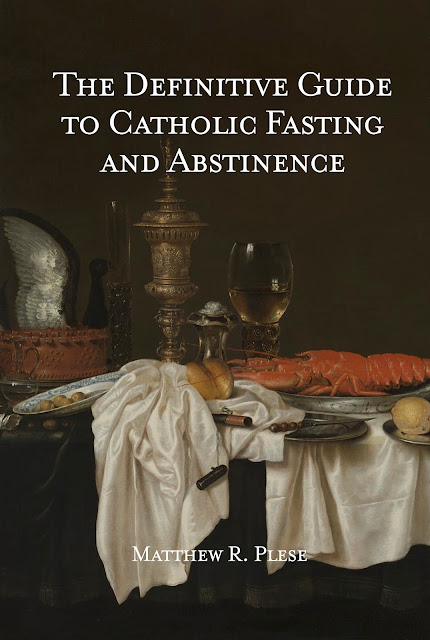
As explained in The Definitive Guide to Catholic Fasting and Abstinence, the Good Friday fast was always understood as the most intense expression of penance in the entire liturgical year. The Church’s later mitigations reflect a softening of discipline—not a change in the importance of the day.

The Passion Fast: Extending Beyond One Day

Traditionally, the Good Friday fast did not stand alone. It formed part of what was called the Passion Fast. In earlier centuries, Catholics:
  • Fasted strictly on Good Friday
  • Continued fasting into Holy Saturday
  • Broke the fast only at noon on Holy Saturday or after the Easter Vigil
This prolonged fast united the faithful not only to Christ’s death but also to His time in the tomb. As noted in Lenten Comparisons Over the Centuries this practice deepened the penitential character of Holy Week and prepared the soul more fittingly for the joy of Easter.

More Than the Bare Minimum

The modern tendency is to ask: “What is the least I must do?”

But Good Friday demands a different question: “What is fitting for the death of Christ?”

While the Church binds us only to a minimal fast, Catholics who are able should strive to recover something of the older spirit by:
  • Further reducing the quantity of food
  • Simplifying meals to the bare essentials
  • Avoiding all unnecessary comforts
  • Extending the fast into Holy Saturday where possible
Of course, prudence must be exercised. Those with health concerns or serious obligations are not required to undertake extreme austerities. But for those who can do more, they should do more.

Teaching the Spirit of Penance

Even though the law binds only those above certain ages, the spirit of Good Friday should be instilled in all.

Children can:
  • Abstain from meat
  • Eat simpler meals
  • Offer small sacrifices
In this way, they learn that Good Friday is not merely remembered—it is lived.

Conclusion

Good Friday is not an ordinary day. It is the day on which the Son of God died for our sins. The fasting and abstinence of this day are not arbitrary rules. They are acts of reparation, discipline, and love. 
In a world that avoids sacrifice, Catholics are called to embrace it.

Let us not treat this day lightly. Let us fast with seriousness. Let us abstain with reverence. Let us unite ourselves to the Cross. Let us keep silence especially from 12 Noon through 3 PM. 

For on this day, Christ gave everything for us.

Read more >>


Copyright Notice: Unless otherwise stated, all items are copyrighted under a Attribution-NonCommercial-NoDerivatives 4.0 International License. If you quote from this blog, cite a link to the post on this blog in your article.

Disclosure of Material Connection: Some of the links on this blog are “affiliate links.” This means if you click on the link and purchase the item, I will receive an affiliate commission. As an Amazon Associate, for instance, I earn a small commission from qualifying purchases made by those who click on the Amazon affiliate links included on this website. I am disclosing this in accordance with the Federal Trade Commission’s 16 CFR, Part 255: “Guides Concerning the Use of Endorsements and Testimonials in Advertising.”