


August 29th is the Feast of the Beheading of St. John the Baptist, one of the most ancient feasts in honor of a saint found in the Church’s liturgical year. While Roman Catholics today are not bound to fast on this day, the Eastern Catholic tradition has preserved a venerable custom that deserves greater attention: fasting in honor of the martyrdom of St. John the Baptist.
There could hardly be a more fitting saint with whom to associate fasting.
St. John lived a life of extraordinary penance. Sacred Scripture tells us that “his garment was of camel’s hair, and a leathern girdle about his loins: and his meat was locusts and wild honey” (Matthew 3:4). He lived apart from the comforts of the world, prepared the way of the Lord, preached repentance without compromise, and ultimately surrendered his life rather than remain silent concerning public sin.
His death itself also contains a profound lesson concerning fasting, temperance, and sensual indulgence.
St. John Was Martyred in the Midst of a Banquet
St. John was imprisoned because he publicly rebuked Herod for his unlawful union with Herodias, his brother’s wife. St. John would not alter the moral law merely because the sinner before him was powerful.
“It is not lawful for thee to have thy brother’s wife” (Mark 6:18). Herodias consequently sought his death.
The opportunity came during Herod’s birthday celebration. The Gospel describes a banquet attended by the rulers and principal men of Galilee. The daughter of Herodias danced before Herod and his guests, pleasing him so greatly that he rashly promised to grant whatever she requested. At the prompting of her mother, she demanded the head of St. John the Baptist upon a platter.
Thus, amid feasting, entertainment, sensuality, and a rash oath, the greatest of the prophets was murdered. There is therefore something particularly appropriate about answering that banquet with a fast.
Where Herod indulged his appetites, the Christian practices restraint. Where drunken festivity contributed to sin, the Christian embraces penance. Where human respect caused Herod to murder an innocent man rather than withdraw a foolish promise before his guests, the Christian asks for the courage to obey God regardless of the cost.
Fasting on August 29th consequently becomes far more than an arbitrary dietary observance. It is a bodily rejection of the very spirit surrounding St. John’s martyrdom.
The Eastern Catholics Preserve the Fast of the Beheading
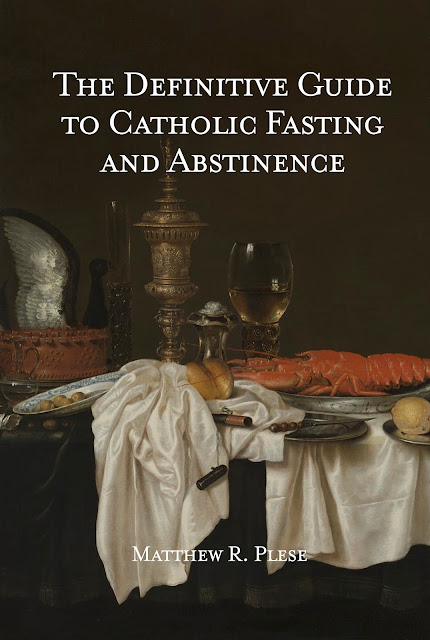
As discussed in The Definitive Guide to Catholic Fasting and Abstinence, the Eastern Churches have retained several fasting traditions that disappeared or greatly diminished in the Roman Church. Among these are the Apostles’ Fast, the Dormition or Assumption Fast, and particular one-day fasts during the year.
The Beheading of St. John the Baptist on August 29th is one of these traditional fast days.
The Melkite Catholic tradition explicitly numbers the Beheading among its annual days of fasting. Ukrainian Catholic tradition has likewise retained August 29th as a penitential day associated with abstinence. In stricter Byzantine practice, the day is observed with substantial abstinence, traditionally excluding meat and other animal products, with stricter observances also avoiding wine and oil.
This is noteworthy because August 29th is itself the feast. Ordinarily we think of fasting as something that precedes a feast. But this observance has a different character. The very mystery commemorated is penitential: the murder of the Forerunner of Christ.
The Church celebrates his triumph as a martyr, but she also places before us the horrifying circumstances of his death. The fast helps us enter into that mystery.
St. John and the Older Roman Tradition of Fasting
Roman Catholics should not imagine that fasting in honor of St. John is somehow foreign to our own heritage. Quite the opposite. The Vigil of the Nativity of St. John the Baptist on June 23rd was formerly a day of fasting and abstinence in the Roman Church.
Dom Guéranger relates that the Roman faithful once kept a strict fast before the June 24th Nativity of the Precursor. He goes further and notes that in still earlier times not merely one day but an entire period of fasting was observed before St. John’s Nativity—something resembling a “Lent of St. John.”
The importance of the feast itself was once immense. The Nativity of St. John was formerly a Holy Day of Obligation, and in some places extended preparations of fasting and abstinence preceded it. A synod at Seligenstadt in 1022, for instance, prescribed fourteen days of fasting and abstinence before the Nativity of the Baptist, though such an observance never became universal Roman law.
By the late nineteenth century, the Vigil of St. John remained among the fasting days observed at Rome. Shortly thereafter, however, this ancient fast disappeared.
The Roman Church therefore traditionally fasted in preparation for St. John’s birth, while various Eastern Catholic traditions continue to fast on the day commemorating his death.
Both customs teach us the same forgotten truth: St. John the Baptist is inseparable from the spirit of penance.
“He Must Increase, but I Must Decrease”
St. John gave us one of the most perfect summaries of the spiritual life: “He must increase, but I must decrease” (John 3:30). Fasting puts those words into practice.
Our desires decrease so that Christ may increase. Our attachment to comfort decreases so that grace may increase. Our self-will decreases so that the will of God may reign more completely within us. St. John preached penance before Our Lord began His public ministry. His first message was not one of self-esteem, material prosperity, or accommodation with the world. It was a call to conversion: “Do penance: for the kingdom of heaven is at hand” (Matthew 3:2).
It is difficult to honor such a saint adequately while refusing the very spirit in which he lived.
Consider Voluntarily Fasting on August 29th
Under the present law of the Roman Church, August 29th is not an obligatory day of fasting merely because it is the Beheading of St. John the Baptist. Catholics should therefore distinguish clearly between what binds under Church law and what may be freely adopted as a traditional devotion.
But the disappearance of an obligation does not make the older spirit worthless.
Roman Catholics may profitably learn from our Eastern Catholic brethren and voluntarily make August 29th a day of fasting and abstinence.
One might keep the customary Roman form of fasting—one principal meal with the permitted smaller collations—or undertake a stricter fast according to one’s health, duties, and prudent judgment. At a minimum, abstaining from meat and avoiding unnecessary indulgence would fittingly honor the austerity and martyrdom of the Baptist.
And because the day recalls a martyr who died for defending the sanctity of marriage and the moral law, our fasting might especially be offered in reparation for sins against marriage, chastity, and purity, and for bishops and priests to possess the courage of St. John in publicly condemning sin regardless of worldly consequences.
Restore the Spirit of St. John the Baptist
Modern Catholic life has lost much of its former rhythm of fast and feast.
Our ancestors fasted before great holy days. They kept Ember Days. They fasted on numerous vigils. They abstained from meat far more frequently than Catholics ordinarily do today. The Eastern Churches have preserved practices that can remind Roman Catholics of what our own forefathers once understood instinctively: the body should participate in the worship of God and in the penance of the soul.
August 29th gives us another opportunity to recover that spirit.
Let us ask St. John the Baptist for the courage to condemn sin, the humility to decrease so that Christ may increase, and the penitential spirit necessary for genuine conversion.
And if we are able, let us honor his martyrdom not only with words but with fasting.
St. John the Baptist, pray for us.






0 comment(s):
Post a Comment