Sunday, January 28, 2007
Book Recommendations for Lent


With Lent only three weeks away, it's time to start thinking about Lent. Not only should we fast, abstain, and give up something during Lent, but also we should do spiritual reading. The Rule of St. Benedict stipulated that monks must read one spiritual book during Lent. We could find great benefit in imitating their example.

'"A willow tree,' says Pope St. Gregory the Great, 'bears no fruit, but by supporting as it does the vine together with its grapes, it makes these its own by supporting what is not its own.' In like manner, he who warmly recommends a book calculated to do much good makes his own all the good that is done by the book" (Father Michael Mueller in The Holy Sacrifice of the Mass)

Here are some Lenten Book Recommendations:
Read more >>
Words of Inspiration: January 28


Blessed Mother Teresa:

"We need to bring prayer into our family life. Through prayer, we will be able to teach our children and relatives to share. We will gain more through genuine prayer than with mere words."

Archbishop Fulton Sheen:

“The heart is the mint wherein the coinage of human life is stamped; it is the anvil which forges habits and routines; it is the ‘stick’ which pilots the plane of life. Sir Walter Scott once said to his son-in-law Lockhart: ‘We shall never learn to feel and respect our own calling and destiny, until we have taught ourselves to consider everything as moonshine, compared with the education of the heart.’”
Read more >>
Friday, January 26, 2007
St. Timothy


Double (1954 Calendar): January 24
Memorial of Sts. Timothy and Titus (1969 Calendar): January 26

St. Timothy was not only a co-worker and companion to St. Paul but also his spiritual son. St. Timothy was converted and baptized into the True Faith during St. Paul's first missionary journey, and St. Timothy was later ordained a priest at a young age by St. Paul. St. Timothy eventually became the Bishop of Ephesus when St. Paul consecrated him thus. It was 30 years after St. Paul's martyrdom that St. Timothy followed his friend in martyrdom - St. Timothy was stoned to death.

Traditional Matins Reading:

Timothy was born at Lystra in Lycaonia. His father was a Gentile, and his mother a Jewess. When the Apostle Paul came into those parts, Timothy was a follower of the Christian religion. The Apostle had heard much of his holy life, and was thereby induced to take him as the companion of his travels: but on account of the Jews, who had become converts to the faith of Christ, and were aware that the father of Timothy was a Gentile, he administered to him the rite of circumcision. As soon as they arrived at Ephesus, the Apostle ordained him Bishop of that Church.

The Apostle addressed two of his Epistles to him—one from Laodicea, the other from Rome—to instruct him how to discharge his pastoral office. He could not endure to see sacrifice, which is due to God alone, offered to the idols of devils; and finding that the people of Ephesus were offering victims to Diana on her festival, he strove to make them desist from their impious rites. But they, turning upon him, stoned him. The Christians could not deliver him from their hands till he was more dead than alive. They carried him to a mountain not far from the town, and there, on the ninth of the Kalends of February (January 24), he slept in the Lord.

Prayer:

Look down upon our weakness, almighty God; and since the weight of our own deeds bears us down, may the glorious intercession of Blessed Timothy, Thy Bishop and Martyr, protect us. Through our Lord.

Prayer Source: 1962 Roman Catholic Daily Missal
Read more >>
Tridentine Mass Returns to Diocese of Lafayette


Mass in Latin is no longer a memory relegated to Lafayette Roman Catholic Diocese annals.

Latin Masses returned to the Lafayette Roman Catholic Diocese on Jan. 14, when the Rev. Jerome Frey celebrated the initial Latin Tridentine service at St. Peter Church. Beginning Feb. 4, the services will be offered at 1 p.m. on the first Sunday of each month at the church located at 102 N. Church St.

Previously, Catholics who preferred the Latin service had to drive nearly 60 miles, or about an hour, to St. Agnes Catholic Church in Baton Rouge. The Baton Rouge Diocese church conducts the service at 9:30 a.m. each Sunday.
Wonderful! It's great to see the Traditional Latin Mass spreading!
Read more >>
Archbishop Sheen on the Rosary

Bishop Fulton Sheen in 1953:

“The Rosary is the book of the blind, where souls see and there enact the greatest drama of love the world has ever known; it is the book of the simple which initiates them into mysteries and knowledge more satisfying than the education of other men; it is the book of the aged, whose eyes close upon the shadow of the world and open on the substance of the next.”
Read more >>
Thursday, January 25, 2007
Catholicism in Tibet

I came across an uplifting article on Catholicism in Tibet. Although the man in the story says that he only sees a priest once a year, he says that the faith of Catholics remains alive.
Read more >>
Conversion of St. Paul

Today is the Feast of the Conversion of St. Paul. See my post from last year for a reflection on today.
Read more >>
Wednesday, January 24, 2007
Pope Benedict XVI Photo from January 2007


The above photo is of His Holiness Pope Benedict XVI from January 17, 2007. Remember to pray daily for the Holy Father. Photo Source: AFP/File/Andreas Solaro
Read more >>
Words of Inspiration: January 23, 2007


Whenever I go to the chapel, I put myself in the presence of our good Lord, and I say to him, 'Lord, I am here. Tell me what you would have me to do ' . . . . And then, I tell God everything that is in my heart. I tell him about my pains and my joys, and then I listen. If you listen, God will also speak to you, for with the good Lord, you have to both speak and listen. God always speaks to you when you approach him plainly and simply" (St. Catherine Laboure).
Read more >>
Monday, January 22, 2007
St. Vincent of Saragossa & St. Anastasius the Persian


Semidouble (1955 Calendar): January 22
Optional Memorial (1969 Calendar): January 22

Today is a Day of Penance for all of the dioceses of the USA for violations to the dignity of the human person committed through acts of abortion.

Liturgically, today the Church remembers St. Vincent of Saragossa, also called St. Vincent the Deacon or Vincent of Aragon. He is considered one of the three most illustrious deacons of the Church - the others being St. Stephen the First Martyr and St. Lawrence.

St. Vincent was born in Heusca and later died a martyr in c. 304 AD in Valencia. He was Martyred during the persecutions of Diocletian. The following is an account of his death:
Ordained deacon by Bishop Valerius of Saragossa, he was taken in chains to Valencia during the Diocletian persecution and put to death. From legend we have the following details of his martyrdom. After brutal scourging in the presence of many witnesses, he was stretched on the rack; but neither torture nor blandishments nor threats could undermine the strength and courage of his faith. Next, he was cast on a heated grating, lacerated with iron hooks, and seared with hot metal plates. Then he was returned to prison, where the floor was heavily strewn with pieces of broken glass. A heavenly brightness flooded the entire dungeon, filling all who saw it with greatest awe.

After this he was placed on a soft bed in the hope that lenient treatment would induce apostasy, since torture had proven ineffective. But strengthened by faith in Christ Jesus and the hope of everlasting life, Vincent maintained an invincible spirit and overcame all efforts, whether by fire, sword, rack, or torture to induce defection. He persevered to the end and gained the heavenly crown of martyrdom.

The Church's Year of Grace, by Pius Parsch
Also celebrated along with St. Vincent is St. Anastasius.


More than three hundred years after the martyrdom of St. Vincent, Anastasius the Persian, a convert from the priestly caste of Magi, endured a similar martyrdom in distant Assyria. From the Traditional matins reading on the life of this saint:

Anastasius, a Persian by birth, had embraced the monastic life during the reign of Heraclius. After visiting the Holy Places in Jerusalem, he courageously endured at Cæsarea in Palestine both imprisonment and scourgings for the faith of Christ. Not long after, the Persians put him to several kinds of torture for the same reason. King Chosroes at last ordered him to be beheaded, together with seventy other Christians. His relics were at first carried to Jerusalem, to the Monastery where he had professed the monastic life; afterwards they were translated to Rome, and were deposited in the monastery near the Salvian Waters.

Dom Gueranger states why they are celebrated today together in the Church's Liturgy: "Two celebrated Churches of Rome, one in the City itself, and the other outside the walls, are dedicated in common to St Vincent and St.Anastasius, because these two great Martyrs suffered on the same day of the year, though in different centuries. This is the motive of the Church in uniting their two feasts into one. Let us pray to this new champion of the Faith, that he intercede for us to the Saviour, whose Cross was so dear to him."

Through all the Christian centuries, the various martyrs of the West and of the East have united their sacrifices to that of Calvary for the salvation of every man born into the world. May St. Vincent and St. Anastasius pray for us and for the end to abortion in the United States and throughout the entire world before the wrath of God strikes down whole nations. Lord have mercy!

Prayer:

O Lord, listen to our supplications: that we who acknowledge the guilt of our sins, may be delivered through the intercession of Thy blessed Martyrs Vincent and Anastasius. Through our Lord.

Prayer Source: 1962 Roman Catholic Daily Missal
Read more >>
The 34th Anniversary of Legalized Abortion

Today is a somber anniversary - a day that I encourage penance, abstience, and fasting. Today is the 34th anniversary of the Roe v. Wade Abortion Case, which legalized abortion in the United States by overriding all state abortion laws. We must repent of these sins and do penance in reparation! And we must work for the end to abortion. Please see my post on Pro-life actions that can be done all throughout the year.

The March for Life is going on right now in Washington, D.C. and many colleges including St. John Vianney Seminary are there.

Today is also a day of abstience! Cardinal William Keeler responded, when asked if abstaining from meat was required: "It is not asked, but obliged by all the faithful under Church law. This time it cannot be substituted with acts of charity or service, while on Fridays it can. I hope the pastors informed their parishoners of this from the pulpit last Sunday!..."
Read more >>
The Catholic Church and abortion

The Catechism of the Catholic Church:

2271. "Since the first century the Church has affirmed the moral evil of every procured abortion. This teaching has not changed and remains unchangeable. Direct abortion, that is to say, abortion willed either as an end or a means, is gravely contrary to the moral law: You shall not kill the embryo by abortion and shall not cause the newborn to perish. [Didache 2, 2: SCh 248, 148; cf. Ep. Barnabae 19, 5: PG 2, 777; Ad Diognetum 5, 6: PG 2, 1173; Tertullian, Apol. 9: PL 1, 319-320.] God, the Lord of life, has entrusted to men the noble mission of safeguarding life, and men must carry it out in a manner worthy of themselves. Life must be protected with the utmost care from the moment of conception: abortion and infanticide are abominable crimes. [GS 51 # 3.]"

2272. "Formal cooperation in an abortion constitutes a grave offense. The Church attaches the canonical penalty of excommunication to this crime against human life. 'A person who procures a completed abortion incurs excommunication latae sententiae,' [CIC, can. 1398.] 'by the very commission of the offense,' [CIC, can. 1314.] and subject to the conditions provided by Canon Law. [Cf. CIC, cann. 1323-1324.] The Church does not thereby intend to restrict the scope of mercy. Rather, she makes clear the gravity of the crime committed, the irreparable harm done to the innocent who is put to death, as well as to the parents and the whole of society."

2274. "Since it must be treated from conception as a person, the embryo must be defended in its integrity, cared for, and healed, as far as possible, like any other human being. Prenatal diagnosis is morally licit, 'if it respects the life and integrity of the embryo and the human fetus and is directed toward its safe guarding or healing as an individual.... It is gravely opposed to the moral law when this is done with the thought of possibly inducing an abortion, depending upon the results: a diagnosis must not be the equivalent of a death sentence.' [CDF, Donum vitae I, 2.]"

2322. "From its conception, the child has the right to life. Direct abortion, that is, abortion willed as an end or as a means, is a 'criminal' practice (GS 27 # 3), gravely contrary to the moral law. The Church imposes the canonical penalty of excommunication for this crime against human life."

ABORTION STOPS A BEATING HEART!

YOU CAN'T BE CATHOLIC AND SUPPORT ABORTION IN ANY CASE!
Read more >>
Sunday, January 21, 2007
Let Them Be One

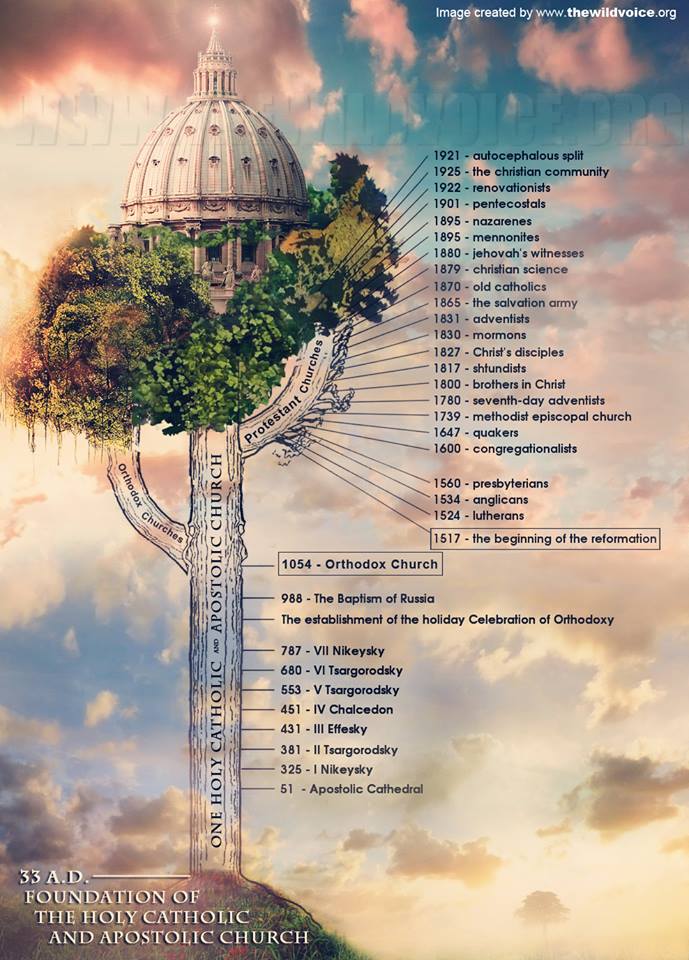
From January 18 - January 25, 2007, we celebrate the Week of Prayer for Christian Unity, of which I have already posted a prayer. However, I feel that instruction is needed for the faithful during this week.

It would be extremely easy to fall into error this week while seeking unity. We, as Catholics, follow the complete Truth of Jesus Christ revealed over the past 2,000 years. And that is what we will always believe. We shall not - must not - disregard a single teaching of the Church for "unity." Unity does not mean that all of the separated Christians should come together and make compromises until a new Creed is made. This is heresy! We will not compromise one single article of doctrine, or one single dogma, or one single practice of our faith. For that is a common misconception of what this Week of Christian Unity is about. This week of Christian Unity is about praying for fellow non-Catholics to repent for their sins and enter into the Catholic Church - completely obedient to the Magisterium and all honored Traditions of the Faith. Yes, it is a sin to refuse to believe a single dogma of the Church. It may compromise one's soul if that person refuses to believe even one part of the Faith taught by Christ and revealed through the years by the Holy Catholic Church. Again, anyone who disregards a dogma or teaching of the Holy Church in the name of ecumenism will surely answer to Almighty God.

The Church is our Mother and is led by the Successor of Saint Peter - the Pope. I have already posted a summary of some of the Church's teachings in my post on the Prayer for Unity. And, since we still hold the True Faith, it is our obligation to pray for non-Catholics to see their errors and enter the Church. In truth, interdenominational activity has been condemned through the years by the Church. I have not and will not attend a single Protestant service, and I hope and pray all Catholics will do the same. This is not because I view myself as superior. After all, Jesus ate with the sinners and was criticized for it. But, it is a scandalous activity to attend a Protestant service. Not only do Protestants not have authentic Sacraments like the Eucharist, Confession, Last Rites, Holy Orders, etc., but they believe in heresy. The very word "Protestant" implies they are "protesting." And what are they protesting against? They protest against the Catholic Church, which is the Sacrament of salvation for the whole world! For this reason, it is wrong for any Catholic to attend a non-Catholic religious service. The 1962 Roman Catholic Daily Missal (Angelus Press Edition) states that it is a sin to "go to places of worship belonging to other denominations" (page 66).

Pope Pius XI condemned the "ecumenical movement" in Mortalium Animos:
"...it will be opportune to expound and to reject a certain false opinion which lies at the root of this question and of that complex movement by which non-Catholics seek to bring about the union of Christian Churches. Those who favor this view constantly quote the words of Christ, "That they may be one (Ut unum sint)... And there shall be one fold and one shepherd" (John xvii. 21, x. 16), in the sense that Christ thereby merely expressed a desire or a prayer which as yet has not been granted. For they hold that the unity of faith and government which is a note of the one true Church of Christ has up to the present time hardly ever existed, and does not exist today. They consider that this unity is indeed to be desired and may even, by cooperation and good will, be actually attained, but that meanwhile it must be regarded as a mere ideal. The Church, they say, is of its nature divided into sections, composed of several churches or distinct communities which still remain separate, and although holding in common some articles of doctrine, nevertheless differ concerning the remainder; that all these enjoy the same rights; and that the Church remained one and undivided at the most only from the Apostolic age until the first Ecumenical Councils. Hence, they say, controversies and long-standing differences, which today still keep asunder the members of the Christian family, must be entirely set aside, and from the residue of doctrines a common form of faith drawn up and proposed for belief, in the profession of which all may not only know but also feel themselves to be brethren. If the various Churches or communities were united in some kind of universal federation, they would then be in a position to oppose resolutely and successfully the progress of irreligion.

"Such, Venerable Brethren, is the common contention. There are indeed some who recognize and affirm that Protestantism has with inconsiderate zeal rejected certain articles of faith and external ceremonies which are in fact useful and attractive, and which the Roman Church still retains. But they immediately go on to say that the Roman Church, too, has erred, and corrupted the primitive religion by adding to it and proposing for belief doctrines not only alien to the Gospel but contrary to its spirit. Chief among these they count that of the primacy of jurisdiction granted to Peter and to his successors in the See of Rome. There are actually some, though few, who grant to the Roman Pontiff a primacy of honor and even a certain power or jurisdiction; this, however, they consider to arise not from the divine law but merely from the consent of the faithful. Others, again, even go so far as to desire the Pontiff himself to preside over their mixed assemblies. For the rest, while you may hear many non-Catholics loudly preaching brotherly communion in Jesus Christ, yet not one will you find to whom it even occurs with devout submission to obey the Vicar of Jesus Christ in his capacity of teacher or ruler. Meanwhile they assert their readiness to treat with the Church of Rome, but on equal terms, as equals with an equal. But even if they could so treat, there seems little doubt that they would do so only on condition that no pact into which they might enter should compel them to retract those opinions which still keep them outside the one fold of Christ.

"This being so, it is clear that the Apostolic See can by no means take part in these assemblies. nor is it in any way lawful for Catholics to give to such enterprises their encouragement or support. If they did so, they would be giving countenance to a false Christianity quite alien to the one Church of Christ. Shall we commit the iniquity of suffering the truth, the truth revealed by God, to be made a subject for compromise? For it is indeed a question of defending revealed truth. Jesus Christ sent His Apostles into the whole world to declare the faith of the Gospel to every nation, and, to save them from error, He willed that the Holy Ghost should first teach them all truth. Has this doctrine, then, disappeared, or at any time been obscured, in the Church of which God Himself is the ruler and guardian? Our Redeemer plainly said that His Gospel was intended not only for the apostolic age but for all time. Can the object of faith, then, have become in the process of time so dim and uncertain that today we must tolerate contradictory opinions? If this were so, then we should have to admit that the coming of the Holy Ghost upon the Apostles, the perpetual indwelling of the same Spirit in the Church, nay, the very preaching of Jesus Christ, have centuries ago lost their efficacy and value. To affirm this would be blasphemy. 
ENCYCLICAL OF POPE PIUS XI JANUARY 6, 1928

Now, please realize I don't want violence or discord to result from my opinions or this mentioned statement. But, we must not compromise our beliefs. We must pray for and love non-Catholics, especially Protestants, but we can't compromise our beliefs one ounce. That is why we must pray, pray, and pray for non-Catholics to see their errors and return to the Flock of Christ so that there will exist one Flock and one Shepherd. We must pray for schismatics, heretics, and pagans to all repent and enter the Church of Christ. As St. Pius X wrote, "There is only one divine faith which is the beginning of salvation for mankind and the basis of all justification, the faith by which the just person lives and without which it is impossible to please God and to come to the community of His children. There is only one true, holy, Catholic church, which is the Apostolic Roman Church." (Singulari Quidem, Encyclical of Pope Pius IX)

Much more information on the basics of Catholicism can be found at Fish Eaters. For some articles on Catholic beliefs that I have written, see my sidebar under the title "Catholic Categories."

Let us pray and work towards unity—that all people will be members of the one, true Church that Jesus Christ established for the salvation of the world—the Catholic Church. Please read Jesus' prayer for Christian Unity in The Gospel of John, Chapter 17.
Read more >>
Words of Inspiration: January 21, 2007


"O Everlasting Love, Jesus, who have enclosed Yourself in the Host, and therein hide Your divinity and conceal Your beauty, You do this in order to give Yourself, whole and entire, to my soul"

St. Maria Faustina of the Blessed Sacrament
Read more >>
Saturday, January 20, 2007
The Blessing of Lambs


Because of the similarity of her name to the Latin for "lamb" (Agnus), the lamb has been St. Agnes' symbol since the 6th century. On the feast day of St. Agnes on January 21st, the Trappist fathers of the Monastery of Tre Fontane (near Saint Paul's Basilica) provide two lambs from their sheepfold to the Benedictine nuns of Saint Cecilia. They arrive at Saint Agnes' Basilica wearing crowns, lying in "baskets decorated with red and white flowers and red and white ribbons—red for martyrdom, white for purity."

For the festal Mass, the church, titular cardinal, the deacon, and subdeacon are decorated with red, white and gold. At the conclusion of the Holy Mass, there is a procession of little girls veiled and dressed in white lace with pale blue ribbons, followed by four resplendent carabinieri carrying the baby lambs. The lambs are blessed and incensed before being taken to the Vatican for the Holy Father’s blessing. Then they are delivered to the Convent of Saint Cecilia to become the pets of the sisters until Holy Thursday (when they are shorn) before being sacrificed on Good Friday.

The wool from these lambs is woven into 12 archbishops' palliums. The pallium is an older symbol of the papacy than that of the famed triregnum. The elect becomes "Shepherd of Christ's Flock" when the pallium touches his shoulder and symbolizes that the new bishop is being 'yoked' with the bishop of Rome, who is the visible head of the Church. About 204 AD, Saint Felician of Foligno is the first recorded recipient of a pallium from Pope Saint Victor I.
Read more >>
Friday, January 19, 2007
Week of Prayer for Christian Unity


[Please prepare to say this prayer daily during the Week of Christian Unity which is January 18-25]

English:

May they all be on as you, Father, are in me, and I in you, so that the world may come to believe that you have sent me.

R. You are Peter

V. And it is upon this rock that I will build my Church.

Let us pray: Lord Jesus Christ, who said to your apostles: I leave peace with you; it is my own peace that I give you; look not upon our sins but upon your Church's faith, and graciously grant her peace and unity in accordance with your will. You who live and reign forever and ever.

R. Amen.

Latin:

Ut omnes unum sint, sicut tu Pater in me et ego in te; ut mundus credat quia tu me misita.

R. Tu es Petrus.

V. Et super hanc petram dificabo ecclesiam meam.

Oremus: Domine Iesu Christe, qui dixisti Apostolis tuis: pacem relinquo vobis, pacem mean do vobis ne rspicias peccata nostra, sed fidem Ecclesie tuae, eamque secundum voluntatem tuam pacificate et coadunare digneris. Qui vivis et regnas in saecula saeculorum.

R. Amen
----------------------------------
There is so much about the Catholic faith that many people cannot understand. For the the benefit of non-Catholics, the following are the reasons why more that 1.1 Billion people choose to be Roman Catholic- We can only be united when we understand one another:

We believe in the God of All Creation, that is to say, I believe in the One, Triune God, One God in Three Divine Persons, God the Father, God the Son and God the Holy Spirit. The same God Today, Yesterday and Forever, whose nature is always to have mercy.

We believe in the One, Holy, Catholic and Apostolic Church as she exists in Communion with the Bishop of Rome, who is the Successor of St. Peter the Apostle and first Pope.

We believe all that is stated in the Nicene Creed.

We believe that the Catholic Church, in Communion with the Bishop of Rome (the Pope) is the Church that was founded directly by Jesus Christ nearly 2000 years ago, and is the Church that compiled and Canonized the Bible and that members of this Church were the authors of the New Testament, inspired by God the Holy Spirit.

We believe that I may unite my emotional and physical afflictions, sorrows and sufferings to the sufferings of Christ Crucified for the sake of the Whole Church, and I believe that our personal sufferings are great means of personal Sanctification.

We believe in the Queenship, Divine Motherhood, Perpetual Virginity and Intercession of the Theotokos also known as the Blessed Virgin Mary and I believe that she can and does hear our prayers and can pray for us to her Divine Son, Jesus Christ who is God. The Bible teaches us that we must intercede for each other based on the Mediatorship of Jesus Christ (1 Timothy 2:1-5), the Bible teaches us that the Prayers of the Righteous are powerful (James 5:16) and the Bible teaches us that the Saints and Angels in Heaven offer our prayers to God in the form of incense (Rev. 5:8, Rev. 8:1-4), and the Bible has examples of prayer to the Angels and Hosts of Heaven (Psalm 103:20-21, Psalm 148:1-2). I believe that the Most Holy Ever Virgin Mary, Mother of God is an excellent person to go to for intercessory prayer.

Jesus teaches us that through Him, we may have Eternal Life. Based on this, We believe that the Saints in Heaven are very much alive, can hear our prayers and do intercede for us. Some claim that praying to Mary and the Saints and Angels means that we are worshipping them. This is not so. Prayer in itself is not an act of worship. The word "Prayer" means "Request." So when we pray, we are making a request, and in the case of prayer to Saints, we are requesting THEIR intercession (1 Timothy 2:1-5) to God on our behalves based on the Mediatorship of Jesus Christ.

We believe that Christ is truly present in the Eucharist; the source and summit of our Catholic faith. Protestants reading this may say that the Passover isn't finished until Calvary, I would suggest that Calvary is really begun in the Upper Room with the Eucharist. When does Jesus' sacrifice really begin? Well, He insists on the fact that His life is not being taken away from Him. He is laying it down. Now in the trial, in the passion, it's being taken away; but in the Upper Room, prior to all of that, Jesus lays it down. He says, "This is my body. This cup is the blood of the New Covenant." Christ could not have used clearer, more explicit words than "This is My body." He did not say, "This is a sign of My body," or "This represents My body," but, "This is My body." I together with 1 billion Catholics take Christ at His word because He is the omnipotent God. On His word we know that the Holy Eucharist is the the body and blood of Christ.

To reiterate, We believe in the Catholic Church and ALL that she teaches. This is the Faith handed on to us once and for all by Jesus Christ and His Apostles.
Read more >>
Pray for those in RCIA

Please remember to pray for all those people in the world today in RCIA seeking to convert to Catholicism. I was reminded of this need by Argent by the Tiber's post:

It's Thursday again and that means this evening will be spent in RCIA. At the beginning of the year, when people poke their heads through the door and ask, "Is this RCIA?", you have no idea what compelled them to come. Then gradually through the year, their stories come out. Some during class and others outside of class. Most come not out of any earth-shattering theological conviction, but out of a nascent desire to follow Christ. Others come in spite of tremendous opposition, and occasionally, that opposition might even be dangerous. Please consider praying for the RCIA program at your church, for those that coordinate it and, though they may be unknown to you, for each person in the process. On Monday, a gentleman approached me after morning Mass and said that he had been praying for our parish's RCIA everyday. It meant a great deal to me.

Read the whole post
Read more >>
Church of the Holy Innocents


This is a beautiful church, so I had to share this photo of the Church of the Holy Innocents from New York, USA.
Read more >>
Italian Priests Are Working to Stop Satanists


I found this story posted on A Catholic Mom in Hawaii, and I was very pleased to read about it. With 600,000 Satanists predicted to be in Italy, it is great news that Italian priests are going out into the streets to protect the Lord's flock. For a priest is called to lay down his life for the Flock, and that is what these priests are doing.

The devil is real. He is not a metaphor but a real fallen angel seeking to destroy the Lord's flock. We must resist Him always in this life. For Jesus came to destroy the words of the devil (1 John 3:8). And while it remains a mystery while he is allowed to remain (CCC 395), we must fight the good fight and continue living for God. Let us frequently say the Prayer to St. Michael the Archangel.
Priests are to work alongside Italian police officers to tackle a rising tide of crimes linked to devil worship.

The clerics have been seconded to the Squadra Anti Sette (SAS) anti-sect squad by the Vatican after Church officials became concerned about the number of churches being desecrated by Satanists. In recent months there have also been a string of murders that have been linked to devil worship.

One of the Vatican's leading experts on Satanism and the occult, Don Oreste Benzi, has been brought in to liaise with police. He told The Sunday Telegraph that the natural curiosity of young people meant they were particularly attracted to the occult, and drugs were also used to influence and manipulate them.

Read more...

St. Michael the Archangel, ora pro nobis!
Read more >>
Thursday, January 18, 2007
Words of Inspiration: January 18

I have two very difficult classes this semester, which are taking up more time than I originally thought. However, everything is going very well so far. So, please forgive the delay in the Saint for the Year Devotion as well as the lack of posts.

Archbishop Fulton Sheen:

"In other ages, though men lost virtue, they still admired it; though they ran from the battlefield at the first need of courage, they still admired the hero who fought and suffered; though they threw away the map of the roadway of life, they never denied the need of a map. But, in our generation, men look for shadow in the radiance of every virtue.”

Blessed Mother Teresa:

"We have to give until it hurts. We need to give from the resources we would like to keep for ourselves. We need to give to the point of sacrificing. We must give something that we find hard to give up."
Read more >>


Copyright Notice: Unless otherwise stated, all items are copyrighted under a Attribution-NonCommercial-NoDerivatives 4.0 International License. If you quote from this blog, cite a link to the post on this blog in your article.

Disclosure of Material Connection: Some of the links on this blog are “affiliate links.” This means if you click on the link and purchase the item, I will receive an affiliate commission. As an Amazon Associate, for instance, I earn a small commission from qualifying purchases made by those who click on the Amazon affiliate links included on this website. I am disclosing this in accordance with the Federal Trade Commission’s 16 CFR, Part 255: “Guides Concerning the Use of Endorsements and Testimonials in Advertising.”