Showing posts sorted by date for query Office. Sort by relevance Show all posts
Sunday, November 16, 2025
A Catholic Life Podcast: Episode 133

This is Episode 133 of the A Catholic Life Podcast. In today’s episode I discuss How to Prepare for and Live After Confirmation. It is a topic all of us should consider as confirmed Catholics or those preparing for Confirmation, especially as we grow closer to the end of the liturgical year and reflect on going forth as soldiers of Christ.

This episode of A Catholic Life is sponsored by the Sanctifica app — your go-to tool for living the richness of the liturgical year. From feast days and saints to traditional devotions, the rosary, and even now even with the Divine Office and an interactive map to find Traditional Latin Mass locations — Sanctifica pulls it all together in one simple, beautiful app. It’s liturgical tradition made accessible, right at your fingertips. For me, it’s been a real game-changer: quick access to novenas and the Office, gentle reminders for feast days, and countless treasures I might have otherwise missed. If you’ve been wanting to bring more order and depth into your daily spiritual life, Sanctifica makes it easy. Download it for free today on the App Store or Google Play. It’s a powerful companion for anyone striving to truly live a Catholic life.

Subscribe to the podcast on Buzzsprout, Apple Podcasts, Spotify, I-tunes, and many other platforms!

Read more >>
Sunday, November 2, 2025
A Catholic Life Podcast: Episode 131

This is Episode 129 of the A Catholic Life Podcast. In today’s episode I discuss Catholic Kingship and Monarchy as the Ideal Form of Government. Since last weekend was the Feast of Christ the King, this reflection is an appropriate extension of the 100th celebration of the Feast of Christ the King since it was established in 1925.

And of course, remember this week to gain the special indulgences for the Poor Souls.

This episode of A Catholic Life is sponsored by the Sanctifica app — your go-to tool for living the richness of the liturgical year. From feast days and saints to traditional devotions, the rosary, and even now even with the Divine Office and an interactive map to find Traditional Latin Mass locations — Sanctifica pulls it all together in one simple, beautiful app. It’s liturgical tradition made accessible, right at your fingertips. For me, it’s been a real game-changer: quick access to novenas and the Office, gentle reminders for feast days, and countless treasures I might have otherwise missed. If you’ve been wanting to bring more order and depth into your daily spiritual life, Sanctifica makes it easy. Download it for free today on the App Store or Google Play. It’s a powerful companion for anyone striving to truly live a Catholic life.

Subscribe to the podcast on Buzzsprout, Apple Podcasts, Spotify, I-tunes, and many other platforms!

Read more >>
Sunday, October 5, 2025
A Catholic Life Podcast: Episode 129


This is Episode 129 of the A Catholic Life Podcast. In today’s episode I discuss the value of spiritual reading before bed and mention practical tips on how to incorporate this in your routine as a Catholic.

Reading even a single page with devotion is better than many pages with distraction. Possible texts worth considering can be found at Traditional Catholic Book Recommendations.

This episode of A Catholic Life is sponsored by the Sanctifica app — your go-to tool for living the richness of the liturgical year. From feast days and saints to traditional devotions, the rosary, and even now even with the Divine Office and an interactive map to find Traditional Latin Mass locations — Sanctifica pulls it all together in one simple, beautiful app.

It’s liturgical tradition made accessible, right at your fingertips. For me, it’s been a real game-changer: quick access to novenas and the Office, gentle reminders for feast days, and countless treasures I might have otherwise missed. If you’ve been wanting to bring more order and depth into your daily spiritual life, Sanctifica makes it easy. Download it for free today on the App Store or Google Play. It’s a powerful companion for anyone striving to truly live a Catholic life.

Subscribe to the podcast on Buzzsprout, Apple Podcasts, Spotify, I-tunes, and many other platforms!

Read more >>
Sunday, September 21, 2025
A Catholic Life Podcast: Episode 127

This is Episode 127 of the A Catholic Life Podcast. In today’s episode I discuss the theological importance of Marian titles and why the Church insists on invoking the Blessed Virgin Mary under a variety of titles. As we draw closer to October, the month of the Rosary, I also mention:

This episode of A Catholic Life is sponsored by the Sanctifica app — your go-to tool for living the richness of the liturgical year. From feast days and saints to traditional devotions, the rosary, and even now even with the Divine Office and an interactive map to find Traditional Latin Mass locations — Sanctifica pulls it all together in one simple, beautiful app.

It’s liturgical tradition made accessible, right at your fingertips. For me, it’s been a real game-changer: quick access to novenas and the Office, gentle reminders for feast days, and countless treasures I might have otherwise missed. If you’ve been wanting to bring more order and depth into your daily spiritual life, Sanctifica makes it easy. Download it for free today on the App Store or Google Play. It’s a powerful companion for anyone striving to truly live a Catholic life.

Subscribe to the podcast on Buzzsprout, Apple Podcasts, Spotify, I-tunes, and many other platforms!

Read more >>
Sunday, September 7, 2025
A Catholic Life Podcast: Episode 125

This is Episode 125 of the A Catholic Life Podcast. In today's episode I discuss the Evangelical Counsels - their historical context and continuing relevance to Catholics.

This episode of A Catholic Life is sponsored by the Sanctifica app — your go-to tool for living the richness of the liturgical year. From feast days and saints to traditional devotions, the rosary, and even now even with the Divine Office and an interactive map to find Traditional Latin Mass locations — Sanctifica pulls it all together in one simple, beautiful app.

It’s liturgical tradition made accessible, right at your fingertips. For me, it’s been a real game-changer: quick access to novenas and the Office, gentle reminders for feast days, and countless treasures I might have otherwise missed. If you’ve been wanting to bring more order and depth into your daily spiritual life, Sanctifica makes it easy. Download it for free today on the App Store or Google Play. It’s a powerful companion for anyone striving to truly live a Catholic life.

Subscribe to the podcast on Buzzsprout, Apple Podcasts, Spotify, I-tunes, and many other platforms!

Read more >>
Tuesday, January 21, 2025
Why Catholics Must Adhere to the 1917 Code of Canon Law and Reject the Novelties of the 1983 Code

1917 vs 1983 Code of Canon Law

Principle 1: Authority and Validity of Law

Law Must Originate from a Valid Lawgiver

A fundamental principle in both civil and ecclesiastical law is that a law must be issued by a legitimate authority. In civil society, this requires that laws are passed in accordance with constitutional procedures and by recognized governmental bodies. Similarly, within the Church, a valid lawgiver is required to issue binding ecclesiastical laws.

In the Church, the Pope generally holds this authority. However, this authority is contingent upon his continued legitimacy as Pope. According to established Church teaching, if a Pope falls into heresy, he loses his office and thus his authority to promulgate laws. This concept is supported by notable canonists and theologians:

X. Wernz and P. Vidal (1943): "Through notorious and openly divulged heresy, the Roman Pontiff, should he fall into heresy, by that very fact [ipso facto] is deemed to be deprived of the power of jurisdiction even before any declaratory judgement by the Church. A pope who falls into public heresy would cease ipso facto to be a member of the Church; therefore, he would also cease to be head of the Church." (Ius Canonicum, 2:453)

Udalricus Beste (1946): "Not a few canonists teach that, outside of death and abdication, the pontifical dignity can also be lost by falling into certain insanity, which is legally equivalent to death, as well as through manifest and notorious heresy. In the latter case, a pope would automatically fall from his power, and this indeed without the issuance of any sentence, for the first See [i.e., the See of Peter] is judged by no one. The reason is that, by falling into heresy, the pope ceases to be a member of the Church. He who is not a member of a society, obviously, cannot be its head." (Introductio in Codicem, 3rd ed., Canon 221)

Thus, any laws or documents issued by a Pope who has lost his authority due to heresy are invalid and not binding. This principle calls into question the legitimacy of the 1983 Code of Canon Law if issued under such circumstances, especially considering the actions of John Paul II who promulgated the 1983 Code.

Principle 2: The Salvation of Souls as Supreme Law

Laws Must Not Harm Souls

Even if a law is issued by a legitimate authority, it must be rejected if it is harmful to souls or promotes sin. The maxim salus animarum, suprema lex (the salvation of souls is the supreme law) underscores this obligation. In 1984, Archbishop Lefebvre called the new code another grave problem undermining the Church and stated that the new Canon Law is very serious for it goes much further [i.e. promoting errors] than the Council itself in a October 29, 1984 conference at Stuttgart, Germany. 

The 1983 Code of Canon Law introduces a novel conception of the Church that undermines traditional ecclesiology and instead embraces the ecclesiology of Vatican II, which erases the distinction between clergy and laity. Canon 204 exemplifies this by defining all the faithful, clergy and laity alike, as partaking in Christ's priestly, prophetic, and royal functions. This new understanding dissolves the unique roles of the clergy, leading to the laicization of the Church. Such a shift is detrimental, as it aligns with Protestant reforms that laicized the priesthood, diminishing the sacred character of the clergy.

Archbishop Bugnini's reforms in the Liturgy further illustrate this harmful trend. The liturgical changes aimed to transform the Mass into an action of the entire "people of God," minimizing the role of the priest and the mystical nature of the Mass. This shift from God-centered worship to man-centered activity undermines the sanctity of the Eucharist and the priesthood.

The new Code even permits practices such as giving Communion to Protestants, a clear rupture from traditional Catholic teaching. This "eucharistic hospitality" contradicts the sacrament's role as a sign of unity in the Faith, thereby compromising the Church's doctrinal integrity. The 1983 Code is a codification of the errors of Vatican II, which are dangerous to souls as they undermine true doctrine, piety, and holiness. We see this reflected in the unmistakable collapse of Catholic praxis after Vatican II.

Conclusion

Catholics are bound by these two principles: the necessity of a valid lawgiver and the imperative to reject laws harmful to souls. Given either the questionable legitimacy of the authority behind the 1983 Code of Canon Law or its harmful spiritual consequences, Catholics are obliged to adhere to the strictness of the 1917 Code and reject the novelties introduced by the 1983 Code. While even the 1917 Code lessened discipline for Catholics in many regards, it nevertheless was a valid Code. The same unwaveringly statement of validity can not apply to the 1983 Code.

Salus animarum, suprema lex. Long live Tradition. Long live the True Catholic Church. Down with the counterfeit Church of the Modernists.

Read more >>
Friday, December 27, 2024
2nd Edition of "Restoring Lost Customs of Christendom" Now Available

"The best advice that I can give you is this: Church traditions - especially when they do not run counter to the faith - are to be observed in the form in which previous generations have handed them down...the traditions which have been handed down should be regarded as apostolic laws" (St. Jerome in Letter 71)

I'm honored to announce the publication of the slightly expanded 2nd edition of the book by Our Lady of Victory Press entitled "Restoring Lost Customs of Christendom." The 2nd edition includes three new chapters not featured in the first edition (i.e. Customs for St. Joseph's Day, St. Anne's Day Customs, The Customs for the Vigil, and Feast of St. John the Baptist) along with a much expanded catch-all chapter on various saint day customs throughout the liturgical year.

Preface

Under the Old Testament laws, God’s people observed annual ceremonies commemorating important events in salvation history which prefigured the completion of the Old Law through Christ. Similarly, Holy Church commemorates important mysteries, events, and persons, using an annual cycle of prayers, Scriptures, hymns, and various spiritual disciplines. In the same way, each of the twelve months has a unique focus, and each day of the week has a unique focus as well. Even in the day, the hours of the day are divided up into canonical hours. In so doing, all time is, in a manner of speaking, consecrated to God since He alone created all time and redeemed all of time.

Unlike the pagan religions which often view time as an endless cycle of death and rebirth, the Christian view of time is linear. While God alone has always existed and has no beginning, time had a beginning. There was a first day on earth. And there will be a last day. There will be a day ultimately when the sun will rise for the last time and when it will set for the last time. Time will end. And God Himself will end it as time belongs to Him. It is our duty to honor God in time. And we can do so by sanctifying the days, weeks, months, and seasons of the year.

The Church’s Liturgical Year is a harmonious interplay of feasts and fasts interwoven in both the temporal and sanctoral cycles that define the rhythm and rhyme of Catholic life. While there are many customs associated with the seasons of the liturgical year and high ranking feast days, the entire year is replete with opportunities to live out our Catholic heritage through the customs our forefathers instituted.

The Church’s annual liturgical calendar is comprised of two different, concurrent annual cycles. First, the Proper of the Seasons, or Temporal Cycle, traces the earthly life of Our Lord Jesus Christ. In the Roman Catholic Church, it consists mainly of Sundays related to the various liturgical seasons – that is, the seven liturgical seasons contained in two cycles of its own: the Christmas Cycle and the Easter Cycle. It starts with Advent then goes through Christmas, Epiphany, Septuagesima, Lent, Easter, and Time after Pentecost. The determination of the date of Easter dictates nearly all the other dates in this cycle. But there is a second cycle: the Proper of the Saints, called the Sanctoral Cycle, which is the annual cycle of feast days not necessarily connected with the seasons.

It’s also important to realize that each rite in the Catholic Church (e.g., Roman, Maronite, Chaldean, etc.) has its own liturgical calendar, and some have multiple uses or forms of the calendar. Even within the same use or form, there are variations according to local customs. For instance, the patron saint of a church or of the cathedral would be ranked higher in the liturgical calendar of that local jurisdiction. Even in the Roman Rite itself, different dioceses, countries, and religious orders would keep some different feastdays. These were listed in the Mass in Some Places (pro aliquibus locis) supplement to the Missal. Beyond the Roman Rite, the Ambrosian, Mozarabic, Lyon, and Bragan Rites are also all part of the Western liturgical tradition. So too are the various Rites for religious orders (e.g., the Carmelite Rite, the Carthusian Rite, the Dominican Rite). These are also part of the Roman Catholic Church.  No one has ever doubted the legitimacy of this liturgical diversity. 

Those who try to discredit the Traditional Latin Mass may try to falsely claim that all Catholics must observe the same calendar of saints. But this is not the case as seen in the liturgical calendar diversity in the different Rites of the Church and in the Roman Rite itself. Even Summorum Pontificium affirmed that the continued use of the older Roman calendar in the traditional Mass and Breviary is permissible. 

Beyond assisting at Mass and praying the Divine Office, we can and should observe the forgotten customs that further underscored authentic Catholic culture. Catholic culture is more than just going to Mass – much more. Catholic culture is built on fasting periods, assisting at Processions, having various items blessed at different parts of the year (e.g. herbs on August 15, grapes on September 8th, wine on December 27th). It features days of festivity like during Martinmas and promotes family time and charitable works like visits to grandparents on Easter Monday. It is replete with food customs to celebrate the end of fasting periods and filled with special devotions during periods of penance. It is our heritage. These traditions are our birthright. They are ours as much as they were our ancestors. We must reclaim them. We must spread them. We must love them and observe them. And this book will show today’s Catholic how.

Ordering Information:

PDF: https://www.patreon.com/acatholiclife/shop/restoring-lost-customs-of-christendom-81175

Kindle: https://amzn.to/41zYx8d

Paperback: https://amzn.to/3TjPqpN

The PDF is free for Patreon supporters at the All-Star Level.

Sample of Endorsements Received:

"In past ages, the lives of Catholics were studded with joyful celebrations of saints and somber calls to penance. The ebb and flow of feasting and fasting gave the Christian religion a distinctive 'thickness' and 'texture': it wasn't a bunch of ideas floating in the clouds but a daily planner filled with concrete actions. In the heady rationalism and hearty optimism that gripped modern reformers, nearly all of this holistic ecosystem was overthrown, and the loss of it meant far more than the loss of parties or Lenten recipes; it meant, for too many, the loss of any relevance of faith to everyday life. What is a Catholic to do in this desert of deprivation? Simple: follow a knowledgeable guide out of it. In this informative book, Matthew Plese, who has devoted himself to studying and living the traditional calendar, takes us step by step through some of the most important 'lost customs of Christendom.' Restoring them, here and there, one by one, we restore ourselves and our families to all that Catholic life can be." 

– Dr. Peter A. Kwasniewski, author of The Once and Future Roman Rite

“Catholics who want to integrate the Catholic customs of ages past will deeply appreciate Restoring Lost Customs of Christendom. Beginning with Advent and continuing through the feasts and seasons of the liturgical year, this complete compendium of Catholic traditions by Matthew Plese will help integrate the ancient traditions of our faith in our families and homes. This treasured volume presents the fasts and feasts, the indulgences and blessings which are the patrimony of our Catholic people.” 

 – Fr. Scott A. Haynes of https://www.mysticaltheologyofthemass.com/

“This compendium is a much-needed help for the family (the domestic church) and parishes and dioceses (the local church) to reclaim Catholic culture. As Catholics, especially those in the United States, we are losing that sense of what set us apart from the world. There should be no difference between our daily calendars and our liturgical calendar. Our lives must daily revolve around the liturgy and this handy book is an excellent guide to reclaim our Catholic ethos.” 

– Fr. John P. Lovell of https://x.com/Fr_Lovell 

Read more >>
Sunday, December 22, 2024
A Catholic Life Podcast: Episode 99

In today’s episode, on the 4th Sunday of Advent, I address the following: 

  1. Midnight Mass & the Traditional Eucharistic Fast
  2. Indulgences for Praying the Divine Office on Christmas Day
  3. The Companions of Christ (Dec 26, 27, and 28) as Holy Days of Obligation
  4. Christmas Compilation of Articles, Sermons, and Prayers
  5. Friday in the Octave of Christmas Is Still Required Abstinence

I would like to thank MyCatholicWill.com for sponsoring this episode. My Catholic Will provides simple and effective tools to pass on the heritage of faith and positively impact future generations of Catholics across the country. Ensure your legacy and family are protected while also leaving behind a way to support the Church. Use discount code catholiclife20 to save on your order.

Subscribe to the podcast on Buzzsprout, Apple Podcasts, Spotify, I-tunes, and many other platforms!


Read more >>
Friday, December 29, 2023
12 NEW YEAR’S RESOLUTIONS FOR CATHOLICS

Each year, I have made what I call "Catholic Resolutions."  These New Year's Resolutions are not centered on losing weight, eating more vegetables, or securing a raise. I make resolutions for all facets of my life, including these.  Rather, these resolutions each year are centered around my spiritual life.  I encourage all of you to make resolutions specifically geared toward improving your own Faith life and your own knowledge of the Faith.  One's spiritual health needs the same care - if not more - than our physical, financial, or professional health.

Ask yourself:
  1. Do I know the Faith that I profess to believe in?  If not, how can I learn more?  For example, CatechismClass.com has an ideal Adult Course just for this purpose.
  2. Am I truly living a Catholic life?  Am I learning more prayers?  Am I helping others to learn the Faith and live it out?  Do I regularly receive the Sacraments?
  3. Do you struggle with certain sins or addictions? What actions do I need to take to really conquer them?
  4. Do you need to make more donations to Catholic organizations or pro-life charities?
  5. What is my dominant fault, and how can I tackle it and grow in virtues?
  6. What additional days of penance can you observe as days of fasting and abstinence? Can you observe the vigils of the apostles as fast days? What about all 40 days of Lent or the 40 days leading up to Christmas? Will you keep all days of Lent including Sundays as day of abstinence? There are many venerable ways we can practice penance this year and fulfill our Lady's call for "Penance, penance, penance." See the 2024 Catholic Fasting Calendar for ideas.
This is the time of year to truly set Catholic Resolutions, which will have eternal repercussions. Now is the time to actually make true and lasting Catholic Resolutions for the new year.

Some General Suggestions of Catholic Resolutions:
  1. Pray the Rosary every day, if you are out of the habit of it
  2. Pray Lauds, Vespers, and Compline (from the Little Office of the Blessed Virgin Mary or the Divine Office) every day.
  3. Say a prayer for the Poor Souls in Purgatory every day, such as the St Gertrude Prayer. Getting a copy of The Purgatorian Manual: Containing Spiritual Reading and Prayers for Every Day of the Month is also an excellent idea.
  4. Attend Mass one day extra a week in addition to Sunday. And if you have fallen away from Mass, start going weekly again.
  5. Make it a habit to go to Confession every 2 weeks. Ensure that you are sincere and actually detest your sins and desire to amend your life.
  6. Fulfill the First Friday Devotion as well as the First Saturday Devotion.
  7. Start wearing the Brown Scapular if you do not already. But ensure you are properly enrolled by a priest.
  8. Determine what is your predominant fault and make a plan to fight it and conquer it this next year.
  9. Make time for a morning meditation and mental prayer each and every day before work.
  10. Identify one virtue to acquire and one vice to conquer this year. Make an action plan for how you will actually make progress on a daily and weekly basis to do so.
  11. Make it a point to learn much more about the Faith. For example, CatechismClass.com has an ideal Adult Course just for this purpose.
  12. Add additional days of penance in the form of fasting and abstinence and adopt the traditional suggestions in the 2024 Catholic Fasting Calendar.
I encourage you to make Catholic Resolutions. What are yours? Share them below in the comments box.
Read more >>
Sunday, December 24, 2023
A Catholic Life Podcast: Episode 45

In today’s episode, on the 4th Sunday of Advent, I address the following: 

  1. Midnight Mass & the Traditional Eucharistic Fast
  2. Indulgences for Praying the Divine Office on Christmas Day
  3. The Companions of Christ (Dec 26, 27, and 28) as Holy Days of Obligation
  4. Christmas Compilation of Articles, Sermons, and Prayers
  5. Friday in the Octave of Christmas Is Still Required Abstinence

I would like to thank MyCatholicWill.com for sponsoring this episode. My Catholic Will provides simple and effective tools to pass on the heritage of faith and positively impact future generations of Catholics across the country. Ensure your legacy and family are protected while also leaving behind a way to support the Church. Use discount code catholiclife20 to save on your order.

Subscribe to the podcast on Buzzsprout, Apple Podcasts, Spotify, I-tunes, and many other platforms!

Read more >>
Wednesday, December 13, 2023
Restoring Lost Customs of Christendom

"The best advice that I can give you is this: Church traditions - especially when they do not run counter to the faith - are to be observed in the form in which previous generations have handed them down...the traditions which have been handed down should be regarded as apostolic laws" (St. Jerome in Letter 71)

I'm honored to announce the publication of the latest book by Our Lady of Victory Press entitled "Restoring Lost Customs of Christendom."

Preface

Under the Old Testament laws, God’s people observed annual ceremonies commemorating important events in salvation history which prefigured the completion of the Old Law through Christ. Similarly, Holy Church commemorates important mysteries, events, and persons, using an annual cycle of prayers, Scriptures, hymns, and various spiritual disciplines. In the same way, each of the twelve months has a unique focus, and each day of the week has a unique focus as well. Even in the day, the hours of the day are divided up into canonical hours. In so doing, all time is, in a manner of speaking, consecrated to God since He alone created all time and redeemed all of time.

Unlike the pagan religions which often view time as an endless cycle of death and rebirth, the Christian view of time is linear. While God alone has always existed and has no beginning, time had a beginning. There was a first day on earth. And there will be a last day. There will be a day ultimately when the sun will rise for the last time and when it will set for the last time. Time will end. And God Himself will end it as time belongs to Him. It is our duty to honor God in time. And we can do so by sanctifying the days, weeks, months, and seasons of the year.

The Church’s Liturgical Year is a harmonious interplay of feasts and fasts interwoven in both the temporal and sanctoral cycles that define the rhythm and rhyme of Catholic life. While there are many customs associated with the seasons of the liturgical year and high ranking feast days, the entire year is replete with opportunities to live out our Catholic heritage through the customs our forefathers instituted.

The Church’s annual liturgical calendar is comprised of two different, concurrent annual cycles. First, the Proper of the Seasons, or Temporal Cycle, traces the earthly life of Our Lord Jesus Christ. In the Roman Catholic Church, it consists mainly of Sundays related to the various liturgical seasons – that is, the seven liturgical seasons contained in two cycles of its own: the Christmas Cycle and the Easter Cycle. It starts with Advent then goes through Christmas, Epiphany, Septuagesima, Lent, Easter, and Time after Pentecost. The determination of the date of Easter dictates nearly all the other dates in this cycle. But there is a second cycle: the Proper of the Saints, called the Sanctoral Cycle, which is the annual cycle of feast days not necessarily connected with the seasons.

It’s also important to realize that each rite in the Catholic Church (e.g., Roman, Maronite, Chaldean, etc.) has its own liturgical calendar, and some have multiple uses or forms of the calendar. Even within the same use or form, there are variations according to local customs. For instance, the patron saint of a church or of the cathedral would be ranked higher in the liturgical calendar of that local jurisdiction. Even in the Roman Rite itself, different dioceses, countries, and religious orders would keep some different feastdays. These were listed in the Mass in Some Places (pro aliquibus locis) supplement to the Missal. Beyond the Roman Rite, the Ambrosian, Mozarabic, Lyon, and Bragan Rites are also all part of the Western liturgical tradition. So too are the various Rites for religious orders (e.g., the Carmelite Rite, the Carthusian Rite, the Dominican Rite). These are also part of the Roman Catholic Church.  No one has ever doubted the legitimacy of this liturgical diversity. 

Those who try to discredit the Traditional Latin Mass may try to falsely claim that all Catholics must observe the same calendar of saints. But this is not the case as seen in the liturgical calendar diversity in the different Rites of the Church and in the Roman Rite itself. Even Summorum Pontificium affirmed that the continued use of the older Roman calendar in the traditional Mass and Breviary is permissible. 

Beyond assisting at Mass and praying the Divine Office, we can and should observe the forgotten customs that further underscored authentic Catholic culture. Catholic culture is more than just going to Mass – much more. Catholic culture is built on fasting periods, assisting at Processions, having various items blessed at different parts of the year (e.g. herbs on August 15, grapes on September 8th, wine on December 27th). It features days of festivity like during Martinmas and promotes family time and charitable works like visits to grandparents on Easter Monday. It is replete with food customs to celebrate the end of fasting periods and filled with special devotions during periods of penance. It is our heritage. These traditions are our birthright. They are ours as much as they were our ancestors. We must reclaim them. We must spread them. We must love them and observe them. And this book will show today’s Catholic how.

Ordering Information:

PDF: https://www.patreon.com/acatholiclife/shop/restoring-lost-customs-of-christendom-81175

Kindle: https://amzn.to/41zYx8d

Paperback: https://amzn.to/3TjPqpN

The PDF is free for Patreon supporters at the All-Star Level.

Endorsements

"In past ages, the lives of Catholics were studded with joyful celebrations of saints and somber calls to penance. The ebb and flow of feasting and fasting gave the Christian religion a distinctive 'thickness' and 'texture': it wasn't a bunch of ideas floating in the clouds but a daily planner filled with concrete actions. In the heady rationalism and hearty optimism that gripped modern reformers, nearly all of this holistic ecosystem was overthrown, and the loss of it meant far more than the loss of parties or Lenten recipes; it meant, for too many, the loss of any relevance of faith to everyday life. What is a Catholic to do in this desert of deprivation? Simple: follow a knowledgeable guide out of it. In this informative book, Matthew Plese, who has devoted himself to studying and living the traditional calendar, takes us step by step through some of the most important 'lost customs of Christendom.' Restoring them, here and there, one by one, we restore ourselves and our families to all that Catholic life can be." 

– Dr. Peter A. Kwasniewski, author of The Once and Future Roman Rite

“As a patriarch of a veritable battalion of nine offspring, navigating the tumultuous seas of modernity while striving to anchor them in the resolute harbor of the rich tradition of Catholicism, I recently encountered a literary beacon: ‘Restoring Lost Customs of Christendom’ by Matthew R. Plese. This tome, akin to a cartographer's detailed map, guides the wayward traveler back to the almost-forgotten lands of Catholic tradition and custom.

“The author, acting as a sagacious chronicler, delves into the labyrinthine depths of the liturgical calendar, illuminating each corner with historical acumen and practical sagacity. From the expectant quietude of Advent to the jubilant alleluias of Easter, the book resurrects these sacred temporal landmarks, imbuing them with a vividness that resonates profoundly within the familial sanctum.

“In the grand tapestry of Catholic tradition, Plese weaves a narrative that is both grandiloquent and approachable, making the monumental task of integrating these customs into the bustling life of a large family seem not only possible but imperative. The book transcends mere observation of rites; it is an exhortation to breathe life into them, to ensconce them in the everyday, thus fortifying the bulwarks of faith against the relentless siege of secularism.

“The tome's exploration of penance, prayer, and liturgical understanding is nothing short of an intellectual banquet, offering a sumptuous feast of theological and spiritual insight. As a father, tasked with the arduous challenge of instilling unshakeable faith in my progeny, I found in these pages a clarion call to elevate our daily practices from the mundane to the celestial.

“In conclusion, ‘Restoring Lost Customs of Christendom’ is not merely a book; it is a clarion call to arms for those of us who dare to combat the insidious creep of modernity with the sword and shield of tradition. It is a lantern in the dark, guiding families like mine to not only remember but to relive and reinvigorate the glorious traditions of our faith. For those intrepid souls seeking to traverse the narrow path of tradition in a world enamored with the broad highways of modernism, this tome is an indispensable companion.” 

– Keith Jones, Director and Producer of “Foundations Restored: A Catholic Perspective on Origins

“Catholics who want to integrate the Catholic customs of ages past will deeply appreciate Restoring Lost Customs of Christendom. Beginning with Advent and continuing through the feasts and seasons of the liturgical year, this complete compendium of Catholic traditions by Matthew Plese will help integrate the ancient traditions of our faith in our families and homes. This treasured volume presents the fasts and feasts, the indulgences and blessings which are the patrimony of our Catholic people.” 

 – Fr. Scott A. Haynes of https://www.mysticaltheologyofthemass.com/

Read more >>
Thursday, May 25, 2023
The Importance of Catechesis in the Ministry of a Deacon

Learning Our Religion: A Commandment for the Modern Catholic

“For there is no other Name [than Jesus] under heaven given to men, whereby we must be saved” (Act 4:12), and yet, how many of us feel a pull on our hearts because of it? How about when we hear St. Paul remind us elsewhere: “How then shall they call on Him, in whom they have not believed? Or how shall they believe Him, of whom they have not heard? And how shall they hear, without a preacher?” (Romans 10:14). How often do we think about the vast numbers of souls who die each day? How many go to hell? Do we ever think to ourselves, “Is there anything that I can do to stop it?”

We live in a state of complete moral collapse and deterioration in Catholic belief. Since 1970, according to data analyzed from USCCB records, the number of students in religious education has decreased by 60%, adult baptisms have fallen by 68%, and the annual number of infant baptisms has fallen by 18%.  Furthermore, according to Sherry Weddell's research published in Forming Intentional Disciples (Our Sunday Visitor, 2012), only 30% of Americans who were raised Catholic still practice the Faith, and 10% of all adults in the United States are fallen-away Catholics.

In our modern age, it is easy to become distracted by the use of technology, the day-to-day responsibilities of life, and the physical demands placed on us each day. How often does the average Catholic in the pew step back and actually pray? Do we attend daily Mass, recite the Divine Office, get in our daily Rosary, and practice thirty minutes of mental prayer a day? Part of the mission of our priests and deacons – as well as our lay teachers – is to help foster a true love of God and the Catholic Faith in the lives of ordinary Catholics.

Religious Education Is A Responsibility for Everyone but Especially The Ordained

Religious education is not an obligation for children alone. It is our responsibility as adults to continue learning our Faith in order to live it out and spread it. And it is a grave responsibility – and an honor – to help pass it on to others.

As stated by Holy Mother Church, "The faithful who devote twenty minutes to a half hour to teaching or studying Christian Doctrine may gain an indulgence of 3 years.  The indulgence is plenary on the usual conditions twice a month if the above practice is carried out at least twice a month."

The Church not only bestows upon parents the responsibility to educate their children, but She offers all the Faithful involved in learning and teaching religious Doctrine the temporal remission of sins. How truly generous Holy Mother Church is.  Many times when we are given an obligation, and we perform, we do not receive a great reward for doing our duty.  But in this instance, we are given, for the performance of this duty, the partial remission of the punishment due to our sins. 

Teaching Christian Doctrine Is A Spiritual Work of Mercy

Our Lord Himself observed the Jewish law to the letter and affirmed that He had come to perfect, not abolish, the law (cf. Matt. 5:17). And the law of charity imposes on us who have been given the grace to be Catholic the responsibility to spread the Faith, to admonish sinners, to instruct the ignorant, to raise children in the Catholic Faith, and to be a role model to others. As King David exclaimed in the Psalms, “O how have I loved Thy law, O Lord! it is my meditation all the day” (Ps. 118:97).  But, do we really love the Lord’s law? Do we love it enough to set down the television remote, the football, and our other comforts in order to pick up a copy of the Roman Catechism or the Lives of the Saints? And we do seek to pass on to others the fruit of our contemplation every week?

The world and the Church herself are in a state of unprecedented crisis, a crisis that is greatly exacerbated by the average lay Catholic failing to understand his religion. It was only a few decades ago that the illustrious Archbishop Fulton Sheen remarked: “Who is going to save the Church? Not our Bishops, our priests, and our religious. It is up to the laity. You have the minds, the eyes, the ears to save the Church. Your mission is to see that your priests act like priests, your bishops act like bishops and your religious act like religious” (Address to the Supreme Convention of the Knights of Columbus, June 1972). And we can help turn the tide by helping pass on both the knowledge of the fullness of the Faith and love for practicing the Faith. 

Resources for Faith Formation in 2023 and Beyond

In our societal moral crisis, clarity is desperately needed. That is why using resources like the Baltimore Catechism or the Catechism of the Council of Trent is necessary still in our day. To this end, I’m happy to have just published “The Roman Catechism Explained for the Modern World” (available at https://amzn.to/3Q4AqZz), which explains for today’s Catholics the teachings of the Catechism of the Council of Trent applied against modern errors like liberalism, modernism, materialism, communism, and others.

I would also highly recommend the programs of CatechismClass.com, which I am honored to have helped since July 2010. The lessons follow a 7-step format with a final test at the end of each lesson.  This format has been very effective for those we serve and may be a good format for any religious education classes that priests, deacons, or lay catechists lead:

  1. Introduction: Saint for the Day based on Liturgical Calendar, Description of the Lesson Topic
  2. Opening Prayer: For adults, a decade of the Rosary; for children, it is another prayer. Typically it is learned in both Latin and English.
  3. Scripture: A link to daily Mass readings and mention of Scripture that concerns the lesson topic.
  4. Catechism References: References as they relate to the topic from a variety of catechisms.
  5. Integration: A personally written section that explains and expands upon the Scriptures and Catechism in light of the Church teaching, beliefs, writings of the saints, and other pertinent considerations.
  6. Activity: A way to put the lesson into practice. It may be prayers, a spiritual or corporate work of mercy, or many other activities meant to actualize what has been intellectually learned.
  7. Closing Prayer: For adults, it is an hour from the Divine Office; for children, it is a decade of the Rosary.

May St. Charles Borromeo, the patron of catechists, and St. Stephen, the patron of deacons, pray for our efforts to save souls and spread the doctrine of Christ to every corner of the globe, starting with our own family, friends, and parish. 

Read more >>
Monday, December 5, 2022
The Conventual Mass and the Traditional Eucharistic Fast

For those who are familiar with the traditional (pre-1953 rubrics forbidding even water before Holy Communion), a question arises on how this should be practiced in monasteries as well as when Mass should be offered.

The rubrics for the celebration of the Holy Sacrifice of the Mass call for Mass after None on vigils and Ember days. Historically would everyone receiving communion – priests and all the ministers – observe the complete fast from all food and water (i.e., the natural fast) until then? This was a recent research topic which I helped explore.

The rubric states that the Mass must begin after None, but it does not follow that None must be celebrated at a certain hour (e.g., 3 PM). In support of this view is Canon 821 of the 1917 Code of Canon Law, which states that Mass may commence “from one hour before dawn until one hour after midday.” It, therefore, follows that the rubric could not be interpreted as mandating that the hour of None be celebrated at 3 PM and Mass afterward, since Mass was not generally allowed at that hour. While debated, it is affirmed by Rev. Heribert Jone that Regulars such as the Benedictines have the privilege of celebrating Mass two hours before dawn, two hours after midnight, and as late as 2 hours after midday, but may with a just cause celebrate Holy Mass as late as three hours after midday (“Moral Theology: Englished and Adapted to the Laws and Customs of the United States of America" published in 2009 by Newman Press, p 285).

Likewise, Father Quigley, in his 1920 work, The Divine Office A Study of the Roman Breviary states: “In the recitation, the times fixed by the Church for each hour should be observed. But the non-recital at those fixed times is never a mortal sin and is rarely a venial sin unless their postponement or anticipation is without cause.” 

In the modern age, from around the time of the Council of Trent until today, the rubric regarding the conventual Mass on some penitential days is understood as one that is anticipated. The rationale for this practice is due to the abrogation of the obligation of postponing the meal until 3 PM – or at least 12 PM – on most vigils and ember days, if not by decree, at least by contrary custom, except in the places that have kept it. Saint Robert Bellarmine attesting to this fact, said, “The ancients offered the holy mysteries between the third hour and the ninth, because on fasting days the fast was not broken until the ninth hour. But ordinarily, now the mysteries are celebrated between the first hour, that is, dawn and midday.”  

Wednesdays, Fridays, the vigils of the apostles, and other minor vigils along with the ember days outside of Lent were semi-jejunia or half-fast days in the first millennium, meaning that the fast day meal was not allowed until 3 PM. This was almost universally practiced in both the East and the West. The Pedallion, the Didache, Tertullian, and St. Basil attest to this. By the time of Pope Gregory VII at the turn of the millennium, Wednesdays, Fridays, and Saturdays were reduced to abstinence days except in those places that kept the original discipline, such as in the East on Wednesdays and Fridays and in places such as Ireland which kept the Wednesday and Friday fast and in England which kept the Friday fast. 

By the time of St. Thomas Aquinas, most places did not keep the time for fast on the ember days due to the severe relaxation of fasting discipline and yet St. Thomas expresses a wide-ranging time for Mass: “But since our Lord's Passion was celebrated from the third to the ninth hour, therefore this sacrament is solemnly celebrated by the Church in that part of the day.” Here he expounds upon the principle more clearly when he writes: 

“As already observed, Christ wished to give this sacrament last of all, in order that it might make a deeper impression on the hearts of the disciples; and therefore it was after supper, at the close of day, that He consecrated this sacrament and gave it to His disciples. But we celebrate at the hour when our Lord suffered, i.e. either, as on feast-days, at the hour of Terce, when He was crucified by the tongues of the Jews (Mark 15:25), and when the Holy Ghost descended upon the disciples (Acts 2:15); or, as when no feast is kept, at the hour of Sext, when He was crucified at the hands of the soldiers (John 19:14), or, as on fasting days, at None, when crying out with a loud voice He gave up the ghost (Matthew 27:46-50)" (Summa Theologiae III, Q. 83, a. 2, reply to objection 3)

St. Thomas hence mentions the ancient and longstanding practice that at his time was beginning to diminish due to the acquiescence to an age that cannot fast wholeheartedly.

The rubric itself is an expression of an ancient practice that goes back to the time of the Apostles and was fully developed liturgically by the onset of the patristic era. It was understood that Wednesdays, Fridays, and some other penitential days of the year, such as most vigils, were days of fast and that the meal could not be had until after 3 PM. Tertullian mentions the conjoining of this discipline with the liturgy. He says that Wednesdays and Fridays and most vigils were called semi-jejunio and station-days, which were days of half-fast, referring to the time of the meal days. These days were also ones of particular devotion where the faithful were expected to fast until None, hear Mass, and receive Communion. Holy Communion at this point was not received until after None or 3 PM.

This was practiced in most places, including Rome, and it was also practiced by St. Basil in the East. It continued to be the practice until around the turn of the millennium when the Wednesday, Friday, and Saturday fasts were reduced to simple abstinence for the Roman Church by Pope Gregory VII, the aforementioned exceptions withstanding.

As a result, should traditional Catholic monks who seek to restore tradition keep the Eucharistic Fast on vigils and ember days until 3 PM? Absolutely. Should they celebrate Mass at 3 PM on those days? Absolutely. This is the ancient and longest-standing practice of the Church, which was abrogated to acquiesce to the weakness of men only in very modern times. 

Should monks also celebrate Holy Mass and fast until 3 PM on all days of Advent from the day after St. Martin on November 11th until the day before Christmas Eve inclusively? Yes. Should monks fast from everything until sunset on the major vigils (i.e., Christmas, Pentecost, Assumption) and on every day in Lent? Yes. Can Mass be said at that hour? Yes, but generally only by way of a custom against the rubrics. 

In an era when so few keep the Traditions of the Faith, and so few hear Daily Mass or pray the Divine Office, it is a comfort to know that some Orders have adopted the traditional discipline of our forefathers to restore all things in Christ. May we keep them in our prayers as they, hidden from most eyes, truly restore Christendom through their actions.

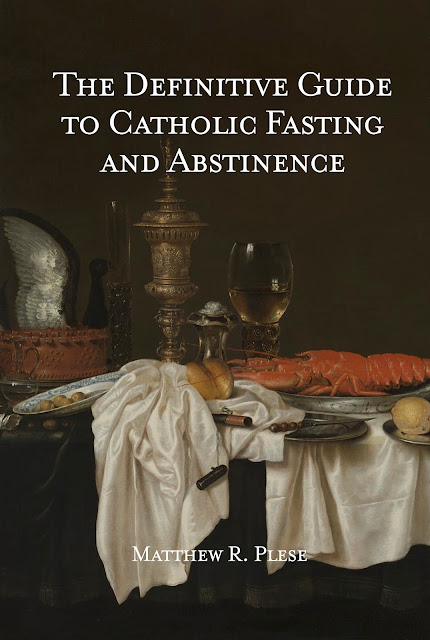
Want to learn more about the history of fasting and abstinence? Check out the Definitive Guide to Catholic Fasting and Abstinence.

Read more >>
Thursday, November 3, 2022
Pray the Office of the Dead for the Poor Souls

Vespers of the Dead

The Office of the Dead is prayed by all on All Souls Day. However, you may also pray the Office of the Dead any other day of the year. The Office of the Dead on other days would be prayed in addition to the day's office. After Matins and Lauds for the day, you would pray the Office of the Dead's Matins and Lauds.  After Vespers for the day, you would pray Vespers from the Office of the Dead.  So, please feel free to pray this Office often for the Poor Souls, especially in November, with the intention of applying any merits and indulgences to them.

You may pray the Office of the Dead online at Divinum Officium for free now by clicking here and selecting "Defunctorum" in the bottom right.

Here follows Vespers from the Office of Dead:

Ant. I will walk before the Lord * in the land of the living.

Psalm 114

I am well pleased, because the Lord hath heard * the voice of my prayer; Because he hath inclined his ear unto me; * therefore will I call upon him all my days. The sorrows of death compassed me round about, * and the perils of hell gat hold upon me. Sorrow and trouble did I find; * then called I upon the Name of the Lord. O Lord, deliver my soul : * gracious is the Lord, and righteous; yea, our God is merciful. The Lord preserveth the simple: * I was brought low, and he delivered me. Return unto thy rest, O my soul; * for the Lord hath dealt bountifully with thee. For he hath delivered my soul from death, * mine eyes from tears, and my feet from falling.

I will walk before the Lord * in the land of the living. 

Eternal rest * grant unto them, O Lord. And let perpetual light * shine upon them.

Ant. I will walk before the Lord * in the land of the living.

Ant 2. Woe is me, O Lord, * that I am constrained to dwell among them that are enemies unto peace.

When I was in trouble, I called upon the Lord, * and he heard me. Deliver my soul, O Lord, from lying lips, * and from a deceitful tongue.What reward shall be given or done unto thee, thou false tongue? * even mighty and sharp arrows, with hot burning coals.Woe is me, that I am constrained to dwell with Meshech, * and to have my habitation among the tents of Kedar! My soul hath long dwelt among them * that are enemies unto peace. I labour for peace; but when I speak unto them thereof, * they make them ready to battle. Eternal rest * grant unto them, O Lord. And let perpetual light * shine upon them.

Ant 2. Woe is me, O Lord, * that I am constrained to dwell among them that are enemies unto peace.

Ant 3. The Lord shall preserve thee * from all evil ; yea, it is even he that shall keep thy soul.

I have lifted up mine eyes unto the hills; * from whence cometh my help. My help cometh even from the Lord, * who hath made heaven and earth. May he not suffer thy foot to be moved; * neither let him slumber that keepeth thee. Behold, he that keepeth Israel * shall neither slumber nor sleep. The Lord is thy keeper, the Lord is thy defence * upon thy right hand. The sun shall not burn thee by day, * neither the moon by night. The Lord shall preserve thee from all evil; * yea, it is even he that shall keep thy soul. The Lord shall preserve thy going out, and thy coming in, * from this time forth for evermore. Eternal rest * grant unto them, O Lord. And let perpetual light * shine upon them.

Ant 3. The Lord shall preserve thee * from all evil ; yea, it is even he that shall keep thy soul.

Ant 4. If thou, Lord, wilt be extreme * to mark what is done amiss, O Lord, who may abide it?

Out of the depths I have cried unto thee, O Lord; * Lord, hear my voice. O let thine ears be attentive * to the voice of my supplication. If thou, O Lord, shalt observe our iniquities, * Lord, who may endure it? For with thee there is merciful forgiveness : * and by reason of thy law, I have waited for thee, O Lord. My soul hath relied on his word * my soul hath hoped in the Lord. From the morning watch even until night : * let Israel hope in the Lord. Because with the Lord there is mercy, * and with him plentiful redemption. And he shall redeem Israel * from all his iniquities. Eternal rest * grant unto them, O Lord. And let perpetual light * shine upon them.

Ant 4. If thou, Lord, wilt be extreme * to mark what is done amiss, O Lord, who may abide it?

Ant 5. Despise not, O Lord, * the works of thine own hands.

I will give thanks unto thee, O Lord, with my whole heart; * for thou hast heard the words of my mouth. Even before the Angels will I sing praise unto thee, * I will worship toward thy holy temple, and I will give glory unto thy Name. Because of thy loving-kindness and truth; * for thou hast magnified thy holy Name above all things. In what day soever I shall call upon thee, hear thou me; * thou shalt endue my soul with much strength. May all the kings of the earth give glory unto thee, O Lord; * for they have heard all the words of thy mouth. Yea, they shall sing in the ways of the Lord, * for great is the glory of the Lord. For the Lord is high, yet looketh he upon the lowly; * and the high he knoweth them afar off. Though I walk in the midst of tribulation, yet shalt thou quicken me; * and thou hast stretched forth thy hand upon the furiousness of mine enemies, and thy right hand hath saved me. The Lord shall render for me; * yea, thy mercy, O Lord, endureth for ever; despise not then the works of thine own hands. Eternal rest * grant unto them, O Lord. And let perpetual light * shine upon them.

Ant 5. Despise not, O Lord, * the works of thine own hands.

V. I heard a voice from heaven, saying unto me.
R. Blessed are the dead, which die in the Lord.

Magnificat Ant: All * that the Father hath given unto me shall come unto me, and him that cometh unto me I will in no wise cast out.

My soul doth magnify the Lord, † * and my spirit hath rejoiced in God my Saviour. For he hath regarded * the lowliness of his handmaiden. For behold, from henceforth * all generations shall call me blessed. For he that is mighty hath magnified me; * and holy is his Name. And his mercy is on them that fear him * throughout all generations. He hath shewed strength with his arm; * he hath scattered the proud in the imagination of their hearts. He hath put down the mighty from their seat, * and hath exalted the humble and meek. He hath filled the hungry with good things; * and the rich he hath sent empty away. He remembering his mercy hath holpen his servant Israel; * as he promised to our forefathers, Abraham and his seed for ever. 

Eternal rest * grant unto them, O Lord. And let perpetual light * shine upon them.

Magnificat Ant: All * that the Father hath given unto me shall come unto me, and him that cometh unto me I will in no wise cast out.

Our Father ...

V. From the gates of hell.
R. Deliver his soul, O Lord.

V. May he rest in peace.
R. Amen.

V. O Lord, hear my prayer.
R. And let my cry come unto thee.

V. The Lord be with you.
R. And with thy spirit.

Let us pray.

O God, who art thyself at once the Maker and the Redeemer of all thy faithful ones, grant unto the souls of thy servants and handmaids remission of all their sins, making of our entreaties unto our great Father a mean whereby they may have that forgiveness which they have ever hoped for. Who livest and reignest with God the Father in the unity of the Holy Spirit, one God, world without end. R. Amen

V. Eternal rest grant unto them, O Lord.
R. And let perpetual light shine upon them.

V. May they rest in peace.
R. Amen.

Read more >>
Thursday, August 18, 2022
St. Michael's Lent: The 40 Day Fast Before Michaelmas

Why Have A Devotion to St. Michael?

The Benedictine Sisters of Perpetual Adoration in a 2006 book published by Tan Books answered this question well:

According to the great St. Alphonsus Liguori, veneration of the holy Angels, and particularly of St. Michael, is an outstanding sign of predestination. St. Lawrence Justinian says: "Although we must honor all the Angels, we ought to invoke in a very special manner the glorious St. Michael, as the Prince of all the heavenly spirits, because of his sublime dignity, his pre-eminent office and his invincible power, which he proved in his conflict with Satan, as well as against the combined forces of Hell." Again, the same Saint says: "Let all acknowledge St. Michael as their protector, and be devoted to him, for he cannot despise those who pray to him . . . But he guards them through life, directs them on their way and conducts them to their eternal home."

What is St. Michael's Lent?

St. Bonaventure records in his biography (written between 1260-1266) how St. Francis of Assisi, “was brought after many and varied toils unto a high mountain apart, that is called Mount Alverna. When, according unto his wont he began to keep a Lent there, fasting, in honor of St. Michael Archangel, he was filled unto overflowing, and as never before, with the sweetness of heavenly contemplation.”

The Little Flowers of St. Francis, a collection of stories about St. Francis that was compiled during the 13th century, records these words of St. Francis to his brothers, “My sons, we are drawing nigh to our forty days’ fast of St. Michael the Archangel; and I firmly believe that it is the will of God that we keep this fast in the mountain of Alvernia, the which by Divine dispensation hath been made ready for us, to the end that we may, through penance, merit from Christ the consolation of consecrating that blessed mountain to the honor and glory of God and of His glorious mother, the Virgin Mary, and of the holy angels.”

Fasting for St. Michael's Lent:

This fasting period begins on the Assumption (August 15) and ends on the feast of St. Michael (September 29). It excludes Assumption Day itself and all Sundays, which are never days of fasting although they may be days of abstinence if one so chooses to keep them as such.

Since this is a purely devotional fast, there is no historical basis to go off of, like we have with Lent, the Assumption Fast, etc. Using the standard for 1 meal, 1 frustulum, and 1 collation would be a good rule to follow here too.

I'd recommend adding, if you don't already, Wednesdays and Saturdays (in addition to Fridays) as days of abstinence.

Prayers for St. Michael's Lent

The SSPX Chapel in Oak Park, IL, recently distributed an excellent brochure featuring prayers to say each day of St. Michael's Lent. Those prayers are available as a scanned PDF by clicking here. Print them off and plan to say them each day for this period of penance. May God, through St. Michael, drive out from his Church and from all baptized souls any taint from the evil one.

Resources:

Want to learn more about the history of fasting and abstinence? Check out the Definitive Guide to Catholic Fasting and Abstinence.

Read more >>
Tuesday, July 5, 2022
Effective Liturgical Catechesis

What is Liturgical Catechesis

The Liturgy is the public worship of God using approved rituals. The Catholic Encyclopedia offers the following definition of Liturgy: "Liturgy (leitourgia) is a Greek composite word meaning originally a public duty, a service to the state undertaken by a citizen… So in Christian use liturgy meant the public official service of the Church, that corresponded to the official service of the Temple in the Old Law." As the Baltimore Catechism #925 states: "God commanded ceremonies to be used in the old law, and 2. Our Blessed Lord Himself made use of ceremonies in performing some of His miracles."

But the Liturgy is itself also a highly effective means of transmitting the Catholic Faith to everyone - children, catechumens, and lifelong Catholics. Everyone can learn the Faith from true and pious liturgical acts since at their core they express the timeless, unchangeable Catholic Faith. Two of the primary means we have to learn the Faith through the Liturgy are the Holy Sacrifice of the Mass and the Divine Office.

The Mass in Liturgical Catechesis

The Mass is the center of our Catholic lives, including our prayer life. The Mass not only contains prayers but is the foundation of prayer. One can never attend Mass too often.

Quoting from John Senior's fantastic work The Restoration of Christian Culture, "Work is a physical necessity; if you don't work you don't eat. Prayer is a necessity of obligation; if you don't pray you will not enter the Kingdom. Prayer is a duty, an office; it is free, voluntary payment of the debt we owe to God for existence and grace. The Latin word for duty is officium, and the perfect prayer of the Church is its Divine Office; St. Benedict calls it the opus Dei, the work of God" (60).

John Senior continues, "I have cited the Latin for the meaning of many words not for the pretense of learning, but because their meaning is Latin. Latin is the language of the Roman Catholic Church; you can repudiate the tradition and overthrow the Church; but you cannot have the tradition and the Church without its language. And though the Second Vatican Council permitted the substitution of vernacular liturgies where pastoral reasons suggested their usefulness, it commanded that the Latin be preserved. The Catholic Faith is so intimately bound to the two thousand years of Latin prayers any attempt to live the Catholic life without them will result in its attrition and ultimate apostasy - which we have witnessed even in the few years of the vernacular experiment. We must return to the Faith of our fathers by way of prayer of our fathers" (60 - 61).

John Senior's works are beautifully said and express an absolute reality - the Church is timeless; she is outside of time. Only by restoring true Christian culture, as Senior explains throughout his book, will Christ again reign in our hearts, our homes, and our families. Christ must reign. And how can we bring about the reign of Christ without frequent prayer? Prayer is necessary. It is essential for the spiritual life. A life spent in good works of charity that has no prayer is a life built on bad soil. And no soul whose life is built in bad soil can inherit everlasting life.

Living a Catholic life means living for the Mass as the center of your life — your prayer life — your entire life.

The Mass is the Sacrifice of Christ on the Cross and for that reason, it is by definition efficacious. We are present at Calvary. Rather than merely remembering the life and death of Christ, we are present at it and partake of its eternal fruits which flow to us from the altar and during the Canon when the priest stands in the place of Christ and offers the Eternal Victim on the Altar to God. We can further receive grace by partaking of the Holy Eucharist if we are Catholics in the state of grace.

It was Pope St. Pius X who famously remarked:

The Holy Mass is a prayer itself, even the highest prayer that exists. It is the Sacrifice, dedicated by our Redeemer at the Cross, and repeated every day on the altar. If you wish to hear Mass as it should be heard, you must follow with eye, heart and mouth all that happens at the altar. Further, you must pray with the priest the holy words said by him in the Name of Christ and which Christ says by him. You have to associate your heart with the holy feelings which are contained in these words and in this manner you ought to follow all that happens at the altar. When acting in this way, you have prayed Holy Mass.

Above all, to participate in the Holy Mass is not to be the loudest person, to say the responses out loud, to move around a lot, etc. To truly participate in the Mass is to be the most contemplative and aware of the presence of God and the offering of our Lord on the Cross. For that reason sometimes those who participate the most fully in the Mass are those who say the very least.

The Divine Office in Liturgical Catechesis

This prayer is actually Liturgy, which means it forms part of the official, public prayers of the Church. Because it is liturgy, we must approach it with respect and reverence, and follow the proper postures and guidelines, just as if we were attending the Liturgy of the Holy Mass.

This prayer is called the Divine Office which is contained in a series of books called the Breviary. At certain points throughout the day, all of the Church prays the same liturgy to God, and we are all united in this wonderful prayer. The purpose of the Divine Office is to sanctify time and our day, making us constantly in prayer before the Father. 

Priests, deacons, monks, and nuns are required to pray these hours throughout the day. However, everyone is invited to pray these. Holy Mother Church encourages all of her faithful to regularly pray the Hours, especially in common (Code of Canon Law, Canon 1174.2).

The Divine Office is immensely helpful to a life of grace, and it is a great grace to be able to enter into the prayer of the Church before God. The main hours to pray are Lauds, Vespers, and Compline are the major hours.  Prime, Terce, Sext, and None are the little hours. Matins, the first hour, is often prayed very early in the morning or night and usually immediately precedes Lauds.  As a layman, you don't need to pray the Office perfectly. But it would be very worthwhile for you to unite your prayers to the Church's official Liturgy.  

An article from America Press Volume 27 written 1922 remarks, that the Divine Office, especially Vespers and Compline, along with the Solemn High Mass are powerful not only for the Faithful but for missionary work among Protestants. And similarly, they are highly effective for liturgical catechesis:

"But the most amazing thing of all is to see the way the most valuable instruments that the clergy have are left unused. The evening service, which could be made so attractive, is now usually a hit-or-miss compilation of private devotions made to serve a public need. The rosary, so strange to Protestants in any case, is recited in so rapid a manner that hardly a word is understood by the Protestant who is present. Even Benediction is often given in a slap-dash manner. From all this the Protestant forms the opinion that the great thing about Catholic prayer is to have it over as soon as possible. Can we blame him so much?

"In the average parish High Mass is very seldom sung except at a funeral. Yet many a soul has been converted by a High Mass. Even where High Mass or the Missa Cantata is the Sunday custom, the Proper of the Mass is left unsung and so the real teaching part of the service is not known by the poeple, and never is put before the truth-seeker at all. Yet the Missal is a storehouse of missionary material. What a splendid thing it would be if in every parish church it were possible to take one's Protestant friends to Solemn Mass or Vespers! What could be better adapted to attract Protestants than Compline properly changed? Why is it that with all the wealth of the liturgy at her disposal the Church in this country makes no effort to use it? Even in our cathedrals the Divine Office is not performed, nor a daily High Mass sung. Is it any wonder if the Protestant comes to think that the Catholic is weary of the worship of God? Music, art, the dramatic instinct, all these things could be used to advantage in this country."


How Many Hours A Day Should I Pray?

You might be concerned and ask "how many hours of prayer must I perform daily?" Quoting again from Senior on the topic, "The strictly cloistered monk and nun lead that life in the highest degree, but each of us in his station must pay his due. There are three degrees of prayer: The first, of the consecrated religious, is total. They pray always, according to the counsel of Our Lord. Their whole life is the Divine Office, Mass, spiritual reading, mental prayer... They pray eight hours, sleep eight hours and divide the other eight between physical work and recreation... The third degree is for those in the married state (or single life) who offer a tithe of their time for prayer — about two and a half hours per day — with eight hours for work, eight for sleep, and the remaining five and a half for recreation with the family" (62-63).

Make an effort — an obligation — pray the Divine Office and other pious devotions for 2 and a half hours each day. And no prayer is greater than the Mass. If possible, attend Holy Mass daily. We quote one final time from Senior who said, "Whatever we do in the political and social order, the indispensable foundation is prayer, the heart of which is the Holy Sacrifice of the Mass, the perfect prayer of Christ Himself, Priest and Victim, recreating in an unbloodly manner the bloody, selfsame Sacrifice of Calvary. What is Christian Culture? It is essentially the Mass" (16-17).

Conclusion

Liturgical Catechesis Program

The Law of Prayer is the Law of Belief. If we pray a certain way, it shows in a powerful way what we believe. And conversely, irreverent Masses, hurried prayers, and parishes that never encourage the Divine Office or at least the Little Office of the Blessed Virgin Mary, fail in effective liturgical catechesis.

For parishes or individuals looking at better catechesis, please consider the wonderful programs of CatechismClass.com. The lessons are unwaveringly faithful to the Catholic Faith and highlight often the importance of liturgical catechesis and the Sacramental life. All adult-level lessons for instance incorporate the Divine Office. Pairing a truly exceptional program like those by CatechismClass.com with a Sacramental and liturgically-based prayer life can help establish a truly solid foundation of liturgical catechesis.
Read more >>
Thursday, June 2, 2022
Octave Day of the Ascension of our Lord

Today according to the pre-1955 changes under Pope Pius XII is the Octave Day of the Ascension.

Ascentiontide lasts for 10 days and is part of the Pascal Season. The first nine days of Ascensiontide include the traditional Octave of the Ascension. The last day of Ascentiontide is the Vigil of Pentecost. Pentecost Sunday, which has its own octave, follows. Trinity Sunday, the Sunday after Pentecost, officially begins the Season After Pentecost. The total length of Paschaltide, from Easter Sunday to the end of Whitsuntide is 56 days (inclusively)

For this season of Ascensiontide, Catholics are welcomed and encouraged to immerse themselves in the devotions appropriate for the season.  For example, during this season, there are special prayers for the time between Ascension and Pentecost.

Before the changes of Pope Pius XII in 1955, there was a liturgical octave for the Ascension, and remnants of the octave can be found in the Office as it now stands.  The appropriate texts for the minor hours (except for the collects) are set out in the psalter. For the collects, Lauds and Vespers however, you need to keep your ribbon on the page for the Ordinary of Ascensiontide. The key points to note are set out via Saints will Arise.

The Mass Propers for this Octave of the Ascension are the same as on the Feast of the Ascension itself with White vestments, the Gloria, the Paschal Alleluia, the Credo, the Preface of the Ascension and the Proper Communicantes for the Ascension in the Canon. You may find them in a pre-1955 Missal such as the Saint Andrew Daily Missal and the Marian Missal from 1945.

History of Octaves

While the Novus Ordo calendar unfortunately only has 2 octaves, traditional Catholics will be familiar with the idea of multiple overlapping Octaves.  The practice of celebrating an Octave, while not only traced to the time spent by the Apostles and the Blessed Virgin Mary awaiting the Paraclete, also has its origins in the Old Testament eight-day celebration of the Feast of Tabernacles (Leviticus 23:36) and the Dedication of the Temple (2 Chronicles 7:9). Very truly, Christ did not come to abolish the Old Law but to fulfill it.

By the 8th century, Rome had developed liturgical octaves not only for Easter, Pentecost, and Christmas, but also for the Epiphany and the feast of the dedication of a church.

After 1568, when Pope Pius V reduced the number of octaves (since they had grown considerably), the number of Octaves was still plentiful.  Octaves were classified into several types. Easter and Pentecost had "specially privileged" octaves, during which no other feast whatsoever could be celebrated. Christmas, Epiphany, and Corpus Christi had "privileged" octaves, during which certain highly ranked feasts might be celebrated. The octaves of other feasts allowed even more feasts to be celebrated.

To reduce the repetition of the same liturgy for several days, Pope Leo XIII and Pope St. Pius X made further distinctions, classifying octaves into three primary types: privileged octaves, common octaves, and simple octaves. Privileged octaves were arranged in a hierarchy of first, second, and third orders. The Octave of the Ascension was a Privileged Octave of the Third Order.

Collect:

O Almighty God, we firmly believe that Your only-begotten Son, our Redeemer, ascended this day into heaven. May our minds dwell always on this heavenly home. Through Our Lord . . .
Read more >>


Copyright Notice: Unless otherwise stated, all items are copyrighted under a Attribution-NonCommercial-NoDerivatives 4.0 International License. If you quote from this blog, cite a link to the post on this blog in your article.

Disclosure of Material Connection: Some of the links on this blog are “affiliate links.” This means if you click on the link and purchase the item, I will receive an affiliate commission. As an Amazon Associate, for instance, I earn a small commission from qualifying purchases made by those who click on the Amazon affiliate links included on this website. I am disclosing this in accordance with the Federal Trade Commission’s 16 CFR, Part 255: “Guides Concerning the Use of Endorsements and Testimonials in Advertising.”