Showing posts sorted by date for query Pre 1955. Sort by relevance Show all posts
Saturday, October 11, 2025
Catholic Homeschooling for the Latin Mass Family

“The home is the first church; the parents are the first priests.”

The revival of the Traditional Latin Mass has brought with it a renewed desire for authentic Catholic education — one rooted in tradition, orthodoxy, and beauty. For many families, homeschooling has become the natural extension of that fidelity to the Faith.

But what does it mean to homeschool as a Latin Mass family? And how can parents ensure that their children’s formation matches the reverence they experience at the altar?

Educating in Harmony with the Mass

Homeschooling for the Latin Mass family is not merely about teaching academic subjects at home. It’s about aligning every aspect of learning with the truths and rhythm of the Traditional Roman Rite. The Mass becomes the model for all formation: ordered, contemplative, and centered on God.

  • Latin and Prayer – Introduce children early to the prayers of the Mass: the Gloria, Credo, and Sanctus. Even young children can learn to chant or recite them.
  • Liturgical Calendar Living – Follow the traditional (pre-1955) calendar. Let the seasons of the Church year set the tone for your lessons, feast days, and even your crafts or meals.
  • Classical and Catechetical Unity – Subjects like history and literature should be taught through a Catholic lens, showing how Christendom shaped the world.

Challenges and Graces of the Traditional Homeschool

Modern textbooks often dilute Catholic truth or ignore it entirely. For TLM families, that’s unacceptable. The good news is that faithful, traditional options abound.

Parents can draw from the Douay-Rheims Bible, the Baltimore Catechism, and traditional hagiographies to ensure doctrinal purity and inspiration.

It’s not always easy — homeschooling demands time, patience, and perseverance — but the graces of forming your children in the fullness of the Faith are beyond measure.

A Resource Built for You

To support Latin Mass families in this sacred work, CatechismClass.com offers a Traditional Catholic Homeschool Program created by priests and homeschooling parents who attend the Tridentine Rite. Every course follows the 1962 Rites, uses Baltimore Catechism foundations, and integrates prayers, saint biographies, and moral instruction faithful to pre-Conciliar teaching.

Courses are self-paced, entirely online, and require no external textbooks. Each lesson includes automatically graded quizzes, catechism readings, Douay-Rheims Scripture, and traditional prayers — making it easy for parents to teach confidently and consistently.

Whether you are beginning your homeschool journey or seeking to deepen your family’s formation, a traditional Catholic curriculum ensures your children grow in both knowledge and holiness.

Visit CatechismClass.com to see how your Latin Mass family can begin today.

Read more >>
Friday, April 18, 2025
The Authenticity of the Shroud of Turin

Through the boldness and generosity of St. Joseph of Arimathea and St. Nicodemus, who sought the Body of Our Lord from Pilate (cf. John 19:38) despite the consequences they would suffer from the Jewish leaders, Our Lord’s Body was given a proper burial as the Scriptures affirm: “And Joseph taking the body, wrapped it up in a clean linen cloth. And laid it in his own new monument, which he had hewed out in a rock. And he rolled a great stone to the door of the monument and went his way” (Matt. 27:59-60). In imitation of the humility of the Lord, Who was buried in a simple linen cloth, the altar at Mass is likewise clothed in a simple linen cloth, as St. Bede the Venerable relates: “The Church's custom has prevailed for the sacrifice of the altar to be offered not upon silk, nor upon dyed cloth, but on linen of the earth; as the Lord's Body was buried in a clean winding-sheet.” 

Yet more than merely having a reference to it in the altar cloth, we are privileged to still have on this earth the actual burial cloth of Our Lord, which is known as the Shroud of Turin, since the holy relic has remained in the city of Turin, Italy for centuries. The Shroud of Turin has been subjected to a variety of rigorous examinations to confirm its authenticity using scientific methods, despite the rather obvious conclusion that the intricacy and detail on the Shroud could not have been created by Medieval or even modern technology. In fact, the Turin Shroud Center of Colorado has demonstrated that the fold marks found on the Shroud indicate it once resided in Constantinople in the 10th-11th centuries, in contrast to those who claim that the shroud was a 14th century forgery.  This corroborates the claim of historians who maintain that the Lord's burial cloth was in the possession of Byzantine emperors before the Sack of Constantinople in A.D. 1204. 

The Holy See remained silent on the Shroud until the middle of the 20th century when, in 1940, Sister Maria Pierina De Micheli obtained authorization from the Archdiocese of Milan to produce the Holy Face Medal with the image of the Holy Shroud. Pope Pius XII subsequently approved the image in 1958 in connection with devotion to the Holy Face and the Feast of the Holy Face, which he instituted to be said on Shrove Tuesday of each year in reparation for the offenses of Mardi Gras.  Further corroborating the approval of devotion to the Shroud is the celebration of the special feast in honor of the Most Holy Shroud of Our Lord Jesus Christ in Turin, which was observed on the Friday after the Second Sunday of Lent in Turin in the pre-1955 Roman Missal. 

Closer to our times, Pope Benedict XVI further expressed his own belief in the authenticity of the Shroud of Turin as the Lord’s own burial cloth by calling it “a truly mysterious image, which no human artistry was capable of producing. In some inexplicable way, it appeared imprinted upon cloth and claimed to show the true face of Christ, the crucified and risen Lord.”  Yet while the Church has officially not decreed that the Shroud of Turin is the actual burial cloth of the Lord, the scientific evidence of the Turin Center of Colorado points to this reality. As Holy Mother Church affirms in her actions, whether or not the cloth is authentic has no bearing on the validity of what Our Lord taught or on the saving power of His death and Resurrection.

Read more >>
Tuesday, April 9, 2024
How Fasting on Vigils Was Reduced Over Time

Click for a larger image. Holy Saturday is not included as it is covered separately by Lenten regulations.

What are Vigils?

Even though the Great Fast of Lent has ended, our fasting has not ended. There are many other days of fasting this year, such as Ember Days and Vigils, which are still coming this year. Understanding fasting on Vigils is something that has been forgotten by the average Catholic today. And rediscovering this practice will help us better celebrate the feastday following the vigil while allowing us more shared days of penance.

Some feasts have vigils associated with them. The term “vigil” is used in several ways. It most properly refers to an entire day before a major feast day (e.g., the Vigil of Christmas, which refers to the entire day of December 24). This kind of vigil is a liturgical day in itself and marks the following day as a day of greater liturgical significance. This is the proper meaning of a vigil. In a similar way, the Catechism of Perseverance, published in 1849, states: “The word vigil signifies watching. The vigils are the days of abstinence and fast which precede the great festivals of the year. There are five; those of Christmas, Easter, Pentecost, Assumption, and All Saints. In some dioceses, the feast of St. Peter and St. Paul is also preceded by a vigil.”

NB: A Mass using the Sunday propers that is anticipated (i.e., offered) on a Saturday evening is sometimes, though incorrectly, called a vigil. This practice, however, is a post-Vatican II novelty and not part of Catholic Tradition, so I counsel Catholics to never attend such “vigil Masses” on Saturday evenings.

Definition of Key Terms in the Vigils Table:

Fasting: Fasting refers to how much food we eat. It means taking only one meal during a calendar day. The meal should be an average-sized meal as overeating at the one meal is against the spirit of the fast. Fasting generally means that the meal is to be taken later in the day. Along with the one meal, up to two snacks (technically called either a collation or frustulum) are permitted. These are optional, not required. Added up together, they may not equal the size of the one meal. No other snacking throughout the day is permitted. Fasting does not affect liquids, aside from the Eucharistic Fast which is a separate matter.

Abstinence: Abstinence in this context refers to not eating meat. Meat refers to the flesh meat of mammals or fowl. Beef, poultry, lamb, etc. are all forbidden on days of abstinence. Abstinence does not currently prohibit animal byproducts like dairy (e.g., cheese, butter, milk) or eggs, but in times past, they were prohibited. Fish is permitted along with shellfish and other cold-blooded animals like alligators. In times past, days of fasting were always days of abstinence as well; however, not all days of abstinence were days of mandatory fasting.

Partial Abstinence: Partial Abstinence refers to eating meat only at the principal meal of the day. Days of partial abstinence do not permit meat to be eaten as part of the collation or the frustulum. Partial abstinence started only in 1741 under Pope Benedict XIV as a concession and as part of a gradual weakening of discipline. Beforehand, days of abstinence were days of complete abstinence.

NB: The table concerns only fasting and abstinence for Vigils and thus omits other possible days of fasting and/or abstinence: Lent, Ember Days, Rogation Days, etc.

Explanation of Key Changes to Vigils in the English-Speaking World:

1. On March 9, 1777, Pope Pius VI reduced for English Catholics days of fasting to consist of the Ember Days; the forty days Lent; Wednesdays and Fridays in Advent; and the vigils of Christmas, Whitsun Sunday (i.e. Pentecost), Ss. Peter and Paul, and All Saints.

2. As mentioned in the Irish Ecclesiastical Record from 1882, Pope Benedict XIV in 1755 removed 18 feasts from double precept and reduced them to single precept. Shortly thereafter in 1778, Pope Pius VI reduced the number of holy days to 13. And as the Record states, "On this occasion, the obligation of hearing Mass was removed, as well as the obligation of abstaining from servile works." The Record continues: "the number of those Vigils to which the obligation of fasting had been attached [as of 1778] was in fact but eight - these being the Vigils of the feast of St. Laurence the Martyr (August 9th), and of seven of the nine suppressed feasts of the Apostles." No fasting was observed beforehand on the Vigil of St. John on December 26 or the Vigil of Ss. Philip and James on account of them always falling in Christmas and Pascaltide respectively.

3. The Vigil of Ss. Peter and Paul ceased being a fast day in America by 1842. In Great Britain, Ireland, Australia, and Canada the Vigil of Ss. Peter and Paul remained a day of fasting and abstinence up until the 1917 Code of Canon law. In 1902, the Holy Father granted a special dispensation for Catholics in England from fasting on the Vigil of Ss. Peter and Paul in honor of the coronation of King Edward VII, illustrating historical proof of its observance in the early part of the 20th century.

4. "The Catholic's Pocket Prayer-Book" published by Henri Proost & Co in 1924 notes "in the United Kingdom (except during Lent), abstinence is not binding on Ember Saturdays or on any Vigil that immediately precedes or follows a Friday or other day of abstinence."

5. Effective with the 1917 Code, fasting and abstinence were no longer observed should a vigil fall on a Sunday as stated in the code: "If a vigil that is a fast day falls on a Sunday the fast is not to be anticipated on Saturday but is dropped altogether that year." Before 1917, the fast of a Vigil that fell on a Sunday was observed instead on the preceding Saturday.

6. On January 28, 1949, the United States bishops issued modified regulations on abstinence in America again after receiving a ruling from the Sacred Congregation of the Council. Partial abstinence replaced complete abstinence for Ember Wednesdays, Ember Saturdays, and the Vigil of Pentecost.

7. In March 1955, Pope Pius XII abolished the liturgical Vigil of All Saints. The US Bishops requested an official determination from Rome on whether the custom of fasting and abstinence on the suspended Vigil of All Saints had also been terminated. They received a pre-printed notice in a response dated March 15, 1957, stating: "The Decree of the Sacred Congregation of Rites...looks simply to the liturgical part of the day and does not touch the obligation of fast and abstinence that are a penitential preparation for the following feast day." The US Bishop thereafter dispensed both the fast and partial abstinence law for the Vigil of All Saints.

8. On July 25, 1957, Pope Pius XII commuted the fast in the Universal Church from the Vigil of the Assumption to the Vigil of the Immaculate Conception on December 7, even though he had previously abrogated the Mass for the Vigil of the Immaculate Conception. 

9. In 1959, Pope John XXIII permitted the Christmas Eve fast and abstinence to be transferred to 23rd. While the United States, Great Britain, and Ireland kept the penance on December 24, other nations, including Canada and the Philippines, transferred it to December 23.

10. As stated in a January 1960 issue of the Catholic Standard and Times, following an October 1959 meeting, the Bishops of Canada issued new regulations taking effect in 1960 that provided that the law of abstinence henceforth will apply only on all Fridays of the year, while the regulations for fast and abstinence will apply only on four days—Ash Wednesday; Good Friday; December 7, the vigil of the feast of the Immaculate Conception, and December 23, the anticipated vigil before Christmas.

How are Vigils Observed?

There are two characteristics of vigils: penance and prayer. 

As to penance, many liturgical vigils, if not all, were originally also days of fasting and abstinence. Over time, the fasting and abstinence was dropped from many. By the time of the Catechism of Perseverance, there were only a few such vigils. But the days of fasting and abstinence differed – including on vigils in various places. For instance, by 1893, the only fasting days kept in Rome were the forty days of Lent, the Ember Days, and the Vigils of the Purification, of Pentecost, of St. John the Baptist, of Ss. Peter and Paul, of the Assumption, of All Saints, and of Christmas. This is summarized from the Handbook to Christian and Ecclesiastical Rome. In just a few years, Rome would abrogate the fast on the Vigil of the Purification and on the Vigil of St. John the Baptist. By the 1917 Code of Canon Law, fasting vigils were dropped universally to only four days: Vigils of Pentecost, the Assumption of the Blessed Virgin Mary, All Saints, and Christmas. These are what Americans at that time were aware of, but previously, there were differing vigils.

By 1917, there were, however, still many other liturgical vigils on the calendar that were not obligatory days of abstinence at that time. For instance, before the changes to the Roman Rite liturgical calendar in 1955, nearly all feasts of the Apostles were preceded by a vigil. And the Church put those days in place to help us prepare for the importance of the feast of an Apostle, since all feasts of the Apostles were in former times Holy Days of Obligation. We have lost the importance of the feast days of the Apostles, I believe, in part due to losing the vigils. We can change that for ourselves by observing those feast days in our own prayer lives. And the same is true for the Vigil of All Saints (i.e., Halloween), a traditional day when we would fast and abstain from meat, but which is neither found in the Novus Ordo calendar nor even in the 1962 Missal.  Hence any of the older vigils (e.g., the Vigil of St. Lawrence, the Vigil of Epiphany, the Vigil of the Nativity of St. John the Baptist, etc.) can and arguably, should, be observed with fasting and abstinence even if they are not obliged under penalty of sin. 

The second key feature of vigils is prayer. 

The Catechism of Perseverance explains this aspect well: “How should we spend the vigils? Whatever be our age, we should spend those days in a more holy manner than other days, in order to prepare for the celebration of the festival and to receive the graces which God always gives more abundantly at that time.” Praying an extra rosary, making time for mental prayer, and even praying into the evening as the vigil becomes the feastday itself are all worthwhile practices to make vigils slightly more penitential and all the more prayerful.

While we know that Sundays and Holy Days of Obligation should be spent in prayer, attendance at Holy Mass, and in avoidance of servile work, we often pay little mind to vigils since the Church over the past several decades has virtually eliminated them. But we must honor our Lady of Fatima’s call for penance and can model our example after that of our forefathers who observed the vigils in preparation for the feast.

Works Cited:

1. Great Britain (1776): American Ecclesiastical Review (Hardy and Mahony, 1886), vol. 11, p. 469.https://www.google.com/books/edition/The_American_Catholic_Quarterly_Review/lz0QAAAAYAAJ 

2. USA (1789): American Ecclesiastical Review (Hardy and Mahony, 1886), vol. 11, p. 469.https://www.google.com/books/edition/The_American_Catholic_Quarterly_Review/lz0QAAAAYAAJ 

3. USA (1909): O'Neill, J.D. (1909). Fast. In The Catholic Encyclopedia. New York: Robert Appleton Company. http://www.newadvent.org/cathen/05789c.htm

4. Great Britain (1909): O'Neill, J.D. (1909). Fast. In The Catholic Encyclopedia. New York: Robert Appleton Company. http://www.newadvent.org/cathen/05789c.htm

5. Canada (1909): O'Neill, J.D. (1909). Fast. In The Catholic Encyclopedia. New York: Robert Appleton Company. http://www.newadvent.org/cathen/05789c.htm

6. CIC (1917): Peters, Edward N.  1917 Pio-Benedictine Code of Canon Law: in English translation, with extensive scholarly apparatus.  San Francisco: Ignatius Press, 2001. https://www.jgray.org/codes/ 

7. Canada (1952): https://sspx.ca/en/rules-fast-abstinence 

8. USA (1962): Rev. Heribert Jone, “Moral Theology: Englished and Adapted to the Laws and Customs of the United States of America,” (Newman Press, 2009), p. 285.

9. Canada (1962): The Catholic Standard and Times, Volume 65, Number 19, Published January 29, 1960. https://thecatholicnewsarchive.org/?a=d&d=cst19600129-01.2.77&e=-------en-20--1--txt-txIN-------- 

10. Great Britain (1962): 1962 Roman Catholic Daily Missal, (Angelus Press, 2004). 
Read more >>
Sunday, July 16, 2023
A Catholic Life Podcast: Episode 22

In today’s episode, on the 7th Sunday after Pentecost, I address the following: 

  1. Should Civil Society Outlaw Sin?
  2. What Really Was the Spanish Inquisition?
  3. The Upcoming feastdays of this week, which include some interesting Pre-1955 Elements

This episode is sponsored by PrayLatin.comPrayLatin.com offers Latin prayer cards to learn and share prayers in the sacred language. Learn your basic prayers without spending more time looking at screens. Conveniently carry these Latin prayers with you on the go. Share basic prayers in Latin with your family and friends. PrayLatin.com prayer cards are available in various formats. Practice your pronunciation with easy-to-follow English phonetic renderings of Latin words. PrayLatin.com also offers Latin-English rosary pamphlets with the traditional 15 mysteries. Visit PrayLatin.com today and take advantage of generous free shipping offers on both domestic and international orders.

Subscribe to the podcast on Buzzsprout, Apple Podcasts, Spotify, I-tunes, and many other platforms!

Read more >>
Thursday, March 30, 2023
The History of the Holy Saturday Fast

Eugene Burnand. Holy Saturday. 1907-1908. Musee des Beaux Arts, La Chaux de Finds, France.

The observance of Lent stretches back as far as Apostolic times. Lent was for centuries observed as forty days of fasting in the Roman Church with Sundays excluded from fasting but not from abstinence. That is, Ash Wednesday (since its institution) through Holy Saturday were days of fasting. I have separately cataloged the history of Lenten fasting in "History of Lenten Fasting: How to Observe the Traditional Lenten Fast."

The Lenten fast began under the Apostles themselves and was practiced in various forms in the Early Church. As time went on, the fast became uniformly observed under the pain of sin. As with all Lenten practices, changes occurred over time regarding the fast, abstinence, and hearing of Holy Mass on Holy Saturday. 

Holy Saturday Fasting Was Practiced in Apostolic Times

In the Early Church, Holy Saturday was part of the apostolic practice of abstaining from all food completely from Holy Thursday evening (or Good Friday morning) until sunset on Holy Saturday (or later). This was known as the "Passion Fast," and in practice, the aim was to fast 40 hours in honor of the 40 hours our Blessed Lord’s body lay in the tomb. Holy Saturday's fast was also practiced like the rest of Holy Week as xerophagiae: “The strictest Christian fast which is observed chiefly in the Eastern churches during Lent or especially Holy Week and in which only bread, salt, water, and vegetables may be eaten” (Webster’s Dictionary). In practice, bread, herbs, raw nuts, or raw vegetables and fruit without oil or dressing may be consumed for those who seek to keep this strict and who are unable to fast from all food whatsoever for two whole days in a row.

Heortology: A History of the Christian Festivals from their Origin to the Present Day by Dr. K.A. Heinrich Kellner states the following regarding the Lenten fast in the ancient Church:

"Among Catholics also abstinence was pushed to great lengths. The canons of Hippolytus prescribe for Holy Week only bread and salt. The Apostolic Constitutions will only permit bread, vegetables, salt and water, in Lent, flesh and wine being forbidden; and, on the last two days of Holy Week, nothing whatsoever is to be eaten. The ascetics, whose acquaintance the Gallic pilgrim made in Jerusalem, never touched bread in Lent, but lived on flour and water. Only a few could keep so strict a fast, and generally speaking people were satisfied with abstaining from flesh and wine. But this lasted throughout the entire Lent, and Chrysostom tells us that in Antioch no flesh was eaten during the whole of Lent. Abstinence from milk and eggs (the so-called lacticinia) was also the general rule."

Regarding Holy Saturday's fast, in particular, Canon 89 of the Council in Trullo in 692 AD provides an account of the piety and devotion of the faithful of that time: 

“The faithful, spending the days of the Salutatory Passion in fasting, praying and compunction of heart, ought to fast until the midnight of the Great Sabbath: since the divine Evangelists, Matthew and Luke, have shewn us how late at night it was [that the resurrection took place].” 

That tradition of fasting on Holy Saturday until midnight would last for centuries. Dom Gueranger writes in the Liturgical Year:

Such, we repeat, was the discipline of the Latin Church for nearly a thousand years: but about the 11th century, an important change began to be introduced with regard to the celebration of Mass on Holy Saturday. The Mass which, hitherto, had been celebrated during the Night preceding Easter Sunday, then began to be anticipated on the Saturday; but it was always considered as the Mass of the hour of our Lord’s Resurrection, and not as the Mass of Holy Saturday. The relaxations that had been introduced with regard to Fasting were the occasion of this change in the Liturgy.

Holy Saturday Was A Holy Day of Obligation in the Middle Ages

Holy Saturday also used to be a Holy Day of Obligation. The first catalog of Holy Days comes from the Decretals of Gregory IX in 1234, which listed 45 Holy Days. In 1642, His Holiness Pope Urban VIII issued the papal bull "Universa Per Orbem" which altered the required Holy Days of Obligation for the Universal Church to consist of 35 such days as well as the principal patrons of one's locality. 

Some of the Holy Days of Obligation removed between 1234 and 1642 included Holy Monday through Holy Saturday in addition to Easter Wednesday through Easter Saturday. Hence by 1642, Holy Saturday was no longer a Holy Day of Obligation.

Holy Saturday Fasting Remained Practiced for Centuries

In my series outlining the changes to fasting and abstinence in the colonies—and through the modern-day United States—I pointed out that Holy Saturday often remained a day of obligatory fasting even when mitigations were issued due to the change in the time of the Vigil that happened back in the 11th century.

For instance, the papal bull "Altitudo Divini Concilii" of Pope Paul III in 1537 reduced the days of penance and those of hearing Mass for the Indians out of pastoral concern due to the physically demanding lifestyle that they lived and also largely due to the fact that they fasted so much already. As a result, the natives were required to only hear Mass on a much smaller number of days: Sundays, Christmas, Circumcision, Epiphany, Candlemas, Annunciation, Sts Peter and Paul, Ascension, Corpus Christi, the Assumption, and the Nativity of the Blessed Virgin. And the only fasting days were the Fridays in Lent, Holy Saturday, and Christmas Eve. Holy Saturday remained.

Centuries later, when Pope Leo XIII issued further changes allowing animal products throughout Lent, he explicitly excluded Holy Saturday from those mitigations:

“In 1886 Leo XIII allowed meat, eggs, and milk products on Sundays of Lent and at the main meal on every weekday [of Lent] except Wednesday and Friday in the [United States]. Holy Saturday was not included in the dispensation. A small piece of bread was permitted in the morning with coffee, tea, chocolate, or a similar beverage.”

By the time of the 1917 Code of Canon Law, the days of obligatory fasting as listed in the 1917 Code of Canon Law were the forty days of Lent, including Ash Wednesday, Good Friday, and Holy Saturday until noon. The Deharbe Catechism in the 1800s refers to the fast ending at Noon, so it does predate the 1917 Code. Why did Holy Saturday fasting only last until noon? It likely dates to when the Vigil Mass for Easter was moved from the night of Holy Saturday into Easter Sunday back to the morning of Holy Saturday. By the High medieval period, the celebration in the morning of the Easter Vigil (and other Triduum services) was almost the universal custom, in large part due to the fasting regulations requiring the fast to last until after Vespers. As a result, sometime after 692 AD, the fast on Holy Saturday was modified to end at noon.

Holy Saturday Fasting Wanes Along With All Other Fasting in the 1900s

Before 1951, Bishops were able to dispense laborers and their family members from the laws of abstinence, if necessary, under the workingmen's privilege that was introduced in 1895. This privilege of eating meat, though, excluded Fridays, Ash Wednesday, Holy Week, and the Vigil of Christmas. In 1951, the abstinence laws in America were again revised as Father Ruff summarizes:

"In 1951 the U.S. bishops standardized regulations calling for complete abstinence from meat on Fridays, Ash Wednesday, the vigils of Assumption and Christmas, and Holy Saturday morning for everyone over age seven. On the vigils of Pentecost and All Saints, meat could be taken at just one meal. Fast days, applying to everyone between 21 and 59, were the weekdays of Lent, Ember days, and the vigils of Pentecost, Assumption, All Saints, and Christmas. On these fast days only one full meal was allowed, with two other meatless meals permitted which together did not make up one full meal. Eating between meals was not permitted, with milk and fruit juice permitted. Health or ability to work exempted one." 

In 1956 under Pope Pius XII, the fast, which previously ended at noon, was extended to the midnight between Holy Saturday and Easter Sunday, on account of the Holy Week changes enacted which made the Vigil Mass obligatory in the evening of Holy Saturday:

"The abstinence and fast prescribed for Lent, which hitherto has ceased on Holy Saturday after noon, according to canon 1252, §4 [1917 Code], will cease in the future at midnight of the same Holy Saturday."

Maxima Redemptionis Nostrae Mysteria (Nov. 16, 1955) AAS 47 (1955)

Fr. Frederick McManus, an American Canon Lawyer, commented on this change:

The Decree on the revised Holy Week changes the law of canon 1252, §4, concerning fast and abstinence on Holy Saturday. According to the canon, the Lenten fast ended after noon on Holy Saturday. This is now abrogated, the obligation is extended until midnight of Holy Saturday, and the entire day becomes one of abstinence and fast. Local Ordinaries at present possess the faculty to dispense all their subjects, including religious (even exempt), from the law of fast and abstinence on Holy Saturday.Thus they may dispense from fast or from abstinence or from both fast and abstinence on this day. 

The Rites of Holy Week (Bruce 1956), pgs 22 and 23.

In 1966, Paul VI's Paenitemini eliminated Holy Saturday and all other days of fasting except for Good Friday and Ash Wednesday in a radical departure from the past. Sadly, those changes were incorporated in the 1983 Code of Canon Law, which largely took Paenitemini while modifying the age of fasting.

A Traditional Holy Saturday Fast (Summary and Application)

  • Early Church: All of Holy Saturday was a strict fast with abstinence
  • 11th Century: The Vigil, which had taken place at night between Holy Saturday and Easter Sunday, is moved to the daytime of Holy Saturday. This change would cause mitigations with the strict fast that had previously always been obligatory on Holy Saturday.
  • 1917 Code: For at least 100+ years before the 1917 Code, the fast, which previously ended at midnight into Sunday, ended at Noon on Holy Saturday. This is largely due to the Vigil Mass taking place in the morning of Holy Saturday.
  • 1956: Pope Pius XII, in changing the Vigil Mass to start only after sunset on Holy Saturday, extends the fast to midnight.

For those seeking more traditional fasting for the final days of Lent - and in preparation for the Lord's Resurrection - a return not to the 1950s or 1917 is in order. Rather, a return to treating all of Holy Saturday as a day of fasting and abstinence in the form of the Passion Fast practiced with the principles of Xerophagiae is the ideal. If we do attend a pre-1955 Easter Vigil Mass in the morning or daytime of Holy Saturday, we can eat after that Mass but I would encourage souls to keep abstinence until after attending Easter Sunday Mass.

While this is not obligatory under penalty of sin, it is a worthwhile end to our fasting as we present to Almighty God the final day of Lenten fasting for His honor and glory and in reparation for our sins. Let us all seek greater perfection and never the minimum of the law.

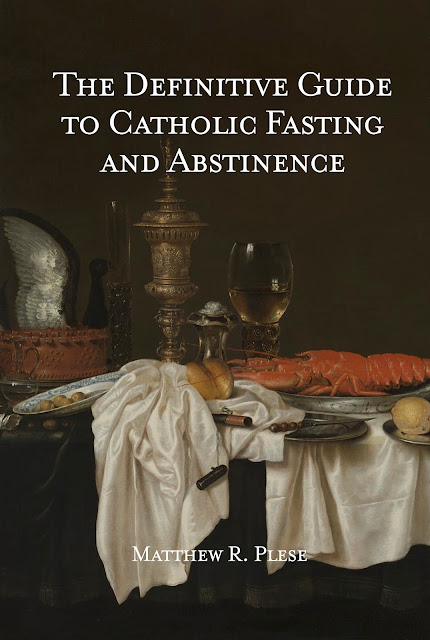
Want to learn more about the history of fasting and abstinence? Check out the Definitive Guide to Catholic Fasting and Abstinence.

Read more >>
Thursday, June 2, 2022
Octave Day of the Ascension of our Lord

Today according to the pre-1955 changes under Pope Pius XII is the Octave Day of the Ascension.

Ascentiontide lasts for 10 days and is part of the Pascal Season. The first nine days of Ascensiontide include the traditional Octave of the Ascension. The last day of Ascentiontide is the Vigil of Pentecost. Pentecost Sunday, which has its own octave, follows. Trinity Sunday, the Sunday after Pentecost, officially begins the Season After Pentecost. The total length of Paschaltide, from Easter Sunday to the end of Whitsuntide is 56 days (inclusively)

For this season of Ascensiontide, Catholics are welcomed and encouraged to immerse themselves in the devotions appropriate for the season.  For example, during this season, there are special prayers for the time between Ascension and Pentecost.

Before the changes of Pope Pius XII in 1955, there was a liturgical octave for the Ascension, and remnants of the octave can be found in the Office as it now stands.  The appropriate texts for the minor hours (except for the collects) are set out in the psalter. For the collects, Lauds and Vespers however, you need to keep your ribbon on the page for the Ordinary of Ascensiontide. The key points to note are set out via Saints will Arise.

The Mass Propers for this Octave of the Ascension are the same as on the Feast of the Ascension itself with White vestments, the Gloria, the Paschal Alleluia, the Credo, the Preface of the Ascension and the Proper Communicantes for the Ascension in the Canon. You may find them in a pre-1955 Missal such as the Saint Andrew Daily Missal and the Marian Missal from 1945.

History of Octaves

While the Novus Ordo calendar unfortunately only has 2 octaves, traditional Catholics will be familiar with the idea of multiple overlapping Octaves.  The practice of celebrating an Octave, while not only traced to the time spent by the Apostles and the Blessed Virgin Mary awaiting the Paraclete, also has its origins in the Old Testament eight-day celebration of the Feast of Tabernacles (Leviticus 23:36) and the Dedication of the Temple (2 Chronicles 7:9). Very truly, Christ did not come to abolish the Old Law but to fulfill it.

By the 8th century, Rome had developed liturgical octaves not only for Easter, Pentecost, and Christmas, but also for the Epiphany and the feast of the dedication of a church.

After 1568, when Pope Pius V reduced the number of octaves (since they had grown considerably), the number of Octaves was still plentiful.  Octaves were classified into several types. Easter and Pentecost had "specially privileged" octaves, during which no other feast whatsoever could be celebrated. Christmas, Epiphany, and Corpus Christi had "privileged" octaves, during which certain highly ranked feasts might be celebrated. The octaves of other feasts allowed even more feasts to be celebrated.

To reduce the repetition of the same liturgy for several days, Pope Leo XIII and Pope St. Pius X made further distinctions, classifying octaves into three primary types: privileged octaves, common octaves, and simple octaves. Privileged octaves were arranged in a hierarchy of first, second, and third orders. The Octave of the Ascension was a Privileged Octave of the Third Order.

Collect:

O Almighty God, we firmly believe that Your only-begotten Son, our Redeemer, ascended this day into heaven. May our minds dwell always on this heavenly home. Through Our Lord . . .
Read more >>
Monday, June 7, 2021
Errors in the Angelus Press 1962 Missal

September 2023 Update: I have happily heard that the most recent printing corrects most (if not all) of the issues outlined below. The two errors that remain are that the top of the 5 page for the USA fasting and abstinence rubrics still incorrectly lists the Vigil of the Assumption and St. Monica's feastday still incorrectly states that the Creed is said. They still need to change the next printing to say the Vigil of the Imm. Conception and not the Vigil of the Assumption on Page 5. They corrected page 4 (noted below) but not page 5. And the Creed is not said on St. Monica's feastday. Keep the below in mind if you have an older printing.

Original Post: It's important to keep in mind that publishing errors do occur, even with modern-day technology, and hand missals are no exception. I have a copy of the Angelus Press Missal from the second printing in November 2005. In that Missal (and possibly subsequent printings) are a few errors to be aware of. I have contacted Angelus Press and these errors are part of the proposed errata for the next printing.

  • Page 646: The color for the vestments for Rogation Masses incorrectly states white. It should be violet.
  • Page 935. It lists the Preface of the Apostles for the Common of One of Several Popes. That is not correct. When the Common was created in 1942 by Pope Pius XII, this Preface was assigned but it was very soon after reversed and changed to the Common Preface. The Common Preface is the correct one used when this Mass is offered.

  • Page 1192: It lists the Creed to be said on St. Monica's feastday which is not correct.
  • Page 1334. It lists the Preface of the Apostles for St. Alphonsus' Feastday. That is not correct. He would use the Common Preface.
  • Page 1396. It shows the Preface of the Apostles for the Feast of St. Pius X, instead of the Common Preface.
  • Page 1402. It shows the Creed said on the Feast of the Holy Name of Mary when this is not the case in the 1962 Missal. This would have been observed previously in the pre-1955 Missal.
Keep these in mind for any handouts you create for Mass or articles you write online. And make priests aware who use this Missal as a reliable source of the rubrics in place as of 1962.

If you are aware of any other errors, share them in the comments below.

Read more >>
Monday, January 18, 2021
Solemn Mass & the Divine Office: Tools for Evangelization

“Let nothing be preferred to the Work of God” (Rule of St. Benedict 43:3)

It is no surprise that I have for many years now strongly asserted the need to restore the Church to Her traditional Liturgy, Her soundness of doctrine without ambiguity, and Her devotions and cultural traditions that incorporate Faith in all the rudimentary ways of life. As the years have passed, I have also understood more now than before that to restore the Catholic Faith and all things in Christ - to use the words of St. Pius X - does not mean returning to the year 1962 or even the 1950s. 

The 1962 Liturgical Calendar, while vastly preferable to the 1969 Calendar used in the Novus Ordo, was transitional in nature and reflects a number of modernist elements that aided in the expunging of Catholicism from daily life. Likewise, the reduction in fasting and Holy Days of Obligation, which began several centuries ago, left the Church in the early 1900s with a mere shell of these former glorious customs. The words of Pope Benedict XIV remarking that the weakening of the Lenten fast from its form in the mid-1700s would be to the Church's utter detriment have come true.

For those Catholics who understand that we have lost a pearl of great price, restoring the Church and the work of God to the center of a Catholic's life is of primary importance. While I have strongly advocated for the observance of fasting as practiced even before the weakening changes in the 18th and 19th centuries, I have only recently understood the importance of restoring the public worship of God in grandeur and splendor (i.e. the Sunday Solemn High Mass) to every parish.

It should come as no surprise that the first and foremost way to restore the Catholic Faith is to abolish the Novus Ordo. The Novus Ordo is deficient in its Theology, reflecting a fundamental error that can not be rectified by merely turning the priest ad orientem, adding incense, incorporating Latin chants, and rearranging externals. At its core, the Novus Ordo prayers were written by a committee and they are a rupture from Tradition. The Novus Ordo and the purity of the Catholic Faith are irreconcilable.

But, simply returning to the mentality in America in the mid-1900s to offer only Low Masses is also not the answer. 

But why? As the Baltimore Catechism reminds us: "All Masses are equal in value in themselves and do not differ in worth, but only in the solemnity with which they are celebrated or in the end for which they are offered." While all valid Masses are truly Catholic and pleasing to God (i.e. efficacious since Christ the Lord is truly offered on the altar and the Sacrifice of the Cross is made present again), the varying degrees in solemnity are for our benefit. However, even a Low Mass is preferable to the Novus Ordo since the Mass said according to the older liturgical books is at its core Catholic, it is valid, and it is pleasing to God assuming the priest offers it with reverence and with due care.

The solemnity in which the Mass is offered distinguishes Masses into four categories as the Baltimore Catechism reminds us:

  1. When the Mass is sung by a bishop, assisted by a deacon and sub-deacon, it is called a Pontifical Mass; 
  2. When it is sung by a priest, assisted by a deacon and sub-deacon, it is called a Solemn Mass; 
  3. When sung by a priest without deacon and sub-deacon, it is called a Missa Cantata or High Mass;
  4. When the Mass is only read in a low tone it is called a low or private Mass.
In the decades before Vatican II, the trend intensified for parishes to merely offer Low Masses - even on Sundays and Holy Days of Obligation. The chants that were to accompany such sacred days were lost. The Faithful in the pews were also often robbed of the Divine Office which had ceased to be offered regularly even in cathedrals. Nowadays even in parishes that only offer the Tridentine Mass, it is exceedingly rare to find one that publicly offers the Divine Office in Latin using the traditional Divino Afflatu (pre-1955) liturgical books. Even the updated 1960 Divine Office is rarely ever publicly offered except in a few monasteries.


Solemn High Mass at St James London

Why has the Church ceased to offer Solemn Masses on Sundays and on Holy Days of Obligation? Why have parishes ceased to chant Vespers on such days? In fact, the Second Plenary Council of Baltimore in 1866 in Chapter Three of Title VI "De cultu divino" mandated the singing of vespers on all Sundays and Holy Days of Obligation, a law that had been on the books since 1791. 

As an article from America Press Volume 27 written 1922 remarks, the Divine Office, especially Vespers and Compline, along with the Solemn High Mass are powerful not only for the Faithful but for missionary work among Protestants:

"But the most amazing thing of all is to see the way the most valuable instruments that the clergy have are left unused. The evening service, which could be made so attractive, is now usually a hit-or-miss compilation of private devotions made to serve a public need. The rosary, so strange to Protestants in any case, is recited in so rapid a manner that hardly a word is understood by the Protestant who is present. Even Benediction is often given in a slap-dash manner. From all this the Protestant forms the opinion that the great thing about Catholic prayer is to have it over as soon as possible. Can we blame him so much?

"In the average parish High Mass is very seldom sung except at a funeral. Yet many a soul has been converted by a High Mass. Even where High Mass or the Missa Cantata is the Sunday custom, the Proper of the Mass is left unsung and so the real teaching part of the service is not known by the poeple, and never is put before the truth-seeker at all. Yet the Missal is a storehouse of missionary material. What a splendid thing it would be if in every parish church it were possible to take one's Protestant friends to Solemn Mass or Vespers! What could be better adapted to attract Protestants than Compline properly changed? Why is it that with all the wealth of the liturgy at her disposal the Church in this country makes no effort to use it? Even in our cathedrals the Divine Office is not performed, nor a daily High Mass sung. Is it any wonder if the Protestant comes to think that the Catholic is weary of the worship of God? Music, art, the dramatic instinct, all these things could be used to advantage in this country."

There is much value in the Low Mass. I do not intend to dissuade priests from offering the Low Mass early on Sundays and throughout the week. Aside from Sundays and Holy Days of Obligation, I prefer the quiet and the stillness of an early morning Low Mass said quietly by a priest as the sun is rising. Years ago I read an article on this very topic by Dr. Peter Kwasniewski where he recounted a trip to a monastery where he experienced the beauty of monks offering private Low Masse in silence at the same time. This is a beautiful thing and this should not cease. In fact, silence is the language of God, as Dr. Kwaniewski has well remarked. However, despite this, he also wrote a fitting piece reflecting on the Problem of the Dominant Low Mass and the Rare High Mass. I would add to his work to also reflect that the rushed prayers of Rosary and Benediction in the evening, the absence of the Divine Office publicly chanted, and the lack of any regular Pontifical High Masses have hurt the missionary efforts of the Church and the ability to strengthen the devotion of lay Catholics.

Priests, please help us restore the sacred. Please offer Solemn High Masses and the Missa Cantata on Sundays and all Holy Days of Obligation (including the many former Holy Days like the feasts of the Apostles). Help us to experience Matins, Lauds, Prime, Vespers, or Compline. Help us hear the chants of the liturgical year, experience the many blessings throughout the year from wine to herbs to throats to candles and cars, and help us observe strict fasting. May all of this help restore in our own homes a Catholic ethos and may we slowly but surely restore our own families, homes, towns, governments, and nations as faithful servants of Christ the King.

Read more >>
Wednesday, December 23, 2020
Indulgences for Devotions to St. Joseph

With the announcement from the Vatican of a Special Year of St. Joseph lasting from December 8, 2020, through December 8, 2021, the Apostolic Penitentiary issues a Decree granting plenary indulgences in 15 different ways. Some of those ways indicate praying an "approved" prayer to St. Joseph. 

One excellent option is the Prayer to St. Joseph / Oratio ad Sanctum Iosephum which was composed by Pope Leo XIII and, by his request, added to the end of the prayer of the Rosary during the month of October.

Devotion to St. Joseph is not new. And neither are indulgences attached to some of the prayers to the foster-father of our Lord. In fact, the Raccolta lists several excellent and worthwhile prayers approved by the Church. The Five Psalms in Honor of the Name of Joseph, the prayer Quicumque, the Seven Dolours and Seven Joys of St. Joseph, and the Pious Exercise in honor of St. Joseph are all worth rediscovering. 

All of those are excellent options to be prayed on St. Joseph's Feastday on March 19th, his special Eastertide Feast kept only in the pre-1955 calendar, or Wednesdays of each week, the day traditionally dedicated to him. March is especially devoted to him as well.

In addition, some of the shorter indulged works to St. Joseph from the Raccolta include:

Foster-father Joseph, our guide, protect us and the holy Church. (50 days indulgence every time that with contrite hearts and devotion they shall say, in any language, the following ejaculation.)

O glorious St. Joseph, father and protector of virgins, faithful guide, to whom God intrusted Jesus, very innocence, and Mary, Virgin of virgins; by this twofold deposit to thee so dear, make it thy care that I, preserved from every defilement, pure in heart and chaste, may serve with constancy Jesus and Mary in perfect chastity. Amen. (100 days indulgence once a day)

Remember, most pure husband of Mary ever-Virgin, my loving protector Joseph, that never hath it been heard that any one invoked thy protection or asked aid of thee who has not been consoled. In this confidence I come before thee, I fervently recommend myself to thee. Despise not my prayer, reputed father of the Saviour of men, but do thou in thy pity receive it. Amen. (300 days indulgence, to be gained once a day, to all the faithful who, with contrite hearts and devotion, shall say the following prayer.)

Read more >>
Wednesday, December 9, 2020
Within the Octave of the Immaculate Conception

We are now within the Common Octave of the Immaculate Conception of the Blessed Virgin Mary.

Originally referred to as the "Conception of the Blessed Virgin Mary," December 8th became a Holy Day of Obligation in 1708 under Pope Clement XI, nearly 150 years before Pope Pius IX dogmatically and infallibly defined the dogma of the Immaculate Conception. Pope Innocent XII in 1693 raised it to the rank of “Double of the second class” with an octave for the universal Church.

Restore the 54 explains more regarding this Octave: "The Octave of the IC is a Common Octave. The days within (i.e. Days 2-7) are Semidouble and have precedence over Simple feasts/Advent Feriae, but yield way to any feast of nine lessons.  When a higher feast or Sunday occurs, the day within the octave is commemorated at Lauds, Mass, and Vespers unless the feast is a Double First or Second Class; in this latter case, days within common octaves are omitted. The Preces at Prime and Compline are omitted entirely during the Octave.  Except on the Advent Sunday occurring within the octave, the proper doxology of the Incarnation sung in the BVM Tone holds for all hymns of iambic metre throughout the octave. At Mass, when there is no saint to commemorate, after the Commemoration of the Advent Feria, there is a third set of orations of the Holy Ghost. The Credo is sung daily by reason of the Octave."

Brief History of Octaves:

By the 8th century, Rome had developed liturgical octaves not only for Easter, Pentecost, and Christmas but also for the Epiphany and the feast of the dedication of a church.

After 1568, when Pope Pius V reduced the number of octaves (since by then they had grown considerably), the number of Octaves was still plentiful.  Octaves were classified into several types. Easter and Pentecost had "specially privileged" octaves, during which no other feast whatsoever could be celebrated. Christmas, Epiphany, and Corpus Christi had "privileged" octaves, during which certain highly ranked feasts might be celebrated. The octaves of other feasts allowed even more feasts to be celebrated.

To reduce the repetition of the same liturgy for several days, Pope Leo XIII and Pope St. Pius X made further distinctions, classifying octaves into three primary types: privileged octaves, common octaves, and simple octaves. Privileged octaves were arranged in a hierarchy of first, second, and third orders. For the first half of the 20th century, octaves were ranked in the following manner, which affected holding other celebrations within their timeframes:
  • Privileged Octaves
    • Privileged Octaves of the First Order
      • Octave of Easter
      • Octave of Pentecost
    • Privileged Octaves of the Second Order
      • Octave of Epiphany
      • Octave of Corpus Christi
    • Privileged Octaves of the Third Order
      • Octave of Christmas
      • Octave of the Ascension
      • Octave of the Sacred Heart
  • Common Octaves
    • Octave of the Immaculate Conception of the BVM
    • Octave of the Solemnity of St. Joseph
    • Octave of the Nativity of St. John the Baptist
    • Octave of Saints Peter and Paul
    • Octave of All Saints
    • Octave of the Assumption of the BVM
  • Simple Octaves
    • Octave of St. Stephen
    • Octave of St. John the Apostle
    • Octave of the Holy Innocents 
    • Octave of St. Lawrence
    • Octave of the Nativity of the Blessed Virgin Mary
Traditional Catholics still attached to the pre-1955 Missal will be familiar with the above list of Octaves. We can live out this forgotten Octave by adding to our daily prayers the Collect from December 8th. We can also remember to pray the Pledge against Indecent and Immoral Motion Pictures, requested by the American Bishops in 1938 for the Sunday within the Octave of the Immaculate Conception. Say that together as a family.

Collect:

O God, Who, by the Immaculate Conception of the virgin, didst prepare for Thy Son a worthy habitation, we beseech Thee, that as Thou didst preserve her from every stain by the foreseen death of this Thy Son, so Thou wouldst grant that we also being cleansed from guilt by her intercession, may come to Thee. Through the same our Lord.
Read more >>
Wednesday, November 11, 2020
A Monthly Catholic Planner For Traditional (1962 Missal) Catholics

This week I had a chance to review The Ultimate Catholic Bundle, a one-of-a-kind Traditional Catholic monthly planner.

The Ultimate Catholic Bundle is a monthly subscription to a PDF file. A new bundle is released each month around the 20th and subscribers have a dedicated place to access the files online. The November bundle for instance was a beautiful designed 31-page file containing a monthly calendar, weekly planner pages, prayer journal pages, a nice novena checklist, a lectio divina guide, a Scripture reading checklist, a Poor Souls Prayer Journal, and quite a few pieces of holy art including 3 coloring pages. 

It's very nice to see a Traditional Catholic Planner, as most Catholic planners will only follow the Novus Ordo's 1969 calendar. While I would prefer to see the pre-1955 calendar kept, the 1962 calendar is very close (aside from a few feast deletions, removed octaves, and suppressed vigils). I certainly do think that anyone who prefers the pre-1955 calendar could still use this monthly bundle with only a handful of changes likely required each month.

The ability to write prayer intentions in various categories (e.g. thanksgiving, repentance, protection, etc) in addition to tracking novenas is something that I have not seen in any other Catholic planner that I have tried.


There is a lot of value in using a planner. I have used one for many years. This one features nice notes and to-do list sections that incorporate our Catholic faith. For instance, in the first picture above, you can see a reminder to pray for the Poor Souls in Purgatory. That is something you will never find in a standard planner sold by a secular office supply store.

And besides all of these benefits, it is a beautifully designed work. The font, the spacing, the artwork, and the illustrations all exude true beauty. The only way to really develop the habit of using and benefiting from a planner is to use one that you enjoy using. And something this beautiful is inspiring and motivating to use. 

I am happy to recommend this planner after having tried out the November edition. If you are in the market for a planner and are looking to support a Catholic business, please give The Ultimate Catholic Bundle a close look. By supporting fellow small businesses owned by Catholics, we help support one another and do good (cf. Galatians 6:10). 

Lastly, anyone who is interested in signing up may take 50% off of their first-month bundle by using discount code BLOG50.

Read more >>
Tuesday, November 3, 2020
Within the Octave of All Saints

We are currently in the Octave of All Saints, another casualty in 1955 that few people know of or spiritually celebrate anymore. This is a Common Octave meaning that the days within (i.e. Days 2-7 which are Semidouble) yield to all Double and Semidouble feasts but have precedence over Simple feasts. The Octave is commemorated daily at Lauds, Mass, and Vespers when a higher feast occurs except if the feast is a Double of the First or Second class in which case the Octave is not commemorated.

Brief History of Octaves:

By the 8th century, Rome had developed liturgical octaves not only for Easter, Pentecost, and Christmas but also for the Epiphany and the feast of the dedication of a church.

After 1568, when Pope Pius V reduced the number of octaves (since by then they had grown considerably), the number of Octaves was still plentiful.  Octaves were classified into several types. Easter and Pentecost had "specially privileged" octaves, during which no other feast whatsoever could be celebrated. Christmas, Epiphany, and Corpus Christi had "privileged" octaves, during which certain highly ranked feasts might be celebrated. The octaves of other feasts allowed even more feasts to be celebrated.

To reduce the repetition of the same liturgy for several days, Pope Leo XIII and Pope St. Pius X made further distinctions, classifying octaves into three primary types: privileged octaves, common octaves, and simple octaves. Privileged octaves were arranged in a hierarchy of first, second, and third orders. For the first half of the 20th century, octaves were ranked in the following manner, which affected holding other celebrations within their timeframes:
  • Privileged Octaves
    • Privileged Octaves of the First Order
      • Octave of Easter
      • Octave of Pentecost
    • Privileged Octaves of the Second Order
      • Octave of Epiphany
      • Octave of Corpus Christi
    • Privileged Octaves of the Third Order
      • Octave of Christmas
      • Octave of the Ascension
      • Octave of the Sacred Heart
  • Common Octaves
    • Octave of the Immaculate Conception of the BVM
    • Octave of the Solemnity of St. Joseph
    • Octave of the Nativity of St. John the Baptist
    • Octave of Saints Peter and Paul
    • Octave of All Saints
    • Octave of the Assumption of the BVM
  • Simple Octaves
    • Octave of St. Stephen
    • Octave of St. John the Apostle
    • Octave of the Holy Innocents 
    • Octave of St. Lawrence
    • Octave of the Nativity of the Blessed Virgin Mary
Traditional Catholics still attached to the pre-1955 Missal will be familiar with the above list of Octaves. We can live out this forgotten Octave by adding to our daily prayers the Collect from All Saints Day:

Collect:

Almighty and eternal God, through Your grace we honor the merits of all Your saints in the one solemn feast of today. Grant us the abundant mercy we ask of You through this army of heavenly intercessors. Through Our Lord Jesus Christ . . .
Read more >>
Sunday, October 11, 2020
The 5 Best Daily Meditation Resources for the Traditional Catholic Liturgical Year

Divine Intimacy by Fr. Gabriel of Saint Mary Magdalen provides deeply enriching spiritual commentary in line with the Carmelite spirituality. It is organized based on the Traditional readings for the Sunday Gospels and around the seasonal themes in the liturgical year. Yet the meditations often are appropriate for any day as they center on true spiritual progress. Divine Intimacy has received great accolades from people who I personally know read from it. The Liturgy Guy provides a very good review of Divine Intimacy where he says in part: "The brilliance of Divine Intimacy comes from Fr. Gabriel’s unique ability to balance spiritual depth with literary brevity: each daily entry typically is no more than three pages long. However, within those few pages, the reader is invited to seek God through the direction of Fr. Gabriel."

 As stated on the product listing at Baronius Press: "This Book of Meditations is a classic and is seeped in Carmelite spirituality. For every day it offers two meditations, in liturgical arrangement, that enable the soul to enter the conscious presence of God and to reflect on the theme of the day. These are followed by a ‘Colloquy’ that helps the person at prayer to start a friendly conversation with God where acts of praise and love, petition, and thanksgiving are made, together with good resolutions for the future. Here we are at the very heart of prayer, which is a heart-to-heart encounter in faith with the living God. Divine Intimacy is the highest state attainable on earth. In this union of love, the soul produces acts of love which have an immense apostolic influence on a multitude of souls. This knowledge of the ways that lead to God, according to the teaching of the renowned Spanish mystics, is distilled into the pages of this book."

Daily Breviary Meditations by Bishop Angrisani are a 4 volume set that follows the Traditional (pre-1955 Catholic liturgical year). These daily meditations tend to follow the cycle of readings in Matins and are heavily geared toward the clergy. However, the meditations here are certainly still worthwhile for even lay Catholics, especially those who pray the Divine Office. 

This reprint from Refuge of Sinners Publishing states: "The extremely important aim of this work, which is the sanctification of the Clergy and laity alike, increases its value and suitableness to the needs of our times. For never before, as in our day, in this period of general disorientation of minds and of most grave threats to the Faith and moral life of the people, has there been felt the necessity of holy priests and laity who for the salvation of Christian civilization must constitute an impenetrable barrier to the onslaughts of impiety and evil customs. This is a rare work that will be a valuable asset to any library." A sample image from a page of the meditations may be viewed here.

The Church's Year by Fr. Leonard Goffine is also worth mentioning. While not a "daily" source of meditations, Fr. Goffine's work includes explanations on the Epistles and Gospel readings for all Sundays and holy days. He includes other explanations of Church doctrine and ecclesiastical customs throughout as well. The meditations can certainly serve worthwhile to be read throughout the year - not just on the particular Sunday he has assigned them. The website for the SSPX Asia has the work available to read freely online.

Dom Gueranger's Liturgical Year is the gold standard when it comes to insights, spiritual enrichment, and historical information on the Traditional Liturgical Year. In fact, his "Liturgical Year" would influence Fr. Pius Parsch who is mentioned further down this list with a work of his own. 

This 15 volume set is described as follows on the product page: "This monumental liturgical work, comprising fifteen volumes, was the life-long labor of Benedictine Abbot Dom Guéranger. Written with the heart of a seraphic contemplative, the holy abbot takes the reader on a daily spiritual pilgrimage through the liturgies of both the East and the West as he immerses the soul into the very life of the ecclesia orans et adorans (the church praying and adoring). The author achieves this by providing daily entries corresponding to the yearly cycle of the Church's worship in both her divine seasonal feasts and those of her saints. Each day begins with a rich and provocative meditation on the mystery of faith to be celebrated together with the ecclesial history of the same; this is followed by excerpts from the Roman Missal's Mass of the day (complete with Propers, i.e., Introits, Collects, Offertory prayers, etc ) as well a host of exquisite hymns from the divine office which are coupled with varied and sundry sequences garnered from other ancient Catholic rites."

The FSSP Apostolate in Atlanta has a free email subscription to Dom Gueranger's liturgical year. Sign up to receive the daily meditation using the pre-1955 calendar that was in place at the time of Dom Gueranger's writing. In fact, his writings precede even the liturgical changes of Pope St. Pius X. While the volume does include the feasts added to the liturgical calendar in the early 1900s, it is still a true gem and one that I read through every morning.

Also worth mentioning are the Sermons on the liturgy for Sundays and feast days by Fr. Pius Parsch. Fr. Parsch was a leading figure in the Liturgical Movement in the early 1900s and his works "The Liturgy of the Mass" (1940) and "The Breviary Explained" (1952) are still read. Fr. Parsch was unfortunately a promoter of the liturgical trend to celebrating Mass on a table while facing the people away from the tabernacle. He died in 1954. 

While these are not "daily meditations" Fr. Parsch provides really insightful and meaningful commentary on the Mass texts. No modernism here in the five Sunday entries I have read thus far. More than merely discussing the Gospel reading, he provides holistic commentary on the Mass texts as a whole, often providing historical context and going much deeper and on different topics than discussed in most other commentaries. I've personally been using it every Sunday and highly recommend it. For a sample, see my Facebook post where I shared pictures of his meditation for the 14th Sunday after Pentecost.

And lastly, I highly recommend the CatechismClass.com course on the Liturgical Year. With various lessons on the feast days and fast days throughout the liturgical year, it is a great resource. The lessons combined Scripture, traditional catechism passages, prayers, devotions, activities, saintly writing, and other sources in a way that other commentaries cannot do. Again, while they do not have lessons for every single day in the year - or all Sundays - they do have a wide range of lessons, covering saints for instance like St. Jeanne Jugan, who are not covered in any other work mentioned on this list.

Read more >>
Friday, July 3, 2020
Within the Octave of Ss. Peter and Paul


We are currently in the Octave of Ss. Peter and Paul. This is a Common Octave, meaning that the Mass and Office of Ss. Peter and Paul during the Octave days gives way to any feast day above the level of Simple. In practice, the only intra octave day where the Mass of Ss. Peter and Paul could be celebrated would be July 4th. The other intra octave days would be outranked by the liturgical feasts already on the Calendar of SaintsYet July 4th is Our Lady of Refuge in the Diocese of San Diego and in some places, such as Los Angeles and Brooklyn, it is the Commemoration of All Holy Popes.

Brief History of Octaves:

By the 8th century, Rome had developed liturgical octaves not only for Easter, Pentecost, and Christmas but also for the Epiphany and the feast of the dedication of a church.

After 1568, when Pope Pius V reduced the number of octaves (since by then they had grown considerably), the number of Octaves was still plentiful.  Octaves were classified into several types. Easter and Pentecost had "specially privileged" octaves, during which no other feast whatsoever could be celebrated. Christmas, Epiphany, and Corpus Christi had "privileged" octaves, during which certain highly ranked feasts might be celebrated. The octaves of other feasts allowed even more feasts to be celebrated.

To reduce the repetition of the same liturgy for several days, Pope Leo XIII and Pope St. Pius X made further distinctions, classifying octaves into three primary types: privileged octaves, common octaves, and simple octaves. Privileged octaves were arranged in a hierarchy of first, second, and third orders. For the first half of the 20th century, octaves were ranked in the following manner, which affected holding other celebrations within their timeframes:
  • Privileged Octaves
    • Privileged Octaves of the First Order
      • Octave of Easter
      • Octave of Pentecost
    • Privileged Octaves of the Second Order
      • Octave of Epiphany
      • Octave of Corpus Christi
    • Privileged Octaves of the Third Order
      • Octave of Christmas
      • Octave of the Ascension
      • Octave of the Sacred Heart
  • Common Octaves
    • Octave of the Immaculate Conception of the BVM
    • Octave of the Solemnity of St. Joseph
    • Octave of the Nativity of St. John the Baptist
    • Octave of Saints Peter and Paul
    • Octave of All Saints
    • Octave of the Assumption of the BVM
  • Simple Octaves
    • Octave of St. Stephen
    • Octave of St. John the Apostle
    • Octave of the Holy Innocents 
    • Octave of St. Lawrence
    • Octave of the Nativity of the Blessed Virgin Mary
Traditional Catholics still attached to the pre-1955 Missal will be familiar with the above list of Octaves. We can live out this forgotten Octave by adding to our daily prayers the Collect from Ss. Peter and Paul. And we can certainly pray a litany in honor of all holy popes.

Collect:

O God, Who hast consecrated this day to the martyrdom of Thine apostles Peter and Paul, grant to Thy Church in all things to follow their teaching from whom it received the right ordering of religion in the beginning. Through our Lord Jesus Christ, Thy Son, Who liveth and reigneth with Thee in the unity of the Holy Ghost, God, Forever and ever.
Read more >>
Friday, June 26, 2020
Octave of St. John the Baptist


We are currently in the Octave of St. John the Baptist, which lasts from the Feast of St. John the Baptist's Nativity on June 24th through the Octave Day on July 1st. This is a Common Octave, meaning that the Mass and Office of St. John the Baptist during the Octave days gives way to any feast day above the level of Simple. In practice, the only intra octave day where the Mass of St. John would be celebrated, rather than merely commemorated, would be on June 27th. The other intra octave days would be outranked by the liturgical feasts already on the Calendar of Saints.

Brief History of Octaves:

By the 8th century, Rome had developed liturgical octaves not only for Easter, Pentecost, and Christmas but also for the Epiphany and the feast of the dedication of a church.

After 1568, when Pope Pius V reduced the number of octaves (since by then they had grown considerably), the number of Octaves was still plentiful.  Octaves were classified into several types. Easter and Pentecost had "specially privileged" octaves, during which no other feast whatsoever could be celebrated. Christmas, Epiphany, and Corpus Christi had "privileged" octaves, during which certain highly ranked feasts might be celebrated. The octaves of other feasts allowed even more feasts to be celebrated.

To reduce the repetition of the same liturgy for several days, Pope Leo XIII and Pope St. Pius X made further distinctions, classifying octaves into three primary types: privileged octaves, common octaves, and simple octaves. Privileged octaves were arranged in a hierarchy of first, second, and third orders. For the first half of the 20th century, octaves were ranked in the following manner, which affected holding other celebrations within their timeframes:
  • Privileged Octaves
    • Privileged Octaves of the First Order
      • Octave of Easter
      • Octave of Pentecost
    • Privileged Octaves of the Second Order
      • Octave of Epiphany
      • Octave of Corpus Christi
    • Privileged Octaves of the Third Order
      • Octave of Christmas
      • Octave of the Ascension
      • Octave of the Sacred Heart
  • Common Octaves
    • Octave of the Immaculate Conception of the BVM
    • Octave of the Solemnity of St. Joseph
    • Octave of the Nativity of St. John the Baptist
    • Octave of Saints Peter and Paul
    • Octave of All Saints
    • Octave of the Assumption of the BVM
  • Simple Octaves
    • Octave of St. Stephen
    • Octave of St. John the Apostle
    • Octave of the Holy Innocents 
Traditional Catholics still attached to the pre-1955 Missal will be familiar with the above list of Octaves. We can live out this forgotten Octave by adding to our daily prayers the Collect from the Nativity of the Lord's Precursor.

Collect:

O God, Who hast made this day worthy of honor by the birth of blessed John: grant to Thy people the grace of spiritual joys, and direct the minds of all the faithful into the way of eternal salvation. Through our Lord.
Read more >>


Copyright Notice: Unless otherwise stated, all items are copyrighted under a Attribution-NonCommercial-NoDerivatives 4.0 International License. If you quote from this blog, cite a link to the post on this blog in your article.

Disclosure of Material Connection: Some of the links on this blog are “affiliate links.” This means if you click on the link and purchase the item, I will receive an affiliate commission. As an Amazon Associate, for instance, I earn a small commission from qualifying purchases made by those who click on the Amazon affiliate links included on this website. I am disclosing this in accordance with the Federal Trade Commission’s 16 CFR, Part 255: “Guides Concerning the Use of Endorsements and Testimonials in Advertising.”