Showing posts sorted by relevance for query Holy Day Obligation. Sort by date Show all posts
Monday, March 15, 2021
Is Fasting or Abstinence Required on Holy Days of Obligation in Lent?

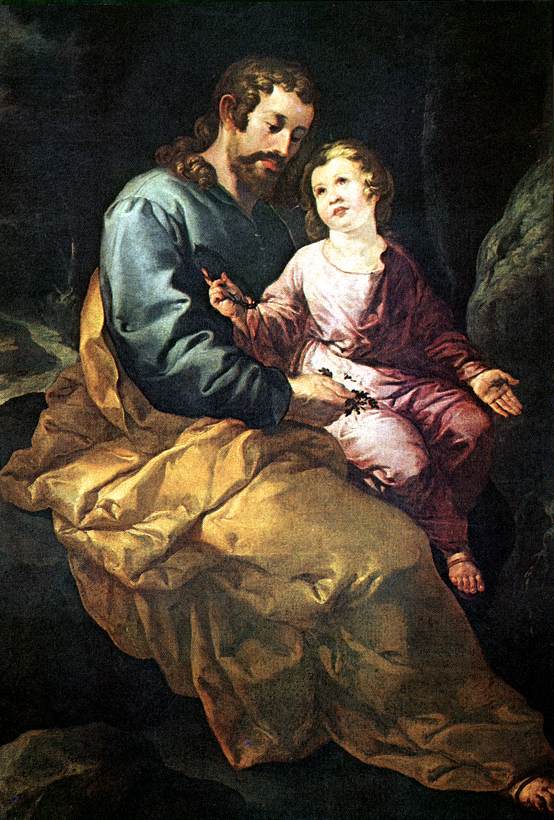
Saint Joseph and the Christ Child by Giovanni Domenico Tiepolo

St. Joseph's Day as a Holy Day of Obligation

The first catalog of Holy Days comes from the Decretals of Gregory IX in 1234, which listed 45 Holy Days. In 1642, His Holiness Pope Urban VIII issued the papal bull "Universa Per Orbem" which altered the required Holy Days of Obligation for the Universal Church to consist of 35 such days as well as the principal patrons of one's locality. St. Joseph's Day is on that list.

However, due to dispensations, differences ranged drastically as to which days were kept as holy days throughout the world. In some parts of the world, St. Joseph's Day on March 19th was a Holy Day of Obligation whereas in others it was not. For instance, St. Joseph's Day was a Holy Day of Obligation in Quebec in the late 1600s and also in the British Colonies in what is now the United States of America. It was also a holy day of Obligation in what is now Florida, among other places. But changes abounded as the number of holy days gradually weakened over the centuries. 

At America's birth, the Holy Days of Obligation, in addition to every Sunday, were as follows: the feasts of Christmas, Circumcision, Epiphany, Annunciation, Easter Monday, Ascension, Whitsun Monday, Corpus Christi, Ss. Peter and Paul, Assumption, and All Saints. St. Joseph's Day had ceased being a Holy Day of Obligation in the United States. However, it remained a holy day in some other parts of the world.

In 1911, Pope St. Pius X issued Supremi disciplinæ which drastically reduced the number of Holy Days of Obligation in the Universal Church to only 8. St. Joseph's Day did not make the list. Shortly thereafter in 1917, however, Corpus Christi and St. Joseph were added back by his successor, bringing the total to 10. The 10 currently observed on the Universal Calendar are the same as from 1917.

As for the Holy Days observed in the United States, the Catholic Encyclopedia in referencing Supremi disciplinæ noted, "Where, however, any of the above feasts has been abolished or transferred, the new legislation is not effective. In the United States consequently the Epiphany and the feast of Sts. Peter and Paul are not days of precept." The same is true of St. Joseph's Day in the changes in 1917. While the 1917 change did not add St. Joseph's Day back to the list of Holy Days of Obligation in the United States, it did elsewhere.

Presently, Indonesia, Lebanon, Malta, Spain, and the Diocese of Lugano in Switzerland keep St. Joseph's Day as a Holy Day.

St. Joseph's Day as a Day of Fast / Abstinence on Fridays in Lent

Per the 1917 Code of Canon Law is Friday abstinence still required? And would the fast of Lent still be observed? The answer is unequivocally yes.

The question of whether Holy Days of Obligation abrogate the requirement of Friday abstinence outside of Lent is mentioned in the 1917 Code:

"On [Sundays] or feasts of precept, the law of abstinence or of abstinence and fast or of fast only ceases, except during Lent, nor is the vigil anticipated; likewise it ceases on Holy [Saturday] afternoon" (1917 Code, Canon 1252 § 4). [Translation taken from THE 1917 OR PIO-BENEDICTINE CODE OF CANON LAW in English Translation by Dr. Edward Peters]

The 1917 Code is explicit - feasts of precepts do not remove the requirement to fast or abstain during Lent. The only way that the obligation would be removed during the season of Lent would be if a dispensation would be specifically offered by the lawful Church authorities for a particular day.

It must be further noted that the removal of the obligation of penance on Holy Days of Obligation outside of Lent only applies to areas that observe the day of precept. It is not based on the Roman calendar, as affirmed by the Commission on the Code in a 1924 article in American Ecclesiastical Review. Hence, when January 6th, the Feast of the Epiphany, falls on a Friday, it is still a mandatory day of abstinence in America and France and other places where it is not a Holy Day of Obligation. In contrast, Canada, Rome, and places that keep it as a Holy Day do not have to observe fasting and/or abstinence on that particular Friday. This, however, only applies to Holy Day of Obligation outside of Lent. And this change only started with the 1917 Code - beforehand, it was still a day of abstinence on Fridays regardless of it was a day of precept or not, unless a specific dispensation was issued by the Pope himself.

In 1954, Pope Pius XII issued such a decree granting bishops the permission to dispense from Friday abstinence for the Feast of St. Joseph which that year fell on a Friday. A March 26, 1954 article of the Guardian elaborates: "Bishops throughout the world have been granted the faculty to dispense their faithful from the law of abstinence on the Feast of St. Joseph, Friday, March 19. The power was granted in a decree issued by the Sacred Congregation of the Council, which said it acted at the special mandate of His Holiness Pope Pius XII. The decree was published in L'Osservatore Romano made no mention of a dispensation from the Lenten fast." 

As such, St. Joseph's Day did not permit the faithful to eat meat on Fridays in Lent unless such a specific dispensation were offered, and which was very rarely done. Likewise, to those who maintain the 1917 Code's requirement to also fast all forty weekdays of Lent - which was observed since the Early Church - St. Joseph's Day remains a day of fast. Surely St. Joseph would want us to produce worthy fruits of penance during this holiest season as we prepare for the Pascal mystery.

Unfortunately, the 1983 Code of Canon Law which aligns with the many modernist changes in the Church weakly states:

"The penitential days and times in the universal Church are every Friday of the whole year and the season of Lent. Abstinence from meat, or from some other food as determined by the Episcopal Conference, is to be observed on all Fridays, unless a solemnity should fall on a Friday. Abstinence and fasting are to be observed on Ash Wednesday and Good Friday" (1983 Code, Canons 1251 - 1252). 

Dispensations From Abstinence Were Previously Required Even for Holy Days of Obligation Outside of Lent

The notion that a solemnity that is not even a Holy Day of Obligation would trump Friday abstinence in Lent is absurd and a radical departure from all of our traditions. For instance, even Christmas would in and of itself not dispense Friday abstinence in the Medieval Church as Dom Gueranger writes in the Liturgical Year published in 1886:

"To encourage her children in their Christmas joy, the Church has dispensed with the law of abstinence, if this Feast fall on a Friday. This dispensation was granted by Pope Honorius III, who ascended the Papal Throne in 1216. It is true that we find it mentioned by Pope St Nicholas I, in the ninth century; but the dispensation was not universal; for the Pontiff is replying to the consultations of the Bulgarians, to whom he concedes this indulgence, in order to encourage them to celebrate these Feasts with solemnity and joy: Christmas Day, St Stephen, St John the Evangelist, the Epiphany, the Assumption of our Lady, St John the Baptist, and SS Peter and Paul. When the dispensation for Christmas Day was extended to the whole Church, these other Feasts were not mentioned."

Previously, a dispensation was required by the Holy Father even on Holy Days of Obligation that fell outside of Lent. Two examples indicating this are Pope Leo XIII's 1890 dispensation for Assumption Day and a 1907 dispensation issued for Canada for All Saints Day. All Saints Day was at that time a Holy Day of Obligation in Canada.

The Catholic Encyclopedia on St. Pius X's Supremi disciplinæ indicates that fasting was abolished eo ipso only starting in 1911 for all Holy Days of Obligation (which were at the same time reduced to only 8): "The present Motu Proprio institutes another important change in legislation. As feasting and fasting are incompatible Pius X has abolished the obligation of fasting as well as that of abstinence for the Universal Church, should such obligation coincide with any of the eight feasts, as above." In practice, we know that the exception was Lent - Lenten abstinence and fast always remained unless explicitly dispensed from even after the weakening changes in 1911.

Must we be reminded of the warning of Pope Benedict XIV who in 1741 warned: "The observance of Lent is the very badge of the Christian warfare. By it we prove ourselves not to be enemies of the cross of Christ. By it we avert the scourges of divine justice. By it we gain strength against the princes of darkness, for it shields us with heavenly help. Should mankind grow remiss in their observance of Lent, it would be a detriment to God's glory, a disgrace to the Catholic religion, and a danger to Christian souls. Neither can it be doubted that such negligence would become the source of misery to the world, of public calamity, and of private woe."

Let us fast and abstain this year on March 19th when so many may fail to do so, and let us offer our acts of penance for the conversion of sinners to the Traditional Catholic Faith.

Want to learn more about the history of fasting and abstinence? Check out the Definitive Guide to Catholic Fasting and Abstinence.
Read more >>
Thursday, April 8, 2021
How St. Pius X & the 1917 Code of Canon Law Liberalized Fasting, Abstinence, and Holy Days of Obligation

Pope St. Pius X is regarded as a champion by traditionalists for good reasons. There is no doubting his personal sanctity and the motivations that inspired some of his actions (e.g., lowering the age for First Holy Communion and recommending frequent - even daily - reception of our Lord in Holy Communion). His crusade against modernism and his actions for the liberty of the Church and for the spread of Christ's reign are certainly praiseworthy.

But we who have the luxury of seeing how history unfolded can observe how this holy pope's actions in regards to holy days of obligation, fasting, and abstinence sadly led to a collapse of Catholic practice. We would do well to keep the practices before St. Pius X, which had already been eroded by dispensations and changes for several centuries. St. Pius X merely helped accelerate this erosion.

What exactly did he change in regards to these disciplines? There are three main changes which concern the Church's discipline: reducing the number of Holy Days of Obligation for the Universal Church, altering the days of fasting, and altering both when and how to observe days of abstinence.

There are more actions done by St. Pius X that some also rightfully criticize such as the change in the Breviary (e.g. abandoning the use of 12 psalms at Matins, abolishing the "Laudate Psalms" at Lauds) and effectively abolishing in practice the five simple octaves but those are outside the scope of this article.

St. Pius X Drastically Reduced the Number of Holy Days of Obligation

The first catalog of Holy Days comes from the Decretals of Pope Gregory IX in 1234, which listed 45 Holy Days. In 1642, His Holiness Pope Urban VIII issued the papal bull "Universa Per Orbem" which altered the required Holy Days of Obligation for the Universal Church to consist of 35 such days as well as the principal patrons of one's locality. 

However, due to dispensations, differences ranged drastically as to which days were kept as holy days throughout the world. As of the founding of the United States, the Holy Days of Obligation, in addition to every Sunday, were as follows: the feasts of Christmas, Circumcision, Epiphany, Annunciation, Easter Monday, Ascension, Whitsun Monday, Corpus Christi, Ss. Peter and Paul, Assumption, and All Saints. In 1837, Pope Gregory XVI dispensed all Americans from the obligation as to Easter Monday and Whitsun Monday and in 1840 from that of the feast of St Peter and St Paul. The Feasts of Epiphany, Annunciation, and Sts. Peter and Paul were abolished as Holy Day of Obligation in the United States in 1885.

But, in the largest change to Holy Days in centuries, Pope St. Pius X in Supremi disciplinæ in 1911 drastically reduced the number of Holy Days of Obligation in the Universal Church to merely eight!
  1. Christmas
  2. Circumcision
  3. Epiphany 
  4. Ascension
  5. Immaculate Conception
  6. Assumption of the Blessed Virgin
  7. Sts. Peter and Paul 
  8. All Saints 

This reduction, rather than just tweaking one country's disciplines, reset the Universal Church to a minimal number of Holy Days - the lowest ever. While some localities kept other feastdays of importance (e.g. St. Patrick's Day as a Holy Day of Obligation in Ireland), most did not. Shortly thereafter in 1917, however, Corpus Christi and St. Joseph were added back by his successor, bringing the total to 10. The 10 currently observed on the Universal Calendar are the same as from 1917.

The 1917 Code Liberalized Fasting

Called the Pio-Benedictine Code, the 1917 Code of Canon Law was started by St. Pius X in 1904 and completed under his successor, Pope Benedict XV, in 1914. The Code had a number of effects on fasting and abstinence, beyond codifying the changes to Holy Days of Obligation.

Fasting and abstinence were no longer observed should a vigil fall on a Sunday as stated in the code: "If a vigil that is a fast day falls on a Sunday the fast is not to be anticipated on Saturday, but is dropped altogether that year." Before 1917, the fast of a Vigil that fell on a Sunday was observed instead on the preceding Saturday, which helped prepare the faithful not only for the feast that was transferred to Monday but also for Sunday.

Likewise, effective per the 1917 Code of Canon law, the Wednesdays and Fridays of Advent were no longer fast days for the Universal Church. The last remnant of St. Martin's Lent and the Advent Fast was gone. Wednesdays of Advent had previously been abrogated as fast days in America in 1837. Now Fridays in Advent likewise ceased being required days of fast not only in America but universally. The Vigil of St. Peter and Paul also ceased as a fast day on the Universal Calendar, although it had already been abrogated in the United States. 

The 1917 Code Liberalized Abstinence

The 1917 Code also universally removed Saturday abstinence. Unknown to most Catholics, abstinence from meat was previously required on both Fridays and Saturdays! In the United States, Saturday abstinence ceased around 1837 because the Baltimore fathers requested from Pope Gregory XVI a dispensation from Saturday abstinence. It was a 20-year dispensation that was renewed up until the 1917 Code dispensed the venerable practice of Saturday abstinence universally. 

But one of the more drastic changes was that eggs and dairy products (i.e. lacticinia) became universally permitted on fasting days - continuing the weakening of discipline introduced by Pope Leo XIII in 1887. The 1917 Code explicitly and universally stated: "The law of abstinence prohibits meat and soups made of meat but not of eggs, milks, and other condiments, even if taken from animals" (1917 Code, Canon 1252 § 4). [Translation taken from THE 1917 OR PIO-BENEDICTINE CODE OF CANON LAW in English Translation by Dr. Edward Peters]. Gone was the significance of Easter eggs, celebrating the end of a long Lent. 

Dispensations From Abstinence Were Previously Required Even for Holy Days of Obligation Outside of Lent

The 1917 Code also introduced the radical notion that a Holy Day of Obligation would eo ipso overrule the requirement of Friday abstinence for any Holy Days of Obligation outside of Lent. Previously the only day that would automatically abrogate the requirement of Friday abstinence was Christmas Day. On this singular exception, Dom Gueranger writes in the Liturgical Year published in 1886:

"To encourage her children in their Christmas joy, the Church has dispensed with the law of abstinence, if this Feast fall on a Friday. This dispensation was granted by Pope Honorius III, who ascended the Papal Throne in 1216. It is true that we find it mentioned by Pope St Nicholas I, in the ninth century; but the dispensation was not universal; for the Pontiff is replying to the consultations of the Bulgarians, to whom he concedes this indulgence, in order to encourage them to celebrate these Feasts with solemnity and joy: Christmas Day, St Stephen, St John the Evangelist, the Epiphany, the Assumption of our Lady, St John the Baptist, and SS Peter and Paul. When the dispensation for Christmas Day was extended to the whole Church, these other Feasts were not mentioned."

Before the time of St. Pius X, a dispensation was required by the Holy Father to dispense from Friday abstinence on any other Holy Day of Obligation. Two examples indicating this are Pope Leo XIII's 1890 dispensation for Assumption Day and a 1907 dispensation issued for Canada for All Saints Day. All Saints Day was at that time a Holy Day of Obligation in Canada.

The Catholic Encyclopedia on St. Pius X's Supremi disciplinæ indicates that fasting was abolished eo ipso only starting in 1911 for all Holy Days of Obligation (which were at the same time reduced to only 8): "The present Motu Proprio institutes another important change in legislation. As feasting and fasting are incompatible Pius X has abolished the obligation of fasting as well as that of abstinence for the Universal Church, should such obligation coincide with any of the eight feasts, as above." In practice, we know that the exception was Lent - Lenten abstinence and fast always remained unless explicitly dispensed from even after the weakening changes in 1911, as the 1917 Law explicitly stated: "On [Sundays] or feasts of precept, the law of abstinence or of abstinence and fast or of fast only ceases, except during Lent, nor is the vigil anticipated; likewise it ceases on Holy [Saturday] afternoon" (1917 Code, Canon 1252 § 4). [Translation taken from THE 1917 OR PIO-BENEDICTINE CODE OF CANON LAW in English Translation by Dr. Edward Peters]

Interestingly, the notion that penance was incompatible with Sundays stands in sharp contrast to centuries of Catholic Tradition, which required strict abstinence on all the Sundays of Lent.

It must be further noted that the removal of the obligation of penance on Holy Days of Obligation outside of Lent, effective with the 1917 Code, only applies to areas that observe the day of precept. It is not based on the Roman calendar, as affirmed by the Commission on the Code in a 1924 article in American Ecclesiastical Review. Hence, when January 6th, the Feast of the Epiphany, falls on a Friday, it is still a mandatory day of abstinence in America and France and other places where it is not a Holy Day of Obligation. In contrast, Canada, Rome, and places that keep it as a Holy Day do not have to observe fasting and/or abstinence on that particular Friday. This, however, only applies to Holy Day of Obligation outside of Lent. And this change only started with the 1917 Code - beforehand, it was still a day of abstinence on Fridays regardless of whether it was a day of precept or not, unless a specific dispensation was issued by the Pope himself.

Conclusion

Saints are not perfect. While we can certainly praise many of St. Pius X's actions, it would be imprudent to endorse all of them - and conversely to always dismiss any modern churchmen by the fact that they are not from before Vatican II. Discernment and critical thinking is necessary with anything. As it concerns Holy Days of Obligation, fasting, and abstinence, St. Pius X introduced liberal practices that only accelerated the collapse of Catholic practices. The practices in place under St. Pius X are shadows of former times, and those practices were weakened quickly so that by 1962 they were even weaker

To reclaim Catholic Tradition requires a radical return to the Faith of our ancestors and their observances. May our forefathers and ancestors who are in Heaven and who see the face of God pray for us and for the entire Church Militant to return to the happy days of eras past when Catholics widely and joyfully practiced the Faith. And may St. Pius X intercede for us on this request.

Want to learn more about the history of fasting and abstinence? Check out the Definitive Guide to Catholic Fasting and Abstinence.
Read more >>
Tuesday, August 12, 2025
Is Friday Abstinence Required When Assumption Day Falls on a Friday?

Assumption by Martin Knoller

Assumption Day As A Holy Day of Obligation

The first catalog of Holy Days comes from the Decree of Gratian in c. 1150 AD, which shortly thereafter gave way to Decretals of Pope Gregory IX in 1234, which listed 45 Holy Days.

In 1642, His Holiness Pope Urban VIII issued the papal bull Universa Per Orbem which mandated the required Holy Days of Obligation for the Universal Church to consist of 34 days as well as the principal patrons of one's one locality (e.g. city and country). Those days were the Nativity of Our Lord, the Circumcision of Our Lord, the Epiphany of Our Lord, Monday within the Octave of the Resurrection, Tuesday within the Octave of the Resurrection, Ascension Thursday, Monday within the Octave of Pentecost, Tuesday within the Octave of Pentecost, Most Holy Trinity, Corpus Christi, the Finding of the Holy Cross, the Purification of the Blessed Virgin Mary, the Annunciation of the Blessed Virgin Mary, the Assumption of the Blessed Virgin Mary, the Nativity of the Blessed Virgin Mary, the Dedication of St. Michael, the Nativity of St. John the Baptist, SS. Peter and Paul, St. Andrew, St. James, St. John (the December feast day), St. Thomas, SS. Philip and James, St. Bartholomew, St. Matthew, SS. Simon and Jude, St. Matthias, St. Stephen the First Martyr (the December feast day), the Holy Innocents, St. Lawrence, St. Sylvester, St. Joseph, St. Anne, and All Saints.  

Hence, Assumption Day was a Holy Day of Obligation long before the dogma of the Assumption was dogmatically defined.

Is Friday Abstinence Required When Assumption Day (August 15) Falls on a Friday?

Since August 15 this year falls on a Friday and is a Holy Day of Obligation, a question arises on whether abstinence is obligatory this Friday. The answer, as clearly stated in the 1917 Code, is as follows:

"On [Sundays] or feasts of precept, the law of abstinence or of abstinence and fast or of fast only ceases, except during Lent, nor is the vigil anticipated; likewise it ceases on Holy [Saturday] afternoon" (1917 Code, Canon 1252 § 4). [Translation taken from THE 1917 OR PIO-BENEDICTINE CODE OF CANON LAW in English Translation by Dr. Edward Peters]

As Assumption Day falls outside of Lent, this Friday is not a day of mandatory abstinence. However, this was actually a change from the practice observed for well over 1,000 years.

Dispensations From Abstinence Were Previously Required Even for Holy Days of Obligation Outside of Lent

Even Christmas would in and of itself not dispense Friday abstinence in the Medieval Church, as Dom Gueranger writes in the Liturgical Year published in 1886:

"To encourage her children in their Christmas joy, the Church has dispensed with the law of abstinence, if this Feast fall on a Friday. This dispensation was granted by Pope Honorius III, who ascended the Papal Throne in 1216. It is true that we find it mentioned by Pope St Nicholas I, in the ninth century; but the dispensation was not universal; for the Pontiff is replying to the consultations of the Bulgarians, to whom he concedes this indulgence, in order to encourage them to celebrate these Feasts with solemnity and joy: Christmas Day, St Stephen, St John the Evangelist, the Epiphany, the Assumption of our Lady, St John the Baptist, and SS Peter and Paul. When the dispensation for Christmas Day was extended to the whole Church, these other Feasts were not mentioned."

Previously, a dispensation was required by the Holy Father even on Holy Days of Obligation that fell outside of Lent. Two examples indicating this are Pope Leo XIII's 1890 dispensation for Assumption Day and a 1907 dispensation issued for Canada for All Saints Day. All Saints Day was, at that time, a Holy Day of Obligation in Canada.

The Catholic Encyclopedia on St. Pius X's Supremi disciplinæ indicates that fasting was abolished eo ipso only starting in 1911 for all Holy Days of Obligation outside of Lent (which were at the same time reduced to only 8): "The present Motu Proprio institutes another important change in legislation. As feasting and fasting are incompatible, Pius X has abolished the obligation of fasting as well as that of abstinence for the Universal Church, should such obligation coincide with any of the eight feasts, as above." 

Thus, while eating meat this Friday is not a sin, it would be meritorious to continue to observe Friday abstinence in honor of the nearly 1,800 year-old tradition that preceded the 1917 Code. If we choose to do so, let us offer it up through our Lady's intercession for the conversion of sinners who violate the laws of the Church and do not attend Holy Mass on days of precept like Assumption Day.

Want to learn more about the history of fasting and abstinence? Check out the Definitive Guide to Catholic Fasting and Abstinence.
Read more >>
Monday, June 9, 2025
Honor the Forgotten (Former) 36 Holy Days of Obligation

The Land Without Holy Days

“…So also, from the earliest ages, the Christian Church instituted and religiously solemnized various feasts, differing in different countries, and varying according to times and circumstances, principally intended to keep in grateful and loving memory the chief mysteries of our Blessed Saviour's life, the glories and prerogatives of His Immaculate Mother, the example and heroic sanctity of the saints. . . . Blessed festivals, they are green, refreshing oases in the desert of our dreary, plodding life, and not a doubt, but they tend materially to keep alive the spirit of piety." 

With these words, Bishop Stephen Ryan of Buffalo addressed the bishops and theologians who had crowded into the former Cathedral in Baltimore. The occasion was the Third Plenary Council of Baltimore, which began in late 1884. The Council Fathers set to address a number of issues affecting Catholic life in the United States which had reached its then-disjointed arrangement through the acquisition of various terrorities each with their own customs and ecceslestical laws. Unbeknowst to many, days of fasting and abstinence in addition to holy days of obligation varied widely in what constituted the United States of America due to these historical differences. Could uniformity be obtained even though prior attempts to do so had failed? And in hindsight, should uniformity – at least in the manner sought – have even been attempted?

The history of America’s holy days of obligation highlights a complex network of unique customs, varied cultural traditions, and an overarching lack of fervor over time. In an era with so few Holy Days of Obligation, what have we lost? And should this be remedied? And what can this teach modern Catholics?

Holy Days of Obligation Over Time

In 1911, Pope St. Pius X reduced the number of Holy Days of Obligation from 36 to 8, although which places observed the holy days were not uniform at all beforehand.  Shortly thereafter, the 1917 Code of Canon Law increased the number to 10 by adding back Corpus Christi and Ss. Joseph. Those ten on the Universal Calendar have remained the same ever since.

However, the Holy Days up until 1911 reveal something quite interesting as all of the feasts of the Apostles were Holy Days of Obligation on the Universal Calendar as were many other days like St. Anne, the May 3rd Feast of the Finding of the Holy Cross, and so many other days which are now forgotten. The feasts of the Apostles were raised to public holidays back in 932 AD as Father Weiser relates (p. 279), for instance.

The 36 Holy Days of Obligation on the Universal Calendar back in 1642 under Pope Urban VIII included:

1. Nativity of our Lord
2. Circumcision of our Lord
3. Epiphany of the Lord
4. Monday within the Octave of the Resurrection
5. Tuesday within the Octave of the Resurrection
6. Ascension
7. Monday within the Octave of Pentecost
8. Tuesday within the Octave of Pentecost
9. Most Holy Trinity
10. Most Holy Body of Christ
11. Finding of the Holy Cross
12. Purification of the Blessed Virgin Mary
13. Annunciation of the Blessed Virgin Mary
14. Assumption of the Blessed Virgin Mary
15. Nativity of the Blessed Virgin Mary
16. Dedication of St. Michael
17. Nativity of St. John Baptist
18. Ss. Peter and Paul
19. St. Andrew
20. St. James
21. St. John (the December feastday)
22. St. Thomas
23. Ss. Philip and James
24. St. Bartholomew
25. St. Matthew
26. Ss. Simon and Jude
27. St. Matthias
28. St. Stephen (the December feastday)
29. The Holy Innocents
30. St. Lawrence
31. St. Sylvester
32. St. Joseph
33. St. Anne
34. All Saints Day
35. The Principle Patrons of One’s Country, City, etc.

The Immaculate Conception of the Blessed Virgin Mary was added in 1708 so it not on 1642 list.

In times past there was also a distinction made of days of double versus single precept. Days of double precept required both hearing Mass and refraining from servile works, whereas days of single precept were working holy days permitting work but still requiring Mass attendance.

Consequently, the number of Holy Days of Obligation in the United States as of the Second Vatican Council had already been significantly reduced from their previous state. Holy Days of Obligation, which had remained the same in the United States since 1917, were further modified in the latter part of the 20th century.  On December 13, 1991, the United States Bishops issued a directive further abrogating New Years Day (the Circumcision of our Lord), the Assumption, or All Saints in years when the feast falls on a Saturday or a Monday. And on March 23, 1992, in another reduction, the Bishop of Honolulu obtained an indult from the Holy See and approval from the United States episcopal conference to reduce the Holy Days of Obligation to only Christmas and the Immaculate Conception. 

Holy Days of Obligation Before 1900

Published in 1886, the eleventh volume of the American Catholic Quarterly Review offers an insightful series of reflections on Holy Days with a call for us to observe these as our forefathers in the Faith gladly did:

"The Church by one of her positive commandments requires the faithful to sanctify certain holydays in the year by taking part in the offering of the great sacrifice of the Mass and by abstaining from servile works... In the days of faith and fervor not only were the great festivals prescribed by the Church, those associated with the life of our Lord and His Blessed Mother, those intimately connected with the work of redemption, and the feasts of the holy apostles by whose ministry the Church was established and the channels of grace led through the world - not only were these kept reverently but the patronal feast of each country, diocese, and church, the days of the most famous local saints were similarly honored. The devotion was general, and whoso refused to lay aside his implements of trade or traffic on their days was so condemned by public opinion that custom made the law.” 

Interestingly, because the Church enjoined on the Faithful both the obligation to hear Mass and the necessity to refrain from servile work, the number of holy days, which included Sundays, was significant. Some people began to revolt against the Church claiming that these practices only increased poverty. But as the Journal notes, an interesting phenomenon occurred:

"Protestantism therefore at once swept away all the holydays and Christmas remained almost alone to represent the Church calendar, and the Puritans even punished those who kept Christmas. With men working all the year round except on Sunday, wealth was to be general, the poor would thrive and prosper and be happy and contented, no longer lured from great and ennobling labor by being called away every week to idle some days in church and prayer. It was again unfortunate that this excellent theory did not work well. The poor seemed to grow actually poorer with all these days of labor than they had been before." 

The first catalog of Holy Days comes from the Decree of Gratian in c. 1150 AD, which shortly thereafter gave way to Decretals of Pope Gregory IX in 1234, which listed 45 Holy Days. As the Catholic Encyclopedia summarizes regarding this period:

“The Decree of Gratian (about 1150) mentions forty-one feasts besides the diocesan patronal celebrations; the Decretals of Gregory IX (about 1233) mention forty-five public feasts and Holy Days, which means eighty-five days when no work could be done and ninety-five days when no court sessions could be held. In many provinces eight days after Easter, in some also the week after Pentecost (or at least four days), had the sabbath rest. From the thirteenth to the eighteenth century there were dioceses in which the Holy Days and Sundays amounted to over one hundred, not counting the feasts of particular monasteries and churches. In the Byzantine empire there were sixty-six entire Holy Days (Constitution of Manuel Comnenus, in 1166), exclusive of Sundays, and twenty-seven half Holy Days. In the fifteenth century, Gerson, Nicolas de Clémanges and others protested against the multiplication of feasts, as an oppression of the poor, and proximate occasions of excesses. The long needed reduction of feast days was made by Urban VIII (Universa per orbem, 13 Sept., 1642).” 

In 1642, His Holiness Pope Urban VIII issued the papal bull Universa Per Orbem which mandated the required Holy Days of Obligation for the Universal Church to consist of 34 days as well as the principal patrons of one's one locality (e.g. city and country). Ultimately Universa Per Orbem helped bring more uniformity to the Church since some parts of the Catholic world observed even more holy days of double precept (i.e. mandatory attendance at Mass and rest from servile work). The previous list of Holy Days of Obligation found in the Decretals also included Holy Monday through Holy Saturday in addition to Easter Wednesday through Easter Saturday.  These days had ceased being Holy Days by 1642. 

Holy Days in Young America

After the American Revolution, the Catholics in the 13 colonies that constituted the new United States of America were under the jurisdiction of the Apostolic Vicariate of the London District until the Diocese of Baltimore was established on November 6, 1789. This included the area of Maine that previously had been part of Quebec.

The first major change to the holy days of Americans came about through the lands purchased in 1803 from France in the Louisiana Purchase. Owing to the persecution of Catholics in France after the French Revolution, Pope Pius VII on April 5, 1802, reduced the holy days of obligation for Catholics in France to only Christmas, Ascension, Assumption, and the Feast of All Saints. Spain, which was in possession of the Louisiana territory since 1763, agreed in 1801 to cede it back to Napoleon. Before even getting possession of the territory, he sold it to the United States in 1803. What is particularly interesting is that the Catholics of Louisiana – whose territory includes areas in modern-day Arkansas, Missouri, Iowa, Minnesota, Kansas, and Nebraska – adopted the reduced holy days granted to France in 1802.

A Divergence of Holy Days in the 1800s

As America expanded, there was a divergence in the days of precept. When Florida was purchased by the United States in 1821, its old holy days were maintained. And the same likewise occurred in the Texas territory when it was acquired by the United States in 1845. And this trend continued as America expanded westward as the American Catholic Quarterly Review observes:

"In the Second Plenary Council [of Baltimore] in 1866 the feast of the Immaculate Conception was made of obligation as it had been in Oregon, where the feast of St Peter and St Paul had retained its place with the Monday after Easter and Whit Sunday, St John the Baptist, Candlemas, and St Stephen. Pope Gregory XVI in 1837 dispensed all the dioceses then in the United States from the obligation as to Easter Monday and Whitsun Monday and in 1840 from that of the feast of St Peter and St Paul..." 

Uniformity of American Holy Days Established in 1885 

By the time of the Civil War, considerable changes had occurred to these holy days. It was not until the Third Plenary Council that uniformly was achieved, though at the cost of reducing the holy days observed by many Catholics in the New World as the Review laments:

"The effort to induce faithful to a more exact observance of holydays of obligation or least so far as hearing mass was concerned had not been successful. A general indifference prevailed. When zealous priests, to give servants and mechanics every opportunity to fulfil the obligation, had Mass celebrated at an early hour to permit them to attend it proceeding to their usual work, it was found that almost the persons to avail themselves of the opportunity would be a pious old women, while those of the very class for whose the Mass was thus offered were scarcely represented by a straggling individuals.

"The Fathers of the Council renewed their petition to the See and His Holiness Pope Leo XIII on the 31st of December 1885 transferred the solemnization of Corpus Christi to the Sunday following the feast and made the holydays of obligation in all of the United States to be thenceforward: The Immaculate Conception of the Blessed Virgin, Christmas Day, the feast of Circumcision, Ascension Day, the Assumption of the Blessed Virgin, and the feast of All Saints. ” 

The Epiphany and Annunciation were no longer a Holy Day of Obligation in the United States – joining Easter Monday, Pentecost Monday, and St. Peter and Paul as working days. For even more history on how Holy Days of Obligation - and fasting days - changed in the New World before and after America's Foundation, see A History of Holy Days of Obligation & Fasting for American Catholics.


How Should Sundays and Holy Days of Obligation be Sanctified?

The Third Commandment commands us to “Remember the Sabbath day, to keep it holy.” In its fulfillment under the New Law, this commandment obliges Catholics to sanctify Sundays and Holy Days of Obligation by participating in the Holy Sacrifice of the Mass and by refraining from servile work. The Catechism of the Council of Trent affirms that this is not merely a recommendation—it is a divine precept.

The Church further clarifies that all Sundays and all current Holy Days of Obligation are binding under pain of mortal sin. To deliberately skip Mass on such a day without a grave reason—such as serious illness or the inability to reasonably travel to Mass—is a mortal sin. And if a Catholic is unable to attend Mass for a legitimate reason, they should still sanctify the day as best they can: by reading the Missal, meditating on the day’s readings and prayers, and uniting themselves spiritually to the liturgy.

Sunday, moreover, is not only a day of rest and obligatory worship but a day for deeper immersion in the Faith. Traditionally, Catholics observed Sunday by attending Vespers or Benediction, praying the Rosary communally, engaging in spiritual reading, and avoiding unnecessary commerce or entertainment. It is a day to spend in quiet joy, family togetherness, and devotion. The faithful should use Sunday to read Catholic books, periodicals, and Scripture, to practice works of mercy, and to grow in virtue. See the article Top 10 Sunday Activities for Catholics for more.

Make a special effort to attend Mass on all of the former Holy Days of Obligation, if possible. While the current Holy Days of Obligation must still be observed under pain of sin, we should cultivate a desire to attend Mass frequently — even daily. The former Holy Days, though no longer obligatory, remain excellent occasions to rearrange your schedule and give special honor to God through the Holy Sacrifice of the Mass.

With so many holy days reduced, and with priests largely not preaching on the necessity of attending Mass and of abstaining from servile works on them, the faithful have lost the sense of the sacred. Yet, as more Catholic seek to rediscover the Traditional Latin Mass and traditional fasting, voluntarily attending the Holy Sacrifice of the Mass and abstaining from servile works on the former Holy Days of Obligation can help us sanctify time and hold dear to what our forefathers saw, in the words of Bishop Stephen Ryan, as “refreshing oases in the desert of our dreary, plodding life.”


Read more >>
Thursday, December 7, 2023
Is Friday Abstinence Required When the Immaculate Conception Falls on a Friday?

Pope Pius IX Proclaims the Immaculate Conception

The Immaculate Conception As A Holy Day of Obligation

The first catalog of Holy Days comes from the Decree of Gratian in c. 1150 AD, which shortly thereafter gave way to Decretals of Pope Gregory IX in 1234, which listed 45 Holy Days.

In 1642, His Holiness Pope Urban VIII issued the papal bull Universa Per Orbem which mandated the required Holy Days of Obligation for the Universal Church to consist of 34 days as well as the principal patrons of one's one locality (e.g. city and country). Those days were the Nativity of Our Lord, the Circumcision of Our Lord, the Epiphany of Our Lord, Monday within the Octave of the Resurrection, Tuesday within the Octave of the Resurrection, Ascension Thursday, Monday within the Octave of Pentecost, Tuesday within the Octave of Pentecost, Most Holy Trinity, Corpus Christi, the Finding of the Holy Cross, the Purification of the Blessed Virgin Mary, the Annunciation of the Blessed Virgin Mary, the Assumption of the Blessed Virgin Mary, the Nativity of the Blessed Virgin Mary, the Dedication of St. Michael, the Nativity of St. John the Baptist, SS. Peter and Paul, St. Andrew, St. James, St. John (the December feast day), St. Thomas, SS. Philip and James, St. Bartholomew, St. Matthew, SS. Simon and Jude, St. Matthias, St. Stephen the First Martyr (the December feast day), the Holy Innocents, St. Lawrence, St. Sylvester, St. Joseph, St. Anne, and All Saints.  

Originally referred to as the "Conception of the Blessed Virgin Mary," the Feast of the Immaculate Conception became a Holy Day of Obligation in 1708 under Pope Clement XI, nearly 150 years before Pope Pius IX dogmatically and infallibly defined the dogma of the Immaculate Conception. This day thus joined the list of Universal Days from 1642, although no places observed all such days. In fact, most places observed far fewer days.

Is Friday Abstinence Required When the Immaculate Conception Falls on a Friday?

Since tomorrow is a Friday and is a Holy Day of Obligation in honor of Our Lady's Immaculate Conception, a question arises on whether abstinence is obligatory tomorrow. The answer, as clearly stated in the 1917 Code, is as follows:

"On [Sundays] or feasts of precept, the law of abstinence or of abstinence and fast or of fast only ceases, except during Lent, nor is the vigil anticipated; likewise it ceases on Holy [Saturday] afternoon" (1917 Code, Canon 1252 § 4). [Translation taken from THE 1917 OR PIO-BENEDICTINE CODE OF CANON LAW in English Translation by Dr. Edward Peters]

As the Immaculate Conception falls outside of Lent, tomorrow is not a day of mandatory abstinence. However, this was actually a change from the practice observed for well over 1,000 years.

Dispensations From Abstinence Were Previously Required Even for Holy Days of Obligation Outside of Lent

Even Christmas would in and of itself not dispense Friday abstinence in the Medieval Church as Dom Gueranger writes in the Liturgical Year published in 1886:

"To encourage her children in their Christmas joy, the Church has dispensed with the law of abstinence, if this Feast fall on a Friday. This dispensation was granted by Pope Honorius III, who ascended the Papal Throne in 1216. It is true that we find it mentioned by Pope St Nicholas I, in the ninth century; but the dispensation was not universal; for the Pontiff is replying to the consultations of the Bulgarians, to whom he concedes this indulgence, in order to encourage them to celebrate these Feasts with solemnity and joy: Christmas Day, St Stephen, St John the Evangelist, the Epiphany, the Assumption of our Lady, St John the Baptist, and SS Peter and Paul. When the dispensation for Christmas Day was extended to the whole Church, these other Feasts were not mentioned."

Previously, a dispensation was required by the Holy Father even on Holy Days of Obligation that fell outside of Lent. Two examples indicating this are Pope Leo XIII's 1890 dispensation for Assumption Day and a 1907 dispensation issued for Canada for All Saints Day. All Saints Day was, at that time, a Holy Day of Obligation in Canada.

The Catholic Encyclopedia on St. Pius X's Supremi disciplinæ indicates that fasting was abolished eo ipso only starting in 1911 for all Holy Days of Obligation outside of Lent (which were at the same time reduced to only 8): "The present Motu Proprio institutes another important change in legislation. As feasting and fasting are incompatible Pius X has abolished the obligation of fasting as well as that of abstinence for the Universal Church, should such obligation coincide with any of the eight feasts, as above." 

We are also still in the midst of St. Martin's Lent, the ancient Nativity Fast, which is observed to prepare for Christmas. Thus, while eating meat tomorrow is not a sin, it would be meritorious to continue to observe Friday abstinence in honor of the nearly 1,800 tradition that preceded the 1917 Code and in observance of St. Martin's Lent. If we choose to do so, let us offer it up through our Lady's intercession for the conversion of sinners who violate the laws of the Church and do not attend Holy Mass on days of precept like the Immaculate Conception.

Want to learn more about the history of fasting and abstinence? Check out the Definitive Guide to Catholic Fasting and Abstinence.
Read more >>
Wednesday, October 30, 2024
Is Friday Abstinence Required When All Saints Day Falls on a Friday?


All Saints As A Holy Day of Obligation

The first catalog of Holy Days comes from the Decree of Gratian in c. 1150 AD, which shortly thereafter gave way to Decretals of Pope Gregory IX in 1234, which listed 45 Holy Days.

In 1642, His Holiness Pope Urban VIII issued the papal bull Universa Per Orbem which mandated the required Holy Days of Obligation for the Universal Church to consist of 34 days as well as the principal patrons of one's one locality (e.g. city and country). Those days were the Nativity of Our Lord, the Circumcision of Our Lord, the Epiphany of Our Lord, Monday within the Octave of the Resurrection, Tuesday within the Octave of the Resurrection, Ascension Thursday, Monday within the Octave of Pentecost, Tuesday within the Octave of Pentecost, Most Holy Trinity, Corpus Christi, the Finding of the Holy Cross, the Purification of the Blessed Virgin Mary, the Annunciation of the Blessed Virgin Mary, the Assumption of the Blessed Virgin Mary, the Nativity of the Blessed Virgin Mary, the Dedication of St. Michael, the Nativity of St. John the Baptist, SS. Peter and Paul, St. Andrew, St. James, St. John (the December feast day), St. Thomas, SS. Philip and James, St. Bartholomew, St. Matthew, SS. Simon and Jude, St. Matthias, St. Stephen the First Martyr (the December feast day), the Holy Innocents, St. Lawrence, St. Sylvester, St. Joseph, St. Anne, and All Saints.  

The Catholic Encyclopedia provides a short account of the history of All Saints Day:

In the early days the Christians were accustomed to solemnize the anniversary of a martyr's death for Christ at the place of martyrdom. In the fourth century, neighbouring dioceses began to interchange feasts, to transfer relics, to divide them, and to join in a common feast; as is shown by the invitation of St. Basil of Caesarea (379) to the bishops of the province of Pontus. Frequently groups of martyrs suffered on the same day, which naturally led to a joint commemoration. In the persecution of Diocletian the number of martyrs became so great that a separate day could not be assigned to each. But the Church, feeling that every martyr should be venerated, appointed a common day for all. The first trace of this we find in Antioch on the Sunday after Pentecost. We also find mention of a common day in a sermon of St. Ephrem the Syrian (373), and in the 74th homily of St. John Chrysostom (407). At first only martyrs and St. John the Baptist were honoured by a special day. Other saints were added gradually, and increased in number when a regular process of canonization was established; still, as early as 411 there is in the Chaldean Calendar a "Commemoratio Confessorum" for the Friday after Easter. In the West Boniface IV, 13 May, 609, or 610, consecrated the Pantheon in Rome to the Blessed Virgin and all the martyrs, ordering an anniversary. Gregory III (731-741) consecrated a chapel in the Basilica of St. Peter to all the saints and fixed the anniversary for 1 November. A basilica of the Apostles already existed in Rome, and its dedication was annually remembered on 1 May. Gregory IV (827-844) extended the celebration on 1 November to the entire Church. The vigil seems to have been held as early as the feast itself. The octave was added by Sixtus IV (1471-84).

Is Friday Abstinence Required When the All Saints Falls on a Friday?

Since November 1st this year falls on a Friday and is a Holy Day of Obligation, a question arises on whether abstinence is obligatory this Friday. The answer, as clearly stated in the 1917 Code, is as follows:

"On [Sundays] or feasts of precept, the law of abstinence or of abstinence and fast or of fast only ceases, except during Lent, nor is the vigil anticipated; likewise it ceases on Holy [Saturday] afternoon" (1917 Code, Canon 1252 § 4). [Translation taken from THE 1917 OR PIO-BENEDICTINE CODE OF CANON LAW in English Translation by Dr. Edward Peters]

As All Saints Day falls outside of Lent, tomorrow is not a day of mandatory abstinence. However, this was actually a change from the practice observed for well over 1,000 years.

Dispensations From Abstinence Were Previously Required Even for Holy Days of Obligation Outside of Lent

Even Christmas would in and of itself not dispense Friday abstinence in the Medieval Church, as Dom Gueranger writes in the Liturgical Year published in 1886:

"To encourage her children in their Christmas joy, the Church has dispensed with the law of abstinence, if this Feast fall on a Friday. This dispensation was granted by Pope Honorius III, who ascended the Papal Throne in 1216. It is true that we find it mentioned by Pope St Nicholas I, in the ninth century; but the dispensation was not universal; for the Pontiff is replying to the consultations of the Bulgarians, to whom he concedes this indulgence, in order to encourage them to celebrate these Feasts with solemnity and joy: Christmas Day, St Stephen, St John the Evangelist, the Epiphany, the Assumption of our Lady, St John the Baptist, and SS Peter and Paul. When the dispensation for Christmas Day was extended to the whole Church, these other Feasts were not mentioned."

Previously, a dispensation was required by the Holy Father even on Holy Days of Obligation that fell outside of Lent. Two examples indicating this are Pope Leo XIII's 1890 dispensation for Assumption Day and a 1907 dispensation issued for Canada for All Saints Day. All Saints Day was, at that time, a Holy Day of Obligation in Canada.

The Catholic Encyclopedia on St. Pius X's Supremi disciplinæ indicates that fasting was abolished eo ipso only starting in 1911 for all Holy Days of Obligation outside of Lent (which were at the same time reduced to only 8): "The present Motu Proprio institutes another important change in legislation. As feasting and fasting are incompatible, Pius X has abolished the obligation of fasting as well as that of abstinence for the Universal Church, should such obligation coincide with any of the eight feasts, as above." 

Thus, while eating meat this Friday is not a sin, it would be meritorious to continue to observe Friday abstinence in honor of the nearly 1,800 year-old tradition that preceded the 1917 Code. If we choose to do so, let us offer it up through our Lady's intercession for the conversion of sinners who violate the laws of the Church and do not attend Holy Mass on days of precept like All Saints Day.

Want to learn more about the history of fasting and abstinence? Check out the Definitive Guide to Catholic Fasting and Abstinence.
Read more >>
Thursday, March 31, 2022
Abstinence & Fasting Is Not Automatically Dispensed on Solemnities

Last year I wrote an article entitled "Is Fasting or Abstinence Required on Holy Days of Obligation in Lent?" and unfortunately more Traditional Catholics continue to think that abstinence even on Fridays in Lent is dispensed eo ipso when a solemnity (e.g. Annunciation Day, St. Joseph's Day) falls on a Friday or when a culturally important day (e.g. St. Patrick's Day) occurs on a Friday. Let's review ecclesiastical history on this important point.

The Clear Teaching of the 1917 Code of Canon Law

The question of whether Holy Days of Obligation abrogate the requirement of Friday abstinence outside of Lent is mentioned in the 1917 Code:

"On [Sundays] or feasts of precept, the law of abstinence or of abstinence and fast or of fast only ceases, except during Lent, nor is the vigil anticipated; likewise it ceases on Holy [Saturday] afternoon" (1917 Code, Canon 1252 § 4). [Translation taken from THE 1917 OR PIO-BENEDICTINE CODE OF CANON LAW in English Translation by Dr. Edward Peters]

The 1917 Code is explicit - feasts of precepts do not remove the requirement to fast or abstain during Lent. The only way that the obligation would be removed during the season of Lent would be if a dispensation would be specifically offered by lawful Church authorities for a particular day.

Historical Evidence Confirms Even Holy Days of Obligation in Lent were not Dispensed Automatically from the Laws of Either Fast or Abstinence

In 1954, Pope Pius XII issued a decree granting bishops the permission to dispense from Friday abstinence for the Feast of St. Joseph which that year fell on a Friday. A March 26, 1954 article in the Guardian elaborates: "Bishops throughout the world have been granted the faculty to dispense their faithful from the law of abstinence on the Feast of St. Joseph, Friday, March 19. The power was granted in a decree issued by the Sacred Congregation of the Council, which said it acted at the special mandate of His Holiness Pope Pius XII. The decree was published in L'Osservatore Romano made no mention of a dispensation from the Lenten fast." 

As such, St. Joseph's Day did not permit the faithful to eat meat on Fridays in Lent unless such a specific dispensation was offered, which was very rarely done. This was also at a time when there were many other fast days in the year outside of Lent. Likewise, to those who maintain the 1917 Code's requirement to also fast all forty weekdays of Lent - which was observed since the Early Church - St. Joseph's Day remains a day of fast. Surely St. Joseph would want us to produce worthy fruits of penance during this holiest season as we prepare for the Pascal mystery. And surely the same can be said of our Lady, the Most Blessed Virgin Mary, whose we celebrate each year on March 25th.

Unfortunately, the 1983 Code of Canon Law which aligns with the many modernist changes in the Church weakly states:

"The penitential days and times in the universal Church are every Friday of the whole year and the season of Lent. Abstinence from meat, or from some other food as determined by the Episcopal Conference, is to be observed on all Fridays, unless a solemnity should fall on a Friday. Abstinence and fasting are to be observed on Ash Wednesday and Good Friday" (1983 Code, Canons 1251 - 1252). 

Dispensations From Abstinence Were Previously Required Even for Holy Days of Obligation Outside of Lent

The notion that a solemnity that is not even a Holy Day of Obligation would trump Friday abstinence in Lent is absurd and a radical departure from all of our traditions. Such a notion comes from 1983 and never beforehand. For instance, even Christmas would in and of itself not dispense Friday abstinence in the Medieval Church as Dom Gueranger writes in the Liturgical Year published in 1886:

"To encourage her children in their Christmas joy, the Church has dispensed with the law of abstinence, if this Feast fall on a Friday. This dispensation was granted by Pope Honorius III, who ascended the Papal Throne in 1216. It is true that we find it mentioned by Pope St Nicholas I, in the ninth century; but the dispensation was not universal; for the Pontiff is replying to the consultations of the Bulgarians, to whom he concedes this indulgence, in order to encourage them to celebrate these Feasts with solemnity and joy: Christmas Day, St Stephen, St John the Evangelist, the Epiphany, the Assumption of our Lady, St John the Baptist, and SS Peter and Paul. When the dispensation for Christmas Day was extended to the whole Church, these other Feasts were not mentioned."

Previously, a dispensation was required by the Holy Father even on Holy Days of Obligation that fell outside of Lent. Two examples indicating this are Pope Leo XIII's 1890 dispensation for Assumption Day and a 1907 dispensation issued for Canada for All Saints Day. All Saints Day was at that time a Holy Day of Obligation in Canada. Read How St. Pius X & the 1917 Code of Canon Law Liberalized Fasting, Abstinence, and Holy Days of Obligation for more information

The Catholic Encyclopedia on St. Pius X's Supremi disciplinæ indicates that fasting was abolished eo ipso only starting in 1911 for all Holy Days of Obligation (which were at the same time reduced to only 8): "The present Motu Proprio institutes another important change in legislation. As feasting and fasting are incompatible Pius X has abolished the obligation of fasting as well as that of abstinence for the Universal Church, should such obligation coincide with any of the eight feasts, as above." In practice, we know that the exception was Lent. Lenten abstinence and fast always remained unless explicitly dispensed from even after the weakening changes in 1911.

Year-Round Friday Abstinence on Solemnities

The principles here apply as well to high-ranking feastdays outside of Lent. In years when non-Holy Days of Obligation (e.g. The Sacred Heart, Nativity of St. John the Baptist, Ss. Peter and Paul) fall on a Friday, the practice of Friday abstinence should never be ignored. We have a responsibility of doing penance and the shared act of Friday penance is, like Sunday Mass, a cornerstone of the Catholic Faith. Even the 1983 Code calls for year-round Friday penance!

Continue Fasting and Abstaining Both In and Out of Lent

Must we be reminded of the warning of Pope Benedict XIV, who in 1741 warned: "The observance of Lent is the very badge of the Christian warfare. By it, we prove ourselves not to be enemies of the cross of Christ. By it, we avert the scourges of divine justice. By it, we gain strength against the princes of darkness, for it shields us with heavenly help. Should mankind grow remiss in their observance of Lent, it would be a detriment to God's glory, a disgrace to the Catholic religion, and a danger to Christian souls. Neither can it be doubted that such negligence would become the source of misery to the world, of public calamity, and of private woe."

There is no incompatibility between fasting and abstaining and celebrating liturgical solemnities. Even Sundays used to be required days of abstinence (but not fast). Let us fast and abstain always on St. Joseph's Day, Annunciation Day, and St. Patrick's Day each year during Lent. Our adherence to and preservation of the Traditional Catholic Faith requires this. 

Latching on to a modernist novelty from 1983 is incompatible with the Traditional Latin Mass and the Traditional Catholic Faith. And let us offer our acts of penance for the conversion of sinners to the Traditional Catholic Faith. There is no prohibition against fasting on solemnities; on the contrary, Tradition requires it.

Want to learn more about the history of fasting and abstinence? Check out the Definitive Guide to Catholic Fasting and Abstinence.
Read more >>
Tuesday, March 19, 2024
Is St. Joseph's Day Traditionally Still A Fasting Day?

Since St. Joseph’s Day falls during Lent, it coincides with the traditional Lenten fast which traditionally required 40 days of fasting and 46 days of abstinence from meat. Per the 1917 Code of Canon Law, Friday abstinence is still required on St. Joseph’s Day even where it is kept as a Holy Day of Obligation. And would the fast of Lent still be observed? The answer is unequivocally yes.

The question of whether Holy Days of Obligation abrogate the requirement of Friday abstinence outside of Lent is mentioned in the 1917 Code:

On [Sundays] or feasts of precept, the law of abstinence or of abstinence and fast or of fast only ceases, except during Lent, nor is the vigil anticipated; likewise it ceases on Holy [Saturday] afternoon (1917 Code, Canon 1252 § 4).[1]

The 1917 Code is explicit – feasts of precepts do not remove the requirement to fast or abstain during Lent. The only way that the obligation would be removed during the season of Lent would be if a dispensation would be specifically offered by the lawful Church authorities for a particular day.

It must be further noted that the removal of the obligation of penance on Holy Days of Obligation outside of Lent only applies to areas that observe the day of precept. It is not based on the Roman calendar, as affirmed by the Commission on the Code in a 1924 article in the American Ecclesiastical Review. Hence, when January 6th, the Feast of the Epiphany, falls on a Friday, it is still a mandatory day of abstinence in America and France and other places where it is not a Holy Day of Obligation. In contrast, Canada, Rome, and places that keep it as a Holy Day do not have to observe fasting and/or abstinence on that particular Friday. This, however, only applies to Holy Day of Obligation outside of Lent. And this change only started with the 1917 Code – beforehand, it was still a day of abstinence on Fridays regardless if it was a day of precept or not, unless a specific dispensation was issued by the Pope himself.

In 1954, Pope Pius XII issued such a decree granting bishops the permission to dispense from Friday abstinence for the Feast of St. Joseph which that year fell on a Friday. A March 26, 1954, article of The Guardian elaborates: 

“Bishops throughout the world have been granted the faculty to dispense their faithful from the law of abstinence on the Feast of St. Joseph, Friday, March 19. The power was granted in a decree issued by the Sacred Congregation of the Council, which said it acted at the special mandate of His Holiness Pope Pius XII. The decree published in L’Osservatore Romano made no mention of a dispensation from the Lenten fast.”

As such, St. Joseph’s Day did not permit the faithful to eat meat on Fridays in Lent unless such a specific dispensation were offered, which was very rarely done. Likewise, to those who maintain the 1917 Code’s requirement to also fast all forty weekdays of Lent – which was observed since the Early Church – St. Joseph’s Day remains a day of fast. Surely St. Joseph would want us to produce worthy fruits of penance during this holiest season as we prepare for the Pascal mystery.

Unfortunately, the 1983 Code of Canon Law which aligns with the many Modernist changes in the Church weakly states:

The penitential days and times in the universal Church are every Friday of the whole year and the season of Lent. Abstinence from meat, or from some other food as determined by the Episcopal Conference, is to be observed on all Fridays, unless a solemnity should fall on a Friday. Abstinence and fasting are to be observed on Ash Wednesday and Good Friday (1983 Code, Canons 1251 – 1252).

It should be noted that traditionally St. Joseph’s Tables, even when transferred to Sunday, were always meatless. For centuries, even Sundays in Lent were days of abstinence – just not fasting.

Want to learn more about the history of fasting and abstinence? Check out the Definitive Guide to Catholic Fasting and Abstinence.

Read more >>
Thursday, December 21, 2023
Abstinence is Still Obligatory on Friday in the Octave of Christmas

As a reminder, the Friday in the Octave of Christmas is still an obligatory day of abstinence. As Catholics, we are still bound to abstain from meat each Friday in the entire year, not just in Lent. 

Abstinence Traditionally Required on the Friday in the Octave of Christmas

The 1917 Code of Canon Law stipulated that the requirement to abstain from meat (i.e. Friday penance) was required each and every Friday of the year unless that particular Friday was a Holy Day of Obligation:

"On [Sundays] or feasts of precept, the law of abstinence or of abstinence and fast or of fast only ceases, except during Lent, nor is the vigil anticipated; likewise it ceases on Holy [Saturday] afternoon" (1917 Code, Canon 1252 § 4). [Translation taken from THE 1917 OR PIO-BENEDICTINE CODE OF CANON LAW in English Translation by Dr. Edward Peters]

The 1917 Code introduced the radical notion that a Holy Day of Obligation would eo ipso overrule the requirement of Friday abstinence for any Holy Days of Obligation outside of Lent. Previously the only day that would automatically abrogate the requirement of Friday abstinence was Christmas Day (December 25th) whose exception went back only to 1216 AD. Before the time of St. Pius X, a dispensation was required by the Holy Father to dispense from Friday abstinence on any other Holy Day of Obligation.

Friday in the Octave of our Lord's Nativity is not a feast of precept (i.e., a Holy Day of Obligation). While Feastdays of the Comites used to be Holy Days of Obligation, and while even St. Thomas Becket's Day was one of obligation in England in times past, they are no longer days of obligation. The 1917 Code of Canon Law outlined the rules of fasting and abstinence in Canons 1250-1254.

Abstinence Is Even Required on the Friday in the Octave of Christmas Per the 1983 Code

The 1983 Code and the myriad of weakening dispensations offered between 1917 and the present have led to a continual decline in penance and devotion. But even these weakened post-Vatican II Code did not change Friday in the Octave of Christmas to be one that permitted meat. The National Conference of Catholic Bishops (NCCB) issued a statement on November 18, 1966, where abstinence was made obligatory on all Fridays of Lent, except Solemnities (i.e., First Class Feasts), on Ash Wednesday, and on Good Friday. Friday in the Octave of the Nativity is not a solemnity. So even the weakened Code 1251 still obliges abstinence:

Can. 1251 Abstinence from meat, or from some other food as determined by the Episcopal Conference, is to be observed on all Fridays, unless a solemnity should fall on a Friday. Abstinence and fasting are to be observed on Ash Wednesday and Good Friday.

Prayer to Infant Jesus of Prague By Venerable Father Cyril, OCD:

O Divine Infant Jesus, I have recourse to Thee. Please through Thy Blessed Mother, assist me in this necessity… mention intention… because I firmly believe that Thy Divinity can help me. I hope with confidence to obtain Thy holy grace. I love Thee with all my heart and with all the strength of my soul. 

I repent sincerely of my sins and I beg Thee, O Good Jesus, to grant me the strength to triumph over them. I resolve never more to offend Thee and I come to offer myself to Thee with the intention of enduring everything, rather than to displease Thee. Henceforth, I desire to serve Thee with fidelity and, for the love of Thee, O Divine Infant, I will love my neighbour as myself.

All powerful Infant, O Jesus, I implore Thee again, assist me in this need. Grant me the grace of possessing Thee eternally with Mary and Joseph and of adoring Thee with the angels in the Heavenly Court. 

Amen.

Want to learn more about the history of fasting and abstinence? Check out the Definitive Guide to Catholic Fasting and Abstinence.
Read more >>
Friday, June 26, 2020
Fast & Abstinence on the Vigil of Ss. Peter and Paul


Commemoration (1954 Calendar): June 28

The Vigil of Ss. Peter and Paul, like the vigils of the other apostles which used to be days of fasting and preparation, has fallen by the wayside after the changes to the Church's liturgical life even before Vatican II. This particular day of fasting is one of the few remnants of the Apostles Fast, which was instituted by Pope St. Leo the Great in 461.

Part of the reason for preparation was on account of the Feast of Ss. Peter and Paul being a Universal Holy Day of Obligation in many places. In fact, all of the feasts of the Apostles were Holy Days of Obligation on the Universal Calendar from 932 AD - as cited by Father Weiser on page 279 in his "Christian Feasts and Customs" - to 1911. However, most localities did not observe all of these feastdays as Holy Days. The Feast of Ss. Peter and Paul was the most commonly observed Holy Day among the feasts of the apostles.

At the time of America's formation, the holydays of obligation, in addition to every Sunday, were as follows for the new country: the feasts of Christmas, Circumcision, Epiphany, Annunciation, Easter Monday, Ascension, Whitsun Monday, Corpus Christi, Ss. Peter and Paul, Assumption, and All Saints. The fasting days were the Ember Days of each of the seasons; the forty days Lent; Wednesdays and Fridays in Advent; and the vigils of Christmas, Pentecost, Ss Peter and Paul, and All Saints. Abstinence was required on days of fasting as well as Fridays and Saturdays throughout the year. Notice, the Feast of Ss. Peter and Paul as well as the Vigil of Ss. Peter and Paul on the list.

The Vigil of Ss. Peter and Paul ceased being a fast day in America by 1842. Pope Gregory XVI in 1837 dispensed all the dioceses then in the United States from the obligation as to Easter Monday and Whitsun Monday and in 1840 from that of the feast of St Peter and St Paul and the same Sovereign Pontiff relieved the faithful from the fast on Wednesdays in Advent.

Yet it remained as a Holy Day in many other places. Even after the significant changes made by Pope St. Pius X to the list of Holy Days in 1911, Ss. Peter and Paul remained a Holy Day of Obligation in the Universal Church, though it was not reestablished as such in the United States: "Where, however, any of the above feasts has been abolished or transferred, the new legislation is not effective. In the United States consequently the Epiphany and the feast of Sts. Peter and Paul are not days of precept" (Catholic Encyclopedia).

In Great Britain, Ireland, Australia, and Canada the Vigil of Ss. Peter and Paul remained a day of fasting and abstinence up until the 1917 Code of Canon law. In 1902, the Holy Father granted a special dispensation for Catholics in England from fasting on the Vigil of Ss. Peter and Paul in honor of the coronation of King Edward VII, illustrating historical proof of its observance in the early part of the 20th century.

Per the 1917 Code, fasting and abstinence were not observed should a vigil fall on a Sunday as stated in the code: "If a vigil that is a fast day falls on a Sunday the fast is not to be anticipated on Saturday, but is dropped altogether that year." However, beforehand, the fast was observed to the Saturday previous. As a result, in years when the Vigil of Ss. Peter and Paul (June 28th) falls on a Sunday, we can observe the fast and abstinence on Saturday. Other years, we can voluntarily observe June 28th as a day of fasting and abstinence to prepare for the Feast in honor of Ss. Peter and Paul.

The wisdom of Dom Gueranger, written in the late 1800s, can apply to us even today:
Let us, then, recollect ourselves, preparing our hearts in union with holy Church, by faithfully observing this vigil.  When the obligation of thus keeping up certain days of preparation previous to the festivals is strictly maintained by a people, it is a sign that Faith is still living amongst them; it proves that they understand the greatness of that which the holy liturgy proposes to their homage.  Christians in the West, we who make the glory of Saints Peter and Paul our boast, let us remember the Lent in honour of the Apostles begun by Greek schismatics on the close of the Paschal solemnities, and continued up to this day.  The contrast between them and ourselves will be of a nature to stir softness and ingratitude hold too large a share.  If certain concessions have, for grave reasons, been reluctantly made by the Church, so that the fast of this vigil is not longer observed, let us see therein a double motive for holding fast to her precious Tradition.  Let us make up by fervor, thanksgiving and love, for the severity lacking in our observance, which is yet still maintained by so many Churches notwithstanding their schismatic separation from Rome.
While the Vigils of the other Apostles were removed by Pope Pius XII in 1955, the Vigil of Ss. Peter and Paul remained and is preserved in the 1962 Missal. At the time of the formation of the Tridentine Calendar, the Vigil of Ss. Peter and Paul was commemorated on June 28th as it fell on the Feast of St. Leo II. In 1921, the Feast of St. Leo II was moved to July 3rd, and St. Irenaeus was added to the Universal Calendar on June 28th; the Vigil of Ss. Peter and Paul remained commemorated. However, in 1960, St. Irenaeus was moved to July 3rd, and St. Leo II disappeared from the Calendar to free up the 28th entirely for the Vigil. Sadly, the vigil disappeared altogether in the Novus Ordo 1969 Calendar. Therefore, how the Vigil is celebrated or commemorated on June 28th will depend on the year of the Missal. You can read more about the liturgical feasts on June 28th at the New Liturgical Movement.

Collect:

O Almighty God, let no disturbance upset us, for You have established us upon the rock of Your apostles. Through our Lord . . .
Read more >>
Sunday, March 19, 2006
St. Joseph's Day: Spouse of the Blessed Virgin Mary


Solemnity (1969 Calendar): March 19
I Class (1962 Calendar): March 19
Double of I Class (1954 Calendar): March 19

If March 19 falls on a Sunday, then St. Joseph's Day is transferred to March 20. Also, if the Feast of St. Joseph falls in Holy Week it is transferred to the Wednesday after Low Sunday (per the pre 1955 rubrics).

St. Joseph is one of the greatest saints. His life is recorded partially in Scripture, and we see a man dedicated to the Lord. He was a man eager to do the will of God. 

What we know of St. Joseph comes from the Gospel accounts of Matthew and Luke. And what the scriptures tell us is that St. Joseph was a silent servant of God. St. Joseph owned little possessions but he was a descendant of David and full of the grace of God. There is not one recorded sentence spoken by St. Joseph, but the Gospels are clear that he acted kindly towards Mary and Jesus. He cared for them when Herod sought to kill Our Lord, and after the threat passed, he quietly passed away. For that reason, he is frequently recognized as the patron of a peaceful death. In the words of Pope Leo XIII: “Workman and all those laboring in conditions of poverty will have reasons to rejoice rather than grieve, since they have in common with the Holy Family daily preoccupations and cares.”

According to tradition, St. Joseph, the foster father of Jesus, watches over and guards the Church. Numerous saints also had devotions to St. Joseph including Saint Bernard, Saint Thomas Aquinas, Saint Gertrude, Saint Bridget of Sweden, Saint Alphonsus and Saint Teresa of Avila.

St. Joseph is truly the universal protector of the Church. In The Man Nearest to Christ: The Nature and Historic Development of Devotion to Saint Joseph, Fr. Francis L Filas recounts the origin of devotion in the United States to St. Joseph. As you will see, this devotion predates the foundation of the country!

On the North American missions the name of Saint Joseph appeared frequently. In Canada, he was regarded as patron of the land ever since it was called New France. In 1633, Saint John de Brebeuf founded the first mission among the Hurons and dedicated it to Saint Joseph. The first Algonquin mission was likewise placed under his care. Both the Recollect Fathers and the Jesuits often named islands and rivers in his honor. In 1675, Fr. Allouez called Lake Michigan Lake Saint Joseph. At Montreal the Sulpician Fathers followed in the steps of their founder, Fr. Olier, by inspiring the faithful to turn to the spouse of Mary in their need. The Ursulines and Grey Nuns always paid him exceptional veneration…

For more prayers, devotional items, and customs for this Feast of St. Joseph, please visit Fish Eaters. Also, make an Act of Consecration to St. Joseph today.

This feastday is distinct from both the Patronage of St. Joseph (Eastertide Feast) and St. Joseph the Worker.

Passiontide & St. Joseph's Day

As stated by the National Secretariat for the Liturgy of the Portuguese Episcopal Conference:

"In the Roman Missal of St. Pius V, after the Mass on Saturday preceding the Sunday of the Passion was the heading: "Before the Vespers, cover up their crosses and images which are in the church. The crosses remain covered until the end of the worship of the Cross on Good Friday, and Images to the Hymn of the Angels (Glory to God in Heaven) on Holy Saturday. " See that it was the custom on the last two weeks of Lent, through which it wished to focus the attention of the faithful in the mystery of Christ's Passion. All that could cut into it, as were the images of Saints, was covered."

However, there is also a particular unique exception that might apply some years when Passiontide falls during March, the month of St. Joseph. By way of exception, the Sacred Congregation of Rites decreed on May 14, 1879, that the images and statues of Saint Joseph may remain UNCOVERED when any part of Passiontide falls in the month of March, which is, of course, dedicated to his honor - even on Good Friday - but ONLY IF the said image(s) STAND OUTSIDE THE SANCTUARY (e.g., the nave). 

St. Joseph’s Day As A Holy Day of Obligation

The first catalog of Holy Days comes from the Decretals of Gregory IX in 1234, which listed 45 Holy Days. In 1642, His Holiness Pope Urban VIII issued the papal bull "Universa Per Orbem" which altered the required Holy Days of Obligation for the Universal Church to consist of 35 such days as well as the principal patrons of one's one locality. St. Joseph's Day is on that list.

However, due to dispensations, differences ranged drastically as to which days were kept as holy days throughout the world. In some parts of the world, St. Joseph's Day on March 19th was a Holy Day of Obligation whereas in others it was not. For instance, St. Joseph's Day was a Holy Day of Obligation in Quebec in the late 1600s and also in the British Colonies in what is now the United States of America. It was also a holy day of Obligation in what is now Florida, among other places. But changes abounded as the number of holy days gradually weakened over the centuries. 

At America's birth, the Holy Days of Obligation, in addition to every Sunday, were as follows: the feasts of Christmas, Circumcision, Epiphany, Annunciation, Easter Monday, Ascension, Corpus Christi, Ss. Peter and Paul, Assumption, and All Saints. St. Joseph's Day had ceased being a Holy Day of Obligation in the United States. However, it remained a holy day in some other parts of the world.

In 1911, Pope St. Pius X issued Supremi disciplinæ which drastically reduced the number of Holy Days of Obligation in the Universal Church to only 8. St. Joseph's Day did not make the list. Shortly thereafter in 1917, however, Corpus Christi and St. Joseph were added back by his successor, bringing the total to 10. The 10 currently observed on the Universal Calendar are the same as from 1917.

As for the Holy Days observed in the United States, the Catholic Encyclopedia in referencing Supremi disciplinæ noted, "Where, however, any of the above feasts has been abolished or transferred, the new legislation is not effective. In the United States consequently the Epiphany and the feast of Sts. Peter and Paul are not days of precept." The same is true of St. Joseph's Day in the changes in 1917. While the 1917 change did not add St. Joseph's Day back to the list of Holy Days of Obligation in the United States, it did elsewhere.

Presently, Indonesia, Lebanon, Malta, Spain, and the Diocese of Lugano in Switzerland keep St. Joseph's Day as a Holy Day.

Why have a Devotion to St. Joseph?

St. Teresa of Avila answered:

To the other Saints it appears that the Lord may have granted power to succor us on particular occasions; but to this Saint, as experience proves, He has granted power to help us on all occasions. Our Lord would teach us that, as he was pleased to be subject to Joseph upon the earth, so He is now pleased to grant whatever this Saint asks for in heaven. Others whom I have recommended to have recourse to Joseph, have known this from experience. I never knew any one who was particularly devout to him, that did not continually advance more and more in virtue. For the love of God, let him who believes not this make his own trial. And I do not know how any one can think of the Queen of Angels, at the time when she labored so much in the infancy and childhood of Jesus, and not return thanks to Joseph for the assistance which he rendered both to the Mother and to the Son"

For this reason, we can say that St. Joseph is the first among the saints after our Blessed Mother. We call this protodulia.

Sermon 2 "On St Joseph" by St. Bernardine of Siena:

This is the general rule that applies to all individual graces given to a rational creature. Whenever divine grace selects someone to receive a particular grace, or some especially favoured position, all the gifts for his state are given to that person, and. enrich him abundantly.

This is especially true of that holy man Joseph, the supposed father of our Lord Jesus Christ, and true husband of the queen of the world and of the angels. He was chosen by the eternal Father to be the faithful foster-parent and guardian of the most precious treasures of God, his Son and his spouse. This was the task which he so faithfully carried out. For this, the Lord said to him, "Good and faithful servant, enter into the joy of your Lord."

A comparison can be made between Joseph and the whole Church of Christ. Joseph was the specially chosen man through whom and under whom Christ entered the world fittingly and in an appropriate way. So, if the whole Church is in the debt of the Virgin Mary, since, through her, it was able to receive the Christ, surely after her, it also owes to Joseph special thanks and veneration.

For he it is who marks the closing of the old testament. In him the dignity of the prophets and patriarchs achieves its promised fulfillment. Moreover; he alone possessed in the flesh what God in his goodness promised to them over and again.

It is beyond doubt that Christ did not deny to Joseph in heaven that intimacy, respect, and high honour which he showed to him as to a father during his own human life, but rather completed and perfected it. Justifiably the words of the Lord should be applied to him, "Enter into the joy of your Lord." Although it is the joy of eternal happiness that comes into the heart of man, the Lord prefers to say to him "enter into joy". The mystical implication is that this joy is not just inside man, but surrounds him everywhere and absorbs him, as if he were plunged in an infinite abyss.

Therefore be mindful of us, blessed Joseph, and intercede for us with Him Whom men thought to be your Son. Win for us the favour of the most Blessed Virgin your spouse, the mother of Him Who lives and reigns with the Holy Spirit through ages unending. Amen.


Quamquam Pluries:

"Although We have already many times ordered special prayers to be offered up in the whole world, that the interests of Catholicism might be insistently recommended to God, none will deem it matter for surprise that We consider the present moment an opportune one for again inculcating the same duty. During periods of stress and trial -- chiefly when every lawlessness of act seems permitted to the powers of darkness -- it has been the custom in the Church to plead with special fervor and perseverance to God, her author and protector, by recourse to the intercession of the saints -- and chiefly of the Blessed Virgin, Mother of God -- whose patronage has ever been the most efficacious. The fruit of these pious prayers and of the confidence reposed in the Divine goodness, has always, sooner or later, been made apparent. Now, Venerable Brethren, you know the times in which we live; they are scarcely less deplorable for the Christian religion than the worst days, which in time past were most full of misery to the Church. We see faith, the root of all the Christian virtues, lessening in many souls; we see charity growing cold; the young generation daily growing in depravity of morals and views; the Church of Jesus Christ attacked on every side by open force or by craft; a relentless war waged against the Sovereign Pontiff; and the very foundations of religion undermined with a boldness which waxes daily in intensity. These things are, indeed, so much a matter of notoriety that it is needless for Us to expatiate on the depths to which society has sunk in these days, or on the designs which now agitate the minds of men. In circumstances so unhappy and troublous, human remedies are insufficient, and it becomes necessary, as a sole resource, to beg for assistance from the Divine power" 

(Encyclical of Pope Leo XIII promulgated on August 15, 1889).

Prayer:

We beseech Thee, O Lord, that we may be helped by the merits of the Spouse of Thy most holy Mother: so that what we cannot obtain of ourselves, may be given to us through his intercession: Who livest and reignest.

Prayer Source: 1962 Roman Catholic Daily Missal
Read more >>


Copyright Notice: Unless otherwise stated, all items are copyrighted under a Attribution-NonCommercial-NoDerivatives 4.0 International License. If you quote from this blog, cite a link to the post on this blog in your article.

Disclosure of Material Connection: Some of the links on this blog are “affiliate links.” This means if you click on the link and purchase the item, I will receive an affiliate commission. As an Amazon Associate, for instance, I earn a small commission from qualifying purchases made by those who click on the Amazon affiliate links included on this website. I am disclosing this in accordance with the Federal Trade Commission’s 16 CFR, Part 255: “Guides Concerning the Use of Endorsements and Testimonials in Advertising.”