Wednesday, December 13, 2023
Restoring Lost Customs of Christendom

"The best advice that I can give you is this: Church traditions - especially when they do not run counter to the faith - are to be observed in the form in which previous generations have handed them down...the traditions which have been handed down should be regarded as apostolic laws" (St. Jerome in Letter 71)

I'm honored to announce the publication of the latest book by Our Lady of Victory Press entitled "Restoring Lost Customs of Christendom."

Preface

Under the Old Testament laws, God’s people observed annual ceremonies commemorating important events in salvation history which prefigured the completion of the Old Law through Christ. Similarly, Holy Church commemorates important mysteries, events, and persons, using an annual cycle of prayers, Scriptures, hymns, and various spiritual disciplines. In the same way, each of the twelve months has a unique focus, and each day of the week has a unique focus as well. Even in the day, the hours of the day are divided up into canonical hours. In so doing, all time is, in a manner of speaking, consecrated to God since He alone created all time and redeemed all of time.

Unlike the pagan religions which often view time as an endless cycle of death and rebirth, the Christian view of time is linear. While God alone has always existed and has no beginning, time had a beginning. There was a first day on earth. And there will be a last day. There will be a day ultimately when the sun will rise for the last time and when it will set for the last time. Time will end. And God Himself will end it as time belongs to Him. It is our duty to honor God in time. And we can do so by sanctifying the days, weeks, months, and seasons of the year.

The Church’s Liturgical Year is a harmonious interplay of feasts and fasts interwoven in both the temporal and sanctoral cycles that define the rhythm and rhyme of Catholic life. While there are many customs associated with the seasons of the liturgical year and high ranking feast days, the entire year is replete with opportunities to live out our Catholic heritage through the customs our forefathers instituted.

The Church’s annual liturgical calendar is comprised of two different, concurrent annual cycles. First, the Proper of the Seasons, or Temporal Cycle, traces the earthly life of Our Lord Jesus Christ. In the Roman Catholic Church, it consists mainly of Sundays related to the various liturgical seasons – that is, the seven liturgical seasons contained in two cycles of its own: the Christmas Cycle and the Easter Cycle. It starts with Advent then goes through Christmas, Epiphany, Septuagesima, Lent, Easter, and Time after Pentecost. The determination of the date of Easter dictates nearly all the other dates in this cycle. But there is a second cycle: the Proper of the Saints, called the Sanctoral Cycle, which is the annual cycle of feast days not necessarily connected with the seasons.

It’s also important to realize that each rite in the Catholic Church (e.g., Roman, Maronite, Chaldean, etc.) has its own liturgical calendar, and some have multiple uses or forms of the calendar. Even within the same use or form, there are variations according to local customs. For instance, the patron saint of a church or of the cathedral would be ranked higher in the liturgical calendar of that local jurisdiction. Even in the Roman Rite itself, different dioceses, countries, and religious orders would keep some different feastdays. These were listed in the Mass in Some Places (pro aliquibus locis) supplement to the Missal. Beyond the Roman Rite, the Ambrosian, Mozarabic, Lyon, and Bragan Rites are also all part of the Western liturgical tradition. So too are the various Rites for religious orders (e.g., the Carmelite Rite, the Carthusian Rite, the Dominican Rite). These are also part of the Roman Catholic Church.  No one has ever doubted the legitimacy of this liturgical diversity. 

Those who try to discredit the Traditional Latin Mass may try to falsely claim that all Catholics must observe the same calendar of saints. But this is not the case as seen in the liturgical calendar diversity in the different Rites of the Church and in the Roman Rite itself. Even Summorum Pontificium affirmed that the continued use of the older Roman calendar in the traditional Mass and Breviary is permissible. 

Beyond assisting at Mass and praying the Divine Office, we can and should observe the forgotten customs that further underscored authentic Catholic culture. Catholic culture is more than just going to Mass – much more. Catholic culture is built on fasting periods, assisting at Processions, having various items blessed at different parts of the year (e.g. herbs on August 15, grapes on September 8th, wine on December 27th). It features days of festivity like during Martinmas and promotes family time and charitable works like visits to grandparents on Easter Monday. It is replete with food customs to celebrate the end of fasting periods and filled with special devotions during periods of penance. It is our heritage. These traditions are our birthright. They are ours as much as they were our ancestors. We must reclaim them. We must spread them. We must love them and observe them. And this book will show today’s Catholic how.

Ordering Information:

PDF: https://www.patreon.com/acatholiclife/shop/restoring-lost-customs-of-christendom-81175

Kindle: https://amzn.to/41zYx8d

Paperback: https://amzn.to/3TjPqpN

The PDF is free for Patreon supporters at the All-Star Level.

Endorsements

"In past ages, the lives of Catholics were studded with joyful celebrations of saints and somber calls to penance. The ebb and flow of feasting and fasting gave the Christian religion a distinctive 'thickness' and 'texture': it wasn't a bunch of ideas floating in the clouds but a daily planner filled with concrete actions. In the heady rationalism and hearty optimism that gripped modern reformers, nearly all of this holistic ecosystem was overthrown, and the loss of it meant far more than the loss of parties or Lenten recipes; it meant, for too many, the loss of any relevance of faith to everyday life. What is a Catholic to do in this desert of deprivation? Simple: follow a knowledgeable guide out of it. In this informative book, Matthew Plese, who has devoted himself to studying and living the traditional calendar, takes us step by step through some of the most important 'lost customs of Christendom.' Restoring them, here and there, one by one, we restore ourselves and our families to all that Catholic life can be." 

– Dr. Peter A. Kwasniewski, author of The Once and Future Roman Rite

“As a patriarch of a veritable battalion of nine offspring, navigating the tumultuous seas of modernity while striving to anchor them in the resolute harbor of the rich tradition of Catholicism, I recently encountered a literary beacon: ‘Restoring Lost Customs of Christendom’ by Matthew R. Plese. This tome, akin to a cartographer's detailed map, guides the wayward traveler back to the almost-forgotten lands of Catholic tradition and custom.

“The author, acting as a sagacious chronicler, delves into the labyrinthine depths of the liturgical calendar, illuminating each corner with historical acumen and practical sagacity. From the expectant quietude of Advent to the jubilant alleluias of Easter, the book resurrects these sacred temporal landmarks, imbuing them with a vividness that resonates profoundly within the familial sanctum.

“In the grand tapestry of Catholic tradition, Plese weaves a narrative that is both grandiloquent and approachable, making the monumental task of integrating these customs into the bustling life of a large family seem not only possible but imperative. The book transcends mere observation of rites; it is an exhortation to breathe life into them, to ensconce them in the everyday, thus fortifying the bulwarks of faith against the relentless siege of secularism.

“The tome's exploration of penance, prayer, and liturgical understanding is nothing short of an intellectual banquet, offering a sumptuous feast of theological and spiritual insight. As a father, tasked with the arduous challenge of instilling unshakeable faith in my progeny, I found in these pages a clarion call to elevate our daily practices from the mundane to the celestial.

“In conclusion, ‘Restoring Lost Customs of Christendom’ is not merely a book; it is a clarion call to arms for those of us who dare to combat the insidious creep of modernity with the sword and shield of tradition. It is a lantern in the dark, guiding families like mine to not only remember but to relive and reinvigorate the glorious traditions of our faith. For those intrepid souls seeking to traverse the narrow path of tradition in a world enamored with the broad highways of modernism, this tome is an indispensable companion.” 

– Keith Jones, Director and Producer of “Foundations Restored: A Catholic Perspective on Origins

“Catholics who want to integrate the Catholic customs of ages past will deeply appreciate Restoring Lost Customs of Christendom. Beginning with Advent and continuing through the feasts and seasons of the liturgical year, this complete compendium of Catholic traditions by Matthew Plese will help integrate the ancient traditions of our faith in our families and homes. This treasured volume presents the fasts and feasts, the indulgences and blessings which are the patrimony of our Catholic people.” 

 – Fr. Scott A. Haynes of https://www.mysticaltheologyofthemass.com/

Read more >>
Sunday, December 10, 2023
A Catholic Life Podcast: Episode 43

In today’s episode, on the 2nd Sunday of Advent, I address the following: 

  1. The Upcoming Feastdays this week
  2. The Pledge Against Indecent Films
  3. Was the Blessed Virgin Mary An Unwed Mother? 

I would like to thank CatechismClass.com for sponsoring this episode.  CatechismClass.com, the leader in online Catholic catechism classes, has everything from online K-12 programs, RCIA classes, adult continuing education, marriage preparation, baptism preparation, confirmation prep, quince prep classes, catechist training courses, and more. It is never too late to study the fullness of the Catholic Faith, and CatechismClass.com is the gold standard in authentic Catholic formation online. Check out their special Advent Study Course now available for 25% off with discount code ADVENT25.

Subscribe to the podcast on Buzzsprout, Apple Podcasts, Spotify, I-tunes, and many other platforms!

Read more >>
Thursday, December 7, 2023
Is Friday Abstinence Required When the Immaculate Conception Falls on a Friday?

Pope Pius IX Proclaims the Immaculate Conception

The Immaculate Conception As A Holy Day of Obligation

The first catalog of Holy Days comes from the Decree of Gratian in c. 1150 AD, which shortly thereafter gave way to Decretals of Pope Gregory IX in 1234, which listed 45 Holy Days.

In 1642, His Holiness Pope Urban VIII issued the papal bull Universa Per Orbem which mandated the required Holy Days of Obligation for the Universal Church to consist of 34 days as well as the principal patrons of one's one locality (e.g. city and country). Those days were the Nativity of Our Lord, the Circumcision of Our Lord, the Epiphany of Our Lord, Monday within the Octave of the Resurrection, Tuesday within the Octave of the Resurrection, Ascension Thursday, Monday within the Octave of Pentecost, Tuesday within the Octave of Pentecost, Most Holy Trinity, Corpus Christi, the Finding of the Holy Cross, the Purification of the Blessed Virgin Mary, the Annunciation of the Blessed Virgin Mary, the Assumption of the Blessed Virgin Mary, the Nativity of the Blessed Virgin Mary, the Dedication of St. Michael, the Nativity of St. John the Baptist, SS. Peter and Paul, St. Andrew, St. James, St. John (the December feast day), St. Thomas, SS. Philip and James, St. Bartholomew, St. Matthew, SS. Simon and Jude, St. Matthias, St. Stephen the First Martyr (the December feast day), the Holy Innocents, St. Lawrence, St. Sylvester, St. Joseph, St. Anne, and All Saints.  

Originally referred to as the "Conception of the Blessed Virgin Mary," the Feast of the Immaculate Conception became a Holy Day of Obligation in 1708 under Pope Clement XI, nearly 150 years before Pope Pius IX dogmatically and infallibly defined the dogma of the Immaculate Conception. This day thus joined the list of Universal Days from 1642, although no places observed all such days. In fact, most places observed far fewer days.

Is Friday Abstinence Required When the Immaculate Conception Falls on a Friday?

Since tomorrow is a Friday and is a Holy Day of Obligation in honor of Our Lady's Immaculate Conception, a question arises on whether abstinence is obligatory tomorrow. The answer, as clearly stated in the 1917 Code, is as follows:

"On [Sundays] or feasts of precept, the law of abstinence or of abstinence and fast or of fast only ceases, except during Lent, nor is the vigil anticipated; likewise it ceases on Holy [Saturday] afternoon" (1917 Code, Canon 1252 § 4). [Translation taken from THE 1917 OR PIO-BENEDICTINE CODE OF CANON LAW in English Translation by Dr. Edward Peters]

As the Immaculate Conception falls outside of Lent, tomorrow is not a day of mandatory abstinence. However, this was actually a change from the practice observed for well over 1,000 years.

Dispensations From Abstinence Were Previously Required Even for Holy Days of Obligation Outside of Lent

Even Christmas would in and of itself not dispense Friday abstinence in the Medieval Church as Dom Gueranger writes in the Liturgical Year published in 1886:

"To encourage her children in their Christmas joy, the Church has dispensed with the law of abstinence, if this Feast fall on a Friday. This dispensation was granted by Pope Honorius III, who ascended the Papal Throne in 1216. It is true that we find it mentioned by Pope St Nicholas I, in the ninth century; but the dispensation was not universal; for the Pontiff is replying to the consultations of the Bulgarians, to whom he concedes this indulgence, in order to encourage them to celebrate these Feasts with solemnity and joy: Christmas Day, St Stephen, St John the Evangelist, the Epiphany, the Assumption of our Lady, St John the Baptist, and SS Peter and Paul. When the dispensation for Christmas Day was extended to the whole Church, these other Feasts were not mentioned."

Previously, a dispensation was required by the Holy Father even on Holy Days of Obligation that fell outside of Lent. Two examples indicating this are Pope Leo XIII's 1890 dispensation for Assumption Day and a 1907 dispensation issued for Canada for All Saints Day. All Saints Day was, at that time, a Holy Day of Obligation in Canada.

The Catholic Encyclopedia on St. Pius X's Supremi disciplinæ indicates that fasting was abolished eo ipso only starting in 1911 for all Holy Days of Obligation outside of Lent (which were at the same time reduced to only 8): "The present Motu Proprio institutes another important change in legislation. As feasting and fasting are incompatible Pius X has abolished the obligation of fasting as well as that of abstinence for the Universal Church, should such obligation coincide with any of the eight feasts, as above." 

We are also still in the midst of St. Martin's Lent, the ancient Nativity Fast, which is observed to prepare for Christmas. Thus, while eating meat tomorrow is not a sin, it would be meritorious to continue to observe Friday abstinence in honor of the nearly 1,800 tradition that preceded the 1917 Code and in observance of St. Martin's Lent. If we choose to do so, let us offer it up through our Lady's intercession for the conversion of sinners who violate the laws of the Church and do not attend Holy Mass on days of precept like the Immaculate Conception.

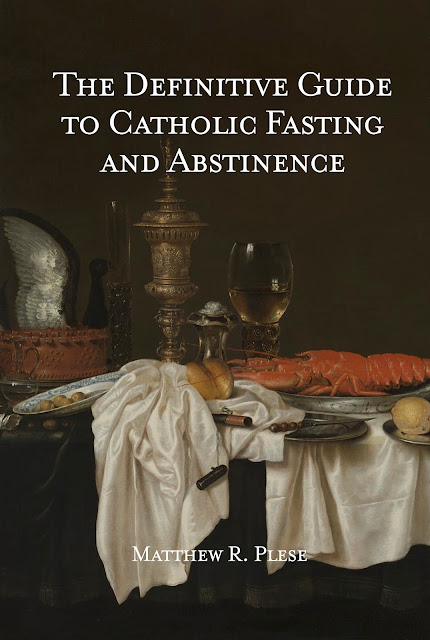
Want to learn more about the history of fasting and abstinence? Check out the Definitive Guide to Catholic Fasting and Abstinence.
Read more >>
Sunday, December 3, 2023
A Catholic Life Podcast: Episode 42

In today’s episode, on the First Sunday of Advent, I address the following: 

  1. Advent Customs & Advent as a Season of Penance
  2. The Upcoming Feastdays this week
  3. The Importance of Fasting on the Vigil of the Immaculate Conception
  4. The Connection Between the Messages of Our Lady of Akita and Our Lady of Fatima

This episode is sponsored by PrayLatin.comPrayLatin.com offers Latin prayer cards to learn and share prayers in the sacred language. Learn your basic prayers in Latin conveniently on the go. Practice your pronunciation with easy-to-follow English phonetic renderings of Latin words. PrayLatin.com offers prayer cards in various formats, including Latin-English rosary pamphlets with the traditional 15 mysteries. Shop for additional Latin resources like missal booklets, server response cards, and more. Visit PrayLatin.com today.

Subscribe to the podcast on Buzzsprout, Apple Podcasts, Spotify, I-tunes, and many other platforms!


Read more >>
Sunday, November 26, 2023
A Catholic Life Podcast: Episode 41

In today’s episode, on the Last and Final Sunday after Pentecost, I address the following: 

  1. The Last and Final Sunday after Pentecost
  2. Is there only one legitimate Catholic Calendar?
  3. The Upcoming Feastdays this week
  4. The St. Andrew Christmas Novena

I would like to thank CatechismClass.com for sponsoring this episode.  CatechismClass.com, the leader in online Catholic catechism classes, has everything from online K-12 programs, RCIA classes, adult continuing education, marriage preparation, baptism preparation, confirmation prep, quince prep classes, catechist training courses, and more. It is never too late to study the fullness of the Catholic Faith, and CatechismClass.com is the gold standard in authentic Catholic formation online.

Subscribe to the podcast on Buzzsprout, Apple Podcasts, Spotify, I-tunes, and many other platforms!

Read more >>
Sunday, November 19, 2023
A Catholic Life Podcast: Episode 40

In today’s episode, on the 6th Resumed Sunday after Pentecost, I address the following: 

This episode is sponsored by PrayLatin.comPrayLatin.com offers Latin prayer cards to learn and share prayers in the sacred language. Learn your basic prayers in Latin conveniently on the go. Practice your pronunciation with easy-to-follow English phonetic renderings of Latin words. PrayLatin.com offers prayer cards in various formats, including Latin-English rosary pamphlets with the traditional 15 mysteries. Shop for additional Latin resources like missal booklets, server response cards, and more. Visit PrayLatin.com today.

Subscribe to the podcast on Buzzsprout, Apple Podcasts, Spotify, I-tunes, and many other platforms!

Read more >>
Sunday, November 12, 2023
A Catholic Life Podcast: Episode 39

In today’s episode, on the 24th Sunday after Pentecost, I address the following: 

  1. Upcoming Feastdays this Week (including why the Feast of St. Gertrude moved so many times)
  2. St. Martin's Lent: The History of the True Advent Fast

I would like to thank CatechismClass.com for sponsoring this episode.  CatechismClass.com, the leader in online Catholic catechism classes, has everything from online K-12 programs, RCIA classes, adult continuing education, marriage preparation, baptism preparation, confirmation prep, quince prep classes, catechist training courses, and more. It is never too late to study the fullness of the Catholic Faith, and CatechismClass.com is the gold standard in authentic Catholic formation online.

Subscribe to the podcast on Buzzsprout, Apple Podcasts, Spotify, I-tunes, and many other platforms!

Read more >>
Sunday, November 5, 2023
A Catholic Life Podcast: Episode 38

In today’s episode, on the 23rd Sunday after Pentecost, I address the following: 

This episode is sponsored by PrayLatin.comPrayLatin.com offers Latin prayer cards to learn and share prayers in the sacred language. Learn your basic prayers in Latin conveniently on the go. Practice your pronunciation with easy-to-follow English phonetic renderings of Latin words. PrayLatin.com offers prayer cards in various formats, including Latin-English rosary pamphlets with the traditional 15 mysteries. Shop for additional Latin resources like missal booklets, server response cards, and more. Visit PrayLatin.com today.

Subscribe to the podcast on Buzzsprout, Apple Podcasts, Spotify, I-tunes, and many other platforms!

Read more >>
Monday, October 30, 2023
Support My Patreon Account


I have been blessed to be involved in Catholic apologetics now for many years. I have been writing here for "A Catholic Life" since 2004, for CatechismClass.com since 2009, for Catholic Family News since 2018, for the Fatima Center since 2018, for Latin Mass Magazine since 2020, and for 1P5 since 2021. And others. I now also offer several books on PDF along with my fasting calendars for purchase for anyone on the Patron Shop.

But I have plenty of other plans in store for the future. I added some videos to YouTube this year for the first time. And I happily launched the weekly A Catholic Life Podcast to reach those who prefer audio content. And I have dozens of other articles on my shortlist to research and write so that more Catholics can learn about forgotten aspects of our Faith. Here are some of my articles on unknown topics just this year:
Early next year, I hope to release the 2nd Edition of "The Definitive Guide to Catholic Fasting and Abstinence," which will more than double the book as I explore more of this forgotten history that has been taken from us. Patrons will receive a free PDF copy of it!


Read more >>
Sunday, October 29, 2023
A Catholic Life Podcast: Episode 37

In today’s episode, on the Feast of Christ the King, I address the following: 

  1. The Feast of Christ the King: Its Spirituality and Indulgences
  2. Prepare for Halloween the Catholic Way
  3. All Saints Day Traditions & Indulgences
  4. All Souls Day Traditions & Indulgences
  5. How Often May a Priest Say Mass?

I would like to thank CatechismClass.com for sponsoring this episode.  CatechismClass.com, the leader in online Catholic catechism classes, has everything from online K-12 programs, RCIA classes, adult continuing education, marriage preparation, baptism preparation, confirmation prep, quince prep classes, catechist training courses, and more. It is never too late to study the fullness of the Catholic Faith, and CatechismClass.com is the gold standard in authentic Catholic formation online.

Subscribe to the podcast on Buzzsprout, Apple Podcasts, Spotify, I-tunes, and many other platforms!

Read more >>
Sunday, October 22, 2023
A Catholic Life Podcast: Episode 36

In today’s episode, on the 21st Sunday after Pentecost, I address the following: 

This episode is sponsored by PrayLatin.comPrayLatin.com offers Latin prayer cards to learn and share prayers in the sacred language. Learn your basic prayers in Latin conveniently on the go. Practice your pronunciation with easy-to-follow English phonetic renderings of Latin words. PrayLatin.com offers prayer cards in various formats, including Latin-English rosary pamphlets with the traditional 15 mysteries. Shop for additional Latin resources like missal booklets, server response cards, and more. Visit PrayLatin.com today.

Subscribe to the podcast on Buzzsprout, Apple Podcasts, Spotify, I-tunes, and many other platforms!

Read more >>
Saturday, October 21, 2023
Prayers for the Intercession of Blessed Emperor Karl of Austria

God our Father, through the gift of Blessed Emperor Karl You have given us an example to follow. In extremely difficult times he performed his burdensome tasks without ever losing his faith. He always followed Your Son, the true King.

He led a humble life, sincerely loving the poor and giving himself heart and soul to the search for peace. Even when his life was in danger he trusted in You, putting his life in Your hands. Almighty and Merciful God, by the intercession of Blessed Emperor Karl, we pray that You may give us his unconditional faith to support us in our most difficult situations, and the courage to always follow the example of Your only Son.

Open our hearts to the poor, and strengthen our commitment for peace within our families and among all peoples. We ask this through Christ our Lord.

Amen.

Imprimator: Archdiocese of Vienna, May 18, 2004 Z1. K787/07 or K788/04,  Vicar Apostolic Dr. Franz Schuster

O Blessed Emperor Karl, you accepted the difficult tasks and burdensome challenges that God gave you during your life. In every thought, decision and action you trusted always in the Holy Trinity. We pray to you to intercede for us with the Lord our God to give us faith and courage, so that even in the most difficult situations of our earthly lives we may not lose heart, but continue faithfully in the footsteps of Christ. 

Ask for us the grace that our hearts may be molded into the likeness of the Sacred Heart of Jesus. Help us to work with compassion and strength for the poor and needy, to fight with courage for peace in our homes and in the world, and in every situation to trustingly place our lives in the hands of God, until we reach Him, as you did, through Christ our Lord.

Amen.

Imprimator: Archdiocese of Vienna, May 18, 2004 Z1. K787/07 or K788/04, Vicar Apostolic Dr. Franz Schuster

Source: Cause of Canonization of Blessed Emperor Karl of Austria

Read more >>
Sunday, October 15, 2023
A Catholic Life Podcast: Episode 35

In today’s episode, on the 20th Sunday after Pentecost, I address the following: 

  1. The 2024 Traditional Catholic Fasting & Abstinence Calendar Now Available
  2. Upcoming Feastdays this Week
  3. Why Women Can’t Be Doctors of the Church
  4. The Importance of Holy Friendships

I would like to thank CatechismClass.com for sponsoring this episode.  CatechismClass.com, the leader in online Catholic catechism classes, has everything from online K-12 programs, RCIA classes, adult continuing education, marriage preparation, baptism preparation, confirmation prep, quince prep classes, catechist training courses, and more. It is never too late to study the fullness of the Catholic Faith, and CatechismClass.com is the gold standard in authentic Catholic formation online.

Subscribe to the podcast on Buzzsprout, Apple Podcasts, Spotify, I-tunes, and many other platforms!


Read more >>
Monday, October 9, 2023
2024 Traditional Catholic Fasting and Abstinence Calendar

Click for Larger Size

As a follow-up to the significant research I have done regarding Traditional (Roman and Eastern) Catholic fasting and abstinence, I have put together a 2024 fasting and abstinence calendar for my devotional purposes. This is a follow-up to a similar one I did in 2022 and 2023.

Traditional Catholic Fasting Rules:

Fasting: Fasting refers to how much food we eat. It means taking only one meal during a calendar day. The meal should be an average-sized meal as overeating at the one meal is against the spirit of the fast. Fasting generally means that the meal is to be taken later in the day. Along with the one meal, up to two snacks (technically called either a collation or frustulum) are permitted. These are optional, not required. Added up together, they may not equal the size of the one meal. No other snacking throughout the day is permitted. Fasting does not affect liquids, aside from the Eucharistic Fast which is a separate matter.

Abstinence: Abstinence in this context refers to not eating meat. Meat refers to the fleshmeat of mammals or fowl. Beef, poultry, lamb, etc are all forbidden on days of abstinence. Abstinence does not currently prohibit animal byproducts like dairy (e.g. cheese, butter, milk) or eggs, but in times past they were prohibited. Fish is permitted along with shellfish and other cold-blooded animals like alligators. In times past, days of fast were always days of abstinence as well; however, not all days of abstinence were days of mandatory fasting.

Partial Abstinence: Partial Abstinence refers to eating meat only at the principal meal of the day. Days of partial abstinence do not permit meat to be eaten as part of the collation or the frustulum. Partial abstinence started only in 1741 under Pope Benedict XIV as a concession and as part of a gradual weakening of discipline. Beforehand, days of abstinence were days of complete abstinence.

Fasting, therefore, refers to the quantity of food and the frequency of eating. Abstinence refers to what may or may not be eaten.

Calendar Notes:

1. Partial Abstinence is a modern invention and is not part of this calendar. Abstinence is always full, never partial. 

2. All Days of Lent, aside from Sundays, are days of fasting and abstinence. Sundays are days only of abstinence.

3. For Lent only, abstinence refers to all animal products (e.g., dairy, butter, eggs) in addition to meat. This includes Sundays.

4. January 22nd is in the USA only an obligatory day of penance for offenses against the dignity of human life.

5. This calendar keeps the 1954 Roman Catholic Calendar and the pre-1917 practice of anticipating Vigils on Saturday that fall on Sunday in a given year.

6. Major Fasts: Great Lent (March 2 - April 16), Apostles Fast (June 3 - June 28)Dormition Fast (Aug 1 - Aug 14)St. Martin's Lent (Nov 14 - Dec 24).

7. Dominican Specific Fasting Days: April 29, August 3, and October 6 are not on the calendar but will be observed by Dominican Tertiary per the 1923 Rule (the last one before Vatican II). Same with all Fridays of the year, which Dominicans are asked to keep as days of fasting.

8. Days of fasting generally include all of the Major Fasts as noted above, in addition to the following days when they fall outside those periods: Ember Days, Vigils of the Apostles, and Vigils for Major Feasts. Rogation Days were often days of abstinence but not fast.

9. Saturday Abstinence used to be obligatory year-round with some exceptions for days "as often as no major solemnity (e.g., Christmas) occurs on Saturday, or no infirmity serves to cancel the obligation.” One exception granted in some places was for all Saturdays of the Christmas Season to be exempted.

10. Above all, this calendar goes far beyond the mere "minimums," which are virtually non-existent, and attempts to present concrete ways for Catholics to actually fast in the manner our forefathers did.

Not listed but certainly recommendable based on the Early Church's practice of Wednesday penance (and based on the wishes of Our Lady of Mount Carmel), would be to also observe abstinence year-round on Wednesdays (beyond the dates noted on the calendar). Such a practice would be commendable on all additional Wednesdays of the year with exceptions whenever either a Holy Day of Obligation, Former Holy Day of Obligation, or First Class Feast falls on Wednesday.

Want to learn more about the history of fasting and abstinence? Check out the Definitive Guide to Catholic Fasting and Abstinence.

Digital Version:

To order a digital .ics file of the above calendar that can be easily imported into your calendar application (e.g., Outlook, Google, Apple, etc), order below. The file is only $3.95. I will email you the relevant .ics file within 24 hours of your order. The file will have relevant details and links with more information to help you live out the recommended traditional Catholic fasts.

The file is only $3.95. Please order it by clicking here.

After you complete the order, you will have a ZIP file. You MUST unzip that file to extract the ICS file. That ICS file can be added to the calendar application of your choice. Check out details for how easy it is to add an ICS file (after you unzip it) online.

Note that the file is a free benefit to all Patreon members. So, if you become a patron, you will get that and many other benefits.

Read more >>
Sunday, October 8, 2023
A Catholic Life Podcast: Episode 34

In today’s episode, on the 19th Sunday after Pentecost, I address the following: 

  1. Upcoming Feastdays this Week
  2. The Miracles of Our Lord as Historical Realities

This episode is sponsored by PrayLatin.comPrayLatin.com offers Latin prayer cards to learn and share prayers in the sacred language. Learn your basic prayers in Latin conveniently on the go. Practice your pronunciation with easy-to-follow English phonetic renderings of Latin words. PrayLatin.com offers prayer cards in various formats, including Latin-English rosary pamphlets with the traditional 15 mysteries. Shop for additional Latin resources like missal booklets, server response cards, and more. Visit PrayLatin.com today.

Subscribe to the podcast on Buzzsprout, Apple Podcasts, Spotify, I-tunes, and many other platforms!

Read more >>
Wednesday, October 4, 2023
The Environmental Benefits of Fasting & Abstinence


St. Jerome Catholic Church, Chicago, IL

For all the talk about environmental issues and "global warming" coming out of the Vatican (especially toady in the Apostolic Exhortation "Laudate Deum"), why is there no discussion of a return to the practice of our forefathers that will actually make a difference to souls and to the environment?

The original nature of animals is seen in Genesis 1:29-30 where animals, as created by God, were companions of man before the Fall. As early as Genesis 3:21 we see the utilitarian use of animals begin. For instance, animal skin was used by God for clothing for men and women. Before the Fall, animals, both carnivorous and omnivorous, were in good relationship with man and were obedient to him. This relationship changed after the Fall, in which animals began to act violently towards man out of fear of him (cf. Genesis 9:2-3). Despite this, mankind was tasked with caring for Creation and still has this responsibility.

In addition to the myriad of physical and spiritual benefits of fasting, the practice of both fasting and abstinence has a positive contribution to the environment and God’s creation. One of the positive side effects of having all Catholics return to robust abstinence would be a reduction of carbon emissions, as a study by the University of Cambridge explains:

“In 2011, The Catholic bishops of England and Wales called on congregations to return to meat-free Fridays. Just a quarter of the 5 million Catholics in England and Wales changed their dietary habits – yet this still saved over 55,000 tonnes of carbon a year, the researchers found. This is equivalent to 82,000 fewer return flights from London to New York over the course of a year.

“Around the world, 1.3 billion people identify as Catholic. A papal decree would reinstate the obligation to follow meatless Fridays across the entire global church, saving millions of tonnes of greenhouse gases. National bishop conferences could also reintroduce the requirement. ‘For instance, even if only the United States Catholic bishops were to follow suit, the benefits would likely be 20 times larger than in the UK,’ the study’s authors write.” 

Let us start sending in letters suggesting this very change to our pastors and bishops to help encourage this necessary return to Tradition.

Want to learn more about the history of fasting and abstinence? Check out the Definitive Guide to Catholic Fasting and Abstinence.
Read more >>
Sunday, October 1, 2023
A Catholic Life Podcast: Episode 33

In today’s episode, on the 18th Sunday after Pentecost, I address the following: 

  1. October as the Month of the Holy Rosary & the Required St. Joseph Prayer
  2. Upcoming Feastdays this Week

I would like to thank CatechismClass.com for sponsoring this episode.  CatechismClass.com, the leader in online Catholic catechism classes, has everything from online K-12 programs, RCIA classes, adult continuing education, marriage preparation, baptism preparation, confirmation prep, quince prep classes, catechist training courses, and more. It is never too late to study the fullness of the Catholic Faith, and CatechismClass.com is the gold standard in authentic Catholic formation online.

Subscribe to the podcast on Buzzsprout, Apple Podcasts, Spotify, I-tunes, and many other platforms!

Read more >>
Sunday, September 24, 2023
A Catholic Life Podcast: Episode 32

In today’s episode, on the 17th Sunday after Pentecost, I address the following: 

  1. Upcoming Feastdays this Week
  2. The 3 Unique Styles to Depict St. Jerome in Art
  3. The Customs and Traditions of Michaelmas

This episode is sponsored by PrayLatin.comPrayLatin.com offers Latin prayer cards to learn and share prayers in the sacred language. Learn your basic prayers in Latin conveniently on the go. Practice your pronunciation with easy-to-follow English phonetic renderings of Latin words. PrayLatin.com offers prayer cards in various formats, including Latin-English rosary pamphlets with the traditional 15 mysteries. Shop for additional Latin resources like missal booklets, server response cards, and more. Visit PrayLatin.com today.

Subscribe to the podcast on Buzzsprout, Apple Podcasts, Spotify, I-tunes, and many other platforms!

Read more >>
Saturday, September 23, 2023
The Importance and History of Ember Days


The Ancient Institution of Ember Days

Ember days are categorized by three elements: prayers for both thanksgiving and petition, penance in the form of fasting and abstinence, and ordinations. Like Rogation Days, Ember Days developed early in these times, taking the form that would continue for centuries. The Catholic Encyclopedia explains:

“At first the Church in Rome had fasts in June, September, and December; the exact days were not fixed but were announced by the priests. The Liber Pontificalis ascribes to Pope Callistus (217-222) a law ordering the fast, but probably it is older. Leo the Great (440-461) considers it an Apostolic institution.” 

By the time of Pope Gregory I, who died in 601 AD, they were observed for all four seasons though the date of each of them could vary. In the Roman Synod of 1078 under Pope Gregory VII, they were uniformly established for the Wednesday, Friday, and Saturday after December 13th (St. Lucia), after Ash Wednesday, after Pentecost Sunday, and after September 14th (Exaltation of the Cross).

While they were initially observed only in Rome, their observance quickly spread as the Catholic Encyclopedia further adds:

“Before Gelasius the ember days were known only in Rome, but after his time their observance spread. They were brought into England by St. Augustine; into Gaul and Germany by the Carlovingians. Spain adopted them with the Roman Liturgy in the eleventh century. They were introduced by St. Charles Borromeo into Milan. The Eastern Church does not know them. The present Roman Missal, in the formulary for the Ember days, retains in part the old practice of lessons from Scripture in addition to the ordinary two: for the Wednesdays three, for the Saturdays six, and seven for the Saturday in December. Some of these lessons contain promises of a bountiful harvest for those that serve God.” 

Dom Prosper Guéranger adds that the institution of the Ember Days is further based on the fast ordered by God for the changing of the seasons in the Old Testament. Thus, the Church hallowed that fast and adopted it for the worship of the True God thus fulfilling the Lord’s words that He came not to abolish but to complete (cf. Matthew 5:17) what was instituted in the Old Testament:

“We may consider it as one of those practices which the Church took from the Synagogue; for the prophet Zacharias speaks of the fasts of the fourth, fifth, seventh, and tenth months. Its introduction into the Christian Church would seem to have been made in the apostolic times; such, at least, is the opinion of St. Leo, of St. Isidore of Seville, of Rabanus Maurus, and of several other ancient Christian writers. It is remarkable, on the other hand, that the orientals do not observe this fast.” 

Spirituality of the Ember Days

The purpose of Ember Days is, in the words of the Catholic Encyclopedia, to “thank God for the gifts of nature, to teach men to make use of them in moderation, and to assist the needy.” As a result, their focus differs from the focus of the Rogation Days to which they are often compared. An article on Liturgies.net explains the separate, specific focus of Rogation Days as such:

“Rogation Days are the four days set apart to bless the fields and invoke God's mercy on all of creation. The 4 days are April 25, which is called the Major Rogation (and is only coincidentally the same day as the Feast of St. Mark); and the three days preceding Ascension Thursday, which are called the Minor Rogations. Traditionally, on these days, the congregation marches the boundaries of the parish, blessing every tree and stone, while chanting or reciting a Litany of Mercy, usually a Litany of the Saints.” 

In addition to the general purpose of thanking God and invoking His blessings, the author of Barefoot Abbey provides specific intentions for each of the Ember Days by season so that we can render thanks to Almighty God for the fruits of the earth which specifically become instruments of His grace through the Sacraments:

Winter or Advent Ember Days are after the Feast of St. Lucy (December 13th): Give thanks for the olives that make holy oils for Unction. Spring or Lenten Ember Days are after Ash Wednesday: Give thanks for the flowers and bees that make blessed candles as in for Baptism and upon the alter. Summer or Whit Ember Days are after the Solemnity of Pentecost: Give thanks for the wheat used to make the Eucharist hosts. Autumn or Michaelmas Ember Days are after the Feast of Exaltation of the Holy Cross (September 14): Give thanks for the grapes that make wine for the Precious Blood of Christ.  

By writing these down and recalling them for the Ember Days of each season, we can be more intentional in what we are thanking God for in any given season. In this respect, the Ember Days further distinguish themselves from the Rogation Days.

The Cultural Impact of the Ember Days to Japan

Ember Days would remain obligatory for the faithful until the changes immediately after Vatican II in the mid-1960s. In fact, their observance has led to several long-term cultural implications. For instance, Ember Days are the reason we have “tempura” dishes in Asian cuisine. For instance, shrimp tempura is based on Ember Days, which are known as quatuor tempora in Latin.

Portuguese (and Spanish) missionaries to the Far East would invite the converted Japanese to fast during the quator tempora by eating a dish that consisted of battered and deep-fried seafood and vegetables called “Peixinhos da Horta” in Portuguese which literally translated to “little fishes from the garden.” It is a dish consisting of bell peppers, squash, and green beans that is fried into a flour-based batter. The term steadily gained popularity in southern Japan and became widely used to refer to any sort of food prepared using hot oil, battered or not. This term would persist even after Catholicism was outlawed by the Japanese and the Church’s missionaries were executed or exiled in the late 1500s. It was not until the 1870s that Christianity legally returned to Japan. But the faithful of Japan continued to keep the Faith alive in their families, including through the keeping of fast and abstinence days.

Ember Days Are Always on Wednesdays, Fridays, and Saturdays

Ember Days are observed on Wednesdays, Fridays, and Saturdays in keeping with the ancient weekly devotional fast that originated with the Apostles. On the rationale for fasting on these days, St. Peter of Alexandria, Patriarch of Alexandria until his death in 311 AD, explains: “On Wednesday because on this day the council of the Jews was gathered to betray our Lord; on Friday because on this day He suffered death for our salvation.” Likewise, the 1875 Catechism of Father Michael Müller adds: “This practice began with Christianity itself, as we learn from St. Epiphanius, who says: ‘It is ordained, by the law of the Apostles, to fast two days of the week.’” Some places added Saturday fasting as well, as noted by St. Francis de Sales who writes, “The early Christians selected Wednesday, Friday and Saturday as days of abstinence.” 

Father Slater notes in “A Short History of Moral Theology” published in 1909 how these weekly devotional fasts gradually ended but were retained for the Ember Days:

“The obligation of fasting on all Wednesdays and Fridays ceased almost entirely about the tenth century, but the fixing of those days by ecclesiastical authority for fasting, and the desire to substitute a Christian observance at Rome for certain pagan rites celebrated in connection with the seasons of the year, seem to have given rise to our Ember Days… About the tenth century the obligation of the Friday fast was reduced to one of abstinence from flesh meat, and the Wednesday fast after being similarly mitigated gradually disappeared altogether.” 

Ember Days in the Early 1900s

The days of obligatory fasting as listed in the 1917 Code of Canon Law were the forty days of Lent (including Ash Wednesday, Good Friday, and Holy Saturday until noon); the Ember Days; and the Vigils of Pentecost, the Assumption of the Blessed Virgin Mary, All Saints, and Christmas. Partial abstinence, the eating of meat only at the principal meal, was obligatory on all weekdays of Lent (Monday through Thursday). And of course, complete abstinence was required on all Fridays, including Fridays of Lent, except when a holy day of obligation fell on a Friday outside of Lent. Saturdays in Lent were likewise days of complete abstinence. Fasting and abstinence were not observed should a vigil fall on a Sunday as stated in the code: “If a vigil that is a fast day falls on a Sunday the fast is not to be anticipated on Saturday but is dropped altogether that year.”

Canon 1006 of the 1917 Code further stated men were to be ordained only on Ember Saturdays, Holy Saturday and the Saturday before Passion Sunday, but the Code added “if a serious cause intervenes, the bishop can have them even on any Sunday or feast day of the order.” Episcopal consecration was reserved for Sundays and for Feasts of the Apostles. Thus, even the 1917 Code kept the ancient practice of holding Ember Days as privileged days for ordinations. 

Many changes though would continue through the 20th century. In one such change, on January 28, 1949, the United States bishops issued modified regulations on abstinence in America again after receiving a ruling from the Sacred Congregation of the Council. Partial abstinence replaced complete abstinence for Ember Wednesdays, Ember Saturdays, and the Vigil of Pentecost. Previously, all Ember Days were days of complete abstinence.

Changes to Ember Days in the Early 1960s

By 1962, the laws of fasting and abstinence were as follows as described in Moral Theology by Father Heribert Jone and adapted by Father Urban Adelman for the “laws and customs of the United States of America” copyright 1961: 

“Complete abstinence is to be observed on all Fridays of the year, Ash Wednesday, the Vigils of Immaculate Conception and Christmas. Partial abstinence is to be observed on Ember Wednesdays and Saturdays and on the Vigil of Pentecost. Days of fast are all the weekdays of Lent, Ember Days, and the Vigil of Pentecost. If a vigil falls on a Sunday, the law of abstinence and fasting is dispensed that year and is not transferred to the preceding day.” 

1960 also saw a change to the calculation of how the autumnal Ember Days can follow as the Barefoot Abbey website explains:

“Autumn Ember Days are unique in their scheduling. With the 1960 revisions to the breviary rubrics and the newly instituted system of counting Sundays from August to December, Pope John XXIII added that the September Ember Days should not only follow the Feast of the Exaltation of the Cross as they had historically done, but also fall after the 3rd Sunday of September.” 

Gregory DiPippo explains in more detail how the counting of Sundays changed at this time:

“The first Sunday of each of these months is the day on which the Church begins to read a new set of scriptural books at Matins, with their accompanying antiphons and responsories; these readings are part of a system which goes back to the sixth century...The 'first Sunday' of each of these months is traditionally that which occurs closest to the first calendar day of the month, even if that day occurs within the end of the previous month… In the 1960 revision, however, the first Sunday of the months from August to November is always that which occurs first within the calendar month.” 

Thus, not only did fasting change before Vatican II but the possible dates of the Ember Days were changed as well.

The Abandonment of Our Heritage

Shortly after the close of the Second Vatican Council, Pope Paul VI issued an apostolic constitution on fasting and abstaining on February 17, 1966, called Paenitemini, whose principles were later incorporated into the 1983 Code of Canon Law. Paenitemini allowed the commutation of the Friday abstinence to an act of penance at the discretion of the local ordinaries and gave authority to the episcopal conferences on how the universal rules would be applied in their region. Abstinence which previously began at age seven was modified to begin at age fourteen. Additionally, the obligation of fasting on the Ember Days and on the remaining vigils was abolished.

Father Lew, commenting on the post-conciliar changes, admonishes priests accordingly:

“True, modern canon law is silent about the Ember Days. But tucked away in an obscure corner of the 1970 missal is a reference to ‘the Four Times, in which the Church is accustomed to pray to our Lord for the various needs of men, especially for the fruits of the earth and human labours, and to give him public thanks’ (Normæ Universales de Anno Liturgico, 45). The same words remain in the 3rd editio typica of this missal, published in 2002. However, the ‘adaptation’ of these days is left to Bishops’ Conferences: they can decide how many are to be observed, and when, and with what prayers. A couple of ‘fast days’ are duly marked on each year’s Ordo for the church in England and Wales, one in Lent and one in October, with the suggestion of celebrating a votive Mass of a suitable kind. Surely so ancient a tradition as the Ember Days must not be allowed to fade away.” 

May we all return to the practice and observance of the Ember Days for the glory of God and for reparation for sin. Offering up our fasts for vocations and for the priests who are ordained on – or around the Ember Days – would be a meritorious and charitable work we can do. And we can spend more time learning about this part of our heritage. Like Ember Days, so much of our history of fasting and abstinence has been forgotten.

Want to learn more about the history of fasting and abstinence? Check out the Definitive Guide to Catholic Fasting and Abstinence.

Read more >>
Sunday, September 17, 2023
A Catholic Life Podcast: Episode 31

In today’s episode, on the 16th Sunday after Pentecost, I address the following: 

  1. The Importance, History, and Means to Preserve Ember Days

I would like to thank CatechismClass.com for sponsoring this episode.  CatechismClass.com, the leader in online Catholic catechism classes, has everything from online K-12 programs, RCIA classes, adult continuing education, marriage preparation, baptism preparation, confirmation prep, quince prep classes, catechist training courses, and more. It is never too late to study the fullness of the Catholic Faith, and CatechismClass.com is the gold standard in authentic Catholic formation online.

Subscribe to the podcast on Buzzsprout, Apple Podcasts, Spotify, I-tunes, and many other platforms!


Read more >>


Copyright Notice: Unless otherwise stated, all items are copyrighted under a Attribution-NonCommercial-NoDerivatives 4.0 International License. If you quote from this blog, cite a link to the post on this blog in your article.

Disclosure of Material Connection: Some of the links on this blog are “affiliate links.” This means if you click on the link and purchase the item, I will receive an affiliate commission. As an Amazon Associate, for instance, I earn a small commission from qualifying purchases made by those who click on the Amazon affiliate links included on this website. I am disclosing this in accordance with the Federal Trade Commission’s 16 CFR, Part 255: “Guides Concerning the Use of Endorsements and Testimonials in Advertising.”