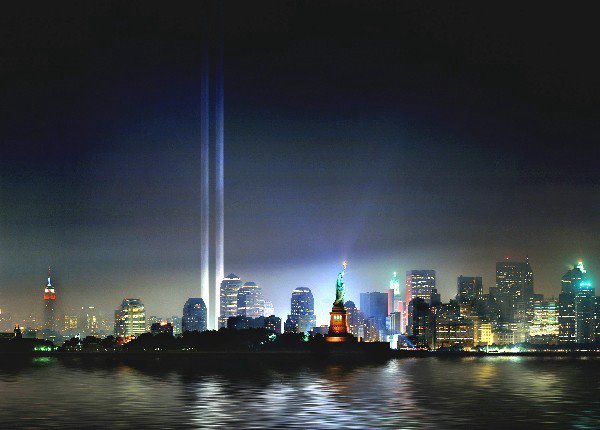
 Let us never forget September 11th, 2001, and the great people who died on that day. May God Bless America and may America praise and glorify God.
Image Source: Associated Press
 Let us never forget September 11th, 2001, and the great people who died on that day. May God Bless America and may America praise and glorify God.


O God, Who to safeguard Catholic faith and to restore all things in Christ, didst fill the Supreme Pontiff, Saint Pius, with heavenly wisdom and apostolic fortitude: grant in Thy mercy: that by striving to fulfill his ordinances and to follow his example, we may reap eternal rewards. Through the same our Lord.
Prayer Source: 1962 Roman Catholic Daily Missal


The two principal positions regarding Old Roman Chant result from the fact that there are no manuscripts from before the 13th century that accurately and indisputeably represent the form, and thus (at best) accurately documenting the chant form would be a function of "oral tradition." What comprised Old Roman Chant tends to be seen two ways. What might be described as the “academic liturgical” view essentially begins with the thesis that the Roman chant that was completed by about 750 is inaccessible to us in its original form. Further, it is only the Roman chant that was transmitted to the Franks after 754 AD and was modified in significant ways by them (giving us what we know as Gregorian chant), that is accessible to us via extant manuscripts. In the Roman Catholic chant manuscript corpus, it is known that the five manuscripts labeled as “Old Roman Chant” are dated from the late 11th to the mid-12th centuries. Thus, by general agreement, the Old Roman and Gregorian sources each represent a development or modification of the same original, the Roman chant of around 750. Little, if anything, however, is said by proponents of this view about the nature of the liturgical chant sung in the Church of Rome up to that time and it is no surprise that their interpretation of Old Roman Chant sounds like a simplified Gregorian chant. Examples are recordings by Schola Hungarica.There are a couple major purveyors of reconstructed Old Roman Chant these days, notably Marcel Peres
In contrast, what might be described as the “historical reconstructionist” view begins with the common sense assumption that the early church exemplified a high degree of homogeneity, and therefore since early Christian music forms were based on older Greek music forms, it can be safely assumed that Old Roman Chant had its roots in, and probably sounded very similar to pre-Byzantine chant in the early church period. Most of the proponents of this understanding of Old Roman Chant have begun with the oldest manuscripts they have available, and informed by a variety of "extra-musical" datum, set out to try and recreate Old Roman chant--this is an undertaking akin to playing classical compositions on original instruments with the goal or recreating the original sound intended by the composer. In addition, this approach considers manuscripts outside the traditional Roman Catholic corpus to be valid, and since the earliest have notation akin to Byzantine notation, are not afraid to involve Byzantine musicologists to try to understand and recreate the sound. Thus it is no surprise that their interpretation of Old Roman Chant sound somewhat like early Byzantine chant. Examples are recordings by Marcel Peres and Ensemble Organum.
 and Schola Hungarica. I would say that Marcel Peres is better because he uses exclusively male voices, which is more historically accurate. Here are some samples of Marcel Peres and his Ensemble Organum.