Saturday, September 3, 2016
Our Lady of Consolation (Saturday after the Feast of St. Augustine)

As part of the Traditional Missal, the Feast of Consolation occurs on the Saturday after the Feast of St. Augustine of Hippo, which falls on August 28th.  This Feastday is kept by various religious orders in the Church.

The following is taken from Our Lady's Feastdays by Rev. Lawrence G. Lovasik, S.V.D:
1. Mary, Mother of God, you are the Comforter of the Afflicted because in your lifetime you bore every sort of affliction and you can now sympathize with me in my sufferings. You willingly became the Mother of Jesus when you answered the message of the Archangel Gabriel with the words "Behold the handmaid of the Lord, be it done to me according to thy word" (Luke 36, 38). This marked the beginning of your life of suffering together with Jesus. Simeon prophesied it when you offered the little Victim-Savior to the Heavenly Father for the first time in the temple: "And thy own soul a sword shall pierce" (Luke 2, 35). You confidently accepted whatever God willed. You bore your sorrows bravely because you received them from God's hands. 
Three swords brought anguish to you while Jesus was yet a young child, four swords pierced your soul in His Holy Passion. Yet no selfish thought, no bitter resentment has marred your beauty. From the knowledge of the Will of God you gathered the strength that was to uphold you at the foot of the Cross on which your Son hung, dying. Through thirty-three years of Jesus' life on earth you suffered in silence. The climax of that sorrow came when the innocent Victim for the sins of mankind was given, dead, into your arms. Your loving submission to the Divine Will could not dry your tears, but it quieted the agony of your mother-heart. 
Mary, My Mother, you associated yourself with the suffering and crucifixion of Jesus in order that you might share in His glorification. You had to become the Mother of Sorrows before you were raised above the angels as Heaven's Queen. En life's dark hours you always remembered that you were God's handmaid, and you always wanted everything to be done according to His holy Will. Your heart was visited with seven swords of sorrow before you became the Comforter of the Afflicted and the Cause of our Joy. 
2. Mary, Mother of God, I pour out to you the sorrows of my own troubled heart. In your greater sorrow may my own be lost, and in calm resignation may my anguished soul find peace and strength. Through the sorrow which you felt during your whole life, but especially when you saw Jesus led to His death and then crucified, obtain for me the grace that I may patiently bear the sufferings which God has seen fit to send me, even as you bore your sufferings. Let this be my consolation to know that I am doing God's Will. I shall be blessed if I imitate you in bearing my cross till death. Since you bore a much heavier one together with your innocent Son, should not I, a sinner deserving of eternal punishments, carry mine patiently? Let me find consolation and strength in your favorite devotion—the rosary. 
When you lived in this valley of tears, you were ever loving and merciful toward the afflicted. How much more compassionate are you now since you reign happily in Heaven? Now you realize human misery more fully and, therefore, show your mercy and compassion and help more generously. You are indeed our Mother, and a mother can never forget her children. 
Mary, My Mother, I thank you for having suffered and wept for love of me that you might become my consolation in affliction. I entrust to you all my anxieties and needs so that through the merits of your sorrows I may bear the trials and sufferings of life with the same love and resignation to God's Will with which you bore yours. I beg you to make me strong enough to bear my trials for the love of God so that I may become like you in suffering. Help me to cling tightly to Jesus and to you. May each pain and disappointment of my life become a perfect act of love of God because I offer all to God through your immaculate hands. 
To you I entrust my soul for which Jesus died and I beg you to help me to save it. Protect me from the snares of the world, the flesh and the devil. And grant that after having suffered with you and your loving Son in this life, I may be glorified with You both in His Kingdom beyond the stars. 
3. Mary, Mother of God, I thank you for being my companion in suffering. You love me with a Heart human like my own—a Heart that can understand my sorrows and problems since you experienced all that I must bear; a Heart that can sympathize with me and befriend me in my hour of need. Not all the affection you pour out upon countless other souls lessens your love for me. Even when I forget you and begin to complain in my sufferings and crosses, you try to console me. Even when I disappoint you by doing my best to shake off the cross God has placed upon my shoulders, you pray for me. When I have pain, you are ready to comfort and strengthen me. 
I am most grateful for such devoted love and sympathy. You are indeed the most wonderful Mother that has ever walked this earth. Teach me to answer such love with childlike confidence. I want to turn to you in all my pressing needs and difficulties as to a most sure refuge, imploring the help of your protection, choosing you as my advocate, whole-heartedly entrusting my cause to you who are the Consoler of the Afflicted. But that my devotion may be acceptable and my homage pleasing, let me endeavor to maintain within my soul, as much as possible the spotlessness of your purity and try to walk in your footsteps humbly and gently. 
Mary, My Mother, I unite myself with you in the spirit in which you offered yourself as a sacrifice of love during your lifetime. Through your hands I offer myself with Jesus during the Holy Sacrifice of the Mass. Give my heart sentiments like His and your own so that, through frequent Holy Communion and prayer, I may become a worthy co-victim with Jesus, holy and pleasing to God, and so that all the actions, sufferings, tears and disappointments of my life may be thus consecrated to God as a sacrifice for His glory and the salvation of souls, especially my own. Everything that God may send me, or permit in my life, whether favorable or unfavorable, sweet or bitter—even illness, is acceptable to me, for I have resolved, after your example to conform myself to the Divine Will in all things. Jesus invites me to do so, for He said, "Take my yoke upon you...My yoke is easy and My burden light" (Matt. 11, 29).
Read more >>
Saturday, August 27, 2016
Feast of Our Lady Help of the Sick (Mass in Some Places)

As part of the Traditional Missal, the Feast of our Lady Help of the Sick falls on Saturday before the last Sunday in August. This Feastday is kept by various religious orders in the Church as it one of the Masses Said in Some Places.  

Make an effort today to say 3 Our Fathers and 3 Hail Marys for the repose of the soul of all of the sick who will die today and appear before Christ in Judgment.

The following is taken from Our Lady's Feastdays by Rev. Lawrence G. Lovasik, S.V.D:
1. Mary, Mother of God, help me to understand as clearly as God wishes to let me do so, the value of suffering and sickness. God has created nature and all the wondrous functions of the human body. He is the Master of His creation. He can and does suspend the laws of nature for those who have faith in His goodness and entreat Him in fervent prayer. He promised that my prayers would be heard when He said, "Ask, and it shall be given you" (Matt. 5, 7).

During His lifetime Jesus cured sickness and disease and even raised the dead to life, because people asked Him to do so in prayer. I firmly believe that He will hear my prayer also, if this should be the Will of God.

Help me to realize that it is only through the cross that I can attain to its glory and that it is only through suffering that I can possess the kingdom of heaven. Before you were crowned Queen of Heaven you became the Mother of Sorrows. All the saints suffered during their lifetime, but you are the Queen of them all as Queen of Martyrs. If I have been blessed with suffering, let me remember that this is the only way I can follow Jesus and you, for He said, "If any one wishes to come after Me, let him deny himself, and take up his cross and follow Me" (Matt. 16, 24).

2. Mary, Mother of God, because of your influence in obtaining helpful remedies against spiritual and bodily maladies, the Church calls you the "Health of the Sick." Your power and motherly care not only embrace spiritual miseries but also extend to the ills of the body. How often do we see you restoring health to the sick who have recourse to you with childlike confidence? But much as your compassionate heart sympathizes with man's sufferings from bodily sickness, you certainly show greater care to relieve the spiritual sickness and weaknesses under which we labor.

How much I worry about my physical health! But how careless I am about my spiritual health! I realize that it is the command of God that I take ordinary care to insure bodily health. However, my sick soul is entitled to more vigilant care, for Jesus reminded me, "What does it profit a man, if he gain the whole world, but suffer the loss of his own soul" (Matt. 16, 26).

Mary, My Mother, in all infirmities of body and soul, you are a sure refuge and relief. Down through the ages numberless people have recovered health of body and of spirit through your intercession! You lighten our sufferings, you obtain for us bodily health when it is conducive to our salvation and you help the soul to conquer its spiritual enemies; Teach me to be more earnest about seeking health of soul: to overcome my ruling passion, to free myself from the occasions of sin. I ask this with special earnestness from you who are the Health of the Sick.

How unimportant are the infirmities of the body compared to the infirmities of the soul! Infirmities of the body, patiently endured, may become the occasion of great merit. May the infirmities of my soul be my chief concern. Let me fear such sickness of soul as avarice, lust, luxury, ambition, hatred, anger—because, unless these are cured, they may bring about the eternal death of my soul.

3. Mary, Mother of God, sincere devotion to you is a sign of perseverance in doing good till death. Infirmities of the body are nature's warning voice concerning the approach of death, which I cannot finally escape. The Church teaches that final perseverance in good and a happy death are graces so great that no one can obtain them by his own merits or without special help from God. But saints and writers of the Church speak of devotion to you as a sign of perseverance in good and a happy death. They apply these words of Scripture to you: "He that shall find me, shall find life, and shall have salvation from the Lord" (Prov. 8, 35).

Jesus gave you to me to be my Mother that you may enable me at my death to say as He did with a sense of humble gratitude to God for His graces: "It is finished"—"I have done the work God placed me upon this earth to do. I have loved and followed Jesus to the end. I have carried my cross patiently which He gave me to carry. I have saved my soul."

Mary, My Mother, I turn to you rather for health of soul than of body. Keep my soul in good health so that when my body fails, my soul may be prepared to meet its Maker and Judge. I am in need of forgiveness of sin, of strength in temptation. I need virtues, especially charity and humility and purity. Help me to overcome the enemies of my salvation and to persevere to the end in the friendship of God.

For vain joys or small profits people sacrifice much. For the small sacrifice of being devoted to you I can obtain a happy death and eternal life. I want to take devotion to you seriously. If I put my trust in you, I shall be saved. If you receive me under your care, I shall fear nothing because devotion to you is an unfailing sign of salvation. Your aid at the hour of my death will be for me a guarantee of salvation if through life I have sought to imitate the beautiful example of your life. How fortunate I will be, if at death I am bound with the sweet chains of love to you! These chains are chains of salvation for me, and they will make me enjoy in death that blessed peace which will be-the beginning of my eternal peace and rest. I look to you for the grace of final perseverance and a happy death. Thus you will be for me not only the Health of the Sick but also the Gate of Heaven.
Read more >>
St. Joseph Calasanctius


Double (1954 Calendar): August 27

St. Joseph Calasanctius (1556-1648) was born in Aragon, Spain. He went to Rome where he was ordained a priest. While still in the Eternal City, he was dismayed by the vice and ignorance of the children of the poor. In order to provide for the religious education of these neglected youngsters, he founded the Order of Clerks Regular of the Pious Schools, also called Piarists. In the latter years of his long life, he had much to suffer in persecutions by members of his own order. Yet he died full of hope and peace, saying, "My work was done solely for the love of God."

The above image of St. Joseph Calasanctius' Last Communion should serve to as a reminder to receive every Communion as if was our First Holy Communion...our last Holy Communion...our only Holy Communion.

Traditional Matins Reading:

Joseph Calasanctius of the Mother of God was born of a noble family of Petralta in Aragon, and from his earliest years gave signs of his future love for children and their education. For, when still a little child, he would gather other children round him and would teach them the mysteries of faith and holy prayer. After having received a good education in the liberal arts and divinity, he went through his theological studies at Valencia. Here he courageously overcame the seductions of a noble and powerful lady, and by a remarkable victory preserved unspotted his virginity which he had already vowed to God. He became a priest in fulfilment of a vow; and several bishops of New Castille, Aragon, and Catalonia availed themselves of his assistance. He surpassed all their expectations, corrected evil living throughout the kingdom, restored ecclesiastical discipline, and was marvellously successful in putting an end to enmities and bloody factions. But urged by a heavenly vision, and after having been several times called by God, he went to Rome.

Here he led a life of great austerity; fasting and watching, spending whole days and nights in heavenly contemplation, and visiting the seven basilicas of the city almost every night. This last custom he observed for many years. He enrolled himself in pious associations, and with wonderful charity devoted himself to aiding and consoling the poor with alms and other works of mercy, especially those who were sick or imprisoned. When the plague was raging in Rome, he joined St. Camillus, and not content in his ardent zeal, with bestowing lavish care upon the sick poor, he even carried the dead to the grave on his own shoulders. But having been divinely admonished that he was called to educate children, especially those of the poor, in piety and learning, he founded the Order of the Poor Regular Clerks of the Mother of God of the Pious Schools, who are specially destined to devote themselves to the instruction of youth. This Order was highly approved by Clement VIII., Paul V., and others of the Roman Pontiffs, and in a wonderfully short space of time it spread through many of the kingdoms of Europe. But in this undertaking Joseph had to undergo many sufferings and labours, and he endured them all with so much constancy, that every one proclaimed him a miracle of patience and another Job.

Though burdened with the government of the whole Order, he nevertheless devoted himself to saving souls, and moreover never gave over teaching children, especially those of the poorer class. He would sweep their schools and take them to their homes himself. For fifty-two years he persevered in this work, though it called upon him to practise the greatest patience and humility, and although he suffered from weak health. God rewarded him by honouring him with many miracles in the presence of his disciples; and the blessed Virgin appeared to him with the Infant Jesus who blessed his children while they were praying. He refused the highest dignities, but he was made illustrious by the gifts of prophecy, of reading the secrets of hearts, and of knowing what was going on in his absence. He was favoured with frequent apparitions of the citizens of heaven, particularly of the Virgin Mother of God, whom he had loved and honoured most especially from his infancy, and whose cultus he had most strongly recommended to his disciples. He foretold the day of his death and the restoration and propagation of his Order, which was then almost destroyed, and in his ninety-second year he fell asleep in our Lord, at Rome, on the eighth of the Calends of September, in the year 1648. A century later, his heart and tongue were found whole and incorrupt. God honoured him by many miracles after his death. Benedict XIV granted him the honors of the blessed, and Clement XIII solemnly enrolled him among the saints.

Collect:

O God, in the person of Your blessed confessor Joseph You provided the Church with new help to train the young in wisdom and holiness. Grant that we may be led by his example and prayer so to work and teach that we may gain an everlasting reward. Through our Lord . . .

Prayer Source: 1962 Roman Catholic Daily Missal
Read more >>
Friday, August 26, 2016
St. Zephyrinus


Simple (1955 Calendar): August 26

Pope St. Zephyrinus reigned as the Vicar of Christ from 199 to 217 AD.  During part of his reign, the Church endured the bloody persecution of Emperor Septimus Severus. Pope Zephyrinus rejoiced in the triumphs of the martyrs, but he also had much to suffer from heresies and apostasies attacking the Faith. It was his glory that the heretics called this holy Pope the principle defender of Christ's divinity.  The holy pontiff died on December 20, 217 AD.
SAINT ZEPHYRINUS, a native of Rome, succeeded Victor in the Pontificate, in the year 2O2, in which Severus raised the fifth most bloody persecution against the Church, which continued not for two years only, but until the death of that emperor in 211. Under this furious storm this holy pastor was the support and comfort of the distressed flock of Christ, and he suffered by charity and compassion what every confessor underwent. The triumphs of the martyrs were indeed his joy, but his heart received many deep wounds from the fall of apostates and heretics. Neither did this latter affliction cease when peace was restored to the Church. Our Saint had also the affliction to see the fall of Tertullian, which seems to have been owing partly to his pride. Eusebius tells us that this holy Pope exerted his zeal so strenuously against the blasphemies of the heretics that they treated him in the most contumelious manner; but it was his glory that they called him the principal defender of Christ’s divinity. St. Zephyrinus filled the pontifical chair seventeen years, dying in 219. He was buried in his own cemetery, on the 26th of August. He is, in some Martyrologies, styled a martyr, which title he might deserve by what he suffered in the persecution, though he perhaps did not die by the executioner.  
REFLECTION.—God has always raised up holy pastors zealous to maintain the faith of His Church inviolable, and to watch over the purity of its morals and the sanctity of its discipline. We enjoy the greatest advantages of the divine grace through their labors, and we owe to God, a tribute of perpetual thanksgiving and immortal praise for all those mercies which He has afforded His Church on earth.   Source
May all of us call on St. Zephyrinus to fight the continued heresies that assert that our Lord was not divine - heresies present in Arianism, Islam, and other sects.

Collect:

O Eternal Shepherd, who appointed blessed Zephyrinus shepherd of the whole Church, let the prayers of this martyr and supreme pontiff move You to look with favor upon Your flock and to keep it under Your continual protection. Through our Lord . . .

Prayer Source: 1962 Roman Catholic Daily Missal
Read more >>
Saturday, August 20, 2016
Rite for Foreigners Marrying in Poland (1892 Version)

Recently a friend of mine received the Sacrament of Matrimony in Poland. As a US citizen marrying abroad in the Traditional Rite of the Church, he used the Rite for Foreigners Marrying in Poland, established in 1892.  The text for this fascinating ritual are shared below.  Please keep Michael and his wife in your prayers, and may God grace them with many children.
Read more >>
Sunday, August 14, 2016
German Bishops Hail Arch-Heretic Luther as "Teacher of the Faith"

Guest Article By David Martin

The Catholic bishops of Germany are praising Martin Luther, calling him a "Gospel witness and teacher of the Faith" and lamenting that the Church hasn't given him an "adequate hearing."

In a report released August 9th by the German Bishops' Conference, Bishop Gerhard Feige, chairman of the German Bishops' Ecumenical Commission, says the "history of the Reformation has encountered a changeable reception in the Catholic Church, where its event and protagonists were long seen in a negative, derogatory light." The report asserts that theological differences have been "re-evaluated," and that "the Catholic Church may recognize today what was important in the Reformation."

Are the German bishops daring to question the Church's denunciation of Martin Luther? Are they accusing the Council of Trent of having been "derogatory" after it rightfully refuted Luther's errors for the greater liberty of God's people? If there is one person of history who could be called derogatory, it is Martin Luther. Consider his own words about the Catholic Church:

"We too were formerly stuck in the behind of this hellish whore, the new church of the pope... so that we regret having spent so much time and energy in that vile h***. But God be praised and thanked that he rescued us from the scarlet whore." (Luther's Works, Vol. 41, p. 206)

Again Luther says: "I can with good conscience consider the pope a fart-ass and an enemy of God. He cannot consider me an ass, for he knows that I am more learned in the Scriptures than he and all his asses are." (p. 344) "The papal ass wants to be lord of the church, although he is not a Christian, believes nothing, and can no longer do anything but fart like an ass." (p. 358)

We seem to forget that Luther was a raving heretic who was driven by the devil to tear the Faith asunder in Europe. His definition of "repentance" was to reject Catholicism, evidenced by his hateful words against the Mass: "It is indeed upon the Mass as on a rock that the whole papal system is built, with its monasteries, its bishoprics, its collegiate churches, its altars, its ministries, its doctrine, i.e., with all its guts. All these cannot fail to crumble once their sacrilegious and abominable Mass falls." (Martin Luther, Against Henry, King of England, 1522, Werke, Vol. X, p. 220.)

Luther also contributed mightily to the mass murder of 70,000-100,000 peasants during the German Peasant War (1524-1525), which his Reformation helped to spark. Consider the following from Luther: "To kill a peasant is not murder; it is helping to extinguish the conflagration. Therefore let whoever can, smite, slay, and stab them secretly or openly, remembering that nothing can be more poisonous, hurtful or devilish than a rebel…. On the obstinate, hardened, blinded peasants let no one have mercy, but let whoever is able, hew, stab, and slay them like mad dogs." (Erlangen Edition of Luther’s Works, Vol. 24)

In 1526 Luther justified his killing of the peasants, saying, "I, Martin Luther, have during the rebellion slain all the peasants, for it was I who ordered them to be struck dead." (Erlangen LW, Vol. 59, p. 284)

Luther furthermore blasphemed Christ, thus revealing his deficit of faith. For instance he said, "Christ committed adultery first of all with the woman at the well… Secondly with Mary Magdalene, and thirdly with the woman taken in adultery." (Luther’s Works, American Edition, Volume 54, p. 154, Concordia Publishing House)

As for his teaching on salvation and justification, the man was a theological crackpot who called humble contrition "hypocrisy" and who insisted that Jesus died on the cross so that we may sin freely without the fear of eternal punishment. Consider Luther’s own words:

“Be a sinner and sin boldly, but believe and rejoice in Christ even more boldly... No sin will separate us from the Christ, even though we commit fornication and murder a thousand times a day.” (From Luther’s letter to Philip Melanchthon, August 1, 1521, LW Vol. 48, pp. 281-282)

Each one of Luther’s charges against the Catholic Church were irrational and false. For instance he accused the clergy of "selling indulgences" in the confessional, which is not true. When penitents came to confession it was common at that time for priests to administer a penance in the form of having them place money in the Church’s treasury, because funds were needed to complete the Basilica of St. Peters in Rome. We might say a Peter’s pence was being raised, which should have excited praise, but this infuriated Luther because he couldn’t tolerate the idea of funding the "papal pig" and his palace.

If Luther had all the classic markings of a Freemason, it was precisely because he was an honorary member of the Rosicrucian Freemasons, which would explain why he rejected six books of the Bible and why he spearheaded his heinous revolt against Christ which led half of Europe away from the Christian Faith.
     
Had it not occurred to the German bishops that Luther was possessed by Satan? Certainly he was Lucifer's pawn, tearing and breaking, and ripping the Church to pieces, because he disagreed with Christ. It was for reason that Pope Leo X dubbed Luther "the wild boar loose in the vineyard." He was the classic hypocrite and Pharisee, constantly "justifying" himself and accusing everyone of what he himself was guilty of. What could be said of the worst pagans and infidels of history would especially apply to Luther: he had no "faith" or "grace."

The Catholic Church committed no fault in its response to the so-called Reformation five centuries ago, which means there must be no apologies made. The papal condemnation of Luther in 1521 was truly the work of the Holy Spirit, and remains binding upon the faithful to this day. Any attempts to exonerate or "reevaluate" Martin Luther incurs the guilt of serious sin. Shall we exonerate Hitler too?

http://www.churchmilitant.com/news/article/german-catholic-bishops-praise-arch-heretic-martin-luther
Read more >>
Thursday, August 11, 2016
Ss. Tiburtius and Susanna

Simple (1955 Calendar): August 11

August 11th, besides the Feast of St. Philomena in some places, is the Feast of Ss. Tiburtius and Susanna on the Universal Calendar.

St. Tiburtius was the son of the prefect of Rome, who was a convert to the Faith. Shortly after being ordained a subdeacon, the young man was betrayed to his persecutors by an apostate. Like St. Lawrence whose feast we celebrated yesterday, Tiburtius was tortured by fire. He was then beheaded, about A.D. 288. and gained the crown of martyrdom.

On the same day, a noble Christian virgin by the name of Susanna suffered a similar death. Because of her vow of virginity she had refused to marry the son of Emperor Diocletian, so she was beheaded in her own home by that ruler's orders.

Ss. Tiburtius and Susanna, martyrs for Christ, pray for us!

A Prayer to the Holy Martyrs to obtain their Protection by St. Alphonsus de Liguori:

O ye blessed Princes of the heavenly kingdom! ye who sacrificed to the Almighty God the honors, the riches, and possessions of this life, and have received in return the unfading glory and never-ending joys of heaven! ye who are secure in the everlasting possession of the brilliant crown of glory which your sufferings have obtained! Look with compassionate regards upon our wretched state in this valley of tears, where we groan in the uncertainty of what may be our eternal destiny. And form that divine Savior, for Whom you suffered so many torments, and Who now repays you with so unspeakable glory, obtain for us that we may love Him with all our heart, and receive in return the grace of perfect resignation under the trials of this life, fortitude under the temptations of the enemy, and perseverance to the end. May your powerful intercession obtain for us that we may one day in your blessed company sing the praises of the Eternal, and even as you now do, face to face, enjoy the beatitude of His vision! Amen

Collect:

Almighty and merciful God, it is through Your grace that the faithful are able to serve You fittingly and laudably. Grant that we may hurry, without faltering, toward the rewards You have promised to us. Through our Lord . . .

Prayer Source: 1962 Roman Catholic Daily Missal
Read more >>
Monday, August 8, 2016
The Transfiguration to the Holy Cross: The Forgotten 40 Days

On the Feast of the Transfiguration, I attended a solemn Vespers service as sung by the Brothers of the Holy Cross at the Monastery of the Holy Cross in Chicago.  If you have never attended Solemn Vespers sung here, these beautiful Latin prayers will uplift your soul and bring much needed spiritual relief.  The Solemn Vespers are part of the Monastery's Schola Laudis program, and I encourage you to read more on it through their website.

The abbot, Fr. Peter Funk, OSB, wrote the following piece for the Vespers Service.  His insightful commentary is certainly worth spreading, especially as it concerns the forgotten 40 Day Period of the Transfiguration to the Feast of the Holy Cross.  For us Catholics, 40 Days is especially important (e.g. the length of Lent, the number of days from Easter til the Ascension, the number of days from Christmas til the Purification).
In His Transfiguration, the Lord Jesus Christ reveals the glory of the Uncreated Light, His own by His Divine Nature.  The Lord revealed this to his closest disciples so that they might be strengthened for the coming trial of His arrest and crucifixion.  Jesus is not taken unwillingly, but voluntarily, "lays down His life for His sheep." 
The connection between the Transfiguration and the Cross is one that is already present in the Gospel accounts.  In the liturgical calendar, it is represented by the significant period of forty days between this feast and the Exaltation of the Holy Cross on September 14. 
For historical reasons not easy to decipher, these two feasts have not received a lot of attention since the Renaissance.  Even so, with the calendric reforms after Vatican II, the Transfiguration underwent a slight demotion, being downgraded to the ranking of a "feast" from former being a Class I "solemnity" (The Exaltation previously held the rank of a Class II). Both feasts have maintained great prominence in the Churches of the East. 
One suspects that the Transfiguration is less interesting to a "theology from below," the effort to understand Christ first from His human nature.  There have been some genuine fruits from this shift in emphasis, but it also suffers from some serious limitations, as we see from the inclusion of Moses and Elijah in the Transfiguration.  They are alive, and illuminated from within, not by their own nature, but by the fulfilling presence of the divine as a gift.  We see, in all three figures the final goal of the human person, the transfiguration into a child of God. 
We live in a curious time when many have lost all sight of the goal of humanity.  And where the goal is lost, the nature of the thing is also lost.  When we forget what a knife is for, we are welcome to use it in all kinds of activities, to turn screws, pry open a package, or reflect light.  But a knife is "happiest" when it is performing the task for which it was made, cutting things. 
The human heart is restless until it rests in God.  This is so precisely because we are most human when we experience the transforming power of God in our minds and hearts.  A knife is for cutting, a human being is for knowing God.  We of all creatures are capable of this, and when we put ourselves to other uses, if they are not directed toward this knowledge, we suffer alienation, loss of direction, loss of purpose. 
So the demotion of the Transfiguration would seem to be connected with the banishment of God from the cosmos in order to focus on a purely scientific vision of the physical world, imagined as somehow apart from God.  The good news is that the Church continues to proclaim the truth about the human person, and the Transfiguration is a celebration that beckons us back to our true home, to faith in God the Father, to trust in the saving words spoken by the Son, and to love with the Spirit that is poured into our hearts.
Read more >>
Tuesday, August 2, 2016
Dormition Fast for Catholics

Yesterday, the Eastern Rites of the Church began the observance of the Dormition Fast.  What is the Dormition Fast?  What is a Latin Rite Catholic to think of this custom?  

Referred to as either the Dormition Fast – since the Assumption of Our Lady is known as the Dormition by Eastern Catholics – or as the Assumption Fast, this is a two-week-long fasting period lasting from August 1st until Assumption Day. Father R. Janin writes that this fast is “a difficult Lent permitting only olives and vegetables cooked in water; oil is tolerated on Saturdays and Sundays.” Like the Apostles’ Fast, the Assumption Fast stretches back to the time of St. Leo the Great.

While the Assumption Fast would also fade from practice in the West, the Vigil of the Assumption on August 14th would remain a mandatory day of fasting and abstinence until 1957. Its observance as a fast day is ancient as the Catholic Encyclopedia states: "Pope Nicholas I (d. 867), in his answer to the Bulgarians, speaks of the fast on the eves of Christmas and of the Assumption...The Synod of Seligenstadt in 1022 AD mentions vigils on the eves of Christmas, Epiphany, the feast of the Apostles, the Assumption of Mary, St. Laurence, and All Saints, besides the fast of two weeks before the Nativity of St. John." 

One further interesting remnant of the Assumption Fast in the West is found in Sicily where the faithful would abstain from fruit for two weeks prior to the Assumption. Assumption Day is known for its blessing of herbs and fruits so the faithful, after two weeks of such abstinence, would joyfully bring their herbs and fruits to the parish for the blessing on August 15th and then, after the blessing, give each other fruit baskets.

During greater times of Latinization in the Eastern Rites in the past few centuries, the Apostles’ Fast and the Dormition Fast were minimized to such an extent that they were not emphasized and not considered obligatory. About 20 years ago, the Dormition Fast was officially recognized as an important part of the Byzantine Catholic tradition but not as a fast of obligation. It was recommended that Byzantine Catholics voluntarily add Wednesday, and even Monday, as days of abstinence in addition to Friday abstinence during this period.

This is taken from Aquinas and More's website:
The Eastern churches (both Catholic and Orthodox) traditionally observe a period of fasting prior to the Great Feast of the Dormition of the Theotokos - one of the four great fasts that are part of the Church year in the East, the others being the Nativity Fast, the Great Lent Fast and the Apostles Fast. This fast is also called "Our Lady's Fast" or the "Assumption Fast.” For those on the new calendar (Gregorian), this fast begins just before the Vespers of the Feast of the Procession of the Holy Cross (1 August) on 31 July evening. This fast ends just before Vespers for the Great Feast of the Dormition of The Theotokos (15 August) on 14 August evening. For those on the old calendar (Julian) , this fast begins on August 14 and ends on August 28. 
The Dormition Fast is short, but is stricter than all the other fasting periods except Great Lent. One should fast on all days from the usual non-lenten foods, such as all animal products (meat, poultry, milk, cheese, etc.) and olive oil and wine. In addition, one also traditionally abstains from fish on all days of the fast, including weekends, except for the feast of the Holy Transfiguration of Our Lord, when fasting may be eased by having fish, wine and olive oil. On the two weekends which fall during the fast (Saturday and Sunday), the fast is also relaxed a little bit, and one may have wine and olive oil, but no fish. Please check with your priest or with your eparchial (diocesan) offices for specific information, of course. Actually fasting practice can and does vary between the particular Eastern churches. 
The Scriptural foundation for the practice of Fasting is found in the Synoptic Gospels, when the Pharisees criticized the Apostles for not fasting, Jesus said to them, "Can the wedding guests mourn as long as the bridegroom is with them? The days will come, when the bridegroom is taken away from them, and then they will fast.” Our Lord, in this passage, was referring to his being taken to be crucified; but in the larger sense these words of the Lord are understood in terms of his Ascension into heaven, and his command to preach the Gospel, which can only be accomplished with prayer and fasting. The New Testament mentions the practice of fasting many times. 
According to Eastern Christian teaching, by fasting we observe this time-honored Apostolic practice. We can also unite our lives more closely to the Mother of God through the Dormition Fast. By fasting, we can join in and show our appreciation for the sacrifices of the the Theotokos. The Theotokos sacrificed much to give birth to Holy God the Son within the Holy Trinity - Our Lord, God and Savior, Jesus Christ, to raise Him, and to be with Him during His ministry, His crucifixion, and His resurrection. 
The Dormition of the Theotokos is a Great Feast of the Eastern Orthodox, Oriental Orthodox and Eastern Catholic Churches which commemorates the "falling asleep" or death of the Theotokos (Mary, the mother of Jesus; literally translated as God-bearer). It is celebrated on August 15 (August 28 for those following the Julian Calendar) as the Feast of the Dormition of the Mother of God. 
In the Eastern churches, as in the language of Sacred Scripture, death is often called a "sleeping" or "falling asleep.” A prominent example of this is the name of this feast; another is the Dormition of Anna, Mary's mother. According to the ancient tradition of the East, the Orthodox and Eastern Catholics believe that Mary, having spent her life after Pentecost supporting and serving the nascent Church, was living in the house of the Apostle John when the Archangel Gabriel revealed to her that her repose would occur three days later. The Holy Apostles, scattered throughout the world, are said to have been miraculously transported to be at her side when she died. The sole exception was the Apostle Thomas, who was characteristically late. He is said to have arrived three days after her death, grief-striken, and asked to see her grave so that he could bid her goodbye. Mary had already been laid to rest. When they arrived at the grave, her body was gone, leaving a sweet fragrance. An angel is said to have appeared and confirmed to the Apostles that Christ had taken her body to heaven after her soul.
As a result, the Dormition Fast is a period of preparation for the celebration of the Assumption of Our Blessed Lady into Heaven on August 15th.  It is wise for us - even Latin Rite Catholics - to adopt this time as a time of prayer and preparation.  While we are not canonically bound under the pain of sin to observe this period of fasting, it is certainly wise for us to fast willingly at this time in order to prepare for the Assumption better.  And moreover, offering our fasting and added sacrifices for the intentions of our Lady would be a most salutary effort indeed.

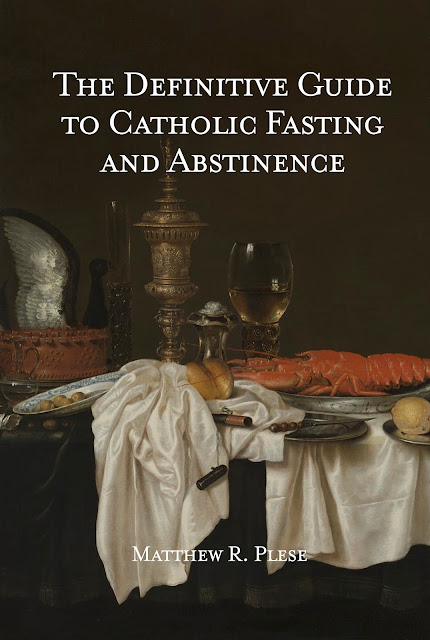
Want to learn more about the history of fasting and abstinence? Check out the Definitive Guide to Catholic Fasting and Abstinence.
Read more >>
Saturday, July 30, 2016
Our Lady Mother of Mercy (Saturday after the 4th Sunday of July)

As part of the Traditional Missal, the Feast of our Lady under the title Mother of Mercy occurs each year as part of the Mass in Some Places on the 4th Sunday of July.  This Feastday is kept by various religious orders in the Church.

The following is taken from the Seasonal Devotions Page of Salve Maria Regina:
After the fall, man became subject to sin, misery, disease and death. God, Who is rich in mercy, gave us two persons animated with tenderest sentiments of compassion and mercy: Jesus and Mary. Jesus willed to become like one of us and chose to know the profoundest depths of sorrow. Mary, the Mother of Sorrows, became the loving Mother of mankind beneath the Cross. She is full of compassionate mercy. Let us entreat her help for suffering mankind. Let us especially show this consideration for those commended to us in a particular way by Our Divine Lord: the poor, the sick, the suffering, and the outcasts. Let us always show mercy, and the Immaculate Mother of God will show herself a Mother of mercy to us.

"And His mercy is from generation unto generation, to those who fear Him." (Luke 1:50)

O noblest Queen of the world, Mary ever Virgin, who didst bring forth Christ the Lord, the Savior of all, pray in our name for peace and salvation.
Hail Mary...

Mary speaks: "Come over to me, all you who long for me, and be filled with my fruits, for my spirit is sweeter than honey, and my spirit is sweeter than honey, and my inheritance above honey and the honeycomb." (Ecclus. 24:26-27)

Hail Holy Queen, Mother of Mercy, our life, our sweetness and our hope. To thee do we cry, poor banished children of Eve; to thee do we sigh, mourning and weeping in this vale of tears. Turn then, most gracious Advocate, Thine eyes of mercy towards, and show unto us the blessed Fruit of Thy womb, Jesus. O clement, O loving, O sweet Virgin Mary!

Let us Pray. O God, Whose compassion is without limit, show us thy mercy on earth through the most holy intercession of Mary, the Mother of Thy Son, that we may merit to attain eternal glory. Through the same Christ Our Lord. Amen.
Read more >>
Thursday, July 28, 2016
Pope Francis: "The World is At War." But With Whom?

Guest Article by David Martin

The pope said Wednesday that the "world is at war," but denied that religion is to blame. Does he not realize that the war within the Church is what has incited a spirit of war throughout the world? If the Church is "attacking itself" from within (Pope Paul VI), how do we expect the world to be at peace from without?

If the world is at war, it's because of the war against tradition that rages within the Church. If the world is in darkness, it is because the Church is in darkness, fulfilling the prophecy of Our Lady at La Salette: "The Church will be in eclipse, the world will be in dismay." (1846)

Hence, the pope holds a measure of responsibility. The present papal administration has served to divide the Universal Church, while strengthening the unity of the global synagogue—the fomenter of all the wars. While Francis sets up barriers against ecclesial unity by forbidding religious of one country to take up residence in another, he declares it a sin to set up barriers against the jihad refugees that want to break into our western countries. The bloodshed in Europe, including the beheading of the good priest in France, is in fact a religious war. Fr. Hamel was martyred by one who deliberately sought to defame the name of the Catholic Church, yet the pope exonerates the Muslims by saying the attacks are not "a war of religion."

Let us pray for Pope Francis, but with true purpose. 

http://www.catholicherald.co.uk/news/2016/07/27/fr-hamel-was-martyred-in-odium-fidei-says-archbishop-fisher/
Read more >>
Ss Nazarius & Celsus


SemiDouble (1955 Calendar): July 28

Today the Holy Church celebrates the feast of the holy martyrs Ss. Nazarius and Celsus.  The following is an account of their life:
SAINT NAZARIUS' father was a heathen, and held a considerable post in the Roman army. His mother, Perpetua, was a zealous Christian, and was instructed by St. Peter, or his disciples, in the most perfect maxims of our holy faith. Nazarius  embraced it with so much ardor that he copied in his life all the great virtues he saw in his teachers; and out of zeal for the salvation of others, he left Rome, his native city, and preached the faith in many places with a fervor and disinterestedness becoming a  disciple of the Apostles. 
Arriving at Milan, he was there beheaded for the faith, together with CELSUS, a youth whom he carried with him to assist him in his travels. These martyrs suffered soon after Nero had raised the first persecution. Their bodies were buried separately in a garden without the city, where they were discovered and taken up by St. Ambrose, in 395.  In the tomb of St. Nazarius, a vial of the Saint's blood was found as fresh and red as if it had been spilt that day. The faithful stained handkerchiefs with some drops, and also formed a certain paste with it, a portion of which St. Ambrose sent to St. Gaudentius, Bishop of Brescia. St. Ambrose conveyed the bodies of the two martyrs into the new church of the apostles, which he had just built. A woman was delivered of an evil spirit in their presence. St. Ambrose sent some of these relics to St. Paulinus of Nola, who received them, with great respect, as a most valuable present, as he testifies. 
REFLECTION.—The martyrs died as the outcasts of the world, but are crowned by God with immortal honor. The glory of the world is false and transitory, and an empty bubble or shadow, but that of virtue is true, solid, and permanent, even in the eyes of men.
They are venerated along with Popes Victor I and Innocent I on July 28.

Collect:

Defend us, O Lord, through the blessed martyrdom of Your saints Nazarius, Celsus, Victor, and Innocent, and may their merits support us in our weakness. Through our Lord . . .
Read more >>
Sunday, July 24, 2016
Vigil of St. James the Greater


Vigil (1954 Calendar): July 24

The following is an excerpt from The Twelve: Lives and Legends of the Apostles.  This can serve as a meditation as we prepare for the Feast of St. James the Greater

Catholics know that death is not the end but the beginning of a new life and so it proved with St. James.   His tomb in Spain is a place of religious pilgrimage for hundreds of thousands of people every year.  In the past, the Spanish people were inspired by St. James as they reconquered their country from the Muslims.

In 711, General Tariq Ibn-Ziyad led a force of Islamic Moors of Arab and Berber descent to conquer most of Iberia.  Fortunately, the Islamic force was halted by Charles Martel and his army at the Battle of Tours in 732.  Yet most of Spain was still under foreign rule and, according to legend, Charlemagne (742-814) was recruited to rectify this situation.
“Charlemagne saw a path of stars in the sky, beginning in the Frisian Sea and extending through Germany and Italy, Gaul and Aquitaine, passing directly over Gascony, Vasconia, Navarre and Spain to Galicia, where the body of Saint James lay buried and undiscovered.  Looking upon this stellar path several times every night, he began to mediate its meaning.  A knight of splendid appearance, more handsome than words can describe, appeared to Charlemagne one evening in a vision as he sat in deep meditation.
“What are you doing, my son?” the knight asked.

“To which the king responded, “Who are you, sir?”

“I am Saint James the Apostle, disciple of Christ…and whose body lies forgotten in Galicia, a place still shamefully oppressed by the Saracens.  I am deeply disturbed by the fact that you, who have conquered so many cities and nations, have not liberated my lands from the Saracens…  The path of stars that you have contemplated in the sky is the sign indicating that you must take a great army from here to Galicia to do battle with those perfidious pagans, to free my path and my lands and to visit my basilica and my tomb.  After you, all peoples from sea to sea will walk there as pilgrims, begging forgiveness for their sins and proclaiming the greatness of the Lord…”
(Kevin R. Poole, editor and translator of The Chronicle of Pseudo-Turpin, Book IV of the Liber Sancti Jacobi (New York: Italica Press, 2014) pgs. 5-6)
The historical Charlemagne was forced to retreat from the Muslims in Spain and then tragically, the Basques attacked his baggage train and killed Roland, the warden of the Breton March.  The incident inspired the Song of Roland but brought the Spanish people no closer to freedom.  However, the Reconquista had already begun in 718 when Pelagius defeated an Islamic Umayyad patrol in the Battle of Covadonga in Galencia.  Although there were occasional forays into Galencia, the Muslims never controlled this part of Spain.   Galencia was incorporated into Asturias, a Christian kingdom in the northwest of Spain.

In 812, Bishop Teodomiro, Bishop of Iria Flavia in Galencia, Spain, was visited by a group of men in his diocese.  They told him that the anchorite Palagio with other devote men had seen a bright star over the hill of Libredon.  Not only this, but they had seen lights moving among the forest while unseen voices sang religious chants.  Stirred by this miracle, the Bishop determined to investigate the area with his canons and some prominent citizens on July 25th.  After clearing away the underbrush, the men discovered a cave.  Inside of the cave were three stone coffins.  The largest of the coffins was in the middle with its occupant identified as Saint James – “Here lies Santiago, son of Zebedee and Salome, brother of St. John, whom Herod beheaded in Jerusalem.  He came by sea borne by his disciples to Iria Flavia of Galicia…”

King Afonso II of Asturias, with the nobles of his court, journeyed to the shrine and ordered that a church be built to honor Saint James.   Pope Leo III informed the Archbishops and the Bishops of the discovery.  A small town grew up near the cave called Santiago de Compostela and the body of Saint James was moved there in 829.  A beautiful Church was constructed during the reign of Afonso III in 893. (Catherine Gasquoine Hartley The Story of Santiago de Compostela (London: J. M. Dent & Sons, Ltd., 1912) pgs. 22-27)

The pilgrimage of St. James became very popular – third in popularity after Jerusalem and Rome.   Even a Moorish ambassador was astonished at the crowds:
“When Ali-ben-Yussuf, the Almoravide, sent an embassy to Dona Urraca about 1121, the ambassadors were amazed at the throngs of pilgrims who choked the road.  They asked the subaltern detailed to escort and assist them, the Centurion Peter..: ‘Who is it the Christians so revered, for whom so great a multitude comes and goes, from this side and the other of the Pyrenees, so that the road is scarcely cleared for us?’  And Peter answered with a fine gesture: ‘He who deserves such reverence is St. James whose body there is buried…’” (Georgiana Goddard King, The Way of Saint James, Volume 1 (New York: G. P. Putnam’s Sons, 1920) pg. 107)
In 1122, Pope Calixrus II granted a Holy Year to the Cathedral of Santiago de Compostela when July 25th (Saint James’ feast day) falls on a Sunday.  On that year, the Holy Door is open from January 1st to December 31st and pilgrims are granted special indulgencies.  The years 2004, 2010, 2021 and 2027 were or will be Holy Years and there are usually more pilgrims during these years.  The Codex Calixtinus, an illustrated manuscript of the 12th century, is a description of the pilgrimage to the Cathedral of Santiago de Compostela and includes music, stories of St. James, miracles and advice about the route.  Despite its name, it was not written by Pope Calixrus II but by unknown authors and organized by Aymeric Picaud, a French scholar. 

St. Francis of Assisi, like many others, went to Santiago de Compostela with a few of his companions:
“A the beginning and commencement of the Order, when as yet there were few brothers and the Houses had not been taken into possession, Saint Francis for his devotion went to Saint James’s of Galicia… Having won thither, while he was spending the night in prayer in the church of St. James, it was revealed by God unto Saint Francis, that it behooved him to take possession of many places throughout the world, because his Order must needs grow and increase into a vast multitude of brothers” (The Little Flowers of Saint Francis translated by T.W. Arnold (London: J. M. Dent and Co., 1907) pg. 11)
Throughout the ages, pilgrims have had different reasons to visit the tomb of St. James.  Some came to worship, others to fulfil a vow, still others petitioned the saint to alleviate their or other’s distress.  Fray Miguel Capeller and Fray Leonardo de Gratia, for instance, were sent to ask St. James to stop the plague in Barcelona in 1465 (The Way of Saint James, pg. 123).

Church authorities sometimes required penitents to make the pilgrimage to atone for their sins.  There were several official roads to Santiago – the one from France being one of the most popular.  Most pilgrims purchase a credencial - a small book which is marked by the local church or town hall with an official St. James stamp as the pilgrim progresses on his or her journey.  The pilgrim must travel at least 100 km by foot or 200 km by bicycle (about 62 and 127 miles respectively) to receive the compostela.  The compostela is a certificate of achievement given by the Pilgrim’s Office to those who arrive at Santiago de Compostela after traveling the required distance.  According to the Confraternity of Saint James, the pilgrimage is still popular with 272,135 receiving the compostela in 2010 (a Holy Year) and 262,469 in 2015.

St. James is often shown with a seashell and a pilgrim’s hat and staff to emphasize his protection over the pilgrims who visit Santiago.  However, St. James represents more than a protector of pilgrims.  As we saw above, St. James appeared to Charlemagne as a great knight.  St. James was an inspiration to the Spanish as they attempted to reconquer their land from the Moors.  The great warrior El Cid invokes St. James as his army of four thousand prepares to fight the Moorish force of fifty thousand:
“Our bishop, good Don Jerom, an early mass shall say, And give us absolution before the dawn of day. Then we shall sally forth and assault them in the names Of the Lord and His Apostle our worthy good St. James”
There are legends of St. James on his white horse leading the Spanish to victory against the Moors.  The Spanish achieved their final victory in 1492 when Ferdinand and Isabella defeated the last Moorish army and Spain was finally free.

Collect:

Sanctify and protect Your people, O Lord. Let the assistance of Your apostle James strengthen them that they may serve You with confidence and please You by their conduct. Through our Lord . . .
Read more >>
Novena to St. Ignatius of Loyola

Today is the beginning of the Novena to St. Ignatius of Loyola

V. In the Name (✠) of the Father...
R. Amen.

Suscipe (Prayer by St. Ignatius)

V. Take, O Lord, and receive all my liberty,
R. My memory, my understanding * and my entire will * All I have and call my own. * Thou hast given all to me, * To Thee, O Lord, I return it. * Everything belongs to Thee; * do with it as Thou wilt. * Give me only Thy love and Thy grace, * That is enough for me. Amen.

Anima Christi (Prayer by St. Ignatius) 

V. Soul of Christ, R. Sanctify me.
V. Body of Christ, R. Save me.
V. Blood of Christ, R. Inebriate me.
V. Water from the side of Christ, R. Wash me.
V. Passion of Christ, R. Strengthen me.
V. O Good Jesus (☨), R. Hear me.
V. Within Thy wounds, R. Shelter me.
V. Separated from Thee, R. Let me never be.
V. From the evil one, R. Protect me.
V. At the hour of my death, R. Call me.
V. Into Thy presence, R. Lead me.
V. That I may praise Thee, R. With all Thy angels and saints, forever and ever. Amen.

Prayer for Generosity (by St. Ignatius)

V. Lord, do Thou teach me to be generous.
R. Teach me to serve Thee as Thou deserves: * To give and not to count the cost, * To fight and not to heed the wounds, * to toil and not to seek for rest, * to labor and not to ask for reward, * save that of knowing * that I do Thy divine and holy Will. Amen. *

Novena Prayer

V. O glorious Patriarch, St. Ignatius of Loyola,
R. We humbly beseech thee to obtain for us from Almighty God, * above all things else, * deliverance from sin, * which is the greatest of evils, * and next, from those scourges * wherewith the Lord chastises the sins of His people.

V. And by thy glorious merits we beseech thy benevolent intercession before the throne of Almighty God, that He may grant us: (Pause and state your intentions)

V. May thine example, O Loyal Knight of Our Lady, enkindle in our hearts an effectual desire,
R. To employ ourselves continually in laboring for the greater glory of God * and the good of our fellowmen; * obtain for us, likewise, from the loving Heart of Jesus (☨) Our Lord, * that grace which is the crown of all graces, * that is to say, the grace of final perseverance and everlasting happiness. * Amen.

V. Laudetur Jesus (☨) Christus! (Praise be Jesus Christ)
R. Nunc et in æternum. Amen. (Now and forever)

V. In the Name (✠) of the Father...
R. Amen.
Read more >>
Monday, July 18, 2016
St. Camillus of Lellis


Today is the Feast of St. Camillus of Lellis (1550 - 1614), the renowned founder of the Camillians, an order dedicated to the care of the sick.

The life of St. Camillus should serve as an inspiration to us - he was not born perfect.  After his mother died, he was virtually abandoned by his father.  He fought against the Turks as a young man but after an addiction to gambling, he was completely destitute.

Inspired to become a Capuchin, he was unable to be professed in the area due to a disease of his leg which he contracted from the war which progressively became work.  St. Camillus dedicated himself to caring for the sick and he became director of a hospital in Rome.  His spiritual director was the illustrious St. Philip Neri.  With St. Neri's consent, St. Camillus was ordained a priest and founded a congregation with two others.

St. Camillus, Founder of the Ministers of the Sick (Camellians), ministered initially to the sick of Holy Ghost Hospital in Rome.  In 1588, they moved to a new house in Naples and worked to care for the many stricken by the plague.  In 1591, Pope Gregory XIV made the Congregation into an order to serve the sick.  That year, members of the order were sent to Hungary and Croatia to minister to wounded troops - this was the first field medical unit.

In 1607, after a long battle with illness, St. Camillus resigned as Superior of his order and died on July 25 of that year.  He was canonized in 1746 and, along with St. John of God, was declared patron saint of the sick as well as patron saint of nurses and nursing groups.

The body of this saint is today preserved in Rome in the altar of the Church of St. Mary Magdalene, along with several of his relics. Also on display is the Cross which spoke to Camillus, and asked him, "Why are you afraid? Do you not realize that this is not your work but mine?"

O holy saint of God, pray for us! Pray for the sick and for our doctors and physicians to serve the True God and fight against the evils of the culture of death.


The Scapular of Help of the Sick

In the Church of Saint Mary Magdalene in Rome, there is a picture of the Blessed Virgin Mary which is specially venerated under the title of Help of the Sick. This picture is said to have been painted by the celebrated Dominican painter, Blessed Fra Angelico and before it Pope St Pius V is said to have prayed for the victory of the Christian fleet during the Battle of Lepanto (1571). This picture suggested to a brother of the Order of Saint Camillus de Lellis, Ferdinand Vicari, the idea of founding a confraternity under the invocation of the Virgin Mary for the poor sick. The confraternity was canonically erected in the above-mentioned church in 1860.  The scapular is black and the front has an image of the above picture of the Virgin Mary and at her feet St. Joseph and St. Camillus, the two other patrons of the sick and of the confraternity. The other side has a little red cloth cross. Indulgences were granted by Popes Pius IX and Leo XIII in 1860 and 1883; these were last ratified by the Congregation of Indulgences, 21 July 1883.
Read more >>


Copyright Notice: Unless otherwise stated, all items are copyrighted under a Attribution-NonCommercial-NoDerivatives 4.0 International License. If you quote from this blog, cite a link to the post on this blog in your article.

Disclosure of Material Connection: Some of the links on this blog are “affiliate links.” This means if you click on the link and purchase the item, I will receive an affiliate commission. As an Amazon Associate, for instance, I earn a small commission from qualifying purchases made by those who click on the Amazon affiliate links included on this website. I am disclosing this in accordance with the Federal Trade Commission’s 16 CFR, Part 255: “Guides Concerning the Use of Endorsements and Testimonials in Advertising.”