Saturday, September 2, 2006
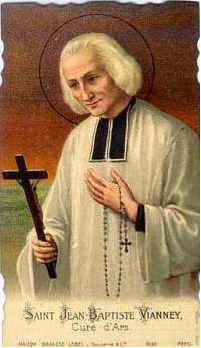
"Catechism on the Holy Sacrifice of the Mass" by St. John Vianney


All Good Works together are not of equal value with the sacrifice of the Mass, because they are the works of men, and the holy Mass is the work of God. Martyrdom is nothing in comparison; it is the sacrifice that man makes of his life to God; the Mass is the sacrifice that God makes to man of His Body and of His Blood. Oh, how great is a priest! if he understood himself he would die. . . . God obeys him; he speaks two words, and Our Lord comes down from Heaven at his voice, and shuts Himself up in a little Host. God looks upon the altar. "That is My well-beloved Son, " He says, "in whom I am well-pleased. " He can refuse nothing to the merits of the offering of this Victim. If we had faith, we should see God hidden in the priest like a light behind a glass, like wine mingled with water.

After the Consecration, when I hold in my hands the most holy Body of Our Lord, and when I am in discouragement, seeing myself worthy of nothing but Hell, I say to myself, "Ah, if I could at least take Him with me! Hell would be sweet with Him; I could be content to remain suffering there for all eternity, if we were together. But then there would be no more Hell; the flames of love would extinguish those of justice. " How beautiful it is. After the Consecration, the good God is there as He is in Heaven. If man well understood this mystery, he would die of love. God spares us because of our weakness. A priest once, after the Consecration, had some little doubt whether his few words could have made Our Lord descend upon the Altar; at the same moment he saw the Host all red, and the corporal tinged with blood.

If someone said to us, "At such an hour a dead person is to be raised to life, " we should run very quickly to see it. But is not the Consecration, which changes bread and wine into the Body and Blood of God, a much greater miracle than to raise a dead person to life? We ought always to devote at least a quarter of an hour to preparing ourselves to hear Mass well; we ought to annihilate ourselves before God, after the example of His profound annihilation in the Sacrament of the Eucharist; and we should make our examination of conscience, for we must be in a state of grace to be able to assist properly at Mass. If we knew the value of the holy Sacrifice of the Mass, or rather if we had faith, we should be much more zealous to assist at it.

My children, you remember the story I have told you already of that holy priest who was praying for his friend; God had, it appears, made known to him that he was in Purgatory; it came into his mind that he could do nothing better than to offer the holy Sacrifice of the Mass for his soul. When he came to the moment of Consecration, he took the Host in his hands and said, "O Holy and Eternal Father, let us make an exchange. Thou hast the soul of my friend who is in Purgatory, and I have the Body of Thy Son, Who is in my hands; well, do Thou deliver my friend, and I offer Thee Thy Son, with all the merits of His Death and Passion. " In fact, at the moment of the elevation, he saw the soul of his friend rising to Heaven, all radiant with glory. Well, my children, when we want to obtain anything from the good God, let us do the same; after Holy Communion, let us offer Him His well-beloved Son, with all the merits of His death and His Passion. He will not be able to refuse us anything.

Read more on St. John Vianney
Read more >>
"Catechism on the Holy Spirit" by St. John Vianney


O my Children, how beautiful it is! The Father is our Creator, the Son is our Redeemer, and the Holy Ghost is our Guide. . . . Man by himself is nothing, but with the Holy Spirit he is very great. Man is all earthly and all animal; nothing but the Holy Spirit can elevate his mind, and raise it on high. Why were the saints so detached from the earth? Because they let themselves be led by the Holy Spirit. Those who are led by the Holy Spirit have true ideas; that is the reason why so many ignorant people are wiser than the learned. When we are led by a God of strength and light, we cannot go astray.

The Holy Spirit is light and strength. He teaches us to distinguish between truth and falsehood, and between good and evil. Like glasses that magnify objects, the Holy Spirit shows us good and evil on a large scale. With the Holy Spirit we see everything in its true proportions; we see the greatness of the least actions done for God, and the greatness of the least faults. As a watchmaker with his glasses distinguishes the most minute wheels of a watch, so we, with the light of the Holy Ghost, distinguish all the details of our poor life. Then the smallest imperfections appear very great, the least sins inspire us with horror. That is the reason why the most Holy Virgin never sinned. The Holy Ghost made her understand the hideousness of sin; she shuddered with terror at the least fault.

Those who have the Holy Spirit cannot endure themselves, so well do they know their poor misery. The proud are those who have not the Holy Spirit.

Worldly people have not the Holy Spirit, or if they have, it is only for a moment. He does not remain with them; the noise of the world drives Him away. A Christian who is led by the Holy Spirit has no difficulty in leaving the goods of this world, to run after those of Heaven; he knows the difference between them. The eyes of the world see no further than this life, as mine see no further than this wall when the church door is shut. The eyes of the Christian see deep into eternity. To the man who gives himself up to the guidance of the Holy Ghost, there seems to be no world; to the world there seems to be no God. . . . We must therefore find out by whom we are led. If it is not by the Holy Ghost, we labor in vain; there is no substance nor savour in anything we do. If it is by the Holy Ghost, we taste a delicious sweetness . . . it is enough to make us die of pleasure!

Those who are led by the Holy Spirit experience all sorts of happiness in themselves, while bad Christians roll themselves on thorns and flints. A soul in which the Holy Spirit dwells is never weary in the presence of God; his heart gives forth a breath of love. Without the Holy Ghost we are like the stones on the road. . . . Take in one hand a sponge full of water, and in the other a little pebble; press them equally. Nothing will come out of the pebble, but out of the sponge will come abundance of water. The sponge is the soul filled with the Holy Spirit, and the stone is the cold and hard heart which is not inhabited by the Holy Spirit.

A soul that possesses the Holy Spirit tastes such sweetness in prayer, that it finds the time always too short; it never loses the holy presence of God. Such a heart, before our good Saviour in the Holy Sacrament of the Altar, is a bunch of grapes under the wine press. The Holy Spirit forms thoughts and suggests words in the hearts of the just. . . . Those who have the Holy Spirit produce nothing bad; all the fruits of the Holy Spirit are good. Without the Holy Spirit all is cold; therefore, when we feel we are losing our fervour, we must instantly make a novena to the Holy Spirit to ask for faith and love. . . . See, when we have made a retreat or a jubilee, we are full of good desires: these good desires are the breath of the Holy Ghost, which has passed over our souls, and has renewed everything, like the warm wind which melts the ice and brings back the spring. . . . You who are not great saints, you still have many moments when you taste the sweetness of prayer and of the presence of God: these are visits of the Holy Spirit. When we have the Holy Spirit, the heart expands--bathes itself in divine love. A fish never complains of having too much water, neither does a good Christian ever complain of being too long with the good God. There are some people who find religion wearisome, and it is because they have not the Holy Spirit.

If the damned were asked: Why are you in Hell? they would answer: For having resisted the Holy Spirit. And if the saints were asked, Why are you in Heaven? they would answer: For having listened to the Holy Spirit. When good thoughts come into our minds, it is the Holy Spirit who is visiting us. The Holy Spirit is a power. The Holy Spirit supported Saint Simeon on his column; He sustained the martyrs. Without the Holy Spirit, the martyrs would have fallen like the leaves from the trees. When the fires were lighted under them, the Holy Spirit extinguished the heat of the fire by the heat of divine love. The good God, in sending us the Holy Spirit, has treated us like a great king who should send his minister to guide one of his subjects, saying, "You will accompany this man everywhere, and you will bring him back to me safe and sound. " How beautiful it is, my children, to be accompanied by the Holy Spirit! He is indeed a good Guide; and to think that there are some who will not follow Him. The Holy Spirit is like a man with a carriage and horse, who should want to take us to Pans. We should only have to say "yes, " and to get into it. It is indeed an easy matter to say "yes"!. . . Well, the Holy Spirit wants to take us to Heaven; we have only to say "yes, " and to let Him take us there.

The Holy Spirit is like a gardener cultivating our souls. . . . The Holy Spirit is our servant. . . . There is a gun; well you load it, but someone must fire it and make it go off. . . . In the same way, we have in ourselves the power of doing good. . . when the Holy Spirit gives the impulse, good works are produced. The Holy Spirit reposes in just souls like the dove in her nest. He brings out good desires in a pure soul, as the dove hatches her young ones. The Holy Spirit leads us as a mother leads by the hand her child of two years old, as a person who can see leads one who is blind.

The Sacraments which Our Lord instituted would not have saved us without the Holy Spirit. Even the death of Our Lord would have been useless to us without Him. Therefore Our Lord said to His Apostles, "It is good for you that I should go away; for if I did not go, the Consoler would not come. " The descent of the Holy Ghost was required, to render fruitful that harvest of graces. It is like a grain of wheat--you cast it into the ground; yes, but it must have sun and rain to make it grow and come into ear. We should say every morning, "O God, send me Thy Spirit to teach me what I am and what Thou art. "

Read more on St. John Vianney
Read more >>
Friday, September 1, 2006
September Rosary Intentions


Please pray for the Rosary Intentions for this month that I posted on the Catholic Community Forum. Also pray for Pope Benedict XVI's intentions.

Here are Pope Benedict XVI's intentions for this month. Please include these in your Rosary prayers:

General: That those who use the means of social communication may always do so conscientiously and responsibly.

Missionary: That in the mission territories the entire People of God may recognize that permanent formation is their own priority.


Further information:

Devotion to the Most Holy Rosary
Read more >>
Thursday, August 31, 2006
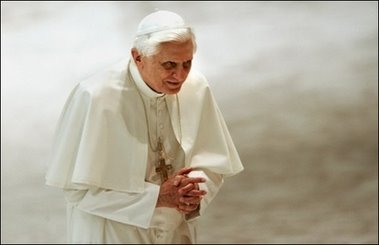
Vatican Abolishes Christmas Concert

I was very pleased with the following news story:
Pope Benedict XVI has abolished the Vatican's traditional Christmas concert because he does not share his predecessor's taste for pop music and wants to avoid scandal, the Italian media has reported.

"Pope Ratzinger prefers Mozart and Bach to 'pop' music and thus, after 12 years, the traditional Vatican Christmas concert comes to an end," the daily La Stampa said on Thursday.

The annual charity concert, organized since its inception by the Prime Time Promotion events agency, will be transferred to Monaco beginning this year, the paper reported.

Story Source: Yahoo
Photo Source: AFP/Giulio Napolitano
Read more >>
"Catechism on the Cardinal Virtues" by St. John Vianney

Prudence shows us what is most pleasing to God, and most useful to the salvation of our soul. We must always choose the most perfect. Two good works present themselves to be done, one in favour of a person we love, the other in favour of a person who has done us some harm; well, we must give the preference to the latter. There is no merit in doing good, when a natural feeling leads us to do it. A lady, wishing to have a widow to live with her to take care of, asked Saint Athanasius to find her one among the poor. Afterwards, meeting the Bishop, she reproached him that he had treated her ill, because this person was too good, and gave her nothing to do by which she could gain Heaven; and she begged him to give her another. The saint chose the worst he could find; of a cross, grumbling temper, never satisfied with what was done for her. This is the way we must act, for there is no great merit in doing good to one who values it, who thanks us and is grateful.

There are some persons who think they are never treated well enough; they seem as if they had a right to everything. They are never pleased with what is done for them: they repay everybody with ingratitude. . . . Well! those are the people to whom we should do good by preference. We must be prudent in all our actions, and seek not our own taste, but what is most pleasing to the good God. Suppose you have a franc that you intend to give for a Mass; you see a poor family in distress, in want of bread: it is better to give your money to these wretched people, because the Holy Sacrifice will still be offered; the priest will not fail to say Holy Mass; while these poor people may die of hunger. . . . You would wish to pray to the good God, to pass your whole day in the church; but you think it would be very useful to work for some poor people that you know, who are in great need; that is much more pleasing to God than your day passed before the holy tabernacle.

Temperance is another cardinal virtue: we can be temperate in the use of our imagination, by not letting it gallop as fast as it would wish; we can be temperate with our eyes, temperate with our mouth -- some people constantly have something sweet and pleasant in their mouth; we can be temperate with our ears, not allowing them to listen to useless songs and conversation; temperate in smelling -- some people perfume themselves to such a degree as to make those about them sick; temperate with the hands -- some people are always washing them when it is hot, and handling things that are soft to the touch. . . . In short, we can practice temperance with our whole body, this poor machine, by not letting it run away like a horse without bit or bridle, but checking it and keeping it down. Some people lie buried there, in their beds; they are glad not to sleep, that they may the better feel how comfortable they are. The saints were not like that. I do not know how we are ever to get where they are. . . . Well! if we are saved, we shall stay infinitely long in Purgatory, while they will fly straight to Heaven to see the good God.

That great saint, Saint Charles Borromeo, had in his apartment a fine cardinal's bed, which everybody saw; but, besides that, there was one which nobody could see, made of bundles of wood; and that was the one he made use of. He never warmed himself; when people came to see him, they remarked that he placed himself so as not to feel the fire. That is what the saints were like. They lived for Heaven, and not for earth; they were all heavenly; and as for us, we are all earthly. Oh, how I like those little mortifications that are seen by nobody, such as rising a quarter of an hour sooner, rising for a little while in the night to pray! but some people think of nothing but sleeping. There was once a solitary who had built himself a royal palace in the trunk of an oak tree; he had placed thorns inside of it, and he had fastened three stones over his head, so that when he raised himself or turned over he might feel the stones or the thorns. And we, we think of nothing but finding good beds, that we may sleep at our ease.

We may refrain from warming ourselves; if we are sitting uncomfortably, we need not try to place ourselves better; if we are walking in our garden, we may deprive ourselves of some fruit that we should like; in preparing the food, we need not eat the little bits that offer themselves; we may deprive ourselves of seeing something pretty, which attracts our eyes, especially in the streets of great towns. There is a gentleman who sometimes comes here. He wears two pairs of spectacles, that he may see nothing. . . . But some heads are always in motion, some eyes are always looking about. . . . When we are going along the streets, let us fix our eyes on Our Lord carrying His Cross before us; on the Blessed Virgin, who is looking at us; on our guardian angel, who is by our side. How beautiful is this interior life! It unites us with the good God. . . . Therefore, when the devil sees a soul that is seeking to attain to it, he tries to turn him aside from it by filling his imagination with a thousand fancies. A good Christian does not listen to that; he goes always forward in perfection, like a fish plunging into the depths of the sea. . . . As for us, Alas! we drag ourselves along like a leech in the mud.

There were two saints in the desert who had sewed thorns into all their clothes; and we seek for nothing but comfort! Yet we wish to go to Heaven, but with all our luxuries, without having any annoyance; that is not the way the saints acted. They sought every way of mortifying themselves, and in the midst of all their privations they tasted infinite sweetness. How happy are those who love the good God! They do not lose a single opportunity of doing good; misers employ all the means in their power to increase their treasure; they do the same for the riches of Heaven -they are always heaping up. We shall be surprised at the Day of Judgment to see souls so rich!

Read more on St. John Vianney
Read more >>
Wednesday, August 30, 2006
"Catechism on the Blessed Virgin" by St. John Vianney


Image Source: Our Lady of the Rosary by A. Ciampelli


The Father takes pleasure in looking upon the heart of the most Holy Virgin Mary, as the masterpiece of His hands; for we always like our own work, especially when it is well done. The Son takes pleasure in it as the heart of His Mother, the source from which He drew the Blood that has ransomed us; the Holy Ghost as His temple. The Prophets published the glory of Mary before her birth; they compared her to the sun. Indeed, the apparition of the Holy Virgin may well be compared to a beautiful gleam of sun on a foggy day.

Before her coming, the anger of God was hanging over our heads like a sword ready to strike us. As soon as the Holy Virgin appeared upon the earth, His anger was appeased. . . . She did not know that she was to be the Mother of God, and when she was a little child she used to say, "When shall I then see that beautiful creature who is to be the Mother of God?" The Holy Virgin has brought us forth twice, in the Incarnation and at the foot of the Cross; she is then doubly our Mother. The Holy Virgin is often compared to a mother, but she is much better still than the best of mothers; for the best of mothers sometimes punishes her child when it displeases her, and even beats it: she thinks she is doing right. But the Holy Virgin does not so; she is so good that she treats us with love, and never punishes us.

The heart of this good Mother is all love and mercy; she desires only to see us happy. We have only to turn to her to be heard. The Son has His justice, the Mother has nothing but her love. God has loved us so much as to die for us; but in the heart of Our Lord there is justice, which is an attribute of God; in that of the most Holy Virgin there is nothing but mercy. Her Son being ready to punish a sinner, Mary interposes, checks the sword, implores pardon for the poor criminal. "Mother, " Our Lord says to her, "I can refuse you nothing. If Hell could repent, you would obtain its pardon. "

The most Holy Virgin places herself between her Son and us. The greater sinners we are, the more tenderness and compassion does she feel for us. The child that has cost its mother most tears is the dearest to her heart. Does not a mother always run to the help of the weakest and the most exposed to danger? Is not a physician in the hospital most attentive to those who are most seriously ill? The Heart of Mary is so tender towards us, that those of all the mothers in the world put together are like a piece of ice in comparison to hers. See how good the Holy Virgin is! Her great servant Saint Bernard used often to say to her, "I salute thee, Mary. " One day this good Mother answered him, "I salute thee, my son Bernard. "

The Ave Maria is a prayer that is never wearisome. The devotion to the Holy Virgin is delicious, sweet, nourishing. When we talk on earthly subjects or politics, we grow weary; but when we talk of the Holy Virgin, it is always new. All the saints have a great devotion to Our Lady; no grace comes from Heaven without passing through her hands. We cannot go into a house without speaking to the porter; well, the Holy Virgin is the portress of Heaven.

When we have to offer anything to a great personage, we get it presented by the person he likes best, in order that the homage may be agreeable to him. So our prayers have quite a different sort of merit when they are presented by the Blessed Virgin, because she is the only creature who has never offended God. The Blessed Virgin alone has fulfilled the first Commandment--to adore God only, and love Him perfectly. She fulfilled it completely.

All that the Son asks of the Father is granted Him. All that the Mother asks of the Son is in like manner granted to her. When we have handled something fragrant, our hands perfume whatever they touch: let our prayers pass through the hands of the Holy Virgin; she will perfume them. I think that at the end of the world the Blessed Virgin will be very tranquil; but while the world lasts, we drag her in all directions. . . . The Holy Virgin is like a mother who has a great many children--she is continually occupied in going from one to the other.

Read more on St. John Vianney
Read more >>
USCCB Releases 98-Page Program of Priestly Formation

The United States Conference of Catholic Bishops (USCCB) has a new 98-page Program of Priestly Formation document, the fifth of its kind, which has been officially approved by the Vatican. One particular part states: "A candidate must be prepared to accept wholeheartedly the Church's teaching on sexuality in its entirety."


A .pdf version of the document is available for download on the website of the USCCB.
Read more >>
Prayer to St. Monica


These prayers are certainly appropriate for the Feast of St. Monica (May 4th), the Feast of St. Augustine (August 28th), or any day!

Prayer Option 1:

Dear St. Monica, troubled wife and mother, many sorrows pierced your heart during your lifetime. Yet, you never despaired or lost faith.With confidence, persistence, and profound faith, you prayed daily for the conversion of your beloved husband, Patricius, and your beloved son, Augustine; your prayers were answered. Grant me that same fortitude, patience, and trust in the Lord. Intercede for me, dear St. Monica, that God may favorably hear my plea for (mention request here...) and grant me the grace to accept His Will in all things, through Jesus Christ, our Lord, in the unity of the Holy Spirit, one God, forever and ever. Amen

Prayer Option 2:

The Sacred Heart of Jesus, comforter of the sorrowful and salvation of them that put their trust in Him, mercifully regarded thy tears, Blessed Monica, sainted mother of Augustine the sinner. His conversion and heroic sanctification were the fruit of thy prayers. From the heights of thy heavenly home, happy mother of thy saintly son, pray for those who wander afar from God, and add thy prayers to those of all mothers who sorrow over the straying souls of their sons or daughters. Pray for us, that following thy example and that of all God's children, we may at length enjoy the eternal vision of our Father in heaven. Amen.
Read more >>
Classes, classes, and more classes!

I have a huge amount of work! This semester I took several classes including an advanced biology, philosophy, and history class. These three in addition to my others are making this semester into a very difficult one. I spent 6 hours of work on these classes last night! So, with so much work, I ask for your prayers that I do everything well in my studies this semester.

Thank you
Read more >>
Tuesday, August 29, 2006
"Catechism on The Word of God" by St. John Vianney


My Children, the Word of God is of no little importance! These were Our Lord's first words to His Apostles: "Go and teach" . . to show us that instruction is before everything.

My children, what has taught us our religion? The instructions we have heard. What gives us a horror of sin? What makes us alive to the beauty of virtue, inspires us with the desire of Heaven? Instructions. What teaches fathers and mothers the duties they have to fulfil towards their children and children the duties they have to fulfil towards their parents? Instructions.

My children, why are people so blind and so ignorant? Because they make so little account of the Word of God. There are some who do not even say a Pater and an Ave to beg of the good God the grace to listen to it attentively, and to profit well by it. I believe, my children, that a person who does not hear the Word of God as he ought, will not be saved; he will not know what to do to be saved. But with a well-instructed person there is always some resource. He may wander in all sorts of evil ways; there is still hope that he will return sooner or later to the good God, even if it were only at the hour of death. Instead of which a person who has never been instructed is like a sick person--like one in his agony who is no longer conscious: he knows neither the greatness of sin nor the value of virtue; he drags himself from sin to sin, like a rag that is dragged in the mud.

See, my children, the esteem in which Our Lord holds the Word of God; to the woman who cries, "Blessed is the womb that bore Thee, and the paps that gave Thee suck!" He answers, "Yea, rather blessed are they who hear the Word of God and keep it!" Our Lord, who is Truth itself, puts no less value on His Word than on His Body. I do not know whether it is worse to have distractions during Mass than during the instructions; I see no difference. During Mass we lose the merits of the Death and Passion of Our Lord, and during the instructions we lose His Word, which is Himself. Saint Augustine says that it is as bad as to take the chalice after the Consecration and to trample it underfoot.

My children, you make a scruple of missing holy Mass, because you commit a great sin in missing it by your own fault; but you have no scruple in missing an instruction. You never consider that in this way you may greatly offend God. At the Day of Judgment, when you will all be there around me, and the good God will say to you, "Give Me an account of the instructions and the catechisms which you have heard and which you might have heard, " you will think very differently.

My children, you go out during the instructions, you amuse yourselves with laughing, you do not listen, you think yourselves too clever to come to the catechism . . . do you think, my children, that things will be allowed to go on so? Oh no, certainly not! God will arrange matters very differently. How sad it is! We see fathers and mothers stay outside during the instruction; yet they are under obligation to instruct their children; but how can they teach them? They are not instructed themselves. . . . All this leads straight to Hell. . . . It is a pity!

My children, I have remarked that there is no moment when people are more inclined to sleep than during the instructions. . . . You will say, I am so very sleepy. . . . If I were to take up a fiddle, nobody would think of sleeping; everybody would be roused, everybody would be on the alert. My children, you listen when you like the preacher; but if the preacher does not suit you, you turn him into ridicule. . . . We must not think so much about the man. It is not the body that we must attend to. Whatever the priest may be, he is still the instrument that the good God makes use of to distribute His holy Word. You pour liquor through a funnel; whether it be made of gold or of copper, if the liquor is good it will still be good.

There are some who go about repeating everywhere, "Priests say just what they please. " No, my children, priests do not say what they please; they say what is in the Gospel. The priests who came before us said what we say; those who shall come after us will say the same thing. If we were to say things that are not true, the Bishop would very soon forbid us to preach. We say only what Our Lord has taught.

My children, I will give you an example of what it is not to believe what priests tell you. There were two soldiers passing through a place where a mission was being given; one of the soldiers proposed to his comrade to go and hear the sermon, and they went. The missionary preached upon Hell. "Do you believe all that this priest says?" asked the least wicked of the two. "Oh, no!" replied the other, "I believe it is all nonsense, invented to frighten people. " "Well, for my part, I believe it; and to prove to you that I believe it, I shall give up being a soldier, and go into a convent. " "Go where you please; I shall continue my journey. " But while he was on his journey, he fell ill and died. The other, who was in the convent, heard of his death, and began to pray that God would show him in what state his companion had died. One day, as he was praying, his companion appeared to him; he recognised him, and asked him, "Where are you?" "In Hell; I am lost!" "O wretched man! do you now believe what the missionary said?" "Yes, I believe it. Missionaries are wrong only in one respect; they do not tell you a hundredth part of what is suffered here. "

My children, I often think that most of the Christians who are lost for want of instruction-they do not know their religion well. For example, here is a person who has to go and do his day's work. This person has a desire to do great penances, to pass half the night in prayer; if he is well instructed, he will say, "No, I must not do that, because then I could not fulfil my duty tomorrow; I should be sleepy, and the least thing would put me out of patience; I should be weary all the day, and I should not do half as much work as if I had rested at night; that must not be done. "

Again, my children, a servant may have a desire to fast, but he is obliged to pass the whole day in digging and ploughing, or whatever you please. Well, if this servant is well instructed, he will think, "But if I do this, I shall not be able to satisfy my master. " Well, what will he do? He will eat his breakfast, and mortify himself in some other way. That is what we must do--we must always act in the way that will give most glory to the good God.

A person knows that another is in distress, and takes from his parents what will relieve that distress. He would certainly do much better to ask than to take it. If his parents refuse to give it, he will pray to God to inspire a rich person to give the alms instead of him. A well-instructed person always has two guides leading the way before him--good counsel and obedience.

Read more on St. John Vianney
Read more >>
"On Temptations" by St. John Vianney

We are all inclined to sin, my children; we are idle, greedy, sensual, given to the pleasures of the flesh. We want to know everything, to learn everything, to see everything; we must watch over our mind, over our heart, and over our senses, for these are the gates by which the devil penetrates. See, he prowls round us incessantly; his only occupation in this world is to seek companions for himself. All our life he will lay snares for us, he will try to make us yield to temptations; we must, on our side, do all we can to defeat and resist him. We can do nothing by ourselves, my children; but we can do everything with the help of the good God; let us pray Him to deliver us from this enemy of our salvation, or to give strength to fight against him. With the Name of Jesus we shall overthrow the demons; we shall put them to flight. With this Name, if they sometimes dare to attack us, our battles will be victories, and our victories will be crowns for Heaven, all brilliant with precious stones.

See, my children, the good God refuses nothing to those who pray to Him from the bottom of their heart. Saint Teresa, being one day in prayer, and desiring to see the good God, Jesus Christ showed to the eyes of her soul His Divine hands; then, another day, when she was again in prayer, He showed her His face. Lastly, some days after, He showed her the whole of His Sacred Humanity. The good God who granted the desire of Saint Teresa will also grant our prayers. If we ask of Him the grace to resist temptations, He will grant it to us; for He wishes to save us all, He shed His Blood for us all, He died for us all, He is waiting for us all in Heaven. We are two or three hundred here: shall we all be saved, shall we all go to Heaven? Alas! my children, we know nothing about it; but I tremble when I see so many souls lost in these days.

See, they fall into Hell as the leaves fall from the trees at the approach of winter. We shall fall like the rest, my children, if we do not avoid temptations, if, when we cannot avoid them, we do not fight generously, with the help of the good God--if we do not invoke His Name during the strife, like Saint Antony in the desert.

This saint having retired into an old sepulchre, the devil came to attack him; he tried at first to terrify him with a horrible noise; he even beat him so cruelly that he left him half dead and covered with wounds. "Well," said Saint Antony, "here I am, ready to fight again; no, thou shalt not be able to separate me from Jesus Christ, my Lord and my God. " The spirits of darkness redoubled their efforts, and uttered frightful cries. Saint Antony remained unmoved, because he put all his confidence in God. After the example of this saint, my children, let us be always ready for the combat; let us put our confidence in God; let us fast and pray; and the devil will not be able to separate us from Jesus Christ, either in this world or the next.

Read more on St. John Vianney
Read more >>
Martyrdom of John the Baptist

Today is the remembrance of the Martyrdom of St. John the Baptist, which is recorded in the Holy Bible. Please see my post on this feastday from last year, and I highly recommend praying the Litany to John the Baptist for today.

Litany of St. John the Baptist:

Lord, have mercy on us. Christ, have mercy on us. Christ, hear us. Christ, graciously hear us.
God the Father of Heaven, Have mercy on us.
God the Son, Redeemer of the world, Have mercy on us.
God the Holy Ghost, Have mercy on us.
Holy Trinity, One God, Have mercy on us. 
Holy Mary, pray for us.
Queen of Prophets, pray for us.
Queen of Martyrs, pray for us.
Saint John the Baptist, pray for us.
St. John the Baptist, precursor of Christ, pray for us.
St. John the Baptist, glorious forerunner of the Sun of Justice, pray for us.
St. John the Baptist, minister of baptism to Jesus, pray for us.
St. John the Baptist, burning and shining lamp of the world, pray for us.
St. John the Baptist, angel of purity before thy birth, pray for us.
St. John the Baptist, special friend and favorite of Christ, pray for us.
St. John the Baptist, heavenly contemplative, whose element was prayer, pray for us.
St. John the Baptist, intrepid preacher of truth, pray for us.
St. John the Baptist, voice crying in the wilderness, pray for us.
St. John the Baptist, miracle of mortification and penance, pray for us.
St. John the Baptist, example of profound humility, pray for us.
St. John the Baptist, glorious martyr of zeal for God's holy law, pray for us.
St. John the Baptist, gloriously fulfilling thy mission, pray for us.

Lamb of God, Who takest away the sins of the world, Spare us, O Lord.
Lamb of God, Who takest away the sins of the world, Hear us, O Lord.
Lamb of God, Who takest away the sins of the world, Have mercy on us.
Christ, hear us. Christ, graciously hear us.

V. Pray for us, O glorious St. John the Baptist, R. That we may be made worthy of the promises of Christ.

Let us Pray:
O God, Who hast honored this world by the birth of Saint John the Baptist, grant that Thy faithful people may rejoice in the way of eternal salvation, through Jesus Christ Our Lord.
R. Amen.
Read more >>
Sunday, August 27, 2006
Pray for the Repose of the Soul of Kenneth Burbine and Emma Morrin


I received an email asking for prayers for the repose of the soul of Kenneth Burbine, who died. Please say a prayer for him.

Update: Please also pray for Emma Morrin (69) as an anonymous commentor to this post asked.

Requiem aeternam dona ei, Domine, et lux perpetua luceat ei. Requiescat in pace. Amen.
Read more >>
Vatican's Response to New Stem Cell Research

In response to a new method of embryonic stem cell research, "A Vatican official on Saturday criticized a new method of making stem cells that does not require the destruction of embryos, calling it a 'manipulation' that did not address the church's ethical concerns." It appears that the 16 human embryos Advanced Cell Technology used to come up with the process did indeed die during the procedure (1).

Remember, that as Catholics we are to follow the teachings of the Church on both faith and morals - which include their view of embryonic stem cell research and In-vitro fertilization. To disagree with the Magesterium of the Church, on even one issue of dogma would put our salvation at risk. Follow the Church as you would follow Christ Himself; as St. Joan of Arc said, "About Jesus Christ and the Church, I simply know they are just one thing and we shouldn’t complicate the matter.”  Yet, of course, do not confuse matters of dogma with matters of discipline (e.g. liturgical practices) since many times Vatican officials, priests, and bishops error on such matters, which are of still great importance in the sacramental life of the Church.


Image Source: Currently unknown. Believed to have been post 2007 via a news source.
Read more >>
Abbey of Regina Laudis in Connecticut Continues the Usage of Gregorian Chant

On a recent Monday at the Abbey of Regina Laudis in Connecticut, about 35 nuns gather in a dim chapel to chant, as they do every day at noon.

Making their way through Psalm 118, the nuns sit or stand; some face different directions, while others bow steeply. Throughout, their voices remain in unison.

Pope Benedict XVI would approve. After a concert of 16th- and 17th-century music recently, the pope said he would prefer to hear Gregorian chant and other traditional types of music play more of a role during Mass.

That’s good news for the cloistered nuns at the Bethlehem abbey, which is known around the world for its devotion to Gregorian chant and is one of the few places where it is sung with such frequency and intensity. The nuns sing seven times a day; some interrupt their sleep to chant at 2 in the morning.

As a huge fan of Gregorian chant, I loved reading this article. Remember, Gregorian chant remains the official chant of the Latin Rite in the Catholic Church.


Image Source: Nuns from the website of the Abbey of Regina Laudis
Read more >>
"Catechism on Suffering" by St. John Vianney

Whether we will or not, we must suffer. There are some who suffer like the good thief, and others like the bad thief. They both suffered equally. But one knew how to make his sufferings meritorious, he accepted them in the spirit of reparation, and turning towards Jesus crucified, he received from His mouth these beautiful words: "This day thou shalt be with Me in Paradise. " The other, on the contrary, cried out, uttered imprecations and blasphemies, and expired in the most frightful despair. There are two ways of suffering -- to suffer with love, and to suffer without love. The saints suffered everything with joy, patience, and perseverance, because they loved. As for us, we suffer with anger, vexation, and weariness, because we do not love. If we loved God, we should love crosses, we should wish for them, we should take pleasure in them. . . . We should be happy to be able to suffer for the love of Him who lovingly suffered for us. Of what do we complain? Alas! the poor infidels, who have not the happiness of knowing God and His infinite loveliness, have the same crosses that we have; but they have not the same consolations. You say it is hard? No, it is easy, it is consoling, it is sweet; it is happiness. Only we must love while we suffer, and suffer while we love.

On the Way of the Cross, you see, my children, only the first step is painful. Our greatest cross is the fear of crosses. . . . We have not the courage to carry our cross, and we are very much mistaken; for, whatever we do, the cross holds us tight -- we cannot escape from it. What, then, have we to lose? Why not love our crosses and make use of them to take us to Heaven? But, on the contrary, most men turn their backs upon crosses, and fly before them. The more they run, the more the cross pursues them, the more it strikes and crushes them with burdens. . . . If you were wise, you would go to meet it like Saint Andrew, who said, when he saw the cross prepared for him and raised up into the air, "Hail O good cross! O admirable cross! O desirable cross! receive me into thine arms, withdraw me from among men, and restore me to my Master, who redeemed me through thee. "

Listen attentively to this, my children: He who goes to meet the cross, goes in the opposite direction to crosses; he meets them, perhaps, but he is pleased to meet them; he loves them; he carries them courageously. They unite him to Our Lord; they purify him; they detach him from this world; they remove all obstacles from his heart; they help him to pass through life, as a bridge helps us to pass over water. . . . Look at the saints; when they were not persecuted. they persecuted themselves. A good religious complained one day to Our Lord that he was persecuted. He said, "O Lord, what have I done to be treated thus?" Our Lord answered him, "And I, what had I done when I was led to Calvary?" Then the religious understood; he wept, he asked pardon, and dared not complain any more. Worldly people are miserable when they have crosses, and good Christians are miserable when they have none. The Christian lives in the midst of crosses, as the fish lives in the sea.

Look at Saint Catherine; she has two crowns, that of purity and that of martyrdom: how happy she is, that dear little saint, to have chosen to suffer rather than to consent to sin! There was once a religious who loved suffering so much that he had fastened the rope from a well round his body; this cord had rubbed off the skin, and had by degrees buried itself in the flesh, out of which worms came. His brethren asked that he should be sent out of the community. He went away happy and pleased, to hide himself in a rocky cavern. But the same night the Superior heard Our Lord saying to him: "Thou hast lost the treasure of thy house. " Then they went to fetch back this good saint, and they wanted to see from whence these worms came. The Superior had the cord taken off, which was done by turning back the flesh. At last he got well.

Very near this, in a neighbouring parish, there was a little boy in bed, covered with sores, very ill, and very miserable; I said to him, "My poor little child, you are suffering very much!" He answered me, "No, sir; today I do not feel the pain I had yesterday, and tomorrow I shall not suffer from the pain I have now:' "You would like to get well?" "No; I was naughty before I was ill, and I might be so again. I am very well as I am. " We do not understand that, because we are too earthly. Children in whom the Holy Ghost dwells put us to shame.

If the good God sends us crosses, we resist, we complain, we murmur; we are so averse to whatever contradicts us, that we want to be always in a box of cotton: but we ought to be put into a box of thorns. It is by the Cross that we go to Heaven. Illnesses, temptations, troubles, are so many crosses which take us to Heaven. All this will soon be over. . . . Look at the saints, who have arrived there before us. . . . The good God does not require of us the martyrdom of the body; He requires only the martyrdom of the heart, and of the will. . . . Our Lord is our model; let us take up our cross, and follow Him. Let us do like the soldiers of Napoleon. They had to cross a bridge under the fire of grapeshot; no one dared to pass it. Napoleon took the colours, marched over first, and they all followed. Let us do the same; let us follow Our Lord, who has gone before us.

A soldier was telling me one day that during a battle he had marched for half an hour over dead bodies; there was hardly space to tread upon; the ground was all dyed with blood. Thus on the road of life we must walk over crosses and troubles to reach our true country. The cross is the ladder to Heaven. . . . How consoling it is to suffer under the eyes of God, and to be able to say in the evening, at our examination of conscience: "Come, my soul! thou hast had today two or three hours of resemblance to Jesus Christ. Thou hast been scourged, crowned with thorns, crucified with Him!" Oh what a treasure for the hour of death! How sweet it is to die, when we have lived on the cross! We ought to run after crosses as the miser runs after money. . . . Nothing but crosses will reassure us at the Day of Judgment. When that day shall come, we shall be happy in our misfortunes, proud of our humiliations, and rich in our sacrifices!

If someone said to you, "I should like to become rich; what must I do?" you would answer him, "You must labor:' Well, in order to get to Heaven, we must suffer. Our Lord shows us the way in the person of Simon the Cyrenian; He calls His friends to carry His Cross after Him. The good God wishes us never to lose sight of the Cross, therefore it is placed everywhere; by the roadside, on the heights, in the public squares -- in order that at the sight of it we may say, "See how God has loved us!" The Cross embraces the world; it is planted at the four corners of the world; there is a share of it for all. Crosses are on the road to Heaven like a fine bridge of stone over a river, by which to pass it. Christians who do not suffer pass this river by a frail bridge, a bridge of wire, always ready to give way under their feet.

He who does not love the Cross may indeed be saved, but with great difficulty: he will be a little star in the firmament. He who shall have suffered and fought for his God will shine like a beautiful sun. Crosses, transformed by the flames of love, are like a bundle of thorns thrown into the fire, and reduced by the fire to ashes. The thorns are hard, but the ashes are soft. Oh, how much sweetness do souls experience that are all for God in suffering! It is like a mixture into which one puts a great deal of oil: the vinegar remains vinegar; but the oil corrects its bitterness, and it can scarcely be perceived.

If you put fine grapes into the wine press, there will come out a delicious juice: our soul, in the wine press of the Cross, gives out a juice that nourishes and strengthens it. When we have no crosses, we are arid: if we bear them with resignation, we feel a joy, a happiness, a sweetness! . . . it is the beginning of Heaven. The good God, the Blessed Virgin, the angels, and the saints, surround us; they are by our side, and see us. The passage to the other life of the good Christian tried by affliction, is like that of a person being carried on a bed of roses. Thorns give out a perfume, and the Cross breathes forth sweetness. But we must squeeze the thorns in our hands, and press the Cross to our heart, that they may give out the juice they contain.

The Cross gave peace to the world; and it must bring peace to our hearts. All our miseries come from not loving it. The fear of crosses increases them. A cross carried simply, and without those returns of self-love which exaggerate troubles, is no longer a cross. Peaceable suffering is no longer suffering. We complain of suffering! We should have much more reason to complain of not suffering, since nothing makes us more like Our Lord than carrying His Cross. Oh, what a beautiful union of the soul with Our Lord Jesus Christ by the love and the virtue of His Cross! I do not understand how a Christian can dislike the Cross, and fly from it! Does he not at the same time fly from Him who has deigned to be fastened to it, and to die for us?

Contradictions bring us to the foot of the Cross, and the Cross to the gate of Heaven. That we may get there, we must be trodden upon, we must be set at naught, despised, crushed. . . . There are no happy people in this world but those who enjoy calmness of mind in the midst of the troubles of life: they taste the joys of the children of God. . . . All pains are sweet when we suffer in union with Our Lord. . . . To suffer! what does it signify? It is only a moment. If we could go and pass a week in Heaven, we should understand the value of this moment of suffering. We should find no cross heavy enough, no trial bitter enough. . . . The Cross is the gift that God makes to His friends.

How beautiful it is to offer ourselves every morning in sacrifice to the good God, and to accept everything in expiation of our sins! We must ask for the love of crosses; then they become sweet.

I tried it for four or five years. I was well calumniated, well contradicted, well knocked about. Oh, I had crosses indeed! I had almost more than I could carry! Then I took to asking for love of crosses, and I was happy. I said to myself, truly there is no happiness but in this! We must never think from whence crosses come: they come from God. It is always God who gives us this way of proving our love to Him.

Read more on St. John Vianney
Read more >>
Pope Pius XIl Condemned Nazism & The Holocaust

Far too many people have read the erroneous Hitler's Pope by the ex-seminarian John Cornwell, stating that Pope Pius XII assisted in the legitimization of Nazi Germany and the Holocaust. This assertion is bold-faced lie! The truth can be read in The Myth of Hitler's Pope: How Pope Pius XII Rescued Jews from the Nazis by Rabbi David G. Dalin (published in 2005). Dalin claims that the Catholic Church has stood by the Jewish people for centuries. He stated that the Popes never helped Hitler but rather "Hitler's cleric" was actually Hajj Amin al-Husseini, the Grand Mufti of Jerusalem.

On April 28, 1935, Cardinal Pacelli (who would become Pope Pius XII) gave an address to 250,000 in Lourdes, France. He said, "[The Nazis] are in reality only miserable plagiarists who dress up old errors with new tinsel. It does not make any difference whether they flock to the banners of social revolution, whether they are guided by a false concept of the world and of life, or whether they are possessed by the superstition of a race and blood cult."

On May 10, 1937, Pope Pius XI released the encyclical Mit Brennender Sorge (German for "With deep anxiety"). Unlike nearly all encyclicals, which are written in Latin, this encyclical was written in German. It was addressed to the German bishops and was read in all parish churches of Germany. Pope Pius XI said that his Papal Secretary of State, Eugenio Cardinal Pacelli, who later became Pope Pius XII, was the individual that should be credited for the encyclical's creation. Furthermore, Jewish Rabbi Pinchas Lapide stated that Pope Pius XI "had good reason to make Pacelli the architect of his anti-Nazi policy. Of the forty-four speeches which the Nuncio Pacelli had made on German soil between 1917 and 1929, at least forty contained attacks on Nazism or condemnations of Hitler’s doctrines. . . . Pacelli, who never met the Führer, called it ‘neo-Paganism.’"

Here is an excerpt:
"Whoever exalts race, or the people, or the State, or a particular form of State, or the depositories of power, or any other fundamental value of the human community—however necessary and honorable be their function in worldly things—whoever raises these notions above their standard value and divinizes them to an idolatrous level, distorts and perverts an order of the world planned and created by God; he is far from the true faith in God and from the concept of life which that faith upholds"

"This God, this Sovereign Master, has issued commandments whose value is independent of time and space, country and race. As God's sun shines on every human face so His law knows neither privilege nor exception. Rulers and subjects, crowned and uncrowned, rich and poor are equally subject to His word. From the fullness of the Creators' right there naturally arises the fullness of His right to be obeyed by individuals and communities, whoever they are. This obedience permeates all branches of activity in which moral values claim harmony with the law of God, and pervades all integration of the ever-changing laws of man into the immutable laws of God." "None but superficial minds could stumble into concepts of a national God, of a national religion; or attempt to lock within the frontiers of a single people, within the narrow limits of a single race, God, the Creator of the universe, King and Legislator of all nations before whose immensity they are "as a drop of a bucket" (Isaiah xl, 15). "
Eugenio Cardinal Pacelli was elected Pope on March 2, 1939, and he took the name Pius XII. On October 20th of that year, he released his first encyclical, Summi Pontificatus (On the Unity of Human Society). It was such an attack against the teachings of Nazism that the Gestapo forbade it being printed or distributed in Germany. France had 88,000 copies printed and dropped by air in Germany. The New-York Times stated the following on the front page of its October 20, 1939, edition: "Pope Condemns Dictators, Treaty Violators, Racism; Urges Restoring of Poland".

During the Holocaust, most of Rome's 8,000 Jews hid in the Vatican. Pope Pius XII saved thousands of Jewish lives. He used numerous networks in Rome to hide the Jewish people, and he even used the assets of the Vatican to ransom Jews from the Nazis. The Chief Rabbi of Rome converted to Catholicism after the war! According to Pinchas E. Lapide in his book, Three Popes and the Jews, Pope Pius XII saved 860,000 Jews from Nazi death camps (214).

Albert Einstein, a Jewish physicist, said the following, which is from a December 23, 1940, Time Magazine article:
"Being a lover of freedom, when the revolution came in Germany, I looked to the universities to defend it, knowing that them had always boasted of their devotion to the cause of truth; but, no, the universities immediately were silenced. Then I looked to the great editors of the newspapers whose flaming editorials in days gone by had proclaimed their love of freedom; but they, like the universities, were silenced in a few short weeks... Only the Church stood squarely across the path of Hitler's campaign for suppressing truth. I never had any special interest in the Church before, but now I feel a great affection and admiration because the Church alone has had the courage and persistence to stand for intellectual truth and moral freedom. I am forced thus to confess that what I once despised I now praise unreservedly."
Read more >>
Saturday, August 26, 2006
Words of Inspiration: August 26, 2006

Blessed Mother Teresa: "There is no limit to God’s love. It is without measure and its depth cannot be sounded."

St. Padre Pio: "My children, we can never prepare ourselves too much for Communion"
Read more >>
"On Sloth" by St. John Vianney


Sloth is a kind of cowardice and disgust, which makes us neglect and omit our duties, rather than do violence to ourselves.

Alas, my children, how many slothful people there are on this earth: how many are cowardly, how many are indolent in the service of the good God! We neglect, we omit our duties of piety, just as easily as we should take a glass of wine. We will not do violence to ourselves; we will not put ourselves to any inconvenience. Everything wearies, everything disgusts the slothful man. Prayer, the holy Sacrifice of the Mass, which do so much good to pious souls, are a torture to him. He is weary and dissatisfied in church, at the foot of the altar, in the presence of the good God. At first he feels only dislike and indifference towards everything that is commanded by religion. Soon after, you can no longer speak to him either of Confession or Communion; he has no time to think of those things.

O my children! how miserable we are in losing, in this way, the time that we might so usefully employ in gaining Heaven, in preparing ourselves for eternity! How many moments are lost in doing nothing, or in doing wrong, in listening to the suggestions of the devil, in obeying him! Does not that make us tremble? If one of the lost had only a day or an hour to spend for his salvation, to what profit would he turn it! What haste he would make to save his soul, to reconcile himself with the good God! And we, my children, who have days and years to think of our salvation, to save our souls--we remain there with our arms crossed, like that man spoken of in the Gospel. We neglect, we lose our souls. When death shall come, what shall we have to present to Our Lord? Ah! my children, hear how the good God threatens the idle: "Every tree that bringeth not forth good fruit shall be cut down, and shall be cast into the fire. " "Take that unprofitable servant, and cast him out into the exterior darkness, where there shall be weeping and gnashing of teeth. "

Idleness is the mother of all vices. Look at the idle; they think of nothing but eating, drinking, and sleeping. They are no longer men, but stupid beasts, giving up to all their passions; they drag themselves through the mire like very swine. They are filthy, both within and without. They feed their soul only upon impure thoughts and desires. They never open their mouth but to slander their neighbour, or to speak immodest words. Their eyes, their ears, are open only to criminal objects. . . . O my children! that we may resist idleness, let us imitate the saints. Let us watch continually over ourselves; like them, let us be very zealous in fulfilling all our duties; let the devil never find us doing nothing, lest we should yield to temptation. Let us prepare ourselves for a good death, for eternity. Let us not lose our time in lukewarmness, in negligence, in our habitual infidelities. Death is advancing: tomorrow we must, perhaps, quit our relations, our friends. Let us make haste to merit the reward promised in Paradise to the faithful servant in the Gospel!

Read more on St. John Vianney
Read more >>
Friday, August 25, 2006
"On Sin" by St. John Vianney

Sin is a thought, a word, an action, contrary to the law of God.

By sin, my children, we rebel against the good God, we despise His justice, we tread under foot His blessings. From being children of God, we become the executioner and assassin of our soul, the offspring of Hell, the horror of Heaven, the murderer of Jesus Christ, the capital enemy of the good God. O my children! if we thought of this, if we reflected on the injury which sin offers to the good God, we should hold it in abhorrence, we should be unable to commit it; but we never think of it, we like to live at our ease, we slumber in sin. If the good God sends us remorse, we quickly stifle it, by thinking that we have done no harm to anybody, that God is good, and that He did not place us on the earth to make us suffer.

Indeed, my children, the good God did not place us on the earth to suffer and endure, but to work out our salvation. See, He wills that we should work today and tomorrow; and after that, an eternity of joy, of happiness, awaits us in Heaven. . . . 0 my children! how ungrateful we are! The good God calls us to Himself; He wishes to make us happy forever, and we are deaf to His word, we will not share His happiness; He enjoins us to love Him, and we give our heart to the devil. . . . The good God commands all nature as its Master; He makes the winds and the storms obey Him; the angels tremble at His adorable will: man alone dares to resist Him. See, God forbids us that action, that criminal pleasure, that revenge, that injustice; no matter, we are bent upon satisfying ourselves; we had rather renounce the happiness of Heaven, than deprive ourselves of a moment's pleasure, or give up a sinful habit, or change our life. What are we, then, that we dare thus to resist God? Dust and ashes, which He could annihilate with a single look. . . .

By sin, my children, we despise the good God. We renew His Death and Passion; we do as much evil as all the Jews together did, in fastening Him to the Cross. Therefore, my children, if we were to ask those who work without necessity on Sunday: "What are you doing there?" and they were to answer truly, they would say, "We are crucifying the good God. " Ask the idle, the gluttonous, the immodest, what they do every day. If they answer you according to what they are really doing, they will say, "We are crucifying the good God. " O my children! it is very ungrateful to offend a God who has never done us any harm; but is it not the height of ingratitude-to offend a God who has done us nothing but good?

It is He who created us, who watches over us. He holds us in His hands; if He chose, He could cast us into the nothingness out of which He took us. He has given us His Son, to redeem us from the slavery of the devil; He Himself gave Him up to death that He might restore us to life; He has adopted us as His children, and ceases not to lavish His graces upon us. Notwithstanding all this, what use do we make of our mind, of our memory, of our health, of those limbs which He gave us to serve Him with? We employ them, perhaps, in committing crimes.

The good God, my children, has given us eyes to enlighten us, to see Heaven, and we use them to look at criminal and dangerous objects; He has given us a tongue to praise Him, and to express our thoughts, and we make it an instrument of iniquity--we swear, we blaspheme, we speak ill of our neighbour, we slander him; we abuse the supernatural graces, we stifle the salutary remorse by which God would convert us. . . . we reject the inspirations of our good guardian angel. We despise good thoughts, we neglect prayer and the Sacraments. What account do we make even of the Word of God? Do we not listen to it with disgust? How miserable we are! How much we are to be pitied! We employ the time that the good God has given us for our salvation, in losing our souls. We make war upon Him with the means He has given us to serve Him; we turn His own gifts against Him! Let us cast our eyes, my children, upon Jesus fastened to the Cross. and let us say to ourselves, "This is what it has cost my Saviour to repair the injury my sins have done to God. "

A God coming down to the earth to be the victim of our sins! A God suffering, a God dying, a God enduring every torment, because He has put on the semblance of sin, and has chosen to bear the weight of our iniquities! Ah, my children! at the sight of that Cross, let us conceive once for all the malice of sin, and the abhorrence in which we should hold it. . . . Let us enter into ourselves, and see what we ought to do to repair our past sins; let us implore the clemency of the good God, and let us all together say to Him, from the bottom of our heart, "O Lord, who art here crucified for us, have mercy upon us! Thou comest down from Heaven to cure souls of sin; cure us, we beseech Thee; cause our souls to be purified by approaching the tribunal of penance; yes, O God! make us look upon sin as the greatest of all evils, and by our zeal in avoiding it, and in repairing those we have had the misfortune to commit, let us one day attain to the happiness of the saints. "

Read more on St. John Vianney
Read more >>


Copyright Notice: Unless otherwise stated, all items are copyrighted under a Attribution-NonCommercial-NoDerivatives 4.0 International License. If you quote from this blog, cite a link to the post on this blog in your article.

Disclosure of Material Connection: Some of the links on this blog are “affiliate links.” This means if you click on the link and purchase the item, I will receive an affiliate commission. As an Amazon Associate, for instance, I earn a small commission from qualifying purchases made by those who click on the Amazon affiliate links included on this website. I am disclosing this in accordance with the Federal Trade Commission’s 16 CFR, Part 255: “Guides Concerning the Use of Endorsements and Testimonials in Advertising.”