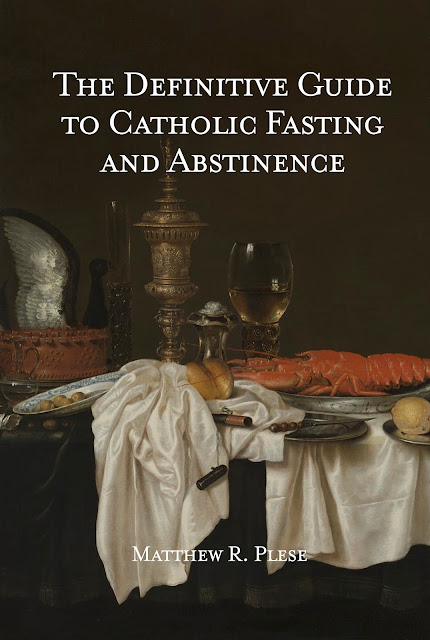
Almighty, everlasting God, you who cure our body and soul through healing self-denial, we humbly entreat your majesty to hear favorably the devout prayer of those who fast, and to grant us help for the present and the future. Through our Lord...Amen.
St. Januarius was born in Italy and was bishop of Benevento during the Emperor Diocletion persecution. Bishop Januarius went to visit two deacons and two laymen in prison. He was then also imprison along with his deacon and lector. They were thrown to the wild beasts, but when the animals did not attack them, they were beheaded. What is believed to be Januarius' blood is kept in Naples, as a relic. It liquifies and bubbles when exposed in the cathedral. Scientists have not been able to explain this miracle to date. St. Januarius lived and died around 305 A.D. and his feast day is September 19th.Miracle of the Liquefaction of His Blood:
Saint Januarius is famous for the miracle of the annual liquefaction of his blood, which, according to legend, was saved by a woman called Eusebia just after the saint's death. Thousands of people assemble to witness this event in Naples Cathedral three times a year: on September 19 (Saint Januarius day, to commemorate his martyrdom), on December 16 (to celebrate his patronage of both Naples and of the archdiocese), and on the Saturday before the first Sunday of May (to commemorate the reunification of his relics). Although the city of Naples became known as urbs sanguinum, the miracle is not a unique phenomenon. Other examples include Saint Patricia, blood said to belong to Saint John the Baptist in the monastery of San Gregorio Armeno, and that of Saint Pantaleon which liquifies in nearby Ravello. The liquefication of coagulated blood is therefore peculiar to the region of Campania and virtually unheard of elsewhere. (Source: Wikipedia)Saint Alphonsus Liguori wrote regarding Saint Januarius:
"The Neapolitans honor this saint as the principal patron of their city and nation, and the Lord himself has continued to honor him, by allowing many miracles to be wrought through his intercession, particularly when the frightful eruptions of Mount Vesuvius have threatened the city of Naples with utter destruction. While the relics of St. Januarius were being brought in procession towards this terrific volcano, the torrents of lava and liquid fire which it emitted have ceased, or turned their course from the city. But the most stupendous miracle, and that which is greatly celebrated in the church, is the liquefying and boiling up of this blessed martyr's blood whenever the vials are brought in sight of his head. This miracle is renewed many times in the year, in presence of all who desire to witness it; yet some heretics have endeavored to throw a doubt upon its genuineness, by frivolous and incoherent explanations; but no one can deny the effect to be miraculous, unless he be prepared to question the evidence of his senses."John Henry Cardinal Newman also attested to the veracity of the miracle of liquefaction:
"I think it impossible to withstand the evidence which is brought for the liquefaction of the blood of St. Januarius at Naples and for the motion of the eyes in the pictures of the Madonna in the Papal States.
Collect:
We are made happy, O God, by the annual feast of Your holy martyrs Januarius and his companions. As we joyously remember the merits of these saints, may we also be inspired by their example. Through our Lord . . .
Ember Days this September: 18, 20 and 21
From New Advent:
Ember days (corruption from Lat. Quatuor Tempora, four times) are the days at the beginning of the seasons ordered by the Church as days of fast and abstinence. They were definitely arranged and prescribed for the entire Church by Pope Gregory VII (1073-1085) for the Wednesday, Friday, and Saturday after 13 December (S. Lucia), after Ash Wednesday, after Whitsunday, and after 14 September (Exaltation of the Cross). The purpose of their introduction, besides the general one intended by all prayer and fasting, was to thank God for the gifts of nature, to teach men to make use of them in moderation, and to assist the needy. The immediate occasion was the practice of the heathens of Rome. The Romans were originally given to agriculture, and their native gods belonged to the same class.
At the beginning of the time for seeding and harvesting religious ceremonies were performed to implore the help of their deities: in June for a bountiful harvest, in September for a rich vintage, and in December for the seeding; hence their feriae sementivae, feriae messis, and feri vindimiales. The Church, when converting heathen nations, has always tried to sanctify any practices which could be utilized for a good purpose. At first the Church in Rome had fasts in June, September, and December; the exact days were not fixed but were announced by the priests. The "Liber Pontificalis" ascribes to Pope Callistus (217-222) a law ordering: the fast, but probably it is older. Leo the Great (440-461) considers it an Apostolic institution. When the fourth season was added cannot be ascertained, but Gelasius (492-496) speaks of all four. This pope also permitted the conferring of priesthood and deaconship on the Saturdays of ember week--these were formerly given only at Easter.
Before Gelasius the ember days were known only in Rome, but after his time their observance spread. They were brought into England by St. Augustine; into Gaul and Germany by the Carlovingians. Spain adopted them with the Roman Liturgy in the eleventh century. They were introduced by St. Charles Borromeo into Milan. The Eastern Church does not know them. The present Roman Missal, in the formulary for the Ember days, retains in part the old practice of lessons from Scripture in addition to the ordinary two: for the Wednesdays three, for the Saturdays six, and seven for the Saturday in December. Some of these lessons contain promises of a bountiful harvest for those that serve God.
From Catholic Culture:
Since man is both a spiritual and physical being, the Church provides for the needs of man in his everyday life. The Church's liturgy and feasts in many areas reflect the four seasons of the year (spring, summer, fall and winter). The months of August, September, October and November are part of the harvest season, and as Christians we recall God's constant protection over his people and give thanksgiving for the year's harvest.
The September Ember Days were particularly focused on the end of the harvest season and thanksgiving to God for the season. Ember Days were three days (Wednesday, Friday and Saturday) set aside by the Church for prayer, fasting and almsgiving at the beginning of each of the four seasons of the year. The ember days fell after December 13, the feast of St. Lucy (winter), after the First Sunday of Lent (spring), after Pentecost Sunday (summer), and after September 14 , the feast of the Exaltation of the Holy Cross (fall). These weeks are known as the quattor tempora, the "four seasons."
Since the late 5th century, the Ember Days were also the preferred dates for ordination of priests. So during these times the Church had a threefold focus: (1) sanctifying each new season by turning to God through prayer, fasting and almsgiving; (2) giving thanks to God for the various harvests of each season; and (3) praying for the newly ordained and for future vocations to the priesthood and religious life.
[The] aging generation of progressives continues to lobby church leaders to change Catholic teachings on reproductive rights, same-sex marriage and women's ordination. But it is being replaced by younger men and women who are attracted to the church because of the very timelessness of its teachings.Source: "Traditional Catholicism Is Winning", Wall Street Journal, April 12, 2012, by Hendershott and White.
They are attracted to the philosophy, the art, the literature and the theology that make Catholicism countercultural. They are drawn to the beauty of the liturgy and the church's commitment to the dignity of the individual. They want to be contributors to that commitment—alongside faithful and courageous bishops who ask them to make sacrifices. It is time for Catholics to celebrate their arrival.
The liturgical feasts of September 14 (the Exaltation of the Holy Cross) and 15 (The Seven Sorrowshttp://acatholiclife.blogspot.com/2005/09/memorial-of-our-lady-of-sorrows.html) present the same theme under an entirely different spiritual outlook:
- September 14th emphasizes Christ’s kingship; it praises the Cross as the sign of objective redemption and unfolds before our eyes the crux gemmata (the gemmed cross).
- September 15the portrays the human and suffering Christ with his co-sufferer, Mary of the Seven Sorrows.
The Occasion
The occasion of the feast of the Holy Cross was the finding of the True Cross on September 14, 320 by St. Helen, and the consecration of the church of the Holy Sepulcher at Jerusalem. Later on the “finding” received its special feast day on May 3, and the present date referred to the recovery of the Cross from the Persians by Emperor Heraclius in 628, who delivered the Cross to the patriarch Zacharias on May 3, 630. So there was a swapping of the occasion of the feasts.
The Mystery
Here the Church stresses the mystery of the Cross with full enthusiasm and love because She glorifies the sign of redemption. Why does she celebrates the feast at the start of the fall: the Cross is “raised” against the rising darkness, always the symbol of the power of hell. The Church “raises the sign of the Son of Man” which will appear at his Second Coming, and the expectation of the parousia is always connected with the Church’s Harvest time.
The Preface of the Holy Cross contrasts paradise’s tree of knowledge with Calvary’s tree of the Cross; on the one the devil is conquered, on the other he was conquered!
From a tree came death, from a tree also should come forth life. He who triumphed on a tree should also be defeated on a tree.The Power of the Cross
The Communion antiphon refers to the power of the Cross: “Through the sign of the Cross deliver us from our enemies, O our God!” The sign of the Cross has often been employed as an exorcism against the demons; the Latin Church also distributes holy Communion with this sacred sign. This sign is the most used sacramental, which we would make with much more devotion if we were conscious that it had sacramental power.
Continue reading...
Today is Friday, the day in which we commemorate Our Lord's passion and death. It was our own sins that condemned our glorious Lord to death on Good Friday - death on a Cross. As Catholics, we are still bound to either abstain from meat or rather to do some act of penance each Friday in the entire year. It was on this day of the week that our glorious Redeemer died for us. Please, never forget this, especially at 3 o'clock, the hour that He died. At 3 o'clock attempt to pray the 3 o'clock Mercy Prayer. Please remember Our Lord's love and repent today.Code of Canon Law:
Can. 1249 All Christ's faithful are obliged by divine law, each in his or her own way, to do penance. However, so that all may be joined together in a certain common practice of penance, days of penance are prescribed. On these days the faithful are in a special manner to devote themselves to prayer, to engage in works of piety and charity, and to deny themselves, by fulfilling their obligations more faithfully and especially by observing the fast and abstinence which the following canons prescribe.
Can. 1250 The days and times of penance for the universal Church are each Friday of the whole year and the season of Lent.
Can. 1251 Abstinence from meat, or from some other food as determined by the Episcopal Conference, is to be observed on all Fridays, unless a solemnity should fall on a Friday. Abstinence and fasting are to be observed on Ash Wednesday and Good Friday.
Can. 1252 The law of abstinence binds those who have completed their fourteenth year. The law of fasting binds those who have attained their majority, until the beginning of their sixtieth year. Pastors of souls and parents are to ensure that even those who by reason of their age are not bound by the law of fasting and abstinence, are taught the true meaning of penance.
Can. 1253 The Episcopal Conference can determine more particular ways in which fasting and abstinence are to be observed. In place of abstinence or fasting it can substitute, in whole or in part, other forms of penance, especially works of charity and exercises of piety.Today is also a great day to pray the Stations of the Cros. Please join me in praying the Stations of the Cross. Remember, it was on this day that He gave up His life all for you.
Prayer to the Glorious Cross:
I adore You, O glorious Cross, which was adorned with the Heart and Body of my Savior Jesus Christ, stained and covered with blood. I adore You, O Holy Cross, out of love for Him, Jesus, who is my Savior and my God.
(Pope Pius IX declared that reciting this prayer five times on Friday will free five souls from Purgatory and 33 souls by reciting it on Good Friday. This prayer should be recited before a crucifix with a contrite heart and praying a few minutes for the Pope).
Prayer to Jesus Christ Crucified:
My good and dear Jesus, I kneel before you asking you most earnestly to engrave upon my heart a deep and lively faith, hope, and charity, with true repentance for my sins, and a firm resolve to make amends. As I reflect upon your five wounds, and dwell upon them with deep compassion and grief, I recall the words the prophet David spoke long ago concerning yourself: they have pierced my hands and my feet, they have numbered all my bones!
The life of Professor Jerome Lejeune (1926-1994) is worth knowing, and his battle with the culture of death promoted by leading scientists of the American world is an example of how a Catholic ought to behave, even in the midst of defeat.
Prof. Lejeune is the founder of modern genetics,[1] the discoverer of the trisomy. On October 3, 1969, he was invited to receive at San Francisco the most prestigious award of genetics, the William Allan prize.
And why was he offered this reward? Because his work enabled the successful testing which could detect trisomy 21 (Down Syndrome) in mothers’ womb – thus in the United States, these tests (amongst others already in use) were used to prevent the birth of such diagnosed babies.
This is how Prof. Lejeune was rewarded and discovered to his dismay that the world was falling from under his feet, not only figuratively, but even literally during the presentation. For coincidentally, one of San Francisco’s famous seismic quakes shook the whole conference room causing him to reflect: “At this moment, I understood that the world had revolved on its axis.”
So what were those rewarding him implying? That his research would be applied to exterminate children in their mother’s womb because they could not be like other children who were “normal” or “productive members of society,” hence “you are not like me, so die!” Such an attitude should be referred to as “chromosomic racism.”
What is this “brave new world” in which in order to live, one will have to obey certain norms, be blond, possess a higher IQ, be more political, and be more this or that – and who will have to experience these norms? But in point of fact, we should remember that such norms have been tried before – and not so long ago.
Prof. Lejeune often recalled to his students the true story told him by an Austrian colleague.
My father was a doctor in a small Austrian village, and in April 1889, he was asked to deliver to two children: one was a healthy boy, and the other a poor little child. She was trisomic. My father followed closely these two children. The little girl had a rather sad life. One day her mother grew sick when she was only 16 or 17. And although she had a very week intellectual quota, she was by the side of her mother for four years, and softened the end of her mother’s life. Then she was placed in a nursing home. This was a rather sad life. Strange enough, my father does not recall the name of the girl, but he remembers very well that of the little boy. This child had a brilliant destiny and reached the summit. Oh, yes, he is somewhat forgotten, his name was Adolph Hitler.Who can decide that one life can be lived rather than another? Who can pretend to judge such things? Behold the professor in that conference hall understands that there is being set a diabolical order. There are two options:[though in reality there is only one] either a) he plays the dummy and keeps quiet, or b) he takes the prize, leaves the place and life goes on as ever – as if nothing happened at all!
So does Prof. Lejeune – a doctor and internationally-respected professor (in fact he may even be nominated for the Noble Peace Prize next year or later) says nothing to ensure that his career continues in the same elevating fashion? Or – and this is what he actually does – he open his mouth to explain that what they are doing is monstrous!
He tells them in words they can understand. He will not speak to them about the Christian moral order, or of the Oath of Hippocrates.[2] Why should he speak of this oath to the these learned Americans, who dropped it long ago? He could tell them that his Christian heart is bleeding, but then they would tell him to keep his religious sentiment to himself and let them freely think as they wish. No! He is going to speak their own language, and they will never pardon him.
You know as well as me, and any student in genetics knows this, that, at the very moment of its conception, every creature carries within itself its chromosomic message, and nothing can change it. This will make a man be neither a monkey, or a duck, because you cannot confuse them as nothing can be added or subtracted to them. Thus, do not tell me, when you request to suppress these children, that you are not suppressing a human being because it is already a human being and nothing will change anything: he needs only to grow if he is allowed to. No! You are suppressing a human being who is not according to your norms, but do not deny it its human nature, which you allow to be quietly assassinated.
Born at Sant' Angelo, near Fermo, in the March of Ancona, about 1246; d. 10 September, 1306. He is depicted in the black habit of the Hermits of St. Augustine — a star above him or on his breast, a lily, or a crucifix garlanded with lilies, in his hand. Sometimes, instead of the lily, he holds a vial filled with money or bread. His parents, said to have been called Compagnonus de Guarutti and Amata de Guidiani (these surnames may merely indicate their birth-places), were pious folk, perhaps gentle born, living content with a small substance. Nicholas was born in response to prayers, his mother a model of holiness.
He excelled so much in his studies that even before they were over he was made a canon of St. Saviour's church; but hearing a sermon by a hermit of St. Augustine upon the text: "Nolite diligere mundum, nec ea quae sunt in mundo, quia mundus transit et concupiscentia ejus", he felt a call to embrace the religious life. He besought the hermit for admittance into his order. His parents gave a joyful consent. Even before his ordination he was sent to different monasteries of his order, at Recanati, Macerata etc., as a model of generous striving after perfection. He made his profession before he was nineteen. After his ordination he preached with wonderful success, notably at Tolentino, where he spent his last thirty years and gave a discourse nearly every day.
Towards the end diseases tried his patience, but he kept up his mortifications almost to the hour of death. He possessed an angelic meekness, a guileless simplicity, and a tender love of virginity, which he never stained, guarding it by prayer and extraordinary mortifications. He was canonized by Eugene IV in 1446; his feast is celebrated on 10 September. His tomb, at Tolentino, is held in veneration by the faithful.
Concerning the rank of his feast, Dom Gueranger writes:
Collect:The hermits of St. Augustine were being grouped and organized by the Vicar of Christ, when Nicholas was admitted into their family, of which he was soon to become the thaumaturgus. When he died, in 1305, the Roman Pontiffs were beginning their exile at Avignon; and his canonization, deferred for nearly a century and a half through the troubles of the period, marked the close of the lamentable dissensions which followed that exile. Peace so long lost; peace, of which even the wisest despaired—such was the ardent prayer, the solemn adjuration of Eugenius IV, when, towards the close of his laborious pontificate, he committed the cause of the Church to the humble servant of God placed by him upon her altars. According to the testimony of Sixtus V, the obtaining of this peace was the greatest of Nicholas’s miracles; a miracle which moved the latter Pontiff to order the celebration of the saint’s feast as a double, at a time when days of that rank were much rarer on the calendar than now.
O Lord, hear the prayers we offer on the feast of Your blessed Confessor Nicholas. Since we cannot rely on our own merits, let the merits of those who have been pleasing to You be our assistance. Through our Lord . . .
Source: 1962 Roman Catholic Daily Missal
PRESS RELEASE BY THE CÅ’TUS INTERNATIONALIS SUMMORUM PONTIFICUM
8 SEPTEMBER 2013, FEAST OF THE NATIVITY OF THE BLESSED VIRGIN MARY
The CISP is happy to announce that His Eminence Dario, Cardinal Castrillón Hoyos will be celebrating Pontifical High Mass in the Basilica of St Peter’s on Saturday 26 October at 11 o’clock during the pilgrimage of the people of Summorum Pontificum to Rome.
Holy Mass on 26 October will allow Diocesan and Religious Priests, Seminarians, and the faithful among the people of Summorum Pontificum to show Cardinal Castrillón Hoyos their gratitude and affection for everything he has done in the service of the Church, especially at the time of the preparation of the Motu Proprio Summorum Pontificum, during which His Eminence was a witness and of which he is the living memory.
The CISP especially wishes to thank His Eminence for coming to say Mass because the 26 October is the sixty-first anniversary of his ordination to the Priesthood, which he received in the Basilica of the Holy Apostles in Rome on 26 October 1952. This Pontifical High Mass of thanksgiving at St Peter’s will be one of the central points of the Pilgrimage, during which the eternal youth of the Extraordinary Form of the Roman Rite will be seen by all, and by means of which the people of Summorum Pontificum will contribute to the missionary zeal of the New Evangelisation.
INTROIT
Ps. 85:3, 5 Have pity on me, O Lord, for to You I call all the day; for You, O Lord, are sweet and mild, and plentiful in mercy to all who call upon You. Ps. 85:1. Incline Your ear, O Lord, and answer me, for I am needy and poor. V. Glory be . . .
COLLECT - O Lord, may Your grace always be with us to make us diligent in performing good deeds. Through our Lord . . .
EPISTLE
Eph. 3:13-21
Brethren: Wherefore I pray you not to faint at my tribulations for you, which is your glory. For this cause I bow my knees to the Father of our Lord Jesus Christ, Of whom all paternity in heaven and earth is named: That he would grant you, according to the riches of his glory, to be strengthened by his Spirit with might unto the inward man: That Christ may dwell by faith in your hearts: that, being rooted and founded in charity, You may be able to comprehend, with all the saints, what is the breadth and length and height and depth, To know also the charity of Christ, which surpasseth all knowledge: that you may be filled unto all the fulness of God. Now to him who is able to do all things more abundantly than we desire or understand, according to the power that worketh in us: To him be glory in the church and in Christ Jesus, unto all generations, world without end. Amen.
GRADUAL
The nations all revere Your name, O Lord, and all the kings of the earth shall reverence Your glory. V. For the Lord has built up sion, and He shall appear in His glory.
Alleluia, alleluia! V. Ps. 97:1 Sing to the Lord a new canticle, for He has done wondrous deeds. Alleluia!
GOSPEL
Luke 14:1-11
At that time, when Jesus went into the house of one of the Pharisees, on the sabbath day, that they watched him. And behold, there was a certain man before him that had the dropsy. And Jesus answering, spoke to the lawyers and Pharisees, saying: "Is it lawful to heal on the sabbath day?" But they held their peace. But he taking him, healed him and sent him away. And answering them, he said: "Which of you shall have an ass or an ox fall into a pit and will not immediately draw him out, on the sabbath day?" And they could not answer him to these things. And he spoke a parable also to them that were invited, marking how they chose the first seats at the table, saying to them: "When thou art invited to a wedding, sit not down in the first place, lest perhaps one more honourable than thou be invited by him: And he that invited thee and him, come and say to thee: 'Give this man place.' And then thou begin with shame to take the lowest place. But when thou art invited, go, sit down in the lowest place; that when he who invited thee cometh, he may say to thee: 'Friend, go up higher.' Then shalt thou have glory before them that sit at table with thee. Because every one that exalteth himself shall be humbled: and he that humbleth himself shall be exalted."
OFFERTORY
Ps. 39:14, 15
Look down, O Lord, to help me. Let them be put to shame and confusion who seek to snatch away my life. Look down, O Lord, to help me.
SECRET Cleanse us by this Sacrifice, O Lord, and in Your mercy make us worthy to participate in it. Through our Lord . . .
COMMUNION
Ps. 70:16-17, 18
O Lord, I will be mindful of Your singular justice. O God, You have taught me from my youth, and when I am old and gray, O God, forsake me not!
POST COMMUNION - Purify our souls, O Lord, and instill new life into them through this Heavenly Sacrament, so that even our bodies may find strength now and for the future. Through our Lord . . .
Sources: Saint Andrew Daily Missal and the Marian Missal , 1945
From Butler's Lives of the Saints:
Almighty God, grant that the blessed confessor Stephen may now defend the Church from his throne in heaven, just as he fostered her growth when he ruled on earth. Through our Lord . . .
Source: 1962 Roman Catholic Daily Missal
The principal feasts of this month are as follows:
- Sep 3rd St. Pius X
- Sep 8th Nativity of the Blessed Virgin Mary
- Sep 12th Holy Name of Mary
- Sep 14th Exaltation of the Holy Cross
- Sep 15th Our Lady of Sorrows; Com. of St. Nicomedes
- Sep 17th Holy Stigmata of Saint Francis
- Sep 21st St. Matthew
- Sep 24th Our Lady of Ransom
- Sep 29th Dedication of Saint Michael the Archangel
- Sep 30th St. Jerome
Ember days (corruption from Lat. Quatuor Tempora, four times) are the days at the beginning of the seasons ordered by the Church as days of fast and abstinence. They were definitely arranged and prescribed for the entire Church by Pope Gregory VII (1073-1085) for the Wednesday, Friday, and Saturday after 13 December (S. Lucia), after Ash Wednesday, after Whitsunday, and after 14 September (Exaltation of the Cross). The purpose of their introduction, besides the general one intended by all prayer and fasting, was to thank God for the gifts of nature, to teach men to make use of them in moderation, and to assist the needy. The immediate occasion was the practice of the heathens of Rome. The Romans were originally given to agriculture, and their native gods belonged to the same class.Mark your calendars for this year's September Embertide: September 18, 20, and 21
INTROIT
Ps. 85:1, 2-3 Incline Your ear, O Lord, and answer me. Save Your servant who trusts in You. Have pity on me, O Lord, for to You I call all the day. Ps. 85:4. Gladden the soul of Your servant, for I have lifted up my soul to You, O Lord.
COLLECT - O Lord, let Your abiding mercy purify and defend the Church. Govern her always by Your care, for without Your assistance she cannot remain safe. Through our Lord . . .
EPISTLE
5:25-26; 6:1-10
Brethren: If we live in the Spirit, let us also walk in the Spirit. Let us not be made desirous of vain glory, provoking one another, envying one another. Brethren, and if a man be overtaken in any fault, you, who are spiritual, instruct such a one in the spirit of meekness, considering thyself, lest thou also be tempted. Bear ye one another's burdens: and so you shall fulfill the law of Christ. For if any man think himself to be some thing, whereas he is nothing, he deceiveth himself. But let every one prove his own work: and so he shall have glory in himself only and not in another. For every one shall bear his own burden. And let him that is instructed in the word communicate to him that instructeth him, in all good things. Be not deceived: God is not mocked. For what things a man shall sow, those also shall he reap. For he that soweth in his flesh of the flesh also shall reap corruption. But he that soweth in the spirit of the spirit shall reap life everlasting. And in doing good, let us not fail. For in due time we shall reap, not failing. Therefore, whilst we have time, let us work good to all men, but especially to those who are of the household of the faith.
GRADUAL
It is good to praise the Lord, and to sing to Your name, O Most high. V. To proclaim Your mercy in the morning and Your truth throughout the night.
Alleluia, alleluia! V. Ps. 94:3 For the Lord is a great God, and a great king over all the earth. Alleluia!
GOSPEL
Luke 7:11-16
At that time, Jesus went into a city that is called Naim: and there went with him his disciples and a great multitude. And when he came nigh to the gate of the city, behold a dead man was carried out, the only son of his mother: and she was a widow. And a great multitude of the city was with her. Whom when the Lord had seen, being moved with mercy towards her, he said to her:"Weep not." And he came near and touched the bier. And they that carried it stood still. And he said: "Young man, I say to thee, arise." And he that was dead sat up and begun to speak. And he gave him to his mother. And there came a fear upon them all: and they glorified God saying: "A great prophet is risen up among us: and, God hath visited his people."
OFFERTORY
Ps. 39:2, 3, 4
I have waited and waited for the Lord, and He inclined toward me and heard my cry. And He out a new song into my mouth, a hymn to our God.
SECRET O Lord, may Your Sacrament safeguard and defend us always against the attacks of the devil. through our Lord . . .
COMMUNION
John 6:52
The Bread that I will give is My flesh for the life of the world.
POST COMMUNION - Let the grace of your Heavenly gift rule our minds and bodies, O Lord, that we may overcome the unruly impulses of our nature. Through our Lord . . .
Sources: Saint Andrew Daily Missal and the Marian Missal , 1945
Double (1954 Calendar): August 31
St. Raymond Nonnatus was born to a noble Spanish family in the year 1204. As such, the young saint was well educated, and his father planned a career for Raymond in the royal court in Aragon. When Raymond felt drawn to religious life, his father ordered him to manage one of the family farms. However, Raymond spent his time with the shepherds and workers, studying and praying until his father gave up the idea of making his son a success in the eyes of the world.
St. Raymond was ordained a Mercedarian priest, receiving the habit from Saint Peter Nolasco, the order’s founder. St. Raymond would become the Master-general of the Mercedarian Order. As a member of the order, he spent his entire fortune ransoming Christians from Muslim captors, and then he surrendered himself as a hostage to free another.
Sentenced to death by impalement, he was spared because of his large ransom value. Imprisoned and tortured, he still managed to convert some of his guards. To keep him from preaching the faith, his captors bored a hole through his lips with a hot iron and attached a padlock. St. Raymond was eventually ransomed, returning to Barcelona, Spain in 1239. He was created a cardinal by Pope Gregory IX, although even as a Cardinal St. Raymond continued to live as a mendicant monk. He died en route to Rome to answer a papal summons on August 31, 1240.
Collect
O God, You granted remarkable success to the efforts of the holy confessor Raymond in releasing Christians from the slavery of unbelievers. May his prayers free us from the slavery of sin, so that we may fulfill Your wishes with complete freedom. Through our Lord.
Prayer to Saint Raymond Nonnatus
O Blessed Saint Raymond Nonnatus, so loving to all your devotees, I being last of them all, I am happy to know that through the infinite goodness of God, He has deigned to make you a Saint, adorned thee with special graces and help, for which I am most thankful. On the Most Holy Trinity, and you my adorable patron saint, through your merits and those of the blood poured by our Savior Jesus Christ, and through the Immaculate Conception of Mary, I most humbly beg thee, deign to intercede from the most sublime God, protection for the holy Mother Church, that through your prayers, God's wrath be taken away, see the progress of true faith, defeat the wrong doctrines, the peace and understanding of all Christians, peace of the whole country and the redemption of the Christian captives.
I am humbly begging you my devoted saint, that you be may be my intercessor. Since for many hours you did not die of the womb of your dead mother an you were successfully delivered from her side, to be the joy of the world, and that my soul may live in grace in this earthly world, may I imitate your live and exemplary holiness, so that when the hour of my death comes, I may detest all evil thoughts and temporary wealth of this world, so that with the burning love for God, my soul may reach heaven and together with you and the angels and all the saints, praise God Almighty forever.
Deign to grant me most amiable father the favor I am asking in this novena (mention the request). I firmly believe most amiable father that you will be my protection since you are merciful to any one imploring thy help. But if the favor I am asking will not be for the glory of God and the good of my soul, then beg from God that I will be resigned to his Divine Will, so that I may have the peace of soul while I live, till the hour of my death and that I enjoy true happiness in heaven.
Disclosure of Material Connection: Some of the links on this blog are “affiliate links.” This means if you click on the link and purchase the item, I will receive an affiliate commission. As an Amazon Associate, for instance, I earn a small commission from qualifying purchases made by those who click on the Amazon affiliate links included on this website. I am disclosing this in accordance with the Federal Trade Commission’s 16 CFR, Part 255: “Guides Concerning the Use of Endorsements and Testimonials in Advertising.”
Support A Catholic Life. Your Patronage Helps Keep Us Updated and Online!
Become a Patron! Support Me On Patreon And Get Access to Exclusive Content, Free Catholic Books, Access to Discounts, and Much More!
.jpg)


.jpg)
.jpg)
.jpg)


.jpg)


.jpg)

.jpg)
.jpg)
.png)
.jpg)
.jpg)
.jpg)
.jpg)
.jpg)
.jpg)
.jpg)
.jpg)
.jpg)
.jpg)
.jpg)
.jpg)
.jpg)
.jpg)
.jpg)
.jpg)
.jpg)
.jpg)

.jpg)

.jpg)