Purpose: The purpose of this article is to examine the progression in the Liturgy in the Funeral Rite for the Supreme Pontiffs throughout the 20th century up until the Second Vatican Council. For a list of the sources used in this post please scroll down to the links at the bottom of the post
Pope Leo XIII:
.jpg) Pope Leo XIII
Pope Leo XIII
2 March 1810 - 20 July 1903
Assumed the Papacy: 20 February 1878
.jpg) Requiem æternam dona eis, Domine, et lux perpetua luceat eis. Te decet hymnus Deus, in Sion, et tibi reddetur votum in Ierusalem. Exaudi orationem meam; ad te omnis caro veniet. Requiem æternam dona eis, Domine, et lux perpetua luceat eis
Requiem æternam dona eis, Domine, et lux perpetua luceat eis. Te decet hymnus Deus, in Sion, et tibi reddetur votum in Ierusalem. Exaudi orationem meam; ad te omnis caro veniet. Requiem æternam dona eis, Domine, et lux perpetua luceat eis
Grant them eternal rest, O Lord, and may everlasting light shine upon them. A hymn becometh thee, O God, in Zion, and unto thee a vow shall be repaid in Jerusalem. Hear my prayer; unto thee all flesh shall come."
.jpg)
O God, by whose inscrutable appointment Thy servant N. was numbered among the Chief Bishops: grant, we beseech Thee, that he, who was Vicar of thine Only-begotten Son on earth, may receive a place among Thy holy Pontiffs who have entered into everlasting blessedness. Through the same Jesus Christ, Thy Son, Who liveth and reigneth with Thee in the unity of the Holy Ghost, God, world without end. Amen.
.jpg)
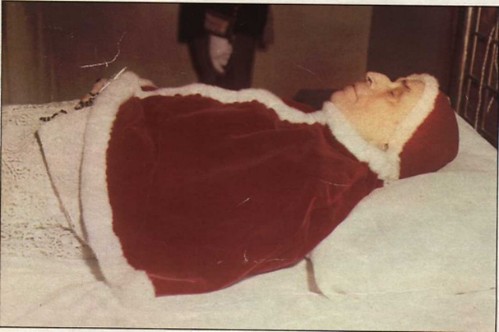
.jpg) The liturgical colour used during these older papal Funerals up until the Second Vatican Council would have been black. The use of red is an introduction of Paul VI who produced an order for papal funerals. However, a dead pope is always vested in red vestments but the pontifical Requiem Masses are, as normal, celebrated in black vestments.
The liturgical colour used during these older papal Funerals up until the Second Vatican Council would have been black. The use of red is an introduction of Paul VI who produced an order for papal funerals. However, a dead pope is always vested in red vestments but the pontifical Requiem Masses are, as normal, celebrated in black vestments.
The missal gives a collect for a deceased pope. The Office of the Dead would certainly have been sung as well as Vespers the night prior with Matins and Lauds on the day of the funeral.
Source: Angelqueen
Pope St. Pius X:
.jpg) Pope St. Pius X
Pope St. Pius X
June 2, 1835 – August 20, 1914
Assumed the Papacy: August 5, 1903
Canonized: May 29, 1954
.jpg)
.jpg) Libera me, Domine, de morte aeterna, in die illa tremenda: Quando caeli movendi sunt et terra. Dum veneris judicare saeculum per ignem. Tremens factus sum ego, et timeo, dum discussio venerit, atque ventura ira. Quando caeli movendi sunt et terra. Dies illa, dies irae, calamitatis et miseriae, dies magna et amara valde. Dum veneris judicare saeculum per ignem. Requiem aeternam dona eis, Domine: et lux perpetua luceat eis.
Libera me, Domine, de morte aeterna, in die illa tremenda: Quando caeli movendi sunt et terra. Dum veneris judicare saeculum per ignem. Tremens factus sum ego, et timeo, dum discussio venerit, atque ventura ira. Quando caeli movendi sunt et terra. Dies illa, dies irae, calamitatis et miseriae, dies magna et amara valde. Dum veneris judicare saeculum per ignem. Requiem aeternam dona eis, Domine: et lux perpetua luceat eis.
Deliver me, O Lord, from death eternal on that fearful day, when the heavens and the earth shall be moved, when thou shalt come to judge the world by fire. I am made to tremble, and I fear, till the judgment be upon us, and the coming wrath, when the heavens and the earth shall be moved. That day, day of wrath, calamity, and misery, day of great and exceeding bitterness, when thou shalt come to judge the world by fire. Rest eternal grant unto them, O Lord: and let light perpetual shine upon them.
.jpg) The transferring of the body to St. Peters Basilica
The transferring of the body to St. Peters Basilica
.jpg) Absolve Domine animas omnium fidelium defunctorum ab omno vinculo delictorum et gratia tua illis succurente mereantur evadere iudicium ultionis, et lucis æterne beatitudine perfrui.
Absolve Domine animas omnium fidelium defunctorum ab omno vinculo delictorum et gratia tua illis succurente mereantur evadere iudicium ultionis, et lucis æterne beatitudine perfrui.
Forgive, O Lord, the souls of all the faithful departed from all the chains of their sins and may they deserve to avoid the judgment of revenge by your fostering grace, and enjoy the everlasting blessedness of light.
.jpg) Following his death on August 20, 1914 - brought upon him by the horror of World War I and a heart attack - Pope St. Pius X was buried in an unadorned tomb in the crypt below St. Peter's Basilica, another expression of his radical humility.
Following his death on August 20, 1914 - brought upon him by the horror of World War I and a heart attack - Pope St. Pius X was buried in an unadorned tomb in the crypt below St. Peter's Basilica, another expression of his radical humility.
Of note, papal physicians had been in the habit of removing organs to aid the embalming process; however, St. Pius X expressly prohibited this and none of his successors have allowed the practice to be re-instituted. Today the body of Pope St. Pius X is incorruptible.
Pope Benedict XV:
.jpg)
.jpg) The transferring of the body to St. Peters Basilica
The transferring of the body to St. Peters Basilica
As stated from a poster on Fish Eaters:
 Image: Pope Pius XI enthronement
Pope Pius XI
31 May 1857 - 10 February 1939
Assumed the Papacy: February 6, 1922
.jpg) On 25 November 1938, the Holy Father suffered two serious heart attacks and he began to deteriorate from that point. His last words to those near him were spoken with clarity and firmness: My soul parts from you all in peace. Pope Pius XI died at 5:31 a.m. (Rome Time) of a third heart attack on 10 February 1939, aged 81. He was buried in the crypt at St. Peter's Basilica, in the main chapel, close to the Tomb of St. Peter.
On 25 November 1938, the Holy Father suffered two serious heart attacks and he began to deteriorate from that point. His last words to those near him were spoken with clarity and firmness: My soul parts from you all in peace. Pope Pius XI died at 5:31 a.m. (Rome Time) of a third heart attack on 10 February 1939, aged 81. He was buried in the crypt at St. Peter's Basilica, in the main chapel, close to the Tomb of St. Peter.
Pope Pius XII:
.jpg) Venerable Pope Pius XII
Venerable Pope Pius XII
2 March 1876 – 9 October 1958
Assumed the Papacy: March 2, 1939
.jpg) Domine, Iesu Christe, Rex gloriæ, libera animas omnium fidelium defunctorum de poenis inferni et de profundo lacu. Libera eas de ore leonis, ne absorbeat eas tartarus, ne cadant in obscurum; sed signifer sanctus Michael repræsentet eas in lucem sanctam, quam olim Abrahæ promisisti et semini eius.
Domine, Iesu Christe, Rex gloriæ, libera animas omnium fidelium defunctorum de poenis inferni et de profundo lacu. Libera eas de ore leonis, ne absorbeat eas tartarus, ne cadant in obscurum; sed signifer sanctus Michael repræsentet eas in lucem sanctam, quam olim Abrahæ promisisti et semini eius.
Lord Jesus Christ, King of glory, free the souls of all the faithful departed from infernal punishment and the deep pit. Free them from the mouth of the lion; do not let Tartarus swallow them, nor let them fall into darkness; but may the sign-bearer, St Michael, lead them into the holy light which you promised to Abraham and his seed.
.jpg)
.jpg)
.jpg) As seen in other images already in this post, this is the catafalque, which is used to support the casket of the deceased. Catafalques are certainly not exclusive to papal funerals as they should even be used in a regular parish on All Soul's Day. Following the Requiem Mass, the a catafalque may be used to stand in place of the body at the Absolution of the dead.
As seen in other images already in this post, this is the catafalque, which is used to support the casket of the deceased. Catafalques are certainly not exclusive to papal funerals as they should even be used in a regular parish on All Soul's Day. Following the Requiem Mass, the a catafalque may be used to stand in place of the body at the Absolution of the dead.
The absolution of the dead is only performed in context of the Tridentine Mass. Following the Second Vatican Council, the absolution of the dead was removed from the funeral liturgy of the Mass of Paul VI. The following information is on the Absolution of the Dead in general and is not the exact format used at a Solemn High Liturgy.
.jpg)
We most humbly entreat Thee, O Lord, that Thy boundless goodness may grant as bishop to the most holy Roman Church one who shall ever be both pleasing to Thee by his loving zeal in our regard, and, by his beneficient rule, deeply revered by Thy people to the glory of Thy name. Through Our Lord Jesus Christ, Thy Son, Who liveth and reigneth with Thee in the unity of the Holy Ghost, God, world without end. Amen.
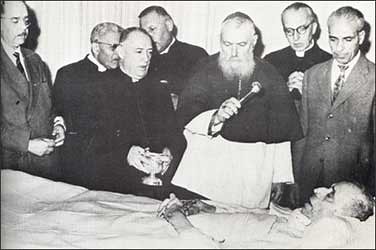
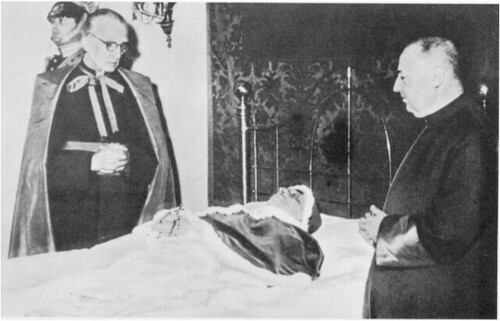
.jpg) A deceased pope is always vested in red vestments but the pontifical Requiem Masses are, as normal, celebrated in black vestments (see the following photos of Cardinal Tisserant, the Dean of the College of Cardinals at the time, who said the Funeral Mass of Pope Pius XII). Source: Angelqueen
A deceased pope is always vested in red vestments but the pontifical Requiem Masses are, as normal, celebrated in black vestments (see the following photos of Cardinal Tisserant, the Dean of the College of Cardinals at the time, who said the Funeral Mass of Pope Pius XII). Source: Angelqueen
.jpg)

.jpg)
.jpg)
.jpg)
.jpg)
Prayer
Secret
Postcommunion
Agnus Dei, qui tollis peccata mundi, dona eis requiem,
Agnus Dei, qui tollis peccata mundi, dona eis requiem,
Agnus Dei, qui tollis peccata mundi, dona eis requiem sempiternam.
Lamb of God, who takest away the sins of the world, grant them rest
Lamb of God, who takest away the sins of the world, grant them rest
Lamb of God, who takest away the sins of the world, grant them rest eternal
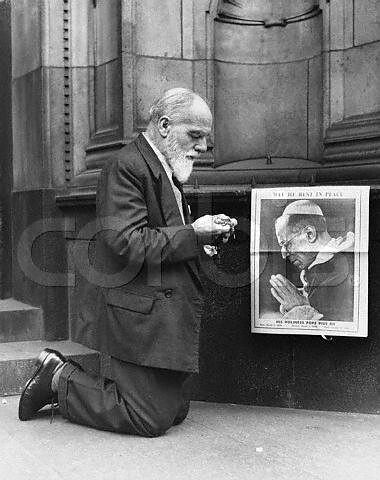
.jpg) Pius XII died on 9 October 1958 of acute heart failure brought on by a sudden myocardial infarction. According to his doctor, Venerable Pope Pius XII died because he had overworked himself.
Pius XII died on 9 October 1958 of acute heart failure brought on by a sudden myocardial infarction. According to his doctor, Venerable Pope Pius XII died because he had overworked himself.
Pope John XXIII:
.jpg)
In paradisum deducant te Angeli; in tuo adventu suscipiant te martyres, et perducant te in civitatem sanctam Ierusalem. Chorus angelorum te suscipiat, et cum Lazaro quondam paupere æternam habeas requiem.
May angels lead you into Paradise; may the martyrs receive you at your coming and lead you to the holy city of Jerusalem. May the ranks of angels receive you, and. with Lazarus, the poor man, may you have eternal rest.
.jpg)
.jpg) Pie Jesu Domine, dona eis requiem. Dona eis requiem sempiternam.
Pie Jesu Domine, dona eis requiem. Dona eis requiem sempiternam.
O sweet Lord Jesus, grant them rest; grant them everlasting rest.
.jpg) Conclusion:
Conclusion:
Throughout the 20th century up until the Second Vatican Council, the Funeral Rite for a Deceased Pope was virtually identical. As succinctly stated, the Funeral Rite of Pope Leo XIII would have looked nearly identical to the Funeral Rite of Pope John XXIII. According to a Fish eaters poster, "Rubrical changes in 1955 had no affect on the text or rubrics of the Requiem itself. The rubrical changes of 1960 had no affect on the actual Mass itself, only when certain Masses could be said and which and how many collects would be said at these." The poster from Angelqueen - The Saint Lawrence Press - goes further by stating that each Funeral Mass would have slight alternations (e.g. prelatial mourning dress, simplification of pontifical ceremonies, and changes to the Ordo Missae such as tones of voice). However, these minimal changes are nothing in comparison to the shattering changes caused by the Funeral Liturgy created by Pope Paul VI.
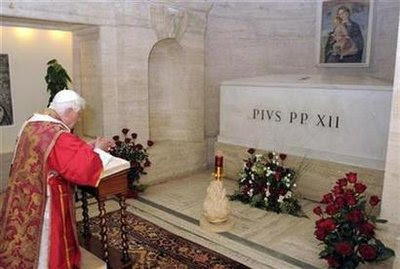 Pope Benedict XVI prays before the tomb of Pope Pius XII
Image Source: REUTERS/Osservatore Romano
Let us take a moment and pray through the intercession of St. Pius X, for the blessed repose and canonization of Pope Leo XIII, Pope Benedict XV, Pope Pius XI, Pope Pius XII, and Pope John XXIII. Let us pray in a more earnest way for the process of canonization of Pope Pius XII to proceed ever more quickly.
Note:
To the best of my knowledge, these photographs are all correctly labeled and do not infringe upon the copyright of any individual, institution, or entity as they are either in the public domain or are under fair use. If you notice a problem with any of the used photographs, please contact me.
Sources:
Read more >>
Pope Leo XIII:
 Pope Leo XIII
2 March 1810 - 20 July 1903
Assumed the Papacy: 20 February 1878
His Holiness Pope Leo XIII died on July 20, 1903 at the Apostolic Palace in Rome, Italy at the age of 93, making his pontificate the longest in history after that of St. Peter, Pius IX, and John Paul II.
 Requiem æternam dona eis, Domine, et lux perpetua luceat eis. Te decet hymnus Deus, in Sion, et tibi reddetur votum in Ierusalem. Exaudi orationem meam; ad te omnis caro veniet. Requiem æternam dona eis, Domine, et lux perpetua luceat eis
Grant them eternal rest, O Lord, and may everlasting light shine upon them. A hymn becometh thee, O God, in Zion, and unto thee a vow shall be repaid in Jerusalem. Hear my prayer; unto thee all flesh shall come."

Prayer for a Deceased PopeSource: Baltimore Book of Prayers, 1889.

 The liturgical colour used during these older papal Funerals up until the Second Vatican Council would have been black. The use of red is an introduction of Paul VI who produced an order for papal funerals. However, a dead pope is always vested in red vestments but the pontifical Requiem Masses are, as normal, celebrated in black vestments.
The missal gives a collect for a deceased pope. The Office of the Dead would certainly have been sung as well as Vespers the night prior with Matins and Lauds on the day of the funeral.
Source: Angelqueen
Pope St. Pius X:
 Pope St. Pius X
June 2, 1835 – August 20, 1914
Assumed the Papacy: August 5, 1903
Canonized: May 29, 1954

 Libera me, Domine, de morte aeterna, in die illa tremenda: Quando caeli movendi sunt et terra. Dum veneris judicare saeculum per ignem. Tremens factus sum ego, et timeo, dum discussio venerit, atque ventura ira. Quando caeli movendi sunt et terra. Dies illa, dies irae, calamitatis et miseriae, dies magna et amara valde. Dum veneris judicare saeculum per ignem. Requiem aeternam dona eis, Domine: et lux perpetua luceat eis.
Deliver me, O Lord, from death eternal on that fearful day, when the heavens and the earth shall be moved, when thou shalt come to judge the world by fire. I am made to tremble, and I fear, till the judgment be upon us, and the coming wrath, when the heavens and the earth shall be moved. That day, day of wrath, calamity, and misery, day of great and exceeding bitterness, when thou shalt come to judge the world by fire. Rest eternal grant unto them, O Lord: and let light perpetual shine upon them.
 The transferring of the body to St. Peters Basilica
 Absolve Domine animas omnium fidelium defunctorum ab omno vinculo delictorum et gratia tua illis succurente mereantur evadere iudicium ultionis, et lucis æterne beatitudine perfrui.
Forgive, O Lord, the souls of all the faithful departed from all the chains of their sins and may they deserve to avoid the judgment of revenge by your fostering grace, and enjoy the everlasting blessedness of light.
 Following his death on August 20, 1914 - brought upon him by the horror of World War I and a heart attack - Pope St. Pius X was buried in an unadorned tomb in the crypt below St. Peter's Basilica, another expression of his radical humility.
Of note, papal physicians had been in the habit of removing organs to aid the embalming process; however, St. Pius X expressly prohibited this and none of his successors have allowed the practice to be re-instituted. Today the body of Pope St. Pius X is incorruptible.
Pope Benedict XV:

Pope Benedict XV
21 November 1854 – 22 January 1922
Assumed the Papacy: September 3, 1914
.jpg) The body of His Holiness lies in State
The body of His Holiness lies in State
As stated on Wikipedia, "Benedict XV was unique in his humane approach in the world of 1914–1918, which starkly contrasts with that of the other great monarchs and leaders of the time. His worth is reflected in the tribute engraved at the foot of the statue that the Turks, a non-Catholic, non-Christian people, erected of him in Istanbul: "The great Pope of the world tragedy...the benefactor of all people, irrespective of nationality or religion." This monument stands in the courtyard of the St. Esprit Cathedral."
21 November 1854 – 22 January 1922
Assumed the Papacy: September 3, 1914
 The body of His Holiness lies in State
As stated on Wikipedia, "Benedict XV was unique in his humane approach in the world of 1914–1918, which starkly contrasts with that of the other great monarchs and leaders of the time. His worth is reflected in the tribute engraved at the foot of the statue that the Turks, a non-Catholic, non-Christian people, erected of him in Istanbul: "The great Pope of the world tragedy...the benefactor of all people, irrespective of nationality or religion." This monument stands in the courtyard of the St. Esprit Cathedral."
 The transferring of the body to St. Peters Basilica
Since at most the Liturgical rites would be Solemn Pontifical rites said by the Cardinal Dean (the most senior Cardinal Bishop in the College). When the Cardinal Dean would celebrate the Solemn Requiem Mass it would be done no differently than any bishop celebrating a Solemn Requiem. There would very likely be the Solemn Pontifical Absolution given after the Mass as well. The Office including Vespers of the dead on the night before the funeral and Matins and Lauds of the dead on the morning of the Funeral would almost certainly have been celebrated.Pope Pius XI:
Textually and rubrically, aside from the color oddity the Mass would seem to have traditionally been identical to a typical Pontifical Requiem. The prayers used throughout the rite depend on the person for whom the rites are offered. Without looking, I think there is a particular prayer for deceased Popes which would be used.
There is also the Novemdiales, the nine day period following the death of the Pope during which Masses are celebrated for the repose of the soul of the Pope by various cardinals.
 Image: Pope Pius XI enthronement
 Pope Pius XI
31 May 1857 - 10 February 1939
Assumed the Papacy: February 6, 1922
 On 25 November 1938, the Holy Father suffered two serious heart attacks and he began to deteriorate from that point. His last words to those near him were spoken with clarity and firmness: My soul parts from you all in peace. Pope Pius XI died at 5:31 a.m. (Rome Time) of a third heart attack on 10 February 1939, aged 81. He was buried in the crypt at St. Peter's Basilica, in the main chapel, close to the Tomb of St. Peter.
Pope Pius XII:
 Venerable Pope Pius XII
2 March 1876 – 9 October 1958
Assumed the Papacy: March 2, 1939
 Domine, Iesu Christe, Rex gloriæ, libera animas omnium fidelium defunctorum de poenis inferni et de profundo lacu. Libera eas de ore leonis, ne absorbeat eas tartarus, ne cadant in obscurum; sed signifer sanctus Michael repræsentet eas in lucem sanctam, quam olim Abrahæ promisisti et semini eius.
Lord Jesus Christ, King of glory, free the souls of all the faithful departed from infernal punishment and the deep pit. Free them from the mouth of the lion; do not let Tartarus swallow them, nor let them fall into darkness; but may the sign-bearer, St Michael, lead them into the holy light which you promised to Abraham and his seed.


 As seen in other images already in this post, this is the catafalque, which is used to support the casket of the deceased. Catafalques are certainly not exclusive to papal funerals as they should even be used in a regular parish on All Soul's Day. Following the Requiem Mass, the a catafalque may be used to stand in place of the body at the Absolution of the dead.
The absolution of the dead is only performed in context of the Tridentine Mass. Following the Second Vatican Council, the absolution of the dead was removed from the funeral liturgy of the Mass of Paul VI. The following information is on the Absolution of the Dead in general and is not the exact format used at a Solemn High Liturgy.
After the Requiem Mass has concluded, the celebrant removes the chasuble and puts on the black cope. The subdeacon, bearing the processional cross and accompanied by the acolytes, goes to the head of the coffin (i.e. facing the altar in the case of a layman, but between the coffin and the altar in the case of a priest), while the celebrant stands opposite at the foot. The assisting clergy are grouped around and the celebrant, who at once to begins the prayer Non intres in judicium cum servo tuo, praying that the deceased "may deserve to escape the avenging judgment, who, whilst he lived, was marked with the seal of the holy Trinity". This is followed by the responsory Libera me Domine, which is sung by the choir.
Then the celebrant says the Kyrie eleison aloud followed by the Our Father. While the Our Father is repeated in silence by all, the celebrant walks around the coffin, sprinkling it with holy water and bowing profoundly before the processional cross when he passes it. He then takes the thurible and incenses the coffin. Finally after finishing the Our Father and repeating one or two short versicles to which answer is made by the clergy, the celebrant pronounces the prayer of absolution, most commonly in the following form:
"O God, Whose attribute it is always to have mercy and to spare, we humbly present our prayers to Thee for the soul of Thy servant N. which Thou has this day called out of this world, beseeching Thee not to deliver it into the hands of the enemy, nor to forget it for ever, but to command Thy holy angels to receive it, and to bear it into paradise; that as it has believed and hoped in Thee it may be delivered from the pains of hell and inherit eternal life through Christ our Lord. Amen."[2]Following the absolution, the body is taken out of the church while the choir sings the In paradisum.
If the body is not present, or on other occasions such as All Souls' Day or Requiem Masses on the anniversary of death, a catafalque or bier covered by a black pall may stand in the place of the body for the absolution. If a catafalque is not available, a black pall may be laid on the floor to stand in place the body.
Wikipedia: Absolution of the Dead

Prayer for the Church during times of vacancy of the Holy See.Source: Fr Lasance's New Roman Missal, 1945.
 A deceased pope is always vested in red vestments but the pontifical Requiem Masses are, as normal, celebrated in black vestments (see the following photos of Cardinal Tisserant, the Dean of the College of Cardinals at the time, who said the Funeral Mass of Pope Pius XII). Source: Angelqueen


Propers for a Deceased Pope.Source: Fr Lasance's New Roman Missal, 1945
| Deus, qui inter summos Sacerdotes famulum tuum N. ineffabili tua dispositione connumerari voluisti: praesta quaesumus; ut qui unigeniti Filii tui vices in terris gerebat, sanctorum tuorum Pontificum consortio perpetuo aggregetur. Per eumdem Dominum. | God, Who, in Thine ineffable providence, didst will that Thy servant N. should be numbered among the high priests, grant, we beseech Thee, that he, who on earth held the place of Thine only-begotten Son, may be joined forevermore to the fellowship of Thy holy pontiffs. Through the same. |
| Suscipe, Domine, quaesumus, pro anima famuli tui N. dummi Pontificis, quas offerimus hostias: ut cui in hoc saeculo pontificale donasti meritum, in coelesti regno Sanctorum tuorum jubeas jungi consortio. Per Dominum. | Receive, we beseech Thee, O Lord, the sacrifice which we offer for the soul of Thy servant N., supreme pontiff, that Thou mayest command him, whom on earth Thou didst invest with the pontifical dignity, to be joined to the fellowship of Thy saints in the kingdom of heaven. Through our Lord. |
| Prosit, quaesumus, Domine, animae famuli tui N. summi Pontificis misericordiae tuae implorata clementia: ut ejus, in quo speravit et credidit, aeternum capiat, te miserante, consortium. Per Dominum. | May Thy clemency, which we implore, O Lord, benefit the soul of Thy servant, N., supreme pontiff, that he may by Thy mercy attain to everlasting fellowship with Him in Whom he hoped and believed. Through our Lord. |
Also from Angelqueen, "a pope celebrating a requiem would have worn red as Benedict XIII revived the custom of the pope only wearing white and red, not the other liturgical colours. Hence on Good Friday for the Mass of the Pre-Sanctified in the Sistine Chapel whilst the Cardinal Penitentiary wore black vestments the pope presided at the throne wearing a red cope and a 'peony' coloured stole (according to the Italian authors)."
Agnus Dei, qui tollis peccata mundi, dona eis requiem,
Agnus Dei, qui tollis peccata mundi, dona eis requiem sempiternam.
Lamb of God, who takest away the sins of the world, grant them rest
Lamb of God, who takest away the sins of the world, grant them rest
Lamb of God, who takest away the sins of the world, grant them rest eternal
 Pius XII died on 9 October 1958 of acute heart failure brought on by a sudden myocardial infarction. According to his doctor, Venerable Pope Pius XII died because he had overworked himself.
Pope John XXIII:

In paradisum deducant te Angeli; in tuo adventu suscipiant te martyres, et perducant te in civitatem sanctam Ierusalem. Chorus angelorum te suscipiat, et cum Lazaro quondam paupere æternam habeas requiem.
May angels lead you into Paradise; may the martyrs receive you at your coming and lead you to the holy city of Jerusalem. May the ranks of angels receive you, and. with Lazarus, the poor man, may you have eternal rest.

 Pie Jesu Domine, dona eis requiem. Dona eis requiem sempiternam.
O sweet Lord Jesus, grant them rest; grant them everlasting rest.
 Conclusion:
Throughout the 20th century up until the Second Vatican Council, the Funeral Rite for a Deceased Pope was virtually identical. As succinctly stated, the Funeral Rite of Pope Leo XIII would have looked nearly identical to the Funeral Rite of Pope John XXIII. According to a Fish eaters poster, "Rubrical changes in 1955 had no affect on the text or rubrics of the Requiem itself. The rubrical changes of 1960 had no affect on the actual Mass itself, only when certain Masses could be said and which and how many collects would be said at these." The poster from Angelqueen - The Saint Lawrence Press - goes further by stating that each Funeral Mass would have slight alternations (e.g. prelatial mourning dress, simplification of pontifical ceremonies, and changes to the Ordo Missae such as tones of voice). However, these minimal changes are nothing in comparison to the shattering changes caused by the Funeral Liturgy created by Pope Paul VI.
 Pope Benedict XVI prays before the tomb of Pope Pius XII
Image Source: REUTERS/Osservatore Romano
Let us take a moment and pray through the intercession of St. Pius X, for the blessed repose and canonization of Pope Leo XIII, Pope Benedict XV, Pope Pius XI, Pope Pius XII, and Pope John XXIII. Let us pray in a more earnest way for the process of canonization of Pope Pius XII to proceed ever more quickly.
Note:
To the best of my knowledge, these photographs are all correctly labeled and do not infringe upon the copyright of any individual, institution, or entity as they are either in the public domain or are under fair use. If you notice a problem with any of the used photographs, please contact me.
Sources:


 and consecrate this paten (these patens), destined for the administration of the Eucharist of Jesus Christ, your Son, who for our salvation and that of all mankind chose to immolate Himself on the gibbet of the cross to you, God the Father, with whom He lives and reigns, forever and ever.


 et Spiritus Sancti. Amen.