Showing posts sorted by date for query Easter Friday. Sort by relevance Show all posts
Monday, September 15, 2025
Eggs in the History of Catholic Fasting and Abstinence

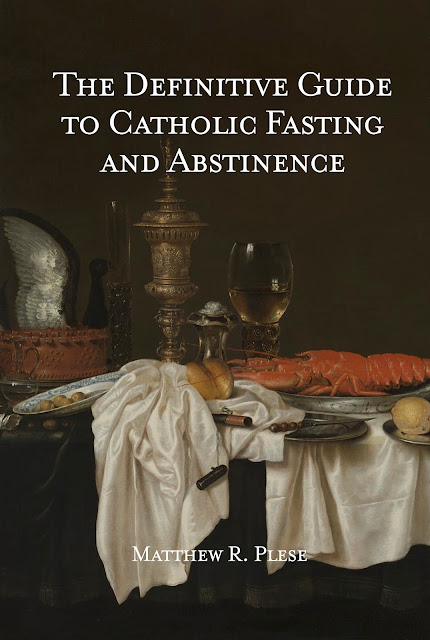
Of all the changes in Catholic fasting and abstinence across the centuries, few are as striking as the regulation of eggs. Today, Catholics rarely think of eggs as a “penitential food,” but for well over a millennium they were strictly forbidden during Lent, alongside dairy and animal fat. Understanding the history of these rules helps us appreciate both the rigor of earlier generations and the cultural traditions that flowed from them as detailed in The Definite Guide to Catholic Fasting and Abstinence.

1. The Ancient and Patristic Church

Early Christian fasting was extraordinarily strict.

Dr. K.A. Heinrich Kellner records that in the ancient Church, especially in Holy Week, food was reduced to bread, salt, and water. The Apostolic Constitutions forbade flesh and wine for all of Lent and prescribed total abstinence on Good Friday and Holy Saturday. St. John Chrysostom testifies that in Antioch, no flesh was eaten during the whole of Lent. Crucially, milk and eggs (lacticinia) were also excluded as a general rule.

The Council of Trullo (692) confirmed this universality, forbidding the eating of eggs and cheese in Lent, even on Sundays, under penalty of deposition for clerics and excommunication for laymen (Canon 56).

Thus, from the earliest centuries, Lenten fasting meant abstaining not only from meat but also from dairy, eggs, and animal products.

2. Pope St. Gregory the Great and the Medieval Consensus

In 604, Pope St. Gregory the Great summarized the law succinctly: “We abstain from flesh meat and from all things that come from flesh, as milk, cheese, and eggs.”

This form endured for nearly a thousand years. Whenever fasting was observed, abstinence was also observed. Thus: Lent = no meat, no eggs, no dairy, no animal products.

By the time of St. Thomas Aquinas, the Lenten fast still forbade lacticinia, while Fridays and other non-Lenten abstinence days had already relaxed to permit dairy and eggs. This distinction became fixed: Lent retained the stricter prohibition, while non-Lenten abstinence was milder.

3. Culture and Custom

From this tradition arose beloved customs:

  • Shrove Tuesday pancakes used up eggs and butter before Lent.
  • Easter eggs became a festive symbol of the Resurrection precisely because they were absent for 46 days.

In some countries, exceptions were made. As Fr. Francis Weiser notes, Scandinavia was never bound to strict lacticinia abstinence because substitutes were scarce; dispensations were common, often accompanied by pious almsgiving.

Even so, the general discipline remained firm until the modern era.

4. 19th-Century Relaxations

By the 19th century, the Church had begun granting wider concessions.

In 1886, Pope Leo XIII permitted meat, eggs, and dairy on Sundays of Lent and at the main meal on every weekday except Wednesday and Friday in the United States. Holy Saturday was excluded. This marked a decisive relaxation.

Mara Morrow notes that Leo XIII also allowed eggs and dairy at the evening collation daily during Lent and permitted bread with coffee or chocolate in the morning. These mitigations were part of a broader trend: the use of lard and meat drippings was allowed, and those exempt from fasting could eat eggs and milk more than once a day.

A 1905 Irish catechism by Fr. Patrick Power still listed milk, butter, cheese, and eggs as forbidden in Lent, though he acknowledged that some countries allowed milk at collation. Dispensation varied widely by nation.

5. The 1917 Code of Canon Law

The 1917 Code decisively ended the universal prohibition of lacticinia during Lent. 

  • Canon 1250: abstinence forbids meat and soups made with meat, “but not eggs, milk, and other condiments, even if taken from animals.”
  • Canon 1251: mixing meat and fish in the same meal was permitted.

From this point, eggs and dairy were no longer excluded by law, even during Lent. The ancient and medieval practice was officially abrogated.

6. Mid-20th Century Clarifications

By the 1950s, theologians such as Fr. Dominic Prümmer explained the law clearly: abstinence forbade flesh meat and broth, but not eggs, dairy, or animal fats. In case of doubt, one was free to eat, since the law did not bind in uncertainty.

Thus, by mid-century, eggs were firmly reclassified as a permitted food on both fasting and abstinence days.

7. Today’s Law

Under the 1983 Code of Canon Law:

  • Fasting (Ash Wednesday and Good Friday): one full meal and two smaller meals, no restriction on eggs.
  • Abstinence (Fridays of Lent): no meat, but eggs fully permitted.
  • Year-round Friday penance remains binding, but abstinence from eggs is nowhere in view.

8. Conclusion

For more than a millennium, the Catholic Church’s Lenten discipline excluded not only meat but also eggs and dairy. This practice, deeply rooted in the patristic and medieval Church, gave rise to traditions such as Easter eggs and Shrove Tuesday pancakes. Outside Lent, however, abstinence days rarely included eggs after the early Middle Ages.

From Pope St. Gregory the Great through St. Thomas Aquinas, lacticinia abstinence was normative in Lent. Dispensations and mitigations appeared over time, culminating in Pope Leo XIII’s late-19th-century relaxations and the 1917 Code’s universal allowance of eggs and dairy. Today, the Church’s law requires only abstinence from meat, leaving eggs entirely permitted.

Still, some Catholics voluntarily restore the older discipline of giving up eggs and dairy during Lent, rediscovering a penitential practice that once united Christendom and sanctified the approach to Easter.

Want to learn more about the history of fasting and abstinence? Check out the Definitive Guide to Catholic Fasting and Abstinence.

Read more >>
Sunday, April 20, 2025
A Catholic Life Podcast: Episode 110

In today’s episode, on Easter Sunday, the most glorious all feastdays, I address the following:

  1. Customs for Easter Week: Food, Activities, Greetings, and More
  2. The Agnus Dei Sacramental
  3. The Easter Duty: What it is and when it may be fulfilled
  4. There is no incompatibility between abstinence and Pascaltide. Observe Friday Abstinence and even Saturday abstinence in Eastertide.

I would like to thank CatechismClass.com for sponsoring this episode.  CatechismClass.com, the leader in online Catholic catechism classes, has everything from online K-12 programs, RCIA classes, adult continuing education, marriage preparation, baptism preparation, confirmation prep, quince prep classes, catechist training courses, and much more. Use discount code Easter25 to save 25% off the Easter Season Course.


Read more >>
Friday, April 18, 2025
The 40 Hour Passion Fast and the Black Fast


The Strictness of Holy Week

The Passion Fast is a term which refers to the fast which began for some as early as sunset on Holy Thursday and as late as 8 AM on Good Friday. No one was allowed to eat any food during that time until sunset on Holy Saturday, which – since most fasted for Communion – extended until the morning on Easter Sunday. It was often called a “40 Hours Fast” and represents the original Lenten fast. For those who were too weak to follow this fast the minimum fast at this time was that of xerophagiae.

Xerophagiae is a diet of simple, dry, uncooked food, such as raw nuts, bread, fruits, and vegetables. Fish and oil are not part of it and neither are flesh nor animal products. It was a precept to fast on these only during Holy Week by custom and/or decree until approximately the time of Pope St. Gregory the Great (reigned 590 – 604 AD), who mentions nothing of it. It may still have been a custom at that time but no mention of it is made in the Decretals of Gregory IX published in 1234.

The Black Fast

A commonly misunderstood aspect of fasting is the “black fast.” Is the Passion Fast a Black Fast? Is it the only Black Fast? What is the true definition of a black fast? And what is it not? The Catholic Encyclopedia from 1907 answers as follows:

This form of fasting, the most rigorous in the history of church legislation, was marked by austerity regarding the quantity and quality of food permitted on fasting days as well as the time wherein such food might be legitimately taken. 

This is based in practice on the fasting done by the Early Church and the Apostles. In practice, there are three criteria that make a fast a “black fast” as the Encyclopedia identifies:

In the first place more than one meal was strictly prohibited. At this meal flesh meat, eggs, butter, cheese, and milk were interdicted (Gregory I, Decretals IV, cap. vi; Trullan Synod, Canon 56). Besides these restrictions, abstinence from wine, especially during Lent, was enjoined (Thomassin, Traité des jeûnes de l'Église, II, vii). Furthermore, during Holy Week the fare consisted of bread, salt, herbs, and water (Laymann, Theologia Moralis, Tr. VIII; De observatione jejuniorum, i). Finally, this meal was not allowed until sunset. St. Ambrose (De Elia et jejunio, sermo vii, in Psalm CXVIII), St. Chrysostom (Homil. iv in Genesim), St. Basil (Oratio i, De jejunio) furnish unequivocal testimony concerning the three characteristics of the black fast. 

Hence a black fast is one that meets these criteria:

1. Only one meal a day

2. Complete abstinence from all meat and animal products

3. The one meal may only be consumed after sunset.

Consequently, it is not a total abstinence from all food and drink whatsoever that makes a fast a “black fast”. And it also does not mean that one eats only bread. Vegetables are certainly allowed at the meal. And the Passion Fast is one such Black Fast

Want to learn more about the history of fasting and abstinence? Check out the Definitive Guide to Catholic Fasting and Abstinence.

Read more >>
Tuesday, February 18, 2025
Traditional Maronite Catholic Fasting

While many people use the term “Roman Catholic” and “Catholic” as synonymous, they are not actually the same. Unbeknownst to many, there are more than 20 different Catholic Rites and several Churches which are all in Communion with and under obedience to Rome. All these Catholics are fully Catholic in the complete sense. All Catholics must believe the same dogmas of the Faith, have valid Sacraments, and maintain apostolic succession; even though they may differ in some Rites of worship, in popular devotions, and in various disciplinary matters which are governed by human law. This is entirely different from Protestantism, which is foreign to the religion founded by Jesus Christ since Protestants reject many necessary teachings, have placed themselves outside of the authority of the Catholic Church, and also do not have all valid Sacraments.

One of these Catholic rites is the Maronite Rite. The liturgical language is Aramaic. The 3 million Maronites are found in Lebanon (origin), Cyprus, Egypt, Syria, Israel, Canada, US, Mexico, Brazil, Argentina and Australia. Unfortunately, among the Eastern Rites, the Maronite one has been heavily modernized in the past 60 years.

While fasting and abstinence after Vatican II were all but eliminated in the Roman Catholic Church, fasting and abstinence are still practiced – though not always under penalty of sin – by Eastern Rite Catholics. 

For instance, the following guidelines were issued in 2023 by the Maronite Patriarch, His Eminence and Beatitude Mar Bechara Boutros Cardinal Rai, for Maronite Catholics:

  • Fasting from midnight to midday on all weekdays from Ash Monday to the Saturday of Light (8 April [this year]): no food or drink is to be consumed, with the exception of water. 
  • Abstaining from consuming meat and dairy on the Fridays of Lent; and throughout the first and last week of Lent (Holy Week).
  • Fasting and Abstinence on Saturdays and Sundays are not an obligation, with the exception of the Saturday of Light (Easter Saturday), where fasting and abstinence are to be observed.
  • In 2023, the following feast days fall within the Lenten Season: St John Maroun (2 March), The Forty Martyrs (9 March), St Joseph (19 March), St Rafqa (23 March), The Annunciation (25 March). We do not fast or abstain on these feast days. 

Even with these guidelines, food and water are permitted when needed to take medicine, for those sick or elderly, and for school children. The guidelines end with the note: “A person who cannot fast or abstain may choose another form of penance.”

In comparison, the Maronite Synod of 1736 stipulated the following regulations that were kept at least until the 1920s:

  • Great Lent from Quinquagesima to Easter: Abstinence every day; fasting every day except on Sundays and Saturdays (with the exception of Holy Saturday)
  • Apostles Lent: Abstinence four days from 25th - 28th June
  • Assumption Lent: Abstinence eight days 7th - 14th August
  • Christmas Lent: Abstinence twelve days 13th - 24th December
  • Abstinence every Wednesday and Friday except: from Christmas to Epiphany, the Friday before Great Lent, from Easter to Pentecost, June 24th and 29th; August 6th and 15th
  • Forbidden foods: Like most oriental Christians, the Maronites kept the Mosaic ban on eating blood, suffocated animals and certain animals considered impure; and which Oriental Church Councils have many times renewed. 

In this context, fasting forbids the consumption of food or drink until midday. And for abstinence, eating any meat, oil, wine, and animal products (e.g., eggs, milk, and cheese) was forbidden. Hence, even the Maronites saw a reduction in their fasting by the 20th century.

The Ukrainian Catholic Church also encourages its members to keep these traditional fasting periods: Great Lent, the Apostles’ Fast, the Nativity Fast, and the Dormition Fast. To these, they also add “the Eve of Theophany, the Exaltation of the Cross and the Beheading of John the Baptist”  as fasting days, with wine and oil allowed.

Want to learn more about the history of fasting and abstinence? Check out the Definitive Guide to Catholic Fasting and Abstinence.

Read more >>
Wednesday, October 30, 2024
Is Friday Abstinence Required When All Saints Day Falls on a Friday?


All Saints As A Holy Day of Obligation

The first catalog of Holy Days comes from the Decree of Gratian in c. 1150 AD, which shortly thereafter gave way to Decretals of Pope Gregory IX in 1234, which listed 45 Holy Days.

In 1642, His Holiness Pope Urban VIII issued the papal bull Universa Per Orbem which mandated the required Holy Days of Obligation for the Universal Church to consist of 34 days as well as the principal patrons of one's one locality (e.g. city and country). Those days were the Nativity of Our Lord, the Circumcision of Our Lord, the Epiphany of Our Lord, Monday within the Octave of the Resurrection, Tuesday within the Octave of the Resurrection, Ascension Thursday, Monday within the Octave of Pentecost, Tuesday within the Octave of Pentecost, Most Holy Trinity, Corpus Christi, the Finding of the Holy Cross, the Purification of the Blessed Virgin Mary, the Annunciation of the Blessed Virgin Mary, the Assumption of the Blessed Virgin Mary, the Nativity of the Blessed Virgin Mary, the Dedication of St. Michael, the Nativity of St. John the Baptist, SS. Peter and Paul, St. Andrew, St. James, St. John (the December feast day), St. Thomas, SS. Philip and James, St. Bartholomew, St. Matthew, SS. Simon and Jude, St. Matthias, St. Stephen the First Martyr (the December feast day), the Holy Innocents, St. Lawrence, St. Sylvester, St. Joseph, St. Anne, and All Saints.  

The Catholic Encyclopedia provides a short account of the history of All Saints Day:

In the early days the Christians were accustomed to solemnize the anniversary of a martyr's death for Christ at the place of martyrdom. In the fourth century, neighbouring dioceses began to interchange feasts, to transfer relics, to divide them, and to join in a common feast; as is shown by the invitation of St. Basil of Caesarea (379) to the bishops of the province of Pontus. Frequently groups of martyrs suffered on the same day, which naturally led to a joint commemoration. In the persecution of Diocletian the number of martyrs became so great that a separate day could not be assigned to each. But the Church, feeling that every martyr should be venerated, appointed a common day for all. The first trace of this we find in Antioch on the Sunday after Pentecost. We also find mention of a common day in a sermon of St. Ephrem the Syrian (373), and in the 74th homily of St. John Chrysostom (407). At first only martyrs and St. John the Baptist were honoured by a special day. Other saints were added gradually, and increased in number when a regular process of canonization was established; still, as early as 411 there is in the Chaldean Calendar a "Commemoratio Confessorum" for the Friday after Easter. In the West Boniface IV, 13 May, 609, or 610, consecrated the Pantheon in Rome to the Blessed Virgin and all the martyrs, ordering an anniversary. Gregory III (731-741) consecrated a chapel in the Basilica of St. Peter to all the saints and fixed the anniversary for 1 November. A basilica of the Apostles already existed in Rome, and its dedication was annually remembered on 1 May. Gregory IV (827-844) extended the celebration on 1 November to the entire Church. The vigil seems to have been held as early as the feast itself. The octave was added by Sixtus IV (1471-84).

Is Friday Abstinence Required When the All Saints Falls on a Friday?

Since November 1st this year falls on a Friday and is a Holy Day of Obligation, a question arises on whether abstinence is obligatory this Friday. The answer, as clearly stated in the 1917 Code, is as follows:

"On [Sundays] or feasts of precept, the law of abstinence or of abstinence and fast or of fast only ceases, except during Lent, nor is the vigil anticipated; likewise it ceases on Holy [Saturday] afternoon" (1917 Code, Canon 1252 § 4). [Translation taken from THE 1917 OR PIO-BENEDICTINE CODE OF CANON LAW in English Translation by Dr. Edward Peters]

As All Saints Day falls outside of Lent, tomorrow is not a day of mandatory abstinence. However, this was actually a change from the practice observed for well over 1,000 years.

Dispensations From Abstinence Were Previously Required Even for Holy Days of Obligation Outside of Lent

Even Christmas would in and of itself not dispense Friday abstinence in the Medieval Church, as Dom Gueranger writes in the Liturgical Year published in 1886:

"To encourage her children in their Christmas joy, the Church has dispensed with the law of abstinence, if this Feast fall on a Friday. This dispensation was granted by Pope Honorius III, who ascended the Papal Throne in 1216. It is true that we find it mentioned by Pope St Nicholas I, in the ninth century; but the dispensation was not universal; for the Pontiff is replying to the consultations of the Bulgarians, to whom he concedes this indulgence, in order to encourage them to celebrate these Feasts with solemnity and joy: Christmas Day, St Stephen, St John the Evangelist, the Epiphany, the Assumption of our Lady, St John the Baptist, and SS Peter and Paul. When the dispensation for Christmas Day was extended to the whole Church, these other Feasts were not mentioned."

Previously, a dispensation was required by the Holy Father even on Holy Days of Obligation that fell outside of Lent. Two examples indicating this are Pope Leo XIII's 1890 dispensation for Assumption Day and a 1907 dispensation issued for Canada for All Saints Day. All Saints Day was, at that time, a Holy Day of Obligation in Canada.

The Catholic Encyclopedia on St. Pius X's Supremi disciplinæ indicates that fasting was abolished eo ipso only starting in 1911 for all Holy Days of Obligation outside of Lent (which were at the same time reduced to only 8): "The present Motu Proprio institutes another important change in legislation. As feasting and fasting are incompatible, Pius X has abolished the obligation of fasting as well as that of abstinence for the Universal Church, should such obligation coincide with any of the eight feasts, as above." 

Thus, while eating meat this Friday is not a sin, it would be meritorious to continue to observe Friday abstinence in honor of the nearly 1,800 year-old tradition that preceded the 1917 Code. If we choose to do so, let us offer it up through our Lady's intercession for the conversion of sinners who violate the laws of the Church and do not attend Holy Mass on days of precept like All Saints Day.

Want to learn more about the history of fasting and abstinence? Check out the Definitive Guide to Catholic Fasting and Abstinence.
Read more >>
Tuesday, April 9, 2024
How Fasting on Vigils Was Reduced Over Time

Click for a larger image. Holy Saturday is not included as it is covered separately by Lenten regulations.

What are Vigils?

Even though the Great Fast of Lent has ended, our fasting has not ended. There are many other days of fasting this year, such as Ember Days and Vigils, which are still coming this year. Understanding fasting on Vigils is something that has been forgotten by the average Catholic today. And rediscovering this practice will help us better celebrate the feastday following the vigil while allowing us more shared days of penance.

Some feasts have vigils associated with them. The term “vigil” is used in several ways. It most properly refers to an entire day before a major feast day (e.g., the Vigil of Christmas, which refers to the entire day of December 24). This kind of vigil is a liturgical day in itself and marks the following day as a day of greater liturgical significance. This is the proper meaning of a vigil. In a similar way, the Catechism of Perseverance, published in 1849, states: “The word vigil signifies watching. The vigils are the days of abstinence and fast which precede the great festivals of the year. There are five; those of Christmas, Easter, Pentecost, Assumption, and All Saints. In some dioceses, the feast of St. Peter and St. Paul is also preceded by a vigil.”

NB: A Mass using the Sunday propers that is anticipated (i.e., offered) on a Saturday evening is sometimes, though incorrectly, called a vigil. This practice, however, is a post-Vatican II novelty and not part of Catholic Tradition, so I counsel Catholics to never attend such “vigil Masses” on Saturday evenings.

Definition of Key Terms in the Vigils Table:

Fasting: Fasting refers to how much food we eat. It means taking only one meal during a calendar day. The meal should be an average-sized meal as overeating at the one meal is against the spirit of the fast. Fasting generally means that the meal is to be taken later in the day. Along with the one meal, up to two snacks (technically called either a collation or frustulum) are permitted. These are optional, not required. Added up together, they may not equal the size of the one meal. No other snacking throughout the day is permitted. Fasting does not affect liquids, aside from the Eucharistic Fast which is a separate matter.

Abstinence: Abstinence in this context refers to not eating meat. Meat refers to the flesh meat of mammals or fowl. Beef, poultry, lamb, etc. are all forbidden on days of abstinence. Abstinence does not currently prohibit animal byproducts like dairy (e.g., cheese, butter, milk) or eggs, but in times past, they were prohibited. Fish is permitted along with shellfish and other cold-blooded animals like alligators. In times past, days of fasting were always days of abstinence as well; however, not all days of abstinence were days of mandatory fasting.

Partial Abstinence: Partial Abstinence refers to eating meat only at the principal meal of the day. Days of partial abstinence do not permit meat to be eaten as part of the collation or the frustulum. Partial abstinence started only in 1741 under Pope Benedict XIV as a concession and as part of a gradual weakening of discipline. Beforehand, days of abstinence were days of complete abstinence.

NB: The table concerns only fasting and abstinence for Vigils and thus omits other possible days of fasting and/or abstinence: Lent, Ember Days, Rogation Days, etc.

Explanation of Key Changes to Vigils in the English-Speaking World:

1. On March 9, 1777, Pope Pius VI reduced for English Catholics days of fasting to consist of the Ember Days; the forty days Lent; Wednesdays and Fridays in Advent; and the vigils of Christmas, Whitsun Sunday (i.e. Pentecost), Ss. Peter and Paul, and All Saints.

2. As mentioned in the Irish Ecclesiastical Record from 1882, Pope Benedict XIV in 1755 removed 18 feasts from double precept and reduced them to single precept. Shortly thereafter in 1778, Pope Pius VI reduced the number of holy days to 13. And as the Record states, "On this occasion, the obligation of hearing Mass was removed, as well as the obligation of abstaining from servile works." The Record continues: "the number of those Vigils to which the obligation of fasting had been attached [as of 1778] was in fact but eight - these being the Vigils of the feast of St. Laurence the Martyr (August 9th), and of seven of the nine suppressed feasts of the Apostles." No fasting was observed beforehand on the Vigil of St. John on December 26 or the Vigil of Ss. Philip and James on account of them always falling in Christmas and Pascaltide respectively.

3. The Vigil of Ss. Peter and Paul ceased being a fast day in America by 1842. In Great Britain, Ireland, Australia, and Canada the Vigil of Ss. Peter and Paul remained a day of fasting and abstinence up until the 1917 Code of Canon law. In 1902, the Holy Father granted a special dispensation for Catholics in England from fasting on the Vigil of Ss. Peter and Paul in honor of the coronation of King Edward VII, illustrating historical proof of its observance in the early part of the 20th century.

4. "The Catholic's Pocket Prayer-Book" published by Henri Proost & Co in 1924 notes "in the United Kingdom (except during Lent), abstinence is not binding on Ember Saturdays or on any Vigil that immediately precedes or follows a Friday or other day of abstinence."

5. Effective with the 1917 Code, fasting and abstinence were no longer observed should a vigil fall on a Sunday as stated in the code: "If a vigil that is a fast day falls on a Sunday the fast is not to be anticipated on Saturday but is dropped altogether that year." Before 1917, the fast of a Vigil that fell on a Sunday was observed instead on the preceding Saturday.

6. On January 28, 1949, the United States bishops issued modified regulations on abstinence in America again after receiving a ruling from the Sacred Congregation of the Council. Partial abstinence replaced complete abstinence for Ember Wednesdays, Ember Saturdays, and the Vigil of Pentecost.

7. In March 1955, Pope Pius XII abolished the liturgical Vigil of All Saints. The US Bishops requested an official determination from Rome on whether the custom of fasting and abstinence on the suspended Vigil of All Saints had also been terminated. They received a pre-printed notice in a response dated March 15, 1957, stating: "The Decree of the Sacred Congregation of Rites...looks simply to the liturgical part of the day and does not touch the obligation of fast and abstinence that are a penitential preparation for the following feast day." The US Bishop thereafter dispensed both the fast and partial abstinence law for the Vigil of All Saints.

8. On July 25, 1957, Pope Pius XII commuted the fast in the Universal Church from the Vigil of the Assumption to the Vigil of the Immaculate Conception on December 7, even though he had previously abrogated the Mass for the Vigil of the Immaculate Conception. 

9. In 1959, Pope John XXIII permitted the Christmas Eve fast and abstinence to be transferred to 23rd. While the United States, Great Britain, and Ireland kept the penance on December 24, other nations, including Canada and the Philippines, transferred it to December 23.

10. As stated in a January 1960 issue of the Catholic Standard and Times, following an October 1959 meeting, the Bishops of Canada issued new regulations taking effect in 1960 that provided that the law of abstinence henceforth will apply only on all Fridays of the year, while the regulations for fast and abstinence will apply only on four days—Ash Wednesday; Good Friday; December 7, the vigil of the feast of the Immaculate Conception, and December 23, the anticipated vigil before Christmas.

How are Vigils Observed?

There are two characteristics of vigils: penance and prayer. 

As to penance, many liturgical vigils, if not all, were originally also days of fasting and abstinence. Over time, the fasting and abstinence was dropped from many. By the time of the Catechism of Perseverance, there were only a few such vigils. But the days of fasting and abstinence differed – including on vigils in various places. For instance, by 1893, the only fasting days kept in Rome were the forty days of Lent, the Ember Days, and the Vigils of the Purification, of Pentecost, of St. John the Baptist, of Ss. Peter and Paul, of the Assumption, of All Saints, and of Christmas. This is summarized from the Handbook to Christian and Ecclesiastical Rome. In just a few years, Rome would abrogate the fast on the Vigil of the Purification and on the Vigil of St. John the Baptist. By the 1917 Code of Canon Law, fasting vigils were dropped universally to only four days: Vigils of Pentecost, the Assumption of the Blessed Virgin Mary, All Saints, and Christmas. These are what Americans at that time were aware of, but previously, there were differing vigils.

By 1917, there were, however, still many other liturgical vigils on the calendar that were not obligatory days of abstinence at that time. For instance, before the changes to the Roman Rite liturgical calendar in 1955, nearly all feasts of the Apostles were preceded by a vigil. And the Church put those days in place to help us prepare for the importance of the feast of an Apostle, since all feasts of the Apostles were in former times Holy Days of Obligation. We have lost the importance of the feast days of the Apostles, I believe, in part due to losing the vigils. We can change that for ourselves by observing those feast days in our own prayer lives. And the same is true for the Vigil of All Saints (i.e., Halloween), a traditional day when we would fast and abstain from meat, but which is neither found in the Novus Ordo calendar nor even in the 1962 Missal.  Hence any of the older vigils (e.g., the Vigil of St. Lawrence, the Vigil of Epiphany, the Vigil of the Nativity of St. John the Baptist, etc.) can and arguably, should, be observed with fasting and abstinence even if they are not obliged under penalty of sin. 

The second key feature of vigils is prayer. 

The Catechism of Perseverance explains this aspect well: “How should we spend the vigils? Whatever be our age, we should spend those days in a more holy manner than other days, in order to prepare for the celebration of the festival and to receive the graces which God always gives more abundantly at that time.” Praying an extra rosary, making time for mental prayer, and even praying into the evening as the vigil becomes the feastday itself are all worthwhile practices to make vigils slightly more penitential and all the more prayerful.

While we know that Sundays and Holy Days of Obligation should be spent in prayer, attendance at Holy Mass, and in avoidance of servile work, we often pay little mind to vigils since the Church over the past several decades has virtually eliminated them. But we must honor our Lady of Fatima’s call for penance and can model our example after that of our forefathers who observed the vigils in preparation for the feast.

Works Cited:

1. Great Britain (1776): American Ecclesiastical Review (Hardy and Mahony, 1886), vol. 11, p. 469.https://www.google.com/books/edition/The_American_Catholic_Quarterly_Review/lz0QAAAAYAAJ 

2. USA (1789): American Ecclesiastical Review (Hardy and Mahony, 1886), vol. 11, p. 469.https://www.google.com/books/edition/The_American_Catholic_Quarterly_Review/lz0QAAAAYAAJ 

3. USA (1909): O'Neill, J.D. (1909). Fast. In The Catholic Encyclopedia. New York: Robert Appleton Company. http://www.newadvent.org/cathen/05789c.htm

4. Great Britain (1909): O'Neill, J.D. (1909). Fast. In The Catholic Encyclopedia. New York: Robert Appleton Company. http://www.newadvent.org/cathen/05789c.htm

5. Canada (1909): O'Neill, J.D. (1909). Fast. In The Catholic Encyclopedia. New York: Robert Appleton Company. http://www.newadvent.org/cathen/05789c.htm

6. CIC (1917): Peters, Edward N.  1917 Pio-Benedictine Code of Canon Law: in English translation, with extensive scholarly apparatus.  San Francisco: Ignatius Press, 2001. https://www.jgray.org/codes/ 

7. Canada (1952): https://sspx.ca/en/rules-fast-abstinence 

8. USA (1962): Rev. Heribert Jone, “Moral Theology: Englished and Adapted to the Laws and Customs of the United States of America,” (Newman Press, 2009), p. 285.

9. Canada (1962): The Catholic Standard and Times, Volume 65, Number 19, Published January 29, 1960. https://thecatholicnewsarchive.org/?a=d&d=cst19600129-01.2.77&e=-------en-20--1--txt-txIN-------- 

10. Great Britain (1962): 1962 Roman Catholic Daily Missal, (Angelus Press, 2004). 
Read more >>
Sunday, March 31, 2024
A Catholic Life Podcast: Episode 59

Read more >>
Thursday, February 22, 2024
The Protestant Attack on Lenten Penance

In the Middle Ages, abstinence from meat on Fridays and during Lent was not only Church law – it was civil law as well. And people gladly obeyed these laws out of respect for the teaching authority of the Church. Yet after the Protestant revolt which began in 1517 and continued through the middle of the 1600s, this was to change. Zwingli, the protestant leader from Switzerland, directed multiple attacks against the merits of good works, including fasting and abstinence through the infamous “The Affair of Sausage” in 1522. He audaciously claimed that since Scripture was the only authority, sausages should be eaten publicly in Lent in defiance. 

The same occurred in England, which followed the revolt of Luther and his peers. King Henry VIII, who was previously given the title “Defender of the Faith” by Pope Leo X for his defense against Luther, succumbed to heresy and schism when he broke from Lord’s established Church on earth in 1533 to engage in adultery. Church property was seized. Catholics were killed. Catholicism was made illegal in England in 1559 under Queen Elizabeth I, and for 232 years, except during the brief reign of the Catholic King James II (1685 – 1688), the Catholic Mass was illegal until 1791. Yet the Anglicans at least kept the Catholic customs of abstinence for some years.

English Royalty proclamations supporting abstinence of meat continued to occur in England in 1563, 1619, 1625, 1627, and 1631. The same likewise occurred in 1687 under King James II. After the Revolution in 1688 and the overthrow of Catholicism by William III and Mary II, the laws were no longer enforced and officially removed from the law books by the Statue Law Revision Act in 1863. Similar changes occurred throughout Europe as Protestants reviled the fast.

Protestants largely abandoned fasting and other forms of mortification altogether in a complete rupture with the practice of all of Christianity back to the Apostles themselves. While some Lutherans and Methodists will voluntarily keep fasting days, it is uncommon and not practiced under obligation. Methodists, who were founded by John Wesley in the 18th century, for instance, if they do fast, are more likely to observe the “Daniel Fast” during the season of Lent, which is categorized by abstinence from "meat, fish, egg, dairy products, chocolates, ice creams, sugar, sweets, wine or any alcoholic beverages" as taken from the Book of Daniel 10:3. 

By the 1900s, the Episcopalian Church, the American branch of Anglicanism, largely abandoned all fasting and abstinence by re-writing their Book of Common Prayer (BCP):

The 1928 BCP in its table of fasts listed ‘other days of fasting on which the Church requires such a measure of abstinence as is more especially suited to extraordinary acts and exercises of devotion.’ These included the forty days of Lent, the Ember Days, and Fridays. No distinction was made between fasting and abstinence. The 1979 BCP dropped the Ember Days from the list and refers to both Lenten weekdays and Fridays outside of the Christmas and Easter seasons as Days of Special Devotion ‘observed by special acts of discipline and self-denial’ (p. 17). While this permits the traditional observance of Days of Abstinence, it clearly leaves the nature of the special acts of discipline and self-denial to the individual. 

Even amid the Protestant revolt, weakening discipline continued even in Catholic nations. For example, the twice-weekly fast on Wednesday and Friday goes back to the Apostles. In Ireland for instance the use of meat on all Wednesdays of the year was prohibited until around the middle of the 17th century.  This harkened back to the vestige of those earlier times when Wednesdays were days of weekly fasting as Father Slater notes in “A Short History of Moral Theology” published in 1909:

The obligation of fasting on all Wednesdays and Fridays ceased almost entirely about the tenth century, but the fixing of those days by ecclesiastical authority for fasting, and the desire to substitute a Christian observance at Rome for certain pagan rites celebrated in connection with the seasons of the year, seem to have given rise to our Ember Days… About the tenth century the obligation of the Friday fast was reduced to one of abstinence from flesh meat, and the Wednesday fast after being similarly mitigated gradually disappeared altogether. 

Of course, Lent was not an invention of the Middle Ages. Lenten fasting goes back to the very Apostles themselves!  The great liturgist Dom Guéranger writes that the fast which precedes Easter originated with the Apostles themselves:

The forty days’ fast, which we call Lent, is the Church’s preparation for Easter, and was instituted at the very commencement of Christianity. Our Blessed Lord Himself sanctioned it by fasting forty days and forty nights in the desert; and though He would not impose it on the world by an express commandment (which, in that case, could not have been open to the power of dispensation), yet He showed plainly enough, by His own example, that fasting, which God had so frequently ordered in the old Law, was to be also practiced by the children of the new…The apostles, therefore, legislated for our weakness, by instituting, at the very commencement of the Christian Church, that the solemnity of Easter should be preceded by a universal fast. 

The Catechism of the Liturgy by a Religious of the Sacred Heart published by The Paulist Press, New York, 1919  affirms the apostolic origin of the Lenten fast: “The Lenten fast dates back to Apostolic times as is attested by Saint Jerome, Saint Leo the Great, Saint Cyril of Alexandria and others.” In the 2nd century, St. Irenaeus wrote to Pope St. Victor I inquiring on how Easter should be celebrated while mentioning the practice of fasting leading up to Easter.


Want to learn more about the history of fasting and abstinence? Check out the Definitive Guide to Catholic Fasting and Abstinence. Want to go deeper into knowing the Catholic Faith? Check out the resources of CatechismClass.com.
Read more >>
Monday, July 17, 2023
Weekday Traditional Latin Mass and Eastern Rite Options In and Around Chicagoland

Photo of St. John Cantius on All Souls Day (c) A Catholic Life Blog, 2022

Traditional Latin Mass Options on the First Sunday of Each Month

The website "The Four Marks" has a great list of options of Traditional Latin Mass and Eastern Rite options in and around Chicagoland for the First Sunday of the month when the Tridentine Mass is forbidden in the Archdiocese of Chicago. After the draconian changes announced in January 2022, the number of TLM locations in the Archdiocese was significantly reduced. In addition to forbidding the TLM at several places which had offered it for many years, the TLM was forbidden at all parishes on the first Sunday of each month as well as Christmas, Easter Sunday, and Pentecost Sunday. I highly recommend using the list at The Four Marks for those dates.

Traditional Latin Mass Options for Other Sundays

The following TLM locations are available on most Sundays (except for the First Sunday of the month, Christmas Day, Easter Sunday, and Pentecost Sunday):

  • St. John Cantius Church (Chicago): 7:30 AM Low Mass, 12:30 PM High Mass
  • Saint James at Sag Bridge (Lemont): 12 PM
  • Our Lady Immaculate (Oak Park): 9 AM (unaffected by the Archdiocese's persecution as this is an SSPX chapel)
  • Our Lady of the Holy Rosary Chapel (Elgin): 10 AM (unaffected by the Archdiocese's persecution as this is an independent chapel)
Weekday Traditional Latin Mass Options

For those looking for weekday Tridentine Mass options or Eastern Rite Liturgies, there are also options in Chicago or within relatively close 40-mile driving distance:

  • St. John Cantius Church (Chicago): 8:00 AM Low Mass (Monday through Friday), 7:30 PM High Mass (Wednesday), 8:30 AM Low Mass (Saturday)
  • St. Joseph Church (Rockdale): 7:30 AM Low Mass (Monday through Friday), 5:30 PM (Thursday), 8:00 AM Low Mass (Saturday)
  • Our Lady Immaculate (Oak Park): 7:00 PM (First Fridays and certain feast days. Check the calendar before going).
  • SSPX Priory (Chicago): This is at the priory and not at the Oak Park church: 11:00 AM (Monday), 7:15 AM Low Mass (Tuesday through Thursday), 7:15 AM Low Mass (Fridays except for First Fridays and special feasts). Check the calendar before going.
Weekday Eastern Rite Liturgy Options

For all of the Sunday options, see The Four Marks, as they are unaffected by the Archdiocese. Their regular Sunday Liturgies are available on all Sundays of the month. For weekday options, these options exist in close proximity to the city of Chicago:
  • Mart Mariam Chaldean Catholic Church (Northbrook): 6:30 PM Divine Liturgy in Surath (Friday)
  • St. John the Baptist Melkite Catholic Church
  • St. Thomas Syro-Malabar Cathedral (Chicago): 8:30 AM Divine Liturgy in Malayalam (Monday through Friday), 7:00 PM Divine Liturgy in English (Monday through Friday), 8:30 AM Liturgy in Malayalam (Saturday).
  • St. Mary’s Syro-Malabar Knanaya Catholic Church (Morton Grove): Divine Liturgies all in Malayalam: 8:15 AM (Monday through Friday), 7:00 PM (Monday through Thursday), 10:00 AM (Saturday). Divine Liturgy in English: 6:00 PM (Friday)
  • St. Nicholas Ukrainian Catholic Cathedral (Chicago): 5:00 PM Vespers (Saturday), 6:00 PM Matins (Saturday)
  • SS. Volodymyr and Olha Ukrainian Catholic Church (Chicago): 8:00 AM Divine Liturgy in Ukrainian (Monday through Friday), 9:00 AM Divine Liturgy in Ukrainian (Saturday)
  • St. Joseph the Betrothed Ukrainian Catholic Church (Chicago): 9:00 AM Divine Liturgy in the Chapel (Monday - Friday), 9:00 AM Divine Liturgy in the Church (Saturday), 5:00 PM Vespers (Saturdays), 6:30 PM Vespers (Eve of Major Feasts)
  • Immaculate Conception Ukrainian Byzantine Catholic Church (Palatine): Divine Liturgies: 8:00 AM (Monday through Friday), 9:00 AM (Saturday), 7:00 PM (Weekday Holy Days)
  • St. George Byzantine Catholic Church (Aurora): 6:00 PM Divine Liturgy (Monday through Thursday), 1:00 PM Divine Liturgy (Friday)
  • Annunciation Byzantine Catholic Church (Homer Glen): 7:00 PM (Thursday and Holy Days)
  • St. Mary Byzantine Catholic Church (Whitting, IN): 5:00 PM Great Vespers (Saturday)
If you know of any other options, please leave the details in the comments section below.
Read more >>
Wednesday, April 12, 2023
Fasting and Penance Is Not Prohibited in Pascaltide

The total length of Paschaltide (i.e., the Easter Season) from Easter Sunday to the end of Whitsuntide is 56 days inclusive. In this way, Holy Mother Church shows us the joy of Easter has eclipsed the time of penance of Lent. Yet even in this time of joy, some penance is obligatory and even mandatory by Church Law. Thus, even in times of joy, we can and should continue to offer up fasting and abstinence for the good of souls.

Year-Round Friday Abstinence Is Required (Not Just in Lent!)

As Catholics, we are still bound to either abstain from meat or rather to do some act of penance each Friday of the entire year. Abstinence should always be what we choose to do since this underscored Christian culture for nearly 2,000 years since mandatory Friday abstinence went back to the time of the Apostles. As such, the 1983 Code of Canon Law decrees:

Can. 1251 Abstinence from meat, or from some other food as determined by the Episcopal Conference, is to be observed on all Fridays, unless a solemnity should fall on a Friday. Abstinence and fasting are to be observed on Ash Wednesday and Good Friday.


Rogationtide Is A Time of Penance in Eastertide

Virtually forgotten by all Catholics is the important practice of Rogationtide, which falls during Pascaltide as well.

The Major Rogation Day is on April 25th, which is coincidentally the Feast of St. Mark the Evangelist. Should it happen that the feast of St. Mark the Evangelist is transferred to another day (e.g., when a day in the Octave of Easter falls on April 25th), the Rogation procession is held nevertheless on April 25th, unless the feast falls on Easter Sunday or Monday, in which case the procession is transferred to Easter Tuesday. The Minor Rogation Days are the Monday, Tuesday, and Wednesday preceding Ascension Thursday. Hence, the date of the Minor Rogation Days varies.

In 2020, Dom Alcuin Reid gave a monastic conference on the Minor Rogation Days where he said in part:

Their observance is now similar in format to the Greater Litanies of April 25th, but these three days have a different origin, having been instituted in Gaul in the fifth century as days of fasting, abstinence and abstention from servile work in which all took part in an extensive penitential procession, often barefoot. The procession and litanies only found a place in the Roman liturgy much later (around the beginning of the ninth century) and even then purely as days of rogation – of intercession – rather than as ones of fasting and penance; the latter being deemed incompatible with the nature of Eastertide.

He continued:

Indeed, this ancient tradition itself is now widely lost in the West. How many Catholics understand what is meant by the greater or lesser litanies, or by the expression “the Rogations” – clergy included? 

... 

Dom Guéranger himself lamented the lack of appreciation of the Rogations in his own day: “If we compare the indifference shown by the Catholics of the present age for the Rogation days, with the devotion wherewith our ancestors kept them, we cannot but acknowledge that there has been a great falling off in faith and piety. Knowing, as we do, the great importance attached to these processions by the Church, we cannot help wondering how it is that there are so few among the faithful who assist at them. Our surprise increases when we find persons preferring their own private devotions to these public prayers of the Church, which, to say nothing of the result of good example, merit far greater graces than any exercises of our own choosing.”

The Minor Rogation Days go back to 470 AD when Bishop Mamertus of Vienne in Gaul instituted an annual observance of penance on the three days immediately before the Feast of the Ascension. He prescribed litanies in the form of processions for all three days. Thereafter they spread to the Frankish part of France in 511, to Spain in the 6th century, and to the German part of the Frankish empire in 813.  In 816, Pope Leo III incorporated the lesser litanies into the Roman Liturgy, and during the subsequent centuries, the custom of holding these litanies was customary for each year.


Is Penance Unbefitting for the Pascal Season?

Dom Guéranger, the great liturgist and Church historian who lived around the end of the 1800s, answers this question which many liturgically-minded Catholics ask: 

The question naturally presents itself, why did St. Gregory choose the 25th of April for a Procession and Station, in which everything reminds us of compunction and penance, and which would seem so out of keeping with the joyous Season of Easter? 

The first to give a satisfactory answer to this difficulty, was Canon Moretti, a learned Liturgiologist of last century. In a dissertation of great erudition, he proves that in the 5th, and probably even in the 4th, century, the 25th of April was observed at Rome as a day of great solemnity. The Faithful went, on that day, to the Basilica of St. Peter, in order to celebrate the anniversary of the first entrance of the Prince of the Apostles into Rome, upon which he thus conferred the inalienable privilege of being the Capital of Christendom. It is from that day that we count the twenty-five years, two months and some days that St. Peter reigned as Bishop of Rome. The Sacramentary of St. Leo gives us the Mass of this Solemnity, which afterwards ceased to be kept. St. Gregory, to whom we are mainly indebted for the arrangement of the Roman Liturgy, was anxious to perpetuate the memory of a day, which gave to Rome her grandest glory. He, therefore, ordained that the Church of St. Peter should be the Station of the Great Litany, which was always to be celebrated on that auspicious day. The 25th of April comes so frequently during the Octave of Easter, that it could not be kept as a Feast, properly so called, in honor of St. Peter's entrance into Rome; St. Gregory, therefore, adopted the only means left of commemorating the great event.

Hence from ancient times the Church kept these days as days of supplication. And even if fasting, the hallmark of Lent, would be ill-suited for Pascaltide, abstinence is still permitted and even obligatory in the Pascal Season. In former times, Rome enjoined abstinence from meat on the faithful during Rogationtide. Other places, however, such as the Churches in Gaul where Rogation Days originated, required fasting. Dom Guéranger testifies unknown custom to this:

A day, then, like this, of reparation to God’s offended majesty, would naturally suggest the necessity of joining some exterior penance to the interior dispositions of contrition which filled the hearts of Christians. Abstinence from flesh meat has always been observed on this day at Rome; and when the Roman Liturgy was established in France by Pepin and Charlemagne, the Great Litany of April 25 was, of course, celebrated, and the abstinence kept by the faithful of that country. A Council of Aix-la-Chapelle, in 836, enjoined the additional obligation of resting from servile work on this day: the same enactment is found in the Capitularia of Charles the Bald. As regards fasting, properly so-called, being contrary to the spirit of Paschal Time, it would seem never to have been observed on this day, at least not generally. Amalarius, who lived in the ninth century, asserts that it was not then practiced even in Rome.

Fasting was championed as well by St. Charles Borromeo in Milan, although Rome has never obligated fasting during the Pascal Season. Fasting during the Pascal Season, though is not a sin, just as almsgiving and prayer, the other Lenten pillars, are certainly praiseworthy during Pascaltide.

May we continue to incorporate some of our Lenten practices going forward and offer them in joy for the conversion of sinners and the exaltation of Holy Mother Church. And chief among our weapons to conquer demons and concupiscence is fasting.

Want to learn more about the history of fasting and abstinence? Check out the Definitive Guide to Catholic Fasting and Abstinence.
Read more >>
Sunday, April 9, 2023
A Catholic Life Podcast: Episode 8

In today’s episode, on Easter Sunday, the most glorious all feastdays, I address the following:

  1. Customs for Easter Week: Food, Activities, Greetings, and More
  2. The Agnus Dei Sacramental
  3. The Easter Duty: What it is and when it may be fulfilled
  4. There is no incompatibility between abstinence and Pascaltide. Observe Friday Abstinence and even Saturday abstinence in Eastertide.

I would like to thank CatechismClass.com for sponsoring this episode.  CatechismClass.com, the leader in online Catholic catechism classes, has everything from online K-12 programs, RCIA classes, adult continuing education, marriage preparation, baptism preparation, confirmation prep, quince prep classes, catechist training courses, and much more. Use discount code Easter25 to save 25% off the Easter Season Course.

Read more >>
Thursday, March 30, 2023
The History of the Holy Saturday Fast

Eugene Burnand. Holy Saturday. 1907-1908. Musee des Beaux Arts, La Chaux de Finds, France.

The observance of Lent stretches back as far as Apostolic times. Lent was for centuries observed as forty days of fasting in the Roman Church with Sundays excluded from fasting but not from abstinence. That is, Ash Wednesday (since its institution) through Holy Saturday were days of fasting. I have separately cataloged the history of Lenten fasting in "History of Lenten Fasting: How to Observe the Traditional Lenten Fast."

The Lenten fast began under the Apostles themselves and was practiced in various forms in the Early Church. As time went on, the fast became uniformly observed under the pain of sin. As with all Lenten practices, changes occurred over time regarding the fast, abstinence, and hearing of Holy Mass on Holy Saturday. 

Holy Saturday Fasting Was Practiced in Apostolic Times

In the Early Church, Holy Saturday was part of the apostolic practice of abstaining from all food completely from Holy Thursday evening (or Good Friday morning) until sunset on Holy Saturday (or later). This was known as the "Passion Fast," and in practice, the aim was to fast 40 hours in honor of the 40 hours our Blessed Lord’s body lay in the tomb. Holy Saturday's fast was also practiced like the rest of Holy Week as xerophagiae: “The strictest Christian fast which is observed chiefly in the Eastern churches during Lent or especially Holy Week and in which only bread, salt, water, and vegetables may be eaten” (Webster’s Dictionary). In practice, bread, herbs, raw nuts, or raw vegetables and fruit without oil or dressing may be consumed for those who seek to keep this strict and who are unable to fast from all food whatsoever for two whole days in a row.

Heortology: A History of the Christian Festivals from their Origin to the Present Day by Dr. K.A. Heinrich Kellner states the following regarding the Lenten fast in the ancient Church:

"Among Catholics also abstinence was pushed to great lengths. The canons of Hippolytus prescribe for Holy Week only bread and salt. The Apostolic Constitutions will only permit bread, vegetables, salt and water, in Lent, flesh and wine being forbidden; and, on the last two days of Holy Week, nothing whatsoever is to be eaten. The ascetics, whose acquaintance the Gallic pilgrim made in Jerusalem, never touched bread in Lent, but lived on flour and water. Only a few could keep so strict a fast, and generally speaking people were satisfied with abstaining from flesh and wine. But this lasted throughout the entire Lent, and Chrysostom tells us that in Antioch no flesh was eaten during the whole of Lent. Abstinence from milk and eggs (the so-called lacticinia) was also the general rule."

Regarding Holy Saturday's fast, in particular, Canon 89 of the Council in Trullo in 692 AD provides an account of the piety and devotion of the faithful of that time: 

“The faithful, spending the days of the Salutatory Passion in fasting, praying and compunction of heart, ought to fast until the midnight of the Great Sabbath: since the divine Evangelists, Matthew and Luke, have shewn us how late at night it was [that the resurrection took place].” 

That tradition of fasting on Holy Saturday until midnight would last for centuries. Dom Gueranger writes in the Liturgical Year:

Such, we repeat, was the discipline of the Latin Church for nearly a thousand years: but about the 11th century, an important change began to be introduced with regard to the celebration of Mass on Holy Saturday. The Mass which, hitherto, had been celebrated during the Night preceding Easter Sunday, then began to be anticipated on the Saturday; but it was always considered as the Mass of the hour of our Lord’s Resurrection, and not as the Mass of Holy Saturday. The relaxations that had been introduced with regard to Fasting were the occasion of this change in the Liturgy.

Holy Saturday Was A Holy Day of Obligation in the Middle Ages

Holy Saturday also used to be a Holy Day of Obligation. The first catalog of Holy Days comes from the Decretals of Gregory IX in 1234, which listed 45 Holy Days. In 1642, His Holiness Pope Urban VIII issued the papal bull "Universa Per Orbem" which altered the required Holy Days of Obligation for the Universal Church to consist of 35 such days as well as the principal patrons of one's locality. 

Some of the Holy Days of Obligation removed between 1234 and 1642 included Holy Monday through Holy Saturday in addition to Easter Wednesday through Easter Saturday. Hence by 1642, Holy Saturday was no longer a Holy Day of Obligation.

Holy Saturday Fasting Remained Practiced for Centuries

In my series outlining the changes to fasting and abstinence in the colonies—and through the modern-day United States—I pointed out that Holy Saturday often remained a day of obligatory fasting even when mitigations were issued due to the change in the time of the Vigil that happened back in the 11th century.

For instance, the papal bull "Altitudo Divini Concilii" of Pope Paul III in 1537 reduced the days of penance and those of hearing Mass for the Indians out of pastoral concern due to the physically demanding lifestyle that they lived and also largely due to the fact that they fasted so much already. As a result, the natives were required to only hear Mass on a much smaller number of days: Sundays, Christmas, Circumcision, Epiphany, Candlemas, Annunciation, Sts Peter and Paul, Ascension, Corpus Christi, the Assumption, and the Nativity of the Blessed Virgin. And the only fasting days were the Fridays in Lent, Holy Saturday, and Christmas Eve. Holy Saturday remained.

Centuries later, when Pope Leo XIII issued further changes allowing animal products throughout Lent, he explicitly excluded Holy Saturday from those mitigations:

“In 1886 Leo XIII allowed meat, eggs, and milk products on Sundays of Lent and at the main meal on every weekday [of Lent] except Wednesday and Friday in the [United States]. Holy Saturday was not included in the dispensation. A small piece of bread was permitted in the morning with coffee, tea, chocolate, or a similar beverage.”

By the time of the 1917 Code of Canon Law, the days of obligatory fasting as listed in the 1917 Code of Canon Law were the forty days of Lent, including Ash Wednesday, Good Friday, and Holy Saturday until noon. The Deharbe Catechism in the 1800s refers to the fast ending at Noon, so it does predate the 1917 Code. Why did Holy Saturday fasting only last until noon? It likely dates to when the Vigil Mass for Easter was moved from the night of Holy Saturday into Easter Sunday back to the morning of Holy Saturday. By the High medieval period, the celebration in the morning of the Easter Vigil (and other Triduum services) was almost the universal custom, in large part due to the fasting regulations requiring the fast to last until after Vespers. As a result, sometime after 692 AD, the fast on Holy Saturday was modified to end at noon.

Holy Saturday Fasting Wanes Along With All Other Fasting in the 1900s

Before 1951, Bishops were able to dispense laborers and their family members from the laws of abstinence, if necessary, under the workingmen's privilege that was introduced in 1895. This privilege of eating meat, though, excluded Fridays, Ash Wednesday, Holy Week, and the Vigil of Christmas. In 1951, the abstinence laws in America were again revised as Father Ruff summarizes:

"In 1951 the U.S. bishops standardized regulations calling for complete abstinence from meat on Fridays, Ash Wednesday, the vigils of Assumption and Christmas, and Holy Saturday morning for everyone over age seven. On the vigils of Pentecost and All Saints, meat could be taken at just one meal. Fast days, applying to everyone between 21 and 59, were the weekdays of Lent, Ember days, and the vigils of Pentecost, Assumption, All Saints, and Christmas. On these fast days only one full meal was allowed, with two other meatless meals permitted which together did not make up one full meal. Eating between meals was not permitted, with milk and fruit juice permitted. Health or ability to work exempted one." 

In 1956 under Pope Pius XII, the fast, which previously ended at noon, was extended to the midnight between Holy Saturday and Easter Sunday, on account of the Holy Week changes enacted which made the Vigil Mass obligatory in the evening of Holy Saturday:

"The abstinence and fast prescribed for Lent, which hitherto has ceased on Holy Saturday after noon, according to canon 1252, §4 [1917 Code], will cease in the future at midnight of the same Holy Saturday."

Maxima Redemptionis Nostrae Mysteria (Nov. 16, 1955) AAS 47 (1955)

Fr. Frederick McManus, an American Canon Lawyer, commented on this change:

The Decree on the revised Holy Week changes the law of canon 1252, §4, concerning fast and abstinence on Holy Saturday. According to the canon, the Lenten fast ended after noon on Holy Saturday. This is now abrogated, the obligation is extended until midnight of Holy Saturday, and the entire day becomes one of abstinence and fast. Local Ordinaries at present possess the faculty to dispense all their subjects, including religious (even exempt), from the law of fast and abstinence on Holy Saturday.Thus they may dispense from fast or from abstinence or from both fast and abstinence on this day. 

The Rites of Holy Week (Bruce 1956), pgs 22 and 23.

In 1966, Paul VI's Paenitemini eliminated Holy Saturday and all other days of fasting except for Good Friday and Ash Wednesday in a radical departure from the past. Sadly, those changes were incorporated in the 1983 Code of Canon Law, which largely took Paenitemini while modifying the age of fasting.

A Traditional Holy Saturday Fast (Summary and Application)

  • Early Church: All of Holy Saturday was a strict fast with abstinence
  • 11th Century: The Vigil, which had taken place at night between Holy Saturday and Easter Sunday, is moved to the daytime of Holy Saturday. This change would cause mitigations with the strict fast that had previously always been obligatory on Holy Saturday.
  • 1917 Code: For at least 100+ years before the 1917 Code, the fast, which previously ended at midnight into Sunday, ended at Noon on Holy Saturday. This is largely due to the Vigil Mass taking place in the morning of Holy Saturday.
  • 1956: Pope Pius XII, in changing the Vigil Mass to start only after sunset on Holy Saturday, extends the fast to midnight.

For those seeking more traditional fasting for the final days of Lent - and in preparation for the Lord's Resurrection - a return not to the 1950s or 1917 is in order. Rather, a return to treating all of Holy Saturday as a day of fasting and abstinence in the form of the Passion Fast practiced with the principles of Xerophagiae is the ideal. If we do attend a pre-1955 Easter Vigil Mass in the morning or daytime of Holy Saturday, we can eat after that Mass but I would encourage souls to keep abstinence until after attending Easter Sunday Mass.

While this is not obligatory under penalty of sin, it is a worthwhile end to our fasting as we present to Almighty God the final day of Lenten fasting for His honor and glory and in reparation for our sins. Let us all seek greater perfection and never the minimum of the law.

Want to learn more about the history of fasting and abstinence? Check out the Definitive Guide to Catholic Fasting and Abstinence.

Read more >>
Tuesday, February 28, 2023
Who is Exempt from the Law of Fasting or Abstinence?

While we have lost so much of our heritage with the collapse of Catholic fasting and abstinence, especially in Lent, which is the very "badge of Christian honor," there are still some who try to excuse themselves from the minimal amount required. And there are others who, in their zeal to restore the older discipline, do too great an injury to themselves. It is, therefore, a good question to ask who is rightfully dispensed from the law of fasting and abstinence. Do manual workers have to fast? Do pregnant women have to fast or abstain? The question is worth considering in light of the Church's clear teaching in past times.

The Law of Fasting is Distinct From the Law of Abstinence

To start, some basic definitions are in order. First and foremost, there are two laws affected by this question - namely, the law of fasting and the law of abstinence. These are distinct. You may be dispensed from one but not the other. 

Fasting refers to how much food we eat. It means taking only one meal during a calendar day. The meal should be an average-sized meal as overeating at the one meal is against the spirit of the fast. Fasting generally means that the meal is to be taken later in the day. Along with the one meal, up to two snacks (technically called either a collation or frustulum) are permitted. These are optional, not required. Added up together, they may not equal the size of the one meal. No other snacking throughout the day is permitted. Fasting does not affect liquids, aside from the traditional Eucharistic Fast, which is a separate matter. 

Abstinence in this context refers to not eating meat. Meat refers to the flesh meat of mammals or fowl. Beef, poultry, lamb, etc, are all forbidden on days of abstinence. Abstinence does not currently prohibit animal byproducts like dairy (e.g. cheese, butter, milk) or eggs, but in varying times past, they were prohibited. Fish is permitted along with shellfish and other cold-blooded animals like alligators, though there was a time these two were not permitted. In times past, days of fasting were always days of abstinence as well; however, not all days of abstinence were days of mandatory fasting. 

Partial Abstinence refers to eating meat only at the principal meal of the day. Days of partial abstinence do not permit meat to be eaten as part of the collation or the frustulum. Partial abstinence started only in 1741 under Pope Benedict XIV as a concession and as part of a gradual weakening of discipline. Beforehand, days of abstinence were days of complete abstinence. Partial abstinence ceased being part of Catholic practice when it was removed in the 1960s.

Hence, fasting refers to the quantity and frequency of eating. Abstinence refers to what may or may not be eaten.

Who is Exempt From Fasting?

While the earliest catechisms ever made (i.e. the Catechism of the Council of Trent and the Catechism of St. Peter Canisius) do not mention fasting regulations, subsequent catechisms even centuries ago did.

The Catechism of Perseverance (1849)

Thus the Catechism of Perseverance notes the following are exempt from the law of fasting: the sick, those in "hard labor," and those in poverty. Likewise, the Catechism notes that the law of fasting binds starting at 21 years of age, so those under 21 were not bound to fast either.  

Yet for those classes of people who were dispensed from the law, the Catechism adds: "When we doubt as to the obligation of fasting, we must consult our confessor or a pious and experienced physician. When we cannot fast, we must perform some other good works, watch more carefully over our senses, and support our labor and sufferings with more resignation." Hence, those who were dispensed were not free to go about their day as usual. They were to spend sufficient time on other good works, and besides fasting, the other two chief good works are prayer and almsgiving. Hence, the poor were enjoined to pray to a much greater degree.

Fr. Stephen Keenan's Catechism (1846)

Father Keenan, in his catechism, notes those exempt from the law of fasting include those under age 21, the weak, pregnant women, nursing women, those in "heavy and laborious employments," and "the poor who are never certain of sufficient and regular food." In an era before refrigeration, due to the uncertainty that those in poverty would have enough food to live from day to day, the Church dispensed them from the strictness of the law, which at that time was stricter than on modern fasting days

Note that in this catechism, as in the Catechism of Perseverance, there is no exception to the law of abstinence. There are only exemptions to the law of fasting. As importantly stated at the beginning of this article, these are two distinct laws that become obligatory at two very different ages.

Bp. George Hay's Catechism (1781). 

Hay's Catechism from 1781 contains the oldest mention of the age of fasting in an English-language catechism. Bishop Hays mentions those exempt from the law of fasting include those under age 21, the old who "are able to take only a little at a time but require it frequently," both pregnant and nursing women, those who are subjected to hard labor such as "husbandmen and tradesmen," those who are obliged to travel on foot. 

Bishop Hay counsels for these classes of people: "But though these are exempted from the obligation of fasting, yet they are still obliged to observe the rules of abstinence unless some other particular reason require the contrary, as is often the case with people in sickness, where not only the quantity but also the quality of the food must be dispensed with, as their disease, according to the opinion of physicians, may require it."

He importantly concludes by reminding: "And when any such dispensation is given, it is sometimes enjoined, and always supposed, that they make up for this indulgence by other works of piety, such as more frequent prayer, and works of mercy towards their fellow creatures in distress." He then goes on in Question 41 to comment on how too many seek exemption from laws of abstinence on account of health where, to the contrary, abstinence would be good for their health. In context, abstinence laws in place in the late 1700s required abstinence much more often than nowadays, including even on Sundays in Lent, and mandated abstinence from eggs and dairy products (exceptions aside).

Pregnant and Nursing Women Are Exempt From Fasting, Not Abstinence

Based on these catechisms, both pregnant women and nursing women were exempt from the law of fasting but not the law of abstinence. Unfortunately, the United States Conference of Catholic Bishops stated the following in their Lenten regulation guides in recent years, showing that the editors have conflated the law of fasting and abstinence as too many people do:

Those that are excused from fast and abstinence outside the age limits include the physically or mentally ill including individuals suffering from chronic illnesses such as diabetes. Also excluded are pregnant or nursing women.

Unless a traditional Catholic priest and a competent physician - ideally one who understands the sacredness of Friday abstinence - advise her not to abstain, a pregnant woman should not excuse herself from the law of abstinence on Fridays. Such a practice is not part of the Church's tradition. The Church requires only one day a week to abstain from the flesh meat of mammals and birds. Meat is, after all, not medically necessary.

Conclusion

Therefore, the Church traditionally notes as exempt from fasting the following groups of people:
  1. Pregnant Women
  2. Nursing Women
  3. Manual Laborers who would be physically unable to work given the strictness of fasting
  4. Those who are seriously ill - not those with minor allergy symptoms or basic colds but those with true medical conditions (e.g., cancer, diabetes, the flu, etc.). It should also be noted that the poor diet of many in countries like the United States often falsely causes people to feel that they are ill with a blood sugar issue when it really is just a poor diet. Those who believe they are exempt from the law of fasting due to legitimate sickness should speak with a component physician and a priest.
  5. The elderly, which presently starts at age 60.
  6. Those under the age of fasting, which traditionally began at 21 but is now 18 (though in the Middle Ages, it began at age 10)
Even if someone is exempt from the law of fasting, such an individual is bound to make up for the dispensation with fitting acts of piety and other good works (e.g., prayer and almsgiving). And to prevent scandalizing others, they should not eat in a place where others may see and thus become scandalized.

As to abstinence, unless truly medically necessary (which is not medically the case), there is no exemption from the law. Those who are exempt above from fasting must still observe the law of abstinence. And since modern law mandates only abstinence on Fridays, there is no medical reason why a person can not refrain from meat one day a week when other nutritious and iron-rich foods like fish remain permissible. There are also iron supplements for those with anemia and vitamins and minerals that can serve as supplements for various needs, both those with legitimate health conditions and those who want protein-rich diets for sports or aesthetic reasons. 

As Dom Gueranger has counsels:

But it will be asked: “Are there, then, no lawful dispensations?” We answer that there are; and that they are more needed now than in former ages, owing to the general weakness of our constitutions. Still, there is great danger of our deceiving ourselves. If we have strength to go through great fatigues when our own self-love is gratified by them, how is it we are too weak to observe abstinence? If a slight inconvenience deters us from doing this penance, how shall we ever make expiation for our sins? For expiation is essential painful to nature. The opinion of our physician that fasting will weaken us, may be false, or it may be correct; but is not this mortification of the flesh the very object that the Church aims at, knowing that our soul will profit by the body being brought into subjection? 
 
But let us suppose the dispensation to be necessary: that our health would be impaired, and the duties of our state of life neglected, if we were to observe the law of Lent to the letter: do we, in such a case, endeavor, by other works of penance, to supply for those which our health does not allow us to observe? Are we grieved and humbled to find ourselves thus unable to join with the rest of the faithful children of the Church, in bearing the yoke of lenten discipline? Do we ask of our Lord to grant us the grace, next year, of sharing in the merits of our fellow Christians, and of observing those holy practices which give the soul an assurance of mercy and pardon? If we do, the dispensation will not be detrimental to our spiritual interests; and when the feast of Easter comes, inviting the faithful to partake in its grand joys, we may confidently take our place side by side with those who have fasted; for though our bodily weakness has not permitted us to keep pace with them exteriorly, our heart has been faithful to the spirit of Lent.

Want to learn more about the history of fasting and abstinence? Check out the Definitive Guide to Catholic Fasting and Abstinence.
Read more >>


Copyright Notice: Unless otherwise stated, all items are copyrighted under a Attribution-NonCommercial-NoDerivatives 4.0 International License. If you quote from this blog, cite a link to the post on this blog in your article.

Disclosure of Material Connection: Some of the links on this blog are “affiliate links.” This means if you click on the link and purchase the item, I will receive an affiliate commission. As an Amazon Associate, for instance, I earn a small commission from qualifying purchases made by those who click on the Amazon affiliate links included on this website. I am disclosing this in accordance with the Federal Trade Commission’s 16 CFR, Part 255: “Guides Concerning the Use of Endorsements and Testimonials in Advertising.”