Showing posts sorted by date for query Feast of st. Anne. Sort by relevance Show all posts
Friday, July 24, 2026
Liturgical Customs in Honor of St. Anne, Mother of the Mother of God

This is quoted with permission from Restoring Lost Customs of Christendom published by Our Lady of Victory Press

What we know about the Blessed Virgin Mary’s parents, Saints Joachim and Anne, comes from the Protoevangelium Jacobi (The Gospel of James). It is not part of the inerrant Word of God, but the document, which was written c. 170 AD gives insight into the life of Mary and her parents. St. Joachim was a prominent and respected man; however, he had no children, and he viewed this as a punishment from God. The Protoevangelium of St. James describes how St. Anne was even mocked for her barrenness, and how her husband was shamed for not being a father.

In an answer to his prayers, he and St. Anne, his wife, were given the daughter Mary, who was conceived without sin, in her womb. She remained sinless, ever-virgin, and would receive the unparalleled honor of being the Mother of God. Their prayers were answered greater than they could have ever imagined! 

St. Anne’s Day as a Former Holy Day of Obligation

Father Weiser in Christian Feasts and Customs recounts the history of liturgical devotion to St. Anne:

Since the Fathers of the Church rejected the use of such legendary sources, the faithful in Europe had no feast in honor of our Lord’s grand-parents. In the Middle East, however, the veneration of Saint Anne can be traced back to the fourth century.

The Crusaders brought the name and legend of Saint Anne to Europe, and the famous Dominican Jacobus de Voragine (1298) printed the story in his Golden Legend. From that time on the popular veneration of the saint spread into all parts of the Christian world. It was encouraged by the religious orders of the Franciscans, Dominicans, Augustinians, and Carmelites. In southern France a Feast of Saint Anne was celebrated as early as the fourteenth century. Pope Urban VI in 1378 extended it to England at the king’s request. Not until 1584, however, did the feast become universal, when Pope Gregory XIII prescribed it for the whole Church.

The feast of St. Anne was made a holy day of obligation under Pope Gregory XV who reigned from 1621 to 1623 as Dom Guéranger relates: “Gregory XV, after having been cured of a serious illness by St. Anne, had ranked her feast among those of precept, with the obligation of resting from servile work.” The Feast of St. Anne was listed as a Holy Day in Pope Urban VIII’s 1642 Universa Per Orbem, and it remained as such in some places like Quebec for some time.

Dom Guéranger also adds that Gregory XIII ordered the celebration of this feast universally “with the rite of a double. Leo XIII in recent times (1879), raised it, together with that of St. Joachim, to the dignity of a solemnity of the second class.”

The Patronage of St. Anne

St. Anne has long been depicted in art as part of a tradition of Catholic art that stretches back at least to the Middle Ages. In medieval art, St. Anne is often depicted teaching her little daughter to read. Medieval depictions of Mary’s birth often place the scene in a richly decorated chamber, with St Anne and her newborn baby being tended by midwives – images of domestic life, of women’s work and care.

Images of Mary’s childhood show her as the object of her parents’ love, holding her mother’s hand, or being taught to read. St Anne was a maternal saint in whom medieval mothers could see themselves reflected and she is accordingly honored as a patron saint for cabinetmakers, carpenters, childless couples, equestrians, grandmothers, grandparents, homemakers, housewives, lace makers, mothers, old-clothes dealers, pregnant women, horse riders, seamstresses, and women in labor, among other causes.

St. Anne is also a patron for women who are seeking a husband, as expressed in the popular old prayer: “Good St. Anne, send me a man!” Why? Father Weiser explains this long standing custom: “According to legend, she was married three times, first to Joachim, after his death to Cleophas, and finally to Salomas. This detail of the ancient story inspired young women to turn for help in finding a husband.” For this end, praying a Novena in honor of St. Anne was widely practiced in former times when the Faith was more widely known and loved. Women today who are seeking a spouse should likewise be familiar with calling on Good St. Anne for this intention!

Father Weiser also adds an interesting custom:

Her patronage of fertility was extended also to the soil. Thus she became a patron of rain. It is a popular saying in Italy that “rain is St. Anne’s gift,” in Germany, July rain is called “Saint Anne’s Dowry.”

Thus, for farmers and those experiencing drought, do not hesitate to call on the prayers of St. Anne!

The Popularity of St. Anne’s Name for Girls

St. Anne, whose name means “grace” became one of the most popular names for gifts in the 18th century. Hence, customs arose for girls celebrating their name days on St. Anne’s Day. Father Weiser again explains:

From the eighteenth century on, Anne, which means “grace,” was used more and more as a favorite name for girls. At the beginning of the nineteenth century it was the most popular girls’ name in central Europe, surpassing even that of Mary. This preference was based on a famous saying of past centuries, “All Annes are beautiful.” Naturally, parents wanted to assure this benefit for their baby daughters by calling them Anne or by adding Anne to a first name. Thus we have the many traditional names containing Anne or Ann (Mary Ann, Marianne, Marian, Ann Marie, Joanne, Elizabeth Ann, Lillian, Martha Ann, Louise Ann, Patricia Ann).

A hundred years ago there still remained the custom in many parts of Europe of celebrating Saint Anne’s Day as a festival “of all Annes,” meaning all beautiful girls. Dressed in their finery the bevy would parade through the streets with their escorts, bands would serenade them in parks and squares, balls would be held (both Johann Strausses composed “Anne Polkas” for this festival).

Saint Anne’s Eve was the day of receptions for debutantes at court and in private homes. Public amusements, including fireworks, entertained the crowds. The warm summer night was alive with laughter, beauty, music, and lights. And all of it was still connected in the hearts and minds of the participants with a tribute to Saint Anne, whose feast day shed its radiance upon this enchanting celebration.

Home Customs for St. Anne and Joachim

For those looking to add something special to the table on the feast of either of the grandparents of Our Lord, a great choice would be the Italian dessert known as Torta della nonna, which is Italian for “grandmother’s cake.” It is a classic Tuscan pastry characterized by a short crust pastry base filled with a rich, creamy custard and typically flavored with lemon zest and sometimes vanilla. The top of the tart is usually covered with a layer of pine nuts and dusted with powdered sugar.

Their feast days are also ideal opportunities for us to honor our grandparents with our visits (if they are alive) or our prayers (whether they have passed on to the next world or not). And conversely, if you are a grandparent, these are ideal days to consider what you should do now to help further pass down and transmit the Faith to your grandchildren.

Likewise, the Litany of St. Anne is an ideal prayer to add on her feast day, July 26th.  

Pilgrimage Sites in Honor of St. Anne and St. Joachim

Lasty, for those in close proximity to one of the great shrines of St. Anne, it would be an ideal day to make a pilgrimage to one of these shrines. For instance, there is a great shrine to St. Anne in Canada – Ste. Anne de Beaupré. The St. Anne Basilica is more than just one of the four major shrines in Québec and the oldest pilgrimage site in North America. It is a site of constant miracles. Cripples have entered the shrine on crutches and left by walking through the door because they were completely healed. Another shrine is Ste. Anne d’Auray in Britanny, France. There is also a church of St. Anne in Jerusalem, and the church is believed to have been built on the location where Ss. Joachim and Anne lived.

Finally, for those in Rome, about six blocks north of the Castel Sant’Angelo, there is a church built in honor of St. Joachim – San Gioacchino ai Prati Castello. It too would be a worthy destination for those seeking to honor one of the grandparents of the Son of God.

Read more >>
Tuesday, August 12, 2025
Is Friday Abstinence Required When Assumption Day Falls on a Friday?

Assumption by Martin Knoller

Assumption Day As A Holy Day of Obligation

The first catalog of Holy Days comes from the Decree of Gratian in c. 1150 AD, which shortly thereafter gave way to Decretals of Pope Gregory IX in 1234, which listed 45 Holy Days.

In 1642, His Holiness Pope Urban VIII issued the papal bull Universa Per Orbem which mandated the required Holy Days of Obligation for the Universal Church to consist of 34 days as well as the principal patrons of one's one locality (e.g. city and country). Those days were the Nativity of Our Lord, the Circumcision of Our Lord, the Epiphany of Our Lord, Monday within the Octave of the Resurrection, Tuesday within the Octave of the Resurrection, Ascension Thursday, Monday within the Octave of Pentecost, Tuesday within the Octave of Pentecost, Most Holy Trinity, Corpus Christi, the Finding of the Holy Cross, the Purification of the Blessed Virgin Mary, the Annunciation of the Blessed Virgin Mary, the Assumption of the Blessed Virgin Mary, the Nativity of the Blessed Virgin Mary, the Dedication of St. Michael, the Nativity of St. John the Baptist, SS. Peter and Paul, St. Andrew, St. James, St. John (the December feast day), St. Thomas, SS. Philip and James, St. Bartholomew, St. Matthew, SS. Simon and Jude, St. Matthias, St. Stephen the First Martyr (the December feast day), the Holy Innocents, St. Lawrence, St. Sylvester, St. Joseph, St. Anne, and All Saints.  

Hence, Assumption Day was a Holy Day of Obligation long before the dogma of the Assumption was dogmatically defined.

Is Friday Abstinence Required When Assumption Day (August 15) Falls on a Friday?

Since August 15 this year falls on a Friday and is a Holy Day of Obligation, a question arises on whether abstinence is obligatory this Friday. The answer, as clearly stated in the 1917 Code, is as follows:

"On [Sundays] or feasts of precept, the law of abstinence or of abstinence and fast or of fast only ceases, except during Lent, nor is the vigil anticipated; likewise it ceases on Holy [Saturday] afternoon" (1917 Code, Canon 1252 § 4). [Translation taken from THE 1917 OR PIO-BENEDICTINE CODE OF CANON LAW in English Translation by Dr. Edward Peters]

As Assumption Day falls outside of Lent, this Friday is not a day of mandatory abstinence. However, this was actually a change from the practice observed for well over 1,000 years.

Dispensations From Abstinence Were Previously Required Even for Holy Days of Obligation Outside of Lent

Even Christmas would in and of itself not dispense Friday abstinence in the Medieval Church, as Dom Gueranger writes in the Liturgical Year published in 1886:

"To encourage her children in their Christmas joy, the Church has dispensed with the law of abstinence, if this Feast fall on a Friday. This dispensation was granted by Pope Honorius III, who ascended the Papal Throne in 1216. It is true that we find it mentioned by Pope St Nicholas I, in the ninth century; but the dispensation was not universal; for the Pontiff is replying to the consultations of the Bulgarians, to whom he concedes this indulgence, in order to encourage them to celebrate these Feasts with solemnity and joy: Christmas Day, St Stephen, St John the Evangelist, the Epiphany, the Assumption of our Lady, St John the Baptist, and SS Peter and Paul. When the dispensation for Christmas Day was extended to the whole Church, these other Feasts were not mentioned."

Previously, a dispensation was required by the Holy Father even on Holy Days of Obligation that fell outside of Lent. Two examples indicating this are Pope Leo XIII's 1890 dispensation for Assumption Day and a 1907 dispensation issued for Canada for All Saints Day. All Saints Day was, at that time, a Holy Day of Obligation in Canada.

The Catholic Encyclopedia on St. Pius X's Supremi disciplinæ indicates that fasting was abolished eo ipso only starting in 1911 for all Holy Days of Obligation outside of Lent (which were at the same time reduced to only 8): "The present Motu Proprio institutes another important change in legislation. As feasting and fasting are incompatible, Pius X has abolished the obligation of fasting as well as that of abstinence for the Universal Church, should such obligation coincide with any of the eight feasts, as above." 

Thus, while eating meat this Friday is not a sin, it would be meritorious to continue to observe Friday abstinence in honor of the nearly 1,800 year-old tradition that preceded the 1917 Code. If we choose to do so, let us offer it up through our Lady's intercession for the conversion of sinners who violate the laws of the Church and do not attend Holy Mass on days of precept like Assumption Day.

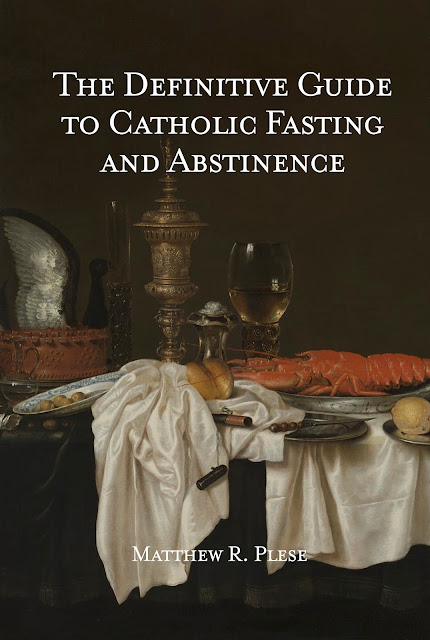
Want to learn more about the history of fasting and abstinence? Check out the Definitive Guide to Catholic Fasting and Abstinence.
Read more >>
Monday, June 9, 2025
Honor the Forgotten (Former) 36 Holy Days of Obligation

The Land Without Holy Days

“…So also, from the earliest ages, the Christian Church instituted and religiously solemnized various feasts, differing in different countries, and varying according to times and circumstances, principally intended to keep in grateful and loving memory the chief mysteries of our Blessed Saviour's life, the glories and prerogatives of His Immaculate Mother, the example and heroic sanctity of the saints. . . . Blessed festivals, they are green, refreshing oases in the desert of our dreary, plodding life, and not a doubt, but they tend materially to keep alive the spirit of piety." 

With these words, Bishop Stephen Ryan of Buffalo addressed the bishops and theologians who had crowded into the former Cathedral in Baltimore. The occasion was the Third Plenary Council of Baltimore, which began in late 1884. The Council Fathers set to address a number of issues affecting Catholic life in the United States which had reached its then-disjointed arrangement through the acquisition of various terrorities each with their own customs and ecceslestical laws. Unbeknowst to many, days of fasting and abstinence in addition to holy days of obligation varied widely in what constituted the United States of America due to these historical differences. Could uniformity be obtained even though prior attempts to do so had failed? And in hindsight, should uniformity – at least in the manner sought – have even been attempted?

The history of America’s holy days of obligation highlights a complex network of unique customs, varied cultural traditions, and an overarching lack of fervor over time. In an era with so few Holy Days of Obligation, what have we lost? And should this be remedied? And what can this teach modern Catholics?

Holy Days of Obligation Over Time

In 1911, Pope St. Pius X reduced the number of Holy Days of Obligation from 36 to 8, although which places observed the holy days were not uniform at all beforehand.  Shortly thereafter, the 1917 Code of Canon Law increased the number to 10 by adding back Corpus Christi and Ss. Joseph. Those ten on the Universal Calendar have remained the same ever since.

However, the Holy Days up until 1911 reveal something quite interesting as all of the feasts of the Apostles were Holy Days of Obligation on the Universal Calendar as were many other days like St. Anne, the May 3rd Feast of the Finding of the Holy Cross, and so many other days which are now forgotten. The feasts of the Apostles were raised to public holidays back in 932 AD as Father Weiser relates (p. 279), for instance.

The 36 Holy Days of Obligation on the Universal Calendar back in 1642 under Pope Urban VIII included:

1. Nativity of our Lord
2. Circumcision of our Lord
3. Epiphany of the Lord
4. Monday within the Octave of the Resurrection
5. Tuesday within the Octave of the Resurrection
6. Ascension
7. Monday within the Octave of Pentecost
8. Tuesday within the Octave of Pentecost
9. Most Holy Trinity
10. Most Holy Body of Christ
11. Finding of the Holy Cross
12. Purification of the Blessed Virgin Mary
13. Annunciation of the Blessed Virgin Mary
14. Assumption of the Blessed Virgin Mary
15. Nativity of the Blessed Virgin Mary
16. Dedication of St. Michael
17. Nativity of St. John Baptist
18. Ss. Peter and Paul
19. St. Andrew
20. St. James
21. St. John (the December feastday)
22. St. Thomas
23. Ss. Philip and James
24. St. Bartholomew
25. St. Matthew
26. Ss. Simon and Jude
27. St. Matthias
28. St. Stephen (the December feastday)
29. The Holy Innocents
30. St. Lawrence
31. St. Sylvester
32. St. Joseph
33. St. Anne
34. All Saints Day
35. The Principle Patrons of One’s Country, City, etc.

The Immaculate Conception of the Blessed Virgin Mary was added in 1708 so it not on 1642 list.

In times past there was also a distinction made of days of double versus single precept. Days of double precept required both hearing Mass and refraining from servile works, whereas days of single precept were working holy days permitting work but still requiring Mass attendance.

Consequently, the number of Holy Days of Obligation in the United States as of the Second Vatican Council had already been significantly reduced from their previous state. Holy Days of Obligation, which had remained the same in the United States since 1917, were further modified in the latter part of the 20th century.  On December 13, 1991, the United States Bishops issued a directive further abrogating New Years Day (the Circumcision of our Lord), the Assumption, or All Saints in years when the feast falls on a Saturday or a Monday. And on March 23, 1992, in another reduction, the Bishop of Honolulu obtained an indult from the Holy See and approval from the United States episcopal conference to reduce the Holy Days of Obligation to only Christmas and the Immaculate Conception. 

Holy Days of Obligation Before 1900

Published in 1886, the eleventh volume of the American Catholic Quarterly Review offers an insightful series of reflections on Holy Days with a call for us to observe these as our forefathers in the Faith gladly did:

"The Church by one of her positive commandments requires the faithful to sanctify certain holydays in the year by taking part in the offering of the great sacrifice of the Mass and by abstaining from servile works... In the days of faith and fervor not only were the great festivals prescribed by the Church, those associated with the life of our Lord and His Blessed Mother, those intimately connected with the work of redemption, and the feasts of the holy apostles by whose ministry the Church was established and the channels of grace led through the world - not only were these kept reverently but the patronal feast of each country, diocese, and church, the days of the most famous local saints were similarly honored. The devotion was general, and whoso refused to lay aside his implements of trade or traffic on their days was so condemned by public opinion that custom made the law.” 

Interestingly, because the Church enjoined on the Faithful both the obligation to hear Mass and the necessity to refrain from servile work, the number of holy days, which included Sundays, was significant. Some people began to revolt against the Church claiming that these practices only increased poverty. But as the Journal notes, an interesting phenomenon occurred:

"Protestantism therefore at once swept away all the holydays and Christmas remained almost alone to represent the Church calendar, and the Puritans even punished those who kept Christmas. With men working all the year round except on Sunday, wealth was to be general, the poor would thrive and prosper and be happy and contented, no longer lured from great and ennobling labor by being called away every week to idle some days in church and prayer. It was again unfortunate that this excellent theory did not work well. The poor seemed to grow actually poorer with all these days of labor than they had been before." 

The first catalog of Holy Days comes from the Decree of Gratian in c. 1150 AD, which shortly thereafter gave way to Decretals of Pope Gregory IX in 1234, which listed 45 Holy Days. As the Catholic Encyclopedia summarizes regarding this period:

“The Decree of Gratian (about 1150) mentions forty-one feasts besides the diocesan patronal celebrations; the Decretals of Gregory IX (about 1233) mention forty-five public feasts and Holy Days, which means eighty-five days when no work could be done and ninety-five days when no court sessions could be held. In many provinces eight days after Easter, in some also the week after Pentecost (or at least four days), had the sabbath rest. From the thirteenth to the eighteenth century there were dioceses in which the Holy Days and Sundays amounted to over one hundred, not counting the feasts of particular monasteries and churches. In the Byzantine empire there were sixty-six entire Holy Days (Constitution of Manuel Comnenus, in 1166), exclusive of Sundays, and twenty-seven half Holy Days. In the fifteenth century, Gerson, Nicolas de Clémanges and others protested against the multiplication of feasts, as an oppression of the poor, and proximate occasions of excesses. The long needed reduction of feast days was made by Urban VIII (Universa per orbem, 13 Sept., 1642).” 

In 1642, His Holiness Pope Urban VIII issued the papal bull Universa Per Orbem which mandated the required Holy Days of Obligation for the Universal Church to consist of 34 days as well as the principal patrons of one's one locality (e.g. city and country). Ultimately Universa Per Orbem helped bring more uniformity to the Church since some parts of the Catholic world observed even more holy days of double precept (i.e. mandatory attendance at Mass and rest from servile work). The previous list of Holy Days of Obligation found in the Decretals also included Holy Monday through Holy Saturday in addition to Easter Wednesday through Easter Saturday.  These days had ceased being Holy Days by 1642. 

Holy Days in Young America

After the American Revolution, the Catholics in the 13 colonies that constituted the new United States of America were under the jurisdiction of the Apostolic Vicariate of the London District until the Diocese of Baltimore was established on November 6, 1789. This included the area of Maine that previously had been part of Quebec.

The first major change to the holy days of Americans came about through the lands purchased in 1803 from France in the Louisiana Purchase. Owing to the persecution of Catholics in France after the French Revolution, Pope Pius VII on April 5, 1802, reduced the holy days of obligation for Catholics in France to only Christmas, Ascension, Assumption, and the Feast of All Saints. Spain, which was in possession of the Louisiana territory since 1763, agreed in 1801 to cede it back to Napoleon. Before even getting possession of the territory, he sold it to the United States in 1803. What is particularly interesting is that the Catholics of Louisiana – whose territory includes areas in modern-day Arkansas, Missouri, Iowa, Minnesota, Kansas, and Nebraska – adopted the reduced holy days granted to France in 1802.

A Divergence of Holy Days in the 1800s

As America expanded, there was a divergence in the days of precept. When Florida was purchased by the United States in 1821, its old holy days were maintained. And the same likewise occurred in the Texas territory when it was acquired by the United States in 1845. And this trend continued as America expanded westward as the American Catholic Quarterly Review observes:

"In the Second Plenary Council [of Baltimore] in 1866 the feast of the Immaculate Conception was made of obligation as it had been in Oregon, where the feast of St Peter and St Paul had retained its place with the Monday after Easter and Whit Sunday, St John the Baptist, Candlemas, and St Stephen. Pope Gregory XVI in 1837 dispensed all the dioceses then in the United States from the obligation as to Easter Monday and Whitsun Monday and in 1840 from that of the feast of St Peter and St Paul..." 

Uniformity of American Holy Days Established in 1885 

By the time of the Civil War, considerable changes had occurred to these holy days. It was not until the Third Plenary Council that uniformly was achieved, though at the cost of reducing the holy days observed by many Catholics in the New World as the Review laments:

"The effort to induce faithful to a more exact observance of holydays of obligation or least so far as hearing mass was concerned had not been successful. A general indifference prevailed. When zealous priests, to give servants and mechanics every opportunity to fulfil the obligation, had Mass celebrated at an early hour to permit them to attend it proceeding to their usual work, it was found that almost the persons to avail themselves of the opportunity would be a pious old women, while those of the very class for whose the Mass was thus offered were scarcely represented by a straggling individuals.

"The Fathers of the Council renewed their petition to the See and His Holiness Pope Leo XIII on the 31st of December 1885 transferred the solemnization of Corpus Christi to the Sunday following the feast and made the holydays of obligation in all of the United States to be thenceforward: The Immaculate Conception of the Blessed Virgin, Christmas Day, the feast of Circumcision, Ascension Day, the Assumption of the Blessed Virgin, and the feast of All Saints. ” 

The Epiphany and Annunciation were no longer a Holy Day of Obligation in the United States – joining Easter Monday, Pentecost Monday, and St. Peter and Paul as working days. For even more history on how Holy Days of Obligation - and fasting days - changed in the New World before and after America's Foundation, see A History of Holy Days of Obligation & Fasting for American Catholics.


How Should Sundays and Holy Days of Obligation be Sanctified?

The Third Commandment commands us to “Remember the Sabbath day, to keep it holy.” In its fulfillment under the New Law, this commandment obliges Catholics to sanctify Sundays and Holy Days of Obligation by participating in the Holy Sacrifice of the Mass and by refraining from servile work. The Catechism of the Council of Trent affirms that this is not merely a recommendation—it is a divine precept.

The Church further clarifies that all Sundays and all current Holy Days of Obligation are binding under pain of mortal sin. To deliberately skip Mass on such a day without a grave reason—such as serious illness or the inability to reasonably travel to Mass—is a mortal sin. And if a Catholic is unable to attend Mass for a legitimate reason, they should still sanctify the day as best they can: by reading the Missal, meditating on the day’s readings and prayers, and uniting themselves spiritually to the liturgy.

Sunday, moreover, is not only a day of rest and obligatory worship but a day for deeper immersion in the Faith. Traditionally, Catholics observed Sunday by attending Vespers or Benediction, praying the Rosary communally, engaging in spiritual reading, and avoiding unnecessary commerce or entertainment. It is a day to spend in quiet joy, family togetherness, and devotion. The faithful should use Sunday to read Catholic books, periodicals, and Scripture, to practice works of mercy, and to grow in virtue. See the article Top 10 Sunday Activities for Catholics for more.

Make a special effort to attend Mass on all of the former Holy Days of Obligation, if possible. While the current Holy Days of Obligation must still be observed under pain of sin, we should cultivate a desire to attend Mass frequently — even daily. The former Holy Days, though no longer obligatory, remain excellent occasions to rearrange your schedule and give special honor to God through the Holy Sacrifice of the Mass.

With so many holy days reduced, and with priests largely not preaching on the necessity of attending Mass and of abstaining from servile works on them, the faithful have lost the sense of the sacred. Yet, as more Catholic seek to rediscover the Traditional Latin Mass and traditional fasting, voluntarily attending the Holy Sacrifice of the Mass and abstaining from servile works on the former Holy Days of Obligation can help us sanctify time and hold dear to what our forefathers saw, in the words of Bishop Stephen Ryan, as “refreshing oases in the desert of our dreary, plodding life.”


Read more >>
Friday, December 27, 2024
2nd Edition of "Restoring Lost Customs of Christendom" Now Available

"The best advice that I can give you is this: Church traditions - especially when they do not run counter to the faith - are to be observed in the form in which previous generations have handed them down...the traditions which have been handed down should be regarded as apostolic laws" (St. Jerome in Letter 71)

I'm honored to announce the publication of the slightly expanded 2nd edition of the book by Our Lady of Victory Press entitled "Restoring Lost Customs of Christendom." The 2nd edition includes three new chapters not featured in the first edition (i.e. Customs for St. Joseph's Day, St. Anne's Day Customs, The Customs for the Vigil, and Feast of St. John the Baptist) along with a much expanded catch-all chapter on various saint day customs throughout the liturgical year.

Preface

Under the Old Testament laws, God’s people observed annual ceremonies commemorating important events in salvation history which prefigured the completion of the Old Law through Christ. Similarly, Holy Church commemorates important mysteries, events, and persons, using an annual cycle of prayers, Scriptures, hymns, and various spiritual disciplines. In the same way, each of the twelve months has a unique focus, and each day of the week has a unique focus as well. Even in the day, the hours of the day are divided up into canonical hours. In so doing, all time is, in a manner of speaking, consecrated to God since He alone created all time and redeemed all of time.

Unlike the pagan religions which often view time as an endless cycle of death and rebirth, the Christian view of time is linear. While God alone has always existed and has no beginning, time had a beginning. There was a first day on earth. And there will be a last day. There will be a day ultimately when the sun will rise for the last time and when it will set for the last time. Time will end. And God Himself will end it as time belongs to Him. It is our duty to honor God in time. And we can do so by sanctifying the days, weeks, months, and seasons of the year.

The Church’s Liturgical Year is a harmonious interplay of feasts and fasts interwoven in both the temporal and sanctoral cycles that define the rhythm and rhyme of Catholic life. While there are many customs associated with the seasons of the liturgical year and high ranking feast days, the entire year is replete with opportunities to live out our Catholic heritage through the customs our forefathers instituted.

The Church’s annual liturgical calendar is comprised of two different, concurrent annual cycles. First, the Proper of the Seasons, or Temporal Cycle, traces the earthly life of Our Lord Jesus Christ. In the Roman Catholic Church, it consists mainly of Sundays related to the various liturgical seasons – that is, the seven liturgical seasons contained in two cycles of its own: the Christmas Cycle and the Easter Cycle. It starts with Advent then goes through Christmas, Epiphany, Septuagesima, Lent, Easter, and Time after Pentecost. The determination of the date of Easter dictates nearly all the other dates in this cycle. But there is a second cycle: the Proper of the Saints, called the Sanctoral Cycle, which is the annual cycle of feast days not necessarily connected with the seasons.

It’s also important to realize that each rite in the Catholic Church (e.g., Roman, Maronite, Chaldean, etc.) has its own liturgical calendar, and some have multiple uses or forms of the calendar. Even within the same use or form, there are variations according to local customs. For instance, the patron saint of a church or of the cathedral would be ranked higher in the liturgical calendar of that local jurisdiction. Even in the Roman Rite itself, different dioceses, countries, and religious orders would keep some different feastdays. These were listed in the Mass in Some Places (pro aliquibus locis) supplement to the Missal. Beyond the Roman Rite, the Ambrosian, Mozarabic, Lyon, and Bragan Rites are also all part of the Western liturgical tradition. So too are the various Rites for religious orders (e.g., the Carmelite Rite, the Carthusian Rite, the Dominican Rite). These are also part of the Roman Catholic Church.  No one has ever doubted the legitimacy of this liturgical diversity. 

Those who try to discredit the Traditional Latin Mass may try to falsely claim that all Catholics must observe the same calendar of saints. But this is not the case as seen in the liturgical calendar diversity in the different Rites of the Church and in the Roman Rite itself. Even Summorum Pontificium affirmed that the continued use of the older Roman calendar in the traditional Mass and Breviary is permissible. 

Beyond assisting at Mass and praying the Divine Office, we can and should observe the forgotten customs that further underscored authentic Catholic culture. Catholic culture is more than just going to Mass – much more. Catholic culture is built on fasting periods, assisting at Processions, having various items blessed at different parts of the year (e.g. herbs on August 15, grapes on September 8th, wine on December 27th). It features days of festivity like during Martinmas and promotes family time and charitable works like visits to grandparents on Easter Monday. It is replete with food customs to celebrate the end of fasting periods and filled with special devotions during periods of penance. It is our heritage. These traditions are our birthright. They are ours as much as they were our ancestors. We must reclaim them. We must spread them. We must love them and observe them. And this book will show today’s Catholic how.

Ordering Information:

PDF: https://www.patreon.com/acatholiclife/shop/restoring-lost-customs-of-christendom-81175

Kindle: https://amzn.to/41zYx8d

Paperback: https://amzn.to/3TjPqpN

The PDF is free for Patreon supporters at the All-Star Level.

Sample of Endorsements Received:

"In past ages, the lives of Catholics were studded with joyful celebrations of saints and somber calls to penance. The ebb and flow of feasting and fasting gave the Christian religion a distinctive 'thickness' and 'texture': it wasn't a bunch of ideas floating in the clouds but a daily planner filled with concrete actions. In the heady rationalism and hearty optimism that gripped modern reformers, nearly all of this holistic ecosystem was overthrown, and the loss of it meant far more than the loss of parties or Lenten recipes; it meant, for too many, the loss of any relevance of faith to everyday life. What is a Catholic to do in this desert of deprivation? Simple: follow a knowledgeable guide out of it. In this informative book, Matthew Plese, who has devoted himself to studying and living the traditional calendar, takes us step by step through some of the most important 'lost customs of Christendom.' Restoring them, here and there, one by one, we restore ourselves and our families to all that Catholic life can be." 

– Dr. Peter A. Kwasniewski, author of The Once and Future Roman Rite

“Catholics who want to integrate the Catholic customs of ages past will deeply appreciate Restoring Lost Customs of Christendom. Beginning with Advent and continuing through the feasts and seasons of the liturgical year, this complete compendium of Catholic traditions by Matthew Plese will help integrate the ancient traditions of our faith in our families and homes. This treasured volume presents the fasts and feasts, the indulgences and blessings which are the patrimony of our Catholic people.” 

 – Fr. Scott A. Haynes of https://www.mysticaltheologyofthemass.com/

“This compendium is a much-needed help for the family (the domestic church) and parishes and dioceses (the local church) to reclaim Catholic culture. As Catholics, especially those in the United States, we are losing that sense of what set us apart from the world. There should be no difference between our daily calendars and our liturgical calendar. Our lives must daily revolve around the liturgy and this handy book is an excellent guide to reclaim our Catholic ethos.” 

– Fr. John P. Lovell of https://x.com/Fr_Lovell 

Read more >>
Wednesday, October 30, 2024
Is Friday Abstinence Required When All Saints Day Falls on a Friday?


All Saints As A Holy Day of Obligation

The first catalog of Holy Days comes from the Decree of Gratian in c. 1150 AD, which shortly thereafter gave way to Decretals of Pope Gregory IX in 1234, which listed 45 Holy Days.

In 1642, His Holiness Pope Urban VIII issued the papal bull Universa Per Orbem which mandated the required Holy Days of Obligation for the Universal Church to consist of 34 days as well as the principal patrons of one's one locality (e.g. city and country). Those days were the Nativity of Our Lord, the Circumcision of Our Lord, the Epiphany of Our Lord, Monday within the Octave of the Resurrection, Tuesday within the Octave of the Resurrection, Ascension Thursday, Monday within the Octave of Pentecost, Tuesday within the Octave of Pentecost, Most Holy Trinity, Corpus Christi, the Finding of the Holy Cross, the Purification of the Blessed Virgin Mary, the Annunciation of the Blessed Virgin Mary, the Assumption of the Blessed Virgin Mary, the Nativity of the Blessed Virgin Mary, the Dedication of St. Michael, the Nativity of St. John the Baptist, SS. Peter and Paul, St. Andrew, St. James, St. John (the December feast day), St. Thomas, SS. Philip and James, St. Bartholomew, St. Matthew, SS. Simon and Jude, St. Matthias, St. Stephen the First Martyr (the December feast day), the Holy Innocents, St. Lawrence, St. Sylvester, St. Joseph, St. Anne, and All Saints.  

The Catholic Encyclopedia provides a short account of the history of All Saints Day:

In the early days the Christians were accustomed to solemnize the anniversary of a martyr's death for Christ at the place of martyrdom. In the fourth century, neighbouring dioceses began to interchange feasts, to transfer relics, to divide them, and to join in a common feast; as is shown by the invitation of St. Basil of Caesarea (379) to the bishops of the province of Pontus. Frequently groups of martyrs suffered on the same day, which naturally led to a joint commemoration. In the persecution of Diocletian the number of martyrs became so great that a separate day could not be assigned to each. But the Church, feeling that every martyr should be venerated, appointed a common day for all. The first trace of this we find in Antioch on the Sunday after Pentecost. We also find mention of a common day in a sermon of St. Ephrem the Syrian (373), and in the 74th homily of St. John Chrysostom (407). At first only martyrs and St. John the Baptist were honoured by a special day. Other saints were added gradually, and increased in number when a regular process of canonization was established; still, as early as 411 there is in the Chaldean Calendar a "Commemoratio Confessorum" for the Friday after Easter. In the West Boniface IV, 13 May, 609, or 610, consecrated the Pantheon in Rome to the Blessed Virgin and all the martyrs, ordering an anniversary. Gregory III (731-741) consecrated a chapel in the Basilica of St. Peter to all the saints and fixed the anniversary for 1 November. A basilica of the Apostles already existed in Rome, and its dedication was annually remembered on 1 May. Gregory IV (827-844) extended the celebration on 1 November to the entire Church. The vigil seems to have been held as early as the feast itself. The octave was added by Sixtus IV (1471-84).

Is Friday Abstinence Required When the All Saints Falls on a Friday?

Since November 1st this year falls on a Friday and is a Holy Day of Obligation, a question arises on whether abstinence is obligatory this Friday. The answer, as clearly stated in the 1917 Code, is as follows:

"On [Sundays] or feasts of precept, the law of abstinence or of abstinence and fast or of fast only ceases, except during Lent, nor is the vigil anticipated; likewise it ceases on Holy [Saturday] afternoon" (1917 Code, Canon 1252 § 4). [Translation taken from THE 1917 OR PIO-BENEDICTINE CODE OF CANON LAW in English Translation by Dr. Edward Peters]

As All Saints Day falls outside of Lent, tomorrow is not a day of mandatory abstinence. However, this was actually a change from the practice observed for well over 1,000 years.

Dispensations From Abstinence Were Previously Required Even for Holy Days of Obligation Outside of Lent

Even Christmas would in and of itself not dispense Friday abstinence in the Medieval Church, as Dom Gueranger writes in the Liturgical Year published in 1886:

"To encourage her children in their Christmas joy, the Church has dispensed with the law of abstinence, if this Feast fall on a Friday. This dispensation was granted by Pope Honorius III, who ascended the Papal Throne in 1216. It is true that we find it mentioned by Pope St Nicholas I, in the ninth century; but the dispensation was not universal; for the Pontiff is replying to the consultations of the Bulgarians, to whom he concedes this indulgence, in order to encourage them to celebrate these Feasts with solemnity and joy: Christmas Day, St Stephen, St John the Evangelist, the Epiphany, the Assumption of our Lady, St John the Baptist, and SS Peter and Paul. When the dispensation for Christmas Day was extended to the whole Church, these other Feasts were not mentioned."

Previously, a dispensation was required by the Holy Father even on Holy Days of Obligation that fell outside of Lent. Two examples indicating this are Pope Leo XIII's 1890 dispensation for Assumption Day and a 1907 dispensation issued for Canada for All Saints Day. All Saints Day was, at that time, a Holy Day of Obligation in Canada.

The Catholic Encyclopedia on St. Pius X's Supremi disciplinæ indicates that fasting was abolished eo ipso only starting in 1911 for all Holy Days of Obligation outside of Lent (which were at the same time reduced to only 8): "The present Motu Proprio institutes another important change in legislation. As feasting and fasting are incompatible, Pius X has abolished the obligation of fasting as well as that of abstinence for the Universal Church, should such obligation coincide with any of the eight feasts, as above." 

Thus, while eating meat this Friday is not a sin, it would be meritorious to continue to observe Friday abstinence in honor of the nearly 1,800 year-old tradition that preceded the 1917 Code. If we choose to do so, let us offer it up through our Lady's intercession for the conversion of sinners who violate the laws of the Church and do not attend Holy Mass on days of precept like All Saints Day.

Want to learn more about the history of fasting and abstinence? Check out the Definitive Guide to Catholic Fasting and Abstinence.
Read more >>
Thursday, December 7, 2023
Is Friday Abstinence Required When the Immaculate Conception Falls on a Friday?

Pope Pius IX Proclaims the Immaculate Conception

The Immaculate Conception As A Holy Day of Obligation

The first catalog of Holy Days comes from the Decree of Gratian in c. 1150 AD, which shortly thereafter gave way to Decretals of Pope Gregory IX in 1234, which listed 45 Holy Days.

In 1642, His Holiness Pope Urban VIII issued the papal bull Universa Per Orbem which mandated the required Holy Days of Obligation for the Universal Church to consist of 34 days as well as the principal patrons of one's one locality (e.g. city and country). Those days were the Nativity of Our Lord, the Circumcision of Our Lord, the Epiphany of Our Lord, Monday within the Octave of the Resurrection, Tuesday within the Octave of the Resurrection, Ascension Thursday, Monday within the Octave of Pentecost, Tuesday within the Octave of Pentecost, Most Holy Trinity, Corpus Christi, the Finding of the Holy Cross, the Purification of the Blessed Virgin Mary, the Annunciation of the Blessed Virgin Mary, the Assumption of the Blessed Virgin Mary, the Nativity of the Blessed Virgin Mary, the Dedication of St. Michael, the Nativity of St. John the Baptist, SS. Peter and Paul, St. Andrew, St. James, St. John (the December feast day), St. Thomas, SS. Philip and James, St. Bartholomew, St. Matthew, SS. Simon and Jude, St. Matthias, St. Stephen the First Martyr (the December feast day), the Holy Innocents, St. Lawrence, St. Sylvester, St. Joseph, St. Anne, and All Saints.  

Originally referred to as the "Conception of the Blessed Virgin Mary," the Feast of the Immaculate Conception became a Holy Day of Obligation in 1708 under Pope Clement XI, nearly 150 years before Pope Pius IX dogmatically and infallibly defined the dogma of the Immaculate Conception. This day thus joined the list of Universal Days from 1642, although no places observed all such days. In fact, most places observed far fewer days.

Is Friday Abstinence Required When the Immaculate Conception Falls on a Friday?

Since tomorrow is a Friday and is a Holy Day of Obligation in honor of Our Lady's Immaculate Conception, a question arises on whether abstinence is obligatory tomorrow. The answer, as clearly stated in the 1917 Code, is as follows:

"On [Sundays] or feasts of precept, the law of abstinence or of abstinence and fast or of fast only ceases, except during Lent, nor is the vigil anticipated; likewise it ceases on Holy [Saturday] afternoon" (1917 Code, Canon 1252 § 4). [Translation taken from THE 1917 OR PIO-BENEDICTINE CODE OF CANON LAW in English Translation by Dr. Edward Peters]

As the Immaculate Conception falls outside of Lent, tomorrow is not a day of mandatory abstinence. However, this was actually a change from the practice observed for well over 1,000 years.

Dispensations From Abstinence Were Previously Required Even for Holy Days of Obligation Outside of Lent

Even Christmas would in and of itself not dispense Friday abstinence in the Medieval Church as Dom Gueranger writes in the Liturgical Year published in 1886:

"To encourage her children in their Christmas joy, the Church has dispensed with the law of abstinence, if this Feast fall on a Friday. This dispensation was granted by Pope Honorius III, who ascended the Papal Throne in 1216. It is true that we find it mentioned by Pope St Nicholas I, in the ninth century; but the dispensation was not universal; for the Pontiff is replying to the consultations of the Bulgarians, to whom he concedes this indulgence, in order to encourage them to celebrate these Feasts with solemnity and joy: Christmas Day, St Stephen, St John the Evangelist, the Epiphany, the Assumption of our Lady, St John the Baptist, and SS Peter and Paul. When the dispensation for Christmas Day was extended to the whole Church, these other Feasts were not mentioned."

Previously, a dispensation was required by the Holy Father even on Holy Days of Obligation that fell outside of Lent. Two examples indicating this are Pope Leo XIII's 1890 dispensation for Assumption Day and a 1907 dispensation issued for Canada for All Saints Day. All Saints Day was, at that time, a Holy Day of Obligation in Canada.

The Catholic Encyclopedia on St. Pius X's Supremi disciplinæ indicates that fasting was abolished eo ipso only starting in 1911 for all Holy Days of Obligation outside of Lent (which were at the same time reduced to only 8): "The present Motu Proprio institutes another important change in legislation. As feasting and fasting are incompatible Pius X has abolished the obligation of fasting as well as that of abstinence for the Universal Church, should such obligation coincide with any of the eight feasts, as above." 

We are also still in the midst of St. Martin's Lent, the ancient Nativity Fast, which is observed to prepare for Christmas. Thus, while eating meat tomorrow is not a sin, it would be meritorious to continue to observe Friday abstinence in honor of the nearly 1,800 tradition that preceded the 1917 Code and in observance of St. Martin's Lent. If we choose to do so, let us offer it up through our Lady's intercession for the conversion of sinners who violate the laws of the Church and do not attend Holy Mass on days of precept like the Immaculate Conception.

Want to learn more about the history of fasting and abstinence? Check out the Definitive Guide to Catholic Fasting and Abstinence.
Read more >>
Tuesday, April 25, 2023
St. Mark's Day As A Former Holy Day of Obligation

Discovery of the Body of Saint Mark

The first catalog of Holy Days comes from the Decree of Gratian in c. 1150 AD, which shortly thereafter gave way to Decretals of Pope Gregory IX in 1234, which listed 45 Holy Days. In 1295, Pope Boniface VIII enacted the decretal Gloriosus which "commanded that each of the feasts of the twelve apostles, four evangelists, and four doctors of the Church be celebrated as an officium duplex" (The Cambridge History of Medieval Canon Law by Anders Winroth and John Wei).

In 1642, His Holiness Pope Urban VIII issued the papal bull Universa Per Orbem which mandated the required Holy Days of Obligation for the Universal Church to consist of 34 days as well as the principal patrons of one's one locality (e.g. city and country). Those days were the Nativity of Our Lord, the Circumcision of Our Lord, the Epiphany of Our Lord, Monday within the Octave of the Resurrection, Tuesday within the Octave of the Resurrection, Ascension Thursday, Monday within the Octave of Pentecost, Tuesday within the Octave of Pentecost, Most Holy Trinity, Corpus Christi, the Finding of the Holy Cross, the Purification of the Blessed Virgin Mary, the Annunciation of the Blessed Virgin Mary, the Assumption of the Blessed Virgin Mary, the Nativity of the Blessed Virgin Mary, the Dedication of St. Michael, the Nativity of St. John the Baptist, SS. Peter and Paul, St. Andrew, St. James, St. John (the December feast day), St. Thomas, SS. Philip and James, St. Bartholomew, St. Matthew, SS. Simon and Jude, St. Matthias, St. Stephen the First Martyr (the December feast day), the Holy Innocents, St. Lawrence, St. Sylvester, St. Joseph, St. Anne, and All Saints.  

Ultimately Universa Per Orbem helped bring more uniformity to the Church since some parts of the Catholic world observed even more holy days of double precept (i.e., mandatory attendance at Mass and rest from servile work). One of those former days which kept in some places as the Feast of St. Mark the Evangelist. 

For instance, in modern-day Texas, New Mexico, Arizona, and California, which were included in the ecclesiastical province of Mexico, the feasts were regulated by the Third Council of Mexico in 1585, as American Catholic Quarterly Review states: 

"In these parts besides those already mentioned, the faithful observed as holy days of obligation St Fabian and St Sebastian (January 20th), St Thomas Aquinas (March 7th), St Mark (April 25th), St Barnabas (June 1), the Visitation of the Blessed Virgin (July 2), St Mary Magdalene (July 22), St Dominic (Aug 4), the Transfiguration (Aug 6), St Francis (Oct 4), St Luke (Oct 18), St Catharine (Nov 25), the Expectation of the Blessed Virgin (Dec 18). 

And while our ancestors in the New World in Florida and Louisiana would not have kept St. Mark's Day as a Holy Day of Obligation, it was kept as a day of abstinence from meat on account of it being the Major Rogation Day. See A History of Holy Days of Obligation & Fasting for American Catholics for more information on this forgotten history. The same can be said for English Catholics who were bound to abstain from fleshmeat on the Major and Minor Rogation Days until they were dispensed by Pope Pius VIII in 1830 (A Catholic Dictionary from 1893 by William Edward Addis).

Thus this year, on April 25th, in addition to praying the Litany of the Saints for the Rogation Day and observing abstinence, let us honor the memory of St. Mark by reading his Gospel and by attending the Holy Sacrifice of the Mass.
Read more >>
Monday, January 31, 2022
Candlemas: A Forgotten Holy Day of Obligation

Dominican Rite Solemn High Mass for Candlemas in 2019

Fasting on the Vigil of Candlemas

While not a liturgical vigil in the Roman Rite, the day before Candlemas historically was observed by some as a day of fasting and abstinence. For instance, our ancestors in the New World in Florida and Louisiana would have known the following days of fast

"The fasting days were all days in Lent; the Ember days; the of eves of Christmas, Candlemas, Annunciation, Assumption, All Saints, the feasts of the Apostles except St Philip and St James and St John, nativity of St John the Baptist; all Fridays except within twelve days of Christmas and between Easter and Ascension, and the eve of Ascension" (ACQ). 

Hearing Holy Mass on Candlemas

Candlemas, known formally as the Purification of the Most Blessed Virgin Mary, always falls on February 2nd and it was kept in some places as a Holy Day of Obligation, though that practice has long since ended. For instance, the papal bull Altitudo Divini Concilii of Pope Paul III in 1537 reduced the days of penance and those of hearing Mass for the Indians out of pastoral concern due to the physically demanding lifestyle that they lived and also largely due to the fact that they fasted so much already. The natives were required to only hear Mass on a much smaller number of days: Sundays, Christmas, Circumcision, Epiphany, Candlemas, Annunciation, Sts Peter and Paul, Ascension, Corpus Christi, the Assumption, and the Nativity of the Blessed Virgin.

We see this reflected in Canada as well under the Diocese of Quebec which, at the time, included some of the modern-day states in the Midwest. The American Catholic Quarterly Review lists the Holy Days in place as 1694:

"The holy days of obligation as recognized officially in 1694 were Christmas, St Stephen, St John, the Evangelist, Circumcision, Epiphany, Candlemas, St Matthew, St Joseph 'patron of the country', Annunciation, St Philip and St James, St John the Baptist, St Peter and St Paul, St James, St Anne, St Lawrence, Assumption, St Bartholomew, St Louis 'titular of the Cathedral of Quebec', Nativity of the Blessed Virgin, St Matthew, St Michael, St Simon and St Jude, All Saints, St Andrew, St Francis Xavier, the Conception of the Blessed Virgin 'titular the Cathedral', St Thomas, Easter Monday and Tuesday, Ascension, Whitsun Monday and Tuesday, Corpus Christi, and the patronal feast of each parish."

In 1750, Pope Benedict XIV extended to the Spanish American colonies the indult previously granted to Catholic Spain reducing the days of obligation to all Sundays of the year, Christmas, St. Stephen, the Circumcision, Epiphany, Candlemas, Easter Monday, Annunciation, Monday after Pentecost Sunday, Corpus Christi, Ascension, St. John the Baptist, Sts. Peter and Paul, the Assumption, St. James, the Nativity of the Blessed Virgin Mary, All Saints, the Conception of the Blessed Virgin Mary, and the patron of each locality. Notice that Candlemas remained.

And the Catholics of the British Isles and colonies would have observed the following days as per The American Catholic Quarterly Review:

"The Catholics of the British Isles, after the reform of Pope Urban VIII kept as obligatory: Christmas, the feasts of St Stephen, St John, Holy Innocents, and St Sylvester, Circumcision, Epiphany, Candlemas, the feasts of St Mathias and St Joseph, Annunciation, Sts Philip and James, Finding of the Holy Cross, St John the Baptist, Sts Peter and Paul, St James, St Anne, St Lawrence, the Assumption, St Bartholomew, the Nativity of the Blessed Virgin, St Matthew, St Michael, Sts Simon and Jude, All Saints, St Andrew and St Thomas, and one of the principal patrons of the city, province, or kingdom. These were the holydays of obligation observed by the Catholics in Maryland, Virginia, and Pennsylvania."

Candlemas remained a Holy Day of Obligation in the British Isles and her colonies until the dispensation issued by Pope Pius VI on March 9, 1777, which eliminated Candlemas and a number of other days.

However, looking at our ancestors in the faith, we see both the importance of preparing for Candlemas and its importance. We may wish to observe February 1st as a day of fasting and abstinence and attend the Holy Sacrifice of the Mass on February 2nd.

Read more >>
Saturday, November 14, 2020
All Saints of the Carmelite Order

Continuing the trend of various All Saint Days for religious orders, November 14th is the Feast of All Saints of the Carmelite Order. Like other major religious orders, the Carmelite Order is blessed with many saints and blessed. It is thanks to the Carmelite Order that we have the Brown Scapular.

Who are the Carmelite Saints? The Order of Carmelites answers:

They are hermits of Mount Carmel who “lived in small cells, similar to the cells of a beehive, they lived as God’s bees, gathering the divine honey of spiritual consolation.” They are mendicants of the first medieval communities, who discovered the presence of God in the events of ordinary daily life and especially seeing God in his brothers and sisters. They are teachers and preachers, missionaries and martyrs who searched for the face of God among the people. They are nuns who have contributed to the growth of God's people by their mystical experience and especially through their fervent prayer and contemplative life. They are religious, who showed us the face of Christ through their apostolate in hospitals or schools, especially in the mission lands. They are laity, who were able to embody the spirit of Carmel and lived that spirit in the midst of the people. Simon Stock, Andrew Corsini, Albert of Trapani, John of Cross, Teresa of Ávila, Thérèse of the Child Jesus, Edith Stein, Titus Brandsma, Angelo Paoli and countless saints and blesseds of Carmel together with Mary, the Mother of Carmel, are now singing a song of praise to the Father in Heaven.

St. Teresa of Avila, St. John of the Cross, St. Therese of Lisieux, St. Teresa of Jesus, Blessed Elizabeth of the Trinity, and many others have reached Heaven through the Carmelite Order. 

Today, besides calling to mind all of these saints, we pray for the intercession of all Carmelites - known and unknown - that they especially intercede for all Carmelites on this earth. May everyone in the Carmelite Order - including the many Carmelite Third Order members - grow in sanctity, stay true to the authentic Catholic Faith, and persevere to the end.

Litany of Carmelite Saints

For Private Devotion Only

Lord, have mercy on us. 
Christ, have mercy on us. 
Lord, have mercy on us.

Christ hear us. 
Christ, graciously hear us.

God, the Father of Heaven, Have mercy on us.
God, the Son, Redeemer of the world, Have mercy on us.
God, the Holy Ghost, Have mercy on us.

Holy Trinity, one God, Have mercy on us,

Holy Mary, Pray for us. (* denotes to repeat Pray for us)

Queen of All Saints, *

Mother, Ornament of Carmel, *

Saint Joseph, Protector of Our Order, *

Our Holy Father, the Prophet Elias, who by thy prayer and contemplation laid the foundation of our Order on Carmel,*

Saint Eliseus, who through thy disciples didst preserve the spirit of Elias on Carmel, *

St. Telesphorus, watchful guardian of the Church, *

St. Anastasius, invincible amid the most fearful torments, *

St. Gerard, who didst die a glorious martyr’s death for the spread of the Faith, *

St. Angelus, glorified with the triple crown of Confessor, Virgin and Martyr, *

St. Peter Thomas, great servant and imitator of Mary, who adorned thee with all virtue, and strengthened thee in martyrdom, *

Blessed Dionysius of the Nativity, invincible soldier of Christ and His holy martyr, *

Bl. Redemptus of the Cross, who through thy holy zeal hast earned the martyr’s crown, *

St. Dionysius, zealous believer in the Mystery of the Holy Trinity and the defender thereof, *

St. Serapion, renowned for thy virtue and sanctity, and for thy wisdom and knowledge, *

St. Spiridion, great lover of evangelical simplicity, *

St. Cyril of Alexandria, vigilant defender of Mary, Mother of God, *

St. Albert, our most wise lawgiver and director, *

St. Andrew Corsini, wonderful peacemaker and despiser of worldly honors, *

St. Hilarion, admirable for thy life of prayer and mortification in solitude, and for thy power over evil spirits, *

St. Berthold, who didst unite the dwellers on Carmel into one ecclesiastical Order of Mary, *

St. Brocard, great zealot for the observance of religious discipline, *

St. Cyril of Constantinople, eminent for virtue, wisdom and learning, *

St. Simon Stock, privileged servant of Mary, *

St. Albert of Sicily, exalted model of unspotted purity, *

St. Avertanus, example of perfect obedience, *

St. John of the Cross, Doctor of the Church, and sure guide in the mystical life, *

Bl. Franco Lippi, outstanding for severe mortification and holy silence, *

Bl. Romaeus, model of humble monastic virtue, *

Bl. Angelus Augustine, marvel of eloquence in preaching the Word of God, *

Bl. John Soreth, burning with love of the primitive observance, *

Bl. Aloysius Rabatha, model of holy and severe penance, *

Bl. Jacobinus, renowned for thy profound meekness and great humility, *

Bl. Bartholomew Fanti, burning with love for Jesus in the Blessed Sacrament, *

Bl. Nonius Pereira, loyal servant and devotee of Mary, *

St. Euphrasia, perfect example of obedience, *

St. Euphrosina, wonderful lover of purity, *

St. Teresa, illustrious reformer of Carmel, full of heavenly wisdom, *

St. Mary Magdalen de Pazzi, victim of crucified love, *

St. Therese of the Child Jesus, teacher of the “Little Way” and Patroness of the Missions, *

Bl. Frances of Amboise, noble by birth, but nobler in virtue and steadfast confidence in God, *

Bl. Jane Scopelli, perfect model of prayer and mortification, *

Bl. Archangela, most tender in thy love for Jesus and Mary, *

Bl. Mary of the Incarnation, lover of real meekness, *

Bl. Anne of Saint Bartholomew, one with Teresa in the reform of Carmel, *

Bl. Mary of the Angels, like to the angels in innocence and purity, *

Bl. Jane of Toulouse, admirable for love of solitude and prayer, *

Bl. Therese and Companions, martyrs for Christ in the French Revolution, *

St. Teresa Margaret, great venerator and humble disciple of the Sacred Heart,*

All ye holy Virgins and Matrons of Carmel,*

All ye holy men and women who by thy virtues have given glory to Carmel, *

Lamb of God, Who takest away the sins of the world: Spare us, O Lord.

Lamb of God, Who takest away the sins of the world: Graciously hear us, O Lord.

Lamb of God, Who takest away the sins of the world: Have mercy on us.

V. Pray for us, all ye Saints of Carmel: 
R. That we may be made worthy of the promises of Christ.

Let us pray: Almighty and merciful God, Who dost rejoice us by the memory of all the Saints of the Carmelite Order: grant that, inspired by their example and merits, we may live for Thee alone in the continual observance of Thy law and in the perfect abnegation of self, and that we may attain to perfect happiness with them in heaven. Through Christ Our Lord.  Amen
Read more >>
Wednesday, May 27, 2020
A History of Holy Days of Obligation & Fasting for American Catholics: Part 1


Note: I would like to thank Tyler Gonzalez for helping considerably with the research for this article. This two-part article was rearranged and published in two pieces by Latin Mass Magazine and is also maintained here by their permission. For those pieces in LMM, see "The Forgotten History of Fasting for American Catholics" (Christmas 2020) and "Oases in Modern Life: The History of American Holy Days of Obligation" (Fall 2021).

The American Catholic Quarterly (ACQ) Review, Volume 11 offers an insightful series of reflections on Holy Days with a call for us to observe these as our forefathers in the life gladly did:
"The Church by one of her positive commandments requires the faithful to sanctify certain holydays in the year by taking part in the offering of the great sacrifice of the Mass and by abstaining from servile works. To many, it has doubtless seemed strange that the holydays thus prescribed were not the same throughout the world fixed irrevocably and known by all in every country on the face of the earth. Still more strange has it seemed that in a republic like our own where the Church though the oldest of all the institutions existing can boast of little more than three centuries and a half of history there have been diversities before the recently held Third Plenary Council of Baltimore [in 1884] made a step towards absolute uniformity.
... 
"In the days of faith and fervor not only were the great festivals prescribed by the Church, those associated with the life of our Lord and His Blessed Mother, those intimately connected with the work of redemption, and the feasts of the holy apostles by whose ministry the Church was established and the channels of grace led through the world - not only were these kept reverently but the patronal feast of each country, diocese, and church, the days of the most famous local saints were similarly honored. The devotion was general, and whoso refused to lay aside his implements of trade or traffic on their days was so condemned by public opinion that custom made the law."
Interestingly, because the Church enjoined on the Faithful both the obligation to hear Mass as well as to refrain from servile work, the number of holy days, which included Sundays, was significant. Some people began to revolt against the Church claiming that these practices only increased poverty. But as the Journal notes, an interesting phenomenon occurred:
"Protestantism therefore at once swept away all the holydays and Christmas remained almost alone to represent the Church calendar, and the Puritans even punished those who kept Christmas.With men working all the year round except on Sunday, wealth was to be general, the poor would thrive and prosper and be happy and contented, no longer lured from great and ennobling labor by being called away every week to idle some days in church and prayer. It was again unfortunate that this excellent theory did not work well. The poor seemed to grow actually poorer with all these days of labor than they had been before."
The first catalog of Holy Days comes from the Decretals of Gregory IX in 1234, which listed 45 Holy Days. In 1642, His Holiness Pope Urban VIII issued the papal bull "Universa Per Orbem" which altered the required Holy Days of Obligation for the Universal Church to consist of 35 such days as well as the principal patrons of one's locality.
  1. Nativity of Our Lord
  2. Circumcision of Our Lord
  3. Epiphany of Our Lord
  4. Monday within the Octave of the Resurrection
  5. Tuesday within the Octave of the Resurrection
  6. Ascension
  7. Monday within the Octave of Pentecost
  8. Tuesday within the Octave of Pentecost
  9. Most Holy Trinity
  10. Corpus Christi
  11. Finding of the Holy Cross (May 3)
  12. Purification of the Blessed Virgin Mary
  13. Annunciation of the Blessed Virgin Mary
  14. Assumption of the Blessed Virgin Mary
  15. Nativity of the Blessed Virgin Mary
  16. Dedication of St. Michael
  17. Nativity of St. John the Baptist
  18. SS. Peter and Paul
  19. St. Andrew
  20. St. James
  21. St. John (the December feast day)
  22. St. Thomas
  23. SS. Philip and James
  24. St. Bartholomew
  25. St. Matthew
  26. SS. Simon and Jude
  27. St. Matthias
  28. St. Stephen the First Martyr (the December feast day)
  29. The Holy Innocents
  30. St. Lawrence
  31. St. Sylvester
  32. St. Joseph
  33. St. Anne
  34. All Saints
  35. Principle Patrons of One’s Country, City, etc.
Some of the Holy Days of Obligation removed between 1234 and 1642 included Holy Monday through Holy Saturday in addition to Easter Wednesday through Easter Saturday.

In 1708, Pope Clement XI added the Conception of the Blessed Virgin to the list in his papal bull Commissi Nobis Divinitus. Before the dogmatic definition of the Immaculate Conception in 1854, the feast was often referred to as the Conception of the Blessed Virgin Mary without the word "Immaculate."

Holy Days of Obligation in the Colonies:

Not long after the proclamation of this bull do we see changes occurring for those living in the colonies in the New World as American Catholic Review illustrates:
"The Diocesan Synod held in 1688 by Bishop Palacios of Santiago de Cuba fixed as holydays for that diocese in which Florida was then embraced and from 1776 to 1793 Louisiana also the following: All the Sundays of the year, Circumcision, Epiphany, Purification, St Mathias, St Joseph, the Annunciation, Sts Philip and James, the Finding of the Holy Cross, St John Baptist, Sts Peter and Paul, St James, St Anne, St Lawrence, the Assumption, St Bartholomew, the Nativity of the Blessed Virgin, St Matthew, St Michael, St Simon and St Jude, All Saints, St Andrew, the Conception of the Blessed Virgin, St Thomas, Christmas, St Stephen, St John, Holy Innocents, and St Sylvester, Easter Sunday and the two following days, Ascension, Whit Sunday and two following days, Corpus Christi. A bull of Pope Clement X added St Ferdinand, St Rose 'National Patroness of the Indies', and a bull of Innocent XI added St Augustine, August 28th."
Fasting & Abstinence Days in the South East Colonies:

The Church's Liturgical Year is a harmonious interplay of feasts and fasts interwoven in both the temporal and sanctoral cycles that define the rhythm and rhyme of Catholic life. Our ancestors in the New World in Florida and Louisiana would have known the following days of fast:
"The fasting days were all days in Lent; the Ember days; the of eves of Christmas, Candlemas, Annunciation, Assumption, All Saints, the feasts of the Apostles except St Philip and St James and St John, nativity of St John the Baptist; all Fridays except within twelve days of Christmas and between Easter and Ascension, and the eve of Ascension" (ACQ).
For abstinence from meat, they would have observed:
"All Sundays in Lent, all Saturdays throughout the year, Monday and Tuesday before Ascension, and St Mark's day were of abstinence from flesh meat" (ACQ).
It should be noted that in 1089 Pope Urban II granted a dispensation to Spain from abstinence on Fridays, in virtue of the Spanish efforts in the Crusades. After the Battle of Lepanto in 1571, Pope St. Pius V expanded that privilege to all Spanish colonies. That dispensation remained in place in some places as late as 1951 when the Archdiocese of Santa Fe, the last territory to invoke it, rescinded the privilege.

Fasting & Abstinence Days in the Western Colonies:

In Texas, New Mexico, Arizona, and California which were included in the ecclesiastical province of Mexico, the feasts and were regulated by the Third Council of Mexico in 1585, as American Catholic Quarterly Review states:
"In these parts besides those already [mentioned above for Florida], the faithful observed as holy days of obligation St Fabian and St Sebastian (January 20th), St Thomas Aquinas (March 7th), St Mark (April 25th), St Barnabas (June 1), the Visitation of the Blessed Virgin (July 2), St Mary Magdalene (July 22), St Dominic (Aug 4), the Transfiguration (Aug 6), St Francis (Oct 4), St Luke (Oct 18), St Catharine (Nov 25), the Expectation of the Blessed Virgin (Dec 18). 
"The fast days were all days in Lent except Sunday; eves of Christmas, Whit Sunday, St Mathias, St John the Baptist, St Peter and St Paul, St James, St Lawrence, Assumption, St Bartholomew, St Matthew, St Simon and St Jude, All Saints, St Andrew, and St Thomas."
Holy Days & Fasting Days for Native Americans:

The papal bull "Altitudo Divini Concilii" of Pope Paul III in 1537 reduced the days of penance and those of hearing Mass for the Indians out of pastoral concern due to the physically demanding lifestyle that they lived and also largely due to the fact that they fasted so much already. As a result, the natives were required to only hear Mass on a much smaller number of days: Sundays, Christmas, Circumcision, Epiphany, Candlemas, Annunciation, Sts Peter and Paul, Ascension, Corpus Christi, the Assumption, and the Nativity of the Blessed Virgin. And the only fasting days were the Fridays in Lent, Holy Saturday, and Christmas Eve. Pope Paul III also dispensed them from the precept of abstaining from dairy, egg, and flesh meat on certain days as well.

Holy Days in Canada & the Midwest:

Bishop François de Laval, the first Bishop of Quebec, on December 3, 1667, set the required Holy Days for Canada in accord with the bull of Pope Urban VIII. To those he added St. Francis Xavier, and in 1687, he likewise added St. Louis IX. Bishop François de Laval was declared a saint by equipollent canonization in April 2014 and is known to us now as Saint Francis-Xavier de Montmorency-Laval.

Quoting from the archives of Quebec, the American Catholic Quarterly Review lists the Holy Days in place as 1694:
"The holy days of obligation as recognized officially in 1694 were Christmas, St Stephen, St John, the Evangelist, Circumcision, Epiphany, Candlemas, St Matthew, St Joseph "patron of the country," Annunciation, St Philip and St James, St John the Baptist, St Peter and St Paul, St James, St Anne, St Lawrence, Assumption, St Bartholomew, St Louis "titular of the Cathedral of Quebec," Nativity of the Blessed Virgin, St Matthew, St Michael, St Simon and St Jude, All Saints, St Andrew, St Francis Xavier, the Conception of the Blessed Virgin "titular the Cathedral," St Thomas, Easter Monday and Tuesday, Ascension, Whitsun Monday and Tuesday, Corpus Christi, and the patronal feast of each parish."
These holy days were likewise in force in many current American states under Quebec's jurisdiction as the journal elaborates:
"These were the holydays observed in the French settlements in Michigan, Wisconsin, Indiana, and Illinois, as well as in Louisiana, Mobile, and the country west of the Mississippi till that district passing under the Spanish rule was reclaimed about 1776 as part of the diocese of Santiago de Cuba. East of the Mississippi they continued to be in force certainly till the Holy See detached those parts of its territory from the diocese of Quebec and annexed them to the newly erected diocese of Baltimore. 
Thus, we see that little more than 100 years after Universa Per Orbem the observance of various holy days and fast days in the life of Catholics in the New World was already significantly reduced from those observed in Rome.

Significant Changes Occur in the 1700s for the Universal Church:

In 1741, Pope Benedict XIV, who lamented the decline in the Lenten observance, issued Non Ambigimus on May 31, 1741, granting permission to eat meat on fasting days while explicitly forbidden the consumption of both fish and flesh meat at the same meal on all fasting days during the year in addition to the Sundays during Lent. The concept of partial abstinence was born even though the term would not appear until the 1917 Code of Canon Law.

Changes likewise occurred for Holy Days. In 1750, little more than one hundred years after "Universa Per Orbem," Pope Benedict XIV extended to the Spanish American colonies the indult previously granted to Catholic Spain reducing the days of obligation to all Sundays of the year, Christmas, St. Stephen, the Circumcision, Epiphany, Candlemas, Easter Monday, Annunciation, Monday after Pentecost Sunday, Corpus Christi, Ascension, St. John the Baptist, Sts. Peter and Paul, the Assumption, St. James, the Nativity of the Blessed Virgin Mary, All Saints, the Conception of the Blessed Virgin Mary, and the patron of each locality.

In 1771, Pope Clement XIV abolished both Pentecost Tuesday and Easter Tuesday as days of rest, according to Weiser's Christian Feasts and Customs. In 1778, the obligation to attend Mass on these two days was abrogated by Pope Pius VI, although they were not observed as Holy Days in most places, including in America.

Holy Days in Ireland

Table is taken from the Irish Ecclesiastical Record

It must be stated that the gradual removal of Holy Days was not limited to the New World only. The Irish Ecclesiastical Record from 1882 describes a similar trend in Ireland:
"The full list of holidays of obligation as laid down in the Canon Law. This is the list drawn up by Urban VIII (Universa, September 13, 1642), with the addition of the feast of the Immaculate Conception of the Blessed Virgin, instituted by Clement XI in 1708. The holidays thus enumerated are 35 in number. I have of course included in the list the feast of St. Patrick, as holding in Ireland the place of the [patron] mentioned by Urban VIII in the constitution of 1642." 
There was a distinction between days of single or double precept. Days of double precept required hearing Mass and restraining from servile works, while days of half precept only required hearing Mass. Pope Benedict XIV in 1755 removed 18 feasts from double precept and reduced them to single precept. Shortly thereafter in 1778, Pope Pius VI reduced the number of holy days to 13. And as the Record states, "On this occasion, the obligation of hearing Mass was removed, as well as the obligation of abstaining from servile works."

Regarding fasting, we likewise see a reduction: "The number of those Vigils to which the obligation of fasting had been attached [as of 1778] was in fact but eight - these being the Vigils of the feast of St. Laurence the Martyr (August 9th), and of seven of the nine suppressed feasts of the Apostles." No fasting was observed beforehand on the Vigil of St. John on December 26 or the Vigil of Ss. Philip and James on account of them always falling in Christmas and Pascaltide respectively.

This reduction was likewise occurring in the British Colonies.

Holy Days & Fasting Days in England and Her Colonies:
"The Catholics of the British Isles, after the reform of Pope Urban VIII kept as obligatory: Christmas, the feasts of St Stephen, St John, Holy Innocents, and St Sylvester, Circumcision, Epiphany, Candlemas, the feasts of St Mathias and St Joseph, Annunciation, Sts Philip and James, Finding of the Holy Cross, St John the Baptist, Sts Peter and Paul, St James, St Anne, St Lawrence, the Assumption, St Bartholomew, the Nativity of the Blessed Virgin, St Matthew, St Michael, Sts Simon and Jude, All Saints, St Andrew and St Thomas, and one of the principal patrons of the city, province, or kingdom. These were the holydays of obligation observed by the Catholics in Maryland, Virginia, and Pennsylvania."
Unfortunately, the practice of the Catholic Religion was illegal in England. Catholicism was made illegal in 1559 under Queen Elizabeth I, and for 232 years, except during the reign of the Catholic James II (1685-1688), the Catholic Mass was illegal until 1791. Yet most Catholics could not hold any public office and had few civil rights even after 1791. It took the Emancipation Act of 1829 to restore most civil rights to Catholics in England. To these souls, most were unable to observe the Holy Days. The penalty of observing the Catholic Faith was death as the English Martyrs bear witness to. Likewise, due to persecution from the protestants, concessions were made for Catholics under the yoke of Protestantism in the British Isles.

On March 9, 1777, Pope Pius VI "dispensed all Catholics in the kingdom of Great Britain from the precept of hearing Mass and abstaining from servile works on all holydays except the Sundays of the year, the feasts of Christmas, Circumcision, Epiphany, Annunciation, Easter Monday, Ascension, Whitsun Monday, Corpus Christi, St Peter and St Paul, Assumption, and All Saints." The feast of the patron was likewise kept. These were the holy days in place at the time of the American Revolution though not all areas observed them, as was seen in the special dispensation for Catholics in Maryland from 1722.

The fasting days were also reduced at the same time to consist of the Ember Days; the forty days Lent; Wednesdays and Fridays in Advent; and the vigils of Christmas, Whitsun Sunday (i.e. Pentecost), Sts Peter and Paul, and All Saints. As the Catholic Dictionary of 1861 states in regards to the changes made in 1777: "The Vigils of the Feasts thus abrogated his Holiness transferred to the Wednesdays and Fridays of Advent, on which he ordered that fast should be kept as in Lent or Embertide, 'although it is an English custom to keep fasts and vigils on Friday.' The pope adds a power to the Vicars Apostolic to dispense from the precept of abstaining from servile works on SS. Peter and Paul falling in the hay-harvest, and the Assumption in the wheat-harvest, provided Mass has been previously heard, if possible."

Part II will cover the history of holy days and fasting from America's foundation to the present. Click here to read Part 2.
Read more >>


Copyright Notice: Unless otherwise stated, all items are copyrighted under a Attribution-NonCommercial-NoDerivatives 4.0 International License. If you quote from this blog, cite a link to the post on this blog in your article.

Disclosure of Material Connection: Some of the links on this blog are “affiliate links.” This means if you click on the link and purchase the item, I will receive an affiliate commission. As an Amazon Associate, for instance, I earn a small commission from qualifying purchases made by those who click on the Amazon affiliate links included on this website. I am disclosing this in accordance with the Federal Trade Commission’s 16 CFR, Part 255: “Guides Concerning the Use of Endorsements and Testimonials in Advertising.”