Showing posts sorted by date for query peter. Sort by relevance Show all posts
Wednesday, July 15, 2026
Hallowed Be Thy Name: The First Petition of the Lord’s Prayer

This is quoted with permission from The Roman Catechism Explained for the Modern World published by Our Lady of Victory Press

The first petition of the Lord’s Prayer begins with praise, adoration, and holy reverence for the most adorable Name of God: “Hallowed be Thy Name.” In these few words, Our Lord teaches us the proper order of prayer. Before we ask for our daily bread, before we ask for forgiveness, before we ask to be delivered from temptation and evil, we first ask that God Himself be honored, praised, and glorified.

This is not accidental. The Our Father was given to us by Christ Himself, the true Author of all perfect prayer. And in placing the honor of God first, He shows us that the glory of God must be nearer to our hearts than all earthly goods, all personal desires, and even all our own needs.

The Roman Catechism, also known as the Catechism of the Council of Trent, explains this order beautifully:

“What we are to ask of God and in what order, the Master and Lord of all has Himself taught and commanded. For prayer is the ambassador and interpreter of our thoughts and desires; and consequently, we pray well and properly when the order of our petitions follows the order in which the things sought are desirable.”

The Catechism continues by reminding us that true charity directs the whole soul to God, Who alone is the supreme Good. Since all good things come from Him, we must love Him above all things. And if we truly love Him above all things, then His honor and glory must come before every created good.

For this reason, Our Lord placed the petition concerning God’s glory at the head of the Our Father. Before asking anything for ourselves, we first ask that God’s Name be sanctified, honored, and made known.

The Catechism of St. Pius X says the same with admirable simplicity:

“We first of all ask that the Name of God may be sanctified, because the glory of God should be nearer our hearts than all other goods and interests.”

This is a lesson urgently needed in our own time. Modern man is trained to put himself first. Even many Catholics have been influenced by a spirit of self-centered religion in which prayer becomes primarily a means of obtaining comfort, help, or earthly success. But Our Lord teaches otherwise. Prayer begins not with man, but with God.

Can We Add Anything to God’s Glory?

At first, one may ask: how can God’s Name be “hallowed” by us? God is infinitely perfect. He is the Creator, Redeemer, and Sanctifier. He possesses all perfection in Himself. He does not need our praise. Nothing can be added to His divine nature.

This truth belongs to what theology calls the aseity of God: God exists in and of Himself. He depends on nothing. He receives no increase from creation. He is not made greater by our prayers, nor diminished by our neglect.

And yet, this does not make prayers of adoration useless. Quite the contrary. The Roman Catechism carefully explains that when we pray for God’s Name to be sanctified, we are not asking that anything be added to God intrinsically, as though His divine nature could increase. Rather, we pray for His external glory to be manifested more fully among men:

“We must remember that the things we ask of God on God’s own account are extrinsic and concern His exterior glory.”

Thus, when we say “Hallowed be Thy Name,” we pray that God may be better known, more reverently adored, more faithfully obeyed, and more widely loved throughout the world. We pray that His Kingdom may be extended, that souls may submit to His holy will, and that His Church may be recognized as the one ark of salvation.

St. Augustine expressed the same truth in his letter to Proba:

“When we say: Hallowed be Thy Name, we are reminding ourselves to desire that His Name, which in fact is always holy, should also be considered holy among men. I mean that it should not be held in contempt. But this is a help for men, not for God.”

God’s Name is holy whether men honor it or not. But men are saved by honoring Him, and they are lost by despising Him.

The Five Sanctifications of God’s Name

The Roman Catechism identifies five principal ways in which we pray for God’s Name to be sanctified:

  1. That the faithful may glorify Him.

  2. That unbelievers may be converted.

  3. That sinners may repent.

  4. That God may be thanked for His favors.

  5. That the Church may be recognized by all.

These five intentions reveal the great depth contained in this first petition of the Lord’s Prayer.

That the Faithful May Glorify God

First, we pray that the faithful may glorify God. Those united in “one Lord, one faith, one baptism” must worship Him not only with the lips, but with the heart, the soul, the mind, and the body.

The Roman Catechism teaches:

“We pray that our minds, our souls and our lips may be so devoted to the honor and worship of God as to glorify Him with all veneration both interior and exterior.”

This is a reminder that Catholic worship is not merely internal. The honor due to God must be rendered both inwardly and outwardly. We glorify Him by faith, hope, and charity; by reverent prayer; by assisting devoutly at the Holy Sacrifice of the Mass; by bending the knee before the Blessed Sacrament; by making the Sign of the Cross with attention; by keeping Sunday holy; by avoiding blasphemy, irreverence, and careless speech.

To pray “Hallowed be Thy Name” while living irreverently is a contradiction. If we ask that God’s Name be honored, we must begin by honoring it ourselves.

The Catechism of St. Pius X states:

“In the First Petition, Hallowed be Thy Name, we ask that God may be known, loved, honored and served by the whole world and by ourselves in particular.”

That last phrase is essential: by ourselves in particular. The sanctification of God’s Name begins not in some abstract world, but in our own souls.

That Unbelievers May Be Converted

Second, we pray that unbelievers may come to the knowledge of the true God. This intention is largely forgotten today, when religious indifferentism has convinced many that all religions are more or less equal paths to God.

But this is not the Catholic Faith.

Our Lord commanded the Apostles to teach all nations, baptizing them in the Name of the Father, and of the Son, and of the Holy Ghost. The Church has always prayed for the conversion of those outside the Faith, because she knows that salvation comes through Christ and through the Church He founded.

The Roman Catechism teaches that in this petition we pray:

“That all nations may come to know, worship, and reverence God; that all without a single exception may embrace the Christian religion.”

This is not harshness. It is charity. To desire the conversion of unbelievers is to desire their eternal salvation. It is to desire that they come to know Him Who is Truth itself.

The Catechism of St. Pius X makes the same point directly:

“We intend to beg that infidels may come to the knowledge of the Lord God.”

When we pray the Our Father thoughtfully, we are therefore praying for missionary work, for conversions, for the spread of the Gospel, and for the triumph of the true Faith over every falsehood.

That Sinners May Repent

Third, we pray that sinners may be converted. Mortal sin is not a light matter. A soul that dies in mortal sin is lost forever. Our Lord wept over Jerusalem because its inhabitants rejected the hour of visitation. The thought of souls dying apart from God should likewise move us to prayer, sacrifice, and reparation.

The Catechism of St. Pius X explains that in the first petition we pray:

“That sinners may repent, and that the just may persevere in well-doing.”

This includes not only public sinners and notorious enemies of the Church, but also our family members, our friends, our neighbors, and ourselves. Every Catholic must pray daily for final perseverance. No one is saved by accident. No one should presume upon grace.

To say “Hallowed be Thy Name” is to ask that God’s Name no longer be profaned by sin, sacrilege, blasphemy, impurity, unbelief, or lukewarmness. It is to ask that those far from God may return to Him before death.

That God May Be Thanked for His Favors

Fourth, this petition reminds us to thank God for all His blessings, both spiritual and temporal. Every good thing comes from Him. Life, health, food, family, peace, grace, the Sacraments, the Faith, the Church, and every opportunity for repentance are all gifts from the Father of lights.

The Roman Catechism says:

“Every best gift and every perfect gift coming from the Father of lights is conferred on us by Him.”

Even natural blessings come from God. The light of the sun, the fruits of the earth, the order of creation, the peace preserved by just rulers, and the ordinary means of human life are all signs of His goodness.

To pray “Hallowed be Thy Name” is therefore to reject ingratitude. It is to acknowledge God as the source of every blessing. It is to live with the profound awareness that we have nothing good which we have not received.

A Catholic who prays well must also give thanks well.

That the Church May Be Recognized by All

Fifth, and most especially, we pray that the Church may be recognized by all as the true Church of Christ.

This point is perhaps the most neglected in our age. The modern world praises religious liberty and indifferentism in such a way that many Catholics have forgotten the necessity of the Catholic Faith for salvation. Yet the Roman Catechism speaks plainly:

“What we most particularly ask in this Petition is that all may acknowledge and revere the spouse of Jesus Christ, our most holy mother the Church.”

The Catechism continues by teaching that in the Church alone are found the Sacraments of salvation and sanctification. She is the spouse of Christ, the mother of the faithful, and the divinely established ark outside of which there is no ordinary means of salvation.

The Roman Catechism then cites the words of St. Peter:

“There is no other name under heaven given to men whereby we must be saved.”

This truth is not opposed to charity. It is the foundation of charity. If the Catholic Church is the true Church founded by Christ, then to desire that all men recognize and enter her is an act of love.

Thus, every time we pray “Hallowed be Thy Name,” we pray for the exaltation of the Catholic Church, the conversion of those outside her visible unity, the return of heretics and schismatics, and the perseverance of the faithful.

Living So That God’s Name Is Honored

The Roman Catechism does not allow this petition to remain merely theoretical. If we ask that God’s Name be sanctified, we must live in such a way that His Name is not profaned by us.

It warns:

“It is the duty of a good son not only to pray to God his Father in words, but also to endeavor by his conduct and actions to promote the sanctification of the divine name.”

This is a serious warning. Catholics can cause great harm when their lives contradict the Faith they profess. The Apostle says: “The name of God through you is blasphemed among the Gentiles.” A careless Catholic, a dishonest Catholic, an impure Catholic, a cruel Catholic, or a hypocritical Catholic gives scandal and provides enemies of the Church with an excuse to despise the Faith.

We must be uncompromising in doctrine, but also exemplary in charity. We must defend the truth without becoming harsh, vain, or self-righteous. We must practice the Faith not only when seen by others, but in the hidden duties of daily life.

Our Lord Himself commands:

“Let your light so shine before men, that they may see your good works and glorify your Father who is in heaven.”

The sanctification of God’s Name is promoted not only by sermons, books, and apologetics, but by holy lives. A faithful Catholic family, a reverent priest, a modest young person, a patient sufferer, a just employer, a prayerful mother, a diligent father, and a repentant sinner all give glory to God.

Padre Pio once said:

“Holiness means loving our neighbor as our self for love of God… Holiness means living humbly, being disinterested, prudent, just, patient, kind, chaste, meek, diligent, carrying out one’s duties for no other reason than that of pleasing God and receiving from Him alone the reward one deserves.”

To truly pray “Hallowed be Thy Name,” then, we must desire holiness. We must not merely say the words. We must live them.

Conclusion

It is all too easy to pray the Our Father hastily, scarcely considering the meaning of the words given to us by Our Savior Himself. Yet every petition contains immense wisdom. The first petition, “Hallowed be Thy Name,” teaches us the entire order of the spiritual life: God first, His glory first, His Church first, His will first.

When we pray these words, we ask that the faithful may glorify Him, unbelievers may be converted, sinners may repent, God may be thanked for His favors, and the Catholic Church may be recognized by all.

Let us therefore pray the Our Father more slowly, more reverently, and with greater attention. And let us live in such a way that God’s Name is honored by our words, our actions, our families, and our whole manner of life.

May the adorable Name of God be known, loved, honored, and served throughout the world. And may all those separated from the true Faith be brought into the unity of the one Church founded by Jesus Christ, so that together we may glorify the Father who is in heaven.

Read more >>
Sunday, June 28, 2026
A Catholic Life Podcast: Episode 158

This is Episode 158 of the A Catholic Life Podcast. In today’s episode I discuss customs and traditions surrounding the Feast of Ss. Peter and Paul which we celebrate on June 29

This episode is sponsored by PrayLatin.comPrayLatin.com offers Latin prayer cards to learn and share prayers in the sacred language. Learn your basic prayers in Latin conveniently on the go. Practice your pronunciation with easy-to-follow English phonetic renderings of Latin words. PrayLatin.com offers prayer cards in various formats, including Latin-English rosary pamphlets with the traditional 15 mysteries. Shop for additional Latin resources like missal booklets, server response cards, and more. Visit PrayLatin.com today.

Subscribe to the podcast on Buzzsprout, Apple Podcasts, Spotify, I-tunes, and many other platforms!

Read more >>
Thursday, February 5, 2026
The Real Presence: Faith, Reverence, and Signs

“For from the rising of the sun even to the going down, My name is great among the Gentiles, and in every place there is sacrifice, and there is offered to My name a clean oblation.” (Mal. 1:11)

This article continues and expands the meditation begun in my previous post, The Mass as God’s Wonderful Promise and Gift. There, I focused on the Mass as a hidden treasure and the Eucharist as the greatest Gift God could give—God Himself. Here, I turn to a closely related theme: the Real Presence as a doctrine that demands living faith, visible reverence, and (at times) extraordinary signs by which our Lord has strengthened His Church when belief was attacked or mocked.

These reflections are drawn from and inspired by the nineteenth-century Redemptorist priest Father Michael Mueller (1825–1899), whose devotional and doctrinal works aimed to press Catholic truths into the imagination and conscience until a man is forced to ask: Do I actually believe what I say I believe? Mueller’s book on the Mass—first published in 1874 and recently re-typeset and edited—was warmly commended in its own day and deserves renewed attention in ours.

In adapting these meditations for publication here, I will rely far less on extended quotations and more on explanation and application. Still, Mueller’s voice will appear at key moments. I will format any direct quotation as a block quote so it can be footnoted easily.

I. Real Presence: The Doctrine That Reorders Everything

It is one thing to confess with the lips that Our Lord is present in the Blessed Sacrament. It is another to live as though it were true.

Catholics often speak—rightly—of the Mass as the unbloody renewal of Calvary. We know (at least in theory) that the Sacrifice of the Cross is made present sacramentally; that the Mass is true worship, true oblation, true sacrifice; and that the Eucharist is not merely a symbol or representation, but Jesus Christ Himself—Body, Blood, Soul, and Divinity—under the sacramental veils.

And yet the modern world grows louder, more frantic, and more distracted by the day. Even for practicing Catholics, it becomes easy to treat the Mass as one more event on a weekly schedule: attended, fulfilled, and quickly forgotten. That shift does not happen all at once. It begins quietly: a loss of awe, a habit of distraction, a reduced sense of sin, and a practical assumption that the Eucharist is “holy,” yes—but not the kind of holiness that demands trembling reverence.

But if the Real Presence is true, then everything changes. The tabernacle is not a decorative box. It is not an ornament for the sanctuary. It is a throne. It is Bethlehem and Calvary and the Upper Room gathered into one hidden location where the God-Man truly dwells. If Christ is there, then a church is not merely a room for religious gathering; it is a sacred place because the King is present. And if the King is present, then every Catholic is bound not merely to “believe,” but to adore.

It is precisely because this doctrine reorders everything that the devil hates it and the world resists it. The Real Presence is not merely a comforting devotion; it is a declaration of divine authority. It says: God is here. God speaks. God reigns. God judges. God sanctifies. God demands worship. And for fallen man, that is intolerable unless he repents.

II. Christ Permits Evil to Draw From It a Greater Good

If the Eucharist is the heart of the Church, we might ask why God has permitted it to be attacked, denied, mocked, profaned, or treated casually—even among those who claim the name of Christian. Why allow heresy at all? Why allow irreverence to spread?

The Catholic answer is not that God wills evil. He does not. But He permits evil—and He permits it in such a way that, without compromising His holiness, He draws from it a greater good: the strengthening of the faithful, the purification of devotion, the exposure of error, the humiliation of pride, and the more brilliant vindication of truth.

This is the logic of the Cross. Our Lord allowed Judas to betray Him and Peter to fall. He allowed Himself to be scourged, mocked, and crucified. The malice was real; the injustice was real; yet the providence of God was greater still. From the darkest hour, God drew the world’s redemption.

So too in Eucharistic history: when belief grew cold, when heresy grew bold, and when the sacred mysteries were assaulted, God permitted trials. And at times of His choosing, He answered those trials with confirmations—sometimes quiet and interior, sometimes public and extraordinary—so that the faithful might be strengthened, the wavering corrected, and the proud rebuked.

This must be said clearly: miracles do not replace doctrine, and signs do not create faith. The Church’s authority is sufficient. Still, it has pleased God at certain times to grant remarkable confirmations—not because the Church needs spectacle, but because man’s heart is slow, forgetful, and often stubborn.

III. Corpus Christi and the Mercy of Public Adoration

One of the clearest examples of God drawing a greater good from an age of danger is the Feast of Corpus Christi. The feast is not a medieval embellishment. It is a providential response to the needs of the Church—especially when Eucharistic faith was challenged and devotion threatened.

The heart of Corpus Christi is remarkably simple: the Church publicly does what she always does interiorly—she confesses what she believes. The Eucharistic procession is a sermon preached without words: Christ is here. The same Lord Who once walked the roads of Judea now passes through our streets, not because He needs honor, but because we need to honor Him. Public worship becomes a form of reparation and a remedy for a forgetful world.

Mueller points to the purpose of Corpus Christi with characteristic directness:

“This means was the institution of the Feast of Corpus Christi.”

And he emphasizes why it mattered at the time it arose:

“It was instituted by divine inspiration in order that the Catholic doctrine might be strengthened by the institution of this festival, at a time when the faith of the world was growing cold and heresies were rife.”

Whether we consider the historical development of the feast or its enduring spiritual fruit, the lesson is the same: when faith is threatened, the Church does not retreat into ambiguity. She proclaims Christ more openly. The Host is lifted up not as a symbol, but as the living Lord. And the faithful are invited to order their interior life according to what the Church dares to confess in public: that Jesus Christ is truly present.

In our own day, Corpus Christi remains an essential anchor for authentic Eucharistic renewal. It teaches Catholics to worship outwardly what they claim to believe inwardly. It teaches that reverence is not optional; it is the natural language of faith.

IV. The Evils of Protestantism and the Assault on the Eucharist

To understand why the Church has clung so tightly to Eucharistic devotion—and why she has insisted upon clarity—we must speak honestly about what happens when the Real Presence is denied.

The Protestant revolt was not merely a dispute about external ceremonies or church governance. At its heart was a revolt against the sacrificial priesthood and the Eucharistic mystery. Once the Mass is denied as a true sacrifice, and once transubstantiation is rejected, the Eucharist is reduced—first to a symbol, then to an occasional memorial, and eventually to a matter of subjective meaning rather than objective reality.

And historically, the denial did not remain theoretical. Where the Eucharist was rejected, the fruits often followed: contempt for Catholic worship, ransacking of churches, ridicule of altars, destruction of sacred vessels, mockery of adoration, and the stripping away of the very instincts of reverence. When a culture abandons the truth that God is truly present among us—hidden under the sacramental veil—reverence collapses. And when reverence collapses, blasphemy and cruelty are never far behind.

This is why the Church has always treated Eucharistic doctrine as a matter of life and death, not as an item for polite ecumenical vagueness. If Christ is not truly present, then Catholic worship is superstition. But if Christ is truly present, then Protestantism is not merely “a different emphasis.” It is a denial of the Lord’s own words: “This is My Body.”

And because God is merciful even to the weak and wavering, He has sometimes granted extraordinary signs precisely in such ages—so that the faithful might be strengthened and the arrogant humbled.

V. Nicola Aubry and the Terrifying Clarity of Spiritual Warfare

Among the most arresting narratives Mueller presents is that of Nicola Aubry. Modern sensibilities do not like such stories. Yet the case teaches an unforgettable lesson: the devil knows the truth about the Eucharist even when heretics deny it; and Christ, in His sovereignty, can force even His enemies to confess what unbelief refuses to adore.

What is especially striking about this episode is that it is not presented as mere curiosity. It is doctrinal and moral. It reveals the hatred hell bears toward the Eucharist, and it highlights the authority Christ has placed in His Church.

Mueller frames the matter with a question that cuts to the heart of providence:

“Why this struggle between Our Lord and satan, since our divine Savior is his Lord and Master?”

His answer, in substance, is that God permitted the trial in order to sanctify, to instruct, to confirm Catholic doctrine, and to draw a greater good from what the devil intended for ruin. In this case, our Lord’s victory becomes a kind of living catechism: it teaches that Christ is present, that the Eucharist has power, and that even infernal hatred must yield before the King Who hides Himself under humble appearances.

One cannot read such accounts and still pretend that the Eucharist is a harmless symbol. The devil does not rage against symbols. He rages against reality. He rages against Christ’s sacramental Presence because the Eucharist is Christ’s nearness to man—Christ’s condescension, Christ’s mercy, Christ’s kingship, Christ’s claim upon souls.

This is why the Church has always insisted that reception of Holy Communion must be worthy: free from mortal sin, approached with reverence, prepared by repentance. The Eucharist is not a common thing. It is the Holy of Holies.

VI. The Power of Our Lord’s Body

Mueller repeatedly returns to a central point: the Host appears small, silent, unimpressive—but omnipotence is hidden there. The God-Man is not divided. Wherever He is present, His power and majesty are present, even if veiled.

He expresses the paradox plainly:

“So, when we look upon the Sacred Host it is true, we see there no mark of His Majesty… Yet, for all that, Jesus does not lack the power and means to manifest Himself in the Sacred Host as the Lord of Heaven and earth…”

This is precisely why Eucharistic devotion tests the sincerity of faith. God hides Himself so that man will be humbled, so that the soul will learn to prefer divine testimony over sensory evidence, and so that love may become pure—seeking God for God’s sake, not merely for the thrill of visible marvels.

Yet in mercy, God has at times allowed that veil to be partially lifted. Not because the ordinary Eucharist is “less real,” but because man’s heart is often forgetful. And when God grants such signs, they function like the miracles of Christ in the Gospel: they confirm doctrine, strengthen the faithful, and rebuke unbelief.

VII. The Miracle of Augsburg and Three Extraordinary Favors

Among the most sobering accounts is the miracle associated with Augsburg. While the details are striking, the spiritual meaning is even more striking: irreverence toward the Eucharist is never a small sin; and when Christ permits extraordinary confirmation, it is both mercy and warning.

The narrative involves sacrilege—a soul receiving Holy Communion and then committing a grave profanation by keeping the Host. Such a sin does not bring freedom; it brings misery. In the story, conscience becomes a torment until repentance returns. That alone is an important lesson: one cannot “possess” Christ as a talisman. The Eucharist is not a charm, and it does not tolerate being treated as an object.

When the Host is finally returned and the priest examines what had been hidden, the account describes a visible change—one meant to confirm, terrify, and instruct:

“On taking the two pieces of wax apart, he beheld, instead of the species of bread, human flesh, and even the muscular fibers.”

And again, the narrative emphasizes a further manifestation:

“the Sacred Host split at once in two… united by muscular fibers.”

Mueller presents this episode not as spectacle but as instruction. Such a miracle becomes, in effect, a catechism written in flesh rather than ink. It forces the question: if Christ’s Body is truly present, how dare we approach without reverence? How dare we receive in mortal sin? How dare we treat the altar casually? How dare we reduce the Eucharist to a symbol?

When Mueller speaks of “extraordinary favors” associated with such miracles, the point is not that we should chase marvels. The point is that God sometimes grants concrete confirmations to restore fear of God, to awaken repentance, and to strengthen faith where it has grown weak.

VIII. Eucharistic Miracles Still Today

There is a temptation to assume that Eucharistic miracles belong only to distant centuries. But the Church’s history repeatedly shows that God has sometimes granted such confirmations even in relatively recent times. The point is not to build a spirituality that depends on marvels; the point is to recognize that God is not absent from our age, even when unbelief is loud.

When such miracles occur, they function like the miracles of Christ in the Gospel: they confirm doctrine, strengthen the faithful, and expose the poverty of skepticism. They are signs of mercy—given not because the Church lacks evidence, but because hearts lack attention.

But perhaps the greatest “miracle” needed today is not that accidents visibly change, but that Catholics would recover Catholic instincts: silence, recollection, confession, reparation, and adoration. The Real Presence demands a real response. It calls us not merely to “attend Mass,” but to worship God with our whole heart, to repent of sin, and to receive Holy Communion worthily.

IX. Practical Application: What Eucharistic Faith Requires

If we want Eucharistic renewal in a serious sense, it will not be achieved merely by banners, slogans, or programs. It requires the restoration of Catholic life at its roots:

  • Frequent confession, because the Eucharist is not a right but a Gift, and because mortal sin and Holy Communion cannot coexist.
  • Reverent liturgy, because what we do at the altar teaches what we believe.
  • Eucharistic adoration, because worship trains the soul to receive rightly and strengthens faith more than argument alone.
  • Reparation, because the Eucharist has been denied, mocked, and abused, and love demands that we make amends.
  • Doctrinal clarity, because confusion is not charity, and ambiguity does not save souls.

Corpus Christi teaches that public confession of faith matters. The history of Protestant denial teaches that the Eucharist is always contested. Nicola Aubry teaches that hell itself testifies to the Eucharist’s power. Augsburg teaches that irreverence wounds the soul and that Christ’s Body is truly present. And the broader witness of

Read more >>
Tuesday, August 12, 2025
Is Friday Abstinence Required When Assumption Day Falls on a Friday?

Assumption by Martin Knoller

Assumption Day As A Holy Day of Obligation

The first catalog of Holy Days comes from the Decree of Gratian in c. 1150 AD, which shortly thereafter gave way to Decretals of Pope Gregory IX in 1234, which listed 45 Holy Days.

In 1642, His Holiness Pope Urban VIII issued the papal bull Universa Per Orbem which mandated the required Holy Days of Obligation for the Universal Church to consist of 34 days as well as the principal patrons of one's one locality (e.g. city and country). Those days were the Nativity of Our Lord, the Circumcision of Our Lord, the Epiphany of Our Lord, Monday within the Octave of the Resurrection, Tuesday within the Octave of the Resurrection, Ascension Thursday, Monday within the Octave of Pentecost, Tuesday within the Octave of Pentecost, Most Holy Trinity, Corpus Christi, the Finding of the Holy Cross, the Purification of the Blessed Virgin Mary, the Annunciation of the Blessed Virgin Mary, the Assumption of the Blessed Virgin Mary, the Nativity of the Blessed Virgin Mary, the Dedication of St. Michael, the Nativity of St. John the Baptist, SS. Peter and Paul, St. Andrew, St. James, St. John (the December feast day), St. Thomas, SS. Philip and James, St. Bartholomew, St. Matthew, SS. Simon and Jude, St. Matthias, St. Stephen the First Martyr (the December feast day), the Holy Innocents, St. Lawrence, St. Sylvester, St. Joseph, St. Anne, and All Saints.  

Hence, Assumption Day was a Holy Day of Obligation long before the dogma of the Assumption was dogmatically defined.

Is Friday Abstinence Required When Assumption Day (August 15) Falls on a Friday?

Since August 15 this year falls on a Friday and is a Holy Day of Obligation, a question arises on whether abstinence is obligatory this Friday. The answer, as clearly stated in the 1917 Code, is as follows:

"On [Sundays] or feasts of precept, the law of abstinence or of abstinence and fast or of fast only ceases, except during Lent, nor is the vigil anticipated; likewise it ceases on Holy [Saturday] afternoon" (1917 Code, Canon 1252 § 4). [Translation taken from THE 1917 OR PIO-BENEDICTINE CODE OF CANON LAW in English Translation by Dr. Edward Peters]

As Assumption Day falls outside of Lent, this Friday is not a day of mandatory abstinence. However, this was actually a change from the practice observed for well over 1,000 years.

Dispensations From Abstinence Were Previously Required Even for Holy Days of Obligation Outside of Lent

Even Christmas would in and of itself not dispense Friday abstinence in the Medieval Church, as Dom Gueranger writes in the Liturgical Year published in 1886:

"To encourage her children in their Christmas joy, the Church has dispensed with the law of abstinence, if this Feast fall on a Friday. This dispensation was granted by Pope Honorius III, who ascended the Papal Throne in 1216. It is true that we find it mentioned by Pope St Nicholas I, in the ninth century; but the dispensation was not universal; for the Pontiff is replying to the consultations of the Bulgarians, to whom he concedes this indulgence, in order to encourage them to celebrate these Feasts with solemnity and joy: Christmas Day, St Stephen, St John the Evangelist, the Epiphany, the Assumption of our Lady, St John the Baptist, and SS Peter and Paul. When the dispensation for Christmas Day was extended to the whole Church, these other Feasts were not mentioned."

Previously, a dispensation was required by the Holy Father even on Holy Days of Obligation that fell outside of Lent. Two examples indicating this are Pope Leo XIII's 1890 dispensation for Assumption Day and a 1907 dispensation issued for Canada for All Saints Day. All Saints Day was, at that time, a Holy Day of Obligation in Canada.

The Catholic Encyclopedia on St. Pius X's Supremi disciplinæ indicates that fasting was abolished eo ipso only starting in 1911 for all Holy Days of Obligation outside of Lent (which were at the same time reduced to only 8): "The present Motu Proprio institutes another important change in legislation. As feasting and fasting are incompatible, Pius X has abolished the obligation of fasting as well as that of abstinence for the Universal Church, should such obligation coincide with any of the eight feasts, as above." 

Thus, while eating meat this Friday is not a sin, it would be meritorious to continue to observe Friday abstinence in honor of the nearly 1,800 year-old tradition that preceded the 1917 Code. If we choose to do so, let us offer it up through our Lady's intercession for the conversion of sinners who violate the laws of the Church and do not attend Holy Mass on days of precept like Assumption Day.

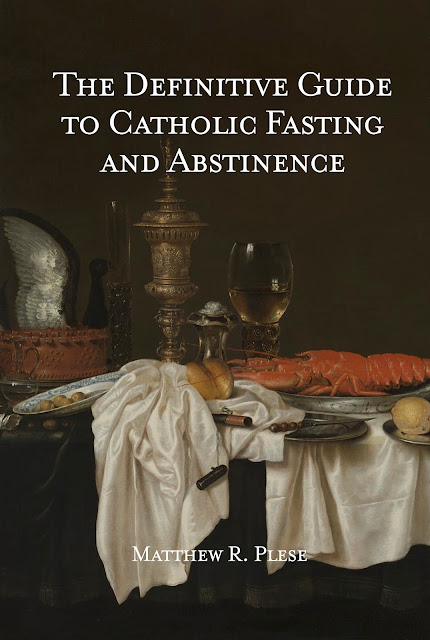
Want to learn more about the history of fasting and abstinence? Check out the Definitive Guide to Catholic Fasting and Abstinence.
Read more >>
Sunday, June 29, 2025
A Catholic Life Podcast: Episode 119

In today’s episode, I am diving into an important question that many traditional Catholics are asking this year: "Does Friday, July 4th, 2025, require abstinence from meat?" But we will also cover the importance of Ss. Peter and Paul’s Day as well.

  1. Is Abstinence Required on Civil Holidays?
  2. The Solemnity of Ss. Peter and Paul’s History as a Holy Day of Obligation
  3. Devotions in Honor of the Precious Blood for July
  4. Customs in Honor of the Feast of the Most Precious Blood
  5. Within the Octave of Ss. Peter and Paul

This episode of A Catholic Life is brought to you by the Sanctifica app — and if you’re passionate about living the liturgical year, this is the tool you’ve been waiting for. Feast days, saints, traditional devotions, indulgences — Sanctifica weaves it all into one beautifully crafted app. No fluff. No trends. Just timeless Catholic tradition — right at your fingertips. Personally, I’ve found it incredibly helpful in staying rooted in the Church’s rhythm — from  reminders for feast days and ember days, to novenas and spiritual treasures that otherwise may be easily missed. If you’re looking to bring structure, beauty, and deeper meaning to your daily spiritual life — Sanctifica makes it simple. Download it for free today on the App Store or Google Play. It’s a powerful companion for anyone striving to truly live a Catholic life.

Subscribe to the podcast on Buzzsprout, Apple Podcasts, Spotify, I-tunes, and many other platforms!

Read more >>
Monday, June 9, 2025
Honor the Forgotten (Former) 36 Holy Days of Obligation

The Land Without Holy Days

“…So also, from the earliest ages, the Christian Church instituted and religiously solemnized various feasts, differing in different countries, and varying according to times and circumstances, principally intended to keep in grateful and loving memory the chief mysteries of our Blessed Saviour's life, the glories and prerogatives of His Immaculate Mother, the example and heroic sanctity of the saints. . . . Blessed festivals, they are green, refreshing oases in the desert of our dreary, plodding life, and not a doubt, but they tend materially to keep alive the spirit of piety." 

With these words, Bishop Stephen Ryan of Buffalo addressed the bishops and theologians who had crowded into the former Cathedral in Baltimore. The occasion was the Third Plenary Council of Baltimore, which began in late 1884. The Council Fathers set to address a number of issues affecting Catholic life in the United States which had reached its then-disjointed arrangement through the acquisition of various terrorities each with their own customs and ecceslestical laws. Unbeknowst to many, days of fasting and abstinence in addition to holy days of obligation varied widely in what constituted the United States of America due to these historical differences. Could uniformity be obtained even though prior attempts to do so had failed? And in hindsight, should uniformity – at least in the manner sought – have even been attempted?

The history of America’s holy days of obligation highlights a complex network of unique customs, varied cultural traditions, and an overarching lack of fervor over time. In an era with so few Holy Days of Obligation, what have we lost? And should this be remedied? And what can this teach modern Catholics?

Holy Days of Obligation Over Time

In 1911, Pope St. Pius X reduced the number of Holy Days of Obligation from 36 to 8, although which places observed the holy days were not uniform at all beforehand.  Shortly thereafter, the 1917 Code of Canon Law increased the number to 10 by adding back Corpus Christi and Ss. Joseph. Those ten on the Universal Calendar have remained the same ever since.

However, the Holy Days up until 1911 reveal something quite interesting as all of the feasts of the Apostles were Holy Days of Obligation on the Universal Calendar as were many other days like St. Anne, the May 3rd Feast of the Finding of the Holy Cross, and so many other days which are now forgotten. The feasts of the Apostles were raised to public holidays back in 932 AD as Father Weiser relates (p. 279), for instance.

The 36 Holy Days of Obligation on the Universal Calendar back in 1642 under Pope Urban VIII included:

1. Nativity of our Lord
2. Circumcision of our Lord
3. Epiphany of the Lord
4. Monday within the Octave of the Resurrection
5. Tuesday within the Octave of the Resurrection
6. Ascension
7. Monday within the Octave of Pentecost
8. Tuesday within the Octave of Pentecost
9. Most Holy Trinity
10. Most Holy Body of Christ
11. Finding of the Holy Cross
12. Purification of the Blessed Virgin Mary
13. Annunciation of the Blessed Virgin Mary
14. Assumption of the Blessed Virgin Mary
15. Nativity of the Blessed Virgin Mary
16. Dedication of St. Michael
17. Nativity of St. John Baptist
18. Ss. Peter and Paul
19. St. Andrew
20. St. James
21. St. John (the December feastday)
22. St. Thomas
23. Ss. Philip and James
24. St. Bartholomew
25. St. Matthew
26. Ss. Simon and Jude
27. St. Matthias
28. St. Stephen (the December feastday)
29. The Holy Innocents
30. St. Lawrence
31. St. Sylvester
32. St. Joseph
33. St. Anne
34. All Saints Day
35. The Principle Patrons of One’s Country, City, etc.

The Immaculate Conception of the Blessed Virgin Mary was added in 1708 so it not on 1642 list.

In times past there was also a distinction made of days of double versus single precept. Days of double precept required both hearing Mass and refraining from servile works, whereas days of single precept were working holy days permitting work but still requiring Mass attendance.

Consequently, the number of Holy Days of Obligation in the United States as of the Second Vatican Council had already been significantly reduced from their previous state. Holy Days of Obligation, which had remained the same in the United States since 1917, were further modified in the latter part of the 20th century.  On December 13, 1991, the United States Bishops issued a directive further abrogating New Years Day (the Circumcision of our Lord), the Assumption, or All Saints in years when the feast falls on a Saturday or a Monday. And on March 23, 1992, in another reduction, the Bishop of Honolulu obtained an indult from the Holy See and approval from the United States episcopal conference to reduce the Holy Days of Obligation to only Christmas and the Immaculate Conception. 

Holy Days of Obligation Before 1900

Published in 1886, the eleventh volume of the American Catholic Quarterly Review offers an insightful series of reflections on Holy Days with a call for us to observe these as our forefathers in the Faith gladly did:

"The Church by one of her positive commandments requires the faithful to sanctify certain holydays in the year by taking part in the offering of the great sacrifice of the Mass and by abstaining from servile works... In the days of faith and fervor not only were the great festivals prescribed by the Church, those associated with the life of our Lord and His Blessed Mother, those intimately connected with the work of redemption, and the feasts of the holy apostles by whose ministry the Church was established and the channels of grace led through the world - not only were these kept reverently but the patronal feast of each country, diocese, and church, the days of the most famous local saints were similarly honored. The devotion was general, and whoso refused to lay aside his implements of trade or traffic on their days was so condemned by public opinion that custom made the law.” 

Interestingly, because the Church enjoined on the Faithful both the obligation to hear Mass and the necessity to refrain from servile work, the number of holy days, which included Sundays, was significant. Some people began to revolt against the Church claiming that these practices only increased poverty. But as the Journal notes, an interesting phenomenon occurred:

"Protestantism therefore at once swept away all the holydays and Christmas remained almost alone to represent the Church calendar, and the Puritans even punished those who kept Christmas. With men working all the year round except on Sunday, wealth was to be general, the poor would thrive and prosper and be happy and contented, no longer lured from great and ennobling labor by being called away every week to idle some days in church and prayer. It was again unfortunate that this excellent theory did not work well. The poor seemed to grow actually poorer with all these days of labor than they had been before." 

The first catalog of Holy Days comes from the Decree of Gratian in c. 1150 AD, which shortly thereafter gave way to Decretals of Pope Gregory IX in 1234, which listed 45 Holy Days. As the Catholic Encyclopedia summarizes regarding this period:

“The Decree of Gratian (about 1150) mentions forty-one feasts besides the diocesan patronal celebrations; the Decretals of Gregory IX (about 1233) mention forty-five public feasts and Holy Days, which means eighty-five days when no work could be done and ninety-five days when no court sessions could be held. In many provinces eight days after Easter, in some also the week after Pentecost (or at least four days), had the sabbath rest. From the thirteenth to the eighteenth century there were dioceses in which the Holy Days and Sundays amounted to over one hundred, not counting the feasts of particular monasteries and churches. In the Byzantine empire there were sixty-six entire Holy Days (Constitution of Manuel Comnenus, in 1166), exclusive of Sundays, and twenty-seven half Holy Days. In the fifteenth century, Gerson, Nicolas de Clémanges and others protested against the multiplication of feasts, as an oppression of the poor, and proximate occasions of excesses. The long needed reduction of feast days was made by Urban VIII (Universa per orbem, 13 Sept., 1642).” 

In 1642, His Holiness Pope Urban VIII issued the papal bull Universa Per Orbem which mandated the required Holy Days of Obligation for the Universal Church to consist of 34 days as well as the principal patrons of one's one locality (e.g. city and country). Ultimately Universa Per Orbem helped bring more uniformity to the Church since some parts of the Catholic world observed even more holy days of double precept (i.e. mandatory attendance at Mass and rest from servile work). The previous list of Holy Days of Obligation found in the Decretals also included Holy Monday through Holy Saturday in addition to Easter Wednesday through Easter Saturday.  These days had ceased being Holy Days by 1642. 

Holy Days in Young America

After the American Revolution, the Catholics in the 13 colonies that constituted the new United States of America were under the jurisdiction of the Apostolic Vicariate of the London District until the Diocese of Baltimore was established on November 6, 1789. This included the area of Maine that previously had been part of Quebec.

The first major change to the holy days of Americans came about through the lands purchased in 1803 from France in the Louisiana Purchase. Owing to the persecution of Catholics in France after the French Revolution, Pope Pius VII on April 5, 1802, reduced the holy days of obligation for Catholics in France to only Christmas, Ascension, Assumption, and the Feast of All Saints. Spain, which was in possession of the Louisiana territory since 1763, agreed in 1801 to cede it back to Napoleon. Before even getting possession of the territory, he sold it to the United States in 1803. What is particularly interesting is that the Catholics of Louisiana – whose territory includes areas in modern-day Arkansas, Missouri, Iowa, Minnesota, Kansas, and Nebraska – adopted the reduced holy days granted to France in 1802.

A Divergence of Holy Days in the 1800s

As America expanded, there was a divergence in the days of precept. When Florida was purchased by the United States in 1821, its old holy days were maintained. And the same likewise occurred in the Texas territory when it was acquired by the United States in 1845. And this trend continued as America expanded westward as the American Catholic Quarterly Review observes:

"In the Second Plenary Council [of Baltimore] in 1866 the feast of the Immaculate Conception was made of obligation as it had been in Oregon, where the feast of St Peter and St Paul had retained its place with the Monday after Easter and Whit Sunday, St John the Baptist, Candlemas, and St Stephen. Pope Gregory XVI in 1837 dispensed all the dioceses then in the United States from the obligation as to Easter Monday and Whitsun Monday and in 1840 from that of the feast of St Peter and St Paul..." 

Uniformity of American Holy Days Established in 1885 

By the time of the Civil War, considerable changes had occurred to these holy days. It was not until the Third Plenary Council that uniformly was achieved, though at the cost of reducing the holy days observed by many Catholics in the New World as the Review laments:

"The effort to induce faithful to a more exact observance of holydays of obligation or least so far as hearing mass was concerned had not been successful. A general indifference prevailed. When zealous priests, to give servants and mechanics every opportunity to fulfil the obligation, had Mass celebrated at an early hour to permit them to attend it proceeding to their usual work, it was found that almost the persons to avail themselves of the opportunity would be a pious old women, while those of the very class for whose the Mass was thus offered were scarcely represented by a straggling individuals.

"The Fathers of the Council renewed their petition to the See and His Holiness Pope Leo XIII on the 31st of December 1885 transferred the solemnization of Corpus Christi to the Sunday following the feast and made the holydays of obligation in all of the United States to be thenceforward: The Immaculate Conception of the Blessed Virgin, Christmas Day, the feast of Circumcision, Ascension Day, the Assumption of the Blessed Virgin, and the feast of All Saints. ” 

The Epiphany and Annunciation were no longer a Holy Day of Obligation in the United States – joining Easter Monday, Pentecost Monday, and St. Peter and Paul as working days. For even more history on how Holy Days of Obligation - and fasting days - changed in the New World before and after America's Foundation, see A History of Holy Days of Obligation & Fasting for American Catholics.


How Should Sundays and Holy Days of Obligation be Sanctified?

The Third Commandment commands us to “Remember the Sabbath day, to keep it holy.” In its fulfillment under the New Law, this commandment obliges Catholics to sanctify Sundays and Holy Days of Obligation by participating in the Holy Sacrifice of the Mass and by refraining from servile work. The Catechism of the Council of Trent affirms that this is not merely a recommendation—it is a divine precept.

The Church further clarifies that all Sundays and all current Holy Days of Obligation are binding under pain of mortal sin. To deliberately skip Mass on such a day without a grave reason—such as serious illness or the inability to reasonably travel to Mass—is a mortal sin. And if a Catholic is unable to attend Mass for a legitimate reason, they should still sanctify the day as best they can: by reading the Missal, meditating on the day’s readings and prayers, and uniting themselves spiritually to the liturgy.

Sunday, moreover, is not only a day of rest and obligatory worship but a day for deeper immersion in the Faith. Traditionally, Catholics observed Sunday by attending Vespers or Benediction, praying the Rosary communally, engaging in spiritual reading, and avoiding unnecessary commerce or entertainment. It is a day to spend in quiet joy, family togetherness, and devotion. The faithful should use Sunday to read Catholic books, periodicals, and Scripture, to practice works of mercy, and to grow in virtue. See the article Top 10 Sunday Activities for Catholics for more.

Make a special effort to attend Mass on all of the former Holy Days of Obligation, if possible. While the current Holy Days of Obligation must still be observed under pain of sin, we should cultivate a desire to attend Mass frequently — even daily. The former Holy Days, though no longer obligatory, remain excellent occasions to rearrange your schedule and give special honor to God through the Holy Sacrifice of the Mass.

With so many holy days reduced, and with priests largely not preaching on the necessity of attending Mass and of abstaining from servile works on them, the faithful have lost the sense of the sacred. Yet, as more Catholic seek to rediscover the Traditional Latin Mass and traditional fasting, voluntarily attending the Holy Sacrifice of the Mass and abstaining from servile works on the former Holy Days of Obligation can help us sanctify time and hold dear to what our forefathers saw, in the words of Bishop Stephen Ryan, as “refreshing oases in the desert of our dreary, plodding life.”


Read more >>
Sunday, May 11, 2025
A Catholic Life Podcast: Episode 112

In today’s episode for the A Catholic Life Podcast I cover why and how the Catholic Church possesses from God Himself the authority to bind people to certain laws.

  1. The Various Kinds of Law – Is the Catholic Church Too Legalistic?
  2. Ecclesiastical Laws and the Church’s Authority to Bind and Loose
  3. Primary of St. Peter and His Successors

This episode is sponsored by PrayLatin.comPrayLatin.com offers Latin prayer cards to learn and share prayers in the sacred language. Learn your basic prayers in Latin conveniently on the go. Practice your pronunciation with easy-to-follow English phonetic renderings of Latin words. PrayLatin.com offers prayer cards in various formats, including Latin-English rosary pamphlets with the traditional 15 mysteries. Shop for additional Latin resources like missal booklets, server response cards, and more. Visit PrayLatin.com today.

Subscribe to the podcast on Buzzsprout, Apple Podcasts, Spotify, I-tunes, and many other platforms!


Read more >>
Sunday, March 30, 2025
A Catholic Life Podcast: Episode 108

In today’s episode, on Laetare Sunday, I discuss why Catholics rightfully honor the saints who Heaven our prayers in Heaven and who can intercede for us on earth:

  1. A Catholic Life Podcast Episode 5 on Laetare Sunday
  2. Laetare Sunday as Mothering Sunday
  3. Are the Saints Alive? Can They Hear our Prayers?
  4. The Certainty of Sainthood: How the Church Recognized Saints Through the Ages
  5. One Peter Five Series on Miracles as Proof of the Catholic Religion

I would like to thank CatechismClass.com for sponsoring this episode.  CatechismClass.com, the leader in online Catholic catechism classes, has everything from online K-12 programs, RCIA classes, adult continuing education, marriage preparation, baptism preparation, confirmation prep, quince prep classes, catechist training courses, and more. It is never too late to study the fullness of the Catholic Faith, and CatechismClass.com is the gold standard in authentic Catholic formation online. Their Catholic Liturgical Year Course for a one-time cost of $129.95 includes lessons throughout the entire liturgical year on many forgotten days.

Subscribe to the podcast on Buzzsprout, Apple Podcasts, Spotify, I-tunes, and many other platforms!

Read more >>
Tuesday, January 21, 2025
Why Catholics Must Adhere to the 1917 Code of Canon Law and Reject the Novelties of the 1983 Code

1917 vs 1983 Code of Canon Law

Principle 1: Authority and Validity of Law

Law Must Originate from a Valid Lawgiver

A fundamental principle in both civil and ecclesiastical law is that a law must be issued by a legitimate authority. In civil society, this requires that laws are passed in accordance with constitutional procedures and by recognized governmental bodies. Similarly, within the Church, a valid lawgiver is required to issue binding ecclesiastical laws.

In the Church, the Pope generally holds this authority. However, this authority is contingent upon his continued legitimacy as Pope. According to established Church teaching, if a Pope falls into heresy, he loses his office and thus his authority to promulgate laws. This concept is supported by notable canonists and theologians:

X. Wernz and P. Vidal (1943): "Through notorious and openly divulged heresy, the Roman Pontiff, should he fall into heresy, by that very fact [ipso facto] is deemed to be deprived of the power of jurisdiction even before any declaratory judgement by the Church. A pope who falls into public heresy would cease ipso facto to be a member of the Church; therefore, he would also cease to be head of the Church." (Ius Canonicum, 2:453)

Udalricus Beste (1946): "Not a few canonists teach that, outside of death and abdication, the pontifical dignity can also be lost by falling into certain insanity, which is legally equivalent to death, as well as through manifest and notorious heresy. In the latter case, a pope would automatically fall from his power, and this indeed without the issuance of any sentence, for the first See [i.e., the See of Peter] is judged by no one. The reason is that, by falling into heresy, the pope ceases to be a member of the Church. He who is not a member of a society, obviously, cannot be its head." (Introductio in Codicem, 3rd ed., Canon 221)

Thus, any laws or documents issued by a Pope who has lost his authority due to heresy are invalid and not binding. This principle calls into question the legitimacy of the 1983 Code of Canon Law if issued under such circumstances, especially considering the actions of John Paul II who promulgated the 1983 Code.

Principle 2: The Salvation of Souls as Supreme Law

Laws Must Not Harm Souls

Even if a law is issued by a legitimate authority, it must be rejected if it is harmful to souls or promotes sin. The maxim salus animarum, suprema lex (the salvation of souls is the supreme law) underscores this obligation. In 1984, Archbishop Lefebvre called the new code another grave problem undermining the Church and stated that the new Canon Law is very serious for it goes much further [i.e. promoting errors] than the Council itself in a October 29, 1984 conference at Stuttgart, Germany. 

The 1983 Code of Canon Law introduces a novel conception of the Church that undermines traditional ecclesiology and instead embraces the ecclesiology of Vatican II, which erases the distinction between clergy and laity. Canon 204 exemplifies this by defining all the faithful, clergy and laity alike, as partaking in Christ's priestly, prophetic, and royal functions. This new understanding dissolves the unique roles of the clergy, leading to the laicization of the Church. Such a shift is detrimental, as it aligns with Protestant reforms that laicized the priesthood, diminishing the sacred character of the clergy.

Archbishop Bugnini's reforms in the Liturgy further illustrate this harmful trend. The liturgical changes aimed to transform the Mass into an action of the entire "people of God," minimizing the role of the priest and the mystical nature of the Mass. This shift from God-centered worship to man-centered activity undermines the sanctity of the Eucharist and the priesthood.

The new Code even permits practices such as giving Communion to Protestants, a clear rupture from traditional Catholic teaching. This "eucharistic hospitality" contradicts the sacrament's role as a sign of unity in the Faith, thereby compromising the Church's doctrinal integrity. The 1983 Code is a codification of the errors of Vatican II, which are dangerous to souls as they undermine true doctrine, piety, and holiness. We see this reflected in the unmistakable collapse of Catholic praxis after Vatican II.

Conclusion

Catholics are bound by these two principles: the necessity of a valid lawgiver and the imperative to reject laws harmful to souls. Given either the questionable legitimacy of the authority behind the 1983 Code of Canon Law or its harmful spiritual consequences, Catholics are obliged to adhere to the strictness of the 1917 Code and reject the novelties introduced by the 1983 Code. While even the 1917 Code lessened discipline for Catholics in many regards, it nevertheless was a valid Code. The same unwaveringly statement of validity can not apply to the 1983 Code.

Salus animarum, suprema lex. Long live Tradition. Long live the True Catholic Church. Down with the counterfeit Church of the Modernists.

Read more >>
Friday, December 27, 2024
2nd Edition of "Restoring Lost Customs of Christendom" Now Available

"The best advice that I can give you is this: Church traditions - especially when they do not run counter to the faith - are to be observed in the form in which previous generations have handed them down...the traditions which have been handed down should be regarded as apostolic laws" (St. Jerome in Letter 71)

I'm honored to announce the publication of the slightly expanded 2nd edition of the book by Our Lady of Victory Press entitled "Restoring Lost Customs of Christendom." The 2nd edition includes three new chapters not featured in the first edition (i.e. Customs for St. Joseph's Day, St. Anne's Day Customs, The Customs for the Vigil, and Feast of St. John the Baptist) along with a much expanded catch-all chapter on various saint day customs throughout the liturgical year.

Preface

Under the Old Testament laws, God’s people observed annual ceremonies commemorating important events in salvation history which prefigured the completion of the Old Law through Christ. Similarly, Holy Church commemorates important mysteries, events, and persons, using an annual cycle of prayers, Scriptures, hymns, and various spiritual disciplines. In the same way, each of the twelve months has a unique focus, and each day of the week has a unique focus as well. Even in the day, the hours of the day are divided up into canonical hours. In so doing, all time is, in a manner of speaking, consecrated to God since He alone created all time and redeemed all of time.

Unlike the pagan religions which often view time as an endless cycle of death and rebirth, the Christian view of time is linear. While God alone has always existed and has no beginning, time had a beginning. There was a first day on earth. And there will be a last day. There will be a day ultimately when the sun will rise for the last time and when it will set for the last time. Time will end. And God Himself will end it as time belongs to Him. It is our duty to honor God in time. And we can do so by sanctifying the days, weeks, months, and seasons of the year.

The Church’s Liturgical Year is a harmonious interplay of feasts and fasts interwoven in both the temporal and sanctoral cycles that define the rhythm and rhyme of Catholic life. While there are many customs associated with the seasons of the liturgical year and high ranking feast days, the entire year is replete with opportunities to live out our Catholic heritage through the customs our forefathers instituted.

The Church’s annual liturgical calendar is comprised of two different, concurrent annual cycles. First, the Proper of the Seasons, or Temporal Cycle, traces the earthly life of Our Lord Jesus Christ. In the Roman Catholic Church, it consists mainly of Sundays related to the various liturgical seasons – that is, the seven liturgical seasons contained in two cycles of its own: the Christmas Cycle and the Easter Cycle. It starts with Advent then goes through Christmas, Epiphany, Septuagesima, Lent, Easter, and Time after Pentecost. The determination of the date of Easter dictates nearly all the other dates in this cycle. But there is a second cycle: the Proper of the Saints, called the Sanctoral Cycle, which is the annual cycle of feast days not necessarily connected with the seasons.

It’s also important to realize that each rite in the Catholic Church (e.g., Roman, Maronite, Chaldean, etc.) has its own liturgical calendar, and some have multiple uses or forms of the calendar. Even within the same use or form, there are variations according to local customs. For instance, the patron saint of a church or of the cathedral would be ranked higher in the liturgical calendar of that local jurisdiction. Even in the Roman Rite itself, different dioceses, countries, and religious orders would keep some different feastdays. These were listed in the Mass in Some Places (pro aliquibus locis) supplement to the Missal. Beyond the Roman Rite, the Ambrosian, Mozarabic, Lyon, and Bragan Rites are also all part of the Western liturgical tradition. So too are the various Rites for religious orders (e.g., the Carmelite Rite, the Carthusian Rite, the Dominican Rite). These are also part of the Roman Catholic Church.  No one has ever doubted the legitimacy of this liturgical diversity. 

Those who try to discredit the Traditional Latin Mass may try to falsely claim that all Catholics must observe the same calendar of saints. But this is not the case as seen in the liturgical calendar diversity in the different Rites of the Church and in the Roman Rite itself. Even Summorum Pontificium affirmed that the continued use of the older Roman calendar in the traditional Mass and Breviary is permissible. 

Beyond assisting at Mass and praying the Divine Office, we can and should observe the forgotten customs that further underscored authentic Catholic culture. Catholic culture is more than just going to Mass – much more. Catholic culture is built on fasting periods, assisting at Processions, having various items blessed at different parts of the year (e.g. herbs on August 15, grapes on September 8th, wine on December 27th). It features days of festivity like during Martinmas and promotes family time and charitable works like visits to grandparents on Easter Monday. It is replete with food customs to celebrate the end of fasting periods and filled with special devotions during periods of penance. It is our heritage. These traditions are our birthright. They are ours as much as they were our ancestors. We must reclaim them. We must spread them. We must love them and observe them. And this book will show today’s Catholic how.

Ordering Information:

PDF: https://www.patreon.com/acatholiclife/shop/restoring-lost-customs-of-christendom-81175

Kindle: https://amzn.to/41zYx8d

Paperback: https://amzn.to/3TjPqpN

The PDF is free for Patreon supporters at the All-Star Level.

Sample of Endorsements Received:

"In past ages, the lives of Catholics were studded with joyful celebrations of saints and somber calls to penance. The ebb and flow of feasting and fasting gave the Christian religion a distinctive 'thickness' and 'texture': it wasn't a bunch of ideas floating in the clouds but a daily planner filled with concrete actions. In the heady rationalism and hearty optimism that gripped modern reformers, nearly all of this holistic ecosystem was overthrown, and the loss of it meant far more than the loss of parties or Lenten recipes; it meant, for too many, the loss of any relevance of faith to everyday life. What is a Catholic to do in this desert of deprivation? Simple: follow a knowledgeable guide out of it. In this informative book, Matthew Plese, who has devoted himself to studying and living the traditional calendar, takes us step by step through some of the most important 'lost customs of Christendom.' Restoring them, here and there, one by one, we restore ourselves and our families to all that Catholic life can be." 

– Dr. Peter A. Kwasniewski, author of The Once and Future Roman Rite

“Catholics who want to integrate the Catholic customs of ages past will deeply appreciate Restoring Lost Customs of Christendom. Beginning with Advent and continuing through the feasts and seasons of the liturgical year, this complete compendium of Catholic traditions by Matthew Plese will help integrate the ancient traditions of our faith in our families and homes. This treasured volume presents the fasts and feasts, the indulgences and blessings which are the patrimony of our Catholic people.” 

 – Fr. Scott A. Haynes of https://www.mysticaltheologyofthemass.com/

“This compendium is a much-needed help for the family (the domestic church) and parishes and dioceses (the local church) to reclaim Catholic culture. As Catholics, especially those in the United States, we are losing that sense of what set us apart from the world. There should be no difference between our daily calendars and our liturgical calendar. Our lives must daily revolve around the liturgy and this handy book is an excellent guide to reclaim our Catholic ethos.” 

– Fr. John P. Lovell of https://x.com/Fr_Lovell 

Read more >>
Sunday, November 17, 2024
A Catholic Life Podcast: Episode 94

In today’s episode, on the 6th Resumed Sunday after Epiphany, I address the following:

  1. The Dedication of the Basilicas Ss. Peter and Paul
  2. The Presentation of our Lady in the Temple and Day of Cloistered Life
  3. Customs for St. Cecilia’s Feast Day

This episode is sponsored by PrayLatin.comPrayLatin.com offers Latin prayer cards to learn and share prayers in the sacred language. Learn your basic prayers in Latin conveniently on the go. Practice your pronunciation with easy-to-follow English phonetic renderings of Latin words. PrayLatin.com offers prayer cards in various formats, including Latin-English rosary pamphlets with the traditional 15 mysteries. Shop for additional Latin resources like missal booklets, server response cards, and more. Visit PrayLatin.com today.

Read more >>
Wednesday, October 30, 2024
Is Friday Abstinence Required When All Saints Day Falls on a Friday?


All Saints As A Holy Day of Obligation

The first catalog of Holy Days comes from the Decree of Gratian in c. 1150 AD, which shortly thereafter gave way to Decretals of Pope Gregory IX in 1234, which listed 45 Holy Days.

In 1642, His Holiness Pope Urban VIII issued the papal bull Universa Per Orbem which mandated the required Holy Days of Obligation for the Universal Church to consist of 34 days as well as the principal patrons of one's one locality (e.g. city and country). Those days were the Nativity of Our Lord, the Circumcision of Our Lord, the Epiphany of Our Lord, Monday within the Octave of the Resurrection, Tuesday within the Octave of the Resurrection, Ascension Thursday, Monday within the Octave of Pentecost, Tuesday within the Octave of Pentecost, Most Holy Trinity, Corpus Christi, the Finding of the Holy Cross, the Purification of the Blessed Virgin Mary, the Annunciation of the Blessed Virgin Mary, the Assumption of the Blessed Virgin Mary, the Nativity of the Blessed Virgin Mary, the Dedication of St. Michael, the Nativity of St. John the Baptist, SS. Peter and Paul, St. Andrew, St. James, St. John (the December feast day), St. Thomas, SS. Philip and James, St. Bartholomew, St. Matthew, SS. Simon and Jude, St. Matthias, St. Stephen the First Martyr (the December feast day), the Holy Innocents, St. Lawrence, St. Sylvester, St. Joseph, St. Anne, and All Saints.  

The Catholic Encyclopedia provides a short account of the history of All Saints Day:

In the early days the Christians were accustomed to solemnize the anniversary of a martyr's death for Christ at the place of martyrdom. In the fourth century, neighbouring dioceses began to interchange feasts, to transfer relics, to divide them, and to join in a common feast; as is shown by the invitation of St. Basil of Caesarea (379) to the bishops of the province of Pontus. Frequently groups of martyrs suffered on the same day, which naturally led to a joint commemoration. In the persecution of Diocletian the number of martyrs became so great that a separate day could not be assigned to each. But the Church, feeling that every martyr should be venerated, appointed a common day for all. The first trace of this we find in Antioch on the Sunday after Pentecost. We also find mention of a common day in a sermon of St. Ephrem the Syrian (373), and in the 74th homily of St. John Chrysostom (407). At first only martyrs and St. John the Baptist were honoured by a special day. Other saints were added gradually, and increased in number when a regular process of canonization was established; still, as early as 411 there is in the Chaldean Calendar a "Commemoratio Confessorum" for the Friday after Easter. In the West Boniface IV, 13 May, 609, or 610, consecrated the Pantheon in Rome to the Blessed Virgin and all the martyrs, ordering an anniversary. Gregory III (731-741) consecrated a chapel in the Basilica of St. Peter to all the saints and fixed the anniversary for 1 November. A basilica of the Apostles already existed in Rome, and its dedication was annually remembered on 1 May. Gregory IV (827-844) extended the celebration on 1 November to the entire Church. The vigil seems to have been held as early as the feast itself. The octave was added by Sixtus IV (1471-84).

Is Friday Abstinence Required When the All Saints Falls on a Friday?

Since November 1st this year falls on a Friday and is a Holy Day of Obligation, a question arises on whether abstinence is obligatory this Friday. The answer, as clearly stated in the 1917 Code, is as follows:

"On [Sundays] or feasts of precept, the law of abstinence or of abstinence and fast or of fast only ceases, except during Lent, nor is the vigil anticipated; likewise it ceases on Holy [Saturday] afternoon" (1917 Code, Canon 1252 § 4). [Translation taken from THE 1917 OR PIO-BENEDICTINE CODE OF CANON LAW in English Translation by Dr. Edward Peters]

As All Saints Day falls outside of Lent, tomorrow is not a day of mandatory abstinence. However, this was actually a change from the practice observed for well over 1,000 years.

Dispensations From Abstinence Were Previously Required Even for Holy Days of Obligation Outside of Lent

Even Christmas would in and of itself not dispense Friday abstinence in the Medieval Church, as Dom Gueranger writes in the Liturgical Year published in 1886:

"To encourage her children in their Christmas joy, the Church has dispensed with the law of abstinence, if this Feast fall on a Friday. This dispensation was granted by Pope Honorius III, who ascended the Papal Throne in 1216. It is true that we find it mentioned by Pope St Nicholas I, in the ninth century; but the dispensation was not universal; for the Pontiff is replying to the consultations of the Bulgarians, to whom he concedes this indulgence, in order to encourage them to celebrate these Feasts with solemnity and joy: Christmas Day, St Stephen, St John the Evangelist, the Epiphany, the Assumption of our Lady, St John the Baptist, and SS Peter and Paul. When the dispensation for Christmas Day was extended to the whole Church, these other Feasts were not mentioned."

Previously, a dispensation was required by the Holy Father even on Holy Days of Obligation that fell outside of Lent. Two examples indicating this are Pope Leo XIII's 1890 dispensation for Assumption Day and a 1907 dispensation issued for Canada for All Saints Day. All Saints Day was, at that time, a Holy Day of Obligation in Canada.

The Catholic Encyclopedia on St. Pius X's Supremi disciplinæ indicates that fasting was abolished eo ipso only starting in 1911 for all Holy Days of Obligation outside of Lent (which were at the same time reduced to only 8): "The present Motu Proprio institutes another important change in legislation. As feasting and fasting are incompatible, Pius X has abolished the obligation of fasting as well as that of abstinence for the Universal Church, should such obligation coincide with any of the eight feasts, as above." 

Thus, while eating meat this Friday is not a sin, it would be meritorious to continue to observe Friday abstinence in honor of the nearly 1,800 year-old tradition that preceded the 1917 Code. If we choose to do so, let us offer it up through our Lady's intercession for the conversion of sinners who violate the laws of the Church and do not attend Holy Mass on days of precept like All Saints Day.

Want to learn more about the history of fasting and abstinence? Check out the Definitive Guide to Catholic Fasting and Abstinence.
Read more >>
Sunday, September 29, 2024
A Catholic Life Podcast: Episode 86

In today’s episode, on the Dedication of St. Michael the Archangel, I address the following:

  1. Celebrating Michaelmas the Catholic Way
  2. Why All Catholics Should Strive to Hear Daily Mass

I would like to thank CatechismClass.com for sponsoring this episode.  CatechismClass.com, the leader in online Catholic catechism classes, has everything from online K-12 programs, RCIA classes, adult continuing education, marriage preparation, baptism preparation, confirmation prep, quince prep classes, catechist training courses, and much more. It is never too late to study the fullness of the Catholic Faith, and CatechismClass.com is the gold standard for authentic Catholic online formation. During the Season after Pentecost, we celebrate many incredible days, such as the Nativity of St. John the Baptist, Ss. Peter and Paul, the Assumption, and so much more. Save 25% with discount code Pentecost25 on their special course.   

Read more >>


Copyright Notice: Unless otherwise stated, all items are copyrighted under a Attribution-NonCommercial-NoDerivatives 4.0 International License. If you quote from this blog, cite a link to the post on this blog in your article.

Disclosure of Material Connection: Some of the links on this blog are “affiliate links.” This means if you click on the link and purchase the item, I will receive an affiliate commission. As an Amazon Associate, for instance, I earn a small commission from qualifying purchases made by those who click on the Amazon affiliate links included on this website. I am disclosing this in accordance with the Federal Trade Commission’s 16 CFR, Part 255: “Guides Concerning the Use of Endorsements and Testimonials in Advertising.”