Showing posts sorted by date for query prayers for meals. Sort by relevance Show all posts
Saturday, October 11, 2025
Catholic Homeschooling for the Latin Mass Family

“The home is the first church; the parents are the first priests.”

The revival of the Traditional Latin Mass has brought with it a renewed desire for authentic Catholic education — one rooted in tradition, orthodoxy, and beauty. For many families, homeschooling has become the natural extension of that fidelity to the Faith.

But what does it mean to homeschool as a Latin Mass family? And how can parents ensure that their children’s formation matches the reverence they experience at the altar?

Educating in Harmony with the Mass

Homeschooling for the Latin Mass family is not merely about teaching academic subjects at home. It’s about aligning every aspect of learning with the truths and rhythm of the Traditional Roman Rite. The Mass becomes the model for all formation: ordered, contemplative, and centered on God.

  • Latin and Prayer – Introduce children early to the prayers of the Mass: the Gloria, Credo, and Sanctus. Even young children can learn to chant or recite them.
  • Liturgical Calendar Living – Follow the traditional (pre-1955) calendar. Let the seasons of the Church year set the tone for your lessons, feast days, and even your crafts or meals.
  • Classical and Catechetical Unity – Subjects like history and literature should be taught through a Catholic lens, showing how Christendom shaped the world.

Challenges and Graces of the Traditional Homeschool

Modern textbooks often dilute Catholic truth or ignore it entirely. For TLM families, that’s unacceptable. The good news is that faithful, traditional options abound.

Parents can draw from the Douay-Rheims Bible, the Baltimore Catechism, and traditional hagiographies to ensure doctrinal purity and inspiration.

It’s not always easy — homeschooling demands time, patience, and perseverance — but the graces of forming your children in the fullness of the Faith are beyond measure.

A Resource Built for You

To support Latin Mass families in this sacred work, CatechismClass.com offers a Traditional Catholic Homeschool Program created by priests and homeschooling parents who attend the Tridentine Rite. Every course follows the 1962 Rites, uses Baltimore Catechism foundations, and integrates prayers, saint biographies, and moral instruction faithful to pre-Conciliar teaching.

Courses are self-paced, entirely online, and require no external textbooks. Each lesson includes automatically graded quizzes, catechism readings, Douay-Rheims Scripture, and traditional prayers — making it easy for parents to teach confidently and consistently.

Whether you are beginning your homeschool journey or seeking to deepen your family’s formation, a traditional Catholic curriculum ensures your children grow in both knowledge and holiness.

Visit CatechismClass.com to see how your Latin Mass family can begin today.

Read more >>
Wednesday, March 8, 2023
Can I Eat Meat on St. Patrick's Day on a Friday in Lent?

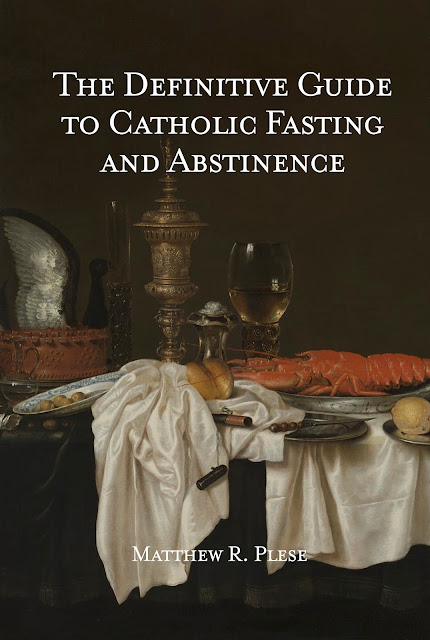
Lent is the most solemn of all fasting times in the Church. From Apostolic times until 1741, meat was never allowed in Lent. Even after it was permitted at some meals, Fridays and Saturdays remained mandatory days of complete abstinence in Lent into the early 1900s. Friday in particular, the most solemn of all days on account of our Lord's death on the Cross on Friday, was a mandatory day of abstinence all year round (and it still is!) Up until the 1917 Code of Canon Law, meat was not even allowed on Holy Days of Obligation which fell on a Friday outside of Lent. The Friday fast, like Sunday Mass, is integral to Catholic life. This post is based heavily on the research which is incorporated in "The Definitive Guide to Catholic Fasting and Abstinence." Read the full book for much more information relevant to this topic.

Definition of Fasting vs. Abstinence

Fasting refers to how much food we eat and, historically, when we eat it. It means taking only one meal during a calendar day. The meal should be an average-sized meal as overeating at the one meal is against the spirit of the fast. Fasting generally means that the meal is to be taken later in the day. Along with the one meal, up to two snacks (technically called either a collation or frustulum) are permitted. These are optional, not required. Added up together, they may not equal the size of the one meal. No other snacking throughout the day is permitted. 

Abstinence in this context refers to not eating meat. Meat refers to the fleshmeat of mammals or fowl. Beef, poultry, lamb, etc are all forbidden on days of abstinence. Abstinence does not currently prohibit animal byproducts like dairy (e.g. cheese, butter, milk) or eggs, but in times past they were prohibited. Fish is currently permitted along with shellfish and other cold-blooded animals like alligators. In times past, days of fast were always days of abstinence as well; however, not all days of abstinence were days of mandatory fasting.

The Church's Law in 1917

The days of obligatory fasting as listed in the 1917 Code of Canon Law were the forty days of Lent (including Ash Wednesday, Good Friday, and Holy Saturday until noon); the Ember Days; and the Vigils of Pentecost, the Assumption of the Blessed Virgin Mary, All Saints, and Christmas. Partial abstinence, the eating of meat only at the principal meal, was obligatory on all weeks of Lent (Monday through Thursday). And of course, complete abstinence was required on all Fridays, including Fridays of Lent, except when a holy day of obligation fell on a Friday outside of Lent. Saturdays in Lent were likewise days of complete abstinence.

The Church's Law in 1962

By 1962, the laws of fasting and abstinence were as follows as described in "Moral Theology" by Rev. Heribert Jone and adapted by Rev. Urban Adelman for the "laws and customs of the United States of America" copyright 1961: "Complete abstinence is to be observed on all Fridays of the year, Ash Wednesday, the Vigils of Immaculate Conception and Christmas. Partial abstinence is to be observed on Ember Wednesdays and Saturdays and on the Vigil of Pentecost. Days of fast are all the weekdays of Lent, Ember Days, and the Vigil of Pentecost." If a vigil falls on a Sunday, the law of abstinence and fasting is dispensed that year and is not transferred to the preceding day. Father Jone adds additional guidance for the Vigil of the Nativity fast: "General custom allows one who is fasting to take a double portion of food at the collation on Christmas Eve (jejunium gaudiosum)."

The Modern Church Law

The National Conference of Catholic Bishops issued a statement on November 18, 1966. Abstinence was kept obligatory on all Fridays of Lent, except Solemnities (i.e. First Class Feasts), on Ash Wednesday, and on Good Friday. Abstinence on all Fridays throughout the year was "especially recommended," and the faithful who did choose to eat meat were directed to perform an alternative penance on those Fridays outside of Lent, even though the US Bishops removed the long-establish precept of requiring Friday penance. The document stated in part: "Even though we hereby terminate the traditional law of abstinence binding under pain of sin, as the sole prescribed means of observing Friday, we ... hope that the Catholic community will ordinarily continue to abstain from meat by free choice as formerly we did in obedience to church law." And finally, fasting on all weekdays of Lent was "strongly recommended" but not made obligatory under penalty of sin.

The 1983 Code of Canon Law largely took Paul VI's apostolic constitution aside from the modification of the age at which fasting binds. Per the 1983 Code of Canon Law, the age of fast was changed to begin at 18 - previously it was 21 - and to still conclude at midnight when an individual completes his 59th birthday. Friday penance is required per these laws on all Fridays of the year except on Solemnities, a dramatic change from the previous exception being only on Holy Days of Obligation.

Per the 1983 Code of Canon Law, fasting and complete abstinence per these rules are required only on Ash Wednesday and Good Friday. The notion of "partial abstinence," introduced under Pope Benedict XIV in 1741, was also removed. By this point, the days of obligatory fast had been reduced to merely two days. And most Catholics only abstained from meat on the 7 Fridays in Lent.

Fridays in Lent

Thus, even as the fast and abstinence requirements deteriorated, Friday abstinence remained mandatory on Fridays in Lent. To intentionally violate Friday abstinence is a mortal sin - it is not a small matter. In fact, in former times, Catholic nations made the sale of meat a crime as The Definitive Guide to Catholic Fasting and Abstinence discusses in the context of 16th century England.

History of St. Patrick's Day in Lent
    
For the Irish (and for Irish Americans), St. Patrick's Day is both a cultural milestone and, traditionally, a very significant spiritual day. Sadly, this element has also been lost, which is ultimately why so many feel it necessary to seek out dispensations from Friday abstinence on the feastday of a saint who, ironically, was a fearless champion of fasting!

The first record of dispensation from Lenten fast and/or abstinence on St. Patrick's Day was early in America's history at a time when all of Lent, aside from Sundays, were days of mandatory fasting for those between the ages of 21 and 60 (health exceptions aside). With the growing number of Irish immigrants to America in the early 1800s, special attention was given to dispense from fasting when St. Patrick's Day fell on a Friday. This was done for the members of the Charitable Irish Society of Boston in 1837 and would become customary in the United States. The dispensation granted in 1837 "was granted on the proviso that all diners gave a small sum to charity." But this was in Boston, which was an epi-center of Irish Americans.

Back in Ireland, St. Patrick's Day was a Holy Day of Obligation and still, without special dispensation, a day of mandatory fasting and abstinence. Interestingly, "The Catholic's Pocket Prayer-Book," published by Henri Proost & Co. in 1924, notes that for Australia and New Zealand, all days in Lent were days of fasting "except Sundays and St. Patrick's Day." The same pocket guide lists the days of fasting and abstinence for Ireland and lists no such exception. Yet even for Australia and New Zealand, no exception for abstinence existed on St. Patrick's Day in 1924.

The Dispensations for St. Patrick's Day in 2023


As St. Patrick's Day falls on a Friday this year, dioceses have already been granting dispensations or statements declining to do so. The responses so far, illustrated in an interactive graphic via the Catholic News Agency fall into the categories of: dispensation granted, dispensation granted only in certain situations (otherwise abstinence is binding under pain of mortal sin), or no dispensation. Follow the link for more detailed information as changes are happening on a daily basis.

Conclusion: The True Celebration of a Catholic, St. Patrick's Day

Despite the changes he introduced to Lenten fasting in 1741, Pope Benedict XIV implored:

"The observance of Lent is the very badge of the Christian warfare. By it we prove ourselves not to be enemies of the cross of Christ. By it we avert the scourges of divine justice. By it we gain strength against the princes of darkness, for it shields us with heavenly help. Should mankind grow remiss in their observance of Lent, it would be a detriment to God's glory, a disgrace to the Catholic religion, and a danger to Christian souls. Neither can it be doubted that such negligence would become the source of misery to the world, of public calamity, and of private woe."

Modern Lent is no longer a 40 day fast. The days of abstinence for the average Catholic are appallingly few (it used to be roughly 1/3 of the year!) We would be violating the entire spirit of Lent by availing ourselves even of a valid dispensation from Lenten abstinence. Dom Gueranger accordingly writes:

But it will be asked: “Are there, then, no lawful dispensations?” We answer that there are; and that they are more needed now than in former ages, owing to the general weakness of our constitutions. Still, there is great danger of our deceiving ourselves. If we have strength to go through great fatigues when our own self-love is gratified by them, how is it we are too weak to observe abstinence? If a slight inconvenience deters us from doing this penance, how shall we ever make expiation for our sins? For expiation is essential painful to nature.

It must be clearly stated there is no incompatibility between fasting and abstaining and celebrating the saints. Even Sundays of Lent used to be required days of abstinence (but not fast). Let us fast and abstain always on St. Joseph's Day, Annunciation Day, and St. Patrick's Day each year during Lent. Our adherence to and preservation of the Traditional Catholic Faith requires this. Even with the fast, it is possible to honor St. Patrick’s Day with a loaf of traditional Irish soda bread. Check your local bakery or grocery store and get a loaf to have at dinner.

As Catholics, we abstain on Fridays in Lent, just as we go to Mass on Sundays. As traditional Catholics, we must maintain Friday abstinence and should encourage everyone else to do so for the honor of God and for the glory of St. Patrick. Let us offer up additional prayers and penances this year on St. Patrick's Day for the many who will mortally sin against our Lord and mock His sacrifice on the Cross by eating meat. While it may seem to be a small offense, it was the eating of a forbidden fruit that brought about original sin and the loss of paradise in the Garden of Eden. If we love God, surely we can say no to flesh meat on at least Friday in Lent. Right?
Read more >>
Tuesday, January 18, 2022
Can A Valid Novus Ordo Mass Offend God? Are We Obligated to Attend It?

The Angelic Doctor goes on to summarize two ways in which worship directed to the True God is nevertheless evil. As to the first reason, St. Thomas Aquinas illustrates by way of example: “…in this way, at the time of the New Law, the mysteries of Christ being already accomplished, it is pernicious to make use of the ceremonies of the Old Law whereby the mysteries of Christ were foreshadowed as things to come: just as it would be pernicious for anyone to declare that Christ has yet to suffer.” Thus, observing seder meals, religious circumcision, abstaining from pork for religious reasons, etc. would now offend the True God.

As to the second example, the saint continues: “…falsehood in outward worship occurs on the part of the worshiper, and especially in common worship which is offered by ministers impersonating the whole Church. For even as he would be guilty of falsehood who would, in the name of another person, proffer things that are not committed to him, so too does a man incur the guilt of falsehood who, on the part of the Church, gives worship to God contrary to the manner established by the Church or divine authority, and according to ecclesiastical custom.”

Consequently, we can say that even valid worship offered by those who do so in a manner contrary to that established by the Church would offend God. This may be the case of a valid Catholic priest who ad libs the Missal and, while validly confecting the Holy Eucharist, mortally sins by intentionally neglecting the rubrics. This would also be the case of a valid Divine Liturgy offered by schismatic groups like the Orthodox Church. And this would certainly apply to rituals performed by heretical protestant denominations who do not follow the Church’s prescriptions, do not offer any valid Sacraments (exceptions aside ), and who teach a doctrine contrary to that taught by Christ our Lord.

Can A Valid Novus Ordo Mass Offend God?

Taken to the next logical question, we consider if it is possible for a valid Novus Ordo Mass to offend God. 

Even though it is possible for God to work good out of evil and lead to the Truth those in false religions, this does not make the Novus Ordo as praiseworthy or fitting for God. Rather, the defects in the Novus Ordo are not merely external but intrinsic in the prayers created for the New Rite of Mass.

The Holy Mass is the Sacrifice of Christ on the Cross. The purpose of Mass is to be present at the Sacrifice of Christ that is made present again through the priesthood of Jesus Christ.  We worship God at Mass in the manner which He has established for His worship. We are present at Calvary.  Rather than merely remembering the life and death of Christ, we are present at it and partake of its eternal fruits which flow to us from the altar and during the Canon when the priest stands in the place of Christ and offers the Eternal Victim on the Altar to God.  We can further receive grace by partaking of the Holy Eucharist if we are Catholics in the state of grace. This view of the Mass as a propitiatory Sacrifice has been lost in the Novus Ordo and replaced by notions of community, where the priest is a presider, and many Catholics falsely view receiving Holy Communion as the purpose of going to Mass, rather than being present at the august sacrifice of the Eternal Victim.

As Archbishop Lefebvre noted in Chapter 4 of the Open Letter to Confused Catholics, the changes to the Mass in the offertory, the sermon, the canon, and elsewhere mimic the changes sought by Martin Luther! They are in their very core protestant, especially for instance in the newly created prayers of the Offertory which bear no similarity to the Offertory in the Tridentine Mass.

Of course, while any validly ordained priest may consecrate bread and wine using the words of consecration, even while omitting the rest of the Mass (which is done at times in cases of necessity for instance by priests who are imprisoned and can only smuggle in a small piece of bread and a small amount of wine), this is not the same as promoting and saying protestantized prayers. 

Jean Guitton, an intimate friend of Paul VI wrote: “The intention of Pope Paul VI with regard to what is commonly called the [New] Mass, was to reform the Catholic liturgy in such a way that it should almost coincide with the Protestant liturgy. There was with Pope Paul VI an ecumenical intention to remove, or, at least to correct, or, at least to relax, what was too Catholic in the traditional sense in the Mass and, I repeat, to get the Catholic Mass closer to the Calvinist Mass.” And we know that the Calvinists - and any protestants for that matter - do not have a valid rite of Mass and do not confect the Holy Eucharist.

The Faith is not defined by merely external actions. Archbishop Lefebvre rightfully criticized the Novus Ordo – even when accompanied by Latin, ad orientem postures, and the external appearance of piety.  Our Lord Jesus Christ instituted a set of doctrines and established His one True Church as the means of bringing about the conversion of souls and their salvation. He did not institute merely external gestures while telling His disciples to ad lib the rest. And on the opposite extreme, the Lord also did not teach His disciples the precise words for Sacramental validity and tell them that their external postures, garments, and actions were useless since only the internal mattered. Our Faith not only includes heart-felt prayers, works of charity, and pious devotions, but also includes rich liturgical music, elaborate cathedrals, and ornate vestments. Even the presence of Eucharistic miracles in Novus do not mean that the Novus Ordo is pleasing to God.

Are We Obligated to Ever Attend Offensive Worship?

More than mere validity is necessary in the worship of God. If validity was the only basis for whether worship was pleasing to God, Catholics would be able to have their children baptized by an Anglican minister or attend receive the valid Eucharist from schismatic Greek orthodox priests. Yet, we know that attending the worship of any other denomination is a sin against the First Commandment. 

Consequently, we have an obligation to seek out not only valid Masses but those which are offered according to the Church’s immemorial rubrics and customs. We should not feel obligated to attend a Novus Ordo Mass – even on Sundays or Holy Days – since attending them is often a grave danger to our spiritual lives

Read more >>
Saturday, May 1, 2021
Help Me Run the 2021 Chicago Marathon And Support Catholic Outreach

I’m happy to announce that for the first time in my life!

I am planning to train for and run a marathon! God willing, this October 10th, I will be running the 2021 Chicago Marathon for Mission Our Lady of the Angels, a Catholic Mission serving the poor on Chicago’s Westside. The Mission has been serving over 3,000 families a month with food and other basic material needs during the pandemic- this is three times the normal number of families they serve! They have been processing and distributing 175,000 to 200,000 lbs. of food a month.

The Mission also assists at-risk kids in after-school programs, serves bi-weekly community meals, and, most importantly, brings the hope of Christ to a neighborhood plagued by gangs, violence, and poverty. 

I am committed to train (running over 400 miles) over the long, hot summer and run 26.2 miles on Marathon Sunday (October 10) . . . and I am counting on your support as my blog reader! I need your prayers to persevere through training and finish the race. Your prayers are needed so I can successfully spread the good news about the Mission through my running. 

Finally, I need your financial support. The Mission is able to provide all of its services to its neighbors for free because of many generous donations from people like yourself. In order to run the Chicago marathon, I need to raise $1,750 for the mission. 

Can you please chip in and make a donation? Donations of any amount will help me toward crossing this finish line as well. Your contributions are to a 501(c)3 registered charity that will directly receive the funds.

The financial need is particularly great this year as the Mission continues their expanded COVID time outreach and finishes the renovations of their new outreach center. The Mission is in process of renovating its new outreach center that will dramatically improve its ability to distribute material resources, host neighborhood groups for meetings, and house the volunteers they rely upon for their work. 

Thank you in advance!

Read more >>
Monday, May 11, 2020
Blessings Before and After Meals Throughout the Liturgical Year


Blessings Before and After Meals (in Latin Benedictio Mensae) are basic Catholic prayers that all Catholics should know. The standard short-form prayers are as follows. The longer form is used in many monasteries, convents, and seminaries still.

Blessing Before Meals Short Form Prayer

Bless us, O Lord, and these Thy gifts which we are about to receive from Thy bounty, through Christ our Lord. Amen.

Benedic, Domine, nos et haec tua dona quae de tua largitate sumus sumpturi. Per Christum Dominum nostrum. Amen.

Blessing After Meals Short Form Prayer

We give Thee thanks, almighty God, for all Thy benefits, who livest and reignest forever and ever. Amen. And may the souls of the Faithful departed, through the mercy of God, rest in peace. Amen.

Agimus tibi gratias, omnipotens Deus, pro universis beneficiis tuis, qui vivis et regnas in saecula saeculorum. Amen. Fidelium animae, per misericordiam Dei, requiescant in pace. Amen.


However, there are some seasonal variations for the Liturgical Year that have fallen out of standard usage but are still part of Catholic Tradition. Fr. John Hardon's website mentions them. These verses and responses are said before the main prayer mentioned above.

Blessing of Meals from Christmas until the Vigil of the Epiphany:

Before:

The Word was made flesh, Alleluia
And dwelt among us, Alleluia

Verbum caro factum est, Alleluia 
Et habitavit in nobis, Alleluia

After:

The Lord has made known, Alleluia
His salvation, Alleluia

Notum fecit Dominus, Alleluia
Salutare suum, Alleluia

Blessing of Meals for the Octave of the Epiphany:

Before:

The kings of Tharsis and the islands shall offer presents, Alleluia
The kings of the Arabians and of Saba shall bring gifts, Alleluia

Reges Tharsis et insulae munera offerent, Alleluia
Reges Arabum et Saba dona adducent, Alleluia

After:

They shall all come from Saba, Alleluia

Bringing gold and frankincense, Alleluia

Omnes de Saba venient, Alleluia
Aurum et thus deferentes, Alleluia

Blessing of Meals for Holy Thursday:

Christ was made obedient for us unto death.

Christus factus est pro nobis oboediens usque ad mortem.

Blessing of Meals for Good Friday:


Christ was made obedient for us unto death, even the death of the Cross

Christus factus est pro nobis oboediens usque ad mortem, mortem autem crucis.

Blessing of Meals (Before and After) During the Octave of Easter:

This is the day the Lord has made, Alleluia
Let us rejoice and be glad in it, Alleluia

Haec dies quam fecit Dominus, Alleluia
Exsultemus et laetemur in ea, Alleluia

Blessing of Meals During the Octave of the Ascension:

Before:

God is ascended with rejoicing, Alleluia
And the Lord with the sound of the trumpet, Alleluia

Ascendit Deus in jubilatione, Alleluia
Et Dominus in voce tubae, Alleluia

After:

Christ ascending on high, Alleluia

Has led captivity captive, Alleluia

Ascendens Christus in altum, Alleluia
Captivam duxit captivitatem, Alleluia

Blessing of Meals During the Octave of Pentecost:

Before:

The Spirit of the Lord has filled the whole earth, Alleluia
And that, which containeth all things, hath knowledge of the meaning of the voice, Alleuia

Spiritus Domini replevit orbem terrarum, Alleluia
Et hoc quod continet omnia, scientiam habet vocis, alleluia

After:

They were all filled with the Holy Spirit, Alleluia.
And began to speak, Alleluia.

Repleti sunt omnes Spiritu Sancto, Alleluia
Et coeperunt loqui, Alleluia
Read more >>
Tuesday, December 3, 2019
UPDATED DESIGN: NEW Latin Pronunciation Prayer Cards

PrayLatin.com, the producer of beautiful prayer cards in English and in Latin, has just released an exciting new line of pronunciation prayer cards.


Check out their selection of Latin prayer cards featuring complete English phonetic renderings of the Latin words per the more romano (like the Romans) liturgical pronunciation as endorsed by Popes St. Pius X, Benedict XV, and Pius XI. Phonetic renderings were provided by Louis Tofari of Romanitas Press, whose products I've also reviewed before.

The pronunciation prayer cards are offered in both 10 and 50 packs for very affordable prices. Buy some and pass them out and distribute them. Let's get more Catholics praying in the Church's official language. Click here to browse their offerings.

I would personally suggest their variety pack which features 16 cards - 2 of each of the following prayers:
  • Signum Crucis (Sign of the Cross) & Gloria Patri (Glory Be)
  • Pater Noster (Our Father)
  • Ave Maria (Hail Mary)
  • Sancte Michael (St. Michael)
  • Salve Regina (Hail Holy Queen)
  • Benedictio Mensae (Prayers Before and After Meals)
  • Actus Contritionis (Act of Contrition)
  • Credo (Apostles' Creed)
Check out the variety pack specifically by clicking here.
Read more >>
Thursday, December 7, 2017
Saint Thomas Aquinas House of Studies: Traditional Community in Detroit


May all things be restored in Christ in a world that has forgotten Him, and even in a Church that undergoes its own Passion.  The only way to restore Order to society is to restore Christian Civilization.  And this can only occur when our Church is again restored to its former glory and men are willing to lay down their lives for the fullness of the One, True Faith.

May God bless this new community.  Click here for more information

Purpose 
The call of Pope Benedict XVI for a robust rediscovery of the traditional Latin liturgy and consecrated life is at the heart of our foundation, a cause which finds renewed urgency under the reign of Pope Francis.  We lead a vowed life of common prayer totally immersed in the traditional Latin rite and the traditional expression of the Catholic Faith. 
We assist our local diocese in caring for Catholics who are devoted to the old liturgy as well as help others to discover its great strength and beauty.  Our mission of prayer seeks to bring back to the Faith lukewarm and fallen-away Catholics as well as to convert non-Catholics to the One True Faith. 
Common Prayer 
Our community begins its day in Grand Silence, which does not end until after the chanting of Prime (our morning prayer) to ensure a spirit of recollection.  The community daily assists at the traditional Latin Mass either at the parish or in our House chapel, and also chants Vespers and Compline daily according to the ancient Roman rite. 
Brothers who are not bound to recite the full Divine Office are encouraged to recite the remainder of the day's prayers from the Little Office of the Blessed Virgin Mary.
Other traditional prayers are interspersed throughout the day. The old Roman meal blessing is chanted in full at common meals. The Angelus is prayed in Latin, chanted on feasts of Our Lady. Chanted Vespers of the Dead is often added to Vespers of the day. 
Brothers are also expected to pray at least five decades of the Holy Rosary each day and to devote themselves daily to meditation. 
Labor 
Our community ministers at Mother of Divine Mercy Parish in Detroit teaching catechism and training altarboys to serve at the Traditional Latin Mass.  The community also has engaged in door-to-door inner city evangelization and catechetical home visitation.  Brothers, who wish to discern the priesthood, enroll in priestly studies at Ss. Cyril and Methodius Seminary at Orchard Lake.

Regarding their canonical status:
Our community at St. Thomas Aquinas House is privileged to enjoy the official endorsement of the Archbishop of Detroit as a non-juridical private association of men under formal ecclesiastical review by the Archdiocese of Detroit.   The Archbishop has granted us his full permission to live our religious life according to the Statutes we have submitted to him, to call our community ‘Catholic,’ and to take private vows of religion. 
The proposed name for our community is  ‘Canons Regular of St. Thomas Aquinas,’ though this is not yet official.  We  began our discernment in August 2012 at the invitation of Bishop Francis Reiss, one of the auxiliary bishops and vicar general, and with the generous help of the local Office for Consecrated Life.  We aspire to become a priory ‘sui iuris’ of diocesan rite which will pray and offer ministry totally devoted to the extraordinary (old Latin) form of the Roman liturgy, thus placing us also within the purview of the Pontifical Commission ‘Ecclesia Dei.’ 
Read more >>
Tuesday, March 4, 2014
How to Prepare for Lent

Our Lord tells us, as recorded in Scripture, "Unless you shall do penance, you shall all likewise perish" (Luke 13:3). And St. John the Baptist announced the coming of the Saviour with the ominous admonition, "Do penance: for the kingdom of heaven is at hand." (Matt. 3:2).

Importance of Lent

With regard to prayer, St. Paul tells us to "Pray without ceasing." (1 Thess. 5:17). And Our dear Lord advises us, "Amen, amen I say to you: if you ask the Father anything in my name, he will give it you." (John 16:23). Also He said, "If you abide in me [i.e., "live in Me," or "stay in the state of grace"], and my words abide ["live"] in you, you shall ask whatever you will, and it shall be done unto you." (John 15:7). Further, Our Lord has said, "Watch ye, therefore, praying at all times, that you may be accounted worthy to escape all these things that are to come, and to stand before the Son of man." (Luke 21:36). And in the Book of Judith we read, "Know ye that the Lord will hear your prayers, if you continue with perseverance in fastings and prayers in the sight of the Lord." (Judith 4:11).

Our obligation to do apostolic work, no matter who we are, is seen in the general admonition of St. John the Baptist, ". . .make straight the way of the Lord . . ." (In. 1:23; Is. 40:3). The Church has used this counsel in her Advent liturgy, so we know it applies to all—at least to the extent that all must pray and do penance for the success of the Church's missionary activity, help support it financially—and wherever possible take an active part in the conversion or reconversion of those we know.

The primary purpose of Lent, of course, is to help us become truly holy—and we should work toward this goal during Lent by extra prayer, penance, good works, almsgiving, attendance at Mass and reception of the Sacraments (the chief sources of grace).

Fasting of St. Charles Borromeo, the Patron Saint of CatechismClass.com

Practices for Lent

As such, let us consider the following 5 PIOUS PRACTICES FOR CATHOLICS TO PRACTICE DURING LENT:

1. Abstain from Meat

We should all know that Catholics are required to abstain from all meat on Ash Wednesday, Good Friday, and all the Fridays of Lent.  This is the minimum requirement and violation of this law is a mortal sin and, if you die without Confession and Contrition, for this sin your soul will be damned.

Yet, certainly we can do more than the simple minimum practice for Lent?  Catholics could go further and maintain the older discipline of fasting and abstaining from meat on all weekdays of Lent. In times past, even milk and eggs were forbidden.

2. Fasting

On Ash Wednesday and Good Friday, all Catholics are bound under pain of mortal sin to fast.  Those between 18 and 59 years of age (Can. 1252), are also bound to fast on these two days. Only one normal-sized meal and two smaller meals that do not equal the normal meal are allowed. Eating between meals, however, is prohibited although fruit juices and milk are allowed. This is the minimum under the current Code of Canon Law.

What should a pious Catholic do?   All days of Lent aside from Sundays were in times past observed with a strict fast. If you fast all of these days, you will have fasted the 40 Days of Lent, as Christ did in the desert.

See laws of fasting and abstinence for more information.

3. Limit (i.e. Remove) your Television During Lent

Even if you have not read Television: The Soul at Risk (and we do highly recommend it), the television is by most accounts, an occasion of sin.  Limit your television to only a few hours a day for your entire family or - better yet - unplug it all together.  Television is a passive activity not only leading to obesity and passivity but allowing indecent speech and dress as well as suggestive dialogue and environments into our very hopes.  Unplug it for Lent.  And think about keeping it unplugged afterward.

4. Daily Rosary

If you are not praying the daily Rosary, you should be.  Our Lady appeared to three shepherd children in Fatima. These three shepherd children were given messages and a miracle was even performed there that was witnessed by thousands. In the miracle on Oct 13, 1917, the sun danced, changed colors, and was hurled towards earth as if to destroy it. The sun then rose again in its original position. This event was witnessed be 70,000 thousands of people! It's been called, the Miracle of the Sun.

Before this on May 13, 1917, Our Lady told the 3 children (Lucia, Jacinta, and Francisco): "Say the Rosary every day to obtain peace for the world and the end of the war." In an apparition on July 13, she requested devotion to her Immaculate Heart and Communions of reparation on the first Saturday of each month. In a September 13th apparition, she stressed the importance of the daily Rosary, and in her final apparition, she said, "I am the Lady of the Rosary."

So pray the Rosary daily - and use Lent to start if you need to.

5. Wear the Brown Scapular

First, if you were not traditionally invested in the Brown Scapular (or if you are uncertain), find a Catholic priest to be properly enrolled in the Confraternity of the Brown Scapular.  Recall that by the wearing of the Brown Scapular, Mary promises to pray for us at the hour of death. And more than that - intercede with God to obtain the graces we need to remain in the state of grace. And if we are in a state of mortal sin, she will intercede for us that sanctifying grace may come back into our soul before we die. Mary also promises that the Scapular will be “a safeguard in danger.” Those are the two promises by Mary for those that wear the Scapular.

While those who wear the Scapular are required to fast on Wednesdays and Saturdays in addition to the daily prayer of the Little Office of the Blessed Virgin Mary, priests nearly always dispense the Faithful to instead simply pray the Rosary Daily (See #4).

If you lost your Brown Scapular, simply purchase one online.  The Brown Scapular does not have to be blessed before it is worn, unlike most Sacramentals.

Read more pious practices...
Read more >>
Tuesday, February 12, 2013
What Should I Give Up for Lent: 20 Options


Our Lord tells us, as recorded in Scripture, "Unless you shall do penance, you shall all likewise perish" (Luke 13:3). And St. John the Baptist announced the coming of the Saviour with the ominous admonition, "Do penance: for the kingdom of heaven is at hand." (Matt. 3:2).

With regard to prayer, St. Paul tells us to "Pray without ceasing." (1 Thess. 5:17). And Our dear Lord advises us, "Amen, amen I say to you: if you ask the Father anything in my name, he will give it you." (John 16:23). Also He said, "If you abide in me [i.e., "live in Me," or "stay in the state of grace"], and my words abide ["live"] in you, you shall ask whatever you will, and it shall be done unto you." (John 15:7). Further, Our Lord has said, "Watch ye, therefore, praying at all times, that you may be accounted worthy to escape all these things that are to come, and to stand before the Son of man." (Luke 21:36). And in the Book of Judith we read, "Know ye that the Lord will hear your prayers, if you continue with perseverance in fastings and prayers in the sight of the Lord." (Judith 4:11).

Our obligation to do apostolic work, no matter who we are, is seen in the general admonition of St. John the Baptist, ". . .make straight the way of the Lord . . ." (In. 1:23; Is. 40:3). The Church has used this counsel in her Advent liturgy, so we know it applies to all—at least to the extent that all must pray and do penance for the success of the Church's missionary activity, help support it financially—and wherever possible take an active part in the conversion or reconversion of those we know.

The primary purpose of Lent, of course, is to help us become truly holy—and we should work toward this goal during Lent by extra prayer, penance, good works, almsgiving, attendance at Mass and reception of the Sacraments (the chief sources of grace).

As such, let us consider the following 20 PIOUS PRACTICES FOR CATHOLICS TO PRACTICE DURING LENT:

1. Abstain from Meat

We should all know that Catholics are required to abstain from all meat on Ash Wednesday, Good Friday, and all the Fridays of Lent.  This is the minimum requirement and violation of this law is a mortal sin and, if you die without Confession and Contrition, for this sin your soul will be damned.

Yet, certainly we can do more than the simple minimum practice for Lent?  Traditional Catholics will still fast and partially abstain from meat on all weekdays of Lent unless a 1st Class Feast falls during the week (e.g. 1st Class Feast of St. Joseph on March 19).  By partial abstinence, a person is allowed to eat meat only at the major meal.

2. Fasting

On Ash Wednesday and Good Friday, all Catholics are bound under pain of mortal sin to fast.  Those between 18 and 59 years of age (Can. 1252), are also bound to fast on these two days . Only one normal-sized meal and two smaller meals that do not equal the normal meal are allowed. Eating between meals, however, is prohibited although fruit juices and milk are allowed. This is the minimum under the current Code of Canon Law.

What should a traditional, pious Catholic do?   All days of Lent but Fridays, Saturdays, Sundays and 1st Class Feasts are days for us to fast and partially abstain from meat. If you fast all of these days, you will have fasted the 40 Days of Lent, as Christ did in the desert.

See laws of fasting and abstinence for more information.

3. Limit (i.e. Remove) your Television During Lent

Even if you have not read Television: The Soul at Risk (and I do highly recommend it), the television is by most accounts, an occasion of sin.  Limit your television to only a few hours a day for your entire family or - better yet - unplug it all together.  Television is a passive activity not only leading to obesity and passivity but allowing indecent speech and dress as well as suggestive dialogue and environments into our very hopes.  Unplug it for Lent.  And think about keeping it unplugged afterward.


4. Daily Rosary

If you are not praying the daily Rosary, you should be.  Our Lady appeared to three shepherd children in Fatima. These three shepherd children were given messages and a miracle was even performed there that was witnessed by thousands. In the miracle on Oct 13, 1917, the sun danced, changed colors, and was hurled towards earth as if to destroy it. The sun then rose again in its original position. This event was witnessed be 70,000 thousands of people! It's been called, the Miracle of the Sun.

Before this on May 13, 1917, Our Lady told the 3 children (Lucia, Jacinta, and Francisco): "Say the Rosary every day to obtain peace for the world and the end of the war." In an apparition on July 13, she requested devotion to her Immaculate Heart and Communions of reparation on the first Saturday of each month. In a September 13th apparition, she stressed the importance of the daily Rosary, and in her final apparition, she said, "I am the Lady of the Rosary."

So pray the Rosary daily - and use Lent to start if you need to.

5. Wear the Brown Scapular

First, if you were not traditionally invested in the Brown Scapular (or if you are uncertain), find a traditional Catholic priest to be properly enrolled in the Confraternity of the Brown Scapular.  Recall that by the wearing of the Brown Scapular, Mary promises to pray for us at the hour of death. And more than that - intercede with God to obtain the graces we need to remain in the state of grace. And if we are in a state of mortal sin, she will intercede for us that sanctifying grace may come back into our soul before we die. Mary also promises that the Scapular will be “a safeguard in danger.” Those are the two promises by Mary for those that wear the Scapular.

While those who wear the Scapular are required to fast on Wednesdays and Saturdays in addition to the daily prayer of the Little Office of the Blessed Virgin Mary, priests nearly always dispense the Faithful to instead simply pray the Rosary Daily (See #4).

If you lost your Brown Scapular, simply purchase one online.  The Brown Scapular does not have to be blessed before it is worn, unlike most Sacramentals.

6. Saturday Devotions to the Blessed Virgin Mary

If you don't already, set aside the First Saturday of March (which this year falls during Lent) as a time for special reparation and prayers to the Mother of God.  See the post Saturday Devotions to the Blessed Virgin Mary for more ideas on how to sanctify this day.

7. Go to an extra Mass or more each week of Lent.

The Holy Sacrifice of the Mass is the greatest prayer there is

8. Add a Holy Hour, once a week, twice a week, or each day. 

"If we really loved the good God, we should make it our joy and happiness to come and spend a few moments to adore Him, and ask Him for the grace of forgiveness; and we should regard those moments as the happiest of our lives." - St. John Vianney (on Adoration of Jesus in the Most the Blessed Sacrament)"

Of all devotions, that of adoring Jesus in the Blessed Sacrament is the greatest after the sacraments, the one dearest to God and the one most helpful to us." - St. Alphonsus Liguori


9. Pray for the Souls in Purgatory


We have an obligation to pray for our relatives and for anyone we may have harmed by our sins. A Rosary before the Blessed Sacrament after Mass is extremely efficacious for the Poor Souls and can lead to the gaining of a plenary indulgence—all other conditions for this being fulfilled.  


We should pray fervently and frequently for the souls in Purgatory.  Start by adding the St. Gertrude Prayer to your daily prayers

"ETERNAL FATHER, I OFFER THEE THE MOST PRECIOUS BLOOD OF THY DIVINE SON, JESUS, IN UNION WITH THE MASSES SAID THROUGHOUT THE WORLD TODAY, FOR ALL THE HOLY SOULS IN PURGATORY, for sinners everywhere, for sinners in the universal Church, those in my own home and within my family. Amen." 

Our Lord told St. Gertrude the Great that 1,000 souls would be released from Purgatory every time this is said! This prayer has now even been "extended to living sinners which would alleviate the indebtedness accrued to them during their lives."

Additionally, it should be widely promoted for the Faithful to ask the clergy to offer the Holy Sacrifice of the Mass with the intention of freeing the souls in Purgatory.  Many souls are released from Purgatory by the graces from the Mass.  Furthermore, we should seek to gain Indulgences for the souls in Purgatory.  The easiest way to do this is by obtaining an Enrichion of Indulgences which lists the indulgenced prayers and the conditions for obtaining the indulgence.

Furthermore, the souls in Purgatory are greatly aided when we offer our Holy Communions for them.  Make it a practice to offer your Holy Communion at least once weekly for the souls in Purgatory.

In the past I have reflected on Praying the Stations of the Cross - which also happen to have indulgences attached to them - and at this time I would also encourage you to pray the Stations for the souls in Purgatory.  Similarly, through almsgiving, penance, and fasting done with the intention of freeing souls in Purgatory, we can directly help the suffering souls in the Church Suffering.  And these souls, when freed from their purgation, shall certainly pray without ceasing for our salvation.

10. Pray for those in Danger of Dying

Such prayers should be offered to Our Lady to apply as she desires, for she sees clearly who really needs the extra graces at any given time.   

11. Pray for anyone you may have had the misfortune to lead into sin. 

Not only should you make prayers of reparation, but you must seek out these souls and seek to repair the damage.  Lent is an opportune time for this. 

12. Prayer for the End of Abortion

"From its conception, the child has the right to life. Direct abortion, that is, abortion willed as an end or as a means, is a 'criminal' practice (GS 27 # 3), gravely contrary to the moral law. The Church imposes the canonical penalty of excommunication for this crime against human life."


13. Go to Weekly Confession

Confession is the only means that our Lord instituted for the forgiveness of sins.   

14. Make an Examination of Conscience at Lunch and before Sleep

As recommended in the Spiritual Exercises of St. Ignatius, make your examination of conscience at lunch and then again before sleep.  At lunch, reflect on your words, thoughts, and deeds (or lack thereof) for each hour of the day up until then.  If you have sinned, make a sincere Act of Contrition.  Remember to confess these sins at your next Confession.  In the evening, again make an examination of conscience on each hour of the day starting with lunch until the present moment.

15. Make Voluntary acts of Daily Penance

To Sr. Lucy of Fatima, Our Lord revealed that "The penance I now ask and require is that necessary for the fulfillment of My law and the performance of one's daily duties." 

16. Perform Good Works of Mercy

- Increase your donation at Church.
- Give to traditional monasteries and convents.
- Support good traditional Catholic schools.
- Support crisis pregnancy centers.
- Support local soup kitchens.
- Help those who are poor. 


17. Do Apostolic Work

- Take someone to Mass with you.
- Take someone to Confession with you.
- Invite someone to become a Catholic—start talking to him about it.  Buy him access to an online education course to instruct him in the teachings of the Faith.

- Get a priest to visit a fallen-away Catholic, especially an elderly one.
- Distribute Catholic books and booklets.
A list of recommended books is available here.

18. Perform 15 minutes of Spiritual Reading Daily


Read from the Bible Daily or the Lives of the Saints.  Or, check out my list of Recommended Books for Lent.


19. Consecrate Your Life Each Day to God


Each day of Lent, pray and renew both your Consecration to the Sacred Heart of Jesus and your Dedication to the Blessed Virgin Mary.


20. Talk as Little as Possible


Vain speech is of little avail for the eternal life.  During Lent, mirror the practices of the religious orders and speak only when necessary. As said in the Rule of St. Benedict, "Indeed, so important is silence that permission to speak should seldom be granted even to mature disciples, no matter how good or holy or constructive their talk, because it is written: In a flood of words you will not avoid sin (Prov 10:19); and elsewhere, The tongue holds the key to life and death (Prov 18:21). Speaking and teaching are the master's task; the disciple is to be silent and listen"


Conclusion


As you can see none of these practices included "giving up" candy, chocolate, dessert, et cetera.  There is a modern misconception that Lent is about dieting or about "giving up" time wasters in order to increase in productivity.  This is not further from the Truth.  For those of you out there who think Lent is about getting in shape and increasing efficient, "you have received your rewards" (cf. Matthew 6:5 ) and the discipline of Lent has done little to help your immortal soul.


So join me in sharing, bookmarking, and passing along these lists to your friend, relative and contacts.  Let us make this Lent one of mortification for the honor and glory of Almighty God and for the salvation of our souls.
Read more >>
Sunday, February 19, 2012
20 Pious Practices for Lent: What Should I Give Up for Lent?

Our Lord tells us, as recorded in Scripture, "Unless you shall do penance, you shall all likewise perish" (Luke 13:3). And St. John the Baptist announced the coming of the Savior with the ominous admonition, "Do penance: for the kingdom of heaven is at hand." (Matt. 3:2).

With regard to prayer, St. Paul tells us to "Pray without ceasing." (1 Thess. 5:17). And Our dear Lord advises us, "Amen, amen I say to you: if you ask the Father anything in my name, he will give it you." (John 16:23). Also He said, "If you abide in me [i.e., "live in Me," or "stay in the state of grace"], and my words abide ["live"] in you, you shall ask whatever you will, and it shall be done unto you." (John 15:7). Further, Our Lord has said, "Watch ye, therefore, praying at all times, that you may be accounted worthy to escape all these things that are to come, and to stand before the Son of man." (Luke 21:36). And in the Book of Judith we read, "Know ye that the Lord will hear your prayers if you continue with perseverance in fastings and prayers in the sight of the Lord." (Judith 4:11).

Our obligation to do apostolic work, no matter who we are, is seen in the general admonition of St. John the Baptist, ". . .make straight the way of the Lord . . ." (In. 1:23; Is. 40:3). The Church has used this counsel in her Advent liturgy, so we know it applies to all—at least to the extent that all must pray and do penance for the success of the Church's missionary activity, help support it financially—and wherever possible take an active part in the conversion or reversion of those we know.

The primary purpose of Lent, of course, is to help us become truly holy—and we should work toward this goal during Lent by extra prayer, penance, good works, almsgiving, attendance at Mass and reception of the Sacraments (the chief sources of grace). When many Catholics neglect to practice Lent to the fullest, here are 20 ways to improve your Lent and to observe a Traditional Catholic Lent.

20 PIOUS PRACTICES FOR CATHOLICS TO PRACTICE DURING LENT:

1. Abstain from Meat

We should all know that Catholics are required to abstain from all meat on Ash Wednesday, Good Friday, and all the Fridays of Lent.  This is the minimum requirement and violation of this law is a mortal sin and, if you die without Confession and Contrition, for this sin your soul will be damned.

Yet, certainly, we can do more than the simple minimum practice for Lent.  Traditionally, Catholics would fast and partially abstain from meat all days of Lent, except for Fridays and Saturdays (which were full abstinence). By partial abstinence, a person can eat meat only at the major meal. Some Catholics will maintain the older practice of not only fasting but abstaining entirely from all meat on all 40 days of Lent, since even partial abstinence was a modern mitigation of the traditional fast that our forefathers in the Faith observed. See Fasting & Abstinence Rules for Lent.

This Lent resolve to abstain from meat all 40 days. You could even pick up the older custom of abstaining from all animal products (e.g. dairy, eggs, et cetera) and observing the strict Lenten abstinence of our ancestors. If you can not say no to meat or eggs or milk, how can you say no to sin?

2. Fasting

On Ash Wednesday and Good Friday, all Catholics are bound under pain of mortal sin to fast.  Those between 18 and 59 years of age are also bound to fast on these two days. Only one normal-sized meal and two smaller meals that do not equal the normal meal are allowed. Eating between meals, however, is prohibited although fruit juices and milk are allowed. This is the minimum under the current Code of Canon Law.

What should a pious Catholic do?   All days of Lent aside from Sundays were in times past observed with a strict fast. If you fast all of these days, you will have fasted the 40 Days of Lent, as Christ did in the desert. See Fasting & Abstinence Rules for Lent.

3. Limit (i.e. Remove) your Television During Lent

Even if you have not read Television: The Soul at Risk (and I do highly recommend it), television is by most accounts, an occasion of sin.  Limit your television to only a few hours a day for your entire family or - better yet - unplug it all together.  Television is a passive activity not only leading to obesity and passivity but allowing indecent speech and dress as well as suggestive dialogue and environments into our very homes.  Unplug it for Lent.  And think about keeping it unplugged afterward.

4. Daily Rosary

If you are not praying the daily Rosary, you should be. This was the central request of Our Lady of Fatima. On May 13, 1917, Our Lady told Lucia, Jacinta, and Francisco: "Say the Rosary every day to obtain peace for the world and the end of the war." In an apparition on July 13, she requested devotion to her Immaculate Heart and Communions of reparation on the first Saturday of each month. In a September 13th apparition, the Blessed Mother stressed the importance of the daily Rosary, and in her final apparition, she said, "I am the Lady of the Rosary." Pray the Rosary daily and use Lent to start if you need to.

So pray the Rosary daily and use Lent to start if you need to.

5. Wear the Brown Scapular

If you were not properly invested in the Brown Scapular (or if you are uncertain), find a traditional Catholic priest to be properly enrolled in the Confraternity of the Brown Scapular.  Recall that by the wearing of the Brown Scapular, Mary promises to pray for us at the hour of death. And more than that, she will intercede with God to obtain the graces we need to remain in the state of grace. And if we are in a state of mortal sin, she will intercede for us that sanctifying grace may come back into our soul before we die. Our Lady also promises that the Scapular will be “a safeguard in danger.”

While those who wear the Scapular are required to fast on Wednesdays and Saturdays in addition to the daily prayer of the Little Office of the Blessed Virgin Mary, priests nearly always dispense the Faithful to instead simply pray the Rosary Daily.

If you lost your Brown Scapular, simply purchase one online.  The Brown Scapular does not have to be blessed before it is worn, unlike most Sacramentals. Consider buying one for a family member who does not regularly wear one.

6. Saturday Devotions to the Blessed Virgin Mary

If you don't already, set aside the First Saturday of this and next month as a time for special reparation and prayers to the Mother of God.  See Saturday Devotions to the Blessed Virgin Mary for more ideas on how to sanctify this day.

7. Go to an extra Mass or more each week of Lent.

The Holy Sacrifice of the Mass is the greatest prayer there is. Sacrifice time and make the effort to attend the Traditional Latin Mass more often than just on Sundays.

8. Add a Holy Hour, once a week, twice a week, or each day. 

"If we really loved the good God, we should make it our joy and happiness to come and spend a few moments to adore Him, and ask Him for the grace of forgiveness; and we should regard those moments as the happiest of our lives" (St. John Vianney on Adoration of Jesus in the Most the Blessed Sacrament).

“Of all devotions, that of adoring Jesus in the Blessed Sacrament is the greatest after the sacraments, the one dearest to God and the one most helpful to us" (St. Alphonsus Liguori)

9. Pray for the Souls in Purgatory

We have an obligation to pray for our relatives and for anyone we may have harmed by our sins. A Rosary before the Blessed Sacrament after Mass is extremely efficacious for the Poor Souls and can lead to the gaining of a plenary indulgence—all other conditions for this being fulfilled.

We should pray fervently and frequently for the souls in Purgatory.  Start by adding the St. Gertrude Prayer to your daily prayers. Our Lord told St. Gertrude the Great that 1,000 souls would be released from Purgatory every time this is said. This prayer has now even been "extended to living sinners which would alleviate the indebtedness accrued to them during their lives."

Additionally, it should be widely promoted for the Faithful to ask the clergy to offer the Holy Sacrifice of the Mass with the intention of freeing the souls in Purgatory.  Many souls are released from Purgatory by the graces from the Mass.  Furthermore, we should seek to gain Indulgences for the souls in Purgatory. One such way to do so is by visiting a cemetery and saying a prayer for the dead.

Lastly, the souls in Purgatory are greatly aided when we offer our Holy Communions for them.  Make it a practice to offer your Holy Communion at least once weekly for the souls in Purgatory.


10. Pray for those in Danger of Dying

Such prayers should be offered to Our Lady to apply as she desires, for she sees clearly who really needs the extra graces at any given time.   

11. Pray for anyone you may have had the misfortune to lead into sin. 

Not only should you make prayers of reparation, but you must seek out these souls and seek to repair the damage.  Lent is an opportune time for this. 

12. Pray & Work for the End of Abortion

We should not neglect to pray for an end to abortion which robs children of life, brings excommunication on all those involved in the murder of the child, and bars the innocent life from Baptism and the beatific vision. Work to end abortion. Support pro-life charities that are in line with Catholic values this Lent.

13. Go to Weekly Confession

Confession is the only means that our Lord instituted for the forgiveness of sins.  If you are out of the habit of going regularly, now is the opportune time. Encourage others who have been away for awhile to use this time to receive true forgiveness.

14. Make an Examination of Conscience at Lunch and before Sleep

As recommended in the Spiritual Exercises of St. Ignatius, make your examination of conscience at lunch and then again before sleep.  At lunch, reflect on your words, thoughts, and deeds (or lack thereof) for each hour of the day up until then.  If you have sinned, make a sincere Act of Contrition.  Remember to confess these sins at your next Confession.  In the evening, again make an examination of conscience on each hour of the day starting with lunch until the present moment. This practice helps us notice trends in our life and helps us know what to confess.

15. Make Voluntary acts of Daily Penance

To Sr. Lucy of Fatima, Our Lord revealed that "The penance I now ask and require is that necessary for the fulfillment of My law and the performance of one's daily duties." 

16. Perform Good Works of Mercy
  • Increase your donation at Church.
  • Give to traditional monasteries and convents.
  • Support good traditional Catholic schools.
  • Support crisis pregnancy centers.
  • Support local soup kitchens.
  • Help those who are poor. 
17. Do Apostolic Work
18. Perform 15 minutes of Spiritual Reading Daily

Read from the Bible Daily or the Lives of the Saints.  The monks of the order of St. Benedict have long required spiritual reading by all of their members during Lent.  Spiritual reading helps us turn to the Lord and become deeper in our prayer life.  In the words of St. Thomas Aquinas, "Union with God consists in knowing God perfectly. For the better one is known, the more perfectly one is loved." There are many traditional Catholic books freely available online for reading.


19. Consecrate Your Life Each Day to God

Each day of Lent, pray and renew both your Consecration to the Sacred Heart of Jesus and your Consecration to the Immaculate Heart of Mary.

20. Talk as Little as Possible

Vain speech is of little avail for eternal life.  During Lent, mirror the practices of the religious orders and speak only when necessary. As said in the Rule of St. Benedict, "Indeed, so important is silence that permission to speak should seldom be granted even to mature disciples, no matter how good or holy or constructive their talk, because it is written: In a flood of words you will not avoid sin (Prov 10:19); and elsewhere, The tongue holds the key to life and death (Prov 18:21). Speaking and teaching are the master's task; the disciple is to be silent and listen"

BONUS: 21. Pray the Stations of the Cross

The Stations of the Cross are often prayed on Fridays at Catholic Churches during Lent. Make it a resolution to go each Friday to the stations. If you can't attend in person, you can still pray the Stations at home. Pray the Stations for instance by listening to Fr Benedict Groeschel's Stations of the Cross said for the benefit of the Poor Souls. Also, keep in mind the necessary requirements for earning an indulgence for the Stations of the Cross.

Conclusion

As you can see none of these practices included "giving up" candy, chocolate, dessert, et cetera.  There is a modern misconception that Lent is about dieting or about "giving up" time wasters in order to increase productivity.  This is not further from the Truth.  For those of you out there who think Lent is about getting in shape and increasing efficiency, "you have received your rewards" (cf. Matthew 6:5) and the discipline of Lent has done little to help your immortal soul.

This Lent, use the two and a half week period of Septuagesima leading up to Lent to get a plan in place. What sacrifices will you make? What alms will you give? What fasting and abstinence will you undertake? What additional prayers will you say?
Read more >>
Monday, February 13, 2012
Returned From SSPX Retreat

 Our Lady Immaculate Church (SSPX), Oak Park, IL

I have just returned from my week-long retreat at the SSPX Our Lady of Sorrows Retreat Center in Phoenix, Arizona.  The time was one of great consolation and some of the greatest graces that I have yet received. 

The retreat took place from February 6 - 11th although most of us arrived on Sunday evening prior.  Starting Monday morning we were fed three excellent meals a day and we lived in humble, though still very comfortable conditions.  The 80 degree weather certainly helped the experience (since I'm always a fan of escaping the 30 degree weather in Chicago).

Each day consisted of rising at 6:15 with optional Prime at 6:45.  Morning prayers followed at 7:00 AM and Mass was usually said at 7:30 (except for a special High Mass Wednesday evening said after each of us made our general Confessions in the morning).  The day consisted of approximately 5 - 6 conferences using the St. Ignatian model.  Each conference helped explain the mysteries of the Ignatian Spiritual exercises, and we then meditated on the mysteries for 20 minutes.  There was a daily visit to the Blessed Sacrament as well.  Compline was prayed together each evening at 8:30 PM and then all returned to their rooms.

The time was kept in prayerful silence and each of us maintained a contemplative and prayerful state of soul.  Yet even in the silence, one could feel the charity towards our neighbor.  Truly, this is how traditional communities like the Benedictines in Silver City live! With the Spiritual Exercises and frequent prayers - along with daily reception of the Most Holy Sacrament - it was one of the greatest sources of graces in my life.  In our general confessions, as we confessed all of the sins of our lives, I could not help but feel unbelievably sorrowful and humble in the presence of Almighty God.  Our Lord has given us through His Incarnation, Life, Passion, and Death an inexpressable and unrepayable model and source of grace.  I have updated my 2012 Catholic Resolutions in light of my retreat.

If you have never attended an Ignatian Retreat, you simply must attend one of these.  You can be certain that the Sacraments of the SSPX are licit and valid (unlike those in the Novus Ordo) and you can also be certain that they maintain true doctrine (unlike so-called "indult" Traditional Masses that still teach religious liberty, ecumenism, and other false doctrines).

And I must also mention that Bishop Fellay even joined us for lunch on Monday.  He was in town for Confirmations the previous day.  What an example of grace!  Just his very presence was a source of hope for the Church.  The Church is in Her passion.  She is suffering even to this day unlike anything She has ever suffered and few remain faithful to her.  Yet, just like our Lord in His Passion, those around us don't see the divinity in the suffering.  Few people on Calvary saw in the Dying Savior the Divinity of the Second Person of the Godhead.  And few today see through the modernist Church and her sins to the Catholic Church founded by Christ and still keeping the True Faith and the True Mass.

Deo Gratias for the SSPX!  Sign up for a retreat and/or please get a copy of "Christian Warfare."  This was the copy of the book that we used for all the prayers and Spiritual Exercises for the week.
Read more >>
Saturday, June 23, 2007
St. Thomas More

Optional Memorial (1969 Calendar): June 22
Feastday in the 1955 Calendar: July 9

St. Thomas More (1478 - 1535) was a knight, Lord Chancellor of England, and author that was born on February 7, 1478, and later suffered martyrdom on July 6, 1535, on the orders of the heretical King Henry VIII. His final words on the scaffold were: "The King's good servant, but God's First."

Pope Leo XIII beatified St Thomas More, St John Fisher and 52 other English Martyrs on December 29 1886. Pope Pius XI canonized More and Fisher on May 19, 1935, and More's feast day was established as the 9th of July. Since this blog uses the traditional feast days before Vatican II, we observe it on July 9th. Since 1970 the General Roman Calendar has celebrated More with St John Fisher on the 22nd of June (the date of Fisher's execution). St. Thomas More's feastday was kept only in England and Wales as a regional feastday through the 1960 Roman Catholic Calendar. 

The following biography is from the Vietnamese Eucharistic Youth Society:
Thomas More was a famous lawyer and writer. He was born in London in 1477. His father had been a lawyer, too, and a judge. Thomas was always grateful to his father for being so loving and for not spoiling him. Thomas' first wife, Jane Colt, died very young. More was left with four small children. He was married again, to a widow, a simple woman who could not even read or write. Her husband tried to teach her. Thomas made home life enjoyable for his family because he was so pleasant to be with. During meals, one of the children would read from the Bible. Then they would have fun and tell jokes. St. Thomas often asked poorer neighbors in to dinner, too. He always helped the poor as much as he could. He loved to delight his guests with surprises. He even kept some playful monkeys as pets. Yet few could have imagined how deeply spiritual St. Thomas really was. He prayed long hours into the night and performed penances, too. He was very much aware that being a true Christian took the grace and help of God.

Thomas held important government positions. For three years he was lord chancellor, another name for prime minister. Henry VIII used to put his arm affectionately around Thomas' shoulder. Yet although the saint was a most loyal subject, he was loyal to God first of all. In fact, when the king tried to make him disobey God's law, Thomas refused. Henry wanted to obtain a divorce from his wife to marry another woman. However, the pope could not give permission, since that is against God's law. Henry was stubborn and at last he left the Church. He wanted everyone to recognize him as the head of the Church in England. Thomas could not do that. He chose to remain faithful to the Catholic faith and to God. He was condemned to death for that, yet he forgave his judges. He even said he hoped he would see them in heaven. He really meant it, too.

At the scaffold, where he was to die, St. Thomas kissed his executioner on the cheek. Then he joked, saying that his beard should not be cut off because it had not done anything wrong. He was martyred on Tuesday, July 6,1535, at the age of fifty-seven. Along with his friend, Bishop John Fisher, Sir Thomas More was proclaimed a saint by Pope Pius XI in 1935. This saint is universally admired because he believed so much in the truth of his faith that he was willing to die for it. Thomas More risked losing everything: his fortune, his position, his own security and the safety of the individuals he loved most. But he held fast to the faith, even to the point of sacrificing his life. He makes us ask ourselves what we might do in a similar situation.

The following story, which is virtually unknown, powerfully shows how the birth of St. Thomas More was also a blessing from God:

During the time of the Crusades, a young English gentleman, named Gilbert, undertook a journey to the Holy Land, accompanied by his servant Richard, to fight against the Infidels who were at that time in possession of the holy places. Both were soon taken prisoners, and fell into the hands of a Saracen Prince, who treated Gilbert with some con- sideration on account of his superior education and excellent qualities. In this state of slavery the virtues and piety of Gilbert attracted the attention and admiration of his master's daughter, who took every opportunity of conversing with him unobserved. She questioned him regarding his country and religion, and the interest which she took in his answers encouraged him to unfold to her by degrees the truths of our holy Faith. He so moved the Princess that she took a resolution to embrace the Christian religion at any cost, whenever the opportunity occurred. Meanwhile a plan of escape was secretly formed among the slaves, and Gilbert and Richard found themselves once more at liberty after a captivity of eighteen months. The young Princess wept bitterly when she saw herself deprived of Gilbert's instruction and advice, and detest- ing from her heart the superstitions of Mahomet, took a generous resolution of seeking out Gilbert in the land of his birth, in order to procure through his means the grace of Baptism. Accordingly she fled secretly from her father's house, and embarking in an English vessel, arrived at length, destitute and friendless, in the city of London. Almighty God did not abandon a soul which had so generously corresponded with the call of grace. As the Saracen maiden was wandering in great distress through the busy streets of London, unable, on account of her ignorance of the language to make any inquiries as to the object of her search, she suddenly recognized among the crowd the form of Richard, who had been sent out on some message by his master. Overjoyed at this meeting, she acquainted him with the object of her journey, and implored him to conduct her to his master, that he might complete the work of her conversion. Gilbert, informed of her arrival, pro- cured a lodging for her in the house of a pious lady of his acquaint- ance, where, on the following day, he went to visit her. The young maiden, throwing herself at his feet, besought him with tears to procure for her that priceless gift of the Divine friendship, which he had declared to be more precious than life itself. Gilbert was deeply moved at her lively faith and generous dispositions, and not only promised to do his utmost to obtain for her what she asked, but felt himself inspired by God to make her the offer of his hand, that he might be able, with a better title, to devote himself to the work of her instruction. His resolution was approved of by the Bishop, whom he consulted on the subject. Shortly afterwards she was baptized under the name of Matilda, and then solemnly espoused to Gilbert in the presence of the Bishop, who himself gave the nuptial benediction to the holy couple. Soon after their espousals Gilbert, to fulfil a vow which he had taken, returned to the Holy Land, where he served for three years and a half against the Infidels. His time of service completed, Gilbert returned to England, to the joy of his virtuous spouse, and God blessed their union with a son, the great S. Thomas à Becket, who received the crown of martyrdom under Henry II., in defence of the liberties of the Church.

Collect:

 O God, who didst raise up from among the English people, Thy blessed Martyrs, John and Thomas, to be the zealous defenders of the true Faith and of the primacy of the Roman Church, grant through their merits and prayers that, by the practice of the same Faith, we may all become and remain united in Christ. Through our Lord . . .

Read more >>


Copyright Notice: Unless otherwise stated, all items are copyrighted under a Attribution-NonCommercial-NoDerivatives 4.0 International License. If you quote from this blog, cite a link to the post on this blog in your article.

Disclosure of Material Connection: Some of the links on this blog are “affiliate links.” This means if you click on the link and purchase the item, I will receive an affiliate commission. As an Amazon Associate, for instance, I earn a small commission from qualifying purchases made by those who click on the Amazon affiliate links included on this website. I am disclosing this in accordance with the Federal Trade Commission’s 16 CFR, Part 255: “Guides Concerning the Use of Endorsements and Testimonials in Advertising.”