That we may thoroughly understand the meaning and influence of the season of the liturgical year upon which we have no entered, it is requisite for us to grasp the entire sequel of mysteries, which holy Church has celebrated in our presence and company; we have witnessed her services, and we have shared in them. The celebration of those mysteries was not an empty pageant, acted for the sake of being looked at. Each one of them brought with it a special grace, which produced in our souls the reality signified by the rites of the liturgy. At Christmas, Christ was born within us; at Passiontide He passed on and into us His sufferings and atonements; at Easter He communicated to us His glorious, His untrammeled life; in His Ascension, He frew us after Him, and this even to heaven's summit; in a word, as the apostle expresses all this working, 'Christ was formed in us.' Christians listen to sermons, pray, flagellate themselves, and show charity—by Francois Maitre, ca. 1475
But, in order to give solidity and permanence to the image of Christ formed within us, it was necessary that the Holy Ghost should come, that so He might increase our light, and enkindle a fire within us that should never be quenched. This divine Paraclete came down from heaven; He gave Himself to us; He wishes to take up His abode within us, and take our life of regeneration entirely into His own Hands. The liturgy of this Time After Pentecost signifies and expresses this regenerated life, which is to be spent on the model of Christ's, and under the direction of His Spirit.
Two objects here offer themselves to our consideration: the Church and the Christian soul. As to holy Church, the Bride of Christ, filled as she is with the Paraclete Spirit, Who has poured Himself forth upon her, and from that time forward is her animating principle, she is advancing onwards in her militant career, and will do so till the second coming of her Heavenly Spouse. She has within her the gifts of truth and holiness. Endowed with the infallibility of faith and authority to govern, she feeds Christ's flock, sometimes enjoying liberty and peace, sometimes going through persecutions and trials. Her divine Spouse abides with her, by His grace and the efficacy of His promises, even to the end of time; she is in possession of all the favors He has bestowed upon her; and the Holy Ghost dwells with her, and in her, forever. All this is expressed by this present portion of the liturgical year. It is one wherein we shall not meet with any of those great events which prepared and consummated the divine work; but, on the other hand, it is a season when holy Church reaps the fruits of the holiness and doctrine, which those ineffable mysteries have already produced, and will continue to produce during the course of ages. It is during this same season that we shall meet with the preparation for, and in due time, the fulfillment of, those final events which will transform our mother's militant life on earth into the triumphant one in heaven. As far, then, as regards holy Church, this is the meaning of the portion of the cycle we are commencing.
As to the faithful soul, whose life is but a compendium of that of the Church, her progress, during the period which is opened to her after the pentecostal feasts, should be in keeping with that of our common mother. The soul should live and act in imitation of Jesus, who has united Himself with her by the mysteries she has gone through; she should be governed by the Holy Spirit, whom she has received. The sublime episodes peculiar to this second portion of the year will give her an increase of light and life. She will put unity into these rays, which, though scattered in various directions, emanate from one common centre; and, advancing from brightness to brightness, she will aspire to being consummated in Him whom she now knows so well, and whom death will enable her to possess as her own. Should it not be the will of God, however, to take her as yet to Himself, she will begin a fresh year, and live over again those mysteries which she has already enjoyed in the early portion of previous liturgical cycles, after which she will find herself once more in the season that is under the direction of the Holy Ghost, till at last her God will summon her from this world, on the day and at the hour which He has appointed from all eternity.
Between the Church, then, and the soul, during the time intervening from the descent of the divine Paraclete to the consummation, there is this difference—that the Church goes through it but once, whereas the Christian soul repeats it each year. With this exception, the analogy is perfect. It is our duty, therefore, to thank God for thus providing for our weakness by means of the sacred liturgy, whereby He successively renews within us those helps which enable us to attain the glorious end of our creation.
Holy Church has so arranged the order for reading the Books of Scripture during the present period, as to express the work then accomplished both in the Church herself and in the Christian soul. For the interval between Pentecost and the commencement of August, she gives us the four Books of Kings. They see a prophetic epitome of the Church's history. They describe how the kingdom of Israel was founded by David, who is the type of Christ victorious over His enemies, and by Solomon, the king of peace, who builds a temple in honour of Jehovah. During the centuries comprised in the history given in those books, there is a perpetual struggle between good and evil. There are great and saintly kings, such as Asa, Ezechias, and Josias; there are wicked ones, like Manasses. A schism breaks out in Samaria; infidel nations league together against the city of God. The holy people, continually turning a deaf ear to the prophets, give themselves up to the worship of false gods, and to the vices of the heathen, till at length the justice of God destroys both temple and city of the faithless Jerusalem; it is an image of the destruction of this world, when faith shall be so rare, that the Son of Man, at His second coming, shall scarcely find a vestige of it remaining.
During the month of August, we read the Sapiential Books, so-called because they contain the teachings of divine Wisdom. This Wisdom in the Word of God, who is manifested unto men through the teachings of the Church, which, because of the assistance of the Holy Ghost permanently abiding within her, is infallible in the truth.
Supernatural truth produces holiness, which cannot exist, nor produce fruit, where truth is not. In order to express the union there is between these two, the Church reads to us, during the month of September, the books called “hagiographic;” these are Tobias, Judith, Esther, and Job, and they show Wisdom in action.
At the end of the world the Church will have to go through combats of unusual fierceness. To keep us on the watch, she reads to us, during the month of October, the Books of Machabees; for there we have described to us the noble-heartedness of those defenders of the Law of God, for which they gloriously died; it will be the same at the last days, when power will be “given to the beast to make war with the saints, and to overcome them.”
The month of November gives us the reading of the Prophets: the judgments of God impending upon a world which He is compelled to punish by destruction are there announced to us. First of all, we have the terrible Ezechiel; then Daniel, who sees empire succeeding empire, till the end of all time; and finally the Minor Prophets, who for the most part foretell the divine chastisements, though the latest among them proclaim, at the same time, the near approach of the Son of God.
Such is the mystery of this portion of the liturgical cycle, which is called the Time after Pentecost. It includes also the use of green vestments, for that colour expresses the hope of the bride, who knows that she has been entrusted by her Spouse to the Holy Ghost, and that He will lead her safe to the end of her pilgrimage. St. John says all this in those few words of his Apocalypse: “The Spirit and the bride say, Come!”
Almsgiving is a hallmark pillar of Lent yet it is something that we can and should do all year in order to support worthy causes, advance the Kingdom of God on earth, and atone for our sins by our sacrifice. I've written before of several worthwhile charities for Catholics (see my post: 10 Traditional Catholic Charities: Almsgiving for Traditional Catholics), but it is also important to consider our impact on the pro-life movement in addition to worthwhile missionary endeavors.
But as Traditional Catholics, which pro-life charities are worth pursuing? While all pro-life charities should be committed to the fight against abortion, some do so from a purely materialistic and irreligious perspective that is not worthy of supporting (e.g. atheists for life). On the other hand, some Catholic charities are staunchly Protestant and are not supportive of Catholic blessings, Masses, prayers, or priests. These charities should also be avoided.
As a result of my research, I'm happy to present a start. Here are 12 Pro-life Charities for Catholics:
1. Human Life International
Human Life International "defends both the God-given life and dignity of all human persons from conception until natural death and the natural family based on marriage—the fundamental human institution defined by a lifetime union between one man and one woman that is open to life. As followers of Jesus Christ and members of the Catholic Church, our goal is to build a Culture of Life and of Love around the world through education, outreach, and advocacy."
Like the PRI (mentioned further down this list), Human Life International was founded by a priest - Fr. Paul Marx.
2. American Society for the Defense of Tradition, Family, and Property
American Society for the Defense of Tradition, Family and Property (TFP) is "an organization of lay Catholic Americans concerned about the moral crisis shaking the remnants of Christian civilization. Its earliest origins date back to January 1971, when the first TFP members started to group around the publication Crusade for a Christian Civilization. Today, with over 120,000 active members, volunteers and donors, the TFP is on the front lines of the Culture War, peacefully defending the values of tradition, family and private ownership. The first TFP was founded in Brazil in 1960 by Prof. Plinio Corrêa de Oliveira. The American TFP is one of many autonomous TFPs that now exist around the world dedicated to the same ideals and at the service of Christian Civilization"
3. Sisters of Life
The Sisters of Life is "a contemplative/active religious community of women founded in 1991 by John Cardinal O’Connor for the protection and enhancement of the sacredness of every human life." As stated on their website: Our missions are carried out with the heart of the Church and with the hope of revealing to those we serve the inherent goodness and beauty of their own lives, so that each person may see and experience the truth that they are an unrepeatable creation of the Master. We welcome pregnant guests to live with us in the Holy Respite of one of our convent, assist pregnant women in need of practical assistance through our Visitation Mission, host retreats at Villa Maria Guadalupe Retreat Center, [and] invite those who have suffered abortion to hope and healing through day and weekend Entering Canaan Retreats."
4. Center for Family and Human Rights - C-Fam
The Center for Family and Human Rights - C-Fam is formerly known as the Catholic Family and Human Rights Institute exists "to defend life and family at international institutions and to publicize the debate". They are attacked by the liberal left for their "radical" pro-life, and anti-LGBT stance which of course is in line with the unchanging teachings of the Faith.
5. 40 Days for Life
After living most of his life as a Protestant, David Bereit, Founder and CEO of 40 Days of Life, entered the Catholic Church in 2018. 40 Days for Life is a prayer and fasting campaign outside of abortion facilities. In times past, it was considered an evangelical charity but with this change, I'm encouraging their support.
Patti Armstrong wrote in the National Catholic Register on April 25, 2018: "He estimates that 75%-80% of 40 Days participants are Catholic, as is his wife of 26 years. And as of this past Easter, Bereit is Catholic, too. He entered the Church from the Presbyterian tradition, during the Easter vigil Mass at St. Mary of the Immaculate Conception parish in Fredericksburg, Virginia. His wife, Margaret, was his sponsor, his high-school son Patrick was an altar server, and his 20-year-old daughter Claire and mother-in-law were there to welcome him into the Church. He recently spoke to the Register about his decision."
6. Population Research Institute The Population Research Institute is "a non-profit research group whose goals are to expose the myth of overpopulation, to expose human rights abuses committed in population control programs, and to make the case that people are the world’s greatest resource. Our growing, global network of pro-life groups spans over 30 countries."
The Population Research Institute was founded in 1989 by Fr. Paul Marx (1920–2010), a family sociologist, a Catholic priest and Benedictine monk who had established Human Life International as well. PRI became an independent institute in 1996. Steven W. Mosher, the current president of PRI, is a practicing Catholic.
7. Priests for Life
Popularized by their national director, Fr. Frank Pavone, Priests for Life "refers to a very specific effort to galvanize the clergy to preach, teach, and mobilize their people more effectively in the effort to end abortion and euthanasia." They continue, "On another level, Priests for Life represents a family of ministries that reach and enrich every aspect of the pro-life movement, for clergy and laity alike, in a wide variety of activities. This has come to pass precisely because priests are not ordained for themselves, but for the people. So in activating clergy, we are activating all the segments of the Church, the pro-life movement, and the wider society in the defense of life."
8. The Women's Center of Greater Chicagoland
The Women's Center of Greater Chicagoland "is a nonprofit organization that reaches out to women contemplating abortion with services and support that affirm the dignity of life of both mother and child." They often raise money at Catholic charities in their Baby bottle campaigns and funds directly support pregnant women who are contemplating abortion. These are true warriors helping save lives each and every day. They also have a chapel on their premise and have close relationships with traditional Catholic priests at the Chicagoland Institute of Christ the King Shrine.
9. Thomas More Society
Named for the martyr for the sanctity of the Sacrament of marriage, the Thomas More Society is "a not-for-profit, national public interest law firm dedicated to restoring respect in law for life, family, and religious liberty." They are lawyers who help protect, defend, and advance pro-life laws. They often battle the lawyers of abortion giants liked Planned Parenthood. They need our support to advance the laws necessary to secure a pro-life society.
10.Tepeyac
Be familiar with charities in your area too. For example, Tepeyac is an excellent organization for those in and around the Virginia area to support. Tepeyac is "a pro-life, OB/GYN, integrated healthcare practice with professional medical expertise that cares for the whole person. Tepeyac offers a full range of obstetrical and gynecological services, including well-woman care and cancer screenings, fertility consultation, minimally invasive procedures, global maternal care, a perinatal hospice, and level I and II ultrasounds while respecting the dignity and the intrinsic worth of each patient."
11. American Life League
The American Life League "is an American Catholic grassroots pro-life organization. The group opposes abortion under any circumstance and opposes all forms of contraception, embryonic stem cell research, and euthanasia."
12. Children of the Immaculate Heart
Another regional charity worth supporting is "Children of the Immaculate Heart," which is supported by Matt Fradd. Children of the Immaculate Heart (CIH) is "a 501 (c)(3) non-profit corporation operating in San Diego, CA. Our Mission is to serve survivors of human trafficking and open the door to their restoration in Jesus Christ. We currently have a housing and rehabilitation program for adult women who are survivors of trafficking and have children. We are also in the process of opening a residential treatment facility for minors who are survivors of human trafficking."
They continue, "CIH sees the rise in human trafficking as evoked by the widespread cultural objectification of women, the breakdown of the family, sexual activity outside of marriage, pornography, abortion, and contraception. Because human trafficking arises from these issues, CIH seeks to evangelize both the individual human heart and society as a whole."
Conclusion
In addition to the above, support those traditional Catholic communities and parishes who regularly pray outside abortuaries and do what they can to raise money for pregnant women. While this does not often occur in liberal or middle of the road "Catholic" parishes, it is a part of the Traditional Catholic community.
Next time you are considering donating to a pro-life charity such as on #GivingTuesday, please do so to a pro-Catholic one. And even more important, try to support ones that are truly traditional Catholics.
The following information (even where not directly quoted) was taken primarily from Chapters 2-5 of the Handbook of the Third Order Secular of St. Francis of Assisi (out of print), by Basil Gummerman, O.F.M. Cap. Patterson, NJ: St. Anthony’s Guild, 1947.
What is the Third Order of St. Francis?
The Third Order Secular of St. Francis is an ecclesiastical
association of the laity, originally founded by St. Francis of Assisi.
It is a state of perfection for persons living in the world. The
religious strive after perfection by observing the three vows of
poverty, chastity, and obedience and live in community according to
their Rule, whereas the members of the Third Order Secular live in the
spirit of the vows in fraternal unity according their own separate Rule
(Ch. 2, Third Order Handbook).
Pope Leo XIII explained that while all the Franciscan Orders are
ordered to the perfection of their members, unlike the first two
Franciscan Orders, “open to few…the Third Order… is accommodated to the many” (Constitution Misericors Filius). Even so, the Third Order is not indiscriminately open to all, and there are times of probation (i.e., the postulancy & novitiate), before one may be professed for life in the Order.
What is the purpose of the Third Order?
The purpose of secular Third Orders in the Church is the same as that
of religious orders and congregations: they promote Christian
perfection. And St. Francis had no other end in view when he established
his Third Order. It is easily understood, then, that “the first essential duty of Franciscan Tertiaries [Third Order members] is the striving after perfection by faithfully observing the Rule” (Ch. 3, T.O. Handbook).
Pope St. Pius X proclaimed that the purpose of the Third Order of St. Francis consists in this: “that
its members put into everyday practice the precepts of Gospel
perfection and serve as models of Christian life for the imitation of
others” (Tertium Franciscalium Ordinem, September 8, 1912).
What is the spirit of the Franciscan Order?
Every religious order has its specific spirit. It is the founder who,
with his particular ideals, outstanding virtues, and activities gives
his order its spirit. In St. Francis we see seraphic love, extreme
poverty, deep humility, great penance and a chivalrous life according to
the Gospel. Yet, how can one concisely express his spirit? Perhaps the
best way is to say that his spirit consists in living out fully, the
whole Gospel—not only its commands, but also its precepts, ideals and
implications. As his first biographer, Thomas of Celano wrote:
He was the man with the evangelical vocation in truth and
in faith the servant of the Gospel…His supreme desire, his ardent wish
and his highest principle was to observe the Gospel in all things and
above all things (Ch. 3, T.O. Handbook).
While other founders concentrated on one or the other characteristics
of Christ such as zeal for souls or love of prayer, St. Francis
concentrated on imitating Christ, the Divine Model as He is pictured in
the Gospel. Thus, “St. Francis approached God through the Sacred Humanity of Christ. This is the Gospel way, the way best adapted to human nature”
(Ch. 3, T.O. Handbook). From this we see the reason for Francis’s great
devotion to the Babe in the Manger, the Man of Sorrows upon the Cross,
as well as the Body and Blood of Jesus Christ in the Most Blessed
Sacrament. Pope Pius XI has stated that in no other saint have the image
of Christ and the ideal of the Gospel been more faithfully and
strikingly expressed than in Francis who has been justly styled “the second Christ” (Encyclicals Auspicato, Sacra Propediem, Rite Expiatis).
To acquire the Franciscan spirit Tertiaries are called to:
frequently fix their attention on Jesus Christ and
endeavor to copy one trait after the other according to their station in
life. Prayerful reading of the Gospel and regular meditation will fill
their minds with Jesus so as to enkindle love for Him in their hearts,
and move their wills to imitate Him. Observance of the letter and spirit
of the Rule will detach them from the world and self and awaken a
longing and a taste for intimate communion with Jesus (Ch. 3, T.O.
Handbook).
Advantages of the Third Order
Following the spirit and letter of the Rule, members of the Third Order of St. Francis find “a safe refuge in a sinful world and an excellent nursery of the choicest virtues.” “By its wise restrictions and abundant graces the Third Order provides a security akin to that of the cloister.” Thus, the Tertiary vocation “is a great grace, approximating the call to religious life”
(Ch. 5, T.O. Handbook). The various apostolates of the Third Order
gives the Tertiary many opportunities to merit through the works of
mercy.
The Tertiary has more help in the spiritual life than the rest of the
faithful. Besides the Rule, so wisely constructed for those who seek
holiness of life while living in this sinful world, he also has the “glorious examples of the holy Franciscans to guide him,”
and he has claim to a special share in the good works of the Three
Orders that will support his efforts. Furthermore, in those places where
the Third Order is already established, he has the advantage of “novice
instructions and monthly conferences to unfold the beauty and value,
the means and obstacles of the spiritual life, and to explain the
application of the spirit of St. Francis to modern everyday life”
(Ch. 5, T.O. Handbook). And, being in fraternal union with other
Tertiaries who hold the same lofty Franciscan ideals is a priceless
assistance providing joy and strength to persevere in this holy way of
life.
All Tertiaries have the great privilege and duty of joining in the
Public Prayer of the Church—the Divine Office. With the clergy and
religious throughout the world, they become ambassadors of the Church,
to officially offer praise to God in the name of all humanity. Yet,
because the laity must live in the busy world, holy Church, wise mother
that she is, has given her Tertiary children the choice of a much
simpler office suited to their station in life known as the Office of
the Paters or the Seraphic Office. This option makes it possible for
persons of virtually any station in life to faithfully pray the daily
office.
There are also, throughout the year, eight Franciscan feasts in which Tertiaries can gain plenary indulgences.
The fruit of the Third Order
The Third Order of St. Francis has done so much good over the
centuries both in the sanctification of souls and in the building up of
Christian society that many Popes have been moved to sing its praises.
The number Franciscan Tertiaries now listed as Saints or Blesseds is
enormous. As to its effect in the social sphere, Pope Pius XI stated:
A most wholesome change in society began to take shape,
the new Order founded by Francis spreading far and wide among the
peoples of Christendom and gaining in its members, while moral purity
followed in the wake of the practice of penance. …There was a beautiful,
glorious revival of the choicest virtues in civil life. In fine the
face of the earth was renewed” (Rite Expiatis).
Conditions for Entry to the Third Order of St. Francis under the
Friars Minor Capuchin of Traditional Observance of Morgon, France:
Candidates must be above the age of fourteen, in good character,
peace-loving, and above all of tried fidelity in the practice of the
Catholic Faith and in loyalty to the Roman Church and the Apostolic See.
They must be in accord with the doctrinal position of the Capuchin
Fathers of Morgon, France and the Priestly Society of St. Pius X.
Married women may not be received without the husband’s knowledge and consent, unless their confessor judges otherwise.
One must not belong to another Third Order.
Church law mandates that candidates undertake at least one year of
novitiate before making their profession (the Capuchins of Morgon
require 1½ years). At profession the candidates promise to observe the
Rule for the rest of their lives.
A Synopsis of the Third Order Rule
Simplicity and modesty in dress.
Keeping away from dances and shows which savor of license and avoiding all forms of dissipation.
Temperance in eating and drinking.
Fasting and abstinence on particular days.
Monthly Confession and Holy Communion.
Praying daily one of three Offices approved by the Church.
Making a last will and testament.
Leading others by setting a good example.
Maintaining charity towards others.
Refraining from taking unnecessary oaths and using indecent language.
Attending Mass daily when possible and attending the monthly meetings.
Contributing to a common fund for the needs of poor members and for the dignity of worship.
Visiting sick members.
Praying for deceased members.
Helpful information for those seeking to join the traditional Third Order of St. Francis
Directed by the traditional Capuchin Franciscans of Morgon, France
I. About Tertiary Life: Postulancy, Novitiate (habit, novice meetings), Profession, and Rule A. POSTULANCY: Ordinarily, where there are
established Fraternities of the Third Order, there is a postulancy
period of at least 3 months for those seeking entrance. “Postulants shall be briefly instructed in Christian doctrine, in the life of our holy Father Francis, and in the Third Order”
(Const. Art. 12). Where there is no fraternity (as would be the case
here), candidates enter as Isolated Tertiaries and the postulancy period
is waved. At the end of the postulancy, “those who have been found
suitable shall be admitted to the novitiate of the fraternity by the
Director on the advice of the Council” (Const. Art. 15).
B. NOVITIATE: According to the Rule (and Church law)
the novitiate must last at least one full and uninterrupted year.
Because of the current difficult circumstances, the Capuchins of Morgon
have extended the length of the novitiate for all their Third Order
novices to 18 months.
The Novitiate begins with a clothing ceremony in which the
candidate receives the habit of the Third Order: A large brown scapular
and a cord with 5 (or 3) knots—both worn under one’s clothing. One
chooses a new name on this day.
The purpose of this time of probation is two-fold: 1) To give the
novices the opportunity to test their strength and perseverance. 2) To
enable the fraternity to ascertain their fitness.
Besides the usual monthly meetings of the Society that they are
required to attend, there are Novice Instruction meetings (also usually
held once a month). It is of utmost importance that the Novices attend
all the NI’s. The NI’s are intended “to prepare the novices that
they may afterwards dedicate themselves to God by profession, with a
full realization of their obligations” (Const. Art. 20). In these
Instructions the novice will learn about the life and spirit of St.
Francis, the nature, purpose and history of the Third Order, the
regulations of the Holy Rule, and how to attain perfection while living
in the tumult of the world. They will also learn the works of piety,
charity and of the apostolates of Tertiary life.
“Towards the end of the novitiate the Director, if he thinks
fit, shall test the knowledge and intentions of the novices, and seek
the advice of the Council as to whether they are worthy of being
admitted to profession” (Const. Art. 23).
C. PROFESSION: “Profession in the Third Order is
a solemn religious act whereby one of the faithful, moved by divine
grace, dedicates himself to God, promising to observe the holy Gospel of
our Lord Jesus Christ in the world, by living according to the
commandments of God and the Rule of our holy Father Francis….” Those who profess are not bound by vows but by a promise, which is not binding under pain of sin. Profession is for life.
II. Preliminary requirements
A. From the Rule Ch. 1§1: “Only those may be received as members
who have completed their 14th year, and are of good character,
peace-loving, and above all of tried fidelity in the practice of the
Catholic Faith and in loyalty to the Roman Church and the Apostolic See.”
B. From the Rule Ch. 1§2: “Married women may not be received without the husband’s knowledge and consent, unless their confessor judges otherwise.”
C. Const. Art. 11: “Since the continual growth of the Third Order
should be in holiness rather than in numbers, careful inquiry shall be
made whether candidates are fit for entry into the Order, according to
the conditions laid down in the Rule and these Constitutions. Those are
fit for membership, who, called by divine grace, desire to dedicate
themselves to God in a special way in the world; that is, wish to be
pleasing to God and to be of service to the Church and to human society
according to the spirit of St. Francis.”
D. Further Requirements
Required by the traditional Capuchins of Morgon, France: Candidates must be “in
accord with the doctrinal position of the Capuchin Fathers of Morgon
and the priests of the Society of St. Pius X in the present religious
combat.”
One must not already be a member of another Third Order (only with a
special indult may one belong to two Third Orders [Const. Art. 13]). It
is possible—under the proper conditions—to switch from one order to
another.
One must have decided to combat the spirit of the world, to respect
the rules of Christian modesty in dress (Pope Benedict XV called the
Tertiary sisters to be “an object lesson of holy modesty to other
matrons and maidens), to master one’s language and as to avoid gossip
and vain quarrels."
One must be ready to follow the formation program for the postulancy
and the novitiate, and to participate at the regular (monthly) meetings
of the Fraternity (except in the case of a major impediment). Note: As
noted above, ordinarily, where there are established Fraternities of the
Third Order, there is a 3-month postulancy period for those seeking
entrance. Where there is no fraternity (as would be the case here), the
postulancy period is waved.
III. How to apply:
A. Be sure that you SATISFY THE PRELIMINARY CONDITIONS for becoming a Franciscan Tertiary.
B. FIND A PRIEST who is familiar with you (your director, confessor, pastor or one who has been any of these in the past).
C. ASK THIS PRIEST to write a letter recommending you to the Third Order. This letter is to be addressed and sent to:
Rev. Jacques Emily
St. Aloysius Gonzaga Retreat House
19101 Bear Creek Road
Los Gatos, CA 95033
(or the current Director of the Franciscan Third Order)
D. GIVE THIS PRIEST a copy of the letter entitled: “TO BECOME A
FRANCISCAN TERTIARY,” which is signed and sealed by the Capuchins of
Morgon. This letter lists the required dispositions of a candidate to
the Third Order, and thus it gives the priest a guide for determining
whether or not the petitioner is fit. He will need to have this before
he can write a letter of recommendation.
E. INVESTITURE: After this, Fr. Emily may pay a visit (if there are a
good number) for the investiture ceremony in which the candidates
receive the habit and are enrolled as novices. If Fr. Emily does not
come to conduct the ceremony himself, he will give faculties to your
local priest to conduct the ceremonies.
Contact Information for the traditional Third Order of St. Francis: SSPX Los Gatos
A day will come, perhaps it is not far off, when we must bid adieu to life, adieu to the world, adieu to our relations, adieu to our friends. When shall we return, my children? Never. We appear upon this earth, we disappear, and we return no more; our poor body, that we take such care of, goes away into dust, and our soul, all trembling, goes to appear before the good God. When we quit this world, where we shall appear no more, when our last breath of life escapes, and we say our last adieu, we shall wish to have passed our life in solitude, in the depths of a desert, far from the world and its pleasures. We have these examples of repentance before our eyes every day, my children, and we remain always the same. We pass our life gaily, without ever troubling ourselves about eternity. By our indifference to the service of the good God, one would think we were never going to die.
See, my children, some people pass their whole life without thinking of death. It comes, and behold! they have nothing; faith, hope, and love, all are already dead within them. When death shall come upon us, of what use will three-quarters of our life have been to us? With what are we occupied the greatest part of our time? Are we thinking of the good God, of our salvation, of our soul? O my children! what folly is the world! We come into it, we go out of it, without knowing why. The good God places us in it to serve Him, to try if we will love Him and be faithful to His law; and after this short moment of trial, He promises us a recompense. Is it not just that He should reward the faithful servant and punish the wicked one? Should the Trappist, who has passed his life in lamenting and weeping over his sins, be treated the same as the bad Christian, who has lived in abundance in the midst of all the enjoyments of life? No; certainly not. We are on earth not to enjoy its pleasures, but to labor for our salvation.
Let us prepare ourselves for death; we have not a minute to lose: it will come upon us at the moment when we least expect it; it will take us by surprise. Look at the saints, my children, who were pure; they were always trembling, they pined away with fear; and we, who so often offend the good God--we have no fears. Life is given us that we may learn to die well, and we never think of it. We occupy ourselves with everything else. The idea of it often occurs to us, and we always reject it; we put it off to the last moment. O my children! this last moment, how much it is to be feared! Yet the good God does not wish us to despair; He shows us the good thief, touched with repentance, dying near Him on the cross; but he is the only one; and then see, he dies near the good God. Can we hope to be near Him at our last moment--we who have been far from Him all our life? What have we done to deserve that favour? A great deal of evil, and no good.
There was once a good Trappist Father, who was trembling all over at perceiving the approach of death. Someone said to him, "Father, of what then are you afraid?" "Of the judgment of God," he said. "Ah! if you dread the judgment--you who have done so much penance, you who love God so much, who have been so long preparing for death--what will become of me?" See, my children, to die well we must live well; to live well, we must seriously examine ourselves: every evening think over what we have done during the day; at the end of each week review what we have done during the week; at the end of each month review what we have done during the month; at the end of the year, what we have done during the year. By this means, my children, we cannot fail to correct ourselves, and to become fervent Christians in a short time. Then, when death comes, we are quite ready; we are happy to go to Heaven.
Today is the Feast of St. Bonaventure. This Universal Doctor was one of the first saintly Cardinals of the Church. He was close friends with "The Angelic Doctor" and the saintly king of France. He was the architect of the Second Council of Lyons and, fittingly, was called home by God immediately following the completion of the Council. His work was done on earth but continued through his writings and examples, so much so that he is known as "The Seraphic Doctor."
Traditional Matins Reading:
Bonaventure was born at Bagnorea, in Tuscany. While still a child, he was smitten by a mortal sickness, and his mother vowed that he should be consecrated to the order of blessed Francis if he recovered. He came safely through the sickness at the Saint’s prayer; and consequently, when a young man, he determined to enter the institute of the Friars Minor. He was put under the instruction of Alexander of Hales, and became so eminent for learning that at the end of seven years he obtained the Master’s degree at Paris, and lectured publicly with great applause on the books of the Sentences, which later in life he explained by lucid commentaries. He attained great eminence, not only in knowledge and learning, but also in purity of life, innocence, humility, meekness, contempt for earthly things and desire for those of heaven; and he was manifestly worthy of being held as an example of perfection. By blessed Thomas Aquinas, to whom he was bound by close friendship, he was called a saint, and when St. Thomas found him one day writing the Life of St. Francis, he said: 'Let us allow one saint to labour for another.’
He was enkindled with a great flame of divine love, and was moved with particular affection for the Passion of Christ our Lord, which was his constant matter of meditation, and for the Virgin Mother of God, to whom he wholly vowed himself. He sought, moreover, with all his power to excite a like ardour in others both by word and example, and to increase it by his books and other writings. Hence arose that sweetness of disposition, unction in speech and open-hearted charity to all men, by which he succeeded in binding the hearts of all so closely to himself. For these reasons, when scarcely thirtyfive years old, he was elected at Rome, by acclamation, Minister-General of his Order; and he held the office which he had taken up for twenty years, with remarkable prudence and praiseworthy holiness. He made a number of regulations suited to the maintenance of regular discipline and the extension of the Order: and he defended it, as well as the other mendicant orders, with great success against the charges of calumniators.
By Blessed Gregory X he was summoned to the Council of Lyons, and created Cardinal Bishop of Albano. He steered the Council successfully through the arduous tasks it had undertaken: as a result of which the disputes excited by schismatics were brought to an end, and the dogmas of the Church vindicated. In the midst of these labours, to the great sorrow of all who knew him, he died in 1274, in the fifty-third year of his age, and his funeral was adorned by the presence of the whole Council, and of the Roman Pontiff himself. He became renowned for many great miracles, and Xystus IV enrolled him among the saints. He composed a number of writings, in which he exhibited great learning and ardent piety, moving the reader’s heart by his instruction: and for this reason Xystus V deservedly bestowed on him the title of the Seraphic Doctor.
In honor of today's Feast of St. Bonaventure, let us read his sermon on a theme of importance for the Sacred Heart of our Lord:
With you is the source of life
Take thought now, redeemed man, and consider how great and worthy is he
who hangs on the cross for you. His death brings the dead to life, but
at his passing heaven and earth are plunged into mourning and hard rocks
are split asunder.
It was a divine decree that permitted one of the soldiers to open his
sacred side with a lance. This was done so that the Church might be
formed from the side of Christ as he slept the sleep of death on the
cross, and so that the Scripture might be fulfilled: They shall look on
him whom they pierced. The blood and water which poured out at that
moment were the price of our salvation. Flowing from the secret abyss of
our Lord’s heart as from a fountain, this stream gave the sacraments of
the Church the power to confer the life of grace, while for those
already living in Christ it became a spring of living water welling up
to life everlasting.
Arise, then, beloved of Christ! Imitate the dove that nests in a hole in
the cliff, keeping watch at the entrance like the sparrow that finds a
home. There like the turtledove hide your little ones, the fruit of your
chaste love. Press your lips to the fountain, draw water from the wells
of your Savior; for this is the spring flowing out of the middle of
paradise, dividing into four rivers, inundating devout hearts, watering
the whole earth and making it fertile.
Run with eager desire to this source of life and light, all you who are
vowed to God’s service. Come, whoever you may be, and cry out to him
with all the strength of your heart. “O indescribable beauty of the most
high God and purest radiance of eternal light! Life that gives all
life, light that is the source of every other light, preserving in
everlasting splendor the myriad flames that have shone before the throne
of your divinity from the dawn of time! Eternal and inaccessible
fountain, clear and sweet stream flowing from a hidden spring, unseen by
mortal eye! None can fathom your depths nor survey your boundaries,
none can measure your breadth, nothing can sully your purity. From you
flows the river which gladdens the city of God and makes us cry out with
joy and thanksgiving in hymns of praise to you, for we know by our own
experience that with you is the source of life, and in your light we see
light.
In the same spirit, we can read another sermon by the Seraphic Doctor:
The Lord was pleased to endorse and to confirm the teaching and Rule of St. Francis, not only by miraculous signs, but also by the marks of his own stigmata, so that no true believer could possibly question them on external or internal evidence. And in his goodness God was pleased to affix his own seal to the Rule and teaching of St. Francis, who would never have presumed to teach or write anything other than what he received from the Lord. As he himself testifies, it was God who revealed to him the entire Rule. See: Saint Francis of Assisi
O God, may blessed Bonaventure intercede for us in heaven as he once instructed Your faithful on earth and directed them in the way of eternal salvation. Through our Lord . . .
Today is Respect Life Sunday! Please join me in a pro-life Blogburst.
The purpose of this blogburst is to raise awareness of the evils of abortion and the need for legal protection of the unborn child. I ask all of you fellow bloggers to please join me in posting 2-3 paragraphs on a pro-life theme on your blog. I would ask that you do it as early as possible on Sunday. This way, it’ll give more time for word about your post to spread.
My Contribution:
Abortion is murder! It is evil! It is the greatest form of genocide and terrorism because it murders children from every race and creed. No one is protected from the murder of abortion. We must come together in peace, under the banner of Heaven's Kingship, to proclaim the worth of all children. I ask that you say a special prayer today for all of those children that have already been condemned to death this year. I ask you to say a prayer for their little souls, that they, although unbaptized, may enter God's mercy and peace in Heaven.
We can work together and peacefully end abortion. Just as the Holocaust in World War II ended, so too can the Holocaust of the unborn end through peaceful means. Already this year, numerous abortion clinics have closed including one in Florida, Wichita, Kansas, Buffalo, NY, Missouri, and one in Omaha.
From the Catechism of the Catholic Church:
2271. "Since the first century the Church has affirmed the moral evil of every procured abortion. This teaching has not changed and remains unchangeable. Direct abortion, that is to say, abortion willed either as an end or a means, is gravely contrary to the moral law: You shall not kill the embryo by abortion and shall not cause the newborn to perish. [Didache 2, 2: SCh 248, 148; cf. Ep. Barnabae 19, 5: PG 2, 777; Ad Diognetum 5, 6: PG 2, 1173; Tertullian, Apol. 9: PL 1, 319-320.] God, the Lord of life, has entrusted to men the noble mission of safeguarding life, and men must carry it out in a manner worthy of themselves. Life must be protected with the utmost care from the moment of conception: abortion and infanticide are abominable crimes. [GS 51 # 3.]"
2272. "Formal cooperation in an abortion constitutes a grave offense. The Church attaches the canonical penalty of excommunication to this crime against human life. 'A person who procures a completed abortion incurs excommunication latae sententiae,' [CIC, can. 1398.] 'by the very commission of the offense,' [CIC, can. 1314.] and subject to the conditions provided by Canon Law. [Cf. CIC, cann. 1323-1324.] The Church does not thereby intend to restrict the scope of mercy. Rather, she makes clear the gravity of the crime committed, the irreparable harm done to the innocent who is put to death, as well as to the parents and the whole of society."
2274. "Since it must be treated from conception as a person, the embryo must be defended in its integrity, cared for, and healed, as far as possible, like any other human being. Prenatal diagnosis is morally licit, 'if it respects the life and integrity of the embryo and the human fetus and is directed toward its safe guarding or healing as an individual.... It is gravely opposed to the moral law when this is done with the thought of possibly inducing an abortion, depending upon the results: a diagnosis must not be the equivalent of a death sentence.' [CDF, Donum vitae I, 2.]"
2322. "From its conception, the child has the right to life. Direct abortion, that is, abortion willed as an end or as a means, is a 'criminal' practice (GS 27 # 3), gravely contrary to the moral law. The Church imposes the canonical penalty of excommunication for this crime against human life."
ABORTION STOPS A BEATING HEART!
Prayer to End Abortion
Lord God, I thank you today for the gift of my life, And for the lives of all my brothers and sisters.I know there is nothing that destroys more life than abortion, Yet I rejoice that you have conquered death by the Resurrection of Your Son.I am ready to do my part in ending abortion. Today I commit myself Never to be silent, Never to be passive, Never to be forgetful of the unborn.I commit myself to be active in the pro-life movement, And never to stop defending life Until all my brothers and sisters are protected, And our nation once again becomes A nation with liberty and justice Not just for some, but for all.Through Christ our Lord. Amen!
The Order of the Holy Trinity was founded in the area of Cerfroid, some 80 km northeast of Paris, at the end of the 12th century. The founder is St. John de Matha. The Trinitarian Order and its Rule of Life were given church approval by Innocent III with his letter Operante divine dispositionis issued on 17 December 1198.
Throughout the centuries, the Trinitarian Rule has undergone several revisions, notably in 1267 and in 1631; it has been complemented by Statutes and Constitutions. From the very outset, a special dedication to the mystery of the Holy Trinity has been a constitutive element of the Order's life. The founding-intention (propositum) for the Order was the ransom of Christians held captive by non-believers during the time of the Crusades. Soon after papal approbation, the Trinitarian ministry to Christian captives was incorporated into the Order's title: Order of the Holy Trinity and of Captives ... Order of the Holy Trinity for the Ransom of Captives. In addition to the Order's purpose of ransoming Christian captives, each local community of Trinitarians served the people of its area. And so, their ministries included: hospitality, care of the sick and poor, churches, education, etc. Eventually, the Trinitarians also assumed the work of evangelization.
Brother John's founding-intention expanded quickly beyond the three initial foundations (Cerfroid, Planels, Bourg-la-Reine) into a considerable network of houses committed to the ransom of Christian captives and the mercy-works of their locales. The first generation of Trinitarians could count some fifty foundations. Fund-raising and economic expertise were important aspects of the Order's life. The Rule's requirement of the tertia pars (the one-third of all income to be set aside for the ransom of Christian captives) became a noted characteristic of the Order. The 13th century was a time of vitality and achievement. The following centuries, however, proved to be periods of difficulty and decline. The Council of Trent was a major turning-point in the life of the Church. Its 25th session dealt with regulars and nuns and the reform of religious orders. Reforming interests and energies manifested themselves among Trinitarians in France with the foundation at Pontoise, north of Paris, during the last quarter of the 16th century. Reform-minded Trinitarians in Spain first established the movement known as the Recollection and then, under the able leadership of John Baptist Rico (later, St. John Baptist of the Conception), the movement at Valdepeñas (Ciudad Real) known as the Spanish Discalced at the very end of the 16th century. Far-reaching periods of growth and development followed this rebirth.
In the more recent centuries, European events such as revolution and governmental suppression and civil war have had very serious consequences for the Trinitarian Order. During the last decades of the 19th century, the Trinitarian Order began to rise slowly in Italy and Spain from its collapse. Its members dedicated themselves to fostering and promoting devotion to the Holy Trinity, to evangelization among non-believers, to spiritual assistance for immigrants, to education and to pastoral ministry in parishes. Today the Trinitarian Family is composed of men (priests and brothers) and of women (cloistered nuns and active sisters) as well as committed laity. They are distinguished by the cross of red and blue which dates from the origins of the Order. Trinitarians are found throughout Europe and in the three Americas as well as in Africa and Madagascar, India, Korea, China and the Philippines.
As for the Trinitarian liturgical usage(s), the 1198 Rule of Life says that we are to follow the usage of the Paris Abbey of St-Victor. The Spanish Discalced Rule of 1631 (post-Trent) says that we are to follow the usage of the Holy Roman Church. There are some medieval missals and breviaries of the Order but no one has done a full study of them.
Fr. Joseph J. Gross, OSST of the Trinitarian Historical Institute
Collect:
O God, through St. John You founded the order of the Holy Trinity to ransom captives from the oppression of the Saracens. By Your grace keep our souls and bodies free from any enslavement, through the prayers of Your saint. Through Our Lord . . .
This past week I finished reading through The Spirit of St. Dominic. This book is a collection of retreat conferences preached by Fr. Clerissac to his Dominican brethren in England in 1908. While Father Clerissac passed from this life to the next in 1914, his deep theological insights are still relevant to today's Dominicans and any theologian. As Father Thomas Joseph White, O.P. writes in his Introduction to the book, “a great work of theology has a perennial relevance.” And while this is a more theological work that would be over the head of some, there are still nuggets of wisdom that anyone could appreciate and learn from.
Here are some of my takeaways from this work:
The Dominican Apostolate
The Dominican Order was founded for the salvation of souls.
Dominicans are champions and not mere foot soldiers for the Faith.
While some great apostles converted whole peoples and nations, the mission of St. Dominic was universal and as all-encompassing as that of St. Paul.
Thus, the Dominican Apostolate is distinguished by both its quality and extension from other orders.
Applying even to the tertiaries, the predominance in us of an apostolic intention is our first conformity to the mind and soul of our Lord.
We must remember that the primitive constitution laid down by God stated of Dominicans to “speak only of or to God.” This was St. Dominic’s way of life.
Veritas
We are bound, in virtue of our doctrinal mission, to present every object of our teaching as true. Our own lives out to be governed by the influence of the true.
The idea of the Dominican Order can be summed up as fidelity to the absolute.
The faith of which we are champions is the faith that sees all things as if through the eyes of God. As St. Thomas said, we see everything as if through God’s eyes, if through faith we adhere to the supreme truth for its own sake.
The end of our study and contemplation is to enable us to get a glimpse of absolute truth.
Doctrinal Apostolate
The Apostolate of the Order is necessarily a doctrinal apostolate.
For the Dominican, preaching has always referred to teaching the Faith and all things connected to the Faith.
There can be no exception to study in the life of a Dominican of at least 4 hours a day.
Study in its most comprehensive sense is an essential preparation for our doctrinal mission.
In our study and teaching, we must let our hearts and our wills follow the impulse of our mind for God.
All truth comes from God and returns to Him; our study must always bring us back to Him.
There is nothing wrong with studying the pagan philosophers. Whatsoever is true comes from the One True God. These pagan studies were allowed in Blessed Jordan’s Primitive Constitutions.
Study
There are 2 tendencies with study: study only for a purpose of spiritual utility or study in the Dominican and Aristotelian sense. This latter sense bases study on the right of revealed truth and considers all provinces of science as “tributaries of truth.”
Liturgical Prayer
The official prayers of the Church should lead to divine contemplation.
Canonical life helps the two great Dominican duties: study and teaching.
For those who throw themselves wholeheartedly into liturgical prayer, it cannot fail to take possession of you in both body and soul.
Liturgical prayer transcends all personal considerations. The prayer of the Church is bigger than anyone engaged in it. No greater sign of devotion to Our Lord and His Church can be given than the surrender of our personal interests and their absorption in the universal interests of God.
The spirit of prayer in the Church is the very breadth of Christ’s soul. The daily practice of liturgical prayer is the ideal way to preserve in us the precious power of the divine influence, even after the Eucharistic elements which we have received in Holy Communion cease to be present in us.
Through liturgical prayer we truly fulfill the words of Scripture: “I pray, now not I, but Christ prayeth in me.”
Other Notes
The two distinguishing qualities of the Order are nobility and keenness.
The “two dangers that threaten our moral character are cynicism and vanity.”
“We should try not only to elicit acts of virtue but also to reach before we die the firmness, joy, and constancy of their habitus. Our vows themselves are only means to this end: the vow is practically for nothing but that.”
Penance is one of the distinctive marks of the Order of St. Dominic. And contrition is the first source of penance – it is nowhere deeper and more efficacious than in the Sacrament of Penance. The purgative, illuminative, and unitive life all derive their force from this Sacrament.
Spiritual pride is extremely subtle; the most terrifying form of form is the refusal to aspire after progress in the supernatural life. There is no better place to crush our pride than in the Sacrament of Confession.
“The revelation of our vocation to participate in Eternal Life constitutes the most striking characteristic of the Gospel and its unparalleled greatness.”
Some of the greatest of saints (e.g. St. Paul, St. Augustine, St. Thomas Aquinas) felt that never “were they so much masters of themselves, and never did they use their energy so generously, as when they gave to God the homage of all their human activity.”
“Our devotion, then, to Our Lord is devotion to the God-Christ, devotion to the Eternal Truth, to the Divine Word, living and personally united in the Sacred Humanity of Jesus.”
The Sacred Humanity of Our Lord Jesus Christ is “the instrumental cause of grace for the justification, sanctification, and salvation of all souls.” The Sacred Humanity is the channel of Divine Grace. We “turn frequently to His adorable Humanity to derive force and strength from that mysterious and continuous intercession exercised by Him in heaven.”
There are three chief benefits of the Eucharist: the application of the Redemption to each of us in particular (i.e. the renewal of pardon and its extension to all our daily sins), the pledge of life eternal, and the increase of the supernatural life in us, by the growth of Faith, Hope, and Charity.
The austerities of the Dominican Order are inspired chiefly by the motive of protecting its purity.
Purity is an indispensable condition for carrying out the purpose of the Dominican Order.
Lumen fidei [published on June 29, 2013] claims to be “in continuity with all that the Church’s magisterium has pronounced”; thus there is an explicit reference—but only in a footnote—to Chapter 3 of the Constitution Dei Filius of the First Vatican Council (no. 7, note 7). It is also about the “faith [that is] received from God as a supernatural gift” (no. 4), and it specifies that faith is a “theological” and “supernatural” virtue given by God (no. 7). Similarly we read:
Since faith is one, it must be professed in all its
purity and integrity” (no. 48); not a single article of the Creed can be
denied; there is a need for vigilance to ensure that the deposit of
faith is passed on “in its entirety (no. 48).
But those are the only traces of the traditional teaching.
All the rest of the Encyclical buries these all-too-rare allusions in
a context that is quite foreign to them. This context connects the idea
of faith with the idea of experience and personal encounter, which
establishes a relation between man and God, without making it clear
whether this is the intellectual relation of knowledge[1] or the
affective relation of love.[2] Nor is it very clear whether this
personal encounter corresponds to the profound requirements of nature or
whether it surpasses them by introducing man into a specifically
supernatural order.[3] The problem is compounded by the failure to cite
the classical notions of natural and supernatural in describing this
relation: it is above all a question of existence.[4]
The central idea is that faith is first of all existential, the
product of an encounter with the living God that reveals love and leads
to communion (no. 4, no. 8). It is essentially dynamic, openness to the
promise of God and memory of [that promise about] the future (no. 9),
openness to love (no. 21, no. 34), attachment to the source of life and
of all fatherhood (no. 11), an experience of love (no. 47)…. It consists
of “the willingness to let ourselves be constantly transformed and renewed by God’s call” (no. 13).
There is no definition of what a theological virtue is, and the
reader will search in vain for a specific definition of the three
theological virtues, which consequently are mixed up. Never is faith
related to the authority of God who reveals (the word “authority”
appears once, in no. 55, but in reference to another subject). The
revealed deposit of faith is mentioned only in no. 48, but it is not
defined—particularly the fact that it was completed at the death of the
last apostle.
No. 18 recalls that “Christian faith is faith in the incarnation
of the Word and his bodily resurrection; it is faith in a God who is so
close to us that he entered our human history.” But it must be
admitted that it is quite difficult to recite the act of faith on the
basis of the considerations proposed here, according to which faith
relies not on the authority of God who can neither deceive nor be
deceived, but rather on the “utter reliability of God’s love” (no. 17), and on the reliability of Jesus “based… on his divine sonship” (ibid.). In other words: I believe in God because he is love and not because he is truthful.
We find in footnote 23 an excerpt from Dei Verbum that speaks about “[willing assent] to the revelation given by God”, which requires
the grace of God, anticipating it and assisting it, as
well as the interior helps of the Holy Spirit, who moves the heart and
converts it to God, and opens the eyes of the mind and makes it easy for
all to accept and believe the truth (no. 29).
Yet further on the Encyclical reads:
The creed does not only involve giving one’s assent to a
body of abstract truths; rather, when it is recited the whole of life is
drawn into a journey towards full communion with the living God (no.
45).
The necessity of faith in order to be saved is presented in a non-directive manner: the beginning of salvation is “openness to something prior to ourselves, to a primordial gift that affirms life and sustains it in being” (no. 19). Or else: “Faith in Christ brings salvation because in him our lives become radically open” (no. 20). This is far from the Gospel clarity:
Go ye into the whole world and preach the gospel to every
creation. He that believeth and is baptized shall be saved: but he
that believeth not shall be condemned (Mark 16:15-16).
On the contrary, no. 34 says:
The light of love proper to faith can illumine the
questions of our own time about truth…. As a truth of love, it is not
one that can be imposed by force; it is not a truth that stifles the
individual. Since it is born of love, it can penetrate to the heart, to
the personal core of each man and woman. Clearly, then, faith is not
intransigent, but grows in respectful coexistence with others.
Incidentally, one might wonder about the catechetical effectiveness of the definition of the Decalogue given in no. 46:
The Decalogue is not a set of negative commands, but
concrete directions for emerging from the desert of the selfish and
self-enclosed ego in order to enter into dialogue with God.
In short, faith, as it is presented in Lumen fidei, is first of all an experience of life and of love, fully realized in the “encounter with Christ” (no. 30): “Faith knows because it is tied to love, because love itself brings enlightenment” (no. 26). Jesus is said to be the one savior because “all God’s light is concentrated in him, in his ‘luminous life’ which discloses the origin and the end of history” (no. 35)….
It is much too early to propose, based on a first encyclical, a key
to reading the teaching of Pope Francis; the next encyclical—which is
said to be dedicated to poverty—will be more personal and will enlighten
us more precisely. We will simply be so bold as to point out that Lumen
fidei is indeed in line with post-conciliar teaching. Vatican II wanted
to open up the Church to the modern world, which is characterized by
its rejection of the argument from authority. Thus the Council claimed
to be pastoral, avoiding all dogmatic definition so as not to give the
impression of coercing contemporary minds.
From this perspective, the considerations on faith in Lumen fidei are somewhat reminiscent of what the immanentist philosopher Maurice Blondel wrote:
If faith increases our knowledge, it is not initially and
principally inasmuch as it teaches us certain objective truths by
authorized testimony, but rather inasmuch as it unites us to the life of
a subject, inasmuch as it initiates us, through loving thought, to
another thought and another love. (M. Blondel in A. Lalande, Dictionnaire technique et critique de la philosophie [Paris: PUF, 1968], 360, emphasis added.)
It is not learning objective truths, but becoming united to the life
of a subject and being initiated by loving thought to another thought
and another love. Hence a problem arises: how can one be content to
propose to modern minds, which are smitten with autonomy, what the
authority of divine revelation imposes on us? And how can we do this
without giving the impression to those minds that the authority of
divine revelation is contrary to their aspirations to autonomy? And
without diluting the revealed deposit itself either or diminishing its
authority? These are the difficulties with which the Magisterium has
been struggling for fifty years.
In a recent article, Fr. Jean-Dominique, O.P., recalls the interest
with which the Protestants of Taize welcomed the non-dogmatic teaching
of Vatican II:
The Council’s intention is to drop an excessively static
and notional language so as to adopt resolutely a dynamic, living
language. This whole magnificent document [Dei Verbum, the
conciliar document on Revelation—Editor’s note] will consider Revelation
as the living Word that the living God addresses to the living Church
composed of living members…. This whole document on Revelation will be
dominated by the foundational evangelical themes of word, life and
communion. The Word of God, is the living Christ whom God gives to
mankind so as to establish between him and them the communion of the
Spirit in the Church.
Thus the Church gave up “speaking about the acceptance of revelation in terms of submission to authority” so as to speak primarily about a “personal faith that accepts God’s revelation” (Roger Schutz and Max Thurian, La Parole vivante au Concile [Les Presses de Taize, 1966], 77-78, cited by Fr. Jean-Dominique, “Concile ou révolution?” in Le Chardonnet [July 2013]: 6).
This intention no longer to resort to dogmatic definitions is
deplored by the Declaration of the bishops of the Society of St. Pius X
dated June 27, 2013:
We are truly obliged to observe that this Council without
comparison, which wanted to be merely pastoral and not dogmatic,
inaugurated a new type of magisterium, hitherto unheard of in the
Church, without roots in Tradition; a magisterium resolved to reconcile
Catholic doctrine with liberal ideas; a magisterium imbued with the
modernist ideas of subjectivism, of immanentism and of perpetual
evolution according to the false concept of a living tradition [which is
also found in the writings of Maurice Blondel—Editor’s note],
vitiating the nature, the content, the role and the exercise of
ecclesiastical magisterium.” (See DICI no. 278, dated July 5, 2013).
(DICI no. 279 dated July 19, 2013)
Footnotes
[1] Recall: Faith is defined as the adherence of
our intellect to the truths revealed by God, because of the authority of
God who reveals them. The spiritual life has faith as its principle,
which receives from revelation its properly intellectual and therefore
conceptual knowledge of the mystery. Without denying the fact that faith
must be enriched by charity and flourish in loving knowledge, we must
firmly maintain that, in order to be united in the actual spiritual
life, faith and charity must remain formally distinct in their
definition, in the eyes of the Magisterium and of theology.
[2] “Believing means entrusting oneself to a
merciful love which always accepts and pardons, which sustains and
directs our lives, and which shows its power by its ability to make
straight the crooked lines of our history” (no. 13). “Faith transforms
the whole person precisely to the extent that he or she becomes open to
love. Through this blending of faith and love we come to see the kind of
knowledge which faith entails, its power to convince and its ability to
illumine our steps. Faith knows because it is tied to love, because
love itself brings enlightenment. Faith’s understanding is born when we
receive the immense love of God which transforms us inwardly and enables
us to see reality with new eyes” (no. 26). “Faith transforms the whole
person precisely to the extent that he or she becomes open to love.
Through this blending of faith and love we come to see the kind of
knowledge which faith entails, its power to convince and its ability to
illumine our steps. Faith knows because it is tied to love, because love
itself brings enlightenment. Faith’s understanding is born when we
receive the immense love of God which transforms us inwardly and enables
us to see reality with new eyes” (no. 32).
[3] “The life of faith, as a filial existence, is
the acknowledgment of a primordial and radical gift which upholds our
lives. We see this clearly in St. Paul’s question to the Corinthians:
‘What have you that you did not receive?’ (1 Cor 4:7)” (no. 19). Does
this refer to the gift of creation or to the gift of grace? “In
accepting the gift of faith, believers become a new creation; they
receive a new being, as God’s children”; this is well put, but it does
not specify whether this newness is part of the natural order and in
continuity with creation or whether it surpasses it.
[4] “The light of faith is unique, since it is
capable of illuminating every aspect of human existence” (no. 4). “For
those early Christians, faith, as an encounter with the living God
revealed in Christ, was indeed a ‘mother’, for it had brought them to
the light and given birth within them to divine life, a new experience
and a luminous vision of existence for which they were prepared to bear
public witness to the end” (no. 5). “The Second Vatican Council enabled
the light of faith to illumine our human experience from within,
accompanying the men and women of our time on their journey. It clearly
showed how faith enriches life in all its dimensions” (no. 6). “Thus
wonderfully interwoven, faith, hope and charity are the driving force of
the Christian life as it advances towards full communion with God” (no.
7). “Believing means entrusting oneself to a merciful love which always
accepts and pardons, which sustains and directs our lives, and which
shows its power by its ability to make straight the crooked lines of our
history” (no. 13). “The beginning of salvation is openness to something
prior to ourselves, to a primordial gift that affirms life and sustains
it in being” (no. 19). “Those who believe are transformed by the Love
to which they have opened their hearts in faith. By their openness to
this offer of primordial Love, their lives are enlarged and expanded”
(no. 21). “The realization that God is light provided Augustine with a
new direction in life and enabled him to acknowledge his sinfulness and
to turn towards the good” (no. 33).
Catholics need to make occasion to reflect on Death, Judgment, Heaven, and Hell, especially since it is so rare that pastors preach on these subjects nowadays. This talk from Matthew is based on his book Eschatology: The Catholic Study of the Four Last Things. That book and this talk heavily quote from The Four Last Things – Death, Judgment, Hell and Heaven by Father Martin Von Cochem O.S.F.C., which was originally published by the Benzinger Brothers in 1899 and is in the public domain. Matthew is the President of CatechismClass.com
Prepare for the Inevitable: The Four Last Things and the Fatima Message
Reverend Fathers, esteemed guests, and friends, I’m grateful for the opportunity to address you today and present this talk on The Four Last Things and the Fatima Message. Indeed, as we prepare to begin the great and holy fast of 40 days and to celebrate the mystery of our Lord’s Resurrection, there is hardly a better time to reflect on death, judgment, Heaven, Hell, and Purgatory. Some of these topics will be difficult to hear but it’s what I believe we as Catholics need to hear more of today.
In my talk with you today I’m hoping to do three things. First, I’d like to examine and remind all of you on the key dogmas of the Faith as its concerns the Four Last Things and to present them as a useful meditation for us. Secondly, I’m hoping to in a special way highlight the importance of the four last things to the Fatima Message. And thirdly, I’m hoping to inspire all of you to have before your eyes each and every day – especially during Lent – the certainty of your own death and what we can do to save our own souls and those of others.
I will die. You will die. I will face judgement. You will face judgment. Let us stop putting off our preparation for what we know with complete certainty will one day happen to each us. Be ready for the Lord may very well be near to call you to judgment within the next few years, or maybe months, or maybe even days.
Eschatology
What is Eschatology? Eschatology is the study of the end of life, the end of times, and the Final Coming of Christ. In Eschatology, Christian Theology focuses primarily on the “Four Last Things.” They are Death, Judgment, Heaven, and Hell. In addition to these four, we will also explore Purgatory, the place of temporary purification after death for souls that die in the state of grace who are destined for Heaven but are not yet perfect and able to enter Heaven.
We begin with death. Memento mori: remember you must die.
Death
When I say the word death what comes to mind? We surely all have concepts or images that come to our mind. But what is death? Death is the separation of the soul and the body. Death is the result of Adam and Eve’s sin. But it is not the end of life. Death is the transformation (the door) to life everlasting. Death is real – all mankind must undergo death. We are to be reminded of this very soon on Ash Wednesday when we receive ashes on our foreheads and the reminder: Remember man, you are dust, and unto dust you shall return. Yet so many of us suffer from pride and envy when in fact we will be reduced to ashes in so short a time.
Even our Lord Jesus Christ – who did not have to undergo death because He was sinless (since He is God) – chose to undergo death to bring about the salvation of mankind. When we profess in the Creed that Christ died, what we are saying is that His Body and His soul separated. That is what death is. And it is widely believed that at the end of Mary’s sinless life, before her Assumption of soul and body into Heaven, that she too experienced death: the separation of her Body and her Soul.
Regarding death, there are 2 points worth considering. First, the terrors of death. And secondly, the assaults of satan at the hour of death.
First, regarding the terrors of death:
Why do we fear death? Why do even Christians who have so much to hope for in the resurrection and life everlasting fear the separation of our souls and our bodies? However old a man may be, however broken in health, however miserable his circumstances, the thought of death is an unwelcome one. And there are three principal reasons why all sensible people fear death so much:
First, the dread of death is inherent in human nature. Secondly, because every rational being is well aware that death is bitter, and the separation of soul and body cannot take place without suffering. And thirdly, because no one knows whither he will go after death, or how he will stand in the Day of Judgment.
Everyone shrinks instinctively from death, because it is bitter, and painful beyond description to our human nature. The soul of man is subject to many anxieties, apprehensions and sorrows, and the body is subject to pain and sickness of all kinds, yet none of these pains can be compared to the agony of death. A man who loses his good name and his property feels acute grief, but he does not die of it. All suffering and sickness, all grief and anguish, however terrible, is less bitter than death. Hence we see death to be a mighty monarch, the most cruel, the most relentless, the most formidable enemy of mankind. Look at a man wrestling with death, and you will see how the tyrant overpowers, disfigures, prostrates his victim. But why is death so hard, so terrible a thing?
It is because the soul has to separate itself from the body. Body and soul were created for each other, and so intimate is their union that a parting between them seems almost impossible. They would endure almost anything rather than be torn apart.
The soul is fearful of the future, and of the unknown land to which she is going. The body is conscious that as soon as the soul departs from it, it will become the prey of worms. Consequently, the soul cannot bear to leave the body, nor the body to part from the soul. Body and soul desire their union to remain unbroken, and together to enjoy the sweets of life. And this is the primary reason why for all men that death is so abhorrent. Even our Lord in His human nature feared death and that is one of the primary reasons He suffered so much the agony in the Garden.
In one of his epistles to St. Augustine, St. Cyril, Bishop of Jerusalem, relates what was told him by a man who had been raised from the dead. Amongst other things, he said: "The moment when my soul left my body, was one of such awful pain and distress that no one can imagine the anguish I then endured. If all conceivable suffering and pain were put together they would be as nothing in comparison with the torture I underwent at the separation of soul and body."
And to emphasize his words, he added, addressing St. Cyril: "Thou knowest that thou hast a soul, but thou knowest not what it is. Thou knowest that beings exist called Angels, but thou art ignorant of their nature. Thou knowest also that there is a God, but thou canst not comprehend His being. So it is with everything that has not corporeal shape; our understanding cannot grasp these things. In like manner it is impossible for thee to understand how I could suffer such intense agony in one short moment."
And if some people apparently pass away most peacefully, this is because nature, exhausted by suffering, has no longer the force to struggle with death.
We know from the testimony of Our Redeemer Himself that no agony is like the agony of death. Although throughout the whole course of His sorrowful Passion, He was tortured in a terrible manner, yet all the martyrdom He endured was not to be compared with what He suffered at the moment of His death. This we gather from the Gospels.
Nowhere do we find that at any period of His life the greatness of the pains He bore extorted from Our Lord a cry of anguish. But when the moment came for Him to expire, and the ruthless hand of death rent His Heart asunder, we read that He cried out with a loud voice and gave up the ghost. Hence it is evident that at no period of the Passion did Christ suffer so acutely as at the most painful separation of His sacred soul from His blessed body.
In order that mankind might at least in some measure understand how terrible was the death Christ died for us, He ordained that we, at our end, should taste something of the bitterness of His death, and experience the truth of the following words of Pope St. Gregory: "Christ’s conflict with death represented our last conflict, teaching us that the agony of death is the keenest agony that man has ever felt or will ever feel. It is the will of God that man should suffer so intensely at the close of his life, in order that we may recognize and appreciate the magnitude of Christ's love for us, the inestimable benefit He has conferred on us by enduring death for our sakes. For it would have been impossible for man fully to know the infinite love of God, unless he too had drunk to some extent of the bitter chalice which Christ drank."
In this passage from the writings of the holy Pope Gregory we are taught that Christ ordained that all men in the hour of their dissolution should suffer the like pains which Christ suffered for us in His last agony, in order that they may gain some knowledge, by their own experience, of the terrible nature of the death He endured for us, and the great price He paid for our ransom. How painful, how terrible, how awful death will be for us, if our death is in any degree to resemble Christ's most agonizing death!
How severe a conflict is before us! What torments await us at our last hour! One is almost inclined to think it would have been preferable never to have been born, than to be born to suffer such anguish. But it is thus that Heaven is to be won, and through this narrow gate alone can we enter into Paradise.
We as Christians accept our destiny cheerfully and form a steadfast resolution to bear unmurmuringly the bitterness of death.
Seconding, let me comment on the assaults of satan at the hour of death:
Although death is in itself most bitter, its bitterness is greatly enhanced by 1. the vivid remembrance of the sins of our life, 2. by the thought of the judgment to come, 3. of the eternity before us, and 4. by the assaults of Satan. At that moment we will wish that we had more fruitful Lents, more penance in our lives, and more charity for God and our fellow men.
I'd like to review, with some explanation, each of these four things and also indicate some means of combating the fears they inspire.
With regard to the assaults of Satan, know that the all-just God permits him to have great power to assail us at the hour of death ; not indeed for our perdition, but for our probation. This is one reason we consistently beg of our Blessed Lady to intercede for us “at the hour of death.”
Before expiring the Christian has yet to prove that nothing can avail to make him forsake his God. For this reason, the evil enemy employs all the power he has received and brings all his forces to bear upon a man when he is dying, in the hope of causing him to sin, and thrusting him down to Hell. During our whole lifetime he attacks us fiercely and neglects no means where he may deceive us. But all these persecutions do not bear comparison with the final onslaught with which he endeavours to overcome us at the last. Then he raves and rages, like a roaring lion, seeking whom he may devour.
This we learn from the passage in the Book of the Apocalypse (12:12): "Woe to the earth and to the sea, because the devil is come down unto you, having great wrath, knowing that he hath but a short time." These words bear a special application for the dying, against whom the devil conceives a great wrath, and whom he makes every effort to seduce. For he knows full well that if he does not get them into his power now, he will never again have the chance of doing so. Hear what St. Gregory says on this point:
" Consider well how terrible is the hour of death, and how appalling the remembrance of our evil deeds will be at that time. For the spirits of darkness will recall all the harm they have done us and remind us of the sins which we have committed at their instigation. They will not go to the death bed of the godless only, but they will be present with the elect, striving to discover something sinful whereof to accuse them. Alas! how will it fare with us hapless mortals in that hour, and what can we say for ourselves, seeing how innumerable are the sins to be laid to our charge? What can we answer to our adversaries, when they place all our sins before us, with the object of reducing us to despair?"
The evil spirits will tempt their unhappy victim at the moment of death on various points, but especially in regard to the sins into which he has most frequently fallen. If during his lifetime he has cherished hatred towards any one, they will conjure up before his dying eyes the image of that person, rehearsing all he did to injure him in order to revive the flame of hate towards that enemy or kindle it anew. Or if anyone has transgressed against purity, they will show him the accomplice of his sin, and strive to awaken the guilty passion felt for that individual. If he has been troubled with doubts concerning faith, they recall to his mind the article of belief which he had difficulty in accepting, representing it to him as untrue. The man who has sinned through pride, and boasted of his good works, they seek to ensnare by flattery, assuring him that he stands high in the favour of God, and all he has done cannot fail to secure him a place in Heaven. And, if in his lifetime a man has given way to impatience, allowing himself to be angry and irritated by every trifle, they make his illness appear most irksome to him that he may become impatient, and rebel against God for having sent upon him so painful a malady. Or if he has been tepid and lacking in devotion, they try to maintain in his soul this state of apathy, suggesting to him that his physical weakness is too great even to allow him to join in the prayers his friends read to him. Finally, they tempt those who have led a godless life, and repeatedly fallen into mortal sin, to despair, representing their transgressions to be so great as to be passed any hope of forgiveness.
But the devils do not always confine themselves to tempting a man in regard to his chief failings and predominant faults; they frequently tempt him to sins of which he has not been guilty. For these diabolical agents from hell spare no pains to deceive the dying, and if they fail in one way, they attempt to succeed in another.
These temptations are of no ordinary character. They are sometimes so violent that it is impossible for weak men to resist them without supernatural assistance. If it is all that any one in good health can do to withstand the assaults of the devil, and even such a one is often overcome by them, how difficult must it be for one who is encumbered by sickness to struggle against foes so formidable!
And it is for this reason I ask you now and throughout the whole of the upcoming season of Lent to pray each day for the souls of the sick and dying to have the grace to resist such awful temptations. Pray for those who in their last agony to be reconciled with the Church lest they pass through death as an enemy of God. With your families, I suggest visiting a hospital once this Lent, visiting people there if you can, and above all praying for those who are sick and suffering there. Pray for their health, yes. But most of all, pray for them to resist the attacks of the devils and to save their souls.
In order to prepare ourselves before our last illness to combat these temptations, there is an old prayer that I recommend. It goes as follows:
O Jesus, compassionate Redeemer of mankind, I recall to mind the threefold temptation Thou didst undergo from the evil enemy, and I pray Thee through the glorious victory Thou didst obtain over him, to stand by me in my last conflict and fortify me against all his temptations. I know that in my own strength I cannot contend against so powerful a foe, and I must assuredly be vanquished unless Thou, or Thy blessed Saints, grant me timely assistance. Therefore, I now earnestly implore Thy help and that of Thy Saints, and propose to arm myself to the best of my ability by Thy grace, to meet the temptations that await me. I promise now, before Thee and the holy Angels and blessed Saints, that I will never voluntarily expose myself to any temptation, of whatever nature it may be, but with the help of Thy grace I will combat it vigorously. Amen.
And thus, after death comes Judgment.
Judgment
The second of the Four Last Things.
Above and beyond all that we have already considered as contributing to make death terrible to us, is the thought that we must stand before the judgment seat of God and give an account of all we have done and left undone. How awful this judgment is, we learn from these words of St. Paul: "It is a fearful thing to fall into the hands of the living God" (Heb. 10:31).
For if it is very alarming even to fall into the hands of an angry man, how much more terrible will it be to fall into the hands of an omnipotent God!
All the Saints trembled in anticipation of the sentence that would be passed on them by God, for they well knew how exceedingly severe His judgments are. The Psalmist says: "Enter not into judgment with Thy servant, O Lord, for in Thy sight no man living shall be justified" (Ps. cxlii. 2).
And holy Job exclaimed: "What shall I do if God arise to judge me? What am I that I should answer Him? I cannot answer Him one for a thousand."
We read also in the lives of the Fathers that the holy Abbot Agathon was overwhelmed with fear as his end drew near. His brethren said to him: "Why shouldst thou be afraid, reverend Father, thou hast led so pious a life?" But he answered them: "The judgments of God are very different from the judgments of man." The holy Abbot Elias used likewise to say: "There are three things that I fear. First I dread the moment when my soul has to leave my body; secondly, the moment when I must stand before the tribunal of God; thirdly, the moment when sentence is passed upon me." For indeed, beside the general judgment, there is nothing so much to be feared as these three things. All good and holy men have feared them, all do fear them. Those who do not fear them, prove that they know very little about them, or have meditated scarcely at all upon them.
Consider, first of all, what a strange new sensation it will be for your soul, when she finds herself separated from the body, in an unknown world.
Now for the first time her eyes are opened, and she sees clearly what eternity is, what sin is, what virtue is, how infinite is the being of the Almighty God, and how wondrous is her own nature.
All this will appear so marvelous to her that she will be almost petrified with astonishment. After the first instant of wonder, she will be conducted before the tribunal of God, that she may give an account of all her actions; and the terror that will then seize upon the unhappy soul surpasses our powers of conception.
If it is so fearful for a criminal to be brought before an earthly judge, how can we understand the terror of a soul when she is introduced into the presence of God, the strict and all-knowing Judge, and required to give the most accurate account of all the thoughts, words, deeds and omissions of her past life. Holy Job acknowledges this when he says: "Who will grant me this, that Thou mayst protect me in Hell, and hide me till Thy wrath pass" (Job xiv. 13). Observe that even the patient Job would rather lie in a darksome pit, and be concealed in a gloomy, sombre cave, than appear before the countenance of an angry God.
There are six things which strike terror into the soul, when she is summoned to the particular judgment.
(1) The soul fears because she knows her Judge to be omniscient; that nothing can be concealed from Him, nor can He be in any way deceived.
(2) Because her Judge is omnipotent; nothing can withstand Him, and no one can escape from Him.
(3) Because her Judge is not merely the most just, but the strictest of judges, to whom sin is so hateful that He will not allow the slightest transgression to pass unpunished.
(4) Because the soul knows that God is not her judge alone, but also her accuser; she has provoked Him to anger, she has offended against Him, and He will defend His honour and avenge every insult offered to it.
(5) Because the soul is aware that the sentence once uttered is irrevocable; there is no appeal for her to a higher court, it is useless for her to complain of the sentence. It cannot be reversed, and whether adverse or favourable she must accept it.
And (6) The most powerful reason of all why the soul fears to appear before the judgment seat is because she knows not what the sentence of the Judge will be. She has far more cause to fear than to hope. And all thought of help is now over.
Consider, furthermore, in what form you wilt appear before the Judge. If a man in punishment of his evil deeds were sentenced to be stripped to the skin in presence of a whole multitude, how greatly ashamed he would feel! Thus, it be with you (and me) before the Judge in the presence of many hosts of Angels.
There are two Judgments; the first of which is the personal judgment that each of us will have at the moment of our death. This judgment will determine our eternal destiny in either Heaven or Hell. This is the one that I have mentioned thus far.
There is a second judgment known as the Last (or Final) Judgment at the end of the world. This Judgment will not decide our own destiny; the sentence we have received from God will not be reversed at this Judgment. Rather, at this time, the souls of all peoples (in Heaven or Hell) will be reunited with their bodies. And the sins of all people will be made known to everyone else in the world. While some theologians debate if the sins of the elect in Heaven will also be revealed at the Last Judgment, most seem to believe that the sins of all – those in Heaven and those in Hell – will be revealed.
Why are there two judgments? The Baltimore Catechism explains: “There is need of a general judgment, though everyone is judged immediately after death, that the providence of God, which, on earth, often permits the good to suffer and the wicked to prosper, may in the end appear just before all men.” The Catechism continues, “There are other reasons for the general judgment, and especially that Christ Our Lord may receive from the whole world the honor denied Him at His first coming, and that all may be forced to acknowledge Him as their God and Redeemer.”
The Catholic Church teaches that at the time of the last judgment Christ will come in His glory, and all the angels with Him, and in His presence the truth of each man's relationship with God will be laid bare, and each person who has ever lived will be judged with perfect justice. Those already in heaven will remain in heaven; those already in hell will remain in hell; and those in purgatory will be released into heaven. After the last judgment the universe itself will be renewed with a new heaven and a new earth.
Catholics have always believed that Jesus Christ would come back to close the current period of human history on earth. This event is not to be confused with the Particular Judgment. The time when Christ will return is given many names: The Day of the Lord, The End Time, and the Second Coming of Christ. The Bible describes the events of Jesus' return in apocalyptic images.
The Final Coming will be unmistakable because it will be accompanied by unprecedented signs: "For just as lightning comes from the east and is seen as far as the west, so will the coming of the Son of Man be" (Matthew 24:27). Some signs are general events concerning the evangelization of the world: "And this gospel of the kingdom will be preached throughout the world as a witness to all nations, and then the end will come" (Matthew 24:14). Other signs are more proximate. Mark (Chapter 13), Matthew (Chapter 24), and Luke (Chapter 21) all describe the unmistakable signs with apocalyptic images.
The Church also teaches that we should avoid pointless speculations about the time, the date, the details of the signs, the nature of the difficulties, etc. The Church focuses instead on the need for living the Gospel so as to be prepared for the End of Times – and our own particular judgment – whenever it happens.
Therefore, gird up the loins of your mind, live soberly, and set your hopes completely on the grace to be brought to you at the revelation of Jesus Christ. Like obedient children, do not act in compliance with the desires of your former ignorance but, as he who called you is holy, be holy yourselves in every aspect of your conduct, for it is written, "Be holy because I (am) holy" (1st Peter 1:13-16).
There exists among many Evangelical Protestants a popular but false belief based on some passages in the Scripture called millennialism which means a "thousand-year reign." The rapture is another false protestant belief which is in direct contradiction to the fact that the End of Times will be unmistakable.
Some centuries before there was some disagreement whether the just go to the reward of Heaven immediately after death or if they must wait for the Final Judgment. This was settled by Pope Benedict 12th. In 1336 Pope Benedict 12th issued the Papal Bull, Benedictus Deus, on the Beatific Vision of God. This Papal Bull dogmatically defined the Church's belief that the souls of the departed go to their eternal reward immediately after death, as opposed to remaining in a state of unconscious existence until the Last Judgment. As such, we are required as Catholics to absolutely believe this. The following is taken from that bull:
“Moreover we define that according to the general disposition of God, the souls of those who die in actual mortal sin go down into hell immediately after death and there suffer the pain of hell. Nevertheless, on the day of judgment all men will appear with their bodies "before the judgment seat of Christ" to give an account of their personal deeds, "so that each one may receive good or evil, according to what he has done in the body"
We spend so much thing worrying about the things of this world. What will we have for dinner? What should I do tomorrow? Where should I go to school? Should I retire? What should I do for work? Where should we go on vacation? Etc. Etc?
But how many of us ask: what will happen to me at judgment? Will I be condemned for all eternity? Will I suffer for hundreds of years in Purgatory? Will my family have Masses offered for me? Will I die in the state of mortal sin and go to Hell and no number of Mass can save me? Did I in my life frequent the Sacraments and pray enough?
We should always have before us our Judgment and ask ourselves daily, “If I were to die today, would I be sentenced to eternal death and fire?”
Hell
Hell is a real and actual place where souls that die in the state of mortal sin go. All too often in our modern era, people claim that either Hell does not exist or that it is not a place where souls go for all eternity. The Church is clear though in her teaching that Hell exists… and it exists forever. And souls do indeed go there.
In a homily on Sunday, March 25, 2007, Pope Benedict XVI said, "Jesus came to tell us that He wants us all in heaven and that hell - of which so little is said in our time - exists and is eternal for those who close their hearts to His love."
It is also far too common to think that only egregious and public sinners go there. Yet, many people go to Hell because they have neglected the Faith and its practice. Our Lady at Fatima reminded us also that many go to hell because no one prays for them. As our Lord Himself said, the road to Hell is wide and many follow it. Amongst those in Hell are surely souls who have committed one mortal sin that they were too ashamed to confess and for that sin, their souls were lost. Our Lord in the Gospels has said that many souls are lost – and the apparitions of the Blessed Virgin Mary in our modern world, especially in Fatima, have affirmed this.
There is much that can be said on Hell and in my online course on Eschatology as well as in the book “Eschatology: The Catholic Study of the Four Last Things” I go into far more detail than I can cover in our short time together here. But I would like to highlight just a few of the harsh realities of Hell.
First, the fires of Hell. We know that there really is fire in Hell, from the words Christ spoke to the wicked: "Depart from Me, ye cursed, into everlasting fire, which was prepared for the devil and his Angels " (Matt. 25: 41). This shows that there is real fire in Hell, and that in it the damned must burn eternally. What the intensity of that pain will be it is beyond the power of man to depict. For of all the varied kinds of physical suffering to which man can be subjected, there is none so great, so cruel, so agonizing, as that which is caused by fire. The rack, the wheel, amputation of a man’s limbs, are all terrible torture, but they are not to be compared to the pain of burning. And far worse than burning here on this earth – the fire of Hell will never cease for all eternity without end. Forever.
The damned will one day be cast, body and soul, into the huge and awful furnace of Hell, into the immense lake of fire, where they will be surrounded by flames. There will be fire below them, fire above them, fire all round about them. Every breath will be the scorching breath of a furnace. Now is the time for us to act and do penance and save our souls and those of our friends and family before it is too late. We still have time.
Secondly, the souls in Hell will suffer hunger and thirst for all eternity. Besides hunger the damned suffer the most burning thirst, which it is beyond the power of words to describe. Everyone knows how terrible are the sufferings caused by thirst. Those who are plagued by thirst will drink from the most impure sources, and if nothing at all can be obtained to quench their thirst, a lingering and painful death is the result. The thirst suffered by lost souls is infinitely greater, more intense, more painful than any thirst experienced on earth, however great that may be.
Picture yourself on the Eastern Coast of the United States with the job of moving the sand from the entire East Coast up to the top of Mount Everest. But you must take each grain of sand one at a time the entire journey to Mt Everest where you will scale the mountain by yourself, deposit the grain of sand there, and return to the East Coast to do it over and over and over again. One grain of sand at a time. That is what an eternity in Hell will feel like.
Thirdly, the foul odors of hell and the rotting stench of suffering – including the perpetual rotting of our own bodies – will never cease.
Fourthly, the sounds of hell will include the most profane blasphemies and insults against our Lord, our Lady, and the saints. And our very companions will be the devils themselves for we will have no friends in hell. We will also feel abandoned and alone. Forever
Yet of all these pains, that which gives the worst anguish is being deprived of the vision of God. It will never be given to the damned to behold the Divine countenance. They will never see God. They will no longer feel His love because they chose their own sins rather than His Law. And, this pain will far outweigh all the other torments which I have mentioned.
Even those of us here who surely love our Lord and follow the Traditional teachings of the Catholic Faith are not immune. We must as the Scriptures say work out our salvation in fear and trembling lest we, after we have preached to others, ourselves should be cast away. St. Paul himself uses these same lines in 1 Corinthians 9:27.
This is a frightening topic, but many souls have been saved by reflecting and meditating on the consequences of Hell. In fact, the Council of Trent said in Canon 7 on Justification: “If any says, that the fear of hell is a sin or makes sinners worse let him be anathema.”
Every day an average of 290,000 people die, are judged and begin an eternity of endless bliss or hopeless misery. One day we will be among that number. But rather than focus on ourselves, how many of us feel a pull on our hearts knowing that souls are dying eternally because there is no one to pray for them!
At Fatima Our Lady revealed that devotion to her Immaculate Heart is a particular means that God wishes to use to save souls from Hell. This is the second of the three Secrets of Fatima.
At Fatima Our Lady showed the three children a terrifying vision of Hell, then told them, "You have seen Hell, where the souls of poor sinners go. To save them, God wishes to establish in the world the devotion to my Immaculate Heart. If people do what I tell you, many souls will be saved and there will be peace."
Thus, the devotion to the Immaculate Heart of Mary was revealed expressly to save souls, so how can Our Lady refuse to save souls if we appeal to her Immaculate Heart? If this person's conversion seems very unlikely, let us not think about that, nor try to figure out a clever way to win over his heart, but simply have confidence in the Immaculate Heart of Mary.
We can entrust to her the sinner we are praying for- especially if it is a relative or godchild of ours or someone to whom we have special ties using the following words, and even repeating this act many times throughout the day:
IMMACULATE Heart of Mary, I entrust to thee the salvation of [Name], having great confidence that thou wilt save him [or her]!
Picture someone in your lives that needs that prayer. And let’s pray it now – each of us individually to ourselves: IMMACULATE Heart of Mary, I entrust to thee the salvation of [Name], having great confidence that thou wilt save him [or her]!
All is not without hope. We have hope. Hope in working out our salvation and those for our friends and family. And one of the means that should inspire us is the fact that we don’t have to leave our lives completely perfect. God in His generosity and love has created purgatory.
Purgatory
Since there is so much misunderstanding on purgatory let’s review a definition of what purgatory is. This is taken from A Catholic Dictionary, 1951:
Purgatory is "the place and state in which souls suffer for a while and are purged after death, before they go to Heaven, on account of their sins. Venial sins, which have never in life been remitted by an act of repentance or love or by good deeds, and grave sins, the guilt of which with its eternal punishment has indeed been removed by God after an act of repentance but for which there is still left a debt of temporal punishment due to His justice on account of the imperfection of that repentance, must be purged away after death by the pain of intense longing for God, whose blissful vision is delayed, and also, as is commonly taught, by some pain of sense inflicted probably by material fire."
This is from the Church's Teaching Authority:
Pope St. Gregory I quoting from St. Augustine: "Even as in the same fire gold glistens and straw smokes, so in the same fire the sinner burns and the elect is cleansed." Pope St. Gregory is saying that those in Hell and those in Purgatory suffer from the same fires – but for those in Purgatory, it will not last forever.
Council of Florence (1438-1443): Next, from the Council of Florence: "If they have died repentant for their sins and having love of God, but have not made satisfaction for things they have done or omitted by fruits worthy of penance, then their souls, after death, are cleansed by the punishment of Purgatory; also . . . the suffrages of the faithful still living are efficacious in bringing them relief from such punishment, namely the Sacrifice of the Mass, prayers and almsgiving and other works of piety which, in accordance with the designation of the Church, are customarily offered by the faithful for each other."
Catechism of Council of Trent, The Creed - Article V, Different Abodes Called Hell "Among them is also the fire of purgatory, in which the souls of just men are cleansed by a temporary punishment, in order to be admitted into their eternal country, into which nothing defiled entereth. The truth of this doctrine, founded, as holy Councils declare,' on Scripture, and confirmed by Apostolic tradition, demands exposition from the pastor, all the more diligent and frequent, because we live in times when men endure not sound doctrine."
Catechism of Council of Trent, Prayer: "Prayers for the dead, that they may be liberated from the fire of purgatory, are derived from Apostolic teaching"
Mystics have confirmed the existence of purgatory as well. One such passage I’ve reflected on several times before is the following from Blessed Anna Katarina Emmerich:
"I was in Purgatory tonight. It was as if I were being led into an abyss, where I saw a large hall. It is touching to see the Poor Souls so quiet and sad. Yet their faces reveal that they have joy in their hearts, because of their recollection of God's loving mercy. On a glorious throne, I saw the Blessed Virgin, more beautiful than I had ever beheld Her. She said, 'I entreat you to instruct people to pray for the suffering Souls in Purgatory, for they certainly will pray much for us out of gratitude. Prayer for these holy souls is very pleasing to God because it enables them to see Him sooner...'" (From the Revelation of Blessed Anna Katarina Emmerich)
Please, my friends, let us not let one single day go by this Lent in which we do not make pious prayers and offer our good works for the intention of the Poor Souls. Not one day. Our Lady asks it of us. In August of 1917 Our Lady at Fatima told the children, "pray much and make sacrifices for sinners, for many souls go to hell because there is no one to make sacrifices for them." It was in this same spirit that the Angel of Fatima spoke to the children in 1916: "Offer up everything in your power as a sacrifice to the Lord in reparation for the sins by which He is offended, and in supplication for the conversion of sinners . . . More than all else, accept and bear with resignation the sufferings that God may send you."
For what greater charity and what more worthy work can we do now and this Lent than by freeing souls from purgatory and making reparation for our own sins so that we may one day experience the eternity of happiness in Heaven.
Heaven
In stark contrast to all that we have mentioned to this point is the eternal happiness of Heaven. Heaven, the fourth of the Four Last Things, is the prize of so few. None of us deserve it. No one on this earth is worthy of all the joy of Heaven, yet Our Divine Redeemer chose to suffer the worst torments of death to show us how much He loved us and to open to us the possibility of an eternity of happiness with Him, His Mother, and the whole court of Heavenly saints and angels.
We must not, as some do, picture to ourselves Heaven as a purely spiritual realm. For Heaven is a definite place, where not only God is, and the Angels now are, but where Christ is also in His sacred humanity, and Our Lady with her human body. There, too, all the blessed will dwell with their glorified bodies after the Last Judgment. We know that after the Last Judgment the Saints will behold Heaven with their bodily eyes, and consequently it must be a visible kingdom.
For since God has created Heaven for Himself and for His elect, He has made it so beautiful and so glorious that the blessed will never tire of the contemplation of its splendors for all eternity.
Concerning the size of Heaven all we know is that it is immeasurable.
One saint remarked, "If God were to make every grain of sand into a new world, all these innumerable spheres would not fill the immensity of Heaven."
The Church teaches us, in the office for martyrs, that each one of the elect will have his own place in the kingdom of Heaven. “I will give to My Saints an appointed place in the kingdom of My Father." And the Psalmist says: " The Saints shall rejoice in glory ; they shall be joyful in their beds " (Ps. cxlix. 5).
We have also Christ’s words: "In My Father’s house there are many mansions." Hence it may be inferred that each one of the redeemed has his separate abode in Heaven. For as a just and prudent father divides his real and personal property amongst his children, assigning to each one his particular share, so our heavenly Father apportions to each of His elect a part of His celestial treasures, both visible and invisible, giving to each one more or less, according to the amount he deserves to receive. There will be different degrees of glory in Heaven.
Who shall describe the majesty and glory of these heavenly mansions? If the kings and princes of this world build grand and costly palaces for themselves, what must be the splendour and beauty of the celestial city which the King of kings has built for Himself and those who love Him and are His friends? Hear what St. John says concerning this city: "An Angel showed me the holy city Jerusalem, having the glory of God. The light thereof was like to a precious stone, as to the jasper stone, even as crystal. The city itself was of pure gold, like unto glass, and the foundations of the wall of the city were adorned with all manner of precious stones " (Apoc. xxi. u, 18, 19).
For not only the souls of the saved, but their glorified bodies also, will be conducted by the Angels of God into Heaven after the Day of Judgment. St. Augustine, St. Anselm, and many other Saints do not hesitate to maintain that there are in Heaven real trees, real fruits, and real flowers, indescribably attractive and delightful to the sight, taste, smell, and touch, different from anything we can imagine.
Meditate often, therefore, upon the things of Heaven; raise your eyes and your heart to the bright firmament above and awaken within your heart by this or other means a keen desire to behold the mansions of the eternal Father, and to dwell in them for evermore.
In her revelations to St. Bridget, the Mother of God once said: "The Saints stand around my Son like countless stars, whose glory is not to be compared with any temporal light. Believe me, if the Saints could be seen shining with the glory they now possess, no human eye could endure their light all would turn away, dazzled and blinded."
Think what happiness it will be for you, when your body shines like the sun at midday. Everything that lives and moves rejoices in the light and warmth of the sun: it gladdens all the face of nature. In like manner your body will be a joy and delight to yourself and all around you in Heaven, because of its beauty and its glory.
Indeed, the blessed in Heaven will delight in all their senses. The power of sight will be so perfect that nothing can be hid from their eyes. They will see what is distant as distinctly as what is near, the smallest object as plainly as the largest, the dark will be to them as clear as the light. Their vision will be so undimmed that they will be able to gaze without flinching at the sun, even were its light a hundred times more dazzling. Their sight will be so keen that no obstacle will offer a hindrance to it. And much can be said on the other senses and the great delights which we just don’t have time to reflect on here in this talk.
We spend so much time on earthly pursuits. Do we really want Heaven? Are you willing to do what is necessary to save your soul and those of others?
What if we just miss the mark?
If we lose Heaven, we will lose everything.
What does Christ say about the number of the elect? His words are grim: "Bind his hands and his feet, and cast him into the exterior darkness. For many are called, but few chosen." And there are many other similar ones, of which I will quote one or two.
In the Gospel of St. Matthew, we read that Our Lord said: "Enter ye in at the narrow gate, for wide is the gate and broad is the way that leadeth unto destruction, and many there are that go in there at. How narrow is the gate and strait is the way that leadeth unto life, and few there are that find it" (Matt. vii. 13).
In order that we may better appreciate the meaning of Our Lord’s words, and perceive more clearly how few are the elect, observe that Christ did not say that those were few in number who walked in the path to Heaven, but that there were but few who found that narrow way. "How strait is the gate that leadeth unto life, and few there are that find it."
It is as if the Saviour intended to say: The path leading to Heaven is so narrow and so rough, it is so overgrown, so dark and difficult to discern, that there are many who, their whole life long, never find it. And those who do find it are exposed constantly to the danger of deviating from it, of mistaking their way and unwittingly wandering away from it, because it is so irregular and over grown.
Now because Christ knew that these words of His would be misinterpreted and understood in a false sense by both believers and unbelievers, on another occasion He accentuated and emphasized what He had already said concerning the small number of the elect. For when one of the disciples asked Him: "Lord, are they few that shall be saved?" He answered and said: "Strive to enter by the narrow gate; for many, I say unto you, shall seek to enter and shall not be able" (Luke 13:24). Listen to the words of the Divine Teacher. He bids us strive, take trouble, make use of all our powers in order to enter unto the narrow gate.
So much can be said about Heaven and the fewness of those saved. I strongly encourage you to pick up my book on this topic “Eschatology and the Catholic Study of the Four Last Things” where I continue on this study.
Conclusion
To conclude, I address to you the words the mother of the Machabees addressed to her youngest son, a mere boy, when he was about to be tortured to death, as his six brothers had been before him: "My son, I beg thee to look up to Heaven."
So I say to you, look up to Heaven every day, especially in time of trial and temptation. Heaven is well worth every suffering and every sacrifice and every combat required of us, and even a thousand times more! Life is short; its trials, its sufferings, its labours, its combats, its crosses also are short and transitory; but Heaven and its joys are inconceivable, satiating every desire of the heart and never-ending!"
Just a few weeks ago on Septuagesima we heard the words of St. Paul: “Brethren: Know you not that they that run in the race, all run indeed, but one receiveth the prize. So run that you may obtain. And every one that striveth for the mastery refraineth himself from all things. And they indeed that they may receive a corruptible crown: but we an incorruptible one.”
This Lent put life in perspective. Do you fast not as a means to the end but for the purpose of saving your own soul and those of others? In your prayers, are you honoring the message of Fatima and making prayers and sacrifices for sinners? Our Lady said that little Francisco would enter Heaven but that he had to pray many rosaries. How many more Rosaries do we need to do for our sins if a small child had to do many?
Pray for the Poor Souls each and everyday this Lent. And let us never let one day pass when we do not beg our Lady to pray for us now and at the hour of our death. Prepare for the inevitable for we are living on borrowed time.
Disclosure of Material Connection: Some of the links on this blog are “affiliate links.” This means if you click on the link and purchase the item, I will receive an affiliate commission. As an Amazon Associate, for instance, I earn a small commission from qualifying purchases made by those who click on the Amazon affiliate links included on this website. I am disclosing this in accordance with the Federal Trade Commission’s 16 CFR, Part 255: “Guides Concerning the Use of Endorsements and Testimonials in Advertising.”
Support A Catholic Life. Your Patronage Helps Keep Us Updated and Online!
Matthew is a Third Order Dominican from Chicago and an expert on Catholicism, with an emphasis on Traditional Fasting. He has written for "A Catholic Life" since 2005. Matthew is a Certified Catechist and is a speaker available to address your next parish or Catholic conference gathering. Matthew spends his leisure time traveling, teaching, writing, and enjoying Catholic culture. He is also a writer for "Catholic Family News" and "The Fatima Center." Please contact Matthew directly regarding advertising requests for A Catholic Life or in regard to speaking engagements.


.jpg)


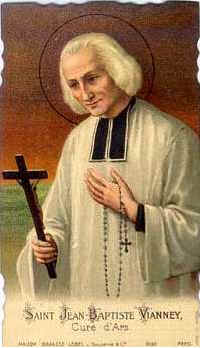

 2, 2: SCh 248, 148; cf. Ep. Barnabae 19, 5: PG 2, 777; Ad Diognetum 5, 6: PG 2, 1173; Tertullian, Apol. 9: PL 1, 319-320.] God, the Lord of life, has entrusted to men the noble mission of safeguarding life, and men must carry it out in a manner worthy of themselves. Life must be protected with the utmost care from the moment of conception: abortion and infanticide are abominable crimes. [GS 51 # 3.]"