Tuesday, November 11, 2014
Happy Martinmas! (And 96th Anniversary of Armistice Day)

Today is a two-fold celebration.

Firstly, today is Martinmas, the Feast of St. Martin of Tours, and a great celebration in the Catholic sense.  This is the end of the autumn season and essentially a “Catholic Thanksgiving.”  There are many traditions associated with today.  I encourage you to read up on them by clicking here.  You may also read the life of St. Martin of Tours here.

Secondly, today is Veterans Day (originally called Armistice Day).  President Woodrow Wilson, an anti-Catholic at heart, started this day.  While today is a fitting day for us to recall the lives of those who perished and honor their service and commend the repose of their souls to God in prayer, let us not forget the Catholic sense of praying for the dead and those in the military.

And let us not forget that today is the celebration of Martinmas!
The Feast coincides not only with the end of the Octave of All Souls, but with harvest time, the time whennewly-produced wine is ready for drinking, and the end of winter preparations, including the butchering of animals (an old English saying is "His Martinmas will come as it does to every hog," meaning "he will get his comeuppance" or "everyone must die"). Because of this, St. Martin's Feast is much like the American Thanksgiving (celebrated on the 4th Thursday in November) -- a celebration of the earth's bounty. Because it also comes before the penitential season of Advent, it is seen as a mini "carnivale" with all the feasting and bonfires. As at Michaelmas on 29 September, goose is eaten in most places (the goose is a symbol for St. Martin himself. It is said that as he was hiding from the people who wanted to make him Bishop, a honking goose gave away his hiding spot), but unlike most Catholics, those of Britain and Ireland prefer pork or beef on this day.  Source:  Fisheaters.com 

The Eleventh Day of the Eleventh Month at the Eleventh Hour...

Before Omaha Beach, D-Day (June 1944)

If I should die, think only this of me:
That there's some corner of a foreign field
That is forever England. There shall be

During World War I (1914 - 1918)

In that rich earth a richer dust concealed;
A dust whom England bore, shaped, made aware,
Gave, once, her flowers to love, her ways to roam,

Funeral Mass (Date Unknown)

A body of England's, breathing English air,
Washed by the rivers blest by the suns of home.

Mass on the Battlefield (Date Unknown)

And think, this heart, all evil shed away,
A pulse in the eternal mind, no less
Gives somewhere back the thought by England given;

Mass on the Battlefield (Date Unknown)

Her sights and sounds; dreams happy as her day;
And laughter, learnt of friends; and gentleness,
In hearts at peace, under an English Heaven

Source: "The Soldier" by Rupert Brooke (1887 - 1915)

Image Sources: Believed to be in the Public Domain
Read more >>
Friday, November 7, 2014
November's First Friday Devotion

Today is the First Friday of November. Because today is the first Friday of the Month, many Catholic parishes will have special Masses today for the First Friday Devotion.

"With foresight, the divine heart of Christ merited and ordered all the favors which we have received, disposing them for each of us in particular. How our hearts would be inflamed with love for so many favors! Consider that they were destined for us by the will of the Father, to be borne in the heart of the Savior, Who earned them for us by His sufferings, above all by His passion." - St. Francis de Sales

Beginning on December 27, 1673, through 1675, Our Lord appeared to St. Margaret Mary Alacoque asking her to receive Him in Holy Communion on the first Friday of every month and to meditate on His passion from 11:00 PM to 12:00 midnight each Thursday. He also revealed to her twelve promises for all who are devoted to His Sacred Heart; he asked for a Feast of the Sacred Heart to be instituted in the liturgical calendar of the Church. Our Lord appeared to St. Margaret Mary Alacoque with twelve promises for those devoted to His Most Sacred Heart.

Promises for those devoted to the Sacred Heart:

1. "I will give them all the graces necessary in their state of life."
2. "I will establish peace in their homes."
3. "I will comfort them in their afflictions."
4. "I will be their secure refuge during life, and above all in death."
5. "I will bestow a large blessing upon all their undertakings."
6. "Sinners shall find in My Heart the source and the infinite ocean of mercy."
7. "Tepid souls shall grow fervent."
8. "Fervent souls shall quickly mount to high perfection."
9. "I will bless every place where a picture of My Heart shall be set up and honored."
10. "I will give to priests the gift of touching the most hardened hearts."
11. "Those who shall promote this devotion shall have their names written in My Heart, never to be blotted out."
12. "I promise thee in the excessive mercy of My Heart that My all-powerful love will grant to all those who communicate on the First Friday in nine consecutive months, the grace of final penitence; they shall not die in My disgrace nor without receiving the Sacraments; My Divine heart shall be their safe refuge in this last moment."

Prayer of Reparation:


O Most Holy Trinity, Father, Son and Holy Spirit, I adore thee profoundly. I offer thee the most precious Body, Blood, Soul and Divinity of Jesus Christ, present in all the tabernacles of the world, in reparation for the outrages, sacrileges and indifferences by which He is offended. By the infinite merits of the Sacred Heart of Jesus, and the Immaculate Heart of Mary, I beg of thee the conversion of poor sinners.
Read more >>
Thursday, November 6, 2014
Charlemagne: The Catholic Father of Europe

Charlemagne (c. 742 – 814), the First Christian Western Emperor in nearly 300 years and the Father of Europe exemplified the knightly aestheticism. Born the son of Pepin the Short, Charles I, who would later be universally known as Charlemagne, served as the King of the Franks from 768, King of Italy from 774, and Emperor from 800 until his death in 814.

Born in c. 742 to Pepin the Short, son of Charles Martel, Charlemagne was born in an era after the Christianization of the Franks.  His father would be proclaimed as the first King of the Carolingian Dynasty.  Charlemagne, like his father, would serve as a strong defender of the Papacy.  Upon the death of Pepin the Short, Charlemagne reigned alongside with his brother, Carloman I, from 768 – 771.  Tragically his younger brother died in 771, leaving Charlemagne as the sole ruler of the Franks.

The life of Charlemagne is far richer than a mere historical account of battles won and territories conquered.  The story of Charlemagne is a story of a true Christian king who sought the reign of Christ the King.  While at times Charlemagne would overstep his authority and impose upon the spiritual realm, which remains distinct but in union with the temporal realm, his policies worked toward a deepening of the spiritual life.

“One key — probably the most important one — to Charlemagne’s political thought is Augustine’s City of God, which, next to the Bible, was his favorite book. In reflecting on the temporal and heavenly realms, the patriarch took issue with ascetics who urged withdrawal from fallen human society in pursuit of an attainable holiness. He pointed out that perfection is impossible in this world, where divine and satanic forces are locked in constant conflict. The only sinless society will be that which gathers around the throne of God at the end of time. The moral for the leaders of both Church and state was not withdrawal, or even the establishment of monasteries as gateways to perfection, but earnest engagement in the battle against the forces of evil" (Derek Wilson, Charlemagne (New York: Doubleday, 2006), Page: 128.

Charlemagne sought to root out all paganism from his vast empire.  He wielded the power to discipline clerics, control ecclesial property, and define doctrine.  From 809 – 810, Charlemagne called a local council in Aachen that called for the Filioque to be added to the Creed.  While Pope Leo III approved the doctrine of the Filioque, he opposed the inclusion of it in the Creed that was set at the First Council of Constantinople in 381.  The Sovereign Pontiff responded by having the original Creed cast in large metal shields to be displayed in St. Peter’s Basilica. Pope Damasus originally approved the Nicene-Constantinopolitan Creed, and the Council of Chalcedon affirmed that the Council was ecumenical in 451.

Like a true knight, Charles the Great maintained the long-established traditions of his fathers. While Charlemagne engaged in reforms of the Frankish government, he retained their traditional practices.   As a Carolingian king, he possessed not only the right to rule and command but also held supreme judicial authority, the ability to lead the army, and the duty to protect the poor and the Church.  And like a great and holy knight, Charlemagne protected the poor, the weak, and the needy of his vast empire.

Charlemagne’s impact on music cannot be forgotten.  As strong proponent of ecclesial music, chant flourished under his rule.
"Charlemagne's interest in church music and solicitude for its propagation and adequate performance throughout his empire, have never been equaled by any civil ruler either before or since his time. He not only caused liturgical music to flourish in his own time throughout his vast domain, but he laid the foundations for musical culture which are still potent today” (Otten, Joseph. "Charlemagne and Church Music." The Catholic Encyclopedia. Vol. 3. New York: Robert Appleton Company, 1908).
A knight is acutely aware of his vocation.  He is a cultured soldier in the army of God who understands and appreciates the cultural heritage of his forefathers.  In a becoming fashion, Charlemagne possessed a love for literature.  Among his most favorite books were the Holy Scriptures and the works of St. Augustine.  In response for his commitment to holy literature, Charlemagne founded a court library.  Despite the long and painstaking process of composing a text by hand, Charlemagne still distributed copies.  And in imitation of the practice of the monks, Charlemagne would often take his meals while a subject would read a book to him.

As the true knight will defend the poor, the weak, and the needy, and whereas the knight will fight at all times to promote truth and defend the honor of God, Charlemagne fought long to spread the Gospel throughout the world.  A knight will not flee from adversity but will press on to the win the prize.  Charlemagne was no different when he defeated the Lombards in Pavia.  And despite 30 years of continuous campaigns against the Saxons, Charlemagne persisted in battle.  The Saxons were told to convert to Christianity from Paganism or suffer death.  In 785 their leader, Wittekind, converted.

Yet despite the many victories, there were defeats.  In 777 AD, Charlemagne suffered a death against the Moors of Spain.  While in battle his great paladin, Roland, was slain.  The episode is recounted in the legendary Song of Roland, the oldest surviving major French work of literature:
But Rollant feels he's no more time to seek;
Looking to Spain, he lies on a sharp peak,
And with one hand upon his breast he beats:
"Mea Culpa!  God, by Thy Virtues clean
Me from my sins, the mortal and the mean, 
Which from the hour that I was born have been
Until this day, when life is ended here!"
Holds out his glove towards God, as he speaks
Angels descend from heaven on that scene.
After years of defending the rights of the papacy and seeking the conversion of pagans and heretics, Charlemagne was crowned as the first Holy Roman Emperor on Christmas Day of the year 800 AD.  Like the Benedictio Novi Militis of the Roman Pontifical for the liturgical dubbing of a knight, the coronation of a king is a sacramental.


Charlemagne’s final years of life were spent in attendance at daily Mass.  In the Year of our Lord 814, Charlemagne passed from this world to the next.

The First Holy Roman Emperor was buried in Aachen’s Cathedral, in which is still presently contained his mortal remains.  The Cathedral was originally built as Charlemagne’s palace chapel.  For nearly 600 years from 936 – 1531 AD, kings were anointed and crowned at the main altar of Aachen’s Cathedral.   Within the Cathedral is contained the four holy relics collected by Charlemagne: The cloak of our Lady, the swaddling clothes of the Infant Jesus, the loin clothes worn by Jesus Christ during His Crucifixion, and the cloth on which rested the head of St. John the Baptist after his martyrdom.  These relics are displayed only every seven years for the public.

At his death, Charlemagne left a vast empire; many had believed under Charlemagne the Western world would reunite for the first time since the fall of the Roman Empire.  However, upon his death, the Kingdom was divided amongst his sons.  After civil wars and feuds, the vast empire of Charles the Great split into several feudal states.

Dom Guerange comments on how, in the time after his reign, he has been honored liturgically as a saint in some places:

Charlemagne was held as a Saint by the people, and the decree of his canonization was given by the Antipope Paschal the Third, in the year 1165, at the request of Frederic Barbarossa; on which account, the Holy See has permitted this public veneration to be continued in all those places where it prevailed, though it has never given its approbation to the informal procedure of Paschal, nor made it valid by its own sentence, which it would, in all probability, have done had the request been made. At the same time, the many Churches, which, now for seven centuries, have honoured the memory of Charlemagne, keep his Feast under the simple title of Blessed, out of respect to the Roman Martyrology, where his name is not inserted.

Before the Reformation, the name of Blessed Charlemagne was inscribed in the Calendar of a great many of the Churches in France; the Breviaries of Rheims and Rouen are the only ones that have retained it. The Church of Paris ceased to keep his Feast, in order to satisfy the prejudices of several Doctors of the University, in the early part of the 16th century. Protestantism had, naturally enough, an antipathy for a man, who was the noblest type of a Catholic Prince: and they who were tainted with the spirit of Protestantism, defended their blotting out the name of Charlemagne from the Calendar, not so much by the informality of his Canonization, as by the scandal which they affected to find in his life. Public opinion was formed on this, as on so many other matters, with extreme levity; and among those who will be surprised at finding the name of Charlemagne in this volume, we quite expect that they will be the most astonished who have never taken the trouble to inquire into the holiness of his life.

With the death of Charlemagne, the knightly ideal did not die and neither did the support of the Church. Bishop Richard Williamson identifies the coronation of Charlemagne as the start of a 1,000-year period of prosperity and growth for the Holy Church – up until the French Revolution.  Charlemagne, the Father of Europe, had fought paganism, defended the rights of the Sovereign Pontiff, upheld orthodox doctrine, and embodied chivalry.  May all men embody the virtue and chivalry of Charlemagne.

Collect:

O God, who in the superabundant riches of thy mercy, didst clothe the blessed Emperor Charles the Great, after he had laid aside the garb of the flesh, with the robe of immortal life; grant, we beseech thee, that he whom thou didst raise up on earth to the imperial dignity, that so he might spread the true faith, may lovingly intercede for us in heaven. Through Christ our Lord. Amen.
Read more >>
Wednesday, November 5, 2014
Review: 2015 Angelus Press Calendar


A few days ago I received the 2015 Angelus Press Calendar in the mail.  As I did back in 2012 and then again in 2013, I am pleased to review the Angelus Press calendar.  I have become used to the great quality in these calendars.  The 2015 calendar is no different – in fact, it’s the most beautiful calendar that they have made so far.

The calendar itself is beautifully typeset and features symbols to denote which dates are days of mandatory fasting, mandatory abstinence, traditional fasting, traditional abstinence, or combinations thereof. 

The subject of the 2015 calendar is the Traditional Latin Mass, using the texts from Archbishop Marcel Lefebvre.  These texts were instrumental in helping me toward Traditional Catholicism.  The beautiful art and the passages in the 2015 calendar are well worth study and meditation.

I highly recommend this calendar and hope that you will purchase one from Angelus Press.

Read more >>
Tuesday, November 4, 2014
Does SSPX Mass Attendance Fulfill the Sunday Obligation?


Yes, a Catholic may fulfill their Sunday obligation by assisting at Masses said by the priests of the Society of St. Pius X (SSPX).

The Ecclesia Dei Commission on 18th January 2003, stated that it is possible to satisfy the precept of hearing Sunday Mass by assisting at a Mass celebrated by a priest of the Society of Saint Pius X.

Msgr. Camille Perl of Ecclesia Dei wrote in a letter to Una Voce America in 2003:
"...Points 1 and 3 in our letter of 27 September 2002 to this correspondent are accurately reported. His first question was "Can I fulfill my Sunday obligation by attending a Pius X Mass" and our response was: "1. In the strict sense you may fulfill your Sunday obligation by attending a Mass celebrated by a priest of the Society of St. Pius X." (Source: http://www.cfnews.org/sspx-obl.htm)
Read more >>
Monday, November 3, 2014
Day by Day for the Holy Souls in Purgatory: 365 Reflections


I would like to recommend this book which is especially appropriate for All Souls Day:

"If we, by our prayers and sacrifices, freed a soul from purgatory, we would then have another intercessor for us in heaven." - Venerable Solanus Casey

Every day we have another opportunity to pray for the holy souls in purgatory - author, speaker, and purgatory expert Susan Tassone gives you a unique tool to do just that. Day by Day for the Holy Souls includes prayers, teachings about purgatory, real-life stories, Susan's own wisdom, meditations, quotes from the saints, and more. You can use this book however you like - as a daily devotional, as a year round novena, to follow the liturgical seasons.
Read more >>
Sunday, November 2, 2014
Vote This Tuesday!

The elections this November will be essential to furthering the pro-life message! We really need to make sure we vote for those candidates that agree with the Church's teachings on the five non-negotiables, which are always wrong (abortion, embryonic stem cell research, gay marriage, euthanasia, and cloning). The Church never supports a candidate, but it supports views on issues.
So, please above all vote for the candidates that are pro-life. Pro-life of course also means being anti-poverty and caring for the less fortunate in society but opposition to abortion should be our #1 concern. The Church teaches that it is a mortal sin to vote for a politician that supports abortion if there is a candidate running who is against abortion (read more)

According to the exit polls from the 2012 Presidential election, 51% of Catholics voted in favor of the pro-abortion, anti-Catholic Obama while 49% voted in favor of the pro-life candidate.   Even more discouraging is the continued trend in which states that contain large number of Catholics - even the majority of the state’s population - have consistently voted for anti-Catholic Democrats (and anti-Catholic Republicans at times).  Why is it that New England is a Democratic stronghold even though 36.6% of Connecticut’s population is Catholic?  Why is 37.1% of New York is made up of Catholics when the state always elects abortion supporters?

Catholics - the country's largest religious group with one-quarter of the population - have supported the winner of the popular vote in every presidential election since 1972.

To see how your politicians have voted, please see the National Right to Life legislative scorecard. Democrats for Life also has a list of some pro-life candidates. Let us stand up for the right of every little unborn child; let us further the Kingdom of God. I advise all people to vote against the pro-abortion candidates NARAL has endorsed for Congress. Check out Priests for Life for a lot of endorsement information.
Read more >>
Mass Propers: Twenty First Sunday after Pentecost


INTROIT Esth. 13:9, 10-11
All things depend on Your will, O Lord, and there is no one who can resist Your will. For You have made all things, heaven and earth, and all things that are under the canopy of heaven. You are the Lord of all. Ps. 118:1. Blessed are they who are undefiled in the way, who walk in the law of the Lord. V. Glory be . . .

COLLECT
Keep Your family under Your continual care, O Lord. Shelter it with Your protection from all adversity, that it may be zealous in doing good for the honor of Your name. Through our Lord . . .

EPISTLE Eph. 6:10-17
Brethren, be strengthened in the Lord and in the might of his power. Put you on the armour of God, that you may be able to stand against the deceits of the devil. For our wrestling is not against flesh and blood; but against principalities and powers, against the rulers of the world of this darkness, against the spirits of wickedness in the high places. Therefore, take unto you the armour of God, that you may be able to resist in the evil day and to stand in all things perfect. Stand therefore, having your loins girt about with truth and having on the breastplate of justice: And your feet shod with the preparation of the gospel of peace. In all things taking the shield of faith, wherewith you may be able to extinguish all the fiery darts of the most wicked one. And take unto you the helmet of salvation and the sword of the Spirit (which is the word of God).

GRADUAL Ps. 89:1-2
O Lord, You have been our refuge through all generation.
V. Before the mountains were made, or the earth was formed, from eternity to eternity You are God.

Alleluia, alleluia! V. Ps. 113:1.
When Israel went out from Egypt, the house of Jacob fled from a barbarous people. Alleluia!

GOSPEL Matt. 18:23-35
At that time, Jesus spoke to his disciples this parable: "The kingdom of heaven likened to a king, who would take an account of his servants. And when he had begun to take the account, one as brought to him, that owed him ten thousand talents. And as he had not wherewith to pay it, his lord commanded that he should be sold, and his wife and children, and all that he had, and payment to be made. But that servant falling down, besought him, saying: 'Have patience with me, and I will pay thee all.' And the lord of that servant being moved with pity, let him go and forgave him the debt.

"But when that servant was gone out, he found one of his fellow-servants that owed him an hundred pence: and laying hold of him, he throttled him, saying: 'Pay what thou owest.' And his fellow-servant falling down, besought him, saying: 'Have patience with me, and I will pay thee all.' And he would not: but went and cast him into prison, till he paid the debt.

"Now his fellow servants seeing what was done, were very much grieved, and they came, and told their lord all that was done. Then his lord called him: and said to him: 'Thou wicked servant, I forgave thee all the debt, because thou besoughtest me: Shouldst not thou then have had compassion also on thy fellow servant, even as I had compassion on thee?' And his lord being angry, delivered him to the torturers until he paid all the debt. So also shall my heavenly Father do to you, if you forgive not every one his brother from your hearts."

OFFERTORY ANTIPHON Job 1:2
There was a man in the land of Hus, whose name was Job, simple and upright, and fearing God. Satan asked that he might tempt him, and power was given Satan from the Lord over Job's possessions and his flesh; and Satan destroyed all his substance and his children, and afflicted his body with a grievous ulcer.

SECRET
O Lord, graciously accept this offering which You in Your boundless mercy instituted to atone for our sins and to restore salvation to us. Through our Lord . . .

COMMUNION ANTIPHON Ps. 118:81, 84, 86
My soul looks to Your salvation, and in Your word have I hoped. When will You come in judgment for those who persecute me? The wicked have persecuted me; help me, O Lord my God.

POSTCOMMUNION
We have been seeking the food of immortality and implore Thee, O Lord, that with its savour still on our tongues, we may with pure hearts continue to pursue it. Through our Lord . . .

Sources: Saint Andrew Daily Missal and the Marian Missal , 1945

Read more >>
Friday, October 31, 2014
SSPX Response to Bishop Marcello Semeraro

Bishop Bernard Fellay, superior of the Society of St. Pius X, celebrates an early morning Mass at the society's headquarters in Menzingen, Switzerland, May 11, 2012. Source: The Catholic World Report

The Society of St. Pius X has issued a response to the unjust and illegal attempt to prevent Catholics from attending their Masses. 
Press Release of SSPX-Italy

ALBANO, ITALY – 10-31-2013


In a notification dated October 14 of this year, Bishop Marcello Semeraro, Ordinary of the Diocese of Albano Laziale (Italy), made particularly odious statements about the Society of St. Pius X, for the purpose of keeping the faithful away from Masses celebrated by our Society and from the religious instruction given to young people, declaring that the Society was not “an institution of the Catholic Church”.

Bishop Semeraro cannot be unaware of the fact that the Society of St. Pius X was erected with the approval of the Bishop of Fribourg (Switzerland) on November 1, 1970, and that this establishment was ratified by Rome with a decree issued by Cardinal Wright, Prefect of the Congregation for the Clergy on February 18, 1971. [see the SSPX's founding documents]

The house itself of the Society in Albano, with its semi-public oratory for the administration of the sacraments, was canonically erected by the decree of Bishop Semeraro’s predecessor, Bishop Raffaele Macario on February 22, 1974 (Protocol n. 140/74).

Despite the problems with the ecclesiastical authorities that developed following the deviations in the Faith and the liturgy brought about by the Second Vatican Council, and notwithstanding the illegitimate attempts to suppress our Society because of its fidelity to the Tradition of the Church, the Holy See itself, through the Roman Ecclesia Dei Commission, affirmed that one can perform one’s Sunday duty “by attending a Mass celebrated by a priest of the Society of St. Pius X” (January 18, 2003) and, as everyone knows, it no longer considers the bishops of that same Society to be not in communion with the Catholic Church.

It is very odd that Bishop Semeraro should intervene in this way when he has made himself the champion of ecumenism in his diocese. In 2009 he granted the Church of San Francesco in Genzano, which was built with the labors and sacrifices of our ancestors for Catholic worship, to schismatics and heretics. On January 28 of this year he organized an ecumenical vigil in the cathedral to pray with persons who are certainly not “in communion with the Catholic Church”, such as an Evangelical Lutheran pastor and an Orthodox bishop.

In the month of November alone, three [ecumenical] meetings are scheduled in the diocese, and the bishop will preside at one of them, thus supporting religions that deny truths of the Faith that have been defined by the Church and spreading the false doctrine of indifferentism, which says that every religion is helpful for salvation. He does not seem to care that this openly contradicts the teaching of the perennial Magisterium of the Church, in particular of Pope Pius XI in his encyclical, Mortalium animos.

Moreover from March 26 to 28 of this year the house of the Somaschi Fathers in Albano hosted the First Forum of Christian Homosexuals, at which the practice of sodomy was defended in principle as an act of true love!

All this is possible in the diocese... but not attending the Masses or classes of those who hand down the Church’s Tradition in doctrine and the liturgy!

This blatant inconsistency is an obvious symptom of the terrible crisis that is affecting the whole Church and that was manifested again recently in the last Synod, in which, under the pretext of mercy, there was discussion of the possibility of changing the Sixth Commandment of God and of abandoning the indissolubility of Christian marriage!

The Society of St. Pius X, following the example of its founder, will continue to transmit in its entirety the deposit of the Catholic Faith and morals, openly taking sides against all the errors that try to distort it, without fear of threats or of unjust canonical sanctions, because neither Bishop Semeraro nor any other member of the ecclesiastical hierarchy will ever be able to change this deposit. As St. Peter said, “It is better to obey God rather than men.”

All who wish to receive the sacraments as the Church has always administered them, or to receive authentic catechetical instruction for their children, adult formation, spiritual direction and comfort for the sick will always be welcome in our chapels.

Society of St. Pius X, District of Italy
Read more >>
Vigil of All Saints


Today is the Eve of All Saints Day (i.e., Halloween), and tomorrow is the Feast of All Saints, a Holy Day of Obligation in many countries. So, please remember to attend Holy Mass tomorrow. Failure to attend Mass without a good reason is a mortal sin. Prepare for Halloween the Catholic Way.

Also, many indulgences are available starting tomorrow, and some apply only to the souls in purgatory. Help the suffering souls! Gain indulgences for them. And learn about today's pre-1955 ways that Traditional Catholics observe to keep this ancient vigil alive.

The History of the Vigil of All Saints as a Day of Fasting and Abstinence

The Catholic Encyclopedia notes that the Vigil of All Saints (Halloween) is an ancient observance almost as old as the Feast of All Saints itself:

Gregory III (731-741) consecrated a chapel in the Basilica of St. Peter to all the saints and fixed the anniversary for 1 November. A basilica of the Apostles already existed in Rome, and its dedication was annually remembered on 1 May. Gregory IV (827-844) extended the celebration on 1 November to the entire Church. The vigil seems to have been held as early as the feast itself. The octave was added by Sixtus IV (1471-84).

Its observance as a fast day is ancient, as the Catholic Encyclopedia states: "Pope Nicholas I (d. 867), in his answer to the Bulgarians, speaks of the fast on the eves of Christmas and of the Assumption...The Synod of Seligenstadt in 1022 AD mentions vigils on the eves of Christmas, Epiphany, the feast of the Apostles, the Assumption of Mary, St. Laurence, and All Saints, besides the fast of two weeks before the Nativity of St. John."

This day of fasting would remain for centuries. Fasting and abstinence, along with Holy Days of Obligation, were, in practice, highly varied depending on each nation and territory. We see this liturgical diversity in the various colonies. For instance, Catholics in the colonies in Florida and Louisiana observed these fasting days:

“The fasting days were all days in Lent; the Ember days; the eves of Christmas, Candlemas, Annunciation, Assumption, All Saints, the feasts of the Apostles except St Philip and St James and St John, and the Nativity of St John the Baptist; all Fridays except within twelve days of Christmas and between Easter and Ascension, and the eve of Ascension.” 

Likewise, the western colonies under Spanish rule in modern-day Texas, New Mexico, Arizona, and California observed as fast days: 

“…all days in Lent except Sunday; eves of Christmas, Whit Sunday, St Mathias, St John the Baptist, St Peter and St Paul, St James, St Lawrence, Assumption, St Bartholomew, St Matthew, St Simon and St Jude, All Saints, St Andrew, and St Thomas.”

At the time of America’s founding, the fast days observed by the new Republic consisted of the Ember Days; the forty days Lent; Wednesdays and Fridays in Advent; and the vigils of Christmas, Whitsun Sunday (i.e., Pentecost), Saints Peter and Paul, and All Saints. Abstinence was practiced on all Fridays and Saturdays of the year unless a Holy Day of Obligation were to occur on them.

The Catholic Encyclopedia from 1909 in describing that fast immediately before the changes to occur under St. Pius X enumerates them as follows: 

“In the United States of America all the days of Lent; the Fridays of Advent (generally); the Ember Days; the vigils of Christmas and Pentecost, as well as those (14 Aug.) of the Assumption; (31 Oct.) of All Saints, are now fasting days. In Great Britain, Ireland, Australia, and Canada, the days just indicated, together with the Wednesdays of Advent and (28 June) the vigil of Saints Peter and Paul, are fasting days.”

The days of obligatory fasting as listed in the 1917 Code of Canon Law were the forty days of Lent (including Ash Wednesday, Good Friday, and Holy Saturday until noon); the Ember Days; and the Vigils of Pentecost, the Assumption of the Blessed Virgin Mary, All Saints, and Christmas.

In 1951, the abstinence laws in America were again revised, as Father Ruff summarizes

“In 1951 the U.S. bishops standardized regulations calling for complete abstinence from meat on Fridays, Ash Wednesday, the vigils of Assumption and Christmas, and Holy Saturday morning for everyone over age seven. On the vigils of Pentecost and All Saints, meat could be taken at just one meal. Fast days, applying to everyone between 21 and 59, were the weekdays of Lent, Ember days, and the vigils of Pentecost, Assumption, All Saints, and Christmas. On these fast days only one full meal was allowed, with two other meatless meals permitted which together did not make up one full meal. Eating between meals was not permitted, with milk and fruit juice permitted. Health or ability to work exempted one.” 

As a result, the Vigil of All Saints was reduced to partial abstinence for American Catholics only in 1951.

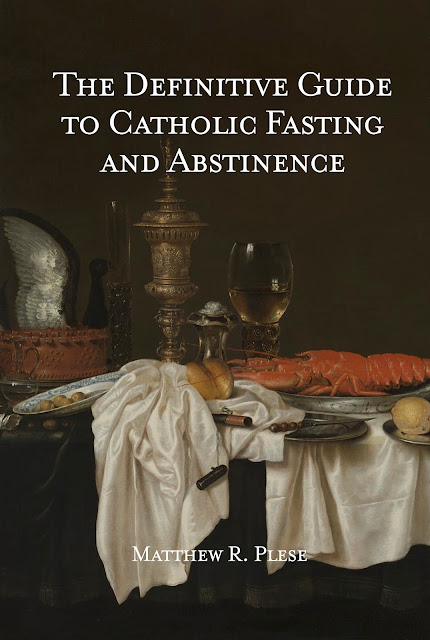
Want to learn more about the history of fasting and abstinence? Check out the Definitive Guide to Catholic Fasting and Abstinence.


The Ancient Vigil of All Saints Fast Is Altered in the 1950s

1955 saw some of the most significant changes to the Church's liturgy since the Council of Trent. Pope Pius XII, in "Cum nostra hac aetate" on March 23, 1955, abolished 15 Octaves in addition to the Octave for the Dedication of a Church and particular octaves for patrons of various religious orders, countries, dioceses, etc. He also abolished roughly half of all vigils, leading to the removal of the liturgical vigils of the Immaculate Conception, Epiphany, All Saints, and All apostles except Ss. Peter and Paul. The total number of liturgical vigils was now reduced to 7.

Uncertainty existed on whether or not fasting was still required on October 31st, the Vigil of All Saints (commonly called Halloween). The US Bishops requested an official determination from Rome on whether the custom of fasting and abstinence on the suspended Vigil of All Saints had also been terminated. They received a pre-printed notice in a response dated March 15, 1957, stating: "The Decree of the Sacred Congregation of Rites...looks simply to the liturgical part of the day and does not touch the obligation of fast and abstinence that are a penitential preparation for the following feast day." The US Bishop thereafter dispensed both the fast and partial abstinence law for the Vigil of All Saints.

However, for those who strive to retain our traditions, the Vigil of All Saints is still a worthwhile day to maintain a fast and keep as a day of abstinence in preparation for tomorrow's great feast.

Feastday of St. Wolfgang of Regensburg


Today is also the Feastday of St. Wolfgang of Regensburg, though it is not celebrated in the Liturgy. The following is taken from Catholic.org:

Wolfgang (d. 994) + Bishop and reformer. Born in Swabia, Germany, he studied at Reichenau under the Benedictines and at Wurzburg before serving as a teacher in the cathedral school of Trier. He soon entered the Benedictines at Einsiedeln (964) and was appointed head of the monastery school, receiving ordination in 971. He then set out with a group of monks to preach among the Magyars of Hungary, but the following year (972) was named bishop of Regensburg by Emperor Otto II (r. 973-983). As bishop, he distinguished himself brilliantly for his reforming zeal and his skills as a statesman. He brought the clergy of the diocese into his reforms, restored monasteries, promoted education, preached enthusiastically, and was renowned for his charity and aid to the poor, receiving the title Eleemosynarius Major (Grand Almoner). He also served as tutor to Emperor Henry II (r. 1014-1024) while he was still king. Wolfgang died at Puppingen near Linz, Austria. He was canonized in 1052 by Pope St. Leo IX (r. 1049-1054). Feast day: October 31.
Read more >>
Tuesday, October 28, 2014
Bishop Williamson Ordains a Brazilian Deacon


Just a few days ago His Excellency Bishop Williamson ordained a deacon in Brazil.  Photo source: Militia Jesu Christi.

For those unfamiliar with His Excellency’s current dealings, you should check out his newly released website on the St. Marcel Initiative.  

Prayer for Vocations by Ven. Pope Pius XII

Lord Jesus, High Priest and universal Shepherd, Thou hast taught us to pray, saying: "Pray the Lord of the harvest to send forth laborers into His harvest" [Matt. 9: 38]. Therefore we beseech Thee graciously to hear our supplications and raise up many generous souls who, inspired by Thy example and supported by Thy grace, may conceive the ardent desire to enter the ranks of Thy sacred ministers in order to continue the office of Thy one true priesthood.

Although Thy priests live in the world as dispensers of the mysteries of God, yet their mission demands that they be not men of this world. Grant, then, that the insidious lies and vicious slanders directed against the priesthood by the malignant enemy and abetted by the world through its spirit of indifference and materialism may not dim the brilliance of the light with which they shine before men, nor lessen the profound and reverent esteem due to them. Grant that the continual promotion of religious instruction, true piety, purity of life and devotion to the highest ideals may prepare the groundwork for good vocations among youth. May the Christian family, as a nursery of pure and pious souls, become the unfailing source of good vocations, ever firmly convinced of the great honor that can redound to our Lord through some of its numerous offspring. Come to the aid of Thy Church, that always and in every place she may have at her disposal the means necessary for the reception, promotion, formation and mature development of all the good vocations that may arise. For the full realization of all these things, O Jesus, Who art most zealous for the welfare and salvation of all, may Thy graces continually descend from heaven to move many hearts by their irresistible force; first, the silent invitation; then generous cooperation; and finally perseverance in Thy holy service.

Art Thou not moved to compassion, O Lord, seeing the crowds like sheep without a shepherd, without anyone to break for them the bread of Thy word, or to lead them to drink at the fountains of Thy grace, so that they are continually in danger of becoming a prey to ravening wolves? Does it not grieve Thee to behold so many unplowed fields where thorns and thistles are allowed to grow in undisputed possession? Art Thou not saddened that many of Thy gardens, once so green and productive, are now on the verge of becoming fallow and barren through neglect?

O Mary, Mother most pure, through whose compassion we have received the holiest of priests; O glorious Patriarch St. Joseph, perfect model of cooperation with the Divine call; O holy priests, who in Heaven compose a choir about the Lamb of God: obtain for us many good vocations in order that the Lord's flock, through the support and government of vigilant shepherds, may attain to the enjoyment of the most delightful pastures of eternal happiness

Read more >>
Saturday, October 25, 2014
Traditional Dominican Friars of Steffeshausen

Note (2018): This particular community no longer exists

 
Find out about a new traditional religious community, the Dominican Friars of Steffeshausen, Belgium, and see how you can help them... or even join the Third Order of St. Dominic.

A video has just been published about a new foundation of traditional Dominican friars in Belgium and the Third Order that they are offering to the faithful.

This new community of traditional Dominican friars was founded on November 15, 2013, in Steffeshausen, a little village in the southeast corner of Belgium. They were invited there by the villagers after the death of their parish priest, who had kept the traditional Mass and was persecuted by his bishop some 25 years ago. They offered the church and rectory built by this priest to these friars as a first home for their fledgling community. Bishop Alfonso de Galarreta, who assists those religious communities affiliated with the SSPX, accepted to help the foundation as its ecclesiastical superior.

The goal of the community is simply to continue the true spirit of St. Dominic as it has been embodied for eight centuries, an ideal summed up perfectly by St. Thomas Aquinas in a few words in his Summa Theologica which have become a sort of motto of the Order: "To contemplate and give to others what has been contemplated."

Thus a Dominican must be first and above all a true contemplative, and in order to achieve this end the Constitutions prescribe all of the monastic practices followed by contemplative orders: the Divine Office in common, silence, fasting, chapter of faults, etc. Of course, this includes the three vows of poverty, chastity, and obedience common to all religious.

On top of this, however, Dominicans add the obligation of study, in order to be able to attain the secondary end of the Order: the preaching of the Word of God, to “give to others what has been contemplated.”

Since November the friars at Steffeshausen have been living this life of contemplation and preaching. There are at present four priests and one lay brother, three of whom are French and two Canadian. Some young men have already presented themselves to ask to join them and they plan to begin to receive postulants in the fall of 2015.

The Dominicans belong to an Order of mendicant preachers. It is by alms that they are able to lead their life of prayer and study that will permit them to prepare their apostolate.

Source: E-Pistola of 10/24/14
Read more >>
Friday, October 24, 2014
Ss. Chrysanthus and Daria


1955 Calendar (Simple): October 25

Chrysanthus was the only son of an Egyptian patrician, named Polemius or Poleon, who lived during the reign of Numerian. His father moved from Alexandria to Rome. Chrysanthus was educated in the finest manner of the era. Disenchanted with the excess in the Roman world, he began reading the Acts of the Apostles.

He was then baptized and educated in Christianity by a priest named Carpophorus. His father was unhappy with Chrysanthus's conversion and attempted to inculcate secular ways into his son by tempting him with prostitutes, but Chrysanthus retained his virginity.

He objected when his father arranged a marriage to Daria, a Roman Vestal Virgin. Chrysanthus converted his new bride and convinced her to live with him in a chaste state. Vestal Virgins took a vow of chastity during their thirty-year term of service.

They went on to convert a number of Romans. When this was made known to Claudius, the tribune, Chrysanthus was arrested and tortured. Chrysanthus's faith and fortitude under torture were so impressive to Claudius that he and his wife, Hilaria, two sons named Maurus and Jason, and seventy of his soldiers became Christians.

For this the emperor had Claudius drowned, his sons beheaded and his wife went to the gallows. The legend states that Daria was sent to live as a prostitute, but her chastity was defended by a lioness. She was brought before Numerian and ordered to be executed.

There are many variations to this legend. Some claim that she was subjected to execution by stoning, others say she was beheaded and yet others claim she was buried alive in a deep pit beside her husband. They were entombed in a sand pit near the Via Salaria Nova, the catacombs in Rome.

The Acts of Chrysanthus and Daria state that on the anniversary of their deaths, a large number of Christians had gathered at their underground crypt to pay their respects when Roman persecutors surprised them, filled the crypt with stones and buried them all alive, including Diodorus, a priest, and Marianus, a deacon.

Prayer:

May the prayers of Your blessed martyrs Chrysanthus and Daria be with us, O Lord, so that we who devoutly honor them may always experience their kind assistance. Through our Lord . . .


Read more >>
Feast of St. Raphael the Archangel


Greater Double (1954 Calendar): October 24

The Church, having recently celebrated the Feast of St. Michael the Archangel, now celebrates the Feast of St. Raphael. The feast day of Raphael was included by Pope Benedict XV for the first time in the General Roman Calendar in 1921, for celebration on October 24.

Again to summarize: Angels are pure, created spirits. The name angel means servant or messenger of God. They are celestial or heavenly beings, on a higher order than human beings. An angel has no body and does not depend on matter for his existence or activity. They are distinct from saints, which men can become. Angels have intellect and will, and are immortal. They are a vast multitude, but each is an individual person. Archangels are one of the nine choirs of angels listed in the Bible. In ascending order, the choirs or classes are 1) Angels, 2) Archangels, 3) Principalities, 4) Powers, 5) Virtues, 6) Dominations, 7) Thrones, 8) Cherubim, and 9) Seraphim.

The angels who we know by name (i.e., Raphael, Michael, and Gabriel) are called Archangels because of their high rank (arching above the other angels).  They are not Archangels in terms of the second-lowest tier.  Rather, these three are three of the seven seraphim angels, the highest-ranking, who continually stand before the presence of God in Heaven.

Archangel Raphael is known through the Book of Tobias in the Old Testament. He appeared in human form as a gracious young man called Azarias, to protect the younger Tobias on his journey from Ninive to a city of the Medes. In the process he found a wife for Tobias, and later delivered her from an evil spirit; he also healed the elder Tobias of blindness. Raphael is "one of the seven who stand before the Lord" (Tob. 12:15). Today's Prayer speaks of him as a companion in journeys. The Reading shows him as presenting our prayers to God. The Gospel is a reminder of Raphael's healing powers, for his name means "God has healed."

See "An Exposition of Angels: All You Need To Know" for more information on angels.

Collect:

O God, who sent the blessed Archangel Raphael to accompany Your servant Tobias on his journey, grant that we, Your servants, may also be guarded by him always and strengthened by his assistance. Through our Lord.
Read more >>
Wednesday, October 22, 2014
Cardinal Burke Repudiates Francis, Synod on the Family


Guest Article By David Martin

Cardinal Raymond Burke, who heads the Vatican's highest court of canon law and who is recognized as one of the most outstanding prelates of the Catholic Church today has gone on record as saying that the recent Synod on the Family was designed to "weaken the Church's teaching and practice.” This “weakening” apparently had the blessing of Pope Francis.

On October 17, Burke told BuzzFeed News: "If Pope Francis had selected certain cardinals to steer the meeting to advance his personal views on matters like divorce and the treatment of LGBT people, he would not be observing his mandate as the leader of the Catholic Church."

Unfortunately the Synod was controlled by a clique of liberals and their media affiliates so that the views of the good bishops in attendance were scarcely reflected in the Synod documents. The pope’s duty was to censure progressivist, anti-family action and to support the views of conservative participants who demonstrated true pastoral concern, but we saw quite the opposite.

Conservative Catholic sources report that Francis in fact has been “irritated” with Burke and other Vatican conservatives for opposing the views of Cardinal Kasper, the key spokesman of the upheaval and Francis' close ally, who maintains that divorced and “remarried” people be allowed to receive Holy Communion. Burke’s censure of Kasper and his defense of orthodoxy have unfortunately put an end to his work in Rome, as Francis has now demoted him from his position as Rome’s chief guardian of canon law, and is sending him to the island of Malta in a sort of exile to assume a rather insignificant post there. This was confirmed by Burke in his interview with BuzzFeed on October 17.

But Burke remains relentless in his defense of truth. The cardinal said: “The pope, more than anyone else as the pastor of the universal church, is bound to serve the truth,” pointing out that "the pope is not free to change the church’s teachings with regard to the immorality of homosexual acts or the insolubility of marriage or any other doctrine of the Faith.”

Given the times we are living in, the most pastoral thing the pope can do is to safeguard the flock from false pastors, so it is nothing less than appalling that suspect theologians like Cardinal Kasper were appointed to key positions of the Synod. Other participating members included Cardinal Timothy Dolan who supports gay participation in the annual St. Patrick’s Day Parade, Cardinal Donald Wuerl who from his seminary days has been known as “Wuerl the girl,” and Cardinal Godfried Danneels who is reputed for his pedophile connections and gay-marriage advocacy.

In short, a gay-lobby was in force to corrupt the Synod, as evidenced in the Synod’s midterm report Relatio post Disceptationem which embraced gayhood with open arms. The Synod fathers were all aware that Francis had read and approved the relatio for publication, so this raises some serious questions about Francis and warrants growing concerns that he clarify his position on critical moral issues. Burke said in his interview that Francis has "done a lot of harm” by not stating “openly what his position is.”

The thrust of the progressivist lobby was to drum up respect for homosexuality and to incorporate people of gay orientation, as if they were a valued part of the Catholic Church. Consider the following from the relatio issued by the Synod on Monday, October 13:

50. "Homosexuals have gifts and qualities to offer to the Christian community... Are we capable of providing for these people, guaranteeing them a place of fellowship in our communities? Oftentimes, they want to encounter a Church which offers them a welcoming home. Are our communities capable of this, accepting and valuing their sexual orientation?"

Since when is the orientation of lewd sex offenders something that the Holy Roman Catholic Church values? The Church rather condemns homosexuality and places it on par with willful murder, listing it as one of the “four sins crying to Heaven for vengeance.”

St. Paul speaks of those offenders and enemies of the Faith "who have burned in their lusts one towards another, men with men working that which is filthy," and goes on to say that "they who do such things are worthy of death; and not only they that do them, but they also that consent to them that do them." (Romans 1:27,32) Hence if so much as respecting homosexuality renders one "worthy of death," how is it that a Vatican synod could have the dare to foster its growth?

The same-sex aspiration of homosexuals is not a gift, but a criminal tendency springing from the devil and original sin, just as the desire to rape or murder is of the devil. If doctors go to great extent to purge cancerous tumors from the body, with how much greater urgency must the hierarchy purge these effeminate tumors from the Body of Christ? There certainly can be no integrating of filth with grace. Yet the Relatio states:

51. "The question of homosexuality requires serious reflection on how to devise realistic approaches to affective growth, human development and maturation in the Gospel, while integrating the sexual aspect."

Since when does the hierarchy reflect seriously on how to integrate sodomy with Holy Mother the Church? Have they forgotten the divine wrath and destruction that fell upon Sodom and Gomorrah for the sin of homosexuality? Are they so addicted to their shame that they would rather watch their brothers and sisters burn in the torture chambers of eternity before admitting their error?

Charity for homosexuals consists in rescuing them from their bondage, not in sustaining their vice so that it takes them down to the fires of Hell. The Church’s pastoral duty to gays is to correct and admonish them about their offense so that they too can be saved. It is only through repentance and amendment of life that homosexuals and mortal offenders can be admitted to the Church. The mere fact that this is been the Church’s fruitful and unwavering position for 2000 years should be enough proof that it should be the Church’s position today. “Prove all things; hold fast that which is good.” (1 Thess. 5:21)

Hence the midterm relatio of October 13 constituted a radical break from Church teaching. By Thursday October 16, the conservative backlash was so great that it exploded into an all-out revolt that significantly altered the direction of the Synod for the better. A professor from a pontifical university in Rome who was in direct contact with the Synod fathers had this to say:
“I have spoken to a huge number of prelates in the past few days, many of them Synod Fathers. They are all furious and indignant with Francis. A president of a Conference of Bishops of a large African country even called him to my face "an agent of disruption." The right word to describe the general atmosphere reigning in the Curia and the Synod, after 18 months of a government imposed by fear and persecution, is one I've heard several times in the past week: "esasperazione" ("exasperation"). The experiences of the past century show that a government of fear and manipulation cannot subsist for long without rebellion, and that was what erupted on Thursday. It was as if a pressure cooker exploded at the end of an 18-month-long simmering.”  (Rorate Caeli blogspot.com)

The real rebellion will occur in the future if we don’t see more of this passionate defense of the Faith in Rome. History has proved that some of the most important decisions of Church history occurred in a moment of intense moral indignation, just as the indignation of the good bishops paid off at the Synod. Among the key warriors leading the charge was Cardinal Burke, the public opponent of Francis throughout the Synod, who together with several cardinals accused Francis of having inflicted “great damage” to the Church. Of noteworthy mention is Archbishop Napier of South Africa, who distinguished himself as one of the key opponents of the obscene relatio and who spoke of the “irreparable damage” to the Synod in his potent, but lucidly eloquent first speech.

Even so, the Synod on the Family did not completely alter its tune after the confrontation. The final Synod document Relatio Synodi, issued on October 18, still echos some of the gay sympathies reflected in the previous document, though significantly toned down and with more diplomacy. But nonetheless there, as we read in article 55:

“Men and women with homosexual tendencies must be welcomed with respect and gentleness. Every sign of unjust discrimination in their regard should be avoided." This ambiguous double-talk is reminiscent of the Vatican II Council which also used mushy, ambiguous wording to advance progressive agenda.

The point being that there is nothing said or even implied in the final document that homosexuality is a gravely sinful disorder generated by the devil, and one which is spawning most of the sexual-abuse throughout the Church. It would have made more sense for the Synod to extend “welcoming” arms to rapists, porn-hustlers, and gamblers, since their poison isn’t as deadly as that of homosexuals, nor is it directed against the institution of the family the way gay agenda is. It is a known fact that the lesbians and gays run the pro-death culture throughout the world!
 
But we owe our indebtedness to Cardinal Burke and those faithful ones of the conservative lobby who stood up against the obscene clique, because without their action the key architects of the Synod would have succeeded with their plan to proclaim to the world that the Catholic Church had finally embraced homosexuality as an accepted way of life. The planned “October revolution” was foiled! The Synod served as a spiritual call to arms, and one which Burke and his allies answered with a great deal of courage and zeal.

And interesting to note that Cardinal Burke is a fervent advocate of the Traditional Latin Mass wherein the priest says the Mass facing the tabernacle, ad orientum. Time and again we have seen how the old Mass fosters a sense of doctrinal purity and true pastoral concern, as opposed to the new rite which in many ways has adulterated the Faith and alienated the faithful from God.

The faithful indeed are blessed to have someone like Cardinal Raymond Burke to look to at this crucial moment of Church history. May he serve to strengthen the wearied bands, and may the Church Militant follow his lead in speaking out against error without respect to persons.
Read more >>


Copyright Notice: Unless otherwise stated, all items are copyrighted under a Attribution-NonCommercial-NoDerivatives 4.0 International License. If you quote from this blog, cite a link to the post on this blog in your article.

Disclosure of Material Connection: Some of the links on this blog are “affiliate links.” This means if you click on the link and purchase the item, I will receive an affiliate commission. As an Amazon Associate, for instance, I earn a small commission from qualifying purchases made by those who click on the Amazon affiliate links included on this website. I am disclosing this in accordance with the Federal Trade Commission’s 16 CFR, Part 255: “Guides Concerning the Use of Endorsements and Testimonials in Advertising.”