Saturday, May 27, 2006
St. Augustine of Canterbury


Optional Memorial (1969 Calendar): May 27
Double (1955 Calendar): May 28

Today is the Feastday of St. Augustine of Canterbury, who is not to be confused with St. Augustine of Hippo.

St. Augustine of Canterbury was born in Rome and died in England of natural causes on May 26, 605. St. Augustine of Canterbury was a monk and an abbot. Along with forty brother monks, including Saint Lawrence of Canterbury, St. Augustine was sent by Pope Gregory the Great to bring the Gospel message to the British Isles in 597.

He established and spread the faith throughout England; one of his earliest converts was King Aethelberht. When the king converted, 10,000 of his people also entered the Church. St. Augustine became the first Archbishop of Canterbury, and he helped establish contacts between the Celtic and Latin churches.

Traditional Matins Reading:

Augustine was a Monk of the Monastery of Saint Andrew, in Rome, where also he discharged the office of Prior with much piety and prudence. He was taken from that Monastery by St Gregory the Great; and sent by him, with about forty Monks of the same monastery, into Britain. Thus would Gregory carry out, by his disciples, the conversion of that country to Christ—a project which he at first resolved to effect himself. They had not advanced far on their journey, when they became frightened at the difficulty of such an enterprise; but Gregory encouraged them by letters which he sent to Augustine, whom he appointed as their Abbot, and gave him letters of introduction to the kings of the Franks, and to the Bishops of Gaul. Whereupon Augustine and his Monks pursued their journey with haste. He visited the tomb of St Martin, at Tours. Having reached the town of Pont-de-Cé, not far from Angers, he was badly treated by its inhabitants, and was compelled to spend the night in the openair. Having struck the ground with his staff, a fountain miraculously sprang up; and on that spot a Church was afterwards built, and called after his name.

Having procured interpreters from the Franks, he proceeded to England and landed at the Isle of Thanet. He entered the country, carrying, as a standard, a silver Cross, and a painting representing our Saviour. Thus did he present himself before Ethelbert, the king of Kent, who readily provided the heralds of the Gospel with a dwelling in the city of Canterbury, and gave them leave to preach in his kingdom. There was close at hand an Oratory which had been built in honour of St Martin, when the Romans had possession of Britain. It was in this Oratory that his queen Bertha (who was a Christian, as being of the nation of the Franks) was wont to pray. Augustine, therefore, entered into Canterbury with solemn religious ceremony, amidst the chanting of psalms and litanies. He took up his abode for some time near to the said Oratory; and there, together with his Monks, led an apostolic life. Such manner of living, conjointly with the heavenly doctrine that was preached, and confirmed by many miracles, so reconciled the islanders, that many of them were induced to embrace the Christian Faith. The king himself was also converted, and Augustine baptized him and a very great number of his people. On one Christmas Day he baptized upwards of ten thousand English, in a river at York; and it is related that those among them who were suffering any malady, received bodily health, as well as their spiritual regeneration.

Meanwhile, the man of God Augustine received a command from Gregory to go and receive Episcopal ordination in Gaul, at the hands of Virgilius, the Bishop of Arles. On his return he established his See at Canterbury, in the Church of our Saviour, which he had built, and he kept there some of the Monks to be his fellow-labourers. He also built in the suburbs the Monastery of Saint Peter, which was afterwards called ‘Saint Augustine’s.’ When Gregory heard of the conversion of the Angli, which was told to him by the two Monks Laurence and Peter, whom Augustine had sent to Rome, he wrote letters of congratulation to Augustine. He gave him power to arrange all that concerned the Church in England, and to wear the Pallium. In the same letters he admonished him to be on his guard against priding himself on the miracles which God enabled him to work for the salvation of souls, lest pride should turn them to the injury of him that worked them.


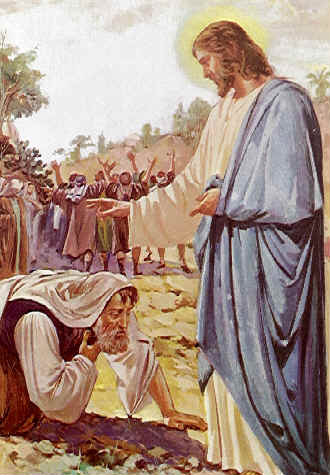
Having thus put in order the affairs of the Church in England, Augustine held a Council with the Bishops and Doctors of the ancient Britons, who had long been at variance with the Roman Church in the keeping of Easter and other rites. And in order to refute, by miracles, these men, whom the Apostolic See had often authoritatively admonished, but to no purpose, Augustine, in proof of the truth of his assertions, restored sight to a blind man in their presence. But on their refusing to yield even after witnessing the miracle, Augustine, with prophetic warning, told them of the punishment that awaited them. At length, after having laboured so long for Christ, and appointed Laurence as his successor, he took his departure for heaven on the seventh of the Calends of June (May 26) and was buried in the Monastery of Saint Peter, which became the burying-place of the Archbishops of Canterbury, and of several kings. The Churches of England honoured him with great devotion. They decreed that each year his feast should be kept as a holyday, and that his name should be inserted in the Litany, immediately after that of St Gregory, together with whom Augustine has ever been honoured by the English as their Apostle, and as the propagator of the Benedictine Order in their country.

Prayer:

O God, Who by the preaching and miracles of blessed Augustine, Thy Confessor and Bishop, didst vouchsafe to shed upon the English people the light of the true faith: grant that, through his intercession, the hearts of the straying may return to the unity of Thy truth, and that we may do Thy will with one accord. Through our Lord.

Prayer Source: 1962 Roman Catholic Daily Missal
Read more >>
Friday, May 26, 2006
Pope Benedict XVI Celebrates Mass in Pilsudski Square

The Holy Father celebrated Mass to approximately 270,000 people in the rain in Warsaw. Pilsudski Square was the location where John Paul II inspired Poland's Solidarity movement against communist rule in his 1979 visit.

In his homily, Benedict XVI again attacked relativism, which teaches that nothing can be an absolute truth. This view by many "cafeteria Catholics" must be stopped. Everything the Holy Church teaches as a defined dogma must be believed including its view on birth control, abortion, stem cells, gay marriage, and euthanasia.

Even though the rain poured down, many people came out.
Photos:

(AP Photo/Andrew Medichini)

(AFP/Janek Skarzynski)
Read more >>
Why do we Show Reverence to the Book of the Gospels?


At Mass, the priest should always show the Gospel an elevated degree of respect. While Jesus is not physically present in the Word as He is in the Eucharist, Jesus is still in His Word. At Mass only a bishop, priest, or deacon is allowed to read the Gospel; no layperson, nun, or even seminarian may proclaim the Gospel (Redemptionis Sacramentum, Chapter III, Part 3). Since we are to treat the Gospel with reverence, priests will kiss the Gospel after it is read.

I strongly encourage my readers to take part in Lectio Divina and reading the Daily readings from Mass. Note: Unlike Lectio Divina, Catholics should never take part in centering prayer. 

The General Instruction of the Roman Missal (GIRM) describes the following honors toward the Book of the Gospels:
"172. [At the entrance procession] Carrying the Book of the Gospels slightly elevated, the deacon precedes the priest as he approaches the altar or else walks at the priest's side.

"173. When he reaches the altar, if he is carrying the Book of the Gospels, he omits the sign of reverence and goes up to the altar. It is particularly appropriate that he should place the Book of the Gospels on the altar, after which, together with the priest, he venerates the altar with a kiss.

"175. [At the Liturgy of the Word] If incense is used, the deacon assists the priest when he puts incense in the thurible during the singing of the Alleluia or other chant. … Having bowed to the altar, he then takes up the Book of the Gospels which was placed upon it. He proceeds to the ambo, carrying the book slightly elevated. He is preceded by a thurifer, carrying a thurible with smoking incense, and by servers with lighted candles. There the deacon, with hands joined, greets the people, saying, 'Dominus vobiscum' (The Lord be with you). Then, at the words 'Lectio sancti Evangelii' (A reading from the holy gospel), he signs the book with his thumb and, afterwards, himself on his forehead, mouth, and breast. He incenses the book and proclaims the Gospel reading. When the reading is concluded, he says the acclamation 'Verbum Domini' (The gospel of the Lord), and all respond, 'Laus tibi, Christe' (Praise to you, Lord Jesus Christ). He then venerates the book with a kiss, saying privately, 'Per evangelica dicta' (May the words of the gospel), and returns to the priest's side.

"When the deacon is assisting the Bishop, he carries the book to him to be kissed, or else kisses it himself, saying quietly, 'Per evangelica dicta' (May the words of the gospel). In more solemn celebrations, as the occasion suggests, a Bishop may impart a blessing to the people with the Book of the Gospels.

"Lastly, the deacon may carry the Book of the Gospels to the credence table or to another appropriate and dignified place."

"273. According to traditional practice, the altar and the Book of the Gospels are venerated by means of a kiss. Where, however, a sign of this kind is not in harmony with the traditions or the culture of some region, it is for the Conference of Bishops to establish some other sign in its place, with the consent of the Apostolic See."
Read more >>
Begin the Original Novena


Today is the start of the Novena leading up to Pentecost. It is called the original Novena because the first novena in history was of the apostles and Mary praying for 9 days for the Holy Ghost leading up to Pentecost.

The following is taken from EWTN:
O Lord Jesus Christ, Who, before ascending into heaven, did promise to send the Holy Spirit to finish Your work in the souls of Your Apostles and Disciples, deign to grant the same Holy Spirit to me that He may perfect in my soul, the work of Your grace and Your love. Grant me the Spirit of Wisdom that I may despise the perishable things of this world and aspire only after the things that are eternal, the Spirit of Understanding to enlighten my mind with the light of Your divine truth, the Spirit of Counsel that I may ever choose the surest way of pleasing God and gaining heaven, the Spirit of Fortitude that I may bear my cross with You and that I may overcome with courage all the obstacles that oppose my salvation, the Spirit of Knowledge that I may know God and know myself and grow perfect in the science of the Saints, the Spirit of Piety that I may find the service of God sweet and amiable, and the Spirit of Fear that I may be filled with a loving reverence towards God and may dread in any way to displease Him. Mark me, dear Lord, with the sign of Your true disciples and animate me in all things with Your Spirit. Amen.
Read more >>
Thursday, May 25, 2006
Pope Benedict XVI Arrives in Poland!

Pope Benedict XVI has arrived in Poland and will begin his visit lasting from May 25 to May 28, 2006. During his assembly Wednesday, Pope Benedict XVI has said, "I will visit the places of [John Paul ll's] life and of his priestly and episcopal ministry." During this trip, the Holy Father will visit Warsaw, Czestochowa, Krakow, Wadowice, Kalwaria Zebrzydowska and Auschwitz.

According to a recent survey, 1 in every 10 Poles is expected to attend at least one event with Pope Benedict XVI. Poland is home to 34,850,000, which account for 95% of the population. 80% of those polled said they would follow the events on television. And concerning television, Poland's TVP public broadcaster has promised to ban all TV ads that contain any erotic or violent scences during the Pope's visit.

EWTN will show an encore presentation of Pope Benedict XVI's arrival tonight, and early tomorrow morning, they will show the Mass in Pilsudski Square in Warsaw live. Pope Benedict XVI also visited the Warsaw Cathedral (photo to the right). Read his four-day itinerary.

Please say this prayer for Pope Benedict XVI's visit:
Lord, source of eternal life and truth, give to Your shepherd, the Pope, a spirit of courage and right judgment, a spirit of knowledge and love.

By governing with fidelity those entrusted to his care may he, as successor to the apostle Peter and vicar of Christ, build Your church into a sacrament of unity, love, and peace for all the world.

We ask this through our Lord Jesus Christ, Your Son, Who lives and reigns with You and the Holy Spirit, one God, forever and ever. Amen.
Read more >>
Ascension Thursday


According to St. Augustine, the Feast of the Ascension is of Apostolic origin. As early as the fifth century, documentation of this feast is preserved. Since the ninth century during the Pontificate of Pope Leo III (r. 795-816) and up until the 1950s, the Ascension had an associated Octave attached to it. Predating this Octave is the long-established practice of having a Vigil for the Ascension.

While the Feast of the Ascension – despite its high rank as one of the most important holy days in the year – has fallen into obscurity and lack of observance in many areas (often transferred to the following Sunday), it is still a public holiday in many countries (e.g. Austria, Belgium, Colombia, Denmark, Finland, France, Germany, Haiti, Iceland, Indonesia, Liechtenstein, Luxembourg, Madagascar, Namibia, The Netherlands, Norway, Sweden, Switzerland and Vanuatu). As such, Catholic culture underscores the importance of the Ascension through its customs that precede and follow Ascension Thursday.

How Did Jesus Ascend?

After establishing the importance of reflecting on the Ascension, the Roman Catechism immediately follows with an explanation as to how our Blessed Lord, Who was physically resurrected and likewise physically ascended into Heaven:
“The pastor is also to teach that He ascended by His own power, not being taken up by the power of another, as was Elias, who was carried to heaven in a fiery chariot; or, as the Prophet Habacuc, or Philip, the deacon, who were borne through the air by the divine power, and traversed great distances.
Neither did He ascend into heaven solely by the exercise of His supreme power as God, but also by virtue of the power which He possessed as man. Although human power alone was insufficient to accomplish this, yet the virtue with which the blessed soul of Christ was endowed was capable of moving the body as it pleased, and His body, now glorified, readily obeyed the behest of the soul that moved it. Hence, we believe that Christ ascended into heaven as God and man by His own power.”

Fr. Leonard Goffine in The Church's Year succinctly affirms that the Ascension was performed by Christ’s own power when he writes, “Christ ascended into heaven by His own power, because He is God, and now in His glorified humanity He sits at the right hand of His Father, as our continual Mediator.”

Unlike Elias, who was taken up into Heaven, or the Blessed Virgin Mary, who was assumed by the power of God body and soul into Heaven at the end of her earthly life, the Lord Jesus ascended by His own power. No mere man has the power to fly, much less to ascend out of the earth’s atmosphere and into the furthest reaches of space to Heaven. But Jesus, Who is fully God and fully man, possessed the power to do so, thus performing another miracle to the approximately 125 people who saw Him ascend.

Where Did Jesus Ascend?

Our Blessed Lord ascended from the Mount of Olives into Heaven. As Fr. Goffine concisely teaches, “Where and how did Christ ascend into heaven? From Mount Olivet where His sufferings began, by which we learn that where our crosses and afflictions begin, which we endure with patience and resignation, there begins our reward.” The Baltimore Catechism concurs when it states, “Christ ascended into heaven from Mount Olivet, the place made sacred by His agony on the night before His death.”  Thus, by meditating on the place of the Ascension we have before us a source of great spiritual consolation, yet so few Catholics seem to have meditated on the connection between the Agony and the Ascension.

Likewise, the “Golden Legend” by Blessed Jacobus de Varagine, published in the late Middle Ages, further aids our meditation on the Mount of Olives in its account of the Ascension:
“The first point, note that He rose to heaven from the Mount of Olives, out toward Bethany. This mountain, following another translation, was also called the Mount of Three Lights, because from the west the light from the Temple fell upon it by night, for a fire burned continually on the altar; in the morning it caught the sun’s rays from the east before they reached the city; and the hill’s olive trees produced a plentiful supply of oil, which feeds light.” 
Today, a chapel sits on the Mount of Olives at the exact place of Our Lord’s Ascension. According to Sulpicius Severus, bishop of Jerusalem, when a church was built on the Mount of Olives the spot where Christ had stood could never be covered with pavement; and more than that, the marble slabs placed there burst upwards into the faces of those who were laying them. He also says that the footmarks in the dust there prove that the Lord had stood on that spot. Those footprints are still discernible, and the ground still retains the depressions His sacred feet left as a remarkable display of Our Lord’s last footstep on this earth.

Why Did Jesus Ascend into Heaven?

The answer to this fundamental question is found in the Preface for the Ascension, a Preface found in the Traditional Roman Rite, but unfortunately lost in the Novus Ordo:
“It is truly meet and just, right and availing unto salvation that we should at all times and in all places give thanks unto Thee, O holy Lord, Father almighty and everlasting God; through Christ our Lord. Who after His Resurrection appeared and showed Himself to all His disciples; and while they beheld Him, was lifted up into heaven, so that He might make us partakers of His Godhead…” 
The Lord ascended “so that He might make us partakers of His Godhead.” As the Roman Catechism likewise expounds on the reasons for the Lord’s Ascension:
“Ascending on high, he led captivity captive: He gave gifts to men. …
He also ascended into heaven, according to the Apostle, that he may appear in the presence of God for us, and discharge for us the office of advocate with the Father. … 
Finally, by His Ascension He has prepared for us a place, as He had promised, and has entered, as our head, in the name of us all, into the possession of the glory of heaven.” 
Our Lord ascended for us. He ascended so that we might have a share in His divinity in Heaven. Up until our Lord’s Ascension, the doors of Heaven were closed as a result of Adam’s sin. While the debt for this sin was paid through the death and Resurrection of Christ, the doors remained closed until He, the Victor over death, should open them and be the first to walk through them. Ascension Thursday recalls this sublime mystery: the opening of Heaven to the souls who had waited in the Limbo of the Fathers. It was on the day of the Lord’s Ascension that humanity, in the Person of Christ, first entered Heaven.

The renowned Dom Prosper Guéranger, O.S.B. describes this sublime reason for Our Lord's Ascension thusly:
“Jesus ascended into heaven. His Divinity had never been absent; but, by Ascension, His Humanity was also enthroned there, and crowned with the brightest diadem of glory. This is another phase of the mystery we are now solemnizing. Besides a triumph, the Ascension gave to the sacred Humanity a place on the very throne of the eternal Word, to whom it was united in unity of Person. From this throne, it is to receive the adoration of men and of angels.” 
Likewise, the Roman Catechism succinctly affirms the reality that Jesus Christ, true man and true God, physically entered into Heaven on Ascension Day: “This, then, the faithful must believe without hesitation, that Jesus Christ, having fully accomplished the work of Redemption, ascended as man, body and soul, into heaven; for as God He never forsook heaven, filling as He does all places with His Divinity.”

Archbishop Fulton J. Sheen likewise develops this reality by commenting on Our Lord’s Ascension in His human nature:
“In the Ascension the Savior did not lay aside the garment of flesh with which He had been clothed; for His human nature would be the pattern of the future glory of other human natures, which would become incorporated to Him through a sharing of His life. Intrinsic and deep was the relation between His Incarnation and His Ascension. The Incarnation or the assuming of a human nature made it possible for Him to suffer and redeem. The Ascension exalted into glory that same human nature that was humbled to the death.” 
Collect:

O Almighty God, we firmly believe that Your only-begotten Son, our Redeemer, ascended this day into heaven. May our minds dwell always on this heavenly home. Through Our Lord . . .
Read more >>
Ascension Thursday Prayer


Grant, we beseech Thee, almighty God: that we, who believe Thine only-begotten Son, our Redeemer, to have ascended on this day into heaven, may also ourselves dwell in mind amid heavenly things. Through the same Lord Jesus Christ, Thy Son, who liveth and reigneth with Thee in the unity of the Holy Ghost . . .

Prayer Source: 1962 Roman Catholic Daily Missal; Collect for Ascension Thursday

Read more >>
Today's An Important Day: Ascension Thursday & Pope Benedict XVI visits Poland

Today is Ascension Thursday, the day we remember Our Lord's glorious Ascension into Heaven. While this day is not a holy day of obligation because the celebration is moved to this Sunday, today is still an important day for prayer.

Today is also the day that Pope Benedict XVI journeys to Poland and begins his visit that will last until May 28, 2006. I'll post about both of these later when I have more time.
Read more >>
If You Liked the Saint for the Year Devotion...

...then you'll love this!

(Moved to the top due to popularity)

The creator of that devotion had the brillant idea of starting another devotion where we receive a fruit/gift of the Holy Spirit. With Pentecost approaching, it would be great not just to pray for all the gifts/fruits but to focus on one special one. I received the gift of wisdom in the drawing, and I have been really praying for greater wisdom now. Just like the Saint for the Year devotion, this is a way to grow closer to God.

If you would like to join this devotion please read the introduction that the woman doing this has written, and just leave your name in the comments box. I will leave all results in the comments box, so please check there after you ask for one to be pulled for you.

Introduction:


Many people have enjoyed having a patron saint "pick" them for the year ... There has been many testimonies on all the connections and intercessions that have occurred. How wonderful it is to know that we are not walking alone!

In the same sense, we are doing the same thing with Pentecost and the Holy Spirit "picking" a fruit and gift just for us to reflect on and pray about for the year.

Curious? Read on ...

As we approach Pentecost, let's reflect on what happened to the Apostles on that day and what happened to us when we were confirmed.

The Holy Spirit is first introduced to a Catholic the day that they are baptized, because the entire Holy Trinity — Father, Son, and Holy Spirit — are invoked at the ceremony. During Confirmation, God the Holy Spirit comes upon the person, accompanied by God the Father and God the Son, just as he did at Pentecost. The Feast of Pentecost commemorates the descent of the Holy Spirit from heaven to earth upon the 12 apostles and the Virgin Mary, occurring 50 days after Easter and 10 days after Jesus' Ascension (Acts 2:1–4).

This sacrament is called Confirmation, because the faith given in Baptism is now confirmed and made strong. Sometimes, those who benefit from Confirmation are referred to as "soldiers of Christ". This isn't a military designation but a spiritual duty to fight the war between good and evil, light and darkness — a war between the human race and all the powers of hell.

Confirmation means accepting responsibility for your faith and destiny. Childhood is a time when you're told what to do, and you react positively to reward and negatively to punishment. Adulthood, even young adulthood, means that you must do what's right on your own, not for the recognition or reward but merely because it's the right thing to do. The focus is on the Holy Spirit, who confirmed the apostles on Pentecost (Acts 2:1–4) and gave them courage to practice their faith. We, as Catholics, believe that the same Holy Spirit confirms Catholics during the Sacrament of Confirmation and gives them the same gifts and fruits.

Traditionally, the twelve fruits of the Holy Spirit are charity, joy, peace, patience, benignity, goodness, long-suffering, mildness, faith, modesty, continency, and chastity. These are human qualities that can be activated by the Holy Spirit. The seven gifts of the Holy Spirit are wisdom, understanding, counsel, fortitude, knowledge, piety, and fear of the Lord. These gifts are supernatural graces given to the soul.

When was the last time you thought about these blessing bestowed upon you? Have some of your "fruits" rotted or dried up? Are your gifts sitting on a shelf, collecting dust?

To commemorate Pentecost, how about asking the Holy Spirit to look inside you, deep inside you and pick out one particular fruit and one particular gift that is unique to you that He wants you to pray about? He may want you to develop this gift and fruit. He may want you to share this gift and fruit. He may want you to be an example of your fruit and gift. Only you and the Holy Spirit will know. You may have an instant connection with the fruit and gift that the Spirit picks for you. Or you may wonder what in the world is He thinking? Everyone's will be different and everyone's will be unique, just for them.

I would suggest doing some research on your particular fruit and gift and then reflecting on how they play in your life. Do a lot of listening, the Holy Spirit will be doing a lot of talking!

To have a fruit and gift for the year, please contact me. I have a container full of all the fruits and all of the gifts and will be happy to pick one and send it to you. Just let me know!

God bless!
Read more >>
Wednesday, May 24, 2006
How Far Are We from Being Universal?

 
It is becoming more and more frustrating for me to read of "Catholics" that think they can believe in lies while still serving the Church. In Enormous Prayers: A Journey into the Priesthood, one priest does not believe in angels. Angels! The very creatures that are referenced over 200 times in the Bible.

"Then he shall say to them also that shall be on his left hand: 'Depart from me, you cursed, into everlasting fire which was prepared for the devil and his angels'" (Matthew 25:41)

Jesus even spoke of angels and a priest would outright deny their existence! It was the Archangel Gabriel that announced the Incarnation to Mary! The Catechism states that angels are a "truth of the faith"; Catholics must believe in them. Then the book mentions another priest that says purgatory is not real. Purgatory is real and it is a firm part of the faith. A Catholic is obligated to believe every single dogma and firm truth of the faith. If we do not then we are not Catholic! We must believe in the Creed:
We believe in one God the Father Almighty, Maker of heaven and earth, and of all things visible and invisible.

And in one Lord Jesus Christ, the only-begotten Son of God, begotten of the Father before all worlds, God of God, Light of Light, Very God of Very God, begotten, not made, being of one substance with the Father by whom all things were made; who for us men, and for our salvation, came down from heaven, and was incarnate by the Holy Spirit of the Virgin Mary, and was made man, and was crucified also for us under Pontius Pilate. He suffered and was buried, and the third day he rose again according to the Scriptures, and ascended into heaven, and sitteth on the right hand of the Father. And he shall come again with glory to judge both the quick and the dead, whose kingdom shall have no end.

And we believe in the Holy Spirit, the Lord and Giver of Life, who proceedeth from the Father and the Son, who with the Father and the Son together is worshipped and glorified, who spoke by the prophets. And we believe one holy catholic and apostolic Church. We acknowledge one baptism for the remission of sins. And we look for the resurrection of the dead, and the life of the world to come. Amen.
Not only the above, but we must follow the Church on morals. There are five non-negotiables, five things that Catholics must be opposed to. There is no leniency - these are always wrong.
  1. Abortion
  2. Embryonic Stem Cell Research
  3. Gay Marriage
  4. Euthanasia
  5. Artificial Contraception
It is my prayer that all Catholics start believing and teaching these firm truths. We are to be beacons of the light. You are called to go out and preach the Good News of Jesus Christ and His Church! Remember, as Mother Teresa said, God didn't ask you to be successful, He asked you to be faithful. You may only bring one person to the Catholic Church your entire life. Thousands may reject your words and the Church. You may suffer persecution for the sake of the Truth. But that is one soul closer to God. That is one soul and that makes all the difference in the world.

Believe in the Gospel of Jesus Christ! Believe and Follow His Church!

I am alarmed by the number of "charities" that go directly against the Catholic Church like Catholics for Reproductive Freedoms and others. I want to know what are some good charities out there. Here are the criteria I use to define the best charities.
  1. They have a Catholic credo and agree with everything the Church teaches.
  2. They work for the improvement of society and/or helping out individuals in need.
  3. They support evangelization and the spreading of the Gospel. I don't want to support an organization that doesn't help to bring Jesus to others.
  4. Most of the contributions go directly to programs and not to fundraising, management, etc.
Read more >>
Tuesday, May 23, 2006
Prayer for the Cronically ill

Almighty, everlasting God, the eternal salvation of those who believe, hear us in behalf of Thy sick servants, for whom we implore the help of Thy mercy, that, being restored to health, they may render thanks to Thee in Thy Church. Through our Lord.

Epistle:

Beloved: Is any of you sad? Let him pray. Is he cheerful in mind? Let him sing. Is any man sick among you? Let him bring in the priests of the Church and let them pray over him, anointing him with oil in the name of the Lord. And the prayer of faith shall save the sick man: and the Lord shall raise him up; and if he be in sins, they shall be forgiven him. Confess, therefore, your sins to one another, and pray one for another, that you may be saved (James 5:13-16)

Prayer Source: 1962 Roman Catholic Daily Missal, Collect & Epistle from the Votive Mass for the Sick

Image Source: Believed to be in the Public Domain
Read more >>
Words of Inspiration: May 23, 2006

Yesterday is gone. Tomorrow has not yet come. We have only today. Let us begin.

Source: Mother Teresa

Image Source: Unknown, Believed to be in the Public Domain
Read more >>
Monday, May 22, 2006
St. Rita of Cascia

Optional Memorial (1969 Calendar): May 22
Mass in Some Places (1955 Calendar): May 22

St. Rita was born in Italy in 1386 to Antonio and Amata Lotti. Even at a young age, Rita visited the Augustinian nuns at Cascia, and she showed interest in a religious life. However, at the young age of twelve, her parents betrothed her to Paolo Mancini. Rita was disappointed, but remained obedient and married Paolo at the age of 18. Paolo was an ill-tempere and abusive individual who worked as town watchman. St. Rita of Cascia became the mother of twin sons.

After eighteen years of living with Paolo's abuses, Rita's life changed when Paolo was ambushed and stabbed to death. Her sons swore vengeance on their father's killers, but through Rita's prayers and interventions, they were able to forgive the murderers. After the death of Paolo, St. Rita of Cascia desired to enter the convent. However, some of the sisters at the Augustinian convent were relatives of her husband's assassins, and she was denied entry. At the age of 36, after praying for the intecession of intervention of Saint John the Baptist, Saint Augustine of Hippo, and Saint Nicholas of Tolentino, she was able to enter the convent.

St. Rita lived in the convent for 40 years and was especially devoted to the Passion of Christ. In response to a prayer to suffer as Christ suffered, St. Rita received a chronic head wound that appeared to have been caused by a crown of thorns. The wound bled for 15 years. For the last four years of her life, St. Rita was confined to her bed and ate nothing more than the Eucharist. When St. Rita was near death, she received a visitor who asked if she would like anything. Rita's only request was a rose from her family's estate. The visitor went to the home, but since it was January, knew there was no hope of finding a rose. Yet, sprouted on an otherwise bare bush, was a single rose blossom.

St. Rita of Cascia died on May 22, 1457. She lived an extremely devout and holy life. She was canonized on May 24, 1900.

Prayer

O God, Thou didst confer on Saint Rita the great graces of loving her enemies and of bearing on her brow the marks of Thy love and Thy passion. Through her prayers and merits may we forgive our enemies and dwell upon the sufferings of Thy passion and so receive the rewards promised to the humble and to those who mourn: Who livest and reignest.

Prayer Source: 1962 Roman Catholic Daily Missal
LITANY OF SAINT RITA:

Lord, have mercy on us.
Christ, have mercy on us.
Lord, have mercy on us, Christ hear us.
Christ, graciously hear us.
God, the Father of heaven, have mercy on us.
God, the Son, Redeemer of the world, ….
God, the Holy Spirit, …
Holy Trinity, One God, …
Immaculate Mary, Mother of God, pray for us.
Holy Mary, Mother of pure love, …
Holy Mary, Comforter of the afflicted, …
Holy Mary, Queen of all the saints, …
Holy Mary, Model of life for Saint Rita, …
St. Rita, our advocate and protectress, …
St. Rita, beloved by the Lord, …
St. Rita given special grace from heaven, …
St. Rita, remarkable in childhood, …
St. Rita, model of obedience to God’s Will, …
St. Rita, of untiring patience, …
St. Rita, model of Christian mothers, …
St. Rita, mirror for Christian spouses, …

St. Rita, heroic in sacrifice, …
St. Rita, generous in forgiving, …
St. Rita, martyr in penitence, …
St. Rita, embracing humility and poverty, …
St. Rita, exemplary as a widow, …
St. Rita, prompt to answer the divine call, …
St. Rita, patient in suffering, …
St. Rita, mirror of religious observance, …
St. Rita, mystical rose of every virtue, …
St. Rita, enamored of the Passion of Christ, …
St. Rita, pierced with a thorn, …
St. Rita, in ecstasy before the Blessed Sacrament, …
St. Rita, consumed with Divine Love, …
St. Rita, received into heaven with joy, …
St. Rita, incorrupt in your chaste body, …
St. Rita, advocate of impossible cases, …
St. Rita, persevering in prayer, …
St. Rita, help of those in need, …

Lamb of God, Who takes away the sins of the world, Spare us, O Lord.
Lamb of God, Who takes away the sins of the world, Graciously hear us, O Lord.
Lamb of God, Who takes away the sins of the world, Have mercy on us.

Leader: Lord, you have signed your servant, Rita.
All: With the marks of Your love and Passion.

Leader: Let us pray. O God, Who bestowed on St. Rita such grace that she loved her enemies, and bore in her heart and on her forehead the mark of Your love and Passion, grant us, we beseech You, through her merits and intercession, a love for our enemies. Through our contemplation of Your sufferings and Passion, may we merit the reward promised to the meek and the suffering. You live and reign forever. Amen
Read more >>
Prayer for Patience in Accepting God's Will


Preface: For a listing of hundreds of prayers with indulgences and special blessings attached to them, be sure to refer to a copy of the Raccolta oftenClick here to order one.

Lord, teach me to be patient - with life, with people,and with myself. I sometimes try to hurry things along too much, and I push for answers before the time is right. Teach me to trust Your sense of timing rather than my ownand to surrender my will to Your greater and wiser plan. Help me let life unfold slowly, like the small rosebud whose petals unravel bit by bit, and remind me that in hurrying the bloom along, I destroy the bud and much of the beauty therein.

Instead, let me wait for all to unfold in its own time. Each moment and state of growth contains a loveliness. Teach me to slow down enough to appreciate life and all it holds. Amen.

Recommended Reading:


Image Source: At Prayer by Edwin Longs den Long
Read more >>
This Week in Catholicism

Monday: St. Rita of Cascia (Mass in Some Places)
Tuesday:
Wednesday:
Thursday: The Ascension of the Lord; Pope Benedict XVI also visits Poland starting today!
Friday: St. Philip Neri
Saturday: St. Bede the Venerable

Source: 1955 Calendar of Saints
Read more >>
Sunday, May 21, 2006
Words of Inspiration: May 21, 2006

"To attract souls and transform them into Himself through love, Christ has revealed His own infinite love, His own Heart inflamed by love for souls, a love that impelled Him to mount the Cross, to remain with us in the Eucharist and to enter our souls and to leave us in testament His own Mother as our Mother" (St. Maximilian Kolbe)

"The poor are Christ Himself" (Blessed Mother Teresa).

"Jesus who reigned in heaven with His most holy humanity received from the womb of the Virgin, wanted his mother to be reunited to Him not only with her soul but also with her body and share fully in His glory. And that was right and the just. That body that was not as slave of the devil and sin for one instant was not to be as slave of corruption either" (St. Padre Pio).
Read more >>
Saturday, May 20, 2006
St. Bernardine of Siena


Optional Memorial (1969 Calendar): May 20
Semidouble (1955 Calendar): May 20

St. Bernardine of Siena was born on September 8, 1380, and lived a life of holiness. When the plague broke out in 1400 AD, St. Bernardine offered to care for the sick and would not stop until he became ill. In 1402 he entered the Franciscan Order and was ordained a priest in 1404.

St. Bernardine was sent out to preach the Good News of Jesus, and his sermons drew thousands. He usually would focus on devotions to the Holy Name of Jesus. From these speeches, St. Bernardine decided to create a symbol of devotion to the Holy Name. The center features an abbreviated form of the Holy Name of Jesus surrounded by a blazing sun. This symbol soon spread throughout the region and charges of heresy were made against St. Bernardine. He was found innocent by Pope Martin V, who testified to the worthiness of St. Bernardine's life.

"Whoever clings to me I will deliver;whoever knows my name I will set on high. All who call upon me I will answer; I will be with them in distress; I will deliver them and give them honor. With length of days, I will satisfy them and show them my saving power" (Psalm 91:14-16).

St. Bernardine continued to serve the Gospel until he became ill in route to Naples, Italy in 1444. St. Bernardine was taken to the convent of St. Francesco where he died on the Vigil of the Feast of the Ascension. On May 24, 1450, six years after his death, Bernardine was canonized a saint.

Prayer:

O Lord Jesus Christ, Who didst grant to blessed Bernardine, Thy Confessor, a surpassing love for Thy holy name: we beseech Thee, by his merits and intercession, graciously pour into our hearts the spirit of Thy love: who livest and reignest.

Prayer Source: 1962 Roman Catholic Daily Missal
Read more >>
Pat Buchanan on DaVinci

Pat Buchanan examines "The DaVinci Code:"

"If you would know who wields cultural power, ask yourself: Whom is it impermissible to offend? Thus the hoopla attending the release of "The Da Vinci Code," based on the Dan Brown novel that has sold 7 million copies in the United States, tells us something about whose God it is permissible to mock and whose faith one is allowed to assault.

"For what "The Da Vinci Code" says is that Roman Catholicism is a gigantic fraud, that the church has for centuries been perpetrating a monstrous hoax, duping hundreds of millions into believing something it knows is a bald-faced lie. At the novel's heart lies the contention that Jesus and Mary Magdalene were married, that they had a daughter, that the Vatican has known this and been hiding the descendants of Jesus, that Opus Dei is a secret order whose agents will engage in murder to protect the secret."

Buchanan's last paragraph:

"But that it will be a box-office smash, that it is the subject of lavish praise in the press, that it is the best-selling novel of the 21st century, tells us we live not just in a post-Christian era, but in an anti-Catholic culture not worth defending or saving, for it is truly satanic."

Related Posts:
Read more >>
Friday, May 19, 2006
Our Lady's Martyrdom of Love

Remember that we are still in May, the Month of Mary.

"After Jesus Christ’s ascension to heaven, Mary longed continually with burning desire to be reunited with Him. To be without her divine Son was a very harsh exile. Those years of separation from Him were for her a most slow and painful martyrdom of love that consumed her slowly" ~ St. Padre Pio

Image Source: Believed to be in the Public Domain
Read more >>
Wednesday, May 17, 2006
My Day in Review

Today was a wonderful day. I feel like I got so many things accomplished, and I feel that my words online have helped spread the Gospel message.

I wanted to share a part of my day that was very special. This afternoon I was thinking about the young woman that aborted her child. I was feeling so sorry for that child - he/she didn't have a chance at life. And, I asked God to give me a sign so that I know what I am doing is actually prevailing. I felt like I failed. So, I asked God to show me that I am serving the Truth - that I am making a difference.

I prayed this driving home and as I turned the corner I saw two beautiful doves fly side-by-side up into the air and off into the distance. Doves are symbols of the Holy Spirit, and just as important, this is the first time I've ever seen a dove in my neighbor. I even saw two of them. Right then I realized again how much God loves me, and I knew that I was indeed serving God even if some prayers are not answered the way I would have hoped. God is love.
Read more >>


Copyright Notice: Unless otherwise stated, all items are copyrighted under a Attribution-NonCommercial-NoDerivatives 4.0 International License. If you quote from this blog, cite a link to the post on this blog in your article.

Disclosure of Material Connection: Some of the links on this blog are “affiliate links.” This means if you click on the link and purchase the item, I will receive an affiliate commission. As an Amazon Associate, for instance, I earn a small commission from qualifying purchases made by those who click on the Amazon affiliate links included on this website. I am disclosing this in accordance with the Federal Trade Commission’s 16 CFR, Part 255: “Guides Concerning the Use of Endorsements and Testimonials in Advertising.”