Wednesday, June 19, 2013
8th Blog Anniversary


Today is the proud 8th anniversary of A Catholic Life.  It's hard to imagine that this blog has been around for 8 years now.  As I look back, it's been with me through so much in life: from my years in high school through all of college and seminary and now several years while I work to promote catechesis.  Plenty has changed in me through these 8 years as I have growth in knowledge and grace (indeed all by the grace of God). I've published an ebook and a paperback (715 pages) in this time and have helped lead the charge to restore Traditional Catholic Culture.  I've grown from a Novus Ordo seminarian-to-be into a committed Traditional Catholic and defender of the Mass of All Times.   As I look back I see the importance this blog has had in spreading the annual Saint for the Year Devotion and the mission it has taken to help restore all things in Christ.

I am thankful for very much over these years including your readership.  I pray that some of you have been readers for many, many years.  Some of you are likely newer readers and I pray that you will follow this blog far into the future.

The mission of A Catholic Life was never founded for monetary purposes or for individualistic pursuits or vain hobbies.  It was founded to serve as a conduit to help spread the Catholic Faith to as many souls as possible.  Today, it's mission is still the same.  Thank you for supporting this blog.

Ad multos annos!
Read more >>
Tuesday, June 18, 2013
Feast of St. Ephrem the Syrian

Double (1955 Calendar): June 18

Today Holy Mother Church calls to mind St. Ephrem of Syria.

According to legend, St. Ephrem may have been the son of a pagan priest. He was brought to the faith by Saint James of Nisibis and baptized at age 18.  St. Ephrem helped to evangelize Nisibis, Mesopotamia.  He may have attended the Council of Nicaea in 325.

He was a renowned Deacon and Preacher, who had a great devotion to the Blessed Virgin Mary. In 363 Nisibis was ceded to Persia and a great persecution of Christians began, and Eprem led an exodus of the faithful to Edessa, where he founded a theological school. He wrote homilies, hymns and poetry (see his Lenten Prayer). It was he who helped introduce the use of hymns in public worship.

St. Ephrem helped fight Gnosticism and Arianism by his writings, including poems and hymns. He was proclaimed a Doctor of the Church in 1920.

Traditional Matins Reading:

Ephraem was of Syrian descent and son of a citizen of Nisibis. While yet a young man he took himself to the holy bishop James, by whom he was baptized, and he soon made such progress in holiness and learning as to be appointed master in the school of Nisibis in Mesopotamia. After the death of the bishop James, Nisibis was captured by the Persians, and Ephraem went to Edessa, where he settled first among the monks in the mountains. Later, to avoid the company of those who flocked to him, he adopted the eremitical life. He was made deacon of the church of Edessa, but refused the priesthood out of humility. He was rich in all virtues and strove to acquire piety and religion by the following of true wisdom. He placed all his hope in God, despised all human and transitory things, and was ever filled with the earnest desire of those which are divine and eternal.

He was led by the Spirit of God to Caesarea in Cappadocia, where he saw Basil, the mouthpiece of the Church, and they obtained benefit from their mutual intercourse. In order to refute the many errors which troubled the Church at that time, and to expound the mysteries of Jesus Christ, he wrote many books in the Syrian tongue, almost all of which have been translated into Greek. St Jerome bears witness that he attained such fame that his writings were read publicly in the churches after the reading from the Holy Scriptures.

On account of his works, so full of the light of heavenly doctrine, he was greatly honored even during his lifetime as a Doctor of the Church. He composed a poem in praise of the Blessed Virgin Mary and the saints for which he was called by the Syrians the Harp of the Holy Ghost. He was noted for his great and tender devotion towards the immaculate Virgin. He died, rich in merits, at Edessa in Mesopotamia, on the fourteenth of the Kalends of July, in the reign of Valens. Pope Benedict XV, at the instance of many Cardinals of the Holy Roman Church, patriarchs, archbishops, bishops, abbots, and religious communities, declared him by a decree of the Sacred Congregation of Rites to be a Doctor of the Universal Church.  

Collect:

O God, You added glory to the Church by the brilliant learning and outstanding merits of Your blessed confessor and doctor Ephrem. Defend Your Church against the dangers of sin and error, through the intercession of this saint. Through our Lord . . .
Read more >>
Sunday, June 16, 2013
Traditional Mass Propers: 4th Sunday after Pentecost


Dom Gueranger writes of this Sunday: "The fourth Sunday after Pentecost was called, for a long period, in the west, the Sunday of mercy, because, formerly, there was read upon it the passage from St. Luke beginning with the words: ‘Be merciful, as your Father is merciful.’ But, this Gospel having been since assigned to the Mass of the first Sunday after Pentecost, the Gospel of the fifth Sunday was made that of the fourth; the Gospel of the sixth became that of the fifth; and so on, up to the twenty-third. The change we speak of was, however, not introduced into many Churches till a very late period; and it was not universally received till the sixteenth century."

INTROIT
Ps. 26:1, 2
The Lord is my light and my salvation; whom shall I fear? The Lord is the protector of my life; of whom shall I be afraid? Mine enemies that have troubled me have themselves been weakened and have fallen. Ps. 26:3. If armies in camp should stand together against me, my heart shall not fear. V. Glory be . . .

COLLECT - Grant, we beseech Thee, O Lord, that the world may be regulated in its course by Thy governance for our peace, and that Thy Church may with tranquil devotion rejoice. Through our Lord . . .

EPISTLE
Rom. 8:18-23
Brethren: I reckon that the sufferings of this time are not worthy to be compared with the glory to come that shall be revealed in us. For the expectation of the creature waiteth for the revelation of the sons of God. For the creature was made subject to vanity: not willingly, but by reason of him that made it subject, in hope. Because the creature also itself shall be delivered from the servitude of corruption, into the liberty of the glory of the children of God. For we know that every creature groaneth and travaileth in pain, even till now. And not only it, but ourselves also, who have the firstfruits of the Spirit: even we ourselves groan within ourselves, waiting for the adoption of the sons of God, the redemption of our body.

GRADUAL
Forgive us our sins, O Lord. lest the Gentiles should at any time say, "Where is their God?" V. Help us, O God, our Savior; and for the honor of Thy Name, O Lord, deliver us.

Alleluia, alleluia! V. Ps. 9:5 O God, who sittest upon the throne, and judgest justice, be Thou the refuge of the poor in tribulation. Alleluia!


GOSPEL
Luke 5:1-11
At that time, when the multitudes pressed upon Jesus to hear the word of God, he stood by the lake of Genesareth, And saw two ships standing by the lake: but the fishermen were gone out of them and were washing their nets. And going into one of the ships that was Simon's, he desired him to draw back a little from the land. And sitting, he taught the multitudes out of the ship. Now when he had ceased to speak, he said to Simon: "Launch out into the deep and let down your nets for a draught." And Simon answering said to him: "Master, we have laboured all the night and have taken nothing: but at thy word I will let down the net." And when they had done this, they enclosed a very great multitude of fishes: and their net broke. And they beckoned to their partners that were in the other ship, that they should come and help them. And they came and filled both the ships, so that they were almost sinking. Which when Simon Peter saw, he fell down at Jesus' knees, saying: "Depart from me, for I am a sinful man, O Lord." For he was wholly astonished, and all that were with him, at the draught of the fishes which they had taken. And so were also James and John, the sons of Zebedee, who were Simon's partners. And Jesus saith to Simon: "Fear not: from henceforth thou shalt catch men." And having brought their ships to land, leaving all things, they followed him.

OFFERTORY
Ps. 12:4-5
Enlighten mine eyes, that I never sleep in death, lest at any time mine enemy say, "I have prevailed against him."

SECRET Accept our oblations, we beseech Thee, O Lord, and be appeased by them, and mercifully compel even our rebel wills to turn to Thee. Through our Lord . . .

COMMUNION
Ps. 17:3
The Lord is my firmament, and my refuge, and my deliverer, my God is my helper.

POST COMMUNION - May the Mysteries which we have received, we beseech Thee, O Lord, purify us, and fulfill their purpose by defending us. Through our Lord . . .R. Amen.
Read more >>
Friday, June 14, 2013
Pray for the Repose of the Soul of Leona Karlheim

Leona Karlheim, longtime member of Queen of Peace Parish and a devoted member of their Latin Mass community, passed away this week. A traditional Latin requiem Mass will be offered this Saturday (Jun 15) at 11 am at Queen of Peace. You are kindly requested to keep Leona and her family in your prayers.


In paradisum deducant te Angeli …May the angels lead thee into paradise …

ATTON — KARLHEIM – Leona M., 87, Patton, passed away June 11, 2013, at Altoona Hospital. Born Nov. 21, 1925, in Patton, daughter of Amandus J. and Mary (Dunagan) Karlheim. In addition to her parents, she was preceded in death by sisters, Regina Strittmatter and Marguerite Kuntzman; and brothers, William in infancy, Ralph and Leo. Survived by daughter, Mary Wilson, Patton; grandchildren, James, Stephanie and Erin; great-grandchildren, Ryan, Justin and Christopher; brother, James Karlheim; sister, Bertha Karlheim; and numerous nieces and nephews. From her teen years into her adult years, she was the organist, pianist and choir director at St. George’s church, Patton. The priest, Father Basil, amplified her organ playing, which was a worship gift from God, and was heard as far as Carrolltown and St. Boniface. She worked in the offices of the coal mines and also continued helping with the family’s Clover Hill Dairy. In the 1950s, she went to National Chiropractic College in Chicago, Ill. Upon graduation, she chose to remain in Illinois until she returned to Patton in her later years and joyfully volunteered at her parish, Queen of Peace, Patton. At Leona’s request, there will be no visitation. There will be a Solemn High Requiem Mass at 11 a.m. Saturday, June 15, at Queen of Peace Catholic Church, Patton, by Benedictine Fathers. Committal, St. Mary’s Cemetery, Patton. In lieu of flowers, donations are requested to the family

Image Source
Read more >>
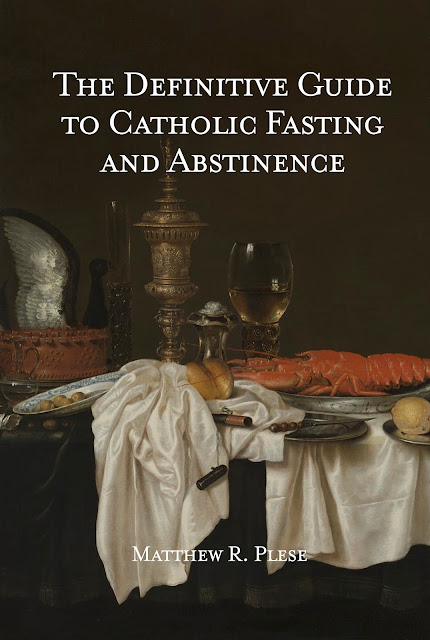
Friday Penance Reminder

O Lord, Our God, have mercy on us sinners!


Today is Friday, the day in which we commemorate Our Lord's passion and death. It was our own sins that condemned our glorious Lord to death on Good Friday - death on a Cross. As Catholics, we are still bound to either abstain from meat or rather to do some act of penance each Friday in the entire year. It was on this day of the week that our glorious Redeemer died for us. Please, never forget this, especially at 3 o'clock, the hour that He died. At 3 o'clock attempt to pray the 3 o'clock Mercy Prayer. Please remember Our Lord's love and repent today.

Code of Canon Law:
Can. 1249 All Christ's faithful are obliged by divine law, each in his or her own way, to do penance. However, so that all may be joined together in a certain common practice of penance, days of penance are prescribed. On these days the faithful are in a special manner to devote themselves to prayer, to engage in works of piety and charity, and to deny themselves, by fulfilling their obligations more faithfully and especially by observing the fast and abstinence which the following canons prescribe.
Can. 1250 The days and times of penance for the universal Church are each Friday of the whole year and the season of Lent.
Can. 1251 Abstinence from meat, or from some other food as determined by the Episcopal Conference, is to be observed on all Fridays, unless a solemnity should fall on a Friday. Abstinence and fasting are to be observed on Ash Wednesday and Good Friday.
Can. 1252 The law of abstinence binds those who have completed their fourteenth year. The law of fasting binds those who have attained their majority, until the beginning of their sixtieth year. Pastors of souls and parents are to ensure that even those who by reason of their age are not bound by the law of fasting and abstinence, are taught the true meaning of penance.
Can. 1253 The Episcopal Conference can determine more particular ways in which fasting and abstinence are to be observed. In place of abstinence or fasting it can substitute, in whole or in part, other forms of penance, especially works of charity and exercises of piety.

Read more >>
Thursday, June 13, 2013
The Long Forgotten Prayer to the Emperor in the Exultet of Easter

Image: Francis II, Holy Roman Emperor

Until 1955, the Exsultet ended with a long prayer for the Holy Roman Emperor:
Respice etiam ad devotissimum imperatorem nostrum [Nomen] cujus tu, Deus, desiderii vota praenoscens, ineffabili pietatis et misericordiae tuae munere, tranquillum perpetuae pacis accommoda, et coelestem victoriam cum omni populo suo.
Look also upon our most devout Emperor [Name], the desires of whose longing you, O God, know beforehand, and by the inexpressible grace of your kindness and mercy grant him the tranquility of lasting peace and heavenly victory with all his people.
The head of the Holy Roman Empire alone could be prayed for with this formula, and the resignation in 1806 of the prerogatives of that position by Emperor Francis II of Austria, left that position unfilled thereafter, so that the prayer was in practice not used.  And so, after 1804, the prayer actually ended with the immediately preceding petition for the members of the Church:
Precamur ergo te, Domine: ut nos famulos tuos, omnemque clerum, et devotissimum populum: una cum beatissimo Papa nostro N. et Antistite nostro N. quiete temporum assidua protectione regere, gubernare, et conservare digneris.
However, by the decree Imperii Galliarum of 10 September 1857, Pope Pius IX allowed Emperor Napoleon III of France to be prayed for in the Exsultet from 1858 to 1870, not with the formula reserved for the Holy Roman Emperor, but only by adding "necnon gloriosissimo Imperatore nostro N." to the preceding petition, which became:
Precamur ergo te, Domine: ut nos famulos tuos, omnemque clerum, et devotissimum populum: una cum beatissimo Papa nostro N. et Antistite nostro N. necnon gloriosissimo Imperatore nostro N. quiete temporum assidua protectione regere, gubernare, et conservare digneris.
In 1955 Pope Pius XII added a phrase to the prayer for the members of the Church and definitively removed the prayer for the Holy Roman Emperor, replacing it with a generic prayer for the civil authorities inspired by the prayer for the Emperor:
Precamur ergo te, Domine: ut nos famulos tuos, omnemque clerum, et devotissimum populum: una cum beatissimo Papa nostro N. et Antistite nostro N. quiete temporum concessa, in his paschalibus gaudiis, assidua protectione regere, gubernare, et conservare digneris. Respice etiam ad eos, qui nos in potestate regunt, et, ineffabili pietatis et misericordiae tuae munere, dirige cogitationes eorum ad iustitiam et pacem, ut de terrena operositate ad caelestem patriam perveniant cum omni populo tuo.

We beseech Thee therefore, O Lord, that Thou wouldst grant peaceful times during this Paschal Festival, and vouchsafe to rule, govern, and keep with Thy constant protection us Thy servants, and all the clergy, and the devout people, together with our most holy Father, Pope N...., and our Bishop N.... Have regard, also, for those who reign over us, and, grant them Thine ineffable kindness and mercy, direct their thoughts in justice and peace, that from their earthy toil, they may come to their heavenly reward with all Thy people.
Pope Leo III restored the Western Roman Empire, when he crowned Charlemagne Roman Emperor on Christmas Day, in 800 A.D. In 962 A.D, Pope John XII restored the Roman Empire again, when he crowned Otto Ist Emperor. The actual term “Holy Roman Empire” dates from 1254 A.D.

The Encyclical Quas Primas states that “not only private individuals but also rulers and princes are bound to give public honour and obedience to Christ”, and adds: “nor is there any difference in this matter between the individual and the family or the State; for all men, whether collectively or individually, are under the dominion of Christ”. As a consequence, the Catholic Faith must be the “State Religion”. The State professes it, and encourages its development, while it restrains as much as possible the circulation of errors by virtue of a “tolerance” adapted to the necessities of social peace and public order (restrictions on public worship for false religions and on errors of all kinds, and hence restriction imposed upon the use of mass media): this issue pertains to the virtue of prudence.
Read more >>
Wednesday, June 12, 2013
Holy Hour Novena of Reparation for Vocations


Holy Hour Novena of Reparation to the Sacred Heart of Jesus for Neglect of and Negligence in Priestly and Religious Vocations

The holy hour is divided into three parts:

1. The first 30 minutes: Prayer of Intention and Prayers of Gratitude to God
2. Next 30 minutes: Prayers of Reparation to the Sacred Heart
3. An additional 3-5 minutes: Prayers of Petition
The holy hour can be done during exposition of the Blessed Sacrament, in front of the tabernacle, or at home for the home bound (If possible, the preferred time is between the hours of 9 pm and 5 am because this is when our Lord is most offended.)

This holy hour should be prayed once a week for nine consecutive weeks. Click here for a printable version of this novena.
Read more >>
St. John of San Facundo

Today the Holy Church celebrates the Feast of St. John of San Facundo (1419 - 1479).

Born the oldest son of John Gonzalez de Castrillo and Sancia Martinez, John was raised in a pious and well-to-do family. He was educated by Benedictines at Fagondez abbey at Sahagun. John was ordained in 1445 and held several benefices in the diocese of Burgos, Spain.

Unlike many of his class who took their vocation as a profession, John felt a true call to service and a holy life, and he gave most of the proceeds from his benefices to the poor. Following a grave illness and major surgery, he became an Augustinian canon at Salamanca, joining on June 18, 1463, and making his final profession on August 28, 1464. He became the Novice-master in the order.  St. John would later become the prior of the order in Salamanca in 1471.

He is noted for his devotion to the Blessed Sacrament; during Mass, he often saw the Host surrounded by light and sometimes had visions of the bodily form of Christ at the moment of consecration. His devotion, and his visions, often led to some very lengthy Masses. He was reported to levitate during his prayers. St. John could read hearts in confession, and became a sought-after spiritual director. He was a great preacher whose sermons helped change social conditions in Salamanca. His sermons against sinful living conditions, and in support of the rights and dignity of workers brought him the opposition of some local leaders. A duke at Alba de Tormes hired assassins to stop him, but they recognized John’s holiness, and would not touch him, confessed to him, and asked forgiveness. The duke later fell ill and was healed by John’s prayers. Some local women, however, were not so concerned; when he preached against wasting resources on extravagant fashions, some of them threw stones at him in the street.


Miracles were attributed to Father John’s intervention, before and after his death. One occurred in Salamanca when a small child fell into a well. The locals made every effort but could not orchestra a rescue. They sent for Father John who went to the scene, laid his waistband on stone wall of the well, and prayed that the waters return the child. The well water rose to ground level, floating the child to safety.

He died on June 11, 1479, possibly from poisoning.  He was canonized by Pope Alexander VIII on October 16, 1690.  Let us seek out his intercession this day and always.

Collect:

O God, you are the author of peace and the source of love who conferred on Your blessed confessor John the wondrous gift of being able to reconcile enemies. May his merits and prayers root us in Your love so that we may never be tempted to separate ourselves from You. Through our Lord . . .
Read more >>
Tuesday, June 11, 2013
Do SSPX Catholics Lose the Faith? A Rebuttal of Jeffrey Mirus

I would like to suggest the article written by Mr. Riddle for Angelus Press. It is quite good and serves as a worthy rebuttal for an article highly (and unjustly) critical of the Society of St. Pius X. I quote:
In an article that no objective reader would call fair or just, Jeff Mirus posts the apparent reflections of a young lady who grew up as a Catholic whose family received the sacraments from the priests of the Society of Saint Pius X. In addition, it seems the young lady went to a school administered by the same Society, it appears, for all of her education (at least her pre-collegiate education). Mirus begins with a note that while negative anecdotal evidence can be found about any person or group, this “seems fairly typical and dovetails with a very real canonical, theological, and pastoral situation.” With no separate explanations, the reader may ask exactly on what basis this seems “fairly typical” to Dr. Mirus, or what the exact nature of the “very real canonical” situation is – a precision he refused to offer in his response to Mr. Chris Jackson of The Remnant. 

As someone raising six children in St. Mary’s, Kansas – the largest Society community in the United States – and who grew up in a conservative Catholic family, later attending Christendom College – an institution Mr. Mirus helped found – I think I can bring a unique perspective to bear in examining the possible veracity of the young lady’s assertions. Her words will be italicized; my response will be in normal font.

Continue Reading...
Read more >>
Sunday, June 9, 2013
Catholicism in Birmingham

While down in Birmingham, Alabama two weeks ago, I stopped by the headquarters of EWTN and the Cathedral of St. Paul.  I wanted to share a few of the images from the trip in this brief post.

Cathedral of St. Paul (Birmingham)


EWTN


Read more >>
Sunday within the Octave of the Most Sacred Heart


The Institution for the Feast of the Sacred Heart was a result of the appearances of our Lord to St. Margaret Mary Alacoque in 1675. St. Margaret Mary suffered contempt from many people who refused to believe the authenticity of the visions. In these appearances, Our Lord told her twelve graces that He would give to anyone devoted to His Sacred Heart. Yet, it was not until 1856 that the Feast of the Sacred Heart of Jesus was placed officially on the Church calendar. However, devotion to the Sacred Heart of Jesus dates back even to the Middle Ages.

In 1856, Pope Pius IX established the Feast of the Sacred Heart as obligatory for the whole Church, to be celebrated on the Friday after the Octave of Corpus Christi. Pope Pius XII raised the feast to the highest rank, Double of the First Class, and added an octave - that octave was later suppressed in the 1955 reforms, which removed all but three octaves.

Up until 1955 but after the time of Pope St. Pius X, Octaves were arranged in the following hierarchical order:
  • Privileged Octaves
    • Privileged Octaves of the First Order
      • Octave of Easter
      • Octave of Pentecost
    • Privileged Octaves of the Second Order
      • Octave of Epiphany
      • Octave of Corpus Christi
    • Privileged Octaves of the Third Order
      • Octave of Christmas
      • Octave of the Ascension
      • Octave of the Sacred Heart  <----(Notice its rank)
  • Common Octaves
    • Octave of the Immaculate Conception of the BVM
    • Octave of the Solemnity of St. Joseph
    • Octave of the Nativity of St. John the Baptist
    • Octave of Saints Peter and Paul
    • Octave of All Saints
    • Octave of the Assumption of the BVM
  • Simple Octaves
    • Octave of St. Stephen
    • Octave of St. John the Apostle
    • Octave of the Holy Innocents

INTROIT
Psalm 17: 19-20
Look Thou upon me , O Lord, and have mercy on me: for I am alone and poor.See my abjection and my labor and forgive me all my sins, O my God. (Ps. 24: 1,2) To Thee, O Lord, have I lifted up my soul: in Thee, my God, I put my trust: let me not be ashamed. v. Glory be to the Father and to the Son and to the Holy Ghost, as it was in the beginning, is now and ever shall be, world without end. Amen.

COLLECT - Let us pray. Make us, O Lord, to have both a perpetual fear and a love of Thy holy Name: for Thou dost never deprive of Thy guidance those whom Thou dost establish steadfastly in Thy love. Through our Lord Jesus Christ, Thy Son, Who livest and reignest with Thee in the unity of the Holy Ghost, one God Forever and ever. R.Amen.

COMMEMORATION OF THE OCTAVE OF THE SACRED HEART - Let us pray. O God, Who in the Heart of Thy Son, wounded by our sins, dost mercifully vouchsafe to bestow upon us the boundless treasures of Thy love: grant, we beseech Thee, that we who now render Him the service of our devotion and piety, may also fulfill our duty of worthy satisfaction. Through the same our , Lord Jesus Christ who livest and reignest with Thee in the unity of the Holy Ghost, God, Forever and ever. R.Amen.

EPISTLE
I Peter 5: 6-11
Lesson from the first Epistle of Blessed Peter the Apostle. Dearly Beloved, Be you humbled under the mighty hand of God, that He may exalt you in the time of visitation casting all your care upon Him, for He hath care of you. Be sober and, watch, because, your adversary the, devil, as, a roaring lion, goeth about seekinq whom he may devour, Whom resist ye, strong in faith knowing that the same affliction befalls your brethren who are in the world. But the God of all grace, who hath called us unto the eternal glory in Christ Jesus, after you have suffered a little, will Himself perfect you, and confirm you, and establish you. To Him be glory and empire for ever and ever, Amen. Thanks be to God.

GRADUAL
Cast thy care upon the Lord and He shall sustain thee. V. When I cried to the Lord He heard my voice, from them that draw near to me.

Alleluia, alleluia. V. (Ps. 7: 12) God is a just judge, strong and patient: is He angry every day? Alleluia.

GOSPEL
Luke 15: 1-10
At that time, the publicans and sinners drew near unto Jesus to hear Him: and the Pharisees and Scribes murmured, saying: This man receiveth sinners and eateth with them. And He spoke to them this parable, saying: " What man is there of you that hath a hundred sheep, and if he shall lose one of them, doth he not leave the ninety-nine in the desert, and go after that which is lost, until he find it? And when he hath found it, lay it upon his shoulders rejoicing and coming home, call together his friends and neighbors, saying to them; Rejoice with me because I have found my sheep that was lost? I say to you that even so there shall be joy in Heaven upon one sinner that doth penance, more than upon ninety-nine just who need no penance. Or what woman having ten groats, if she lose one groat doth not light a candle and sweep the house,and seek diligently until she find it? And when she hath found it, call together her friends and neighbors, saying: Rejoice with me because I have found the groat which I had lost? So I say to you, there shall be joy before the Angels of God upon one sinner doing penance."

OFFERTORY
Psalm 9: 11, 12, 13
Let them trust in Thee who know Thy name, O Lord: for Thou hast not forsaken them that seek Thee; sing ye to the Lord, Who dwelleth in Sion: for He hath not forgotten the cry of the poor.

SECRET May the offering, to be dedicated to thy Name, O Lord, purify us, and day by day, carry us on the observances of a heavenly life. Through our Lord Jesus Christ, Thy Son, Who liveth and reigneth with Thee in the unity of the Holy Ghost, one God Forever and ever. R.Amen.

COMMEMORATION OF THE OCTAVE OF THE SACRED HEART Have regard, we beseech Thee, O Lord, to the inexpressible love of the Heart of Thy beloved Son: so that what we offer may be a gift acceptable to Thee, and an expiation for our offenses.Through our Lord Jesus Christ, Thy Son, Who liveth and reigneth with Thee in the unity of the Holy Ghost, God, Forever and ever. R.Amen.

PREFACE (Preface of the Sacred Heart) - It is truly meet and just, right and for our salvation, that we should at all times and in all places, give thanks unto Thee, O holy Lord, Father almighty, everlasting God Who didst will that Thine only-begotten Son, while hanging on the Cross, should be pierced by a soldier's spear, that the heart thus opened, a shrine of divine bounty, should pour out on us streams of mercy and grace, and that what never ceased to burn with love for us, should be a resting-place to the devout, and open as a refuge of salvation to the penitent. And therefore with Angels and Archangels, with Thrones and Dominations and with all the hosts of the heavenly army, we sing the hymn of Thy glory, evermore saying:

COMMUNION
Luke 15: 10
I say to you: there is joy before the angels of God upon one sinner doing penance.


POST COMMUNION -May Thy holy Gifts, O Lord, which we have received, give us life: and having purified us, prepare us for thine everlasting mercy. Through the same Lord Jesus Christ, Thy Son, Who liveth and reigneth with Thee in the unity of the Holy Ghost, one God world without end. R. Amen.

COMMEMORATION OF THE OCTAVE OF THE SACRED HEART -Let us pray. May Thy holy mysteries, O Lord Jesus, impart to us divine fervor: whereby having tasted the sweetness of Thy most loving heart, we may learn to despise earthly things, and to love what is heavenly: Who livest and reignest, with God the Father, in the unity of the Holy Ghost, God, world without end. R. Amen.
Read more >>
Friday, June 7, 2013
Act of Reparation to the Sacred Heart (Indulgenced Prayer)


Act of Reparation to the Sacred Heart / Actus reparationis

Most sweet Jesus, whose overflowing charity for men is requited by so much forgetfulness, negligence and contempt, behold us prostrate before Thee, eager to repair by a special act of homage the cruel indifference and injuries to which Thy loving Heart is everywhere subject.

Mindful, alas! that we ourselves have had a share in such great indignities, which we now deplore from the depths of our hearts, we humbly ask Thy pardon and declare our readiness to atone by voluntary expiation, not only for our own personal offenses, but also for the sins of those, who, straying far from the path of salvation, refuse in their obstinate infidelity to follow Thee, their Shepherd and Leader, or, renouncing the promises of their baptism, have cast off the sweet yoke of Thy law.

We are now resolved to expiate each and every deplorable outrage committed against Thee; we are now determined to make amends for the manifold offenses against Christian modesty in unbecoming dress and behavior, for all the foul seductions laid to ensnare the feet of the innocent, for the frequent violations of Sundays and holydays, and the shocking blasphemies uttered against Thee and Thy Saints. We wish also to make amends for the insults to which Thy Vicar on earth and Thy priests are subjected, for the profanation, by conscious neglect or terrible acts of sacrilege, of the very Sacrament of Thy Divine Love; and lastly for the public crimes of nations who resist the rights and teaching authority of the Church which Thou hast founded.

Would that we were able to wash away such abominations with our blood. We now offer, in reparation for these violations of Thy divine honor, the satisfaction Thou once made to Thy Eternal Father on the Cross and which Thou continuest to renew daily on our Altars; we offer it in union with the acts of atonement of Thy Virgin Mother and all the Saints and of the pious faithful on earth; and we sincerely promise to make recompense, as far as we can with the help of Thy grace, for all neglect of Thy great love and for the sins we and others have committed in the past. Henceforth, we will live a life of unswerving faith, of purity of conduct, of perfect observance of the precepts of the Gospel and especially that of charity. We promise to the best of our power to prevent others from offending Thee and to bring as many as possible to follow Thee.

O loving Jesus, through the intercession of the Blessed Virgin Mother, our model in reparation, deign to receive the voluntary offering we make of this act of expiation; and by the crowning gift of perseverance keep us faithful unto death in our duty and the allegiance we owe to Thee, so that we may all one day come to that happy home, where with the Father and the Holy Spirit Thou livest and reignest, God, forever and ever. Amen.


Note:

A partial indulgence is granted to those who recite this prayer. A plenary indulgence is granted if it is publicly recited on the feast of the Most Sacred Heart of Jesus. This prayer was prescribed to be recited on the Feast of the Kingship of Christ by Pope Pius XI. 
Read more >>
Thursday, June 6, 2013
First Thursdays

Image Source: His Eminence, Raymond Cardinal Burke receiving first priestly blessings from the new priests whom he had ordained for the Institute of Christ the King Sovereign Priest. (Florence, 2011)

The Votive Mass of Our Lord Jesus Christ, Supreme and Eternal Priest, is often celebrated on First Thursdays.  For those of you using the Angelus Press Daily Missal, please turn to page 1552 to see the Mass propers.  By decree of December 24, 1935, all priests may offer this votive Mass on the First Thursday of each month.  Those of us familiar with Catholic tradition will realize that this is to commemorate the Institution of the Sacred Priesthood at the Last Supper.

Pope Pius XI ordered the preparation of this Votive Mass in 1935, intending that its celebration should become customary on the First Thursday of the month, in a manner analogous to the widespread Votive Mass of the Sacred Heart of Jesus on the First Friday.  Vultus Christi Blog elaborates on why the 1962 Version of the Missal and not subsequent versions must be used.

His Holiness writes in Encyclical Ad Catholici Sacerdotii Fastigium (20 December 1935):
Before concluding Our letter, to you, Venerable Brethren in the Episcopate, and through you to all Our beloved sons of both clergy, We are happy to add a solemn proof of Our gratitude for the holy cooperation by which, under your guidance and example, this Holy Year of Redemption has been made so fruitful to souls. We wish to perpetuate the memory and the glory of that Priesthood, of which Ours and yours, Venerable Brethren, and that of all priests of Christ, is but a participation and continuation. We have thought it opportune, after consulting the Sacred Congregation of Rites, to prepare a special votive Mass, for Thursdays, according to liturgical rules: De summo et aeterno Iesu Christi Sacerdotio, to honor "Jesus Christ, Supreme and Eternal Priest." It is Our pleasure and consolation to publish this Mass together with this, Our Encyclical Letter.

+++++

INTROIT (Ps. 109. 4)

Juravit Dóminus, et non pœnitébit eum: Tu es sacérdos in ætérnum secúndum órdinem Melchísedech. -- Psalm. Dixit Dóminus Dómino meo: Sede a dextris meis. Glória Patri ...-- Juravit Dóminus...

The Lord hath sworn, and He will not repent: Thou art a priest for ever according to the order of Melchisedech. Ps. ibid. 1. The Lord said to my Lord: Sit thou at my right hand. Glory be to the Father ... -- The Lord ...

+++++

COLLECT

Deus, qui ad majestátis tuæ glóriam et géneris humáni salútem, Unigénitum tuum summum atque ætérnum constituísti Sacerdótem: præsta; ut quos minístros et mysteriórum suórum dispensatóres elégit, in accépto ministério adimpléndo fídéles inveniántur. Per eúmdem Dóminum ... Glória in excélsis...

O God, who for the glory of Thy Majesty and the salvation of the human race, didst establish Thine only begotten Son as the supreme and eternal Priest: grant that those He has chosen to dispense His mysteries may prove loyal in carrying out the ministry they have received. Through the same ...

+++++

EPISTLE
From Blessed Paul the Apostle to the Hebrews, 5. 1-11.
[The Epistle of the Mass reminds us that Christ is a Priest and the example of all Priests and Bishops.]

Fratres: Omnis Póntifex ex homínibus assúmptus, pro homínibus constituítur in iis, quæ sunt ad Deum, ut ófferat dona, et sacrifícia pro peccátis: qui condolére possit iis, qui ignórant, et errant: quóniam et ipse circúmdatus est infirmitáte: et proptérea debet, quemádmodum pro pópulo ita étiam et prosemetípso offére pro peccátis. Nec quisquam sumit sibi honórem. sed qui vocátur a Deo, tamquam Aaron. Sic et Christus non semetípsum clarificávit ut póntifex fierret, sed qui locútus est ad eum: Fílius meus es tu: ego hódie génui te. Quemádmodum et in álio loco dicit: Tu es Sacérdos in ætérnum secundum órdinem Melchísedech. Qui in diébus carnis suæ preces supplicationésque ad eum, qui possit illum salvum fácere a morte, cum clamóre válido et lácrymis ófferens, exaudítus est pro sua reveréntia. Et quidem cum esset Fílius Dei didicit ex iis, quæ passus est obediéntiam: et consummátus, factus est ómnibus obtemperántibus sibi, causa salútis ætérnæ, appellátus a Deo póntifex juxta órdinem Melchísedech. De quo nobis grandis sermo, et ininterpretábilis ad dicéndum.

Bretheren: Every high priest taken from among men, is ordained for men in the things that appertain to God, that he may offer up gifts and sacrifices for sins; who can have compassion on them that are ignorant and err: because he himself also is compassed with infirmity. And therefore he ought, as for the people, so also for himself, to offer for sins. Neither doth any man take the honour to himself, but he that is called by God, as Aaron was. So Christ also did not glorify himself, that He might be made a high priest: but He that said unto Him: Thou art my Son, this day have I begotten Thee. As He saith also in another place: Thou art a priest for ever, accordingto the order of Melchisedech. Who in the days of his flesh, with a strong cry and tears, offering up prayers and supplications to Him that was able to save Him from death, was heard for His reverence. And whereas indeed He was the Son of God, He learned obedience by the things which He suffered: and being consummated, He became, to all that obey Him, the cause of eternal salvation. Called by God a high priest according to the order of Melchisedech. Of whom we have to say, and hard to be intelligibly uttered.

+++++

GRADUAL (Luke 4. 18)

Spiritus Dómini super me, propter quod unxit me: Evangelizáre paupéribus misit me, sanáre contrítos corde.

The Spirit of the Lord is upon me, wherefore He hath anointed me: he hath sent me to preach the Gospel to the poor, to heal the contrite of heart.

+++++

TRACT (Ps. 9. 34-36)

Exsurge, Dómine Deus, exaltétur manus tua: ne obliviscáris páuperum. Vide quóniam tu labórem et dolórem consíderas: Tibi derelíctus est pauper: órphano tu eris adjutor.

Arise, O Lord God, let Thy hand be exalted: forget not the poor. See, for Thou considerest labour and sorrow: To Thee is the poor man left: Thou wilt be a helper to the orphan.

+++++


GOSPEL
Continuation of holy Gospel according to St. Luke, 22. 14-20.

In illo témpore: Discúbuit Jesus, et duódecim Apóstoli cum eo. Et ait illis: Desidério desiderávi hoc Pascha manducáre vobíscum, ántequam pátiar. Dico enim vobis, quia ex hoc non manducábo illud, donec impleátur in regno Dei. Et accépto cálice, grátias egit, et dixit: Accípite, et divídite inter vos. Dico enim vobis, quod non bibam de generatióne vitis, donec regnum Dei véniat. Et accépto pane, grátias egit, et fregit,et dedit eis, dicens: Hoc est Corpus meum, quod pro vobis datur, hoc fácite in meam commemmoratiónem. Simíliter et cálicem, postquam cœnávit, dicens: Hic est calix novum testaméntum in sánguine meo, qui pro vobis fundétur.

At that time: Jesus sat down, and the twelve Apostles with Him. And He said to them: With desire I have desired to eat this pasch with you, before I suffer. For I say to you, that from this time I will not eat it, till it be fulfilled in the kingdom of God. And having taken the chalice, He gave thanks, and said: Take, and divide it among you: for I say to you, that I will not drink of the fruit of the vine, till the kingdom of God come. And taking bread, He gave thanks, and brake; and gave to them, saying: This is my Body, which is given for you. Do this for commemmoration of me. In like manner the chalice also, after he had supped saying: This is the chalice, the new testament in my Blood, which shall be shed for you.

+++++

OFFERTORY (Hebr. 10. 12-14)

Christus unam pro peccátis ófferens hóstiam, in sempitérnum sedet in déxtera Dei: una enim oblatióne consummávit in ætérnum sanctificátos.

Christ offering one sacrifice for sins, for ever sitteth on the right hand of God: For by one oblation He hath perfected for ever them that are sanctified.

+++++

SECRET

Hæc múnera, Dómine, mediátor noster Jesus Christus Tibi reddat accépta: et nos, una secum, hóstias tibi gratas exhíbeat: Qui tecum vivit et regnat in unitáte Spíritus Sancti...

O Lord, may our Mediator Jesus Christ make these offerings agreeable to Thee: and along with Himself may He offer us to Thee as a thank-offering: Who liveth and reigneth...

+++++

PREFACE
Common Preface

Vere dignum et justum est, æquum et salutáre, nos tibi semper et ubíque grátias agere: Dómine sancte, Pater omnípotens, ætérne Deus: per Christum, Dóminum nostrum. Per quem majestátem tuam laudant Angeli, adórant Dominatiónes, tremunt Potestátes. Coeli coelorúmque Virtútes ac beáta Séraphim sócia exsultatióne concélebrant. Cum quibus et nostras voces ut admitti jubeas, deprecámur, súpplici confessione dicéntes:

It it truly meet and just, right and for our salvation, that we should at all times, and in all places, give thanks unto Thee, O holy Lord, Father almighty, everlasting God, through Christ our Lord. Through whom the Angels praise Thy Majesty, the Dominations worship it, the Powers stand in awe. The heavens and the heavenly hosts together with the blessed Seraphim in triumphant chorus unite to celebrate it. Together with them, we entreat Thee, that Thou mayest bid our voices also to be admitted, while we say in lowly praise:

+++++

COMMUNION (1 Cor. 11. 24-25)

Hoc Corpus, quod pro vobis tradétur: hic calix novi testaménti est in meo sánguine, dicit Dóminus: hoc fácite, quotiescúmque súmitis, in meam commemoratiónem.

This Body which shall be delivered for you; this chalice is the new testament in my blood saith the Lord: this do for the commemoration of me.

+++++


POSTCOMMUNION

Vivificet nos, quæsumus Dómine, divína quam obtúlimus et súmpsimus hóstia: ut perpétua Tibi caritáte conjúncti, fructum, qui semper máneat, afferámus. Pér Dóminum nostrum...

We beseech Thee, O Lord, may the divine host which we have offered up and received, quicken us; that, bound to Thee by an eternal love, we may bear fruit that will abide forever. Through our Lord...
Read more >>
Tuesday, June 4, 2013
St. Francis Caracciolo

Double (1955 Calendar): June 4

Three things made Francis of Caracciolo stand out from his wealthy Neapolitan friends: he was powerfully drawn to our Lord in the Blessed Sacrament, he fasted every Saturday in honor of the Virgin Mary, and he had a generous love for the poor. When he was seriously ill at the age of twenty-two with leprosy, he vowed that if he were cured he would devote himself to the service of God and his fellow men. In 1587 he was ordained priest and joined the confraternity of the Bianchi della Giustizia (The White Robes of Justice), whose object was to assist condemned criminals to die holy deaths.

He was one of the founders of the order of Minor Clerks Regular. Francis instituted perpetual adoration as one of the works of his order. To the three usual vows a fourth is added, namely, that its members must not aspire to ecclesiastical dignities outside the order nor seek them within it. Perpetual adoration of the Blessed Sacrament is kept up by rotation, and self-mortification is practiced. The motto of the order "Ad majorem Resurgentis gloriam" ("to the greater glory of the Risen One") was chosen because Francis and Augustine Adorno made their profession at Naples on Low Sunday, April 9, 1589. Upon making his profession, Caracciolo took the name Francis in honor of the saint of Assisi.

Like Saint Thomas Aquinas, a relative on his mother's side, his purity was angelic, according to the Catholic Encyclopedia.  His frequent motto was "Zelus domus tuae comedit me" (Zeal for thy House has consumed me).  He died in A.D. 1608. When his body was opened after death, his heart was found as it were burnt up, and those words imprinted around it: ‘Zelus domus Tuae comedit me’ (Zeal for thy House has consumed me).

Collect:

O God, who didst adorn blessed Francis, the founder of a new Order, with zeal for prayer and love of penance, grant that Thy servants may make such progress by imitating him, that through constancy in prayer and bodily mortification they may deserve to attain heavenly glory. Through our Lord . . .

Prayer Source: 1962 Roman Catholic Daily Missal
Read more >>
Monday, June 3, 2013
Priestly Fraternity of St. Peter Ordains 5 Men

On Saturday, June 1, 2013, five deacons of the Fraternity of St. Peter were raised to the Sacred Priesthood of Christ by His Excellency, Bishop James D. Conley, at the Cathedral of the Risen Christ in Lincoln, Nebraska.

The newly ordained priests of the Fraternity are:

Father Michael Passo
Father Joseph DeGuzman
Father Anthony Uy
Father Kevin Young
Father Charles Vreeland

Deacon Massimo Botta, native of Rome, will be Ordained on Saturday, June 22, 2013, in the Fraternity parish in Rome, Santa Trinita dei Pelligrini. Please keep him in your prayers.


Image Source: FSSP
Read more >>
Cardinal Kasper: Ambiguities Deliberately Inserted into Vatican II Documents

Here is exactly what Cardinal Kaspar said – stunning, absolutely stunning: 

“In many places, they had to find compromise formulas, in which, often, the positions of the majority are located immediately next to those of the minority, designed to delimit them. Thus, the conciliar texts themselves have a huge potential for conflict, open the door to a selective reception in either direction.”
Read more >>
Saturday, June 1, 2013
Corpus Christi Serving Notes

The Corpus Christi procession in the south-eastern town of Przemysl. Photo: PAP/Darek Delmanowicz

With the External Solemnity of Corpus Christi tomorrow, I'm pleased that our friends over at Romanitas Press have put together serving notes for those saying the Traditional Latin Mass for Corpus Christi.  Pass these documents along to any sacristans, servers, or priests that you think may benefit from this. Click here to read their ceremonial notes.

Read more >>
Friday, May 31, 2013
Our Lady Mediatrix of All Graces (Mass in Some Places)

The Feast of Our Lady, Mediatrix of All Graces

According to Father Reginald Garrigou-Lagrange, “Our Holy Mother the Church-approved during the pontificate of Pope Benedict XV the proper Mass and Office of Mary, Mediatrix of all Graces.” The Saint Andrew’s Daily Missal (1945) lists it as May 31.  

The Angelus Press missal says, “May 31 was the usual date for this Mass until the institution of the Feast of Our Lady Queen; since 1956 the day will probably vary with the Diocese.” Fr. Rock, FSSP notes the following due to the Feast of the Queenship of Mary added in 1956: "In the 1962 Roman Missal, the Mass of the Blessed Virgin Mary, Queen of All Saints and Mother of Fair Love and the Mass of the Blessed Virgin Mary, Mediatrix of All Graces are listed under May 8th along with the Mass of the Blessed Virgin Mary, Our Lady of the Sacred Heart of Jesus (Beatae Mariae Virginis D. N. a S. Corde lesu)."

While not yet a dogma of the Faith, Mary has "Mediatrix of All Graces" is widely held by the Church.

Concerning this feastday in the Dominican Rite:
Interestingly, this feast never made its way into the liturgical calendar of the Roman Rite.  It is included in the 1962 Roman Missal as an optional feast, for use in certain places and diocese.  As best as I can tell, it first appeared on the Dominican liturgical calendar in the 1940's, and it moved around a bit until it finally landed on May 8 in the 1961 calendar.  The 1949 Completotori Libellus has the feast on May 31.  The 1955 English translation of the Dominican Martyrology has the feast on May 31.  The 1959 St. Dominic Missal has it on June 7.  [In the Post Vatican II Dominican Calendar], it has been removed from the calendar of the Order, which now celebrates the Patronage of the Blessed Virgin Mary on May 8. Source: Brevarium SOP
Christ as the One Meditator 
Concerning the title of Mediatrix, Fr. Reginald Garrigou‑Lagrange, O.P. discusses the office of mediator:
"The office of mediator belongs fully only to Jesus, the Man‑God, Who alone could reconcile us with God by offering Him, on behalf of men, the infinite sacrifice of the Cross, which is perpetuated in Holy Mass. He alone, as Head of mankind, could merit for us in justice the grace of salvation and apply it to those who do not reject His saving action. It is as man that He is mediator, but as a Man in Whom humanity is united hypostatically to the Word and endowed with the fullness of grace, the grace of Headship, which overflows on men. As St. Paul puts it: 'For there is one God, and one mediator of God and men, the man Christ Jesus: Who gave Himself for a redemption for all, a testimony in due times' (I Tim. ii, 56). \

"But, St. Thomas adds: 'there is no reason why there should not be, after Christ, other secondary mediators between God and men, who co‑operate in uniting them in a ministerial and dispositive manner.’ Such mediators dispose men for the action of the principal Mediator, or transmit it, but always in dependence on His merits.”

Our Lady as the Mediator with the Mediator

Why, though, is our Lady the Mediatrix of All Graces? Why her specifically? St. Pius X stated why: "By the communion of sorrows and of will between Christ and Mary she merited to become the dispenser of all the benefits which Jesus acquired for us by shedding His Blood" (Ad Diem Illium). This resonates with what Pope Leo XIII had previously affirmed: "It may be affirmed that, according to God's will, nothing comes to us without going through Mary's hands. Just as no one can approach the Almighty Father except through the Son, so no one can approach the Almighty Father except through the Son, so no one can approach Christ except through His Mother" (Octobri Mense)

St. John Vianney's words from a few centuries before these holy pontiffs bear similar testimony: "All the saints have a great devotion to Our Lady: no grace comes from Heaven without passing through her hands. We cannot go into a house without speaking to the doorkeeper. Well, the Holy Virgin is the doorkeeper of Heaven.”

For more information see Is There a Mediator with the "One Mediator Between God and Man"? based on the writings of St. Louis de Montfort


Litany to Our Lady Mediatrix of all Graces

Lord, have mercy on us. Christ, have mercy on us.
Lord, have mercy on us. Christ, hear us. Christ, graciously hear us.
God the Father of Heaven, Have mercy on us.
God the Son, Redeemer of the world, Have mercy on us.
God the Holy Ghost, Have mercy on us.
Holy Trinity, One God, Have mercy on us.

Holy Mary, pray for us!
Mother of God, and our Mother, pray for us!
True Mother of the living, pray for us!
Mother regenerating men in Christ unto God, pray for us!
Mother of piety and of grace, pray for us!
Mother of pardon and remission, pray for us!
Partner in human redemption, pray for us!
Recoverer of a lost world, pray for us!
Recoverer of the ages, pray for us!
Petitioner of all graces, pray for us!
Suppliant all-powerful, pray for us!
Advocate with thy Son for thy sons, pray for us!
Obtainer of the divine mercy, pray for us!
Dispenser of heavenly treasures, pray for us!
Handmaid of divine blessings, pray for us!
Fullness of grace to overflow upon all, pray for us!
Succor of the Church Militant, pray for us!
Ready helper of those in peril, pray for us!
Devoted consoler of the sorrowful, pray for us!
Conqueress of all error, pray for us!
Protectress of the world, pray for us!
Impregnable protection, pray for us!
Propitiation of the divine wrath, pray for us!
Refuge of all the unhappy, pray for us!
Shelter of orphans, pray for us!
Assured safety of the faithful, pray for us!
Hope of all who despair, pray for us!
Stay of the falling, pray for us!
Uplifter of the fallen, pray for us!
Cheer and comfort of the dying, pray for us!
Peace and joy of mankind, pray for us!
Our life, our sweetness and our hope, pray for us!
Gate of Paradise, pray for us!
Mystical stair of Jacob, pray for us!
Key of the heavenly kingdom, pray for us!
Channel of divine graces, pray for us!
Throne of divine clemency, pray for us!
Fountain of living waters, pray for us!
Fountain sealed by the Holy Spirit, pray for us!
Unfailing stream of mercy, pray for us!
Asylum of the erring, pray for us!
Haven of the shipwrecked, pray for us!
Shining star of the sea, pray for us!
Light of those who sit in darkness, pray for us!
Chamber of spiritual nuptials, pray for us!
Mediatrix of men with God, pray for us!
Mediatrix after the Mediator, pray for us!
Mediatrix reconciling us to the Son, pray for us!
Mediatrix of sinners, staunch and true, pray for us!
Mediatrix of all beneath the sky, pray for us!
Mediatrix ever pleading for us, pray for us!
Mediatrix set between Christ and His Church, pray for us!
Mediatrix who hast found favor with God, pray for us!
Mediatrix to win salvation for the world, pray for us!
Mediatrix of the mysteries of God, pray for us!
Mediatrix of all graces, pray for us!

Lamb of God, Who takest away the sins of the world, Spare us, O Lord.
Lamb of God, Who takest away the sins of the world, Graciously hear us, O Lord.
Lamb of God, Who takest away the sins of the world, Have mercy on us.
V. Pray for us, our powerful Mediatrix,
R. That we may be made worthy of the promises of Christ!

Let us Pray.

O Lord Jesus Christ, our Mediator with the Father, Who hast deigned to appoint the Blessed Virgin, Thy Mother, to be our Mother also and our Mediatrix with Thee, graciously grant that whosoever goes to Thee in quest of blessings may be gladdened by obtaining them all through her, Thou Who livest and reignest with the Father and the Holy Ghost, ever one God, world without end. R. Amen.

Prayer of Petition
 
O Ever-Virgin Mother of God and Mediatrix of Grace who art the House of Gold within which dwells thy Son, our Mediator, Jesus Christ, we humbly beseech thee to grant our requests for our salvation and the salvation of the entire world. (Here pause and make your requests) Keep us close to the Vicar of thy Son in the unity of the One, Holy, Catholic, Apostolic and Roman Church. Hear our prayer and grant the requests we make to thee.

St. Joseph, Intercede for us.
St. Jude Thaddeus, Pray for us.
St. Mary of Cleophas, Pray for us.
St. Philip Neri, Pray for us.
St. Louis Grignion de Montfort, Pray for us.
St. Maximillian Kolbe, Pray for us.
Read more >>
Thursday, May 30, 2013
Christ Acts through the Liturgy: Why the Fight for the Mass Still Matters


Source: Christ Acts through the Liturgy: Why the Fight for the Mass Still Matters by Mark Riddle.

It has been almost six years since Pope Benedict XVI issued the motu proprio Summorum Pontificum. Despite deficiencies in the text (two forms of one rite, for example), the point of this motu proprio – that the Traditional Latin Mass had never been abrogated – sent shockwaves through the entire Catholic world.

Traditional Catholics had argued for decades that the traditional Mass had never been abrogated; in return they were met with scorn, ridicule, and accusations of disobedience from the corners of the “conservative” Catholic world, ever eager to be in the right. Thus, despite the noted deficiencies in the text, Summorum Pontificum was, and remains to this day, an incredibly controversial text. This is not because of the juridical questions directly, but because of the clear statement that the ancient liturgical rite of Rome, which had formed countless saints, and which the reformers sought to kill, had never been abrogated.

Fast forward over five years to March 13, 2013. Benedict XVI, having announced his abdication in early February, had renounced the burden of that office, leading to the election of Jorge Mario Cardinal Bergoglio, who would take the name Francis. In the uncertainty that followed, the question of the liturgy returned increasingly to the fore of Catholic discourse.

Continue Reading...
Read more >>
Corpus Christi Procession: France 1960

In honor of the great Solemnity of Corpus Christi, I present the following video of Corpus Christi (in color) from France in 1960.

Sacris solemniis juncta sint gaudia,
Et ex praecordiis sonent praeconia;
Recedant vetera, nova sint omnia,
Corda, voces et opera.

Great is the festive day, joyful and jubilant,
Let us with loving hearts offer the song of praise;
Freed from the sinful past, may we renew in grace
 All our thoughts and words and deeds.

Read more >>


Copyright Notice: Unless otherwise stated, all items are copyrighted under a Attribution-NonCommercial-NoDerivatives 4.0 International License. If you quote from this blog, cite a link to the post on this blog in your article.

Disclosure of Material Connection: Some of the links on this blog are “affiliate links.” This means if you click on the link and purchase the item, I will receive an affiliate commission. As an Amazon Associate, for instance, I earn a small commission from qualifying purchases made by those who click on the Amazon affiliate links included on this website. I am disclosing this in accordance with the Federal Trade Commission’s 16 CFR, Part 255: “Guides Concerning the Use of Endorsements and Testimonials in Advertising.”