Monday, March 16, 2020
Comprehensive List of Live Streaming Traditional Latin Masses


Updated 11/23/2020

With the current crisis in regards to the coronavirus, many Dioceses or governments have suspended all Masses and gatherings. This is unprecedented in the Church. As a result, in most places, the faithful have been dispensed from Sunday Mass. Yet, while it is possible to be dispensed from the precept of assisting at Mass, the divine law requires that Sundays are nevertheless honored. We must refrain from servile works on Sundays, pray, worship God as we can, and perform works of mercy, in addition to using the time for rest and leisure with family or friends. See: Top 5 Ways to Sanctify Sunday When Mass is Suspended

In order for the faithful to help sanctify Sunday, many parishes are now live streaming their Masses. In fact, many of the links here offer daily streaming - even the weekday Masses and the devotions.

During this Lent, we especially bear these crosses which the Lord has given us. When Lent started, we never planned to receive this Cross, but like our Lord, we must bear it with patience and resignation.

Some of these live streams are only during this period of crisis. Others are available all year round. If you know of any more, please list them in the comment section below. Some of these and more are listed on LatinMass.live as well.

Priestly Fraternity of St. Peter
Society of St. Pius V
Society of St. Pius X
Institute of Christ the King
Diocesan / Independent / Others in the USA
Churches in England & Wales
Eastern Catholic Rites
Read more >>
Indulged Prayer for the Dying


O most merciful Jesus, lover of souls, I beseech Thee, by the agony of Thy Most Sacred Heart and by the sorrows of Thine immaculate Mother, wash clean in Thy Blood the sinners of the whole world who are now in their agony and who are to die this day. Amen.

V: Heart of Jesus, who didst suffer death's agony
R: Have mercy on the dying

An indulgence of 300 days as listed in the Raccolta
Read more >>
Holy Communion Under One or Both Species?


What is Holy Communion?

The Eucharist - Holy Communion - simply is Christ's body, blood, soul, and divinity under the appearance of bread and wine. It is not a symbol of Christ, but rather, it is truly and really Jesus Christ! At the point in the Mass known as the consecration the priest, acting in persona Christi, will say "This is my Body, which will be given up for you" and "This is my Blood...". These were the words of Our Savior when He turned the bread and wine at the Last Supper into His Body and Blood, and, by the divine power of God in the priesthood, the bread and wine become Jesus Christ.

The Council of Trent condemned as heretical anyone who claimed that the Eucharist is not the Body and Blood and Soul and Divinity of Christ: “If anyone denieth, that, in the sacrament of the most holy Eucharist, are contained truly, really, and substantially, the body and blood together with the soul and divinity of our Lord Jesus Christ, and consequently the whole Christ; but saith that He is only therein as in a sign, or in figure, or virtue; let him be anathema.”

What is Transubstantiation?

The Baltimore Catechism Q. 246 asks, “What is this change of the bread and wine into the body and blood of our Lord called? This change of the bread and wine into the body and blood of our Lord is called Transubstantiation.”

Only the Catholic Church and the Orthodox Church have a valid Eucharist. The protestants, who do not have valid Holy Orders, do not have valid priests and therefore can not confect the Holy Eucharist. They can not by their words cause transubstantiation to occur. A Lutheran or Anglican priest is not a valid priest.

What is Consubstantiation? 

That being said, the Lutherans, although, they do not have a valid Eucharist, believe the Communion in their services is both the Lord’s Body and Blood alongside the substance of bread and wine. This is called consubstantiation. The theological view of consubstantiation, which has no basis in the teachings of the Early Church at all, was explicitly condemned as heretical by the Council of Trent:

“If any one saith, that, in the sacred and holy sacrament of the Eucharist, the substance of the bread and wine remains conjointly with the body and blood of our Lord Jesus Christ, and denieth that wonderful and singular conversion of the whole substance of the bread into the Body, and of the whole substance of the wine into the Blood-the species Only of the bread and wine remaining-which conversion indeed the Catholic Church most aptly calls Transubstantiation; let him be anathema.”

The writings of the Early Church Fathers abound in teaching the Catholic doctrine of transubstantiation, long before the term was coined by the Church. To illustrate the clear Catholic view that existed centuries, even a millennium before Martin Luther, we can turn to a few examples. St. Cyril of Jerusalem (313 – 386 AD) wrote, "Do not, therefore, regard the bread and wine as simply that, for they are, according to the Master's declaration, the body and blood of Christ.” And St. Augustine (354 – 430 AD) similarly and succinctly wrote, “Christ held Himself in His hands when He gave His Body to His disciples saying: 'This is My Body.' No one partakes of this Flesh before he has adored It.”

What is a Eucharistic Species?

In Theology we use the terms species in reference to the Eucharist. What does species mean? The Modern Catholic Dictionary by Fr. John A. Hardon, S.J. defines “species” as the following: “Appearances, especially those of bread and wine, after the Eucharistic consecration. The term "species" is used by the Council of Trent to identify the accidents, i.e., the size, weight, color, resistance, taste, and odor of bread, which remain exactly the same after transubstantiation. They are not mere appearances as though these physical properties were unreal. But they are appearances because after the consecration they lack any substance that underlies them or in which they inhere.”

This is an important definition because by it we see a few things. First, the Catholic view is transubstantiation. Second, in transubstantiation the bread and wine, at the moment of consecration, cease being bread and wine and are now the substance of the Lord’s Body, His Blood, His Soul, and His Divinity.  The only thing remaining of bread and wine are the accidents (the color, taste, smell, appearance, et cetera) of bread and wine. They are however not bread and wine any more.


Is Christ’s Body Only in the Consecrated Host? Is the Consecrated Wine Only His Blood?

In the Catechism of St. Pius X we find the clear and universal teaching of the Church: “Both under the species of the bread and under the species of the wine the living Jesus Christ is all present, with His Body, His Blood, His Soul and His Divinity. Both in the host and in the chalice Jesus Christ is whole and entire, because He is living and immortal in the Eucharist as He is in heaven; hence where His Body is, there also are His Blood, His Soul, and His Divinity; and where His Blood is, there also are His Body, His Soul and His Divinity, all these being inseparable in Jesus Christ.”

The smallest fragment of the Eucharistic Host is the fullness of Christ: Body, Blood, Soul, and Divinity. And the smallest drop of the Consecrated wine is likewise the fullness of Our Lord: Body, Blood, Soul, and Divinity. We may in conversation refer to the Consecrated Host as “Christ’s Body” and the Consecrated Wine as “Christ’s Blood,” but in reality under each of the species of bread and wine there is no substance of bread or wine and there is the fullness of Christ.

The great confusion on this necessary teaching for salvation comes from the modernism that has infected the Church in the past few decades. In fact, many Catholics fail to understand this because Catholic parishes have introduced Communion in the hand, which was introduced as a liturgical abuse, and they now also distribute Holy Communion from the chalice. The sacrilege of Communion in the hand and the distribution of both Eucharistic species has led to a growing trend in Catholics failing to believe in the Real Presence (i.e. in transubstantiation) and, even for those who do believe, there is a trend in Catholics who believe the Consecrated Host is only Christ’s Body and the Consecrated Wine is only Christ’s Blood.

Should We Receive Holy Communion from the Chalice? 

In the Traditional Latin Mass, Holy Communion is given to those who are kneeling (with the elderly and ill able to stand), on the tongue, and only under one species. Why? The Baltimore Catechism in Q. 900 advised, "The Church does not give Holy Communion to the people as it does to the priest under the appearance of wine also, to avoid the danger of spilling the Precious Blood; to prevent the irreverence some might show if compelled to drink out of a chalice used by all, and lastly, to refute those who denied that Our Lord's blood is present under the appearance of bread also."

The trend following Vatican II to distribute both Eucharistic species incorporates a protestant practice that the Church had repeatedly prohibited in order to both safeguard our Lord’s Body and Blood and to teach the authentic Theology of the Real Presence under one species more fully. The Catholic Encyclopedia summarizes the Church’s history of this topic for those looking for more thorough information. While the Eastern Rites of the Church have continued to offer the Holy Eucharist through intinction (where the Consecrated Bread is dipped in the Consecrated Wine), this practice has long ago vanished from the Western Rites of the Church. The protestants introduction of this was done due to their heretical view of the Consecrated Bread containing the fullness of Christ.

We should not receive Holy Communion from the chalice as traditionally this was for the priest alone. We should also attend the Traditional Latin Mass and not the Novus Ordo. And we should of course never receive Holy Communion in the hand.  As Fr. John Hardon remarked: “Whatever you can do to stop Communion in the hand will be blessed by God.”
Read more >>
Sunday, March 15, 2020
2nd Saturday of the Month TLM in Menlo Park, CA

The Church of the Nativity now offers the Tridentine Mass on the 2nd Saturday of each month. I've been able to attend this Mass a few times and here are some images from it.

If you would like to receive email updates from the organizer of this monthly Mass, please contact me and I will pass along your email address.

If you are in the San Francisco Bay Area and looking for other Traditional Masses in the Peninsula or elsewhere in the Bay, consider following the Traditional Latin Mass Society of San Francisco as well as the Mid-Peninsula Latin Mass on Facebook.

Advent Feria Mass:


Feast of St. Lawrence:


Saturday in the 2nd Week of Lent:


Read more >>
Saturday, March 14, 2020
Top 5 Ways to Sanctify Sunday When Mass is Suspended

As a precursor, please read: Is Mass Attendance Required During Epidemics?

Sunday is the ideal day in which to participate in communal Rosary, Vespers, and Benediction services. Sunday is also the day on which the faithful should be most willing to read Catholic newspapers, books, and magazines. While none of these are required, they are some of the ways we can sanctify Sundays. And to those who are home-bound and unable to attend Mass, some of these activities are all the more important.

1. Pray the Divine Office

If you are like most Catholics, you have little time to pray the Divine Office during the work week.  If this is you, make an effort to pray Lauds, Vespers, and Compline each Sunday as a family.  Pray Lauds before going to Mass.  Pray Vespers before Sunday dinner.  And pray Compline after the Family Rosary in the evening before bed. You can easily pray the Divine Office from home at DivinimOfficum.com.

The Divine Office is the official prayer of the Church.  Unite your family with the Liturgical Year and pray the Divine Office on Sundays (and other holy days of obligation).

2. Family Rosary

Perhaps no Sunday activity is as cherished as the family Rosary.  As the axiom goes, “The Family that prays together stays together.”  Families have a responsibility – as the domestic Church – to foster a sense of holiness and religion amongst their members. The family Rosary should be a time of regular devotion – at least weekly if daily Rosary as a family is not possible.

For those families who have members that have fallen from the Faith, this is a sure means to help them return to the Church.  Beseech our Lady to send them the graces necessary to save their souls. Invite family members to the Rosary. Indeed, the family that prays together does stay together. And pray for all those affected by the health crisis and for all those who do not have access now to the Sacraments.

3. Teach and Learn the Faith

No other day should be as treasured for the passing on or the learning of the Faith than Sunday.  By the virtue of the Fourth Commandment we are forbidden from performing servile work (i.e. the work typical of a servant) on Sundays.  We are also forbidden from commanding those us under our charge to perform such works. Parents may not force their children to mow the lawn (and they should actually forbid such an activity on Sunday!).  Homeowners may not paint their rooms or work on household labors or even command their contractors or hired help to work on Sunday to accomplish a goal.  Rather, we should ask those under our charge to refrain from all such labors on the Holy Day.
What are we to do with our time besides prayer and charity?  We are to study and transit the Faith.  Studying is a discipline of the mind and all forms of intellectual study whether they be studying the catechism, learning Kepler’s laws of the universe, understanding history, practicing Latin, learning a musical instrument, et cetera are permissible on Sunday.  They are even encouraged.

Visit TraditionalCatholic.co for a list of dozens of great Catholic books that can be read freely online. And visit CatechismClass.com for classes you can take that are very affordable.

4. Read the Sunday Propers

And even if we cannot attend the actual Holy Sacrifice of the Mass, we can read the prayers of the Mass. For instance, learn more about the manner of hearing Mass while at home.  And during this current crisis, Ancilla Press has put together the current propers in a similar method called the Carthusian Office of the Mass. And many churches are now live streaming the private Masses said by the priest so that the faithful can spiritually benefit from watching along.

And lastly, while it may not fulfill our Sunday obligation, there are various Traditional Masses that are live-streamed which we can access during this time. In this way, we can still spiritually unite ourselves with the Sacrifice of the Mass even when dispensed from the Sunday obligation to attend Holy Mass. And as we watch these, we may make an Act of Spiritual Communion.

5. Works of Mercy

Sunday is a day most appropriate for charity.  Our Lord was accosted by the Pharisees for performing miracles (e.g. works of charity) on the Sabbath.  Nowadays, to those who claim that Sunday is not a day most appropriate for charity, we remind them of the Lord’s words: “Which of you shall have an ass or an ox fallen into a pit, and will not straightway pull him out on the sabbath day?" (Luke 14:5).  Shall we let those who have fallen in sin or despair remain there without aiding them?

While pandemics or epidemics may make it dangerous to feed the hungry or clothe the naked, we can and should still perform the spiritual works of mercy. Visit a cemetery for instance and pray for the dead. Or at least stay at home and say prayers for the souls in Purgatory. Write cards to those who are sick. Be a good example and defend the Catholic Faith publicly on social media. There are many such ways we can share and defend the Faith even when staying at home.
Read more >>
Traditional Prayer in Times of Epidemics

Priests, pray these prayers. Anyone else, share these with your priest. Ask him to say these prayers. Ask him to make a profession of the Blessed Sacrament around the Church, even if it is just him making the profession, to implore the mercy of God. And ask him to offer the Votive Mass in Times of Pestilence. See: An Authentic Catholic Response to a Public Health Crisis.

A separate traditional prayer invoking St. Sebastian, patron against the plague, may be found here.

We need recourse to both natural and divine means during this current pandemic.
Read more >>
Friday, March 13, 2020
Confession by Phone? Internet? Facetime?


I've heard a question asked recently whether or not Confession by telephone or the Internet is permitted. The answer is of course no. As we see in the Gospels, it is about a personal encounter with Jesus Christ that matters. In Confession, we not only confess our sins but we humble ourselves by kneeling down and begging for mercy. The Prodigal Son did not call from across the field: "Forgive me." Rather, the Gospel says, the Son "...rising up he came to his father. And when he was yet a great way off, his father saw him, and was moved with compassion, and running to him fell upon his neck, and kissed him" (Luke 15:20).

In Confession, Jesus Christ runs back to us and pours grace into our souls. It is about this personal encounter that matters.

The Catholic Church has also condemned Confession through the Internet. Regardless of the rationale, no Sacraments can be received online.

The Pontifical Council on Social Communications on the Church and the Internet published a document in 2002 that says, “virtual reality cannot substitute for the real presence of Christ in the Eucharist, nor the sacramental reality of the other sacraments, nor the worship shared in a human community of flesh and bones....Sacraments on the Internet do not exist....Even religious experiences that are possible there through the grace of God are insufficient if they are separated from interaction in the real world with other persons of faith.”
Read more >>
Thursday, March 12, 2020
Is Mass Attendance Required During Epidemics?


The Third Commandment explicitly forbids servile work on Sundays. And the Church further commands that all Sundays — and all other Holy Days of Obligation — are mandatory days of Mass attendance. Missing Mass on one of these days without a grave reason or without dispensation — illness, inability to reasonably obtain transportation, et cetera — is therefore a mortal sin.

However, bishops may dispense people from the obligation of attending the Holy Sacrifice of the Mass for a legitimate reason (e.g. dangerous storms, epidemics of illness, etc). When this occurs, the Church dispenses souls from the precept of assisting at Mass. However, the obligation to sanctify Sundays and render homage to God is a divine precept and that can not be abrogated.

So for instance, if a public health crisis in the form of an epidemic is occurring and a bishop chooses to issue a decree to dispense anyone over the age of 50 from attending Holy Mass over a two week period, those who are dispensed do not sin by failing to attend Mass on Sundays and Holy Days within the two week period. But if they neglect to pray on Sunday they sin, just like if they perform servile works on Sundays they sin.

Dispensations also only apply to those that they are issued to. For instance, a bishop may dispense people over a certain age from Mass. Only those over that age are dispensed. Those under that age are still obligated to attend Holy Mass.

Sunday is the ideal day in which to participate in communal Rosary, Vespers, and Benediction services. Sunday is also the day on which the faithful should be most willing to read Catholic newspapers, books, and magazines. While none of these are required, like Mass attendance is required, they are some of the ways we can sanctify Sundays. And to those who are home-bound and unable to attend Mass, some of these activities are all the more important.

Keep in mind, that if someone is well and no dispensation has been issued that applies to them, Mass attendance is still required. Yet, even if we are dispensed, epidemics and pandemics are the most important time for us to implore Almighty God for mercy. See: An Authentic Catholic Response to A Public Health Crisis


During the Coronavirus Epidemic of 2020, we are seeing several different forms of dispensations. Here are some examples:

Archdiocese of Portland:

March 12, 2020

The celebration of the Most Holy Eucharist is the source and summit of the Christian life. It is in the Holy Sacrifice of the Mass that we encounter the mystery of our redemption, are nourished by God’s Word, and receive the Body, Blood, Soul and Divinity of Jesus Christ.

For these reasons, the Church places a grave obligation for the faithful to participate at Mass on Sundays and Holy Days of Obligation. This fulfills the Lord’s command to “keep holy the Sabbath.”

Nevertheless, for a just cause the Church’s pastors may dispense the faithful from this grave obligation. Given the declared pandemic of the COVID-19 virus, Archbishop Alexander K. Sample therefore issues the following directives.  He does so out of an abundance of concern for the health and wellbeing of the people of God entrusted to his pastoral care.

The governor of the state of Oregon, Kate Brown, has canceled all public gatherings of more than 250 people. The fact is that most of the Masses celebrated on the weekends in the Archdiocese of Portland are far below that number. Therefore:
  • Anyone 60 years or older is encouraged to not attend Mass, since they are the most vulnerable to this virus.  They would therefore be dispensed from the obligation to attend Mass.
  • Persons who have underlying medical issues that put them at risk, or persons with compromised immune systems, are asked not to attend Mass. They, likewise, would be dispensed from the obligation to attend Mass.
  • Persons who are not feeling well, no matter how mild the symptoms, are urged not to attend Mass. They also would be dispensed from the obligation.
  • A general dispensation is offered to anyone else in the Archdiocese of Portland who sincerely and seriously think they might be at risk. This dispensation may be used by anyone of any age.
  • The faithful who are in attendance at Mass are reminded to avoid all physical contact with others and should attempt to keep a safe distance from each other.
These directives and dispensations will remain in effect until April 8, 2020, in keeping with Gov. Brown’s directive. The archdiocese will continue to monitor and evaluate the situation, and offer further direction as circumstances change or as further direction is given by public officials.

Diocese of San Jose:

Decree of Special Dispensation – Coronavirus

MARCH 6, 2020

As Bishop of the Diocese of San Jose, I have taken into account the recommendations from the Santa Clara County Health Department regarding people at higher risk of exposure to coronavirus, also known as COVID-19.

In light of the delicate situation we are facing at this time, I dispense persons falling into the categories of greater risk from attending Mass.

These categories would include persons over 50 years of age, those with health conditions including cardiovascular disease, diabetes, cancer, heart disease, or chronic lung diseases like COPD, as well as those with severely weakened immune systems.

May we continue to observe the precautions prescribed by our public health department to protect ourselves and our brothers and sisters.

Let us also continue to pray for the repose of the souls of those who have died from this illness, for the healing of those who are ill, and for the protection of all our health care workers. We hope and pray that our medical professionals will be able to find a cure to this illness.

Most Reverend Oscar Cantú, Bishop of San Jose

The Society of St. Pius X's Canadian District:

People who have been in contact with an infected person or who have been in a risk area (currently China, including Hong Kong, South Korea, Iran, Northern Italy, France and Singapore) within the last 14 days must refrain from participating in Masses and other events, and are therefore exempt from Sunday Mass. 

Preventive measures: 
  • Wash hands thoroughly with soap before and after participating in events 
  • Refrain from shaking hands to greet and say goodbye 
  • Cough and sneeze into a handkerchief or into the crook of the elbow.
Out of charity for the common good, let those who feel sick (especially of fever), not be afraid to stay home and consult a doctor.                                                         

Anyone who attends Holy Mass, but is not a regular faithful of the chapel, should register on the list provided and give his telephone number. This is recommended in order to trace the possible chain of transmission.

These guidelines apply provisionally up to and including 31 March 2020. And given the size of our country, local circumstances may vary from place to place, so it will be up to the priors, having consulted their superior, to modify these guidelines according to the virtue of prudence.

Fr. Daniel Couture 
District Superior 
March 9, 2020
Read more >>
Wednesday, March 11, 2020
An Authentic Catholic Response to A Public Health Crisis


Rather than closing churches, forbidding Masses, and hiding, the proper Catholic response to a legitimate health crisis is one that has at its core prayer and the Sacraments, the source of God’s grace.

While we must make use of the natural means God gives us for cures and aides, such as medicine, such natural means do not replace our responsibility to intensify our prayers during a crisis. We do not put God to the test and demand miracles when He has already given us the natural means to find relief. But this in no way means that we should abandon the worship of Almighty God, which is one of our remedies to bring an end to any epidemic or pandemic. In Question 1154 of the Baltimore Catechism, we read: “In all our devotions and religious practices we must carefully guard against expecting God to perform miracles when natural causes may bring about what we hope for. God will sometimes miraculously help us, but, as a rule, only when all natural means have failed.”

Father Daniel Puga, SSPX comments: "It is not the time to empty the holy water fonts, it is not the time to close the churches, it is not the time to refuse Communion to the faithful or even the Sacraments to the sick. On the contrary, it is a time to come closer to God, to understand the meaning of these calamities. From time immemorial the Church, on the occasion of plagues and epidemics, has made public processions with manifestations of the Faith, this has been the occasion for the Church to preach penance. Penance, penance. As you know, this is the very beautiful passage from the Old Testament that we read earlier in the epistle: the fault of the pride of King David who wanted to count his people to have the satisfaction of knowing that he was leading a great nation. And the consequence of this was punishment by God. Yes, because God punishes as a father can punish his children. The punishment for this pride was a terrible plague, but as soon as God saw that hearts were turning towards Him, God made the angel of sickness stop taking revenge."

Holy Communion During Epidemics

While the Church may, in periods of crisis, omit the distribution of Holy Communion to the faithful, if Holy Communion is to be distributed, no authority may force the Faithful to receive our Lord in the hand.

Public Processions

In 1576 a plague struct Milan and the civil authorities abandoned the city and its people. Yet, St. Charles Borromeo, the Archbishop of the city, and his priests remained. He rebuked civil authorities for “having placed their trust in human rather than divine means.” Rather than flee, he organized efforts to feed roughly 60,000 – 70,000 people, bury the dead, administer Sacraments to the dying, and lead public processions. In fact, St. Charles Borromeo, as depicted in a famous image by Giovanni Battista Della Rovere, led a procession through the streets with a relic of the Holy Nail which pierced our Lord.

Likewise, centuries before in 590 when the plague ravished Rome, Pope St. Gregory the Great led a public profession through the streets with the people to implore God’s mercy. As he led the people through the streets on the way to St. Mary Major, they crossed the Bridge of the Angels when St. Michael the Archangel appeared above Castle Sant’Angelo. The Archangel sheathed his sword which signaled the end of the plague.

The 14 Holy Helpers

Devotion to the 14 Holy Helpers originated in the 14th century largely as a result of the bubonic plague.  The miracles attributed to this group saints, especially for medical miracles, won for them the distinction as the 14 Holy Helpers. The 14 Holy Helpers are comprised of:

1. St. Agathius
2. St. Barbara
3. St. Blaise
4. St. Catherine of Alexandria
5. St. Christopher
6. St. Cyriacus
7. St. Denis
8. St. Erasmus
9. St. Eustace
10. St. George
11. St. Giles
12. St. Margaret of Antioch
13. St. Pantaleon
14. St. Vitus

Bonaventure Hammer in "The Fourteen Holy Helpers” published in 1995 summarized their patronage: “Saint Christopher and Saint Giles were invoked against the plague itself. Saint Denis was prayed to for relief from headache, Saint Blaise for ills of the throat, Saint Elmo for abdominal maladies, Saint Barbara for fever, and Saint Vitus against epilepsy. Saint Pantaleon was the patron of physicians, Saint Cyriacus invoked against temptation on the deathbed, and Saints Christopher, Barbara, and Catherine for protection against a sudden and unprovided for death. Saint Giles was prayed to for a good confession and Saint Eustace as healer of family troubles. Domestic animals were also attacked by the plague, so Saints George, Elmo, Pantaleon, and Vitus were invoked for their protection. Saint Margaret of Antioch is the patron of safe childbirth.”

We should not neglect to pray especially to the 14 Holy Helpers during epidemics. In fact, making a novena to the Fourteen Holy Helpers would be a highly appropriate Catholic response that the bishops and priests should be encouraging the laity to perform.

Votive Masses 

During times of health crises, more priests should offer Votive Masses for the intention of averting the wrath of God and for mercy and health for those on earth. We find in the 1962 Missal the Votive Mass for the Deliverance from Death in Time of Pestilence.  The collect from the Mass reads: “O God, Who willest not the death of the sinner but that he should repent: welcome with pardon Thy people’s return to Thee: and so long as they are faithful in Thy service, do Thou in Thy clemency withdraw the scourge of Thy wrath.” We can pray this daily in our own prayer lives during epidemics.

Likewise, the Votive Mass for the Sick, also found in the 1962 Missal, implores in its collect prayer: “Almighty, everlasting God, the eternal salvation of those who believe, hear us in behalf of Thy sick servants, for whom we implore the help of Thy mercy, that being restored to health, they may render thanks to Thee in Thy Church.” We can likewise pray this on behalf of the sick.

Bishops may also order that an additional collect prayer to be added to the Mass for an on-going public calamity, which is said on certain days throughout the crisis.  In the 1962 rubrics, such a votive collect prayer can be said for the whole duration of said calamity, but only on Mondays, Wednesdays and Fridays. And the collect is prohibited on all liturgical days of the I and II class. In the pre-1955 missal, which incorporates the liturgical reforms of St. Pius X, the rubrics state: "If at the command of the Ordinary, collects of this sort (i.e. votive Collects for a specific cause) are to be said for a grave cause, they are omitted only on the vigils of Christmas and Pentecost, on Palm Sunday, and all Doubles of the First Class. But if they are expressly ordered to be said even on Doubles of the I class, then they are omitted only on Christmas, Epiphany, Holy Thursday, Holy Saturday, Easter, the Ascension, Pentecost, Trinity, Corpus Christi, Sacred Heart and Christ the King."

Prayer Against Epidemics

Click here for the traditional prayer against Epidemics to be said by priests.
Read more >>
Tuesday, March 10, 2020
What is the Eucharistic Fast?


The Authority of Scripture 

St. Paul admonished those who approach Holy Communion with the purpose of merely eating food with condemnation: “For everyone taketh before his own supper to eat. And one indeed is hungry, and another is drunk. What, have you not houses to eat and to drink in? Or despise ye the church of God; and put them to shame that have not? What shall I say to you? Do I praise you? In this I praise you not" (1 Cor 11:21-22). Likewise, in the Acts of the Apostles 13:2, St. Luke mentions a connection between those present at the liturgy also fasting.

Observed Since Apostolic Times

Fasting before receiving our Lord in Holy Communion, although the specifics have changed over time, is of apostolic origin. Hippolytus (c. 170 – 235 AD) in the Apostolic Tradition writes, "The faithful shall be careful to partake of the eucharist before eating anything else." At the Synod of Hippo in 393, the Eucharistic Fast was codified in Canon 29, and again a few years later it was likewise codified at the Synod of Carthage in Canon 28.

St. Augustine bears witness to the universality of the fast before Holy Communion in his writings: “Must we therefore censure the universal Church because the sacrament is everywhere partaken of by persons fasting? Nay, verily, for from that time it pleased the Holy Spirit to appoint, for the honour of so great a sacrament, that the body of the Lord should take the precedence of all other food entering the mouth of a Christian; and it is for this reason that the custom referred to is universally observed.”

Why Do We Observe the Eucharistic Fast?

St. Thomas Aquinas provides three salutary reasons for this ancient discipline in th Summa Theologica (ST III, q. 80, a. 8):
1) First, as Augustine says (Resp. ad Januar., Ep. liv), “out of respect for this sacrament,” so that it may enter into a mouth not yet contaminated by any food or drink. 
2) Secondly, because of its signification. i.e. to give us to understand that Christ, Who is the reality of this sacrament, and His charity, ought to be first of all established in our hearts, according to Mt. 6:33: “Seek first the kingdom of God.” 
3) Thirdly, on account of the danger of vomiting and intemperance, which sometimes arise from over-indulging in food, as the Apostle says (1 Corinthians 11:21): “One, indeed, is hungry, and another is drunk.”

What is the Current Eucharistic Fast? 

The 1983 Code of Canon Law provides the following, which incorporates the changes made by Pope Paul VI on November 21, 1964 and January 29, 1973
Can. 919 §1 Whoever is to receive the blessed Eucharist is to abstain for at least one hour before holy communion from all food and drink, with the sole exception of water and medicine. 
§2 A priest who, on the same day, celebrates the blessed Eucharist twice or three times may consume something before the second or third celebration, even though there is not an hour’s interval. 
§3 The elderly and those who are suffering from some illness, as well as those who care for them, may receive the blessed Eucharist even if within the preceding hour they have consumed something.
What was the Fast Prior to 1964?

The Eucharistic Fast immediately prior to Paul VI’s changes followed the mitigated discipline introduced by Pope Pius XII on January 6, 1953, in Christus Dominus and on March 25, 1957, in Sacram Communionem. While legislating on a number of finer details, as a whole, Pope Pius XII’s legislation mitigated the fast to be for three hours before Holy Communion from all solid food and all alcoholic beverages. Nonalcoholic beverages were subject to a one hour fast, though water was permitted as stated in Christus Dominus: “In the future it shall be a general and common principle for all, both priests and faithful, that natural water does not break the Eucharistic fast.”

Note, that Pope Pius XII encouraged those who could keep the older fast to continue to do so: “We strongly exhort priests and faithful who are able to do so to observe the old and venerable form of the Eucharistic fast before Mass and Holy Communion. All those who will make use of these concessions must compensate for the good received by becoming shining examples of a Christian life and principally with works of penance and charity.”

What was the Fast Prior to Pope Pius XII?

The traditional Eucharistic fast involved total abstinence from all food and all drinks, including water, from midnight until the reception of Holy Communion. Such a fast applied to priests as well as anyone approaching Holy Communion. This was enriched into Canon 858 of the 1917 Code: “Those who have not kept the natural fast from midnight are not allowed to receive, except in danger of death, or in case it should become necessary to consume the Blessed Sacrament to safeguard it against irreverence.”

The Eucharistic Fast is Grave Matter

The intentional violation of the Eucharistic fast is a mortal sin: "Communion is forbidden under grave sin to one who has broken his fast by taking even a small amount of food or forbidden drink" (Fr. Heribert Jone's Moral Theology, page 358).

Conclusion

The Eucharistic Fast is set by the Church so that those who are to receive our Lord in Holy Communion are more consciously aware of this sublime encounter. We need to fast beforehand to adequately prepare ourselves. To intentionally violate the Eucharistic fast is a mortal sin. Let us endeavor to observe in our own lives the strictness of the traditional discipline, in a time when so few do penance.

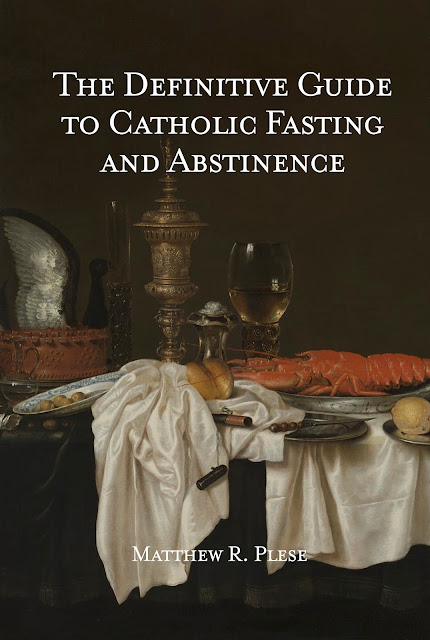
Want to learn more about the history of fasting and abstinence? Check out the Definitive Guide to Catholic Fasting and Abstinence.
Read more >>
Monday, March 9, 2020
Holy Communion on the Tongue May Never Be Denied


An important reminder, even during health crises, Holy Communion may never be denied on the tongue. No one may force Holy Communion in the Hand. In fact, it is sacrilegious and should never be done. If you are unable to receive Holy Communion on the tongue you can learn how to make a proper act of Spiritual Communion. Note, there are a few necessary requirements for this as mentioned in that article.

If there is a public health crisis, Mass can and should still be said. But the priest may simply not distribute Holy Communion to the Faithful. After all, we do not have to receive Holy Communion in order to fulfill our Sunday obligation. We are only required to receive Holy Communion once a year during the Easter Season, which is what is known as our "Easter Duty."

Back in the time of St. Louis IX, he received Holy Communion only six times a year and that was considered frequent. With the advent of more frequent Communion, even daily, under St. Pius X, people have begun to forget that we should only be approaching the Holy Altar if we are in the state of grace and we must never do it out of habit. By attending Mass we participate in the Sacrifice of the Altar. Receiving of that Sacrifice is only required by the priest, not the faithful.

Note: Holy Communion of course may be denied to public, unrepentant sinners. That is not the scope of this post. Assuming a soul is in the state of grace and appears at the altar to receive our Lord (i.e. their is a distribution of Communion at the Mass in question), that soul may always receive on the tongue. The priest may not force the person to receive our Lord in Holy Communion on the hand or else not receive the Sacrament at all.

Summary:
  • Holy Communion in the Hand is never required
  • Holy Communion should not be received in the hand for any reason
  • If you can not receive Holy Communion on the Tongue, make an Act of Spiritual Communion
  • We do not have to receive Holy Communion to fulfill our Sunday obligation
Read more >>
St. Simon of Cryene

As they were going out, they met a Cyrenian named Simon; this man they pressed into service to carry his cross. – Matthew 27:32

Who was Simon of Cryene?

Simon of Cryene is mentioned only in a few lines in Sacred Scripture (cf. Matthew 27:32, Mark 15:21, and Luke 23:26) where we learn that he was compelled by the solders to carry the Cross with our Lord. The reason why he was singled out for this is not known. But we do know that to carry the Cross was a monumental shame and disgrace. Simon did not offer. He was forced to help carry the Cross since the humanity of our Lord was already so exhausted and tortured the soldiers feared that our Redeemer would die before reaching Calvary.

Yet, beyond his involvement in the greatest act of salvation history (that is the Crucifixion of our Lord), we know that he and his family were converts to the Faith. He is the father of St. Rufus. Simon, who is also regarded as a saint, was a missionary to France in the Early Church. He became the first Bishop of Avignon. And according to legend, he died as a martyr for the Faith of the Lord Jesus, whose Cross he helped carry. His martyrdom was his own final cross to bear.

In fact, both of his sons are saints. As related by Catholic Tradition's website:
St. Mark mentions the names of the two Sons of Simon: Rufus and Alexander. (Mark 15:21). In the course of time, these two became Christians, along with their mother and Simon himself. They are spoken of several times later in the New Testament. It is interesting to note that the mother was so beloved by St. Paul that he refers to her as his own mother: "Salute Rufus, elect in the Lord, and his mother and mine." (Rom. 16:13).
In the life of St. Simon of Cryene we find a number of lessons that can apply to our lives - the need to carry our crosses, especially the importance of bearing with patience and resignation the difficulties that we do not anticipate, expect, or want. Yet, we also have a heavenly advocate in St. Simon and his family. 

May St. Simon of Cyrene, St. Rufus, St. Alexander, and his wife pray for us!
Read more >>
Thursday, March 5, 2020
In The State of Mortal Sin, We Gain No Merits

Our prayers, fasting, and almsgiving during Lent do no profit for our souls if we are in the state of mortal sin. We can gain merit and atone for sin only if we are in the state of grace. Go to Confession often this Lent. Giving up dessert is no use if you continue to live in sin. Fasting, even the rigorous fasting that I encourage for Lent, is not useful if we continue to live in sin and fail to practice prayer and almsgiving.

Make real and lasting spiritual progress this Lent. Here are some resources for you to conquer lust, pride, and technology addictions. See: Make Real Progress This Lent.
Read more >>
Wednesday, March 4, 2020
On the Importance of Almsgiving During Lent


“Hide your alms in the breast of the poor, and the alms itself shall pray for you.” (Eccl. 29:15)

In addition to prayer and fasting, almsgiving is one of the primary means of penance we perform during Lent. I posted last year on the custom in some churches in Europe of having alms boxes specifically for the poor souls. This is a tradition that is not commonly known nowadays. Read that article by clicking here.

Almsgiving refers to giving to the poor. By giving to the poor, we make reparation for sins as we see in the poor the person of Christ Himself. Though, while not strictly almsgiving, the giving of our time to visit the sick, the elderly, or those in prison also makes reparation for sin. Almsgiving is one of the four types of penance.

As mentioned in the sermon on this video, Our Lord at the End of Times will judge everyone, and He will judge us against the works of mercy. Everyone will be judged against them.

This Lent, consider donating to the 10 Traditional Catholic Charities I mentioned in my previous article.  Also see my post 12 Pro-Life Charities for Catholics.

Donate to pro-life charities in your country or state. Donate to local traditional Catholic monasteries, hermitages, convents, or seminaries. Support priests. Help all the poor you experience.
Read more >>
Tuesday, March 3, 2020
Lenten Ember Days: Fast and Abstinence


The Wednesday, Friday, and Saturday of this week are the Lenten Ember Days - a time set aside for us to fast and abstain from meat.

Practically speaking, these days do not really differ from the rest of traditional Lent. Most traditional Catholics understand that Lent is a period of forty days of fasting. Sadly this has been lost by the mainstream Catholics today. Yet, even most traditional Catholics who only keep the 1917 Code of Canon Law do not keep Lent as forty days of abstinence as well. For many centuries, Lent was a time of fasting and a time when all meat and animal products (e.g. milk, eggs, butter, cream, etc) were forbidden.

Those who keep Lent as forty days of fasting and forty days of abstinence will already be performing the minimum required of an Ember Day already because of Lent. However, if you are not observing these days as days of fasting or days of abstinence, now is a time to start. 

Besides these works of mortification, the main difference in our own prayer lives for these Ember Days should be offering additional prayers, and our morning offering, for the intention of a good harvest, for vocations, and for those who are about to be ordained.

Ember Days are set aside to pray and/or offer thanksgiving for a good harvest and God's blessings. If you are in good health, please fast and abstain during these three days and pray the additional prayers the Church asks for at this time. Remember the words from the Gospel: "Unless you do penance, you shall likewise perish" (Luke 13:5).

From Dom Gueranger's Liturgical Year for Ember Wednesday in Lent:
The fast of to-day is prescribed by a double law: it is Lent, and it is Ember Wednesday. It is the same with the Friday and Saturday of this week. There are two principal objects for the Ember days of this period of the year: the first is to offer up to God the season of spring, and, by fasting and prayer, to draw down His blessing upon it; the second is, to ask Him to enrich with His choicest graces the priests and sacred ministers who are to receive their Ordination on Saturday. Let us, therefore, have a great respect for these three days; and let those who violate, upon them, the laws of fasting or abstinence, know that they commit a twofold sin.
From New Advent:
Ember days (corruption from Lat. Quatuor Tempora, four times) are the days at the beginning of the seasons ordered by the Church as days of fast and abstinence. They were definitely arranged and prescribed for the entire Church by Pope Gregory VII (1073-1085) for the Wednesday, Friday, and Saturday after 13 December (S. Lucia), after Ash Wednesday, after Whitsunday, and after 14 September (Exaltation of the Cross). The purpose of their introduction, besides the general one intended by all prayer and fasting, was to thank God for the gifts of nature, to teach men to make use of them in moderation, and to assist the needy. The immediate occasion was the practice of the heathens of Rome. The Romans were originally given to agriculture, and their native gods belonged to the same class. 
At the beginning of the time for seeding and harvesting religious ceremonies were performed to implore the help of their deities: in June for a bountiful harvest, in September for a rich vintage, and in December for the seeding; hence their feriae sementivae, feriae messis, and feri vindimiales. The Church, when converting heathen nations, has always tried to sanctify any practices which could be utilized for a good purpose. At first the Church in Rome had fasts in June, September, and December; the exact days were not fixed but were announced by the priests. The "Liber Pontificalis" ascribes to Pope Callistus (217-222) a law ordering: the fast, but probably it is older. Leo the Great (440-461) considers it an Apostolic institution. When the fourth season was added cannot be ascertained, but Gelasius (492-496) speaks of all four. This pope also permitted the conferring of priesthood and deaconship on the Saturdays of ember week--these were formerly given only at Easter. 
Before Gelasius the ember days were known only in Rome, but after his time their observance spread. They were brought into England by St. Augustine; into Gaul and Germany by the Carlovingians. Spain adopted them with the Roman Liturgy in the eleventh century. They were introduced by St. Charles Borromeo into Milan. The Eastern Church does not know them. The present Roman Missal, in the formulary for the Ember days, retains in part the old practice of lessons from Scripture in addition to the ordinary two: for the Wednesdays three, for the Saturdays six, and seven for the Saturday in December. Some of these lessons contain promises of a bountiful harvest for those that serve God.
From Catholic Culture:
Since man is both a spiritual and physical being, the Church provides for the needs of man in his everyday life. The Church's liturgy and feasts in many areas reflect the four seasons of the year (spring, summer, fall and winter). The months of August, September, October and November are part of the harvest season, and as Christians we recall God's constant protection over his people and give thanksgiving for the year's harvest.

The September Ember Days were particularly focused on the end of the harvest season and thanksgiving to God for the season. Ember Days were three days (Wednesday, Friday and Saturday) set aside by the Church for prayer, fasting and almsgiving at the beginning of each of the four seasons of the year. The ember days fell after December 13, the feast of St. Lucy (winter), after the First Sunday of Lent (spring), after Pentecost Sunday (summer), and after September 14 , the feast of the Exaltation of the Holy Cross (fall). These weeks are known as the quattor tempora, the "four seasons."

Since the late 5th century, the Ember Days were also the preferred dates for ordination of  priests. So during these times the Church had a threefold focus: (1) sanctifying each new season by turning to God through prayer, fasting and almsgiving; (2) giving thanks to God for the various harvests of each season; and (3) praying for the newly ordained and for future vocations to the priesthood and religious life.
Read more >>
Monday, March 2, 2020
Works Must Accompany Faith

Today's readings at Matins for Monday is the First Week of Lent illustrates the importance of living out the Faith through works. Today's Gospel reading of our Lord separating the goats and the sheet (Matthew 25:31-46) is commented on in the following sermon by St. Augustine. This sermon is part of today's Matins readings. Recall that St. Augustine lived from 354 to 430 AD. This writing is over a thousand years before the protestants invented sola fide (faith alone).


Some would say that by faith alone - which, remember, without works is lifeless - you can gain eternal life, even if you fail to keep the commandments. But how can this be reconciled with what our Lord is going to tell those whom He sets off to the left, "Go into the everlasting fire which was prepared for the devil and his angels," and with His reason for condemning them, not any want of belief in Him but their failure to do good works? He wanted to make sure that no one would expect to win eternal life by faith alone, which is dead without works. That was why He said that He was going to make a separation among the people of all the nations, who had been using the same pastures without distinction. This separation will make it clear that those who say to Him, "Lord, when did we see you suffering this or that and did not minister to You?" will be those who had believed in Him, but had not taken care to perform good works, as if they were going to attain everlasting life by dead faith alone.

Do you think that those who fail to perform works of mercy will be the only ones going to hell? What about those who steal what belongs to others? Or what about those who show themselves no mercy in so far as they corrupt the temple of God within them? Can works of mercy be of any use without love? The Apostle says, "If I distribute all my goods to the poor, yet do not have charity, it profits me nothing." No one, remember, can love his neighbor as himself if he does not love himself. And "he who loves evil hates his own soul."

There is no point in deceiving ourselves, as some do, by saying that the Gospel speaks of an everlasting fire, but not of an everlasting burning. These people consider a dead faith sufficient grounds for promising salvation to certain persons "through fire"; and they interpret these words of St. Paul as meaning that those persons are going to pass through the fire, which itself will be eternal. In other words, the fire itself would be everlasting, but the fire's burning, that is, its actions on those persons would not last forever. But the Lord forestalled such an interpretation by concluding His verdict with the words: "And these will go into everlasting burning, but the just into everlasting life. The burning, then, just as the fire, will be everlasting. And Truth Himself tells us that it will not be those whose faith is lacking who will go into it, but those whom He has found wanting in good works.
Read more >>
Thursday, February 27, 2020
Blessed Mary of the Passion: Founder of the Franciscan Missionaries of Mary

Blessed Mary of the Passion was born in Nantes, France on May 21, 1839 and lived until November 15, 1904.

At the age of 17, she attended a spiritual retreat after experiencing the death of two of her sisters and her cousin. She resolved at the retreat to enter religious life but shortly after her mother died and Blessed Mary was required to undertake the household responsibilities.

A few years later she entered the local monastery of the Poor Clares. She shortly after feel ill and had to leave the monastery, despite stating she had a profound experience of God inviting her to offer herself as a victim for the Church.

In 1864, after recovering in health, she entered the monastery of the Sistesr of Mary Reparatrix which had opened a house in Toulouse in 1860. On August 15th of that year, on our Lady's Assumption, she took the name Mary of the Passion and received the religious habit.

She was assigned to  accompany a group of the Sisters to the Vicariate Apostolic of Madurai in India. On May 3, 1866, she made her first religious vows while she was in India.

Blessed Mary was quickly thereafter, because of her many talents, named the Superior of the community. In 1876, however, due to several tensions that arose among the communities in Madurai, she and twenty other sisters left the congregation. She traveled to Rome and with the permission of Pope Pius IX set up a new community under the name: Missionaries of Mary.

Mother Mary's vision was to maintain their commitment to a life in which the Sisters combined contemplative prayer with their service. One characteristic which the new congregation adopted, which distinguished it from their previous one, was the provision of medical care to the local people. This was especially true for the women of India, who were strictly segregated from men in the traditional system. Mother Mary had seen the need for this and, as women themselves, the Sisters began to visit homes where they could enter the parts restricted to females.

Mother Mary opened a novitiate for the new congregation in Saint-Brieuc, in her native region of Brittany in France. The response was great and soon many young women entered the congregation for service overseas.

She returned to Rome in 1880 to resolve some legal matters of the congregation and returned again to Rome in 1882. Such travels were long and arduous.

On August 12, 1885, the order received official recognition from the Holy See. At this time they adopted the Rule of the Franciscan Third Order Regular. And their name was changed to the Franciscan Missionaries of Mary.

In 1900, Mother Mary had the experience of losing the community of Sisters in Taiyuan, China, who were executed during the Boxer Rebellion. These martyrs, who heroically sung the Te Deum as they were executed, were canonization in 2000.

At the age of 65, worn out from all of her labors, Blessed Mary of the Passion died. At the time of her death, there were 2,000 members of her order in over 86 communities spread across four continents. She is buried in Rome.

Currently there are about 6,700 Franciscan Missionaries of Mary, citizens of 80 nations, serving in 76 countries around the globe.

Application To Us

During the Season of Lent in particular we should call to mind the example of so many martyrs and missionaries who gave up their families, their possessions, their careers and ambitions, and sometimes even their lives to reach people in far away lands. And many of these people sought to kill them for spreading or speaking the Faith. And yet, they still went and still spoke out because they knew that to save one soul from eternal death through Baptism and the Holy Faith was worth the price of torture and earthly death here. We should frequently pray for the Missions.

This Lent, let us invoke Blessed Mary of the Passion to intercede for so many traditional priests who labor in Asia and other far away missions. These missionaries are poor and risk their lives and safety to spread the Faith and serve very few souls in otherwise atheistic, Islamic, or pagan countries.

As part of our Lenten alsmgiving, please consider donating to a Traditional Catholic charity, in particular the SSPX Foreign Missions, the Institute of Christ the King Foreign Missions, the FSSP missions, and the independent priests who labor in the 3rd world need our prayers and our financial support. See: 10 Traditional Catholic Charities: Almsgiving for Traditional Catholics
Read more >>
Tuesday, February 25, 2020
Votive Feast of the Holy Face of Our Lord Jesus Christ Deformed in the Passion


Today is the final day before the great and holy fast of Lent. Today, known as Marti Gras or Fat Tuesday, is a day that has transformed from one final day of fun and merriment and meat eating to a day of public scandal and sin for many. Unfortunately, with so few actually keeping the forty day fast, it is a mockery that anyone would celebrate Fat Tuesday who does not commit to an authentically austere Lent.

I have written before on the importance of reparation to the Holy Face for Fat Tuesday. In fact, as I mentioned in that prior post, our Lord appeared to Mother Pierina in 1938 and requested a day of reparation today with these words:
“See how I suffer. Nevertheless, I am understood by so few. What gratitude on the part of those who say they love me. I have given My Heart as a sensible object of My great love for man and I give My Face as a sensible object of My Sorrow for the sins of man. I desire that it be honoured by a special feast on Tuesday in Quinquagesima (Shrove Tuesday – the Tuesday before Ash Wednesday). The feast will be preceded by novena in which the faithful make reparation with Me uniting themselves with my sorrow.”
The Facebook Page "Restore the '54" shares the following on the Votive Feast of the Holy Face of Our Lord Jesus Christ Deformed in the Passion:
This Feast is not found in the Missae pro Aliquibus Locis of most editions of the Roman Missal. The Devotion to the Holy Face has its origins in the 12th century, with the relic of the Veil of Veronica kept at St. Peter's Basilica. The different Masses of the Holy Face used today and throughout history honor this relic which is guarded in the Vatican Basilica. 
The Mass for this Feast appears in a Missal from St. Peter's Basilica, Rome, dating from the 1500's. There is also a Votive Mass of the Holy Face in the Holy Land, which formed the 6th Mass of the "Via Crucis." 
In 1889 Leo XIII approved the Confraternity of the Holy Face. Then, in 1910 St. Pius X through an S.R.C. decree approved a Mass for the Holy Face using the Mass "Humiliavit" (used as the Votive Mass of the Passion for Fridays and Tuesday within Sexagesima) along with three specially composed prayers for the Collect, Secret, and Postcommunion. 
As Fr. Stefano Pedica, O.S.B. writes, "The Mass of the Holy Face of Jesus was permitted by the Holy Pope Pius X, who desired that it might be the same Mass of the Passion, namely the "Missa Humiliavit" with three "appropriate prayers" shedding light upon and determining the liturgical and theological sense of what is proper and due to the Most Sacred Face of the Redeemer...There appears clearly in the prayers the meaning the Holy See desires, about the devotion to the Holy Face. Veronica is not mentioned in them, as in the ancient prayers, nor is there mention of anything which could in the slightest way give cause to critics to oppose that which Holy Mother Church proposes to the faithful, in "lex orandi" and "lex credendi." The wording taken from the Old and New Testaments, confers a dogmatic rather than historic value to the cult of the Holy Face. The Votive Mass of the Most Holy Face of Jesus has been requested by very many Religious Communities (particularly the Benedictine-Silvestrines) and in various Dioceses throughout the world; showing that the devotion to the Holy Face is always growing and more deeply felt in the souls of the faithful." 
This feast, being one of reparation, also pairs well with the age old custom of having the Forty Hours Devotion in reparation for Carnival, which ends on this day. 
The Mass “Propter te sustínui," which is older than the 1910 prescription for the Missa "Humiliavit," belongs to the Missals of the dioceses of Fréjus and Marseille (France), and is one of the two Masses used today for the Feast of the Holy Face. Although, with the 1910 decree from the S.R.C., it would be prudent to use the Missa "Humiliavit" with the three proper prayers.
 Collect:

Omnipotent and merciful God, deign, we beseech you, grant to all those who honor with us the face of your Christ, disfigured by His Passion for our sins, the grace to see Him for eternity in all the splendor of celestial glory. Through the same Jesus Christ…
Read more >>


Copyright Notice: Unless otherwise stated, all items are copyrighted under a Attribution-NonCommercial-NoDerivatives 4.0 International License. If you quote from this blog, cite a link to the post on this blog in your article.

Disclosure of Material Connection: Some of the links on this blog are “affiliate links.” This means if you click on the link and purchase the item, I will receive an affiliate commission. As an Amazon Associate, for instance, I earn a small commission from qualifying purchases made by those who click on the Amazon affiliate links included on this website. I am disclosing this in accordance with the Federal Trade Commission’s 16 CFR, Part 255: “Guides Concerning the Use of Endorsements and Testimonials in Advertising.”