Thursday, March 26, 2020
Preface for the Reconciliation of the Penitents


Those familiar with the history of the Roman Rite will be familiar that in times past, public sinners were expelled from the Church on Ash Wednesday and received again on Holy Thursday. Whereas today, we are more familiar with the journey that catechumens are making to receive the Sacraments of Initiation at the Easter Vigil, several centuries ago, the penitents were also making a similar journey to the holiest of all celebrations, Easter.

While this does not still take place on Holy Thursday, we should still nevertheless pray for so many lapsed and fallen away Catholics to return to the Sacrament of Confession and be restored to God's grace. During this Lenten Season, we should often pray for sinners. One great means to do so is to pray the Seven Penitential Psalms on Fridays after Matins and Lauds, a practice that was done up until the Breviary reforms of St. Pius X.

We can likewise offer other prayers for the conversion of sinners, such as of course the Holy Rosary for them. We can pray these prayers now and offer our intentions of this day, in union with the whole Sacrifice of the Mass, for the conversion of lapsed Catholics.

Lastly, the following beautiful Preface given us by the Roman pontifical was formerly recited during the reconciliation of the public penitents. 

It is truly meet and just, right and available to salvation, that we should always and in all places give thanks to thee, O Holy Lord, almighty Father, eternal God, through Christ our Lord: Whom thou, O almighty Father, didst will to be born among us by an ineffable Birth, that so he might pay to thee, his eternal Father, the debt contracted by Adam, and put our death to death by his own, and bear our wounds in his own Flesh, and cleanse away our stains by his Blood; hereby enabling us, who had fallen by the envy of the old enemy, to rise again by his mercy. Through him, O Lord, we suppliantly beseech and pray thee that thou graciously hear us making intercession for the sins of others, who are not worthy to plead for our own. Do thou, O most merciful Lord, recall to thyself, with thy wonted goodness, these thy servants, who have separated themselves from thee by their sins. For neither didst thou reject the most wicked Achab when he humbled himself before thee, but didst avert from him the punishment he had deserved. So, likewise, didst thou graciously hear Peter, when he wept, and didst afterwards give to him the keys of the kingdom of heaven; and thou didst promise the reward of that same kingdom to the thief when he trusted in thee. Therefore, O most merciful Lord! mercifully welcome back these for whom we offer to thee our prayers, and restore them to the bosom of thy Church, that the enemy may not triumph over them, but that they may be reconciled unto thee by thy coequal Son, and by him be cleansed from their guilt, and graciously admitted by him to the banquet of thy most holy Supper. May he in such wise refresh them by his Flesh and Blood, as to lead them, after this life’s course is run, to the kingdom of heaven.

Lastly, here follows the devout formula given by the Roman pontifical in the reconciliation of penitents:

O God, the most loving Creator, and most merciful Redeemer of mankind! who, when man, through the devil's malice, forfeited eternal life,didst redeem him by the Blood of thine only Son; restore to life these thy servants, who thou wiliest not should be dead to thee. Thou abandonest not them that go astray; receive these that have returned to the right path. We beseech thee, O Lord, let thy mercy be moved by the tears and sighs of these thy servants; heal their wounds; stretch forth thy saving hand, and raise them up: lest thy Church be robbed of a part of her body; lest thy flock should suffer loss; lest the enemy should rejoice in the perdition of them that are of thy family; lest the second death should seize them that were regenerated in the waters of salvation. To thee, therefore, O Lord, do we thy suppliants pour forth our prayers, to thee the weeping of our heart. Spare them that trust in thee, and, in thy mercy, suffer them not to fall under the sentence of thy judgment to come, whereby they would be condemned to punishment. Let not the horrors of darkness, or the scorching of flames come nigh to them. They have returned from the way of error to the path of justice; let them not be again wounded. What thy grace hath conferred, and thy mercy hath reformed, let it remain in them whole and for ever. Through the same Jesus Christ our Lord. Amen.
Read more >>
Tuesday, March 24, 2020
Rare Urbi et Orbi Blessing In Response to COVID-19

Update: The full video may be watched here:


The Vatican News website reports:
On Friday, 27 March, [Pope Francis] will preside over a moment of prayer on the sagrato of St Peter’s Basilica, the platform at the top of the steps immediately in front of the façade of the Church. “I invite everyone to participate spiritually through the means of communication," he said.  
The ceremony will consist in readings from the Scriptures, prayers of supplication, and adoration of the Blessed Sacrament; and will conclude with Pope Francis giving the Urbi et orbi Blessing, with the possibility of gaining a plenary indulgence for all those who listen to it live through the various forms of communication. The blessing “to the City [of Rome] and to the World” is normally only given on Christmas and Easter.
It is an extraordinarily rare event for an Urbi et orbi to take place any time other than Christmas or Easter. This follows the release of a special indulgences issued in response to the COVID-19 crisis.
Read more >>
Monday, March 23, 2020
How Can I Be Forgiven From Venial Sins Without Confession?


What is the difference between Mortal & Venial Sin?

Sins can be grouped into two categories: mortal and venial sins. This is attested to in the Scriptures which mention this distinction in 1 John 5:16-18:

"If anyone sees his brother committing a sin that is not a deadly sin, he will ask, and God will give him life for those whose sin is not deadly. There is sin which is deadly; I do not say one is to pray for that. All wrongdoing is sin, but there is sin which is not deadly. We know that anyone born of God does not sin, but He who is born of God keeps him, and the evil one does not touch him."

Mortal sin is "deadly" sin since it destroys satisfying grace in the soul. The consequence of this is the most serious - to die with mortal sin on the soul is the only determinant if a soul will go to Hell for all eternity or not.

All sins are venial sins unless they are mortal sins. And to be a mortal sin, it must meet 3 characteristics:
  1. Grave Matter: The act must involve a serious offense or violation of a moral law. Not all sins are considered grave matter; they must be significant in their nature. Examinations of Conscience will help determine which sins are mortal. Offenses against the Commandments or the Church's precepts are mortal sins. For an examination just on venial sins, the guide by St. Anthony Mary Claret is a good resource.
  2. Full Knowledge: The person committing the sin must have a clear understanding that what they are doing is a serious offense against God's law. Ignorance or lack of awareness may reduce culpability.
  3. Deliberate Consent: The individual must commit the sinful act with full and voluntary intent. Coercion or external factors that compromise free will may diminish culpability. If someone commits a sin while sleepwalking, for instance, there would likely be no sin committed.
The Forgiveness of Mortal Sins: The Sacrament of Confession

The Sacrament of Confession is the means that our Divine Lord has established so that we may receive forgiveness for our sins. This is the ordinary means of forgiveness. Ordinarily, this means that only in Confession can a soul in the state of mortal sin be restored to a life of grace and friendship with God as a result of the way that God has ordered the world to work. Q. 780 of the Baltimore Catechism states:

What sins are we bound to confess? A. We are bound to confess all our mortal sins, but it is well also to confess our venial sins.

What can those do who may not access the Sacrament of Reconciliation? If someone is in a faraway distant land or on a battlefield and dying, what do they do? What even should we do if we become ill with a virus and feel life slipping away and fear that no priest will be able to hear our Confession?

In such situations, we are reminded that God has bound salvation to the Sacraments, but He Himself is not bound by His Sacraments. St. Maximilian Kolbe wrote to his followers shortly before WWII:
"Whoever can, should receive the Sacrament of Penance.  Whoever cannot, because of prohibiting circumstances, should cleanse his soul by acts of perfect contrition: i.e., the sorrow of a loving child who does not consider so much the pain or reward as he does the pardon from his father and mother to whom he has brought displeasure."
The Forgiveness of Mortal Sins: An Act of Perfect Contrition

Thus, there is one additional means to receive forgiveness: An Act of Perfect Contrition. This, too, is the only way that protestants with valid Baptism, but without valid Confession, can be saved. We know that there is no salvation outside of the Church, but for those souls who die seemingly separated from the Church, we must pray that they can make a perfect Act of Contrition, repent of their sins, long for union with God and His Church, and thus cheat the devil and merit a crown of glory.

There are two kinds of contrition (i.e., sorrow) that we can have for our sins. The most common is imperfect contrition which is sorrow out of a fear of losing Heaven or suffering in Hell. The other is perfect contrition which is sorrow entirely out of a love of God and regret for offending Him.

The Catholic Encyclopedia on Contrition states: "Catholic teaching distinguishes a twofold hatred of sin; one, perfect contrition, rises from the love of God Who has been grievously offended; the other, imperfect contrition, arises principally from some other motives, such as loss of heaven, fear of hell, the heinousness of sin, etc. (Council of Trent, Sess. XIV, ch. iv de Contritione)."

While those who are dying without Confession and with mortal sin on their souls will need to make such a perfect Act of Contrition in order to avoid hell, we too can seek to make perfect acts of contrition whenever we sin, even if we plan to soon seek out the Sacrament of Confession and receive absolution.

The formula for an Act of Contrition:
O my God, I am heartily sorry for having offended Thee, and I detest all my sins, because I dread the loss of heaven, and the pains of hell; but most of all because they offend Thee, my God, Who are all good and deserving of all my love. I firmly resolve, with the help of Thy grace, to confess my sins, to do penance, and to amend my life.
The perfect act of contrition, though, is not just a mere fact of saying this formula. It truly requires the proper disposition of being detached from all sins - even venial sins. It is not an easy thing to do, especially those who sin often throughout their lives.

If you are in good health now, make a resolution to say 3 Hail Marys every day to ask for the grace to die in the state of grace with Last Rites.


 The Forgiveness of Venial Sins:

What has been mentioned so far is the forgiveness of mortal sins, those that would deprive a soul of Heaven. The Sacrament of Confession and Perfect Acts of Contrition would both remove mortal sins and venial sins. Is there, however, a way to remit venial sin by itself? There actually is.

However, an important clarification: assuming a person has both moral sin and venial sin on his soul, it is not possible to remove only the venial sins this way and leave the mortal sins for the Confessional. Why? St. Thomas Aquinas explains:
"As stated above (III:87:3), there is no remission of any sin whatever except by the power of grace, because, as the Apostle declares (Romans 4:8), it is owing to God's grace that He does not impute sin to a man, which a gloss on that passage expounds as referring to venial sin. Now he that is in a state of mortal sin is without the grace of God. Therefore no venial sin is forgiven him" (Summa Theologica, Third Part, Question 87: The remission of venial sin, Article 4)
For those, however who only have venial sins on their souls, the Angelic Doctor continues by explaining what the means for remitting the venial sins are:
"No infusion of fresh grace is required for the forgiveness of a venial sin, but it is enough to have an act proceeding from grace, in detestation of that venial sin, either explicit or at least implicit, as when one is moved fervently to God. Hence, for three reasons, certain things cause the remission of venial sins: first, because they imply the infusion of grace, since the infusion of grace removes venial sins, as stated above (Article 2); and so, by the Eucharist, Extreme Unction, and by all the sacraments of the New Law without exception, wherein grace is conferred, venial sins are remitted. 
"Secondly, because they imply a movement of detestation for sin, and in this way the general confession [i.e. the recital of the Confiteor or of an act of contrition, the beating of one's breast, and the Lord's Prayer conduce to the remission of venial sins, for we ask in the Lord's Prayer: "Forgive us our trespasses."
"Thirdly, because they include a movement of reverence for God and Divine things; and in this way a bishop's blessing, the sprinkling of holy water, any sacramental anointing, a prayer said in a dedicated church, and anything else of the kind, conduce to the remission of venial sins" (Summa Theologica, Third Part, Question 87: The remission of venial sin, Article 3)
Thus, we learn that the Sacraments, such as receiving Holy Communion, remit venial sin, although we of course may never receive Holy Communion without prior Sacramental Confession for mortal sin. We also learn that the Confiteor, the Our Father, and blessing ourselves with Holy Water all remit venial sin.

So if you find yourself away from the Sacrament of Confession, do not lose heart. Make use of the prayers and Sacramentals at your disposal.
Read more >>
Sunday, March 22, 2020
Special Indulgences Available Due to COVID-19

The Procession of St. Gregory by Jacopo Zucchi

The following is taken from the Decree of the Apostolic Penitentiary on the granting of special Indulgences to the faithful in the current pandemic issued on March 20, 2020:

The gift of special Indulgences is granted to the faithful suffering from COVID-19 disease, commonly known as Coronavirus, as well as to health care workers, family members and all those who in any capacity, including through prayer, care for them.

“Be joyful in hope, patient in affliction, faithful in prayer” (Rom 12: 12). The words written by Saint Paul to the Church of Rome resonate throughout the entire history of the Church and guide the judgment of the faithful in the face of all suffering, sickness and calamity.

The present moment in which the whole of humanity, threatened by an invisible and insidious disease, which for some time now has become part of all our lives, is marked day after day by anguished fears, new uncertainties and above all widespread physical and moral suffering.

The Church, following the example of her Divine Master, has always had the care of the sick at heart. As Saint John Paul II points out, the value of human suffering is twofold: “It is supernatural because it is rooted in the divine mystery of the Redemption of the world, and it is likewise deeply human, because in it the person discovers himself, his own humanity, his own dignity, his own mission” (Apostolic Letter Salvifici Doloris, 31).

Pope Francis, too, in these recent days, has shown his paternal closeness and renewed his invitation to pray incessantly for those who are sick with the Coronavirus.

So that all those who suffer because of COVID-19, precisely in the mystery of this suffering, may rediscover “the same redemptive suffering of Christ” (ibid., 30), this Apostolic Penitentiary, ex auctoritate Summi Pontificis, trusting in the word of Christ the Lord and considering with a spirit of faith the epidemic currently underway, to be lived in a spirit of personal conversion, grants the gift of Indulgences in accordance with the following disposition.

The Plenary Indulgence is granted to the faithful suffering from Coronavirus, who are subject to quarantine by order of the health authority in hospitals or in their own homes if, with a spirit detached from any sin, they unite spiritually through the media to the celebration of Holy Mass, the recitation of the Holy Rosary, to the pious practice of the Way of the Cross or other forms of devotion, or if at least they will recite the Creed, the Lord's Prayer and a pious invocation to the Blessed Virgin Mary, offering this trial in a spirit of faith in God and charity towards their brothers and sisters, with the will to fulfil the usual conditions (sacramental confession, Eucharistic communion and prayer according to the Holy Father's intentions), as soon as possible.

Health care workers, family members and all those who, following the example of the Good Samaritan, exposing themselves to the risk of contagion, care for the sick of Coronavirus according to the words of the divine Redeemer: “Greater love has no one than this: to lay down one’s life for one’s friends” (Jn 15: 13), will obtain the same gift of the Plenary Indulgence under the same conditions.

This Apostolic Penitentiary also willingly grants a Plenary Indulgence under the same conditions on the occasion of the current world epidemic, also to those faithful who offer a visit to the Blessed Sacrament, or Eucharistic adoration, or reading the Holy Scriptures for at least half an hour, or the recitation of the Holy Rosary, or the pious exercise of the Way of the Cross, or the recitation of the Chaplet of Divine Mercy, to implore from Almighty God the end of the epidemic, relief for those who are afflicted and eternal salvation for those whom the Lord has called to Himself.

The Church prays for those who find themselves unable to receive the Sacrament of the Anointing of the Sick and of the Viaticum, entrusting each and every one to divine Mercy by virtue of the communion of saints and granting the faithful a Plenary Indulgence on the point of death, provided that they are duly disposed and have recited a few prayers during their lifetime (in this case the Church makes up for the three usual conditions required). For the attainment of this indulgence the use of the crucifix or the cross is recommended (cf. Enchiridion indulgentiarum, no.12).

May the Blessed Virgin Mary, Mother of God and of the Church, Health of the Sick and Help of Christians, our Advocate, help suffering humanity, saving us from the evil of this pandemic and obtaining for us every good necessary for our salvation and sanctification.

The present Decree is valid notwithstanding any provision to the contrary.

Given in Rome, from the seat of the Apostolic Penitentiary, on 19 March 2020.

Mauro Cardinal Piacenza

Major Penitentiary
Read more >>
Saturday, March 21, 2020
The Jubilee Medal of St. Benedict


According to the Catholic Encyclopedia: 

FRONT One side of the medal bears an image of St. Benedict, holding a cross in the right hand and the Holy Rule in the left. On the one side of the image is a cup, on the other a raven, and above the cup and the raven are inscribed the words: “Crux Sancti Patris Benedicti” (Cross of the Holy Father Benedict). Round the margin of the medal stands the legend “Ejus in obitu nostro praesentia muniamus” (May we at our death be fortified by his presence).

BACK The reverse of the medal bears a cross with the initial letters of the words: “Crux Sacra Sit Mihi Lux” (The Holy Cross be my light), written downward on the perpendicular bar; the initial letters of the words, “Non Draco Sit Mihi Dux” (Let not the dragon be my guide), on the horizontal bar; and the initial letters of “Crux Sancti Patris Benedicti” in the angles of the cross. Round the margin stand the initial letters of the distich: “Vade Retro Satana, Nunquam Suade Mihi Vana — Sunt Mala Quae Libas, Ipse Venena Bibas” (Begone, Satan, do not suggest to me thy vanities — evil are the things thou profferest, drink thou thy own poison). At the top of the cross usually stands the word Pax (peace) or the monogram I H S (Jesus).

The History of the Jubilee Medal:

Any priest may receive the faculties to bless these medals.

The medal was made  in 1880, to commemorate the fourteenth centenary of St. Benedict’s birth. The Archabbey of Monte Cassino has the exclusive right to strike this medal. The ordinary medal of St. Benedict usually differs from the preceding in the omission of the words “Ejus in obitu etc.”, and in a few minor details. (For the indulgences connected with it see Beringer, “Die Ablässe”, Paderborn, 1906, p. 404-6.) The habitual wearer of the jubilee medal can gain all the indulgences connected with the ordinary medal and, in addition: (1) All the indulgences that could be gained by visiting the basilica, crypt, and tower of St. Benedict at Monte Cassino (Pius IX, 31 December, 1877) (2) A plenary indulgence on the feast of All Souls (from about two o’clock in the afternoon of 1 November to sunset of 2 November), as often as (toties quoties), after confession and Holy Communion, he visits any church or public oratory, praying there according to the intention of the pope, provided that he is hindered from visiting a church or public oratory of the Benedictines by sickness, monastic enclosure or a distance of at least 1000 steps. (Decr. 27 February, 1907, in Acta S. Sedis, LX, 246.)

[Note the toties quoties indulgence was extended in 1914 to anyone, even those who do not have or use the Jubilee Medal]

It is doubtful when the Medal of St. Benedict originated. During a trial for witchcraft at Natternberg near the Abbey of Metten in Bavaria in the year 1647, the accused women testified that they had no power over Metten, which was under the protection of the cross. Upon investigation, a number of painted crosses, surrounded by the letters which are now found on Benedictine medals, were found on the walls of the abbey, but their meaning had been forgotten. Finally, in an old manuscript, written in 1415, was found a picture representing St. Benedict holding in one hand a staff which ends in a cross, and a scroll in the other. On the staff and scroll were written in full the words of which the mysterious letters were the initials. Medals bearing the image of St. Benedict, a cross, and these letters began now to be struck in Germany, and soon spread over Europe. They were first approved by Benedict XIV in his briefs of 23 December, 1741, and 12 March, 1742.


Specific Promises associated with the St. Benedict Medal:

1. To destroy witchcraft and all other diabolical and haunting influences;
2. To impart protection to persons tempted, deluded, or tormented by evil spirits;
3. To obtain the conversion of sinners into the Catholic Church, especially when they are in danger of death;
4. To serve as an armor against temptation;
 5. To destroy the effects of poison;
6. To secure a timely and healthy birth for children;
7. To afford protection against storms and lightning;
8. To serve as an efficacious remedy for bodily afflictions and a means of protection against contagious diseases.

How to wear the medal:

1. On a chain around the neck;
2. Attached to one’s rosary;
3. Kept in one’s pocket or purse;
4. Placed in one’s car or home;
5. Placed in the foundation of a building;
6. Placed in the center of a cross.

How to Order One: Amazon has a variety of Jubilee Medals
Read more >>
Traditional Benedictine Mass Propers for St. Benedict


Although often impeded by Lent, March 21st is the feast of St. Benedict, the illustrious founder of the Benedictines and of monasticism.

The propers (i.e. the prayers and readings) for the Feast of St. Benedict in the Tridentine Mass are simply taken from the Common of Abbots. However, tucked in the back of many hand missals is a section of propers "In Some Places and Congregations." That section gives the special propers unique to the Feast of St. Benedict when said in Benedictine Churches. In the Angelus Press Daily Missal, these may be found on page 1641. They are as follows:

INTROIT 

Let us all rejoice in the Lord, celebrating a festival day in honor of Saint Benedict the Abbot, on whose solemnity the Angels rejoice and give praise to the Son of God. Great is the Lord and exceedingly to be praised, in the city of our God, on His holy mountain. Glory be to the father. (Ps. 47:2) Let us all rejoice in the Lord, celebrating a festival day in honor of Saint Benedict the Abbot, on whose solemnity the Angels rejoice and give praise to the Son of God.

COLLECT 

O Almighty and Eternal God, Who didst on this day lead Thy most holy Confessor Benedict out of the prison of the flesh and raise him up to heaven, grant, we pray, the pardon of all sin to Thy servants who celebrate this feast, so that while with glad hearts they rejoice at his glory, they may also by his intercession hav epart in his merits. Through our Lord Jesus Christ, Thy Son, Who liveth and reigneth with Thee in the unity of the Holy Ghost, God, world without end. Amen.

EPISTLE 
Ecclus. 50:111,13,14

Behold the great confessor who in his life propped up the house, and in his days fortified the temple. By him also the height of the temple was founded, the double building and the high walls of the temple. In his days the wells of water flowed out, and they were filled as the sea above measure. He took care of his nation, and delivered it from destruction. He prevailed to enlarge the city, and obtained glory in his conversation with the people: and enlarged the entrance of the house and the court. He shone in his days as the morning star in the midst of a cloud, and as the moon at the full. And as the sun when it shineth, so did he shine in the temple of God. And as the rainbow giving light in the bright clouds, and as the flower of roses in the days of the spring, and as the lilies that are on the brink of the water, and as the sweet smelling frankincense in the time of summer. As a bright fire, and frankincense burning in the fire. As a massy vessel of gold, adorned with every precious stone. As an olive tree budding forth, and a cypress tree rearing itself on high. About him was the ring of his brethren: and as the cedar planted in mount Libanus, so as branches of him, and all the sons of Aaron in their glory.

GOSPEL 
Matthew 19:27-29

Then Peter answering, said to him: Behold we have left all things, and have followed thee: what therefore shall we have? And Jesus said to them: Amen, I say to you, that you, who have followed me, in the regeneration, when the Son of man shall sit on the seat of his majesty, you also shall sit on twelve seats judging the twelve tribes of Israel. And every one that hath left house, or brethren, or sisters, or father, or mother, or wife, or children, or lands for my names sake, shall receive an hundredfold, and shall possess life everlasting.


SEQUENCE
Laeta quies magni ducis

The happy death of our great Leader bringing the benefits of a new day is commemorated now.

To the pious mind charity is given; so let first resound in a heart aflame with love what is brought forth in song and ceremony.

As along the pathway of the East he rises, let us admire the splendor of our patriarch.

The numerous race that from him sprang makes him shine as the sun, make him like another Abraham.

A raven you see ministering to him while as Elias he hides within a humble cave.

He appears another Eliseus when he calls back the axe from the torrent's rocky depth.

Purity of life make him another Joseph, knowledge of the future makes him another Jacob.

May he be mindful of his family, and bring us to the joys of Christ Who lives forever. Amen.

OFFERTORY

Thou hast given him his heart's desire, O Lord, and hast not withholden from him the will of his lips: Thou hast set on his head a crown of precious stones.

SECRET

Be appeased, O Lord, by the gifts we offer in honor of Thy most holy Confessor, Benedict, and through his prayers grant Thy servants pardon of their sins. Through our Lord.

COMMUNION

The faithful and wise servant, whom his lord setteth over his family, to give them their measure of wheat in due season.

POST COMMUNION

After receiving Thy saving Sacraments, we humbly pray, O Lord, our God, that through the prayers of Thy most holy Confessor Benedict, what we perform for his festival may profit us unto salvation. Through our Lord.
Read more >>
Friday, March 20, 2020
The Samaritan Woman at the Well: St. Photina


On Friday in the Third Week of Lent we read in the Gospel for the Mass in the Traditional Roman Rite the story of the Samaritan woman at the well. This woman, though few know it, is known as St. Photina, who eventually died as a martyr for the Faith.

Coincidentally, today is also the 20th day of March. And in the Roman Maryrology for today, we also happen to read her entry:
"The same day, the Saints Photina, a Samaritan, and her sons Joseph and Victor; also, Sebastian, military officer, Anatolius, and Photius; Photides, Parasceves and Cyriaca, sisters, who were all martyred for confessing Christ."
Catholic Online provides the following entry on St. Photina:
"According to Greek tradition, Photiona was the Samaritan woman with whom Jesus spoke at the well as was recounted in the Gospel of St. John, chapter four. Deeply moved by the experience, she took to preaching the Gospel, received imprisonment, and was finally martyred at Carthage. Another tradition states that Photina was put to death in Rome after converting the daughter of Emperor Nero and one hundred of her servants. She supposedly died in Rome with her sons Joseph and Victor, along with several other Christians, including Sebastian, Photius, Parasceve, Photis, Cyriaca, and Victor. They were perhaps included in the Roman Martyrology by Cardinal Cesare Baronius owing to the widely held view that the head of Photina was preserved in the church of St. Paul's Outside the Walls." 
May St. Photina and her sons pray for us to the Lord. Just as she saw our Lord and converted, may all those who are away from the Catholic Faith be touched by grace and enter the Holy Catholic Church through the saving waters of Baptism.
Read more >>
Thursday, March 19, 2020
Must the First Fridays and First Saturdays be Consecutive?

From time to time the question arises on whether or not the 9 First Fridays must be consecutive. One of the reasons for this is that traditionally the faithful may never receive Holy Communion, except in the case of the dying, on Good Friday. And some years Good Friday will fall on the First Friday of the month.

Likewise, during the crisis due to the coronavirus, many parishes - even traditional ones - are forced to cease public Masses due to the various shelter in place orders or government decrees to limit attendance at any gathering to a certain amount.

If this crisis continues into April, will the First Friday devotion need to be restarted again? Likewise, if through no fault of our own, will the Five First Saturdays devotion need to be restarted if we are unable to receive Holy Communion on the First Saturday of April? The answer is yes.

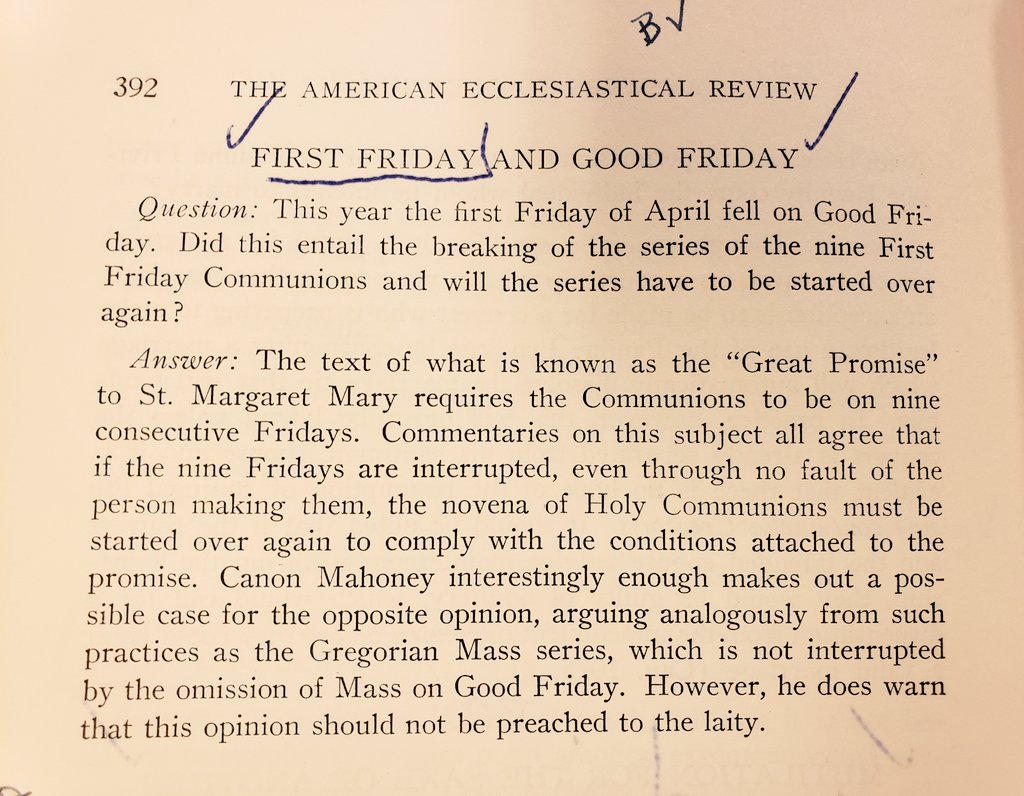
The following is taken from the American Ecclesiastical Review in regards to the question of Good Friday falling on the First Friday of the month. While the author notes this is not a universal opinion, he nevertheless does state that only Our Lord [or Our Lady in the case of the First Saturdays] could render a definitive decision on this matter. As none has been received from Heaven in a subsequent vision, we must conclude that the souls who are unable to receive Holy Communion, even through no fault of their own, must restart the devotion.

Let us pray for a quick end to the coronavirus crisis and the reopening of our churches and the offering of the Mass again to the public!

Does Good Friday Break the First Friday Devotion?


Read more >>
Prayer of Consecration to St. Joseph

O Blessed Saint Joseph, I consecrate myself to thy honor, and give myself to thee that thou mayest always be my father, my protector, and my guide in the way of salvation. Obtain for me a great purity of heart and a fervent love of the interior life. After thy example may I do all my actions for the greater glory of God, in union with the Divine Heart of Jesus and the Immaculate Heart of Mary. And do thou, O Blessed Saint Joseph, pray for me, that I may share in the peace and joy of thy holy death. Amen.

Those who are interested should also see the 31-Day St. Joseph Daily Reflection Manual: Free PDF. Those who wish to make a formula consecration to St. Joseph, please get a copy of Consecration to St. Joseph: The Wonders of Our Spiritual Father by Father Donald Calloway.
Read more >>
Wednesday, March 18, 2020
Can Unclean Food Defile a Man?


To those who claim that the Scriptures in Matthew 15:11 condemn the Church's law of abstinence and fasting, Dom Gueranger in his "Liturgical Year" addresses the following words:
[God] tells them that there is no creature which is intrinsically, and of its own nature, unclean; and that a man’s conscience cannot be defiled by the mere fact of his eating certain kinds of food. Evil thoughts, and evil deeds, these, says our Saviour, are the things that defile a man. Some heretics have interpreted these words as being an implicit condemnation of the exterior practices ordained by the Church, and more especially of abstinence. To such reasoners and teachers we may justly apply what our Saviour said to the pharisees: They are blind and leaders of the blind. From this, that the sins into which a man falls by his use of material things are sins only on account of the malice of the will, which is spiritual, it does not follow that therefore man may, without any sin, make use of material things, when God or His Church forbids their use. 
God forbade our first parents, under pain of death, to eat the fruit of a certain tree; they ate it, and sin was the result of their eating. Was the fruit unclean of its own nature? No; it was a creature of God as well as the other fruits of Eden; but our first parents sinned by eating it, because their doing so was an act of disobedience. Again, when God gave His Law on Mount Sinai, He forbade the Hebrews to eat the flesh of certain animals; if they ate it, they were guilty of sin, not because this sort of food was intrinsically evil or cursed, but because they that partook of it disobeyed the Lord. 
The commandments of the Church regarding fasting and abstinence are of a similar nature. It is that we may secure to ourselves the blessing of Christian penance— in other words, it is for our spiritual interest—that the Church bids us abstain and fast at certain times. If we violate her law, it is not the food we take that defiles us, but the resisting a sacred power, which our Saviour, in yesterday's Gospel, told us we are to obey under the heavy penalty which He expressed in those words: He that will not hear the Church, shall be counted as a heathen and publican.
Read more >>
Monday, March 16, 2020
Comprehensive List of Live Streaming Traditional Latin Masses


Updated 11/23/2020

With the current crisis in regards to the coronavirus, many Dioceses or governments have suspended all Masses and gatherings. This is unprecedented in the Church. As a result, in most places, the faithful have been dispensed from Sunday Mass. Yet, while it is possible to be dispensed from the precept of assisting at Mass, the divine law requires that Sundays are nevertheless honored. We must refrain from servile works on Sundays, pray, worship God as we can, and perform works of mercy, in addition to using the time for rest and leisure with family or friends. See: Top 5 Ways to Sanctify Sunday When Mass is Suspended

In order for the faithful to help sanctify Sunday, many parishes are now live streaming their Masses. In fact, many of the links here offer daily streaming - even the weekday Masses and the devotions.

During this Lent, we especially bear these crosses which the Lord has given us. When Lent started, we never planned to receive this Cross, but like our Lord, we must bear it with patience and resignation.

Some of these live streams are only during this period of crisis. Others are available all year round. If you know of any more, please list them in the comment section below. Some of these and more are listed on LatinMass.live as well.

Priestly Fraternity of St. Peter
Society of St. Pius V
Society of St. Pius X
Institute of Christ the King
Diocesan / Independent / Others in the USA
Churches in England & Wales
Eastern Catholic Rites
Read more >>
Indulged Prayer for the Dying


O most merciful Jesus, lover of souls, I beseech Thee, by the agony of Thy Most Sacred Heart and by the sorrows of Thine immaculate Mother, wash clean in Thy Blood the sinners of the whole world who are now in their agony and who are to die this day. Amen.

V: Heart of Jesus, who didst suffer death's agony
R: Have mercy on the dying

An indulgence of 300 days as listed in the Raccolta
Read more >>
Holy Communion Under One or Both Species?


What is Holy Communion?

The Eucharist - Holy Communion - simply is Christ's body, blood, soul, and divinity under the appearance of bread and wine. It is not a symbol of Christ, but rather, it is truly and really Jesus Christ! At the point in the Mass known as the consecration the priest, acting in persona Christi, will say "This is my Body, which will be given up for you" and "This is my Blood...". These were the words of Our Savior when He turned the bread and wine at the Last Supper into His Body and Blood, and, by the divine power of God in the priesthood, the bread and wine become Jesus Christ.

The Council of Trent condemned as heretical anyone who claimed that the Eucharist is not the Body and Blood and Soul and Divinity of Christ: “If anyone denieth, that, in the sacrament of the most holy Eucharist, are contained truly, really, and substantially, the body and blood together with the soul and divinity of our Lord Jesus Christ, and consequently the whole Christ; but saith that He is only therein as in a sign, or in figure, or virtue; let him be anathema.”

What is Transubstantiation?

The Baltimore Catechism Q. 246 asks, “What is this change of the bread and wine into the body and blood of our Lord called? This change of the bread and wine into the body and blood of our Lord is called Transubstantiation.”

Only the Catholic Church and the Orthodox Church have a valid Eucharist. The protestants, who do not have valid Holy Orders, do not have valid priests and therefore can not confect the Holy Eucharist. They can not by their words cause transubstantiation to occur. A Lutheran or Anglican priest is not a valid priest.

What is Consubstantiation? 

That being said, the Lutherans, although, they do not have a valid Eucharist, believe the Communion in their services is both the Lord’s Body and Blood alongside the substance of bread and wine. This is called consubstantiation. The theological view of consubstantiation, which has no basis in the teachings of the Early Church at all, was explicitly condemned as heretical by the Council of Trent:
“If any one saith, that, in the sacred and holy sacrament of the Eucharist, the substance of the bread and wine remains conjointly with the body and blood of our Lord Jesus Christ, and denieth that wonderful and singular conversion of the whole substance of the bread into the Body, and of the whole substance of the wine into the Blood-the species Only of the bread and wine remaining-which conversion indeed the Catholic Church most aptly calls Transubstantiation; let him be anathema.”

The writings of the Early Church Fathers abound in teaching the Catholic doctrine of transubstantiation, long before the term was coined by the Church. To illustrate the clear Catholic view that existed centuries, even a millennium before Martin Luther, we can turn to a few examples. St. Cyril of Jerusalem (313 – 386 AD) wrote, "Do not, therefore, regard the bread and wine as simply that, for they are, according to the Master's declaration, the body and blood of Christ.” And St. Augustine (354 – 430 AD) similarly and succinctly wrote, “Christ held Himself in His hands when He gave His Body to His disciples saying: 'This is My Body.' No one partakes of this Flesh before he has adored It.”

What is a Eucharistic Species?

In Theology we use the terms species in reference to the Eucharist. What does species mean? The Modern Catholic Dictionary by Fr. John A. Hardon, S.J. defines “species” as the following: “Appearances, especially those of bread and wine, after the Eucharistic consecration. The term "species" is used by the Council of Trent to identify the accidents, i.e., the size, weight, color, resistance, taste, and odor of bread, which remain exactly the same after transubstantiation. They are not mere appearances as though these physical properties were unreal. But they are appearances because after the consecration they lack any substance that underlies them or in which they inhere.”

This is an important definition because by it we see a few things. First, the Catholic view is transubstantiation. Second, in transubstantiation the bread and wine, at the moment of consecration, cease being bread and wine and are now the substance of the Lord’s Body, His Blood, His Soul, and His Divinity.  The only thing remaining of bread and wine are the accidents (the color, taste, smell, appearance, et cetera) of bread and wine. They are however not bread and wine any more.


Is Christ’s Body Only in the Consecrated Host? Is the Consecrated Wine Only His Blood?

In the Catechism of St. Pius X we find the clear and universal teaching of the Church: “Both under the species of the bread and under the species of the wine the living Jesus Christ is all present, with His Body, His Blood, His Soul and His Divinity. Both in the host and in the chalice Jesus Christ is whole and entire, because He is living and immortal in the Eucharist as He is in heaven; hence where His Body is, there also are His Blood, His Soul, and His Divinity; and where His Blood is, there also are His Body, His Soul and His Divinity, all these being inseparable in Jesus Christ.”

The smallest fragment of the Eucharistic Host is the fullness of Christ: Body, Blood, Soul, and Divinity. And the smallest drop of the Consecrated wine is likewise the fullness of Our Lord: Body, Blood, Soul, and Divinity. We may in conversation refer to the Consecrated Host as “Christ’s Body” and the Consecrated Wine as “Christ’s Blood,” but in reality under each of the species of bread and wine there is no substance of bread or wine and there is the fullness of Christ.

The great confusion on this necessary teaching for salvation comes from the modernism that has infected the Church in the past few decades. In fact, many Catholics fail to understand this because Catholic parishes have introduced Communion in the hand, which was introduced as a liturgical abuse, and they now also distribute Holy Communion from the chalice. The sacrilege of Communion in the hand and the distribution of both Eucharistic species has led to a growing trend in Catholics failing to believe in the Real Presence (i.e. in transubstantiation) and, even for those who do believe, there is a trend in Catholics who believe the Consecrated Host is only Christ’s Body and the Consecrated Wine is only Christ’s Blood.

Should We Receive Holy Communion from the Chalice? 

In the Traditional Latin Mass, Holy Communion is given to those who are kneeling (with the elderly and ill able to stand), on the tongue, and only under one species. Why? The Baltimore Catechism in Q. 900 advised, "The Church does not give Holy Communion to the people as it does to the priest under the appearance of wine also, to avoid the danger of spilling the Precious Blood; to prevent the irreverence some might show if compelled to drink out of a chalice used by all, and lastly, to refute those who denied that Our Lord's blood is present under the appearance of bread also."

The trend following Vatican II to distribute both Eucharistic species incorporates a protestant practice that the Church had repeatedly prohibited in order to both safeguard our Lord’s Body and Blood and to teach the authentic Theology of the Real Presence under one species more fully. The Catholic Encyclopedia summarizes the Church’s history of this topic for those looking for more thorough information. While the Eastern Rites of the Church have continued to offer the Holy Eucharist through intinction (where the Consecrated Bread is dipped in the Consecrated Wine), this practice has long ago vanished from the Western Rites of the Church. The protestants introduction of this was done due to their heretical view of the Consecrated Bread containing the fullness of Christ.

We should not receive Holy Communion from the chalice as traditionally this was for the priest alone. We should also attend the Traditional Latin Mass and not the Novus Ordo. And we should of course never receive Holy Communion in the hand.  As Fr. John Hardon remarked: “Whatever you can do to stop Communion in the hand will be blessed by God.”
Read more >>
Sunday, March 15, 2020
2nd Saturday of the Month TLM in Menlo Park, CA

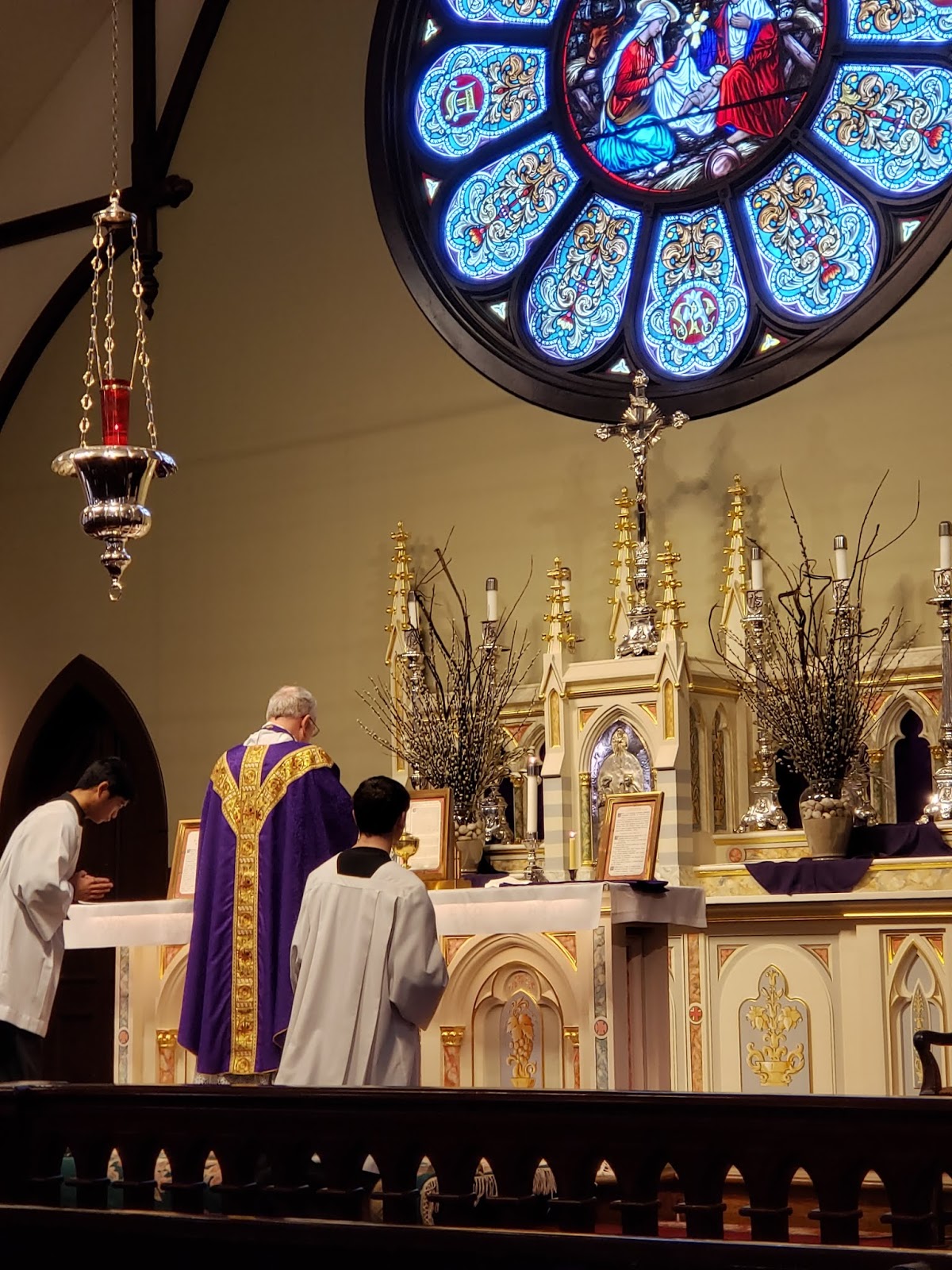
The Church of the Nativity now offers the Tridentine Mass on the 2nd Saturday of each month. I've been able to attend this Mass a few times and here are some images from it.

If you would like to receive email updates from the organizer of this monthly Mass, please contact me and I will pass along your email address.

If you are in the San Francisco Bay Area and looking for other Traditional Masses in the Peninsula or elsewhere in the Bay, consider following the Traditional Latin Mass Society of San Francisco as well as the Mid-Peninsula Latin Mass on Facebook.

Advent Feria Mass:


Feast of St. Lawrence:


Saturday in the 2nd Week of Lent:


Read more >>
Saturday, March 14, 2020
Top 5 Ways to Sanctify Sunday When Mass is Suspended

As a precursor, please read: Is Mass Attendance Required During Epidemics?

Sunday is the ideal day in which to participate in communal Rosary, Vespers, and Benediction services. Sunday is also the day on which the faithful should be most willing to read Catholic newspapers, books, and magazines. While none of these are required, they are some of the ways we can sanctify Sundays. And to those who are home-bound and unable to attend Mass, some of these activities are all the more important.

1. Pray the Divine Office

If you are like most Catholics, you have little time to pray the Divine Office during the work week.  If this is you, make an effort to pray Lauds, Vespers, and Compline each Sunday as a family.  Pray Lauds before going to Mass.  Pray Vespers before Sunday dinner.  And pray Compline after the Family Rosary in the evening before bed. You can easily pray the Divine Office from home at DivinimOfficum.com.

The Divine Office is the official prayer of the Church.  Unite your family with the Liturgical Year and pray the Divine Office on Sundays (and other holy days of obligation).

2. Family Rosary

Perhaps no Sunday activity is as cherished as the family Rosary.  As the axiom goes, “The Family that prays together stays together.”  Families have a responsibility – as the domestic Church – to foster a sense of holiness and religion amongst their members. The family Rosary should be a time of regular devotion – at least weekly if daily Rosary as a family is not possible.

For those families who have members that have fallen from the Faith, this is a sure means to help them return to the Church.  Beseech our Lady to send them the graces necessary to save their souls. Invite family members to the Rosary. Indeed, the family that prays together does stay together. And pray for all those affected by the health crisis and for all those who do not have access now to the Sacraments.

3. Teach and Learn the Faith

No other day should be as treasured for the passing on or the learning of the Faith than Sunday.  By the virtue of the Fourth Commandment we are forbidden from performing servile work (i.e. the work typical of a servant) on Sundays.  We are also forbidden from commanding those us under our charge to perform such works. Parents may not force their children to mow the lawn (and they should actually forbid such an activity on Sunday!).  Homeowners may not paint their rooms or work on household labors or even command their contractors or hired help to work on Sunday to accomplish a goal.  Rather, we should ask those under our charge to refrain from all such labors on the Holy Day.
What are we to do with our time besides prayer and charity?  We are to study and transit the Faith.  Studying is a discipline of the mind and all forms of intellectual study whether they be studying the catechism, learning Kepler’s laws of the universe, understanding history, practicing Latin, learning a musical instrument, et cetera are permissible on Sunday.  They are even encouraged.

Visit TraditionalCatholic.co for a list of dozens of great Catholic books that can be read freely online. And visit CatechismClass.com for classes you can take that are very affordable.

4. Read the Sunday Propers

And even if we cannot attend the actual Holy Sacrifice of the Mass, we can read the prayers of the Mass. For instance, learn more about the manner of hearing Mass while at home.  And during this current crisis, Ancilla Press has put together the current propers in a similar method called the Carthusian Office of the Mass. And many churches are now live streaming the private Masses said by the priest so that the faithful can spiritually benefit from watching along.

And lastly, while it may not fulfill our Sunday obligation, there are various Traditional Masses that are live-streamed which we can access during this time. In this way, we can still spiritually unite ourselves with the Sacrifice of the Mass even when dispensed from the Sunday obligation to attend Holy Mass. And as we watch these, we may make an Act of Spiritual Communion.

5. Works of Mercy

Sunday is a day most appropriate for charity.  Our Lord was accosted by the Pharisees for performing miracles (e.g. works of charity) on the Sabbath.  Nowadays, to those who claim that Sunday is not a day most appropriate for charity, we remind them of the Lord’s words: “Which of you shall have an ass or an ox fallen into a pit, and will not straightway pull him out on the sabbath day?" (Luke 14:5).  Shall we let those who have fallen in sin or despair remain there without aiding them?

While pandemics or epidemics may make it dangerous to feed the hungry or clothe the naked, we can and should still perform the spiritual works of mercy. Visit a cemetery for instance and pray for the dead. Or at least stay at home and say prayers for the souls in Purgatory. Write cards to those who are sick. Be a good example and defend the Catholic Faith publicly on social media. There are many such ways we can share and defend the Faith even when staying at home.
Read more >>
Traditional Prayer in Times of Epidemics

Priests, pray these prayers. Anyone else, share these with your priest. Ask him to say these prayers. Ask him to make a profession of the Blessed Sacrament around the Church, even if it is just him making the profession, to implore the mercy of God. And ask him to offer the Votive Mass in Times of Pestilence. See: An Authentic Catholic Response to a Public Health Crisis.

A separate traditional prayer invoking St. Sebastian, patron against the plague, may be found here.

We need recourse to both natural and divine means during this current pandemic.
Read more >>
Friday, March 13, 2020
Confession by Phone? Internet? Facetime?


I've heard a question asked recently whether or not Confession by telephone or the Internet is permitted. The answer is of course no. As we see in the Gospels, it is about a personal encounter with Jesus Christ that matters. In Confession, we not only confess our sins but we humble ourselves by kneeling down and begging for mercy. The Prodigal Son did not call from across the field: "Forgive me." Rather, the Gospel says, the Son "...rising up he came to his father. And when he was yet a great way off, his father saw him, and was moved with compassion, and running to him fell upon his neck, and kissed him" (Luke 15:20).

In Confession, Jesus Christ runs back to us and pours grace into our souls. It is about this personal encounter that matters.

The Catholic Church has also condemned Confession through the Internet. Regardless of the rationale, no Sacraments can be received online.

The Pontifical Council on Social Communications on the Church and the Internet published a document in 2002 that says, “virtual reality cannot substitute for the real presence of Christ in the Eucharist, nor the sacramental reality of the other sacraments, nor the worship shared in a human community of flesh and bones....Sacraments on the Internet do not exist....Even religious experiences that are possible there through the grace of God are insufficient if they are separated from interaction in the real world with other persons of faith.”
Read more >>
Thursday, March 12, 2020
Is Mass Attendance Required During Epidemics?


The Third Commandment explicitly forbids servile work on Sundays. And the Church further commands that all Sundays — and all other Holy Days of Obligation — are mandatory days of Mass attendance. Missing Mass on one of these days without a grave reason or without dispensation — illness, inability to reasonably obtain transportation, et cetera — is therefore a mortal sin.

However, bishops may dispense people from the obligation of attending the Holy Sacrifice of the Mass for a legitimate reason (e.g. dangerous storms, epidemics of illness, etc). When this occurs, the Church dispenses souls from the precept of assisting at Mass. However, the obligation to sanctify Sundays and render homage to God is a divine precept and that can not be abrogated.

So for instance, if a public health crisis in the form of an epidemic is occurring and a bishop chooses to issue a decree to dispense anyone over the age of 50 from attending Holy Mass over a two week period, those who are dispensed do not sin by failing to attend Mass on Sundays and Holy Days within the two week period. But if they neglect to pray on Sunday they sin, just like if they perform servile works on Sundays they sin.

Dispensations also only apply to those that they are issued to. For instance, a bishop may dispense people over a certain age from Mass. Only those over that age are dispensed. Those under that age are still obligated to attend Holy Mass.

Sunday is the ideal day in which to participate in communal Rosary, Vespers, and Benediction services. Sunday is also the day on which the faithful should be most willing to read Catholic newspapers, books, and magazines. While none of these are required, like Mass attendance is required, they are some of the ways we can sanctify Sundays. And to those who are home-bound and unable to attend Mass, some of these activities are all the more important.

Keep in mind, that if someone is well and no dispensation has been issued that applies to them, Mass attendance is still required. Yet, even if we are dispensed, epidemics and pandemics are the most important time for us to implore Almighty God for mercy. See: An Authentic Catholic Response to A Public Health Crisis


During the Coronavirus Epidemic of 2020, we are seeing several different forms of dispensations. Here are some examples:

Archdiocese of Portland:

March 12, 2020

The celebration of the Most Holy Eucharist is the source and summit of the Christian life. It is in the Holy Sacrifice of the Mass that we encounter the mystery of our redemption, are nourished by God’s Word, and receive the Body, Blood, Soul and Divinity of Jesus Christ.

For these reasons, the Church places a grave obligation for the faithful to participate at Mass on Sundays and Holy Days of Obligation. This fulfills the Lord’s command to “keep holy the Sabbath.”

Nevertheless, for a just cause the Church’s pastors may dispense the faithful from this grave obligation. Given the declared pandemic of the COVID-19 virus, Archbishop Alexander K. Sample therefore issues the following directives.  He does so out of an abundance of concern for the health and wellbeing of the people of God entrusted to his pastoral care.

The governor of the state of Oregon, Kate Brown, has canceled all public gatherings of more than 250 people. The fact is that most of the Masses celebrated on the weekends in the Archdiocese of Portland are far below that number. Therefore:
  • Anyone 60 years or older is encouraged to not attend Mass, since they are the most vulnerable to this virus.  They would therefore be dispensed from the obligation to attend Mass.
  • Persons who have underlying medical issues that put them at risk, or persons with compromised immune systems, are asked not to attend Mass. They, likewise, would be dispensed from the obligation to attend Mass.
  • Persons who are not feeling well, no matter how mild the symptoms, are urged not to attend Mass. They also would be dispensed from the obligation.
  • A general dispensation is offered to anyone else in the Archdiocese of Portland who sincerely and seriously think they might be at risk. This dispensation may be used by anyone of any age.
  • The faithful who are in attendance at Mass are reminded to avoid all physical contact with others and should attempt to keep a safe distance from each other.
These directives and dispensations will remain in effect until April 8, 2020, in keeping with Gov. Brown’s directive. The archdiocese will continue to monitor and evaluate the situation, and offer further direction as circumstances change or as further direction is given by public officials.

Diocese of San Jose:

Decree of Special Dispensation – Coronavirus

MARCH 6, 2020

As Bishop of the Diocese of San Jose, I have taken into account the recommendations from the Santa Clara County Health Department regarding people at higher risk of exposure to coronavirus, also known as COVID-19.

In light of the delicate situation we are facing at this time, I dispense persons falling into the categories of greater risk from attending Mass.

These categories would include persons over 50 years of age, those with health conditions including cardiovascular disease, diabetes, cancer, heart disease, or chronic lung diseases like COPD, as well as those with severely weakened immune systems.

May we continue to observe the precautions prescribed by our public health department to protect ourselves and our brothers and sisters.

Let us also continue to pray for the repose of the souls of those who have died from this illness, for the healing of those who are ill, and for the protection of all our health care workers. We hope and pray that our medical professionals will be able to find a cure to this illness.

Most Reverend Oscar Cantú, Bishop of San Jose

The Society of St. Pius X's Canadian District:

People who have been in contact with an infected person or who have been in a risk area (currently China, including Hong Kong, South Korea, Iran, Northern Italy, France and Singapore) within the last 14 days must refrain from participating in Masses and other events, and are therefore exempt from Sunday Mass. 

Preventive measures: 
  • Wash hands thoroughly with soap before and after participating in events 
  • Refrain from shaking hands to greet and say goodbye 
  • Cough and sneeze into a handkerchief or into the crook of the elbow.
Out of charity for the common good, let those who feel sick (especially of fever), not be afraid to stay home and consult a doctor.                                                         

Anyone who attends Holy Mass, but is not a regular faithful of the chapel, should register on the list provided and give his telephone number. This is recommended in order to trace the possible chain of transmission.

These guidelines apply provisionally up to and including 31 March 2020. And given the size of our country, local circumstances may vary from place to place, so it will be up to the priors, having consulted their superior, to modify these guidelines according to the virtue of prudence.

Fr. Daniel Couture 
District Superior 
March 9, 2020
Read more >>


Copyright Notice: Unless otherwise stated, all items are copyrighted under a Attribution-NonCommercial-NoDerivatives 4.0 International License. If you quote from this blog, cite a link to the post on this blog in your article.

Disclosure of Material Connection: Some of the links on this blog are “affiliate links.” This means if you click on the link and purchase the item, I will receive an affiliate commission. As an Amazon Associate, for instance, I earn a small commission from qualifying purchases made by those who click on the Amazon affiliate links included on this website. I am disclosing this in accordance with the Federal Trade Commission’s 16 CFR, Part 255: “Guides Concerning the Use of Endorsements and Testimonials in Advertising.”