In today’s episode, on Trinity Sunday, I address the following:
- Trinity Sunday
- (6) Heresies Against the Trinity to Refute
- Worshipping with Non-Catholics is a Mortal Sin
In today’s episode, on Trinity Sunday, I address the following:
No one can find salvation except in the Catholic Church. Outside the Church, you can find everything except salvation. You can have dignities, you can have Sacraments, you can sing "Alleluia," answer "Amen," have the Gospels, have faith in the name of the Father, the Son, and the Holy Ghost, and preach it, too. But never can you find salvation except in the Catholic Church - St. Augustine
There Is Only One True Religion
The Church established by our Lord Jesus Christ has always taught that organized religion is revealed by God and necessary for salvation. And the one religion revealed by God that is true, which is confirmed by both reason and countless verifiable miracles, is the Catholic Religion. There is no salvation found in any other religion. Just as there is only one God who is the only way to salvation (cf. John 14:6) there is only one religion established by Him for our salvation. Any other religion must necessarily be a false religion since its teachings contradict the Catholic religion.
Logically speaking, there can, at most, be only one true religion. And the disunity and contradictions among the thousands of Protestant denominations violate the very principle of catholicity - not to mention apostolicity - which must be found in the true religion. With the advent of Protesantism in the 1500s, Luther stated that the Bible was open to individual interpretation, and the theological trail became crisscrossed with Biblical theorizing and harsh denunciations. Luther, Calvin, Zwingli, Anabaptists, and others all preached different pathways of what each described as the true road to salvation. None of them agreed. And none of their respective denominations agree. They all conflicted and continue to conflict with each other. Just as 1 + 1 must equal 2, it is impossible for all of the conflicting and varied protestant groups to all be true. The truth is actually found only in the Catholic Church.
Worshipping With Other Religions Is a Mortal Sin Against the First Commandment
The First Commandment enjoins us not only to believe in God and worship Him but also to trust Him and love Him, as well as to encourage others to do likewise. The Catechism of the Council of Trent explained this well when discussing the First of the 10 Commandments:
The (mandatory part) contains a precept of faith, hope and charity. For, acknowledging God to be immovable, immutable, always the same, we rightly confess that He is faithful and entirely just. Hence in assenting to His oracles, we necessarily yield to Him all belief and obedience. Again, who can contemplate His omnipotence, His clemency, His willing beneficence, and not repose in Him all his hopes? Finally, who can behold the riches of His goodness and love, which He lavishes on us, and not love Him? Hence the exordium and the conclusion used by God in Scripture when giving His commands: I, the Lord.
Next, the Catechism explains what the First Commandment forbids:
The (negative) part of this Commandment is comprised in these words: Thou shalt not have strange gods before Me. This the Lawgiver subjoins, not because it is not sufficiently expressed in the affirmative part of the precept, which means: Thou shalt worship Me, the only God, for if He is God, He is the only God; but on account of the blindness of many who of old professed to worship the true God and yet adored a multitude of gods. Of these there were many even among the Hebrews, whom Elias reproached with having halted between two sides [III Kngs xviii. 21], and also among the Samaritans, who worshipped the God of Israel and the gods of the nations [cf. IV Kngs xvii. 33].
Consequently, sins against the First Commandment include (among other things) failing to pray, failing to study the Faith, neglecting spiritual duties, taking part in the worship of non-Catholic religions, despair, presumption, idolatry, consulting fortune tellers, and observing superstitious practices like horoscopes. The Baltimore Catechism clearly reiterates this prohibition against spells and charms: “Those who make use of spells and charms, or who believe in dreams, in mediums, spiritists, fortune-tellers, and the like, sin against the First Commandment, because they attribute to creatures perfections which belong to God alone.”
Worshiping with Protestants Is A Mortal Sin
Whispers in Restoration summarized the rationale for why active participation in non-Catholic (e.g., Protestant worship) is always forbidden. Similarly, assisting at Jewish seder meals and any other religious ceremony of non-Catholics is also strictly forbidden:
In considering the question of Catholics joining in non-Catholic worship, the constant and uniform testimony of Scripture and Tradition must be maintained: Catholics may never actively participate in non-Catholic worship. This prohibition follows chiefly from the First Commandment in light of the fact that all non-Catholic worship is false, actions standing contrary to right faith and in violation of both natural and divine law. Such acts are therefore objectively disordered, independent of the subjective culpability of those who engage in such worship.
A second, closely connected reason for this discipline is that of making a lie by demonstrating a false religious unity: for a Catholic to join in non-Catholic worship is to manifest a certain unity with that community, contradicting the true unity of the Church. This leads to a third reason of scandal: Catholics who actively engage in false worship give the objective impression that such disordered acts are permissible, even laudable, and in this way endanger right faith (on the part of Catholics) and confirm non-Catholics in their error. A final reason for this prohibition is that it involves an omission of fraternal charity: by engaging in false worship, the Catholic fails in his duty to mercifully instruct the ignorant, admonish the sinner, and share the Gospel.
It is therefore doctrinally indefensible to admit of a discipline – alien to the constant and uniform tradition of the Church – that would permit (much less encourage) the active participation of Catholics in non-Catholic worship.
This prohibition was also clearly specified in Canon Law: “It is unlawful for the faithful to assist in any active manner, or to take part in the sacred services of non-Catholics” (1917 Code of Canon Law, Canon 1258, Paragraph 1). But this teaching long pre-dated the 1917 Code and was declared at multiple Councils:
“If any ecclesiastic or layman shall go into the synagogue of the Jews or the meeting-houses of the heretics to join in prayer with them, let them be deposed and deprived of communion. If any bishop or priest or deacon shall join in prayer with heretics, let him be suspended from communion.” (3rd Council of Constantinople, 680 AD).
“And since truth cannot contradict truth, we define that every statement contrary to the enlightened truth of the faith is totally false and we strictly forbid teaching otherwise to be permitted. We decree that all those who cling to erroneous statements of this kind, thus sowing heresies which are wholly condemned, should be avoided in every way and punished as detestable and odious heretics and infidels who are undermining the Catholic faith.” (Session 8 of the 5th Lateran Council, 1513 AD)
Several valid but non-Ecumenical councils further affirmed this same truth (along with other examples):
“No one shall pray in common with heretics and schismatics… It is not permitted to heretics to enter the house of God while they continue in heresy.” (Council of Laodicea during the 4th century, citing Canon 6)
“One must neither pray nor sing psalms with heretics, and whosoever shall communicate with those who are cut off from the communion of the Church, whether clergy or layman, let him be excommunicated.” (Council of Carthage)
Can Catholics Attend Non-Catholic Funeral or Wedding Services?
What about non-passive worship? The author from Whispers in Restoration continues by noting that even passive (i.e., non-active) attendance at non-Catholic worship (e.g., at a funeral or wedding of a non-Catholic) would be limited and one which should be considered with the prudential advice of a Catholic priest:
Furthermore, it should be noted that traditionally, if Catholics might be permitted a certain passive participation in occasions of false worship, this was admitted only if the instance was: 1) an extraordinary circumstance, 2) commended by some grave reason, and 3) not overtly scandalous. The cautious qualifications here reflect the gravity of the act in question and recognition of the fact that any form of worship is informed by the beliefs of the worshipping community, demonstrating and effecting their religious unity as well. Thus for a Catholic, even passive participation in non-Catholic worship is a question that must be weighed with great caution.
One typical example given for such potentially permissible passive participation is that of a Catholic attending the non-Catholic funeral of a close relative or friend, provided that fraternal charity truly compels it and there be no danger of scandal or harm to right faith. Even here, it is noteworthy that such participation was only ever admitted as a possibility, and on the assumption that the person was seeking the direction of legitimate pastors in good faith, in order to act well.
In today’s episode, on Pentecost Sunday, I address the following:
This episode is sponsored by PrayLatin.com. PrayLatin.com offers Latin prayer cards to learn and share prayers in the sacred language. Learn your basic prayers in Latin conveniently on the go. Practice your pronunciation with easy-to-follow English phonetic renderings of Latin words. PrayLatin.com offers prayer cards in various formats, including Latin-English rosary pamphlets with the traditional 15 mysteries. Shop for additional Latin resources like missal booklets, server response cards, and more. Visit PrayLatin.com today.
Subscribe to the podcast on Buzzsprout, Apple Podcasts, Spotify, I-tunes, and many other platforms!
Earlier this year the Alabama Supreme Court recently ruled, in an 8-1 decision, that the state's law on accidental death of a minor applies to frozen embryos, considering them as "children" under state law. The decision stemmed from a lawsuit by parents whose frozen embryos were accidentally destroyed at an in vitro fertilization clinic. The court examined the "ontological" status of these unborn children, discussing the definitions of "person" and "child" in the context of state law. The judges concluded that frozen embryos are considered "children" and that the Wrongful Death of a Minor Act applies to all children, born or unborn, without limitation. This ruling was influenced by Alabama's previous legal developments, including a 2018 constitutional amendment affirming the sanctity of unborn life and a 2019 abortion ban.
The ruling has led to consequences for In vitro fertilization (IVF), a procedure used to help individuals or couples with fertility issues to conceive a child. The process involves the fertilization of an egg with sperm outside the body in a laboratory setting. Unbeknown to many, the Catholic Church condemns IVF and Catholics are not permitted to use or support it.
IVF Involves the Deaths of Thousands of Embryos
In vitro fertilization is not permitted in the Catholic faith for any reason; instead, adoption is encouraged and there are morally acceptable options for infertile couples. According to a July 2005 issue of Newsweek, IVF costs $9,000 and only 25% of all cycles involve a live birth. It should also be noted that there is a serious though rare side effect, Ovarian Hyperstimulation Syndrome (OHSS), that has killed patients using IVF. Through IVF, 6 million embryos, human beings like us, have died because of this procedure. That is roughly 80-90% of all embryos created in IVF. In the US, 170,000 embryos die each year.
From a purely biological standpoint, an embryo is the early stage of development after fertilization of an egg by sperm. In human reproduction, fertilization marks the beginning of a new genetically unique organism making embryos, even in the scientific community, individual human beings with human DNA. Embryos therefore are human beings with a human soul.
IVF Separates the Unitive and Procreative Aspects of Marriage
The procreative aspect of marital relations underscores the sacred and inherent openness to the transmission of life. Sexual intimacy within marriage is viewed as a partnership with God in the act of creation, acknowledging the potential for the conception of a child. This aspect emphasizes the natural purpose of human sexuality in contributing to the ongoing generation of life and participating in the divine plan for the family. The intentional obstruction or manipulation of this procreative potential, such as through the use of artificial contraceptives, is mortally sinful.
The unitive aspect of marital relations in a Catholic context emphasizes the profound unity, mutual self-giving, and love between husband and wife. Sexual intimacy within marriage is a sacred expression of the spouses' commitment to one another, fostering emotional and spiritual closeness. This dimension recognizes the significance of the marital act in deepening the bond between partners, reflecting the selfless love that is meant to characterize the marriage. Practices that undermine the unitive aspect, such as extramarital affairs or artificial reproductive technologies that separate procreation from the marital union, seriously disrupt the intended unity and sanctity of the marital bond.
With these in mind, it is crucial to recognize that the Catholic objection to IVF extends beyond the murder of innocent human beings. Any form of insemination outside of marital intercourse is morally wrong, constituting a transgression against the dignity of the child being conceived.
Artificial Fertilization Condemned Both Inside & Outside of Marriage
In an address given on September 29, 1949, to Catholic Doctors in Rome at their 4th International Congress, Pope Pius XII delivered the following remarks on why artificial insemination is not morally permissible. And his words are crucial to make known today given the recent ruling in the State of Alabama. The Holy Father stated:
"Artificial fertilization, outside of marriage, is to be condemned outright as immoral. Such is indeed the natural law and the positive divine law, that the procreation of a new life can only be the fruit of marriage. Marriage alone safeguards the dignity of the spouses (mainly the woman in this case), their personal property. By itself, only it provides for the good and education of the child. Consequently, on the condemnation of artificial fertilization outside the conjugal union, no difference of opinion is possible between Catholics. A child conceived under these conditions would, by the very fact, be illegitimate.
"Artificial fertilization in marriage, but produced by the active element of a third party, is also immoral and, as such, to be condemned without appeal. Only the spouses have a reciprocal right over their body to engender a new life, an exclusive, non-transferable, inalienable right. And that must also be taken into consideration of the child. To anyone who gives life to a small being, nature imposes, by virtue of this bond, the burden of its conservation and education. But between the legitimate husband and the child, the fruit of the active element of a third party (the spouse was he consenting), there is no bond of origin, no moral and legal bond of conjugal procreation.
"As for the lawfulness of artificial fertilization in marriage, it suffices for us, for the moment, to recall these principles of natural law: the simple fact that the result to which we aim is achieved by this route, does not justify the use of the medium itself; nor the desire, in itself very legitimate among spouses, to have a child, is not enough to prove the legitimacy of the recourse to artificial fertilization, which would fulfill this desire.
"Let it not be forgotten: only the procreation of a new life according to the will and the plan of the Creator carries with it, to an astonishing degree of perfection, the achievement of the aims pursued. It is, at the same time, in conformity with the bodily and spiritual nature and with the dignity of the spouses, with the normal and happy development of the child."
Conclusion
The Church does not condemn scientific progress or medical interventions. However, the Catholic Church supports the responsible use of medicine and healthcare to alleviate suffering, promote health, and preserve life that is in accordance with natural law. The ethical use of medicine in line with Catholic teachings must always include respect for the sanctity of human life, recognition of the dignity of each human person, and fidelity to the natural law.
While the Church supports ethical approaches to fertility treatments, certain assisted reproductive technologies, such as in vitro fertilization (IVF), are often opposed since they involve practices inconsistent with Catholic moral teachings, such as the destruction of embryos and the separation of the procreative and unitive aspects of marital relations.
In today’s episode, on the Sunday within the Octave of the Ascension, I address the following:
In today’s episode, on Rogation Sunday, I address the following:
This episode is sponsored by PrayLatin.com. PrayLatin.com offers Latin prayer cards to learn and share prayers in the sacred language. Learn your basic prayers in Latin conveniently on the go. Practice your pronunciation with easy-to-follow English phonetic renderings of Latin words. PrayLatin.com offers prayer cards in various formats, including Latin-English rosary pamphlets with the traditional 15 mysteries. Shop for additional Latin resources like missal booklets, server response cards, and more. Visit PrayLatin.com today.
Subscribe to the podcast on Buzzsprout, Apple Podcasts, Spotify, I-tunes, and many other platforms!
In today’s episode, on the 4th Sunday after Easter, I address the following:
In today’s episode, on the 3rd Sunday after Easter, I address the following:
This episode is sponsored by PrayLatin.com. PrayLatin.com offers Latin prayer cards to learn and share prayers in the sacred language. Learn your basic prayers in Latin conveniently on the go. Practice your pronunciation with easy-to-follow English phonetic renderings of Latin words. PrayLatin.com offers prayer cards in various formats, including Latin-English rosary pamphlets with the traditional 15 mysteries. Shop for additional Latin resources like missal booklets, server response cards, and more. Visit PrayLatin.com today.
Subscribe to the podcast on Buzzsprout, Apple Podcasts, Spotify, I-tunes, and many other platforms!
In today’s episode, on Good Shepherd Sunday, I address the following:
I would like to thank CatechismClass.com for sponsoring this episode. CatechismClass.com, the leader in online Catholic catechism classes, has everything from online K-12 programs, RCIA classes, adult continuing education, marriage preparation, baptism preparation, confirmation prep, quince prep classes, catechist training courses, and much more. Use discount code Easter25 to save 25% off the Easter Season Course.
In today’s episode, on Low Sunday, I address the following:
This episode is sponsored by PrayLatin.com. PrayLatin.com offers Latin prayer cards to learn and share prayers in the sacred language. Learn your basic prayers in Latin conveniently on the go. Practice your pronunciation with easy-to-follow English phonetic renderings of Latin words. PrayLatin.com offers prayer cards in various formats, including Latin-English rosary pamphlets with the traditional 15 mysteries. Shop for additional Latin resources like missal booklets, server response cards, and more. Visit PrayLatin.com today.
Subscribe to the podcast on Buzzsprout, Apple Podcasts, Spotify, I-tunes, and many other platforms!
In today’s episode, on Easter Sunday, the most glorious all feastdays, I address the following:
And be sure to check out Episode 8 from last year, which covered:
I would like to thank CatechismClass.com for sponsoring this episode. CatechismClass.com, the leader in online Catholic catechism classes, has everything from online K-12 programs, RCIA classes, adult continuing education, marriage preparation, baptism preparation, confirmation prep, quince prep classes, catechist training courses, and much more. Use discount code Easter25 to save 25% off the Easter Season Course.
In the heart of Italy, where the echoes of ancient traditions reverberate through cobblestone streets and historic cathedrals, lies a cherished artistry deeply intertwined with faith: the crafting of Catholic religious items. From intricately carved crucifixes to delicately painted icons, these handcrafted products serve as tangible expressions of devotion and artistic excellence. Rooted in centuries-old techniques and infused with spiritual significance, Italian-made Catholic artifacts continue to captivate believers worldwide, offering a connection to both the divine and the rich cultural heritage of the country.
The tradition of crafting religious artifacts in Italy can be traced back to the early days of Christianity, when skilled artisans dedicated themselves to creating sacred objects for worship and reverence. Over the centuries, this art form evolved, drawing inspiration from diverse cultural influences and artistic movements while remaining steadfast in its commitment to preserving the essence of Catholic faith.
One of the most iconic symbols of Catholicism, the crucifix, holds a special place in Italian craftsmanship. Crafted from various materials such as wood, marble, or precious metals, each crucifix is meticulously designed to evoke a sense of reverence and contemplation. The artisans, often working within family-owned workshops passed down through generations, imbue these sacred symbols with profound spiritual meaning, paying homage to the sacrifice of Christ and the redemption it represents. Many beautiful options are available from this religious e-shop that offers over 80,000 handcrafted Catholic items, religious gifts and church supplies.
In addition to crucifixes, Italian artisans excel in crafting a wide array of religious items, including statues, rosaries, and religious jewelry. Each piece is crafted with meticulous attention to detail, reflecting the artisan's reverence for the subject matter and dedication to their craft. Whether it's a marble Madonna delicately sculpted to perfection, or a rosary intricately crafted from Venetian glass beads, these handcrafted treasures serve as tangible reminders of faith and devotion.
The process of creating these exquisite pieces often begins with the selection of the finest materials. Italian artisans have access to a rich array of resources, from Carrara marble to Florentine gold leaf, allowing them to bring their artistic visions to life with unparalleled beauty and craftsmanship. Many artisans also draw inspiration from Italy's rich artistic heritage, incorporating elements of Renaissance, Baroque, and Gothic styles into their work to create truly timeless pieces.
What sets Italian-made Catholic products apart is not just their aesthetic appeal but also the deep spiritual significance imbued into each creation. Every stroke of the brush, every chisel mark, carries with it a sense of reverence and devotion, elevating these artifacts beyond mere objects and transforming them into vessels of faith. For the artisans, crafting these religious items is not just a profession but a sacred calling, a way of honoring their faith and contributing to the spiritual lives of others.
Beyond their spiritual significance, Italian-made Catholic products also serve as ambassadors of Italian culture and craftsmanship to the world. Renowned for their quality and beauty, these handcrafted treasures have found their way into homes, churches, and museums across the globe, showcasing the enduring legacy of Italian artistry and devotion.
In recent years, there has been a resurgence of interest in traditional craftsmanship, fueled by a desire for authenticity and a deeper connection to the past. As mass-produced goods increasingly dominate the market, discerning consumers are turning to artisanal products, drawn to their unique character and the stories they embody. In this age of mass production and rapid consumption, Italian-made Catholic products stand as a testament to the enduring value of craftsmanship and the timeless appeal of faith.
Moreover, the purchase of these handcrafted items not only supports local artisans and their families but also helps preserve a centuries-old tradition for future generations. By investing in Italian-made Catholic products, consumers become custodians of a cultural heritage that spans centuries, ensuring that the artistry and devotion of Italy's artisans continue to thrive in the modern world. Use code CAT10 for 10% off an order on www.holyart.com today!
In conclusion, the tradition of crafting Catholic religious items in Italy is a testament to the enduring power of faith and artistic expression. From the humblest crucifix to the grandest cathedral, these handcrafted treasures embody the beauty, reverence, and devotion that have defined Italian craftsmanship for centuries. As we continue to navigate an ever-changing world, the timeless appeal of Italian-made Catholic products serves as a beacon of hope, reminding us of the enduring legacy of faith and the enduring power of the human spirit.
In today’s episode, on this solemn Palm Sunday, I address the following:
This episode is sponsored by PrayLatin.com. PrayLatin.com offers Latin prayer cards to learn and share prayers in the sacred language. Learn your basic prayers in Latin conveniently on the go. Practice your pronunciation with easy-to-follow English phonetic renderings of Latin words. PrayLatin.com offers prayer cards in various formats, including Latin-English rosary pamphlets with the traditional 15 mysteries. Shop for additional Latin resources like missal booklets, server response cards, and more. Visit PrayLatin.com today.
Subscribe to the podcast on Buzzsprout, Apple Podcasts, Spotify, I-tunes, and many other platforms!
Many people today desire a simple life that is closely connected to land, whether it be gardening, farming, or ranching. There is a spiritual draw to a non-consumeristic lifestyle that places God, the family, and the home at the center of all activity. This “agrarian conversion” has led many families to seek out rural communities and leave behind the suburban life.
Over ten years ago, two Catholic friends, Jason M. Craig and Thomas D Van Horn, experienced a similar agrarian conversion inspired by past Catholic land movements and a growing desire to work with their wives and children, going deeper than just “supporting” them financially. Both began a journey, perhaps with a tad too much romanticism, toward land-based life on farms. All these years later, the two have been tempered by the unyielding realities of land and limitations and have gained significant insights into the reasons, challenges, and possibilities of homesteading and farming.
In The Liturgy of the Land: Cultivating a Catholic Homestead, Craig and Van Horn present the practicalities and theological aspects behind the desire for a productive, holy home. Our current culture understands the economy in efficient consumeristic terms, but our Catholic Faith tells us differently. The productive homestead is the center of economic life, and the family is at the center of the homestead. This book aims to bring the stories from their experience into a presentation and proposal of homesteading as a way of life, considering the principles (why?) and the practicalities (how?). May we do so under the patronage of St. Isidore the Farmer, who is honored in some places on March 22. And here is just one great excerpt worth meditating upon today:
Most people know that our technology-loving, post-industrial society is new. For centuries upon centuries prior—literally from the beginning of time—the work com- mon to most men the world over was finding, growing, securing, and preserving food. These acts were foundational for staying alive, but providing for bodily needs also grew into beautiful and intricate cultures where food wasn’t just important for staying alive but for living a life. This is because we, as man, must provide food like the beasts, but our work builds up into culture because we have souls. Intertwined with and sanctified by the Church, the life of prayer, work, fasting, and feasting formed a single life, an inte- grated whole. In the vast countryside of Christendom, the work of God (worship) and the work of the land was the life of the people, a single life undivided.
I was given an advanced copy of some of the text and I have to say it is quite inspiring and something I do recommend. Please check it out through Tan Books, especially as we are now in the spring season.
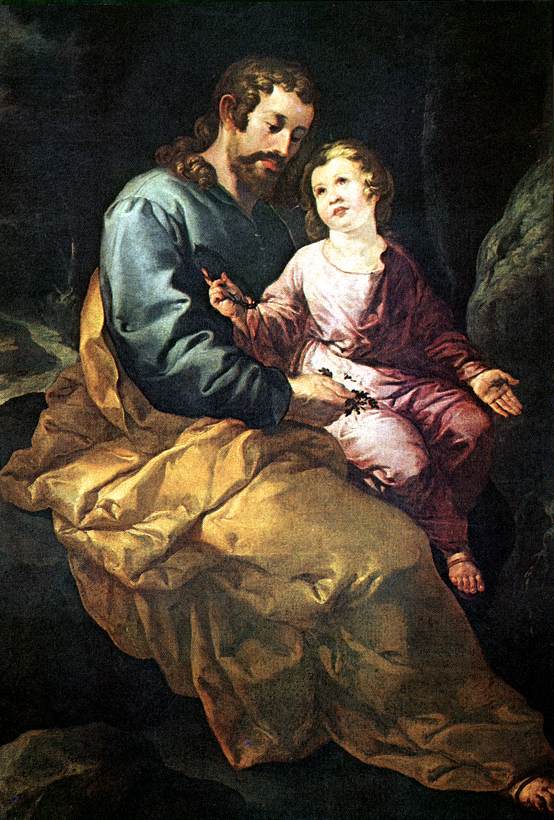
Since St. Joseph’s Day falls during Lent, it coincides with the traditional Lenten fast which traditionally required 40 days of fasting and 46 days of abstinence from meat. Per the 1917 Code of Canon Law, Friday abstinence is still required on St. Joseph’s Day even where it is kept as a Holy Day of Obligation. And would the fast of Lent still be observed? The answer is unequivocally yes.
The question of whether Holy Days of Obligation abrogate the requirement of Friday abstinence outside of Lent is mentioned in the 1917 Code:
On [Sundays] or feasts of precept, the law of abstinence or of abstinence and fast or of fast only ceases, except during Lent, nor is the vigil anticipated; likewise it ceases on Holy [Saturday] afternoon (1917 Code, Canon 1252 § 4).[1]
The 1917 Code is explicit – feasts of precepts do not remove the requirement to fast or abstain during Lent. The only way that the obligation would be removed during the season of Lent would be if a dispensation would be specifically offered by the lawful Church authorities for a particular day.
It must be further noted that the removal of the obligation of penance on Holy Days of Obligation outside of Lent only applies to areas that observe the day of precept. It is not based on the Roman calendar, as affirmed by the Commission on the Code in a 1924 article in the American Ecclesiastical Review. Hence, when January 6th, the Feast of the Epiphany, falls on a Friday, it is still a mandatory day of abstinence in America and France and other places where it is not a Holy Day of Obligation. In contrast, Canada, Rome, and places that keep it as a Holy Day do not have to observe fasting and/or abstinence on that particular Friday. This, however, only applies to Holy Day of Obligation outside of Lent. And this change only started with the 1917 Code – beforehand, it was still a day of abstinence on Fridays regardless if it was a day of precept or not, unless a specific dispensation was issued by the Pope himself.
In 1954, Pope Pius XII issued such a decree granting bishops the permission to dispense from Friday abstinence for the Feast of St. Joseph which that year fell on a Friday. A March 26, 1954, article of The Guardian elaborates:
“Bishops throughout the world have been granted the faculty to dispense their faithful from the law of abstinence on the Feast of St. Joseph, Friday, March 19. The power was granted in a decree issued by the Sacred Congregation of the Council, which said it acted at the special mandate of His Holiness Pope Pius XII. The decree published in L’Osservatore Romano made no mention of a dispensation from the Lenten fast.”
As such, St. Joseph’s Day did not permit the faithful to eat meat on Fridays in Lent unless such a specific dispensation were offered, which was very rarely done. Likewise, to those who maintain the 1917 Code’s requirement to also fast all forty weekdays of Lent – which was observed since the Early Church – St. Joseph’s Day remains a day of fast. Surely St. Joseph would want us to produce worthy fruits of penance during this holiest season as we prepare for the Pascal mystery.
Unfortunately, the 1983 Code of Canon Law which aligns with the many Modernist changes in the Church weakly states:
The penitential days and times in the universal Church are every Friday of the whole year and the season of Lent. Abstinence from meat, or from some other food as determined by the Episcopal Conference, is to be observed on all Fridays, unless a solemnity should fall on a Friday. Abstinence and fasting are to be observed on Ash Wednesday and Good Friday (1983 Code, Canons 1251 – 1252).
It should be noted that traditionally St. Joseph’s Tables, even when transferred to Sunday, were always meatless. For centuries, even Sundays in Lent were days of abstinence – just not fasting.
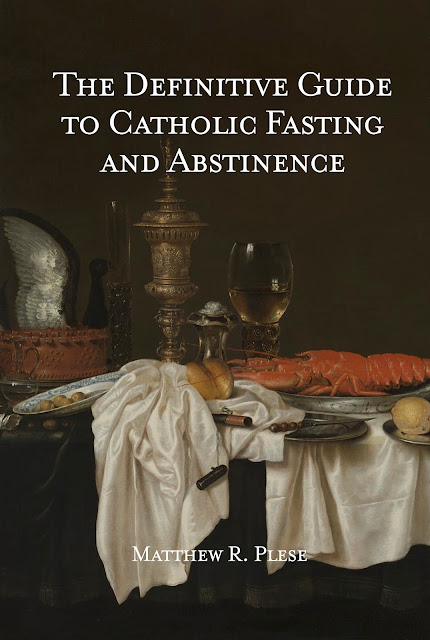
Want to learn more about the history of fasting and abstinence? Check out the Definitive Guide to Catholic Fasting and Abstinence.
In today’s episode, on Passion Sunday, I address the following:
I would like to thank CatechismClass.com for sponsoring this episode. CatechismClass.com, the leader in online Catholic catechism classes, has everything from online K-12 programs, RCIA classes, adult continuing education, marriage preparation, baptism preparation, confirmation prep, quince prep classes, catechist training courses, and more. It is never too late to study the fullness of the Catholic Faith, and CatechismClass.com is the gold standard in authentic Catholic formation online. Check out their special Lenten Study Course now available for 25% off with discount code LENT25.
Subscribe to the podcast on Buzzsprout, Apple Podcasts, Spotify, I-tunes, and many other platforms!
Definition of Fasting vs. Abstinence
Fasting refers to how much food we eat and, historically, when we eat it. It means taking only one meal during a calendar day. The meal should be an average-sized meal as overeating at the one meal is against the spirit of the fast. Fasting generally means that the meal is to be taken later in the day. Along with the one meal, up to two snacks (technically called either a collation or frustulum) are permitted. These are optional, not required. Added up together, they may not equal the size of the one meal. No other snacking throughout the day is permitted.
Abstinence in this context refers to not eating meat. Meat refers to the fleshmeat of mammals or fowl. Beef, poultry, lamb, etc are all forbidden on days of abstinence. Abstinence does not currently prohibit animal byproducts like dairy (e.g. cheese, butter, milk) or eggs, but in times past they were prohibited. Fish is currently permitted along with shellfish and other cold-blooded animals like alligators. In times past, days of fast were always days of abstinence as well; however, not all days of abstinence were days of mandatory fasting.
The Church's Law in 1917
The days of obligatory fasting as listed in the 1917 Code of Canon Law were the forty days of Lent (including Ash Wednesday, Good Friday, and Holy Saturday until noon); the Ember Days; and the Vigils of Pentecost, the Assumption of the Blessed Virgin Mary, All Saints, and Christmas. Partial abstinence, the eating of meat only at the principal meal, was obligatory on all weeks of Lent (Monday through Thursday). And of course, complete abstinence was required on all Fridays, including Fridays of Lent, except when a holy day of obligation fell on a Friday outside of Lent. Saturdays in Lent were likewise days of complete abstinence.
In today’s episode, on Laetare Sunday, I address the following:
This episode is sponsored by PrayLatin.com. PrayLatin.com offers Latin prayer cards to learn and share prayers in the sacred language. Learn your basic prayers in Latin conveniently on the go. Practice your pronunciation with easy-to-follow English phonetic renderings of Latin words. PrayLatin.com offers prayer cards in various formats, including Latin-English rosary pamphlets with the traditional 15 mysteries. Shop for additional Latin resources like missal booklets, server response cards, and more. Visit PrayLatin.com today.
Subscribe to the podcast on Buzzsprout, Apple Podcasts, Spotify, I-tunes, and many other platforms!