In today’s episode, on the 15th Sunday after Pentecost, I address the following:
- A Reflection on the 15th Sunday after Pentecost
- September Devotions in Honor of Our Lady of Sorrows
- The Feast of St. Pius X
- The Errors of Modern Philosophy
In today’s episode, on the 15th Sunday after Pentecost, I address the following:
In today’s episode, on the 14th Sunday after Pentecost, I address the following:
This episode is sponsored by PrayLatin.com. PrayLatin.com offers Latin prayer cards to learn and share prayers in the sacred language. Learn your basic prayers in Latin conveniently on the go. Practice your pronunciation with easy-to-follow English phonetic renderings of Latin words. PrayLatin.com offers prayer cards in various formats, including Latin-English rosary pamphlets with the traditional 15 mysteries. Shop for additional Latin resources like missal booklets, server response cards, and more. Visit PrayLatin.com today.
Subscribe to the podcast on Buzzsprout, Apple Podcasts, Spotify, I-tunes, and many other platforms!
In today’s episode, on the 13th Sunday after Pentecost, I address the following:
In today’s episode, on the 12th Sunday after Pentecost, I address the following:
This episode is sponsored by PrayLatin.com. PrayLatin.com offers Latin prayer cards to learn and share prayers in the sacred language. Learn your basic prayers in Latin conveniently on the go. Practice your pronunciation with easy-to-follow English phonetic renderings of Latin words. PrayLatin.com offers prayer cards in various formats, including Latin-English rosary pamphlets with the traditional 15 mysteries. Shop for additional Latin resources like missal booklets, server response cards, and more. Visit PrayLatin.com today.
Subscribe to the podcast on Buzzsprout, Apple Podcasts, Spotify, I-tunes, and many other platforms!
I'm happy to announce that I will be running the NYC Marathon this November for a great charity! Please help me raise the funds for cancer victims and their families. I'm participating in the 2024 TCS New York City Marathon as a member of Team Imerman Angels, and I'm excited to make a difference in the lives of those impacted by cancer.
This will be my 4th major marathon as I draw closer to my life goal of completing all 6!
Imerman Angels is a 501(c)(3) nonprofit organization whose mission is to provide comfort and understanding for all cancer fighters, survivors, previvors, and caregivers through a personalized one-on-one connection with someone who has been there. Imerman Angels envisions a world where cancer is not a solitary experience.
Through its unique matching process, Imerman Angels partners individuals seeking cancer support with a "Mentor Angel" who provides psychosocial support and support to anyone facing cancer.
If you have enjoyed this blog, please help me raise the funds for Imerman Angels so I can run for their charity. My plan is to offer up the entire marathon for cancer victims. With God's help I hope to get to the finish line for them. With your help, I can get to the starting line.
The pro-life movement is dedicated to advancing the protection of all human life from conception to natural death. Abortion and euthanasia, which sentence a life to death, are of the utmost importance, yet we also work for the end of human suffering, poverty, and illness. We understand that suffering when offered up for the glory of God and the good of souls, bears eternal merit. Abortion, the most heinous of all crimes against human life, robs a soul of life on earth and of eternal life by depriving the infant of the Sacrament of Baptism.
We are not alone in our work to end abortion, end euthanasia, alleviate poverty, clothe the homeless, protect migrants, or care for the sick and elderly. The lives of St. Gianna Molla, St. Maria Goretti, St. Jeanne Jugan, St. Damien of Molokai, and others provide us with examples to imitate. And more than that, they serve as powerful intercessors for us before the throne of God, who they see now in Heaven. May we learn from their examples and lives and also fight for the right to life here on earth by defending the natural law.
All CatechismClass Lessons follow a time-tested 7-step format: Introduction, Opening Prayers, Scripture and Commentary, Catechism Passages, Integration of the Lesson Topic, an activity, and a closing prayer. Quizzes end each of the lessons.
Join us in this prayerful course with powerful, real-world examples we can take to help save souls.
The elections this November will be essential to furthering the pro-life message! We really need to make sure we vote for those candidates who agree with the Church's teachings on the five non-negotiables, which are always wrong (abortion, embryonic stem cell research, gay marriage, euthanasia, and cloning). The Church never supports a candidate, but it supports views on issues.
So, please, above all, vote for the candidates that are pro-life. Pro-life, of course, also means being anti-poverty and caring for the less fortunate in society, but opposition to abortion must be our #1 concern. The Church teaches that it is a mortal sin to vote for a politician who supports abortion if there is a candidate running who is against abortion.
In today’s episode, on the 11th Sunday after Pentecost, I address the following:
In a world where stories of faith and resilience shine a light on the human spirit, Chad Judice’s trilogy stands as a beacon of hope and inspiration. His three books—Waiting for Eli: A Father's Journey from Fear to Faith, Eli's Reach, and Growing With Eli: Our Journey Into Life and Light—offer readers a profound and heartfelt exploration of the trials and triumphs faced by his family. Each book not only narrates the life of their son, Eli, born with spina bifida, but also delves into the depths of faith, love, and the power of community.
I have had the privilege of getting to know Chad personally over the past year, and I'm happy to endorse these books.
Book 1: Waiting for Eli: A Father's Journey from Fear to Faith
Waiting For Eli: A Father's Journey from Fear to Faith is the compelling introduction to Chad and Ashley Judice's journey with their son Eli. From the moment they learn of Eli’s diagnosis with spina bifida, readers are taken on an emotional roller coaster that showcases the power of faith and prayer. This book beautifully illustrates how the Judice family transforms fear into faith, embracing their pro-life and pro-love beliefs. Chad’s vivid descriptions of the small miracles they experience along the way add depth to this touching narrative. For anyone seeking an inspiring story of hope and the profound impact of unwavering faith, this book is a must-read.
Book 2: Eli's Reach
In Eli's Reach, the sequel to Waiting for Eli, Chad Judice continues to share the miraculous influence of Eli’s life. This book expands on the heartwarming and inspirational tale, highlighting how Eli’s story has not only deepened the appreciation for the value of life but has also actively saved unborn babies from abortion. Through Chad’s numerous speaking engagements, the message of faith, hope, and the sanctity of life reaches a wider audience, rekindling faith and encouraging earnest prayer among many. Eli's Reach is a testament to the far-reaching impact one life can have on countless others.
Book 3: Growing With Eli: Our Journey Into Life and Light
The final installment in the trilogy, Growing With Eli: Our Journey Into Life and Light, brings readers up to date with Eli’s life as a healthy, happy nine-year-old. This book tracks Eli’s development and chronicles Chad Judice’s own spiritual growth. Through his deepening Catholic faith, reliance on the intercession of the Blessed Virgin Mary, and commitment to Natural Family Planning, Chad’s journey is one of enlightenment and unshakable trust in the Lord. Growing With Eli offers a dual narrative of a father and son growing together in faith and light, making it a truly inspirational read for those seeking deeper spiritual understanding.
Conclusion
Chad Judice’s trilogy is more than a collection of books; it’s a heartfelt journey that resonates with anyone who values faith, love, and the power of community. Each book builds upon the last, creating a tapestry of experiences that inspire and uplift. Whether you are looking to strengthen your faith, find hope in challenging times, or simply enjoy a moving story of a family's love and resilience, these books are a testament to the enduring human spirit. Dive into Chad Judice’s works and be prepared to be moved, inspired, and profoundly touched by Eli’s story.
In today’s episode, on the 10th Sunday after Pentecost, I address the following:
This episode is sponsored by PrayLatin.com. PrayLatin.com offers Latin prayer cards to learn and share prayers in the sacred language. Learn your basic prayers in Latin conveniently on the go. Practice your pronunciation with easy-to-follow English phonetic renderings of Latin words. PrayLatin.com offers prayer cards in various formats, including Latin-English rosary pamphlets with the traditional 15 mysteries. Shop for additional Latin resources like missal booklets, server response cards, and more. Visit PrayLatin.com today.
Subscribe to the podcast on Buzzsprout, Apple Podcasts, Spotify, I-tunes, and many other platforms!
In today’s episode, on the 9th Sunday after Pentecost, I address the following:
In today’s episode, on the 8th Sunday after Pentecost, I address the following:
This episode is sponsored by PrayLatin.com. PrayLatin.com offers Latin prayer cards to learn and share prayers in the sacred language. Learn your basic prayers in Latin conveniently on the go. Practice your pronunciation with easy-to-follow English phonetic renderings of Latin words. PrayLatin.com offers prayer cards in various formats, including Latin-English rosary pamphlets with the traditional 15 mysteries. Shop for additional Latin resources like missal booklets, server response cards, and more. Visit PrayLatin.com today.
Subscribe to the podcast on Buzzsprout, Apple Podcasts, Spotify, I-tunes, and many other platforms!
Today, the Church observes the 17th anniversary of the publishing of Summorum Pontificum, the long-awaited motu proprio of Pope Benedict XVI replacing all former "indults" and declaring that the Tridentine Latin Mass was never abrogated and all priests had the right to offer this Mass at any time, in public or private, without any "permission" from a bishop. Despite the errors of Traditionis Custodes, the truth expressed in Summorum Ponitificum remains: the Rite of Mass that was celebrated for centuries leading up to the 2nd Vatican Council – was never abrogated and never can be.
Called the Mass of the Ages, the Most Beautiful Thing This Side of Heaven, the Mass of John XXIII, the Tridentine Latin Mass, and most recently, the Extraordinary Form of the Roman Rite, this Mass truly is one of the most beautiful forms of worship for the Catholic Church. Below are links concerning the Tridentine Mass. On July 7, 2007, the motu proprio by Pope Benedict XVI, Summorum Pontificum, was issued, allowing wider usage of the Sacraments according to the 1962 Missal.In today’s episode, on the 7th Sunday after Pentecost, I address the following:
In today’s episode, on the 6th Sunday after Pentecost, I address the following:
This episode is sponsored by PrayLatin.com. PrayLatin.com offers Latin prayer cards to learn and share prayers in the sacred language. Learn your basic prayers in Latin conveniently on the go. Practice your pronunciation with easy-to-follow English phonetic renderings of Latin words. PrayLatin.com offers prayer cards in various formats, including Latin-English rosary pamphlets with the traditional 15 mysteries. Shop for additional Latin resources like missal booklets, server response cards, and more. Visit PrayLatin.com today.
Subscribe to the podcast on Buzzsprout, Apple Podcasts, Spotify, I-tunes, and many other platforms!
In today’s episode, on 5th Sunday after Pentecost, I address the following:
In today’s episode, on the 4th Sunday after Pentecost, I address the following:
This episode is sponsored by PrayLatin.com. PrayLatin.com offers Latin prayer cards to learn and share prayers in the sacred language. Learn your basic prayers in Latin conveniently on the go. Practice your pronunciation with easy-to-follow English phonetic renderings of Latin words. PrayLatin.com offers prayer cards in various formats, including Latin-English rosary pamphlets with the traditional 15 mysteries. Shop for additional Latin resources like missal booklets, server response cards, and more. Visit PrayLatin.com today.
Subscribe to the podcast on Buzzsprout, Apple Podcasts, Spotify, I-tunes, and many other platforms!
In today’s episode, on Sunday within the Octave of the Sacred Heart, I address the following:
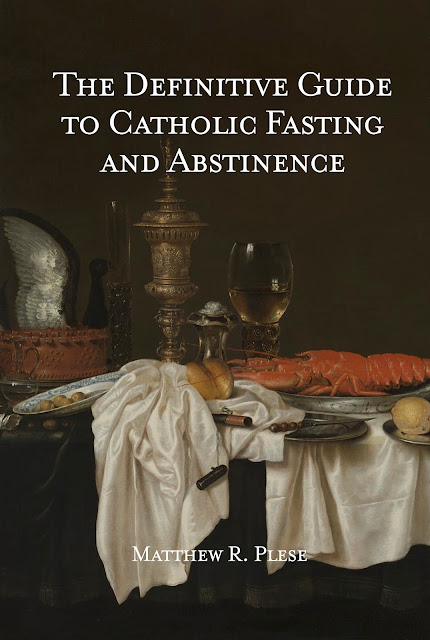
As a reminder, the Feast of the Most Sacred Heart of Jesus, which always falls on a Friday, is still an obligatory day of abstinence. As Catholics, we are still bound to abstain from meat each Friday of the entire year, not just in Lent. We are still bound to abstain from meat each Friday of the entire year, not just in Lent.
Abstinence Traditionally Required on All Fridays
The 1917 Code of Canon Law stipulated that the requirement to abstain from meat (i.e., Friday penance) was required each and every Friday of the year unless that particular Friday was a Holy Day of Obligation:"On [Sundays] or feasts of precept, the law of abstinence or of abstinence and fast or of fast only ceases, except during Lent, nor is the vigil anticipated; likewise it ceases on Holy [Saturday] afternoon" (1917 Code, Canon 1252 § 4). [Translation taken from THE 1917 OR PIO-BENEDICTINE CODE OF CANON LAW in English Translation by Dr. Edward Peters]
The 1917 Code introduced the radical notion that a Holy Day of Obligation would eo ipso overrule the requirement of Friday abstinence for any Holy Days of Obligation outside of Lent. Previously, the only day that would automatically abrogate the requirement of Friday abstinence was Christmas Day (December 25th), the exception of which went back to 1216 AD. Before the time of St. Pius X, the Holy Father required a dispensation from Friday abstinence on any other Holy Day of Obligation. The Feast of the Sacred Heart, which was established on the Universal Calendar in 1856, is not a feast of precept (i.e., a Holy Day of Obligation).
Let us never forget that the purpose of the Feast of the Sacred Heart is one focused on penance and reparation. When so many use the modernist 1983 Code to excuse themselves from Friday abstinence, let us, faithful to Tradition, keep today as one of abstinence in reparation to the Sacred Heart as the collect prayer for this feastday urges:
O God, through Your mercy we possess the treasures of Your love in the Sacred Heart of Your Son, the same Sacred Heart which we wounded by our sins. May our honor, devotion, and love make reparation to Him for our faults. Through the same Jesus Christ, our Lord...
The Church is comprised of many members, such as the Mystical Body of Christ. It is composed of priests, nuns, religious or ordered men and women, and lay people. Each person has a unique vocation from God. Let’s learn about many of the positions and roles in the Catholic Church hierarchy.
There are four major religious Orders in the Church, as well as many other branches. One is the Benedictines, who follow the Benedictine Rule. Their mission is “ora et labora” or work and pray. They can be either contemplative or active. Another Order is the Carmelites. They refer to themselves as the “Order of Our Lady of Mount Carmel.” They wear the brown scapular given by Our Lady to St. Simon Stock. They have the spirit of hermits and prefer silence and solitude. Another major Order is the Franciscans. The women’s branch is called the Poor Clares. Both are dedicated to “living the Gospel” and emphasize poverty and simplicity. Then, there are the Dominicans. They are very committed to learning and study whose mission is to share the fruit of their contemplation.
A Third Order is connected to a major Order, such as Third Order Franciscans. These individuals remain members of the laity, but they live by a rule of life (e.g., the Franciscans, Dominicans, Benedictines, etc). They may marry and have a family. But they make special promises to live in a holy way but do not make vows. They do not wear any specific clothing and go about life looking externally like an average Catholic in the pews.
During this period of crisis in the Church, committed Catholics who wish to join a Third Order that is in conformity with the Traditional Catholic Faith and not with Modernism thankfully have options. Here are some of those options:
Traditional Dominicans
There are two traditional Dominican Third Orders (i.e., The Third Order of Penance). There is a group loosely affiliated with the SSPX under Fr. Albert, which is the one that I'm a member of. Fr. Albert, even though he has left the now-dissolved community in Belgium, still leads the SSPX-affiliated Third Order. The Third Order is very much still active with tertiaries around the country and in other non-US locations. More information can be found online.
The Resistance (i.e., SSPX-SO) has its own Third Order out of France as well. It is still very much active and going strong with tertiaries in the United States and abroad. More information can be found online. More information can be found online.
Traditional Benedictines
Since Benedict of Nursia (AD 480-547) began his monastic quest for God, ordinary Christians have sought guidance from his spiritual teachings. This led to the formation of a communal life where laypeople and secular clergy became affiliated with his communities, a tradition that persists to this day. The term 'oblate' derives from the Latin "oblatus," meaning "one who is offered." Oblates are Christians who affiliate themselves with a Benedictine community, dedicating themselves to God by striving to apply the Rule of St. Benedict to their lives as much as their circumstances allow.
The Monks of Nursia have a very active number of Oblates spread throughout the world. More information can be found online.
Traditional Franciscans
The Franciscan Third Order was established by St. Francis in 1221 to accommodate many married men, women, and diocesan clergy who wished to adopt his way of life but could not join the first or second orders. Within the Third Order of St. Francis, there is a distinction between the Third Order Regular and the Third Order Secular.
Some of these tertiaries eventually began living in communities, which evolved into a religious order that professes vows of poverty, chastity, and obedience. This order is now known as the Third Order Regular (TOR). Members of these communities, whether male or female, live together according to their gender. This branch of the Franciscan Family was officially founded in 1447 by a papal decree that united several groups.
The Third Order Secular (Ordo Franciscanus Saecularis, in Latin), known as the Secular Franciscans, includes devout men and women who do not live in a religious community but lead their everyday lives in the world. Nevertheless, they regularly gather in community and profess vows, committing to live the Gospel following the example of Francis.
The Marian Friars Minor Third Order offers a traditional Catholic Franciscan option. There is also a Franciscan Third Order affiliated with the SSPX.
Traditional Carmelites
The Third Order of Our Lady of Mount Carmel, also known as the Lay Carmelites, is a third order of the Carmelite Order of the Ancient Observance, established in 1476 by a bull from Pope Sixtus IV. It is a community of individuals who choose to live the Gospel in the spirit of the Carmelite Order and under its guidance.
The Traditional Lay Carmelites of Fatima are one option.
Other Traditional Options
Besides the aforementioned religious orders, the SSPX has an active Third Order, as does the Priestly Fraternity of St. Peter, which is known as the Confraternity of St. Peter, and the Institute of Christ the King Sovereign Priest has its own Lay Society, which is not strictly the same as a Third Order.
Do you know of any others? Share the details below in the comments box!
In today’s episode, on the Sunday within the Octave of Corpus Christi, I address the following:
This episode is sponsored by PrayLatin.com. PrayLatin.com offers Latin prayer cards to learn and share prayers in the sacred language. Learn your basic prayers in Latin conveniently on the go. Practice your pronunciation with easy-to-follow English phonetic renderings of Latin words. PrayLatin.com offers prayer cards in various formats, including Latin-English rosary pamphlets with the traditional 15 mysteries. Shop for additional Latin resources like missal booklets, server response cards, and more. Visit PrayLatin.com today.
Subscribe to the podcast on Buzzsprout, Apple Podcasts, Spotify, I-tunes, and many other platforms!