Tuesday, July 10, 2018
Daily Prayers for an Increase in the Virtues

The following prayers, taken from the Raccolta, were assigned an indulgence by His Holiness, Blessed Pope Pius IX on May 17, 1852:

AN INDULGENCE OF FIFTY DAYS; to be gained once a day for saying with a contrite heart the following prayers, each on its appointed day, in order to obtain thereby the intercession of this Saint for the acquisition of certain special virtues.

I will be adding these to my own prayer life on a daily basis as a means to continue to try to grow in the virtues which we truly supernatural and a means of furthering our own spiritual life. 


FOR SUNDAY.

Prayer to obtain the virtue of Humility.

St, Philip, my glorious Patron, who on earth didst so love humility as to count the praise and even the good esteem of men as dross; obtain for me also this virtue by thy prayers. Thou knowest how haughty I am in my thoughts, how contemptuous in my words, how ambitious in my doings. Ask for me humility of heart; that my mind may be freed from all pride, and impressed with the same low esteem of self which thou hadst of thyself, counting thyself the worst of all men, and for that reason rejoicing when thou didst suffer contempt, and seeking out for thyself occasions of enduring it.  Great Saint, obtain for me a true humble heart and the knowledge of my own nothingness; that I may rejoice when I am despised, and resent not when others are preferred before me; that I may never be vain when I am praised, but may ever seek only to be great in the eyes of God, desiring to receive from Him alone all my exaltation.

Pater, Ave, Gloria.


FOR MONDAY

Prayer to obtain the virtue of Patience.

St. Philip, my Patron Saint, whose heart was ever so constant in time of trouble, and whose spirit was so loving under suffering, that, when persecuted by the jealous, or calumniated by the wicked who thought to discredit thy sanctity, or when tried by God with many long, painful infirmities, thou didst always bear thy trials with wonderful tranquillity of heart and mind; pray for me that I may have a spirit of true courage in every adversity.  Alas, how much I stand in need of patience!  I shrink from every little trouble; I sicken under every light affliction; I fire up at and resent every trifling contradiction; never willing to learn that the road to paradise lies amidst the thorns of tribulation. Yet this was the path our Diving Master deigned to tread, and this too, my Saintly Patron, was thy path also.  Obtain for me, then, this courage, that with good hearty will I may embrace the crosses which every day I receive from God, and bear them all with the same endurance and ready will as thou didst when thou wast on earth; that so I may be made worthy to enjoy the blessed fruit of sufferings with thee in heaven above.
Pater, Ave, Gloria.


FOR TUESDAY

Prayer to obtain the virtue of Purity.

St. Philip, who didst always preserve the white lily of thy purity unsullied, with such great honour to thyself that the brightness of this fair virtue dwelt in thine eyes, shone forth from thy hands, and cast its fragrance over thy whole body, causing it to emit so sweet a perfume that it gave consolation, fervour, and devotion to all who conversed with thee; obtain me from the Holy Spirit of God so true a love for that virtue, that neither the words nor bad examples of sinners may ever make any impression upon my soul.  Never permit me in any way to lose that lovely virtue; and since avoidance of occasions, prayer, labour, humility, frequent use of the Sacraments, were the arms with which thou didst conquer the flesh, which is our worst enemy, so do thou obtain for me grace to use the same arms to vanquish the same foe.  Take not away thy help from me; but be as zealous for me as thou wast during thy life for thy penitents, keeping them far removed from all sensual infection.  Do this for me, my holy Patron; and be ever my protector in respect of this fair virtue.

Pater, Ave, Gloria.


FOR WEDNESDAY.

Prayer to obtain the Love of God.

St. Philip, I am filled with wonder at the great miracle which was wrought in thee by the Holy Spirit when He poured into thy heart such a flood of heavenly charity, that in order to contain it two of thy ribs were broken by the power of Divine love; and I am confounded when I compare thy heart with mine own.  I see thy heart all burning with love; and mine, all frozen and taken up with creatures.  I see thine inflamed with a fire from heaven, which so filled thy body that it radiated like flames from thy countenance; while mine is full of earthly love.  I love the world, which allures me and can never make me happy; I love the flesh, which ever wears me with its cares, and can never render me immortal; I love riches, which I can enjoy but for a moment.  O when shall I learn of thee to love nothing but God, my incomprehensible and only Good!  Help me, then, blessed Patron, that by thy intercession I may begin at once: obtain for me an efficacious love, manifesting itself by works; a pure love, making me love God most perfectly; a strong love, enabling me to surmount all obstacles hindering my union with God in life, that so I may be wholly united to Him for ever after my death.

Pater, Ave, Gloria.


FOR THURSDAY

Prayer to obtain the Love of our Neighbour.

Glorious Saint, who didst employ thyself wholly in the good of thy neighbour, thinking well of all, sympathising with all, helping all, who throughout thy whole life didst ever try to secure the salvation of all, never shrinking from labour or trouble, keeping for thyself no time or comfort, that thou mightest win all hearts to God; pray for me, that together with the pardon of my sins I may have charity for my neighbour, and be henceforth more compassionate to him in his necessities, and obtain for me grace that I may love every man with pure, unselfish love, as mine own brother, succouring each one, if I am unable to do it with temporal goods, at least with prayers and good advice. And teach me too on every occasion to defend the honour of my neighbour, and never to say to him a hurtful or displeasing word; but ever to maintain, even with my enemies, sweetness of spirit like thine own, whereby thou didst triumph over thy persecutors.  Blessed Saint, ask of God for me also this lovely virtue, which already thou hast gained for so many of thy clients; that so we may all one day come to praise our God with thee in an eternity of bliss.

Pater, Ave, Gloria.


FOR FRIDAY

Prayer to obtain detachment from temporal goods.

Great Saint, who didst prefer a poor and austere life to the comforts of thy home, despising the honour and glory of thy station; obtain for me grace ever to keep my heart detached from transitory goods of this life.  St. Philip, whose desire it ever was to become so poor as one day to have to beg thy bread, and find no charitable hand to offer thee a crumb wherewith to support life; ask of God for me such love of poverty that I may turn all my thoughts to goods which never fail.  St. Philip, who didst prefer to live unknown, to promotion to the highest honours of the Church; intercede for me, that I may never seek after dignities, but always content myself with that state where God has set me.  My heart is too anxious for the empty fleeting things of earth; but thou - ah, what a maxim didst thou leave us by thy two words: "And then-" !  O wonder-working words! may they ever be deeply impressed upon my soul; that, despising the nothingness of earth, God alone may reign sole object of my affections and my thoughts.

Pater, Ave, Gloria.


FOR SATURDAY

Prayer to obtain perseverance in good works.

St. Philip, my holy Patron, who, ever constant in good works and full of merit, didst receive from Most High God the crown of glory in reward of all thy labours; obtain for me grace never to weary in His service.  St. Philip, who didst recompense those who loved thee by acquiring for them the gift of perseverance in good, ask of God this gift for me; stand by me, dear father, at the last moment of my life, and pray for me that I may depart this life strengthened with the grace of the Holy Sacraments.  Meanwhile intercede for me, that I may do penance for my sins, and deplore them bitterly all my days.  St. Philip, who from on high beholdest all my miseries, and the chains which yet bind me to my sins and to this earth; pray for me that I may be liberated from them, and be constantly devoted to my God.  Obtain for me an ardent desire to co-operate in my own salvation, and unshaken firmness in the good which I have begun; that so by thy intercession I may deserve to be for ever in thy company in an eternity of bliss.

Pater, Ave, Gloria.
Read more >>
Friday, June 29, 2018
Pray the Rosary Online in English and Latin

Pray the Rosary Online

Choose the Day of the Week Below in either English or Latin.

Monday:


Tuesday:


Wednesday:


Thursday:


Friday:


Saturday:


Sunday:


Note, in Advent on Sundays, instead pray the Joyful Mysteries.  And on Sundays in Lent, pray the Sorrowful Mysteries.

Learn more on how the pray the Rosary and why pray the Rosary elsewhere on this site.

The Holy Rosary - Audio of all 15 Mysteries in 1 Hour in English:


Read more >>
Indulged Prayer for the Feast of Ss. Peter and Paul

In honor of the Feast of Ss. Peter and Paul, let us say this prayer that was found in the Raccolta:


Pope Pius VI., by a Rescript of July 28, 1778, issued through the Segretaria of the memorials, granted:

i. An indulgence of 100 days to all the faithful who, being contrite, shall say at least once a day the following prayer, with one Pater, Ave, and Gloria, in honour of the blessed Apostles Peter and Paul.

ii. A plenary indulgence, on all Feasts of SS. Peter and Paul, provided that, after Confession and Communion, they shall on such feast-day itself, or one of the nine days preceding it, or eight days following it, visit a church or altar dedicated to those Saints, saying there the following prayer, and remembering the Holy Church and its Sovereign Pontiff.

THE PRAYER

O blessed Apostles Peter and Paul, I, NN., elect you this day for my special protectors and advocates with God.  In all humility I rejoice with thee, blessed Peter, Prince of the Apostles, because thou art the rock whereon God hath built his Church; and I rejoice with thee too, blessed Paul, because thou wast chosen of God for a Vessel of election, and a preacher of the truth throughout the world.  Obtain for me, I beseech you both, a lively faith, firm hope, and perfect charity, entire detachment from myself, contempt of the world, patience in adversity, humility in prosperity, attention in prayer, purity of heart, right intention in my works, diligence in the fulfilment of all the duties of my state of life, constancy in my good resolutions, resignation to the holy will of God, perseverance in Divine grace unto death; that, having overcome by your joint intercession and your glorious merits, the temptations of the world, the flesh, and the devil, I may be made worthy to appear before the face of the chief and eternal Bishop of Souls, Jesus Christ our Lord, to enjoy Him and to love Him for all eternity, who with the Father and the Holy Ghost liveth and reigneth ever world without end. Amen.

Other Indulgences available in honor of Ss. Peter and Paul may be found by clicking here and consulting the Raccolta online.
Read more >>
Thursday, June 21, 2018
Indulged Prayer to St. Aloysius

Pope Pius VII., at the prayer of many bishops, the more to increase devotion towards St. Aloysius Gonzaga, who from the time of his canonization was given by Benedict XIII as the special protector of the young, granted, by a decree of the S. Congr. of Indulgences, March 6, 1802 -

An indulgence of 100 days, once a day, to all the faithful who, being contrite, shall devoutly say the following prayer, with one Pater noster and one Ave Maria.

THE PRAYER.

O blessed Aloysius, adorned with angelic virtues, I thy most unworthy suppliant recommend specially to thee the chastity of my soul and body, praying thee by thy angelic purity to plead for me with Jesus Christ the Immaculate Lamb, and His most Holy Mother, Virgin of virgins, that they would vouchsafe to keep me from all grievous sin. Never suffer me to be defiled with any stain of impurity; but when thou dost see me in temptation, or in danger of falling, then remove far from my mind all evil thoughts and unclean desires, and awaken in me the memory of eternity to come, and of Jesus crucified; impress deeply in my heart a sense of the holy fear of God; and kindling in me the fire of Divine love, enable me so to follow thy footsteps here on earth, that in heaven I may be made worthy to enjoy with thee the vision of our God for ever. Amen.

One Pater noster and one Ave Maria.

Source: The Raccolta
Read more >>
Tuesday, June 19, 2018
Com. of Sts. Gervase and Protase


Today Holy Church commemorates Saints Gervase and Protase.

Sons of St. Vitalis and St. Valeria, these two saints were martyred under Nero at Milan in the 1st century. St. Gervase was beaten to death, and St. Protase, after having been scourged, was beheaded. St. Ambrose discovered their bodies in 386. Their names are included in the litanies of the saints.

Their bodies are vested and open for public veneration alongside the body of St. Ambrose.

Collect:

O God, who year by year dost gladden us by the solemnity of Thy holy martyrs Gervase and Protase, mercifully grant that we, who rejoice in their merits, may be inspired by their examples.
Read more >>
Monday, June 18, 2018
Commemoration of Sts. Mark and Marcellianus


Today Holy Mother Church celebrates the feast day of St. Ephrem and also calls to mind a Commemoration of Sts. Mark and Marcellianus

Sts. Mark and Marcellianus were both brothers and deacons of the Roman Church. These two holy martyrs were slain by arrows, after two days of suffering early in the reign of Diocletian.  Their crime?  Being a Catholic.

The Daily Prayers website summarizes their last days in this world:
During the Diocletian period of Christian persecution, Sts Mark & Marcellian were arrested and imprisoned for practising their faith. Despite pleas from their parents and family, Sts Mark and Marcellian, with the guidance of St Sebastian (also imprisoned), refused to renounce their faith and offer sacrifice to the Roman gods. Indeed, St Sebastian converted their parents, the local prefect, other prison officials and many prisoners to Christianity as well as, miraculously healing an official’s wife, Zoe.  
One of the converted officials released the prisoners, however, Sts Mark and Marcellian were later rearrested and condemned to be hanged for a day upside down while nailed between two pillars. They were then pierced with lances. Many of the remaining prisoners and officials were also captured and executed including Zoe, who was burnt alive.
Collect:

O Almighty God, may the prayers of Your blessed martyrs Mark and Marcellian, whose heavenly birthday we celebrate today, rescue us from all the dangers that threaten to overcome us. Through our Lord . . .
Read more >>
Saturday, June 16, 2018
St. John Francis Regis (Mass in Some Places)


Today is a feria day on the Universal Calendar but in some parts of the world, it is the Feast of St. John Francis Regis.  His life is summarized by Deacon John Giglio Jr:

Born into a family of some wealth, John Francis was so impressed by his Jesuit educators that he himself wished to enter the Society of Jesus. He did so at age 18. Despite his rigorous academic schedule he spent many hours in chapel, often to the dismay of fellow seminarians who were concerned about his health. Following his ordination to the priesthood, he undertook missionary work in various French towns. While the formal sermons of the day tended toward the poetic, his discourses were plain. But they revealed the fervor within him and attracted people of all classes. Father Regis especially made himself available to the poor. Many mornings were spent in the confessional or at the altar celebrating Mass; afternoons were reserved for visits to prisons and hospitals.

The Bishop of Viviers, observing the success of Father Regis in communicating with people, sought to draw on his many gifts, especially needed during the prolonged civil and religious strife then rampant throughout France. With many prelates absent and priests negligent, the people had been deprived of the sacraments for 20 years or more. Various forms of Protestantism were thriving in some cases while a general indifference toward religion was evident in other instances. For three years Father Regis traveled throughout the diocese, conducting missions in advance of a visit by the bishop. He succeeded in converting many people and in bringing many others back to religious observances.

Though Father Regis longed to work as a missionary among the North American Indians in Canada, he was to live out his days working for the Lord in the wildest and most desolate part of his native France. There he encountered rigorous winters, snowdrifts and other deprivations. Meanwhile, he continued preaching missions and earned a reputation as a saint. One man, entering the town of Saint-Andé, came upon a large crowd in front of a church and was told that people were waiting for "the saint" who was coming to preach a mission.

The last four years of his life were spent preaching and in organizing social services, especially for prisoners, the sick and the poor. In the autumn of 1640, Father Regis sensed that his days were coming to a conclusion. He settled some of his affairs and prepared for the end by continuing to do what he did so well: speaking to the people about the God who loved them. On December 31, he spent most of the day with his eyes on the crucifix. That evening, he died. His final words were: "Into thy hands I commend my spirit."

He was canonized in 1737 by Pope Clement XII.

Collect:

O God, who endowed Blessed Francis, Your Confessor, with wonderful charity and unconquerable patience, so that he might go through much toilsome work for the salvation of souls without faltering: grant, we beseech You, that we might so profit by the example he has left us and so avail ourselves of his prayers, that we too may win the reward of everlasting life. Amen
Read more >>
Tuesday, June 12, 2018
Commemoration of Saints Basilides, Cyrinus, Nabor, and Nazarius

Today, besides the Feastday of St. John of San Facundo, is the commemoration of Sts.  Basilides, Cyrinus, Nabor, and Nazarius.

These saints are yet another example to us of the life we are called to live as Christians.  Namely, we are called to devote our entire lives to God and His Church.  While many of us will never suffer death for the Faith, we must be willing to endure all things so long as we keep the Faith and reach Heaven.  These saints, like so many others, help us put that into perspective in our lives in this modern world.

Liturgia Latina summarizes their lives:
These saints, Roman soldiers, noble by birth and illustrious by their virtues, became Christians under Diocletian. Arrested and cast into prison, they were condemned to death and beheaded. Their bodies were thrown to the wild beasts who respected them; they were buried with honour by the Christians.
The Traditional Reading at Matins shows the courage of these martyrs:
Basilides, Cyrinus, Nabor, and Nazarius were Roman soldiers of illustrious birth and valour. Having embraced the Christian religion, and being found publishing that Christ is the Son of God, they were arrested by Aurelius, prefect of Rome, under Diocletian. As they despised his orders to sacrifice to the gods, they were committed to prison. While they were at prayer there, a brilliant light broke forth before the eyes of all present and shone in all the prison. Marcellus, the gaoler, and many others were moved by this heavenly glory to believe in the Lord Christ. Having gone forth from the prison, they were afterwards thrown in again, by the emperor Maximian, who caused them, first of all, to be beaten with scorpions, for having, despite his orders, continued to have ever in their mouth that there is but one Christ, one God, one Lord, and so they were laden with chains. Thence, on the seventh day, they were brought out, and set before the emperor, and there still persisting in mocking at the vain idols, and declaring Jesus Christ to be God, they were condemned to death and beheaded. Their bodies were given to wild beasts to be devoured, but as these refused to touch them, the Christians took them and buried them honourably.
They suffered and died for the faith around the year 303 AD.

Collect:

O Lord, may the keeping of this festival of the heavenly birthday of Thy holy martyrs, Basilides, Cyrinus, Nabor and Nazarius, shed brightness on our lives; and may the eternal glory granted them, be increased by the devout service we pay Thee.
Read more >>
Friday, June 8, 2018
Mass Propers for the Feast of the Sacred Heart

For more information on the spirituality and devotions for this feast day, please see the post: Feast of the Sacred Heart.

The Traditional Mass Propers for the Feast of the Sacred Heart of our Lord Jesus Christ:

This Feast occurs on the Friday after the 2nd Sunday after Pentecost, which traditionally was the day immediately following the Octave Day of Corpus Christi.  Thus, after having celebrated 8 days honoring the august Sacrament of the Altar, we now honor the Sacred Heart and render Him our acts of fitting reparation for all sins, indifference, and offenses.

INTROIT  Ps. 32:11, 19 
The thoughts of His heart stand through all generations, to deliver their souls from death, and keep them alive in spite of famine.
Ps. 32:1. Rejoice in the Lord, you just; praise befits the upright.
V. Glory be . . .

COLLECT
O God, through Your mercy we possess the treasures of Your love in the Sacred Heart of Your Son, the same Sacred Heart which we wounded by our sins. May our honor, devotion, and love make reparation to Him for our faults. Through the same Jesus Christ, our Lord . . .

EPISTLE Eph. 3:8-12, 14-19
Brethren: To me, though I am the very least of all the saints, this grace was given, to preach to the Gentiles the unsearchable riches of Christ, and to bring to light for everyone what is the plan of the mystery hidden for ages in God who created all things, so that through the church the manifold wisdom of God might now be made known to the rulers and authorities in the heavenly places. This was according to the eternal purpose that he has realized in Christ Jesus our Lord, in whom we have boldness and access with confidence through our faith in him. For this reason I bow my knees before the Father, from whom every family in heaven and on earth is named, that according to the riches of his glory he may grant you to be strengthened with power through his Spirit in your inner being, so that Christ may dwell in your hearts through faith--that you, being rooted and grounded in love, may have strength to comprehend with all the saints what is the breadth and length and height and depth, and to know the love of Christ that surpasses knowledge, that you may be filled with all the fullness of God.

GRADUAL Ps. 24:8-9The Lord is kind and just, therefore He shows even the erring the way.
V. He guides the humble in justice, He teaches the meek His way.

Alleluia, alleluia! V. Matt. 11:29
Take My yoke upon you, and learn from Me, for I am meek and humble of heart; and you will find rest for your souls. Alleluia!

GOSPEL John 19:31-37
At that time, the Jews, since it was the day of Preparation, and so that the bodies would not remain on the cross on the Sabbath (for that Sabbath was a high day), asked Pilate that their legs might be broken and that they might be taken away. So the soldiers came and broke the legs of the first, and of the other who had been crucified with him. But when they came to Jesus and saw that he was already dead, they did not break his legs. But one of the soldiers pierced his side with a spear, and at once there came out blood and water. He who saw it has borne witness--his testimony is true, and he knows that he is telling the truth--that you also may believe. For these things took place that the Scripture might be fulfilled: "Not one of his bones will be broken." And again another Scripture says, "They will look on him whom they have pierced."

OFFERTORY ANTIPHON Ps. 68:21
My heart dreaded reproach and misery, and I looked for someone to sympathize with Me, but there was none. I sought for someone to comfort Me, and I found none.

SECRET
O Lord, behold the love in the heart of Your beloved Son, which no tongue can describe. Because of that love, accept our gift as an offering in atonement for our sins. Through the same Jesus Christ, our Lord . . .

COMMUNION ANTIPHON John 19:34
One of the soldiers opened His side with a lance, and immediately there came out blood and water.

POSTCOMMUNION
O Lord Jesus, let the Blessed Sacrament fire us with a holy fervor, that we may experience the sweetness of Your loving Heart and learn to prefer the things of Heaven to those of earth; who lives and reigns with God the Father . . .
Read more >>
Sunday, June 3, 2018
The Catholic Church and Slavery in the Americas


You've probably heard the claims that the Catholic Church and/or Christopher Columbus encouraged or contributed to the slavery of the Native Americans or the Africans.  Such a claim is a bold faced lie.

In 1435, Pope Eugene IV officially condemned the enslavement of the black natives of the Canary Islands. He decreed that all European masters were to free the enslaved within 15 days or face excommunication - the highest penalty of the Church (Sicut Dudum). In that papal bull, the Holy Father stated:
"They have deprived the natives of their property or turned it to their own use, and have subjected some of the inhabitants of said islands to perpetual slavery (subdiderunt perpetuae servituti), sold them to other persons and committed other various illicit and evil deeds against them.... Therefore We ... exhort, through the sprinkling of the Blood of Jesus Chris...ed for their sins, one and all, temporal princes, lords, captains, armed men, barons, soldiers, nobles, communities and all others of every kind among the Christian faithful of whatever state, grade or condition, that they themselves desist from the aforementioned deeds, cause those subject to them to desist from them, and restrain them rigorously. And no less do We order and command all and each of the faithful of each sex that, within the space of fifteen days of the publication of these letters in the place where they live, that they restore to their pristine liberty all and each person of either sex who were once residents of said Canary Islands ... who have been made subject to slavery (servituti subicere). These people are to be totally and perpetually free and are to be let go without the exaction or reception of any money."
Columbus shortly afterward began to find a nation that would sponsor his exhibition.  At this tumultuous time in history when so many nations revolted against God, it was the Spanish Crown alone that remained faithful to the Cross and the Church of Jesus Christ.  The book, "Garcia Moreno" explains:
"To this profoundly Catholic people [Spain] God entrusted the evangelization of those millions of his children who, until then, had been plunged in the depths of a sea of shadows.  For eighteen years Christopher Columbus, the strange genius to whom God had given the presentiment of the existence of unknown worlds, had been wandering from kingdom to kingdom looking for a prince desirous of being Christ's messenger; but everywhere, in Genoa, in Venice, in France and in England, he had been regarded as a visionary and an adventurer.  Finally God led him to the court of Spain, where Catholic Isabella, no less zealous than he for the salvation of souls, looked favorably on his expedition.  Subsequently Columbus discovered America and the Sovereign Pontiff, in the name of Christ - King of all peoples under the sun - gave the kings of Spain entitlement to all the new islands and continents, 'on condition that they would make Jesus Christ known in these distant lands and, for that purpose, send to the aforesaid islands and territories good and god-fearing men, filled with doctrine, wisdom and experience, to instruct the inhabitants in the Catholic faith and fashion them in good conduct' (Bull Inter extera of 1493)" (Page 7)
Soon afterward, in 1537, Pope Paul III attributed the slavery of the West Indian and South American natives to Satan in Sublimis Deus (June 2, 1537).  The Church worked tirelessly to save the souls of the Indians and the natives and, when the allure of gold filled the hearts of avaricious men who arrived in the New World, the Church responded by condemning all attacks and affronts on these people.  If we look at the life of St. Turibe, Archbishop of Lima, who traveled around 21,000 miles on foot to preach to the Spanish and Indians and offer the Sacraments, we understand the zeal that the Church had for souls.  St. Turibe slept on the bare ground, crossed high mountains, traveled in deep forests, and suffered for years from hungry all to save the souls of the inhabitants of that land.  Indeed, St. Peter Claver, a slave himself, along with St. Martin de Porres show us incredible examples of holiness.

Columbus himself was a Third Order Franciscan who labored for the good of souls his whole life.  He prayed the Office daily.  And it was Columbus, who when he saw the New World being flooded by men who sought only gain and greed, reproached the Spanish Crown with the words, "Your Highnesses must not permit any Spaniard to go to America unless he is a true Christian, for this enterprise had no other aim but the glory of the Catholic religion" (Page 10 of Garcia Moreno).  More on the life of Christopher Columbus can be read in the article "Christopher Columbus: Catholic Explorer" or in the You-Tube video: Columbus the Holy Admiral.

Further condemnations of slavery by the Church emerged under Popes Gregory XIV (1591), Urban VIII (Commissum Nobis, 1639), Innocent XI (1686), Benedict XIV (Immensa Pastorum, 1741), and Pius VII (1815).

Pope Gregory XVI wrote: "We, by apostolic authority, warn and strongly exhort... that no one in the future dares to bother unjustly, despoil of their possessions, or reduce to slavery Indians, Blacks or other such peoples... We prohibit and strictly forbid any Ecclesiastic or lay person from presuming to defend as permissible this trade in Blacks under no matter what pretext or excuse, or from publishing or teaching in any manner whatsoever, in public or privately, opinions contrary to what We have set forth in these Apostolic Letters" (In Supremo Apostolatus, 1839).

Pope Leo XIII writes, "In the presence of so much suffering, the condition of slavery, in which a considerable part of the great human family has been sunk in squalor and affliction now for many centuries, is deeply to be deplored; for the system is one which is wholly opposed to that which was originally ordained by God and by nature" (On the Abolition of Slavery, 1888)

Indeed, it can be truly said that no organization worked more for the abolition of slavery than the Catholic Church.
Read more >>
7 Sundays in Honor of St. Camillus of Lellis

Today is the 1st of the 7 Sundays before the Feast of St. Camillus this year.  The following is taken from the Raccolta:


The Sovereign Pontiff Pius IX., by a decree of the S. Congr. of Indulgences, August 8, 1853, granted, at the prayer of the Clerks Regulars, ministers of the sick, thereby to augment devotion towards this Saint -

i. An indulgence of seven years and seven quarantines, whenever any one shall, at any time of the year, in public or in private, practise the pious exercise of keeping seven Sundays in honour of St. Camillus, saying some devout prayer in honour of this Saint. This Indulgence may be gained on each of these Sundays, provided the prayer be said with contrite heart.

ii. A plenary indulgence, instead of the seven years &c., on the seventh Sunday, to all the faithful who, after Confession and Communion, and having said the prayer as above, shall visit a church or public oratory and pray there according to the intention of his Holiness.

And here is a sample prayer:

O glorious Saint Camillus, special patron of the sick poor, thou who for forty years, with truly heroic charity, didst devote thyself to the relief of their temporal and spiritual necessities, be pleased to assist them now even more generously, since thou art blessed in heaven and they have been committed by Holy Church to thy powerful protection. Obtain for them from Almighty God the healing of all their maladies, or, at least, the spirit of Christian patience and resignation that they may sanctify them and comfort them in the hour of their passing to eternity; at the same time obtain for us the precious grace of living and dying after thine example in the practice of divine love. Amen.
Read more >>
Thursday, May 31, 2018
Corpus Christi at St. Thomas Aquinas SSPX Seminary

Thanks go out to Jim Bond for sending in these images from the seminary this morning.


Hail to thee, true body born
From Virgin Mary's womb!
The same that on the cross was nailed
And bore for man the bitter doom.

Thou, whose side was pierced and flowed
Both with water and with blood;
Suffer us to taste of thee,
In our life's last agony.

O kind, O loving one!
O sweet Jesus, Mary's Son!
Read more >>
St. Ferdinand III of Castile (Mass in Some Places)


Today in Some Places is the Feast of St Ferdinand III of Castille.

The following account by Rev. Alban Bulter in the "Lives of the Saints" truly shows how to have a holy death when it describes the death of St. Ferdinand III:

"Before his death he called for all his children, gave them excellent instructions with his blessing, and asked pardon of all the world if ever he had given offence to any. In his agony, holding a blessed taper in his hands, he recommended his soul to God through the merits of his crucified Redeemer in the most pathetic aspirations; then caused the clergy to recite near him the Litanies, and afterwards the Te Deum. This was scarcely finished when he yielded up his soul into the hands of his Creator on the 30th of May, 6 in the year 1252, the fifty-third of his age, the thirty-fifth of his reign in Castile, and the twenty-second in Leon. According to his desire he was buried before the image of our Lady in the great church at Seville, and his body is still preserved in that church in a rich shrine without the least blemish of corruption, and has been honoured with miracles."

The Traditional Matins Reading for where his feast is celebrated:

Ferdinand the Third, king of Castile and Leon, to whom, for now four centuries, the title of saint has been given both by clergy and laity, exhibited so much prudence in his youthful years, that his mother Berengaria, queen of Castile, who had educated him in a very holy manner, resigned her kingdom in his favour. Scarcely had Ferdinand assumed the government, than he displayed conspicuously all the virtues becoming a king: magnanimity, clemency, justice, and above ail, zeal for Catholic faith and worship, which he ardently defended and propagated. He mainly showed this zeal by forbidding heretics to settle in his states. He also gave proofs of it by building, endowing, and dedicating to Christian worship, churches in Cordova, Jaen, Seville, and other cities rescued from the Moorish yoke. He restored, with holy and royal munificence, the Cathedrals of Toledo, Burgos, and other cities.

At the same time, he levied powerful armies in the kingdom of Castile and Leon, which he inherited from his father Alphonsus; and, each year, gave battle to the Saracens, the enemies of the Christian religion. The great means whereby this most holy king secured victory in every engagement, were the prayers he offered up to God: he used also to chastise his body with disciplines and a rough hair-shirt, with the intention of rendering God propitious. By so doing, he gained extraordinary victories over the mighty armies of the Moors, and, after taking possession of Jaen, Cordova, and Murcia, and making a tributary of the kingdom of Granada, he restored many cities to the Christian religion and to Spain. He led his victorious standard before Seville, the capital of Baeza, being, as it is related, urged thereto by St Isidore, who had formerly been bishop of that city, and who appeared to him in a vision. Historians also relate that he was miraculously aided during that siege, and in the following manner: The Mahometans had stretched an iron chain across the Guadalquivir, in order to block up the passage. Suddenly there arose a violent wind, and one of the royal ships was, by the king’s order, sent against the chain, which was thus broken, and with so much violence that it was carried far on, and bore down a bridge of boats. The Moors lost all their hope, and surrendered the city.

Ferdinand attributed all these victories to the patronage of the Blessed Virgin Mary, whose image he always had in his camp, and honoured it with much devotion. Having taken Seville, his first thoughts were directed to religion. He immediately caused the Mosque of the Saracens to be purified and dedicated as a Christian church, having, with a princely and pious munificence, provided it with an archiepiscopal see, richly endowed, as also with a well-appointed college of Canons and dignitaries. He moreover built several other churches and monasteries in the same city. Whilst engaged in these holy works, he was making preparations to pass over to Africa, there to crush the Mahometan empire; but he was called to the kingdom of heaven. When his last hour came, he fastened a cord round his neck, prostrated on the ground, and, shedding abundant tears, adored the Blessed Sacrament which was brought to him as Viaticum. Having received it in admirable dispositions of reverence, humility and faith, he slept in the Lord. His body, which has remained incorrupt for six centuries, is buried in a tomb of extraordinary richness, in the Cathedral Church of Seville. 

Read more >>
Monday, May 28, 2018
Memorial Day Prayer for Catholics


COMMEMORATION OF THE DEAD 

Remember, O Lord, Thy servants, who have gone before us with the sign of faith and rest in the sleep of peace. 

To these, O Lord, and to all who rest in Christ, grant, we pray Thee, a place of refreshment, of light, 
and of peace. Through the same Christ our Lord. Amen. 

PRAYER FOR THE WAR 

Our Father, Who art in Heaven: give us, we pray Thee, the courage and the strength to stamp out the threat of paganism and slavery that hangs over the world today. 

Be merciful to all those who have died in the service of our country. 

Console those who have lost their loved ones in the struggle. 

Help our fighting men to be always clean of heart and therefore unafraid. 

Soothe the wounded in battle. 

Sustain the courage of those who suffer persecution for conscience' sake. 

Have pity on all who have been insulted, robbed, tortured, defiled, enslaved by their conquerors. 

Grant wisdom to our leaders, civil and military, that they may most effectively direct our efforts, at home and abroad. 

Teach us all to walk humbly with Thee, so that we may be worthy to conquer, and having conquered may build a peace with justice, under the Fatherhood of God. 

Amen.

Source and More Prayers at Catholic Tradition.
Read more >>
Sunday, May 27, 2018
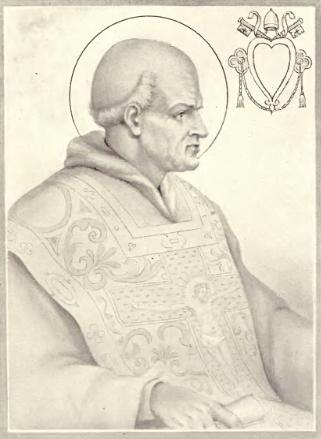
Pope St. John I

Commemoration (1954 Calendar): May 27

Today we commemorate Pope St. John I, who reigned from August 13, 523 until May 18, 526 as the 53rd Pope.

The most famous story of Pope John I's life was the delegation he led to Constantinople to negotiate the care of the Catholics there who were suffering under Theodoric the Goth, who was an Arian.  While the mission was successful, Theodoric had Pope John kidnapped and imprisoned as he suspected the Pope of plotting against him.  The frail Pontiff died on May 18, 526 of thirst and starvation in prison.  He had sacrificed his life to care for the flock of Christ.

Collect:

O Eternal Shepherd, who appointed blessed John shepherd of the whole Church, let the prayers of this martyr and supreme pontiff move You to look with favor upon Your flock and to keep it under Your continual protection. through our Lord . . .
Read more >>
Saturday, May 26, 2018
Indulged Prayer for Each Day of the Week by St. Philip Neri


The Holy Father Pius IX, by a rescript of the Sacred Congregation of Indulgences, dated May 17, 1852, granted -

An indulgence of fifty days; to be gained once a day for saying with a contrite heart the following prayers, each on its appointed day, in order to obtain thereby the intercession of this Saint for the acquisition of certain special virtues.

Source: The Raccolta

See more on St. Philip Neri

THE PRAYERS.

FOR SUNDAY.

Prayer to obtain the virtue of Humility.

St, Philip, my glorious Patron, who on earth didst so love humility as to count the praise and even the good esteem of men as dross; obtain for me also this virtue by thy prayers. Thou knowest how haughty I am in my thoughts, how contemptuous in my words, how ambitious in my doings. Ask for me humility of heart; that my mind may be freed from all pride, and impressed with the same low esteem of self which thou hadst of thyself, counting thyself the worst of all men, and for that reason rejoicing when thou didst suffer contempt, and seeking out for thyself occasions of enduring it.  Great Saint, obtain for me a true humble heart and the knowledge of my own nothingness; that I may rejoice when I am despised, and resent not when others are preferred before me; that I may never be vain when I am praised, but may ever seek only to be great in the eyes of God, desiring to receive from Him alone all my exaltation.

Pater, Ave, Gloria.


FOR MONDAY

Prayer to obtain the virtue of Patience.

St. Philip, my Patron Saint, whose heart was ever so constant in time of trouble, and whose spirit was so loving under suffering, that, when persecuted by the jealous, or calumniated by the wicked who thought to discredit thy sanctity, or when tried by God with many long, painful infirmities, thou didst always bear thy trials with wonderful tranquillity of heart and mind; pray for me that I may have a spirit of true courage in every adversity.  Alas, how much I stand in need of patience!  I shrink from every little trouble; I sicken under every light affliction; I fire up at and resent every trifling contradiction; never willing to learn that the road to paradise lies amidst the thorns of tribulation. Yet this was the path our Diving Master deigned to tread, and this too, my Saintly Patron, was thy path also.  Obtain for me, then, this courage, that with good hearty will I may embrace the crosses which every day I receive from God, and bear them all with the same endurance and ready will as thou didst when thou wast on earth; that so I may be made worthy to enjoy the blessed fruit of sufferings with thee in heaven above.
Pater, Ave, Gloria.


FOR TUESDAY

Prayer to obtain the virtue of Purity.

St. Philip, who didst always preserve the white lily of thy purity unsullied, with such great honour to thyself that the brightness of this fair virtue dwelt in thine eyes, shone forth from thy hands, and cast its fragrance over thy whole body, causing it to emit so sweet a perfume that it gave consolation, fervour, and devotion to all who conversed with thee; obtain me from the Holy Spirit of God so true a love for that virtue, that neither the words nor bad examples of sinners may ever make any impression upon my soul.  Never permit me in any way to lose that lovely virtue; and since avoidance of occasions, prayer, labour, humility, frequent use of the Sacraments, were the arms with which thou didst conquer the flesh, which is our worst enemy, so do thou obtain for me grace to use the same arms to vanquish the same foe.  Take not away thy help from me; but be as zealous for me as thou wast during thy life for thy penitents, keeping them far removed from all sensual infection.  Do this for me, my holy Patron; and be ever my protector in respect of this fair virtue.

Pater, Ave, Gloria.


FOR WEDNESDAY.

Prayer to obtain the Love of God.

St. Philip, I am filled with wonder at the great miracle which was wrought in thee by the Holy Spirit when He poured into thy heart such a flood of heavenly charity, that in order to contain it two of thy ribs were broken by the power of Divine love; and I am confounded when I compare thy heart with mine own.  I see thy heart all burning with love; and mine, all frozen and taken up with creatures.  I see thine inflamed with a fire from heaven, which so filled thy body that it radiated like flames from thy countenance; while mine is full of earthly love.  I love the world, which allures me and can never make me happy; I love the flesh, which ever wears me with its cares, and can never render me immortal; I love riches, which I can enjoy but for a moment.  O when shall I learn of thee to love nothing but God, my incomprehensible and only Good!  Help me, then, blessed Patron, that by thy intercession I may begin at once: obtain for me an efficacious love, manifesting itself by works; a pure love, making me love God most perfectly; a strong love, enabling me to surmount all obstacles hindering my union with God in life, that so I may be wholly united to Him for ever after my death.

Pater, Ave, Gloria.


FOR THURSDAY

Prayer to obtain the Love of our Neighbour.

Glorious Saint, who didst employ thyself wholly in the good of thy neighbour, thinking well of all, sympathising with all, helping all, who throughout thy whole life didst ever try to secure the salvation of all, never shrinking from labour or trouble, keeping for thyself no time or comfort, that thou mightest win all hearts to God; pray for me, that together with the pardon of my sins I may have charity for my neighbour, and be henceforth more compassionate to him in his necessities, and obtain for me grace that I may love every man with pure, unselfish love, as mine own brother, succouring each one, if I am unable to do it with temporal goods, at least with prayers and good advice. And teach me too on every occasion to defend the honour of my neighbour, and never to say to him a hurtful or displeasing word; but ever to maintain, even with my enemies, sweetness of spirit like thine own, whereby thou didst triumph over thy persecutors.  Blessed Saint, ask of God for me also this lovely virtue, which already thou hast gained for so many of thy clients; that so we may all one day come to praise our God with thee in an eternity of bliss.

Pater, Ave, Gloria.


FOR FRIDAY

Prayer to obtain detachment from temporal goods.

Great Saint, who didst prefer a poor and austere life to the comforts of thy home, despising the honour and glory of thy station; obtain for me grace ever to keep my heart detached from transitory goods of this life.  St. Philip, whose desire it ever was to become so poor as one day to have to beg thy bread, and find no charitable hand to offer thee a crumb wherewith to support life; ask of God for me such love of poverty that I may turn all my thoughts to goods which never fail.  St. Philip, who didst prefer to live unknown, to promotion to the highest honours of the Church; intercede for me, that I may never seek after dignities, but always content myself with that state where God has set me.  My heart is too
anxious for the empty fleeting things of earth; but thou - ah, what a maxim didst thou leave us by thy two words: "And then-" !  O wonder-working words! may they ever be deeply impressed upon my soul; that, despising the nothingness of earth, God alone may reign sole object of my affections and my thoughts.

Pater, Ave, Gloria.


FOR SATURDAY

Prayer to obtain perseverance in good works.

St. Philip, my holy Patron, who, ever constant in good works and full of merit, didst receive from Most High God the crown of glory in reward of all thy labours; obtain for me grace never to weary in His service.  St. Philip, who didst recompense those who loved thee by acquiring for them the gift of perseverance in good, ask of God this gift for me; stand by me, dear father, at the last moment of my life, and pray for me that I may depart this life strengthened with the grace of the Holy Sacraments.  Meanwhile intercede for me, that I may do penance for my sins, and deplore them bitterly all my days.  St. Philip, who from on high beholdest all my miseries, and the chains which yet bind me to my sins and to this earth; pray for me that I may be liberated from them, and be constantly devoted to my God.  Obtain for me an ardent desire to co-operate in my own salvation, and unshaken firmness in the good which I have begun; that so by thy intercession I may deserve to be for ever in thy company in an eternity of bliss.

Pater, Ave, Gloria.
Read more >>
Thursday, May 24, 2018
Feast of Our Lady Help of Christians

In the Missal today under "Mass in Some Places" is the Feast of Our Lady Help of Christians.  The Roman Catholic Daily Missal published by Angelus Press says of today's feast: "The Feast of Our Lady Help of Christians is a feast of thanksgiving, instituted by Pope Pius VII in 1815, when the exile of the Sovereign Pontiffs, consequent upon the troubles caused by the French Revolution, came to an end."

Pope Saint Pius V gave Mary the title: "Help of Christians," after the victory of the Christian fleet over the Turks at Lepanto on October 7, 1571, and he added this invocation to her litany. When Pius VII returned to Rome on May 24, 1814, after spending five years of exile and captivity, he established the Feast of Our Lady, Helper of the Papal States.

The invocation of Mary as Help of Christians is part of the oldest prayer addressed directly to Mary, the "Sub tuum praesidium," which was found on a papyrus dating, at the latest, from the end of the third century. This prayer was composed at a time of great danger for Christians and for the Church. "Praesidium" is translated as "an assistance given in time of war by fresh troops in a strong manner."

Yet, Mary help of all Christians is not only helpful to those engaged in new wars, as the Gospel shows quite clearly. She is the bearer of joy, readying all Christians of good will to receive God's grace and the many gifts of life. Yes, ultimately, it is the caring woman of Cana who makes victory over dragon and serpent possible -- in letting Christ act on his own terms and at his own hour.

In the 1962 Missal, this is a 1st Class Feast in Australia.

Collect:

O Almighty and merciful God, who didst wondrously appoint the most Blessed Virgin perpetual help for Christians in need of protection, grant in Thy mercy that after battling in life under such a protectress, we may be able to conquer our enemy at death. Through our Lord . . .
Read more >>
Wednesday, May 23, 2018
Mass of St. John Baptist de Rossi


Today in Some Places of the world, the Mass of St. John Baptist de Rossi is said.  While not on the Universal Calendar, we can learn much from his life.

The following is taken from Butler's Lives of the Saints:
St. John Baptist de Rossi is the first instance in modern times of the canonization as Confessor of a priest belonging to no religions Order or Congregation. He was born at Voltaggio, a little town about fifteen miles north of Genoa, February 22, 1698. From the first he was distinguished for his piety and purity. The parish church was his favorite resort, and thither he would hasten after the early morning class to serve as many Masses as he could. The gravity and modesty he showed in holy places struck all who saw him, and many declared he was like a little angel just come down from heaven and still full of the vision of God. When our Saint was ten years old, a wealthy couple of Genoa visited Voltaggio; attracted by the unaffected piety and winning ways of the boy, they obtained from his parents permission to adopt him, and took him to their palace, where he was treated as their son. 
After a residence of three years in Genoa, he removed, with his mother's consent,—his father having died in the mean while,—to Rome, where his cousin, Laurence de Rossi, was the Canon of S. Maria in Cosmedin. There he began at once to attend the lower classes of the Roman College, and there was no more industrious or saintly student to be found. At the age of eighteen he received the tonsure, and the following year minor orders. He was then selected for a lengthened course of scholastic theology; but in striving to purify his soul he overtaxed his strength, and one day, while devoutly hearing Mass, he fell on the floor of the church in a swoon. From that time out he was subject to epileptic fits, which rendered his projected studies impracticable. This being the case, our Saint looked elsewhere.  
A course of lectures on the text of St. Thomas, then being delivered, was attracting no little attention, and a large number of students attended. As the labor of following the course was comparatively light, John Baptist joined the class. In spite of his feeble health he applied himself most indus602 triously, and still practised such mortifications as were prudent. Walking along the streets, his eyes were never raised from the ground, and in the coldest weather he wore no gloves. ; When he was twenty-three years old he was ordained a priest. The first shape his charity assumed was an active interest in the young students who flock to Rome from every part of the Catholic world. He organized special services for them, preached sermons specially suited to them, and gathered them about him in his visits to the hospitals, to assist him in soothing and relieving the sick and dying. This charitable work over, they would enter a church and recite the Rosary aloud, after which they would enjoy themselves at some innocent game. 
Another charity which attracted our Saint was the spiritual care of the drovers and cattlemen who frequented the market-places. The most of these were ignorant and depraved, caring for no one and with no one to care for them. By visiting their haunts at early dawn, before their work began, John Baptist won them by his kind words, and at last led many to the confessional who had not been there in years, and some who had never been. Hitherto he had not heard confessions himself, but now, at the instance of his bishop, he applied for and received faculties for the administration of the Sacrament of Penance. 
In February, 1735, John Baptist, much against his own inclination, was appointed assistant to his cousin, Laurence de Rossi, who was growing feeble ; and when, two years after, that good man died, his property and canonry were left to our Saint. Within a fortnight the new Canon of Santa Maria in Cosmedin had got rid of a great part of the property. He entered upon the duties of his new office at once, and soon gathered round him crowds of devout worshippers. His confessional was besieged by eager penitents, but always the poorest and most ignorant. The rich and noble he managed to put off, saying they could find confessors in plenty. He would never permit the confessional to be a medium for almsgiving. He himself would not bestow an alms from that tribunal on a penitent, no matter how poor, nor would he there accept a present from the rich, as he feared it might deter him from speaking plainly and freely. His devotion to the poor and ignorant was remarkable. He sought out the most abject and abandoned people, and pursued this work of Christian charity with such zeal as to merit the title of " Venator Animarum," the hunter of souls. In 1740, when Pope Benedict XIV. determined to institute catechism classes for the instruction of criminals serving short sentences, he found an able assistant in our Saint. He had no difficulty in winning the hearts of the convicts from the start, and there was a perceptible reformation wrought in a short time. 
The endless labor and the severe penances which the Saint imposed on himself finally told on his delicate frame, and on May 23, 1764, a stroke of apoplexy ended his mortal life, and brought him the endless bliss of the presence of God, for which his soul had so long yearned. 
After the death of the holy man many miracles bore witness to his sanctity. Among others was the case of Sister Mary Theresa Leonori, of the Convent of St. Cecilia at Rome, who in 1859 suffered from a throat disease which the best medical authorities pronounced incurable. Wasted and enfeebled by her sickness, entirely deprived of speech, suffering great pain, and unable to partake of any nourishment, her death was momentarily looked for. Human aid failing her, the pious Sister besought the help of St. John Baptist, and Our Lord, to show His love for His faithful servant, deigned to work a miracle at the Saint's intercession. Sister Mary Theresa was instantly cured and rose from her bed of suffering a well woman.
Read more >>
Saturday, May 19, 2018
Book Review: Saint Catherine of Siena by Alice Curtayne

This past week I picked up the book "Saint Catherine of Siena" by Alice Curtayne.  Ms. Curtayne wrote this book back in 1929. While not a writer by trade, she became so immersed in the life and works of St. Catherine of Siena that she wrote this fantastic book after years of researching and compiling notes on St. Catherine.  Interestingly, this book was her first notable book.  After the success of this one, she went on to write A Recall to Dante, The Catholic Literary Revival, St. Brigid of Ireland, and The Irish Story.

"Saint Catherine of Siena" is an easy and inspiring read.  As a Dominican Tertiary, I am well acquainted with the life of St. Dominic.  But St. Catherine, who was a Dominican tertiary herself, is the patroness of the Third Order today.  Yet, I did not truly know her life's story.

What Ms. Curtayne has done is summarize the wonderful effect of her life.  Despite all of her struggles, she had a way of bringing many souls back to Christ.  The book describes the band of followers who assisted her in her mission of writing letters and defending the Church in the midst of the Avignon Papacy.  I had previously heard of St. Catherine's role in bringing the Pope back from Avignon to Rome but I had no idea the drama and tumult that centered around the Avignon Papacy.  I also had no idea of the depth of her involvement and the amount of time, effort, suffering, and prayers it took for to help the Holy Father return to Rome.

The book also describes her life's work of promoting the interests of the Church in the calling for a Crusade (which she never saw happen), her role in bringing peace to Tuscany and Italy after a Revolution of sorts against the Church, her relationship with the Popes of the time, and finally her efforts to defend Urban VI after the Western Schism occurred and the anti-Pope Clement VII was elected.  I had no idea of the magnitude of these events and how it seemed that all hope had been lost for Christendom.  Yet, the Church prevailed and she did not sink from the attacks from without and within her ranks.  It was inspiring to read this book during this trying time with modernism reigning throughout the Eternal City.  It's also inspiring to think that despite many seemingly earthly failures, she nevertheless did so much for souls.

Ms. Curtayne really brings the personality and devotion of St. Catherine to Christ Crucified to life.  St. Catherine was a prolific writer (who dictated her correspondence but who nevertheless determined what was said), and Ms. Curtayne's book quotes these letters extensively.  The book is a wonderful tapestry of the letters of St. Catherine supplemented and explained with stories of her follower's lives and commentary on the Church at the time.

I'm happy to recommend this book to anyone looking for a book on the life and the writings of St. Catherine

Truly, if she could have done so much in only 33 years of life, we need to ask ourselves if we are truly doing enough each day and doing that which the Holy Ghost wishes us to do for the honor of God and the good of souls. 

St. Catherine, pray for us!

The Body of St. Catherine under the main altar at Santa Maria Minerva in Rome.  The photo was taken during my April 2016 visit to the Eternal City.
Read more >>
Commemoration of St. Pudentiana

Commemoration (1954 Calendar): May 19

Today Holy Church commemorates St. Pudentiana, the sister of St. Praxedes.

St. Pudentiana was a daughter of a Roman senator, who consecrated herself wholly to Christ and gave away her goods to the poor. All of this was done at a remarkably young age.  She died in the year 160, when she was only 16 years of age.  Young but full of holiness.

Excerpted from The Church's Year of Grace, Pius Parsch:
According to an ancient tradition, St. Peter was the guest of the senator Pudens during his stay in Rome. Pudens had two daughters, Pudentiana and Praxedes, virgins who dedicated themselves wholly to acts of charity. After the death of their parents, Pudentiana and her sister Praxedes distributed their patrimony to the poor. The fact that Puden's entire household of some 96 persons were baptized by Pope Pius I (d. 154) is ascribed to their zealous activities. When Christian services were forbidden by the Emperor Antoninus Pius, Pius I celebrated Mass in their home. The saints were buried next to their father in the catacomb of St. Priscilla. One of Rome's most ancient stational churches is dedicated to St. Pudentiana.
Collect:

Hear our prayer, O God our Saviour, and let us learn the spirit of true devotion from Your blessed virgin Pudentiana, as we joyfully celebrate her feast. Through Our Lord . . .
Read more >>
Tuesday, May 15, 2018
St. Isidore the Farmer (Mass in Some Places)

While not on the Universal Calendar, May 15th is the Feast of St. Isidore the Farmer in Some Places.  In some places within the US and Canada, his feast is celebrated on October 25, and other locations and some Traditionalist Catholics in that area, though not elsewhere, keep the March 22 date. This latter date is due to the fact that when St Isidore's feast was first inserted into the calendar for the United States in the year 1947, the feast day of Saint John Baptist de La Salle was still being celebrated on May 15, with the result that the celebration of his feast was assigned to March 22.

This account of his life comes from the Roman Breviary:
Isidore the Farmer was a native of Madrid, Spain. He was hired as a plowman to labor in a place just outside the Spanish capital. While engaged in this occupation it was not long before he reaped a plentiful harvest of virtues.
His imitation of Christ and the Saints was indeed admirable. He would never go to work in the morning without first seeking the kingdom of God and visiting the churches dedicated to God or to his blessed Mother. As a result of these visits he was often late for work in the fields, thereby bringing upon himself the displeasure of his employer. One day his employer, who had observed the farmer from a vantage-point and was waiting for him in order to upbraid him, was surprised to see two Angels dressed in white, each plowing with a team of oxen, and Isidore in the midst of them. The news of this miracle spread far and wide and thereafter his employer and others held Isidore in high esteem.
His charity towards the poor was so ardent that he used to distribute to the needy the earnings of his labors. Indeed it is related how on one occasion he brought along a crowd of beggars to a confraternity dinner; the others had already eaten and nothing remained but the portion reserved for Isidore. Accordingly the man of God with extraordinary faith began to distribute the remaining portion which by a wonderful multiplication was enough to feed and satisfy all those poor people. Among the other wonderful things told about this Saint, the following is noteworthy. While out on the fields, one hot summer day his employer suffering from a very great thirst longed dor a drink of water. There was however no spring or other source of water there. Thereupon Isidore struck the ground with the goad-stick he used to carry and immediately there gushed forth a spring which to the present day has never ceased supplying water in great abundance. 
At length in extreme old age, renowned for holiness, he fell asleep in the Lord and was buried in the cemetery of St. Andrew. Here his body remained until the citizens of that place were admonished by God to provide a more honorable resting place for it by bringing it to the church. At that time it was found intact and uncorrupted; it also exhaled a most fragrant odor which is noticeable even in our time. His body was transferred to the church and enshrined in a conspicuous place where God has honored it with striking miracles. More than once the city of Madrid and other places in Spain felt the benefit of these miracles throgh Isidore's intercession. Finally, after almost four hundred years, Isidore now famous for holiness and miracles was enrolled among the number of the Saints by Pope Gregory X. 
Collect:

O Merciful God, shield us from the pride that comes from learning, through the intercession of Your holy farm worker Isidore. May his merits and example help us to please You by our humble service. Through Our Lord . . .
Read more >>
Monday, May 14, 2018
St. Boniface of Tarsus


Simple (1955 Calendar): May 14

Born a pagan in the 3rd century, St. Boniface of Tarsus was one of Aglaida's slaves. Both were pagans and lived in debauchery together and some legends say they were lovers.

Yet by the grace of God, they tired of their sinful way of life and both discovered Christianity as a meaningful way. Aglaida decided to send him on an errand to collect holy relics. Finding upon arrival at Tarsus that the authorities were torturing Christians, he openly declared himself to be a Christian. For this, he was executed with savage cruelty in 307 AD.  Providentially, his own body constituted the relics that were brought back to Aglaida, who in turn became a Christian.

He should not be confused with the more commonly venerated St. Boniface of Germany.

The Traditional Reading at Matins:

Boniface was a citizen of Rome, and had held criminal intercourse with a rich lady, by name Aglae. He was filled with such shame on account of this immoral conduct, that by way of penance he devoted himself to searching out and burying the bodies of martyrs. In one of his travels he left his companions; and finding, on arriving at Tarsus, that many were being put to divers tortures for the Christian faith, he approached them, kissed their chains and did all in his power to urge them to bear patiently the short labour of sufferings which were to be followed by eternal rest. For this he was seized, and his flesh was torn by iron hooks. Sharp reeds were also thrust up his finger-nails, and melted lead was poured into his mouth. His only exclamation, in the midst of these tortures, was: ' I give thee thanks, Lord Jesus Christ, the Son of God!' He was then put, head foremost, into a cauldron of boiling pitch; and when he was taken out, and found to be unhurt, the judge, in a fit of anger, ordered him to be beheaded. During his execution a great earthquake was felt; whereupon many of the pagans were converted to the faith of Christ our Lord. On the day following, his companions, who were in search of him, were told that he had suffered martyrdom. They bought his body for five hundred pieces of silver; and having embalmed and shrouded it, they had it taken to Rome. All this was made known by an angel to Aglae, who had also devoted herself to penance and good works. She, therefore, went to meet the martyr's relics. She built a church, which was named after the Saint, and in which he was buried on the Nones of June (June 5). The martyr’s soul passed into heaven on the day before the Ides of May (May 14) at Tarsus, a city of Cilicia, under the Emperors Diocletian and Maximian.

Prayer:

O Almighty God, may the prayers of Your blessed martyr Boniface aid us as we celebrate his feast today. Through Our Lord . . .

Source: 1962 Roman Catholic Daily Missal
Read more >>
Tuesday, May 8, 2018
Indulgence for the Angelic Crown in Honor of St. Michael

In honor of the first of two feastdays of St. Michael the Archangel, I wish to remind everyone of the following entry in the Raccolta:


It is a pious tradition, that the Archangel Michael revealed to a holy person that he would he well pleased by his bringing into use the following prayers in his honour and in honour of all the angelic host; and that he would repay those who practised this devotion with signal favours, particularly in such times as the Catholic Church should experience some special trial. 

In this belief, a holy Carmelite nun, of the convent of Vetralla, in the diocese of Viterbo, who died with the reputation of sanctity in the year 1751, made it her delight to practise this method of prayer, commonly called the "Angelic Chaplet;" and it was at the instigation of the nuns of her convent that his Holiness Pins IX., by a decree of the S. Congr. of Rites, dated August 8, 1851, granted the following Indulgences -

i. An indulgence of seven years and seven quarantines every time the Chaplet is said.

ii. An indulgence of 100 days daily to any one who carries this Chaplet about him, or kisses the medal with the representation of the holy angels appended to the said Chaplet.

iii. A plenary indulgence once a month to every one who says daily this Chaplet, on any one day when, after Confession and Communion, he shall pray for the exaltation of our holy Mother the Church and the safety of the Sovereign Pontiff.

iv. A plenary indulgence, with the conditions above named, on -

1. The Feast of the Apparition of St. Michael. May 8.
2. The Dedication of St. Michael. September 29.
3. St. Gabriel the Archangel. March 18.
4. St. Raphael the Archangel. October 24.
5. Holy Angel Guardians. October 2.

To gain these Indulgences, a Chaplet must be used consisting of nine Pater noster’s, and three Ave Maria's after each Pater noster, with four Pater noster’s at the end; the following corresponding salutations being said at the same time in their proper order, with the antiphon and prayer at the end us given below. These Chaplets must be blessed by the actual father confessor of the convent of Vetralla, or some other priest who has obtained faculties for this purpose.

METHOD OF PRACTISING THIS DEVOTION.

Let every one, according to his ability, begin with an act of sincere contrition, kneeling before a representation of the holy Archangel; then let him say with devotion the following salutations:

V. Deus in adjutorium meum intende.
R. Dontine ad adjuvandum me festina.

Gloria Patri, &c.

FIRST SALUTATION.

One Pater noster and three Ave Maria’s, to the First Angelic Choir.

At the intercession of St. Michael and the heavenly choir of the Seraphim, may it please God to make us worthy to receive into our hearts the fire of His perfect charity. Amen.

SECOND SALUTATION.

One Pater noster and three Ave Maria’s, to the Second Angelic Choir.

At the intercession of St. Michael and the heavenly choir of the Cherubim, may God grant us grace to abandon the ways of sin, and run the race of Christian perfection. Amen.

THIRD SALUTATION.

One Pater noster and three Ave Maria’s, to the Third Angelic Choir.

At the intercession of St. Michael and the sacred choir of the Thrones, may it please God to infuse into our hearts a true and earnest spirit of humility. Amen.

FOURTH SALUTATION.

One Pater noster and three Ave Maria’s, to the Fourth Angelic Choir.

At the intercession of St. Michael and the heavenly choir of the Dominations, may it please God to grant us grace to have dominion over our senses, and to correct our depraved passions. Amen.

FIFTH SALUTATION.

One Pater noster and three Ave Maria’s, to the Fifth Angelic Choir.

At the intercession of St. Michael and the heavenly choir of the Powers, may God vouchsafe to keep our souls from the wiles and temptations of the devil. Amen.

SIXTH SALUTATION.

One Pater noster and three Ave Maria’s, to the Sixth Angelic Choir.

At the intercession of St. Michael and the choir of the admirable celestial Virtues, may our Lord keep us from falling into temptation, and deliver us from evil. Amen.

SEVENTH SALUTATION.

One Pater noster and three Ave Maria’s, to the Seventh Angelic Choir.

At the intercession of St. Michael and the heavenly choir of the Principalities, may it please God to fill our souls with the spirit of true and hearty obedience. Amen.

EIGHTH SALUTATION.

One Pater noster and three Ave Maria’s, to the Eighth Angelic Choir.

At the intercession of St. Michael and the heavenly choir of Archangels, may it please God to grant its the gift of perseverance in the faith and in all good works, that we may thereby be enabled to attain unto the glory of Paradise. Amen.

NINTH SALUTATION.

One Pater noster and three Ave Maria’s, to the Ninth Angelic Choir.

At the intercession of St. Michael and the Heavenly choir of Angels, may God vouchsafe to grant us the safe-conduct of the holy Angels through life, and after death a happy entrance into the everlasting glory of heaven. Amen.

Then say four Pater noster's in conclusion; the first to St. Michael, the second to St. Gabriel, the third to St. Raphael, the  fourth to your Angel Guardian.

This exercise then ends with the following Antiphon.

ANTIPHON.

Michael, glorious Prince, chief and champion of the heavenly host, guardian of the souls of men, conqueror of the rebel angels, minister in the house of God, our worthy captain under Jesus Christ, endowed with superhuman excellence and virtue; vouchsafe to free us all from every evil, who with full confidence have recourse to thee; and by thy powerful protection enable us to make progress every day in the faithful service of our God.

V. Pray for us, most blessed Michael, prince of the Church of Jesus Christ.
R. That we may be made worthy of His promises.

PRAYER.

Almighty and eternal God, who in thine own marvellous goodness and pity didst, for the common salvation of man, choose the glorious Archangel Michael to be the prince of Thy Church; make us worthy, we pray Thee, to be delivered by his beneficent protection from all our enemies, that at the hour of our death no one of them may approach to harm us, and that by the same Archangel Michael we may be introduced into the presence of Thy high and heavenly Majesty. Through the merits of the same Jesus Christ our Lord. Amen.
Read more >>
Monday, May 7, 2018
The Tomb of St. Francis Regis Clet

This past March, I was privileged to venerate the body of St. Francis Regis Clet, whose body is housed in the Shrine of St. Vincent de Paul in Paris, France.


Who is this St. Francis Regis Clet?  The Vincentian Encyclopedia summarizes his life:
Francis Regis Clet, the tenth of 15 children, was born into a farm family in Grenoble in the southwest corner of Francis in 1748 and was named for the recently canonized fellow-Grenoblian, Jesuit Jean Francois Regis. After completing studies at the Royal College (founded by the Jesuits), he followed his elder brother and sister into vowed religious life. In Lyons in 1769, he entered the Congregation of the Mission (Vincentians). After ordination, Francis served as professor of moral theology at the Vincentian seminary in Annecy where he was affectionately called "the walking library" because of his encyclopedic knowledge and academic discipline. In 1786, he became Rector of Annecy and two years later, Director of Novices in Paris. 
Francis Regis petitioned to go to China as a missionary several times, but his superiors did not accede to his request until 1791. At the age of 43, he replaced another priest who had to withdraw from the assignment at the last minute. A confrere, in writing about Clet's assignment to China, noted: "He has everything you could ask for: holiness, learning, health and charm." 
After a six month sea journey from France and some transition time in Macao, which included assuming the dress and customs of the Chinese people, the new missioner arrived in Kiang-si in October of 1792 as the only European in the area. Clet's acculturation was hampered by his life-long difficulty with the language. In 1793 Clet joined two Chinese confreres in Hou-Kouang in the Hopei Province where both of his companions died within his first year, one in prison and one from exhaustion. In that year, Clet became superior of an international group of Vincentian missioners scattered over a very large territory, and he himself pastored an area of 270 thousand square miles. In that leadership capacity, he developed standards so that there would be a uniform approach to ministry (sacramental and catechetical) among the missioners. 
In 1811, the anti-Christian persecutions in China intensified with the Christians being accused of inciting rebellion against the ruling dynasty. For several years, Clet endured abuse and attacks, which frequently forced him to find refuge in the mountains. In 1819, with a generous reward on their heads, Clet and a Chinese confrere became fugitives. Like Jesus, he was finally betrayed by one of his own, a Catholic schoolmaster whom Clet had challenged for his scandalous behavior. Like the missionary St. Paul, Clet endured ignominy and forced marches in chains over hundreds of miles. 
On January 1, 1820, Clet was found guilty of deceiving the Chinese people by preaching Christianity and was sentenced to strangulation on a cross. On February 18, after approval of his sentence by the Emperor, Francis Regis Clet was executed. As in the case of Jesus, Christians took his body and buried it on a hillside where it rested until it was returned to the Vincentian motherhouse in Paris several decades later and is now honored at St. Lazare.
Photos (c) A Catholic Life Blog, 2017
Read more >>


Copyright Notice: Unless otherwise stated, all items are copyrighted under a Attribution-NonCommercial-NoDerivatives 4.0 International License. If you quote from this blog, cite a link to the post on this blog in your article.

Disclosure of Material Connection: Some of the links on this blog are “affiliate links.” This means if you click on the link and purchase the item, I will receive an affiliate commission. As an Amazon Associate, for instance, I earn a small commission from qualifying purchases made by those who click on the Amazon affiliate links included on this website. I am disclosing this in accordance with the Federal Trade Commission’s 16 CFR, Part 255: “Guides Concerning the Use of Endorsements and Testimonials in Advertising.”