Photo of St. John Cantius on All Souls Day (c) A Catholic Life Blog, 2022
Traditional Latin Mass Options on the First Sunday of Each Month
The website "The Four Marks" has a great list of options of Traditional Latin Mass and Eastern Rite options in and around Chicagoland for the First Sunday of the month when the Tridentine Mass is forbidden in the Archdiocese of Chicago. After the draconian changes announced in January 2022, the number of TLM locations in the Archdiocese was significantly reduced. In addition to forbidding the TLM at several places which had offered it for many years, the TLM was forbidden at all parishes on the first Sunday of each month as well as Christmas, Easter Sunday, and Pentecost Sunday. I highly recommend using the list at The Four Marks for those dates.
Traditional Latin Mass Options for Other Sundays
The following TLM locations are available on most Sundays (except for the First Sunday of the month, Christmas Day, Easter Sunday, and Pentecost Sunday):
St. John Cantius Church (Chicago): 7:30 AM Low Mass, 12:30 PM High Mass
Saint James at Sag Bridge (Lemont): 12 PM
Our Lady Immaculate (Oak Park): 9 AM (unaffected by the Archdiocese's persecution as this is an SSPX chapel)
Our Lady of the Holy Rosary Chapel (Elgin): 10 AM (unaffected by the Archdiocese's persecution as this is an independent chapel)
Weekday Traditional Latin Mass Options
For those looking for weekday Tridentine Mass options or Eastern Rite Liturgies, there are also options in Chicago or within relatively close 40-mile driving distance:
St. John Cantius Church (Chicago): 6:30 AM Low Mass (Monday through Friday), 7:30 PM High Mass (Wednesday), 8:30 AM Low Mass (Saturday) [Updated Time in April 2026]
St. Joseph Church (Rockdale): 7:30 AM Low Mass (Monday through Friday), 5:30 PM (Thursday), 8:00 AM Low Mass (Saturday)
SSPX Priory (Chicago): This is at the priory and not at the Oak Park church: 11:00 AM (Monday), 7:15 AM Low Mass (Tuesday through Thursday), 7:15 AM Low Mass (Fridays except for First Fridays and special feasts). Check the calendar before going.
Weekday Eastern Rite Liturgy Options
For all of the Sunday options, see The Four Marks, as they are unaffected by the Archdiocese. Their regular Sunday Liturgies are available on all Sundays of the month. For weekday options, these options exist in close proximity to the city of Chicago:
Mart Mariam Chaldean Catholic Church (Northbrook): 6:30 PM Divine Liturgy in Surath (Friday)
St. John the Baptist Melkite Catholic Church
St. Thomas Syro-Malabar Cathedral (Chicago): 8:30 AM Divine Liturgy in Malayalam (Monday through Friday), 7:00 PM Divine Liturgy in English (Monday through Friday), 8:30 AM Liturgy in Malayalam (Saturday).
St. Mary’s Syro-Malabar Knanaya Catholic Church (Morton Grove): Divine Liturgies all in Malayalam: 8:15 AM (Monday through Friday), 7:00 PM (Monday through Thursday), 10:00 AM (Saturday). Divine Liturgy in English: 6:00 PM (Friday)
St. Nicholas Ukrainian Catholic Cathedral (Chicago): 5:00 PM Vespers (Saturday), 6:00 PM Matins (Saturday)
SS. Volodymyr and Olha Ukrainian Catholic Church (Chicago): 8:00 AM Divine Liturgy in Ukrainian (Monday through Friday), 9:00 AM Divine Liturgy in Ukrainian (Saturday)
St. Joseph the Betrothed Ukrainian Catholic Church (Chicago): 9:00 AM Divine Liturgy in the Chapel (Monday - Friday), 9:00 AM Divine Liturgy in the Church (Saturday), 5:00 PM Vespers (Saturdays), 6:30 PM Vespers (Eve of Major Feasts)
Immaculate Conception Ukrainian Byzantine Catholic Church (Palatine): Divine Liturgies: 8:00 AM (Monday through Friday), 9:00 AM (Saturday), 7:00 PM (Weekday Holy Days)
St. George Byzantine Catholic Church (Aurora): 6:00 PM Divine Liturgy (Monday through Thursday), 1:00 PM Divine Liturgy (Friday)
Annunciation Byzantine Catholic Church (Homer Glen): 7:00 PM (Thursday and Holy Days)
St. Mary Byzantine Catholic Church (Whitting, IN): 5:00 PM Great Vespers (Saturday)
If you know of any other options, please leave the details in the comments section below.
This episode is sponsored by PrayLatin.com. PrayLatin.com offers Latin prayer cards to learn and share prayers in the sacred language. Learn your basic prayers without spending more time looking at screens. Conveniently carry these Latin prayers with you on the go. Share basic prayers in Latin with your family and friends. PrayLatin.com prayer cards are available in various formats. Practice your pronunciation with easy-to-follow English phonetic renderings of Latin words. PrayLatin.com also offers Latin-English rosary pamphlets with the traditional 15 mysteries. Visit PrayLatin.com today and take advantage of generous free shipping offers on both domestic and international orders.
Tridentine Brewing is a family homebrewing operation founded by the Alcorn family. I first learned about Tridentine Brewing in early 2021 after hearing of fellow Chicago-area Catholics affiliated with the Shrine of Christ the King (ICKSP) who had bottles of it. As an avid fan of craft beer, I looked them up online but was unable to find any information about them. Thankfully, by autumn 2021, I was able to come across the then-newly established Twitter account of Tridentine Brewing which is run by Trevor. By All Souls Day of that year, he had graciously sent me several bottles of beer and a box of merchandise for free, which are pictured above.
The brews are delicious. The designs are beautiful. And the stories of the beers, carefully summarized and explained in the documentation sent to me, showed a level of detail far beyond what I am accustomed to from even commercial craft breweries! There is a reason they are winning homebrew awards. I do hope to see them commercially producing in the near future!
Tridentine Brewing is a home brewing operation and does not commercially sell its beer - it is always given away. As such, I wanted to wait until they had something to sell before publicly promoting them. And I'm happy to announce that Tridentine Brewing has launched its online store offering tin tackers, magnets, coasters, decals, and more for sale!
Please check out Tridentine Brewing's online merch shop today and support a family brewery that I know supports Traditional Catholic causes and regularly gives and supports traditional Catholic orders and organizations. Your purchase will undoubtedly be going back to help the cause. Check them out today.
Tridentine Brewing recently appeared on an episode of "Hope in the Desert" with Fr. Lovell of the Coalition of Canceled Priests. Give them a listen today!
The Divine Liturgy celebrated at St. Mary's Byzantine Catholic Church in Whitting, IN shows that it is possible to have the beauty of Eastern Liturgies in Communion with Rome.
Is Orthodoxy the True Faith?
It is evident with the crisis in the Catholic Church concerning not only the sexual abuse crisis but the crisis in the Liturgy after Vatican II that some Catholics have become disillusioned with the current Catholic hierarchy. From an outside perspective, some might ask why they should remain Catholic and not convert to Eastern Orthodoxy, which is known for reverent, ancient liturgies under the name of the Divine Liturgy of St. John Chrysostom (or St. Basil the Great at some times).
But on a more deep analysis, there is no refuge in Orthodoxy. While we often think of the Orthodox as schismatics and not as heretics, the doctrinal crisis has also affected them. Some definitions to start from the Catholic Modern Dictionary of Father John Hardon:
Heresy: In the Roman Catholic Church, heresy has a very specific meaning. Anyone who, after receiving baptism, while remaining nominally a Christian, pertinaciously denies or doubts any of the truths that must be believed with divine and Catholic faith is considered a heretic. Accordingly four elements must be verified to constitute formal heresy; previous valid baptism, which need not have been in the Catholic Church; external profession of still being a Christian, otherwise a person becomes an apostate; outright denial or positive doubt regarding a truth that the Catholic Church has actually proposed as revealed by God; and the disbelief must be morally culpable, where a nominal Christian refuses to accept what he knows is a doctrinal imperative.
Schismatic: According to Church law, a schismatic is a person who, after receiving baptism and while keeping the name of Christian, pertinaciously refuses to submit to the Supreme Pontiff or refuses to associate with those who are subject to him. The two factors, submission to the Pope and association with persons subject to him, are to be taken disjunctively. Either resisting papal authority or refusing to participate in Catholic life and worship induces schism, even without further affiliation with another religious body. Like heresy, schism is formal and culpable only when the obligations are fully realized.
How is the Orthodox Church Falling Into Heresy?
The Orthodox generally reject the following dogmatically defined truths which a Christian must accept:
The indissolubility of Marriage since the Orthodox allow a second and even a third marriage for divorced persons. On the contrary, the Magisterium has always maintained the prohibition of divorce and remarriage, even for Eastern Rite Catholics (Council of Lyon II [1274], Benedict XIV [1743] due to our Lord's own words (Matthew 19:6).
The state of the soul needed to approach the Blessed Sacrament.
There is No Unified Body of Doctrine in the Orthodox Church
The Orthodox Church is actually not a unified Church but a collection of different groups with different beliefs, which attacks two fundamental marks of the Church. The four marks of the Church can only be present in the Church founded by our Lord Jesus Christ. And Orthodoxy attacks two of them significantly:
Oneness: St. Paul in his Epistle to the Ephesians asserted that there is “one Lord, one faith, one baptism” (Eph. 4:5). The Church is one because she was founded by Jesus, the one and only Son of God, Who taught one unified body of doctrine. Granted, there is great diversity in the Church regarding cultures, gifts, ways of life, and offices, yet there is unity in government (under the visible head, the Pope), faith, and sacraments. The Roman Catechism explains, “The first mark of the true Church is described in the Nicene Creed, and consists in unity….” Likewise, the Baltimore Catechism teaches, “The Church is one because all its members agree in one faith, are all in one communion, and are all under one Head.”
Catholicity (i.e., Universality): The word "Catholic" literally means “universal.” The Church is the universal body of believers established by Christ and meant for all people of all corners of the world for all times (cf. Matt. 28:18-20; Apoc. 5:9-10). The etymology of the word “catholic” is the Greek adjective katholikos, which is related to the adverb katholou, meaning “in general” or “according to the whole.” This definition helps communicate the fact that the Catholic Faith is for people of every place, culture, and class. There is no one who is not called to a member of the true Faith. As St. John relates in the Book of the Apocalypse: “Thou art worthy, O Lord, to take the book, and to open the seals thereof; because Thou wast slain, and hast redeemed us to God, in Thy blood, out of every tribe, and tongue, and people, and nation” (Apoc. 5:9).
In hindsight, I came to realise that what Greek Orthodoxy lacked was the universality of the Creed; “I believe in ONE, holy, CATHOLIC and Apostolic Church…”. I experienced holiness and Apostolic succession, but didn’t feel the oneness in the increasingly splintering Orthodox churches nor any sense of universality. I felt cut off from my family and peers, because the Greeks showed no interest in my desire to evangelize the Australian people. I was told sternly, “That’s not our way, not our spirit. No one will listen to you because you are not Greek. Besides, you joined a Greek church, why do you want to change us? We are Greek, that’s who we are.” I couldn’t reconcile this attitude with Christ’s solemn command to baptise the nations, nor the actions of the Apostles in the Book of Acts.
This episode is sponsored by PrayLatin.com. PrayLatin.com offers Latin prayer cards to learn and share prayers in the sacred language. Learn your basic prayers without spending more time looking at screens. Conveniently carry these Latin prayers with you on the go. Share basic prayers in Latin with your family and friends. PrayLatin.com prayer cards are available in various formats. Practice your pronunciation with easy-to-follow English phonetic renderings of Latin words. PrayLatin.com also offers Latin-English rosary pamphlets with the traditional 15 mysteries. Visit PrayLatin.com today and take advantage of generous free shipping offers on both domestic and international orders.
In Hungary, grains are blessed by the priest after Mass on Peter and Paul's Day. People weave crowns, crosses, and other religious symbols from straw, have them blessed, and carry them on wooden poles in procession around the church. Afterward they take them home and keep them suspended from the ceiling over the dinner table. Bread is also blessed in a special ceremony on this day in Hungary.
A moving custom is practiced in rural sections of the Alpine countries. On June 29, when the church bells ring the "Angelus" early in the morning, people step under the trees in their gardens, kneel down and say the traditional prayer the "Angel of the Lord." Having finished the prayer they bow deeply and make the sign of the cross, believing that on Saint Peter's Day the blessing of the Holy Father in Rome is carried by angels throughout the world to all who sincerely await it.
This episode is sponsored by Ordinary Dad Life. Ordinary Dad Life seeks to inspire courage in men to pray and live the virtues of authentic masculinity through the Rosary. Our Lady was clear when she said to “pray the Rosary everyday” at Fatima. Their shop on Etsy has a variety of styles for men from traditional chain rosaries to durable paracord rosaries with heavy medal beads, large crucifixes (up to 3”) and large medals such as the miraculous medal, St Michael or St Joseph medals. Ordinary Dad Life is running a special promotion from NOW until the end of 2023. Use the code ACATHOLICLIFE20 for 20% off and Free Shipping when you spend $50 or more at the shop. Proceeds go back into the Catholic community and those striving to live the authentic Catholic faith.
This episode is sponsored by PrayLatin.com. PrayLatin.com offers Latin prayer cards to learn and share prayers in the sacred language. Learn your basic prayers without spending more time looking at screens. Conveniently carry these Latin prayers with you on the go. Share basic prayers in Latin with your family and friends. PrayLatin.com prayer cards are available in various formats. Practice your pronunciation with easy-to-follow English phonetic renderings of Latin words. PrayLatin.com also offers Latin-English rosary pamphlets with the traditional 15 mysteries. Visit PrayLatin.com today and take advantage of generous free shipping offers on both domestic and international orders.
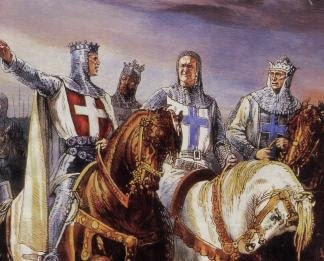
In 1089 Pope Urban II granted a dispensation to Spain from abstinence on Fridays, in virtue of the Spanish efforts in the Crusades as part of the Crusade Bulls. After the Battle of Lepanto in 1571, Pope St. Pius V expanded that privilege to all Spanish colonies. That dispensation remained in place in some places as late as 1951 when the Archdiocese of Santa Fe in New Mexico, the last territory to invoke it, rescinded the privilege.
Known as the “Bula de Cruzada” (Spanish for Crusade Bulls), they were actually a series of papal bulls issued as far back as 1089 but which continued throughout the centuries with bulls issued in 1118, 1197, 1478, 1479, 1481, 1482, 1485, 1494, 1503 and 1505. One such provision of these bulls served to dispense the faithful from fasting and abstinence during Lent. The first bull of meat at the state level was delivered by Pope Julius II to the Catholic Monarchs in 1509 so that the Spanish were permitted to eat meat, eggs, and dairy on prohibited days. The town of Meco, Spain, obtained a bull from Pope Innocent VIII in the late 15th century exempting its 14,000 inhabitants from fast and abstinence, even on Good Friday, owing to their alleged large distance from the sea.
The one who originally obtained this dispensation was Íñigo López de Mendoza y Quiñones, the second Count of Tendilla and Lord of Meco. He requested the papal bull, and many say that the Vatican's favorable decision was granted in recognition of the services López de Mendoza had rendered to Innocent VIII and the Roman Court since Meco is not the farthest Spanish town from the sea.
All of these bulls stemmed from the contributions which the Spanish made to advance the Faith against the Church's enemies through the Crusades. As such, some Spanish missals will list reduced days of fasting and abstinence with the notation “con Bula de Cruzada.”
The Bull of the Crusade was ultimately extinguished on December 31, 1914, by Pope Benedict XV, who replaced it with the Pontifical Indults, whose proceeds were used for the founding and maintenance of seminaries. The fasting and abstinence pardons were later extinguished in 1966 with the issuance of Poenitemini.
"Misal Diario y Vesperal" by Dom Gasper Lefebvre and translated by P. German Prado (c) 1962
This is seen in some Missals published in the mid-1950s. For instance, a Spanish Missal from the mid-1950s notes: By virtue of the decree of the Sacred Congregation of the Council, given in the 28th day of January 1949, combined with the Privilege of the Bull of the Holy Crusade, the law of fast and abstinence is modified in the following manner:
Spain
Days of fast only, Ash Wednesday
Days of abstinence-only, all Fridays of Lent
Days of fasting with abstinence, Good Friday, and the Vigils of the Immaculate Conception and the Nativity of Our Lord.
Fast and abstinence for the Vigil of the Nativity is anticipated in Ember Saturday.
Note: It is supposed that all faithful enjoy the privilege of the Bull, and the bishops make use of the faculty that was granted to them.
Latin America and the Philippine Islands
By virtue of the pontifical indult, it is only obligatory:
Days of abstinence-only, without fast: the four vigils:
Vigil of Christmas
Vigil of Pentecost
Vigil of the Holy Apostles Peter and Paul
Vigil of the Assumption
Days of fasting and abstinence: Ash Wednesday and all Fridays of Lent
Days of fasting only without abstinence: all other Wednesdays of Lent, Holy Thursday, and Ember Friday during Advent
This episode is sponsored by PrayLatin.com. PrayLatin.com offers Latin prayer cards to learn and share prayers in the sacred language. Learn your basic prayers without spending more time looking at screens. Conveniently carry these Latin prayers with you on the go. Share basic prayers in Latin with your family and friends. PrayLatin.com prayer cards are available in various formats. Practice your pronunciation with easy-to-follow English phonetic renderings of Latin words. PrayLatin.com also offers Latin-English rosary pamphlets with the traditional 15 mysteries. Visit PrayLatin.com today and take advantage of generous free shipping offers on both domestic and international orders.
That we may thoroughly understand the meaning and influence of the season of the liturgical year upon which we have no entered, it is requisite for us to grasp the entire sequel of mysteries, which holy Church has celebrated in our presence and company; we have witnessed her services, and we have shared in them. The celebration of those mysteries was not an empty pageant, acted for the sake of being looked at. Each one of them brought with it a special grace, which produced in our souls the reality signified by the rites of the liturgy. At Christmas, Christ was born within us; at Passiontide He passed on and into us His sufferings and atonements; at Easter He communicated to us His glorious, His untrammeled life; in His Ascension, He frew us after Him, and this even to heaven's summit; in a word, as the apostle expresses all this working, 'Christ was formed in us.' Christians listen to sermons, pray, flagellate themselves, and show charity—by Francois Maitre, ca. 1475
But, in order to give solidity and permanence to the image of Christ formed within us, it was necessary that the Holy Ghost should come, that so He might increase our light, and enkindle a fire within us that should never be quenched. This divine Paraclete came down from heaven; He gave Himself to us; He wishes to take up His abode within us, and take our life of regeneration entirely into His own Hands. The liturgy of this Time After Pentecost signifies and expresses this regenerated life, which is to be spent on the model of Christ's, and under the direction of His Spirit.
Two objects here offer themselves to our consideration: the Church and the Christian soul. As to holy Church, the Bride of Christ, filled as she is with the Paraclete Spirit, Who has poured Himself forth upon her, and from that time forward is her animating principle, she is advancing onwards in her militant career, and will do so till the second coming of her Heavenly Spouse. She has within her the gifts of truth and holiness. Endowed with the infallibility of faith and authority to govern, she feeds Christ's flock, sometimes enjoying liberty and peace, sometimes going through persecutions and trials. Her divine Spouse abides with her, by His grace and the efficacy of His promises, even to the end of time; she is in possession of all the favors He has bestowed upon her; and the Holy Ghost dwells with her, and in her, forever. All this is expressed by this present portion of the liturgical year. It is one wherein we shall not meet with any of those great events which prepared and consummated the divine work; but, on the other hand, it is a season when holy Church reaps the fruits of the holiness and doctrine, which those ineffable mysteries have already produced, and will continue to produce during the course of ages. It is during this same season that we shall meet with the preparation for, and in due time, the fulfillment of, those final events which will transform our mother's militant life on earth into the triumphant one in heaven. As far, then, as regards holy Church, this is the meaning of the portion of the cycle we are commencing.
As to the faithful soul, whose life is but a compendium of that of the Church, her progress, during the period which is opened to her after the pentecostal feasts, should be in keeping with that of our common mother. The soul should live and act in imitation of Jesus, who has united Himself with her by the mysteries she has gone through; she should be governed by the Holy Spirit, whom she has received. The sublime episodes peculiar to this second portion of the year will give her an increase of light and life. She will put unity into these rays, which, though scattered in various directions, emanate from one common centre; and, advancing from brightness to brightness, she will aspire to being consummated in Him whom she now knows so well, and whom death will enable her to possess as her own. Should it not be the will of God, however, to take her as yet to Himself, she will begin a fresh year, and live over again those mysteries which she has already enjoyed in the early portion of previous liturgical cycles, after which she will find herself once more in the season that is under the direction of the Holy Ghost, till at last her God will summon her from this world, on the day and at the hour which He has appointed from all eternity.
Between the Church, then, and the soul, during the time intervening from the descent of the divine Paraclete to the consummation, there is this difference—that the Church goes through it but once, whereas the Christian soul repeats it each year. With this exception, the analogy is perfect. It is our duty, therefore, to thank God for thus providing for our weakness by means of the sacred liturgy, whereby He successively renews within us those helps which enable us to attain the glorious end of our creation.
Holy Church has so arranged the order for reading the Books of Scripture during the present period, as to express the work then accomplished both in the Church herself and in the Christian soul. For the interval between Pentecost and the commencement of August, she gives us the four Books of Kings. They see a prophetic epitome of the Church's history. They describe how the kingdom of Israel was founded by David, who is the type of Christ victorious over His enemies, and by Solomon, the king of peace, who builds a temple in honour of Jehovah. During the centuries comprised in the history given in those books, there is a perpetual struggle between good and evil. There are great and saintly kings, such as Asa, Ezechias, and Josias; there are wicked ones, like Manasses. A schism breaks out in Samaria; infidel nations league together against the city of God. The holy people, continually turning a deaf ear to the prophets, give themselves up to the worship of false gods, and to the vices of the heathen, till at length the justice of God destroys both temple and city of the faithless Jerusalem; it is an image of the destruction of this world, when faith shall be so rare, that the Son of Man, at His second coming, shall scarcely find a vestige of it remaining.
During the month of August, we read the Sapiential Books, so-called because they contain the teachings of divine Wisdom. This Wisdom in the Word of God, who is manifested unto men through the teachings of the Church, which, because of the assistance of the Holy Ghost permanently abiding within her, is infallible in the truth.
Supernatural truth produces holiness, which cannot exist, nor produce fruit, where truth is not. In order to express the union there is between these two, the Church reads to us, during the month of September, the books called “hagiographic;” these are Tobias, Judith, Esther, and Job, and they show Wisdom in action.
At the end of the world the Church will have to go through combats of unusual fierceness. To keep us on the watch, she reads to us, during the month of October, the Books of Machabees; for there we have described to us the noble-heartedness of those defenders of the Law of God, for which they gloriously died; it will be the same at the last days, when power will be “given to the beast to make war with the saints, and to overcome them.”
The month of November gives us the reading of the Prophets: the judgments of God impending upon a world which He is compelled to punish by destruction are there announced to us. First of all, we have the terrible Ezechiel; then Daniel, who sees empire succeeding empire, till the end of all time; and finally the Minor Prophets, who for the most part foretell the divine chastisements, though the latest among them proclaim, at the same time, the near approach of the Son of God.
Such is the mystery of this portion of the liturgical cycle, which is called the Time after Pentecost. It includes also the use of green vestments, for that colour expresses the hope of the bride, who knows that she has been entrusted by her Spouse to the Holy Ghost, and that He will lead her safe to the end of her pilgrimage. St. John says all this in those few words of his Apocalypse: “The Spirit and the bride say, Come!”
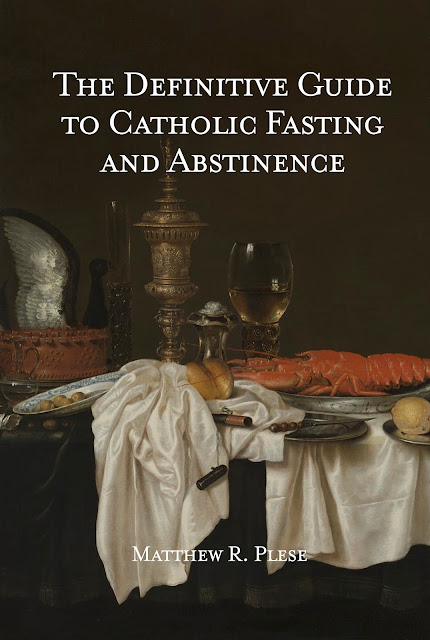
I would like to thank Meaning of Catholic for sponsoring this episode. Meaning of Catholic has just launched its online store offering PDF copies of “The Definitive Guide to Catholic Fasting and Abstinence” (in 3 languages), “The Roman Catechism Explained for the Modern World,” and a few other great books to add to your library by authors like Timothy Flanders and Kennedy Hall. Please visit https://meaningofcatholic.com/shop/ to check them out today.
Learning Our Religion: A Commandment for the Modern Catholic
“For there is no other Name [than Jesus] under heaven given to men, whereby we must be saved” (Act 4:12), and yet, how many of us feel a pull on our hearts because of it? How about when we hear St. Paul remind us elsewhere: “How then shall they call on Him, in whom they have not believed? Or how shall they believe Him, of whom they have not heard? And how shall they hear, without a preacher?” (Romans 10:14). How often do we think about the vast numbers of souls who die each day? How many go to hell? Do we ever think to ourselves, “Is there anything that I can do to stop it?”
We live in a state of complete moral collapse and deterioration in Catholic belief. Since 1970, according to data analyzed from USCCB records, the number of students in religious education has decreased by 60%, adult baptisms have fallen by 68%, and the annual number of infant baptisms has fallen by 18%. Furthermore, according to Sherry Weddell's research published in Forming Intentional Disciples (Our Sunday Visitor, 2012), only 30% of Americans who were raised Catholic still practice the Faith, and 10% of all adults in the United States are fallen-away Catholics.
In our modern age, it is easy to become distracted by the use of technology, the day-to-day responsibilities of life, and the physical demands placed on us each day. How often does the average Catholic in the pew step back and actually pray? Do we attend daily Mass, recite the Divine Office, get in our daily Rosary, and practice thirty minutes of mental prayer a day? Part of the mission of our priests and deacons – as well as our lay teachers – is to help foster a true love of God and the Catholic Faith in the lives of ordinary Catholics.
Religious Education Is A Responsibility for Everyone but Especially The Ordained
Religious education is not an obligation for children alone. It is our responsibility as adults to continue learning our Faith in order to live it out and spread it. And it is a grave responsibility – and an honor – to help pass it on to others.
As stated by Holy Mother Church, "The faithful who devote twenty minutes to a half hour to teaching or studying Christian Doctrine may gain an indulgence of 3 years. The indulgence is plenary on the usual conditions twice a month if the above practice is carried out at least twice a month."
The Church not only bestows upon parents the responsibility to educate their children, but She offers all the Faithful involved in learning and teaching religious Doctrine the temporal remission of sins. How truly generous Holy Mother Church is. Many times when we are given an obligation, and we perform, we do not receive a great reward for doing our duty. But in this instance, we are given, for the performance of this duty, the partial remission of the punishment due to our sins.
Teaching Christian Doctrine Is A Spiritual Work of Mercy
Our Lord Himself observed the Jewish law to the letter and affirmed that He had come to perfect, not abolish, the law (cf. Matt. 5:17). And the law of charity imposes on us who have been given the grace to be Catholic the responsibility to spread the Faith, to admonish sinners, to instruct the ignorant, to raise children in the Catholic Faith, and to be a role model to others. As King David exclaimed in the Psalms, “O how have I loved Thy law, O Lord! it is my meditation all the day” (Ps. 118:97). But, do we really love the Lord’s law? Do we love it enough to set down the television remote, the football, and our other comforts in order to pick up a copy of the Roman Catechism or the Lives of the Saints? And we do seek to pass on to others the fruit of our contemplation every week?
The world and the Church herself are in a state of unprecedented crisis, a crisis that is greatly exacerbated by the average lay Catholic failing to understand his religion. It was only a few decades ago that the illustrious Archbishop Fulton Sheen remarked: “Who is going to save the Church? Not our Bishops, our priests, and our religious. It is up to the laity. You have the minds, the eyes, the ears to save the Church. Your mission is to see that your priests act like priests, your bishops act like bishops and your religious act like religious” (Address to the Supreme Convention of the Knights of Columbus, June 1972). And we can help turn the tide by helping pass on both the knowledge of the fullness of the Faith and love for practicing the Faith.
Resources for Faith Formation in 2023 and Beyond
In our societal moral crisis, clarity is desperately needed. That is why using resources like the Baltimore Catechism or the Catechism of the Council of Trent is necessary still in our day. To this end, I’m happy to have just published “The Roman Catechism Explained for the Modern World” (available at https://amzn.to/3Q4AqZz), which explains for today’s Catholics the teachings of the Catechism of the Council of Trent applied against modern errors like liberalism, modernism, materialism, communism, and others.
I would also highly recommend the programs of CatechismClass.com, which I am honored to have helped since July 2010. The lessons follow a 7-step format with a final test at the end of each lesson. This format has been very effective for those we serve and may be a good format for any religious education classes that priests, deacons, or lay catechists lead:
Introduction: Saint for the Day based on Liturgical Calendar, Description of the Lesson Topic
Opening Prayer: For adults, a decade of the Rosary; for children, it is another prayer. Typically it is learned in both Latin and English.
Scripture: A link to daily Mass readings and mention of Scripture that concerns the lesson topic.
Catechism References: References as they relate to the topic from a variety of catechisms.
Integration: A personally written section that explains and expands upon the Scriptures and Catechism in light of the Church teaching, beliefs, writings of the saints, and other pertinent considerations.
Activity: A way to put the lesson into practice. It may be prayers, a spiritual or corporate work of mercy, or many other activities meant to actualize what has been intellectually learned.
Closing Prayer: For adults, it is an hour from the Divine Office; for children, it is a decade of the Rosary.
May St. Charles Borromeo, the patron of catechists, and St. Stephen, the patron of deacons, pray for our efforts to save souls and spread the doctrine of Christ to every corner of the globe, starting with our own family, friends, and parish.
I would like to thank Meaning of Catholic for sponsoring this episode. Meaning of Catholic has just launched its online store offering PDF copies of “The Definitive Guide to Catholic Fasting and Abstinence” (in 3 languages), “The Roman Catechism Explained for the Modern World,” and a few other great books to add to your library by authors like Timothy Flanders and Kennedy Hall. Please visit https://meaningofcatholic.com/shop/ to check them out today.
I would like to thank CatechismClass.com for sponsoring this episode. CatechismClass.com, the leader in online Catholic catechism classes, has everything from online K-12 programs, RCIA classes, adult continuing education, marriage preparation, baptism preparation, confirmation prep, quince prep classes, catechist training courses, and much more. They have a wonderful 10-part course on Mariology available for only $29.95.
The first catalog of Holy Days comes from the Decree of Gratian in c. 1150 AD, which shortly thereafter gave way to Decretals of Pope Gregory IX in 1234, which listed 45 Holy Days. In 1295, Pope Boniface VIII enacted the decretal Gloriosus which "commanded that each of the feasts of the twelve apostles, four evangelists, and four doctors of the Church be celebrated as an officium duplex" (The Cambridge History of Medieval Canon Law by Anders Winroth and John Wei).
In 1642, His Holiness Pope Urban VIII issued the papal bull Universa Per Orbem which mandated the required Holy Days of Obligation for the Universal Church to consist of 34 days as well as the principal patrons of one's one locality (e.g. city and country). Those days were the Nativity of Our Lord, the Circumcision of Our Lord, the Epiphany of Our Lord, Monday within the Octave of the Resurrection, Tuesday within the Octave of the Resurrection, Ascension Thursday, Monday within the Octave of Pentecost, Tuesday within the Octave of Pentecost, Most Holy Trinity, Corpus Christi, the Finding of the Holy Cross, the Purification of the Blessed Virgin Mary, the Annunciation of the Blessed Virgin Mary, the Assumption of the Blessed Virgin Mary, the Nativity of the Blessed Virgin Mary, the Dedication of St. Michael, the Nativity of St. John the Baptist, SS. Peter and Paul, St. Andrew, St. James, St. John (the December feast day), St. Thomas, SS. Philip and James, St. Bartholomew, St. Matthew, SS. Simon and Jude, St. Matthias, St. Stephen the First Martyr (the December feast day), the Holy Innocents, St. Lawrence, St. Sylvester, St. Joseph, St. Anne, and All Saints.
Ultimately Universa Per Orbem helped bring more uniformity to the Church since some parts of the Catholic world observed even more holy days of double precept (i.e., mandatory attendance at Mass and rest from servile work). One of those former days which kept in some places as the Feast of St. Mark the Evangelist.
For instance, in modern-day Texas, New Mexico, Arizona, and California, which were included in the ecclesiastical province of Mexico, the feasts were regulated by the Third Council of Mexico in 1585, as American Catholic Quarterly Review states:
"In these parts besides those already mentioned, the faithful observed as holy days of obligation St Fabian and St Sebastian (January 20th), St Thomas Aquinas (March 7th), St Mark (April 25th), St Barnabas (June 1), the Visitation of the Blessed Virgin (July 2), St Mary Magdalene (July 22), St Dominic (Aug 4), the Transfiguration (Aug 6), St Francis (Oct 4), St Luke (Oct 18), St Catharine (Nov 25), the Expectation of the Blessed Virgin (Dec 18).
And while our ancestors in the New World in Florida and Louisiana would not have kept St. Mark's Day as a Holy Day of Obligation, it was kept as a day of abstinence from meat on account of it being the Major Rogation Day. See A History of Holy Days of Obligation & Fasting for American Catholics for more information on this forgotten history. The same can be said for English Catholics who were bound to abstain from fleshmeat on the Major and Minor Rogation Days until they were dispensed by Pope Pius VIII in 1830 (A Catholic Dictionary from 1893 by William Edward Addis).
Thus this year, on April 25th, in addition to praying the Litany of the Saints for the Rogation Day and observing abstinence, let us honor the memory of St. Mark by reading his Gospel and by attending the Holy Sacrifice of the Mass.
I would like to thank Meaning of Catholic for sponsoring this episode. Meaning of Catholic has just launched its online store offering PDF copies of “The Definitive Guide to Catholic Fasting and Abstinence” (in 3 languages), “The Roman Catechism Explained for the Modern World,” and a few other great books to add to your library by authors like Timothy Flanders and Kennedy Hall. Please visit https://meaningofcatholic.com/shop/ to check them out today.
I would like to thank CatechismClass.com for sponsoring this episode. CatechismClass.com, the leader in online Catholic catechism classes, has everything from online K-12 programs, RCIA classes, adult continuing education, marriage preparation, baptism preparation, confirmation prep, quince prep classes, catechist training courses, and much more. Use discount code Easter25 to save 25% off the Easter Season Course.
The total length of Paschaltide (i.e., the Easter Season) from Easter Sunday to the end of Whitsuntide is 56 days inclusive. In this way, Holy Mother Church shows us the joy of Easter has eclipsed the time of penance of Lent. Yet even in this time of joy, some penance is obligatory and even mandatory by Church Law. Thus, even in times of joy, we can and should continue to offer up fasting and abstinence for the good of souls.
Year-Round Friday Abstinence Is Required (Not Just in Lent!)
As Catholics, we are still bound to either abstain from meat or rather to do some act of penance each Friday of the entire year. Abstinence should always be what we choose to do since this underscored Christian culture for nearly 2,000 years since mandatory Friday abstinence went back to the time of the Apostles. As such, the 1983 Code of Canon Law decrees:
Can. 1251 Abstinence from meat, or from some other food as determined by the Episcopal Conference, is to be observed on all Fridays, unless a solemnity should fall on a Friday. Abstinence and fasting are to be observed on Ash Wednesday and Good Friday.
Virtually forgotten by all Catholics is the important practice of Rogationtide, which falls during Pascaltide as well.
The Major Rogation Day is on April 25th, which is coincidentally the Feast of St. Mark the Evangelist. Should it happen that the feast of St. Mark the Evangelist is transferred to another day (e.g., when a day in the Octave of Easter falls on April 25th), the Rogation procession is held nevertheless on April 25th, unless the feast falls on Easter Sunday or Monday, in which case the procession is transferred to Easter Tuesday. The Minor Rogation Days are the Monday, Tuesday, and Wednesday preceding Ascension Thursday. Hence, the date of the Minor Rogation Days varies.
In 2020, Dom Alcuin Reid gave a monastic conference on the Minor Rogation Days where he said in part:
Their observance is now similar in format to the Greater Litanies of April 25th, but these three days have a different origin, having been instituted in Gaul in the fifth century as days of fasting, abstinence and abstention from servile work in which all took part in an extensive penitential procession, often barefoot. The procession and litanies only found a place in the Roman liturgy much later (around the beginning of the ninth century) and even then purely as days of rogation – of intercession – rather than as ones of fasting and penance; the latter being deemed incompatible with the nature of Eastertide.
He continued:
Indeed, this ancient tradition itself is now widely lost in the West. How many Catholics understand what is meant by the greater or lesser litanies, or by the expression “the Rogations” – clergy included?
...
Dom Guéranger himself lamented the lack of appreciation of the Rogations in his own day: “If we compare the indifference shown by the Catholics of the present age for the Rogation days, with the devotion wherewith our ancestors kept them, we cannot but acknowledge that there has been a great falling off in faith and piety. Knowing, as we do, the great importance attached to these processions by the Church, we cannot help wondering how it is that there are so few among the faithful who assist at them. Our surprise increases when we find persons preferring their own private devotions to these public prayers of the Church, which, to say nothing of the result of good example, merit far greater graces than any exercises of our own choosing.”
The Minor Rogation Days go back to 470 AD when Bishop Mamertus of Vienne in Gaul instituted an annual observance of penance on the three days immediately before the Feast of the Ascension. He prescribed litanies in the form of processions for all three days. Thereafter they spread to the Frankish part of France in 511, to Spain in the 6th century, and to the German part of the Frankish empire in 813. In 816, Pope Leo III incorporated the lesser litanies into the Roman Liturgy, and during the subsequent centuries, the custom of holding these litanies was customary for each year.
Is Penance Unbefitting for the Pascal Season?
Dom Guéranger, the great liturgist and Church historian who lived around the end of the 1800s, answers this question which many liturgically-minded Catholics ask:
The question naturally presents itself, why did St. Gregory choose the 25th of April for a Procession and Station, in which everything reminds us of compunction and penance, and which would seem so out of keeping with the joyous Season of Easter?
The first to give a satisfactory answer to this difficulty, was Canon Moretti, a learned Liturgiologist of last century. In a dissertation of great erudition, he proves that in the 5th, and probably even in the 4th, century, the 25th of April was observed at Rome as a day of great solemnity. The Faithful went, on that day, to the Basilica of St. Peter, in order to celebrate the anniversary of the first entrance of the Prince of the Apostles into Rome, upon which he thus conferred the inalienable privilege of being the Capital of Christendom. It is from that day that we count the twenty-five years, two months and some days that St. Peter reigned as Bishop of Rome. The Sacramentary of St. Leo gives us the Mass of this Solemnity, which afterwards ceased to be kept. St. Gregory, to whom we are mainly indebted for the arrangement of the Roman Liturgy, was anxious to perpetuate the memory of a day, which gave to Rome her grandest glory. He, therefore, ordained that the Church of St. Peter should be the Station of the Great Litany, which was always to be celebrated on that auspicious day. The 25th of April comes so frequently during the Octave of Easter, that it could not be kept as a Feast, properly so called, in honor of St. Peter's entrance into Rome; St. Gregory, therefore, adopted the only means left of commemorating the great event.
Hence from ancient times the Church kept these days as days of supplication. And even if fasting, the hallmark of Lent, would be ill-suited for Pascaltide, abstinence is still permitted and even obligatory in the Pascal Season. In former times, Rome enjoined abstinence from meat on the faithful during Rogationtide. Other places, however, such as the Churches in Gaul where Rogation Days originated, required fasting. Dom Guéranger testifies unknown custom to this:
A day, then, like this, of reparation to God’s offended majesty, would naturally suggest the necessity of joining some exterior penance to the interior dispositions of contrition which filled the hearts of Christians. Abstinence from flesh meat has always been observed on this day at Rome; and when the Roman Liturgy was established in France by Pepin and Charlemagne, the Great Litany of April 25 was, of course, celebrated, and the abstinence kept by the faithful of that country. A Council of Aix-la-Chapelle, in 836, enjoined the additional obligation of resting from servile work on this day: the same enactment is found in the Capitularia of Charles the Bald. As regards fasting, properly so-called, being contrary to the spirit of Paschal Time, it would seem never to have been observed on this day, at least not generally. Amalarius, who lived in the ninth century, asserts that it was not then practiced even in Rome.
Fasting was championed as well by St. Charles Borromeo in Milan, although Rome has never obligated fasting during the Pascal Season. Fasting during the Pascal Season, though is not a sin, just as almsgiving and prayer, the other Lenten pillars, are certainly praiseworthy during Pascaltide.
May we continue to incorporate some of our Lenten practices going forward and offer them in joy for the conversion of sinners and the exaltation of Holy Mother Church. And chief among our weapons to conquer demons and concupiscence is fasting.
I would like to thank CatechismClass.com for sponsoring this episode. CatechismClass.com, the leader in online Catholic catechism classes, has everything from online K-12 programs, RCIA classes, adult continuing education, marriage preparation, baptism preparation, confirmation prep, quince prep classes, catechist training courses, and much more. Use discount code Easter25 to save 25% off the Easter Season Course.
Disclosure of Material Connection: Some of the links on this blog are “affiliate links.” This means if you click on the link and purchase the item, I will receive an affiliate commission. As an Amazon Associate, for instance, I earn a small commission from qualifying purchases made by those who click on the Amazon affiliate links included on this website. I am disclosing this in accordance with the Federal Trade Commission’s 16 CFR, Part 255: “Guides Concerning the Use of Endorsements and Testimonials in Advertising.”
Support A Catholic Life. Your Patronage Helps Keep Us Updated and Online!
Matthew is a Third Order Dominican from Chicago and an expert on Catholicism, with an emphasis on Traditional Fasting. He has written for "A Catholic Life" since 2005. Matthew is a Certified Catechist and is a speaker available to address your next parish or Catholic conference gathering. Matthew spends his leisure time traveling, teaching, writing, and enjoying Catholic culture. He is also a writer for "Catholic Family News" and "The Fatima Center." Please contact Matthew directly regarding advertising requests for A Catholic Life or in regard to speaking engagements.


.jpeg)



.jpg)