Showing posts sorted by relevance for query code canon. Sort by date Show all posts
Tuesday, January 21, 2025
Why Catholics Must Adhere to the 1917 Code of Canon Law and Reject the Novelties of the 1983 Code

1917 vs 1983 Code of Canon Law

Principle 1: Authority and Validity of Law

Law Must Originate from a Valid Lawgiver

A fundamental principle in both civil and ecclesiastical law is that a law must be issued by a legitimate authority. In civil society, this requires that laws are passed in accordance with constitutional procedures and by recognized governmental bodies. Similarly, within the Church, a valid lawgiver is required to issue binding ecclesiastical laws.

In the Church, the Pope generally holds this authority. However, this authority is contingent upon his continued legitimacy as Pope. According to established Church teaching, if a Pope falls into heresy, he loses his office and thus his authority to promulgate laws. This concept is supported by notable canonists and theologians:

X. Wernz and P. Vidal (1943): "Through notorious and openly divulged heresy, the Roman Pontiff, should he fall into heresy, by that very fact [ipso facto] is deemed to be deprived of the power of jurisdiction even before any declaratory judgement by the Church. A pope who falls into public heresy would cease ipso facto to be a member of the Church; therefore, he would also cease to be head of the Church." (Ius Canonicum, 2:453)

Udalricus Beste (1946): "Not a few canonists teach that, outside of death and abdication, the pontifical dignity can also be lost by falling into certain insanity, which is legally equivalent to death, as well as through manifest and notorious heresy. In the latter case, a pope would automatically fall from his power, and this indeed without the issuance of any sentence, for the first See [i.e., the See of Peter] is judged by no one. The reason is that, by falling into heresy, the pope ceases to be a member of the Church. He who is not a member of a society, obviously, cannot be its head." (Introductio in Codicem, 3rd ed., Canon 221)

Thus, any laws or documents issued by a Pope who has lost his authority due to heresy are invalid and not binding. This principle calls into question the legitimacy of the 1983 Code of Canon Law if issued under such circumstances, especially considering the actions of John Paul II who promulgated the 1983 Code.

Principle 2: The Salvation of Souls as Supreme Law

Laws Must Not Harm Souls

Even if a law is issued by a legitimate authority, it must be rejected if it is harmful to souls or promotes sin. The maxim salus animarum, suprema lex (the salvation of souls is the supreme law) underscores this obligation. In 1984, Archbishop Lefebvre called the new code another grave problem undermining the Church and stated that the new Canon Law is very serious for it goes much further [i.e. promoting errors] than the Council itself in a October 29, 1984 conference at Stuttgart, Germany. 

The 1983 Code of Canon Law introduces a novel conception of the Church that undermines traditional ecclesiology and instead embraces the ecclesiology of Vatican II, which erases the distinction between clergy and laity. Canon 204 exemplifies this by defining all the faithful, clergy and laity alike, as partaking in Christ's priestly, prophetic, and royal functions. This new understanding dissolves the unique roles of the clergy, leading to the laicization of the Church. Such a shift is detrimental, as it aligns with Protestant reforms that laicized the priesthood, diminishing the sacred character of the clergy.

Archbishop Bugnini's reforms in the Liturgy further illustrate this harmful trend. The liturgical changes aimed to transform the Mass into an action of the entire "people of God," minimizing the role of the priest and the mystical nature of the Mass. This shift from God-centered worship to man-centered activity undermines the sanctity of the Eucharist and the priesthood.

The new Code even permits practices such as giving Communion to Protestants, a clear rupture from traditional Catholic teaching. This "eucharistic hospitality" contradicts the sacrament's role as a sign of unity in the Faith, thereby compromising the Church's doctrinal integrity. The 1983 Code is a codification of the errors of Vatican II, which are dangerous to souls as they undermine true doctrine, piety, and holiness. We see this reflected in the unmistakable collapse of Catholic praxis after Vatican II.

Conclusion

Catholics are bound by these two principles: the necessity of a valid lawgiver and the imperative to reject laws harmful to souls. Given either the questionable legitimacy of the authority behind the 1983 Code of Canon Law or its harmful spiritual consequences, Catholics are obliged to adhere to the strictness of the 1917 Code and reject the novelties introduced by the 1983 Code. While even the 1917 Code lessened discipline for Catholics in many regards, it nevertheless was a valid Code. The same unwaveringly statement of validity can not apply to the 1983 Code.

Salus animarum, suprema lex. Long live Tradition. Long live the True Catholic Church. Down with the counterfeit Church of the Modernists.

Read more >>
Thursday, April 8, 2021
How St. Pius X & the 1917 Code of Canon Law Liberalized Fasting, Abstinence, and Holy Days of Obligation

Pope St. Pius X is regarded as a champion by traditionalists for good reasons. There is no doubting his personal sanctity and the motivations that inspired some of his actions (e.g., lowering the age for First Holy Communion and recommending frequent - even daily - reception of our Lord in Holy Communion). His crusade against modernism and his actions for the liberty of the Church and for the spread of Christ's reign are certainly praiseworthy.

But we who have the luxury of seeing how history unfolded can observe how this holy pope's actions in regards to holy days of obligation, fasting, and abstinence sadly led to a collapse of Catholic practice. We would do well to keep the practices before St. Pius X, which had already been eroded by dispensations and changes for several centuries. St. Pius X merely helped accelerate this erosion.

What exactly did he change in regards to these disciplines? There are three main changes which concern the Church's discipline: reducing the number of Holy Days of Obligation for the Universal Church, altering the days of fasting, and altering both when and how to observe days of abstinence.

There are more actions done by St. Pius X that some also rightfully criticize such as the change in the Breviary (e.g. abandoning the use of 12 psalms at Matins, abolishing the "Laudate Psalms" at Lauds) and effectively abolishing in practice the five simple octaves but those are outside the scope of this article.

St. Pius X Drastically Reduced the Number of Holy Days of Obligation

The first catalog of Holy Days comes from the Decretals of Pope Gregory IX in 1234, which listed 45 Holy Days. In 1642, His Holiness Pope Urban VIII issued the papal bull "Universa Per Orbem" which altered the required Holy Days of Obligation for the Universal Church to consist of 35 such days as well as the principal patrons of one's locality. 

However, due to dispensations, differences ranged drastically as to which days were kept as holy days throughout the world. As of the founding of the United States, the Holy Days of Obligation, in addition to every Sunday, were as follows: the feasts of Christmas, Circumcision, Epiphany, Annunciation, Easter Monday, Ascension, Whitsun Monday, Corpus Christi, Ss. Peter and Paul, Assumption, and All Saints. In 1837, Pope Gregory XVI dispensed all Americans from the obligation as to Easter Monday and Whitsun Monday and in 1840 from that of the feast of St Peter and St Paul. The Feasts of Epiphany, Annunciation, and Sts. Peter and Paul were abolished as Holy Day of Obligation in the United States in 1885.

But, in the largest change to Holy Days in centuries, Pope St. Pius X in Supremi disciplinæ in 1911 drastically reduced the number of Holy Days of Obligation in the Universal Church to merely eight!
  1. Christmas
  2. Circumcision
  3. Epiphany 
  4. Ascension
  5. Immaculate Conception
  6. Assumption of the Blessed Virgin
  7. Sts. Peter and Paul 
  8. All Saints 

This reduction, rather than just tweaking one country's disciplines, reset the Universal Church to a minimal number of Holy Days - the lowest ever. While some localities kept other feastdays of importance (e.g. St. Patrick's Day as a Holy Day of Obligation in Ireland), most did not. Shortly thereafter in 1917, however, Corpus Christi and St. Joseph were added back by his successor, bringing the total to 10. The 10 currently observed on the Universal Calendar are the same as from 1917.

The 1917 Code Liberalized Fasting

Called the Pio-Benedictine Code, the 1917 Code of Canon Law was started by St. Pius X in 1904 and completed under his successor, Pope Benedict XV, in 1914. The Code had a number of effects on fasting and abstinence, beyond codifying the changes to Holy Days of Obligation.

Fasting and abstinence were no longer observed should a vigil fall on a Sunday as stated in the code: "If a vigil that is a fast day falls on a Sunday the fast is not to be anticipated on Saturday, but is dropped altogether that year." Before 1917, the fast of a Vigil that fell on a Sunday was observed instead on the preceding Saturday, which helped prepare the faithful not only for the feast that was transferred to Monday but also for Sunday.

Likewise, effective per the 1917 Code of Canon law, the Wednesdays and Fridays of Advent were no longer fast days for the Universal Church. The last remnant of St. Martin's Lent and the Advent Fast was gone. Wednesdays of Advent had previously been abrogated as fast days in America in 1837. Now Fridays in Advent likewise ceased being required days of fast not only in America but universally. The Vigil of St. Peter and Paul also ceased as a fast day on the Universal Calendar, although it had already been abrogated in the United States. 

The 1917 Code Liberalized Abstinence

The 1917 Code also universally removed Saturday abstinence. Unknown to most Catholics, abstinence from meat was previously required on both Fridays and Saturdays! In the United States, Saturday abstinence ceased around 1837 because the Baltimore fathers requested from Pope Gregory XVI a dispensation from Saturday abstinence. It was a 20-year dispensation that was renewed up until the 1917 Code dispensed the venerable practice of Saturday abstinence universally. 

But one of the more drastic changes was that eggs and dairy products (i.e. lacticinia) became universally permitted on fasting days - continuing the weakening of discipline introduced by Pope Leo XIII in 1887. The 1917 Code explicitly and universally stated: "The law of abstinence prohibits meat and soups made of meat but not of eggs, milks, and other condiments, even if taken from animals" (1917 Code, Canon 1252 § 4). [Translation taken from THE 1917 OR PIO-BENEDICTINE CODE OF CANON LAW in English Translation by Dr. Edward Peters]. Gone was the significance of Easter eggs, celebrating the end of a long Lent. 

Dispensations From Abstinence Were Previously Required Even for Holy Days of Obligation Outside of Lent

The 1917 Code also introduced the radical notion that a Holy Day of Obligation would eo ipso overrule the requirement of Friday abstinence for any Holy Days of Obligation outside of Lent. Previously the only day that would automatically abrogate the requirement of Friday abstinence was Christmas Day. On this singular exception, Dom Gueranger writes in the Liturgical Year published in 1886:

"To encourage her children in their Christmas joy, the Church has dispensed with the law of abstinence, if this Feast fall on a Friday. This dispensation was granted by Pope Honorius III, who ascended the Papal Throne in 1216. It is true that we find it mentioned by Pope St Nicholas I, in the ninth century; but the dispensation was not universal; for the Pontiff is replying to the consultations of the Bulgarians, to whom he concedes this indulgence, in order to encourage them to celebrate these Feasts with solemnity and joy: Christmas Day, St Stephen, St John the Evangelist, the Epiphany, the Assumption of our Lady, St John the Baptist, and SS Peter and Paul. When the dispensation for Christmas Day was extended to the whole Church, these other Feasts were not mentioned."

Before the time of St. Pius X, a dispensation was required by the Holy Father to dispense from Friday abstinence on any other Holy Day of Obligation. Two examples indicating this are Pope Leo XIII's 1890 dispensation for Assumption Day and a 1907 dispensation issued for Canada for All Saints Day. All Saints Day was at that time a Holy Day of Obligation in Canada.

The Catholic Encyclopedia on St. Pius X's Supremi disciplinæ indicates that fasting was abolished eo ipso only starting in 1911 for all Holy Days of Obligation (which were at the same time reduced to only 8): "The present Motu Proprio institutes another important change in legislation. As feasting and fasting are incompatible Pius X has abolished the obligation of fasting as well as that of abstinence for the Universal Church, should such obligation coincide with any of the eight feasts, as above." In practice, we know that the exception was Lent - Lenten abstinence and fast always remained unless explicitly dispensed from even after the weakening changes in 1911, as the 1917 Law explicitly stated: "On [Sundays] or feasts of precept, the law of abstinence or of abstinence and fast or of fast only ceases, except during Lent, nor is the vigil anticipated; likewise it ceases on Holy [Saturday] afternoon" (1917 Code, Canon 1252 § 4). [Translation taken from THE 1917 OR PIO-BENEDICTINE CODE OF CANON LAW in English Translation by Dr. Edward Peters]

Interestingly, the notion that penance was incompatible with Sundays stands in sharp contrast to centuries of Catholic Tradition, which required strict abstinence on all the Sundays of Lent.

It must be further noted that the removal of the obligation of penance on Holy Days of Obligation outside of Lent, effective with the 1917 Code, only applies to areas that observe the day of precept. It is not based on the Roman calendar, as affirmed by the Commission on the Code in a 1924 article in American Ecclesiastical Review. Hence, when January 6th, the Feast of the Epiphany, falls on a Friday, it is still a mandatory day of abstinence in America and France and other places where it is not a Holy Day of Obligation. In contrast, Canada, Rome, and places that keep it as a Holy Day do not have to observe fasting and/or abstinence on that particular Friday. This, however, only applies to Holy Day of Obligation outside of Lent. And this change only started with the 1917 Code - beforehand, it was still a day of abstinence on Fridays regardless of whether it was a day of precept or not, unless a specific dispensation was issued by the Pope himself.

Conclusion

Saints are not perfect. While we can certainly praise many of St. Pius X's actions, it would be imprudent to endorse all of them - and conversely to always dismiss any modern churchmen by the fact that they are not from before Vatican II. Discernment and critical thinking is necessary with anything. As it concerns Holy Days of Obligation, fasting, and abstinence, St. Pius X introduced liberal practices that only accelerated the collapse of Catholic practices. The practices in place under St. Pius X are shadows of former times, and those practices were weakened quickly so that by 1962 they were even weaker

To reclaim Catholic Tradition requires a radical return to the Faith of our ancestors and their observances. May our forefathers and ancestors who are in Heaven and who see the face of God pray for us and for the entire Church Militant to return to the happy days of eras past when Catholics widely and joyfully practiced the Faith. And may St. Pius X intercede for us on this request.

Want to learn more about the history of fasting and abstinence? Check out the Definitive Guide to Catholic Fasting and Abstinence.
Read more >>
Friday, April 8, 2016
Friday Penance: Still Required in Eastertide


Abstinence Required In Pascaltide

Friday is the day in which we commemorate Our Lord's passion and death. As Catholics, we are still bound to abstain from meat each Friday of the entire year, not just in Lent. This is required during the season of Pascaltide. This is affirmed even in the modern 1983 Code of Canon Law - all Fridays of the entire year are days of penance (with few exceptions). There can be no doubt that Catholics must be informed that Friday abstinence is not to be confided to Lent only. Failing to observe Friday penance is a mortal sin, as affirmed by multiple pontiffs.

Abstinence on Easter Friday

How should we treat abstinence specifically on Friday in the Octave of Easter (i.e. Easter Friday)? The 1917 Code of Canon Law stipulated that the requirement to abstain from meat (i.e. Friday penance) was required each and every Friday of the year unless that particular Friday was a Holy Day of Obligation outside of Lent: 

"On [Sundays] or feasts of precept, the law of abstinence or of abstinence and fast or of fast only ceases, except during Lent, nor is the vigil anticipated; likewise it ceases on Holy [Saturday] afternoon" (1917 Code, Canon 1252 § 4). [Translation taken from THE 1917 OR PIO-BENEDICTINE CODE OF CANON LAW in English Translation by Dr. Edward Peters]

Easter Friday is not a feast of precept (i.e., a Holy Day of Obligation), and neither is any Friday in the Pascal Season between Easter Sunday and Trinity Sunday. The 1917 Code of Canon Law outlined the rules of fasting and abstinence in Canons 1250-1254. Before 1917, even Holy Days of Obligation outside of Lent required explicitly papal dispensation or else Friday abstinence would be observed even on days of precept.

The 1983 Code and the myriad of weakening dispensations offered in the 20th century has led to a continual decline in penance and devotion. Due to the errors and ambiguities in the 1983 Code, it must be rejected, and the older Code must be used. One of these issues is the unprecedented novelty of solemnities like Easter Friday breaking the immemorial tradition of Friday abstinence. The notion of day's liturgical rank abrograting abstinence has no basis in Church practice prior to 1983. 

It is essential for all Roman Catholics to continue abstaining from meat even on Easter Friday.

Conclusion

Friday abstinence is still the Catholic practice throughout Eastertide, and it is the Church's Law. Let us not be so keen to forget our Lord's sacrifice on the Cross. Pray and do penance on this and all Fridays. It is after all, on Friday that our Blessed Lord redeemed us. Let us never forget His Sacrifice on that first Good Friday.

Want to learn more about the history of fasting and abstinence? Check out the Definitive Guide to Catholic Fasting and Abstinence.

Read more >>
Thursday, December 21, 2023
Abstinence is Still Obligatory on Friday in the Octave of Christmas

As a reminder, the Friday in the Octave of Christmas is still an obligatory day of abstinence. As Catholics, we are still bound to abstain from meat each Friday in the entire year, not just in Lent. 

Abstinence Traditionally Required on the Friday in the Octave of Christmas

The 1917 Code of Canon Law stipulated that the requirement to abstain from meat (i.e. Friday penance) was required each and every Friday of the year unless that particular Friday was a Holy Day of Obligation:

"On [Sundays] or feasts of precept, the law of abstinence or of abstinence and fast or of fast only ceases, except during Lent, nor is the vigil anticipated; likewise it ceases on Holy [Saturday] afternoon" (1917 Code, Canon 1252 § 4). [Translation taken from THE 1917 OR PIO-BENEDICTINE CODE OF CANON LAW in English Translation by Dr. Edward Peters]

The 1917 Code introduced the radical notion that a Holy Day of Obligation would eo ipso overrule the requirement of Friday abstinence for any Holy Days of Obligation outside of Lent. Previously the only day that would automatically abrogate the requirement of Friday abstinence was Christmas Day (December 25th) whose exception went back only to 1216 AD. Before the time of St. Pius X, a dispensation was required by the Holy Father to dispense from Friday abstinence on any other Holy Day of Obligation.

Friday in the Octave of our Lord's Nativity is not a feast of precept (i.e., a Holy Day of Obligation). While Feastdays of the Comites used to be Holy Days of Obligation, and while even St. Thomas Becket's Day was one of obligation in England in times past, they are no longer days of obligation. The 1917 Code of Canon Law outlined the rules of fasting and abstinence in Canons 1250-1254.

Abstinence Is Even Required on the Friday in the Octave of Christmas Per the 1983 Code

The 1983 Code and the myriad of weakening dispensations offered between 1917 and the present have led to a continual decline in penance and devotion. But even these weakened post-Vatican II Code did not change Friday in the Octave of Christmas to be one that permitted meat. The National Conference of Catholic Bishops (NCCB) issued a statement on November 18, 1966, where abstinence was made obligatory on all Fridays of Lent, except Solemnities (i.e., First Class Feasts), on Ash Wednesday, and on Good Friday. Friday in the Octave of the Nativity is not a solemnity. So even the weakened Code 1251 still obliges abstinence:

Can. 1251 Abstinence from meat, or from some other food as determined by the Episcopal Conference, is to be observed on all Fridays, unless a solemnity should fall on a Friday. Abstinence and fasting are to be observed on Ash Wednesday and Good Friday.

Prayer to Infant Jesus of Prague By Venerable Father Cyril, OCD:

O Divine Infant Jesus, I have recourse to Thee. Please through Thy Blessed Mother, assist me in this necessity… mention intention… because I firmly believe that Thy Divinity can help me. I hope with confidence to obtain Thy holy grace. I love Thee with all my heart and with all the strength of my soul. 

I repent sincerely of my sins and I beg Thee, O Good Jesus, to grant me the strength to triumph over them. I resolve never more to offend Thee and I come to offer myself to Thee with the intention of enduring everything, rather than to displease Thee. Henceforth, I desire to serve Thee with fidelity and, for the love of Thee, O Divine Infant, I will love my neighbour as myself.

All powerful Infant, O Jesus, I implore Thee again, assist me in this need. Grant me the grace of possessing Thee eternally with Mary and Joseph and of adoring Thee with the angels in the Heavenly Court. 

Amen.

Want to learn more about the history of fasting and abstinence? Check out the Definitive Guide to Catholic Fasting and Abstinence.
Read more >>
Thursday, March 31, 2022
Abstinence & Fasting Is Not Automatically Dispensed on Solemnities

Last year I wrote an article entitled "Is Fasting or Abstinence Required on Holy Days of Obligation in Lent?" and unfortunately more Traditional Catholics continue to think that abstinence even on Fridays in Lent is dispensed eo ipso when a solemnity (e.g. Annunciation Day, St. Joseph's Day) falls on a Friday or when a culturally important day (e.g. St. Patrick's Day) occurs on a Friday. Let's review ecclesiastical history on this important point.

The Clear Teaching of the 1917 Code of Canon Law

The question of whether Holy Days of Obligation abrogate the requirement of Friday abstinence outside of Lent is mentioned in the 1917 Code:

"On [Sundays] or feasts of precept, the law of abstinence or of abstinence and fast or of fast only ceases, except during Lent, nor is the vigil anticipated; likewise it ceases on Holy [Saturday] afternoon" (1917 Code, Canon 1252 § 4). [Translation taken from THE 1917 OR PIO-BENEDICTINE CODE OF CANON LAW in English Translation by Dr. Edward Peters]

The 1917 Code is explicit - feasts of precepts do not remove the requirement to fast or abstain during Lent. The only way that the obligation would be removed during the season of Lent would be if a dispensation would be specifically offered by lawful Church authorities for a particular day.

Historical Evidence Confirms Even Holy Days of Obligation in Lent were not Dispensed Automatically from the Laws of Either Fast or Abstinence

In 1954, Pope Pius XII issued a decree granting bishops the permission to dispense from Friday abstinence for the Feast of St. Joseph which that year fell on a Friday. A March 26, 1954 article in the Guardian elaborates: "Bishops throughout the world have been granted the faculty to dispense their faithful from the law of abstinence on the Feast of St. Joseph, Friday, March 19. The power was granted in a decree issued by the Sacred Congregation of the Council, which said it acted at the special mandate of His Holiness Pope Pius XII. The decree was published in L'Osservatore Romano made no mention of a dispensation from the Lenten fast." 

As such, St. Joseph's Day did not permit the faithful to eat meat on Fridays in Lent unless such a specific dispensation was offered, which was very rarely done. This was also at a time when there were many other fast days in the year outside of Lent. Likewise, to those who maintain the 1917 Code's requirement to also fast all forty weekdays of Lent - which was observed since the Early Church - St. Joseph's Day remains a day of fast. Surely St. Joseph would want us to produce worthy fruits of penance during this holiest season as we prepare for the Pascal mystery. And surely the same can be said of our Lady, the Most Blessed Virgin Mary, whose we celebrate each year on March 25th.

Unfortunately, the 1983 Code of Canon Law which aligns with the many modernist changes in the Church weakly states:

"The penitential days and times in the universal Church are every Friday of the whole year and the season of Lent. Abstinence from meat, or from some other food as determined by the Episcopal Conference, is to be observed on all Fridays, unless a solemnity should fall on a Friday. Abstinence and fasting are to be observed on Ash Wednesday and Good Friday" (1983 Code, Canons 1251 - 1252). 

Dispensations From Abstinence Were Previously Required Even for Holy Days of Obligation Outside of Lent

The notion that a solemnity that is not even a Holy Day of Obligation would trump Friday abstinence in Lent is absurd and a radical departure from all of our traditions. Such a notion comes from 1983 and never beforehand. For instance, even Christmas would in and of itself not dispense Friday abstinence in the Medieval Church as Dom Gueranger writes in the Liturgical Year published in 1886:

"To encourage her children in their Christmas joy, the Church has dispensed with the law of abstinence, if this Feast fall on a Friday. This dispensation was granted by Pope Honorius III, who ascended the Papal Throne in 1216. It is true that we find it mentioned by Pope St Nicholas I, in the ninth century; but the dispensation was not universal; for the Pontiff is replying to the consultations of the Bulgarians, to whom he concedes this indulgence, in order to encourage them to celebrate these Feasts with solemnity and joy: Christmas Day, St Stephen, St John the Evangelist, the Epiphany, the Assumption of our Lady, St John the Baptist, and SS Peter and Paul. When the dispensation for Christmas Day was extended to the whole Church, these other Feasts were not mentioned."

Previously, a dispensation was required by the Holy Father even on Holy Days of Obligation that fell outside of Lent. Two examples indicating this are Pope Leo XIII's 1890 dispensation for Assumption Day and a 1907 dispensation issued for Canada for All Saints Day. All Saints Day was at that time a Holy Day of Obligation in Canada. Read How St. Pius X & the 1917 Code of Canon Law Liberalized Fasting, Abstinence, and Holy Days of Obligation for more information

The Catholic Encyclopedia on St. Pius X's Supremi disciplinæ indicates that fasting was abolished eo ipso only starting in 1911 for all Holy Days of Obligation (which were at the same time reduced to only 8): "The present Motu Proprio institutes another important change in legislation. As feasting and fasting are incompatible Pius X has abolished the obligation of fasting as well as that of abstinence for the Universal Church, should such obligation coincide with any of the eight feasts, as above." In practice, we know that the exception was Lent. Lenten abstinence and fast always remained unless explicitly dispensed from even after the weakening changes in 1911.

Year-Round Friday Abstinence on Solemnities

The principles here apply as well to high-ranking feastdays outside of Lent. In years when non-Holy Days of Obligation (e.g. The Sacred Heart, Nativity of St. John the Baptist, Ss. Peter and Paul) fall on a Friday, the practice of Friday abstinence should never be ignored. We have a responsibility of doing penance and the shared act of Friday penance is, like Sunday Mass, a cornerstone of the Catholic Faith. Even the 1983 Code calls for year-round Friday penance!

Continue Fasting and Abstaining Both In and Out of Lent

Must we be reminded of the warning of Pope Benedict XIV, who in 1741 warned: "The observance of Lent is the very badge of the Christian warfare. By it, we prove ourselves not to be enemies of the cross of Christ. By it, we avert the scourges of divine justice. By it, we gain strength against the princes of darkness, for it shields us with heavenly help. Should mankind grow remiss in their observance of Lent, it would be a detriment to God's glory, a disgrace to the Catholic religion, and a danger to Christian souls. Neither can it be doubted that such negligence would become the source of misery to the world, of public calamity, and of private woe."

There is no incompatibility between fasting and abstaining and celebrating liturgical solemnities. Even Sundays used to be required days of abstinence (but not fast). Let us fast and abstain always on St. Joseph's Day, Annunciation Day, and St. Patrick's Day each year during Lent. Our adherence to and preservation of the Traditional Catholic Faith requires this. 

Latching on to a modernist novelty from 1983 is incompatible with the Traditional Latin Mass and the Traditional Catholic Faith. And let us offer our acts of penance for the conversion of sinners to the Traditional Catholic Faith. There is no prohibition against fasting on solemnities; on the contrary, Tradition requires it.

Want to learn more about the history of fasting and abstinence? Check out the Definitive Guide to Catholic Fasting and Abstinence.
Read more >>
Thursday, December 29, 2022
Abstinence Is Obligatory on Friday in the Octave of Christmas

As Catholics, we are still bound to abstain from meat each Friday of the entire year, not just in Lent. This is required during the season of Christmas - even on Friday in the Octave of Christmas.

The 1917 Code of Canon Law stipulated that the requirement to abstain from meat (i.e., Friday penance) was required each and every Friday of the year unless that particular Friday was a Holy Day of Obligation:

 "On [Sundays] or feasts of precept, the law of abstinence or of abstinence and fast or of fast only ceases, except during Lent, nor is the vigil anticipated; likewise it ceases on Holy [Saturday] afternoon" (1917 Code, Canon 1252 § 4). [Translation taken from THE 1917 OR PIO-BENEDICTINE CODE OF CANON LAW in English Translation by Dr. Edward Peters]

Friday in the Octave of Christmas is not a feast of precept (i.e., a Holy Day of Obligation), nor is any Friday in the Christmas Season. The 1917 Code of Canon Law outlined the rules of fasting and abstinence in Canons 1250-1254.

The 1983 Code and the myriad of weakening dispensations offered between 1917 and the present have led to a continual decline in penance and devotion. Due to the errors and ambiguities in the 1983 Code, it must be rejected, and the older Code must be used. One of these errors is the unprecedented novelty of solemnities like Easter Friday breaking the immemorial tradition of Friday abstinence. Yet even in the modernized 1983 Code, Friday in the Octave of Christmas is not a "Solemnity," and even by the 1983 standards, is thus still a required day of abstinence from meat.

Let us not be so keen to forget our Lord's sacrifice on the Cross. Pray and do penance on this and all Fridays.

Want to learn more about the history of fasting and abstinence? Check out the Definitive Guide to Catholic Fasting and Abstinence.
Read more >>
Friday, April 13, 2007
Friday in the Octave of Easter

"I have seen the Lord" (John 20:18)

Friday Abstinence Continues After Lent

Because today is not a Holy Day of Obligation, Friday penance (i.e., abstaining from meat) is required today.

The 1917 Code of Canon Law stipulated that the requirement to abstain from meat (i.e. Friday penance) was required each and every Friday of the year unless that particular Friday was a Holy Day of Obligation: "On [Sundays] or feasts of precept, the law of abstinence or of abstinence and fast or of fast only ceases, except during Lent, nor is the vigil anticipated; likewise it ceases on Holy [Saturday] afternoon" (1917 Code, Canon 1252 § 4). [Translation taken from THE 1917 OR PIO-BENEDICTINE CODE OF CANON LAW in English Translation by Dr. Edward Peters]

Easter Friday is not a feast of precept (i.e., a Holy Day of Obligation) and neither is any Friday in the Pascal Season between Easter Sunday and Trinity Sunday. The 1917 Code of Canon Law outlined the rules of fasting and abstinence in Canons 1250-1254.

The 1983 Code and the myriad of weakening dispensations offered between 1917 and the present have led to a continual decline in penance and devotion. Due to the errors and ambiguities in the 1983 Code, it must be rejected and the older Code must be used. One of these errors is the unprecedented novelty of solemnities like Easter Friday breaking the immemorial tradition of Friday abstinence.

Scripture Readings for Today (1962 Propers of the Mass):

EPISTLE I Peter 3:18-22

Beloved, because Christ also died once for our sins, the just for the unjust: that He might offer us to God, being put to death indeed in the flesh, but enlivened in the spirit, In which also coming He preached to those spirits that were in prison: Which had been some time incredulous, when they waited for the patience of God in the days of Noe, when the ark was a building: wherein a few, that is, eight souls, were saved by water. Whereunto baptism, being of the like form, now saveth you also: not the putting away of the filth of the flesh, but, the examination of a good conscience towards God by the resurrection of Jesus Christ. Who is on the right hand of God, swallowing down death that we might be made heirs of life everlasting: being gone into heaven, the angels and powers and virtues being made subject to Him.

GRADUAL Ps. 117:24, 26-27

This is the day the Lord has made; let us be glad and rejoice in it. V. Blessed is he who comes in the name of the Lord; the Lord is God and He has given us light.

Alleluia, alleluia! V. Ps. 95:10. Announce among the nations, that the Lord reigns upon a cross.

SEQUENCE
May you praise the Paschal Victim,
immolated for Christians.
The Lamb redeemed the sheep:
Christ, the innocent one,
has reconciled sinners to the Father.

A wonderful duel to behold,
as death and life struggle:
The Prince of life dead,
now reigns alive.
Tell us, Mary Magdalen,
what did you see in the way?

"I saw the sepulchre of the living Christ,
and I saw the glory of the Resurrected one:
The Angelic witnesses,
the winding cloth, and His garments.
The risen Christ is my hope:
He will go before His own into Galilee."
We know Christ to have risen
truly from the dead:
And thou, victorious King,
have mercy on us.
Amen. Alleluia.

GOSPEL Matt. 28:16-20


At that time, the eleven disciples went into Galilee, unto the mountain where Jesus had appointed them. And seeing Him they adored: but some doubted. And Jesus coming, spoke to them, saying: "All power is given to Me in heaven and in earth. Going therefore, teach ye all nations: baptizing them in the name of the Father and of the Son and of the Holy Ghost. Teaching them to observe all things whatsoever I have commanded you. And behold I am with you all days, even to the consummation of the world."

Reflection:

I hope my readers have enjoyed this series of meditations and readings for each day in the Octave of Easter. As we arrive on Easter Friday, I want today's meditation to be directly from the words of Pope John XXIII:

"Easter reminds us of these fundamental requirements of the Christian life: the practice of piety and the exercise of patience. Through piety we live detached from human frailties, in purity of mind and body, in close union with Christ. Through patience we succeed in strengthening our character and controlling our temper so as to become not only more pleasing to the Lord for our own sake, but an example and encouragement to others, to our fellow men, in the various contingencies of social life.

"The Resurrection of the Lord truly represents—and for this reason it is celebrated every year—the renewed resurrection of every one of us to the true Christian life, the perfect Christian life which we must all try to live. The Resurrection of Christ is the sacrament of new life.

"My beloved brothers and children! First of all let us look closely at our pattern, Jesus Christ. You see that everything in His life was in preparation for His resurrection. As St Augustine says: 'In Christ everything was working for His resurrection'.

"Born as a man, He appeared as a man for but a short time. Born of mortal flesh, He experienced all the vicissitudes of mortality. We see Him in His infancy, His boyhood, and His vigorous maturity, in which He died. He could not have risen again if He had not died; He could not have died if He had not been born; He was born and He died so that He might rise again.

"This is what St Augustine tells us in simple, sublime words."

Excerpted from Prayers and Devotions from Pope John XXIII, edited by John P. Donnelly © 1967, 1966.
Read more >>
Monday, March 15, 2021
Is Fasting or Abstinence Required on Holy Days of Obligation in Lent?

Saint Joseph and the Christ Child by Giovanni Domenico Tiepolo

St. Joseph's Day as a Holy Day of Obligation

The first catalog of Holy Days comes from the Decretals of Gregory IX in 1234, which listed 45 Holy Days. In 1642, His Holiness Pope Urban VIII issued the papal bull "Universa Per Orbem" which altered the required Holy Days of Obligation for the Universal Church to consist of 35 such days as well as the principal patrons of one's locality. St. Joseph's Day is on that list.

However, due to dispensations, differences ranged drastically as to which days were kept as holy days throughout the world. In some parts of the world, St. Joseph's Day on March 19th was a Holy Day of Obligation whereas in others it was not. For instance, St. Joseph's Day was a Holy Day of Obligation in Quebec in the late 1600s and also in the British Colonies in what is now the United States of America. It was also a holy day of Obligation in what is now Florida, among other places. But changes abounded as the number of holy days gradually weakened over the centuries. 

At America's birth, the Holy Days of Obligation, in addition to every Sunday, were as follows: the feasts of Christmas, Circumcision, Epiphany, Annunciation, Easter Monday, Ascension, Whitsun Monday, Corpus Christi, Ss. Peter and Paul, Assumption, and All Saints. St. Joseph's Day had ceased being a Holy Day of Obligation in the United States. However, it remained a holy day in some other parts of the world.

In 1911, Pope St. Pius X issued Supremi disciplinæ which drastically reduced the number of Holy Days of Obligation in the Universal Church to only 8. St. Joseph's Day did not make the list. Shortly thereafter in 1917, however, Corpus Christi and St. Joseph were added back by his successor, bringing the total to 10. The 10 currently observed on the Universal Calendar are the same as from 1917.

As for the Holy Days observed in the United States, the Catholic Encyclopedia in referencing Supremi disciplinæ noted, "Where, however, any of the above feasts has been abolished or transferred, the new legislation is not effective. In the United States consequently the Epiphany and the feast of Sts. Peter and Paul are not days of precept." The same is true of St. Joseph's Day in the changes in 1917. While the 1917 change did not add St. Joseph's Day back to the list of Holy Days of Obligation in the United States, it did elsewhere.

Presently, Indonesia, Lebanon, Malta, Spain, and the Diocese of Lugano in Switzerland keep St. Joseph's Day as a Holy Day.

St. Joseph's Day as a Day of Fast / Abstinence on Fridays in Lent

Per the 1917 Code of Canon Law is Friday abstinence still required? And would the fast of Lent still be observed? The answer is unequivocally yes.

The question of whether Holy Days of Obligation abrogate the requirement of Friday abstinence outside of Lent is mentioned in the 1917 Code:

"On [Sundays] or feasts of precept, the law of abstinence or of abstinence and fast or of fast only ceases, except during Lent, nor is the vigil anticipated; likewise it ceases on Holy [Saturday] afternoon" (1917 Code, Canon 1252 § 4). [Translation taken from THE 1917 OR PIO-BENEDICTINE CODE OF CANON LAW in English Translation by Dr. Edward Peters]

The 1917 Code is explicit - feasts of precepts do not remove the requirement to fast or abstain during Lent. The only way that the obligation would be removed during the season of Lent would be if a dispensation would be specifically offered by the lawful Church authorities for a particular day.

It must be further noted that the removal of the obligation of penance on Holy Days of Obligation outside of Lent only applies to areas that observe the day of precept. It is not based on the Roman calendar, as affirmed by the Commission on the Code in a 1924 article in American Ecclesiastical Review. Hence, when January 6th, the Feast of the Epiphany, falls on a Friday, it is still a mandatory day of abstinence in America and France and other places where it is not a Holy Day of Obligation. In contrast, Canada, Rome, and places that keep it as a Holy Day do not have to observe fasting and/or abstinence on that particular Friday. This, however, only applies to Holy Day of Obligation outside of Lent. And this change only started with the 1917 Code - beforehand, it was still a day of abstinence on Fridays regardless of it was a day of precept or not, unless a specific dispensation was issued by the Pope himself.

In 1954, Pope Pius XII issued such a decree granting bishops the permission to dispense from Friday abstinence for the Feast of St. Joseph which that year fell on a Friday. A March 26, 1954 article of the Guardian elaborates: "Bishops throughout the world have been granted the faculty to dispense their faithful from the law of abstinence on the Feast of St. Joseph, Friday, March 19. The power was granted in a decree issued by the Sacred Congregation of the Council, which said it acted at the special mandate of His Holiness Pope Pius XII. The decree was published in L'Osservatore Romano made no mention of a dispensation from the Lenten fast." 

As such, St. Joseph's Day did not permit the faithful to eat meat on Fridays in Lent unless such a specific dispensation were offered, and which was very rarely done. Likewise, to those who maintain the 1917 Code's requirement to also fast all forty weekdays of Lent - which was observed since the Early Church - St. Joseph's Day remains a day of fast. Surely St. Joseph would want us to produce worthy fruits of penance during this holiest season as we prepare for the Pascal mystery.

Unfortunately, the 1983 Code of Canon Law which aligns with the many modernist changes in the Church weakly states:

"The penitential days and times in the universal Church are every Friday of the whole year and the season of Lent. Abstinence from meat, or from some other food as determined by the Episcopal Conference, is to be observed on all Fridays, unless a solemnity should fall on a Friday. Abstinence and fasting are to be observed on Ash Wednesday and Good Friday" (1983 Code, Canons 1251 - 1252). 

Dispensations From Abstinence Were Previously Required Even for Holy Days of Obligation Outside of Lent

The notion that a solemnity that is not even a Holy Day of Obligation would trump Friday abstinence in Lent is absurd and a radical departure from all of our traditions. For instance, even Christmas would in and of itself not dispense Friday abstinence in the Medieval Church as Dom Gueranger writes in the Liturgical Year published in 1886:

"To encourage her children in their Christmas joy, the Church has dispensed with the law of abstinence, if this Feast fall on a Friday. This dispensation was granted by Pope Honorius III, who ascended the Papal Throne in 1216. It is true that we find it mentioned by Pope St Nicholas I, in the ninth century; but the dispensation was not universal; for the Pontiff is replying to the consultations of the Bulgarians, to whom he concedes this indulgence, in order to encourage them to celebrate these Feasts with solemnity and joy: Christmas Day, St Stephen, St John the Evangelist, the Epiphany, the Assumption of our Lady, St John the Baptist, and SS Peter and Paul. When the dispensation for Christmas Day was extended to the whole Church, these other Feasts were not mentioned."

Previously, a dispensation was required by the Holy Father even on Holy Days of Obligation that fell outside of Lent. Two examples indicating this are Pope Leo XIII's 1890 dispensation for Assumption Day and a 1907 dispensation issued for Canada for All Saints Day. All Saints Day was at that time a Holy Day of Obligation in Canada.

The Catholic Encyclopedia on St. Pius X's Supremi disciplinæ indicates that fasting was abolished eo ipso only starting in 1911 for all Holy Days of Obligation (which were at the same time reduced to only 8): "The present Motu Proprio institutes another important change in legislation. As feasting and fasting are incompatible Pius X has abolished the obligation of fasting as well as that of abstinence for the Universal Church, should such obligation coincide with any of the eight feasts, as above." In practice, we know that the exception was Lent - Lenten abstinence and fast always remained unless explicitly dispensed from even after the weakening changes in 1911.

Must we be reminded of the warning of Pope Benedict XIV who in 1741 warned: "The observance of Lent is the very badge of the Christian warfare. By it we prove ourselves not to be enemies of the cross of Christ. By it we avert the scourges of divine justice. By it we gain strength against the princes of darkness, for it shields us with heavenly help. Should mankind grow remiss in their observance of Lent, it would be a detriment to God's glory, a disgrace to the Catholic religion, and a danger to Christian souls. Neither can it be doubted that such negligence would become the source of misery to the world, of public calamity, and of private woe."

Let us fast and abstain this year on March 19th when so many may fail to do so, and let us offer our acts of penance for the conversion of sinners to the Traditional Catholic Faith.

Want to learn more about the history of fasting and abstinence? Check out the Definitive Guide to Catholic Fasting and Abstinence.
Read more >>
Tuesday, March 19, 2024
Is St. Joseph's Day Traditionally Still A Fasting Day?

Since St. Joseph’s Day falls during Lent, it coincides with the traditional Lenten fast which traditionally required 40 days of fasting and 46 days of abstinence from meat. Per the 1917 Code of Canon Law, Friday abstinence is still required on St. Joseph’s Day even where it is kept as a Holy Day of Obligation. And would the fast of Lent still be observed? The answer is unequivocally yes.

The question of whether Holy Days of Obligation abrogate the requirement of Friday abstinence outside of Lent is mentioned in the 1917 Code:

On [Sundays] or feasts of precept, the law of abstinence or of abstinence and fast or of fast only ceases, except during Lent, nor is the vigil anticipated; likewise it ceases on Holy [Saturday] afternoon (1917 Code, Canon 1252 § 4).[1]

The 1917 Code is explicit – feasts of precepts do not remove the requirement to fast or abstain during Lent. The only way that the obligation would be removed during the season of Lent would be if a dispensation would be specifically offered by the lawful Church authorities for a particular day.

It must be further noted that the removal of the obligation of penance on Holy Days of Obligation outside of Lent only applies to areas that observe the day of precept. It is not based on the Roman calendar, as affirmed by the Commission on the Code in a 1924 article in the American Ecclesiastical Review. Hence, when January 6th, the Feast of the Epiphany, falls on a Friday, it is still a mandatory day of abstinence in America and France and other places where it is not a Holy Day of Obligation. In contrast, Canada, Rome, and places that keep it as a Holy Day do not have to observe fasting and/or abstinence on that particular Friday. This, however, only applies to Holy Day of Obligation outside of Lent. And this change only started with the 1917 Code – beforehand, it was still a day of abstinence on Fridays regardless if it was a day of precept or not, unless a specific dispensation was issued by the Pope himself.

In 1954, Pope Pius XII issued such a decree granting bishops the permission to dispense from Friday abstinence for the Feast of St. Joseph which that year fell on a Friday. A March 26, 1954, article of The Guardian elaborates: 

“Bishops throughout the world have been granted the faculty to dispense their faithful from the law of abstinence on the Feast of St. Joseph, Friday, March 19. The power was granted in a decree issued by the Sacred Congregation of the Council, which said it acted at the special mandate of His Holiness Pope Pius XII. The decree published in L’Osservatore Romano made no mention of a dispensation from the Lenten fast.”

As such, St. Joseph’s Day did not permit the faithful to eat meat on Fridays in Lent unless such a specific dispensation were offered, which was very rarely done. Likewise, to those who maintain the 1917 Code’s requirement to also fast all forty weekdays of Lent – which was observed since the Early Church – St. Joseph’s Day remains a day of fast. Surely St. Joseph would want us to produce worthy fruits of penance during this holiest season as we prepare for the Pascal mystery.

Unfortunately, the 1983 Code of Canon Law which aligns with the many Modernist changes in the Church weakly states:

The penitential days and times in the universal Church are every Friday of the whole year and the season of Lent. Abstinence from meat, or from some other food as determined by the Episcopal Conference, is to be observed on all Fridays, unless a solemnity should fall on a Friday. Abstinence and fasting are to be observed on Ash Wednesday and Good Friday (1983 Code, Canons 1251 – 1252).

It should be noted that traditionally St. Joseph’s Tables, even when transferred to Sunday, were always meatless. For centuries, even Sundays in Lent were days of abstinence – just not fasting.

Want to learn more about the history of fasting and abstinence? Check out the Definitive Guide to Catholic Fasting and Abstinence.

Read more >>
Tuesday, April 14, 2020
The "Easter Duty": Receive Holy Communion Once a Year


The fourth precept of the Church requires us to receive our Divine Savior in Holy Communion at least once a year, and unlike the precept on Confession, the reception of Holy Communion must take place during the Easter Season. The precept of confessing your sins at least once a year may take place at any point in the calendar year.

Fr. Jim Achacoso in an online article entitled The Easter Eucharistic Precept and the Law of Annual Confession discusses the importance and history of this precept:
"Due to a widespread neglect of the sacrament of the Eucharist in the Middle Ages, various Church Councils, from the 6th Century onward, enacted laws obliging the faithful to receive the Holy Eucharist, especially on the principal feasts. The IV Lateran Council (1215) established a general law for the Latin Church requiring the reception of Communion at least once a year at Easter by those who had attained the age of discretion. This law, which was confirmed by the Council of Trent, was incorporated in the 1917 Code of Canon Law. The actual Code of 1983 retains the annual precept, with some modifications…"
To further explain the history, the Catholic Encyclopedia of New Advent states:
"Paschaltide is the period during which every member of the faithful who has attained the year of discretion is bound by the positive law of the Church to receive Holy Communion (Easter duty). During the early Middle Ages from the time of the Synod of Agde (508), it was customary to receive Holy Communion at least three times a year — Christmas, Easter, and Pentecost. A positive precept was issued by the Fourth Lateran Council (1215) and confirmed by the Council of Trent (Sess. XIII, can. ix). According to these decrees the faithful of either sex, after coming to the age of discretion, must receive at least at Easter the Sacrament of the Eucharist (unless by the advice of the parish priest they abstain for a while). Otherwise during life they are to be prevented from entering the church and when dead are to be denied Christian burial. The paschal precept is to be fulfilled in one's parish church. Although the precept of the Fourth Lateran to confess to the parish priest fell into disuse and permission was given to confess anywhere, the precept of receiving Easter Communion in the parish church is still in force where there are canonically-erected parishes…"
Code of Canon Law:

1983 Code of Canon Law:

Can. 920 §1. After being initiated into the Most Holy Eucharist, each of the faithful is obliged to receive holy communion at least once a year. §2. This precept must be fulfilled during the Easter season unless it is fulfilled for a just cause at another time during the year.

1917 Code of Canon Law:

The precept for annual reception of First Holy Communion is contained in Code 859. Every Catholic, of either sex, who has reached the age of discretion, i. e., attained the use of reason, must receive Holy Eucharist once a year, at least during Easter time, unless his own priest should, for a reasonable cause, advise him to abstain from it for a time.

When May the Easter Duty Be Fulfilled?

The 1962 Rituale Romanum states:
"The time within which the Easter communion must be received commences on Palm Sunday and terminates on Low Sunday. But it is the right of the local Ordinary, if circumstances of persons or place demand, to extend this time for all the faithful, however, not earlier than the fourth Sunday in Lent nor later than Trinity Sunday. The faithful should be persuaded to fulfill this obligation, everyone in his own parish church. Whoever fulfills it in another church must see to it that he inform his own pastor of the fact. The precept of Easter communion still continues to be binding if one has neglected it during the time prescribed, no matter for what reason." 
New Advent clarifies though some important exceptions that will impact most people:
"In the United States upon petition of the Fathers of the First Provincial Council of Baltimore Paschal Tide was extended by Pius VIII to the period from the first Sunday in Lent to Trinity Sunday (II Plen. Coun. Balt., n. 257); in England it lasts from Ash Wednesday until Low Sunday; in Ireland from Ash Wednesday until the octave of SS. Peter and Paul, 6 July (O'Kane "Rubrics of the Roman Ritual," n. 737; Slater, "Moral Theology" 578, 599); in Canada the duration of the Paschal Tide is the same as in the United States. 
For instance, Father Patrick Power's Catechism (III) from 1905 published in Dubin mentions this precept as such: "To receive worthily the Blessed Eucharist at Easter, or within the time appointed; that is, from Ash-Wednesday to the octave day of the Feast of St. Peter and St. Paul, inclusive."

These are exceptions from the standard time mentioned in the Rituale Romanum. This is affirmed in the Baltimore Catechism #1354: "The Easter time is, in this country [the United States], the time between the first Sunday in Lent and Trinity Sunday."

Pope St. Pius X said, "Holy Communion is the “shortest and safest way to Heaven." While the Church encourages all to receive the Blessed Sacrament regularly — even daily — it must be stated that at no time and for no reason may the Faithful receive Holy Communion in a state of mortal sin. You must attend Sacramental Confession prior to receiving Holy Communion. This precept of the Church does not mandate, require, condone, or support the reception of Holy Communion in the state of sin.

It must also be stated that like the precept of assisting at Mass each Sunday, these can be dispensed by one's local ordinary for a serious reason. We are seeing some dispensations occur this year due to the COVID-19 crisis. However, what most news articles are failing to report is that the Easter Duty does not require receiving Holy Communion on Easter Sunday. As demonstrated, it is fulfilled over a much larger time - including all of Lent in most countries.

To learn more about the precepts of the Church, pick up a copy of "Understanding the Precepts of the Church."
Read more >>
Thursday, March 30, 2023
The History of the Holy Saturday Fast

Eugene Burnand. Holy Saturday. 1907-1908. Musee des Beaux Arts, La Chaux de Finds, France.

The observance of Lent stretches back as far as Apostolic times. Lent was for centuries observed as forty days of fasting in the Roman Church with Sundays excluded from fasting but not from abstinence. That is, Ash Wednesday (since its institution) through Holy Saturday were days of fasting. I have separately cataloged the history of Lenten fasting in "History of Lenten Fasting: How to Observe the Traditional Lenten Fast."

The Lenten fast began under the Apostles themselves and was practiced in various forms in the Early Church. As time went on, the fast became uniformly observed under the pain of sin. As with all Lenten practices, changes occurred over time regarding the fast, abstinence, and hearing of Holy Mass on Holy Saturday. 

Holy Saturday Fasting Was Practiced in Apostolic Times

In the Early Church, Holy Saturday was part of the apostolic practice of abstaining from all food completely from Holy Thursday evening (or Good Friday morning) until sunset on Holy Saturday (or later). This was known as the "Passion Fast," and in practice, the aim was to fast 40 hours in honor of the 40 hours our Blessed Lord’s body lay in the tomb. Holy Saturday's fast was also practiced like the rest of Holy Week as xerophagiae: “The strictest Christian fast which is observed chiefly in the Eastern churches during Lent or especially Holy Week and in which only bread, salt, water, and vegetables may be eaten” (Webster’s Dictionary). In practice, bread, herbs, raw nuts, or raw vegetables and fruit without oil or dressing may be consumed for those who seek to keep this strict and who are unable to fast from all food whatsoever for two whole days in a row.

Heortology: A History of the Christian Festivals from their Origin to the Present Day by Dr. K.A. Heinrich Kellner states the following regarding the Lenten fast in the ancient Church:

"Among Catholics also abstinence was pushed to great lengths. The canons of Hippolytus prescribe for Holy Week only bread and salt. The Apostolic Constitutions will only permit bread, vegetables, salt and water, in Lent, flesh and wine being forbidden; and, on the last two days of Holy Week, nothing whatsoever is to be eaten. The ascetics, whose acquaintance the Gallic pilgrim made in Jerusalem, never touched bread in Lent, but lived on flour and water. Only a few could keep so strict a fast, and generally speaking people were satisfied with abstaining from flesh and wine. But this lasted throughout the entire Lent, and Chrysostom tells us that in Antioch no flesh was eaten during the whole of Lent. Abstinence from milk and eggs (the so-called lacticinia) was also the general rule."

Regarding Holy Saturday's fast, in particular, Canon 89 of the Council in Trullo in 692 AD provides an account of the piety and devotion of the faithful of that time: 

“The faithful, spending the days of the Salutatory Passion in fasting, praying and compunction of heart, ought to fast until the midnight of the Great Sabbath: since the divine Evangelists, Matthew and Luke, have shewn us how late at night it was [that the resurrection took place].” 

That tradition of fasting on Holy Saturday until midnight would last for centuries. Dom Gueranger writes in the Liturgical Year:

Such, we repeat, was the discipline of the Latin Church for nearly a thousand years: but about the 11th century, an important change began to be introduced with regard to the celebration of Mass on Holy Saturday. The Mass which, hitherto, had been celebrated during the Night preceding Easter Sunday, then began to be anticipated on the Saturday; but it was always considered as the Mass of the hour of our Lord’s Resurrection, and not as the Mass of Holy Saturday. The relaxations that had been introduced with regard to Fasting were the occasion of this change in the Liturgy.

Holy Saturday Was A Holy Day of Obligation in the Middle Ages

Holy Saturday also used to be a Holy Day of Obligation. The first catalog of Holy Days comes from the Decretals of Gregory IX in 1234, which listed 45 Holy Days. In 1642, His Holiness Pope Urban VIII issued the papal bull "Universa Per Orbem" which altered the required Holy Days of Obligation for the Universal Church to consist of 35 such days as well as the principal patrons of one's locality. 

Some of the Holy Days of Obligation removed between 1234 and 1642 included Holy Monday through Holy Saturday in addition to Easter Wednesday through Easter Saturday. Hence by 1642, Holy Saturday was no longer a Holy Day of Obligation.

Holy Saturday Fasting Remained Practiced for Centuries

In my series outlining the changes to fasting and abstinence in the colonies—and through the modern-day United States—I pointed out that Holy Saturday often remained a day of obligatory fasting even when mitigations were issued due to the change in the time of the Vigil that happened back in the 11th century.

For instance, the papal bull "Altitudo Divini Concilii" of Pope Paul III in 1537 reduced the days of penance and those of hearing Mass for the Indians out of pastoral concern due to the physically demanding lifestyle that they lived and also largely due to the fact that they fasted so much already. As a result, the natives were required to only hear Mass on a much smaller number of days: Sundays, Christmas, Circumcision, Epiphany, Candlemas, Annunciation, Sts Peter and Paul, Ascension, Corpus Christi, the Assumption, and the Nativity of the Blessed Virgin. And the only fasting days were the Fridays in Lent, Holy Saturday, and Christmas Eve. Holy Saturday remained.

Centuries later, when Pope Leo XIII issued further changes allowing animal products throughout Lent, he explicitly excluded Holy Saturday from those mitigations:

“In 1886 Leo XIII allowed meat, eggs, and milk products on Sundays of Lent and at the main meal on every weekday [of Lent] except Wednesday and Friday in the [United States]. Holy Saturday was not included in the dispensation. A small piece of bread was permitted in the morning with coffee, tea, chocolate, or a similar beverage.”

By the time of the 1917 Code of Canon Law, the days of obligatory fasting as listed in the 1917 Code of Canon Law were the forty days of Lent, including Ash Wednesday, Good Friday, and Holy Saturday until noon. The Deharbe Catechism in the 1800s refers to the fast ending at Noon, so it does predate the 1917 Code. Why did Holy Saturday fasting only last until noon? It likely dates to when the Vigil Mass for Easter was moved from the night of Holy Saturday into Easter Sunday back to the morning of Holy Saturday. By the High medieval period, the celebration in the morning of the Easter Vigil (and other Triduum services) was almost the universal custom, in large part due to the fasting regulations requiring the fast to last until after Vespers. As a result, sometime after 692 AD, the fast on Holy Saturday was modified to end at noon.

Holy Saturday Fasting Wanes Along With All Other Fasting in the 1900s

Before 1951, Bishops were able to dispense laborers and their family members from the laws of abstinence, if necessary, under the workingmen's privilege that was introduced in 1895. This privilege of eating meat, though, excluded Fridays, Ash Wednesday, Holy Week, and the Vigil of Christmas. In 1951, the abstinence laws in America were again revised as Father Ruff summarizes:

"In 1951 the U.S. bishops standardized regulations calling for complete abstinence from meat on Fridays, Ash Wednesday, the vigils of Assumption and Christmas, and Holy Saturday morning for everyone over age seven. On the vigils of Pentecost and All Saints, meat could be taken at just one meal. Fast days, applying to everyone between 21 and 59, were the weekdays of Lent, Ember days, and the vigils of Pentecost, Assumption, All Saints, and Christmas. On these fast days only one full meal was allowed, with two other meatless meals permitted which together did not make up one full meal. Eating between meals was not permitted, with milk and fruit juice permitted. Health or ability to work exempted one." 

In 1956 under Pope Pius XII, the fast, which previously ended at noon, was extended to the midnight between Holy Saturday and Easter Sunday, on account of the Holy Week changes enacted which made the Vigil Mass obligatory in the evening of Holy Saturday:

"The abstinence and fast prescribed for Lent, which hitherto has ceased on Holy Saturday after noon, according to canon 1252, §4 [1917 Code], will cease in the future at midnight of the same Holy Saturday."

Maxima Redemptionis Nostrae Mysteria (Nov. 16, 1955) AAS 47 (1955)

Fr. Frederick McManus, an American Canon Lawyer, commented on this change:

The Decree on the revised Holy Week changes the law of canon 1252, §4, concerning fast and abstinence on Holy Saturday. According to the canon, the Lenten fast ended after noon on Holy Saturday. This is now abrogated, the obligation is extended until midnight of Holy Saturday, and the entire day becomes one of abstinence and fast. Local Ordinaries at present possess the faculty to dispense all their subjects, including religious (even exempt), from the law of fast and abstinence on Holy Saturday.Thus they may dispense from fast or from abstinence or from both fast and abstinence on this day. 

The Rites of Holy Week (Bruce 1956), pgs 22 and 23.

In 1966, Paul VI's Paenitemini eliminated Holy Saturday and all other days of fasting except for Good Friday and Ash Wednesday in a radical departure from the past. Sadly, those changes were incorporated in the 1983 Code of Canon Law, which largely took Paenitemini while modifying the age of fasting.

A Traditional Holy Saturday Fast (Summary and Application)

  • Early Church: All of Holy Saturday was a strict fast with abstinence
  • 11th Century: The Vigil, which had taken place at night between Holy Saturday and Easter Sunday, is moved to the daytime of Holy Saturday. This change would cause mitigations with the strict fast that had previously always been obligatory on Holy Saturday.
  • 1917 Code: For at least 100+ years before the 1917 Code, the fast, which previously ended at midnight into Sunday, ended at Noon on Holy Saturday. This is largely due to the Vigil Mass taking place in the morning of Holy Saturday.
  • 1956: Pope Pius XII, in changing the Vigil Mass to start only after sunset on Holy Saturday, extends the fast to midnight.

For those seeking more traditional fasting for the final days of Lent - and in preparation for the Lord's Resurrection - a return not to the 1950s or 1917 is in order. Rather, a return to treating all of Holy Saturday as a day of fasting and abstinence in the form of the Passion Fast practiced with the principles of Xerophagiae is the ideal. If we do attend a pre-1955 Easter Vigil Mass in the morning or daytime of Holy Saturday, we can eat after that Mass but I would encourage souls to keep abstinence until after attending Easter Sunday Mass.

While this is not obligatory under penalty of sin, it is a worthwhile end to our fasting as we present to Almighty God the final day of Lenten fasting for His honor and glory and in reparation for our sins. Let us all seek greater perfection and never the minimum of the law.

Want to learn more about the history of fasting and abstinence? Check out the Definitive Guide to Catholic Fasting and Abstinence.

Read more >>
Friday, June 7, 2024
Is Abstinence Obligatory on the Solemnity of the Sacred Heart?

As a reminder, the Feast of the Most Sacred Heart of Jesus, which always falls on a Friday, is still an obligatory day of abstinence. As Catholics, we are still bound to abstain from meat each Friday of the entire year, not just in Lent. We are still bound to abstain from meat each Friday of the entire year, not just in Lent. 

Abstinence Traditionally Required on All Fridays

The 1917 Code of Canon Law stipulated that the requirement to abstain from meat (i.e., Friday penance) was required each and every Friday of the year unless that particular Friday was a Holy Day of Obligation:

"On [Sundays] or feasts of precept, the law of abstinence or of abstinence and fast or of fast only ceases, except during Lent, nor is the vigil anticipated; likewise it ceases on Holy [Saturday] afternoon" (1917 Code, Canon 1252 § 4). [Translation taken from THE 1917 OR PIO-BENEDICTINE CODE OF CANON LAW in English Translation by Dr. Edward Peters]

The 1917 Code introduced the radical notion that a Holy Day of Obligation would eo ipso overrule the requirement of Friday abstinence for any Holy Days of Obligation outside of Lent. Previously, the only day that would automatically abrogate the requirement of Friday abstinence was Christmas Day (December 25th), the exception of which went back to 1216 AD. Before the time of St. Pius X, the Holy Father required a dispensation from Friday abstinence on any other Holy Day of Obligation. The Feast of the Sacred Heart, which was established on the Universal Calendar in 1856, is not a feast of precept (i.e., a Holy Day of Obligation).

The Solemnity of the Sacred Heart Focuses on The Need for Reparation 

Let us never forget that the purpose of the Feast of the Sacred Heart is one focused on penance and reparation. When so many use the modernist 1983 Code to excuse themselves from Friday abstinence, let us, faithful to Tradition, keep today as one of abstinence in reparation to the Sacred Heart as the collect prayer for this feastday urges:

O God, through Your mercy we possess the treasures of Your love in the Sacred Heart of Your Son, the same Sacred Heart which we wounded by our sins. May our honor, devotion, and love make reparation to Him for our faults. Through the same Jesus Christ, our Lord...

Want to learn more about the history of fasting and abstinence? Check out the Definitive Guide to Catholic Fasting and Abstinence.
Read more >>
Saturday, February 25, 2006
Catholic Fasting and Abstinence Principles & Practices


Definitions:

Fasting: Fasting refers to how much food we eat. It means taking only one meal during a calendar day. The meal should be an average-sized meal as overeating at the one meal is against the spirit of the fast. Fasting generally means that the meal is to be taken later in the day. Along with the one meal, up to two snacks (technically called either a collation or frustulum) are permitted. These are optional, not required. Added up together, they may not equal the size of the one meal. No other snacking throughout the day is permitted. Fasting does not affect liquids, aside from the Eucharistic Fast which is a separate matter.

Abstinence: Abstinence in this context refers to not eating meat. Meat refers to the fleshmeat of mammals or fowl. Beef, poultry, lamb, etc are all forbidden on days of abstinence. Abstinence does not currently prohibit animal byproducts like dairy (e.g. cheese, butter, milk) or eggs, but in times past they were prohibited. Fish is permitted along with shellfish and other cold-blooded animals like alligators. In times past, days of fast were always days of abstinence as well; however, not all days of abstinence were days of mandatory fasting.

Partial Abstinence: Partial Abstinence refers to eating meat only at the principal meal of the day. Days of partial abstinence do not permit meat to be eaten as part of the collation or the frustulum. Partial abstinence started only in 1741 under Pope Benedict XIV as a concession and as part of a gradual weakening of discipline. Beforehand, days of abstinence were days of complete abstinence.

Fasting, therefore, refers to the quantity of food and the frequency of eating. Abstinence refers to what may or may not be eaten.

Want to learn more about the rules of fasting and abstinence? Check out the Definitive Guide to Catholic Fasting and Abstinence.

Man of Sorrows by William Dyce

Fasting & Abstinence in Practice During Lent:

Overview: While fasting and abstinence are always encouraged, Catholics have always practiced these together as a Universal Church on certain days and certain seasons. However, beyond the details below, you are welcome to fast any day of the year with the exception that Sundays and Pascaltide (i.e. the Easter Season) are not appropriate times for fasting.

Ash Wednesday [Fasting and Abstinence]: This is a mandatory abstinence and fasting day.

All Catholics aged 14 or older must abstain from meat on this day, as per the current 1983 Code of Canon Law. In the 1917 Code of Canon Law, the law of abstinence began at age 7. Since it is worthwhile to teach children the importance of this law, we should have our children begin to observe this even before the law explicitly commands it.

What is forbidden by the law of abstinence? All meat. Meat is considered to be the flesh and organs of mammals and fowl. Also forbidden are soups or gravies made from them. Salt and freshwater species of fish, amphibians, reptiles, and shellfish are permitted. [See: Why Do Catholics Eat Fish on Fridays?]. Eggs are presently allowed.

Additionally, besides abstaining from meat, as per the 1983 Code of Canon Law, anyone between 18 and up until 60 years of age is also bound to fast on Ash Wednesday. In the earlier 1917 Code, the fast began at age 21 and continued until a person turned 60. On this day one, normal-sized meal and two smaller snacks (called collations) that do not equal the normal meal are allowed. No indulging at a buffet at night to make up for the meals you could not eat during the day.

Eating between meals is prohibited although fruit juices and milk are allowed. Milk was added only in the recent centuries and the Church had asked that those who do consume milk on fasting days offer some additional prayers for the intentions of the Holy Father for doing so.

These rules are much more lenient than in centuries past. If you can, truly make your fasting a sacrifice. In times past, Ash Wednesday was a day when the faithful were asked to eat nothing at all.

Good Friday [Fasting and Abstinence]: This is a day of mandatory abstinence and fasting.

This day is the most somber day of the year when we recall Our Savior's death. The rules for Ash Wednesday apply to today. Today is a required day of abstaining from all meat and a required day of fasting.

Like Ash Wednesday in times past, Good Friday was a day with no food at all, for those able to keep that strictness. 

The fast is traditionally kept into the morning of Holy Saturday and ends on Holy Saturday at noon, or whenever you attend the Vigil, whatever is later.

The Fridays of Lent: All the Fridays of Lent including Good Friday are mandatory days of abstinence from meat. The abstinence rules outlined under Ash Wednesday apply today.

Since Lent was traditionally always understood as a period of 40 days of fasting, you should keep Fridays of Lent (and all days of Lent aside from Sundays) as fasting days. Failing to fast on Fridays in Lent is not a sin, except for Good Friday. However, failing to abstain from meat on Fridays of Lent is a mortal sin.

All Days of Lent except for Fridays (since the days that are covered above) and except for Sundays: Traditional Catholics will still fast all days of Lent. By the time that the 1917 Code of Canon Law was compiled, Lent had changed to allow meat at the meal of the day but never in the collations. The exception, of course, is Fridays and Ash Wednesday. This practice is called "partial abstinence". By partial abstinence, a person is allowed to eat meat only at the major meal. However, partial abstinence, which is part of the 1917 Code of Canon Law, is a modern change in itself. Some Catholics will maintain the older practice of not only fasting but abstaining entirely from all meat on all 40 days of Lent. Having meat on weekdays of Lent (except Fridays) was only allowed a few hundred years ago. Even Sundays, while not days of fasting, were kept as days of abstinence aside from Laetare Sunday, the mid-point of Lent, when the faithful had a reprieve.

While most Catholics no longer abstain from meat on non-Fridays or fast throughout the 40 days, these are still practices that should be observed by those who are physically able to do so. Keeping the strict Lenten fast and strict abstinence as done in the Early Church through the 17th century will help us conquer addictions, make reparation for sin, and avert God's justice.

Lenten Abstinence: The Lenten abstinence described above, unless otherwise stated, pertains only to meat and products like soups or gravies or broths made from them. In times past though, for centuries no animal products of any kind (e.g. dairy, cheese, butter, or eggs) were consumed during Lent. As Lent became weakened, these sacrifices became optional and fell nearly entirely out of us. However, some Orthodox Christians and Eastern Rite (e.g. Byzantine) Catholics still abstain from all meat and all animal products for all of Lent. Roman Catholics are welcome and even encouraged to do so in solidarity with them and in solidarity with our forefathers who did so. Such a penance would be highly appropriate for Lent.

Conclusion: Based on the Church's Lenten fast through the centuries, and a desire to do more than the minimum, here is a suggested fasting and abstinence plan for Lent (in imitation of how Lent used to be):
  • Fasting applies for those age 18 or older (but not obligatory for those 60 years of age or older)
  • Ash Wednesday and Good Friday: No solid food. Only black coffee, tea, or water.
  • Mondays through Saturdays: Only one meal preferably after sunset. A morning frustulum and evening collation are permitted but not required. No meat or animal products are allowed for anyone, regardless of age - that includes fish. No olive oil is permitted.
  • Sundays: No meat or animal products allowed except on Laetare Sunday. Except for Palm Sunday mentioned below.
  • Annunciation Day (March 25) and Palm Sunday: Fish and olive oil permitted.
  • Holy Week (except Good Friday): Only Bread, Salt, and Herbs are permitted for the main meal. Frustulum and collation permitted (of bread, herbs, and salt) but omitted if possible
  • Holy Saturday: No food until Noon. Abstinence including from all animal products continues until Easter begins.
Fasting & Abstinence in Practice Outside of Lent:


All Fridays of the Year outside of Lent: All Catholics must abstain from meat all Fridays of the year, not just during Lent. However, a modern novelty has arisen whereby many Bishops have said that Catholics may do another form of penance on non-Lenten Fridays in the year instead of abstaining from meat. This is the case in some countries, but not all. Fridays in Lent, though, are mandatory abstinence, and another act of penance does not void the necessity to abstain from meat and meat products. Traditional Catholics will always abstain on each Friday of the year, though, instead of substituting an alternative penance. It is important that we are united in the same common penance in the same universal Faith on such days.

Other Traditional Days of Fasting: For information on fasting days and how they have changed over time since America's founding, please click here for a landmark article on the topic.

Catholic Fasting Calendar: If you would like to follow the traditional days of fasting, consider purchasing an online calendar that will indicate the traditional fasting days. Click here for one.

Want to learn more about the history of fasting and abstinence? Check out the Definitive Guide to Catholic Fasting and Abstinence.
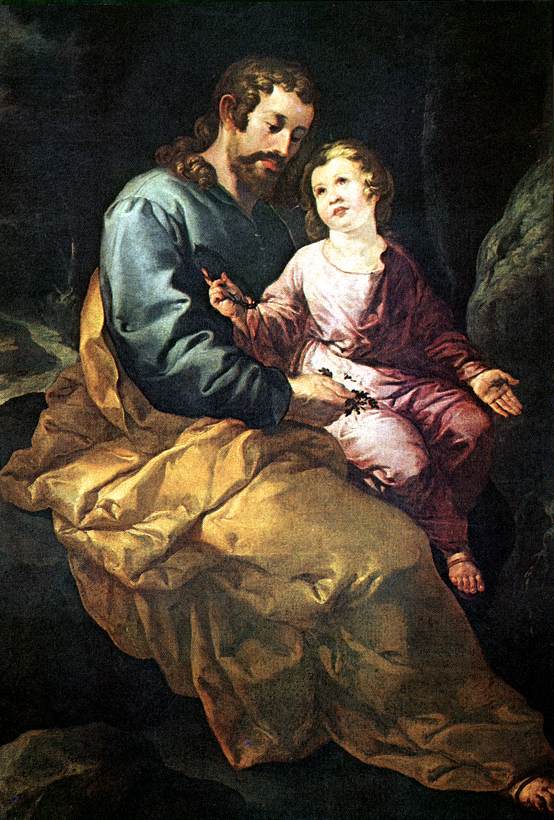
Read more >>


Copyright Notice: Unless otherwise stated, all items are copyrighted under a Attribution-NonCommercial-NoDerivatives 4.0 International License. If you quote from this blog, cite a link to the post on this blog in your article.

Disclosure of Material Connection: Some of the links on this blog are “affiliate links.” This means if you click on the link and purchase the item, I will receive an affiliate commission. As an Amazon Associate, for instance, I earn a small commission from qualifying purchases made by those who click on the Amazon affiliate links included on this website. I am disclosing this in accordance with the Federal Trade Commission’s 16 CFR, Part 255: “Guides Concerning the Use of Endorsements and Testimonials in Advertising.”