Monday, February 12, 2007
The Beautiful Hands of a Priest


The Beautiful Hands of a Priest

We need them in life's early morning,
We need them again at its close;
We feel their warm clasp of true friendship,
We seek them when tasting life's woes.
At the altar each day we behold them,
And the hands of a king on his throne
Are not equal to them in their greatness;
Their dignity stands all alone;
And when we are tempted and wander,
To pathways of shame and of sin,
It's the hand of a priest that will absolve us--
Not once, but again and again.
And when we are taking life's partner,
Other hands may prepare us a feast,
But the hand that will bless and unite us--
Is the beautiful hand of a priest.
God bless them and keep them all holy,
For the Host which their fingers caress;
When can a poor sinner do better,
Than to ask Him to guide thee and bless?
When the hour of death comes upon us,
May our courage and strength be increased,
By seeing raised over us in blessing--
The beautiful hands of a priest.

Author Unknown
Read more >>
Sunday, February 11, 2007
French Tridentine Mass Video


I had to share this French video of a priest presiding at the Consecration in a Tridentine Mass. I found it rather beautiful. While watching, note the great care and honor given to the Lord. After the priest touches the Consecrated Host (which truly is Jesus Christ), the fingers that touched it are to be kept together. The priest shall touch nothing except Our Lord in the Eucharist until they have had water and wine poured over them. The priest will then consume the water and wine to insure that no particle of Our Lord's true presence would be neglected and fall to the ground. Each particle of the Eucharist is truly Jesus! I love the reverence found in the Tridentine Liturgy.
Read more >>
Indulgence: World Day for the Sick

Today is the World Day for the Sick.

Pope Benedict XVI has decreed a plenary indulgence to the faithful who, under the usual conditions (sacramental confession, Eucharist, prayer for the Holy Father's intentions and detachment from sin) on February 11th in Seoul, Korea and to those who participate in a similar ceremony that day at any other place decided by the ecclesiastical authorities.

Via Argent by the Tiber
Read more >>
Nuns Should Wear the Habit


All religious sisters and nuns should wear the habit of their respective orders. No longer should these women, who have given their lives to the service of God and the Church, be dressing like laypeople. It is time to return to the ancient practice of wearing a distinct habit - this is not fulfilled by wearing laypeople's clothing!

The habit inspires women to leave their lives and gives themselves to God. The same is true for men who are inspired by the garments worn by priests and monks. To enter a religious order, one does not just experience a change of heart and soul, rather, there is also a change in the physical realm. For example, many religious orders require the women to adopt a new name when they become a nun in addition to wearing the habit.

Over the past 30 years, the number of women in Catholic religious orders has decreased by around 50 percent. There remains 85,412 religious sisters in the United States, and the average age is 68. The religious orders actually seeing growth are the ones that wear a traditional habit including The Dominican Sisters of St. Cecilia and Mother Teresa's religious order.

The fact is that the habit is truly a spiritual treasure. The key to increasing the number of religious sisters and nuns in the world is to again bring back the mandatory habit. No longer should nuns be allowed to live in apartments and wear laypeoples' clothing; rather, they should be living in a monastery to praise and serve God.

Code of Canon Law: "Religious are to wear the habit of the institute determined according to the norm of proper law as a sign of their consecration and as a testimony of poverty" (Canon 669, 1).

Wearing laypeople's clothing does not serve as a "sign of their consecration". I hope and pray that more orders will again adopt the traditional habit. As for me, it is always inspiring to see a nun out in public because she is out there living her life for Jesus. Having nuns wear habits brings God to others. And those that live today in doubt or fear can be comforted by the sight of a nun, who is prayerfully serving the Lord.

Examples of the beauty, simplicity, and witness to the Faith when a habit is worn:


Read more >>
Friday, February 9, 2007
Pray for my success tomorrow

Update: I did very well today. Honestly, it was not as good as I had hoped, but I am very proud of my achievements. I know that God stood by my side through it all. Thank you for your prayers. Your prayers meant a lot to me.

Original: Tomorrow I will be attending a large competition. To be honest, it may be the most important academic competition of my life. I am hoping and praying that I might succeed after years of preparation. Even if I don't win, though, I will have won a lot over the years. But, I would still really like to win. So, I would so greatly appreciate any prayers offered up for me. I am so amazed by the generous of my readers. You truly are an inspiration for me. I would appreciate any prayers.

Thank you.
Read more >>
Thursday, February 8, 2007
Why Catholics Cannot be Freemasons: What to Know and How to Get out!

https://www.amazon.com/Why-Catholics-Cannot-be-Masons/dp/0895558815/ref=as_sl_pc_ss_til?tag=acatlif-20&linkCode=w01&linkId=PQRKVW2NF6S5PW6M&creativeASIN=0895558815

No organization has been more condemned by the Church, and rightfully so, than the masons. The first condemnation against Freemasonry given by Pope Clement XII per In Eminenti (1738) was repeated and even extended by Benedict XIV (1751), Pius VII (1821), Leo XII in Quo Graviora (1826), Pius VIII (1829), Gregory XVI (1832), Pius IX (Qui Pluribus in 1846, 1849, 1864, 1865, 1869, 1873), and by Pope Leo XIII in both Humanum Genus (1884) and Custodi di Quella Fede (1890). 

Those who would like to better understand the errors of the freemasons should pick up a copy of “Why Catholics Cannot be Masons” written by John Salza , a Catholic attorney and former 32nd degree Mason, who explains why the Masons and the Shriners are actually a secretive, false religion.

Is it still forbidden to join the freemasons or similar organizations? 

Yes! The Papal Bull issued by Pope Clement XII (On Freemasonry) in 1738 stated in part: "with the plenitude of the Apostolic power do hereby determine and have decreed that these same Societies, Companies, Assemblies, Meetings, Congregations, or Conventicles of Liberi Muratori or Francs Massons, or whatever other name they may go by, are to be condemned and prohibited, and by Our present Constitution, valid for ever, We do condemn and prohibit them."

The Holy Father continued later on by stating clearly: “…[Catholics] must stay completely clear of such Societies, Companies, Assemblies, Meetings, Congregations or Conventicles, under pain of excommunication for all the above mentioned people, which is incurred by the very deed without any declaration being required, and from which no one can obtain the benefit of absolution, other than at the hour of death, except through Ourselves or the Roman Pontiff of the time.” 

The first Code of Canon law in 1917 explicitly declared that Catholics who joined a Masonic organization incurred a penalty of ipso facto excommunication: 
Can 2335: Affiliation With Masonic or Similar Societies. Those who join a Masonic sect or other societies of the same sort, which plot against the Church or against legitimate civil authority, incur ipso facto an excommunication simply reserved to the Holy See.
The result of membership in the freemasons is automatic excommunication. Yet, some question if this is still the case due to the change of wording in the 1983 Code of Canon Law, which does not specifically mention the masons, when it states:
Can. 1374. A person who joins an association which plots against the Church is to be punished with a just penalty; one who promotes or takes office in such an association is to be punished with an interdict.
In order to clarify the issue, the Congregation for the Doctrine of the Faith published a declaration on Nov. 26, 1983, signed by then-Cardinal Joseph Ratzinger, which states:
“It has been asked whether there has been any change in the Church’s decision in regard to Masonic associations since the new Code of Canon Law does not mention them expressly, unlike the previous Code. 
“This Sacred Congregation is in a position to reply that this circumstance in due to an editorial criterion which was followed also in the case of other associations likewise unmentioned inasmuch as they are contained in wider categories. 
“Therefore, the Church’s negative judgment in regard to Masonic association remains unchanged since their principles have always been considered irreconcilable with the doctrine of the Church and therefore membership in them remains forbidden. The faithful who enroll in Masonic associations are in a state of grave sin and may not receive Holy Communion.”
Take Action Against Masonry

Father Edward McNamara, professor of liturgy at the Regina Apostolorum University acknowledges that unfortunately many people view the masons as a mere civic organization and one that is not anti-Christian and an alternative religion as its core. 

We have a responsibility to bring those Catholics who are members of the masons to understand the errors of their ways and the need for them to seek the Sacrament of Penance and receive absolution and a lifting of the excommunication. Father McNamara states: “Of course, for many people active in Masonic lodges, the conversations and activities are more social in nature and rarely veer toward the realm of philosophical speculation. A Catholic, however, cannot ignore the fundamental principles behind an organization, no matter how innocuous its activities appear to be.”

Do not visit masonic halls. If you see their literature posted in community bulletin boards, throw it away. Do everything you can to encourage all the small towns and communities across America that have a masonic hall to close it down. And pray for the conversion of the freemasons. We can especially invoke the intercession of St. Maximilian Kolbe, who wrote strongly against them.

Prayer for Conversion of Freemasons

O LORD JESUS CHRIST, who showest forth thy omnipotence most manifestly when Thou sparest and hast compassion; Thou who didst say, “Pray for those who persecute and calumniate you,” we implore the clemency of thy Sacred Heart on behalf of souls, made in the image of GOD, but most miserably deceived by the treacherous snares of Freemasons, and going more and more astray in the way of perdition. Let not the Church, thy spouse, any longer be oppressed by them; but, appeased by the intercession of the blessed Virgin thy Mother and the prayers of the just, be mindful of thy infinite mercy; and, disregarding their perversity, cause these very men to return to Thee, that they may bring consolation to the Church by a most abundant penance, make reparation for their misdeeds, and secure for themselves a glorious eternity; who livest and reignest world without end. Amen.
Read more >>
Wednesday, February 7, 2007
Words of Inspiration: Extreme Unction


St Alphonsus speaks of a sick man who delayed to receive Extreme Unction until it was almost too late, for he died shortly afterwards (Praxis Confess., n. 274). Now, God made known by way of revelation, says the holy doctor, that if he had received the Sacrament earlier, he would have been restored to health. However, the most precious effect of the last Sacraments is that which they produce upon the soul; they purify it from the remains of sin, and take away, or at least diminish, its debt of temporal punishment; they strengthen it to bear suffering in a holy manner; they fill it with confidencein God, and assist it to accept death from His Hands in union with that of Jesus Christ (Purgatory Explained by the Lives and Legends of the Saints, Schouppe 1926, TAN p 390)


For more information see this article: What is Extreme Unction
Read more >>
World Youth Day 2007

MESSAGE OF THE HOLY FATHER
BENEDICT XVI
TO THE YOUTH OF THE WORLD
ON THE OCCASION
OF THE 22nd WORLD YOUTH DAY, 2007

“Just as I have loved you, you also
should love one another” (Jn 13:34).

(This is not a World Youth Day like the one in Cologne in 2005. This year it is celebrated on the diocesan level. Bold parts below were emphasized by me.)
My dear young friends,

On the occasion of the 22nd World Youth Day that will be celebrated in the dioceses on Palm Sunday, I would like to propose for your meditation the words of Jesus: “Just as I have loved you, you also should love one another” (John 13:34).

Is it possible to love?

Everybody feels the longing to love and to be loved. Yet, how difficult it is to love, and how many mistakes and failures have to be reckoned with in love! There are those who even come to doubt that love is possible. But if emotional delusions or lack of affection can cause us to think that love is Utopian, an impossible dream, should we then become resigned? No! Love is possible, and the purpose of my message is to help reawaken in each one of you - you who are the future and hope of humanity-, trust in a love that is true, faithful and strong; a love that generates peace and joy; a love that binds people together and allows them to feel free in respect for one another. Let us now go on a journey together in three stages, as we embark on a “discovery” of love.

God, the source of love

The first stage concerns the source of true love. There is only one source, and that is God. Saint John makes this clear when he declares that “God is love” (1 John 4: 8,16). He was not simply saying that God loves us, but that the very being of God is love. Here we find ourselves before the most dazzling revelation of the source of love, the mystery of the Trinity: in God, one and triune, there is an everlasting exchange of love between the persons of the Father and the Son, and this love is not an energy or a sentiment, but it is a person; it is the Holy Spirit.

The Cross of Christ fully reveals the love of God

How is God-Love revealed to us? We have now reached the second stage of our journey. Even though the signs of divine love are already clearly present in creation, the full revelation of the intimate mystery of God came to us through the Incarnation when God himself became man. In Christ, true God and true Man, we have come to know love in all its magnitude. In fact, as I wrote in the Encyclical Deus Caritas Est, “the real novelty of the New Testament lies not so much in new ideas as in the figure of Christ himself, who gives flesh and blood to those concepts Can unprecedented realism” (n. 12). The manifestation of divine love is total and perfect in the Cross where, we are told by Saint Paul, “God proves his love for us in that while we still were sinners Christ died for us” (Rm 5:8). Therefore, each one of us can truly say: “Christ loved me and gave himself up for me” (cf Eph 5:2). Redeemed by his blood, no human life is useless or of little value, because each of us is loved personally by Him with a passionate and faithful love, a love without limits. The Cross, - for the world a folly, for many believers a scandal-, is in fact the “wisdom of God” for those who allow themselves to be touched right to the innermost depths of their being, “for God’s foolishness is wiser than human wisdom, and God’s weakness is stronger than human strength” (1 Cor 1:25). Moreover, the Crucifix, which after the Resurrection would carry forever the marks of his passion, exposes the “distortions” and lies about God that underlie violence, vengeance and exclusion. Christ is the Lamb of God who takes upon himself the sins of the world and eradicates hatred from the heart of humankind. This is the true “revolution” that He brings about: love.

Loving our neighbour as Christ loves us

Now we have arrived at the third stage of our reflection. Christ cried out from the Cross: “I am thirsty” (Jn 19:28). This shows us his burning thirst to love and to be loved by each one of us. It is only by coming to perceive the depth and intensity of such a mystery that we can realise the need and urgency to love him as He has loved us. This also entails the commitment to even give our lives, if necessary, for our brothers and sisters sustained by love for Him. God had already said in the Old Testament: “You shall love your neighbor as yourself” (Lev 19:18), but the innovation introduced by Christ is the fact that to love as he loves us means loving everyone without distinction, even our enemies, “to the end” (cf Jn 13:1).

Witnesses to the love of Christ

I would like to linger for a moment on three areas of daily life where you, my dear young friends, are particularly called to demonstrate the love of God. The first area is the Church, our spiritual family, made up of all the disciples of Christ. Mindful of his words: “By this everyone will know that you are my disciples, if you have love for one another” (John 13:35), you should stimulate, with your enthusiasm and charity, the activities of the parishes, the communities, the ecclesial movements and the youth groups to which you belong. Be attentive in your concern for the welfare of others, faithful to the commitments you have made. Do not hesitate to joyfully abstain from some of your entertainments; cheerfully accept the necessary sacrifices; testify to your faithful love for Jesus by proclaiming his Gospel, especially among young people of your age.

Preparing for the future

The second area, where you are called to express your love and grow in it, is your preparation for the future that awaits you. If you are engaged to be married, God has a project of love for your future as a couple and as a family. Therefore, it is essential that you discover it with the help of the Church, free from the common prejudice that says that Christianity with its commandments and prohibitions places obstacles to the joy of love and impedes you from fully enjoying the happiness that a man and woman seek in their reciprocal love. The love of a man and woman is at the origin of the human family and the couple formed by a man and a woman has its foundation in God’s original plan (cf Gen 2:18-25). Learning to love each other as a couple is a wonderful journey, yet it requires a demanding “apprenticeship”. The period of engagement, very necessary in order to form a couple, is a time of expectation and preparation that needs to be lived in purity of gesture and words. It allows you to mature in love, in concern and in attention for each other; it helps you to practise self-control and to develop your respect for each other. These are the characteristics of true love that does not place emphasis on seeking its own satisfaction or its own welfare. In your prayer together, ask the Lord to watch over and increase your love and to purify it of all selfishness. Do not hesitate to respond generously to the Lord’s call, for Christian matrimony is truly and wholly a vocation in the Church. Likewise, dear young men and women, be ready to say “yes” if God should call you to follow the path of ministerial priesthood or the consecrated life. Your example will be one of encouragement for many of your peers who are seeking true happiness.

Growing in love each day

The third area of commitment that comes with love is that of daily life with its multiple relationships. I am particularly referring to family, studies, work and free time. Dear young friends, cultivate your talents, not only to obtain a social position, but also to help others to “grow”. Develop your capacities, not only in order to become more “competitive” and “productive”, but to be “witnesses of charity”. In addition to your professional training, also make an effort to acquire religious knowledge that will help you to carry out your mission in a responsible way. In particular, I invite you to carefully study the social doctrine of the Church so that its principles may inspire and guide your action in the world. May the Holy Spirit make you creative in charity, persevering in your commitments, and brave in your initiatives, so that you will be able to offer your contribution to the building up of the “civilization of love”. The horizon of love is truly boundless: it is the whole world!

“Dare to love” by following the example of the saints

My dear young friends, I want to invite you to “dare to love”. Do not desire anything less for your life than a love that is strong and beautiful and that is capable of making the whole of your existence a joyful undertaking of giving yourselves as a gift to God and your brothers and sisters, in imitation of the One who vanquished hatred and death forever through love (cf Rev 5:13). Love is the only force capable of changing the heart of the human person and of all humanity, by making fruitful the relations between men and women, between rich and poor, between cultures and civilizations. This is shown to us in the lives of the saints. They are true friends of God who channel and reflect this very first love. Try to know them better, entrust yourselves to their intercession, and strive to live as they did. I shall just mention Mother Teresa. In order to respond instantly to the cry of Jesus, “I thirst”, a cry that had touched her deeply, she began to take in the people who were dying on the streets of Calcutta in India. From that time onward, the only desire of her life was to quench the thirst of love felt by Jesus, not with words, but with concrete action by recognizing his disfigured countenance thirsting for love in the faces of the poorest of the poor. Blessed Teresa put the teachings of the Lord into practice: “Just as you did it to one of the least of these who are members of my family, you did it to me” (Mt 25:40). The message of this humble witness of divine love has spread around the whole world.

The secret of love

Each one of us, my dear friends, has been given the possibility of reaching this same level of love, but only by having recourse to the indispensable support of divine Grace. Only the Lord’s help will allow us to keep away from resignation when faced with the enormity of the task to be undertaken. It instills in us the courage to accomplish that which is humanly inconceivable. Above all, the Eucharist is the great school of love. When we participate regularly and with devotion in Holy Mass, when we spend a sustained time of adoration in the presence of Jesus in the Eucharist, it is easier to understand the length, breadth, height and depth of his love that goes beyond all knowledge (cf Eph 3:17-18). By sharing the Eucharistic Bread with our brothers and sisters of the Church community, we feel compelled, like Our Lady with Elizabeth, to render “in haste” the love of Christ into generous service towards our brothers and sisters.

Towards the encounter in Sydney

On this subject, the recommendation of the apostle John is illuminating: “Little children, let us love, not in word or speech, but in truth and action. And by this we will know that we are from the truth” (1 Jn 3: 18-19). Dear young people, it is in this spirit that I invite you to experience the next World Youth Day together with your bishops in your respective dioceses. This will be an important stage on the way to the meeting in Sydney where the theme will be: “You will receive power when the Holy Spirit has come upon you; and you will be my witnesses” (Acts 1:8). May Mary, the Mother of Christ and of the Church, help you to let that cry ring out everywhere, the cry that has changed the world: “God is love!” I am together with you all in prayer and extend to you my heartfelt blessing.

From the Vatican, 27 January 2007
BENEDICTUS PP. XVI
Read more >>
Tuesday, February 6, 2007
Pray for the Repose of the Soul of Irmgard

Requiem aeternam dona ei, Domine, et lux perpetua luceat ei. Requiescat in pace. Amen.

I was not going to blog anymore tonight, but I had to post about this. The grandmother of the author of Letters from a Young Catholic has died. Please see these posts on her and pray for the repose of her soul:

Read more >>
Winter Blizzard

The Midwest has been hit by a powerful snowstorm. It's very cold here, and we've received at least 6 inches. Let's pray for the entire region affected by the storm. The roads are dangerous and most people are shoveling driveways. I won't be posting anymore today.
Read more >>
St. Paul Miki

Today is the Feastday of St. Paul Miki and Companions, martyrs. These saints were murdered for their faith in Christ. His preaching lead to many converting to Christianity. His last sermon was from the Cross he was crucified on.

For more information, see my post from last year.
Read more >>
The Price of Our Salvation

This inspiring post was found on A Catholic Mom in Hawaii:

One time, during the celebration of Holy Mass in the Church of St. Paul at the Three Fountains in Rome, St. Bernard saw an unending stairway which went up to Heaven. Very many angels went up and down on it, carrying from Purgatory to Paradise the souls freed by the Sacrifice of Jesus, renewed by priests on the altars all over the world.

Thus, at the death of one of our relatives, let us take much more care about having celebrated, and assisting at, Holy Masses for him, rather than about the flowers, the dark clothes and the funeral procession...

There are recounted many apparitions of souls being purified in Purgatory who came to ask Padre Pio to offer Holy Mass for their intentions so that they would be able to leave Purgatory. One day he celebrated Holy Mass for the father of one of his fellow Franciscan brothers. At the end of the Holy Sacrifice, Padre Pio said to his brother, "This morning the soul of your father has entered into Heaven." The brother was very happy to hear that, yet he said to Padre Pio, "But, Father, my good father died thirty-two years ago." "My son," Padre Pio replied, "before God everything is paid for." And it is Holy Mass which obtains for us a price of infinite value: The Body and the Blood of Jesus, the "Immaculate Lamb." (Apoc. 5:12).

Jesus Our Eucharistic Love
Fr. Stefano Manelli, O.F.M. Conv., S.T.D.
Read more >>

Catholic Carnival #105

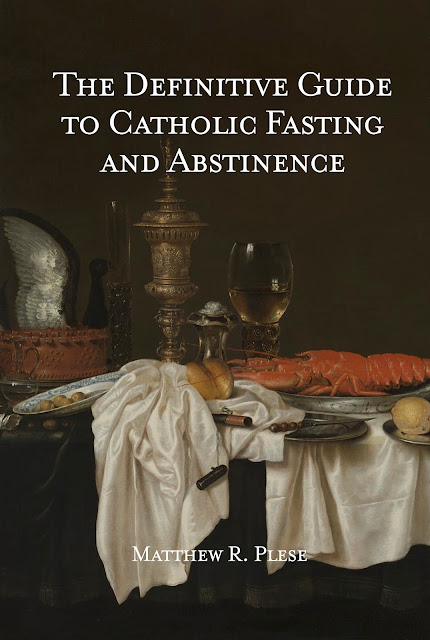
The 105th Catholic Carnival is now up! Go and read some of the good posts featured there. I particularly like the reminder at the beginning of the post: Ash Wednesday is fast approaching! Let us prepare for fasting and abstience. Let us not only fast on Ash Wednesday and Good Friday but also other days during Lent. Let us truly show Our Lord our contrition this year! Also, I strongly suggest taking up some Lenten reading!
Read more >>
Five Ploys of Satan

Five Ploys of Satan (I received it as an email):

Doubt - Tempts us to question God's Word and his goodness, forgiveness, and love

Discouragement - Tempts us to focus intently on our problems rather than entrusting them to God's care

Diversion - Tempts us to see the wrong things as attractive so that we will want them more than the right things

Defeat - Tempts us to feel like failure so that we don't even try

Delay - Tempts us to procrastinate so that things never get done

Application:

Reflect on these ploys of Satan, and if you find that he has darkened your life on any of these counts, lift up the situation to Our Lady in prayer.

Recall her advice on binding the evil one: "Put on the armor of battle. With the rosary in your hand, defeat him!"


St. Michael, Prince of the Heavenly Armies, pray for us!
Read more >>
Monday, February 5, 2007
St. Agatha


Memorial (1969 Calendar): February 5
Double (1954 Calendar): February 5

Today the Church celebrates St. Agatha, who was martyred by Quintanus, the governor of Sicily, who tried in vain to force her to consent to sin. She died in Catania, Sicily on February 5, 251 AD. Her name appears in the Roman Canon. Her martyrdom is described below:
It is impossible to write a historically reliable account of St. Agatha's life. The "Acts" of her martyrdom are legendary, dating from the sixth century. 
According to these sources Agatha was a Sicilian virgin of noble extraction. Quintianus, governor of Sicily, became deeply enamored of her; but she rejected his advances. As a result she was charged with being a Christian and brought before his tribunal. To the question concerning her origin she replied: "I am noble-born, of a distinguished family, as all my relatives will attest". When asked why she lived the servile life of a Christian, she answered: "I am a handmaid of Christ, and that is why I bear the outward appearance of a slave; yet this is the highest nobility, to be a slave to Christ". The governor threatened her with the most dreadful tortures if she did not renounce Christ. Agatha countered: "If you threaten me with wild beasts, know that at the Name of Christ they grow tame; if you use fire, from heaven angels will drop healing dew on me".

After being tortured, "Agatha went to prison radiant with joy and with head held high as though invited to a festive banquet. And she commended her agony to the Lord in prayer". The next day, as she again stood before the judge, she declared: "If you do not cause my body to be torn to pieces by the hangmen, my soul cannot enter the Lord's paradise with the martyrs. She was then stretched on the rack, burned with red-hot irons, and despoiled of her breasts. During these tortures she prayed: "For love of chastity I am made to hang from a rack. Help me, O Lord my God, as they knife my breasts. Agatha rebuked the governor for his barbarity: "Godless, cruel, infamous tyrant, are you not ashamed to despoil a woman of that by which your own mother nursed you?"

Returning to prison, she prayed: "You have seen, O Lord, my struggle, how I fought in the place of combat; but because I would not obey the commands of rulers, my breasts were lacerated". In the night there appeared to her a venerable old man, the apostle Peter, with healing remedies. Agatha, ever delicately modest, hesitated to show him her wounds. "I am the apostle of Christ; distrust me not, my daughter". To which she replied: "I have never used earthly medicines on my body. I cling to the Lord Jesus Christ, who renews all things by His word". She was miraculously healed by St. Peter: "Father of my Lord Jesus Christ, I give you praise because by Your apostle You have restored my breasts". Throughout the night a light illumined the dungeon. When the guards fled in terror, her fellow prisoners urged her to escape but she refused: "Having received help from the Lord, I will persevere in confessing Him who healed me and comforted me."

Four days later she was again led before the judge. He, of course, was amazed over her cure. Nevertheless, he insisted that she worship the gods; which prompted another confession of faith in Christ. Then by order of the governor, Agatha was rolled over pieces of sharp glass and burning coals. At that moment the whole city was rocked by a violent earthquake. Two walls collapsed, burying two of the governor's friends in the debris. Fearing a popular uprising, he ordered Agatha, half dead, to be returned to prison. Here she offered her dying prayer: "Blessed Agatha stood in the midst of the prison and with outstretched arms prayed to the Lord: O Lord Jesus Christ, good Master, I give You thanks that You granted me victory over the executioners' tortures. Grant now that I may happily dwell in Your never-ending glory." Thereupon she died.

A year after her death the city of Catania was in great peril from an eruption on Mount Etna. Pagans, too, were numbered among those who fled in terror to the saint's grave. Her veil was taken and held against the onrushing flames, and suddenly the danger ceased. Her grave is venerated at Catania in Sicily.

The Church's Year of Grace, Pius Parsch

Prayer:

O God, Who among the other marvels of Thy power, hast granted even to the weaker sex the victory of martyrdom: grant that we who celebrate the heavenly birthday of blessed Agatha, Thy Virgin and Martyr, may by her example draw nearer to Thee. Through our Lord.

Prayer Source: 1962 Roman Catholic Daily Missal
Read more >>
Sunday, February 4, 2007
A Patron Saint for Dissident Catholics - France's Abbe Pierre

"A Patron Saint for Dissident Catholics - France's Abbe Pierre" is an article from LifeSiteNews detailing the dissent of Abbe Pierre, in regards to homosexuality, women priests, and he even questioned the divinity of Christ Himself. Although he may have been loved by many and voted as France's most popular person, he broke his vows and questioned Christian Truths. He died on January 22, 2007.
Read more >>
The Purpose of Sunday

2 Timothy 2:8, 11-13

"Remember that Jesus Christ, a descendant of David, was raised from the dead. You can depend on this: If we have died with Him, we shall also live with Him; If we hold out to the end, we shall also reign with Him. But if we deny Him, He will deny us. If we are unfaithful He will still remain faithful, for He cannot deny Himself."
Today is the 3rd Sunday in Ordinary Time as well as Septuagesima Sunday.
Read more >>
Friday, February 2, 2007
Sequence for Candlemas


This is the Sequence for Candlemas, sung to Dominican chant by the Dominican friars at Blackfriars, Oxford.
Read more >>
Feast of Candlemas


Today the Church celebrates Candlemas, also called the Presentation of Our Lord as well as the Purification of Our Lady. See my post from last year for information about this important feast.
Read more >>
Thursday, February 1, 2007
Is Bad Language a Sin?


Q: Is using inappropriate language sinful?

A: Yes. Using inappropriate language is sinful. However, let's look at each segment of the all-encompassing term of "inappropriate language". These segments include using God's name in vain, cursing, blaspheming, and profanity.

The second Commandment specifically forbids using God’s name in vain: “Thou shalt not take the name of the Lord thy God in vain” (Ex 20:7; Dt 5:11). Therefore, one of the three criteria for a mortal sin is clearly in place – it is a serious sin. If the other two conditions are in place – deliberately doing the action and knowledge that it is wrong – then taking God’s name in vain is a mortal sin, which deprives the soul of sanctifying grace. Saying “O my [God’s name]” without reason and in a vain manner is using God’s name in vain. And, if a person dies in mortal sin, he/she will indeed go to Hell.

Names are greatly important as Sacred Scripture reveals in Revelations 2:17, 3:5, 3:12, and 22:4. The name given to the Lord, however, is above every other name (Ph. 2:10-11). In the Old Testament, “Out of respect for the holiness of God, the people of Israel [did] not pronounce His name [Yahweh]. In the reading of Sacred Scripture, the reveal name is replaced by the divine title “Lord”. It is under this title that the divinity of Jesus will be acclaimed: ‘Jesus is Lord’” (CCC 209). In the Gospels, Jesus’ divine name is mentioned numerous times including Matthew 1:21, 7:22, 18:20; Luke 1:31; Mark 9:38, 16:17; and John 14:13. Thus, Jesus’ name is deserving of all praise, and taking God’s name in vain is a mortal sin.

Cursing is likewise a mortal sin. Cursing is defined as calling down evil from God usually by invoking God’s holy name. Using such horrible expressions, the person calls on God to send a soul to Hell and/or inflict punishment on a person. How can we actually do such a horrendous thing – ask God to send a soul to Hell? Cursing is quite clearly also a mortal sin.

Blasphemy is “a contempt for God, expressed in thought, word or action.” As the Catechism of the Catholic Church clearly states: “The second commandment forbids the abuse of God’s name, i.e., every improper use of the names of God, Jesus, but also of the Virgin Mary and all the saints…It consists in uttering against God –inwardly or outwardly – words of hatred, reproach, or defiance; in speaking ill of God; in failing in respect toward him in one’s speech; in misusing God’s name. St. James condemns those ‘who blaspheme that honorable name [of Jesus] by which you are called’” (CCC 2146, 2148). The CCC continues by stating, “The prohibition of blasphemy extends to language against Christ’s Church, the saints, and sacred things. It is also blasphemous to make use of God’s name to cover up criminal practices, to reduce peoples to servitude, to torture persons or put them to death…Blasphemy is contrary to the respect due to God and His holy name. It is in itself a grave sin” (CCC 2148). Thus, with such a clear message, blasphemy must always be stopped because it is a mortal sin.

And finally, we are forced to ask ourselves if profanity, like the three proceeding concerns is a mortal sin. And profanity can indeed by a mortal sin if done with great anger against another person. Language is a gift from God. It should be used wisely and not laden with profanities that are impolite, vulgar, and negative. We should always avoid profanity too and live following the example of the Blessed Virgin Mary and the saints. They have reached Heaven, if we imitate them, we too shall reach the throne of God.

I conclude with words of admonishment from Sacred Scripture: “If anyone thinks he is religious and does not bridle his tongue but deceives his heart, his religion is vain” (James 1:26).

Sources:

Saunders, Rev. William. “Why is bad language a sin?” Arlington Catholic Herald.

Walsh, Monsignor Vincent M. The Ten Commandments Merion Station, PA: Key of David Publications, 2000.
Read more >>


Copyright Notice: Unless otherwise stated, all items are copyrighted under a Attribution-NonCommercial-NoDerivatives 4.0 International License. If you quote from this blog, cite a link to the post on this blog in your article.

Disclosure of Material Connection: Some of the links on this blog are “affiliate links.” This means if you click on the link and purchase the item, I will receive an affiliate commission. As an Amazon Associate, for instance, I earn a small commission from qualifying purchases made by those who click on the Amazon affiliate links included on this website. I am disclosing this in accordance with the Federal Trade Commission’s 16 CFR, Part 255: “Guides Concerning the Use of Endorsements and Testimonials in Advertising.”
