Sunday, January 21, 2007
Let Them Be One

From January 18 - January 25, 2007, we celebrate the Week of Prayer for Christian Unity, of which I have already posted a prayer. However, I feel that instruction is needed for the faithful during this week.

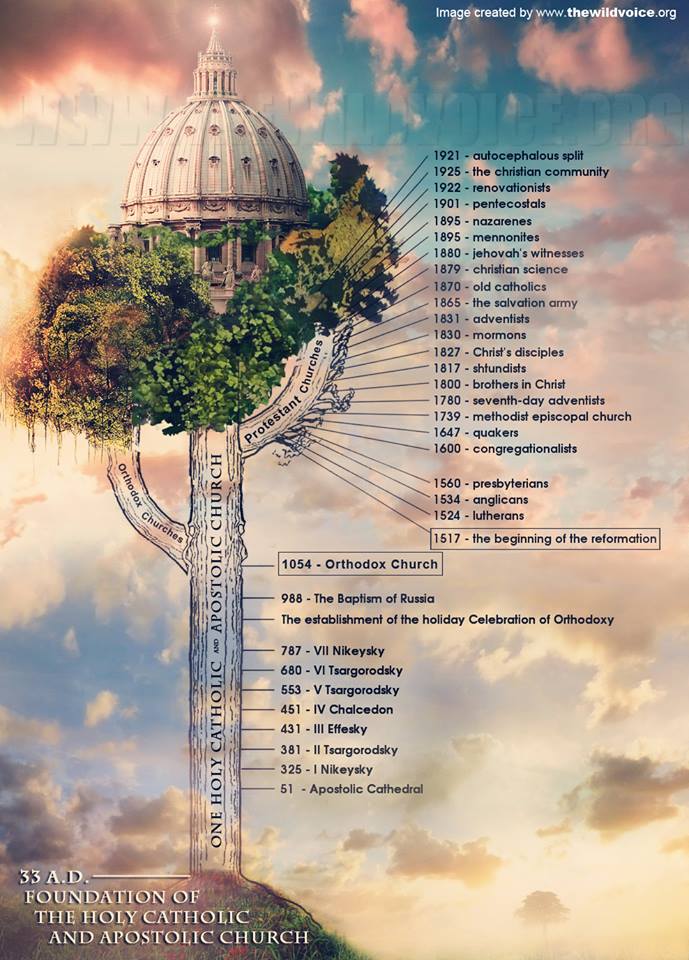
It would be extremely easy to fall into error this week while seeking unity. We, as Catholics, follow the complete Truth of Jesus Christ revealed over the past 2,000 years. And that is what we will always believe. We shall not - must not - disregard a single teaching of the Church for "unity." Unity does not mean that all of the separated Christians should come together and make compromises until a new Creed is made. This is heresy! We will not compromise one single article of doctrine, or one single dogma, or one single practice of our faith. For that is a common misconception of what this Week of Christian Unity is about. This week of Christian Unity is about praying for fellow non-Catholics to repent for their sins and enter into the Catholic Church - completely obedient to the Magisterium and all honored Traditions of the Faith. Yes, it is a sin to refuse to believe a single dogma of the Church. It may compromise one's soul if that person refuses to believe even one part of the Faith taught by Christ and revealed through the years by the Holy Catholic Church. Again, anyone who disregards a dogma or teaching of the Holy Church in the name of ecumenism will surely answer to Almighty God.

The Church is our Mother and is led by the Successor of Saint Peter - the Pope. I have already posted a summary of some of the Church's teachings in my post on the Prayer for Unity. And, since we still hold the True Faith, it is our obligation to pray for non-Catholics to see their errors and enter the Church. In truth, interdenominational activity has been condemned through the years by the Church. I have not and will not attend a single Protestant service, and I hope and pray all Catholics will do the same. This is not because I view myself as superior. After all, Jesus ate with the sinners and was criticized for it. But, it is a scandalous activity to attend a Protestant service. Not only do Protestants not have authentic Sacraments like the Eucharist, Confession, Last Rites, Holy Orders, etc., but they believe in heresy. The very word "Protestant" implies they are "protesting." And what are they protesting against? They protest against the Catholic Church, which is the Sacrament of salvation for the whole world! For this reason, it is wrong for any Catholic to attend a non-Catholic religious service. The 1962 Roman Catholic Daily Missal (Angelus Press Edition) states that it is a sin to "go to places of worship belonging to other denominations" (page 66).

Pope Pius XI condemned the "ecumenical movement" in Mortalium Animos:
"...it will be opportune to expound and to reject a certain false opinion which lies at the root of this question and of that complex movement by which non-Catholics seek to bring about the union of Christian Churches. Those who favor this view constantly quote the words of Christ, "That they may be one (Ut unum sint)... And there shall be one fold and one shepherd" (John xvii. 21, x. 16), in the sense that Christ thereby merely expressed a desire or a prayer which as yet has not been granted. For they hold that the unity of faith and government which is a note of the one true Church of Christ has up to the present time hardly ever existed, and does not exist today. They consider that this unity is indeed to be desired and may even, by cooperation and good will, be actually attained, but that meanwhile it must be regarded as a mere ideal. The Church, they say, is of its nature divided into sections, composed of several churches or distinct communities which still remain separate, and although holding in common some articles of doctrine, nevertheless differ concerning the remainder; that all these enjoy the same rights; and that the Church remained one and undivided at the most only from the Apostolic age until the first Ecumenical Councils. Hence, they say, controversies and long-standing differences, which today still keep asunder the members of the Christian family, must be entirely set aside, and from the residue of doctrines a common form of faith drawn up and proposed for belief, in the profession of which all may not only know but also feel themselves to be brethren. If the various Churches or communities were united in some kind of universal federation, they would then be in a position to oppose resolutely and successfully the progress of irreligion.

"Such, Venerable Brethren, is the common contention. There are indeed some who recognize and affirm that Protestantism has with inconsiderate zeal rejected certain articles of faith and external ceremonies which are in fact useful and attractive, and which the Roman Church still retains. But they immediately go on to say that the Roman Church, too, has erred, and corrupted the primitive religion by adding to it and proposing for belief doctrines not only alien to the Gospel but contrary to its spirit. Chief among these they count that of the primacy of jurisdiction granted to Peter and to his successors in the See of Rome. There are actually some, though few, who grant to the Roman Pontiff a primacy of honor and even a certain power or jurisdiction; this, however, they consider to arise not from the divine law but merely from the consent of the faithful. Others, again, even go so far as to desire the Pontiff himself to preside over their mixed assemblies. For the rest, while you may hear many non-Catholics loudly preaching brotherly communion in Jesus Christ, yet not one will you find to whom it even occurs with devout submission to obey the Vicar of Jesus Christ in his capacity of teacher or ruler. Meanwhile they assert their readiness to treat with the Church of Rome, but on equal terms, as equals with an equal. But even if they could so treat, there seems little doubt that they would do so only on condition that no pact into which they might enter should compel them to retract those opinions which still keep them outside the one fold of Christ.

"This being so, it is clear that the Apostolic See can by no means take part in these assemblies. nor is it in any way lawful for Catholics to give to such enterprises their encouragement or support. If they did so, they would be giving countenance to a false Christianity quite alien to the one Church of Christ. Shall we commit the iniquity of suffering the truth, the truth revealed by God, to be made a subject for compromise? For it is indeed a question of defending revealed truth. Jesus Christ sent His Apostles into the whole world to declare the faith of the Gospel to every nation, and, to save them from error, He willed that the Holy Ghost should first teach them all truth. Has this doctrine, then, disappeared, or at any time been obscured, in the Church of which God Himself is the ruler and guardian? Our Redeemer plainly said that His Gospel was intended not only for the apostolic age but for all time. Can the object of faith, then, have become in the process of time so dim and uncertain that today we must tolerate contradictory opinions? If this were so, then we should have to admit that the coming of the Holy Ghost upon the Apostles, the perpetual indwelling of the same Spirit in the Church, nay, the very preaching of Jesus Christ, have centuries ago lost their efficacy and value. To affirm this would be blasphemy. 
ENCYCLICAL OF POPE PIUS XI JANUARY 6, 1928

Now, please realize I don't want violence or discord to result from my opinions or this mentioned statement. But, we must not compromise our beliefs. We must pray for and love non-Catholics, especially Protestants, but we can't compromise our beliefs one ounce. That is why we must pray, pray, and pray for non-Catholics to see their errors and return to the Flock of Christ so that there will exist one Flock and one Shepherd. We must pray for schismatics, heretics, and pagans to all repent and enter the Church of Christ. As St. Pius X wrote, "There is only one divine faith which is the beginning of salvation for mankind and the basis of all justification, the faith by which the just person lives and without which it is impossible to please God and to come to the community of His children. There is only one true, holy, Catholic church, which is the Apostolic Roman Church." (Singulari Quidem, Encyclical of Pope Pius IX)

Much more information on the basics of Catholicism can be found at Fish Eaters. For some articles on Catholic beliefs that I have written, see my sidebar under the title "Catholic Categories."

Let us pray and work towards unity—that all people will be members of the one, true Church that Jesus Christ established for the salvation of the world—the Catholic Church. Please read Jesus' prayer for Christian Unity in The Gospel of John, Chapter 17.
Read more >>
Words of Inspiration: January 21, 2007


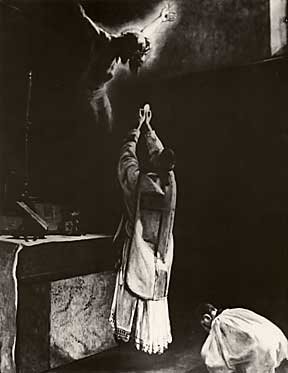
"O Everlasting Love, Jesus, who have enclosed Yourself in the Host, and therein hide Your divinity and conceal Your beauty, You do this in order to give Yourself, whole and entire, to my soul"

St. Maria Faustina of the Blessed Sacrament
Read more >>
Saturday, January 20, 2007
The Blessing of Lambs


Because of the similarity of her name to the Latin for "lamb" (Agnus), the lamb has been St. Agnes' symbol since the 6th century. On the feast day of St. Agnes on January 21st, the Trappist fathers of the Monastery of Tre Fontane (near Saint Paul's Basilica) provide two lambs from their sheepfold to the Benedictine nuns of Saint Cecilia. They arrive at Saint Agnes' Basilica wearing crowns, lying in "baskets decorated with red and white flowers and red and white ribbons—red for martyrdom, white for purity."

For the festal Mass, the church, titular cardinal, the deacon, and subdeacon are decorated with red, white and gold. At the conclusion of the Holy Mass, there is a procession of little girls veiled and dressed in white lace with pale blue ribbons, followed by four resplendent carabinieri carrying the baby lambs. The lambs are blessed and incensed before being taken to the Vatican for the Holy Father’s blessing. Then they are delivered to the Convent of Saint Cecilia to become the pets of the sisters until Holy Thursday (when they are shorn) before being sacrificed on Good Friday.

The wool from these lambs is woven into 12 archbishops' palliums. The pallium is an older symbol of the papacy than that of the famed triregnum. The elect becomes "Shepherd of Christ's Flock" when the pallium touches his shoulder and symbolizes that the new bishop is being 'yoked' with the bishop of Rome, who is the visible head of the Church. About 204 AD, Saint Felician of Foligno is the first recorded recipient of a pallium from Pope Saint Victor I.
Read more >>
Friday, January 19, 2007
Week of Prayer for Christian Unity


[Please prepare to say this prayer daily during the Week of Christian Unity which is January 18-25]

English:

May they all be on as you, Father, are in me, and I in you, so that the world may come to believe that you have sent me.

R. You are Peter

V. And it is upon this rock that I will build my Church.

Let us pray: Lord Jesus Christ, who said to your apostles: I leave peace with you; it is my own peace that I give you; look not upon our sins but upon your Church's faith, and graciously grant her peace and unity in accordance with your will. You who live and reign forever and ever.

R. Amen.

Latin:

Ut omnes unum sint, sicut tu Pater in me et ego in te; ut mundus credat quia tu me misita.

R. Tu es Petrus.

V. Et super hanc petram dificabo ecclesiam meam.

Oremus: Domine Iesu Christe, qui dixisti Apostolis tuis: pacem relinquo vobis, pacem mean do vobis ne rspicias peccata nostra, sed fidem Ecclesie tuae, eamque secundum voluntatem tuam pacificate et coadunare digneris. Qui vivis et regnas in saecula saeculorum.

R. Amen
----------------------------------
There is so much about the Catholic faith that many people cannot understand. For the the benefit of non-Catholics, the following are the reasons why more that 1.1 Billion people choose to be Roman Catholic- We can only be united when we understand one another:

We believe in the God of All Creation, that is to say, I believe in the One, Triune God, One God in Three Divine Persons, God the Father, God the Son and God the Holy Spirit. The same God Today, Yesterday and Forever, whose nature is always to have mercy.

We believe in the One, Holy, Catholic and Apostolic Church as she exists in Communion with the Bishop of Rome, who is the Successor of St. Peter the Apostle and first Pope.

We believe all that is stated in the Nicene Creed.

We believe that the Catholic Church, in Communion with the Bishop of Rome (the Pope) is the Church that was founded directly by Jesus Christ nearly 2000 years ago, and is the Church that compiled and Canonized the Bible and that members of this Church were the authors of the New Testament, inspired by God the Holy Spirit.

We believe that I may unite my emotional and physical afflictions, sorrows and sufferings to the sufferings of Christ Crucified for the sake of the Whole Church, and I believe that our personal sufferings are great means of personal Sanctification.

We believe in the Queenship, Divine Motherhood, Perpetual Virginity and Intercession of the Theotokos also known as the Blessed Virgin Mary and I believe that she can and does hear our prayers and can pray for us to her Divine Son, Jesus Christ who is God. The Bible teaches us that we must intercede for each other based on the Mediatorship of Jesus Christ (1 Timothy 2:1-5), the Bible teaches us that the Prayers of the Righteous are powerful (James 5:16) and the Bible teaches us that the Saints and Angels in Heaven offer our prayers to God in the form of incense (Rev. 5:8, Rev. 8:1-4), and the Bible has examples of prayer to the Angels and Hosts of Heaven (Psalm 103:20-21, Psalm 148:1-2). I believe that the Most Holy Ever Virgin Mary, Mother of God is an excellent person to go to for intercessory prayer.

Jesus teaches us that through Him, we may have Eternal Life. Based on this, We believe that the Saints in Heaven are very much alive, can hear our prayers and do intercede for us. Some claim that praying to Mary and the Saints and Angels means that we are worshipping them. This is not so. Prayer in itself is not an act of worship. The word "Prayer" means "Request." So when we pray, we are making a request, and in the case of prayer to Saints, we are requesting THEIR intercession (1 Timothy 2:1-5) to God on our behalves based on the Mediatorship of Jesus Christ.

We believe that Christ is truly present in the Eucharist; the source and summit of our Catholic faith. Protestants reading this may say that the Passover isn't finished until Calvary, I would suggest that Calvary is really begun in the Upper Room with the Eucharist. When does Jesus' sacrifice really begin? Well, He insists on the fact that His life is not being taken away from Him. He is laying it down. Now in the trial, in the passion, it's being taken away; but in the Upper Room, prior to all of that, Jesus lays it down. He says, "This is my body. This cup is the blood of the New Covenant." Christ could not have used clearer, more explicit words than "This is My body." He did not say, "This is a sign of My body," or "This represents My body," but, "This is My body." I together with 1 billion Catholics take Christ at His word because He is the omnipotent God. On His word we know that the Holy Eucharist is the the body and blood of Christ.

To reiterate, We believe in the Catholic Church and ALL that she teaches. This is the Faith handed on to us once and for all by Jesus Christ and His Apostles.
Read more >>
Pray for those in RCIA

Please remember to pray for all those people in the world today in RCIA seeking to convert to Catholicism. I was reminded of this need by Argent by the Tiber's post:

It's Thursday again and that means this evening will be spent in RCIA. At the beginning of the year, when people poke their heads through the door and ask, "Is this RCIA?", you have no idea what compelled them to come. Then gradually through the year, their stories come out. Some during class and others outside of class. Most come not out of any earth-shattering theological conviction, but out of a nascent desire to follow Christ. Others come in spite of tremendous opposition, and occasionally, that opposition might even be dangerous. Please consider praying for the RCIA program at your church, for those that coordinate it and, though they may be unknown to you, for each person in the process. On Monday, a gentleman approached me after morning Mass and said that he had been praying for our parish's RCIA everyday. It meant a great deal to me.

Read the whole post
Read more >>
Church of the Holy Innocents


This is a beautiful church, so I had to share this photo of the Church of the Holy Innocents from New York, USA.
Read more >>
Italian Priests Are Working to Stop Satanists


I found this story posted on A Catholic Mom in Hawaii, and I was very pleased to read about it. With 600,000 Satanists predicted to be in Italy, it is great news that Italian priests are going out into the streets to protect the Lord's flock. For a priest is called to lay down his life for the Flock, and that is what these priests are doing.

The devil is real. He is not a metaphor but a real fallen angel seeking to destroy the Lord's flock. We must resist Him always in this life. For Jesus came to destroy the words of the devil (1 John 3:8). And while it remains a mystery while he is allowed to remain (CCC 395), we must fight the good fight and continue living for God. Let us frequently say the Prayer to St. Michael the Archangel.
Priests are to work alongside Italian police officers to tackle a rising tide of crimes linked to devil worship.

The clerics have been seconded to the Squadra Anti Sette (SAS) anti-sect squad by the Vatican after Church officials became concerned about the number of churches being desecrated by Satanists. In recent months there have also been a string of murders that have been linked to devil worship.

One of the Vatican's leading experts on Satanism and the occult, Don Oreste Benzi, has been brought in to liaise with police. He told The Sunday Telegraph that the natural curiosity of young people meant they were particularly attracted to the occult, and drugs were also used to influence and manipulate them.

Read more...

St. Michael the Archangel, ora pro nobis!
Read more >>
Thursday, January 18, 2007
Words of Inspiration: January 18

I have two very difficult classes this semester, which are taking up more time than I originally thought. However, everything is going very well so far. So, please forgive the delay in the Saint for the Year Devotion as well as the lack of posts.

Archbishop Fulton Sheen:

"In other ages, though men lost virtue, they still admired it; though they ran from the battlefield at the first need of courage, they still admired the hero who fought and suffered; though they threw away the map of the roadway of life, they never denied the need of a map. But, in our generation, men look for shadow in the radiance of every virtue.”

Blessed Mother Teresa:

"We have to give until it hurts. We need to give from the resources we would like to keep for ourselves. We need to give to the point of sacrificing. We must give something that we find hard to give up."
Read more >>
Sacrosanctum Concilium

Fr. Gonzales has a good list of parts of the Vatican II document, Sacrosanctum Concilium, that modernists and liberals need to read:

2. In virtue of power conceded by the law, the regulation of the liturgy within certain defined limits belongs also to various kinds of competent territorial bodies of bishops legitimately established....3. Therefore, no other person, even if he be a priest, may add, remove, or change anything in the liturgy on his own authority.

36.1. Particular law remaining in force, the use of the Latin language is to be preserved in the Latin rites.

54....steps should be taken so that the faithful may also be able to say or to sing together in Latin those parts of the Ordinary of the Mass which pertain to them.

115....Composers and singers, especially boys, must also be given a genuine liturgical training.

116. The Church acknowledges Gregorian chant as specially suited to the Roman liturgy: therefore, other things being equal, it should be given pride of place in liturgical services.

120. In the Latin Church the pipe organ is to be held in high esteem, for it is the traditional musical instrument which adds a wonderful splendor to the Church's ceremonies and powerfully lifts up man's mind to God and to higher things.

121. The texts intended to be sung must always be in conformity with Catholic doctrine; indeed they should be drawn chiefly from Holy Scripture and from liturgical sources.

124....Let bishops carefully remove from the house of God and from other sacred places those works of artists which are repugnant to faith, morals, and Christian piety, and which offend true religious sense either by depraved forms or by lack of artistic worth, mediocrity and pretense.
Read more >>
Wednesday, January 17, 2007
Words of Inspiration: January 17

"Terrible is the justice of God. But let us not forget also that His mercy is infinite" (St. Padre Pio)
Read more >>
Monday, January 15, 2007
Penance for the Immodest


From Castle of the Immaculatae by St. Teresa of Avila:

"Then Sr. Mary Joseph, leaning back in the office chair, lifted the brown scapular of her brown woolen habit and explained to me that the summer habit weighed 20 pounds and the winter habit weighed 30 pounds. Then the front doorbell buzzed, when she stood up to answer the door, I noticed that she was very stooped over, I noticed the weight of the habit, and that the tunic with its long sleeves, the long black veil and brown scapular rustled as she answered the bell. This bride of Christ, a special daughter of the Blessed Virgin, returned to me and said: 'And I wear this 20 pounds of wool in the summer as penance for those in the world who dress immodestly.' It was amoment of grace for me. I remember this scene often."
Read more >>
Saint John Chrysostom: Stop Swearing

I beseech you, my brothers, to be ever on your guard against the habit of swearing and blaspheming.

If a slave dare to pronounce the name of his master, he does it but seldom, and then only with respect; therefore is it not a shocking impiety to speak with contempt and irreverence of the name of the Master of angels and seraphim? People handle the book of the Gospel with a religious fear, and then only with clean hands, and yet your rash tongue would inconsiderately profane the name of the Divine Author of the Gospel.

Would you wish to know with what respect, fear, and wonder the choirs of the angels pronounce the adorable name? Listen to the prophet Isaiah: " I saw," says Isaiah, "the Lord sitting upon a throne high and elevated; upon it stood the seraphim, who cried one to another and said, Holy, holy, holy, the Lord God of hosts, all the earth is full of His glory."

See with what terror they are seized, even while they praise and glorify Him. As for you, my brethren, you know how cold and indifferent are the prayers you say, and you know how frequently you blaspheme a name so majestic, so sacred, and how you try to make excuses for the bad habit you have contracted. It is easy, yes, I say, it is easy, with a little care, attention, and reflection, to leave off this vicious habit.

Since we have fallen, my brethren, into this sin of blasphemy, I conjure you, in the name of our Lord, to rebuke openly these blasphemers. When you meet with such who publicly sin in this respect, correct them by word of mouth, and, if necessary, by your strong arm. Let these shameless swearers be covered with confusion. You could not employ your hand to a holier work. And if you are given into custody, go boldly before the magistrate, and say in your defense that you have avenged a blasphemy.

For if a person is punished for speaking contemptuously of a prince, is it not reasonable to suppose that a person who speaks irreverently of God should be sentenced to a severer punishment? It is a public crime, a common injury which all the world ought to condemn.

Let the Jews and infidels see that our magistrates are Christians, and that they will not allow those to go unpunished who insult and outrage their Master.

Do you remember that it was a false oath that overturned the houses, temples, and walls of Jerusalem, and from a superb city it became a mass of ruins? Neither the sacred vessels nor the sanctuary could stay the vengeance of a God justly angered against a violater of His word.

Sedecias did not receive a more favored treatment than Jerusalem. Flight did not save him from his enemies. This prince, escaping secretly, was pursued and taken by the Assyrians, who led him to their king. The king, after asking him the reason of his perfidy, not only caused his children to be killed, but deprived him of his sight, and sent him back to Babylon, loaded with iron chains.

Would you know the reason why? It was that the barbarians and Jews who inhabited the country adjoining Persia should know, by this terrible example, that the breach of an oath is punishable.

Saint John Chrysostom, from the Seventh Homily
Read more >>
Sunday, January 14, 2007
The Wedding Feast of Cana


Wedding at Cana by Paolo Veronese, 16th century


Each year in the Traditional Liturgy of the Church (1962 Roman Catholic Missal) on the 2nd Sunday after the Epiphany, the Church recalls the Wedding at Cana and  Jesus' first public miracle, namely the changing of water into wine at the Wedding Feast of Cana.


And the third day, there was a marriage in Cana of Galilee: and the mother of Jesus was there. And Jesus also was invited, and his disciples, to the marriage. And the wine failing, the mother of Jesus saith to him: They have no wine. And Jesus saith to her: Woman, what is that to me and to thee? my hour is not yet come. His mother saith to the waiters: Whatsoever he shall say to you, do ye.


Now there were set there six waterpots of stone, according to the manner of the purifying of the Jews, containing two or three measures apiece. Jesus saith to them: Fill the waterpots with water. And they filled them up to the brim. And Jesus saith to them: Draw out now, and carry to the chief steward of the feast. And they carried it. And when the chief steward had tasted the water made wine, and knew not whence it was, but the waiters knew who had drawn the water; the chief steward calleth the bridegroom, And saith to him: Every man at first setteth forth good wine, and when men have well drunk, then that which is worse. But thou hast kept the good wine until now.
This beginning of miracles did Jesus in Cana of Galilee; and manifested his glory, and his disciples believed in him.


Jn 2:1-11 (Douay Rheims)


On January 6th of each year the Church celebrates the Epiphany of the Lord, the arrival of the Magi to the Infant Jesus. But that is the merely the first of three epiphany moments, which are all equally remembered in the Traditional Liturgy on the Feast of the Epiphany. Today in the Gospel we focus once more on one of the three primary manifestations of Christ, namely the Miracle in Cana.  The other manifestation is recalled yearly as well on January 13rd (Traditional 1962 Liturgy), and this manifestation is the Baptism of Jesus in the River Jordan, at which God the Father calls out from Heaven: "This is my Beloved Son in whom I am well pleased."


We notice that it is Mary who intervenes for the people and says to Jesus, “They have no wine.” In the same regards, Mary intervenes for anyone who asks for her prayers. While there certainly is only one mediator between God and man, Mary is the Mother of God and an intercessor for mankind.St. Albert the Great wrote in Mary, Canice, p. 36: "Immediately next to being God is being the Mother of God." She held a unique role in salvation's history. Jesus Christ redeemed us, but Mary remains the Mother of Jesus and our spiritual mother. She is not equal to God but rather the most glorious person created by God because of her humility, trust in God, and above all, her Immaculate Conception.

Cannon Francis Ripley write in This is the Faith pg. 367: "Because of the inexpressible dignity that is hers, the Catholic Church has from the beginning given Mary the highest form of honor below that reserved for God alone. The Church's practice has always reflected her belief that, provided Mary is not "adored" (which is the unique honor given to God alone), she cannot be honored to excess."


Looking at John 19:27, Jesus says to St. John: "Behold thy mother." Is she literally the mother of John? No, of course not, but she is his spiritual mother - a symbol of Mary becoming the mother of the Faithful. And there should be no objection to her being our spiritual mother.


The Gospel account continues with Jesus responding to Mary: “Woman, what is that to me and to thee? my hour is not yet come" Now here is where the objections come. Most protestants will claim that the usage of woman illustrates the unimportance of Mary. This is completely false! Look to Genesis 3:15 which states, “I will put enmity between you [the serpent] and the woman, and between your offspring and hers; He will strike at your head, while you strike at his heel”. This “enmity” in Genesis 3:15 is not between the man and the serpent but the woman and the serpent. Church teachings are that this is in reference to Mary, the one to come and destroy the serpent because of allowing Our Lord to take flesh within her.


Not sure, yet? Look to Revelations 12:1, which states, "A great sign appeared in the sky, a woman clothed with the sun, with the moon under her feet, and on her head a crown of twelve stars." But, who is this woman in the Book of Revelations? It is Mary, as the Book of Revelations states, the woman gives "...birth to a son, a male child, destined to rule all the nations with an iron rod" (Revelations 12:5). This child was Jesus Christ, and the woman is Mary! So, when we look back at the Wedding Feast of Cana, Jesus is alluding to Mary as the woman promised in Genesis and spoken in Revelations. This is honoring her! Satan is not in a war against Jesus Christ - he is fighting against Mary and us! Satan is nothing compared to the God. He hates us because we have the chance to enter Heaven, but Satan fell from Heaven forever by his rebellion. Satan wants to destroy our salvation, so he hates us all. As Genesis states, the entity is between the serpent and the Woman. All of this theological mystery is part of Jesus' words in the Wedding Feast of Cana.

One can not assume that calling Mary woman is inappropriate or showing of disrespect by applying present-day practices (namely, not calling our own mothers woman) to a different culture from 2,000 years ago.


And, then Jesus Christ says, "My hour is not yet come." What is his hour? His hour is the Cross - the literal three hours that He would spend on the Cross for the world's redemption. As John 12:23 states, "The hour has come for the Son of man to be glorified." So, when Jesus says to His Mother that the Hour has not yet come, He is saying that if He performs a miracle then the road to the Cross has begun! But, Jesus performs the miracle and embarks on a journey to the Cross for love of us. Let us walk with Him in peace and joy this Epiphany Season and all year long.


For more information please see the reflections from "The Church's Year" by Fr. Leonard Goffine on the 2nd Sunday after the Epiphany


Read more >>
St. John Vianney on Holy Communion

"The man who receives Holy Communion loses himself in God like a drop of water in the ocean: It's impossible to separate them anymore . . . . In these vast depths of love, there's enough to lose yourself for eternity"

(St. John Vianney)
Read more >>
The Care of the Tongue

Chapter XI

CARE OF THE TONGUE


[Extracted from The Hand that Leads to Heaven by Cardinal Giovanni Bona, 1881. republished by TAN Books under the title Guidance to Heaven.]

On the Care of the Tongue: Its importance and difficulty. What is to be observed and avoided in conversation. How we are to bear the evil tongues of others.

IT IS A matter of as great importance to guard the tongue as it is the pupil of the eye, because "Death and life are in the power of the tongue." (Prov. 18:21). He who cannot govern his tongue is like a city without walls, which is exposed on all sides. Without the grace of God, however, it is next to an impossibility to tame it. Man tames the lion, the bull and the bear, but his tongue he cannot tame. Human nature loves to talk much, as it rejoices to give immediate expression to its desires and conceptions. Moreover, the tongue is fixed near the brain, as the mouth is near the faculty of thought, in order that whatsoever the mind thinks may be quickly conveyed to the organ of speech and published in words. Nature itself has taught you how necessary it is to guard the tongue, since it has placed a double barrier (in the teeth and the lips) before this member. But as the fragrance of the sweet ointment evaporates if the box in which it is kept be left open, so all the vigor of the mind is dissipated when the mouth is not closed. That man forgets himself who is not always mindful of guarding his tongue.

Be prudent in every conversation, suppressing that immoderate inclination which rashly hurries most people on to pass sentence upon their neighbor without due examination and deference to the case in question. Flee far from duplicity and deception, and without any ambiguity or equivocation deliver the pure sentiments of your mind. God has given you the faculty of speech that you may truly and candidly announce things as they really are. Before you speak, consult your conscience—as to whether you be influenced by any evil passion—nor should you permit your tongue to say a word until that influence cease; otherwise, you shall say many things of which you shall afterwards have to repent. You may easily keep silence if you allow no passion to disturb your heart and if you preserve your soul tranquil and serene. Your discourse and your mind ought to be stamped with the same character. If your mind be sound, temperate and composed, your discourse also will be prudent and temperate. If the former be corrupted, the latter will breathe corruption. It is language that reveals to us the character of him who speaks.

Your conversation ought not to be of an idle nature. You ought to be as particular in the choice of your words as you are in that of your food. You examine the bread that you eat; why not do the same with the words you speak, which have often raised greater disturbances in your house than your food has caused in your stomach. Accustom yourself to speak much with yourself and little with others. Wise men have often regretted having spoken, but never having kept silence. Those animals are esteemed more sagacious whose voice is least heard. Talkativeness is the vice of children, and of women in whom reason is not strong. Any man who speaks nothing but vain and useless words has no virtue. If you love God and your salvation, your discourse will be on God, virtue and perfection. Charity is a stranger to falsehood, nor can it disguise itself. Everyone is immersed in the things which he loves, and these form the subject of his conversation. Hence you speak less willingly of divine things because you have not as yet arisen from the dross of your vices. I must add, you ought to read and meditate a little, at least on subjects regarding your salvation. How could matter on this fail you if you wish to speak to yourself? "For out of the abundance of the heart the mouth speaketh." (Matt. 12:34).

Almost every discourse among men turns on the life, morals and pursuits of others; and there are almost as many judges passing sentence upon each one as there are inhabitants in his city. Scarcely does anyone look at home. We are for the most part near-sighted with regard to our own faults, but in discerning those of others, our vision is very good. We throw wide open our doors to receive reproaches against our neighbor, but hardly do we leave a chink open to hear anything in his praise. It behooves us, in places where this vice is more common, to be more careful in avoiding it. You have plenty to do with your own vices—find fault with these and correct them. Do not divulge your own secrets, or those of others which you are obliged to conceal.

Many have fallen into great disputes because they revealed their secrets to imprudent persons to whom they ought not to have confided them. Usually, to tell a thing to one person is the same as telling it to many. A word easily flies from one to another, and from these to all. This arises from the extent of discourse, to which many people fix no just bounds. The pleasure which one feels in conversation insensibly draws him on, and like drunkenness, so occupies the mind that there is no secret so hidden and sacred which may not travel abroad and become public. A man reveals to you his secrets; you in return, having received a pledge of confidence, communicate yours to him. But you perhaps may keep these secrets, while he tells everyone he meets the secret things he has heard, so that everyone knows, under cover of a secret, that of which all were ignorant in public.

You may well say that tongues take wings to fly privately to the ears of all, until the secret extends far on all sides and becomes a report. Whatsoever evil is under Heaven generally owes its origin or advancement to the tongue; therefore, make a balance for your words and a bridle for your mouth. You ought to say nothing of which it would be better to keep a profound silence. Stinginess in words is more praiseworthy than that in money. The man who scatters his money benefits others, while he injures himself; he who lavishes his words injures both himself and others. The person who knows how to hear much and say little approaches near to the Divinity.

Nothing can be secure from the darts of the tongue: It is not arrested by the power of kings nor by the virtue of saints; the one needs not dread the sword, and the other cannot fear censure, yet neither can hide from calumny. Christ Himself, when living among men, did not escape the scourge of the tongue. Imitate Jesus and the Saints in their example of patience. Detraction is both a spur to urge men to the practice of virtue, and a bridle to hold them in the right way.

There is no enemy among the vices more powerful than censure. When anyone speaks ill of you, he teaches you what you ought to avoid. Do you wish to escape the darts of the envenomed tongue? Disdain them. If you observe silence, you shall receive no wound. Esteeming much the judgment of the good, you need not fear the insolence of the calumniator. It concerns you but little what others may think of you; in your own conscience you have a more certain and incorruptible witness. Interrogate your conscience and believe it.

What can be more unworthy of you than to rest your character on the saying of the unwise and to submit it to the judgment of another? It is necessary that you should be good, let others say what they will of you, as if gold or emerald should say, "Whatsoever they may think, it behooves me to be what I am by nature and to preserve my color." If anyone should say injurious words to the limpid fountain, shall it therefore cease to pour out pure water? And if a person should throw dirt into it, does it not presently clear itself, dissipating the filthy matter?

Thus, neither ought you to disturb the calmness of your mind, although the wicked should calumniate and tear you to pieces. To be disturbed at every rumor is to have but little regard for oneself. Children strike with their little hands the mouth of their father; the infant pulls the hair of its mother, gnawing her bosom, tearing her cheeks and spitting on them, and we call none of these things an injury, because he who does them is incapable of conceiving such an act. Do you also entertain the same sentiments for those who calumniate you as parents cherish for their children? If once you let yourself be moved by anger on account of an injury, becoming weak-minded thereby, you honor him who is the cause of it. It is necessary, then, that you should have the glory of being admired by him from whom you could bear to suffer disdain. But this is the vice of a base soul and a little mind. You shall always be unhappy if you imagine yourself despised.
Read more >>
Saturday, January 13, 2007
National De-Lurker Week


Created by Paper Napkin to encourage readers who are too shy to leave a comment to speak up, De-Lurker Day has been extended to an entire week. That way everyone has a chance to work up the courage to speak up. And this is National De-Lurker Week!

So please just leave me a line or so in the comment box below. How long have you been reading my blog? Or what is your favorite book, movie, or TV show? Or what is the weather like today where you are? I'm not picky.

God Bless all of you
Read more >>
Thursday, January 11, 2007
Prayers for friends of mine

Someone that I know is having a very quick surgical procedure done tomorrow. I would appreciate your prayers for this person - that everything will go well. Also, the man that used to serve as a deacon for a parish I went to has died. Please say a prayer for his soul. His name was Deacon John S.

Thank you for your prayers.
Read more >>
Pope Pius XI opens Holy Door in 1925


Above is an image of Pope Pius XI opening the Holy Door in St. Peter's in 1925.
Read more >>
Mother Teresa on Communion in the Hand

Ever since reading this comment by Mother Teresa around the time that I was confirmed, I have decided to only receive Holy Communion on the tongue. The priests hands are the only ones that should touch the Eucharist and sacred vessels like the chalice.

From St. Thomas Aquinas:

"Out of reverence towards this sacrament, nothing touches it, but what is consecrated; hence the corporal and the chalice are consecrated, and likewise the priest's hands, for touching this sacrament. Hence it is not lawful for anyone else to touch it except from necessity, for instance, if it were to fall upon the ground, or else in some other case of urgency" (Summa Theologica, III, Q. 82, Art. 3).

Mother Teresa's words:

When Mother Teresa was asked by Fr. George Rutler, "What do you think is the worst problem in the world today?" she replied without a moment’s hesitation: "Wherever I go in the whole world, the thing that makes me the saddest is watching people receive Communion-in-the-hand."
Read more >>
Words of Inspiration: January 11


"Don’t let the many snares of this infernal beast frighten you. Jesus, who is always with you, and who will fight with and for you, will never permit you to be tricked and overcome" (St. Padre Pio).

"Many souls go to Hell because there are none to sacrifice themselves and to pray for them" (Our Lady of Fatima).

Reminder: Did you pray your Morning Offering today?

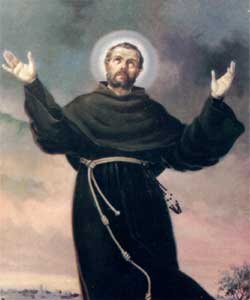
Image Source: Blessed Giles of Assisi levitating.
Read more >>
Wednesday, January 10, 2007
Prayer for Final Exams

I imagine most of my readers have noticed that I have posted much less this week than typically. It is simply because I have finals this week. Next week I hope to again continue my frequent postings!

Also, I have been having some trouble lately with an online Catholic forum because of my love for the Tridentine Mass and the Traditions of the Church. I would appreciate your prayers for the improvement of this situation.

This powerful prayer is very effective in examinations. It has to be said before appearing in the examination. There are two variants to this prayer. Both the prayers are equally effective. You can choose any one of these:

First Prayer

O Great St. Joseph of Cupertino who while on earth did obtain from God the grace to be asked at your examination only the questions you knew, obtain for me a like favour in the examinations for which I am now preparing. In return I promise to make you known and cause you to be invoked.

Through Christ our Lord.

St. Joseph of Cupertino, Pray for us.

Amen.

Second Prayer

O St. Joseph of Cupertino who by your prayer obtained from God to be asked at your examination, the only preposition you knew. Grant that I may like you succeed in the (here mention the name of Examination eg. History paper I ) examination.

In return I promise to make you known and cause you to be invoked.

O St. Joseph of Cupertino pray for me

O Holy Ghost enlighten me

Our Lady of Good Studies pray for me

Sacred Head of Jesus, Seat of divine wisdom, enlighten me.

Remember, when you succeed in the exams then you should thank St. Joseph of Cupertino.

Image Source: Ordo Fratrum Minorum Conventualium

Remember, when you succeed in the exams then you should thank St. Joseph of Cupertino. And if you would like a prayer card you can use and include in your books, find a great option here.
Read more >>
The Tridentine Mass in the Diocese of San Jose

There is great news for Catholics that feel particularly attached to the 1962 Tridentine Liturgy. As a proud Catholic, who loves the Tridentine Liturgy, I am very happy for those Catholics in the Diocese of San Jose. The following is via PerpetualHelp.org:

CANONICAL ESTABLISHMENT:

Bishop Patrick J. McGrath has decreed the canonical establishment of the Oratory of the Chapel of Our Mother of Perpetual Help on 1298 Homestead Road, Santa Clara, California for the Catholic faithful in the Diocese of San Jose who are attached to the rituals in use in 1962 effective January 1, 2007. The Oratory is entrusted to the pastoral care of the Institute of Christ the King Sovereign Priest.

Bishop McGrath formally welcomes the Institute of Christ the King Sovereign Priest into the Diocese of San Jose.
Read more >>
Tuesday, January 9, 2007
Prayer for the Week of Christian Unity


[Please prepare to say this prayer daily during the Week of Christian Unity which is January 18-25]

English:

May they all be on as you, Father, are in me, and I in you, so that the world may come to believe that you have sent me.

R. You are Peter

V. And it is upon this rock that I will build my Church.

Let us pray: Lord Jesus Christ, who said to your apostles: I leave peace with you; it is my own pace that I give you; look not upon our sins but upon your Church's faith, and graciously grant her peace and unity in accordance with your will. You who live and reign forever and ever.

R. Amen.

Latin:

Ut omnes unum sint, sicut tu Pater in me et ego in te; ut mundus credat quia tu me misita.

R. Tu es Petrus.

V. Et super hanc petram dificabo ecclesiam meam.

V. Oremus: Domine Iesu Christe, qui dixisti Apostolis tuis: pacem relinquo vobis, pacem mean do vobis ne rspicias peccata nostra, sed fidem Ecclesie tuae, eamque secundum voluntatem tuam pacificate et coadunare digneris. Qui vivis et regnas in saecula saeculorum.

R. Amen
Read more >>
Saint for the Year 2007 Updates

I am continuing to get Saint for the Year Requests. It is amazing! There have been exactly 708 requests already for 2007! I am working extremely hard to email people back, and most people do let me know they receive their message. If you do not give me an email address or a blog url, then please see my Results Page to find your saint. Then comment on that page giving your name/screenname to let me know that you have received the results.

If you have requested a saint over 2 weeks ago but have not yet received a reply, then please email me again. I have a list of requests I am still trying to take care of, though, and they are from the past two weeks.
Read more >>
Monday, January 8, 2007
The Baptism of the Lord


Today the Church celebrates the Baptism of the Lord, recalling the glorious event in the River Jordan. For more information on this feast as well as on Baptism, see my post from last year.


Collect:

Almighty, eternal God, when the Spirit descended upon Jesus at his baptism in the Jordan, you revealed him as your own beloved Son. Keep us, your children born of water and the Spirit, faithful to our calling. We ask this through our Lord Jesus Christ, your Son, who lives and reigns with you and the Holy Spirit, one God, for ever and ever.
Read more >>
Sunday, January 7, 2007
Bishop Asenjo: No Use of the Cathedral Allowed by Muslims

A few weeks ago, a group of Muslims from Spain asked Bishop Juan Asenjo Pelegrina of Cordoba for permission to worship in the Cathedral of Cordoba, which used to be a mosque in medieval times. Thankfully, the bishop has denied their request.

In a Dec. 27 statement responding to the request, Bishop Asenjo said he believed Cordoba's "relatively small" Muslim minority -- less than 1 percent of its 350,000 inhabitants -- did not need extra facilities
......................
However, he added, the Catholic Church held "irrefutable historic titles" to exclusive use of the cathedral and believed that sharing it would "only generate confusion among the faithful and give rise to religious skepticism."

"The Christian roots of Cordoba and its 1,700-year Christian history deserve respect," said the bishop. "Catholics in Cordoba wish to live in peace with believers of other creeds. But we do not want to be continually subjected to pressure that contributes nothing."
Read more >>
St. Raymond of Peñafort: Third Dominican Master

Optional Memorial (1969 Calendar): January 7
Semidouble (1954 Calendar): January 23

St. Raymond was born in 1175 in Peñafort, Catalonia, Spain to noble parents. He became a philosophy teacher around the age of 20 and later a priest. St. Raymond joined the Dominicans in 1218. In 1230, he was summoned to Rome by Pope Gregory IX and assigned to collect all official letters of the popes since 1150. St. Raymond gathered the letters and published five volumes known as the Decretals.

In 1238, St. Raymond became the Master general of the Dominicans. After reviewing the Order's Rule to ensure everything was legally correct with Church law, he resigned his position in 1240 to dedicate himself to parish work. He also declined the offer to become archbishop to focus on the parish work he loved in Spain.

His compassion helped many people return to God through Reconciliation - the Sacrament of Confession. St. Raymond started a school to teach missionaries the language and culture of the non-Christians needing to be evangelized in Northern Africa and Spain. Along with St. Thomas Aquinas, he wrote a booklet to explain the truths of faith in a way nonbelievers could easily understand.

He died on January 6, 1275, in Spain of natural causes.

Dom Gueranger writes of him in his work "The Liturgical Year." The following is an excerpt:
St Raymund has the honour of having been intrusted to draw up the Church's Code of Canon Law. It was he who, in the year 1234, compiled, by order of Pope Gregory the Ninth, the five Books of the Decretals; and his name will ever be associated with this great work which forms the basis of the actual discipline of the Church. 
Raymund was a faithful disciple of that God who came down from heaven to save sinners by calling them to receive pardon. He has merited the beautiful title, conferred on him by the Church, of excellent Minister of the Sacrament of Penance. He was the first who collected together into one body of doctrine the maxims of Christian morality, which regulate the duties of the confessor with regard to the faithful who confess their sins to him. The Sum of Penitential Cases opened the series of those important treatises in which learned and holy men have carefully considered the claims of law and the obligations of man, in order to instruct the Priest how to pass judgement, as the Scripture says, between leprosy and leprosy. 
In fine, when the glorious Mother of God, who is also the Mother of men, raised up for the redemption of captives the generous Peter Nolasco—whom we shall meet, a few days hence, at the Crib of our Redeemer—Raymund was an important instrument in this great work of mercy; and it is with good reason that the Order of Mercy looks upon him as one of its Founders, and that so many thousand captives, who were ransomed by the Religious of that Order from the captivity of the Moors, have honoured him as one of the principal authors of their liberty.
Prayer:

O God, Who didst choose blessed Raymond to be eminent as a minister of the Sacrament of Penance and dist lead him in wondrous wise upon the waves of the sea: grant that by his intercession we may be able to bring forth worthy fruits of penance, and to reach the port of everlasting salvation. Through our Lord.

Prayer Source: 1962 Roman Catholic Daily Missal
Read more >>
Friday, January 5, 2007
Can God be known by Reason Alone?


The answer is "Yes". God can be known to exist by the use of reason alone even though many will deny such a claim. The Church teaches that the answer is clearly "yes" as she did so dogmatically: "If anyone says that the one, true God, our Creator and Lord, cannot be known with certainty from the things that have been made, by the natural light of human reason: let him be anathema."
Read more >>
Thursday, January 4, 2007
The Eventual End of This Blog

Today I read from several other people that seminarians at the seminary I will be attending are not allowed to have blogs or use forums online. I was extremely disappointed, but I will do whatever I must to live in obedience to my superiors. I plan on keeping this blog on the Internet forever. I have worked and put months worth of hours into this blog. I hope that it is a source of information for months while I am not blogging. Specifically, the "Catholic Categories" has very valuable information.

I do, however, hope to post on this blog throughout the summer. So, starting in Fall 2007, I will be unable to post for a significant amount of time - probably until Summer 2008. However, I will be able to email people, so I will remain in touch with my readers. I have grown so close to many readers that it will be very difficult to stop blogging for those months. I pray that I will be able to do whatever is required of me.

Update: As you are aware, I am no longer in the seminary now and intend to keep this blog indefinitely now
Read more >>
Wednesday, January 3, 2007
Video: Tridentine Votive Mass of the Blessed Virgin Mary


This is a beautiful video of a Votive Mass of the Blessed Virgin Mary at the Roman Catholic (SSPX) Priory of St. Pius X in Warsaw, Poland.

Read more >>
Optional Memorial of the Holy Name of Jesus


Today is the day on which we especially honor the Holy Name of Jesus. Let us meditate on Jesus' name today, the name given by the angels, as we pray the Litany of the Holy Name. See my post from last year.
Read more >>
Tuesday, January 2, 2007
St. Gregory Nazianzen


Double (1955 Calendar): May 9

St. Gregory Nazianzen was born in 330 AD. As a young man, he traveled in the pursuit of learning and eventually joined his friend Basil the Great as a hermit. He was later ordained as a priest and then the Bishop of Constantinople in 381. Yet with factions dividing the Church, he returned to Nazianzen, where he died on January 25th 389 or 390 AD. St. Gregory Nazianzen was called theologos because of his outstanding teaching and eloquence. He is a Doctor of the Church.

Traditional Reading at Matins:

Gregory, a Cappadocian noble, surnamed the Theologian, on account of his extraordinary learning in the sacred sciences, was born at Nazianzum in Cappadocia. He went through a complete course of studies at Athens, together with St Basil, after which he applied himself to the study of the sacred Scriptures. The two friends retired to a monastery, where they spent several years over the Scripture, interpreting it not according to their own views, but by the mind and authority of the earlier Fathers. Owing to their reputation for learning and virtue, they were called to the ministry of preaching the Gospel, and became the spiritual fathers of many souls.

After Gregory had returned home, he was made bishop of Sasima, and afterwards administered the church of Nazianzum. Being called later on to govern the Church of Constantinople, which was infected with heresy, he converted it to the Catholic faith. This success, far from gaining him the love of everyone, excited the envy of a great many and caused a division among the bishops, which led the Saint to resign his see. He said to them in the words of the prophet: ' If this tempest be stirred up on my account, cast me into the sea, that you may cease to be tossed.' Whereupon he returned to Nazianzum; and, having secured the appointment of Eulalius, Bishop of that Church, he devoted his whole time to the contemplation of divine things, and to writing treatises upon them.

He wrote much, both in prose and verse, of an admirable piety and eloquence. In the opinion of learned and holy men, there is nothing to be found in his writings which is not conformable to true piety and Catholic faith, or which anyone could reasonably call in question. He was a vigorous defender of the consubstantiality of the Son of God. No one ever led a more saintly life than he; no one was to be compared to him for eloquence. He led the life of a monk, spending his whole time in solitude, occupied in writing and reading. Having reached a venerable old age, he died during the reign of the emperor Theodosius, and entered into the blessed life of heaven.

Prayer written by St. Gregory Nazianzen:

O All-Transcendent God (and what other name could describe you?), what words can hymn your praises? No word does you justice. What mind can probe your secret? No mind can encompass you. You are alone beyond the power of speech, yet all that we speak stems from you. You are alone beyond the power of thought, yet all that we can conceive springs from you. All things proclaim you, those endowed with reason and those bereft of it. All the expectation and pain of the world coalesces in you. All things utter a prayer to you, a silent hymn composed by you. You sustain everything that exists, and all things move together to your orders. You are the goal of all that exists. You are one and you are all, yet you are none of the things that exist - neither a part nor the whole. You can avail yourself of any name; how shall I call you, the only unnameable? All-transcendent God!

Collect:

O God, Who didst give blessed Gregory to Thy people as a minister of eternal salvation: grant, we beseech Thee, that we, who have had him for our teacher on earth, may deserve to have him for our advocate in heaven. Through our Lord.

Prayer Source: 1962 Roman Catholic Daily Missal
Read more >>
Monday, January 1, 2007
Avoid the Neocatechumenal Way

After reading up about the Neocatechumenal Way today, I feel obligated to write about my strong disapproval for the organization. The Neocatechumenal Way or Neocatechumenate is a "Post Baptismal Catechumenate" i.e. a Christian initiation process within the Roman Catholic Church that is dedicated to adult faith formation. However, as part of their regular celebration of the Holy Sacrifice of the Mass the Way performs numerous liturgical abuses and engages in teachings that are, at their core, not Catholic.  Not only have they lost the Liturgy but their actions call into question their foundation in solid Catholic doctrine.

I found an abundance of information on the doctrinal errors of the Neocatechumenal Way from the faithful magazine "Christian Order," specifically a 1995 article. Here is some information from that magazine relating to the doctrinal errors of Neocatechumenal Way.  And here is an additional source written by Fr. Zoffoli on the problems in the Way.

THESE STATEMENTS DO NOT LIE.  THE WAY DOES NOT TEACH CATHOLIC DOCTRINE.  AVOID THEM AT ALL COST NO MATTER WHICH BISHOPS OR PRIESTS MIGHT SUPPORT THEM.  THEY ARE NOT CATHOLIC


* * * *


1. SIN: man cannot avoid committing it, in the same way as he can neither accomplish good nor acquire merits for himself;

- conversion is possible only as recognition, by everyone, of their own moral poverty, not as a determined wish to correct one’s
- sin cannot offend God, and man does not incur the duty to expiate it by satisfying the requirements of His justice.

2. REDEMPTION: Jesus has not brought this about by liberating man from his faults and reconciling him with God;

- the passion and death of Christ has not been a true sacrifice offered to the Father in order to remedy sin and to redeem man;
- Jesus saved the world by virtue of His Resurrection: in order to enjoy the fruits of His work it is enough to confess to be sinners and to believe in the power of the risen Christ.


3. THE CHURCH was not founded by Christ as his only Sheepfold: it is also possible to save oneself by following other religions;

- the Church is not a juridical and hierarchical society, but a spiritual, charismatic one;
- in it there is not found a priesthood derived from the sacrament of the Order - as it is sufficient to have the Baptism which, incorporating all the believers in Christ, makes them participants of His priestly dignity.

4. THE MASS is not a “sacrifice”: the Church, at the altar, does not offer to God any Victim;

- in place of the altar, there is nothing but the table, which in the Eucharist allows a festive party to be celebrated among brothers united by the same faith in the Resurrection;
- the consecrated bread and wine are only the symbol of the presence of the risen Christ which unites the fellow-guests by communicating their own spirit, thus making them participants in his triumph over death;
- the Mass, thus conceived, is not celebrated by the priest, but by the Assembly, from which “springs the Eucharist.”


5. EUCHARISTIC WORSHIP does not have any meaning, it negates the true, real and substantial presence of Christ under the sacramental species. Acts of faith such as genuflections before the Tabernacle, frequent Communions, hours of adoration, benedictions, processions, congresses, etc. are not therefore justified.

6. CONFESSION is reduced to the sacrament of Baptism: their distinction does not go back to the primitive Church:

- the Church “gestates and leads to the conversion.” “The important thing is not the absolution” of the priest, because the value of the confession is essentially its community and ecclesial nature;
- in the “passages” and in the, “scrutinies” the acknowledgement of one’s transgressions, including the serious ones, is public, as can still be the case during the “redditio.”

7. THE CHRISTIAN LIFE, as a voluntary effort of self-discipline, and therefore an exercise and progress in virtue, is an illusion;

- everyone remains intrinsically a sinner, incapable of obtaining true justice as a perfection of the love of God and of one’s fellow creatures;

- on the other hand, Jesus has not been presented to anyone as a “model” to be imitated;
- He has commanded that we should actually hate our parents, brothers, relatives etc, not just, if necessary, to be prepared to prefer Him to them;

- in order to follow Christ, we need to sell our own goods; but, once this renunciation has been accomplished, it is permissible to acquire others and to enjoy all the pleasures of life. “Poverty” as understood by St. Francis, is inspired by the “natural religion,” and was also practised by the pagans: it is not a Christian virtue;

- Jesus, having suffered for us, has made our sufferings superfluous, therefore the austerities of the ascetics, the slow martyrdom of the Saints and the religious life itself, involving the effective practice of the evangelical counsels, are not justifiable;

- eternal salvation is offered freely to all by the mercy of God, who forgives everything. Hell should not exist, nor should one speak of Purgatory, of prayers and of indulgences for the dead.


8. THE HISTORY of the true Church founded by Christ comes to an end with the Pax Constantinia and does not resume its course until the 20th century with the Second Vatican Council, having remained frozen for about 1,600 years ... ;

- in this long interval, the exercise of the triple power of the hierarchical Church (teaching, sanctification, guidance) would have been improper, illegitimate ... ; and in particular the Council of Trent would be responsible for the paralysis of the Church, determined to fix formulae of faith, liturgical rites, disciplinary, rules ... ;
- the interpretation of the Word of God is not reserved for the Hierarchy, it is possible for all believers: “the Bible is explained by itself.” This freedom of examination in the exegesis excludes the ecclesiastical Teaching, the tradition of the Elders and the doctrine of the theologies.

* * * *

The above statements are heresy. The Neocatechumenal Way does not refer to the Altar as anything more than a "table" when it is a symbol of our Lord Jesus Christ and one of the holiest objects on Earth. Here is a comment concerning liturgical abuses performed by the Neocatechumenal Way on EWTN's Catholic Q and A:
"This group engages in various practices within their special liturgy that are regularly considered abuses, such as standing at the Consecration, decorating the Altar with flowers, dancing around the Altar, or 'Table' as they call it, after Mass, accompanying the chanting of the Eucharistic Prayer with guitars, to name a few." I found a picture of a Baptism done by a deacon instead of a priest via Yahoo Images. It is done very differently than in a typical parish. Also, notice the flowers on the altar, which should not be there as this is a violation of the laws of the Church.
Comments (Updated 2011):

I would like to highlight the comment by Rob which I share below:
Thank you for posting the article "Avoid The Neocatechumenal Way". Four years worth of comments - Wow. I just included the following in my comment and hope you'll consider it. 

"The four years worth of comments here are mostly tantrums of the teenage angst vein - "you don't understand me" - instead of intelligent discussion. There are a couple really great comments though and it would be helpful if the original poster would stick in a P.S. to advise all new commentors to at least read these two before they post their own. 

1. - two part post beginning February 24, 2010 - 12:42 AM
2. - seven part post beginning July 18, 2010 - 3:18 PM"
Update: August 13, 2011

First and foremost, to those of you who say that the Neocatechumenal Way is to be accepted because the Holy Father has approved its decrees, you are mistaken. Read carefully: "Blind obedience is not Catholic; nobody is exempt from responsibility for having obeyed man rather than God if he accepts orders from a higher authority, even the Pope when these are contrary to the Will of God as it is known with certainty from Tradition. It is true that one cannot envisage such an eventuality when the papal infallibility is engaged, but this happens only in a limited number of cases. It is an error to think that every word uttered by the Pope is infallible" (Open Letter to Confused Catholics)

The problem with our modern times is that modernism and errors have affected even the Holy Father. He is not sinless. And, if I might say, he is incorrect to approve the Neocatechumenal Way which at its core is not Catholic. It is protestant for the reasons aforementioned in this post.

You might say, how is the Holy Father in error? Unfortunately, even he has fallen into some of the snares of liberal Catholics. I'd encourage you to read my post outlining the six errors of liberal Catholics with an analysis on how the hierarchy no longer believes "outside the Church, there is no salvation." From this fundamental error, liberalism has infected the Church and has begun to pollute the Liturgy. The NeoCat Way is nothing more than a protestant infection in the Church founded by Jesus Christ.

Update: January 23, 2012

From the Catholic News Agency after news items claim that the Neocatechumenal Way has received approval for their Celebration of the Mass.  The Vatican clarifies.
The Vatican’s approval of the Neo-Catechumenal Way’s forms of “celebration” only applies to non-liturgical prayers within their catechesis and not to the Mass or other liturgies of the Church. 


“With respect to the celebrations of the Holy Mass and the other liturgies of the Church,” communities of the Neo-Catechumenal Way must “follow the norms of the Church as indicated in the liturgical books – to do otherwise must be understood to be a liturgical abuse,” a Vatican official told CNA on Jan. 21. 


Pope Benedict XVI met with around 7000 members of the movement in the Vatican’s Paul VI Audience Hall on Jan. 20 for an annual event to send families on mission destinations worldwide. 


The invitation issued by the movement to bishops for yesterday’s event stated that “the purpose of this meeting is that His Holiness will sign a Decree from the Congregation of Divine Worship recognizing the full approval of the liturgies of the Neo-Catechumenal Way.” 


However, the approval for non-liturgical practices of the group came by way of another source. It was Pontifical Council for the Laity that issued a decree of approval – after having consulted the Congregation for Divine Worship – for those “celebrations” present in their Catechetical Directory. 


In this process, “the Neocatechumenal Way obtained no new permissions whatsoever,” said the official, who is familiar with the approval process for prayers and liturgies.

“Essentially, the Pontifical Council is only approving these things that are found in the Catechetical Directory of the Neocatechumenal Way, and in no way touches those things contained in the liturgical books.”
Update (November 2015):

Taken from Tradition in Action which summarizes many of the issues with the Way
According to the founders’ thinking, the Passion and Death of Christ plays no role in man’s redemption. Therefore, the Mass is not a renewal of His Sacrifice, and not an altar but a table is where the banquet feast is held. This is quite similar to the Protestant doctrine so dear to Archbishop Bugnini.  
Argüello and Hernandez justify all their changes with the “profound renewal of the liturgy that came at Vatican II.” Indeed, many of the neocatechumenal practices are common in Novus Ordo Masses.  
Other Protestant-inspired changes  
For many years, the teachings of Argüello and Hernandez were kept away from the public. But during the Vatican process of approval, some of their texts were published. These texts, taken from The Neocatecumenate, A Christian Initiative for Adults, (3) clearly reveal the Protestant thinking that inspires the movement: 
It justifies Luther’s revolt: “It is understandable why Luther emerged making a clean break with everything he believed was a purely human addition or tradition.”
It promotes Luther’s teaching on justification: “Man is not saved by good works … Jesus Christ did not come to give us a model of life, an example. … The Holy Spirit does not lead us to perfection, to good works … God freely forgives the sins of those who believe that Jesus is the Savior.”  
It rejects transubstantiation: “Luther, who never doubted the real presence of Christ in the eucharist, rejected ‘transubstantiation,’ because it was bound to Aristotelian-Thomistic concept of substance, which is foreign to the Church of the Apostles and the Fathers”  
It rejects the Council of Trent: “The rigidity and fixity of the Council of Trent generated a static mentality in the liturgy, which has persisted to our day.” 
After a serious study on the Neocatechumenal Way, theologian Fr. Enrico Zoffoli did not hesitate to accuse the movement of being heretical in an article that can be read here.
Fr. Zoffoli also expressed grave concern for the fact that these errors are taught in the 78 Redemptoris Mater seminaries of the Neocatechumenal Way, which have already ordained 12,000 priests in the last 20 years. (4)
Given its Lutheran inspiration and the solid study of Fr. Zoffoli, one can legitimately question whether the “celebrations” of the Neocatechumenal Way are actually valid Masses. Do their priests intend to do what the Church does, offer a propitious sacrifice, when their founders explicitly deny that the Mass is a sacrifice?  
Notwithstanding these doctrinal errors, at the recent papal audience, Benedict XVI approved the movement and encouraged its members to continue their work and "offer your original contribution to the cause of the Gospel."  
Unorthodox liturgical practices  
The liturgy of the Neocatechumenal Way was shaped by Kiko Argüello and Carmen Hernández based, they claim, squarely on the new teachings of Vatican II. It pretends to return to the practices of the early Church, which were allegedly warped and deviated from the true path for centuries until the Council. One of the movement’s early mentors and supporters was none other than Archbishop Annibale Bugnini, the main architect of the New Mass. 
Dancing and singing around the table, a regular part of the Neocatechumenal celebration
Kiko Argüello and Carmen Hernandez say that the original emphasis on the resurrection of Christ in the Mass was lost in the Constantine era and an erroneous sacrificial tone was inserted in its place. Their liturgy calls for paschal exultation at a table, not a sacrifice at an altar.  
The members of the Neocatechumenal Way, make their “celebrations” (they do not call them masses) on Saturday night. The small community – ideally no more than 20 or 30 - gathers in chairs around a table (never an altar, which suggests sacrifice) in the center of one of the parish buildings (which they prefer to churches). There they perform their “celebration” sitting and standing, never kneeling or genuflecting. For the Consecration the whole community stands.  
Communion is received standing. Each member receives in his hands a piece of the bread broken from a huge loaf – baked by the members themselves according to Argüello’s specific instructions. Then the celebrant sits and waits for all the faithful to receive the bread. After the presbyter says, “Body of Christ, bring us everlasting life,” the whole congregation consumes the loaf together. Then the cup is shared by all. The presbyter is supposed to carry it around, but often the members pass it from hand to hand, to give the sense of eating and drinking around a dinner table.  
Since, according to their doctrine, the interpretation of the Word of God is not reserved for the Hierarchy, before the sermon anyone present can give his witness.  
Participants dance or process around the table, chanting songs written by Argüello and accompanied by guitar, defined as the instrument “closest to the ancient Hebrew psalter.” There are no hymns or special devotion to Our Lady and the Saints.  
Read more >>
Solemnity of the Mother of God


Today is the Octave Day of Christmas as well as the Solemnity of Mary, Mother of God. See my post from last year for more information.
Read more >>
Happy New Year

A Blessed and Happy New Year!
Read more >>


Copyright Notice: Unless otherwise stated, all items are copyrighted under a Attribution-NonCommercial-NoDerivatives 4.0 International License. If you quote from this blog, cite a link to the post on this blog in your article.

Disclosure of Material Connection: Some of the links on this blog are “affiliate links.” This means if you click on the link and purchase the item, I will receive an affiliate commission. As an Amazon Associate, for instance, I earn a small commission from qualifying purchases made by those who click on the Amazon affiliate links included on this website. I am disclosing this in accordance with the Federal Trade Commission’s 16 CFR, Part 255: “Guides Concerning the Use of Endorsements and Testimonials in Advertising.”