Showing posts sorted by relevance for query Pentecost. Sort by date Show all posts
Thursday, January 10, 2013
Traditional Roman Catholic Sunday Mass Propers


1962 vs. Pre-1955 Mass Propers

To those Catholics looking for the Traditional (pre-Vatican II) Sunday propers, look no further than the below list.  Do note: these are from the 1945 Missal and represent the Mass as it was said up until the changes made in 1955 by Pope Pius XII. The changes in the cycle of Sunday readings, outside of Holy Week, only really affected Sundays that previously had commemorations of Octaves. So you will notice commemorations of the Octave of the Sacred Heart, Corpus Christi, and the Ascension which are not retained in the 1962 Missal. We can in a greater way help preserve Catholic Tradition by keeping and praying these traditional Octaves and keeping the older readings that were part of the Faith for centuries. 

The most significant changes to the Missal in 1955 concern Holy Week but most of the readings remained the same except for the Easter Vigil, although the rubrics changed significantly. Notes on the differences between the Pre-1955 Readings and the Post-1955 readings are noted on each post.

Temporal vs. Sanctoral Cycle

The Proper of Seasons, called the Temporal Cycle, traces the earthly life of Our Lord Jesus Christ. It consists mainly of Sundays related to the various liturgical seasons. This maps onto the 7 liturgical seasons contained in the two cycles we previously discussed: the Christmas Cycle and the Easter Cycle. It starts with Advent then goes through Christmas, Epiphany, Septuagesima, Lent, Easter, and Time after Pentecost.

There is also the Proper of Saints, called the Sanctoral Cycle, which is the annual cycle of feasts not necessarily connected with the seasons. We commemorate and ask the intercession of those holy men and women who set a marvelous example that we should all strive to imitate. We also commemorate various events and mysteries of the faith in the Sanctoral Cycle.

The following are the traditional proper for the temporal cycle of readings in the Traditional Latin Mass for Sundays and select other holy days. 

ADVENT 


CHRISTMAS 

EPIPHANY
LENT 

HOLY WEEK [Notes on 1962 vs 1954 Readings are included]

ASCENSION 

PENTECOST

Read more >>
Sunday, May 18, 2014
Latin Names for Sundays in the Roman Rite

Unfortunately in the past fifty years Catholics have all but forgotten that each Sunday of the Liturgical Year has a special name, taken from the first words of the Introit from the Proper Prayers for the Mass that day.

For your edification, I present the Latin names for these Sundays.  Some of these names (e.g. Laetare Sunday) are more common than others.  You may find the proper prayers on my separate page dedicated to the Traditional Mass Propers by clicking here.

Note: The Class distinction listed below is from the 1962 Rubrics.


Advent
First Sunday of Advent
1 Cl. Purple Missa 'Ad Te Levave'
Second Sunday of Advent
1 Cl. Purple Missa 'Populus Sion'
Third Sunday of Advent (Gaudete Sunday)
1 Cl. Rose Missa 'Gaudete'
Wednesday/Friday/Saturday of Advent Embertide (Wednesday, Friday and Saturday after the Third Sunday -- Gaudete Sunday -- of Advent)
2 Cl. Purple Missa 'Rorate Coeli'/Missa 'Prope es Tu'/Missa 'Veni'
Fourth Sunday of Advent
1 Cl. Purple Missa 'Rorate Coeli'
Christmastide
Vigil of Christmas
1 Cl. Purple Missa 'Hodie Scietis'
Nativity of Our Lord Jesus Christ (Christmas)
1 Cl. with Octave White First Mass at Midnight: Missa 'Dominus Dixit'
Second Mass at Dawn: Missa 'Lux Fulgebit'
Third Mass During the Daytime: Missa 'Puer Natus Est'
Sunday within the Octave of the Nativity of Our Lord
1 Cl. White Missa 'Dum Medium'
Feast of the Holy Name of Jesus (the Sunday after Jan. 1, or Sunday after the Octave Day of the Nativity, or Jan. 2, or the Sunday between the Octave Day of the Nativity and the Epiphany)
2 Cl. White Missa 'In Nomine Jesu'
The Epiphany of Our Lord Jesus Christ
1 Cl. White Missa 'Ecce Advenit'
First Sunday after Epiphany (Feast of the Holy Family)
2 Cl. White Missa 'Exsultat Gaudio'
Time after Epiphany
Second Sunday after Epiphany
2 Cl.. Green Missa 'Omnis Terra'
Third Sunday after Epiphany
2 Cl. Green Missa 'Adorate Deum'
Fourth Sunday after Epiphany
2 Cl. Green Missa 'Adorate Deum'
Fifth Sunday after Epiphany
2 Cl. Green Missa 'Adorate Deum'
Sixth Sunday after Epiphany
2 Cl. Green Missa 'Adorate Deum'
Septuagesima
First Sunday of Septuagesima (Septuagesima Sunday)
2 Cl. Purple Missa 'Circumdederunt Me'
Second Sunday of Septuagesima (Sexagesima Sunday)
2 Cl. Purple Missa 'Exsurge'
Third Sunday of Septuagesima (Quinquagesima Sunday)
2 Cl. Purple Missa 'Esto Mihi'
Lent
Ash Wednesday
1 Cl. Purple Missa 'Misereris Omnium'
First Sunday of Lent (Quadragesima Sunday)
1 Cl. Purple Missa 'Invocabit Me'
Wednesday/Friday/Saturday of Lenten Embertide (Wednesday, Friday, and Saturday after the First Sunday of Lent)
2 Cl. Purple Missa 'Reminiscere Miserationum Tuarum'/Missa 'De Necessitatibus'/Missa 'Intret Oratio'
Second Sunday of Lent
1 Cl. Purple Missa 'Reminiscere Miserationum'
Third Sunday of Lent
1 Cl. Purple Missa 'Oculi Mei'
Fourth Sunday of Lent ("Laetare Sunday" or "Rose Sunday")
1 Cl. Rose Missa 'Laetare'
Fifth Sunday of Lent (Passion Sunday, which begins the two weeks of Passiontide)
1 Cl. Purple Missa 'Judica Me Deus'
Friday after Passion Sunday (Feast of the Seven Sorrows)
Com. White Missa 'Sabant Juxta'
Sixth Sunday of Lent and Second Sunday of Passiontide (Palm Sunday, which begins Holy Week)
1 Cl. Red Missa 'Domine Ne Longe'
Spy Wednesday (the Wednesday of Holy Week)

Purple Missa 'In Nomine Jesu'
Maundy Thursday (the Thursday of Holy Week. The three days called the "Sacred Triduum" begin now)
1 Cl. White Missa 'Nos Autem'
Good Friday (the Friday of Holy Week)
1 Cl. Black Mass of the Presanctified (not a true Mass, but a Communion Service using pre-sanctified Hosts)
Paschaltide
Holy Saturday (Eastertide begins with the Vigil Mass)
1 Cl. Purple No Mass, but an Easter Vigil Service which begins the Easter Season
Easter Sunday
1 Cl. with Octave White Missa 'Resurrexi'
Monday in Easter Week
1 Cl. White Missa 'Introduxit'
Tuesday in Easter Week
1 Cl. White Missa 'Aqua Sapientiae'
Wednesday in Easter Week
1 Cl. White Missa 'Venite'
Thursday in Easter Week
1 Cl. White Missa 'Victricem Manum Tuum'
Friday in Easter Week
1 Cl. White Missa 'Eduxit Eos Dominus'
Saturday in Easter Week
1 Cl. White Missa 'Eduxit Dominus'
First Sunday after Easter ("Low Sunday" or "Quasimodo Sunday" or "Divine Mercy Sunday")
1 Cl. White Missa 'Quasi Modo'
Second Sunday after Easter

White Missa 'Misericordia Domini'
Third Sunday after Easter

White Missa 'Jubilate Deo'
Fourth Sunday after Easter

White Missa 'Cantate Domino'
Fifth Sunday after Easter

White Missa 'Vocem Jucunditatis'
Outside of Eastertide: Missa "Protexisti'
Ascension Thursday
1 Cl. White Missa 'Viri Galilaei'
Vigil of the Pentecost
1 Cl. Red Missa 'Cum Sanctificatus'
Pentecost Sunday (Whitsunday)
1 Cl. with Octave Red Missa 'Spiritus Domini'
Wednesday/Friday/Saturday of Whit Embertide (Wednesday, Friday and Saturday after Pentecost)
1 Cl./1 Cl./1 Cl. Red/Red/Red Missa 'Deus Dum Egredereris'/Missa 'Repleatur Os Meum'/Missa 'Caritas Dei'
Time after Pentecost
First Sunday after Pentecost (Trinity Sunday)
1 Cl. Green Missa 'Benedicta Sit'
Thursday after Trinity Sunday (Feast of Corpus Christi)
1 Cl. White Missa 'Cibavit Eos' and Procession
Second Sunday after Pentecost
2 Cl. White Missa 'Factus Est Dominus'
Friday after the Second Sunday after Pentecost (Feast of the Sacred Heart)
1 Cl. White Missa 'Cogitationes Cordis'
Third Sunday after Pentecost
2 Cl. White Missa 'Respice In Me'
Fourth Sunday after Pentecost
2 Cl. Green Missa 'Dominus Illuminatio Mea'
Fifth Sunday after Pentecost
2 Cl. Green Missa 'Exaudi Domine'
Sixth Sunday after Pentecost
2 Cl. Green Missa 'Dominus Fortitudo'
Seventh Sunday after Pentecost
2 Cl. Green Missa 'Omnes Gentes'
Eighth Sunday after Pentecost
2 Cl. Green Missa 'Suscepimus Deus'
Ninth Sunday after Pentecost
2 Cl. Green Missa 'Ecce Deus Adjuvat'
Tenth Sunday after Pentecost
2 Cl. Green Missa 'Cum Clamarem'
Eleventh Sunday after Pentecost
2 Cl. Green Missa 'Deus In Loco'
Twelfth Sunday after Pentecost
2 Cl. Green Missa 'Deus in Adjutorum'
Thirteenth Sunday after Pentecost
2 Cl. Green Missa 'Respice Domine'
Fourteenth Sunday after Pentecost
2 Cl. Green Missa 'Protector Noster'
Fifteenth Sunday after Pentecost
2 Cl. Green Missa 'Inclina Domine'
Sixteenth Sunday after Pentecost
2 Cl. Green Missa 'Miserere Mihi Domine'
Seventeenth Sunday after Pentecost
2 Cl. Green Missa 'Justus Es Domine'
Wednesday/Friday/Saturday of Michaelmas Embertide (Wednesday, Friday and Saturday after September 14)
2 Cl. Purple Missa 'Exsultate Deo'/Missa 'Laetetur Cor'/Missa 'Venite Adoremus Deum'
Eighteenth Sunday after Pentecost
2 Cl. Green Missa 'Da Pacem Domine'
Nineteenth Sunday after Pentecost
2 Cl. Green Missa 'Salus Populi'
Twentieth Sunday after Pentecost
2 Cl. Green Missa 'Omnia Quae Fecisti'
Twenty-first Sunday after Pentecost
2 Cl. Green Missa 'In Voluntate Tua'
Twenty-second Sunday after Pentecost
2 Cl. Green Missa 'Si Iniquitates Observaveris'
Twenty-third Sunday after Pentecost
2 Cl. Green Missa 'Dicit Dominus'
Twenty-fourth Sunday after Pentecost
2 Cl. Green Missa 'Dicit Dominus'
Twenty-fifth Sunday after Pentecost
2 Cl. Green Missa 'Dicit Dominus'
Twenty-sixth Sunday after Pentecost
2 Cl. Green Missa 'Dicit Dominus'
Twenty-seventh Sunday after Pentecost
2 Cl. Green Missa 'Dicit Dominus'
Last Sunday of Pentecost (no matter how many Sundays in Pentecost there are)
2 Cl. Green Missa 'Dicit Dominus'
Read more >>
Saturday, May 18, 2013
Vigil of Pentecost: Fast and Abstinence


Today is the Vigil for Pentecost, and tomorrow we will celebrate the Descent of the Holy Spirit and the foundation of the Church. Pentecost marks the completion of the work of redemption, the fullness of grace for the Church and its children, and the gift of faith for all nations.

Fast and Abstain on the Vigil of Pentecost

Today's preparation should not be underestimated.  Catholics should fast and abstain from meat today in order to better conform themselves to celebrate this High Holy Day of Pentecost. The Vigil of Pentecost has been a day of required fasting and abstinence for centuries and it was kept as such even through the early 1960s.

The days of obligatory fasting as listed in the 1917 Code of Canon Law were the forty days of Lent (including Ash Wednesday, Good Friday, and Holy Saturday until noon); the Ember Days; and the Vigils of Pentecost, the Assumption of the Blessed Virgin Mary, All Saints, and Christmas.

On January 28, 1949, the United States bishops issued modified regulations on abstinence in America again after receiving a ruling from the Sacred Congregation of the Council. Partial abstinence replaced complete abstinence for Ember Wednesdays, Ember Saturdays, and the Vigil of Pentecost.

By 1962, the laws of fasting and abstinence were as follows as described in "Moral Theology" by Rev. Heribert Jone and adapted by Rev. Urban Adelman for the "laws and customs of the United States of America" copyright 1961: "Complete abstinence is to be observed on all Fridays of the year, Ash Wednesday, the Vigils of Immaculate Conception and Christmas. Partial abstinence is to be observed on Ember Wednesdays and Saturdays and on the Vigil of Pentecost. Days of fast are all the weekdays of Lent, Ember Days, and the Vigil of Pentecost."

Shortly after the close of the Second Vatican Council, Paul VI issued an apostolic constitution on fasting and abstaining on February 17, 1966, called Paenitemini, whose principles were later incorporated into the 1983 Code of Canon Law. Paenitemini allowed the commutation of the Friday abstinence to an act of penance at the discretion of the local ordinaries and gave authority to the episcopal conferences on how the universal rules would be applied in their region. Abstinence which previously began at age 7 was modified to begin at age 14. Additionally, the obligation of fasting on the Ember Days and on the remaining Vigils was abolished.

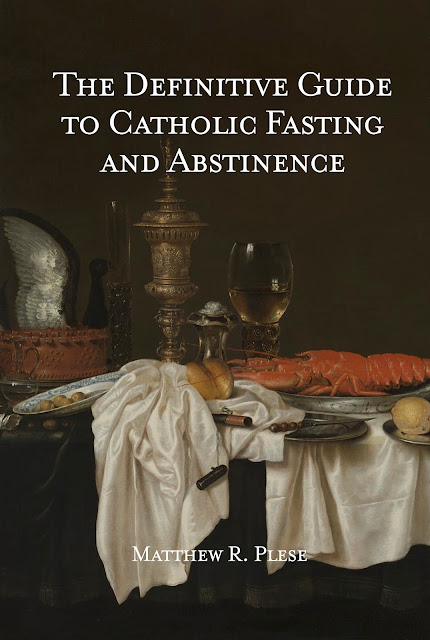
Learn more about this forgotten history in the Definitive Guide to Catholic Fasting and Abstinence.

The Vigil Mass of Pentecost   

The Mass for Pentecost was formerly celebrated during the night and has since been anticipated.  It seems that the Vigil was modeled on that of Easter.  As was observed on Holy Saturday, a vigil was kept during the night of Pentecost Sunday to prepare for the Sacrament of Baptism.  The Feast of Whitsun - the term Whitsunday is another name for Pentecost, alluding to the white vestments of the neophytes - is as ancient as that of Easter.  The Saturday following the Octave of Pentecost officially begins the Season After Pentecost. For the special prayers and readings for the pre-1955 Vigil of Pentecost, click here.

While the Novus Ordo calendar unfortunately only has 2 octaves, traditional Catholics will be familiar with the idea of multiple overlapping Octaves.  The practice of celebrating an Octave, while not only traced to the time spent by the Apostles and the Blessed Virgin Mary awaiting the Paraclete also has its origins in the Old Testament eight-day celebration of the Feast of Tabernacles (Leviticus 23:36) and the Dedication of the Temple (2 Chronicles 7:9). Very truly, Christ did not come to abolish the Old Law but to fulfill it.

This is one of the most important celebrations in the Church's liturgical year. I've prepared for this day through the Original Novena. The Feast of Pentecost (i.e., Whitsunday) is one of the principal feasts in the life of the Church.  After tomorrow's Feast (and the subsequent Octave), we will conclude Pascaltide and begin the Season after Pentecost.

Collect for the Vigil of Pentecost from the 1962 Missal:

Grant, we beseech Thee, O almighty God, that the splendor of Thy brightness may shine forth upon us, and the light of Thy light may, by the illumination of the Holy Ghost, confirm the hearts of those who have been born again by Thy grace.  Through our Lord...in the unity of the same Holy Ghost
Read more >>
Monday, May 21, 2012
Understanding Ascensiontide: Ascension Thursday through Vigil of Pentecost

Of all the seasons that the Modern Novus Ordo Catholic Calendar has neglected to properly retain and celebrate, Ascensiontide has, like Epiphanytide, unfortunately, fallen by the wayside.  But, for those Catholics committed to the Sacred Traditions of the past, Ascensiontide holds a special length of time.

Ascentiontide lasts for 10 days and is part of Pascaltide. The first nine days of Ascensiontide include the traditional Octave of the Ascension. The last day in Ascentiontide is the Vigil of Pentecost. Pentecost Sunday, which traditionally has its own octave, follows. Trinity Sunday, the Sunday after Pentecost, officially begins the Season After Pentecost. The total length of Paschaltide, from Easter Sunday to the end of Whitsuntide is 56 days (inclusively)

For this season of Ascensiontide, Catholics are welcomed and encouraged to immerse themselves in the devotions appropriate for the season.  For example, during this season there are special prayers for the time between Ascension and Pentecost.

Before the changes of Pope Pius XII in 1955, there was a liturgical octave for the Ascension, and remnants of the octave can be found in the Office as it now stands.  The appropriate texts for the minor hours (except for the collects) are set out in the psalter. For the collects, Lauds and Vespers however, you need to keep your ribbon on the page for the Ordinary of Ascensiontide. The key points to note are set out via Saints will Arise.

So what exactly is Ascensiontide and what customs do traditional Catholics observe during this time?

Ascension Thursday

Image Source: A Catholic Life Blog (c) 2019 of the Torre Dell'Orologio

Taking place 40 days after Easter Sunday, the Church celebrates Our Lord's Glorious Ascension into Heaven on Ascension Thursday. The Ascension has three principal parts: the departure of Jesus from earth, His going up into heaven, and taking His place at the right hand of the Father.

It was precisely on the fortieth day after our Lord's Resurrection that He ascended into Heaven.

On the Mount of Olives, the same mount where the Passion began, Our Lord physically ascended into Heaven. At the top of the mount is a chapel in honor of the Ascension and the ground still retains the depressions His sacred feet had left.

Fisheaters further shares some of the great regional customs for this Feast Day and Holy Day of Obligation in reference to the above image: "Something else wonderful happens in Italy on the Feast of the Ascension and the days following: in Venice, there is a clock tower in the Piazza San Marco. This marvelous clock, made in A.D. 1499 (and recently restored) indicates not only the minutes and hours, but the days, months, Zodiacal signs, and phases of the Moon as well. At the top of the tower are two large figures known as the Moors ("Mori"), who signal the hour by striking a large bell. Underneath them is a large, golden lion -- the symbol of St. Mark, patron of Venice. Underneath this is a niche which holds a figure of Our Lady and her Son. Twice a year -- on the Feast of the Epiphany and during the festivities surrounding the Ascension (known as "la Festa della Sensa" in Venice) -- doors on either side of Our Lady open up, and out come the three Magi, led by an angel. The angel and Kings make their way around Our Lady and Jesus, the angel regaling them with his trumpet, and the Kings bowing and removing their crowns."


Vigil of Pentecost

The Mass for Pentecost was formerly celebrated during the night and has since been anticipated.  It seems that the Vigil was modeled on that of Easter.  As on Holy Saturday, a vigil was kept during the night of Pentecost Sunday to prepare for the Sacrament of Baptism. Even before the changes in 1955, the Vigil of Pentecost, while not kept in the night, was still filled with rich symbolism and in many respects mirrored the Easter Vigil.

Octave of Pentecost

The Feast of Whitsun - the term Whitsunday is another name for Pentecost alluding to the white vestments of the neophytes - is as ancient as that of Easter.  The Saturday following the Octave of Pentecost officially begins the Season After Pentecost.

While the Novus Ordo calendar unfortunately only has 2 octaves, traditional Catholics will be familiar with the idea of multiple overlaping Octaves.  The practice of celebrating an Octave, while not only traced to the time spent by the Apostles and the Blessed Virgin Mary awaiting the Paraclete, also has its origins in the Old Testament eight-day celebration of the Feast of Tabernacles (Leviticus 23:36) and the Dedication of the Temple (2 Chronicles 7:9). Very truly, Christ did not come to abolish the Old Law but to fulfill it.

By the 8th century, Rome had developed liturgical octaves not only for Easter, Pentecost, and Christmas, but also for the Epiphany and the feast of the dedication of a church.

After 1568, when Pope Pius V reduced the number of octaves (since by then they had grown considerably), the number of Octaves was still plentiful.  Octaves were classified into several types. Easter and Pentecost had "specially privileged" octaves, during which no other feast whatsoever could be celebrated. Christmas, Epiphany, and Corpus Christi had "privileged" octaves, during which certain highly ranked feasts might be celebrated. The octaves of other feasts allowed even more feasts to be celebrated.

To reduce the repetition of the same liturgy for several days, Pope Leo XIII and Pope St. Pius X made further distinctions, classifying octaves into three primary types: privileged octaves, common octaves, and simple octaves. Privileged octaves were arranged in a hierarchy of first, second, and third orders. For the first half of the 20th century, octaves were ranked in the following manner, which affected holding other celebrations within their timeframes:
  • Privileged Octaves
    • Privileged Octaves of the First Order
      • Octave of Easter
      • Octave of Pentecost
    • Privileged Octaves of the Second Order
      • Octave of Epiphany
      • Octave of Corpus Christi
    • Privileged Octaves of the Third Order
      • Octave of Christmas
      • Octave of the Ascension
      • Octave of the Sacred Heart
  • Common Octaves
    • Octave of the Immaculate Conception of the BVM
    • Octave of the Solemnity of St. Joseph
    • Octave of the Nativity of St. John the Baptist
    • Octave of Saints Peter and Paul
    • Octave of All Saints
    • Octave of the Assumption of the BVM
  • Simple Octaves
    • Octave of St. Stephen
    • Octave of St. John the Apostle
    • Octave of the Holy Innocents
As one can notice, the Octave of the Pentecost ranked even higher than the Octave of Christmas!
Read more >>
Tuesday, May 21, 2013
Octave of Pentecost


During the Octave of Pentecost, the Church celebrates more especially the glories of the grace of the Holy Ghost and His secret work of sanctification in the Mystical Body of Christ.

Originally the feast of Pentecost brought to an end in Rome the fifty days of the Easter celebrations and introduced the fast of the Ember Days of the summer quarter. Afterward, it became customary to continue the festivity for two more days, the Monday and the Tuesday, and, finally, after the time of Pope St. Leo the Great, it was extended like the Octave of Easter through the entire week. For many centuries, Pentecost Monday and Pentecost Tuesday were Holy Days of Obligation.

The fasting and abstinence on the Ember Days of Pentecost is unique in the Church as these are the only Ember Days celebrated without violet vestments. But the Ember Days of Pentecost are meant to be a joyful fast.

In medieval times, families in many parts of Europe would suspend a carved and painted wooden dove over their dining table during this time of Pentecost. Such a custom could be easily revived for the throughout the Octave of the Pentecost -- and imagine that dining room table covered with a white tablecloth, sprinkled with red rose petals.

Dom Guéranger, O.S.B. in The Liturgical Year insightfully writes: "The Christian Pentecost, prefigured by the ancient one of the Jews, is of the number of the feasts that were instituted by the apostles. As we have already remarked, it formerly shared with Easter the honour of the solemn administration of Baptism. Its octave, like that of Easter, and for the same reason, ended with the Saturday following the feast. The catechumens received Baptism on the night between Saturday and Sunday. So that the Pentecost Solemnity began on the vigil, for the Neophytes at once put on their white garments: on the eighth day, the Saturday, they laid them aside."

There is a profound connection of the Scripture readings at Mass during the Octave of Pentecost with each of the Sacraments. And the Stational Churches of the Octave of Pentecost have a unique connection to the stations during the Octave of Easter.

Up until 1955 but after the time of Pope St. Pius X, Octaves were arranged in the following hierarchical order:
  • Privileged Octaves
    • Privileged Octaves of the First Order
      • Octave of Easter
      • Octave of Pentecost (Notice it's rank in the utmost category!)
    • Privileged Octaves of the Second Order
      • Octave of Epiphany
      • Octave of Corpus Christi
    • Privileged Octaves of the Third Order
      • Octave of Christmas
      • Octave of the Ascension
      • Octave of the Sacred Heart
  • Common Octaves
    • Octave of the Immaculate Conception of the BVM
    • Octave of the Solemnity of St. Joseph
    • Octave of the Nativity of St. John the Baptist
    • Octave of Saints Peter and Paul
    • Octave of All Saints
    • Octave of the Assumption of the BVM
  • Simple Octaves
    • Octave of St. Stephen
    • Octave of St. John the Apostle
    • Octave of the Holy Innocents
Sadly, Paul VI abolished the Octave in 1969, although he did not even realize it when he signed the authorization, in one sad example of his lack of oversight. Thankfully, Traditional Catholic priests keep this Octave. And even some priests who say the Novus Ordo Mass choose to celebrate Votive Masses in Honor of the Holy Ghost over this week.
Read more >>
Monday, June 1, 2020
Pentecost Monday & Pentecost Tuesday as Holy Days of Obligation

When writing about the rank of days in the Catholic Liturgical calendar, there are various ways to label them. In the modern Church, they will use the terms solemnity, feast, memorial, or optional memorial. In the 1962 Missal, we have First, Second, Third, or Fourth Class feastdays. But before the 1962 Missal up until the changes made by Pope Pius XII in 1955, there were from least to most important: Simples, Semidoubles, Lesser Doubles or also known as Doubles, Greater Doubles, Doubles of the second class, and lastly Doubles of the first class.
 
Using the traditional pre-1955 calendar, we notice something very interesting about Whit Monday and Whit Tuesday. Both of these days, like their counterparts in the Easter Octave, are doubles of the first class whereas the rest of the Pentecost Octave is of Double rank. The Wednesday, Friday, and Saturday of the Pentecost Octave are Ember Days and days of fasting and abstinence

Why the special treatment for Monday and Tuesday in the Octave of Pentecost? 

It is because they were universal holy days of obligation for a very long time. In 1642, Pentecost Monday and Pentecost Tuesday were listed as Holy Days per Universa Per Orbem. In 1771, Pope Clement XIV abolished both Easter Tuesday and Pentecost Tuesday as days of refraining from servile work. By 1778, they ceased being days of obligatory Mass attendance. Pentecost Monday was dropped from the universal list in 1911 by Pope St. Pius X's significant reduction in Holy Days on the Universal Calendar.

The Monday after Pentecost is still a holiday in Antigua and Barbuda, Anguilla, Austria, The Bahamas, Barbados, Belgium, The British Virgin Islands, Cyprus, Denmark, Dominica, France, Germany, Greece, Grenada, Hungary, Iceland, Ireland, Ivory Coast, Luxembourg, Monaco, Montserrat, The Netherlands, Norway, Romania, Saint Lucia, Saint Kitts and Nevis, Saint Vincent and the Grenadines, Solomon Islands, Switzerland, Togo, and Ukraine. Until 1973, it was also a holiday in Ireland, and until 1967 it was a bank holiday in the United Kingdom. And Sweden also continued to observe it as a public holiday until 2004.

The Catholic Encyclopedia affirms:
The office of Pentecost has only one Nocturn during the entire week. At Terce the "Veni Creator" is sung instead of the usual hymn, because at the third hour the Holy Ghost descended. The Mass has a Sequence, "Veni Sancte Spiritus" the authorship of which by some is ascribed to King Robert of France. The colour of the vestments is red, symbolic of the love of the Holy Ghost or of the tongues of fire. Formerly the law courts did not sit during the entire week, and servile work was forbidden. A Council of Constance (1094) limited this prohibition to the first three days of the week. The Sabbath rest of Tuesday was abolished in 1771, and in many missionary territories also that of Monday; the latter was abrogated for the entire Church by Pius X in 1911. Still, as at Easter, the liturgical rank of Monday and Tuesday of Pentecost week is a Double of the First Class.
While the Octave of Pentecost may not be days of precept anymore, we can certainly in our own prayer lives observe the Octave of Pentecost, hear Mass these days, pray the Divine Office more regularly, observe the Ember Days, and strive to sanctify them so as to do more than the minimum required by Church Law.

Veni Sancte Spiritus!
Read more >>
Sunday, June 4, 2006
The Solemnity of Pentecost!


Today is one of the most holy days in the year - Pentecost Sunday (also known as Whit Sunday)! As the Catholic Dictionary of Fr. John Hardon summarizes, today's holy day "commemorat[es] the descent of the Holy Ghost on the Apostles. It takes its name from the fact that it comes about fifty days after Easter. The name was originally given to the Jewish Feast of Weeks, which fell in the fiftieth day after Passover, when the first fruits of the corn harvest were offered to the Lord (Deuteronomy 16:9), and later on the giving of the law to Moses was celebrated."

Our celebration is based on a greater gift than that of the Two Tables of the Law to Moses - today we celebrate the Apostles and Our Lady receiving God Himself - the Holy Ghost. As the Acts of the Apostles, Chapter 1, illustrates, there were 120 people praying for the Holy Ghost. And just as the heavens opened and a dove descended in the Baptism of Jesus, the Holy Ghost descended on the Apostles and the Blessed Virgin Mary at Pentecost. How truly remarkable and breathtaking it would have been if we were there to see tongues of fire falling from the sky. But that is what happens to each of us, though invisibly, at our own Confirmation. The same Spirit is within those that have been confirmed in the Catholic Church. We have the Holy Ghost and we have the responsibility to go out and be beacons of the light of Christ, just like the Apostles did.

The word "Pentecost" means "fifty days" because today's celebration is fifty days after the celebration of the Lord's triumphant Resurrection on Easter Sunday. Pentecost, traditionally after the completion of its Octave, officially ends the Season of Pascaltide.  There is a Plenary Indulgence available today.

Dom Gueranger provides us with this account of the liturgy of Pentecost Sunday:
The Christian Pentecost, prefigured by the ancient one of the Jews, is of the number of the feasts that were instituted by the apostles. As we have already remarked, it formerly shared with Easter the honour of the solemn administration of Baptism. Its octave, like that of Easter, and for the same reason, ended with the Saturday following the feast. The catechumens received Baptism on the night between Saturday and Sunday. So that the Pentecost solemnity began on the vigil, for the neophytes at once put on their white garments: on the eighth day, the Saturday, they laid them aside. 
In the middle-ages, the feast of Pentecost was called by the beautiful name of ‘The Pasch of roses,’ just as the Sunday within the octave of the Ascension was termed the ‘Sunday of roses’. The colour and fragrance of this lovely flower were considered by our Catholic forefathers as emblems of the tongues of fire, which rested on the heads of the hundred and twenty disciples, and poured forth the sweet gifts of love and grace on the infant Church. The same idea suggested the red-coloured vestments for the liturgical services during the whole octave. In his Rational (a work which abounds in most interesting information regarding the mediæval liturgical usages), Durandus tells us that, in the thirteenth century, a dove was allowed to fly about in the church, and flowers and lighted tow were thrown down from the roof, during the Mass on Whit Sunday; these were allusions to the two mysteries of Jesus’ baptism, and of the descent of the Holy Ghost on the day of Pentecost.
When we read the Old Testament we realize that it mirrors and foreshadows the New Covenant in Christ. In the Old Testament, Jews celebrated Pentecost as an important feast to commemorate Moses receiving from God the Tablets of the Law.  Yet, for us Christians, we celebrate an even greater gift today - receiving the Third Person of the Trinity, God Himself, into our souls!

And the account of the Descent of the Holy Ghost holds another important lesson - prayer is necessary. After praying fervently for nine days Mary and the apostles receive the gift from on high. And it was when Jesus was praying after His baptism that the Heavens opened. It was during prayer that Jesus was transfigured on Mt. Tabor. Today we recall that the Holy Ghost descended during prayer. Let us keep the importance of prayer in mind. Prayer is after all necessary for salvation.

It was through the Spirit that the Apostles, the men who ran in fear during the Crucifixion, were given the courage to bring Jesus Christ to the whole world. They would not just bring Him to the people of Judea but to Gentiles (i.e. non-Jews) - to the whole world.

Pentecost also shows us the reversal of Babel as The Church's Year of Grace by Father Pius Parsch explains:
One final question: why the miracle of tongues? In answer, recall the story regarding the tower of Babel. Puffed up by pride, men attempted to build a tower that would touch the heavens. To punish their sin, God confused their speech. Sin causes confusion and division. Now Christ came to gather all men into His Church and thereby to unite them to Himself. This should result in creating but one family of nations again. To this blessed state the miracle of tongues points. Yes, even we as individuals have a gift of tongues which all men can understand. It is the gift of love infused into us by the Holy Spirit. Love unites, love is a common language, by means of love we can speak to all nations.
Read more >>
Tuesday, March 7, 2006
Stational Churches

St. Ignatius Church, Rome, Italy (c) A Catholic Life Blog, 2016

Stations of Lent:

Ash Wednesday
Thursday after Ash Wednesday
Friday after Ash Wednesday
Saturday after Ash Wednesday

First Sunday of Lent
Monday in the First Week of Lent
Tuesday in the First Week of Lent
Wednesday in the First Week of Lent
Thursday in the First Week of Lent
Friday in the First Week of Lent
Saturday in the First Week of Lent

Second Sunday of Lent
Monday in the Second Week of Lent
Tuesday in the Second Week of Lent
Wednesday in the Second Week of Lent
Thursday in the Second Week of Lent
Friday in the Second Week of Lent
Saturday in the Second Week of Lent

Third Sunday of Lent
Monday in the Third Week of Lent
Tuesday in the Third Week of Lent
Wednesday in the Third Week of Lent
Thursday in the Third Week of Lent
Friday in the Third Week of Lent
Saturday in the Third Week of Lent

Laetare Sunday
Monday in the Fourth Week of Lent
Tuesday in the Fourth Week of Lent
Wednesday in the Fourth Week of Lent
Thursday in the Fourth Week of Lent
Friday in the Fourth Week of Lent
Saturday in the Fourth Week of Lent

Passion Sunday
Monday in the Fifth Week of Lent
Tuesday in the Fifth Week of Lent
Wednesday in the Fifth Week of Lent
Thursday in the Fifth Week of Lent
Friday in the Fifth Week of Lent
Saturday in the Fifth Week of Lent

Palm Sunday
Monday in Holy Week
Tuesday in Holy Week
Wednesday in Holy Week
Holy Thursday
Good Friday
Holy Saturday

Stations of Easter Week:

Easter Sunday: Saint Mary Major
Easter Monday: Saint Peter’s in the Vatican
Easter Tuesday: Saint Paul outside the Walls
Easter Wednesday: Saint Laurence Outside the Walls
Easter Thursday: Twelve Apostles
Easter Friday: Saint Mary of the Martyrs (the Pantheon)
Easter Saturday: Saint John in the Lateran
Low Sunday, the Octave Day of Easter: Saint Pancras on the Janiculum Hill

Stations from Ascension through Pentecost:

Ascension Thursday: Saint Peter’s in the Vatican
Saturday, the Eve of Pentecost: Saint John in the Lateran
Pentecost Sunday: Saint Peter’s in the Vatican
Pentecost Monday: Saint Peter’s in Chains
Pentecost Tuesday: Saint Anastasia
Pentecost Wednesday: Saint Mary Major
Pentecost Thursday: Saint Lawrence outside the Walls
Pentecost Friday: Twelve Apostles
Pentecost Saturday: Saint Peter’s in the Vatican

Stations of Advent:

First Sunday of Advent: Saint Mary Major (on the Esquiline Hill)
Second Sunday of Advent: Holy Cross in Jerusalem
Third Sunday of Advent: Saint Peter’s in the Vatican
Wednesday: Saint Mary Major (on the Esquiline Hill)
Friday: Twelve Apostles (near Piazza Venezia)
Saturday: Saint Peter’s in the Vatican
Fourth Sunday of Advent: Twelve Apostles (near Piazza Venezia)

Stations of the Christmas Season:

First Mass of Christmas at Midnight: Saint Mary Major (in the Chapel of the Crib)
Second Mass of Christmas at Dawn: Saint Anastasia
Third Mass of Christmas at Midnight: Saint Mary Major (on the Esquiline Hill)
December 26rd: Saint Stephen on the Celian Hill
December 27th: Saint Mary Major
December 28th: Saint Paul outside the Walls (on the Ostian Way, Metro ‘San Paolo’)
January 1st: Saint Mary in Trastevere
January 6th: Saint Peter’s in the Vatican
Read more >>


Copyright Notice: Unless otherwise stated, all items are copyrighted under a Attribution-NonCommercial-NoDerivatives 4.0 International License. If you quote from this blog, cite a link to the post on this blog in your article.

Disclosure of Material Connection: Some of the links on this blog are “affiliate links.” This means if you click on the link and purchase the item, I will receive an affiliate commission. As an Amazon Associate, for instance, I earn a small commission from qualifying purchases made by those who click on the Amazon affiliate links included on this website. I am disclosing this in accordance with the Federal Trade Commission’s 16 CFR, Part 255: “Guides Concerning the Use of Endorsements and Testimonials in Advertising.”