Showing posts sorted by date for query Eucharist. Sort by relevance Show all posts
Friday, January 16, 2026
The Mass as God’s Wonderful Promise and Gift

“For from the rising of the sun even to the going down, My name is great among the Gentiles, and in every place there is sacrifice, and there is offered to My name a clean oblation.” (Mal. 1:11)

There are certain truths Catholics can confess with the lips for years, and yet never fully live with the heart. The Holy Sacrifice of the Mass is one of them.

We know (at least in theory) that the Mass is the supreme act of worship on earth; that it is the unbloody renewal of Calvary; that it is the true and propitiatory Sacrifice of Christ; that in the Eucharist Our Lord is present—Body, Blood, Soul, and Divinity—under the sacramental veils. And yet, as the modern world grows louder and more frenzied, it becomes easier—even for practicing Catholics—to treat the Mass as one more “event” on the weekly schedule: attended, fulfilled, and quickly forgotten.

This is precisely why the old Catholic writers remain so valuable. They do not merely repeat doctrine; they press it into the imagination and the conscience until we are forced to ask: Do I actually believe what I say I believe?

Among those writers stands Father Michael Mueller (1825–1899), a Redemptorist priest and prolific nineteenth-century author whose works aimed to explain and defend Catholic doctrine clearly, firmly, and devotionally. His book on the Mass—first published in 1874 and recently re-typeset and edited—was warmly commended in its own day and deserves renewed attention in ours. Mueller writes with the conviction of a priest who believes the Mass is not merely the heart of Catholic life, but the remedy for Catholic tepidity.

What follows is a single, consolidated meditation drawn from earlier installments published through Catholic Family News now adapted for publication here - focusing on three foundational themes: (1) the hidden treasure of the Mass, (2) the restless promise God fulfills in the Eucharist, and (3) the Eucharist as the greatest Gift God could give. In this revised form, I will rely less on extended quotations and more on explanation and application, while still allowing Mueller’s voice to appear at key moments.

I. The Mass as a Treasure Hiding in Plain Sight

Mueller begins with an image that is as haunting as it is fitting: the story of St. Alexius, who returned to his father’s house in poverty and obscurity, living unknown in the very place where he belonged. The parallel is obvious—and uncomfortable. Christ returns to His house as well. He comes to His Church. He comes to His altars. And He often remains “unknown,” not because He is absent, but because He is hidden.

This is not poetic exaggeration. Catholic doctrine compels us to admit something truly staggering: that the God Who created the galaxies makes Himself present—really present—under appearances so humble that even priests can grow accustomed to them, and even faithful laity can drift into routine.

Mueller captures this with striking force:

“God is a more hidden God in the Eucharist than anywhere else. His greatness lies concealed under the littleness of a host…”

The tragedy is not that Christ is hidden. The tragedy is that we can stand before the hidden God and remain unmoved.

Here we should pause and examine ourselves with honesty. How many times have we asked God for “clarity,” for “guidance,” for “something tangible”—while ignoring the greatest tangible gift He has already given? How many of us long to have lived at the time of Christ, to have seen Him, heard Him, watched Him work miracles—while giving little attention to the truth that the same Christ is present in our churches?

Indeed, the visible presence of Our Lord in Galilee was localized. But His Eucharistic presence is universal. He is not in one town only. He is present on countless altars across the world.

This is why the Mass is not merely a devotional practice among many; it is the central mystery around which Catholic life must be rebuilt.

II. Our Hearts Are Restless on Earth

Mueller’s first full chapter turns toward a reality every honest soul recognizes: nothing created fully satisfies the human heart.

We can fill life with work, travel, entertainment, projects, ambitions—even noble ones—and still discover, at surprising moments, that something remains missing. The world can distract us, but it cannot complete us.

This is not merely psychology; it is theology. The human soul is made for God. And therefore it bears within itself a kind of holy dissatisfaction until it rests in Him.

To illustrate this, Mueller draws upon the figure of King Solomon, who possessed what many modern men think would “solve” their unhappiness: wealth, beauty, achievement, pleasure, acclaim. And yet, after tasting it all, Solomon confesses it is “vanity and vexation of mind” (cf. Eccles. 2).

Solomon’s lesson is not that created goods are evil; it is that created goods are insufficient. They are not proportioned to the hunger of the immortal soul.

And this is where the Catholic Faith reveals something wondrous: God does not merely command the soul to seek Him from afar. He comes near. He comes so near that He gives Himself as Food.

The baptized Catholic in the state of grace already possesses an unimaginable dignity: God dwells in the soul through sanctifying grace. But the promise does not end there. God does not merely dwell in us spiritually; He gives Himself to us sacramentally in Holy Communion.

Thus the Eucharist is not an optional “extra” in the spiritual life. It is the divine answer to the heart’s deepest need.

III. The Wonderful Gift of God

If the Eucharist fulfills the soul’s hunger, we must ask the obvious question: What is this Gift, exactly? What happens at Mass? What do we receive in Holy Communion?

The answer is as simple as it is terrifying: we receive God.

At the consecration, the substance of bread and wine is changed into the Body and Blood of Christ. The appearances remain, but the reality is utterly transformed. This is not metaphor. This is not mere symbolism. This is the miracle of Transubstantiation, taught by the Church with unwavering clarity.

The Council of Trent condemned the idea that bread and wine remain alongside Christ’s Body and Blood. The Church’s teaching is not “both-and” (bread and Christ), but “change”: bread and wine become Christ.

And because Christ is not divided, whoever receives under one species receives the whole Christ—Body, Blood, Soul, and Divinity. This is why the Church has always recognized that Communion under one kind is full Communion.

Here Mueller’s emphasis is especially important for our time: Christ is present in the Eucharist in a manner that is real and substantial, but sacramental and hidden—beyond the senses. This demands faith. It humbles the intellect. It tests whether we will accept the word of Christ and the teaching of His Church more than the testimony of our eyes.

And it brings us to a profoundly consoling truth: Our Lord did not leave us orphans.

At the Last Supper He promised He would remain with His own. The Eucharist is the fulfillment of that promise—not as a vague “spiritual memory,” but as a literal, objective, sacramental Presence.

The Mass, therefore, is not merely something we “attend.” It is something we are permitted to enter. The Upper Room is not locked in the past. Calvary is not distant. The gift of the Eucharist gathers all the mysteries of Christ into one living reality offered to the Father—and offered to us.

IV. A Word on the Passover and the “Completion” of the Sacrifice

One of the most illuminating ways to deepen Eucharistic faith is to see the Mass against its biblical backdrop: the Passover.

The Passover is not a random meal. It is liturgy. It is sacrifice. It is covenant. And Christ deliberately chose that setting to institute the New Covenant in His Blood.

Many have noted the traditional structure of the Passover meal, including the cups of wine associated with God’s promises to Israel. Without trying to force every detail, the overarching point is clear: the Last Supper is oriented toward Calvary, and Calvary completes what was begun in the Upper Room. The Mass holds this unity together—not by reenacting it as theater, but by making present the one Sacrifice in sacramental form.

This is why Catholics do not speak of “another sacrifice,” as though Christ must die again. Rather, the Mass is the same Sacrifice made present in an unbloody manner, applying its fruits to souls across time and space.

V. Practical Application: How to Live as Though We Believe This

All of this doctrine must land somewhere concrete—or it remains only an idea.

If the Mass is truly the Clean Oblation offered from sunrise to sunset; if the Eucharist is truly Christ Himself; if Holy Communion is truly God given to man—then the only reasonable response is reverence, gratitude, and conversion.

Here are a few direct, practical conclusions that follow:

  • We should desire the Mass more than we desire entertainment. Not because joy is evil, but because the Mass is heaven touching earth.
  • We should prepare for Mass and for Communion deliberately. Silence, recollection, custody of the eyes, and a sincere effort to reject venial sin are not “scruples”—they are sanity.
  • We should fight distraction as a matter of love. If Christ is on the altar, then distraction is not merely “unfortunate”—it is a wound in friendship.
  • We should recover Eucharistic devotion outside of Mass. Visits to the Blessed Sacrament, time in adoration, and thanksgiving after Communion are not pious ornaments; they are how Catholic life becomes coherent.
  • We should let the Eucharist reorder our priorities. The Mass is not something fit into life. Life is meant to be built around the Mass.

Conclusion

The modern world constantly tells us to look elsewhere: for fulfillment, for meaning, for rescue, for peace. The Mass quietly tells us the truth: Christ is here. The Sacrifice is here. The Gift is here. The Promise is here.

And so the question is not whether God has drawn near. The question is whether we will draw near to Him—with faith, with humility, and with a heart awakened. Let us conclude with the prayer I have used throughout this series, uniting ourselves to the Holy Sacrifice offered throughout the world:

Eternal Father, we humbly offer You our poor presence and that of the whole of humanity from the beginning to the end of the world at all the Masses that ever have or ever will be prayed. We offer You all the pains, sufferings, prayers, sacrifices, joys and relaxations of our lives, in union with those of our dear Lord Jesus here on earth. May the Most Precious Blood of Christ, all His blood and wounds and agony save us, through the Sorrowful and Immaculate Heart of Mary. Amen!

Read more >>
Sunday, December 14, 2025
2026 Patron Saint of the Year Devotion

SPONSOR: This Devotion is being sponsored again this year by CatechismClass.com.  Whether you are looking for godparent preparation courses, sacramental preparation for your children, or just to learn the faith better as an adult, CatechismClass.com has classes for all ages and walks of life. Check out CatechismClass.com's affordable programs and make it a New Year's resolution to learn and live the Faith better than ever.

You can read about the past devotions in the following posts:
Again, I would like to take a few minutes to explain the devotion.

What is the Saint for the Year Devotion?  We pray that this year the Holy Ghost will again work so that all participants receive a saint that they will be able to pray to for aid throughout the entire year: St. Faustina wrote about it in her diary, Divine Mercy in My Soul. The excerpt is below.
“There is a custom among us of drawing by lot, on New Year's Day, special Patrons for ourselves for the whole year. In the morning during meditation, there arose within me a secret desire that the Eucharistic Jesus be my special Patron for this year also, as in the past. But, hiding this desire from my Beloved, I spoke to Him about everything else but that. When we came to refectory for breakfast, we blessed ourselves and began drawing our patrons. When I approached the holy cards on which the names of the patrons were written, without hesitation I took one, but I didn't read the name immediately as I wanted to mortify myself for a few minutes. Suddenly, I heard a voice in my soul: ‘I am your patron. Read.’ I looked at once at the inscription and read, ‘Patron for the Year 1935 - the  Most Blessed Eucharist.’ My heart leapt with joy, and I slipped quietly away from the sisters and went for a short visit before the Blessed Sacrament, where I poured out my heart. But Jesus sweetly admonished me that I should be at that moment together with the sisters. I went immediately in obedience to the rule.”Excerpt from Divine Mercy in My Soul, the Diary of St. Faustina"

Over the years, I've heard from many people about the great connection they have with their special patrons. Here is one of those stories from the past: 

I have Saints Marcus and Marcellianus ... they are twin brothers who were sent to prison before their death. St. Sebastian visited them continually in prison and helped keep their faith alive. They are buried near St. Felix and are specifically honored in Spain. OK now ... here are a couple of immediate ironies in regard to these saints ... I have a SPECIAL place in my heart for twins! As a child, I LOVED reading the story about St. Sebastian. I had a children's book of saints and I think I wore out the pages on St. Sebastian! Felix is my grandfather's name! Silvia, our exchange student, is from Spain! I am so excited to have these two saints to walk through 2006 with me! I'm looking forward as to where and how they will intercede for me.
How do I enter?  

I will pull names for everyone who is a Patreon supporter of this blog. You may submit up to 10 names for each Patreon, allowing you to have names drawn for your family and friends. Unfortunately, due to the significant time investment I put into this devotion and many other responsibilities, I will only be able to do so for my Patreon supporters at the entry level tier or higher.

Sign up on Patreon for any paid level to support this blog, comment on the post on Patreon about this devotion, and you will be included

When will the saints be drawn?  

This year, I will start the drawing of saints on the morning of the Feast of the Circumcision and the Octave Day of Christmas (i.e., January 1st). Drawings will occur as the Litany of Saints is recited.  That means results will likely be commented and/or messaged to Patreons by the late afternoon (US Central Time) on January 1st. This will be the only drawing this year. 

Please pass this message on through your blogs and/or email distribution lists, letting all of the Catholic Blogsphere have the chance to participate.
Read more >>
Thursday, September 4, 2025
Walking Through the Holy Doors: My Pilgrimage During the 2025 Jubilee Year

Scriptural Basis for Jubilee Years

One aspect of being Catholic that is often not discussed, as it comes up usually a few times in a person’s lifetime, is the observation of Holy Years of Jubilee. Beyond the weekly, monthly, and annual cycle that we know well as Catholics, there is the Jubilee cycle that comes less frequently. The website FishEaters does a good job introducing the origin of Jubilee Years:

In the Old Covenant, God set aside certain times to be honored as sacred. As recorded by Moses in Exodus 20:8-11, there was to be a weekly "Sabbath" -- which means "cease" or "rest." In Deuteronomy 16:16-17, Moses records God's commands to our spiritual ancestors to keep the yearly Passover, the Feast of Weeks, and the Feast of Tabernacles. In addition to these weekly and yearly cycles of time, God also ordered periodic year-long sabbaths. These "sabbatical years" were of two types: the regular sabbatical year which was to take place every 7th year, and the special year of Jubilee, which took place after "seven weeks of seven years," or after 49 years -- that is, in every 50th year. All told, then, every 7th, 14th, 21st, 28th, 35th, 42nd, 49th, and 50th years would be sabbath years, with two years in a row -- the 49th year and the 50th year of jubilee -- being such. The word "jubilee" is a Hebrew word which etymologically indicates the ram's horn -- "jobel" (also "shofar") -- that God ordained should announce these special sabbatical years in Leviticus 25:1-13

The Church has accordingly adopted this practice and continued it, since our Lord Himself said He came not to abolish the Old Law but to perfect it. We see this in many different aspects of the Old Testament such as the ritualistic observances in worship and even the vestments.

The Holy Years

Writing for the National Catholic Register, Father Raymond de Souza writes:

There will be a holy year in 2025, keeping the tradition of holy years every quarter-century. The last holy year was the extraordinary Jubilee of Mercy in 2015-2016; before that there was the “ordinary” holy year of 2000, styled the “Great Jubilee.” The previous ordinary Holy Year was in 1975.

But in the last century we have seen more Holy Years, in addition to Jubilee Years, as Father De Souza notes:

In 1933, Pope Pius XI called an extraordinary jubilee year for the 1,900th anniversary of the redemption…The idea of “special years” has become a key pastoral tool in the last century. The tradition of holy years began in 1300, with invitations for Catholics to make a pilgrimage to Rome. Eventually the interval between holy years was shortened from 100 to 25 years, so that everyone might (theoretically) have a chance to complete a holy year pilgrimage during his lifetime.

Special holy years were issued in 1954 (Marian Year), 1967 (Year of Faith), 1983 (Jubilee of Redemption), 1988 (2,000th Anniversary of the Blessed Virgin Mary's Birth), 2002 (Year of the Rosary), and 2004 (Year of the Eucharist). Closer to our own time Pope Benedict XVI observed three such years throughout his pontificate: The Year of St. Paul, the Year for Priests, and the Year of Faith. In 2015 Pope Francis called an extraordinary Jubilee of Mercy and followed in 2019 with the Year of Our Lady of Loretto and in 2020 with the Year of St. Joseph.

The Holy Doors (Portae Sanctae)

Jubilee Years in particular are special as they are opportunities for us to invoke the mercy of God in a special way and come to Rome on pilgrimage to enter the Holy Doors which are only ever open in Jubilee Years. FishEaters elaborates on that:

The Sacrament of Confession can be likened to God's granting to us what He commanded to Moses: "remission to all the inhabitants of thy land: for it is the year of jubilee." In these holy years, penance is key (a General Confession in Jubilee Years is recommended by Pope Benedict XIV). 

In addition to the special emphasis on the alleviation of the eternal effects of sin through the Sacrament of Confession, the temporal effects of sin are a focus of Jubilee Years, too. A plenary indulgence can be gained, under the usual conditions, by making a pilgrimage to the four primary patriarchal churches in Rome and walking through their Holy Doors (portae sanctae), which are symbolic of Christ. This is the standard requirement for the Jubilee indulgence, but the exact requirements (published when the Jubilee is announced) may vary from Jubilee to Jubilee and usually include provisions for visiting local churches, doing charitable works, or fasting, etc.

The Holy Doors are present in the four major Basilicas of Rome. In the past few years, some additional Holy Doors were established by the Holy See. To see the opening of the Doors, or to walk through them during the Holy Year, is an experience that one will not forget. The Holy Jubilee of 1950 was documented by Life Magazine and with the advent of television, most Catholics had their first opportunity to ever see the ceremony of their opening.


My Experience of the Jubilee Pilgrimage

This year I had the privilege of personally taking part in the Jubilee. A Jubilee Year is not just a theological concept or a historical tradition, but a lived reality for those who make the journey. Walking through the Holy Doors of the four major basilicas of Rome was a moment of profound grace and awe. The prayers, confessions, and indulgences connected with the Jubilee all came alive when I was physically present in the Eternal City, following the same path that countless pilgrims have walked for centuries.

During this Jubilee pilgrimage, I was blessed to walk through all the Holy Doors of the four Major Basilicas, each one a profound reminder of Christ as the true gate of salvation. I prayed at the tomb of St. Lawrence, venerated the relics of the saints—including the foot of St. Mary Magdalene, the True Cross, and even the Crib of Bethlehem—and gazed upon the breathtaking Ecstasy of St. Teresa. Each day I was able to assist at the Traditional Latin Mass, uniting my prayers with countless pilgrims across the centuries. On a lighter note, I even mailed a letter to the Holy Father, savored the incomparable cuisine of Rome, and managed to log over 30,000 steps daily in the sweltering summer heat—a reminder that pilgrimage is both a spiritual and physical journey.

The Church reminds us that these years are not meant simply as a commemoration, but as a true call to conversion and renewal. That truth was something I felt tangibly as I entered each basilica, joined the faithful from every nation, and reflected on the mercy of God poured out so abundantly in these extraordinary times.

In this article, I have included several of my own photographs from the pilgrimage. They capture not only the grandeur of the basilicas and the Holy Doors but also the spirit of joy and prayer that filled the streets of Rome. These images, I hope, convey some of the sense of sacredness and unity that a Jubilee offers to the universal Church.
Read more >>
Tuesday, March 25, 2025
The 5 Words of the Consecration Mirror the 5 Words of Mary's Fiat

Father Michael Mueller (1825–1899) was a Redemptorist priest and a prolific Catholic author of the 19th century. Born on September 12, 1825, in Germany, he emigrated to the United States where he joined the Redemptorist Order and was ordained a priest in 1859. Father Michael Mueller is best known for his Theology and devotional works. One of his most famous books is on the Holy Sacrifice of the Mass as the core of the Christian religion. First published in 1874 by Fr. Puster under the title The Holy Mass—The Sacrifice for the Living and the Dead: The Clean Oblation Offered Up Among the Nations from the Rising to the Setting of the Sun, it was republished in 1884 by Benziger Brothers, Fr. Puster & Co., and B. Herder as (The) Holy Sacrifice of the Mass. This masterpiece was re-typeset and edited in 2023 by TAN Books. 

The Moment God Became Man

While we are right to view the Holy Sacrifice of the Mass as the re-presentation of the Sacrifice of Christ on the Cross, Father Mueller demonstrates how the Mass contains and renews all aspects of the adorable life of our Lord. In the Sacrifice of the Mass we can assert that the whole of Christ’s life on earth from His conception in the womb of the Blessed Virgin Mary to His Ascension into Heaven is contained in the Eucharistic Host. Father Michael Mueller therefore begins a chapter-by-chapter demonstration and meditation on his principle by considering the Mass as a renewal of every aspect of Christ’s life. Accordingly, he opens the thirteenth chapter of “The Holy Sacrifice of the Mass” by providing a meditation on the beginning of the early life of our Blessed Savior:

“Let us picture to our minds that little house of Nazareth and the room in which Mary is praying, all alone, at the time of the Annunciation of the Incarnation of the Son of God. We gaze on her in silence; we think of her purity, her lowliness, of the graces which adorn her soul and make her a living temple of God. Suddenly, there steals through the open casement a ray of soft light; it shines around this sweet Virgin, growing brighter and brighter the longer it shines. She raises her head and sees standing before her the beautiful form of one of God's angels. His silvery voice breaks the solemn stillness. He announces the glad tidings that she is to be the Mother of God: ‘The Holy Ghost shall come upon thee, and the power of the Most High shall overshadow thee; and, therefore, the Holy which shall be born of thee shall be called the Son of God.’ The Blessed Virgin, having thus learned that she was to become the Mother of the Son of God by the omnipotent power of the Holy Ghost, bowed to the divine decree and said: ‘Fiat mihi secundum verbum tuum’ – ‘Be it done to me according to thy word.’” 

He immediately continues by acknowledging this as the moment of the Incarnation of God:

“No sooner had she uttered those words than the Holy Ghost formed of her purest blood a perfectly organized body. The sacred soul of Jesus Christ was at the same moment created and united to that body, and the Divine Word Himself, with both body and soul, in unity of person, so that God became man, and man was made God: ‘Et Verbum caro factus est’ – ‘And the Word was made flesh.’” 

The Altar and the Incarnation

After having painted the poignant scene of the Annunciation, Father Mueller next connects the Incarnation with the Consecration at Holy Mass in a way that is sure to aid every Catholic’s soul:

“Now turn for a moment to the Catholic altar. The holy Sacrifice of the Mass is being offered up. The bell has given the signal that the most solemn and awful moment of consecration is at hand. As yet, there is only bread in the hand of the priest and wine in the chalice before him. To worship these lifeless elements would be the grossest idolatry. But suddenly, amid the silence of the breathless multitude, the priest utters the divine, life-giving words of consecration; and that which was bread and wine is bread and wine no longer, but the true Body and Blood of our Lord Himself. It is that same Body that was born of the Blessed Virgin Mary, that died for us upon the cross, that was raised again to life, and that even now sits at the right hand of God the Father. In a hundred thousand Masses that may be said throughout the extent of the whole Church in the space of one hour, God works this miracle at the moment in which the priest finishes the words of consecration; so that in all these Masses, the Blood and Body of our Savior are present, and whether the consecration takes place in one spot or another, He is always the same.

“Now, in this mystery, the power of creation appears as much as in the mystery of the Incarnation. In the Incarnation, the Son of God employed His omnipotence to make Himself man; but in the Mass, the Son of God employs His omnipotence to change bread and wine into His Body and Blood. In the Incarnation, the Son of God leaves, as it were, the bosom of His Father, descends from the height of His glory into the womb of a Virgin, and conceals His Divinity in taking human nature. But in the Mass, He conceals His Divinity and Humanity under the forms of bread and wine, in order that we may eat Him. He is the same in a thousand hosts as in one. Were a thousand million to receive Him, all would receive Him whole and entire. He does what He pleases with His Body, putting it in this sacramental state and concealing it under the species, miraculously sustained by a continual miracle.” 

The 5 Words of the Consecration Mirror the 5 Words of Mary's Fiat 

Yet going beyond the insights of the saints before him, Father Mueller beautifully highlights how the five words of the Blessed Virgin Mary in the Incarnation are mirrored in the Consecration:

“Five words of her humility brought the Eternal Word into her sacred womb. Five words of the power of the priest bring the same Eternal Word on our altar. If the consent which Mary gave was the conditional cause of the mystery of the Incarnation, the action of the priest, speaking in the name and in the all-powerful virtue of Jesus Christ, is the efficient cause of Transubstantiation—of the change of the bread and wine into the Body and Blood of Christ—the New Incarnation, which is but an extension of the first. And what Mary did but once, the priest does every day. While she gave to the Son of God a life of suffering, which ended by the torment on the cross, the priest renders Him present in his own hands, in a state immortal and impassible.”

Truly, just as the moment of the Incarnation was wrought in silence, the moment of transubstantiation is accomplished in silence with only the soft spoken words of the priest:

“The Eternal Word keeps silence. There was the silence of Christ in the womb of His Blessed Mother, the silence of Christ upon the Cross, and here is the silence of Christ in the Eucharist, as profound as that in the bosom of His Father. How awful is this silence of the Son of God in the Blessed Sacrament! There, under the sacramental elements, the Eternal Word dwells in silence till the end of the world. But He speaks to faithful souls in a manner that they know of, and the faithful worshippers see Him in the light of faith. Kneeling prostrate, praying in every posture of humble adoration, they witness the tears, the smiting of the breast, the inimitable, the inconceivable expression of hearts impressed with a sense of the Real Presence.” 


Let us therefore exclaim with Father Mueller these sentiments of adoration and praise:

“Hail! sacred tabernacles, where Thou, O Lord, dost descend at the voice of a mortal! Hail, mysterious altar, where faith comes to receive its immortal food. Oh! I love Thy temple; it is an island of peace in the ocean of the world, a beacon of immortality! Thou art near to hear us. Is there a tongue equal to the ecstasy of the heart? Whatever my lips may articulate, this blood which circulates, this bosom which breathes in Thee, this heart which beats and expands, these bathed eyes, this silence—all pray in me. So swell the waves at the rising of the King of day, so revolve the stars, mute with reverence and love, and Thou comprehendest their silent hymn. Ah! Lord, in like manner, comprehend me; hear what I pronounce not. Silence is the highest voice of a heart that is overpowered with Thy glory.”
Read more >>
Tuesday, January 21, 2025
Why Catholics Must Adhere to the 1917 Code of Canon Law and Reject the Novelties of the 1983 Code

1917 vs 1983 Code of Canon Law

Principle 1: Authority and Validity of Law

Law Must Originate from a Valid Lawgiver

A fundamental principle in both civil and ecclesiastical law is that a law must be issued by a legitimate authority. In civil society, this requires that laws are passed in accordance with constitutional procedures and by recognized governmental bodies. Similarly, within the Church, a valid lawgiver is required to issue binding ecclesiastical laws.

In the Church, the Pope generally holds this authority. However, this authority is contingent upon his continued legitimacy as Pope. According to established Church teaching, if a Pope falls into heresy, he loses his office and thus his authority to promulgate laws. This concept is supported by notable canonists and theologians:

X. Wernz and P. Vidal (1943): "Through notorious and openly divulged heresy, the Roman Pontiff, should he fall into heresy, by that very fact [ipso facto] is deemed to be deprived of the power of jurisdiction even before any declaratory judgement by the Church. A pope who falls into public heresy would cease ipso facto to be a member of the Church; therefore, he would also cease to be head of the Church." (Ius Canonicum, 2:453)

Udalricus Beste (1946): "Not a few canonists teach that, outside of death and abdication, the pontifical dignity can also be lost by falling into certain insanity, which is legally equivalent to death, as well as through manifest and notorious heresy. In the latter case, a pope would automatically fall from his power, and this indeed without the issuance of any sentence, for the first See [i.e., the See of Peter] is judged by no one. The reason is that, by falling into heresy, the pope ceases to be a member of the Church. He who is not a member of a society, obviously, cannot be its head." (Introductio in Codicem, 3rd ed., Canon 221)

Thus, any laws or documents issued by a Pope who has lost his authority due to heresy are invalid and not binding. This principle calls into question the legitimacy of the 1983 Code of Canon Law if issued under such circumstances, especially considering the actions of John Paul II who promulgated the 1983 Code.

Principle 2: The Salvation of Souls as Supreme Law

Laws Must Not Harm Souls

Even if a law is issued by a legitimate authority, it must be rejected if it is harmful to souls or promotes sin. The maxim salus animarum, suprema lex (the salvation of souls is the supreme law) underscores this obligation. In 1984, Archbishop Lefebvre called the new code another grave problem undermining the Church and stated that the new Canon Law is very serious for it goes much further [i.e. promoting errors] than the Council itself in a October 29, 1984 conference at Stuttgart, Germany. 

The 1983 Code of Canon Law introduces a novel conception of the Church that undermines traditional ecclesiology and instead embraces the ecclesiology of Vatican II, which erases the distinction between clergy and laity. Canon 204 exemplifies this by defining all the faithful, clergy and laity alike, as partaking in Christ's priestly, prophetic, and royal functions. This new understanding dissolves the unique roles of the clergy, leading to the laicization of the Church. Such a shift is detrimental, as it aligns with Protestant reforms that laicized the priesthood, diminishing the sacred character of the clergy.

Archbishop Bugnini's reforms in the Liturgy further illustrate this harmful trend. The liturgical changes aimed to transform the Mass into an action of the entire "people of God," minimizing the role of the priest and the mystical nature of the Mass. This shift from God-centered worship to man-centered activity undermines the sanctity of the Eucharist and the priesthood.

The new Code even permits practices such as giving Communion to Protestants, a clear rupture from traditional Catholic teaching. This "eucharistic hospitality" contradicts the sacrament's role as a sign of unity in the Faith, thereby compromising the Church's doctrinal integrity. The 1983 Code is a codification of the errors of Vatican II, which are dangerous to souls as they undermine true doctrine, piety, and holiness. We see this reflected in the unmistakable collapse of Catholic praxis after Vatican II.

Conclusion

Catholics are bound by these two principles: the necessity of a valid lawgiver and the imperative to reject laws harmful to souls. Given either the questionable legitimacy of the authority behind the 1983 Code of Canon Law or its harmful spiritual consequences, Catholics are obliged to adhere to the strictness of the 1917 Code and reject the novelties introduced by the 1983 Code. While even the 1917 Code lessened discipline for Catholics in many regards, it nevertheless was a valid Code. The same unwaveringly statement of validity can not apply to the 1983 Code.

Salus animarum, suprema lex. Long live Tradition. Long live the True Catholic Church. Down with the counterfeit Church of the Modernists.

Read more >>
Monday, December 9, 2024
2025 Patron Saint of the Year Devotion

SPONSOR: This Devotion is being sponsored again this year by CatechismClass.com.  Whether you are looking for godparent preparation courses, sacramental preparation for your children, or just to learn the faith better as an adult, CatechismClass.com has classes for all ages and walks of life. Check out CatechismClass.com's affordable programs and make it a New Year's resolution to learn and live the Faith better than ever.

You can read about the past devotions in the following posts:
Again, I would like to take a few minutes to explain the devotion.

What is the Saint for the Year Devotion?  We pray that this year the Holy Ghost will again work so that all participants receive a saint that they will be able to pray to for aid throughout the entire year: St. Faustina wrote about it in her diary, Divine Mercy in My Soul. The excerpt is below.
“There is a custom among us of drawing by lot, on New Year's Day, special Patrons for ourselves for the whole year. In the morning during meditation, there arose within me a secret desire that the Eucharistic Jesus be my special Patron for this year also, as in the past. But, hiding this desire from my Beloved, I spoke to Him about everything else but that. When we came to refectory for breakfast, we blessed ourselves and began drawing our patrons. When I approached the holy cards on which the names of the patrons were written, without hesitation I took one, but I didn't read the name immediately as I wanted to mortify myself for a few minutes. Suddenly, I heard a voice in my soul: ‘I am your patron. Read.’ I looked at once at the inscription and read, ‘Patron for the Year 1935 - the  Most Blessed Eucharist.’ My heart leapt with joy, and I slipped quietly away from the sisters and went for a short visit before the Blessed Sacrament, where I poured out my heart. But Jesus sweetly admonished me that I should be at that moment together with the sisters. I went immediately in obedience to the rule.”Excerpt from Divine Mercy in My Soul, the Diary of St. Faustina"

Over the years, I've heard from many people about the great connection they have with their special patrons. Here is one of those stories from the past: 

I have Saints Marcus and Marcellianus ... they are twin brothers who were sent to prison before their death. St. Sebastian visited them continually in prison and helped keep their faith alive. They are buried near St. Felix and are specifically honored in Spain. OK now ... here are a couple of immediate ironies in regard to these saints ... I have a SPECIAL place in my heart for twins! As a child, I LOVED reading the story about St. Sebastian. I had a children's book of saints and I think I wore out the pages on St. Sebastian! Felix is my grandfather's name! Silvia, our exchange student, is from Spain! I am so excited to have these two saints to walk through 2006 with me! I'm looking forward as to where and how they will intercede for me.
How do I enter?  I will pull names for everyone who is a Patreon supporter of this blog. You may submit up to 10 names for each Patreon, allowing you to have names drawn for your family and friends. Unfortunately, due to the significant time investment I put into this devotion and many other responsibilities, I will only be able to do so for my Patreon supporters.

Sign up on Patreon for any paid level to support this blog, comment on the post on Patreon about this devotion, and you will be included

When will the saints be drawn?  This year, I will start the drawing of saints on the morning of the Feast of the Circumcision and the Octave Day of Christmas (i.e., January 1st). Drawings will occur as the Litany of Saints is recited.  That means results will likely be commented and/or messaged to Patreons by the late afternoon (US Central Time) on January 1st. This will be the only drawing this year. 

Please pass this message on through your blogs and/or email distribution lists, letting all of the Catholic Blogsphere have the chance to participate.

Results:


I was honored to be chosen by St. Bernard!

If you are not familiar with your saint, I encourage you to research online and even pick up a copy of Father Hugo Hoever's "Live of the Saints," which I read daily.  While the book does not include saints canonized in recent years, it is something that I highly recommend.

Here is a prayer to honor any saint: http://acatholiclife.blogspot.com/2006/01/prayer-to-venerate-any-saint.html
Read more >>
Wednesday, October 16, 2024
The Forgotten History of the Eucharistic Fast

In today’s special episode, I address the forgotten history of the Eucharistic Fast based on a talk I gave to the Young Adults of St. John Cantius Church in Chicago, IL

Fasting before receiving our Lord in Holy Communion, although the specifics have changed over time, is of apostolic origin. Hippolytus (c. 170 – 235 AD) in the Apostolic Tradition writes, "The faithful shall be careful to partake of the eucharist before eating anything else." At the Synod of Hippo in 393, the Eucharistic Fast was codified in Canon 29, and again a few years later it was likewise codified at the Synod of Carthage in Canon 28.

St. Augustine bears witness to the universality of the fast before Holy Communion in his writings: “Must we therefore censure the universal Church because the sacrament is everywhere partaken of by persons fasting? Nay, verily, for from that time it pleased the Holy Spirit to appoint, for the honour of so great a sacrament, that the body of the Lord should take the precedence of all other food entering the mouth of a Christian; and it is for this reason that the custom referred to is universally observed.”

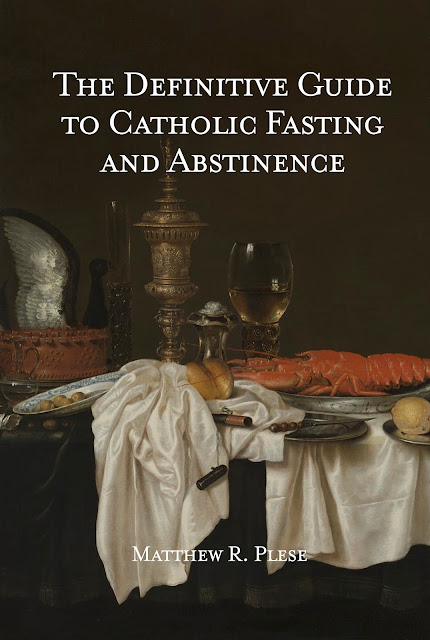
For more information, pick up a copy of "The Definitive Guide to Catholic Fasting and Abstinence," of which even many Catholic priests said that 95% of it was new to them. And check out the article "What is the Eucharistic Fast" for more basic information.

Prayer: Sweet Jesus, I love Thee, I desire with all my heart to receive Thee. My most sweet Jesus, come into my poor soul, and give me Thy flesh to eat and Thy Blood to drink. Give me Thy whole Self, Body, Blood, Soul and Divinity, that I may live for ever with Thee.


Read more >>
Sunday, June 2, 2024
A Catholic Life Podcast: Episode 68

In today’s episode, on the Sunday within the Octave of Corpus Christi, I address the following: 

  1. The Octave of Corpus Christi
  2. External Solemnities Explained
  3. Special US Specific Rubrics for External Solemnities for Ss. Peter and Paul
  4. Common Questions Answered on the Holy Eucharist

This episode is sponsored by PrayLatin.comPrayLatin.com offers Latin prayer cards to learn and share prayers in the sacred language. Learn your basic prayers in Latin conveniently on the go. Practice your pronunciation with easy-to-follow English phonetic renderings of Latin words. PrayLatin.com offers prayer cards in various formats, including Latin-English rosary pamphlets with the traditional 15 mysteries. Shop for additional Latin resources like missal booklets, server response cards, and more. Visit PrayLatin.com today.

Subscribe to the podcast on Buzzsprout, Apple Podcasts, Spotify, I-tunes, and many other platforms!


Read more >>
Tuesday, January 30, 2024
Rejecting the Filioque Is A Heresy

It is evident with the crisis in the Catholic Church concerning not only the sexual abuse crisis but also the crisis in the Liturgy after Vatican II that some Catholics have become disillusioned with the current Catholic hierarchy. From an outside perspective, some might ask why they should remain Catholic and not convert to Eastern Orthodoxy, which is known for reverent, ancient liturgies under the name of the Divine Liturgy of St. John Chrysostom (or St. Basil the Great at some times). But on a deeper analysis, there is no refuge in Orthodoxy. While we often think of the Orthodox as schismatics and not as heretics, the doctrinal crisis has also affected them. In fact, the Orthodox are also heretics from the true Christian Faith in more than half a dozen ways as enumerated in the article "Should A Catholic Convert to Eastern Orthodoxy?"

"I am the Father are One" (John 10:30)

The Baltimore Catechism succinctly states, “In God there are three Divine persons, really distinct, and equal in all things – the Father, the Son, and the Holy Ghost.” The Roman Catechism, the most authoritative catechism ever written, expresses the reality that Almighty God – the one and only God – is in fact a Trinity of Persons. The Catechism explains the role of the three Divine Persons in the Incarnation:

"It is a principle of Christian faith that whatever God does outside Himself in creation is common to the Three Persons, and that one neither does more than, nor acts without another. But that one emanates from another, this only cannot be common to all; for the Son is begotten of the Father only, and the Holy Ghost proceeds from the Father and the Son. Anything, however, which proceeds from them extrinsically is the work of the Three Persons without difference of any sort, and of this latter description is the Incarnation of the Son of God.

"Of those things, nevertheless, that are common to all, the Sacred Scriptures often attribute some to one Person, some to another. Thus, to the Father they attribute power over all things; to the Son, wisdom; to the Holy Ghost, love. Hence, as the mystery of the Incarnation manifests the singular and boundless love of God towards us, it is therefore in some sort peculiarly attributed to the Holy Ghost."

We do not believe in three gods but in one God. The Athanasian Creed, one of the earliest professions of faith, confessed since at least the fifth century, declares:

“Thus the Father is God, the Son is God, and the Holy Ghost is God. But there are not three gods, but one God. The Father is Lord, the Son is Lord, and the Holy Ghost is Lord. There are not three lords, but one Lord. For according to Christian truth, we must profess that each of the Persons individually is God; and according to Christian religion, we are forbidden to say that there are three gods or three lords.”

How is it, then, that there is a God the Father, a God the Son, and a God the Holy Ghost, but only one God? There is one divine substance, and three divine Persons. You and I are each only one substance and one person, but God is one substance and three Persons. Each of the Persons is fully divine and wholly possesses the divine substance. As Jesus Himself said, “I and the Father are one” (John 10:30).

The Trinity is One. We do not confess three gods, but one God in three Persons, the “consubstantial Trinity.” The divine Persons do not share the one divinity among Themselves but each of Them is God whole and entire: “The Father is that which the Son is, the Son that which the Father is, the Father and the Son that which the Holy Ghost is, i.e., by nature one God.” In the words of the Fourth Lateran Council (1215): “Each of the persons is that supreme reality, viz., the divine substance, essence or nature.”

What is the Filioque Controversy?

The Great Schism, also known as the East-West Schism, refers to the split between the Eastern Orthodox Churches and the Catholic Church, which culminated in 1054 AD. The Patriarch of Constantinople, Michael Cerularius, and the legates of Pope Leo IX excommunicated each other. This formal declaration of excommunication marked the official schism between the Eastern Orthodox Churches and the Roman Catholic Church. Papal authority, the Filioque controversy, and even the practice of Saturday fasting, among other differences, brought about this schism.

The Filioque controversy is the theological dispute that centers around the phrase "and the Son" (Latin: for Filioque) in the Nicene Creed, which originally stated that the Holy Ghost proceeds from the Father. The controversy arose between the Western and Eastern Christian churches.

In the early centuries of Christianity, the Nicene Creed was widely accepted in both the Eastern (Greek-speaking) and Western (Latin-speaking) parts of the Christian world. The original version of the Nicene Creed, as established at the First Council of Nicaea in 325 AD, declared that the Holy Ghost proceeds from the Father. However, the Western Church later added the phrase "and the Son" (Filioque) to affirm the double procession of the Holy Spirit from both the Father and the Son.

The Roman Catholic Church had first introduced the phrase “and the Son” (Filioque in Latin) at the Third Council of Toledo in 589. The Lyons Council II stated the doctrine firmly:

We profess faithfully and devotedly that the Holy Ghost proceeds eternally from the Father and the Son, not as from two principles, but as from one principle; not by two spirations, but by one single spiration. This the holy Roman church, mother and mistress of all the faithful, has till now professed, preached and taught; this she firmly holds, preaches, professes and teaches; this is the unchangeable and true belief of the orthodox fathers and doctors, Latin and Greek alike. But because some, on account of ignorance of the said indisputable truth, have fallen into various errors, we, wishing to close the way to such errors, with the approval of the sacred council, condemn and reprove all who presume to deny that the Holy Ghost proceeds eternally from the Father and the Son, or rashly to assert that the Holy Ghost proceeds from the Father and the Son as from two principles and not as from one.

The Filioque Defended at the Ecumenical Councils

The Second Council of Lyons began on May 7, 1274, in the Cathedral of St. John. The Pope gave a sermon outlining his threefold plan for the Council — to unite the Roman Catholic and Greek Orthodox Churches, to send a Crusade to the Holy Land and to reform the morals of the clergy. On June 29th, the feast of Saints Peter and Paul, the entire Council and the Greek ambassadors took part in a High Mass sung by the Pope. The Credo (Nicene Creed) was sung in Latin and then again in Greek with the phrase “Qui a Patre Filioque procedit” (who proceeds from the Father and the Son) sung three times. The Greek acceptance of this doctrine was an important step towards the reunion of the two Churches. 

Yet, debate continued for centuries as this was again a point of disagreement at the Council of Florence in 1438. The Emperor and Patriarch agreed that the debates should begin, and on October 8, 1438, the delegates discussed the addition of “From the Son” (Filioque) to the Nicene Creed by the Roman Catholic Church. This was discussed in fourteen public sessions until December 13, 1438. Mark Eugenicus, the Metropolitan of Ephesus, claimed that the addition of the Filioque clause to the Nicene Creed had been against the Council of Ephesus in 431. While Mark Eugenicus was the main speaker for the Greeks, the Western Church answered through several speakers. The sessions were lively but the Latin speakers were unable to change Mark’s position.

March 1439 saw eight sessions between the 2nd and 24th where the procession of the Holy Ghost was debated. The Western Church argued that the Holy Ghost proceeded from the Father and the Son while the Greek Church through Mark Eugenicus insisted that the Holy Spirit proceeded from the Father only. Giovanni da Montenero, a Dominican provincial of Lombardy proved the Latin Church’s assertion through the use of Scripture, the writings of the Western and Eastern Fathers and the Councils. Da Montenero’s presentation convinced some of his hearers but not all. The Greeks were not used to metaphysical arguments or syllogisms in their theological discussions but they were very impressed by da Montenero’s quotes from the Eastern and Western Fathers.

Through this, a glimmer of light appeared. The Eastern Saints had stated that the Holy Ghost was produced “from both” and “through the Son” while the Western Saints wrote that the Holy Spirit came “from the Father and the Son.” Now it is axiomatic that Saints, whether East or West, cannot err in matters of faith for they are inspired by the same Holy Spirit. Therefore the words of both the Eastern and Western Saints must be true even though they expressed themselves differently. Bessarion, the Metropolitan of Nicaea and Greek delegate, phrased it this way: "The western and eastern Saints do not disagree, for the same Spirit spoke in all the Saints. Compare their works and they will be found harmonious."

The majority of the Greek delegates voted in favor of the Filioque doctrine. There were further debates about other points of contention. It was decided that both unleaven and leaven bread would be allowed for the Eucharist. Purgatory was defined and the primacy of the Pope was affirmed. None of these questions were answered without lengthy debate and it was not until July 5, 1439, that first the Greeks and then the Latin delegates signed the decree of union. (Parts of the decree are included in the Documents section beginning “Let the heavens rejoice…”) Mark Eugenicus refused to sign the decree even after discussions with the Pope. On Monday, July 6, there was a procession to the Cathedral in Florence followed by a Pontifical Mass. Cesarini read out the decree in Latin, asking the Pope and Latin prelates if they agreed. They all proclaimed Placet (it is agreed upon). Bessarion read out the decree in Greek then requested the Emperor and the Greek prelates to acknowledge the truth of the decree. They also stated their agreement. A Te Deum was sung and the delegates left the Cathedral praising God with psalms. The Council continued and reunited the Roman Church with other Eastern Churches — the Armenians (1439), the Copts (1442), the Syrians (1444), the Chaldeans (Nestorians) and the Maronites of Cyprus (1445). In 1443, the Council left Florence to continue at the Lateran Palace in Rome.

The Greeks left for home on October 19, 1439, and arrived in Constantinople in February 1440. Sad news awaited the Emperor — his wife had died. This may explain why he failed to act promptly when some of the Eastern prelates who had remained behind in Constantinople refused to have anything to do with those who had agreed to a union with the Roman Church in Florence. There were soon more overt acts against the union of the Churches. Anthony, Metropolitan of Heraclea, made a public repudiation of his signature to the document in Florence. Mark Eugenicus wrote and spoke against the union. Early in 1441, a group of prelates who had signed the decree in Florence disavowed the union.

The new Patriarch of Constantinople, Metrophanes, (Patriarch Joseph had died at the end of the Council of Florence) declared in favor of the union and wrote an encyclical proclaiming it. However, his voice was not enough to overpower the flair and common touch of Mark Eugenicus’ writings. In 1444 the Papal fleet and army joined with Venice and Hungary to fight the Ottoman Turks. The Turkish army of about 60,000 men attacked the Christian armies of about 20,000 to 30,000 men at Varna on November 10, 1444. A brave effort to capture Murad II, the leader of the Ottomans, by the young King of Hungary and his 500 horsemen failed and the Christians were defeated. Many Christians were killed and the way to Constantinople was open to the Turks who did indeed capture the city in 1453. In the years 1450 to 1451, the Eastern Orthodox Church convened a Council in Constantinople and rejected the decree from the Council of Florence. The pro-union Patriarch was dismissed and the Orthodox Athanasius was appointed to take his place.

So what was the point of those years of arguments, of careful research, of endless discussions? Even though the union did not last, several points of doctrine were discussed and defined. Giovanni da Montenero’s masterful examination of the procession of the Holy Spirit through Scripture, the writings of the ancient Fathers and the Councils is just one example of the intricate and intense work that went into these definitions. For those years in Ferrara, Florence, and Rome, hundreds of men gathered to understand difficult theological concepts with the sincere wish to reunite. Perhaps in some hearts, this wish was joined with the hope for help in defeating the Turks or other less than purely selfless motives. Still, they continued — the illness of the elderly Patriarch and the Emperor, the monetary difficulties of the Pope, the homesickness and worry over their homeland, the frustrations between two different cultures — and all of these pressures delivered arguments that give us a deeper understanding of our faith. For more on the Councils, see the book "Nicea to Now."

The Church Fathers Defended the Filioque

Church Fathers in the West, such as St. Augustine of Hippo (354–430), supported the Filioque clause. St. Augustine emphasized the unity of the Trinity and argued that the Holy Ghost's procession from both the Father and the Son was consistent with the shared divine essence of the Trinity.

The Orthodox churches - and there are several that are not in communion even with one another - deny that the Holy Ghost, the Third Person of the Most Blessed Trinity, proceeds from the Father and the Son. Those interested in the Church's treatment of this should look into Father Henry Chadwick's "The Early Church" or "Fr. John Meyendorff's "Byzantine Theology," which address this well. The Church Fathers all believed in the Filioque as well as shown in a powerful video debunking the errors of the Orthodox churches. All those who want to learn the truth should be compelled to watch that video.

Read more >>
Tuesday, December 26, 2023
2024 Patron Saint of the Year Devotion

UPDATE: RESULTS ARE IN.  SCROLL DOWN.  i received St. Ebontius, Bishop of Babastro, Spain, after its recapture from the Moors. Born in Comminges, Haute Garonne, France, he became a Benedictine and abbot before accepting the see of Babastro.

SPONSOR: This Devotion is being sponsored again this year by CatechismClass.com.  Whether you are looking for godparent preparation courses, Sacramental preparation for your children, or just to better learn the Faith as an adult, CatechismClass.com has courses for all ages and walks of life. Check out CatechismClass.com's affordable programs and make it a New Year's resolution to learn and live the Faith better than ever.

You can read about the past devotions in the following posts:
Again, I would like to take a few minutes to explain the devotion.

What is the Saint for the Year Devotion?  We pray that this year the Holy Ghost will again work so that all participants receive a saint that they will be able to pray to for aid throughout the entire year: St. Faustina wrote about it in her diary, Divine Mercy in My Soul. The excerpt is below.
“There is a custom among us of drawing by lot, on New Year's Day, special Patrons for ourselves for the whole year. In the morning during meditation, there arose within me a secret desire that the Eucharistic Jesus be my special Patron for this year also, as in the past. But, hiding this desire from my Beloved, I spoke to Him about everything else but that. When we came to refectory for breakfast, we blessed ourselves and began drawing our patrons. When I approached the holy cards on which the names of the patrons were written, without hesitation I took one, but I didn't read the name immediately as I wanted to mortify myself for a few minutes. Suddenly, I heard a voice in my soul: ‘I am your patron. Read.’ I looked at once at the inscription and read, ‘Patron for the Year 1935 - the  Most Blessed Eucharist.’ My heart leapt with joy, and I slipped quietly away from the sisters and went for a short visit before the Blessed Sacrament, where I poured out my heart. But Jesus sweetly admonished me that I should be at that moment together with the sisters. I went immediately in obedience to the rule.”Excerpt from Divine Mercy in My Soul, the Diary of St. Faustina"

Over the years, I've heard from many people of the great connection they have to their special patrons. Here is one of those stories from the past: 

I have Saints Marcus and Marcellianus ... they are twin brothers who were sent to prison before their death. St. Sebastian visited them continually in prison and helped keep their faith alive. They are buried near St. Felix and are specifically honored in Spain. OK now ... here are a couple of immediate ironies in regard to these saints ... I have a SPECIAL place in my heart for twins! As a child, I LOVED reading the story about St. Sebastian. I had a children's book of saints and I think I wore out the pages on St. Sebastian! Felix is my grandfather's name! Silvia, our exchange student, is from Spain! I am so excited to have these two saints to walk through 2006 with me! I'm looking forward as to where and how they will intercede for me.
How do I enter?  I will pull names for everyone who is a Patreon of this blog. You may submit up to 10 names for each Patreon, allowing you to have names drawn for your family and friends. The drawing will happen automatically for all who are patrons at any paid level. Sign up on Patreon for any paid level to support this blog, and you will be included. Unfortunately, due to the significant time investment I put into this devotion and many other responsibilities, I will only be able to do so for my Patreon supporters.

When will the saints be drawn?  This year, I will start the drawing of saints on the morning of the Feast of the Circumcision and the Octave Day of Christmas (i.e., January 1st). Drawings will occur as the Litany of Saints is recited.  That means results will likely be commented and/or messaged to Patreons by the late afternoon (US Central Time) on January 1st. This will be the only drawing this year. 

Please pass this message on through your blogs and/or email distribution lists, letting all of the Catholic Blogsphere have the chance to participate.

Results:

Name Saint
Anna St. William of Pontoise
Vincent St. Valentine of Rome
Jaime St. Ennodius
AuliyaMarie St. Hitto of Saint-Gall
JL St. Crispina
Julio Blessed Maria Bartholomew
CTC St. Mark the Evangelist
JWC St. Daniel the Prophet
SEC St. Cloud
ABR St. Tironensian Order
SRR St. Simeon-Francois Berneux
RAR St. Charles Borromeo
MHC St. Paul the first hermit
JDC St. Catherine of Genoa
JT The Martyrs of Hayle
ZR St. Henry II
Randy St. Simeon, Bishop and Martyr
Kimberly St. Joseph the foster Father of Jesus Christ
Tom St. Abraham, father of Isaac
Gina Blessed Anthony of Pavonio
Tucker St. Jerome
Mother Mary Paul St. Lambert of Vence
Sr Mary Agnes St. Aderald
Jake St. Gemma Galgani
Emily St. Laura of Saint Catherine of Siena
Nick Pope St. Pius V
Mary St. Marguerite Bourgeois
Kristen Blessed Odo of Beauvais
Cheyanne Pope St. Pius X
Carolyn St. Anthony Zaccaria
Paul St. Rufino
Amelia Blessed William Andleby
CcKenna St. Aderald
Kenli St. Aventinus of Tours
Steven St. Peter Fourier
JoAnn St. Cosmas
Stephen St. Rene Goupil
Bernadette St. Stephen of Mar Saba
Erin St. Bruno
Kevin Blessed Terence
Niamh Our Lady of the Rosary
Malachy St. George
Mulreann St. Edward the King
Sean St. Alexander the martyr
Michael St. Bernard of Thiron
Jesse St. Meneve
Jen St. Theophilus of Corte
Chris St. Thomas More
Ryan Blessed Andre de Soveral
Libby Blessed Herman the Cripple
Noah Blessed Henry
Bella Blessed Josefa Naval Girbes
Tim W St. Quintus the Thaumaturge
John D St. Estelle
Xavier St. Louise de Marillac
Griffin St. Charles Garnier
Elijah St. Artaldus
James St. Adelelmus of Flanders
Max St. Irenaeus of Lyons
Jacob St. Conon, Bishop of the Isle of Man
Christopher Blessed Sadoc and Companions
Christian C Blessed Villana
Gabriel St. Adelin of Seez

If you are not familiar with your saint, I encourage you to research online and even pick up a copy of Father Hugo Hoever's "Live of the Saints," which I read daily.  While the book does not include saints canonized in recent years, it is something that I highly recommend.

Here is a prayer to honor any saint: http://acatholiclife.blogspot.com/2006/01/prayer-to-venerate-any-saint.html
Read more >>
Saturday, September 23, 2023
The Importance and History of Ember Days


The Ancient Institution of Ember Days

Ember days are categorized by three elements: prayers for both thanksgiving and petition, penance in the form of fasting and abstinence, and ordinations. Like Rogation Days, Ember Days developed early in these times, taking the form that would continue for centuries. The Catholic Encyclopedia explains:

“At first the Church in Rome had fasts in June, September, and December; the exact days were not fixed but were announced by the priests. The Liber Pontificalis ascribes to Pope Callistus (217-222) a law ordering the fast, but probably it is older. Leo the Great (440-461) considers it an Apostolic institution.” 

By the time of Pope Gregory I, who died in 601 AD, they were observed for all four seasons though the date of each of them could vary. In the Roman Synod of 1078 under Pope Gregory VII, they were uniformly established for the Wednesday, Friday, and Saturday after December 13th (St. Lucia), after Ash Wednesday, after Pentecost Sunday, and after September 14th (Exaltation of the Cross).

While they were initially observed only in Rome, their observance quickly spread as the Catholic Encyclopedia further adds:

“Before Gelasius the ember days were known only in Rome, but after his time their observance spread. They were brought into England by St. Augustine; into Gaul and Germany by the Carlovingians. Spain adopted them with the Roman Liturgy in the eleventh century. They were introduced by St. Charles Borromeo into Milan. The Eastern Church does not know them. The present Roman Missal, in the formulary for the Ember days, retains in part the old practice of lessons from Scripture in addition to the ordinary two: for the Wednesdays three, for the Saturdays six, and seven for the Saturday in December. Some of these lessons contain promises of a bountiful harvest for those that serve God.” 

Dom Prosper Guéranger adds that the institution of the Ember Days is further based on the fast ordered by God for the changing of the seasons in the Old Testament. Thus, the Church hallowed that fast and adopted it for the worship of the True God thus fulfilling the Lord’s words that He came not to abolish but to complete (cf. Matthew 5:17) what was instituted in the Old Testament:

“We may consider it as one of those practices which the Church took from the Synagogue; for the prophet Zacharias speaks of the fasts of the fourth, fifth, seventh, and tenth months. Its introduction into the Christian Church would seem to have been made in the apostolic times; such, at least, is the opinion of St. Leo, of St. Isidore of Seville, of Rabanus Maurus, and of several other ancient Christian writers. It is remarkable, on the other hand, that the orientals do not observe this fast.” 

Spirituality of the Ember Days

The purpose of Ember Days is, in the words of the Catholic Encyclopedia, to “thank God for the gifts of nature, to teach men to make use of them in moderation, and to assist the needy.” As a result, their focus differs from the focus of the Rogation Days to which they are often compared. An article on Liturgies.net explains the separate, specific focus of Rogation Days as such:

“Rogation Days are the four days set apart to bless the fields and invoke God's mercy on all of creation. The 4 days are April 25, which is called the Major Rogation (and is only coincidentally the same day as the Feast of St. Mark); and the three days preceding Ascension Thursday, which are called the Minor Rogations. Traditionally, on these days, the congregation marches the boundaries of the parish, blessing every tree and stone, while chanting or reciting a Litany of Mercy, usually a Litany of the Saints.” 

In addition to the general purpose of thanking God and invoking His blessings, the author of Barefoot Abbey provides specific intentions for each of the Ember Days by season so that we can render thanks to Almighty God for the fruits of the earth which specifically become instruments of His grace through the Sacraments:

Winter or Advent Ember Days are after the Feast of St. Lucy (December 13th): Give thanks for the olives that make holy oils for Unction. Spring or Lenten Ember Days are after Ash Wednesday: Give thanks for the flowers and bees that make blessed candles as in for Baptism and upon the alter. Summer or Whit Ember Days are after the Solemnity of Pentecost: Give thanks for the wheat used to make the Eucharist hosts. Autumn or Michaelmas Ember Days are after the Feast of Exaltation of the Holy Cross (September 14): Give thanks for the grapes that make wine for the Precious Blood of Christ.  

By writing these down and recalling them for the Ember Days of each season, we can be more intentional in what we are thanking God for in any given season. In this respect, the Ember Days further distinguish themselves from the Rogation Days.

The Cultural Impact of the Ember Days to Japan

Ember Days would remain obligatory for the faithful until the changes immediately after Vatican II in the mid-1960s. In fact, their observance has led to several long-term cultural implications. For instance, Ember Days are the reason we have “tempura” dishes in Asian cuisine. For instance, shrimp tempura is based on Ember Days, which are known as quatuor tempora in Latin.

Portuguese (and Spanish) missionaries to the Far East would invite the converted Japanese to fast during the quator tempora by eating a dish that consisted of battered and deep-fried seafood and vegetables called “Peixinhos da Horta” in Portuguese which literally translated to “little fishes from the garden.” It is a dish consisting of bell peppers, squash, and green beans that is fried into a flour-based batter. The term steadily gained popularity in southern Japan and became widely used to refer to any sort of food prepared using hot oil, battered or not. This term would persist even after Catholicism was outlawed by the Japanese and the Church’s missionaries were executed or exiled in the late 1500s. It was not until the 1870s that Christianity legally returned to Japan. But the faithful of Japan continued to keep the Faith alive in their families, including through the keeping of fast and abstinence days.

Ember Days Are Always on Wednesdays, Fridays, and Saturdays

Ember Days are observed on Wednesdays, Fridays, and Saturdays in keeping with the ancient weekly devotional fast that originated with the Apostles. On the rationale for fasting on these days, St. Peter of Alexandria, Patriarch of Alexandria until his death in 311 AD, explains: “On Wednesday because on this day the council of the Jews was gathered to betray our Lord; on Friday because on this day He suffered death for our salvation.” Likewise, the 1875 Catechism of Father Michael Müller adds: “This practice began with Christianity itself, as we learn from St. Epiphanius, who says: ‘It is ordained, by the law of the Apostles, to fast two days of the week.’” Some places added Saturday fasting as well, as noted by St. Francis de Sales who writes, “The early Christians selected Wednesday, Friday and Saturday as days of abstinence.” 

Father Slater notes in “A Short History of Moral Theology” published in 1909 how these weekly devotional fasts gradually ended but were retained for the Ember Days:

“The obligation of fasting on all Wednesdays and Fridays ceased almost entirely about the tenth century, but the fixing of those days by ecclesiastical authority for fasting, and the desire to substitute a Christian observance at Rome for certain pagan rites celebrated in connection with the seasons of the year, seem to have given rise to our Ember Days… About the tenth century the obligation of the Friday fast was reduced to one of abstinence from flesh meat, and the Wednesday fast after being similarly mitigated gradually disappeared altogether.” 

Ember Days in the Early 1900s

The days of obligatory fasting as listed in the 1917 Code of Canon Law were the forty days of Lent (including Ash Wednesday, Good Friday, and Holy Saturday until noon); the Ember Days; and the Vigils of Pentecost, the Assumption of the Blessed Virgin Mary, All Saints, and Christmas. Partial abstinence, the eating of meat only at the principal meal, was obligatory on all weekdays of Lent (Monday through Thursday). And of course, complete abstinence was required on all Fridays, including Fridays of Lent, except when a holy day of obligation fell on a Friday outside of Lent. Saturdays in Lent were likewise days of complete abstinence. Fasting and abstinence were not observed should a vigil fall on a Sunday as stated in the code: “If a vigil that is a fast day falls on a Sunday the fast is not to be anticipated on Saturday but is dropped altogether that year.”

Canon 1006 of the 1917 Code further stated men were to be ordained only on Ember Saturdays, Holy Saturday and the Saturday before Passion Sunday, but the Code added “if a serious cause intervenes, the bishop can have them even on any Sunday or feast day of the order.” Episcopal consecration was reserved for Sundays and for Feasts of the Apostles. Thus, even the 1917 Code kept the ancient practice of holding Ember Days as privileged days for ordinations. 

Many changes though would continue through the 20th century. In one such change, on January 28, 1949, the United States bishops issued modified regulations on abstinence in America again after receiving a ruling from the Sacred Congregation of the Council. Partial abstinence replaced complete abstinence for Ember Wednesdays, Ember Saturdays, and the Vigil of Pentecost. Previously, all Ember Days were days of complete abstinence.

Changes to Ember Days in the Early 1960s

By 1962, the laws of fasting and abstinence were as follows as described in Moral Theology by Father Heribert Jone and adapted by Father Urban Adelman for the “laws and customs of the United States of America” copyright 1961: 

“Complete abstinence is to be observed on all Fridays of the year, Ash Wednesday, the Vigils of Immaculate Conception and Christmas. Partial abstinence is to be observed on Ember Wednesdays and Saturdays and on the Vigil of Pentecost. Days of fast are all the weekdays of Lent, Ember Days, and the Vigil of Pentecost. If a vigil falls on a Sunday, the law of abstinence and fasting is dispensed that year and is not transferred to the preceding day.” 

1960 also saw a change to the calculation of how the autumnal Ember Days can follow as the Barefoot Abbey website explains:

“Autumn Ember Days are unique in their scheduling. With the 1960 revisions to the breviary rubrics and the newly instituted system of counting Sundays from August to December, Pope John XXIII added that the September Ember Days should not only follow the Feast of the Exaltation of the Cross as they had historically done, but also fall after the 3rd Sunday of September.” 

Gregory DiPippo explains in more detail how the counting of Sundays changed at this time:

“The first Sunday of each of these months is the day on which the Church begins to read a new set of scriptural books at Matins, with their accompanying antiphons and responsories; these readings are part of a system which goes back to the sixth century...The 'first Sunday' of each of these months is traditionally that which occurs closest to the first calendar day of the month, even if that day occurs within the end of the previous month… In the 1960 revision, however, the first Sunday of the months from August to November is always that which occurs first within the calendar month.” 

Thus, not only did fasting change before Vatican II but the possible dates of the Ember Days were changed as well.

The Abandonment of Our Heritage

Shortly after the close of the Second Vatican Council, Pope Paul VI issued an apostolic constitution on fasting and abstaining on February 17, 1966, called Paenitemini, whose principles were later incorporated into the 1983 Code of Canon Law. Paenitemini allowed the commutation of the Friday abstinence to an act of penance at the discretion of the local ordinaries and gave authority to the episcopal conferences on how the universal rules would be applied in their region. Abstinence which previously began at age seven was modified to begin at age fourteen. Additionally, the obligation of fasting on the Ember Days and on the remaining vigils was abolished.

Father Lew, commenting on the post-conciliar changes, admonishes priests accordingly:

“True, modern canon law is silent about the Ember Days. But tucked away in an obscure corner of the 1970 missal is a reference to ‘the Four Times, in which the Church is accustomed to pray to our Lord for the various needs of men, especially for the fruits of the earth and human labours, and to give him public thanks’ (Normæ Universales de Anno Liturgico, 45). The same words remain in the 3rd editio typica of this missal, published in 2002. However, the ‘adaptation’ of these days is left to Bishops’ Conferences: they can decide how many are to be observed, and when, and with what prayers. A couple of ‘fast days’ are duly marked on each year’s Ordo for the church in England and Wales, one in Lent and one in October, with the suggestion of celebrating a votive Mass of a suitable kind. Surely so ancient a tradition as the Ember Days must not be allowed to fade away.” 

May we all return to the practice and observance of the Ember Days for the glory of God and for reparation for sin. Offering up our fasts for vocations and for the priests who are ordained on – or around the Ember Days – would be a meritorious and charitable work we can do. And we can spend more time learning about this part of our heritage. Like Ember Days, so much of our history of fasting and abstinence has been forgotten.

Want to learn more about the history of fasting and abstinence? Check out the Definitive Guide to Catholic Fasting and Abstinence.

Read more >>


Copyright Notice: Unless otherwise stated, all items are copyrighted under a Attribution-NonCommercial-NoDerivatives 4.0 International License. If you quote from this blog, cite a link to the post on this blog in your article.

Disclosure of Material Connection: Some of the links on this blog are “affiliate links.” This means if you click on the link and purchase the item, I will receive an affiliate commission. As an Amazon Associate, for instance, I earn a small commission from qualifying purchases made by those who click on the Amazon affiliate links included on this website. I am disclosing this in accordance with the Federal Trade Commission’s 16 CFR, Part 255: “Guides Concerning the Use of Endorsements and Testimonials in Advertising.”