Showing posts sorted by date for query Minor rogation. Sort by relevance Show all posts
Sunday, May 5, 2024
A Catholic Life Podcast: Episode 64

In today’s episode, on Rogation Sunday, I address the following: 

  1. The Minor Rogation Days
  2. Ascentiontide Customs
  3. How to Participate in The Holy Sacrifice of the Mass in union with Christ the High Priest and Christ the Victim

This episode is sponsored by PrayLatin.comPrayLatin.com offers Latin prayer cards to learn and share prayers in the sacred language. Learn your basic prayers in Latin conveniently on the go. Practice your pronunciation with easy-to-follow English phonetic renderings of Latin words. PrayLatin.com offers prayer cards in various formats, including Latin-English rosary pamphlets with the traditional 15 mysteries. Shop for additional Latin resources like missal booklets, server response cards, and more. Visit PrayLatin.com today.

Subscribe to the podcast on Buzzsprout, Apple Podcasts, Spotify, I-tunes, and many other platforms!

Read more >>
Saturday, September 23, 2023
The Importance and History of Ember Days


The Ancient Institution of Ember Days

Ember days are categorized by three elements: prayers for both thanksgiving and petition, penance in the form of fasting and abstinence, and ordinations. Like Rogation Days, Ember Days developed early in these times, taking the form that would continue for centuries. The Catholic Encyclopedia explains:

“At first the Church in Rome had fasts in June, September, and December; the exact days were not fixed but were announced by the priests. The Liber Pontificalis ascribes to Pope Callistus (217-222) a law ordering the fast, but probably it is older. Leo the Great (440-461) considers it an Apostolic institution.” 

By the time of Pope Gregory I, who died in 601 AD, they were observed for all four seasons though the date of each of them could vary. In the Roman Synod of 1078 under Pope Gregory VII, they were uniformly established for the Wednesday, Friday, and Saturday after December 13th (St. Lucia), after Ash Wednesday, after Pentecost Sunday, and after September 14th (Exaltation of the Cross).

While they were initially observed only in Rome, their observance quickly spread as the Catholic Encyclopedia further adds:

“Before Gelasius the ember days were known only in Rome, but after his time their observance spread. They were brought into England by St. Augustine; into Gaul and Germany by the Carlovingians. Spain adopted them with the Roman Liturgy in the eleventh century. They were introduced by St. Charles Borromeo into Milan. The Eastern Church does not know them. The present Roman Missal, in the formulary for the Ember days, retains in part the old practice of lessons from Scripture in addition to the ordinary two: for the Wednesdays three, for the Saturdays six, and seven for the Saturday in December. Some of these lessons contain promises of a bountiful harvest for those that serve God.” 

Dom Prosper Guéranger adds that the institution of the Ember Days is further based on the fast ordered by God for the changing of the seasons in the Old Testament. Thus, the Church hallowed that fast and adopted it for the worship of the True God thus fulfilling the Lord’s words that He came not to abolish but to complete (cf. Matthew 5:17) what was instituted in the Old Testament:

“We may consider it as one of those practices which the Church took from the Synagogue; for the prophet Zacharias speaks of the fasts of the fourth, fifth, seventh, and tenth months. Its introduction into the Christian Church would seem to have been made in the apostolic times; such, at least, is the opinion of St. Leo, of St. Isidore of Seville, of Rabanus Maurus, and of several other ancient Christian writers. It is remarkable, on the other hand, that the orientals do not observe this fast.” 

Spirituality of the Ember Days

The purpose of Ember Days is, in the words of the Catholic Encyclopedia, to “thank God for the gifts of nature, to teach men to make use of them in moderation, and to assist the needy.” As a result, their focus differs from the focus of the Rogation Days to which they are often compared. An article on Liturgies.net explains the separate, specific focus of Rogation Days as such:

“Rogation Days are the four days set apart to bless the fields and invoke God's mercy on all of creation. The 4 days are April 25, which is called the Major Rogation (and is only coincidentally the same day as the Feast of St. Mark); and the three days preceding Ascension Thursday, which are called the Minor Rogations. Traditionally, on these days, the congregation marches the boundaries of the parish, blessing every tree and stone, while chanting or reciting a Litany of Mercy, usually a Litany of the Saints.” 

In addition to the general purpose of thanking God and invoking His blessings, the author of Barefoot Abbey provides specific intentions for each of the Ember Days by season so that we can render thanks to Almighty God for the fruits of the earth which specifically become instruments of His grace through the Sacraments:

Winter or Advent Ember Days are after the Feast of St. Lucy (December 13th): Give thanks for the olives that make holy oils for Unction. Spring or Lenten Ember Days are after Ash Wednesday: Give thanks for the flowers and bees that make blessed candles as in for Baptism and upon the alter. Summer or Whit Ember Days are after the Solemnity of Pentecost: Give thanks for the wheat used to make the Eucharist hosts. Autumn or Michaelmas Ember Days are after the Feast of Exaltation of the Holy Cross (September 14): Give thanks for the grapes that make wine for the Precious Blood of Christ.  

By writing these down and recalling them for the Ember Days of each season, we can be more intentional in what we are thanking God for in any given season. In this respect, the Ember Days further distinguish themselves from the Rogation Days.

The Cultural Impact of the Ember Days to Japan

Ember Days would remain obligatory for the faithful until the changes immediately after Vatican II in the mid-1960s. In fact, their observance has led to several long-term cultural implications. For instance, Ember Days are the reason we have “tempura” dishes in Asian cuisine. For instance, shrimp tempura is based on Ember Days, which are known as quatuor tempora in Latin.

Portuguese (and Spanish) missionaries to the Far East would invite the converted Japanese to fast during the quator tempora by eating a dish that consisted of battered and deep-fried seafood and vegetables called “Peixinhos da Horta” in Portuguese which literally translated to “little fishes from the garden.” It is a dish consisting of bell peppers, squash, and green beans that is fried into a flour-based batter. The term steadily gained popularity in southern Japan and became widely used to refer to any sort of food prepared using hot oil, battered or not. This term would persist even after Catholicism was outlawed by the Japanese and the Church’s missionaries were executed or exiled in the late 1500s. It was not until the 1870s that Christianity legally returned to Japan. But the faithful of Japan continued to keep the Faith alive in their families, including through the keeping of fast and abstinence days.

Ember Days Are Always on Wednesdays, Fridays, and Saturdays

Ember Days are observed on Wednesdays, Fridays, and Saturdays in keeping with the ancient weekly devotional fast that originated with the Apostles. On the rationale for fasting on these days, St. Peter of Alexandria, Patriarch of Alexandria until his death in 311 AD, explains: “On Wednesday because on this day the council of the Jews was gathered to betray our Lord; on Friday because on this day He suffered death for our salvation.” Likewise, the 1875 Catechism of Father Michael Müller adds: “This practice began with Christianity itself, as we learn from St. Epiphanius, who says: ‘It is ordained, by the law of the Apostles, to fast two days of the week.’” Some places added Saturday fasting as well, as noted by St. Francis de Sales who writes, “The early Christians selected Wednesday, Friday and Saturday as days of abstinence.” 

Father Slater notes in “A Short History of Moral Theology” published in 1909 how these weekly devotional fasts gradually ended but were retained for the Ember Days:

“The obligation of fasting on all Wednesdays and Fridays ceased almost entirely about the tenth century, but the fixing of those days by ecclesiastical authority for fasting, and the desire to substitute a Christian observance at Rome for certain pagan rites celebrated in connection with the seasons of the year, seem to have given rise to our Ember Days… About the tenth century the obligation of the Friday fast was reduced to one of abstinence from flesh meat, and the Wednesday fast after being similarly mitigated gradually disappeared altogether.” 

Ember Days in the Early 1900s

The days of obligatory fasting as listed in the 1917 Code of Canon Law were the forty days of Lent (including Ash Wednesday, Good Friday, and Holy Saturday until noon); the Ember Days; and the Vigils of Pentecost, the Assumption of the Blessed Virgin Mary, All Saints, and Christmas. Partial abstinence, the eating of meat only at the principal meal, was obligatory on all weekdays of Lent (Monday through Thursday). And of course, complete abstinence was required on all Fridays, including Fridays of Lent, except when a holy day of obligation fell on a Friday outside of Lent. Saturdays in Lent were likewise days of complete abstinence. Fasting and abstinence were not observed should a vigil fall on a Sunday as stated in the code: “If a vigil that is a fast day falls on a Sunday the fast is not to be anticipated on Saturday but is dropped altogether that year.”

Canon 1006 of the 1917 Code further stated men were to be ordained only on Ember Saturdays, Holy Saturday and the Saturday before Passion Sunday, but the Code added “if a serious cause intervenes, the bishop can have them even on any Sunday or feast day of the order.” Episcopal consecration was reserved for Sundays and for Feasts of the Apostles. Thus, even the 1917 Code kept the ancient practice of holding Ember Days as privileged days for ordinations. 

Many changes though would continue through the 20th century. In one such change, on January 28, 1949, the United States bishops issued modified regulations on abstinence in America again after receiving a ruling from the Sacred Congregation of the Council. Partial abstinence replaced complete abstinence for Ember Wednesdays, Ember Saturdays, and the Vigil of Pentecost. Previously, all Ember Days were days of complete abstinence.

Changes to Ember Days in the Early 1960s

By 1962, the laws of fasting and abstinence were as follows as described in Moral Theology by Father Heribert Jone and adapted by Father Urban Adelman for the “laws and customs of the United States of America” copyright 1961: 

“Complete abstinence is to be observed on all Fridays of the year, Ash Wednesday, the Vigils of Immaculate Conception and Christmas. Partial abstinence is to be observed on Ember Wednesdays and Saturdays and on the Vigil of Pentecost. Days of fast are all the weekdays of Lent, Ember Days, and the Vigil of Pentecost. If a vigil falls on a Sunday, the law of abstinence and fasting is dispensed that year and is not transferred to the preceding day.” 

1960 also saw a change to the calculation of how the autumnal Ember Days can follow as the Barefoot Abbey website explains:

“Autumn Ember Days are unique in their scheduling. With the 1960 revisions to the breviary rubrics and the newly instituted system of counting Sundays from August to December, Pope John XXIII added that the September Ember Days should not only follow the Feast of the Exaltation of the Cross as they had historically done, but also fall after the 3rd Sunday of September.” 

Gregory DiPippo explains in more detail how the counting of Sundays changed at this time:

“The first Sunday of each of these months is the day on which the Church begins to read a new set of scriptural books at Matins, with their accompanying antiphons and responsories; these readings are part of a system which goes back to the sixth century...The 'first Sunday' of each of these months is traditionally that which occurs closest to the first calendar day of the month, even if that day occurs within the end of the previous month… In the 1960 revision, however, the first Sunday of the months from August to November is always that which occurs first within the calendar month.” 

Thus, not only did fasting change before Vatican II but the possible dates of the Ember Days were changed as well.

The Abandonment of Our Heritage

Shortly after the close of the Second Vatican Council, Pope Paul VI issued an apostolic constitution on fasting and abstaining on February 17, 1966, called Paenitemini, whose principles were later incorporated into the 1983 Code of Canon Law. Paenitemini allowed the commutation of the Friday abstinence to an act of penance at the discretion of the local ordinaries and gave authority to the episcopal conferences on how the universal rules would be applied in their region. Abstinence which previously began at age seven was modified to begin at age fourteen. Additionally, the obligation of fasting on the Ember Days and on the remaining vigils was abolished.

Father Lew, commenting on the post-conciliar changes, admonishes priests accordingly:

“True, modern canon law is silent about the Ember Days. But tucked away in an obscure corner of the 1970 missal is a reference to ‘the Four Times, in which the Church is accustomed to pray to our Lord for the various needs of men, especially for the fruits of the earth and human labours, and to give him public thanks’ (Normæ Universales de Anno Liturgico, 45). The same words remain in the 3rd editio typica of this missal, published in 2002. However, the ‘adaptation’ of these days is left to Bishops’ Conferences: they can decide how many are to be observed, and when, and with what prayers. A couple of ‘fast days’ are duly marked on each year’s Ordo for the church in England and Wales, one in Lent and one in October, with the suggestion of celebrating a votive Mass of a suitable kind. Surely so ancient a tradition as the Ember Days must not be allowed to fade away.” 

May we all return to the practice and observance of the Ember Days for the glory of God and for reparation for sin. Offering up our fasts for vocations and for the priests who are ordained on – or around the Ember Days – would be a meritorious and charitable work we can do. And we can spend more time learning about this part of our heritage. Like Ember Days, so much of our history of fasting and abstinence has been forgotten.

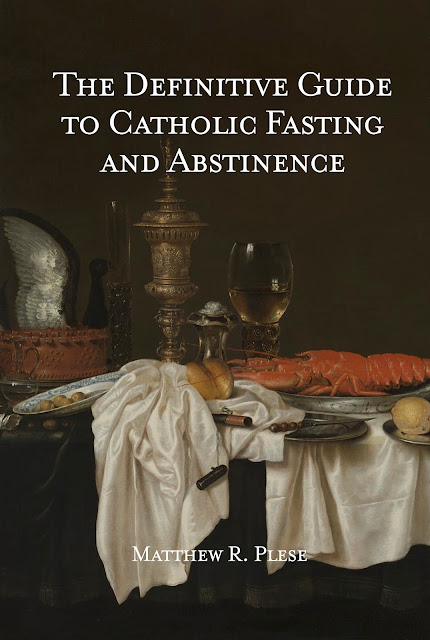
Want to learn more about the history of fasting and abstinence? Check out the Definitive Guide to Catholic Fasting and Abstinence.

Read more >>
Sunday, May 14, 2023
A Catholic Life Podcast: Episode 13

In today’s episode, on the 5th Sunday after Easter, I would like to go over a few things:

  1. The Minor Rogation Days
  2. The Vigil of the Ascension
  3. Ascension Thursday and Ascensiontide

I would like to thank CatechismClass.com for sponsoring this episode.  CatechismClass.com, the leader in online Catholic catechism classes, has everything from online K-12 programs, RCIA classes, adult continuing education, marriage preparation, baptism preparation, confirmation prep, quince prep classes, catechist training courses, and much more. Their Catholic Liturgical Year Course for a one-time cost of $99.95 includes lessons on Minor Rogation Days, the Vigil of the Ascension, Ascension Thursday, and so much more.

Read more >>
Tuesday, April 25, 2023
St. Mark's Day As A Former Holy Day of Obligation

Discovery of the Body of Saint Mark

The first catalog of Holy Days comes from the Decree of Gratian in c. 1150 AD, which shortly thereafter gave way to Decretals of Pope Gregory IX in 1234, which listed 45 Holy Days. In 1295, Pope Boniface VIII enacted the decretal Gloriosus which "commanded that each of the feasts of the twelve apostles, four evangelists, and four doctors of the Church be celebrated as an officium duplex" (The Cambridge History of Medieval Canon Law by Anders Winroth and John Wei).

In 1642, His Holiness Pope Urban VIII issued the papal bull Universa Per Orbem which mandated the required Holy Days of Obligation for the Universal Church to consist of 34 days as well as the principal patrons of one's one locality (e.g. city and country). Those days were the Nativity of Our Lord, the Circumcision of Our Lord, the Epiphany of Our Lord, Monday within the Octave of the Resurrection, Tuesday within the Octave of the Resurrection, Ascension Thursday, Monday within the Octave of Pentecost, Tuesday within the Octave of Pentecost, Most Holy Trinity, Corpus Christi, the Finding of the Holy Cross, the Purification of the Blessed Virgin Mary, the Annunciation of the Blessed Virgin Mary, the Assumption of the Blessed Virgin Mary, the Nativity of the Blessed Virgin Mary, the Dedication of St. Michael, the Nativity of St. John the Baptist, SS. Peter and Paul, St. Andrew, St. James, St. John (the December feast day), St. Thomas, SS. Philip and James, St. Bartholomew, St. Matthew, SS. Simon and Jude, St. Matthias, St. Stephen the First Martyr (the December feast day), the Holy Innocents, St. Lawrence, St. Sylvester, St. Joseph, St. Anne, and All Saints.  

Ultimately Universa Per Orbem helped bring more uniformity to the Church since some parts of the Catholic world observed even more holy days of double precept (i.e., mandatory attendance at Mass and rest from servile work). One of those former days which kept in some places as the Feast of St. Mark the Evangelist. 

For instance, in modern-day Texas, New Mexico, Arizona, and California, which were included in the ecclesiastical province of Mexico, the feasts were regulated by the Third Council of Mexico in 1585, as American Catholic Quarterly Review states: 

"In these parts besides those already mentioned, the faithful observed as holy days of obligation St Fabian and St Sebastian (January 20th), St Thomas Aquinas (March 7th), St Mark (April 25th), St Barnabas (June 1), the Visitation of the Blessed Virgin (July 2), St Mary Magdalene (July 22), St Dominic (Aug 4), the Transfiguration (Aug 6), St Francis (Oct 4), St Luke (Oct 18), St Catharine (Nov 25), the Expectation of the Blessed Virgin (Dec 18). 

And while our ancestors in the New World in Florida and Louisiana would not have kept St. Mark's Day as a Holy Day of Obligation, it was kept as a day of abstinence from meat on account of it being the Major Rogation Day. See A History of Holy Days of Obligation & Fasting for American Catholics for more information on this forgotten history. The same can be said for English Catholics who were bound to abstain from fleshmeat on the Major and Minor Rogation Days until they were dispensed by Pope Pius VIII in 1830 (A Catholic Dictionary from 1893 by William Edward Addis).

Thus this year, on April 25th, in addition to praying the Litany of the Saints for the Rogation Day and observing abstinence, let us honor the memory of St. Mark by reading his Gospel and by attending the Holy Sacrifice of the Mass.
Read more >>
Wednesday, April 12, 2023
Fasting and Penance Is Not Prohibited in Pascaltide

The total length of Paschaltide (i.e., the Easter Season) from Easter Sunday to the end of Whitsuntide is 56 days inclusive. In this way, Holy Mother Church shows us the joy of Easter has eclipsed the time of penance of Lent. Yet even in this time of joy, some penance is obligatory and even mandatory by Church Law. Thus, even in times of joy, we can and should continue to offer up fasting and abstinence for the good of souls.

Year-Round Friday Abstinence Is Required (Not Just in Lent!)

As Catholics, we are still bound to either abstain from meat or rather to do some act of penance each Friday of the entire year. Abstinence should always be what we choose to do since this underscored Christian culture for nearly 2,000 years since mandatory Friday abstinence went back to the time of the Apostles. As such, the 1983 Code of Canon Law decrees:

Can. 1251 Abstinence from meat, or from some other food as determined by the Episcopal Conference, is to be observed on all Fridays, unless a solemnity should fall on a Friday. Abstinence and fasting are to be observed on Ash Wednesday and Good Friday.


Rogationtide Is A Time of Penance in Eastertide

Virtually forgotten by all Catholics is the important practice of Rogationtide, which falls during Pascaltide as well.

The Major Rogation Day is on April 25th, which is coincidentally the Feast of St. Mark the Evangelist. Should it happen that the feast of St. Mark the Evangelist is transferred to another day (e.g., when a day in the Octave of Easter falls on April 25th), the Rogation procession is held nevertheless on April 25th, unless the feast falls on Easter Sunday or Monday, in which case the procession is transferred to Easter Tuesday. The Minor Rogation Days are the Monday, Tuesday, and Wednesday preceding Ascension Thursday. Hence, the date of the Minor Rogation Days varies.

In 2020, Dom Alcuin Reid gave a monastic conference on the Minor Rogation Days where he said in part:

Their observance is now similar in format to the Greater Litanies of April 25th, but these three days have a different origin, having been instituted in Gaul in the fifth century as days of fasting, abstinence and abstention from servile work in which all took part in an extensive penitential procession, often barefoot. The procession and litanies only found a place in the Roman liturgy much later (around the beginning of the ninth century) and even then purely as days of rogation – of intercession – rather than as ones of fasting and penance; the latter being deemed incompatible with the nature of Eastertide.

He continued:

Indeed, this ancient tradition itself is now widely lost in the West. How many Catholics understand what is meant by the greater or lesser litanies, or by the expression “the Rogations” – clergy included? 

... 

Dom Guéranger himself lamented the lack of appreciation of the Rogations in his own day: “If we compare the indifference shown by the Catholics of the present age for the Rogation days, with the devotion wherewith our ancestors kept them, we cannot but acknowledge that there has been a great falling off in faith and piety. Knowing, as we do, the great importance attached to these processions by the Church, we cannot help wondering how it is that there are so few among the faithful who assist at them. Our surprise increases when we find persons preferring their own private devotions to these public prayers of the Church, which, to say nothing of the result of good example, merit far greater graces than any exercises of our own choosing.”

The Minor Rogation Days go back to 470 AD when Bishop Mamertus of Vienne in Gaul instituted an annual observance of penance on the three days immediately before the Feast of the Ascension. He prescribed litanies in the form of processions for all three days. Thereafter they spread to the Frankish part of France in 511, to Spain in the 6th century, and to the German part of the Frankish empire in 813.  In 816, Pope Leo III incorporated the lesser litanies into the Roman Liturgy, and during the subsequent centuries, the custom of holding these litanies was customary for each year.


Is Penance Unbefitting for the Pascal Season?

Dom Guéranger, the great liturgist and Church historian who lived around the end of the 1800s, answers this question which many liturgically-minded Catholics ask: 

The question naturally presents itself, why did St. Gregory choose the 25th of April for a Procession and Station, in which everything reminds us of compunction and penance, and which would seem so out of keeping with the joyous Season of Easter? 

The first to give a satisfactory answer to this difficulty, was Canon Moretti, a learned Liturgiologist of last century. In a dissertation of great erudition, he proves that in the 5th, and probably even in the 4th, century, the 25th of April was observed at Rome as a day of great solemnity. The Faithful went, on that day, to the Basilica of St. Peter, in order to celebrate the anniversary of the first entrance of the Prince of the Apostles into Rome, upon which he thus conferred the inalienable privilege of being the Capital of Christendom. It is from that day that we count the twenty-five years, two months and some days that St. Peter reigned as Bishop of Rome. The Sacramentary of St. Leo gives us the Mass of this Solemnity, which afterwards ceased to be kept. St. Gregory, to whom we are mainly indebted for the arrangement of the Roman Liturgy, was anxious to perpetuate the memory of a day, which gave to Rome her grandest glory. He, therefore, ordained that the Church of St. Peter should be the Station of the Great Litany, which was always to be celebrated on that auspicious day. The 25th of April comes so frequently during the Octave of Easter, that it could not be kept as a Feast, properly so called, in honor of St. Peter's entrance into Rome; St. Gregory, therefore, adopted the only means left of commemorating the great event.

Hence from ancient times the Church kept these days as days of supplication. And even if fasting, the hallmark of Lent, would be ill-suited for Pascaltide, abstinence is still permitted and even obligatory in the Pascal Season. In former times, Rome enjoined abstinence from meat on the faithful during Rogationtide. Other places, however, such as the Churches in Gaul where Rogation Days originated, required fasting. Dom Guéranger testifies unknown custom to this:

A day, then, like this, of reparation to God’s offended majesty, would naturally suggest the necessity of joining some exterior penance to the interior dispositions of contrition which filled the hearts of Christians. Abstinence from flesh meat has always been observed on this day at Rome; and when the Roman Liturgy was established in France by Pepin and Charlemagne, the Great Litany of April 25 was, of course, celebrated, and the abstinence kept by the faithful of that country. A Council of Aix-la-Chapelle, in 836, enjoined the additional obligation of resting from servile work on this day: the same enactment is found in the Capitularia of Charles the Bald. As regards fasting, properly so-called, being contrary to the spirit of Paschal Time, it would seem never to have been observed on this day, at least not generally. Amalarius, who lived in the ninth century, asserts that it was not then practiced even in Rome.

Fasting was championed as well by St. Charles Borromeo in Milan, although Rome has never obligated fasting during the Pascal Season. Fasting during the Pascal Season, though is not a sin, just as almsgiving and prayer, the other Lenten pillars, are certainly praiseworthy during Pascaltide.

May we continue to incorporate some of our Lenten practices going forward and offer them in joy for the conversion of sinners and the exaltation of Holy Mother Church. And chief among our weapons to conquer demons and concupiscence is fasting.

Want to learn more about the history of fasting and abstinence? Check out the Definitive Guide to Catholic Fasting and Abstinence.
Read more >>
Saturday, November 19, 2022
The Definitive Guide to Traditional Catholic Fasting & Abstinence


This compilation of books and articles is based on years of research.

The Definitive Guide to Catholic Fasting & Abstinence

8 Part Series on the History of Catholic Fasting & Abstinence:

  1. The Purpose of Fasting
  2. Fasting in the Early Church Through the 5th Century
  3. Lenten Fasting in the Medieval Church: 5th – 13th Centuries
  4. Other Fasts in the Medieval Church: 5th – 13th Centuries
  5. Fasting During the Renaissance: 13th – Middle 18th Centuries
  6. Fasting in the Early Modern Era
  7. Fasting in the 1900s Pre-Vatican II
  8. Fasting Post-Vatican II

Various Individual Articles on Fasting & Abstinence:

Liturgical Year-Related Articles for Fasting & Abstinence:

Fasting Calendars (in JPG and ICS Format):

Read more >>
Wednesday, August 19, 2020
The Traditional Fasting Days Kept in Rome


As a follow up to my article "A History of Holy Days of Obligation & Fasting for American Catholics," I wanted to summarize at a high level the change in fasting as seen even in the Eternal City. While the Church has always granted dispensations and allowed for discipline to vary from region to region - albeit far too much in the past few centuries - the Diocese of Rome had previously kept much stricter fasts. 

Fasting Originated in the Early Church

In the Early Church, fasting, which included abstinence as part of it, was widely observed each week on Wednesday and Friday. Some places added Saturday fasting as well, as noted by St. Francis de Sales who writes, "The early Christians selected Wednesday, Friday and Saturday as days of abstinence." One of those places that observed Saturday fasting year-round was Rome. St. Ambrose famously remarked in a letter to St. Augustine: “When I visit Rome, I fast on Saturday; when I am here [in Milan], I do not fast. On the same principle, observe the custom prevailing in whatever Church you come to, if you desire neither to give offense by your conduct, nor to find cause of offense in anothers.”

In addition to the weekly fasting, a special fast on Holy Week was also observed in the Early Church. While not as ancient as the Holy Week fast, the Advent fast likewise originated in the Early Church by at least the fourth century. The Catechism of the Liturgy describes the fast leading up to Christmas: “In a passage of St. Gregory of Tours' History of the Franks we find that St. Perpetuus, one of his predecessors in the See, had decreed in 480 AD that the faithful should fast three times a week from the feast of St. Martin (November 11th) [up] to Christmas… This period was called St. Martin's Lent and his feast was kept with the same kind of rejoicing as Carnival.” In historical records, Advent was originally called Quadragesima Sancti Martini (Forty Days Fast of St. Martin).

The Catechism of the Liturgy notes that this observance of fasting likely lasted until the 12th century. Remnants of this fast remained in the Roman Rite in the Diocese of Rome in some respect in the form of fasting two days a week during Advent until the 1900s.

The observance of a fast leading up to the Feast of Ss. Peter and Paul also originated in the Early Church under Pope St. Leo the Great around the year 461. At the time of St. Jerome, it was known as “Summer Lent,” though it was not practiced under obligation like the fast of Lent itself. While it subsequently fell out of observance in the Roman Catholic Church, the Eastern Catholic Church still observes this fast to some extent. The Roman Catholic Church though maintained the summer Ember Days, which fell during the ancient Apostles Fast, in addition to the traditional fast on the Vigil of Sts. Peter and Paul, until modern times. As a result, only a fragment of the fasting that was originally practiced persisted. 

Finally, the Lenten fast began under the Apostles themselves. The Lenten fast was kept in Rome and elsewhere. St. Augustine in the fourth century remarked, “Our fast at any other time is voluntary; but during Lent, we sin if we do not fast.” At the time of St. Gregory the Great at the beginning of the 7th century, the fast was universally established to begin on what we know as Ash Wednesday. While the name "Ash Wednesday" was not given to the day until Pope Urban II in 1099, the day was known as the “Beginning of the Fast.” 

Historical records further indicate that Lent was not a merely regional practice observed only in Rome. It was part of the universality of the Church. Lenten fasting began in England, for instance, sometime during the reign of Earconberht, the king of Kent, who was converted by the missionary work of St. Augustine of Canterbury in England. During the Middle Ages, fasting in England, and many other then-Catholic nations, was required both by Church law and civil law. Catholic missionaries brought fasting, which is an integral part of the Faith, to every land they visited.

In 604, in a letter to St. Augustine of Canterbury, Pope St. Gregory the Great announced the form that abstinence would take on fast days. This form would last for almost a thousand years: "We abstain from flesh meat and from all things that come from flesh, as milk, cheese, and eggs."  When fasting was observed, abstinence was likewise always observed.

The Minor Rogation and Ember Days

Concerning the Major Rogation, Dom Gueranger, writing in the late 1800s, mentions the ancient custom of abstinence but not fasting for the Major Rogation in Rome:
Abstinence from flesh meat has always been observed on this day at Rome; and when the Roman Liturgy was established in France by Pepin and Charlemagne, the Great Litany of April 25 was, of course, celebrated, and the abstinence kept by the faithful of that country. A Council of Aix-la-Chapelle, in 836, enjoined the additional obligation of resting from servile work on this day: the same enactment is found in the Capitularia of Charles the Bald. As regards fasting, properly so called, being contrary to the spirit of Paschal Time, it would seem never to have been observed on this day, at least not generally. Amalarius, who lived in the ninth century, asserts that it was not then practiced even in Rome.
Dom Gueranger likewise continues with an account of how fasting and abstinence were kept on the Minor Rogation Days in Rome:
Their observance is now similar in format to the Greater Litanies of April 25th, but these three days have a different origin, having been instituted in Gaul in the fifth century as days of fasting, abstinence and abstention from servile work in which all took part in an extensive penitential procession, often barefoot. The whole western Church soon adopted the Rogation days. They were introduced into England at an early period; as likewise into Spain and Germany. Rome herself sanctioned them by herself observing them; this she did in the eighth century, during the pontificate of St. Leo III. With regard to the fast which the Churches of Gaul observed during the Rogation days, Rome did not adopt that part of the institution. Fasting seemed to her to throw a gloom over the joyous forty days, which our risen Jesus grants to His disciples; she therefore enjoined only abstinence from flesh-meat during the Rogation days. 
While Rome never adopted fasting on Rogation days since these days always fall during Pascaltide, fasting can certainly be done by the Faithful. The Church did though require abstinence from meat, illustrating that even during Pascaltide it is appropriate that we perform some penance.

Like Rogation Days, Ember Days developed early in these times, taking the form that would continue for centuries. The Catholic Encyclopedia explains:
At first the Church in Rome had fasts in June, September, and December; the exact days were not fixed but were announced by the priests. The "Liber Pontificalis" ascribes to Pope Callistus (217-222) a law ordering the fast, but probably it is older. Leo the Great (440-461) considers it an Apostolic institution.
By the time of Pope Gregory I, who died in 601 AD, they were observed for all four seasons though the date of each of them could vary. In the Roman Synod of 1078 under Pope Gregory VII, they were uniformly established for the Wednesday, Friday, and Saturday after December 13th (St. Lucia), after Ash Wednesday, after Pentecost Sunday, and after September 14th (Exaltation of the Cross)

Advent Fast Drastically Wanes

The Advent Fast which began in the Early Church developed over these centuries. The fast which began in 480 began to adopt the same rigor of Lent by the end of the 6th century when the fast was extended to the whole Church and priests were instructed to offer Mass during St. Martin’s Lent, as it was then called, according to the Lenten rite. 

By the 700s, the Lenten observance was shortened in the Roman Rite to four weeks, though other Rites maintained the longer observance. By the 1100s, the fast had begun to be replaced by simple abstinence. In 1281, the Council of Salisbury held that only monks were expected to keep the fast; however, in a revival of the older practice, Pope Urban V in 1362 required abstinence for all members of the papal court during Advent.   However, the custom of fasting in Advent continued to decline.

Fasting As A Whole Rapidly Declines In the Post-Enlightenment Period

Some of the most significant changes to fsating in Rome, and elsewhere, occurred starting in the mid 1700s. On May 31, 1741, Pope Benedict XIV issued Non Ambiginius which granted permission to eat meat on fasting days while explicitly forbidden the consumption of both fish and flesh meat at the same meal on all fasting days during the year in addition to the Sundays during Lent. Beforehand, the forty days of Lent were held as days of complete abstinence from meat. The concept of partial abstinence was born even though the term would not appear until the 1917 Code of Canon Law. Yet even with these changes, Pope Benedict XIV implored the faithful to return to the devotion of earlier eras:

"The observance of Lent is the very badge of the Christian warfare. By it we prove ourselves not to be enemies of the cross of Christ. By it we avert the scourges of divine justice. By it we gain strength against the princes of darkness, for it shields us with heavenly help. Should mankind grow remiss in their observance of Lent, it would be a detriment to God's glory, a disgrace to the Catholic religion, and a danger to Christian souls. Neither can it be doubted that such negligence would become the source of misery to the world, of public calamity, and of private woe."  

The Vigils of the Apostles and various feasts were also held as fasting days for centuries, though which vigils were days of fasting changed over time. By 1893, the only fasting days kept in Rome were the forty days of Lent, the Ember Days, and the Vigils of the Purification, of Pentecost, of St. John the Baptist, of Ss. Peter and Paul, of the Assumption, of All Saints, and of Christmas. This is summarized from the Handbook to Christian and Ecclesiastical Rome   In just a few years, Rome would abrogate the fast on the Vigil of the Purification and on the Vigil of St. John the Baptist. 

Fasting in Rome in the 1900s

Fast forward to 1917. While often held as an archetype for Tradition, the 1917 Code largely took the concessions granted to America and other nations and reduced fasting practices that were widely practiced elsewhere in the world. With the promulgation of the 1917 Code of Canon Law, we see a change in the rules of fasting and abstinence for the Universal Church, including the Diocese of Rome. 

The days of obligatory fasting as listed in the 1917 Code of Canon Law were the forty days of Lent (including Ash Wednesday, Good Friday, and Holy Saturday until noon); the Ember Days; and the Vigils of Pentecost, the Assumption of the Blessed Virgin Mary, All Saints, and Christmas. Partial abstinence, the eating of meat only at the principal meal, was obligatory on all weeks of Lent (Monday through Thursday). And of course, complete abstinence was required on all Fridays, including Fridays of Lent, except when a holy day of obligation fell on a Friday outside of Lent. Saturdays in Lent were likewise days of complete abstinence.

The number of fasting vigils (not liturgically observed vigils) was reduced to four. And the requirement of fasting in Advent was also abolished, following the trend of its abolition in places like the United States. Strangely, even the Vigil of Ss. Peter and Paul, the primary patrons of Rome, ceased being a day of fasting even though the Feast of Ss. Peter and Paul remained a Holy Day of Obligation in Rome.

Per the 1983 Code of Canon Law, fasting and complete abstinence are required only on Ash Wednesday and Good Friday. The notion of "partial abstinence," introduced under Pope Benedict XIV in 1741, was also removed. By this point, the days of obligatory fast had been reduced to merely two days which are observed in Rome and elsewhere.

Conclusion

Alas, the fasting practices were drastically reduced in the 1900s, even before Vatican II. Recovering Catholic Tradition is not about setting the clock back to 1962. It must entail re-discovering customs and practices like fasting, which saw significant reductions in the decades leading up to the changes to the Liturgy.

Want to learn more about the history of fasting and abstinence? Check out the Definitive Guide to Catholic Fasting and Abstinence.
Read more >>
Sunday, May 17, 2020
Minor Rogation Days

Image Source: FSSP

This year the Minor Rogation, the days leading up to Ascension Thursday, are May 18 - 20 inclusive. Dom Alcuin Reid recently gave a monastic conference on the Minor Rogation Days where he said in part:
Their observance is now similar in format to the Greater Litanies of April 25th, but these three days have a different origin, having been instituted in Gaul in the fifth century as days of fasting, abstinence and abstention from servile work in which all took part in an extensive penitential procession, often barefoot. The procession and litanies only found a place in the Roman liturgy much later (around the beginning of the ninth century) and even then purely as days of rogation – of intercession – rather than as ones of fasting and penance; the latter being deemed incompatible with the nature of Eastertide.
He continued:
Indeed, this ancient tradition itself is now widely lost in the West. How many Catholics understand what is meant by the greater or lesser litanies, or by the expression “the Rogations” – clergy included? 
... 
Dom Guéranger himself lamented the lack of appreciation of the Rogations in his own day: “If we compare the indifference shown by the Catholics of the present age for the Rogation days, with the devotion wherewith our ancestors kept them, we cannot but acknowledge that there has been a great falling off in faith and piety. Knowing, as we do, the great importance attached to these processions by the Church, we cannot help wondering how it is that there are so few among the faithful who assist at them. Our surprise increases when we find persons preferring their own private devotions to these public prayers of the Church, which, to say nothing of the result of good example, merit far greater graces than any exercises of our own choosing.” (Ibid.)
The Minor Rogation Days go back to 470 AD when Bishop Mamertus of Vienne in Gaul instituted an annual observance of penance on the three days immediately before the Feast of the Ascension. He prescribed litanies (processions) for all three days. Thereafter they spread to the Frankish part of France in 511, to Spain in the 6th century, and to the German part of the Frankish empire in 813.  In 816, Pope Leo III incorporated the lesser litanies into the Roman Liturgy, and during the subsequent centuries, the custom of holding these litanies was customary for each year.

While the Lesser Litanies (i.e., Minor Rogation Days) are kept on the three days leading up to Ascension Day, Father Francis Weiser notes an important exception: "Pope Pius XII granted to some Catholic missions in the Pacific Islands the permission to celebrate both the major and minor litanies in October or November" (Christian Feasts and Customs, p. 42).

Observe the Minor Rogation Days:

I greatly encourage people to observe these days and spend time praying the Litany of Saints not only for a bountiful harvest but also for mercy and repentance. Today is also a day we could fast or at least abstain from meat as penance to implore the mercy of God during our present chastisement. Rome enjoined abstinence from meat on everyone these days. Other places, like the Churches in Gaul where Rogation Days originated, required fasting. Fasting was championed as well by St. Charles Borromeo in Milan although Rome has never obligated fasting during the Pascal Season.

Prayer from the Rogation Mass of the ancient Gallican rite:

It is from thee, O Lord, we receive the food, wherewith we are daily supported; to thee also do we offer these fasts, whereby, according to thy command, we put upon our flesh the restraint from dangerous indulgence. Thou hast so ordered the changes of seasons, as to afford us consolation: thus the time for eating gives nourishment to the body, by sober repasts; and the time for fasting inflicts on them a chastisement pleasing to thy justice. Vouchsafe to bless and receive this our offering of a three days' penitential fast; and mercifully grant, that whilst our bodies abstain from gratification, our souls also may rest from sin. Through Christ our Lord. Amen.

Collect of the Rogation Mass:

Mercifully grant us our requests, O Lord, that the consolation we receive in our grievous troubles may increase our love for You.

Want to learn more about the history of fasting and abstinence? Check out the Definitive Guide to Catholic Fasting and Abstinence.
Read more >>
Saturday, September 21, 2019
How to Live a Liturgical Life

Part 1: The Sacredness of Time

Under the Old Law that we study in the Old Testament, God’s people observed annual ceremonies commemorating important events in salvation history which prefigured the completion of the Old Law through Christ. Similarly, Holy Church commemorates important mysteries, events, and persons, using an annual cycle of prayers, scriptures, hymns, and various spiritual disciplines. In the same way, each of the 12 months has a unique focus and each day of the week has a unique focus as well. Even in the day, the hours of the day are divided up into the canonical hours. In so doing, all time is devoted to God since He alone created all time and redeemed all of time.

Unlike the pagan religions which often view time as an endless cycle of death and rebirth, the Christian view of time is linear. While God alone has always existed and has no beginning, time had a beginning. There was a first day on earth. And there will be a last day. There will be a day ultimately when the sun will rise for the last time and when it will set for the last time. Time will end. And God Himself will end it as time belongs to Him. It is our duty to honor God in time.

The Catholic Day

Each day is comprised of the Canonical Hours during which priests, religious sisters and brothers, and any laypeople who want to pray the set prayers for those hours. Called the Divine Office, or the Breviary, these 7 prayers throughout the day are a primary means by which we sanctify time. We will discuss the breviary at a much greater extent later in this talk.

Furthermore, the day is further consecrated to God by the Angelus Prayers. Traditionally said at 6AM, Noon, and 6PM the Angelus is a means by which we consecrate time to God, invoke the Blessed Mother, and honor the Incarnation. For this reason, church bells will often ring at noon and at 6 PM as a call to prayer for the Angelus. 6am is usually too early for bells to ring so most parishes don’t ring them then, nevertheless 6 am is the first time for the Angelus each day.

In fact, Mother Teresa and other missionary nuns have remarked that the sight of seeing Catholics fall to their knees to pray the Angelus when the Angelus bell sounded brought about many conversions. One former Hindu who converted and became a nun remarked that the sight of seeing Catholics instantly fall to their knees to offer those prayers even in the market at noon left such an impact on her that it brought about her conversion. We can have a similar impact by keeping the sacredness of the Catholic Liturgical Day.

The Angelus is traditionally prayed kneeling on everyday of the week except Sundays and except during Pascaltide (that is the 50 days of the Easter Season). On Sundays and during Easter time, you instead make a genuflection on your right knee at the mention of the Incarnation. If you are not familiar with the Angelus prayers, I would direct you to go online and find those prayers, save them, and start saying them daily. Even if you are not up at 6 AM or you are busy at precisely noon, you may still say them. In that case, you can pray the Angelus Prayers before your breakfast and likewise offer the next two prayers before lunch and before dinner respectively.

Some Catholics might also pray a Morning Offering Prayer upon awaking and make a Nightly Examination of Conscience just before bed. If you are not familiar with these practices look them up as well. In such a way, we can consecrate the day and time to God, the author of time.

The Catholic Week

All time belongs to God Himself as He has redeemed all time, and we see the sacredness of time chiefly on Sunday.  Just as we are to pay a tithe, a share of our earnings, for the poor and for the Church’s needs, so too we are required to pay a tithe of our time to God in the form of Sunday Mass.

We read in the Baltimore Catechism the clear teaching of the Church on the sacredness of Sunday time:
“By the third Commandment we are commanded to keep holy the Lord's day and the holy days of obligation, on which we are to give our time to the service and worship of God. Holy days of obligation are special feasts of the Church on which we are bound, under pain of mortal sin, to hear Mass and to keep from servile or bodily labors when it can be done without great loss or inconvenience. Whoever, on account of their circumstances, cannot give up work on holydays of obligation should make every effort to hear Mass and should also explain in confession the necessity of working on holy days.”
The Third Commandment explicitly forbids servile work on Sundays. We cannot mow the lawn, we cannot move to a new apartment on Sunday, we cannot paint, we cannot perform physical work that is servile – that is work that would have been done by a servant in past eras. Yet, the Church further commands that all Sundays — and all other Holy Days of Obligation — are mandatory days of Mass attendance. The Sacredness of Sunday requires not only abstaining from certain actions but also the doing of other ones. Missing Mass on one of these days without a grave reason — such as grave illness or the inability to reasonably obtain transportation— is a mortal sin. If you were not able to attend the Holy Sacrifice of the Mass for a good reason, you should still read the Missal for that day and pray the prayers from the Missal or watch an online broadcast of the Mass. There are several sites which broadcast daily the Traditional Mass. These activities though do not fulfill your obligation. If you are not able to make it to Mass for a legitimate reason, the obligation to attend Mass is lifted for you that day. But these pious activities can still help our own spiritual edification.

Sunday is also a day in which to participate in communal Rosary, Vespers, and Benediction services. Sunday is the day on which the Faithful should be most willing to read Catholic newspapers, books, and magazines. Listen to Catholic podcasts or You-Tube videos. Study catechism and supplemental religious education lessons. It is a day of rest from physical work so that we can give this tithe of our time to God.

And it should also be underscored that only attendance at the Catholic Mass fulfills our Sunday obligation. Attending a protestant service does not. In fact, attending a non-Catholic form of worship is sinful. If you were to go with a friend to say a Lutheran service on Sunday instead of Mass, you would have two mortal condemning your soul – first the missing of Sunday Mass and second, the taking part in false worship of other religions. The Church’s teachings on this are clear.

Likewise, only the Catholic religion rightfully understands that not only Sunday but the entire week is devoted to God.

Let’s take for instance Fridays. Fridays are penitential days in remembrance of our Lord’s brutal torture, crucifixion, and death on Friday. And we are required to perform penance on all Fridays of the year.

One of the most common caricatures of Catholics is our frequent eating of fish on Fridays. Yet, few non-Catholics understand this practice at all. And the sad truth is that many Catholics nowadays fails to properly observe these practices since abstinence from meat is actually required all year long - NOT just during Lent.

Let's take a few minutes to understand this practice.

Let me summarize these requirements. Catholics are required without exception to abstain from meat on Fridays in Lent. And Catholics are also required to abstain from meat on all Fridays of the year unless the Bishops Conference of that area allows an alternative penance to be performed. This is a novelty though. Many faithful Catholics however choose just to honor the tradition of abstaining from all meat on Fridays year-round instead of substituting an alternative. That is what I do and what I encourage you to do as well. Due note, in Lent there is no substituting allowed.

Back when I was in college, I had a roommate who one Friday in Lent said he was going to a party that Friday so he would just abstain from meat on Thursday instead.  You can’t do that. It’s Friday. Christ died on Friday. And having to eat a salad and not a burger is a small sacrifice. If you can’t do that, how can you resist the tempting sins of the flesh? The same is true for Sundays. You can’t say, I’m really busy on Sunday so I’ll just go to Mass before class on Monday morning to fulfill my obligation. It doesn’t work that way.

The Church had over the past several hundred years lessened the discipline of Lent significantly little by little over the centuries. We would do well to return to forty days of abstinence from meat and animal products while also observing them as days of fast. Returning simply to the fast as practiced in 1917 is still a shadow of the fast as formerly practiced by our ancestors and forefathers in the Faith.

So, we can live a Catholic liturgical life in part by 1. Going to Mass on Sundays and Holy Days, 2. Refraining from all servile work (manual work, cleaning, physical labor) on Sundays and Holy Days, and 3. Abstaining from meat on all Fridays of the year unless a dispensation is offered.

But these are the minimums. These are the requirements. To truly live a liturgical life, we cannot be satisfied with only not sinning against these laws. We have to want to enter deeper into the liturgical life. And we can do that by honoring each day of the week. Sunday is devoted to the Resurrection and Friday is dedicated to the Passion of Christ, but there are still 5 other days in the week.

Mondays are devoted to the Holy Ghost and the Souls in Purgatory. Do you pray to the Holy Ghost for guidance especially on Mondays? Do you pray for the souls in purgatory on Mondays? Have you made it a custom to visit a nearby cemetery on Mondays to pray for the dead there?

Tuesdays are devoted to the Holy Angels. Do you make sure you pray to your guardian angel on Tuesdays? We can also pray the Chapel of St. Michael the Archangel on Tuesdays. If you not familiar with that, look it up online. The Chapel of St. Michael is a devotion that few Catholics are aware of anymore. Tuesdays are also dedicated to the Holy Face and also to St. Anthony of Padua and St. Dominic.

Wednesdays are devoted to St. Joseph. What devotions can you do on Wednesday to honor St. Joseph? After all, after the Blessed Virgin Mary, he is given the highest veneration among all the saints.

Thursdays are devoted to the Blessed Sacrament. Can you visit your local church, chapel, or Shrine for Adoration? Even if the Sacred Host is in the Tabernacle, God is still there, and we can and should make an effort to honor Him on Thursdays in the Adorable Sacrament of the Altar. This of course is on Thursday since our Lord instituted the Sacrament on Thursday. And what’s interesting, is that traditionally seminaries were closed not only on Sundays but also on Thursdays. Thursdays in honor of the institution of the Blessed Sacrament and of the priesthood. That is a custom that has also fallen by the wayside.

And lastly Saturdays are devoted to the Blessed Virgin Mary. Do we invoke her in a special way on Saturdays? Do we especially make sure we pray the Rosary then? Do we honor the First Saturday devotion?

These are real questions that I ask you to consider. How can you better live out the Catholic Liturgical Week?

The Catholic Month

And just as we considered the Catholic Day and the Catholic Week, each month of the year has a specific focus as well:

January is devoted to the Holy Name and the Childhood of our Lord
February is devoted to the Holy Family
March is devoted to St. Joseph
April is dedicated to the Blessed Sacrament
May is in honor of the Blessed Virgin Mary
June is devoted to the Sacred Heart of our Lord
July is dedicated to His Precious Blood
August is in honor of the Immaculate Heart
September is dedicated to the Seven Sorrows of Mary
October is in honor of both the Holy Rosary and the Holy Angels
November is dedicated to praying for the Poor Souls in Purgatory
And December is dedicated to the Immaculate Conception

In regard to these months, how often do we give these any thought? Do you pray the Litany of Loreto in May or the Litany of the Sacred Heart in June? Do we make special devotions to the Precious Blood in July? Do we honor the dead and make special satisfaction for souls in November? If you are truly serious about living a Catholic liturgical life, I ask you to look up these monthly devotions and live them out.


Part 2: An Overview of the Catholic Liturgical Year

After considering the liturgical day, week, and month, we come now to the second part of this talk: The Catholic Liturgical Year. Running concurrently with the weekly and monthly devotions is the annual liturgical calendar.

Through the liturgical year, we re-live the life of Christ each year starting with His coming and ending with the end of time. The Church runs on a special schedule all year long, with special days focused on different events in the life of Christ. In fact, many protestants are shocked to learn that Catholics have Mass daily – not just on Sundays. And they are even more shocked when they learn about the hundreds of feast days we have throughout the year. Whereas many of them will celebrate Christmas and Easter, a Catholic sees nearly every day of the year dedicated in some way to a unique saint or mystery of the Faith.

Every year the Catholic Church remembers certain key events — the birth of Christ, the death of Christ, His Resurrection and Ascension. The birth and death of Christ are preceded by a time of preparation — Advent and Lent respectively.

Advent is the beginning of the liturgical year and is an approximate four week long time of preparation for the birth of Christ. It begins around the end of November. Advent ends with Christmas.

Christmas is always celebrated on December 25th. The Reverend Dom Prosper Gueranger, an abbot who lived until 1875, wrote a long series of reflections on the different seasons of the year in fifteen volumes (although he did not live to complete his monumental work). Father Gueranger’s Liturgical Year volumes are the gold-standard in knowledge on the liturgical year. If you could buy just one set of books on the Liturgical Year, save up and buy his volumes. They are incredible.  For instance, Father Gueranger wrote about the characteristics of Christmas when he wrote:
“It is twofold: it is joy, which the whole Church feels at the coming of the divine Word in the Flesh; and it is admiration of that glorious Virgin, who was made the Mother of God. There is scarcely a prayer, or a rite, in the Liturgy of this glad Season, which does not imply these two grand Mysteries: - an Infant-God, and a Virgin-Mother” (Gueranger, 4)
And Father Gueranger has lengthy reflections for every single traditional feast day in the year. Now, Christmas itself is not only a single day but an entire season. And after it we have, the third season: time after epiphany.

After the Christmas and Epiphany seasons, the Church enters Lent, a time of repentance. Lent is actually preceded by a period of pre-Lent called Septuagesima and then Lent officially begins on Ash Wednesday. This observance is on the Wednesday forty-six days before Easter and features the imposition of blessed ashes. The priest traces the sign of the cross on each person’s forehead (though he does so on the head at the place of tonsure for clerics not their foreheads) while saying “Remember man that you are dust, and unto dust you shall return”. It is a day of mandatory fasting and abstinence. This sets the tone for the entire Lenten season. As the Saint Joseph Sunday Missal urges us:
“The ashes on your forehead have only as much meaning as you are giving them. Make this symbolism a meaningful beginning of a time of penance, preparing to celebrate the paschal mystery of our Lord’s death and resurrection” (Saint Joseph Sunday Missal, 233).
The Lenten season is penitential, so we are asked to devote time to spiritual and corporal acts of mercy as well as prayer, fasting, and the giving of alms. In all of these ways, we can make satisfaction for sins if we are in the state of grace. Catholics often give up something for Lent such as candy or watching television although, as we will discuss later, much greater sacrifices are needed and asked for. The notion that Catholics are only asked to give up chocolate for Lent is scandalous. The sacrifices of our forefathers in the Faith puts the modern Catholic to shame.

Catholics should also participate in additional prayers such as attending extra Masses during the week or making the Stations of the Cross on Fridays. This is also a particularly important time to confess our sins to a priest and receive God’s mercy in the Sacrament of Confession. Lent is traditionally forty days of fasting and forty days without meat.

The final two weeks of Lent are traditionally called Passiontide, and Lent culminates in the second week of Passiontide, called Holy Week, which commemorates the final days of our Lord’s life on earth before His Crucifixion. Palm Sunday starts Holy Week and on that day, we commemorate Christ’s triumphant entry into Jerusalem. Many of the crowd who shouted “Hosanna” and placed palms before His path only a few days later demanded His death. The Liturgy for Palm Sunday shows us the great immutability of human beings. How fast we are to forget.

On Holy Thursday we remember the Institution of the Holy Eucharist and on Good Friday, God Himself is crucified. Good Friday is also a day of required fasting and abstinence and is the most somber day in the entire year. The day after, Holy Saturday, is a day of mourning and quiet. God has died and sleeps in the tomb. We then arrive at the most joyous celebration of the entire year, the crowning joy of the liturgical life: Easter Sunday!

Easter bursts forth as we hear of the Lord’s rising from the dead, the greatest proof of His own divinity. Astonished, His Apostles and disciples first hear of His resurrection and then see His risen body. The Easter Season is a period of joy for us as well and lasts for fifty days, eclipsing the long forty days of fasting and penance during Lent.

Jesus would not stay with His Apostles for long but ascended to heaven. We celebrate this forty day after Easter Sunday on Ascension Thursday. However, our Lord promised not to leave us as orphans but to send the Holy Ghost. The Apostles gathered in Jerusalem, waiting for the Holy Ghost. And we celebrate the coming of the Holy Ghost on Pentecost Sunday, 50 days after Easter Sunday. Trinity Sunday occurs the Sunday after Pentecost to honor the Blessed Trinity and begins the period called Time after Pentecost. And that season will run until we begin it all over again with Advent.

Thus, to summarize, there are traditionally 2 Liturgical Cycles and 7 Liturgical Seasons: The first cycle is the Christmas Cycle and includes Advent, Christmastide, and the time after the Epiphany.  The second cycle is the Easter Cycle and includes Septuagesima, Lent, Pascaltide (also called Eastertide), and the Time after Pentecost.

It’s also important to realize that each rite in the Church (Roman, Maronite, Chaldean, etc.) has its own calendar, and some have multiple uses or forms (e.g. within the Roman rite are the Traditional Roman Calendar of 1962, the Traditional Catholic Calendar in place in 1954, the modern Roman Calendar of 1969 that your typical parish down the road would use, and the Anglican Use Calendar). Even within the same use or form, there are variations according to local customs. For instance, the patron saint of a church or of the cathedral would be ranked higher in that calendar for that local jurisdiction.

It’s also important to define some important aspects of the liturgical year before we can do more a deep dive into it. And for those definitions, I’m relying on a good summary presented by TraditionalMass.info, a website that I’d encourage all of you to get to know well.

The Liturgical Year

Whereas civil calendars presently start on January 1st (even though that was not always the case), Church calendars begin four Sundays before Christmas (not counting Christmas itself), so that the date of the Church’s “new year” varies from late November to early December. There is also a lunar element to how celebrations in our liturgical year are determined. The lunar element is in the method of calculating the date of Easter, from which the other variable feastdays follow. Easter Sunday is calculated as the first Sunday after the First Full Moon after the Vernal Equinox.

Holy Days and Feasts

It’s a very common term when we are discussing the liturgical life. But what exactly do they mean? Although the terms “holy day” and “feast” are sometimes used interchangeably, they have distinct meanings.

In fact, our English word “holiday” is based on the concept of a “holy day”. A holy day in the general sense, is any day the Church has set apart for a regularly recurring public ceremonial observance. It finds expression primarily in the Mass and Divine Office, which have special prayers, and sometimes special ceremonies (such the distribution of candles on February 2nd) or special disciplines (such as fasting in Lent), for each holy day. In this sense, every feast day is a holy day.

Sunday is the primary holy day; its weekly ceremonial observance replaces that of the Jewish Sabbath.

However, sometimes “holy day” is short for “holy day of obligation,” as in the expression “Sundays and holy days.”

A feast, in the general sense, can also mean a holy day or set of holy days commemorating a particular person, event, or mystery of the Catholic Religion. Feast, when we are discussing the liturgical year, does not mean a large dinner gathering.

A feast may fall on a Sunday, either regularly (e.g. Easter Sunday) or coincidentally (in which case either the Sunday or the feast takes precedence depending on their liturgical ranks). For example, what happens when St. James’ feastday falls on a Sunday? Which takes precedence? Does that change if your parish is the Church of St. James or if the Cathedral in our Diocese is the Cathedral of St. James? These are questions that someone who wants to live a liturgical life should keep in mind.

On the modern (1969) calendar in the Novus Ordo, a “feast” in a narrower sense is a holy day of lesser rank than a “solemnity” and greater than a “memorial.”

Ranks have changed over the past several decades. In the modern Church, they will use the terms solemnity, feast, memorial, or optional memorial. In the 1962 Missal, we have First, Second, Third, or Fourth Class feastdays. But before the 1962 Missal up until the changes made by Pope Pius XII in 1955, there were from least to most important: Simples, Semidoubles, Lesser Doubles or also known as Doubles, Greater Doubles, Doubles of the second class, and lastly Doubles of the first class.

Temporal and Sanctoral Cycles

Feasts are listed in liturgical books according to two different, concurrent annual cycles.

The Proper of Seasons, or Temporal Cycle traces the earthly life of Our Lord Jesus Christ. It consists mainly of Sundays related to the various liturgical seasons. This maps onto the 7 liturgical seasons contained in the two cycles we previously discussed: the Christmas Cycle and the Easter Cycle. It starts with Advent then goes through Christmas, Epiphany, Septuagesima, Lent, Easter, and Time after Pentecost.

There is also the Proper of Saints, called the Sanctoral Cycle, which is the annual cycle of feasts not necessarily connected with the seasons. We commemorate and ask the intercession of those holy men and women who set a marvelous example that we should all strive to imitate. We also commemorate various events and mysteries of the faith in the Sanctoral Cycle.

Fixed and Moveable Feasts

Besides Sundays, holy days are generally associated with a liturgical calendar in one of two ways:
  • We have Fixed Feasts which generally fall on the same date each year, e.g. Christmas on Dec 25th. (Though as an exception in some cases, a fixed feast, in spite of its name, can be moved if it coincides with a moveable feast of greater rank.)
  • Moveable Feasts may shift a few days forward or backward from year to year, mainly depending on the date of Easter for that year. (Pentecost, for example, is 49 days after Easter.)
Easter Sunday is “moveable” only insofar as its date varies somewhat depending on the lunar cycle; otherwise it cannot be moved, as it is the highest feast and the basis for many others.

Vigils 

We also have vigils. The term “vigil” is used in several ways. It may refer to an entire day before a major feast day (e.g. the Vigil of Christmas is all day on Dec 24th). This kind of vigil is a feast day in itself. Before the changes to the Roman calendar in 1955, nearly all feasts of the apostles were preceded by a Vigil Day (some of which were days of required fasting but those requirements generally disappeared in the 1700s).

Finally, a Sunday Mass anticipated on a Saturday evening is sometimes, though incorrectly, called a vigil. This practice though is a novelty and not part of Catholic Tradition, so I always encourage Catholics to never attend such “vigil masses” on Saturday evenings.

Ferias

Lastly, we have ferias. A weekday with no feast associated with it is called a feria or ferial day (from the Latin feria meaning “free day”). On such a day, in the traditional rite, the priest generally offers the Mass of the previous Sunday or a Votive Mass of his choice. He may choose to honor the mystery of that day (for instance, on a ferial Wednesday he may be offering a Votive Mass of St. Joseph) but he may offer a Votive Mass for any saint. He may also generally, exceptions aside, offer a Requiem Mass.

So now that we have some essential definitions down, I’d like to walk through a guided meditation on the Liturgical Year in our time left. Again, this material will come from the Liturgical Year Course offered on CatechismClass.com and is just the tip of the iceberg. There are so many insightful meditations in the liturgical year for us to consider that this is just a small piece of that.


Part 3: Details of the Catholic Liturgical Year 

Note: Much of this section is taken from the affordable and extensive online course on the Liturgical Year offered by CatechismClass.com.

Advent

To many in our world today, Advent is extinct. Christmas starts around Thanksgiving with in-store sales and Christmas carols and ends on December 26th. To a Catholic, this borders on blasphemy.

With the First Sunday of Advent, the Church now begins anew the liturgical year.  In the words of Archbishop Fulton J. Sheen, it is in one liturgical year that the Church re-lives the 33 years of Christ’s life – thirty years obeying, three years teaching, and three hours redeeming.  Advent is a unique season of its own, not an extension of Christmas. It is neither an appropriate time to sing Christmas carols, nor is it a time for Christmas parties.

Advent is a time of penance in anticipation for the Nativity of Our Blessed Lord.  But it is also a time to help us remember that we must always be prepared for the Final Judgment and the Second Coming of Christ.

Advent as a season is quite ancient. The season itself went through slow development, taking form back in the 4th century and reaching a definite form in Rome by 6th century. Advent starts on the Sunday nearest Nov 30th (Saint Andrew’s feastday) and formed the beginning of the liturgical year by the 10th century. It started earlier at one time (as early as Nov 11th) because it was fashioned after Lent, so it had forty days originally in some areas, and even earlier in other areas (starting in September) which forms the basis of the monastic fast. However, by the 6th to 7th centuries the number is set as a span of four Sundays. And the 1962 Missal preserves most of the ancient Masses of this season even though they are not in the Novus Ordo.

And while the modern Catholic will be generally familiar with Advent, the main part of Advent that they will be largely ignorant of is the Advent Embertide Fast. Ember days (in Latin the Quatuor Tempora, meaning four times) are the days at the beginning of the seasons ordered by the Church as days of fast and abstinence.

Although Ember Days are no longer considered required in mainstream Catholicism following Vatican II, they can - and should - still be observed by the Faithful. In fact, many Traditional priests encourage the Faithful to observe the days. Ember Days are set aside to pray and offer thanksgiving for a good harvest and God's blessings. If you are in good health, fast during these three days and pray the additional prayers prescribed in the Breviary. Remember the words from the Gospel: "Unless you do penance, you shall likewise perish" (Luke 13:5). We are called to do penance throughout the year, and we can do that by uniting to the traditional times of penance which have nearly all been forgotten.

I now with some slight modifications quote from the New Advent encyclopedia:
“They were definitely arranged and prescribed for the entire Church by Pope Gregory VII (who reigned from 1073-1085) for the Wednesday, Friday, and Saturday after December 13th (St Lucia), after Ash Wednesday, after Whitsunday (another name for Pentecost Sunday), and after September 14th (The Exaltation of the Cross).  
“The purpose of their introduction, besides the general one intended by all prayer and fasting, was to thank God for the gifts of nature, to teach men to make use of them in moderation, and to assist the needy.  The "Liber Pontificalis" ascribes to Pope Callistus (who reigned from 217-222) a law ordering the fast, but probably it is older. Pope Leo the Great considers it an Apostolic institution. When the fourth season was added cannot be ascertained, but Gelasius (around 495) speaks of all four. This pope also permitted the conferring of priesthood and deaconship on the Saturdays of ember week--these were formerly given only at Easter.” 
By observing these Ember Days in Advent, we truly live a more liturgical life. Not a single day of the year should pass when we do not feel a connection with the Liturgical Calendar. To do so, to neglect the feast days and fast days before us, is to live as orphans. Just as we keep these holy days, so too in Heaven there are holy days. It is our purpose in life to make it to Heaven, and Heaven will have feast days. If we do not feel within ourselves a desire to unite with the Church and honor and praise Almighty God through the Liturgical Year, we are not living truly Catholic lives.

Lent

Lent is a period of 40 days of penance (excluding the Sundays of Lent in the number) in preparation for the solemn celebration of the Lord's Resurrection on Easter Sunday. Our Lord, before beginning His earthly public ministry, fasted and prayed for 40 days and 40 nights. As the Gospel continually reaffirms, penance is an important part of repentance. And the Lord gave us the example of fasting for 40 days and nights. The concept of 40 days existing as preparation was seen by the Prophet Elijah, who fasted and journeyed to Horeb for 40 days (1 Kings 19:8). There are dozens of other references to the number 40 in the Old Testament.

For those Catholics who wish to more closely follow the ancient customs of the Church, Lent is a time of austere penance undertaken to make reparation to God for sin (our own sins and those of others), to grow in virtue and good works, and to comfort the heart of our Savior much offended by the proliferation of sin and filth increasing by the day.

Yet, there are very few Catholics who undertake the true discipline of prayer, fasting, and almsgiving. You, the remnant of the Catholic Faith, must observe the strictest of Lents. If you don’t, who will?

How many of us observe all 40 days as true fast days and not just Ash Wednesday and Good Friday?  Yet our ancestors did.  In fact, it was forbidden to eat meat or any animal products (e.g., eggs, dairy, cheese, butter, olive oil, or even fish) through all of Lent, even on Sundays!  How many of us are making this kind of intense sacrifice?  How many of us are finding the time during Lent to pray the Rosary every day or go to Daily Mass more often or at least pray the Stations of the Cross each Friday?

We live in sad, pitiful times when few souls even care to observe Lent.  The prophetic words of Pope Benedict XIV are coming true when he said:
“The observance of Lent is the very badge of Christian warfare. By it we prove ourselves not to be enemies of Christ. By it we avert the scourges of divine justice. By it we gain strength against the princes of darkness, for it shields us with heavenly help. Should men grow remiss in their observance of Lent, it would be a detriment to God’s glory, a disgrace to the Catholic religion, and a danger to Christian souls. Neither can it be doubted that such negligence would become the source of misery to the world, of public calamity, and of private woe.” 
And yet, how many people indulge in public sin, lust, and gluttony on Fat Tuesday in a mockery of our ancestors?  Nowadays, few Catholics fast for all forty days.  Yet, people are engaging in eating on Shrove Tuesday like they were.  It is a mockery of the Faith!  How many people are fasting by "light eating" on Ash Wednesday and then indulging on cheeseburgers on the Thursday after Ash Wednesday on a Lenten feria day!

Even the great liturgist Father Dom Guaranger wrote of the excesses and sinfulness of Mardi Gras in his own time.  And how much worse it is in our own times than his back in the 1800s! He said in part:
“How far from being true children of Abraham are those so-called Christians who spend Quinquagesima (The Sunday before Ash Wednesday) and the two following days in intemperance and dissipation, because Lent is soon to be upon us!...”
It is a shame.   It is a public scandal.  And our Lord Himself has asked for reparation. In an approved apparition of our Blessed Lord to Mother Pierina in 1938, the Lord said:
“See how I suffer. Nevertheless, I am understood by so few. What gratitude on the part of those who say they love Me. I have given My Heart as a sensible object of My great love for man and I give My Face as a sensible object of My Sorrow for the sins of man. I desire that it be honoured by a special feast on Tuesday in Quinquagesima (Shrove Tuesday – the Tuesday before Ash Wednesday). The feast will be preceded by novena in which the faithful make reparation with Me uniting themselves with my sorrow.”
Thus, our Lord wished for us to make amends on the Tuesday before Ash Wednesday, the last day of the period of Septuagesima, and yet so few people know of this. Living a liturgical life necessitates that we live true Lents. 40 Days of Fasting and abstinence from meat. And that we care enough to learn of these traditions. So when next Lent comes, I ask you – how can you observe a truly Catholic Lent? And what will you be able to do on the Tuesday before Ash Wednesday in reparation for the sins of those who give in to carnal lusts on Mardi Gras?

The great Fr. Gueranger provides hundreds of meditations for Lent. Regarding the true uniqueness of the Lenten season, Fr. Gueranger writes:
“Each feria of Lent has a proper Mass; whereas, in Advent, the Mass of the preceding Sunday is repeated during the week. This richness of the lenten liturgy is a powerful means for our entering into the Church's spirit, since she hereby brings before us, under so many forms, the sentiments suited to this holy time... All this will provide us with most solid instruction; and as the selections from the Bible, which are each day brought before us, are not only some of the finest of the sacred volume, but are, moreover, singularly appropriate to Lent, their attentive perusal will be productive of a twofold advantage.”
After having given consideration to Advent, Lent, and Ember Days, I wish to share a final reflection on Rogation Days, another element of our liturgical life that has fallen by the wayside.

Rogation Days are the four days set apart to bless the fields and to invoke God's mercy on all of creation. The 4 days are April 25th, which is called the Major Rogation (and is only coincidentally the same day as the Feast of St. Mark); and the three days preceding Ascension Thursday, which are called the Minor Rogations days (i.e., the Lesser Litanies). Traditionally, on these days, the congregation marches the boundaries of a parish, blessing every tree and stone, while chanting or reciting a Litany of Mercy, usually the Litany of the Saints.

These were long before the 1962 Missal, days of fasting and abstinence from meat. The requirement for abstinence was universally kept for some time but the fasting was kept only in some locations (e.g. the Churches in Gaul where the Rogations days originated from as well as by St. Charles Borromeo in Milan). The Church Universal did not mandate days of fasting in the Easter Season so these days were often observed by abstinence from meat. Of course, keeping them as fast days is certainly in the proper spirit of penance, as St. Charles Borromeo's example shows us.

Besides keeping these days of penance, we can join in these processions. We can also pray special Rogation Days prayers. I personally try to go to a field of crops on April 25th where I pray the Litany of Saints in keeping with the liturgical spirit for the Major Rogation and say some additional prayers appropriate for the day.

Father Christopher Smith, a priest of the Diocese of Charleston, South Carolina has put together a beautifully illustrated guide explaining both the Rogations and Ember Days, with a number of very useful quotes from various liturgical sources.


Part 4: Living a Liturgical Life through the Mass & the Office

The entire year helps us to commemorate Jesus’ life and the work of the Holy Trinity. Through the Mass, meditation, prayers, acts of mercy, and devotions, we become closer to God. The Mass and all prayers are ultimately for the sole purpose of the worship of the Trinity. Our purpose in life is ultimately orientated to the worship of the Holy Trinity. The Mass, the greatest act of Catholic worship, at its core is the greatest worship that can be given to the Trinity because the Mass is the re-presentation of Jesus Christ on the Cross to God the Father. And we know from our attendance at Mass that the Mass is the chief way we come into contact with the liturgical life.

Mass is not a mere obligation. It is a privilege. It is the ability to worship God in the manner He wishes to be worshiped. It is the most perfect prayer and we have the unique privilege if we are in the state of grace to unite our prayers and sacrifices with the One Sacrifice of Christ on the Cross at the altar during Mass. There is no prayer more in line with a Catholic liturgical life.

But I am also a strong proponent of the Divine Office. Through the Divine Office we can sanctify our day and live in uniformity with the liturgical year. Now, I’m not suggesting that all of you are called to the priesthood and religious life, but I suspect that among us here are souls that God has called to this life. And to you, those chosen by God to consecrate your entire lives to His service, you will have the awesome privilege to pray the Divine Office 7 times a day. Traditional Orders will start the divine office in the night – I’ve seen schedules for it to begin at 3 AM.

Why do we pray the Divine Office 7 times a day? This is in part from the words of King David in the Psalms: “Seven times a day I rose to sing thy praises.” And we can do so likewise.

But for those of you called to married life or single life, you too can and should, according to your abilities, pray the Divine Office. Now, there are several versions of the Divine Office. We have the modern Liturgy of the Hours used by the Novus Ordo and which uses the new calendar. That is one that I do not recommend. There is also the 1962 Breviary. Or there is the Office as said in 1955, when Pope Pius XII made a number of changes to the rankings of the feastdays and changed the number of octaves drastically. There is also the version that I pray, the pre-1955 version that is the version promulgated by Pope St. Pius X in Divino Afflatu in 1911.

In the modern Liturgy of the Hours, they removed some of the hours and changed some of the naming. Traditionally, the hours were:
  • Matins and Lauds: Technically they can be said at different times but are usually said together very early in the morning (even before sunrise)
  • Prime: This office is said usually around sunrise
  • Then we have the daytime hours of Terce, Sext, and None
  • Then we come to evening and have Vespers
  • Then we conclude the day with Compline at night before bed
Nowadays, Matins has been replaced by the Office of Readings which is said at anytime of the day. Lauds is usually just known as morning prayer. Vespers is called evening prayer. Compline is known as night prayer. But the actual prayers in these hours has been changed significantly, in addition to using the New Calendar.

So what I encourage all of you – even those who are not called to the consecrated religious life – is to pray a few of those offices a day. Start the day with the readings from Matins. That will only take a few minutes if you read the last nocturn’s readings on the saint whose feastday is that day. Then pray Lauds or Prime. That can take around 10 – 15 minutes.  If you can, take time in your day to pray the Angelus and/or the Sext prayer at Noon.  Before dinner, say the Angelus again and spend 10 – 15 minutes praying Vespers and thanking God for the great blessings of the day. And finally, end your day before bed by praying Compline, which includes in it a short examination of conscience.

What I really recommend to those starting out with incorporating the Divine Office into their life is to use the online website: divinum officium.  In that site you can choose for instance Divino Afflatu or the 1960 rubrics and then click on the hour you want to pray. All of the prayers will be on that page and there is no guesswork. The site is well-formatted for using it on a desktop, laptop, tablet, or even a mobile phone. They even have an app. I would recommend this as an easy way to start living a liturgical life.

And lastly, familiarize yourself with the liturgical year. If you go to Google and search: a catholic life feastdays. The top listing should be a listing that I have put together and updated throughout the years. It is the traditional pre-1955 Catholic calendar with various meditations for the sanctoral cycle and some days in the temporal cycle. Study. Learn.  Care about our Catholic heritage.  Learn about the devotions to St. Nicholas on December 6th, learn about the feast of St. Martin on November 11th which is known as Martinmas. What’s interesting is that Martinmas used to be one of the last times in the year we would have outdoor processions before winter.  And that is one reason the anti-Catholic President Woodrow Wilson put Armistice Day (Veterans Day) there so that it could help block out that Catholic feastday.

I’m shocked when I learn of Catholics who are not aware that February 2nd is the feast of Candlemas and the last day of the Christmas season, or that on February 3rd we get our throats blessed in honor of St. Blasé, or that wine is traditionally blessed by our priests for us on December 27th, the feast of St. John. These are just a few of the hundreds of ways we can live out the liturgical year. So spend time and immerse yourself into the Traditional Catholic liturgical year’s customs.  Learn about the unique indulged prayers that occur on select days throughout the liturgical year.

It is no coincidence that the Feast of the Immaculate Heart of Mary is on the Octave Day of the Assumption. It is no coincidence that the Transfiguration celebrated on August 6th is 40 days before the Feast of the Exaltation of the Holy Cross. And it is no coincidence that there are 40 days between the Assumption and St. Michael’s feastday – a time known as St. Michael's Lent. It was during this time that St. Francis of Assisi observed a second Lenten fast of 40 days in honor of St. Michael and for his protection. Part of this ancient tradition even remains today in the form of the monastic fast.

I would also direct you to fisheaters.com and click on “Being Catholic” at the top. And from there, you will find dozens of articles on practical tips of living out the liturgical life.

A truly Catholic life is a liturgical life.  Make time now to help the Church uncover what so few Catholics keep anymore. And through our collective keeping of the Catholic liturgical life (the Angelus, feastdays, the divine Office, Ember Days, Rogation Days, Sunday rest, Friday penance, and more) we truly give honor to Almighty God who is worthy of all liturgical worship and honor per omni secula seculorum.


Read more >>


Copyright Notice: Unless otherwise stated, all items are copyrighted under a Attribution-NonCommercial-NoDerivatives 4.0 International License. If you quote from this blog, cite a link to the post on this blog in your article.

Disclosure of Material Connection: Some of the links on this blog are “affiliate links.” This means if you click on the link and purchase the item, I will receive an affiliate commission. As an Amazon Associate, for instance, I earn a small commission from qualifying purchases made by those who click on the Amazon affiliate links included on this website. I am disclosing this in accordance with the Federal Trade Commission’s 16 CFR, Part 255: “Guides Concerning the Use of Endorsements and Testimonials in Advertising.”