Showing posts sorted by relevance for query Easter Friday. Sort by date Show all posts
Friday, April 8, 2016
Friday Penance: Still Required in Eastertide


Abstinence Required In Pascaltide

Friday is the day in which we commemorate Our Lord's passion and death. As Catholics, we are still bound to abstain from meat each Friday of the entire year, not just in Lent. This is required during the season of Pascaltide. This is affirmed even in the modern 1983 Code of Canon Law - all Fridays of the entire year are days of penance (with few exceptions). There can be no doubt that Catholics must be informed that Friday abstinence is not to be confided to Lent only. Failing to observe Friday penance is a mortal sin, as affirmed by multiple pontiffs.

Abstinence on Easter Friday

How should we treat abstinence specifically on Friday in the Octave of Easter (i.e. Easter Friday)? The 1917 Code of Canon Law stipulated that the requirement to abstain from meat (i.e. Friday penance) was required each and every Friday of the year unless that particular Friday was a Holy Day of Obligation outside of Lent: 

"On [Sundays] or feasts of precept, the law of abstinence or of abstinence and fast or of fast only ceases, except during Lent, nor is the vigil anticipated; likewise it ceases on Holy [Saturday] afternoon" (1917 Code, Canon 1252 § 4). [Translation taken from THE 1917 OR PIO-BENEDICTINE CODE OF CANON LAW in English Translation by Dr. Edward Peters]

Easter Friday is not a feast of precept (i.e., a Holy Day of Obligation), and neither is any Friday in the Pascal Season between Easter Sunday and Trinity Sunday. The 1917 Code of Canon Law outlined the rules of fasting and abstinence in Canons 1250-1254. Before 1917, even Holy Days of Obligation outside of Lent required explicitly papal dispensation or else Friday abstinence would be observed even on days of precept.

The 1983 Code and the myriad of weakening dispensations offered in the 20th century has led to a continual decline in penance and devotion. Due to the errors and ambiguities in the 1983 Code, it must be rejected, and the older Code must be used. One of these issues is the unprecedented novelty of solemnities like Easter Friday breaking the immemorial tradition of Friday abstinence. The notion of day's liturgical rank abrograting abstinence has no basis in Church practice prior to 1983. 

It is essential for all Roman Catholics to continue abstaining from meat even on Easter Friday.

Conclusion

Friday abstinence is still the Catholic practice throughout Eastertide, and it is the Church's Law. Let us not be so keen to forget our Lord's sacrifice on the Cross. Pray and do penance on this and all Fridays. It is after all, on Friday that our Blessed Lord redeemed us. Let us never forget His Sacrifice on that first Good Friday.

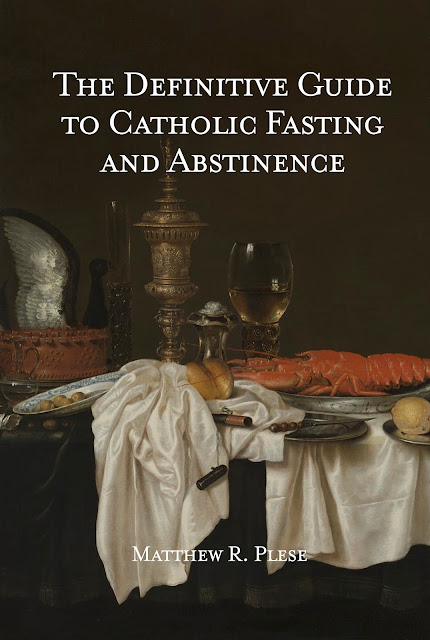
Want to learn more about the history of fasting and abstinence? Check out the Definitive Guide to Catholic Fasting and Abstinence.
Read more >>
Tuesday, March 7, 2006
Stational Churches

St. Ignatius Church, Rome, Italy (c) A Catholic Life Blog, 2016

Stations of Lent:

Ash Wednesday
Thursday after Ash Wednesday
Friday after Ash Wednesday
Saturday after Ash Wednesday

First Sunday of Lent
Monday in the First Week of Lent
Tuesday in the First Week of Lent
Wednesday in the First Week of Lent
Thursday in the First Week of Lent
Friday in the First Week of Lent
Saturday in the First Week of Lent

Second Sunday of Lent
Monday in the Second Week of Lent
Tuesday in the Second Week of Lent
Wednesday in the Second Week of Lent
Thursday in the Second Week of Lent
Friday in the Second Week of Lent
Saturday in the Second Week of Lent

Third Sunday of Lent
Monday in the Third Week of Lent
Tuesday in the Third Week of Lent
Wednesday in the Third Week of Lent
Thursday in the Third Week of Lent
Friday in the Third Week of Lent
Saturday in the Third Week of Lent

Laetare Sunday
Monday in the Fourth Week of Lent
Tuesday in the Fourth Week of Lent
Wednesday in the Fourth Week of Lent
Thursday in the Fourth Week of Lent
Friday in the Fourth Week of Lent
Saturday in the Fourth Week of Lent

Passion Sunday
Monday in the Fifth Week of Lent
Tuesday in the Fifth Week of Lent
Wednesday in the Fifth Week of Lent
Thursday in the Fifth Week of Lent
Friday in the Fifth Week of Lent
Saturday in the Fifth Week of Lent

Palm Sunday
Monday in Holy Week
Tuesday in Holy Week
Wednesday in Holy Week
Holy Thursday
Good Friday
Holy Saturday

Stations of Easter Week:

Easter Sunday: Saint Mary Major
Easter Monday: Saint Peter’s in the Vatican
Easter Tuesday: Saint Paul outside the Walls
Easter Wednesday: Saint Laurence Outside the Walls
Easter Thursday: Twelve Apostles
Easter Friday: Saint Mary of the Martyrs (the Pantheon)
Easter Saturday: Saint John in the Lateran
Low Sunday, the Octave Day of Easter: Saint Pancras on the Janiculum Hill

Stations from Ascension through Pentecost:

Ascension Thursday: Saint Peter’s in the Vatican
Saturday, the Eve of Pentecost: Saint John in the Lateran
Pentecost Sunday: Saint Peter’s in the Vatican
Pentecost Monday: Saint Peter’s in Chains
Pentecost Tuesday: Saint Anastasia
Pentecost Wednesday: Saint Mary Major
Pentecost Thursday: Saint Lawrence outside the Walls
Pentecost Friday: Twelve Apostles
Pentecost Saturday: Saint Peter’s in the Vatican

Stations of Advent:

First Sunday of Advent: Saint Mary Major (on the Esquiline Hill)
Second Sunday of Advent: Holy Cross in Jerusalem
Third Sunday of Advent: Saint Peter’s in the Vatican
Wednesday: Saint Mary Major (on the Esquiline Hill)
Friday: Twelve Apostles (near Piazza Venezia)
Saturday: Saint Peter’s in the Vatican
Fourth Sunday of Advent: Twelve Apostles (near Piazza Venezia)

Stations of the Christmas Season:

First Mass of Christmas at Midnight: Saint Mary Major (in the Chapel of the Crib)
Second Mass of Christmas at Dawn: Saint Anastasia
Third Mass of Christmas at Midnight: Saint Mary Major (on the Esquiline Hill)
December 26rd: Saint Stephen on the Celian Hill
December 27th: Saint Mary Major
December 28th: Saint Paul outside the Walls (on the Ostian Way, Metro ‘San Paolo’)
January 1st: Saint Mary in Trastevere
January 6th: Saint Peter’s in the Vatican
Read more >>
Friday, April 13, 2007
Friday in the Octave of Easter

"I have seen the Lord" (John 20:18)

Friday Abstinence Continues After Lent

Because today is not a Holy Day of Obligation, Friday penance (i.e., abstaining from meat) is required today.

The 1917 Code of Canon Law stipulated that the requirement to abstain from meat (i.e. Friday penance) was required each and every Friday of the year unless that particular Friday was a Holy Day of Obligation: "On [Sundays] or feasts of precept, the law of abstinence or of abstinence and fast or of fast only ceases, except during Lent, nor is the vigil anticipated; likewise it ceases on Holy [Saturday] afternoon" (1917 Code, Canon 1252 § 4). [Translation taken from THE 1917 OR PIO-BENEDICTINE CODE OF CANON LAW in English Translation by Dr. Edward Peters]

Easter Friday is not a feast of precept (i.e., a Holy Day of Obligation) and neither is any Friday in the Pascal Season between Easter Sunday and Trinity Sunday. The 1917 Code of Canon Law outlined the rules of fasting and abstinence in Canons 1250-1254.

The 1983 Code and the myriad of weakening dispensations offered between 1917 and the present have led to a continual decline in penance and devotion. Due to the errors and ambiguities in the 1983 Code, it must be rejected and the older Code must be used. One of these errors is the unprecedented novelty of solemnities like Easter Friday breaking the immemorial tradition of Friday abstinence.

Scripture Readings for Today (1962 Propers of the Mass):

EPISTLE I Peter 3:18-22

Beloved, because Christ also died once for our sins, the just for the unjust: that He might offer us to God, being put to death indeed in the flesh, but enlivened in the spirit, In which also coming He preached to those spirits that were in prison: Which had been some time incredulous, when they waited for the patience of God in the days of Noe, when the ark was a building: wherein a few, that is, eight souls, were saved by water. Whereunto baptism, being of the like form, now saveth you also: not the putting away of the filth of the flesh, but, the examination of a good conscience towards God by the resurrection of Jesus Christ. Who is on the right hand of God, swallowing down death that we might be made heirs of life everlasting: being gone into heaven, the angels and powers and virtues being made subject to Him.

GRADUAL Ps. 117:24, 26-27

This is the day the Lord has made; let us be glad and rejoice in it. V. Blessed is he who comes in the name of the Lord; the Lord is God and He has given us light.

Alleluia, alleluia! V. Ps. 95:10. Announce among the nations, that the Lord reigns upon a cross.

SEQUENCE
May you praise the Paschal Victim,
immolated for Christians.
The Lamb redeemed the sheep:
Christ, the innocent one,
has reconciled sinners to the Father.

A wonderful duel to behold,
as death and life struggle:
The Prince of life dead,
now reigns alive.
Tell us, Mary Magdalen,
what did you see in the way?

"I saw the sepulchre of the living Christ,
and I saw the glory of the Resurrected one:
The Angelic witnesses,
the winding cloth, and His garments.
The risen Christ is my hope:
He will go before His own into Galilee."
We know Christ to have risen
truly from the dead:
And thou, victorious King,
have mercy on us.
Amen. Alleluia.

GOSPEL Matt. 28:16-20


At that time, the eleven disciples went into Galilee, unto the mountain where Jesus had appointed them. And seeing Him they adored: but some doubted. And Jesus coming, spoke to them, saying: "All power is given to Me in heaven and in earth. Going therefore, teach ye all nations: baptizing them in the name of the Father and of the Son and of the Holy Ghost. Teaching them to observe all things whatsoever I have commanded you. And behold I am with you all days, even to the consummation of the world."

Reflection:

I hope my readers have enjoyed this series of meditations and readings for each day in the Octave of Easter. As we arrive on Easter Friday, I want today's meditation to be directly from the words of Pope John XXIII:

"Easter reminds us of these fundamental requirements of the Christian life: the practice of piety and the exercise of patience. Through piety we live detached from human frailties, in purity of mind and body, in close union with Christ. Through patience we succeed in strengthening our character and controlling our temper so as to become not only more pleasing to the Lord for our own sake, but an example and encouragement to others, to our fellow men, in the various contingencies of social life.

"The Resurrection of the Lord truly represents—and for this reason it is celebrated every year—the renewed resurrection of every one of us to the true Christian life, the perfect Christian life which we must all try to live. The Resurrection of Christ is the sacrament of new life.

"My beloved brothers and children! First of all let us look closely at our pattern, Jesus Christ. You see that everything in His life was in preparation for His resurrection. As St Augustine says: 'In Christ everything was working for His resurrection'.

"Born as a man, He appeared as a man for but a short time. Born of mortal flesh, He experienced all the vicissitudes of mortality. We see Him in His infancy, His boyhood, and His vigorous maturity, in which He died. He could not have risen again if He had not died; He could not have died if He had not been born; He was born and He died so that He might rise again.

"This is what St Augustine tells us in simple, sublime words."

Excerpted from Prayers and Devotions from Pope John XXIII, edited by John P. Donnelly © 1967, 1966.
Read more >>
Sunday, May 18, 2014
Latin Names for Sundays in the Roman Rite

Unfortunately in the past fifty years Catholics have all but forgotten that each Sunday of the Liturgical Year has a special name, taken from the first words of the Introit from the Proper Prayers for the Mass that day.

For your edification, I present the Latin names for these Sundays.  Some of these names (e.g. Laetare Sunday) are more common than others.  You may find the proper prayers on my separate page dedicated to the Traditional Mass Propers by clicking here.

Note: The Class distinction listed below is from the 1962 Rubrics.


Advent
First Sunday of Advent
1 Cl. Purple Missa 'Ad Te Levave'
Second Sunday of Advent
1 Cl. Purple Missa 'Populus Sion'
Third Sunday of Advent (Gaudete Sunday)
1 Cl. Rose Missa 'Gaudete'
Wednesday/Friday/Saturday of Advent Embertide (Wednesday, Friday and Saturday after the Third Sunday -- Gaudete Sunday -- of Advent)
2 Cl. Purple Missa 'Rorate Coeli'/Missa 'Prope es Tu'/Missa 'Veni'
Fourth Sunday of Advent
1 Cl. Purple Missa 'Rorate Coeli'
Christmastide
Vigil of Christmas
1 Cl. Purple Missa 'Hodie Scietis'
Nativity of Our Lord Jesus Christ (Christmas)
1 Cl. with Octave White First Mass at Midnight: Missa 'Dominus Dixit'
Second Mass at Dawn: Missa 'Lux Fulgebit'
Third Mass During the Daytime: Missa 'Puer Natus Est'
Sunday within the Octave of the Nativity of Our Lord
1 Cl. White Missa 'Dum Medium'
Feast of the Holy Name of Jesus (the Sunday after Jan. 1, or Sunday after the Octave Day of the Nativity, or Jan. 2, or the Sunday between the Octave Day of the Nativity and the Epiphany)
2 Cl. White Missa 'In Nomine Jesu'
The Epiphany of Our Lord Jesus Christ
1 Cl. White Missa 'Ecce Advenit'
First Sunday after Epiphany (Feast of the Holy Family)
2 Cl. White Missa 'Exsultat Gaudio'
Time after Epiphany
Second Sunday after Epiphany
2 Cl.. Green Missa 'Omnis Terra'
Third Sunday after Epiphany
2 Cl. Green Missa 'Adorate Deum'
Fourth Sunday after Epiphany
2 Cl. Green Missa 'Adorate Deum'
Fifth Sunday after Epiphany
2 Cl. Green Missa 'Adorate Deum'
Sixth Sunday after Epiphany
2 Cl. Green Missa 'Adorate Deum'
Septuagesima
First Sunday of Septuagesima (Septuagesima Sunday)
2 Cl. Purple Missa 'Circumdederunt Me'
Second Sunday of Septuagesima (Sexagesima Sunday)
2 Cl. Purple Missa 'Exsurge'
Third Sunday of Septuagesima (Quinquagesima Sunday)
2 Cl. Purple Missa 'Esto Mihi'
Lent
Ash Wednesday
1 Cl. Purple Missa 'Misereris Omnium'
First Sunday of Lent (Quadragesima Sunday)
1 Cl. Purple Missa 'Invocabit Me'
Wednesday/Friday/Saturday of Lenten Embertide (Wednesday, Friday, and Saturday after the First Sunday of Lent)
2 Cl. Purple Missa 'Reminiscere Miserationum Tuarum'/Missa 'De Necessitatibus'/Missa 'Intret Oratio'
Second Sunday of Lent
1 Cl. Purple Missa 'Reminiscere Miserationum'
Third Sunday of Lent
1 Cl. Purple Missa 'Oculi Mei'
Fourth Sunday of Lent ("Laetare Sunday" or "Rose Sunday")
1 Cl. Rose Missa 'Laetare'
Fifth Sunday of Lent (Passion Sunday, which begins the two weeks of Passiontide)
1 Cl. Purple Missa 'Judica Me Deus'
Friday after Passion Sunday (Feast of the Seven Sorrows)
Com. White Missa 'Sabant Juxta'
Sixth Sunday of Lent and Second Sunday of Passiontide (Palm Sunday, which begins Holy Week)
1 Cl. Red Missa 'Domine Ne Longe'
Spy Wednesday (the Wednesday of Holy Week)

Purple Missa 'In Nomine Jesu'
Maundy Thursday (the Thursday of Holy Week. The three days called the "Sacred Triduum" begin now)
1 Cl. White Missa 'Nos Autem'
Good Friday (the Friday of Holy Week)
1 Cl. Black Mass of the Presanctified (not a true Mass, but a Communion Service using pre-sanctified Hosts)
Paschaltide
Holy Saturday (Eastertide begins with the Vigil Mass)
1 Cl. Purple No Mass, but an Easter Vigil Service which begins the Easter Season
Easter Sunday
1 Cl. with Octave White Missa 'Resurrexi'
Monday in Easter Week
1 Cl. White Missa 'Introduxit'
Tuesday in Easter Week
1 Cl. White Missa 'Aqua Sapientiae'
Wednesday in Easter Week
1 Cl. White Missa 'Venite'
Thursday in Easter Week
1 Cl. White Missa 'Victricem Manum Tuum'
Friday in Easter Week
1 Cl. White Missa 'Eduxit Eos Dominus'
Saturday in Easter Week
1 Cl. White Missa 'Eduxit Dominus'
First Sunday after Easter ("Low Sunday" or "Quasimodo Sunday" or "Divine Mercy Sunday")
1 Cl. White Missa 'Quasi Modo'
Second Sunday after Easter

White Missa 'Misericordia Domini'
Third Sunday after Easter

White Missa 'Jubilate Deo'
Fourth Sunday after Easter

White Missa 'Cantate Domino'
Fifth Sunday after Easter

White Missa 'Vocem Jucunditatis'
Outside of Eastertide: Missa "Protexisti'
Ascension Thursday
1 Cl. White Missa 'Viri Galilaei'
Vigil of the Pentecost
1 Cl. Red Missa 'Cum Sanctificatus'
Pentecost Sunday (Whitsunday)
1 Cl. with Octave Red Missa 'Spiritus Domini'
Wednesday/Friday/Saturday of Whit Embertide (Wednesday, Friday and Saturday after Pentecost)
1 Cl./1 Cl./1 Cl. Red/Red/Red Missa 'Deus Dum Egredereris'/Missa 'Repleatur Os Meum'/Missa 'Caritas Dei'
Time after Pentecost
First Sunday after Pentecost (Trinity Sunday)
1 Cl. Green Missa 'Benedicta Sit'
Thursday after Trinity Sunday (Feast of Corpus Christi)
1 Cl. White Missa 'Cibavit Eos' and Procession
Second Sunday after Pentecost
2 Cl. White Missa 'Factus Est Dominus'
Friday after the Second Sunday after Pentecost (Feast of the Sacred Heart)
1 Cl. White Missa 'Cogitationes Cordis'
Third Sunday after Pentecost
2 Cl. White Missa 'Respice In Me'
Fourth Sunday after Pentecost
2 Cl. Green Missa 'Dominus Illuminatio Mea'
Fifth Sunday after Pentecost
2 Cl. Green Missa 'Exaudi Domine'
Sixth Sunday after Pentecost
2 Cl. Green Missa 'Dominus Fortitudo'
Seventh Sunday after Pentecost
2 Cl. Green Missa 'Omnes Gentes'
Eighth Sunday after Pentecost
2 Cl. Green Missa 'Suscepimus Deus'
Ninth Sunday after Pentecost
2 Cl. Green Missa 'Ecce Deus Adjuvat'
Tenth Sunday after Pentecost
2 Cl. Green Missa 'Cum Clamarem'
Eleventh Sunday after Pentecost
2 Cl. Green Missa 'Deus In Loco'
Twelfth Sunday after Pentecost
2 Cl. Green Missa 'Deus in Adjutorum'
Thirteenth Sunday after Pentecost
2 Cl. Green Missa 'Respice Domine'
Fourteenth Sunday after Pentecost
2 Cl. Green Missa 'Protector Noster'
Fifteenth Sunday after Pentecost
2 Cl. Green Missa 'Inclina Domine'
Sixteenth Sunday after Pentecost
2 Cl. Green Missa 'Miserere Mihi Domine'
Seventeenth Sunday after Pentecost
2 Cl. Green Missa 'Justus Es Domine'
Wednesday/Friday/Saturday of Michaelmas Embertide (Wednesday, Friday and Saturday after September 14)
2 Cl. Purple Missa 'Exsultate Deo'/Missa 'Laetetur Cor'/Missa 'Venite Adoremus Deum'
Eighteenth Sunday after Pentecost
2 Cl. Green Missa 'Da Pacem Domine'
Nineteenth Sunday after Pentecost
2 Cl. Green Missa 'Salus Populi'
Twentieth Sunday after Pentecost
2 Cl. Green Missa 'Omnia Quae Fecisti'
Twenty-first Sunday after Pentecost
2 Cl. Green Missa 'In Voluntate Tua'
Twenty-second Sunday after Pentecost
2 Cl. Green Missa 'Si Iniquitates Observaveris'
Twenty-third Sunday after Pentecost
2 Cl. Green Missa 'Dicit Dominus'
Twenty-fourth Sunday after Pentecost
2 Cl. Green Missa 'Dicit Dominus'
Twenty-fifth Sunday after Pentecost
2 Cl. Green Missa 'Dicit Dominus'
Twenty-sixth Sunday after Pentecost
2 Cl. Green Missa 'Dicit Dominus'
Twenty-seventh Sunday after Pentecost
2 Cl. Green Missa 'Dicit Dominus'
Last Sunday of Pentecost (no matter how many Sundays in Pentecost there are)
2 Cl. Green Missa 'Dicit Dominus'
Read more >>
Friday, March 30, 2007
Liturgical Law and the Coming Paschal Triduum for the Novus Ordo


HOLY THURSDAY

Washing of Women's feet is completely forbidden by the Apostolic See. This is reserved to men, preferably twelve of number, thus it symbolizes the twelve apostles. (Source: Paschales Solemnitatis). From Jan. 16, 1988, No. 51 of the circular letter states: "The washing of the feet of chosen men which, according to tradition, is performed on this day, represents the service and charity of Christ, who came 'not to be served, but to serve.' This tradition should be maintained, and its proper significance explained." 

Traditionally separate from Mass, the mandatum is a ceremony in which the priest (or bishop) will wash the feet of 12 men, in imitation of our Lord who humbled Himself to wash the feet of His disciples. This is kept as part of our Lord's command to do likewise.  For centuries, even monarchs would wash the feet of their subjects today. The controversy that has arisen in recent years is whether the feet of women may be washed.  Despite the bad example of some in the Church, it is against the Laws of the Church for the feet of anyone other than Catholic men to be washed.

GOOD FRIDAY

A day of mandatory Fasting and Abstinence (Canon 1251).

Upon entering our pews, we are to genuflect to the Crucifix not the tabernacle because the Eucharist is not present today in the Tabernacle (Source: GIRM 274).

The priest, upon approaching the altar, is to prostrate himself before it (USCCB). Concerning the adoration of the Cross, "A plenary indulgence is granted to the faithful, who in the solemn liturgical action of Good Friday devoutly assist at the adoration of the Cross and kiss it." The crucifix should be covered in a red or black material. Also, the baptismal founts are drained on this day until the evening of the Easter Vigil.

This is the only day of the liturgical year in which Mass is not, and is prohibited from being celebrated in the Roman Rite. A Liturgy of the Word with Communion is done by a priest with the special rite prepared in the Sacramentary. Holy Father Benedict XVI permits black to replace the red in the Liturgy of the Word, but red most be worn for the Rite of Holy Communion in the Novus Ordo. A cope is appropriate for the Liturgy of the Word, and is permissible for the Communion Rite. This distinguishes Mass from Communion Services.

HOLY SATURDAY

While not required by the current Code of Canon Law, Traditionalists will abstain and fast until at least the Vigil Mass, if not even until later, and wait until after Communion on Easter Sunday.

Readings should not be cut out. While the rubrics opt. for this, it is suggested that all be read. The Easter Vigil is the most important vigil in the Church and the readings "portray the whole history of human salvation, from the time of Adam to Jesus Christ." (PBXXI)

The Easter [Paschal] fast, from Holy Thursday evening through Good Friday, is sacred. According to ancient tradition, the Church fasts "because the Bridegroom has been taken away" (St. Mark 2:19-20) PS no. 39, (quoting Tertullian De ieiunio 2 et 13). Good Friday is a day of fasting and abstinence from flesh meat; (PS no. 60) it is also recommended, if possible, that the fast be continued on Holy Saturday until the Easter Vigil; so that the Church, with uplifted and welcoming heart, be ready to celebrate the joys of the Sunday of the Resurrection. (Pope Paul VI, Apostolic Constitution Paenitemini, Feb. 17, 1966, II, 3; Constitution on the Sacred Liturgy, Sacrosanctum Concilium, no. 110; General Norms for the Liturgical Year and the Calendar, no. 20; PS, no. 39.)

The Book of Blessing notes in the introduction to the Blessing of the First Meal of Easter (nos. 1701-1723) that, “The custom of blessing food for Easter arose from the discipline of fasting throughout Lent and the special [Paschal] Easter fast during the Triduum. Easter was the first day when meat, eggs, and other foods could again be eaten. According to custom, food may be blessed for consumption at the first meal of Easter, when fasting is ended and the Church is filled with joy in the Resurrection."
Read more >>
Thursday, December 29, 2022
Abstinence Is Obligatory on Friday in the Octave of Christmas

As Catholics, we are still bound to abstain from meat each Friday of the entire year, not just in Lent. This is required during the season of Christmas - even on Friday in the Octave of Christmas.

The 1917 Code of Canon Law stipulated that the requirement to abstain from meat (i.e., Friday penance) was required each and every Friday of the year unless that particular Friday was a Holy Day of Obligation:

 "On [Sundays] or feasts of precept, the law of abstinence or of abstinence and fast or of fast only ceases, except during Lent, nor is the vigil anticipated; likewise it ceases on Holy [Saturday] afternoon" (1917 Code, Canon 1252 § 4). [Translation taken from THE 1917 OR PIO-BENEDICTINE CODE OF CANON LAW in English Translation by Dr. Edward Peters]

Friday in the Octave of Christmas is not a feast of precept (i.e., a Holy Day of Obligation), nor is any Friday in the Christmas Season. The 1917 Code of Canon Law outlined the rules of fasting and abstinence in Canons 1250-1254.

The 1983 Code and the myriad of weakening dispensations offered between 1917 and the present have led to a continual decline in penance and devotion. Due to the errors and ambiguities in the 1983 Code, it must be rejected, and the older Code must be used. One of these errors is the unprecedented novelty of solemnities like Easter Friday breaking the immemorial tradition of Friday abstinence. Yet even in the modernized 1983 Code, Friday in the Octave of Christmas is not a "Solemnity," and even by the 1983 standards, is thus still a required day of abstinence from meat.

Let us not be so keen to forget our Lord's sacrifice on the Cross. Pray and do penance on this and all Fridays.

Want to learn more about the history of fasting and abstinence? Check out the Definitive Guide to Catholic Fasting and Abstinence.
Read more >>
Wednesday, April 12, 2023
Fasting and Penance Is Not Prohibited in Pascaltide

The total length of Paschaltide (i.e., the Easter Season) from Easter Sunday to the end of Whitsuntide is 56 days inclusive. In this way, Holy Mother Church shows us the joy of Easter has eclipsed the time of penance of Lent. Yet even in this time of joy, some penance is obligatory and even mandatory by Church Law. Thus, even in times of joy, we can and should continue to offer up fasting and abstinence for the good of souls.

Year-Round Friday Abstinence Is Required (Not Just in Lent!)

As Catholics, we are still bound to either abstain from meat or rather to do some act of penance each Friday of the entire year. Abstinence should always be what we choose to do since this underscored Christian culture for nearly 2,000 years since mandatory Friday abstinence went back to the time of the Apostles. As such, the 1983 Code of Canon Law decrees:

Can. 1251 Abstinence from meat, or from some other food as determined by the Episcopal Conference, is to be observed on all Fridays, unless a solemnity should fall on a Friday. Abstinence and fasting are to be observed on Ash Wednesday and Good Friday.


Rogationtide Is A Time of Penance in Eastertide

Virtually forgotten by all Catholics is the important practice of Rogationtide, which falls during Pascaltide as well.

The Major Rogation Day is on April 25th, which is coincidentally the Feast of St. Mark the Evangelist. Should it happen that the feast of St. Mark the Evangelist is transferred to another day (e.g., when a day in the Octave of Easter falls on April 25th), the Rogation procession is held nevertheless on April 25th, unless the feast falls on Easter Sunday or Monday, in which case the procession is transferred to Easter Tuesday. The Minor Rogation Days are the Monday, Tuesday, and Wednesday preceding Ascension Thursday. Hence, the date of the Minor Rogation Days varies.

In 2020, Dom Alcuin Reid gave a monastic conference on the Minor Rogation Days where he said in part:

Their observance is now similar in format to the Greater Litanies of April 25th, but these three days have a different origin, having been instituted in Gaul in the fifth century as days of fasting, abstinence and abstention from servile work in which all took part in an extensive penitential procession, often barefoot. The procession and litanies only found a place in the Roman liturgy much later (around the beginning of the ninth century) and even then purely as days of rogation – of intercession – rather than as ones of fasting and penance; the latter being deemed incompatible with the nature of Eastertide.

He continued:

Indeed, this ancient tradition itself is now widely lost in the West. How many Catholics understand what is meant by the greater or lesser litanies, or by the expression “the Rogations” – clergy included? 

... 

Dom Guéranger himself lamented the lack of appreciation of the Rogations in his own day: “If we compare the indifference shown by the Catholics of the present age for the Rogation days, with the devotion wherewith our ancestors kept them, we cannot but acknowledge that there has been a great falling off in faith and piety. Knowing, as we do, the great importance attached to these processions by the Church, we cannot help wondering how it is that there are so few among the faithful who assist at them. Our surprise increases when we find persons preferring their own private devotions to these public prayers of the Church, which, to say nothing of the result of good example, merit far greater graces than any exercises of our own choosing.”

The Minor Rogation Days go back to 470 AD when Bishop Mamertus of Vienne in Gaul instituted an annual observance of penance on the three days immediately before the Feast of the Ascension. He prescribed litanies in the form of processions for all three days. Thereafter they spread to the Frankish part of France in 511, to Spain in the 6th century, and to the German part of the Frankish empire in 813.  In 816, Pope Leo III incorporated the lesser litanies into the Roman Liturgy, and during the subsequent centuries, the custom of holding these litanies was customary for each year.


Is Penance Unbefitting for the Pascal Season?

Dom Guéranger, the great liturgist and Church historian who lived around the end of the 1800s, answers this question which many liturgically-minded Catholics ask: 

The question naturally presents itself, why did St. Gregory choose the 25th of April for a Procession and Station, in which everything reminds us of compunction and penance, and which would seem so out of keeping with the joyous Season of Easter? 

The first to give a satisfactory answer to this difficulty, was Canon Moretti, a learned Liturgiologist of last century. In a dissertation of great erudition, he proves that in the 5th, and probably even in the 4th, century, the 25th of April was observed at Rome as a day of great solemnity. The Faithful went, on that day, to the Basilica of St. Peter, in order to celebrate the anniversary of the first entrance of the Prince of the Apostles into Rome, upon which he thus conferred the inalienable privilege of being the Capital of Christendom. It is from that day that we count the twenty-five years, two months and some days that St. Peter reigned as Bishop of Rome. The Sacramentary of St. Leo gives us the Mass of this Solemnity, which afterwards ceased to be kept. St. Gregory, to whom we are mainly indebted for the arrangement of the Roman Liturgy, was anxious to perpetuate the memory of a day, which gave to Rome her grandest glory. He, therefore, ordained that the Church of St. Peter should be the Station of the Great Litany, which was always to be celebrated on that auspicious day. The 25th of April comes so frequently during the Octave of Easter, that it could not be kept as a Feast, properly so called, in honor of St. Peter's entrance into Rome; St. Gregory, therefore, adopted the only means left of commemorating the great event.

Hence from ancient times the Church kept these days as days of supplication. And even if fasting, the hallmark of Lent, would be ill-suited for Pascaltide, abstinence is still permitted and even obligatory in the Pascal Season. In former times, Rome enjoined abstinence from meat on the faithful during Rogationtide. Other places, however, such as the Churches in Gaul where Rogation Days originated, required fasting. Dom Guéranger testifies unknown custom to this:

A day, then, like this, of reparation to God’s offended majesty, would naturally suggest the necessity of joining some exterior penance to the interior dispositions of contrition which filled the hearts of Christians. Abstinence from flesh meat has always been observed on this day at Rome; and when the Roman Liturgy was established in France by Pepin and Charlemagne, the Great Litany of April 25 was, of course, celebrated, and the abstinence kept by the faithful of that country. A Council of Aix-la-Chapelle, in 836, enjoined the additional obligation of resting from servile work on this day: the same enactment is found in the Capitularia of Charles the Bald. As regards fasting, properly so-called, being contrary to the spirit of Paschal Time, it would seem never to have been observed on this day, at least not generally. Amalarius, who lived in the ninth century, asserts that it was not then practiced even in Rome.

Fasting was championed as well by St. Charles Borromeo in Milan, although Rome has never obligated fasting during the Pascal Season. Fasting during the Pascal Season, though is not a sin, just as almsgiving and prayer, the other Lenten pillars, are certainly praiseworthy during Pascaltide.

May we continue to incorporate some of our Lenten practices going forward and offer them in joy for the conversion of sinners and the exaltation of Holy Mother Church. And chief among our weapons to conquer demons and concupiscence is fasting.

Want to learn more about the history of fasting and abstinence? Check out the Definitive Guide to Catholic Fasting and Abstinence.
Read more >>
Friday, April 5, 2013
Traditions of Easter Week


Excerpted from the Society of St. Pius X Website:
Because those who were baptized on Holy Saturday wore new white garments, Easter Week is also called "White Week" in the Western Church and the "Week of New Garments" in the Oriental [Eastern] Church. During the whole week the neophytes, in their linen dress and soft sandals, stood close to the altar at all services as a separate group within the sanctuary of the basilica. Daily the bishop would address them with special instructions after the crowds had dispersed. It was the honeymoon of their new life as Christians, a week in intense happiness and spiritual joy. It was only after mass of the Sunday Octave of Easter that they exchanged the white garments for the ordinary dress.

Easter Monday is still in many countries a day of rest and relaxation. First among them is the "Emmaus walk", inspired by the Gospel of the day (Lk. 24). In Germany and Austria, youngsters would play Easter games and sports (Osterspiele) in the Easter field (Osteranger). In French Canada, the Emmaus walk takes the form of a visit to the grandparents.

Friday of Easter is a favorite day for devout pilgrimages (Osterwallfahrt). Praying and singing hymns, the faithful walk for hours preceded by a cross and church banners. In the Austrian Tyrol, people walk ten hours each way. In some sections of German and Austria, the farmers make their pilgrimage on horseback, accompanied by a band playing Easter hymns.

The Sunday after Easter received diverse names. It was called the "Octave of the Pasch" from the earliest centuries. It acquired later the name of "Sunday in White" (see above), hence the "White Sunday." The English term "Low Sunday" comes from the ancient practice of counting the octave day as belonging to the feast, so that Easter actually would last eight days including two Sundays. The primary (high) one is Easter Sunday, and the secondary (low) one the Sunday after Easter. Low Sunday was in medieval times the day for the first communions of children. Dressed in white, they enter the church in solemn procession, holding lighted candles. In some places, each child receives first communion with father and mother kneeling beside him, also receiving the Blessed Sacrament.
Image Source: Offerimus Tibi Domine
Read more >>
Monday, July 17, 2023
Weekday Traditional Latin Mass and Eastern Rite Options In and Around Chicagoland

Photo of St. John Cantius on All Souls Day (c) A Catholic Life Blog, 2022

Traditional Latin Mass Options on the First Sunday of Each Month

The website "The Four Marks" has a great list of options of Traditional Latin Mass and Eastern Rite options in and around Chicagoland for the First Sunday of the month when the Tridentine Mass is forbidden in the Archdiocese of Chicago. After the draconian changes announced in January 2022, the number of TLM locations in the Archdiocese was significantly reduced. In addition to forbidding the TLM at several places which had offered it for many years, the TLM was forbidden at all parishes on the first Sunday of each month as well as Christmas, Easter Sunday, and Pentecost Sunday. I highly recommend using the list at The Four Marks for those dates.

Traditional Latin Mass Options for Other Sundays

The following TLM locations are available on most Sundays (except for the First Sunday of the month, Christmas Day, Easter Sunday, and Pentecost Sunday):

  • St. John Cantius Church (Chicago): 7:30 AM Low Mass, 12:30 PM High Mass
  • Saint James at Sag Bridge (Lemont): 12 PM
  • Our Lady Immaculate (Oak Park): 9 AM (unaffected by the Archdiocese's persecution as this is an SSPX chapel)
  • Our Lady of the Holy Rosary Chapel (Elgin): 10 AM (unaffected by the Archdiocese's persecution as this is an independent chapel)
Weekday Traditional Latin Mass Options

For those looking for weekday Tridentine Mass options or Eastern Rite Liturgies, there are also options in Chicago or within relatively close 40-mile driving distance:

  • St. John Cantius Church (Chicago): 8:00 AM Low Mass (Monday through Friday), 7:30 PM High Mass (Wednesday), 8:30 AM Low Mass (Saturday)
  • St. Joseph Church (Rockdale): 7:30 AM Low Mass (Monday through Friday), 5:30 PM (Thursday), 8:00 AM Low Mass (Saturday)
  • Our Lady Immaculate (Oak Park): 7:00 PM (First Fridays and certain feast days. Check the calendar before going).
  • SSPX Priory (Chicago): This is at the priory and not at the Oak Park church: 11:00 AM (Monday), 7:15 AM Low Mass (Tuesday through Thursday), 7:15 AM Low Mass (Fridays except for First Fridays and special feasts). Check the calendar before going.
Weekday Eastern Rite Liturgy Options

For all of the Sunday options, see The Four Marks, as they are unaffected by the Archdiocese. Their regular Sunday Liturgies are available on all Sundays of the month. For weekday options, these options exist in close proximity to the city of Chicago:
  • Mart Mariam Chaldean Catholic Church (Northbrook): 6:30 PM Divine Liturgy in Surath (Friday)
  • St. John the Baptist Melkite Catholic Church
  • St. Thomas Syro-Malabar Cathedral (Chicago): 8:30 AM Divine Liturgy in Malayalam (Monday through Friday), 7:00 PM Divine Liturgy in English (Monday through Friday), 8:30 AM Liturgy in Malayalam (Saturday).
  • St. Mary’s Syro-Malabar Knanaya Catholic Church (Morton Grove): Divine Liturgies all in Malayalam: 8:15 AM (Monday through Friday), 7:00 PM (Monday through Thursday), 10:00 AM (Saturday). Divine Liturgy in English: 6:00 PM (Friday)
  • St. Nicholas Ukrainian Catholic Cathedral (Chicago): 5:00 PM Vespers (Saturday), 6:00 PM Matins (Saturday)
  • SS. Volodymyr and Olha Ukrainian Catholic Church (Chicago): 8:00 AM Divine Liturgy in Ukrainian (Monday through Friday), 9:00 AM Divine Liturgy in Ukrainian (Saturday)
  • St. Joseph the Betrothed Ukrainian Catholic Church (Chicago): 9:00 AM Divine Liturgy in the Chapel (Monday - Friday), 9:00 AM Divine Liturgy in the Church (Saturday), 5:00 PM Vespers (Saturdays), 6:30 PM Vespers (Eve of Major Feasts)
  • Immaculate Conception Ukrainian Byzantine Catholic Church (Palatine): Divine Liturgies: 8:00 AM (Monday through Friday), 9:00 AM (Saturday), 7:00 PM (Weekday Holy Days)
  • St. George Byzantine Catholic Church (Aurora): 6:00 PM Divine Liturgy (Monday through Thursday), 1:00 PM Divine Liturgy (Friday)
  • Annunciation Byzantine Catholic Church (Homer Glen): 7:00 PM (Thursday and Holy Days)
  • St. Mary Byzantine Catholic Church (Whitting, IN): 5:00 PM Great Vespers (Saturday)
If you know of any other options, please leave the details in the comments section below.
Read more >>


Copyright Notice: Unless otherwise stated, all items are copyrighted under a Attribution-NonCommercial-NoDerivatives 4.0 International License. If you quote from this blog, cite a link to the post on this blog in your article.

Disclosure of Material Connection: Some of the links on this blog are “affiliate links.” This means if you click on the link and purchase the item, I will receive an affiliate commission. As an Amazon Associate, for instance, I earn a small commission from qualifying purchases made by those who click on the Amazon affiliate links included on this website. I am disclosing this in accordance with the Federal Trade Commission’s 16 CFR, Part 255: “Guides Concerning the Use of Endorsements and Testimonials in Advertising.”