Showing posts sorted by relevance for query Good Friday. Sort by date Show all posts
Friday, April 14, 2006
Good Friday

Priests prostrate themselves at the foot of the altar on Good Friday in March 1953 in Poughkeepsie, NY

"And it was the third hour, and they crucified Him... And when the sixth hour was come, there was darkness over the whole earth until the ninth hour" (Mark 15:25, 33)

The hour has come when we remember how Our Master, after having instituted the Sacrament of Love - the Eucharist - was betrayed and handed over to sinners to be whipped, beaten, and crucified. The entire life of Our Savior existed for this moment - the moment when His death redeemed the entire Human race.

In love unutterable for us, in torments, He died.

Today has always been and still remains, a day of mandatory Fasting and Abstinence. Also worth noting, upon entering our pews today, we are to genuflect to the Crucifix, not the tabernacle because the Eucharist is not present today in our churches.

Remember His love for you especially between 9 AM and 3 PM, the time of His agony. Between 12 Noon and 3 PM specifically, pray because that is the time when He hung on the cross. Pray! Join me in the Litany of the Passion and the Sorrowful mysteries of the Rosary. Pray the Stations of the Cross today at your parish or at home around 3 PM. Likewise, meditate on Our Lady of Sorrows today as well.

There is no Mass anywhere in the world on Good Friday in the Roman Rite, but there is a service, the Liturgy of the Presanctified, to commemorate Jesus' Sacrifice on the Cross. And there is a plenary indulgence available: "A plenary indulgence is granted to the faithful, who in the solemn liturgical action of Good Friday devoutly assist at the adoration of the Cross and kiss it."

Click here for the prayer and readings for the traditional Liturgy of the Presanctified.

St. Patrick's Seminary in 1967

The Good Friday Novena Prayer:

"O, my Lord Jesus, I hereby beg of Thee, by the merits of Thy Precious Blood, by Thy Divine Heart, and by the intercession of Thy Most Holy Death to assist me in this pressing necessity."

(To be said 33 times for each intention. It must be said between the hours of 12 noon and 3 PM on Good Friday)
I adore you, O glorious Cross, which was adorned with the Heart and Body of my Savior Jesus Christ, stained and covered with Blood. I adore you, O Holy Cross, out of love for Him, Jesus, who is my Savior and my God.

(Pope Pius IX declared that by reciting this above prayer 5 times on Friday, we release 5 souls from Purgatory and we release 33 souls from Purgatory by reciting it on Good Friday. This prayer should be recited before a Crucifix, with a contrite heart and praying a few moments for the Pope.)
Read more >>
Sunday, April 1, 2012
SSPX Holy Week Video

Read more >>
Thursday, December 21, 2023
Abstinence is Still Obligatory on Friday in the Octave of Christmas

As a reminder, the Friday in the Octave of Christmas is still an obligatory day of abstinence. As Catholics, we are still bound to abstain from meat each Friday in the entire year, not just in Lent. 

Abstinence Traditionally Required on the Friday in the Octave of Christmas

The 1917 Code of Canon Law stipulated that the requirement to abstain from meat (i.e. Friday penance) was required each and every Friday of the year unless that particular Friday was a Holy Day of Obligation:

"On [Sundays] or feasts of precept, the law of abstinence or of abstinence and fast or of fast only ceases, except during Lent, nor is the vigil anticipated; likewise it ceases on Holy [Saturday] afternoon" (1917 Code, Canon 1252 § 4). [Translation taken from THE 1917 OR PIO-BENEDICTINE CODE OF CANON LAW in English Translation by Dr. Edward Peters]

The 1917 Code introduced the radical notion that a Holy Day of Obligation would eo ipso overrule the requirement of Friday abstinence for any Holy Days of Obligation outside of Lent. Previously the only day that would automatically abrogate the requirement of Friday abstinence was Christmas Day (December 25th) whose exception went back only to 1216 AD. Before the time of St. Pius X, a dispensation was required by the Holy Father to dispense from Friday abstinence on any other Holy Day of Obligation.

Friday in the Octave of our Lord's Nativity is not a feast of precept (i.e., a Holy Day of Obligation). While Feastdays of the Comites used to be Holy Days of Obligation, and while even St. Thomas Becket's Day was one of obligation in England in times past, they are no longer days of obligation. The 1917 Code of Canon Law outlined the rules of fasting and abstinence in Canons 1250-1254.

Abstinence Is Even Required on the Friday in the Octave of Christmas Per the 1983 Code

The 1983 Code and the myriad of weakening dispensations offered between 1917 and the present have led to a continual decline in penance and devotion. But even these weakened post-Vatican II Code did not change Friday in the Octave of Christmas to be one that permitted meat. The National Conference of Catholic Bishops (NCCB) issued a statement on November 18, 1966, where abstinence was made obligatory on all Fridays of Lent, except Solemnities (i.e., First Class Feasts), on Ash Wednesday, and on Good Friday. Friday in the Octave of the Nativity is not a solemnity. So even the weakened Code 1251 still obliges abstinence:

Can. 1251 Abstinence from meat, or from some other food as determined by the Episcopal Conference, is to be observed on all Fridays, unless a solemnity should fall on a Friday. Abstinence and fasting are to be observed on Ash Wednesday and Good Friday.

Prayer to Infant Jesus of Prague By Venerable Father Cyril, OCD:

O Divine Infant Jesus, I have recourse to Thee. Please through Thy Blessed Mother, assist me in this necessity… mention intention… because I firmly believe that Thy Divinity can help me. I hope with confidence to obtain Thy holy grace. I love Thee with all my heart and with all the strength of my soul. 

I repent sincerely of my sins and I beg Thee, O Good Jesus, to grant me the strength to triumph over them. I resolve never more to offend Thee and I come to offer myself to Thee with the intention of enduring everything, rather than to displease Thee. Henceforth, I desire to serve Thee with fidelity and, for the love of Thee, O Divine Infant, I will love my neighbour as myself.

All powerful Infant, O Jesus, I implore Thee again, assist me in this need. Grant me the grace of possessing Thee eternally with Mary and Joseph and of adoring Thee with the angels in the Heavenly Court. 

Amen.

Want to learn more about the history of fasting and abstinence? Check out the Definitive Guide to Catholic Fasting and Abstinence.
Read more >>
Thursday, April 5, 2007
Paschal Triduum: Let us Journey with Our Lord

At last, Holy Thursday is here. Today we will commemorate the Institution of the Eucharist, the Institution of the Sacred Priesthood upon the Disciples, and Jesus's agony and arrest in the Garden of Gethsemane. I have found no account of the Passion more mystical and beneficial for my own spiritual life than the account in "The Dolorous Passion of Our Lord Jesus Christ" according to the visions of Blessed Catherine Emmerich. I suggest all people read the account of Holy Thursday for today. It can be read online.

And so today we will celebrate and remember these events. Tomorrow we will spiritual journey with Our Lord. Tomorrow at 9 AM we will remember that His Passion begins. Jesus Christ was condemned to death. We will remember His Scourging at the Pillar of Flagellation, His Crowning with Thorns, and His Carrying the Cross. Tomorrow at 12 Noon, we will commemorate the instance when He was nailed to the Cross and lifted up from the Earth. And three hours later, at 3 PM, we will recall His death. Those three hours are the holiest hours in the year. Little to no talking should be done during that time.

For this reason, I will not be blogging anymore during the Sacred Paschal Triduum. Instead I will be journeying with my Lord. Tomorrow I will dress in all black, pull the shades and blinds closed, turn off televisions, computers, and telephones. Tomorrow I will journey with My Lord to His death. Good Friday is a day of abstinence and fasting. Please, at all moments, pray tomorrow.

Holy Saturday I will continue fasting until Noon like the Catholics of past generations did. Until the Vigil Mass, I will spiritually follow My Lord to His Tomb and sit outside and weep. It was our sins that condemned Him to death.

I encourage all of my readers to do the same - spiritually journey with Our Lord, pray the Divine Office each day, attend Mass each day of the Triduum, and pray, fast, and give alms.

Below is some information that I have previously posted on liturgical law for the Triduum. Following that are my articles on the Triduum from last year. And now I will leave the blogging world for a few days and follow My Lord who gave up His Life for each and everyone of us.

Liturgical Law and the Triduum:

HOLY THURSDAY

Washing of Women's feet is completely forbidden by the Apostolic See. This is reserved to men, preferably twelve of number, thus it symbolizes the twelve apostles. (Source: Paschales Solemnitatis). From Jan. 16, 1988, No. 51 of the circular letter states: "The washing of the feet of chosen men which, according to tradition, is performed on this day, represents the service and charity of Christ, who came 'not to be served, but to serve.' This tradition should be maintained, and its proper significance explained."

GOOD FRIDAY

A day of mandatory Fasting and Abstinence (Canon 1251).

Upon entering our pews, we are to genuflect to the Crucifix not the tabernacle because the Eucharist is not present today in the Tabernacle (Source: GIRM 274).

The priest, upon approaching the altar, is to prostrate himself before it (USCCB). Concerning the adoration of the Cross, "A plenary indulgence is granted to the faithful, who in the solemn liturgical action of Good Friday devoutly assist at the adoration of the Cross and kiss it" (Source). The crucifix should be covered in a red or black material. Also, the baptismal founts are drained on this day until the evening of the Easter Vigil.

This is the only day of the liturgical year in which Mass is not, and is prohibited from being celebrated. A Liturgy of the Word with Communion is done by a priest with the special rite prepared in the Sacramentary. Holy Father Benedict XVI permits black to replace the red in the Liturgy of the Word, but red most be worn for the Rite of Holy Communion. A cope is appropriate for the Liturgy of the Word, and is permissible for the Communion Rite. This distinguishes Mass from Communion Services.

HOLY SATURDAY

While not required by the current Code of Canon Law, Traditionalists will abstain and fast until the Vigil Mass.

Readings should not be cut out. While the rubrics opt. for this, it is suggested that all be read. The Easter Vigil is the most important vigil in the Church and the readings "portray the whole history of human salvation, from the time of Adam to Jesus Christ." (PBXXI)
Past Posts on the Triduum:
Read more >>
Thursday, March 19, 2020
Must the First Fridays and First Saturdays be Consecutive?

From time to time the question arises on whether or not the 9 First Fridays must be consecutive. One of the reasons for this is that traditionally the faithful may never receive Holy Communion, except in the case of the dying, on Good Friday. And some years Good Friday will fall on the First Friday of the month.

Likewise, during the crisis due to the coronavirus, many parishes - even traditional ones - are forced to cease public Masses due to the various shelter in place orders or government decrees to limit attendance at any gathering to a certain amount.

If this crisis continues into April, will the First Friday devotion need to be restarted again? Likewise, if through no fault of our own, will the Five First Saturdays devotion need to be restarted if we are unable to receive Holy Communion on the First Saturday of April? The answer is yes.

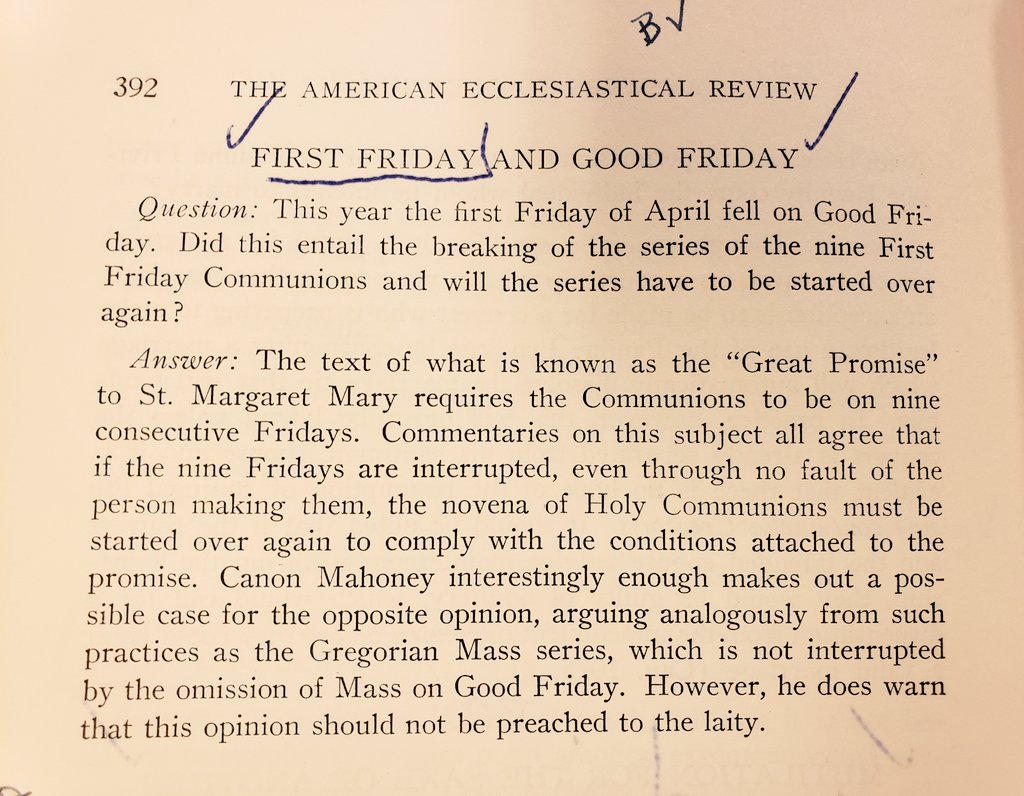
The following is taken from the American Ecclesiastical Review in regards to the question of Good Friday falling on the First Friday of the month. While the author notes this is not a universal opinion, he nevertheless does state that only Our Lord [or Our Lady in the case of the First Saturdays] could render a definitive decision on this matter. As none has been received from Heaven in a subsequent vision, we must conclude that the souls who are unable to receive Holy Communion, even through no fault of their own, must restart the devotion.

Let us pray for a quick end to the coronavirus crisis and the reopening of our churches and the offering of the Mass again to the public!

Does Good Friday Break the First Friday Devotion?


Read more >>
Friday, June 22, 2007
Friday: Abstain from Meat

Today is Friday, the day in which we commemorate Our Lord's Passion and Death. It was our own sins that condemned our glorious Lord to death on Good Friday - death on a Cross. As Catholics, we are still bound to either abstain from meat or rather to do some act of penance each Friday in the entire year. It was on this day of the week that our glorious Redeemer died for us. Please, never forget this, especially at 3 o'clock, the hour that He died. At 3 o'clock attempt to pray the 3 o'clock Mercy Prayer. Please remember Our Lord's love and repent today.
 
Code of Canon Law:
Can. 1249 All Christ's faithful are obliged by divine law, each in his or her own way, to do penance. However, so that all may be joined together in a certain common practice of penance, days of penance are prescribed. On these days the faithful are in a special manner to devote themselves to prayer, to engage in works of piety and charity, and to deny themselves, by fulfilling their obligations more faithfully and especially by observing the fast and abstinence which the following canons prescribe. 

Can. 1250 The days and times of penance for the universal Church are each Friday of the whole year and the season of Lent. 
Can. 1251 Abstinence from meat, or from some other food as determined by the Episcopal Conference, is to be observed on all Fridays, unless a solemnity should fall on a Friday. Abstinence and fasting are to be observed on Ash Wednesday and Good Friday. 

Can. 1252 The law of abstinence binds those who have completed their fourteenth year. The law of fasting binds those who have attained their majority, until the beginning of their sixtieth year. Pastors of souls and parents are to ensure that even those who by reason of their age are not bound by the law of fasting and abstinence, are taught the true meaning of penance. 

Can. 1253 The Episcopal Conference can determine more particular ways in which fasting and abstinence are to be observed. In place of abstinence or fasting it can substitute, in whole or in part, other forms of penance, especially works of charity and exercises of piety.
Today is also a great day to pray the Stations of the Cross. The Stations are a wonderful devotion that can be prayed in Church or at home. Nonetheless, the stations allow us to contemplate the true love of our Redeemer during His bitter Passion. Please join me in praying the Stations of the Cross. Remember, it was on this day that He gave up His life all for you.

Prayer to the Glorious Cross:

I adore You, O glorious Cross, which was adorned with the Heart and Body of my Savior Jesus Christ, stained and covered with blood. I adore You, O Holy Cross, out of love for Him, Jesus, who is my Savior and my God.

(Pope Pius IX declared that reciting this prayer five times on Friday will free five souls from Purgatory and 33 souls by reciting it on Good Friday. This prayer should be recited before a crucifix with a contrite heart and praying a few minutes for the Pope).

Prayer to Jesus Christ Crucified:

My good and dear Jesus, I kneel before you asking you most earnestly to engrave upon my heart a deep and lively faith, hope, and charity, with true repentance for my sins, and a firm resolve to make amends. As I reflect upon your five wounds, and dwell upon them with deep compassion and grief, I recall the words the prophet David spoke long ago concerning yourself: they have pierced my hands and my feet, they have numbered all my bones!
Read more >>
Friday, July 8, 2011
Friday Reminder - Still a Day of Penance

O Lord, Our God, have mercy on us sinners!


Today is Friday, the day in which we commemorate Our Lord's passion and death. It was our own sins that condemned our glorious Lord to death on Good Friday - death on a Cross. As Catholics, we are still bound to either abstain from meat or rather to do some act of penance each Friday in the entire year. It was on this day of the week that our glorious Redeemer died for us. Please, never forget this, especially at 3 o'clock, the hour that He died. At 3 o'clock attempt to pray the 3 o'clock Mercy Prayer. Please remember Our Lord's love and repent today.

Code of Canon Law:


Can. 1249 All Christ's faithful are obliged by divine law, each in his or her own way, to do penance. However, so that all may be joined together in a certain common practice of penance, days of penance are prescribed. On these days the faithful are in a special manner to devote themselves to prayer, to engage in works of piety and charity, and to deny themselves, by fulfilling their obligations more faithfully and especially by observing the fast and abstinence which the following canons prescribe.
Can. 1250 The days and times of penance for the universal Church are each Friday of the whole year and the season of Lent.
Can. 1251 Abstinence from meat, or from some other food as determined by the Episcopal Conference, is to be observed on all Fridays, unless a solemnity should fall on a Friday. Abstinence and fasting are to be observed on Ash Wednesday and Good Friday.
Can. 1252 The law of abstinence binds those who have completed their fourteenth year. The law of fasting binds those who have attained their majority, until the beginning of their sixtieth year. Pastors of souls and parents are to ensure that even those who by reason of their age are not bound by the law of fasting and abstinence, are taught the true meaning of penance.
Can. 1253 The Episcopal Conference can determine more particular ways in which fasting and abstinence are to be observed. In place of abstinence or fasting it can substitute, in whole or in part, other forms of penance, especially works of charity and exercises of piety.
Today is also a great day to pray the Stations of the Cros. Please join me in praying the Stations of the Cross. Remember, it was on this day that He gave up His life all for you.

Prayer to the Glorious Cross:

I adore You, O glorious Cross, which was adorned with the Heart and Body of my Savior Jesus Christ, stained and covered with blood. I adore You, O Holy Cross, out of love for Him, Jesus, who is my Savior and my God.

(Pope Pius IX declared that reciting this prayer five times on Friday will free five souls from Purgatory and 33 souls by reciting it on Good Friday. This prayer should be recited before a crucifix with a contrite heart and praying a few minutes for the Pope).

Prayer to Jesus Christ Crucified:

My good and dear Jesus, I kneel before you asking you most earnestly to engrave upon my heart a deep and lively faith, hope, and charity, with true repentance for my sins, and a firm resolve to make amends. As I reflect upon your five wounds, and dwell upon them with deep compassion and grief, I recall the words the prophet David spoke long ago concerning yourself: they have pierced my hands and my feet, they have numbered all my bones!
Read more >>
Friday, April 19, 2013
Friday Reminder - Still a Day of Penance (even in Eastertide)

Today is Friday, the day in which we commemorate Our Lord's passion and death. It was our own sins that condemned our glorious Lord to death on Good Friday - death on a Cross. As Catholics, we are still bound to either abstain from meat or rather to do some act of penance each Friday in the entire year. It was on this day of the week that our glorious Redeemer died for us. Please, never forget this, especially at 3 o'clock, the hour that He died. At 3 o'clock attempt to pray the 3 o'clock Mercy Prayer. Please remember Our Lord's love and repent today.

Code of Canon Law:

Can. 1249 All Christ's faithful are obliged by divine law, each in his or her own way, to do penance. However, so that all may be joined together in a certain common practice of penance, days of penance are prescribed. On these days the faithful are in a special manner to devote themselves to prayer, to engage in works of piety and charity, and to deny themselves, by fulfilling their obligations more faithfully and especially by observing the fast and abstinence which the following canons prescribe.
Can. 1250 The days and times of penance for the universal Church are each Friday of the whole year and the season of Lent.
Can. 1251 Abstinence from meat, or from some other food as determined by the Episcopal Conference, is to be observed on all Fridays, unless a solemnity should fall on a Friday. Abstinence and fasting are to be observed on Ash Wednesday and Good Friday.
Can. 1252 The law of abstinence binds those who have completed their fourteenth year. The law of fasting binds those who have attained their majority, until the beginning of their sixtieth year. Pastors of souls and parents are to ensure that even those who by reason of their age are not bound by the law of fasting and abstinence, are taught the true meaning of penance.
Can. 1253 The Episcopal Conference can determine more particular ways in which fasting and abstinence are to be observed. In place of abstinence or fasting it can substitute, in whole or in part, other forms of penance, especially works of charity and exercises of piety.

Prayer to the Glorious Cross:

I adore You, O glorious Cross, which was adorned with the Heart and Body of my Savior Jesus Christ, stained and covered with blood. I adore You, O Holy Cross, out of love for Him, Jesus, who is my Savior and my God.

(Pope Pius IX declared that reciting this prayer five times on Friday will free five souls from Purgatory and 33 souls by reciting it on Good Friday. This prayer should be recited before a crucifix with a contrite heart and praying a few minutes for the Pope).

Prayer to Jesus Christ Crucified:

My good and dear Jesus, I kneel before you asking you most earnestly to engrave upon my heart a deep and lively faith, hope, and charity, with true repentance for my sins, and a firm resolve to make amends. As I reflect upon your five wounds, and dwell upon them with deep compassion and grief, I recall the words the prophet David spoke long ago concerning yourself: they have pierced my hands and my feet, they have numbered all my bones!
Read more >>
Friday, June 8, 2007
Friday: Still a Day of Penance

O Lord, Our God, have mercy on us sinners!

Today is Friday, the day in which we commemorate Our Lord's passion and death. It was our own sins that condemned our glorious Lord to death on Good Friday - death on a Cross. As Catholics, we are still bound to either abstain from meat or rather to do some act of penance each Friday in the entire year. It was on this day of the week that our glorious Redeemer died for us. Please, never forget this, especially at 3 o'clock, the hour that He died. At 3 o'clock attempt to pray the 3 o'clock Mercy Prayer. Please remember Our Lord's love and repent today.
Code of Canon Law:


Can. 1249 All Christ's faithful are obliged by divine law, each in his or her own way, to do penance. However, so that all may be joined together in a certain common practice of penance, days of penance are prescribed. On these days the faithful are in a special manner to devote themselves to prayer, to engage in works of piety and charity, and to deny themselves, by fulfilling their obligations more faithfully and especially by observing the fast and abstinence which the following canons prescribe.
Can. 1250 The days and times of penance for the universal Church are each Friday of the whole year and the season of Lent.
Can. 1251 Abstinence from meat, or from some other food as determined by the Episcopal Conference, is to be observed on all Fridays, unless a solemnity should fall on a Friday. Abstinence and fasting are to be observed on Ash Wednesday and Good Friday.
Can. 1252 The law of abstinence binds those who have completed their fourteenth year. The law of fasting binds those who have attained their majority, until the beginning of their sixtieth year. Pastors of souls and parents are to ensure that even those who by reason of their age are not bound by the law of fasting and abstinence, are taught the true meaning of penance.
Can. 1253 The Episcopal Conference can determine more particular ways in which fasting and abstinence are to be observed. In place of abstinence or fasting it can substitute, in whole or in part, other forms of penance, especially works of charity and exercises of piety.
Today is also a great day to pray the Stations of the Cross. The Stations are a wonderful devotion that can be prayed in Church or at home. Nonetheless, the stations allow us to contemplate the true love of our Redeemer during His bitter Passion. Please join me in praying the Stations of the Cross. Remember, it was on this day that He gave up His life all for you.

Prayer to the Glorious Cross:

I adore You, O glorious Cross, which was adorned with the Heart and Body of my Savior Jesus Christ, stained and covered with blood. I adore You, O Holy Cross, out of love for Him, Jesus, who is my Savior and my God.

(Pope Pius IX declared that reciting this prayer five times on Friday will free five souls from Purgatory and 33 souls by reciting it on Good Friday. This prayer should be recited before a crucifix with a contrite heart and praying a few minutes for the Pope).

Prayer to Jesus Christ Crucified:

My good and dear Jesus, I kneel before you asking you most earnestly to engrave upon my heart a deep and lively faith, hope, and charity, with true repentance for my sins, and a firm resolve to make amends. As I reflect upon your five wounds, and dwell upon them with deep compassion and grief, I recall the words the prophet David spoke long ago concerning yourself: they have pierced my hands and my feet, they have numbered all my bones!
Read more >>
Friday, September 13, 2013
Friday: Mandatory Day of Penance

O Lord, Our God, have mercy on us sinners!


Today is Friday, the day in which we commemorate Our Lord's passion and death. It was our own sins that condemned our glorious Lord to death on Good Friday - death on a Cross. As Catholics, we are still bound to either abstain from meat or rather to do some act of penance each Friday in the entire year. It was on this day of the week that our glorious Redeemer died for us. Please, never forget this, especially at 3 o'clock, the hour that He died. At 3 o'clock attempt to pray the 3 o'clock Mercy Prayer. Please remember Our Lord's love and repent today.

Code of Canon Law:


Can. 1249 All Christ's faithful are obliged by divine law, each in his or her own way, to do penance. However, so that all may be joined together in a certain common practice of penance, days of penance are prescribed. On these days the faithful are in a special manner to devote themselves to prayer, to engage in works of piety and charity, and to deny themselves, by fulfilling their obligations more faithfully and especially by observing the fast and abstinence which the following canons prescribe.
Can. 1250 The days and times of penance for the universal Church are each Friday of the whole year and the season of Lent.
Can. 1251 Abstinence from meat, or from some other food as determined by the Episcopal Conference, is to be observed on all Fridays, unless a solemnity should fall on a Friday. Abstinence and fasting are to be observed on Ash Wednesday and Good Friday.
Can. 1252 The law of abstinence binds those who have completed their fourteenth year. The law of fasting binds those who have attained their majority, until the beginning of their sixtieth year. Pastors of souls and parents are to ensure that even those who by reason of their age are not bound by the law of fasting and abstinence, are taught the true meaning of penance.
Can. 1253 The Episcopal Conference can determine more particular ways in which fasting and abstinence are to be observed. In place of abstinence or fasting it can substitute, in whole or in part, other forms of penance, especially works of charity and exercises of piety.
Today is also a great day to pray the Stations of the Cros. Please join me in praying the Stations of the Cross. Remember, it was on this day that He gave up His life all for you.

Prayer to the Glorious Cross:

I adore You, O glorious Cross, which was adorned with the Heart and Body of my Savior Jesus Christ, stained and covered with blood. I adore You, O Holy Cross, out of love for Him, Jesus, who is my Savior and my God.

(Pope Pius IX declared that reciting this prayer five times on Friday will free five souls from Purgatory and 33 souls by reciting it on Good Friday. This prayer should be recited before a crucifix with a contrite heart and praying a few minutes for the Pope).

Prayer to Jesus Christ Crucified:

My good and dear Jesus, I kneel before you asking you most earnestly to engrave upon my heart a deep and lively faith, hope, and charity, with true repentance for my sins, and a firm resolve to make amends. As I reflect upon your five wounds, and dwell upon them with deep compassion and grief, I recall the words the prophet David spoke long ago concerning yourself: they have pierced my hands and my feet, they have numbered all my bones!
Read more >>
Sunday, April 9, 2006
Top 10 Suggestions for A Catholic Holy Week

"In Holy Week, we participate in the most sublime drama of religious history" (Fr. Pius Parsch)

Today is Palm Sunday, the beginning of Holy Week. This is the week that changed the course of history when Our Lord, Jesus Christ, suffered, died, and rose again for us. This Thursday is Holy Thursday, the commemoration of the Lord's Supper—when He gave us the gift of Himself in the Holy Eucharist.

The Triduum ceased being holy days of obligation a few hundred years ago in the 17th/18th century due to the Reformation and secularism which required people to work these days. But the fact that they are not presently Holy Days of Obligation does not mean we should let these most sacred days pass by. In fact, in previous eras, all commerce and governments would close to allow the faithful all of Holy Week and all of Easter Week off. We need to recover these traditions.

Here are my Top 10 Suggestions for A Catholic Holy Week:
  1. Attend Mass each day, especially on Holy Thursday, Good Friday, and Holy Saturday. Read the Mass propers each day this week, even the traditional readings for Holy Monday, Holy Tuesday, and Holy Wednesday. 
  2. Offer a daily Rosary for the souls that have died this Lent and for the conversion of sinners.
  3. Pray such prayers as the Litany of the Most Precious Blood every day. The Racolta has excellent prayers in honor of the Precious Blood, which is worth saying. There is also the Litany of the Passion.
  4. Take part in visiting Seven Churches Visitation, a traditional devotion where you visit seven churches on the evening of Holy Thursday to pray before the altars of repose at each church.
  5. Go to Confession to ensure that you are in the state of grace for these holy days.
  6. Read the entire Dolorous Passion according to the visions of Blessed Anne Catherine Emerich
  7. It is a requirement to fast on Good Friday, but if your health allows, fast also during the day on Holy Saturday and at night on Holy Thursday. Lent was traditionally 40 days of fasting and 46 days of abstinence. Good Friday also was, in former times, a day of the strictest fasting, and the faithful were encouraged to eat nothing at all on Good Friday, if possible. See: Fasting Rules
  8. Pray for the catechumens who will be received into the Church this week and receive the Sacraments. And pray for any public sinners who are reconciled
  9. Pray the Divine Office more regularly this week. If you do not have a Breviary in your library. Pray it online at Divinum Officium.
  10. Pray the Stations of the Cross on Good Friday and observe strict silence from 12 PM to 3 PM.
Do not let these days of grace go by without participating deeply in the Church's sacred rites. The drama of the Passion is about to unfold.
Read more >>
Wednesday, March 8, 2023
Can I Eat Meat on St. Patrick's Day on a Friday in Lent?

Lent is the most solemn of all fasting times in the Church. From Apostolic times until 1741, meat was never allowed in Lent. Even after it was permitted at some meals, Fridays and Saturdays remained mandatory days of complete abstinence in Lent into the early 1900s. Friday in particular, the most solemn of all days on account of our Lord's death on the Cross on Friday, was a mandatory day of abstinence all year round (and it still is!) Up until the 1917 Code of Canon Law, meat was not even allowed on Holy Days of Obligation which fell on a Friday outside of Lent. The Friday fast, like Sunday Mass, is integral to Catholic life. This post is based heavily on the research which is incorporated in "The Definitive Guide to Catholic Fasting and Abstinence." Read the full book for much more information relevant to this topic.

Definition of Fasting vs. Abstinence

Fasting refers to how much food we eat and, historically, when we eat it. It means taking only one meal during a calendar day. The meal should be an average-sized meal as overeating at the one meal is against the spirit of the fast. Fasting generally means that the meal is to be taken later in the day. Along with the one meal, up to two snacks (technically called either a collation or frustulum) are permitted. These are optional, not required. Added up together, they may not equal the size of the one meal. No other snacking throughout the day is permitted. 

Abstinence in this context refers to not eating meat. Meat refers to the fleshmeat of mammals or fowl. Beef, poultry, lamb, etc are all forbidden on days of abstinence. Abstinence does not currently prohibit animal byproducts like dairy (e.g. cheese, butter, milk) or eggs, but in times past they were prohibited. Fish is currently permitted along with shellfish and other cold-blooded animals like alligators. In times past, days of fast were always days of abstinence as well; however, not all days of abstinence were days of mandatory fasting.

The Church's Law in 1917

The days of obligatory fasting as listed in the 1917 Code of Canon Law were the forty days of Lent (including Ash Wednesday, Good Friday, and Holy Saturday until noon); the Ember Days; and the Vigils of Pentecost, the Assumption of the Blessed Virgin Mary, All Saints, and Christmas. Partial abstinence, the eating of meat only at the principal meal, was obligatory on all weeks of Lent (Monday through Thursday). And of course, complete abstinence was required on all Fridays, including Fridays of Lent, except when a holy day of obligation fell on a Friday outside of Lent. Saturdays in Lent were likewise days of complete abstinence.

The Church's Law in 1962

By 1962, the laws of fasting and abstinence were as follows as described in "Moral Theology" by Rev. Heribert Jone and adapted by Rev. Urban Adelman for the "laws and customs of the United States of America" copyright 1961: "Complete abstinence is to be observed on all Fridays of the year, Ash Wednesday, the Vigils of Immaculate Conception and Christmas. Partial abstinence is to be observed on Ember Wednesdays and Saturdays and on the Vigil of Pentecost. Days of fast are all the weekdays of Lent, Ember Days, and the Vigil of Pentecost." If a vigil falls on a Sunday, the law of abstinence and fasting is dispensed that year and is not transferred to the preceding day. Father Jone adds additional guidance for the Vigil of the Nativity fast: "General custom allows one who is fasting to take a double portion of food at the collation on Christmas Eve (jejunium gaudiosum)."

The Modern Church Law

The National Conference of Catholic Bishops issued a statement on November 18, 1966. Abstinence was kept obligatory on all Fridays of Lent, except Solemnities (i.e. First Class Feasts), on Ash Wednesday, and on Good Friday. Abstinence on all Fridays throughout the year was "especially recommended," and the faithful who did choose to eat meat were directed to perform an alternative penance on those Fridays outside of Lent, even though the US Bishops removed the long-establish precept of requiring Friday penance. The document stated in part: "Even though we hereby terminate the traditional law of abstinence binding under pain of sin, as the sole prescribed means of observing Friday, we ... hope that the Catholic community will ordinarily continue to abstain from meat by free choice as formerly we did in obedience to church law." And finally, fasting on all weekdays of Lent was "strongly recommended" but not made obligatory under penalty of sin.

The 1983 Code of Canon Law largely took Paul VI's apostolic constitution aside from the modification of the age at which fasting binds. Per the 1983 Code of Canon Law, the age of fast was changed to begin at 18 - previously it was 21 - and to still conclude at midnight when an individual completes his 59th birthday. Friday penance is required per these laws on all Fridays of the year except on Solemnities, a dramatic change from the previous exception being only on Holy Days of Obligation.

Per the 1983 Code of Canon Law, fasting and complete abstinence per these rules are required only on Ash Wednesday and Good Friday. The notion of "partial abstinence," introduced under Pope Benedict XIV in 1741, was also removed. By this point, the days of obligatory fast had been reduced to merely two days. And most Catholics only abstained from meat on the 7 Fridays in Lent.

Fridays in Lent

Thus, even as the fast and abstinence requirements deteriorated, Friday abstinence remained mandatory on Fridays in Lent. To intentionally violate Friday abstinence is a mortal sin - it is not a small matter. In fact, in former times, Catholic nations made the sale of meat a crime as The Definitive Guide to Catholic Fasting and Abstinence discusses in the context of 16th century England.

History of St. Patrick's Day in Lent
    
For the Irish (and for Irish Americans), St. Patrick's Day is both a cultural milestone and, traditionally, a very significant spiritual day. Sadly, this element has also been lost, which is ultimately why so many feel it necessary to seek out dispensations from Friday abstinence on the feastday of a saint who, ironically, was a fearless champion of fasting!

The first record of dispensation from Lenten fast and/or abstinence on St. Patrick's Day was early in America's history at a time when all of Lent, aside from Sundays, were days of mandatory fasting for those between the ages of 21 and 60 (health exceptions aside). With the growing number of Irish immigrants to America in the early 1800s, special attention was given to dispense from fasting when St. Patrick's Day fell on a Friday. This was done for the members of the Charitable Irish Society of Boston in 1837 and would become customary in the United States. The dispensation granted in 1837 "was granted on the proviso that all diners gave a small sum to charity." But this was in Boston, which was an epi-center of Irish Americans.

Back in Ireland, St. Patrick's Day was a Holy Day of Obligation and still, without special dispensation, a day of mandatory fasting and abstinence. Interestingly, "The Catholic's Pocket Prayer-Book," published by Henri Proost & Co. in 1924, notes that for Australia and New Zealand, all days in Lent were days of fasting "except Sundays and St. Patrick's Day." The same pocket guide lists the days of fasting and abstinence for Ireland and lists no such exception. Yet even for Australia and New Zealand, no exception for abstinence existed on St. Patrick's Day in 1924.

The Dispensations for St. Patrick's Day in 2023


As St. Patrick's Day falls on a Friday this year, dioceses have already been granting dispensations or statements declining to do so. The responses so far, illustrated in an interactive graphic via the Catholic News Agency fall into the categories of: dispensation granted, dispensation granted only in certain situations (otherwise abstinence is binding under pain of mortal sin), or no dispensation. Follow the link for more detailed information as changes are happening on a daily basis.

Conclusion: The True Celebration of a Catholic, St. Patrick's Day

Despite the changes he introduced to Lenten fasting in 1741, Pope Benedict XIV implored:

"The observance of Lent is the very badge of the Christian warfare. By it we prove ourselves not to be enemies of the cross of Christ. By it we avert the scourges of divine justice. By it we gain strength against the princes of darkness, for it shields us with heavenly help. Should mankind grow remiss in their observance of Lent, it would be a detriment to God's glory, a disgrace to the Catholic religion, and a danger to Christian souls. Neither can it be doubted that such negligence would become the source of misery to the world, of public calamity, and of private woe."

Modern Lent is no longer a 40 day fast. The days of abstinence for the average Catholic are appallingly few (it used to be roughly 1/3 of the year!) We would be violating the entire spirit of Lent by availing ourselves even of a valid dispensation from Lenten abstinence. Dom Gueranger accordingly writes:

But it will be asked: “Are there, then, no lawful dispensations?” We answer that there are; and that they are more needed now than in former ages, owing to the general weakness of our constitutions. Still, there is great danger of our deceiving ourselves. If we have strength to go through great fatigues when our own self-love is gratified by them, how is it we are too weak to observe abstinence? If a slight inconvenience deters us from doing this penance, how shall we ever make expiation for our sins? For expiation is essential painful to nature.

It must be clearly stated there is no incompatibility between fasting and abstaining and celebrating the saints. Even Sundays of Lent used to be required days of abstinence (but not fast). Let us fast and abstain always on St. Joseph's Day, Annunciation Day, and St. Patrick's Day each year during Lent. Our adherence to and preservation of the Traditional Catholic Faith requires this. Even with the fast, it is possible to honor St. Patrick’s Day with a loaf of traditional Irish soda bread. Check your local bakery or grocery store and get a loaf to have at dinner.

As Catholics, we abstain on Fridays in Lent, just as we go to Mass on Sundays. As traditional Catholics, we must maintain Friday abstinence and should encourage everyone else to do so for the honor of God and for the glory of St. Patrick. Let us offer up additional prayers and penances this year on St. Patrick's Day for the many who will mortally sin against our Lord and mock His sacrifice on the Cross by eating meat. While it may seem to be a small offense, it was the eating of a forbidden fruit that brought about original sin and the loss of paradise in the Garden of Eden. If we love God, surely we can say no to flesh meat on at least Friday in Lent. Right?
Read more >>
Friday, April 8, 2016
Friday Penance: Still Required in Eastertide


Abstinence Required In Pascaltide

Friday is the day in which we commemorate Our Lord's passion and death. As Catholics, we are still bound to abstain from meat each Friday of the entire year, not just in Lent. This is required during the season of Pascaltide. This is affirmed even in the modern 1983 Code of Canon Law - all Fridays of the entire year are days of penance (with few exceptions). There can be no doubt that Catholics must be informed that Friday abstinence is not to be confided to Lent only. Failing to observe Friday penance is a mortal sin, as affirmed by multiple pontiffs.

Abstinence on Easter Friday

How should we treat abstinence specifically on Friday in the Octave of Easter (i.e. Easter Friday)? The 1917 Code of Canon Law stipulated that the requirement to abstain from meat (i.e. Friday penance) was required each and every Friday of the year unless that particular Friday was a Holy Day of Obligation outside of Lent: 

"On [Sundays] or feasts of precept, the law of abstinence or of abstinence and fast or of fast only ceases, except during Lent, nor is the vigil anticipated; likewise it ceases on Holy [Saturday] afternoon" (1917 Code, Canon 1252 § 4). [Translation taken from THE 1917 OR PIO-BENEDICTINE CODE OF CANON LAW in English Translation by Dr. Edward Peters]

Easter Friday is not a feast of precept (i.e., a Holy Day of Obligation), and neither is any Friday in the Pascal Season between Easter Sunday and Trinity Sunday. The 1917 Code of Canon Law outlined the rules of fasting and abstinence in Canons 1250-1254. Before 1917, even Holy Days of Obligation outside of Lent required explicitly papal dispensation or else Friday abstinence would be observed even on days of precept.

The 1983 Code and the myriad of weakening dispensations offered in the 20th century has led to a continual decline in penance and devotion. Due to the errors and ambiguities in the 1983 Code, it must be rejected, and the older Code must be used. One of these issues is the unprecedented novelty of solemnities like Easter Friday breaking the immemorial tradition of Friday abstinence. The notion of day's liturgical rank abrograting abstinence has no basis in Church practice prior to 1983. 

It is essential for all Roman Catholics to continue abstaining from meat even on Easter Friday.

Conclusion

Friday abstinence is still the Catholic practice throughout Eastertide, and it is the Church's Law. Let us not be so keen to forget our Lord's sacrifice on the Cross. Pray and do penance on this and all Fridays. It is after all, on Friday that our Blessed Lord redeemed us. Let us never forget His Sacrifice on that first Good Friday.

Want to learn more about the history of fasting and abstinence? Check out the Definitive Guide to Catholic Fasting and Abstinence.
Read more >>
Saturday, February 25, 2006
Catholic Fasting and Abstinence Principles & Practices


Definitions:

Fasting: Fasting refers to how much food we eat. It means taking only one meal during a calendar day. The meal should be an average-sized meal as overeating at the one meal is against the spirit of the fast. Fasting generally means that the meal is to be taken later in the day. Along with the one meal, up to two snacks (technically called either a collation or frustulum) are permitted. These are optional, not required. Added up together, they may not equal the size of the one meal. No other snacking throughout the day is permitted. Fasting does not affect liquids, aside from the Eucharistic Fast which is a separate matter.

Abstinence: Abstinence in this context refers to not eating meat. Meat refers to the fleshmeat of mammals or fowl. Beef, poultry, lamb, etc are all forbidden on days of abstinence. Abstinence does not currently prohibit animal byproducts like dairy (e.g. cheese, butter, milk) or eggs, but in times past they were prohibited. Fish is permitted along with shellfish and other cold-blooded animals like alligators. In times past, days of fast were always days of abstinence as well; however, not all days of abstinence were days of mandatory fasting.

Partial Abstinence: Partial Abstinence refers to eating meat only at the principal meal of the day. Days of partial abstinence do not permit meat to be eaten as part of the collation or the frustulum. Partial abstinence started only in 1741 under Pope Benedict XIV as a concession and as part of a gradual weakening of discipline. Beforehand, days of abstinence were days of complete abstinence.

Fasting, therefore, refers to the quantity of food and the frequency of eating. Abstinence refers to what may or may not be eaten.

Want to learn more about the rules of fasting and abstinence? Check out the Definitive Guide to Catholic Fasting and Abstinence.

Man of Sorrows by William Dyce

Fasting & Abstinence in Practice During Lent:

Overview: While fasting and abstinence are always encouraged, Catholics have always practiced these together as a Universal Church on certain days and certain seasons. However, beyond the details below, you are welcome to fast any day of the year with the exception that Sundays and Pascaltide (i.e. the Easter Season) are not appropriate times for fasting.

Ash Wednesday [Fasting and Abstinence]: This is a mandatory abstinence and fasting day.

All Catholics aged 14 or older must abstain from meat on this day, as per the current 1983 Code of Canon Law. In the 1917 Code of Canon Law, the law of abstinence began at age 7. Since it is worthwhile to teach children the importance of this law, we should have our children begin to observe this even before the law explicitly commands it.

What is forbidden by the law of abstinence? All meat. Meat is considered to be the flesh and organs of mammals and fowl. Also forbidden are soups or gravies made from them. Salt and freshwater species of fish, amphibians, reptiles, and shellfish are permitted. [See: Why Do Catholics Eat Fish on Fridays?]. Eggs are presently allowed.

Additionally, besides abstaining from meat, as per the 1983 Code of Canon Law, anyone between 18 and up until 60 years of age is also bound to fast on Ash Wednesday. In the earlier 1917 Code, the fast began at age 21 and continued until a person turned 60. On this day one, normal-sized meal and two smaller snacks (called collations) that do not equal the normal meal are allowed. No indulging at a buffet at night to make up for the meals you could not eat during the day.

Eating between meals is prohibited although fruit juices and milk are allowed. Milk was added only in the recent centuries and the Church had asked that those who do consume milk on fasting days offer some additional prayers for the intentions of the Holy Father for doing so.

These rules are much more lenient than in centuries past. If you can, truly make your fasting a sacrifice. In times past, Ash Wednesday was a day when the faithful were asked to eat nothing at all.

Good Friday [Fasting and Abstinence]: This is a day of mandatory abstinence and fasting.

This day is the most somber day of the year when we recall Our Savior's death. The rules for Ash Wednesday apply to today. Today is a required day of abstaining from all meat and a required day of fasting.

Like Ash Wednesday in times past, Good Friday was a day with no food at all, for those able to keep that strictness. 

The fast is traditionally kept into the morning of Holy Saturday and ends on Holy Saturday at noon, or whenever you attend the Vigil, whatever is later.

The Fridays of Lent: All the Fridays of Lent including Good Friday are mandatory days of abstinence from meat. The abstinence rules outlined under Ash Wednesday apply today.

Since Lent was traditionally always understood as a period of 40 days of fasting, you should keep Fridays of Lent (and all days of Lent aside from Sundays) as fasting days. Failing to fast on Fridays in Lent is not a sin, except for Good Friday. However, failing to abstain from meat on Fridays of Lent is a mortal sin.

All Days of Lent except for Fridays (since the days that are covered above) and except for Sundays: Traditional Catholics will still fast all days of Lent. By the time that the 1917 Code of Canon Law was compiled, Lent had changed to allow meat at the meal of the day but never in the collations. The exception, of course, is Fridays and Ash Wednesday. This practice is called "partial abstinence". By partial abstinence, a person is allowed to eat meat only at the major meal. However, partial abstinence, which is part of the 1917 Code of Canon Law, is a modern change in itself. Some Catholics will maintain the older practice of not only fasting but abstaining entirely from all meat on all 40 days of Lent. Having meat on weekdays of Lent (except Fridays) was only allowed a few hundred years ago. Even Sundays, while not days of fasting, were kept as days of abstinence aside from Laetare Sunday, the mid-point of Lent, when the faithful had a reprieve.

While most Catholics no longer abstain from meat on non-Fridays or fast throughout the 40 days, these are still practices that should be observed by those who are physically able to do so. Keeping the strict Lenten fast and strict abstinence as done in the Early Church through the 17th century will help us conquer addictions, make reparation for sin, and avert God's justice.

Lenten Abstinence: The Lenten abstinence described above, unless otherwise stated, pertains only to meat and products like soups or gravies or broths made from them. In times past though, for centuries no animal products of any kind (e.g. dairy, cheese, butter, or eggs) were consumed during Lent. As Lent became weakened, these sacrifices became optional and fell nearly entirely out of us. However, some Orthodox Christians and Eastern Rite (e.g. Byzantine) Catholics still abstain from all meat and all animal products for all of Lent. Roman Catholics are welcome and even encouraged to do so in solidarity with them and in solidarity with our forefathers who did so. Such a penance would be highly appropriate for Lent.

Conclusion: Based on the Church's Lenten fast through the centuries, and a desire to do more than the minimum, here is a suggested fasting and abstinence plan for Lent (in imitation of how Lent used to be):
  • Fasting applies for those age 18 or older (but not obligatory for those 60 years of age or older)
  • Ash Wednesday and Good Friday: No solid food. Only black coffee, tea, or water.
  • Mondays through Saturdays: Only one meal preferably after sunset. A morning frustulum and evening collation are permitted but not required. No meat or animal products are allowed for anyone, regardless of age - that includes fish. No olive oil is permitted.
  • Sundays: No meat or animal products allowed except on Laetare Sunday. Except for Palm Sunday mentioned below.
  • Annunciation Day (March 25) and Palm Sunday: Fish and olive oil permitted.
  • Holy Week (except Good Friday): Only Bread, Salt, and Herbs are permitted for the main meal. Frustulum and collation permitted (of bread, herbs, and salt) but omitted if possible
  • Holy Saturday: No food until Noon. Abstinence including from all animal products continues until Easter begins.
Fasting & Abstinence in Practice Outside of Lent:


All Fridays of the Year outside of Lent: All Catholics must abstain from meat all Fridays of the year, not just during Lent. However, a modern novelty has arisen whereby many Bishops have said that Catholics may do another form of penance on non-Lenten Fridays in the year instead of abstaining from meat. This is the case in some countries, but not all. Fridays in Lent, though, are mandatory abstinence, and another act of penance does not void the necessity to abstain from meat and meat products. Traditional Catholics will always abstain on each Friday of the year, though, instead of substituting an alternative penance. It is important that we are united in the same common penance in the same universal Faith on such days.

Other Traditional Days of Fasting: For information on fasting days and how they have changed over time since America's founding, please click here for a landmark article on the topic.

Catholic Fasting Calendar: If you would like to follow the traditional days of fasting, consider purchasing an online calendar that will indicate the traditional fasting days. Click here for one.

Want to learn more about the history of fasting and abstinence? Check out the Definitive Guide to Catholic Fasting and Abstinence.
Read more >>
Sunday, April 3, 2016
March 25th: The Most Important Day in Human History (3 Times Over)


Note: This article is taken from Society of St. Vincent Ferrer.

(1) Creation - According to very ancient sources, March 25th is the day of creation. Contrary to the false science and errors of evolution, Scripture and Tradition teach that God created instantaneously (simply by speaking) and out of nothing. There are also traditions that relate March 25th was the day on which Adam and Eve were created and therefore also the day on which Adam and Eve committed the Original Sin.

(2) Incarnation - It was on this same calendar day that Jesus Christ assumed our human nature. March 25th is the day of the Mysteries of the Annunciation and Incarnation. On this day, God sent the archangel Gabriel to the Virgin Mary and she gave her fiat. As we well know, Christ was then born nine months later, on Dec 25th.

(3) Crucifixion - We read in the Roman Martyrology that March 25th is also the day on which St. Dismas, the good thief, died. This corroborates the ancient and venerable tradition that Our Lord was crucified on March 25th. In other words, the calendar date of the original Good Friday was March 25th. St. Irenaeus explains that it is eminently fitting that on the same day which the fallen angel seduced the virgin Eve, so on that day the archangel Gabriel spoke the words of salvation for all mankind to the Virgin Mary. He adds that on the same day that mankind was lost on account of the fruit of the forbidden tree, so on that day Christ hangs on the tree of the Cross and wins salvation for mankind. 

St. Irenaeus is the most prolific writer among the early Church Fathers. He was the spiritual son of St, Polycarp, who in turn was ordained and taught by St. John the Apostle. He emigrated from the East to Lyon (Gaul or France), advised several popes, was consecrated a bishop, fought against numerous heresies, and was ultimately martyred for the Faith. The popes of his day considered him a most reliable source for Apostolic Tradition and on that basis accepted his counsel on several important matters. Thus, in the writings of St. Irenaeus, we have a very important and trustworthy witness; and we are in direct contact with the traditions taught by the Apostles themselves. (In fact, St. Irenaeus writes that it is an apostolic tradition that Our Lord was conceived on March 25th) Those interested can read a bit more about this from Dom Guéranger's The Liturgical Year for March 25, linked here.

We have writings from a number of other Fathers and Doctors of the Church who convey this tradition, including St. Augustine, St. Clement of Alexandria, St. Cyprian, and St. Maximus the Confessor, 

Once again, in this 2016th year of Our Lord, Good Friday will fall on March 25th. This is rather singular since it will only happen twice in this entire century. The other occurrence was in 2005, just a few weeks before Cardinal Ratzinger was elected Pope Benedict XVI. This means in all likelihood, most of us will never again by alive on a Good Friday that falls on March 25. (It will take 141 years for it to happen again. Incidentally, this 141 year gap will be the longest such gap in several centuries. For example, Good Friday fell on March 25th three times during the 20th century, but all prior to 1933.)

(4) Other Events. Traditions that come to us from antiquity also claim that many other key events in salvation history occurred on March 25th. For example: Cain slaying Abel, Melchisedech offering bread and wine in the presence of Abraham, Abraham's offering of Isaac, and the Crossing of the Red Sea. If this subject interests you, The Lepanto Institute has an article that goes into more detail and it can be read HERE.

Let us consider the providence of God behind these remarkable events and respond by cooperating as much as we possibly can with His grace.

Read more >>
Wednesday, April 8, 2020
Liturgical Prayers Concerning the Jews in Holy Week

As we draw closer to Good Friday, there are often liturgical questions on the prayer of the Church for the conversion of the Jews. But first, please understand what we mean by the involvement in the Jews in Christ's Passion and Death. It's important to first read "Are the Jews Responsible for Christ's Death" before continuing.

The primary question concerning references to Jews during Holy Week is usually around the prayer for the Jews in the Good Friday Liturgy (known traditionally as the Liturgy of the Presanctified). Here is a summary of those changes

Traditional Pre-1955 Prayer for the Jews

As part of the Great Intercessions, the priest prays, "Let us pray also for the perfidious Jews: that our God and Lord would remove the veil from their hearts: that they also may acknowledge our Lord Jesus Christ." Then after he says "Oremus" this prayer is prayed: "Almighty and everlasting God, who drivest not away from Thy mercy even the perfidious Jews: hear our prayers, which we offer for the blindness of that people: that, acknowledging the light of Thy truth, which is Christ, they may be rescued from their darkness. Through our Lord Jesus Christ, Thy Son, who liveth and reigneth with Thee in the unity of the Holy Ghost, God, world without end. R. Amen."

What differs in pre-1955 is that while in all of the Great Intercessions one kneels after the Oremus, it does not take place during the Good Friday Prayer for the Jews. Why? The Church's Year by Father Leonard Goffine explains:

"After the [chanting of the account of the Passion according to St. John] the priest prays in behalf of the one, only true Church, that she may increase, and that peace and unity may always remain with her; for the pope, that his government may be blessed; for the bishops, priests, the clergy, and the people, that they may serve God in justice; for those converted to the faith, that they may continue to grow a knowledge and a zeal for the holy religion; for rulers as defenders of the Church, that they may govern with wisdom and justice, and that those under them may be loyal to them with fidelity and obedience; for the unfortunate, that God may have mercy on them; for heretics and apostates, that they may be brought back from error to the truth of the Catholic faith; for the Jews, that they may be enlightened; for the heathens, that they may be converted. Before each prayer the priest says Oremus, Let us pray Flectamus genua, (Let us kneel) when kneeling, we say Amen, and at the call Levate (Rise up) we rise: except at the prayer for the Jews, when the genuflection is omitted because the Jews bent the knee in mockery before our Lord."

1955 Prayer for the Jews

As part of the changes to Holy Week, the flectamus genua was added back to the prayer.

1959 Prayer for the Jews

Likely due to failure to understand the meaning of "perfidious", which means "incredulous" but which some people falsely thought to mean “treacherous," Pope John XXIII removed the word from the prayer and interrupts the Good Friday Liturgy when the prayer was read, asking for it to be read again without using the word.

1962 Prayer for the Jews:

The prayer as changed in 1959, omitting perfidious and adding the flectamus genua, is what was included in the 1962 Missal and stayed as such until 2008.

The 1962 Prayer for the Jews (Amended in 2008):

The 1962 Missal which is the most widely used Missal for the Traditional Latin Mass was ordered to change the prayer from its prior version, as mentioned immediately above, to a new prayer composed by Pope Benedict XVI in 2008. That modified prayer reads:

"Let us pray for the Jews: May our God and Lord enlighten their hearts, so that they may acknowledge Jesus Christ, Saviour of all men." The priest prays "Oremus" and then adds the flectamus genua to kneel, still in rupture with the past tradition.

Rising, he prays: "Almighty and Everlasting God, who desirest that all men be saved and come to the knowledge of the truth; mercifully grant that, as the fullness of the Gentiles enters into Thy Church, all Israel may be saved. Through Christ our Lord. Amen."

Novus Ordo Prayer for the Jews

In the Novus Ordo, the changes become even more drastic and straying from our purpose of praying for the conversion of the Jews. The prayer currently prayed in the Novus Ordo as written in 1970 by Pope Paul VI is as follows.

The priest prays as part of the General Intercessions: "Let us pray also for the Jewish people, to whom the Lord our God spoke first, that he may grant them to advance in love of his name and in faithfulness to his covenant."

The priest adds: "Almighty ever-living God, who bestowed your promises on Abraham and his descendants, hear graciously the prayers of your Church, that the people you first made your own may attain the fullness of redemption. Through Christ our Lord."

The website of Corpus Christi Watershed has more information on these prayers as they changed over the years.

Victimae Paschali Laudes

Yet, this is not the only matter concerning mention of the Jews in prayers during Holy Week. The following is taken from the Easter Sequence, the Victimae Paschali Laudes.

Pre Tridentine Victimae Paschali Laudes

Before the Tridentine Reforms, the Victimae Paschali Laudes included a line that read, "It is more fitting to believe in truthful Mary alone, rather than in the lying multitude of the Jews." For those looking to chant this version of the prayer, which was changed nearly 500 years ago, a pdf is available for download.

The key takeaway is that while politically incorrect, we can and should still pray for the conversion of the Jews. We desire for them, and for all mankind, to enter the Catholic Church, the ark outside of which no salvation may be found. We pray for the Jews in the traditional Octave of Christian Unity in January of each year as well.
Read more >>


Copyright Notice: Unless otherwise stated, all items are copyrighted under a Attribution-NonCommercial-NoDerivatives 4.0 International License. If you quote from this blog, cite a link to the post on this blog in your article.

Disclosure of Material Connection: Some of the links on this blog are “affiliate links.” This means if you click on the link and purchase the item, I will receive an affiliate commission. As an Amazon Associate, for instance, I earn a small commission from qualifying purchases made by those who click on the Amazon affiliate links included on this website. I am disclosing this in accordance with the Federal Trade Commission’s 16 CFR, Part 255: “Guides Concerning the Use of Endorsements and Testimonials in Advertising.”