Thursday, February 5, 2026
The Real Presence: Faith, Reverence, and Signs

“For from the rising of the sun even to the going down, My name is great among the Gentiles, and in every place there is sacrifice, and there is offered to My name a clean oblation.” (Mal. 1:11)

This article continues and expands the meditation begun in my previous post, The Mass as God’s Wonderful Promise and Gift. There, I focused on the Mass as a hidden treasure and the Eucharist as the greatest Gift God could give—God Himself. Here, I turn to a closely related theme: the Real Presence as a doctrine that demands living faith, visible reverence, and (at times) extraordinary signs by which our Lord has strengthened His Church when belief was attacked or mocked.

These reflections are drawn from and inspired by the nineteenth-century Redemptorist priest Father Michael Mueller (1825–1899), whose devotional and doctrinal works aimed to press Catholic truths into the imagination and conscience until a man is forced to ask: Do I actually believe what I say I believe? Mueller’s book on the Mass—first published in 1874 and recently re-typeset and edited—was warmly commended in its own day and deserves renewed attention in ours.

In adapting these meditations for publication here, I will rely far less on extended quotations and more on explanation and application. Still, Mueller’s voice will appear at key moments. I will format any direct quotation as a block quote so it can be footnoted easily.

I. Real Presence: The Doctrine That Reorders Everything

It is one thing to confess with the lips that Our Lord is present in the Blessed Sacrament. It is another to live as though it were true.

Catholics often speak—rightly—of the Mass as the unbloody renewal of Calvary. We know (at least in theory) that the Sacrifice of the Cross is made present sacramentally; that the Mass is true worship, true oblation, true sacrifice; and that the Eucharist is not merely a symbol or representation, but Jesus Christ Himself—Body, Blood, Soul, and Divinity—under the sacramental veils.

And yet the modern world grows louder, more frantic, and more distracted by the day. Even for practicing Catholics, it becomes easy to treat the Mass as one more event on a weekly schedule: attended, fulfilled, and quickly forgotten. That shift does not happen all at once. It begins quietly: a loss of awe, a habit of distraction, a reduced sense of sin, and a practical assumption that the Eucharist is “holy,” yes—but not the kind of holiness that demands trembling reverence.

But if the Real Presence is true, then everything changes. The tabernacle is not a decorative box. It is not an ornament for the sanctuary. It is a throne. It is Bethlehem and Calvary and the Upper Room gathered into one hidden location where the God-Man truly dwells. If Christ is there, then a church is not merely a room for religious gathering; it is a sacred place because the King is present. And if the King is present, then every Catholic is bound not merely to “believe,” but to adore.

It is precisely because this doctrine reorders everything that the devil hates it and the world resists it. The Real Presence is not merely a comforting devotion; it is a declaration of divine authority. It says: God is here. God speaks. God reigns. God judges. God sanctifies. God demands worship. And for fallen man, that is intolerable unless he repents.

II. Christ Permits Evil to Draw From It a Greater Good

If the Eucharist is the heart of the Church, we might ask why God has permitted it to be attacked, denied, mocked, profaned, or treated casually—even among those who claim the name of Christian. Why allow heresy at all? Why allow irreverence to spread?

The Catholic answer is not that God wills evil. He does not. But He permits evil—and He permits it in such a way that, without compromising His holiness, He draws from it a greater good: the strengthening of the faithful, the purification of devotion, the exposure of error, the humiliation of pride, and the more brilliant vindication of truth.

This is the logic of the Cross. Our Lord allowed Judas to betray Him and Peter to fall. He allowed Himself to be scourged, mocked, and crucified. The malice was real; the injustice was real; yet the providence of God was greater still. From the darkest hour, God drew the world’s redemption.

So too in Eucharistic history: when belief grew cold, when heresy grew bold, and when the sacred mysteries were assaulted, God permitted trials. And at times of His choosing, He answered those trials with confirmations—sometimes quiet and interior, sometimes public and extraordinary—so that the faithful might be strengthened, the wavering corrected, and the proud rebuked.

This must be said clearly: miracles do not replace doctrine, and signs do not create faith. The Church’s authority is sufficient. Still, it has pleased God at certain times to grant remarkable confirmations—not because the Church needs spectacle, but because man’s heart is slow, forgetful, and often stubborn.

III. Corpus Christi and the Mercy of Public Adoration

One of the clearest examples of God drawing a greater good from an age of danger is the Feast of Corpus Christi. The feast is not a medieval embellishment. It is a providential response to the needs of the Church—especially when Eucharistic faith was challenged and devotion threatened.

The heart of Corpus Christi is remarkably simple: the Church publicly does what she always does interiorly—she confesses what she believes. The Eucharistic procession is a sermon preached without words: Christ is here. The same Lord Who once walked the roads of Judea now passes through our streets, not because He needs honor, but because we need to honor Him. Public worship becomes a form of reparation and a remedy for a forgetful world.

Mueller points to the purpose of Corpus Christi with characteristic directness:

“This means was the institution of the Feast of Corpus Christi.”

And he emphasizes why it mattered at the time it arose:

“It was instituted by divine inspiration in order that the Catholic doctrine might be strengthened by the institution of this festival, at a time when the faith of the world was growing cold and heresies were rife.”

Whether we consider the historical development of the feast or its enduring spiritual fruit, the lesson is the same: when faith is threatened, the Church does not retreat into ambiguity. She proclaims Christ more openly. The Host is lifted up not as a symbol, but as the living Lord. And the faithful are invited to order their interior life according to what the Church dares to confess in public: that Jesus Christ is truly present.

In our own day, Corpus Christi remains an essential anchor for authentic Eucharistic renewal. It teaches Catholics to worship outwardly what they claim to believe inwardly. It teaches that reverence is not optional; it is the natural language of faith.

IV. The Evils of Protestantism and the Assault on the Eucharist

To understand why the Church has clung so tightly to Eucharistic devotion—and why she has insisted upon clarity—we must speak honestly about what happens when the Real Presence is denied.

The Protestant revolt was not merely a dispute about external ceremonies or church governance. At its heart was a revolt against the sacrificial priesthood and the Eucharistic mystery. Once the Mass is denied as a true sacrifice, and once transubstantiation is rejected, the Eucharist is reduced—first to a symbol, then to an occasional memorial, and eventually to a matter of subjective meaning rather than objective reality.

And historically, the denial did not remain theoretical. Where the Eucharist was rejected, the fruits often followed: contempt for Catholic worship, ransacking of churches, ridicule of altars, destruction of sacred vessels, mockery of adoration, and the stripping away of the very instincts of reverence. When a culture abandons the truth that God is truly present among us—hidden under the sacramental veil—reverence collapses. And when reverence collapses, blasphemy and cruelty are never far behind.

This is why the Church has always treated Eucharistic doctrine as a matter of life and death, not as an item for polite ecumenical vagueness. If Christ is not truly present, then Catholic worship is superstition. But if Christ is truly present, then Protestantism is not merely “a different emphasis.” It is a denial of the Lord’s own words: “This is My Body.”

And because God is merciful even to the weak and wavering, He has sometimes granted extraordinary signs precisely in such ages—so that the faithful might be strengthened and the arrogant humbled.

V. Nicola Aubry and the Terrifying Clarity of Spiritual Warfare

Among the most arresting narratives Mueller presents is that of Nicola Aubry. Modern sensibilities do not like such stories. Yet the case teaches an unforgettable lesson: the devil knows the truth about the Eucharist even when heretics deny it; and Christ, in His sovereignty, can force even His enemies to confess what unbelief refuses to adore.

What is especially striking about this episode is that it is not presented as mere curiosity. It is doctrinal and moral. It reveals the hatred hell bears toward the Eucharist, and it highlights the authority Christ has placed in His Church.

Mueller frames the matter with a question that cuts to the heart of providence:

“Why this struggle between Our Lord and satan, since our divine Savior is his Lord and Master?”

His answer, in substance, is that God permitted the trial in order to sanctify, to instruct, to confirm Catholic doctrine, and to draw a greater good from what the devil intended for ruin. In this case, our Lord’s victory becomes a kind of living catechism: it teaches that Christ is present, that the Eucharist has power, and that even infernal hatred must yield before the King Who hides Himself under humble appearances.

One cannot read such accounts and still pretend that the Eucharist is a harmless symbol. The devil does not rage against symbols. He rages against reality. He rages against Christ’s sacramental Presence because the Eucharist is Christ’s nearness to man—Christ’s condescension, Christ’s mercy, Christ’s kingship, Christ’s claim upon souls.

This is why the Church has always insisted that reception of Holy Communion must be worthy: free from mortal sin, approached with reverence, prepared by repentance. The Eucharist is not a common thing. It is the Holy of Holies.

VI. The Power of Our Lord’s Body

Mueller repeatedly returns to a central point: the Host appears small, silent, unimpressive—but omnipotence is hidden there. The God-Man is not divided. Wherever He is present, His power and majesty are present, even if veiled.

He expresses the paradox plainly:

“So, when we look upon the Sacred Host it is true, we see there no mark of His Majesty… Yet, for all that, Jesus does not lack the power and means to manifest Himself in the Sacred Host as the Lord of Heaven and earth…”

This is precisely why Eucharistic devotion tests the sincerity of faith. God hides Himself so that man will be humbled, so that the soul will learn to prefer divine testimony over sensory evidence, and so that love may become pure—seeking God for God’s sake, not merely for the thrill of visible marvels.

Yet in mercy, God has at times allowed that veil to be partially lifted. Not because the ordinary Eucharist is “less real,” but because man’s heart is often forgetful. And when God grants such signs, they function like the miracles of Christ in the Gospel: they confirm doctrine, strengthen the faithful, and rebuke unbelief.

VII. The Miracle of Augsburg and Three Extraordinary Favors

Among the most sobering accounts is the miracle associated with Augsburg. While the details are striking, the spiritual meaning is even more striking: irreverence toward the Eucharist is never a small sin; and when Christ permits extraordinary confirmation, it is both mercy and warning.

The narrative involves sacrilege—a soul receiving Holy Communion and then committing a grave profanation by keeping the Host. Such a sin does not bring freedom; it brings misery. In the story, conscience becomes a torment until repentance returns. That alone is an important lesson: one cannot “possess” Christ as a talisman. The Eucharist is not a charm, and it does not tolerate being treated as an object.

When the Host is finally returned and the priest examines what had been hidden, the account describes a visible change—one meant to confirm, terrify, and instruct:

“On taking the two pieces of wax apart, he beheld, instead of the species of bread, human flesh, and even the muscular fibers.”

And again, the narrative emphasizes a further manifestation:

“the Sacred Host split at once in two… united by muscular fibers.”

Mueller presents this episode not as spectacle but as instruction. Such a miracle becomes, in effect, a catechism written in flesh rather than ink. It forces the question: if Christ’s Body is truly present, how dare we approach without reverence? How dare we receive in mortal sin? How dare we treat the altar casually? How dare we reduce the Eucharist to a symbol?

When Mueller speaks of “extraordinary favors” associated with such miracles, the point is not that we should chase marvels. The point is that God sometimes grants concrete confirmations to restore fear of God, to awaken repentance, and to strengthen faith where it has grown weak.

VIII. Eucharistic Miracles Still Today

There is a temptation to assume that Eucharistic miracles belong only to distant centuries. But the Church’s history repeatedly shows that God has sometimes granted such confirmations even in relatively recent times. The point is not to build a spirituality that depends on marvels; the point is to recognize that God is not absent from our age, even when unbelief is loud.

When such miracles occur, they function like the miracles of Christ in the Gospel: they confirm doctrine, strengthen the faithful, and expose the poverty of skepticism. They are signs of mercy—given not because the Church lacks evidence, but because hearts lack attention.

But perhaps the greatest “miracle” needed today is not that accidents visibly change, but that Catholics would recover Catholic instincts: silence, recollection, confession, reparation, and adoration. The Real Presence demands a real response. It calls us not merely to “attend Mass,” but to worship God with our whole heart, to repent of sin, and to receive Holy Communion worthily.

IX. Practical Application: What Eucharistic Faith Requires

If we want Eucharistic renewal in a serious sense, it will not be achieved merely by banners, slogans, or programs. It requires the restoration of Catholic life at its roots:

  • Frequent confession, because the Eucharist is not a right but a Gift, and because mortal sin and Holy Communion cannot coexist.
  • Reverent liturgy, because what we do at the altar teaches what we believe.
  • Eucharistic adoration, because worship trains the soul to receive rightly and strengthens faith more than argument alone.
  • Reparation, because the Eucharist has been denied, mocked, and abused, and love demands that we make amends.
  • Doctrinal clarity, because confusion is not charity, and ambiguity does not save souls.

Corpus Christi teaches that public confession of faith matters. The history of Protestant denial teaches that the Eucharist is always contested. Nicola Aubry teaches that hell itself testifies to the Eucharist’s power. Augsburg teaches that irreverence wounds the soul and that Christ’s Body is truly present. And the broader witness of

Read more >>
Sunday, February 1, 2026
A Catholic Life Podcast: Episode 141

This is Episode 141 of the A Catholic Life Podcast. In today’s episode I discuss the sin of scandal. Among the many sins condemned by Sacred Scripture and the perennial teaching of the Church, few are treated with such gravity as the sin of scandal. This can be a source of inspiration as we prepare ourselves for Lent and begin the observance of Septuagesima today. 

For more on Septuagesima, see Episode 50.

I would like to thank CatechismClass.com for sponsoring this episode.  CatechismClass.com, the leader in online Catholic catechism classes, has everything from online K-12 programs, RCIA classes, adult continuing education, marriage preparation, baptism preparation, confirmation prep, quince prep classes, catechist training courses, and more. It is never too late to study the fullness of the Catholic Faith, and CatechismClass.com is the gold standard in authentic Catholic formation online. Their Catholic Liturgical Year Course for a one-time cost of $129.95 includes lessons throughout the entire liturgical year on many forgotten days.

Subscribe to the podcast on Buzzsprout, Apple Podcasts, Spotify, I-tunes, and many other platforms!

Read more >>
Sunday, January 25, 2026
A Catholic Life Podcast: Episode 140


This is Episode 140 of the A Catholic Life Podcast. In today’s episode I address the morning offering. Among the many traditional Catholic devotions that have quietly faded from daily practice, few are as powerful—or as neglected—as the Morning Offering. This brief prayer, once taught universally to Catholic children and faithfully practiced by clergy and laity alike, ordered the entire day toward God and united every action, joy, and suffering to the Holy Sacrifice of the Mass. Earlier generations of Catholics understood that the spiritual life does not begin at the altar alone but at the moment of waking. The Morning Offering sanctified time itself, consecrating the day before it could be claimed by distraction, sin, or tepidity.

This episode is sponsored by PrayLatin.comPrayLatin.com offers Latin prayer cards to learn and share prayers in the sacred language. Learn your basic prayers in Latin conveniently on the go. Practice your pronunciation with easy-to-follow English phonetic renderings of Latin words. PrayLatin.com offers prayer cards in various formats, including Latin-English rosary pamphlets with the traditional 15 mysteries. Shop for additional Latin resources like missal booklets, server response cards, and more. Visit PrayLatin.com today.


Read more >>
Wednesday, January 21, 2026
The Apparition of St. Agnes: The Church’s Tender Memory of the Martyrs

The skull of St. Agnes in the Basilica dedicated to her honor in Rome. Copyright (c) 2016, A Catholic Life Blog.

Among the quiet losses of the mid-twentieth-century calendar reforms was a feast that spoke not of triumph or spectacle, but of intimacy: the Apparition of St. Agnes, traditionally kept on January 28, one week after her principal feast. Its disappearance - among many others - with the Novus Ordo Calendar  may seem inconsequential when measured against the sweeping changes, yet this secondary commemoration preserved something profoundly Catholic — the Church’s habit of remembering her martyrs not only in their death, but in their continuing presence among the living.

St. Agnes, virgin and martyr, belongs to the earliest stratum of Roman sanctity. Her cult predates the Peace of Constantine and is attested by St. Ambrose, St. Jerome, and Pope St. Damasus, whose epigrams adorned her tomb on the Via Nomentana. Her martyrdom, traditionally dated to the persecution of Diocletian, made her one of the most beloved saints of the Roman Church, invoked especially as a model of purity and fearless fidelity. The principal feast of St. Agnes on January 21 commemorated her martyrdom itself. The Apparition of St. Agnes, however, preserved a more tender memory — one rooted not in her death, but in her consolation of the living Church.

According to ancient Roman tradition, after her martyrdom St. Agnes appeared to her parents, who were praying at her tomb. She reassured them of her happiness in heaven and urged them not to grieve. This apparition, recorded in early hagiographical sources and echoed by St. Ambrose, expressed a deeply Catholic instinct: that the saints are not distant figures of the past, but living members of the Church triumphant who remain bound to us in charity. The Roman calendar enshrined this belief not abstractly, but liturgically, by granting a distinct feast to this moment of heavenly consolation.

The existence of a second feast for St. Agnes was not unusual in the traditional calendar. Many early martyrs were commemorated more than once — often on the day of martyrdom and again on the day of the translation of relics, a notable apparition, or another event that testified to their ongoing role in the life of the Church. Such duplications were not redundancies; they were expressions of a theology of presence. The Church did not remember her saints merely as historical figures, but as active intercessors whose lives continued beyond the grave.

The Mass and Office for the Apparition of St. Agnes reflected this gentle emphasis. While retaining the gravity appropriate to a virgin martyr, the texts subtly shifted the focus from suffering to glory. Agnes was praised not only for her steadfastness unto death, but for her nearness to Christ and her continuing concern for those still on pilgrimage. In this way, the feast harmonized beautifully with the liturgical season of late January — a time still within Christmastide in the older calendar, when the Church lingered on the mystery of the Incarnation and the destiny it opened for those who followed Christ faithfully.

The placement of the Apparition nearly one week after the martyrdom was itself significant. The Roman Rite often allowed time to pass between an event and its fuller contemplation. Just as octaves permitted the Church to dwell on great mysteries, secondary feasts allowed the faithful to return to a saint with deeper affection, no longer absorbed by the drama of martyrdom, but attentive to its fruits. In the case of St. Agnes, the Apparition feast taught that martyrdom does not end in loss, but in joy — not only for the saint, but for the Church who loves her.

This theology stands in sharp contrast to modern tendencies to compress memory into a single annual observance. The older calendar assumed that human hearts need repetition, return, and revisitation. Love does not content itself with one glance. The Apparition of St. Agnes gave the Church permission to linger — to mourn, to rejoice, and then to rejoice again with a more peaceful joy. It embodied what might be called the pastoral patience of tradition, which formed souls gradually rather than efficiently.

The rationale offered for the suppression of this feast was simplification. Yet in practice, simplification often meant the loss of precisely those feasts that conveyed the Church’s emotional and relational memory. What was removed was not excess, but texture. The Church’s calendar became leaner, but also less personal.

It is worth noting that the Church did not deny the historical basis of the apparition, nor did she condemn its devotion. The feast was simply removed from the universal calendar. As with many such suppressions, the faithful were left poorer, not because the doctrine changed, but because the pedagogy disappeared. The calendar no longer taught, year after year, that saints console as well as inspire, that they remain close to those who grieve, and that heaven bends tenderly toward earth.

The loss of the Apparition of St. Agnes also signals a shift in how martyrdom itself is perceived. In the traditional liturgical imagination, martyrdom was never merely heroic endurance. It was nuptial, victorious, and fruitful. The virgin martyr who appears to her parents after death embodies the Church’s conviction that sacrifice borne in love yields peace, not trauma. In removing such commemorations, the modern calendar unintentionally narrowed the meaning of martyrdom to a historical event rather than a living reality.

Yet, as with so many lost feasts, the memory of the Apparition of St. Agnes has not vanished entirely. It survives in older missals, in the writings of the Fathers, and in the devotion of those who continue to pray with the Church’s older rhythms. Families may still recall her story on January 21. And the faithful, by learning what was once celebrated, may recover something essential: the sense that the saints are not only examples, but companions. And above all, Catholics who attend the Traditional Latin Mass will hear the second collect on January 28 in honor of St. Agnes.

In an age marked by isolation and forgetfulness, the Apparition of St. Agnes speaks with surprising relevance. It reminds us that holiness is relational, that death does not sever charity, and that the Church on earth is never truly alone. The young martyr who once stood fearlessly before her persecutors still stands near those who call upon her — a quiet witness to the Church’s enduring belief in the communion of saints.

The removal of her apparition feast did not erase that belief, but it muted one of its most tender expressions. To recover this lost commemoration is not to indulge nostalgia, but to reclaim a vision of the Church as a family that remembers, revisits, and loves her saints with patience and depth. In doing so, we recover not only a feast, but a way of remembering that forms the heart as well as the mind.

St. Agnes, ora pro nobis!

Read more >>
Sunday, January 18, 2026
A Catholic Life Podcast: Episode 139

This is Episode 139 of the A Catholic Life Podcast. In today’s episode I discuss Catholic etiquette in our churches and in the presence of the Blessed Sacrament. Restoring Catholic etiquette is not nostalgia – it is an act of fidelity. It protects faith, fosters devotion, and honors Christ in the Blessed Sacrament. Every genuflection, silence, kneeling posture, and modest garment declares a single truth: God is here. If Catholics recover reverent behavior, belief will follow. And if belief is restored, etiquette will no longer need to be enforced—it will arise naturally from faith. Some resources on this topic:

  1. How to Make a Proper Genuflection
  2. Catholic Modesty in Dress Explained
  3. Laypeople Should Not Touch Sacred Vessels
  4. Respect for the Altar as a Symbol of Christ

I would like to thank MyCatholicWill.com for sponsoring this episode. My Catholic Will provides simple and effective tools to pass on the heritage of faith and positively impact future generations of Catholics across the country. Ensure your legacy and family are protected while also leaving behind a way to support the Church. Use discount code catholiclife20 to save on your order.

Subscribe to the podcast on Buzzsprout, Apple Podcasts, Spotify, I-tunes, and many other platforms!

Read more >>
Friday, January 16, 2026
The Mass as God’s Wonderful Promise and Gift

“For from the rising of the sun even to the going down, My name is great among the Gentiles, and in every place there is sacrifice, and there is offered to My name a clean oblation.” (Mal. 1:11)

There are certain truths Catholics can confess with the lips for years, and yet never fully live with the heart. The Holy Sacrifice of the Mass is one of them.

We know (at least in theory) that the Mass is the supreme act of worship on earth; that it is the unbloody renewal of Calvary; that it is the true and propitiatory Sacrifice of Christ; that in the Eucharist Our Lord is present—Body, Blood, Soul, and Divinity—under the sacramental veils. And yet, as the modern world grows louder and more frenzied, it becomes easier—even for practicing Catholics—to treat the Mass as one more “event” on the weekly schedule: attended, fulfilled, and quickly forgotten.

This is precisely why the old Catholic writers remain so valuable. They do not merely repeat doctrine; they press it into the imagination and the conscience until we are forced to ask: Do I actually believe what I say I believe?

Among those writers stands Father Michael Mueller (1825–1899), a Redemptorist priest and prolific nineteenth-century author whose works aimed to explain and defend Catholic doctrine clearly, firmly, and devotionally. His book on the Mass—first published in 1874 and recently re-typeset and edited—was warmly commended in its own day and deserves renewed attention in ours. Mueller writes with the conviction of a priest who believes the Mass is not merely the heart of Catholic life, but the remedy for Catholic tepidity.

What follows is a single, consolidated meditation drawn from earlier installments published through Catholic Family News now adapted for publication here - focusing on three foundational themes: (1) the hidden treasure of the Mass, (2) the restless promise God fulfills in the Eucharist, and (3) the Eucharist as the greatest Gift God could give. In this revised form, I will rely less on extended quotations and more on explanation and application, while still allowing Mueller’s voice to appear at key moments.

I. The Mass as a Treasure Hiding in Plain Sight

Mueller begins with an image that is as haunting as it is fitting: the story of St. Alexius, who returned to his father’s house in poverty and obscurity, living unknown in the very place where he belonged. The parallel is obvious—and uncomfortable. Christ returns to His house as well. He comes to His Church. He comes to His altars. And He often remains “unknown,” not because He is absent, but because He is hidden.

This is not poetic exaggeration. Catholic doctrine compels us to admit something truly staggering: that the God Who created the galaxies makes Himself present—really present—under appearances so humble that even priests can grow accustomed to them, and even faithful laity can drift into routine.

Mueller captures this with striking force:

“God is a more hidden God in the Eucharist than anywhere else. His greatness lies concealed under the littleness of a host…”

The tragedy is not that Christ is hidden. The tragedy is that we can stand before the hidden God and remain unmoved.

Here we should pause and examine ourselves with honesty. How many times have we asked God for “clarity,” for “guidance,” for “something tangible”—while ignoring the greatest tangible gift He has already given? How many of us long to have lived at the time of Christ, to have seen Him, heard Him, watched Him work miracles—while giving little attention to the truth that the same Christ is present in our churches?

Indeed, the visible presence of Our Lord in Galilee was localized. But His Eucharistic presence is universal. He is not in one town only. He is present on countless altars across the world.

This is why the Mass is not merely a devotional practice among many; it is the central mystery around which Catholic life must be rebuilt.

II. Our Hearts Are Restless on Earth

Mueller’s first full chapter turns toward a reality every honest soul recognizes: nothing created fully satisfies the human heart.

We can fill life with work, travel, entertainment, projects, ambitions—even noble ones—and still discover, at surprising moments, that something remains missing. The world can distract us, but it cannot complete us.

This is not merely psychology; it is theology. The human soul is made for God. And therefore it bears within itself a kind of holy dissatisfaction until it rests in Him.

To illustrate this, Mueller draws upon the figure of King Solomon, who possessed what many modern men think would “solve” their unhappiness: wealth, beauty, achievement, pleasure, acclaim. And yet, after tasting it all, Solomon confesses it is “vanity and vexation of mind” (cf. Eccles. 2).

Solomon’s lesson is not that created goods are evil; it is that created goods are insufficient. They are not proportioned to the hunger of the immortal soul.

And this is where the Catholic Faith reveals something wondrous: God does not merely command the soul to seek Him from afar. He comes near. He comes so near that He gives Himself as Food.

The baptized Catholic in the state of grace already possesses an unimaginable dignity: God dwells in the soul through sanctifying grace. But the promise does not end there. God does not merely dwell in us spiritually; He gives Himself to us sacramentally in Holy Communion.

Thus the Eucharist is not an optional “extra” in the spiritual life. It is the divine answer to the heart’s deepest need.

III. The Wonderful Gift of God

If the Eucharist fulfills the soul’s hunger, we must ask the obvious question: What is this Gift, exactly? What happens at Mass? What do we receive in Holy Communion?

The answer is as simple as it is terrifying: we receive God.

At the consecration, the substance of bread and wine is changed into the Body and Blood of Christ. The appearances remain, but the reality is utterly transformed. This is not metaphor. This is not mere symbolism. This is the miracle of Transubstantiation, taught by the Church with unwavering clarity.

The Council of Trent condemned the idea that bread and wine remain alongside Christ’s Body and Blood. The Church’s teaching is not “both-and” (bread and Christ), but “change”: bread and wine become Christ.

And because Christ is not divided, whoever receives under one species receives the whole Christ—Body, Blood, Soul, and Divinity. This is why the Church has always recognized that Communion under one kind is full Communion.

Here Mueller’s emphasis is especially important for our time: Christ is present in the Eucharist in a manner that is real and substantial, but sacramental and hidden—beyond the senses. This demands faith. It humbles the intellect. It tests whether we will accept the word of Christ and the teaching of His Church more than the testimony of our eyes.

And it brings us to a profoundly consoling truth: Our Lord did not leave us orphans.

At the Last Supper He promised He would remain with His own. The Eucharist is the fulfillment of that promise—not as a vague “spiritual memory,” but as a literal, objective, sacramental Presence.

The Mass, therefore, is not merely something we “attend.” It is something we are permitted to enter. The Upper Room is not locked in the past. Calvary is not distant. The gift of the Eucharist gathers all the mysteries of Christ into one living reality offered to the Father—and offered to us.

IV. A Word on the Passover and the “Completion” of the Sacrifice

One of the most illuminating ways to deepen Eucharistic faith is to see the Mass against its biblical backdrop: the Passover.

The Passover is not a random meal. It is liturgy. It is sacrifice. It is covenant. And Christ deliberately chose that setting to institute the New Covenant in His Blood.

Many have noted the traditional structure of the Passover meal, including the cups of wine associated with God’s promises to Israel. Without trying to force every detail, the overarching point is clear: the Last Supper is oriented toward Calvary, and Calvary completes what was begun in the Upper Room. The Mass holds this unity together—not by reenacting it as theater, but by making present the one Sacrifice in sacramental form.

This is why Catholics do not speak of “another sacrifice,” as though Christ must die again. Rather, the Mass is the same Sacrifice made present in an unbloody manner, applying its fruits to souls across time and space.

V. Practical Application: How to Live as Though We Believe This

All of this doctrine must land somewhere concrete—or it remains only an idea.

If the Mass is truly the Clean Oblation offered from sunrise to sunset; if the Eucharist is truly Christ Himself; if Holy Communion is truly God given to man—then the only reasonable response is reverence, gratitude, and conversion.

Here are a few direct, practical conclusions that follow:

  • We should desire the Mass more than we desire entertainment. Not because joy is evil, but because the Mass is heaven touching earth.
  • We should prepare for Mass and for Communion deliberately. Silence, recollection, custody of the eyes, and a sincere effort to reject venial sin are not “scruples”—they are sanity.
  • We should fight distraction as a matter of love. If Christ is on the altar, then distraction is not merely “unfortunate”—it is a wound in friendship.
  • We should recover Eucharistic devotion outside of Mass. Visits to the Blessed Sacrament, time in adoration, and thanksgiving after Communion are not pious ornaments; they are how Catholic life becomes coherent.
  • We should let the Eucharist reorder our priorities. The Mass is not something fit into life. Life is meant to be built around the Mass.

Conclusion

The modern world constantly tells us to look elsewhere: for fulfillment, for meaning, for rescue, for peace. The Mass quietly tells us the truth: Christ is here. The Sacrifice is here. The Gift is here. The Promise is here.

And so the question is not whether God has drawn near. The question is whether we will draw near to Him—with faith, with humility, and with a heart awakened. Let us conclude with the prayer I have used throughout this series, uniting ourselves to the Holy Sacrifice offered throughout the world:

Eternal Father, we humbly offer You our poor presence and that of the whole of humanity from the beginning to the end of the world at all the Masses that ever have or ever will be prayed. We offer You all the pains, sufferings, prayers, sacrifices, joys and relaxations of our lives, in union with those of our dear Lord Jesus here on earth. May the Most Precious Blood of Christ, all His blood and wounds and agony save us, through the Sorrowful and Immaculate Heart of Mary. Amen!

Read more >>
Sunday, January 11, 2026
A Catholic Life Podcast: Episode 138

This is Episode 138 of the A Catholic Life Podcast. In today’s episode I discuss the immemorial practice of Wednesday and Friday abstinence and how we can restore Wednesday abstinence to our lives while also keeping Friday abstinence which remains obligatory. See the following resources for more information:

I would like to thank CatechismClass.com for sponsoring this episode.  CatechismClass.com, the leader in online Catholic catechism classes, has everything from online K-12 programs, RCIA classes, adult continuing education, marriage preparation, baptism preparation, confirmation prep, quince prep classes, catechist training courses, and more. It is never too late to study the fullness of the Catholic Faith, and CatechismClass.com is the gold standard in authentic Catholic formation online. Their Catholic Liturgical Year Course for a one-time cost of $129.95 includes lessons throughout the entire liturgical year on many forgotten days.

Subscribe to the podcast on Buzzsprout, Apple Podcasts, Spotify, I-tunes, and many other platforms!


Read more >>
Sunday, January 4, 2026
A Catholic Life Podcast: Episode 137


This is Episode 137 of the A Catholic Life Podcast. In today’s episode I address the importance of praying the Divine Office specifically Matins and Compline as a layperson. For the traditional breviary readings in multiple languages, see Divinum Officium.

This episode is sponsored by PrayLatin.comPrayLatin.com offers Latin prayer cards to learn and share prayers in the sacred language. Learn your basic prayers in Latin conveniently on the go. Practice your pronunciation with easy-to-follow English phonetic renderings of Latin words. PrayLatin.com offers prayer cards in various formats, including Latin-English rosary pamphlets with the traditional 15 mysteries. Shop for additional Latin resources like missal booklets, server response cards, and more. Visit PrayLatin.com today.


Read more >>
Sunday, December 14, 2025
2026 Patron Saint of the Year Devotion

SPONSOR: This Devotion is being sponsored again this year by CatechismClass.com.  Whether you are looking for godparent preparation courses, sacramental preparation for your children, or just to learn the faith better as an adult, CatechismClass.com has classes for all ages and walks of life. Check out CatechismClass.com's affordable programs and make it a New Year's resolution to learn and live the Faith better than ever.

You can read about the past devotions in the following posts:
Again, I would like to take a few minutes to explain the devotion.

What is the Saint for the Year Devotion?  We pray that this year the Holy Ghost will again work so that all participants receive a saint that they will be able to pray to for aid throughout the entire year: St. Faustina wrote about it in her diary, Divine Mercy in My Soul. The excerpt is below.
“There is a custom among us of drawing by lot, on New Year's Day, special Patrons for ourselves for the whole year. In the morning during meditation, there arose within me a secret desire that the Eucharistic Jesus be my special Patron for this year also, as in the past. But, hiding this desire from my Beloved, I spoke to Him about everything else but that. When we came to refectory for breakfast, we blessed ourselves and began drawing our patrons. When I approached the holy cards on which the names of the patrons were written, without hesitation I took one, but I didn't read the name immediately as I wanted to mortify myself for a few minutes. Suddenly, I heard a voice in my soul: ‘I am your patron. Read.’ I looked at once at the inscription and read, ‘Patron for the Year 1935 - the  Most Blessed Eucharist.’ My heart leapt with joy, and I slipped quietly away from the sisters and went for a short visit before the Blessed Sacrament, where I poured out my heart. But Jesus sweetly admonished me that I should be at that moment together with the sisters. I went immediately in obedience to the rule.”Excerpt from Divine Mercy in My Soul, the Diary of St. Faustina"

Over the years, I've heard from many people about the great connection they have with their special patrons. Here is one of those stories from the past: 

I have Saints Marcus and Marcellianus ... they are twin brothers who were sent to prison before their death. St. Sebastian visited them continually in prison and helped keep their faith alive. They are buried near St. Felix and are specifically honored in Spain. OK now ... here are a couple of immediate ironies in regard to these saints ... I have a SPECIAL place in my heart for twins! As a child, I LOVED reading the story about St. Sebastian. I had a children's book of saints and I think I wore out the pages on St. Sebastian! Felix is my grandfather's name! Silvia, our exchange student, is from Spain! I am so excited to have these two saints to walk through 2006 with me! I'm looking forward as to where and how they will intercede for me.
How do I enter?  

I will pull names for everyone who is a Patreon supporter of this blog. You may submit up to 10 names for each Patreon, allowing you to have names drawn for your family and friends. Unfortunately, due to the significant time investment I put into this devotion and many other responsibilities, I will only be able to do so for my Patreon supporters at the entry level tier or higher.

Sign up on Patreon for any paid level to support this blog, comment on the post on Patreon about this devotion, and you will be included

When will the saints be drawn?  

This year, I will start the drawing of saints on the morning of the Feast of the Circumcision and the Octave Day of Christmas (i.e., January 1st). Drawings will occur as the Litany of Saints is recited.  That means results will likely be commented and/or messaged to Patreons by the late afternoon (US Central Time) on January 1st. This will be the only drawing this year. 

Please pass this message on through your blogs and/or email distribution lists, letting all of the Catholic Blogsphere have the chance to participate.
Read more >>
A Catholic Life Podcast: Episode 136


This is Episode 136 of the A Catholic Life Podcast. In today’s episode I address Spanish, Hispanic, and Filipino Advent Traditions. Remarkably, while Advent’s traditional discipline weakened or disappeared in much of the West, it was preserved with striking fidelity in Spanish, Hispanic, and Filipino Catholic cultures. These traditions are not cultural curiosities. They are living witnesses to the Church’s historic understanding of Advent and offer concrete guidance for Catholics who wish to live the remainder of the season more faithfully.

I would like to thank CatechismClass.com for sponsoring this episode.  CatechismClass.com, the leader in online Catholic catechism classes, has everything from online K-12 programs, RCIA classes, adult continuing education, marriage preparation, baptism preparation, confirmation prep, quince prep classes, catechist training courses, and more. It is never too late to study the fullness of the Catholic Faith, and CatechismClass.com is the gold standard in authentic Catholic formation online. Their Catholic Liturgical Year Course for a one-time cost of $129.95 includes lessons throughout the entire liturgical year on many forgotten days.

Subscribe to the podcast on Buzzsprout, Apple Podcasts, Spotify, I-tunes, and many other platforms!

Read more >>
Friday, December 12, 2025
Spanish, Hispanic, and Filipino Advent Traditions

Living a Truly Catholic Advent — Even Now

In much of the modern world, Advent has been reduced to little more than a vague countdown to Christmas, eclipsed by commercial excess, premature celebration, and a loss of spiritual preparation. Yet this was not always so. For centuries, Advent was understood as a penitential season, a time of watchfulness, restraint, and expectant prayer — a lesser Lent oriented toward the mystery of the Incarnation.

Even now, in the midst of Advent, it is not too late to reclaim its true character. Remarkably, while Advent’s traditional discipline weakened or disappeared in much of the West, it was preserved with striking fidelity in Spanish, Hispanic, and Filipino Catholic cultures. These traditions are not cultural curiosities. They are living witnesses to the Church’s historic understanding of Advent and offer concrete guidance for Catholics who wish to live the remainder of the season more faithfully.

Advent as a Penitential Season

Historically, Advent was penitential in character, though distinct from Lent. This is not a romantic reconstruction but a documented reality.

The Council of Tours (567) required monks to fast during Advent, and the Council of Macon (581) mandated fasting from St. Martin’s Day (November 11) until Christmas. Medieval liturgists such as Durandus of Mende, in his Rationale Divinorum Officiorum, explicitly refer to this period as St. Martin’s Lent.

The Roman liturgy itself reflects this penitential spirit even today: violet vestments, the suppression of the Gloria, restrained music, and an emphasis on preparation rather than celebration. While Advent fasting was never as universally codified as Lenten fasting, its penitential intent was widely recognized, especially in Catholic Europe and the missionary lands that inherited its faith intact.

It is precisely these missionary cultures — Spain, Latin America, and the Philippines — that preserved Advent most faithfully.

Las Posadas: Advent Catechesis Lived Nightly

One of the richest and most misunderstood Advent devotions is Las Posadas. Far from being a festive pageant, Las Posadas is a deeply catechetical practice rooted in Scripture, tradition, and liturgical theology — and it is still unfolding right now in many Catholic communities.

Las Posadas developed from Spanish Catholic devotional life and was systematized in the late 16th century by Augustinian missionaries in New Spain. In 1587, Pope Sixtus V granted indulgences to those who participated devoutly in the nine-day observance, formally recognizing it as an authentic Catholic devotion. Liturgical historians such as Fr. Francis Weiser, S.J., document this approval in Handbook of Christian Feasts and Customs.

Celebrated from December 16 through December 24, Las Posadas intentionally follows the structure of a novena — nine days of prayer in preparation for Christmas. Each night reenacts Our Lady and St. Joseph’s search for lodging in Bethlehem, as recounted in Luke 2:1–7.

Participants traditionally divide into two groups: one representing Mary and Joseph, often processing from house to house, and another representing the innkeepers, who repeatedly refuse them entry. This refusal is not theatrical embellishment but deliberate catechesis, dramatizing John 1:11: “He came unto His own, and His own received Him not.”

Only after repeated refusals are Mary and Joseph finally welcomed, symbolizing the soul that, after resistance, opens itself to grace. Even midway through Advent, this devotion reminds us that Christ still seeks entry — not into homes on a street, but into hearts.

Latin American Advent Discipline and Sobriety

Alongside Las Posadas, much of Latin America preserved Advent’s penitential discipline well into the 20th century — and in many places, remnants of it remain today.

Traditional moral theology manuals, such as Fr. Dominic Prümmer’s Manuale Theologiae Moralis, emphasize that penitential seasons shape not only law but custom. As a result, Advent in Hispanic Catholic cultures often included simplified meals, reduced alcohol consumption, avoidance of weddings and major celebrations, and increased participation in prayer and weekday Masses.

As St. Alphonsus Liguori teaches, voluntary penance is especially fitting during seasons of preparation, even when not strictly required by law. Liturgical scholars such as Fr. Francis X. Weiser note that these practices endured because Catholicism remained integrated into daily life rather than confined to Sunday worship.

Even now, midway through Advent, these practices can still be taken up — not perfectly, but sincerely.

The Nativity Scene and Sacred Time

Spanish and Hispanic Catholic cultures also preserved the theological structure of the Nativity scene, which continues to teach even today.

While St. Francis of Assisi popularized the crèche in 1223, these cultures maintained its liturgical logic: Mary and Joseph appear early in Advent; the Christ Child is added only at Midnight Mass; shepherds arrive gradually; and the Magi appear at Epiphany, not Christmas.

This slow unfolding reflects the Church’s understanding of sacred time, articulated by Dom Prosper Guéranger in The Liturgical Year: “The Church does not anticipate her joy. She waits.”

If Advent has already felt rushed, this practice offers a quiet correction.

Simbang Gabi: Advent Still Lived Fully

Perhaps nowhere has Advent been preserved more fully than in the Philippines, through the practice of Simbang Gabi, meaning “Night Mass.”

Simbang Gabi consists of nine consecutive early-morning Masses, traditionally celebrated between 4:00 and 5:00 a.m., from December 16 through December 24 — meaning that, right now, this devotion is actively being lived.

Developed during the Spanish missionary period as a pastoral accommodation for agricultural workers, Simbang Gabi asks the faithful to sacrifice sleep and comfort in order to worship. This mirrors ancient Christian practice, as pre-Christmas vigils are attested in Roman and Gallican sources as early as the 5th and 6th centuries.

Our Lord Himself commands this posture in Matthew 25:13: “Watch therefore, for you know neither the day nor the hour.” Simbang Gabi functions as a living Advent retreat, reminding Catholics everywhere that it is not too late to watch, pray, and prepare.

What These Traditions Still Teach Us

Las Posadas, Hispanic Advent discipline, and Simbang Gabi share three essential truths that remain valid even now:

  1. Christ truly comes, not symbolically but really
  2. Souls must be prepared, even at the eleventh hour
  3. Joy follows sacrifice, not indulgence

As Dom Guéranger warned, when liturgical seasons lose their character, the Faith itself weakens. These traditions show that restoration is possible — even midstream.

Living the Rest of Advent Well

Even in the middle of Advent, Catholics can still respond:

  • Simplify meals and entertainment
  • Reclaim moments of silence
  • Delay unnecessary celebration
  • Pray the O Antiphons attentively
  • Treat Christmas as something to be awaited, not rushed
  • These acts are not about perfection. They are about conversion.

Conclusion

Spanish, Hispanic, and Filipino Advent traditions are not relics of the past. They are Catholic memory preserved, still speaking to the Church today. Even now, Advent has not passed us by. Christ still comes quietly. The door can still be opened.

May Our Lady, who waited in silence and humility for the birth of her Son, teach us how to wait again.

For much more on Advent customs, see the book "Restoring Lost Customs of Christendom."

Read more >>
Sunday, November 30, 2025
A Catholic Life Podcast: Episode 135

In today’s episode, on the 1st Sunday of Advent, I address the following:

  1. What is Advent?
  2. Advent: The Beginning of the Liturgical Year & Source of Rich Meditations
  3. Advent and Christmas Traditions
  4. The Rorate Mass: A Dawn Mass Said Only By Candlelight

This episode is sponsored by PrayLatin.comPrayLatin.com offers Latin prayer cards to learn and share prayers in the sacred language. Learn your basic prayers in Latin conveniently on the go. Practice your pronunciation with easy-to-follow English phonetic renderings of Latin words. PrayLatin.com offers prayer cards in various formats, including Latin-English rosary pamphlets with the traditional 15 mysteries. Shop for additional Latin resources like missal booklets, server response cards, and more. Visit PrayLatin.com today.


Read more >>
Sunday, November 23, 2025
A Catholic Life Podcast: Episode 134

This is Episode 134 of the A Catholic Life Podcast. In today’s episode I address the timely observation this week of Thanksgiving – Let Advent be Advent. When we can start decorating for Christmas is an often-debated item. In a world where the Christmas Tree in secular or protestant homes is up around Thanksgiving, the Catholic world is seen as an outlier. So when should a traditional Catholic decorate for Christmas and how should Advent be celebrated? I address these today. 

This episode of A Catholic Life is sponsored by The Holy Quest: A Board Game for the Catholic Family! Looking for a beautiful, premium, and educational game that inspires a deeper devotion to the Saints? Created by Traditio Designs, The Holy Quest features over 14 ways to play (for ages 5 to adult), stunning stained-glass artwork, and premium components.The Kickstarter campaign is running only until the end of November! Back it now to guarantee this heirloom game is under your tree for Christmas this year.

Subscribe to the podcast on Buzzsprout, Apple Podcasts, Spotify, I-tunes, and many other platforms! 

Read more >>
Sunday, November 16, 2025
A Catholic Life Podcast: Episode 133

This is Episode 133 of the A Catholic Life Podcast. In today’s episode I discuss How to Prepare for and Live After Confirmation. It is a topic all of us should consider as confirmed Catholics or those preparing for Confirmation, especially as we grow closer to the end of the liturgical year and reflect on going forth as soldiers of Christ.

This episode of A Catholic Life is sponsored by the Sanctifica app — your go-to tool for living the richness of the liturgical year. From feast days and saints to traditional devotions, the rosary, and even now even with the Divine Office and an interactive map to find Traditional Latin Mass locations — Sanctifica pulls it all together in one simple, beautiful app. It’s liturgical tradition made accessible, right at your fingertips. For me, it’s been a real game-changer: quick access to novenas and the Office, gentle reminders for feast days, and countless treasures I might have otherwise missed. If you’ve been wanting to bring more order and depth into your daily spiritual life, Sanctifica makes it easy. Download it for free today on the App Store or Google Play. It’s a powerful companion for anyone striving to truly live a Catholic life.

Subscribe to the podcast on Buzzsprout, Apple Podcasts, Spotify, I-tunes, and many other platforms!

Read more >>
Sunday, November 9, 2025
A Catholic Life Podcast: Episode 132

This is Episode 132 of the A Catholic Life Podcast. In today’s episode I discuss Extreme Unction as a Sacrament of Victory Over the Devil, a worthwhile topic as we draw closer to the end of the liturgical year and observe November as the month especially dedicated to praying for the Poor Souls in Purgatory.

This episode of A Catholic Life is sponsored by The Holy Quest: A Board Game for the Catholic Family! Looking for a beautiful, premium, and educational game that inspires a deeper devotion to the Saints? Created by Traditio Designs, The Holy Quest features over 14 ways to play (for ages 5 to adult), stunning stained-glass artwork, and premium components.The Kickstarter campaign is running only until the end of November! Back it now to guarantee this heirloom game is under your tree for Christmas this year.

Subscribe to the podcast on Buzzsprout, Apple Podcasts, Spotify, I-tunes, and many other platforms! 

Read more >>
Sunday, November 2, 2025
A Catholic Life Podcast: Episode 131

This is Episode 129 of the A Catholic Life Podcast. In today’s episode I discuss Catholic Kingship and Monarchy as the Ideal Form of Government. Since last weekend was the Feast of Christ the King, this reflection is an appropriate extension of the 100th celebration of the Feast of Christ the King since it was established in 1925.

And of course, remember this week to gain the special indulgences for the Poor Souls.

This episode of A Catholic Life is sponsored by the Sanctifica app — your go-to tool for living the richness of the liturgical year. From feast days and saints to traditional devotions, the rosary, and even now even with the Divine Office and an interactive map to find Traditional Latin Mass locations — Sanctifica pulls it all together in one simple, beautiful app. It’s liturgical tradition made accessible, right at your fingertips. For me, it’s been a real game-changer: quick access to novenas and the Office, gentle reminders for feast days, and countless treasures I might have otherwise missed. If you’ve been wanting to bring more order and depth into your daily spiritual life, Sanctifica makes it easy. Download it for free today on the App Store or Google Play. It’s a powerful companion for anyone striving to truly live a Catholic life.

Subscribe to the podcast on Buzzsprout, Apple Podcasts, Spotify, I-tunes, and many other platforms!

Read more >>
Sunday, October 19, 2025
A Catholic Life Podcast: Episode 130

This is Episode 130 of the A Catholic Life Podcast. In today’s episode I discuss Traditional Catholic Exorcisms: Preserving the Church’s Ancient Rite of Deliverance.

In the Gospels, Our Lord explicitly cast out demons and gave His apostles authority to do the same (cf. Mark 16:17). The Apostles use this power (cf. Mark 6:13), and in Acts, the Holy Ghost witnesses how St. Paul (16:18) and Philip the Deacon (8:7) continue this spiritual work.

The rite of exorcism, then, is a continuation of the ministry of Christ Himself. For centuries, the Church has safeguarded and exercised this sacred power in formal rites of exorcism, particularly through the traditional Roman Ritual (Rituale Romanum), the standard from 1614 until its Rite of Exorcism was replaced with a revised version in 1998. 

Listen as well to one priest relate his testimony of the power of exorcisms.

This episode is sponsored by PrayLatin.comPrayLatin.com offers Latin prayer cards to learn and share prayers in the sacred language. Learn your basic prayers in Latin conveniently on the go. Practice your pronunciation with easy-to-follow English phonetic renderings of Latin words. PrayLatin.com offers prayer cards in various formats, including Latin-English rosary pamphlets with the traditional 15 mysteries. Shop for additional Latin resources like missal booklets, server response cards, and more. Visit PrayLatin.com today.

Subscribe to the podcast on Buzzsprout, Apple Podcasts, Spotify, I-tunes, and many other platforms! 

Read more >>
Tuesday, October 14, 2025
2026 Traditional Catholic Fasting and Abstinence Calendar

Click for Larger Size

As a follow-up to my significant research on Traditional (Roman and Eastern) Catholic fasting and abstinence, I have put together a 2026 fasting and abstinence calendar for my devotional purposes. This is a follow-up to similar ones I created over the past several years.

Traditional Catholic Fasting Rules:

Fasting: Fasting refers to how much food we eat. It means taking only one meal during a calendar day. The meal should be an average-sized meal as overeating at the one meal is against the spirit of the fast. Fasting generally means that the meal is to be taken later in the day. Along with the one meal, up to two snacks (technically called either a collation or frustulum) are permitted. These are optional, not required. Added up together, they may not equal the size of the one meal. No other snacking throughout the day is permitted. Fasting does not affect liquids, aside from the Eucharistic Fast which is a separate matter.

Abstinence: Abstinence in this context refers to not eating meat. Meat refers to the fleshmeat of mammals or fowl. Beef, poultry, lamb, etc are all forbidden on days of abstinence. Abstinence does not currently prohibit animal byproducts like dairy (e.g. cheese, butter, milk) or eggs, but in times past they were prohibited. Fish is permitted along with shellfish and other cold-blooded animals like alligators. In times past, days of fast were always days of abstinence as well; however, not all days of abstinence were days of mandatory fasting.

Partial Abstinence: Partial Abstinence refers to eating meat only at the principal meal of the day. Days of partial abstinence do not permit meat to be eaten as part of the collation or the frustulum. Partial abstinence started only in 1741 under Pope Benedict XIV as a concession and as part of a gradual weakening of discipline. Beforehand, days of abstinence were days of complete abstinence.

Fasting, therefore, refers to the quantity of food and the frequency of eating. Abstinence refers to what may or may not be eaten.

Calendar Notes:

1. While Partial abstinence is allowed in the rubrics in place as of 1962, it is a a modern invention and is not part of this calendar. Abstinence is always full, never partial. 

2. All Days of Lent, aside from Sundays, are days of fasting and abstinence. Sundays are days only of abstinence.

3. For Lent only, abstinence refers to all animal products (e.g., dairy, butter, eggs) in addition to meat. This includes Sundays.

4. January 22nd is in the USA only an obligatory day of penance for offenses against the dignity of human life.

5. This calendar keeps the 1954 Roman Catholic Calendar and the pre-1917 practice of anticipating Vigils on Saturday that fall on Sunday in a given year.

6. Major Fasts: Great Lent (February 18 - April 4), Apostles Fast (June 1 - June 27)Dormition Fast (Aug 1 - Aug 14)St. Martin's Lent (Nov 12 - Dec 24).

7. Dominican Specific Fasting Days: April 29, August 3, and October 6 are not on the calendar but will be observed by Dominican Tertiaries per the 1923 Rule (the last one before Vatican II). Same with all Fridays of the year, which Dominicans are asked to keep as days of fasting.

8. Days of fasting generally include all of the Major Fasts as noted above, in addition to the following days when they fall outside those periods: Ember Days, Vigils of the Apostles, and Vigils for Major Feasts. Rogation Days were often days of abstinence but not fast.

9. Before the 1830s, all Saturdays were days of abstinence except during Christmastide (in some places) and on major holidays.

10. Voluntary Saturday abstinence is omitted on current or former Holy Days of Obligation. Saturday Abstinence used to be obligatory year-round with some exceptions for days "as often as no major solemnity (e.g., Christmas) occurs on Saturday, or no infirmity serves to cancel the obligation.” One exception granted in some places was for all Saturdays of the Christmas Season to be exempted.

11. Year Round Wednesdays as days of abstinence are recommended based on the Early Church's practice of Wednesday penance (and based on the wishes of Our Lady of Mount Carmel). Abstinence year-round on Wednesdays would be commendable on all Wednesdays of the year outside of Pascaltide except for those when either a Holy Day of Obligation, Former Holy Day of Obligation, or First Class Feast falls.

12. While part of the Apostles Fast, both the Vigil of Corpus Christi and the Vigil of the Nativity of St. John the Baptist are recommended days of fasting and abstinence.

13. Exceptions for the Apostles Fast reflect both Corpus Christi and the Nativity of St. John the Baptist.

14. December 25th falling on a Friday was exempt from mandatory abstinence starting in the Middle Ages but beforehand it remained a day of mandatory abstinence.

15. Above all, this calendar goes far beyond the mere "minimums," which are virtually non-existent, and attempts to present concrete ways for Catholics to actually fast in the manner our forefathers did.

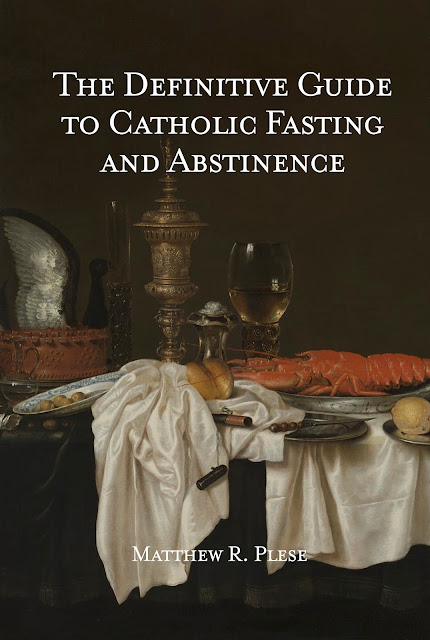
Want to learn more about the history of fasting and abstinence? Check out the Definitive Guide to Catholic Fasting and Abstinence.

Digital Version:

To order a digital .ics file of the above calendar that can be easily imported into your calendar application (e.g., Outlook, Google, Apple, etc.), order below. 

The file is only $5.95. Please order it by clicking here.

After you complete the order, you will have a ZIP file. You MUST unzip that file to extract the ICS file. That ICS file can be added to the calendar application of your choice. Check out details for how easy it is to add an ICS file (after you unzip it) online.

Note that the file is a free benefit to all my Patreon members. So, if you become a patron, you will get that and many other benefits.

Read more >>
Saturday, October 11, 2025
Catholic Homeschooling for the Latin Mass Family

“The home is the first church; the parents are the first priests.”

The revival of the Traditional Latin Mass has brought with it a renewed desire for authentic Catholic education — one rooted in tradition, orthodoxy, and beauty. For many families, homeschooling has become the natural extension of that fidelity to the Faith.

But what does it mean to homeschool as a Latin Mass family? And how can parents ensure that their children’s formation matches the reverence they experience at the altar?

Educating in Harmony with the Mass

Homeschooling for the Latin Mass family is not merely about teaching academic subjects at home. It’s about aligning every aspect of learning with the truths and rhythm of the Traditional Roman Rite. The Mass becomes the model for all formation: ordered, contemplative, and centered on God.

  • Latin and Prayer – Introduce children early to the prayers of the Mass: the Gloria, Credo, and Sanctus. Even young children can learn to chant or recite them.
  • Liturgical Calendar Living – Follow the traditional (pre-1955) calendar. Let the seasons of the Church year set the tone for your lessons, feast days, and even your crafts or meals.
  • Classical and Catechetical Unity – Subjects like history and literature should be taught through a Catholic lens, showing how Christendom shaped the world.

Challenges and Graces of the Traditional Homeschool

Modern textbooks often dilute Catholic truth or ignore it entirely. For TLM families, that’s unacceptable. The good news is that faithful, traditional options abound.

Parents can draw from the Douay-Rheims Bible, the Baltimore Catechism, and traditional hagiographies to ensure doctrinal purity and inspiration.

It’s not always easy — homeschooling demands time, patience, and perseverance — but the graces of forming your children in the fullness of the Faith are beyond measure.

A Resource Built for You

To support Latin Mass families in this sacred work, CatechismClass.com offers a Traditional Catholic Homeschool Program created by priests and homeschooling parents who attend the Tridentine Rite. Every course follows the 1962 Rites, uses Baltimore Catechism foundations, and integrates prayers, saint biographies, and moral instruction faithful to pre-Conciliar teaching.

Courses are self-paced, entirely online, and require no external textbooks. Each lesson includes automatically graded quizzes, catechism readings, Douay-Rheims Scripture, and traditional prayers — making it easy for parents to teach confidently and consistently.

Whether you are beginning your homeschool journey or seeking to deepen your family’s formation, a traditional Catholic curriculum ensures your children grow in both knowledge and holiness.

Visit CatechismClass.com to see how your Latin Mass family can begin today.

Read more >>


Copyright Notice: Unless otherwise stated, all items are copyrighted under a Attribution-NonCommercial-NoDerivatives 4.0 International License. If you quote from this blog, cite a link to the post on this blog in your article.

Disclosure of Material Connection: Some of the links on this blog are “affiliate links.” This means if you click on the link and purchase the item, I will receive an affiliate commission. As an Amazon Associate, for instance, I earn a small commission from qualifying purchases made by those who click on the Amazon affiliate links included on this website. I am disclosing this in accordance with the Federal Trade Commission’s 16 CFR, Part 255: “Guides Concerning the Use of Endorsements and Testimonials in Advertising.”