Monday, January 16, 2012
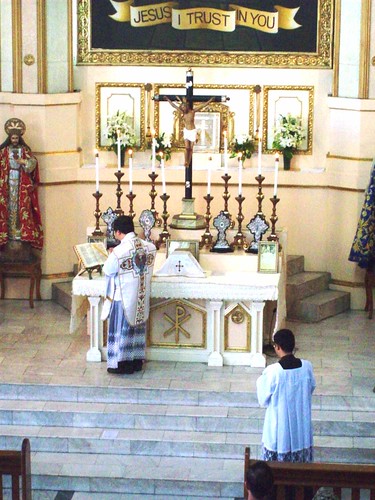
Prayers Needed for Fr. Michael Rodriguez's Unjust Persecution


The following is a press release from Fr. Michael Rodriguez concerning the unprecedented legal action taken by (his) Bishop Armando Ochoa against him (I formatted the press release to eliminate spaces, content has not been touched or changed):


H/T The American Catholic.


On January 12, 2012, Most Rev. Armando Ochoa, Administrator of the Diocese of El Paso, filed a lawsuit against me. Once again, I want to reiterate that his action is dishonest and unjust. I pose the simple question: over the course of the past 9 ½ years, who is the one who has been laboring, struggling, sacrificing day and night, and caring for the spiritual and material well-being of San Juan Bautista Catholic Church? Has it been Fr. Michael Rodríguez or Most Rev. Armando Ochoa? Based on the factual record, which of the two has greater credibility when it comes to protecting and furthering the spiritual and material patrimony of San Juan Bautista?

SPIRITUAL GOODS

Over the course of my 9 ½ years as parish administrator of San Juan Bautista, by the grace and mercy of God, the following spiritual goods were “achieved”:

1) Restoration of the glorious Traditional Latin Mass

2) Gradual restoration of the Catholic Church’s sacred language, Latin

3) Gradual restoration of Gregorian Chant and sacred music

4) Devout and worthy reception of the Holy Eucharist on the tongue and kneeling, accompanied by preparatory and thanksgiving prayers

5) Silence at Holy Mass and a real catholic sense of the sacred

6) Modest dress and reverent behavior at Holy Mass and inside church

7) Two daily Masses at 8:00 a.m. and 6:00 p.m.

8. Holy Hours with Exposition of the Blessed Sacrament at least four times per week

9) Regularly-scheduled Confessions at least five times per week; Confession available at any time, day or night, by appointment

10) Stations of the Cross every Friday in both english (12:30 p.m.) and spanish (6:45 p.m.)

11) Parish Lenten Missions in both english and spanish

12) Numerous vocations to the priesthood and religious life

13) Christ the King, Corpus Christi, and Our Lady of Guadalupe Processions through the neighborhood

14) In addition to the standard Catechism and Sacramental Preparation classes which most parishes have (at San Juan, these classes took place on Saturdays and Sundays), there were Classes in the Faith for the entire parish (in both english and spanish) on Mondays, Tuesdays, Wednesdays, and Thursdays. I personally taught one class every Tuesday evening, and two on Thursday evenings

15) Promotion of many Marian devotions, e.g. parish novenas to Our Lady of Sorrows and Nuestra Señora de Guadalupe, First Saturday prayers to Our Lady of Perpetual Help

16) Promotion of the Message of Our Lady of Fatima

17) Daily recitation of the Holy Rosary

18) First Friday devotions

19) First Saturday devotions. I personally led these every First Saturday of the month from 6:30-7:30 a.m.

20) I gave a monthly “mini-retreat” (in spanish) on First Saturdays for the Guadalupanas and other interested parishioners from 8:45-11:30 a.m, consisting of the Holy Rosary and a workshop on prayer.

21) Special First Saturday of the month Mass at 1:00 a.m. to help the faithful fulfill the requirements of the First Five Saturdays.

22) Holy Rosary every Sunday at 7:30 a.m. and 9:30 a.m. prior to Holy Mass

23) Holy Rosary every Saturday evening at 4:30 p.m. prior to Holy Mass

24) Different devotions and chaplets prayed after every weekend Mass

25) All-day Adoration of the Blessed Sacrament on First Fridays

26) All-night Adoration of the Blessed Sacrament on First Fridays

27) Devotion to the Precious Blood on Thursday nights at 11:00 p.m.

28) At least weekly, I personally took Holy Communion to the sick & homebound of the parish

29) A daily Procession through the neighborhood on the Rogation Days (the three days prior to Ascension Thursday)

30) Promotion of abstinence of meat on every Friday of the year and promotion of the penitencial aspect of every Friday of the year

Tragically, since my removal from San Juan Bautista on Sept. 20, 2011, it is not an exaggeration to say that none of the above exists anymore at San Juan Bautista. It is absolutely shocking! Masses have been cancelled. Confessions and Holy Hours have been cancelled, etc. Can anyone, anyone, seriously think that the diocese is carrying out its “sacred duty” to safeguard the spiritual goods of San Juan Bautista anywhere close to what Fr. Michael Rodríguez was doing?

TEMPORAL GOODS

San Juan Bautista is a poor parish, and the weekly Sunday collection before my arrival in May 2002, was usually less than $1,000.00. Over the course of my 9 ½ years as parish administrator, by the grace and mercy of God, the following building projects were achieved:

1) A beautiful, new tabernacle

2) An initial renovation of the sanctuary including a new addition for the tabernacle, new statues, a new communion rail, and a new marble floor

3) The installation of two magnificent, new Church bells

4) Complete renovation of the parish kitchen, including a brand new tile floor and new cabinets

5) Renovation of the parish hall storage garage with new cabinets

6) A completely new tile floor for the parish hall

7) A new porch for the parish hall

8. A brand new roof for the Church

9) All the Church and parish hall air-conditioning units were replaced with new ones

10) Exterior renovation of the Church: two new side entry ramps to the Church with railing

11) Exterior renovation of the Church: a new side-porch to the Church

12) Completely new asphalt for the entire Church parking lot

13) New exterior lighting for the Church and parking lot

14) An entirely new storage building-complex behind the rectory

15) A beautiful new GROTTO to Nuestra Señora de Guadalupe with multiple shrines, a fountain, an altar, plaques, gardens

[still in the process of being completed when I was transferred]

16) The renovation of the sanctuary and a new high altar according to the norms of the ancient form of the Roman Rite

[still in its intial stages when I was transferred]

Can anyone, anyone, seriously think that the diocese is carrying out its “sacred duty” to safeguard the temporal goods of San Juan Bautista anywhere close to what Fr. Michael Rodríguez was doing?

Please continue to entrust me to loving protection of the Blessed Virgin Mary, our Immaculate and Sorrowful Mother.

Fr. Michael Rodríguez
Parochial Vicar, Santa Teresa de Jesús Catholic Church
Presidio, TX
Read more >>
Sunday, January 15, 2012
Novena to the Infant of Prague: 16th - 24th of Each Month

O Dearest Jesus, tenderly loving us, Thy greatest joy is to dwell among men and to bestow Thy blessings upon us! Though I am not worthy that Thou should behold me with love, I feel myself drawn to Thee, O dear Infant Jesus, because Thou dost gladly pardon me and exercise Thy almighty power over me.

So many who turned with confidence to Thee have received graces and had their petitions granted.
Behold me in spirit I kneel before Thy miraculous image on Thine altar in Prague and lay open my heart to Thee, with its prayers, petitions and hopes. Especially the affair of............I enclose in Thy loving Heart. Govern me and do with me and mine according to Thy holy will, for I know that in Thy Divine wisdom and love Thou wilt ordain everything for the best. Almighty, gracious Infant Jesus, do not withdraw Thy hand from us, but protect and bless us forever.

I pray Thee, sweetest Infant, in the name of Thy blessed Mother Mary, who cared for Thee with such tenderness, and by the great reverence with which Saint Joseph carried Thee in his arms: comfort me and make me happy, that I may bless and thank Thee forever from all my heart. Amen.
Read more >>
Traditional Mass Propers: 2nd Sunday After the Epiphany (Dominica II post Epiphaniam)


Mass in this video is of the 2nd Sunday after the Epiphany at the Institute St. Philipp Neri in Berlin.


Vestments: Green

INTROIT
Psalm 65:4
Let all the earth adore Thee, O God, and sing to Thee: let it sing a psalm to Thy Name, O Most High. -- (Ps.65. 1, 2). Shout with joy to God, all the earth, sing ye a psalm to His Name: give glory to His praise. V.: Glory be to the Father . . . -- Let all the earth adore Thee . . .

COLLECT - O almighty and everlasting God, who dost govern all things both in heaven and on earth: mercifully hear the prayers of Thy people, and grant us Thy peace in our time. Through our Lord Jesus Christ, They Son, who liveth and reigneth with Thee in the unity of the Holy Ghost . . .

EPISTLE
Romans 12: 6-16
Brethren, Having different gifts, according to the grace that is given us: either prophecy, to be used according to the rule of faith; or ministry, in ministering; or he that teacheth, in doctrine; he that exhorteth, in exhorting; he that giveth, with simplicity; he that ruleth, with carefulness; he that showeth mercy, with cheerfulness. Let love be without dissimulation. Hating that which is evil, cleaving to that which is good: loving one another with the charity of brotherhood: with honor preventing one another: in carefulness not slothful; in spirit fervent: serving the Lord: rejoicing in hope: patient in tribulation: instant in prayer: communicating to the necessities of the Saints: pursuing hospitality. Bless them that persecute you: bless, and curse not. Rejoice with them that rejoice, weep with them that weep: being of one mind one towards another: not minding high things, but consenting to the humble.

GRADUAL
Psalm 106: 20, 21
The Lord sent His Word, and healed them: and delivered them from their destruction. V.: Let the mercies of the Lord give glory to Him: and His wonderful works to the children of men.

LESSER ALLELUIA - Alleluia, alleluia. V.:(Ps 148:2) Praise ye the Lord, all His Angels: praise ye Him, all His hosts. Alleluia

GOSPEL
John 2: 1-11

At that time there was a marriage in Cana of Galilee: and the Mother of Jesus was there. And Jesus also was invited, and His disciples, to the marriage. And the wine failing, the Mother of Jesus saith to Him: They have no wine. And Jesus saith to her: Woman, what is that to Me and to thee? My hour is not yet come. His Mother saith to the waiters: Whatsoever He shall say to you, do ye. Now there were set there six water-pots of stone, according to the manner of the purifying of the Jews, containing two or three measures apiece. Jesus saith to them: Fill the water-pots with water. And they filled them up to the brim. And Jesus said to them: Draw out now, and carry to the chief steward of the feast. And they carried it. And when the chief steward had tasted the water made wine, and knew not whence it was, but the waiters knew who had drawn the water: the chief steward calleth the bridegroom, and saith to him: Every man at first setteth forth good wine: and when men have well drunk, then that which is worse: but thou hast kept the good wine until now. This beginning of miracles did Jesus in Cana of Galilee; and manifested His glory, and His disciples believed in Him.

OFFERTORY
Psalm 65: 1, 2, 16
Shout with joy to God, all the earth: sing ye a psalm to His Name: come and hear, all ye that fear God, and I will tell you what great things the Lord hath done for my soul, alleluia.

SECRET - Hallow, O Lord, these our oblations: and cleanse us from the stains of our sins. Through Jesus Christ, Thy Son, our Lord, who liveth and reigneth with Thee in the unity of the Holy Ghost, God, world without end. Amen.

PREFACE (Preface of the Most Holy Trinity) - It it truly meet and just, right and for our salvation, that we should at all times, and in all places, give thanks unto Thee, O holy Lord, Father almighty, everlasting God; Who, together with Thine only-begotten Son, and the Holy Ghost, art one God, one Lord: not in the oneness of a single Person, but in the Trinity of one substance. For what we believe by Thy revelation of Thy glory, the same do we believe of Thy Son, the same of the Holy Ghost, without difference or separation. So that in confessing the true and everlasting Godhead, distinction in persons, unity in essence, and equality in majesty may be adored. Which the Angels and Archangels, the Cherubim also and Seraphim do praise: who cease not daily to cry out, with one voice saying:

COMMUNION
John 2: 7, 8, 9, 10, 11
The Lord saith: Fill the water-pots with water, and carry to the chief steward. When the chief steward had tasted the water made wine, he saith to the bridegroom: Thou hast kept the good wine until now. This first miracle did Jesus in the presence of His disciples.

POST COMMUNION - May the working of Thy power, we beseech Thee, O Lord, be increased in us: that quickened by the divine Sacraments, we may be prepared by Thy grace to obtain that which they promise. Through our Lord Jesus Christ, Thy Son, who liveth and reigneth with Thee in the unity of the Holy Ghost, God, world without end. Amen.
Read more >>
Saturday, January 14, 2012
Pray for Mr. Peter Sardegna

Mr. Peter Sardegna, of Winona, Minn., well known to virtually all American Priest and Seminarians of the SSPX, for his restoration of St. Thomas Aquinas Seminary, will be given the Sacrament of Extreme Unction on January 14, 2012.

Mr. Sardegna has been in declining health for the past several years, and your prayers are requested for him and his family at this difficult time. Personal notes or cards of well wishes, sent to Peter in care of the Seminary, would most certainly brighten his day.
Read more >>
Thursday, January 12, 2012
What Kind of Man the Abbot Ought to Be

Taken from The Rule of St. Benedict:
When, therefore, anyone taketh the name of Abbot he should govern his disciples by a twofold teaching; namely, he should show them all that is good and holy by his deeds more than by his words; explain the commandments of God to intelligent disciples by words, but show the divine precepts to the dull and simple by his works. And let him show by his actions, that whatever he teacheth his disciples as being contrary to the law of God must not be done, "lest perhaps when he hath preached to others, he himself should become a castaway" (1 Cor 9:27), and he himself committing sin, God one day say to him: "Why dost thou declare My justices, and take My covenant in thy mouth? But thou hast hated discipline, and hast cast My words behind thee" (Ps 49[50]:16-17). And: "Thou who sawest the mote in thy brother's eye, hast not seen the beam in thine own" (Mt 7:3).

Image Source: Saint Dunstan's Priory, OSB
Read more >>
Understading Epiphanytide: The Octave of Epiphany through Septuagesima

Of all the seasons that the Modern Novus Ordo Catholic Calendar has neglected to properly retain and celebrate, Epiphanytide has, like Ascensiontide, unfortunately fallen by the wayside.  But, for those Catholics committed to the Sacred Traditions of the past, Epiphanytide holds a special length of time.  Instead of having Christmastide turn into some oddly name "Ordinary Time" (after all did anyone even really understand its purpose or its oddly split up parts through the year), traditional Catholics will celebrate Christmastide, Epiphanytide, Septuagesima, and then finally begin the penance of Lent.

So what exactly is Epiphanytide and what customs do traditional Catholics observe during this time?


Octave of the Epiphany

While the Novus Ordo calendar unfortunately only has 2 octaves, traditional Catholics will be familiar with the idea of multiple overlapping Octaves.  The practice of celebrating an Octave, while not only traced to the time spent by the Apostles and the Blessed Virgin Mary awaiting the Paraclete, also has its origins in the Old Testament eight-day celebration of the Feast of Tabernacles (Leviticus 23:36) and the Dedication of the Temple (2 Chronicles 7:9). Very truly, Christ did not come to abolish the Old Law but to fulfill it.

By the 8th century, Rome had developed liturgical octaves not only for Easter, Pentecost, and Christmas, but also for the Epiphany and the feast of the dedication of a church.

After 1568, when Pope Pius V reduced the number of octaves (since by then they had grown considerably), the number of Octaves was still plentiful.  Octaves were classified into several types. Easter and Pentecost had "specially privileged" octaves, during which no other feast whatsoever could be celebrated. Christmas, Epiphany, and Corpus Christi had "privileged" octaves, during which certain highly ranked feasts might be celebrated. The octaves of other feasts allowed even more feasts to be celebrated.

To reduce the repetition of the same liturgy for several days, Pope Leo XIII and Pope St. Pius X made further distinctions, classifying octaves into three primary types: privileged octaves, common octaves, and simple octaves. Privileged octaves were arranged in a hierarchy of first, second, and third orders. For the first half of the 20th century, octaves were ranked in the following manner, which affected holding other celebrations within their time frames:
  • Privileged Octaves
    • Privileged Octaves of the First Order
      • Octave of Easter
      • Octave of Pentecost
    • Privileged Octaves of the Second Order
      • Octave of Epiphany
      • Octave of Corpus Christi
    • Privileged Octaves of the Third Order
      • Octave of Christmas
      • Octave of the Ascension
      • Octave of the Sacred Heart
  • Common Octaves
    • Octave of the Immaculate Conception of the BVM
    • Octave of the Solemnity of St. Joseph
    • Octave of the Nativity of St. John the Baptist
    • Octave of Saints Peter and Paul
    • Octave of All Saints
    • Octave of the Assumption of the BVM
  • Simple Octaves
    • Octave of St. Stephen
    • Octave of St. John the Apostle
    • Octave of the Holy Innocents
As one can notice, the Octave of the Epiphany ranked even higher than the Octave of Christmas!

Complexity of Octaves

With the overlapping Octaves of Christmas, St. Stephen, St John, and the Holy Innocents, things could be complicated for those praying the Divine Office.  Let's assume the anniversary of the dedication of the cathedral falls on December 27.  What happens?  In the 1962 rubrics, the feast is translated after the octave, but what happens for those following the pre-1955 calendar?  Here is what the days would look like from a liturgical point of view

27 December: Dedication, Comm. of the Octave of the Nativity; Vespers of the preceding with Psalms from the Nativity, Comm. of the following, of the Octave of the Nativity and the Dedication

28 December: Holy Innocents,  Comm. of the Octave of the Nativity and the Dedication; at Vespers, Psalms from the Nativity,  from the Chapter of the following, Comm. of the preceding, St Thomas, the Octave of the Nativity and the Dedication

29 December: St. John, Comm. of St Thomas Becket, the Octave of the Nativity, and the Dedication; Vespers of the preceding with Psalms from the Nativity, Comm. of the following, St Thomas, and the Octave of the Nativity and Dedication.

30 December: Sunday in the Octave of the Nativity, Comm. of the Octave of the Nativity, and the Dedication; Vespers of the preceding with Psalms from the Nativity, Comm. of the following and the Octave of the Nativity and Dedication.

31 December: St. Sylvester I, Comm. of the Octave of the Nativity, and the Dedication; Vespers of the following without any Commemorations.

1 January: Circumcision, no Commemorations; Vespers of the preceding without any Commemorations.

2 January: Holy Name, Comm. of the Octave of St. Stephen; Vespers of the preceding, Comm. of the Octave Day of the Dedication

3 January: Octave Day of the Dedication, Comm. of the Octave of St. John; Vespers of the preceding, Comm. of the following Octave day of the Holy Innocents.

Season of Epiphanytide

The Sunday within that octave was up until the reforms of 1955, the feast of the Holy Family, and Christmastide was reckoned as the twelve days ending on 5 January, followed by Epiphany time, 6-13 January. The following Sundays, until Septuagesima, were named as the "First (etc.) Sunday after Epiphany".

The 1969 "destruction" in the General Roman Calendar defined Christmastide instead as extending from the Vigil Mass of Christmas on the evening of 24 December to the Feast of the Baptism of the Lord (generally the Sunday after 6 January).

While sometimes performed (but often neglected in the Novus Ordo), the Feast of the Epiphany is a time for the blessing of one's home using blessed Chalk and holy water.  This traditional has a beautiful ritual in the Rituale Romanum and is described in my post: Blessing of Epiphany Chalk.

Because the date of Easter changes each year, two seasons of the Calendar have variable lengths in order to balance (after all there can not be more than 52 weeks in the year). The Season of Time After Pentecost can have as few as 23 Sundays or as many as 28 Sundays depending on the date of Easter. This season of Epiphanytide can have anywhere from 4 to 38 days, depending on the date of Easter. If this season is short, then Time after Pentecost will be longer; and if this Season is long, Time after Pentecost will be shorter.  Makes sense, right?

But the spiritual focus of the season up through Candlemas is essentially a continuation of Christmas and contemplation of the Divine Childhood. After Candlemas (February 2nd), the celebration of events of His young life gives way to a focus on His adult life.

Candlemas (The Feast of the Purification of our Lady) is another day in which the Novus Ordo calendar greatly overlooks in importance.  The Feast of Candlmas, exactly 40 days after Christmas, commemorates Mary's obedience to the Mosaic law by submitting herself to the Temple for the ritual purification, as commanded in Leviticus.

The Feast of the Purification, is called Candlemas for the traditional blessing and distribution of candles on that day.  It is customary to bring candles from home to be blessed -- at least 51% beeswax candles that one uses for devotional purposes (candles for the family altar, Advent candles, etc.) -- so they can be lit after dusk on All Saints' Day (1 November), during the Sacrament of Unction, and during storms and times of trouble.  Nowadays, though, for those few parishes continuing this ancient observance, the parish will provide the candles.

Mass on Candlemas is typically preceded by a procession with the lighted candles and the singing of anthems. The lighted candles are held during the reading of the Gospel and from the beginning of the Canon of the Mass to Communion.

And this Season of Epiphanytide is also the time (typically depending on the length of the season), the Feast of St. Brigid, St. Agnes, and St. Blaise (on which day the Faithful's throats are blessed).

Let's remember not to neglect this season and give it our due observance.  After all, those of us praying the Older Breviary will find much beauty in the hymns and antiphons during this time.  More on those hymns and devotions associated with them will follow in subsequent posts.
Read more >>
Wednesday, January 11, 2012
2012 Patron Saint for the Year Devotion - UPDATED with Results

Update:The 2012 Devotion Drawing is now closed.  Thank you for the 268 participants in this year's devotion!

I am very pleased to again be a facilitator for the Patron Saint of the Year Devotion.  I have been part of this annual tradition since 2006 and have helped coordinate devotions for hundreds of families.  It is my pleasure to now be part of the 2012 Patron Saint of the Year Devotion.

You can read about the past devotions at the following posts:
Again, I would like to take a few minutes to explain the devotion, which has its roots in St. Faustina.

When will the saints be drawn?  This year I will start the drawing of saints on the Octave Day of Christmas after the 10 AM Solemn High Mass and the recitation of both the Veni Creator Spiritus and the Litany of Saints.  Saints will be emailed starting that afternoon and thereafter.

 St. Louis IX - Virgin and Child Adored by Saint Louis, King of France

What is the Saint for the Year Devotion? Here is my post on this from years past to clarify the matter. This is from the person that draws all of the saints. I don't draw the saints. I will merely pass on your name or screenname to her so that she will draw a saint for you. Also, I will pass on the name of any of your family or friends that would like to participate. This isn't superstition. St. Faustina did the same thing!

Last year dozens of people received saints to be their special patron, and there were miraculous connections. It was truly amazing. We pray that this year the Holy Spirit will again work so that all participants receive a saint that they will be able to pray to for aid throughout the entire year:
Saint for the Year

I want to tell you about the practice of picking a saint at random to be your “holy protector” for the year. Actually, the saint is the one who chooses us though. The tradition of letting a saint “pick you,” is not a new one. St. Faustina wrote about it in her diary, Divine Mercy in My Soul. The excerpt is below.

“There is a custom among us of drawing by lot, on New Year's Day, special Patrons for ourselves for the whole year. In the morning during meditation, there arose within me a secret desire that the Eucharistic Jesus be my special Patron for this year also, as in the past. But, hiding this desire from my Beloved, I spoke to Him about everything else but that. When we came to refectory for breakfast, we blessed ourselves and began drawing our patrons. When I approached the holy cards on which the names of the patrons were written, without hesitation I took one, but I didn't read the name immediately as I wanted to mortify myself for a few minutes. Suddenly, I heard a voice in my soul: ‘I am your patron. Read.’ I looked at once at the inscription and read, ‘Patron for the Year 1935 - the Most Blessed Eucharist.’ My heart leapt with joy, and I slipped quietly away from the sisters and went for a short visit before the Blessed Sacrament, where I poured out my heart. But Jesus sweetly admonished me that I should be at that moment together with the sisters. I went immediately in obedience to the rule.”Excerpt from Divine Mercy in My Soul, the Diary of St. Faustina"

I have a container full of names ... I will be glad to pick out the name for you and send you the name if you prefer. I am so excited by my saint(s) ... I already picked mine. Well, I should say that they picked me ... I have Saints Marcus and Marcellianus ... they are twin brothers who were sent to prison before their death. St. Sebastian visited them continually in prison and helped keep their faith alive. They are buried near St. Felix and are specifically honored in Spain.

OK now ... here are a couple of immediate ironies in regard to these saints ... I have a SPECIAL place in my heart for twins! As a child, I LOVED reading the story about St. Sebastian. I had a children's book of saints and I think I wore out the pages on St. Sebastian! Felix is my grandfather's name! Silvia, our exchange student, is from Spain! I am so excited to have these two saints to walk through 2006 with me! I'm looking forward as to where and how they will intercede for me.
Please pass this message on through your blogs and/or email distribution lists, letting all of the Catholic blogsphere have the chance to participate. I only ask that you give me your email address so that I may contact you when your saint is drawn. Usually within one to two days I can email you about your saint.

So, please either make sure your email address is in your profile or please leave it below in the comment box when you ask to participate. If you wish to remain anonymous, please leave your initials instead of your name.  And, if you would prefer to email me directly and not write your email address in the comment box, please send an email entitled "Saint for the Year 2012" to acatholiclife [at] gmail.com

So, comment below and pass this message on throughout the entire Catholic Blogsphere!

Support

I participate in this devotion each year without any cost. Please take a minute and if you are a supporter of this devotion, please consider leaving us a free will donation. Your support is greatly appreciated and helps me continue working on this devotion and spreading it further.


Results:

To start things off, the turnout this year has been great.  I have posted below all of the results as 6:45 PM CST on January 1.  I was chosen by St. Joachim, the father of the Blessed Virgin Mary!  I am honored to be chosen by him and to read more on him in order to deepen my Marian devotion.  I know that it is for this purpose that God has willed for me to be chosen by St. Joachim as a special protector for 2012.

If you are not familiar your saint, I encourage you to research online and even pick up a copy of Father Hugo Hoever's "Live of the Saints," from which I read daily.  While the book does not include saints canonized in recent years, it is something that I am highly recommending.  You may find information on your saint on my page dedicated to the saints: http://acatholiclife.blogspot.com/2005/09/saints.html and here is a prayer to honor any saint: http://acatholiclife.blogspot.com/2006/01/prayer-to-venerate-any-saint.html

To save space, results and future result postings will be put in the comment box.
Read more >>
Tuesday, January 10, 2012
254 Cardinals and Bishops Have Celebrated the Traditional Latin Mass Since Summorum Pontificum


His Excellency, the Auxiliary Bishop of Chicago says the Traditional Mass, the Mass of the Ages

UPDATE: See my updated post as of September 2014: 363 Cardinals and Bishops Who’ve Said the Latin Mass Since Summorum Pontificum

Since the Motu Proprio, Summorum Pontificum of Pope Benedict XVI was put into effect in 2007 the following Bishops and Cardinals have celebrated the Immemorial Mass of All Ages. The Spanish blog Acción Litúrgica has compiled the following list.  H/T to The Eponymous Flower.

Some past articles of this blog covered the celebration of these Masses.  In those instances, I have linked the item below to the post with news, photos, and/or video of that Mass.

GERMANY: Cardinal Walter Brandmüller (President of the Papal Historical Commission), Dick (Auxiliary Bishop Emeritus of Cologne), Hanke (Bishop of Eichstätt), Mixa (Bishop Emeritus of Augsburg), Ostermann (Auxiliary Bishop von Münster), Overbeck (Bishop of Essen)

AUSTRIA: Cardinal Stickler (+2007), Laun (Auxiliary Bishop of Salzburg)

SWITZERLAND: Farine (Auxiliary bishop of Lausanne, Freiburg and Genf), Genoud (Bishop von Lausanne, Freiburg and Genf, +2010), Huonder (Bishop von Chur), Perisset (Apostolic Nuncio in the Federal Republic of Germany)

LIECHTENSTEIN: Haas (Archbishop von Vaduz)

ARGENTINA: Baseotto ( Bishop Emeritus Castrense de Argentina), Laise ( Bishop Emeritus of San Luis), Sánchez Sorondo (Chancellor of the Pontifical Academy de Ciencias)

AUSTRALIA: Cardinal Pell (Archbishop of Sidney), Coleridge (Archbishop of Camberra), Hart (Archbishop of Melbourne), Hickey (Archbishop of Perth), Elliot (Auxiliary Bishop of Melbourne), Grech (Bishop of Sandhurst, +2010), Jarret (Bishop of Lismore), Porteus (Archbishop of Sidney), Prowse (Bishop of Sale)

BELGIUM: Leonard (Archbishop of Brussels, Primate of Belgium), Harpigny (Bishop of Tournai)
BENIN: N´Koue (Bishop of Natitingou)

BRAZIL: Pena (Archbishop of Niterói), Taveira Correa (Archbishop of Belem do Pará), Tempesta (Archbishop of Río de Janeiro), Areas Rifán (Bishop of the Apostolic Administration of San Juan Marían Vianney), Bergamin (Bishop of Nova Iguaçu), Canindé Palhano (Bishop of Senhor do Bomfim), Da Silva (em. Auxiliary Bishop von Fortaleza), Fontes de Matos (Bishop of Palmira dos Indios), Guimaraes (Bishop of Garanhuns), Lopes de Faria (em. Bishop of Diamantina,+2009), Paixao (Auxiliary Bishop of Salvador-Bahía), Pestana Filho (em. Bishop of Anápolis,+2011), Romer (em. Auxiliary Bishop of Río de Janeiro), Silva Matthes (em. Bishop of Franca), Sivieri (Bishop of Propriá-Sergipe), Soares da Costa (Auxiliary Bishop of Aracaju), Stringhini (Bishop of Franca)

CHILE: Cardinal Medina Estévez (em. Prefect of the Congregation for Doctrine and the Faith), Piñera Carvallo (em. Archbishop of La Serena). Bishop González Errázuriz (Bishop of San Bernardo)

CHINA: Cardinal Zen (em. Archbishop of Hong Kong)

DENMARK: Kozon (Bishop of Kopenhagen)

FRANCE: Cardinal Barbarin (Archbishop von Lyon), Cardinal Ricard (Archbishop of Bordeaux), Cardinal Ving-Trois (Archbishop of París, President of the French Council of Bishops), Bacqué (Nuncio to Holland), D´Ornellas (Archbishop of Rennes), Le Gall (Archbishop of Toulouse), Madec (em. Archbishop of Toulon), Maillard (Archbishop of Bourges), Thomazeau (Archbishop of Montpellier), Aillet (Bishop of Bayonne), Aumonier (Bishop of Versailles), Bagnard (Bishop of Belley-Ars), Batut (Auxiliary Bishop of Lyon), Boivineau (Bishop of Annecy), Brouwet (Auxiliary of Nanterre), Centène (Bishop of Vannes), De Dinechin (Auxiliary of Paris), De lmas (Bishop of Angers), Dubost (Bishop of Evry), Dufour (Bishop of Limoges), Fikart (em. Auxiliary of Paris), Fort (Bishop of Orleans), Fréchard (em. Bishop of Auch), Gaidon (em. Bishop of Cahors, +2011), Guillaume (em. Bishop of Saint-Dié), Kalist (Bishop of Limoges), Kratz (Auxiliary Bishop of Straßburg), Lebrun (Bishop of Saint-Etienne), Mathieu (Bishop of Saint-Dié), Pansard (Bishop of Chartres), Rey (Bishop of Frejus-Toulon), Riocreux (Bishop of Pontoise), Scherrer (Bishop of Laval), Séguy (em. Bishop of Autun), Wintzer (Auxiliary Bishop of Poitiers)

GABON: Mvé Engone (Archbishop of Libreville), Bischof Madega (Bishop of Port-Gentil)

Great Britain: Cardinal O´Brien (Archbishop of Edinburgh, Primate of Schottland), Conti (Archbishop of Glasgow), Kevin (em. Archbishop of Southwark), Longley (Archbishop of Birmingham), Arnold (Auxiliary Bishop of Westminster), Cunnigham (Bishop of Hexham and Newcastle), Doyle (Bishop of Northampton), Gilbert (Bishop of Aberdeen), Hopes (Auxiliary Bishop of Westminster), Kenney (Auxiliary Bishop of Birmingham), McGough (Auxiliary Bishop of Birmingham), McMahon (Bishop of Nottigham), Moran (Bishop of Aberdeen), Sherrington (Auxiliary Bishop of Westminster), Stack (Auxiliary Bishop of Westminster), Williams (Auxiliary Bishop of Liverpool)

HAITI: Gayot (em. Archbishop of Cap-Haitien, +2010)

CANADA: Roussin (Archbishop of Vancouver, em. 2009), Miller (Archbishop of Vancouver), Prendergast (Archbishop of Ottawa). Blais (Archbishop of Quebec), Lemay (Archbishop of Quebec)

COLOMBIA: Cardinal Castrillón Hoyos (em. President of the Ecclesia Dei Commission)

CROATIAN: Pozaic (Auxiliary Bishop of Zagreb)

ITALY: Cardinal Antonelli (Archbishop of Florence, em. 2008), Cardinal Bagnasco (Archbishop of Genoa, President of the Italian Bishops' Conference), Cardinal Bartolucci (em. Choir Master of the Sistine Chapel), Cardinal Caffarra (Archbishop of Bologna), Cardinal De Paolis (Director of the Precture for the Economic Affairs of the Holy See), Cardinal Piovanelli (em. Archbishop of Florence), Cardinal Poggi (em. Papal Library, +2010), Cardinal Scola (Archbishop of Milan), Accerbi (Titular Bishop, Prelate of the Sovereign Order of Malta), Appignanesi (em. Archbishop of Potenza), Bassetti (Archbishop of Perugia), Berloco (Apostolic Nuncio in Belgium), Betori (Archbishop of Florenz), Boccardo (Archbishop of Spoleto-Norcia), Brugnaro (Archbishop of Camerino-San Severino), De Magistris (em. Archbishop Pro-Major Penitentiary of Apostolic Penitentiaryr), Molinari (Archbishop of L´Aquila), Ambrosio (Bishop of Piacenza), Cancian (Bishop of Città di Castello), Fisichella (Curial Bishop, President of the Papal Academy for Life), Giovanetti (Bishop von Fiesole), Giusti (Bishop of Livorno), Lambiasi (Bishop of Rimini), Miglio (Bishop of Ivrea), Mistrorigo (em. Bishop of Treviso), Oliveri (Bishop of Albenga-Imperia), Rabitti (Bischop of Ferrara), Ravignani (em. Bishop of Triest), Reali (Bishop of Porto-Santa Rufina), Scanavino (Bishop of Orvieto), Tardelli (Bishop of San Miniato)

IRELAND: Martin (Archbishop of Dublin), Magee (Bishop of Cobh), Moriarty (em. Bishop of Kildare y Leighlin)

KAZAKHSTAN: Schneider (Auxiliary Bishop of Astana)

LITHUANIA: Bartulis (Bishop of Siauliai)

MEXICO: Suárez Inda (Archbishop of Morelia)

MONACO: Barsi (Archbishop of Monaco)

NIGERIA: Cardinal Arinze (em. Prefect for Divine Worship), Ochiagha (em. Bishop of Orlu), Tochukwu Ukwuoma (Bishop of Orlu)

NEW ZEALAND: Meeking (em. Bishop of Christchurch)

HOLLAND: Punt (Bishop von Amsterdam)

PARAGUAY: Livieres (Bishop of Ciudad del Este)

PHILIPPINES: Lagdameo (Archbishop of Jaro), Escaler (em. Bishop of Ipil), De Gregorio (Administrator of the Apostolic Prelature of Batan), Hobayan (em. Bishop of Cazarman), Tobias (Bishop of Novaliches)

POLAND: Cardinal Nycz (Archbishop of Warsaw), Golebiewski (Archbishop of Breslau), Zscysinski (Archbishop of Lublin), Balcerek (Auxiliary Bishop Poznań), Depo (Bishop of Zamosc-Lubaczow), Dziuba (Bishop of Lowicz), Gorny (Bisop of Rzeszów), Malysiak (em. Auxiliary of Krakow), Mizinski (Auxiliary Bishop of Lublin), Pieronek (em. Auxiliary Bishop of Sosnowitz), Szkodon (Auxiliary Bishop of Krakau)

PUERTO RICO: Torres Oliveira (em. Bishop of Ponce)

RUSSIA: Pezzi (Archbishop of Moscow)

SLOVAKIA: Bezák (Archbishop of Trnava)

SLOVENIA: Cardinal Rodé (Prefect em. for the Congregation for Institutes of Consecrated Life and Societies of Apostolic Life)

SPAIN: Cardinal Cañizares Llovera (Prefect of the Congregation for Divine Worship), Martínez Sistach (Archbishop of Barcelona), Curial Bishop Herranz Casado, Navarrete Cortés (em. Rector of the Papal University of St. Gregory, +2010), Ureña Pastor (Archbishop of Saragossa), Fernández González (Bishop of Córdoba), Iceta Gavicagogeascoa (Bishop of Bilbao), Yanguas Sanz (Bishop of Cuenca)

SRI LANKA: Cardinal Ranjith (Archbishop of Colombo)

CZECH REPUBIC: Baxant (Bishop of Leitmeritz)

HUNGARY: Farhat (Nuncio to Austria), Varga Lajos (Archishop of Vácbish)

USA: Cardinal Baum (em. Apostolic Penitentiary), Burke (Prefect of the Apostolic Signatura), Egan (em. Archbishop of New York), Foley (Grand Master of the Knights of the Holy Sepulcher in Jerusalem, +2011), George (Archbishop of Chicago), Levada (Prefect of the Congregation for Doctrine and the Faith), O’ Malley (Archbishop of Boston), Brunett (Archbishop of Seattle), Carlson (Archbishop of Saint Louis), Di Noia (Secretary for the Congregation of Divine Worship), Hugues (em. Archbishop of New Orleans), Kevin (em. Archbishop of Southwark), Myers (Archbishop of Newark), Nienstedt (Archbishop of Saint Paul in Minneapolis), Pilarczyk (em. Archbishop of Cicinnati), Vigneron (Archbishop of Detroit), Wenski (Archbishop of Miami), Backer (Bishop of Birmingham), Boyea (Bishop of Lansing), Bevard (Bishop of Saint Thomas), Blair (Bishop of Toledo, Ohio), Bruskewitz (Bishop of Lincoln), Burbidge (Bishop of Raleigh), Callahan (Bishop of LaCrosse), Conley (Auxiliary Bishop of Denver), Cordileone (Bishop of Oakland), Corrada (Bischof von Tyler), D´Arcy (Bischof von Fort Wayne-South Bend), Daniels (Bischof von Grand Falls), Dewane (Bishop of Venice), Di Lorenzo (Bishop of Richmond), Di Marzio (Bishop of Bofrooklynn), Doran (Bishop Rockford), Etienne (Bishop of Cheyenne), Farrell (Bishop of Dallas), Finn (Bishop of Kansas City), Foley (em. Bishop of Birmingham), Gainer (Bishop of Lexington), García (Bishop of Monterey), Hermann (Auxiliary Bishop of Saint Louis), Hurley (Bishop of Grand Rapids), Keleher (em. Bishop of Kansas City), Kicanas (Bishop of Tucson), Madera Uribe (em. Bishop of Fresno), Matano (Bishop of Burlington), McFadden (Bishop of Harrisburg), McManus (Bishop of Worcester), Morlino (Bishop of Madison), Murphy (Bishop of Rockville Centre), Nevares (Auxiliary Bishop of Phoenix), Olmsted (Bishop of Phoenix), Perry (Auxiliary Bishop of Chicago), Provost (Bishop of Lake Charles), Reiss (Auxilary Bishop of Detroit), Rhoades (Bishop of Harrisburg), Ricken (Bishop of Green Bay), Sample (Bishop of Marquette), Serratelli (Bishop of Paterson), Silva (Bishop of Honolulu), Slattery (Bishop of Tulsa), Timlin (em. Bishop of Scranton), Tobin (Bishop of Providence), Waltersheid (Auxiliary Bishop of Pittsburg), Van Johnston (Bishop of Springfield, Missouri).

Bishops of the Society of St. Pius X: Fellay, De Galarreta, Tissier de Mallerais and Williamson.
Read more >>
Video: Sacred Silence in the Traditional Roman Catholic Low Mass (the Silent Mass)


And herein lies the beauty of this liturgy. A Roman Catholic at one time could go to mass anywhere in the world and would hear the same ancient language (Latin) of the Holy Sacrifice of the Mass. Truly holy, Catholic, and Apostolic.
Read more >>
Sunday, January 8, 2012
What Souls are Closest & Dearest to Jesus?


One day, whilst she was hearing Mass, at the elevation of the Sacred Host, she saw the infant Jesus on the altar, and with him three young virgins. Jesus took the first and caressed her very much. He went to the second, and, having taken her veil off her face, he struck her severely on the cheek, and turned his back upon her; but soon after, seeing the child looking sorrowful, he comforted her with all sorts of kindness. At last he approached the third; he seized her by the arm as if he were angry, struck her, and drove her away from him; but the more she saw herself ill-used and driven off; the more the little virgin humbled herself and followed him: and thus the vision ended.

This devout woman, remained in the church with great desire to know what was the meaning of the vision, Jesus appeared to her again, and told her that there are on earth three sorts of souls that loved him.

Some love him; but their love is so weak that if they are not coaxed by spiritual pleasures they become uneasy, and are in danger of turning their backs upon him; and of these the first virgin was a figure.

The second represented those souls who love him with a less feeble love, but who require to be comforted from time to time.

The third was a figure of those more courageous souls who, although constantly desolate, and deprived of spiritual consolations, do not cease doing all they can to please the Lord; and these he said, were the souls in which he took the greatest delight.”

From the book, "The Incarnation, Birth and Infancy of Jesus Christ" by St Alphonsus De Liguori
Published by the Redemptorist Fathers in 1927, pg 164 of the reissued 1983, printing of this book.
Read more >>
Friday, January 6, 2012
Saturday Devotions to the Blessed Virgin Mary

Just a few months ago, I was surprised to see a Catholic posting a question on an online Catholic forum asking for more information on a Saturday Mass of the Blessed Virgin Mary in which he was invited to attend. He was confused as to the reason that the priest intended to say Holy Mass in honor of the Blessed Virgin Mother of God when it was not a feastday dedicated to her.

To alleviate such confusion and to better educate the faithful on the concept of Saturday Masses of the Blessed Virgin Mary, I offer this post as a reflection on the Saturday Office of the Blessed Virgin Mary. For more information on our Lady for other topics, such as apparitions, dogmas, prayers, etc., please see my post dedicated to our Blessed Lady.

Saturday Mass of the Blessed Virgin Mary


Mass of the Assumption of Our Lady 2009 
Tridentine Mass celebrated by Fr. Michell Joe Zerrudo, Parish of Our Lord of Divine Mercy, Sikatuna, Q.C., Philippines; Source: Flickr

The poster "jrny from FR" on Angelqueen explains the rubrics for the Saturday Mass of the Blessed Virgin Mary as follows:
The Saturday Mass of the BVM is 4th. Class, not 3rd. Class. It is said on any Saturday of the year which otherwise would have been a 4th. class Ferial Day if it fell on Monday-Friday.This is the normal, "obligatory" Mass (i.e. the Mass of the day per the rubrics) on Saturdays of the 4th. class which means it is not a Votive Mass (a Mass proper said by choice as allowed), strictly speaking.
The Mass "Rorate" in Advent is a Votive Mass of the 3rd. class, but this differs from the above because this Mass can be said by choice (and not by assigned "obligation") on any day not ranked I or II Class during Advent.
The following text is of the propers of the Mass as said on those Saturdays and Votive Masses After Trinity Sunday until Advent (Salve of the Blessed Virgin). The other four versions have slight variations in the proper prayers and are grouped into the following categories: In Advent (Rorate Coeli of the Blessed Virgin), From the Epiphany to the Purification (Vultum Tuum of the Blessed Virgin), From the Purification until Shrove Tuesday (Salve of the Blessed Virgin), and In Eastertide (Salve of the Blessed Virgin)

If you are unfamiliar with the Traditional Latin Mass, consult my post on the Mass structure to best understand where the following prayers (the propers) fit into the unchanging prayers of the Mass.

INTROIT

 Sedulius; Ps. 44:2
Salve Sancta Parens, enixa purerpera Regem: qui coelum terramque regit in saecula saeculorum.(Psalm) Eructavit cor meum verbum bonum: dico ego opera mea regi. Gloria Patri. Salve Sancta Parens, enixa purerpera...Hail, holy Parent, that didst bring forth the King Who ruleth heaven and earth for ever and ever.(Psalm) My heart hath uttered a good work: I speak of my works to the King. Glory be to the Father. Hail, holy Parent....

COLLECT(S)
Concede nos famulos tuos, quaesumus, Domine Deus perpetua mentis et corporis sanitate gaudere, et gloriosa beatae Mariae semper Viginis intercessione, a praesenti liberari tristitia, et aeterna perfrui laetitia. Per Dominum nostrum.Grant  to us Thy servants, we beseech Thee, O Lord God, that we may enjoy perpetual health of mind and body; and through the intercession of blessed Mary ever Virgin may be delivered from present sorrow and possess eternal joy. Through our Lord.

EPISTLE

Ecclus. 24:14-16
Ab initio, et ante sawedcula cretat sum, et usque ad futurum saeculum non desinam, et in havitatione sancta coram ipso ministravi. Et sic in Sion firmata sum, et in civitate sanctificata similiter requievi, et in Jerusalem potestas mea. Et radicavi in populo honorificato, et in parte Dei mei haereditas illius, et in plenitudine sanctorum detentio mea.From the beginning, and before the world, was I created, and unto the world to come I shall not cease to be, and in the holy dwelling place I have ministered before him. And so was I established in Sion, and in the holy city likewise I rested, and my power was in Jerusalem. And I took root in an honorable people, and in the portion of my God his inheritance, and mine abode is in the full assembly of saints.


GRADUAL
Benedicta et venerabilis es, Virgo Maria: quae sine tactu pudoris inventa es mater Salvatoris. Virgo De Genitrix, quem totus non capit oribis in tua se clausit viscera factus homo.Blessed and venerable art thou, O Virgin Mary: who without loss of purity wert found to be the Mother of our Savior. Virgin Mother of God, He Whom the whole world cannot hold enclosed Himself in thy womb, and became man.


ALLELUIA
Alleluia, alleluia.  Post partum Virgon inviolata permansisti: Dei Genitrix intercdede pro nobis. Alleluia.Alleluia, alleluia.  After His birth a Virgin entire thou dost remain: O Mother of God, intercede for us.  Alleluia.

GOSPELLk. 11:27-28
In illo tempore: Loquente Jesu ad turbas, extollens vocem quaedam mulier de turba, dixit illi: Beatus venter qui te portavit et ubera, quae suxisti. At ille dixit: Quinimo beati, qui audiunt verbum Dei, et custodiunt illud.At that time, as Jesus was speaking to the multitudes, a certain woman from the crowd, lifting up her voice from the crowd, lifting up her voice, said to Him: Blessed is the womb that bore Thee and the paps that gave Thee suck. But He said: Yea rather, blessed are they who hear the word of God and keep it.

OFFERTORY

 Lk. 1:28,42
Ave Maria, gratia plena: Dominus tecum: benedicta tu in mulieribus, et benedicta tu in mulieribus, et benedictus fructus ventris tui.Hail Mary, full of grace, the Lord is with thee blessed art thou among women and blessed is the fruit of thy womb.

SECRET(S)
Tua Domine, propitiatione et beatae Mariae sumper Virginis intercessione, ad perpetuam atque praesentem haec oblatio nobis proficiat proseperitatem et pacem. Per Dominum nostrum.By Thy gracious mercy, O Lord, and the intercession of blessed Mary ever Virgin, may this offering be of avail to us for welfare and peace now and for evermore. Through our Lord.

PREFACE 

Preface of the Blessed Virgin Mary
Vere dignum et justum est, aequum et salutare, nos tibi semper, et ubique gratias agere: Domine sancte, Pater omnipotens, aeterne Deus. Et te in Assumptione beatae Mariae semper Virginis collaudare, benedicere, et praedicare. Quae et Unigenitum tuum Sancti Spiritus obumbratione concepit: et virginitatis gloria permanente, lumen aeternum mundo effudit, Jesum Christum Dominum nostrum. Per quem majestatem tuam laudant Angeli, adorant Dominationes, tremunt Potestates. Coeli, coelorumque Virtutes, ac beata Seraphim, socia exsultatione concelebrant. Cum quibus et nostras voces, ut admitti jubeas deprecamur, supplici confessione dicentes:It it truly meet and just, right and for our salvation, that we should at all times, and in all places, give thanks unto Thee, O holy Lord, Father almighty, everlasting God: and that we should praise and bless, and proclaim Thee, in the Festivity of the Blessed Mary, ever-Virgin: Who also conceived Thine only-begotten Son by the overshadowing of the Holy Ghost, and the glory of her virginity still abiding, gave forth to the world the everlasting Light, Jesus Christ our Lord. Through whom the Angels praise Thy Majesty, the Dominations worship it, and the Powers stand in awe. The Heavens and the heavenly hosts together with the blessed Seraphim in triumphant chorus unite to celebrate it. Together with these we entreat Thee that Thou mayest bid our voices also to be admitted while we say with lowly praise:

COMMUNION
Beata viscera Mariae Virginis, quae portaverunt aeterni Patris Filium.Blessed is the womb of the Virgin Mary, which bore the Son of the Eternal Father.

POSTCOMMUNION(S)
Sumptis, Domine, salutis nostrae subsidiis: da, quaesumus, beatae Mariae semper Virginis patrociniis nos ubique protegi : in cugus veneratione haec tuae obtulimus majestati. Per Dominum nostrum.O Lord, grant, we beseech Thee, that we who have received these aids unto salvation, may be always and everywhere protected by the intercession of blessed Mary ever Virgin, in whose honor we offered this Sacrifice to Thy Majesty. Through our Lord.

First Saturdays Devotion


On Saturdays, Catholics traditionally have taken part in the "First Saturdays Devotion" which entails going to Mass and receiving Communion for the first Saturday of the month for 5 consecutive months in reparation to the Immaculate Heart of Mary.  This devotion is not to be confused with the First Friday's Devotion, which is dedicated to the Sacred Heart of our Lord Jesus Christ.

On July 1, 1905, Pope Pius X approved and granted indulgences for the practice of the First Saturdays of twelve consecutive months in honor of the Immaculate Conception. The First Saturday Devotion did not originate as part of the apparitions of our Blessed Lady in Fatima, but the devotion did quickly spread further following our Lady's series of appearances to the three shepherd children in 1917.

Our Blessed Lady's words to Sr. Lucia at Fatima:
Look, my daughter, at my Heart encircled by these thorns with which men pierce it at every moment by their blasphemies and ingratitude. You, at least, strive to console me, and so I announce: I promise to assist at the hour of death with the grace necessary for salvation all those who, with the intention of making reparation to me, will, on the first Saturday of five consecutive months, go to confession, receive Holy Communion, say five decades of the beads, and keep me company for fifteen minutes while meditating on the fifteen mysteries of the Rosary.
The First Saturday Devotion consists of offering the First Saturday of the month for five consecutive months in reparation for the many and grievous sins committed in our world. A further explanation of our Lady's request is below:
  • You must go to the Sacrament of Confession.  Your reception of the Sacrament may be 8 days before the Saturday as long as you stay in a state of grace.
  • You must receive the Holy Eucharist and as always, it must be in the state of grace or risk the most grievous sin of sacrilege
  • You must pray 5 decades of the Holy Rosary of our Lady, including the Fatima Prayer.  
  • Finally, the last requirement consists of "keeping Mary company" for 15 minutes while meditating on all 15 Mysteries of the Rosary with the intention of making reparation to her. This can be done by reading Scripture or other writings relevant to the Mysteries, meditating on pictures of the Mysteries, or simple meditation. Materials for meditation and education on each of the Rosary mysteries are available online. See the Fatima Center for more information.
Little Office of the Blessed Virgin Mary

While the laity is not bound to pray the Divine Office, they are still encouraged to pray the Divine Office (also known as the Liturgy of the Hours).  To pray the Divine Office, I would highly encourage you to pray the 1962 Breviary or even the 1955 version as opposed to the modern version which I find lacking in the spiritual depth present in the earlier editions.

Since you are not bound under ecclesial law to pray the Office, you can and should start by praying the English version of the Breviary.  You can find various breviaries available for sale that will fulfill this purpose.  For centuries Catholics prayed most commonly not with personal prayers and devotion as such individual prayers originated from protestant individualism.  Instead, Catholics prayed the Liturgical texts of the Church (e.g. the Prayers of the Holy Mass, the Rosary, etc) daily and many were saved.  In our world we see the majority of mankind entrenched in sin and debauchery.  Let us pray for a return to our praying the Liturgical prayers of the Holy Church.  Pray the Daily Rosary as Mary has asked of us!

However, please also consider, in addition, or instead of the standard Divine Office, the Little Office of the Blessed Virgin Mary for your daily prayers!  
The Little Office of the Blessed Virgin Mary is a shorter form of the Divine Office in honour of the Blessed Virgin Mary. It has long been the Church’s daily liturgical prayer to Our Lady, and these hours of praise have been used by Priests, religious and the laity throughout the centuries. Lay people used to flock to the great Cathedrals to publicly recite The Little Office during the Middle Ages, and during the great persecution, when the practice of the Catholic Faith was illegal in Great Britain, Bishop Challoner commended The Little Office to his flock.

Through its psalms, antiphons, readings, responsorials, and prayers the Little Office stresses the role Our Lady played in salvation history, and how through her fiat the divine Word took flesh in her womb and achieved salvation for us all; and how Our Lord granted her the first fruits of the general resurrection in her holy and glorious assumption.

All Catholics are called to a consistent prayer life. For those who do not feel called to recite the Divine Office, but still wish to participate in the liturgical prayer of the Church, or for those who have a particular devotion to the holy Mother of God, there is no finer form of prayer than the Little Office of the Blessed Virgin Mary.

    Green Scapular


    While certainly not only permitted for use on Saturdays, Saturday is an appropriate time to focus on the Immaculate Heart of the Blessed Virgin and on her great promises with the Green Scapular.  Many of you should be familiar with the Brown Scapular as you should have been invested in the Brown Scapular following your First Holy Communion.  I have written before on the merits of the Brown Scapular.  While they are not to be underestimated, I will not focus additional time on the Brown Scapular.  Instead, we focus in this post on the Green Scapular of our Lady. 

    The website of Fish Eaters succinctly and accurately describes the Green Scapular of our Lady:
    In 1840, Mary appeared to Sister Justine Bisqueyburu (a Seminary Sister of the Daughters of Charity) in Paris, France and commended the Green Scapular to her. It's known as "the Scapular of Conversion," and its promises are the strengthening of faith, protection against Satan, a happy death for Catholics, and, most of all, for conversion for those outside the Church. It's to be worn or carried by the faithful, or given to an unbeliever for their conversion.
    The following prayer is to be said daily by the wearer:
    Immaculate Heart of Mary, pray for us now and at the hour of our death
    Latin version:

    Cor immaculatum Mariae, ora pro nobis nunc et in hora mortis nostrae

    If the scapular is given to an unbeliever for their conversion, the person giving the scapular prays the prayer for them if the unbeliever does not want to pray the prayer himself. If the unbeliever does not want the scapular, it may be hidden in their vicinity and the prayers said for him. Enrollment in a Confraternity is not necessary for this scapular, but the scapular should be blessed by a priest before use.
    Read more >>
    New Cardinals Named by Holy Father (January 2012)

    The following will receive the honor of becoming a Cardinal and be eligible to participate in a Papal Conclave.  I'll let the readers voice in about each one in particular, especially sharing how open each are to Tradition.
    • Fernando Filoni, prefect of the Congregation for the Evangelization of Peoples;
    • Manuel Montiero de Castro, Major Penitentiary of the Roman Church;
    • Santos Abril y Castelló, archpriest of St Mary Major;
    • Antonio Maria Veglió, president of the Pontifical Council for Migrants and Refugees;
    • Giuseppe Bertello, president of the Government of the Vatican City-State
    • Joao Braz de Aviz, prefect of the Congregation for Religious;
    • Francesco Coccopalmerio, president of the Pontifical Council for Legislative Texts;
    • Edwin Frederick O'Brien, grand master of the Equestrian Order of the Holy Sepulchre;
    • Domenico Calcagno, president of the Administration of the Patrimony of the Apostolic See;
    • George Alencherry, Major-Archbishop of Erkugnalam-Angamaly of the Syro-Malybars;
    • Thomas Christopher Collins, archbishop of Toronto;
    • Dominik Duka OP, archbishop of Prague;
    • Willem Jacobus Eijk, archbishop of Utrecht;
    • Giuseppe Betori, archbishop of Florence;
    • Timothy Michael Dolan, archbishop of New York;
    • Rainer Maria Woelki, archbishop of Berlin;
    • John Tong Hon, bishop of Hong Kong
    Those over age 80 (who are unable to enter a Conclave) but will nevertheless receive the honorary distinction of Cardinal:
    • Lucien Muresan, major archbishop-emeritus of Fagaras and Alba Julia of the Romanians;
    • Fr Julien Ries, Belgian historian/anthropologist of religion;
    • Prosper Grech OSA, Maltese Biblical scholar;
    • Karl Josef Becker SJ
    Read more >>
    First Friday Devotion for January

    Today is the First Friday of January. Because today is the first Friday of the Month, many Catholic parishes will have special Masses today for the First Friday Devotion.

    Beginning on December 27, 1673, through 1675, Our Lord appeared to St. Margaret Mary Alacoque asking her to receive Him in Holy Communion on the first Friday of every month and to meditate on His passion from 11:00 PM to 12:00 midnight each Thursday. He also revealed to her twelve promises for all who are devoted to His Sacred Heart; he asked for a Feast of the Sacred Heart to be instituted in the liturgical calendar of the Church. Our Lord appeared to St. Margaret Mary Alacoque with twelve promises for those devoted to His Most Sacred Heart.

    Promises for those devoted to the Sacred Heart:

    1. "I will give them all the graces necessary in their state of life."
    2. "I will establish peace in their homes."
    3. "I will comfort them in their afflictions."
    4. "I will be their secure refuge during life, and above all in death."
    5. "I will bestow a large blessing upon all their undertakings."
    6. "Sinners shall find in My Heart the source and the infinite ocean of mercy."
    7. "Tepid souls shall grow fervent."
    8. "Fervent souls shall quickly mount to high perfection."
    9. "I will bless every place where a picture of My Heart shall be set up and honored."
    10. "I will give to priests the gift of touching the most hardened hearts."
    11. "Those who shall promote this devotion shall have their names written in My Heart, never to be blotted out."
    12. "I promise thee in the excessive mercy of My Heart that My all-powerful love will grant to all those who communicate on the First Friday in nine consecutive months, the grace of final penitence; they shall not die in My disgrace nor without receiving the Sacraments; My Divine heart shall be their safe refuge in this last moment."

    Prayer of Reparation:


    O Most Holy Trinity, Father, Son and Holy Spirit, I adore thee profoundly. I offer thee the most precious Body, Blood, Soul and Divinity of Jesus Christ, present in all the tabernacles of the world, in reparation for the outrages, sacrileges and indifferences by which He is offended. By the infinite merits of the Sacred Heart of Jesus, and the Immaculate Heart of Mary, I beg of thee the conversion of poor sinners. Amen.
    Read more >>
    Thursday, January 5, 2012
    Votive Mass of Our Lord Jesus Christ, Supreme and Eternal Priest


    Image Source: His Eminence, Raymond Cardinal Burke receiving first priestly blessings from the new priests whom he had ordained for the Institute of Christ the King Sovereign Priest. (Florence, 2011)

    The Votive Mass of Our Lord Jesus Christ, Supreme and Eternal Priest, is often celebrated on first Thursdays.  For those of you using the Angelus Press Daily Missal, please turn to page 1552 to see the Mass propers.  By decree of December 24, 1935, all priests may offer this votive Mass on the First Thursday of each month.  Those of us familiar with Catholic tradition will realize that this is to commemorate the Institution of the Sacred Priesthood at the Last Supper.

    Pope Pius XI ordered the preparation of this Votive Mass in 1935, intending that its celebration should become customary on the First Thursday of the month, in a manner analogous to the widespread Votive Mass of the Sacred Heart of Jesus on the First Friday.  Vultus Christi Blog elaborates on why the 1962 Version of the Missal and not subsequent versions must be used.

    His Holiness writes in Encyclical Ad Catholici Sacerdotii Fastigium (20 December 1935):
    Before concluding Our letter, to you, Venerable Brethren in the Episcopate, and through you to all Our beloved sons of both clergy, We are happy to add a solemn proof of Our gratitude for the holy cooperation by which, under your guidance and example, this Holy Year of Redemption has been made so fruitful to souls. We wish to perpetuate the memory and the glory of that Priesthood, of which Ours and yours, Venerable Brethren, and that of all priests of Christ, is but a participation and continuation. We have thought it opportune, after consulting the Sacred Congregation of Rites, to prepare a special votive Mass, for Thursdays, according to liturgical rules: De summo et aeterno Iesu Christi Sacerdotio, to honor "Jesus Christ, Supreme and Eternal Priest." It is Our pleasure and consolation to publish this Mass together with this, Our Encyclical Letter.

    +++++

    INTROIT (Ps. 109. 4)

    Juravit Dóminus, et non pœnitébit eum: Tu es sacérdos in ætérnum secúndum órdinem Melchísedech. -- Psalm. Dixit Dóminus Dómino meo: Sede a dextris meis. Glória Patri ...-- Juravit Dóminus...

    The Lord hath sworn, and He will not repent: Thou art a priest for ever according to the order of Melchisedech. Ps. ibid. 1. The Lord said to my Lord: Sit thou at my right hand. Glory be to the Father ... -- The Lord ...

    +++++

    COLLECT

    Deus, qui ad majestátis tuæ glóriam et géneris humáni salútem, Unigénitum tuum summum atque ætérnum constituísti Sacerdótem: præsta; ut quos minístros et mysteriórum suórum dispensatóres elégit, in accépto ministério adimpléndo fídéles inveniántur. Per eúmdem Dóminum ... Glória in excélsis...

    O God, who for the glory of Thy Majesty and the salvation of the human race, didst establish Thine only begotten Son as the supreme and eternal Priest: grant that those He has chosen to dispense His mysteries may prove loyal in carrying out the ministry they have received. Through the same ...

    +++++

    EPISTLE
    From Blessed Paul the Apostle to the Hebrews, 5. 1-11.
    [The Epistle of the Mass reminds us that Christ is a Priest and the example of all Priests and Bishops.]

    Fratres: Omnis Póntifex ex homínibus assúmptus, pro homínibus constituítur in iis, quæ sunt ad Deum, ut ófferat dona, et sacrifícia pro peccátis: qui condolére possit iis, qui ignórant, et errant: quóniam et ipse circúmdatus est infirmitáte: et proptérea debet, quemádmodum pro pópulo ita étiam et prosemetípso offére pro peccátis. Nec quisquam sumit sibi honórem. sed qui vocátur a Deo, tamquam Aaron. Sic et Christus non semetípsum clarificávit ut póntifex fierret, sed qui locútus est ad eum: Fílius meus es tu: ego hódie génui te. Quemádmodum et in álio loco dicit: Tu es Sacérdos in ætérnum secundum órdinem Melchísedech. Qui in diébus carnis suæ preces supplicationésque ad eum, qui possit illum salvum fácere a morte, cum clamóre válido et lácrymis ófferens, exaudítus est pro sua reveréntia. Et quidem cum esset Fílius Dei didicit ex iis, quæ passus est obediéntiam: et consummátus, factus est ómnibus obtemperántibus sibi, causa salútis ætérnæ, appellátus a Deo póntifex juxta órdinem Melchísedech. De quo nobis grandis sermo, et ininterpretábilis ad dicéndum.

    Bretheren: Every high priest taken from among men, is ordained for men in the things that appertain to God, that he may offer up gifts and sacrifices for sins; who can have compassion on them that are ignorant and err: because he himself also is compassed with infirmity. And therefore he ought, as for the people, so also for himself, to offer for sins. Neither doth any man take the honour to himself, but he that is called by God, as Aaron was. So Christ also did not glorify himself, that He might be made a high priest: but He that said unto Him: Thou art my Son, this day have I begotten Thee. As He saith also in another place: Thou art a priest for ever, accordingto the order of Melchisedech. Who in the days of his flesh, with a strong cry and tears, offering up prayers and supplications to Him that was able to save Him from death, was heard for His reverence. And whereas indeed He was the Son of God, He learned obedience by the things which He suffered: and being consummated, He became, to all that obey Him, the cause of eternal salvation. Called by God a high priest according to the order of Melchisedech. Of whom we have to say, and hard to be intelligibly uttered.

    +++++

    GRADUAL (Luke 4. 18)

    Spiritus Dómini super me, propter quod unxit me: Evangelizáre paupéribus misit me, sanáre contrítos corde.

    The Spirit of the Lord is upon me, wherefore He hath anointed me: he hath sent me to preach the Gospel to the poor, to heal the contrite of heart.

    +++++

    TRACT (Ps. 9. 34-36)

    Exsurge, Dómine Deus, exaltétur manus tua: ne obliviscáris páuperum. Vide quóniam tu labórem et dolórem consíderas: Tibi derelíctus est pauper: órphano tu eris adjutor.

    Arise, O Lord God, let Thy hand be exalted: forget not the poor. See, for Thou considerest labour and sorrow: To Thee is the poor man left: Thou wilt be a helper to the orphan.

    +++++


    GOSPEL
    Continuation of holy Gospel according to St. Luke, 22. 14-20.

    In illo témpore: Discúbuit Jesus, et duódecim Apóstoli cum eo. Et ait illis: Desidério desiderávi hoc Pascha manducáre vobíscum, ántequam pátiar. Dico enim vobis, quia ex hoc non manducábo illud, donec impleátur in regno Dei. Et accépto cálice, grátias egit, et dixit: Accípite, et divídite inter vos. Dico enim vobis, quod non bibam de generatióne vitis, donec regnum Dei véniat. Et accépto pane, grátias egit, et fregit,et dedit eis, dicens: Hoc est Corpus meum, quod pro vobis datur, hoc fácite in meam commemmoratiónem. Simíliter et cálicem, postquam cœnávit, dicens: Hic est calix novum testaméntum in sánguine meo, qui pro vobis fundétur.

    At that time: Jesus sat down, and the twelve Apostles with Him. And He said to them: With desire I have desired to eat this pasch with you, before I suffer. For I say to you, that from this time I will not eat it, till it be fulfilled in the kingdom of God. And having taken the chalice, He gave thanks, and said: Take, and divide it among you: for I say to you, that I will not drink of the fruit of the vine, till the kingdom of God come. And taking bread, He gave thanks, and brake; and gave to them, saying: This is my Body, which is given for you. Do this for commemmoration of me. In like manner the chalice also, after he had supped saying: This is the chalice, the new testament in my Blood, which shall be shed for you.

    +++++

    OFFERTORY (Hebr. 10. 12-14)

    Christus unam pro peccátis ófferens hóstiam, in sempitérnum sedet in déxtera Dei: una enim oblatióne consummávit in ætérnum sanctificátos.

    Christ offering one sacrifice for sins, for ever sitteth on the right hand of God: For by one oblation He hath perfected for ever them that are sanctified.

    +++++

    SECRET

    Hæc múnera, Dómine, mediátor noster Jesus Christus Tibi reddat accépta: et nos, una secum, hóstias tibi gratas exhíbeat: Qui tecum vivit et regnat in unitáte Spíritus Sancti...

    O Lord, may our Mediator Jesus Christ make these offerings agreeable to Thee: and along with Himself may He offer us to Thee as a thank-offering: Who liveth and reigneth...

    +++++

    PREFACE
    Common Preface

    Vere dignum et justum est, æquum et salutáre, nos tibi semper et ubíque grátias agere: Dómine sancte, Pater omnípotens, ætérne Deus: per Christum, Dóminum nostrum. Per quem majestátem tuam laudant Angeli, adórant Dominatiónes, tremunt Potestátes. Coeli coelorúmque Virtútes ac beáta Séraphim sócia exsultatióne concélebrant. Cum quibus et nostras voces ut admitti jubeas, deprecámur, súpplici confessione dicéntes:

    It it truly meet and just, right and for our salvation, that we should at all times, and in all places, give thanks unto Thee, O holy Lord, Father almighty, everlasting God, through Christ our Lord. Through whom the Angels praise Thy Majesty, the Dominations worship it, the Powers stand in awe. The heavens and the heavenly hosts together with the blessed Seraphim in triumphant chorus unite to celebrate it. Together with them, we entreat Thee, that Thou mayest bid our voices also to be admitted, while we say in lowly praise:

    +++++

    COMMUNION (1 Cor. 11. 24-25)

    Hoc Corpus, quod pro vobis tradétur: hic calix novi testaménti est in meo sánguine, dicit Dóminus: hoc fácite, quotiescúmque súmitis, in meam commemoratiónem.

    This Body which shall be delivered for you; this chalice is the new testament in my blood saith the Lord: this do for the commemoration of me.

    +++++


    POSTCOMMUNION

    Vivificet nos, quæsumus Dómine, divína quam obtúlimus et súmpsimus hóstia: ut perpétua Tibi caritáte conjúncti, fructum, qui semper máneat, afferámus. Pér Dóminum nostrum...

    We beseech Thee, O Lord, may the divine host which we have offered up and received, quicken us; that, bound to Thee by an eternal love, we may bear fruit that will abide forever. Through our Lord...
    Read more >>
    Wednesday, January 4, 2012
    Blessing of Epiphany Chalk


    Information on the Blessing and Simple Blessing of One's Home
     
    If you don't have blessed chalk, buy an inexpensive pack of chalk and ask your priest to properly bless it. 

    Chalk is customarily blessed on January 6 by a priest using the Rituale Romanum, the feast of the Epiphany (though nowadays typically only done by more traditional parishes). The chalk is a sacramental, intended for the blessings of homes. If a priest is unable to visit your home at this season, a simple blessing may be given by the father of the family. He should mark the year and the initials of the three Magi (Caspar, Melchoir and Balthasar) on the lintel of the main door. The initial C, M, and B also stand for Christus mansionem benedicat (May Christ bless the house).

    Write with blessed chalk above the door like so (replacing the last 2 digits for the year in question. This is the example for the year 2012):

    20 + C + M + B + 12

    O Lord, almighty God, bless this house that it may become a shelter of health, chastity, self-conquest, humility. goodness, mildness, obedience to the Commandments, and thanksgiving to God, Father, Son and Holy Ghost. Upon this house and those who dwell herein may Thy blessing remain forever. Through Christ our Lord. Amen.

    For the actual blessing ceremony of your home, click here.

    Fr. Z from WDTPRS

    The Ceremony of the Blessing of Chalk

    Epiphany Chalk is used to write the inscription over all the doors of one’s house. Soft classroom chalk of any color is best for writing on varnished or painted surfaces. A priest should bless the chalk on Epiphany Day, before the celebration of the main Mass of the day, using the following Blessing, which is taken from the Roman Ritual:

    V. Our help is in the Name of the Lord.

    R. Who made heaven and earth.

    V. The Lord be with you.

    R. And with thy spirit.

    Let Us Pray:

    O Lord God, bless + this chalk which Thou hast created, that it may be helpful to mankind; and grant that through the invocation of Thy most holy Name all those who use this chalk or with it write over the doors of their houses the names of Thy Saints, Gasper, Melchior, and Balthazar, may by their merits and intercession receive health of body and protection of soul. Through Christ Our Lord. Amen. (Priest now sprinkles chalk with Holy Water.)

    Later that day – or any day within the Octave of the Feast of the Epiphany – at home, the ceremony is completed by a priest, or the father, or senior member, of the family. The following prayer is said once and at the main entrance of the house. All the family as he or she goes from door to door – everyone keeping a respectful silence, or better yet, reciting the Joyful Mysteries of the Rosary.

    Let Us Pray:

    Hear us, O Holy Lord, Father Almighty, Eternal God, and send Thy Holy Angel from Heaven to watch over, cherish, protect, be with, and defend all who live in my house. I call upon Your Saints, Gasper, Melchior, and Balthazar, to protect my family and my home from every harm and danger, and I place the marks of their holy names over the doors of my home to remain there as a constant reminder to us and to all who enter here that my house is truly a house of the Lord.

    O God, make the door of my house wide enough to receive all who need human love and companionship; narrow enough to shut out all envy, pride, and strife. Make its threshold smooth enough to be no stumbling block to children, nor to straying feet, but rugged and strong enough to turn back the temper’s power.

    O God, make the door of my house the gateway to Thy eternal Kingdom. I ask these things in the Name of Jesus Christ Thy Son. Amen.

    Note: Another version of this blessing, as well as a Blessing of Gold, Incense, and Myrrh (the gifts given by the wisemen) can be found in the Rituale Romanum online versionAlso, check out the Solemn Blessing for Epiphany Water
    Read more >>
    Tuesday, January 3, 2012
    Traditional Latin Mass in Minooka, Illinois at Poor Clares Convent


    As I have posted in the past of a Traditional Mass at the Poor Clares Convent in Minooka, IL, I recently sent a message to the Mother Superior to inquiry if these Masses were still being regularly offered.  I was pleased to see that not only is the Traditional Mass offered there once a month but also that a Divine Liturgy is also said there.
    Dear Matthew 
    Yes there is a Latin Mass on the third Saturday of each month that is open to the public. Also a Divine Liturgy on the second Saturday usually, but I an not sure of this month as Father Ron Hilt is going to Fatima. He did hope to find another priest for us.

    In Jesus and Mary, 
    The Poor Clares
    Read more >>
    Book Review: The Liturgical Altar by Geoffrey Web


    "For very many this book of Mr. Geoffrey Webb’s will be a Godsend.” So penned Fr. Bede Jarrett, OP in the foreword of this invaluable title.

    This brief, but comprehensive work presents a supernatural approach to understanding the center of Catholic life, the altar.

    Considered by many to be “the bible” on the subject of the altar, this book covers its historical development, form, symbolism, and vesting. It also addresses the appointments of the altar, such as the cross, candles, use of flowers and reliquaries.

    Romanitas Press has again reproduced an outstanding and necessary aid for those seeking proper Liturgical worship.  Geoffrey Web's "The Liturgical Altar" is such a treasure that is is almost unfathomable that such a guide was out of print for so long.  This book is needed by all sacristans and should be on the Catholic bookshelves of all Catholics that want a deeper devotion and understanding of the Sacred Altar.  Since it is on the Altar that Heaven and Earth meet as bread and wine truly become the Body, Blood, Soul, and Divinity of Christ, there is no greater earthly object in existence than the altar.  Proper care - even the utmost care - must be given to ensure that the altar is treated, decorated, and cared for as it should.  Even lifelong Catholics will learn from this guide!

    The forward has a powerful statement in it as it states, "I think it is important that the reader be made aware why the book's author, Mr. Webb, gives credence in his account of the development of the altar to a historical misconception, that Mass was once celebrated facing the people."  The foreword continues: "This erroneous conception innocently originated from some archaeologists who unaware of certain historical proofs to the contrary and seemingly with substantial proofs, promoted this misconception as fact...More recent research, however, has uncovered several unknown facts and crucial points of context, which have conclusively proven that the notion of "Mass facing the people" in the early centuries of the Church is a historical fallacy."

    The Liturgical Altar is indeed an incredible book and much needed today for the restoration of Catholic Tradition.  You may purchase this text from Romanitas Press.
    Read more >>


    Copyright Notice: Unless otherwise stated, all items are copyrighted under a Attribution-NonCommercial-NoDerivatives 4.0 International License. If you quote from this blog, cite a link to the post on this blog in your article.

    Disclosure of Material Connection: Some of the links on this blog are “affiliate links.” This means if you click on the link and purchase the item, I will receive an affiliate commission. As an Amazon Associate, for instance, I earn a small commission from qualifying purchases made by those who click on the Amazon affiliate links included on this website. I am disclosing this in accordance with the Federal Trade Commission’s 16 CFR, Part 255: “Guides Concerning the Use of Endorsements and Testimonials in Advertising.”