Sunday, January 28, 2024
A Catholic Life Podcast: Episode 50

In today’s episode, on Septuagesima Sunday, I address the following: 

  1. The Liturgical Changes for Septuagesima 
  2. The Value of Fasting in Septuagesima
  3. The Feast of the Prayer of Christ 
  4. Upcoming Feastdays this Week

This episode is sponsored by PrayLatin.comPrayLatin.com offers Latin prayer cards to learn and share prayers in the sacred language. Learn your basic prayers in Latin conveniently on the go. Practice your pronunciation with easy-to-follow English phonetic renderings of Latin words. PrayLatin.com offers prayer cards in various formats, including Latin-English rosary pamphlets with the traditional 15 mysteries. Shop for additional Latin resources like missal booklets, server response cards, and more. Visit PrayLatin.com today.

Subscribe to the podcast on Buzzsprout, Apple Podcasts, Spotify, I-tunes, and many other platforms!

Read more >>
Tuesday, January 23, 2024
The Value of Fasting in Septuagesima

Septuagesima is both the name of the third Sunday before Lent as well as the season itself that runs from this day up until Ash Wednesday. The other Sundays in the Season of Septuagesima are Sexagesima Sunday and Quinquagesima Sunday. In some places, a custom of observing a fast of devotion, in anticipation of and in preparation for the Great Lenten fast, was observed as Father Weiser mentions in his “Handbook of Christian Feasts and Customs”:

“This preparatory time of pre-Lent in the Latin Church was suggested by the practice of the Byzantine Church, which started its great fast earlier, because their ‘forty days’ did not include Saturdays. Saint Maximum (465 AD), Bishop of Turin, mentioned the practice in one of his sermons. It is a pious custom, he said, to keep a fast of devotion (not of obligation) before the start of Lent.” 

Dom Guéranger mentions where and how the fast of Septuagesima began, noting that the law of custom governed this fast in certain places but not universally:

“The first Council of Orleans, held in the early part of the 6th century, enjoins the Faithful [of Gaul] to observe, before Easter, Quadragesima, (as the Latins call Lent,) and not Quinquagesima, in order, says the Council, that unity of custom may be maintained. Towards the close of the same century, the fourth Council held in the same City repeals the same prohibition, and explains the intentions of making such an enactment, by ordering that the Saturdays during Lent should be observed as days of fasting. Previously to this, that is, in the years 511 and 541, the first and second Councils of Orange had combated the same abuse, by also forbidding the imposing on the Faithful the obligation of commencing the Fast at Quinquagesima. The introduction of the Roman Liturgy into France; which was brought about by the zeal of Pepin and Charlemagne, finally established, in that country, the custom of keeping the Saturday as a day of penance; and, as we have just seen, the beginning Lent on Quinquagesima was not observed excepting by the Clergy. In the 13th century, the only Church in the Patriarchate of the West, which began Lent earlier than the Church of Rome, was that of Poland its Lent opened on the Monday of Septuagesima, which was owing to the rites of the Greek Church being much used in Poland. The custom was abolished, even in that country, by Pope Innocent the fourth, in the year 1248.” 

Eastern Catholic Rites still do this to an extent. For instance, Cheesefare Week is the week preceding the Great Lent in Eastern Christianity. It is the last week during which dairy products and eggs are permitted before the strict fasting period of Lent begins. Meatfare Week is the week immediately preceding Cheesefare Week. During this week, Eastern Christians traditionally consume meat for the last time before the Lenten fast.

Septuagesima is an appropriate time for us to begin preparing our bodies for the upcoming Lenten fast by incorporating some fasting into our routine. Fasting on Wednesdays, Fridays, and even Saturdays at this time will help make the transition to a true Lenten fast easier on the body. 

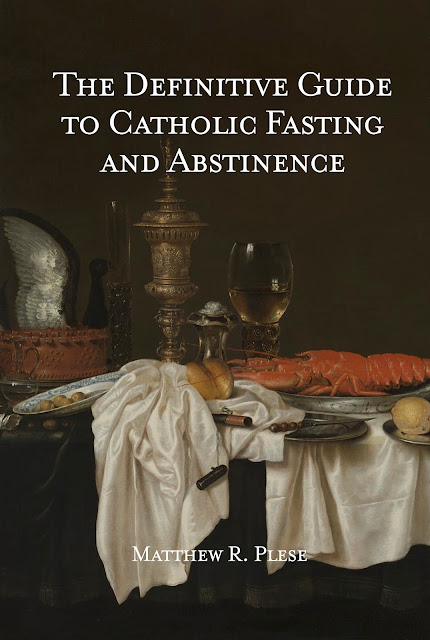
Want to learn more about the history of fasting and abstinence? Check out the Definitive Guide to Catholic Fasting and Abstinence.

Read more >>
Sunday, January 21, 2024
A Catholic Life Podcast: Episode 49

In today’s episode, on the 3rd Sunday after Epiphany, I address the following: 

  1. The National Day of Penance for Violations Against Human Life
  2. Upcoming Feastdays this week
  3. The Burial of the Alleluia

I would like to thank CatechismClass.com for sponsoring this episode.  CatechismClass.com, the leader in online Catholic catechism classes, has everything from online K-12 programs, RCIA classes, adult continuing education, marriage preparation, baptism preparation, confirmation prep, quince prep classes, catechist training courses, and more. It is never too late to study the fullness of the Catholic Faith, and CatechismClass.com is the gold standard in authentic Catholic formation online.

Subscribe to the podcast on Buzzsprout, Apple Podcasts, Spotify, I-tunes, and many other platforms!


Read more >>
Friday, January 19, 2024
Why All Catholics Must Fast & How to Start This Year

The Purpose of Fasting

In principio, in the beginning, the very first Commandment of God to Adam and Eve was one of fasting from the fruit of the tree of the knowledge of good and evil (cf. Genesis 2:16-17), and their failure to fast brought sin and disorder to all of creation. The second sin of mankind was gluttony. Both are intricately tied to fasting.

Both Elijah and Moses fasted for forty days in the Old Testament before seeing God. Until the Great Flood, man abstained entirely from the flesh meat of animals (cf. Genesis 9:2-3). Likewise, in the New Testament, St. John the Baptist, the greatest prophet (cf. Luke 7:28) fasted and his followers were characterized by their fasting. And our Blessed Lord also fasted for forty days (cf. Matthew 4:1-11) not for His own needs but to serve as an example for us. Our Redeemer said, “Unless you shall do penance, you shall all likewise perish” (Luke 13:3). Fasting and abstinence from certain foods characterized the lives of man since the foundation of the world.

The Church has hallowed the practice of fasting, encourages it, and mandates it at certain times. Why? The Angelic Doctor writes that fasting is practiced for a threefold purpose: 

“First, in order to bridle the lusts of the flesh…Secondly, we have recourse to fasting in order that the mind may arise more freely to the contemplation of heavenly things: hence it is related of Daniel that he received a revelation from God after fasting for three weeks. Thirdly, in order to satisfy for sins: wherefore it is written: ‘Be converted to Me with all your heart, in fasting and in weeping and in mourning.’ The same is declared by Augustine in a sermon: ‘Fasting cleanses the soul, raises the mind, subjects one's flesh to the spirit, renders the heart contrite and humble, scatters the clouds of concupiscence, quenches the fire of lust, kindles the true light of chastity.’”  

St. Basil the Great also affirmed the importance of fasting for protection against demonic forces: “The fast is the weapon of protection against demons. Our Guardian Angels more really stay with those who have cleansed our souls through fasting.”

The Baltimore Catechism echoes these sentiments: “The Church commands us to fast and abstain, in order that we may mortify our passions and satisfy for our sins” (Baltimore Catechism #2 Q. 395). Concerning this rationale, Fr. Thomas Kinkead in “An Explanation Of The Baltimore Catechism of Christian Doctrine” published in 1891 writes, “Remember it is our bodies that generally lead us into sin; if therefore we punish the body by fasting and mortification, we atone for the sin, and thus God wipes out a part of the temporal punishment due to it.” 

Pope St. Leo the Great in 461 wisely counseled that fasting is a means and not an end in itself. For those who could not observe the strictness of fasting, he sensibly said, "What we forego by fasting is to be given as alms to the poor.”  To simply forgo fasting completely, even when for legitimate health reasons, does not excuse a person from the universal command to do penance (cf. Luke 13:3).

How Can Catholics Help Restore the Practice of Fasting?

While no authority in the Church may change or alter any established dogmas of the Faith, the discipline of both Holy Days of Obligation and fast days may change. The days of obligation and the days of penance are matters of discipline, not matters of dogma. Lawful authorities in the Church do have the power to change these practices.

In the observance of the two precepts, namely attending Holy Mass on prescribed days and fasting and abstaining on commanded days, we obey them because the Church has the power by Christ to command such things. We do not abstain from meat on Fridays for instance because the meat is unclean or evil. It is the act of disobedience that is evil. As Fr. Michael Müller remarks in his Familiar Explanation of Christian Doctrine from 1874: "It is not the food, but the disobedience that defiles a man." To eat meat on a forbidden day unintentionally, for instance, is no sin. As the Scriptures affirm it is not what goes into one's mouth that defiles a man but that disobedience which comes from the soul (cf. Matthew 15:11).

Yet, even with such a distinction, the Church has historically been wise to change disciplines only very slowly and carefully. As Archbishop Fulton J. Sheen once remarked, "It is a long-established principle of the Church never to completely drop from her public worship any ceremony, object or prayer which once occupied a place in that worship." The same may be said for matters concerning either Holy Days of Obligation or fast days. What our forefathers held sacred should remain sacred to us in an effort to preserve our catholicity not only with ourselves but with our ancestors who see God now in Heaven.

St. Francis de Sales remarked in the 16th / early 17th century, “If you’re able to fast, you will do well to observe some days beyond what are ordered by the Church.” To that end, I have launched the Fellowship of St. Nicholas to coincide with the publication of “The Definitive Guide to Catholic Fasting and Abstinence” as a means for Catholics to commit to stricter fasting and to encourage one another. Spend some time learning about how strict fasting underscored Catholic life not just in Lent but weekly on Wednesdays, Fridays, and Saturdays, on the vigils of great feasts, and in the forty days leading up to Christmas.

Want to learn more about the history of fasting and abstinence? Check out the Definitive Guide to Catholic Fasting and Abstinence.

Read more >>
Wednesday, January 17, 2024
2nd Edition of "The Definitive Guide to Fasting and Abstinence" Now Available

In early 2023, I launched "The Definitive Guide to Fasting and Abstinence" based on over 3 years of research into the forgotten and untold history of how the Catholic Church went from roughly one-third of the year of fasting (and two-thirds as days of abstinence) to only two days of fasting. I published the book so that it would be available in time for Lent, and even though many priests said that 95% of it was new to them, I still had more research to undertake to finish my study of this forgotten history.

After another year of work, I'm delighted to launch the 2nd edition of the book. The 2nd edition features the following topics which were not covered (or covered only briefly) in the first edition:

  1. Detailed explanations of how fasting changed in other countries besides America, including Spain and the Philippines.
  2. A detailed explanation of who was exempt from fasting and/or abstinence and how those changes were documented and taught in various catechisms over the centuries
  3. Easter Week food traditions, highlighting their connection with the Lenten fast
  4. Armenian fasting and abstinence rigors
  5. Maronite fasting guidelines
  6. The heroic example of St. John of the Cross and the Primitive Rule of Pope Innocent IV vs. the mitigated rule approved by Pope Eugenius IV
  7. How the time of the meal on fasting days differed (e.g., sunset for Ember Days but 3 PM for the weekly devotional fasts)
  8. The food customs that originate due to Ember Days
  9. The forgotten fast from fleshmeat and foods cooked in fat on Holy Innocents Day
  10. Why do the laws of fasting and abstinence bind mortally
  11. The Bula de Cruzada history
  12. Semi-Fast vs. Full-Fast Days
  13. The time of the conventual Mass and how the traditional midnight fast would (or would not) impact that.
  14. Testimonials from those who followed the traditional fasting proposed in the first edition of the book
  15. Drinks other than water and if they were allowed in connection with the Eucharistic Fast
  16. The distinction between black fasting, the Passion Fast, and Xerophagiae
  17. The Importance of Thanksgiving after Holy Communion
  18. St. Michael's Lent
  19. The Assumption Fast
  20. The distinction of simple vs. complex liquids: What does it mean that liquids are allowed? What is a liquid, and what is not?
  21. Chocolate: Is it a liquid or a solid? When and how may it historically be consumed, if at all, on days of fasting
  22. Why and when beaver, muskrat, and capybara became permitted on days of abstinence for some
  23. Protestant Fasting: Does it exist? If so, how is it? What is the so-called "Daniel" Fast practiced by some?
  24. Lard, Bouillon, and Broth explained over time
  25. The size of the one meal explained, including how long is too long
  26. And much more! 
All in all, the second edition is more than double the length of the first edition! Even if you purchased the first edition of the book, the 2nd edition should be in every Catholic home that is striving to restore the fasting and abstinence practices of our ancestors for the conversion of sinners, reparation of sin, and the increase of virtue in our own lives.

Ordering Options:


“This work is highly important for faithful Catholics! Matthew has written a book that contains the potential for notable impact on our Prayer Life, Personal Sanctity, and increased historical understanding of the teachings of Holy Mother Church. Since Vatican II the understanding of Fasting, Holy Days of Obligation, and the need to gain self-control have been lessened by transfers of Solemnities and the emotional dispensations from fasting given by ecclesiastical authorities. Armed with this renewed knowledge of age-old practices used by serious Catholics in offering personal acts of sacrifice through abstinence and fasting, a barrier of a hum-drum prayer life can be broken, and Catholics can achieve new levels of Active Participation in the life of the Church.” (Father Scott DuVall)

“To paraphrase St. John Henry Newman, prayer and fasting are the two wings that carry us to Heaven.  We cannot achieve eternal life unless both wings are functioning.  The Definitive Guide to Catholic Fasting and Abstinence is not only a history of the practice of fasting, but also more importantly a guide to show Catholics how to love fasting in an age where satisfaction for sin is most needed!” (Father John Lovell, Co-Founder of the Coalition for Canceled Priests)

“The Definitive Guide to Catholic Fasting and Abstinence fills a great lacuna in the life of the Church. Matthew’s articulate and cogent account of an integral Catholic way of life is one which gives rightful place to the body and its healthy, holistic, and holy subordination to the soul and spirit. Matthew’s book is not only a call to arms, but a call to the recovery of the vital narrative memories of the saints of yesterday, who in their fundamental anthropology, struggles, and strivings are no different from us, the saints of today. With sobriety, intelligence, and authentic piety, The Definitive Guide to Catholic Fasting and Abstinence serves as a point of reference, understanding, and motivation so that the strength and the joy of our forefathers may be ours in the here and now.” (Father Cassian DiRocco)

“Many ask what do I do to stem the tide of evil and promote the salvation of souls? This book gives us one of the most important tools. By giving a thorough history and explanation of the laws and practices of fasting and abstinence, the reader cannot help but be motivated to more than the current minimal requirements. The famous quote by Archbishop Fulton Sheen came to mind as I realized the potential for others to be moved by this book: ‘Who will save the Church? ...the laity.’  I believe a return to the Church’s rich traditions could be a big part of the work of the laity to save the Church. This book will also inspire priests, as most of us were never instructed in this tradition but will be inspired as well to do more fasting and lead the souls in their care to use the power of fasting and abstinence.” (Father Joseph Nicolosi). 

Read more >>
Monday, January 15, 2024
Who Were the Apostles of Jesus Christ?

Mission of the Apostles - Tommaso Minard

What were the Apostles of Jesus really like?  CatechismClass.com is pleased to offer an affordable, self-paced, online course and paperback that examines the Apostles in detail.

The Holy Days up until 1911 reveal something quite interesting as all of the feasts of the Apostles were Holy Days of Obligation on the Universal Calendar. The feasts of the Apostles were raised to public holidays in 932 AD, as Father Weiser relates (p. 279). The Church, by reducing the number of Holy Days of Obligation, removed the feasts of the Apostles. And this has diminished their importance in the lives of the average Catholic. How many Catholics can even name all 12 Apostles? How many know the name of the traitor or the name of the Apostle who took his place? Catechesis has failed the modern Catholic.

Before the changes to the Roman Calendar in 1955, nearly all feasts of the apostles were preceded by a special Vigil Day. And the Church put those days in place to help us prepare for the importance of a feast of an apostle. Sadly, the observance of fasting on the vigils of the apostles in many places disappeared back in the 1700s.

This course and book examine the Gospels, the Fathers of the Church, Apocryphal writings, encyclicals, and other sources to search out the Apostles’ personalities and history.  Along the way, you will look at the prayers, poetry, music, and architecture the Apostles inspired and see how these twelve men are still teaching us today, almost 2,000 years after their deaths.  You will see how the faith spread throughout the Roman Empire and even beyond its borders and how each Apostle met his death.  You will be surprised at the many different paths of the Apostles as they witnessed Christ.

If you can not name all 12 Apostles and a description of what each of them did after the Ascension, this course is for you!

To learn more about the online course, Please Click here

To preview the paperback book option, Please Click here

Read more >>
Sunday, January 14, 2024
A Catholic Life Podcast: Episode 48

In today’s episode, on the 2nd Sunday after Epiphany, I address the following: 

  1. An overview of the many Feastdays this week
  2. The Octave of Prayer for Christian Unity

This episode is sponsored by PrayLatin.comPrayLatin.com offers Latin prayer cards to learn and share prayers in the sacred language. Learn your basic prayers in Latin conveniently on the go. Practice your pronunciation with easy-to-follow English phonetic renderings of Latin words. PrayLatin.com offers prayer cards in various formats, including Latin-English rosary pamphlets with the traditional 15 mysteries. Shop for additional Latin resources like missal booklets, server response cards, and more. Visit PrayLatin.com today.

Subscribe to the podcast on Buzzsprout, Apple Podcasts, Spotify, I-tunes, and many other platforms!

Read more >>
Sunday, January 7, 2024
A Catholic Life Podcast: Episode 47

In today’s episode, on the Feast of the Most Holy Family, I address the following: 

  1. Feast of the Most Holy Family & the Consecration to the Holy Family
  2. The Forgotten Season of Epiphanytide
  3. Sanctify the New Year by Going Deeper Liturgically
  4. Restoring Customs of Christendom

I would like to thank CatechismClass.com for sponsoring this episode.  CatechismClass.com, the leader in online Catholic catechism classes, has everything from online K-12 programs, RCIA classes, adult continuing education, marriage preparation, baptism preparation, confirmation prep, quince prep classes, catechist training courses, and more. It is never too late to study the fullness of the Catholic Faith, and CatechismClass.com is the gold standard in authentic Catholic formation online.

Subscribe to the podcast on Buzzsprout, Apple Podcasts, Spotify, I-tunes, and many other platforms!


Read more >>
Wednesday, January 3, 2024
The Church Can Not Bless, Condone, or Sanctify Homosexual Relations

Sodom and Gomorrah afire, painting by Jacob de Wet II, 1680

The Church Calls All Men to Salvation

“Woe to you that call evil good, and good evil: that put darkness for light, and light for darkness: that put bitter for sweet, and sweet for bitter” (Isaias 5:20).

In a seeming reversal of its 2021 prohibition against blessing any same sex couples, the Vatican’s December publication of Fiducia supplicans allegedly opened the door for priests to bless same sex couples. Bree A. Dail writes:

The new Prefect of the Doctrine of the Faith states people in “irregular” unions, such as same sex unions, may NOT receive anything resembling liturgical blessings, or blessings of their unions. They may, however, receive spontaneous blessing, limited to “the invocation of a blessing that descends from God upon those who recognizing themselves to be destitute and in need of his help do not claim a legitimation of their own status, but who beg that all that is true, good, and humanly valid in their lives and their relationships be enriched, healed, and elevated by the presence of the Holy Spirit. These forms of blessing express a supplication that God may grant those aids that come from the impulses of his Spirit what classical theology calls ‘actual grace’ —so that human relationships may mature and grow in fidelity to the Gospel, that they may be freed from their imperfections and frailties, and that they may express themselves in the ever-increasing dimension of the divine love.”

Yet, in this latest ordeal, disorder and confusion have been sowed. News headlines announced: “Pope Francis officially approved allowing priests to perform blessings on same-sex couples as long as the ritual does not resemble marriage." Those who had same-sex attraction could previously ask for blessings like anyone else who struggles with any number of sins. What this document has done is change the optics of the Church to apparently soften its stance against “gay marriage.”

While anyone may ask for a blessing, the blessing of two individuals in a known arrangement against the 6th Commandment cannot be permitted. It is as nonsensical as asking a priest to bless the building in which Planned Parenthood was killing children while stating that the blessing was just on the building and not on the evil done there. Or it would be as ludicrous as blessing the members of a KKK chapter while stating that it was just an individual blessing and did not mean anything regarding the activities the men came together to do. The blessing of two people who are regularly and publicly engaging in sodomy can not be blessed without blessing the underlying “union.”

Is the new document scandalous? Will it lead to the loss of souls?  Is it an attempt to normalize things with secular culture? Should it be opposed? Yes, to all of these. But did it change Church teaching? No, since Catholic dogma cannot change.

The 6th Commandment Recap

The sixth Commandment condemns incest (sexual relations with a relative or in-law), fornication (sexual relations with someone of the opposite sex when neither of is in the state of marriage), homosexual relations (sexual activity with someone of the same sex), masturbation (the stimulation of one’s own sexual organs for pleasure), rape, and other similar offenses. Prostitution, artificial insemination, pornography, seducing others, sexually abusing children, dressing immodestly, reading impure literature, listening to impure jokes, songs, or movies, or using artificial contraception are likewise all condemned.

Divine Law, as stated in the Commandments, does not and change not change.  Should anyone try to argue that the Scriptures themselves do not discuss homosexual activity, he should read Leviticus 18:22, which states: "Thou shalt not lie with mankind as with womankind, because it is an abomination.” 

The Church Does Not Hate Those with Same-Sex Attraction (SSA)

It is often a scapegoat in our culture that the Church hates anyone who has or has ever experienced same-sex attraction. This is false. The Church does not condemn being homosexual since some people may not be able to help their sexual orientation. What the Church forbids is homosexual activity, which is engaging in sexual acts with a person of the same sex. It is technically impossible for two people of the same sex to marry since marriage is between one man and one woman for the purpose of raising children.

Those who do experience SSA should consult the resources of Courage. Courage members are men and women who experience same-sex attractions and who have made a commitment to strive for chastity and to conform their lives to the actual and unchangeable teachings of the Catholic Church.

The Church’s Laws on Marriage

The Church likewise condemns forced marriages against a person’s will, marriages solemnized in front of non-Catholic ministers, and adulterous “second” marriages when a person’s spouse is still living since divorce is not possible.

Canon law does not prohibit Catholics from attending invalid weddings for non-Catholics but Catholics must discern if their attendance at such weddings would be a cause for scandal. And we must also think what we can do - if anything - to help that person know the Catholic Faith. It is clearer that it is not permitted to attend the wedding of a Catholic who marries outside of the Church. Likewise, it would not be appropriate to attend the alleged marriage of any same-sex couple since it is not a valid marriage, and one’s presence will undoubtedly cause scandal by seemingly approving of the event.

Let Us Invoke St. Charles Lwanga and His Companions

St. Charles Lwanga was born in 1865 in Bulimu, Buganda, Uganda. He was a servant of King Mwanga of Uganda. In 1885, he converted to Catholicism, and for that, he was burned to death in 1886 at Namugongo, Uganda, because they refused to give in to the homosexual demands of King Mwanga. Yet, St. Charles did not scream in pain as he burned to death. He even helped arrange the sticks for the fire and said he was pleased to die for the True Faith. 

St. Charles Lwanga is one of 22 people that we remember for dying for their faith in Uganda. May he intercede for all who struggle with SSA, and through his prayers, may all those who foster sin and confusion cease their errors at once.

Read more >>
Sunday, December 31, 2023
A Catholic Life Podcast: Episode 46

In today’s episode, on the Sunday within the Octave of our Lord's Nativity, I address the following: 

  1. Feastdays This Week: St. Sylvester, Feast of the Circumcision, the Holy Name, and More
  2. Indulgences for New Year's Eve and Day
  3. The Forgotten Vigil of the Epiphany
  4. The Traditions of Epiphanytide
  5. Why Catholics Are Not Modern Pharisees

This episode is sponsored by PrayLatin.comPrayLatin.com offers Latin prayer cards to learn and share prayers in the sacred language. Learn your basic prayers in Latin conveniently on the go. Practice your pronunciation with easy-to-follow English phonetic renderings of Latin words. PrayLatin.com offers prayer cards in various formats, including Latin-English rosary pamphlets with the traditional 15 mysteries. Shop for additional Latin resources like missal booklets, server response cards, and more. Visit PrayLatin.com today.

Subscribe to the podcast on Buzzsprout, Apple Podcasts, Spotify, I-tunes, and many other platforms!


Read more >>
Friday, December 29, 2023
12 NEW YEAR’S RESOLUTIONS FOR CATHOLICS

Each year, I have made what I call "Catholic Resolutions."  These New Year's Resolutions are not centered on losing weight, eating more vegetables, or securing a raise. I make resolutions for all facets of my life, including these.  Rather, these resolutions each year are centered around my spiritual life.  I encourage all of you to make resolutions specifically geared toward improving your own Faith life and your own knowledge of the Faith.  One's spiritual health needs the same care - if not more - than our physical, financial, or professional health.

Ask yourself:
  1. Do I know the Faith that I profess to believe in?  If not, how can I learn more?  For example, CatechismClass.com has an ideal Adult Course just for this purpose.
  2. Am I truly living a Catholic life?  Am I learning more prayers?  Am I helping others to learn the Faith and live it out?  Do I regularly receive the Sacraments?
  3. Do you struggle with certain sins or addictions? What actions do I need to take to really conquer them?
  4. Do you need to make more donations to Catholic organizations or pro-life charities?
  5. What is my dominant fault, and how can I tackle it and grow in virtues?
  6. What additional days of penance can you observe as days of fasting and abstinence? Can you observe the vigils of the apostles as fast days? What about all 40 days of Lent or the 40 days leading up to Christmas? Will you keep all days of Lent including Sundays as day of abstinence? There are many venerable ways we can practice penance this year and fulfill our Lady's call for "Penance, penance, penance." See the 2024 Catholic Fasting Calendar for ideas.
This is the time of year to truly set Catholic Resolutions, which will have eternal repercussions. Now is the time to actually make true and lasting Catholic Resolutions for the new year.

Some General Suggestions of Catholic Resolutions:
  1. Pray the Rosary every day, if you are out of the habit of it
  2. Pray Lauds, Vespers, and Compline (from the Little Office of the Blessed Virgin Mary or the Divine Office) every day.
  3. Say a prayer for the Poor Souls in Purgatory every day, such as the St Gertrude Prayer. Getting a copy of The Purgatorian Manual: Containing Spiritual Reading and Prayers for Every Day of the Month is also an excellent idea.
  4. Attend Mass one day extra a week in addition to Sunday. And if you have fallen away from Mass, start going weekly again.
  5. Make it a habit to go to Confession every 2 weeks. Ensure that you are sincere and actually detest your sins and desire to amend your life.
  6. Fulfill the First Friday Devotion as well as the First Saturday Devotion.
  7. Start wearing the Brown Scapular if you do not already. But ensure you are properly enrolled by a priest.
  8. Determine what is your predominant fault and make a plan to fight it and conquer it this next year.
  9. Make time for a morning meditation and mental prayer each and every day before work.
  10. Identify one virtue to acquire and one vice to conquer this year. Make an action plan for how you will actually make progress on a daily and weekly basis to do so.
  11. Make it a point to learn much more about the Faith. For example, CatechismClass.com has an ideal Adult Course just for this purpose.
  12. Add additional days of penance in the form of fasting and abstinence and adopt the traditional suggestions in the 2024 Catholic Fasting Calendar.
I encourage you to make Catholic Resolutions. What are yours? Share them below in the comments box.
Read more >>
Tuesday, December 26, 2023
2024 Patron Saint of the Year Devotion

UPDATE: RESULTS ARE IN.  SCROLL DOWN.  i received St. Ebontius, Bishop of Babastro, Spain, after its recapture from the Moors. Born in Comminges, Haute Garonne, France, he became a Benedictine and abbot before accepting the see of Babastro.

SPONSOR: This Devotion is being sponsored again this year by CatechismClass.com.  Whether you are looking for godparent preparation courses, Sacramental preparation for your children, or just to better learn the Faith as an adult, CatechismClass.com has courses for all ages and walks of life. Check out CatechismClass.com's affordable programs and make it a New Year's resolution to learn and live the Faith better than ever.

You can read about the past devotions in the following posts:
Again, I would like to take a few minutes to explain the devotion.

What is the Saint for the Year Devotion?  We pray that this year the Holy Ghost will again work so that all participants receive a saint that they will be able to pray to for aid throughout the entire year: St. Faustina wrote about it in her diary, Divine Mercy in My Soul. The excerpt is below.
“There is a custom among us of drawing by lot, on New Year's Day, special Patrons for ourselves for the whole year. In the morning during meditation, there arose within me a secret desire that the Eucharistic Jesus be my special Patron for this year also, as in the past. But, hiding this desire from my Beloved, I spoke to Him about everything else but that. When we came to refectory for breakfast, we blessed ourselves and began drawing our patrons. When I approached the holy cards on which the names of the patrons were written, without hesitation I took one, but I didn't read the name immediately as I wanted to mortify myself for a few minutes. Suddenly, I heard a voice in my soul: ‘I am your patron. Read.’ I looked at once at the inscription and read, ‘Patron for the Year 1935 - the  Most Blessed Eucharist.’ My heart leapt with joy, and I slipped quietly away from the sisters and went for a short visit before the Blessed Sacrament, where I poured out my heart. But Jesus sweetly admonished me that I should be at that moment together with the sisters. I went immediately in obedience to the rule.”Excerpt from Divine Mercy in My Soul, the Diary of St. Faustina"

Over the years, I've heard from many people of the great connection they have to their special patrons. Here is one of those stories from the past: 

I have Saints Marcus and Marcellianus ... they are twin brothers who were sent to prison before their death. St. Sebastian visited them continually in prison and helped keep their faith alive. They are buried near St. Felix and are specifically honored in Spain. OK now ... here are a couple of immediate ironies in regard to these saints ... I have a SPECIAL place in my heart for twins! As a child, I LOVED reading the story about St. Sebastian. I had a children's book of saints and I think I wore out the pages on St. Sebastian! Felix is my grandfather's name! Silvia, our exchange student, is from Spain! I am so excited to have these two saints to walk through 2006 with me! I'm looking forward as to where and how they will intercede for me.
How do I enter?  I will pull names for everyone who is a Patreon of this blog. You may submit up to 10 names for each Patreon, allowing you to have names drawn for your family and friends. The drawing will happen automatically for all who are patrons at any paid level. Sign up on Patreon for any paid level to support this blog, and you will be included. Unfortunately, due to the significant time investment I put into this devotion and many other responsibilities, I will only be able to do so for my Patreon supporters.

When will the saints be drawn?  This year, I will start the drawing of saints on the morning of the Feast of the Circumcision and the Octave Day of Christmas (i.e., January 1st). Drawings will occur as the Litany of Saints is recited.  That means results will likely be commented and/or messaged to Patreons by the late afternoon (US Central Time) on January 1st. This will be the only drawing this year. 

Please pass this message on through your blogs and/or email distribution lists, letting all of the Catholic Blogsphere have the chance to participate.

Results:

Name Saint
Anna St. William of Pontoise
Vincent St. Valentine of Rome
Jaime St. Ennodius
AuliyaMarie St. Hitto of Saint-Gall
JL St. Crispina
Julio Blessed Maria Bartholomew
CTC St. Mark the Evangelist
JWC St. Daniel the Prophet
SEC St. Cloud
ABR St. Tironensian Order
SRR St. Simeon-Francois Berneux
RAR St. Charles Borromeo
MHC St. Paul the first hermit
JDC St. Catherine of Genoa
JT The Martyrs of Hayle
ZR St. Henry II
Randy St. Simeon, Bishop and Martyr
Kimberly St. Joseph the foster Father of Jesus Christ
Tom St. Abraham, father of Isaac
Gina Blessed Anthony of Pavonio
Tucker St. Jerome
Mother Mary Paul St. Lambert of Vence
Sr Mary Agnes St. Aderald
Jake St. Gemma Galgani
Emily St. Laura of Saint Catherine of Siena
Nick Pope St. Pius V
Mary St. Marguerite Bourgeois
Kristen Blessed Odo of Beauvais
Cheyanne Pope St. Pius X
Carolyn St. Anthony Zaccaria
Paul St. Rufino
Amelia Blessed William Andleby
CcKenna St. Aderald
Kenli St. Aventinus of Tours
Steven St. Peter Fourier
JoAnn St. Cosmas
Stephen St. Rene Goupil
Bernadette St. Stephen of Mar Saba
Erin St. Bruno
Kevin Blessed Terence
Niamh Our Lady of the Rosary
Malachy St. George
Mulreann St. Edward the King
Sean St. Alexander the martyr
Michael St. Bernard of Thiron
Jesse St. Meneve
Jen St. Theophilus of Corte
Chris St. Thomas More
Ryan Blessed Andre de Soveral
Libby Blessed Herman the Cripple
Noah Blessed Henry
Bella Blessed Josefa Naval Girbes
Tim W St. Quintus the Thaumaturge
John D St. Estelle
Xavier St. Louise de Marillac
Griffin St. Charles Garnier
Elijah St. Artaldus
James St. Adelelmus of Flanders
Max St. Irenaeus of Lyons
Jacob St. Conon, Bishop of the Isle of Man
Christopher Blessed Sadoc and Companions
Christian C Blessed Villana
Gabriel St. Adelin of Seez

If you are not familiar with your saint, I encourage you to research online and even pick up a copy of Father Hugo Hoever's "Live of the Saints," which I read daily.  While the book does not include saints canonized in recent years, it is something that I highly recommend.

Here is a prayer to honor any saint: http://acatholiclife.blogspot.com/2006/01/prayer-to-venerate-any-saint.html
Read more >>
Sunday, December 24, 2023
A Catholic Life Podcast: Episode 45

In today’s episode, on the 4th Sunday of Advent, I address the following: 

  1. Midnight Mass & the Traditional Eucharistic Fast
  2. Indulgences for Praying the Divine Office on Christmas Day
  3. The Companions of Christ (Dec 26, 27, and 28) as Holy Days of Obligation
  4. Christmas Compilation of Articles, Sermons, and Prayers
  5. Friday in the Octave of Christmas Is Still Required Abstinence

I would like to thank MyCatholicWill.com for sponsoring this episode. My Catholic Will provides simple and effective tools to pass on the heritage of faith and positively impact future generations of Catholics across the country. Ensure your legacy and family are protected while also leaving behind a way to support the Church. Use discount code catholiclife20 to save on your order.

Subscribe to the podcast on Buzzsprout, Apple Podcasts, Spotify, I-tunes, and many other platforms!

Read more >>
Thursday, December 21, 2023
Abstinence is Still Obligatory on Friday in the Octave of Christmas

As a reminder, the Friday in the Octave of Christmas is still an obligatory day of abstinence. As Catholics, we are still bound to abstain from meat each Friday in the entire year, not just in Lent. 

Abstinence Traditionally Required on the Friday in the Octave of Christmas

The 1917 Code of Canon Law stipulated that the requirement to abstain from meat (i.e. Friday penance) was required each and every Friday of the year unless that particular Friday was a Holy Day of Obligation:

"On [Sundays] or feasts of precept, the law of abstinence or of abstinence and fast or of fast only ceases, except during Lent, nor is the vigil anticipated; likewise it ceases on Holy [Saturday] afternoon" (1917 Code, Canon 1252 § 4). [Translation taken from THE 1917 OR PIO-BENEDICTINE CODE OF CANON LAW in English Translation by Dr. Edward Peters]

The 1917 Code introduced the radical notion that a Holy Day of Obligation would eo ipso overrule the requirement of Friday abstinence for any Holy Days of Obligation outside of Lent. Previously the only day that would automatically abrogate the requirement of Friday abstinence was Christmas Day (December 25th) whose exception went back only to 1216 AD. Before the time of St. Pius X, a dispensation was required by the Holy Father to dispense from Friday abstinence on any other Holy Day of Obligation.

Friday in the Octave of our Lord's Nativity is not a feast of precept (i.e., a Holy Day of Obligation). While Feastdays of the Comites used to be Holy Days of Obligation, and while even St. Thomas Becket's Day was one of obligation in England in times past, they are no longer days of obligation. The 1917 Code of Canon Law outlined the rules of fasting and abstinence in Canons 1250-1254.

Abstinence Is Even Required on the Friday in the Octave of Christmas Per the 1983 Code

The 1983 Code and the myriad of weakening dispensations offered between 1917 and the present have led to a continual decline in penance and devotion. But even these weakened post-Vatican II Code did not change Friday in the Octave of Christmas to be one that permitted meat. The National Conference of Catholic Bishops (NCCB) issued a statement on November 18, 1966, where abstinence was made obligatory on all Fridays of Lent, except Solemnities (i.e., First Class Feasts), on Ash Wednesday, and on Good Friday. Friday in the Octave of the Nativity is not a solemnity. So even the weakened Code 1251 still obliges abstinence:

Can. 1251 Abstinence from meat, or from some other food as determined by the Episcopal Conference, is to be observed on all Fridays, unless a solemnity should fall on a Friday. Abstinence and fasting are to be observed on Ash Wednesday and Good Friday.

Prayer to Infant Jesus of Prague By Venerable Father Cyril, OCD:

O Divine Infant Jesus, I have recourse to Thee. Please through Thy Blessed Mother, assist me in this necessity… mention intention… because I firmly believe that Thy Divinity can help me. I hope with confidence to obtain Thy holy grace. I love Thee with all my heart and with all the strength of my soul. 

I repent sincerely of my sins and I beg Thee, O Good Jesus, to grant me the strength to triumph over them. I resolve never more to offend Thee and I come to offer myself to Thee with the intention of enduring everything, rather than to displease Thee. Henceforth, I desire to serve Thee with fidelity and, for the love of Thee, O Divine Infant, I will love my neighbour as myself.

All powerful Infant, O Jesus, I implore Thee again, assist me in this need. Grant me the grace of possessing Thee eternally with Mary and Joseph and of adoring Thee with the angels in the Heavenly Court. 

Amen.

Want to learn more about the history of fasting and abstinence? Check out the Definitive Guide to Catholic Fasting and Abstinence.
Read more >>
Tuesday, December 19, 2023
Advent Embertide & the Golden Mass

The Gospel from Ember Wednesday is also the Gospel during the Advent Rorate Mass

Ember Days this Advent: December 20, 22, and 23

If you are in good health, please at least fast during these three days and pray additional prayers. Remember the words from the Gospel: "Unless you do penance, you shall likewise perish" (Luke 13:5).  Ember Days are days of fasting and abstinence. Please click here for a special PDF Ember Day Manual, including reflections for the Advent Ember Days.

Note, while most Missals call for Ember Wednesday and Ember Saturday to be a day of partial abstinence, this is a rather modern practice. Partial Abstinence refers to eating meat only at the principal meal of the day and do not permit meat to be eaten as part of the collation or the frustulum. Partial abstinence started only in 1741 under Pope Benedict XIV as a concession & as part of a gradual decline of fasting. It is better to keep all Ember Days as days of complete abstinence. Ember Fridays of course are in all Missals days of complete abstinence.

From Angelus Press Daily Missal:

At the beginning of the four seasons of the Ecclesiastical Year, the Ember Days have been instituted by the Church to thank God for blessings obtained during the past year and to implore further graces for the new season. Their importance in the Church was formerly very great. They are fixed on the Wednesday, Friday, and Saturday: after the First Sunday of Lent for spring, after Pentecost Sunday for summer, after the Feast of the Exaltation of the Cross (14th September) for autumn, and after the Third Sunday of Advent for winter. They are intended, too, to consecrate to God the various seasons in nature, and to prepare by penance those who are about to be ordained. Ordinations generally take place on the Ember Days. The faithful ought to pray on these days for good priests. The Ember Days were until c. 1960 fastdays of obligation.

Ember Wednesday of Advent is known as the Golden Mass, which is the first time in the temporal cycle of the Liturgical Year when the Annunciation is read as the Gospel. The New Liturgical Movement states:

On this day, the Church reads the Gospel of the Annunciation (Luke 1, 26-38), at which point, the beginning of mankind’s redemption, the story begins to move forward. On Friday, there follows the Gospel of the Visitation. (Luke 1, 39-47) In the Breviary homily of that day, Saint Ambrose calls to our attention the first meeting of the Word Incarnate with His Forerunner, while both are still in their mothers’ wombs; “We must consider the fact that the greater one comes to the lesser, that the lesser may be aided: Mary to Elisabeth, Christ to John.” Having announced the mysteries of the Incarnation and the Visitation, the Church then anticipates on Ember Saturday the Gospel of the followed day, the Fourth Sunday of Advent. In the three Ember Day Gospels together, therefore, God becomes Incarnate, goes to the last of His prophets, and sends him forth “to prepare His way.”

Want to learn more about the history of fasting and abstinence? Check out the Definitive Guide to Catholic Fasting and Abstinence.
Read more >>
Sunday, December 17, 2023
A Catholic Life Podcast: Episode 44


In today’s episode, on the 3rd Sunday of Advent, I address the following: 

  1. Gaudete Sunday
  2. The O Antiphons
  3. Upcoming Ember Days of Advent
  4. The Vigil and Feast of St. Thomas
  5. Restoring Customs of Christendom

This episode is sponsored by PrayLatin.comPrayLatin.com offers Latin prayer cards to learn and share prayers in the sacred language. Learn your basic prayers in Latin conveniently on the go. Practice your pronunciation with easy-to-follow English phonetic renderings of Latin words. PrayLatin.com offers prayer cards in various formats, including Latin-English rosary pamphlets with the traditional 15 mysteries. Shop for additional Latin resources like missal booklets, server response cards, and more. Visit PrayLatin.com today.

Subscribe to the podcast on Buzzsprout, Apple Podcasts, Spotify, I-tunes, and many other platforms!

Read more >>
Wednesday, December 13, 2023
Restoring Lost Customs of Christendom

"The best advice that I can give you is this: Church traditions - especially when they do not run counter to the faith - are to be observed in the form in which previous generations have handed them down...the traditions which have been handed down should be regarded as apostolic laws" (St. Jerome in Letter 71)

I'm honored to announce the publication of the latest book by Our Lady of Victory Press entitled "Restoring Lost Customs of Christendom."

Preface

Under the Old Testament laws, God’s people observed annual ceremonies commemorating important events in salvation history which prefigured the completion of the Old Law through Christ. Similarly, Holy Church commemorates important mysteries, events, and persons, using an annual cycle of prayers, Scriptures, hymns, and various spiritual disciplines. In the same way, each of the twelve months has a unique focus, and each day of the week has a unique focus as well. Even in the day, the hours of the day are divided up into canonical hours. In so doing, all time is, in a manner of speaking, consecrated to God since He alone created all time and redeemed all of time.

Unlike the pagan religions which often view time as an endless cycle of death and rebirth, the Christian view of time is linear. While God alone has always existed and has no beginning, time had a beginning. There was a first day on earth. And there will be a last day. There will be a day ultimately when the sun will rise for the last time and when it will set for the last time. Time will end. And God Himself will end it as time belongs to Him. It is our duty to honor God in time. And we can do so by sanctifying the days, weeks, months, and seasons of the year.

The Church’s Liturgical Year is a harmonious interplay of feasts and fasts interwoven in both the temporal and sanctoral cycles that define the rhythm and rhyme of Catholic life. While there are many customs associated with the seasons of the liturgical year and high ranking feast days, the entire year is replete with opportunities to live out our Catholic heritage through the customs our forefathers instituted.

The Church’s annual liturgical calendar is comprised of two different, concurrent annual cycles. First, the Proper of the Seasons, or Temporal Cycle, traces the earthly life of Our Lord Jesus Christ. In the Roman Catholic Church, it consists mainly of Sundays related to the various liturgical seasons – that is, the seven liturgical seasons contained in two cycles of its own: the Christmas Cycle and the Easter Cycle. It starts with Advent then goes through Christmas, Epiphany, Septuagesima, Lent, Easter, and Time after Pentecost. The determination of the date of Easter dictates nearly all the other dates in this cycle. But there is a second cycle: the Proper of the Saints, called the Sanctoral Cycle, which is the annual cycle of feast days not necessarily connected with the seasons.

It’s also important to realize that each rite in the Catholic Church (e.g., Roman, Maronite, Chaldean, etc.) has its own liturgical calendar, and some have multiple uses or forms of the calendar. Even within the same use or form, there are variations according to local customs. For instance, the patron saint of a church or of the cathedral would be ranked higher in the liturgical calendar of that local jurisdiction. Even in the Roman Rite itself, different dioceses, countries, and religious orders would keep some different feastdays. These were listed in the Mass in Some Places (pro aliquibus locis) supplement to the Missal. Beyond the Roman Rite, the Ambrosian, Mozarabic, Lyon, and Bragan Rites are also all part of the Western liturgical tradition. So too are the various Rites for religious orders (e.g., the Carmelite Rite, the Carthusian Rite, the Dominican Rite). These are also part of the Roman Catholic Church.  No one has ever doubted the legitimacy of this liturgical diversity. 

Those who try to discredit the Traditional Latin Mass may try to falsely claim that all Catholics must observe the same calendar of saints. But this is not the case as seen in the liturgical calendar diversity in the different Rites of the Church and in the Roman Rite itself. Even Summorum Pontificium affirmed that the continued use of the older Roman calendar in the traditional Mass and Breviary is permissible. 

Beyond assisting at Mass and praying the Divine Office, we can and should observe the forgotten customs that further underscored authentic Catholic culture. Catholic culture is more than just going to Mass – much more. Catholic culture is built on fasting periods, assisting at Processions, having various items blessed at different parts of the year (e.g. herbs on August 15, grapes on September 8th, wine on December 27th). It features days of festivity like during Martinmas and promotes family time and charitable works like visits to grandparents on Easter Monday. It is replete with food customs to celebrate the end of fasting periods and filled with special devotions during periods of penance. It is our heritage. These traditions are our birthright. They are ours as much as they were our ancestors. We must reclaim them. We must spread them. We must love them and observe them. And this book will show today’s Catholic how.

Ordering Information:

PDF: https://www.patreon.com/acatholiclife/shop/restoring-lost-customs-of-christendom-81175

Kindle: https://amzn.to/41zYx8d

Paperback: https://amzn.to/3TjPqpN

The PDF is free for Patreon supporters at the All-Star Level.

Endorsements

"In past ages, the lives of Catholics were studded with joyful celebrations of saints and somber calls to penance. The ebb and flow of feasting and fasting gave the Christian religion a distinctive 'thickness' and 'texture': it wasn't a bunch of ideas floating in the clouds but a daily planner filled with concrete actions. In the heady rationalism and hearty optimism that gripped modern reformers, nearly all of this holistic ecosystem was overthrown, and the loss of it meant far more than the loss of parties or Lenten recipes; it meant, for too many, the loss of any relevance of faith to everyday life. What is a Catholic to do in this desert of deprivation? Simple: follow a knowledgeable guide out of it. In this informative book, Matthew Plese, who has devoted himself to studying and living the traditional calendar, takes us step by step through some of the most important 'lost customs of Christendom.' Restoring them, here and there, one by one, we restore ourselves and our families to all that Catholic life can be." 

– Dr. Peter A. Kwasniewski, author of The Once and Future Roman Rite

“As a patriarch of a veritable battalion of nine offspring, navigating the tumultuous seas of modernity while striving to anchor them in the resolute harbor of the rich tradition of Catholicism, I recently encountered a literary beacon: ‘Restoring Lost Customs of Christendom’ by Matthew R. Plese. This tome, akin to a cartographer's detailed map, guides the wayward traveler back to the almost-forgotten lands of Catholic tradition and custom.

“The author, acting as a sagacious chronicler, delves into the labyrinthine depths of the liturgical calendar, illuminating each corner with historical acumen and practical sagacity. From the expectant quietude of Advent to the jubilant alleluias of Easter, the book resurrects these sacred temporal landmarks, imbuing them with a vividness that resonates profoundly within the familial sanctum.

“In the grand tapestry of Catholic tradition, Plese weaves a narrative that is both grandiloquent and approachable, making the monumental task of integrating these customs into the bustling life of a large family seem not only possible but imperative. The book transcends mere observation of rites; it is an exhortation to breathe life into them, to ensconce them in the everyday, thus fortifying the bulwarks of faith against the relentless siege of secularism.

“The tome's exploration of penance, prayer, and liturgical understanding is nothing short of an intellectual banquet, offering a sumptuous feast of theological and spiritual insight. As a father, tasked with the arduous challenge of instilling unshakeable faith in my progeny, I found in these pages a clarion call to elevate our daily practices from the mundane to the celestial.

“In conclusion, ‘Restoring Lost Customs of Christendom’ is not merely a book; it is a clarion call to arms for those of us who dare to combat the insidious creep of modernity with the sword and shield of tradition. It is a lantern in the dark, guiding families like mine to not only remember but to relive and reinvigorate the glorious traditions of our faith. For those intrepid souls seeking to traverse the narrow path of tradition in a world enamored with the broad highways of modernism, this tome is an indispensable companion.” 

– Keith Jones, Director and Producer of “Foundations Restored: A Catholic Perspective on Origins

“Catholics who want to integrate the Catholic customs of ages past will deeply appreciate Restoring Lost Customs of Christendom. Beginning with Advent and continuing through the feasts and seasons of the liturgical year, this complete compendium of Catholic traditions by Matthew Plese will help integrate the ancient traditions of our faith in our families and homes. This treasured volume presents the fasts and feasts, the indulgences and blessings which are the patrimony of our Catholic people.” 

 – Fr. Scott A. Haynes of https://www.mysticaltheologyofthemass.com/

Read more >>
Sunday, December 10, 2023
A Catholic Life Podcast: Episode 43

In today’s episode, on the 2nd Sunday of Advent, I address the following: 

  1. The Upcoming Feastdays this week
  2. The Pledge Against Indecent Films
  3. Was the Blessed Virgin Mary An Unwed Mother? 

I would like to thank CatechismClass.com for sponsoring this episode.  CatechismClass.com, the leader in online Catholic catechism classes, has everything from online K-12 programs, RCIA classes, adult continuing education, marriage preparation, baptism preparation, confirmation prep, quince prep classes, catechist training courses, and more. It is never too late to study the fullness of the Catholic Faith, and CatechismClass.com is the gold standard in authentic Catholic formation online. Check out their special Advent Study Course now available for 25% off with discount code ADVENT25.

Subscribe to the podcast on Buzzsprout, Apple Podcasts, Spotify, I-tunes, and many other platforms!

Read more >>
Thursday, December 7, 2023
Is Friday Abstinence Required When the Immaculate Conception Falls on a Friday?

Pope Pius IX Proclaims the Immaculate Conception

The Immaculate Conception As A Holy Day of Obligation

The first catalog of Holy Days comes from the Decree of Gratian in c. 1150 AD, which shortly thereafter gave way to Decretals of Pope Gregory IX in 1234, which listed 45 Holy Days.

In 1642, His Holiness Pope Urban VIII issued the papal bull Universa Per Orbem which mandated the required Holy Days of Obligation for the Universal Church to consist of 34 days as well as the principal patrons of one's one locality (e.g. city and country). Those days were the Nativity of Our Lord, the Circumcision of Our Lord, the Epiphany of Our Lord, Monday within the Octave of the Resurrection, Tuesday within the Octave of the Resurrection, Ascension Thursday, Monday within the Octave of Pentecost, Tuesday within the Octave of Pentecost, Most Holy Trinity, Corpus Christi, the Finding of the Holy Cross, the Purification of the Blessed Virgin Mary, the Annunciation of the Blessed Virgin Mary, the Assumption of the Blessed Virgin Mary, the Nativity of the Blessed Virgin Mary, the Dedication of St. Michael, the Nativity of St. John the Baptist, SS. Peter and Paul, St. Andrew, St. James, St. John (the December feast day), St. Thomas, SS. Philip and James, St. Bartholomew, St. Matthew, SS. Simon and Jude, St. Matthias, St. Stephen the First Martyr (the December feast day), the Holy Innocents, St. Lawrence, St. Sylvester, St. Joseph, St. Anne, and All Saints.  

Originally referred to as the "Conception of the Blessed Virgin Mary," the Feast of the Immaculate Conception became a Holy Day of Obligation in 1708 under Pope Clement XI, nearly 150 years before Pope Pius IX dogmatically and infallibly defined the dogma of the Immaculate Conception. This day thus joined the list of Universal Days from 1642, although no places observed all such days. In fact, most places observed far fewer days.

Is Friday Abstinence Required When the Immaculate Conception Falls on a Friday?

Since tomorrow is a Friday and is a Holy Day of Obligation in honor of Our Lady's Immaculate Conception, a question arises on whether abstinence is obligatory tomorrow. The answer, as clearly stated in the 1917 Code, is as follows:

"On [Sundays] or feasts of precept, the law of abstinence or of abstinence and fast or of fast only ceases, except during Lent, nor is the vigil anticipated; likewise it ceases on Holy [Saturday] afternoon" (1917 Code, Canon 1252 § 4). [Translation taken from THE 1917 OR PIO-BENEDICTINE CODE OF CANON LAW in English Translation by Dr. Edward Peters]

As the Immaculate Conception falls outside of Lent, tomorrow is not a day of mandatory abstinence. However, this was actually a change from the practice observed for well over 1,000 years.

Dispensations From Abstinence Were Previously Required Even for Holy Days of Obligation Outside of Lent

Even Christmas would in and of itself not dispense Friday abstinence in the Medieval Church as Dom Gueranger writes in the Liturgical Year published in 1886:

"To encourage her children in their Christmas joy, the Church has dispensed with the law of abstinence, if this Feast fall on a Friday. This dispensation was granted by Pope Honorius III, who ascended the Papal Throne in 1216. It is true that we find it mentioned by Pope St Nicholas I, in the ninth century; but the dispensation was not universal; for the Pontiff is replying to the consultations of the Bulgarians, to whom he concedes this indulgence, in order to encourage them to celebrate these Feasts with solemnity and joy: Christmas Day, St Stephen, St John the Evangelist, the Epiphany, the Assumption of our Lady, St John the Baptist, and SS Peter and Paul. When the dispensation for Christmas Day was extended to the whole Church, these other Feasts were not mentioned."

Previously, a dispensation was required by the Holy Father even on Holy Days of Obligation that fell outside of Lent. Two examples indicating this are Pope Leo XIII's 1890 dispensation for Assumption Day and a 1907 dispensation issued for Canada for All Saints Day. All Saints Day was, at that time, a Holy Day of Obligation in Canada.

The Catholic Encyclopedia on St. Pius X's Supremi disciplinæ indicates that fasting was abolished eo ipso only starting in 1911 for all Holy Days of Obligation outside of Lent (which were at the same time reduced to only 8): "The present Motu Proprio institutes another important change in legislation. As feasting and fasting are incompatible Pius X has abolished the obligation of fasting as well as that of abstinence for the Universal Church, should such obligation coincide with any of the eight feasts, as above." 

We are also still in the midst of St. Martin's Lent, the ancient Nativity Fast, which is observed to prepare for Christmas. Thus, while eating meat tomorrow is not a sin, it would be meritorious to continue to observe Friday abstinence in honor of the nearly 1,800 tradition that preceded the 1917 Code and in observance of St. Martin's Lent. If we choose to do so, let us offer it up through our Lady's intercession for the conversion of sinners who violate the laws of the Church and do not attend Holy Mass on days of precept like the Immaculate Conception.

Want to learn more about the history of fasting and abstinence? Check out the Definitive Guide to Catholic Fasting and Abstinence.
Read more >>
Sunday, December 3, 2023
A Catholic Life Podcast: Episode 42

In today’s episode, on the First Sunday of Advent, I address the following: 

  1. Advent Customs & Advent as a Season of Penance
  2. The Upcoming Feastdays this week
  3. The Importance of Fasting on the Vigil of the Immaculate Conception
  4. The Connection Between the Messages of Our Lady of Akita and Our Lady of Fatima

This episode is sponsored by PrayLatin.comPrayLatin.com offers Latin prayer cards to learn and share prayers in the sacred language. Learn your basic prayers in Latin conveniently on the go. Practice your pronunciation with easy-to-follow English phonetic renderings of Latin words. PrayLatin.com offers prayer cards in various formats, including Latin-English rosary pamphlets with the traditional 15 mysteries. Shop for additional Latin resources like missal booklets, server response cards, and more. Visit PrayLatin.com today.

Subscribe to the podcast on Buzzsprout, Apple Podcasts, Spotify, I-tunes, and many other platforms!


Read more >>


Copyright Notice: Unless otherwise stated, all items are copyrighted under a Attribution-NonCommercial-NoDerivatives 4.0 International License. If you quote from this blog, cite a link to the post on this blog in your article.

Disclosure of Material Connection: Some of the links on this blog are “affiliate links.” This means if you click on the link and purchase the item, I will receive an affiliate commission. As an Amazon Associate, for instance, I earn a small commission from qualifying purchases made by those who click on the Amazon affiliate links included on this website. I am disclosing this in accordance with the Federal Trade Commission’s 16 CFR, Part 255: “Guides Concerning the Use of Endorsements and Testimonials in Advertising.”