Tuesday, December 17, 2019
Advent Ember Day Fast

Ember Days this Advent: December 18, 20, and 21

If you are in good health, please at least fast during these three days and pray additional prayers. Remember the words from the Gospel: "Unless you do penance, you shall likewise perish" (Luke 13:5).  Ember Days are days of fasting and partial abstinence. Please click here for a special PDF Ember Day Manual, including reflections for the Advent Ember Days.

From Angelus Press Daily Missal:

At the beginning of the four seasons of the Ecclesiastical Year, the Ember Days have been instituted by the Church to thank God for blessings obtained during the past year and to implore further graces for the new season. Their importance in the Church was formerly very great. They are fixed on the Wednesday, Friday, and Saturday: after the First Sunday of Lent for spring, after Pentecost Sunday for summer, after the Feast of the Exaltation of the Cross (14th September) for autumn, and after the Third Sunday of Advent for winter. They are intended, too, to consecrate to God the various seasons in nature, and to prepare by penance those who are about to be ordained. Ordinations generally take place on the Ember Days. The faithful ought to pray on these days for good priests. The Ember Days were until c. 1960 fastdays of obligation.


To-day the Church begins the fast of Quatuor Tempora, or, as we call it, of Ember days: it includes also the Friday and Saturday of this same week. This observance is not peculiar to the Advent liturgy; it is one which has been fixed for each of the four seasons of the ecclesiastical year. We may consider it as one of those practices which the Church took from the Synagogue; for the prophet Zacharias speaks of the fasts of the fourth, fifth, seventh, and tenth months.[1] Its introduction into the Christian Church would seem to have been made in the apostolic times; such, at least, is the opinion of St. Leo, of St. Isidore of Seville, of Rabanus Maurus, and of several other ancient Christian writers. It is remarkable, on the other hand, that the orientals do not observe this fast.

From the first ages the Quatuor Tempora were kept, in the Roman Church, at the same time of the year as at present. As to the expression, which is not unfrequently used in the early writers, of the three times and not the four, we must remember that in the spring, these days always come in the first week of Lent, a period already consecrated to the most rigorous fasting and abstinence, and that consequently they could add nothing to the penitential exercises of that portion of the year.

The intentions, which the Church has in the fast of the Ember days, are the same as those of the Synagogue; namely, to consecrate to God by penance the four seasons of the year. The Ember days of Advent are known, in ecclesiastical antiquity, as the fast of the tenth month; and St. Leo, in one of his sermons on this fast, of which the Church has inserted a passage in the second nocturn of the third Sunday of Advent, tells us that a special fast was fixed for this time of the year, because the fruits of the earth had then all been gathered in, and that it behoved Christians to testify their gratitude to God by a sacrifice of abstinence, thus rendering themselves more worthy to approach to God, the more they were detached from the love of created things. 'For fasting,’ adds the holy doctor, 'has ever been the nourishment of virtue. Abstinence is the source of chaste thoughts, of wise resolutions, and of salutary counsel. By voluntary mortifications, the flesh dies to its concupiscences, and the spirit is renewed in virtue. But since fasting alone is not sufficient whereby to secure the soul’s salvation, let us add to it works of mercy towards the poor. Let us make that which we retrench from indulgence, serve unto the exercise of virtue. Let the abstinence of him that fasts, become the meal of the poor man.’

Let us, the children of the Church, practise what is in our power of these admonitions; and since the actual discipline of Advent is so very mild, let us be so much the more fervent in fulfilling the precept of the fast of the Ember days. By these few exercises which are now required of us, let us keep up within ourselves the zeal of our forefathers for this holy season of Advent. We must never forget that although the interior preparation is what is absolutely essential for our profiting by the coming of our Lord Jesus Christ, yet this preparation could scarcely be real unless it manifested itself by the exterior practices of religion and penance.

The fast of the Ember days has another object besides that of consecrating the four seasons of the year to God by an act of penance: it has also in view the ordination of the ministers of the Church, which takes place on the Saturday, and of which notice was formerly given to the people during the Mass of the Wednesday. In the Roman Church, the ordination held in the month of December was, for a long time, the most solemn of all; and it would appear, from the ancient chronicles of the Popes, that, excepting very extraordinary cases, the tenth month was, for several ages, the only time for conferring Holy Orders in Rome. The faithful should unite with the Church in this her intention, and offer to God their fasting and abstinence for the purpose of obtaining worthy ministers of the word and of the Sacraments, and true pastors of the people.

From New Advent:

Ember days (corruption from Lat. Quatuor Tempora, four times) are the days at the beginning of the seasons ordered by the Church as days of fast and abstinence. They were definitely arranged and prescribed for the entire Church by Pope Gregory VII (1073-1085) for the Wednesday, Friday, and Saturday after 13 December (S. Lucia), after Ash Wednesday, after Whitsunday, and after 14 September (Exaltation of the Cross). The purpose of their introduction, besides the general one intended by all prayer and fasting, was to thank God for the gifts of nature, to teach men to make use of them in moderation, and to assist the needy. The immediate occasion was the practice of the heathens of Rome. The Romans were originally given to agriculture, and their native gods belonged to the same class.

At the beginning of the time for seeding and harvesting religious ceremonies were performed to implore the help of their deities: in June for a bountiful harvest, in September for a rich vintage, and in December for the seeding; hence their feriae sementivae, feriae messis, and feri vindimiales. The Church, when converting heathen nations, has always tried to sanctify any practices which could be utilized for a good purpose. At first the Church in Rome had fasts in June, September, and December; the exact days were not fixed but were announced by the priests. The "Liber Pontificalis" ascribes to Pope Callistus (217-222) a law ordering: the fast, but probably it is older. Leo the Great (440-461) considers it an Apostolic institution. When the fourth season was added cannot be ascertained, but Gelasius (492-496) speaks of all four. This pope also permitted the conferring of priesthood and deaconship on the Saturdays of ember week--these were formerly given only at Easter.

Before Gelasius the ember days were known only in Rome, but after his time their observance spread. They were brought into England by St. Augustine; into Gaul and Germany by the Carlovingians. Spain adopted them with the Roman Liturgy in the eleventh century. They were introduced by St. Charles Borromeo into Milan. The Eastern Church does not know them. The present Roman Missal, in the formulary for the Ember days, retains in part the old practice of lessons from Scripture in addition to the ordinary two: for the Wednesdays three, for the Saturdays six, and seven for the Saturday in December. Some of these lessons contain promises of a bountiful harvest for those that serve God.

From Catholic Culture:

Since man is both a spiritual and physical being, the Church provides for the needs of man in his everyday life. The Church's liturgy and feasts in many areas reflect the four seasons of the year (spring, summer, fall and winter). The months of August, September, October and November are part of the harvest season, and as Christians we recall God's constant protection over his people and give thanksgiving for the year's harvest.

The September Ember Days were particularly focused on the end of the harvest season and thanksgiving to God for the season. Ember Days were three days (Wednesday, Friday and Saturday) set aside by the Church for prayer, fasting and almsgiving at the beginning of each of the four seasons of the year. The ember days fell after December 13, the feast of St. Lucy (winter), after the First Sunday of Lent (spring), after Pentecost Sunday (summer), and after September 14 , the feast of the Exaltation of the Holy Cross (fall). These weeks are known as the quattor tempora, the "four seasons."

Since the late 5th century, the Ember Days were also the preferred dates for ordination of priests. So during these times the Church had a threefold focus: (1) sanctifying each new season by turning to God through prayer, fasting and almsgiving; (2) giving thanks to God for the various harvests of each season; and (3) praying for the newly ordained and for future vocations to the priesthood and religious life.
Read more >>
Wednesday, December 11, 2019
The Top 3 Catholic Newspapers

For those who still prefer to receive physical newspapers (in addition to or instead of online news articles), there are still a few good Catholic newspapers in circulation. There are plenty of great Catholic news sites online and plenty of false, modernist ones too unfortunately. The same is true for newspapers. Some Catholic newspapers are mainstream and refuse to address the hard issues of today so as not to offend anyone, and others blatantly advocate heresy. I prefer to keep the same Faith as the saints of past generations. That is after all what it means to adhere to the Catholic (i.e. universal) Religion.

Here are my top 3 Catholic newspapers along with information on how to subscribe to them.

1. Catholic Family News


Catholic Family News is a monthly publication to which John Vennari served as its chief editor until his death in 2017. Catholic Family News is a traditional Catholic publication with no affiliation with any particular order. The paper also includes devotional materials and articles on historic Roman Catholic teachings and persons. It has relevant Catholic news from a Tradition perspective. The paper maintains an anti-sedevecantist position and promotes the proper collegial consecration of Russia, as requested by Our Lady of Fatima. The paper's current editor is active at managing the paper's online social media presence. For instance, they regularly post and engage with questions on their Twitter account.

As of this writing, US subscriptions are $42/year with different rates for Canada or overseas delivery. Learn more and sign up.

2. Catholic


Catholic began life in 1982 as a lay publication for traditionalist Catholics, managed by Don Mclean of Melbourne, Australia. The Transalpine Redemptorists inherited the publication from Mr. Mclean when he retired in 2000. The paper is published 4 times a year and contains many devotional articles and stories about Catholic history and saints, as well as current news for those who love the traditional liturgy. The paper features beautiful and vibrant Catholic photos truly meant to inspire. Read the paper and share it with others. Your subscription helps support the monks and their monastery.

The paper is $10/issue. You may learn more and sign up via the Transalpine Redemptorist's website.

3. The Remnant


Founded in 1968, The Remnant is the oldest Traditionalist Catholic newspaper in the United States. The name The Remnant is a reference to the remnant of Isaiah and the belief that only a remnant of Catholics holding to the traditional teachings and practice of the Church remain after the sweeping changes unleashed by the Second Vatican Council. The paper is currently led by Michael Matt, whose online videos on the Faith are refreshing and inspiring. The Remnant is not affiliated with any particular traditionalist group.

The paper is available currently for $40/year for standard delivery. Other options exist. Click here to learn more and sign up.
Read more >>
Saturday, December 7, 2019
Consecration to Our Lady of the Immaculate Conception 

O IMMACULATA, Queen of Heaven and earth, refuge of sinners and our most loving Mother, God has willed to entrust the entire order of mercy to you. I, (name), a repentant sinner, cast myself at your feet, humbly imploring you to take me with all that I am and have, wholly to yourself as your possession and property. Please make of me, of all my powers of soul and body, of my whole life, death and eternity, what­ever most pleases you.  If it pleases you, use all that I am and have with­out reserve, wholly to accomplish what was said of you: "She will crush your head," and "You alone have destroyed all heresies in the whole world." Let me be a fit instrument in your immaculate and merciful hands for introducing and increasing your glory to the maximum in all the many strayed and indif­ferent souls, and thus help extend as far as possible the blessed kingdom of the most Sacred Heart of Jesus. For wherever you enter you obtain the grace of conversion and growth in holiness, since it is through your hands that all graces come to us from the most Sacred Heart of Jesus.

V. Allow me to praise you, O Sacred Virgin
R. Give me strength against your enemies.

Source: Written by St. Maximilian Kolbe
Read more >>
Thursday, December 5, 2019
Mission Santa Barbara

After having just celebrated the feastday of St. Barbara, I thought it appropriate to share a series of photos from my time in Santa Barbara, California back in 2014. Please excuse the poor quality of these images by today's standards. Back then I visited the Mission of St. Barbara in the city dedicated to her honor. These are some images of that church.


Prayer in Honor of St. Barbara, Virgin and Martyr, to Obtain a Good Death 

O Lord, Who selected St. Barbara for the consolation of the living and the dying, grant us by her intercession ever to live in thy divine love and to put all our confidence in the merits of the most sorrowful passion of Thy Son. May the death of Him never surprise us, but, comforted by the holy sacraments of Penance, Holy Eucharist and Extreme Unction, may we set forward without fear towards eternal glory. This we beseech thee by the name of Jesus Christ our Lord. Amen 

(Indulgence 100 days)

Read more >>
Tuesday, December 3, 2019
UPDATED DESIGN: NEW Latin Pronunciation Prayer Cards

PrayLatin.com, the producer of beautiful prayer cards in English and in Latin, has just released an exciting new line of pronunciation prayer cards.


Check out their selection of Latin prayer cards featuring complete English phonetic renderings of the Latin words per the more romano (like the Romans) liturgical pronunciation as endorsed by Popes St. Pius X, Benedict XV, and Pius XI. Phonetic renderings were provided by Louis Tofari of Romanitas Press, whose products I've also reviewed before.

The pronunciation prayer cards are offered in both 10 and 50 packs for very affordable prices. Buy some and pass them out and distribute them. Let's get more Catholics praying in the Church's official language. Click here to browse their offerings.

I would personally suggest their variety pack which features 16 cards - 2 of each of the following prayers:
  • Signum Crucis (Sign of the Cross) & Gloria Patri (Glory Be)
  • Pater Noster (Our Father)
  • Ave Maria (Hail Mary)
  • Sancte Michael (St. Michael)
  • Salve Regina (Hail Holy Queen)
  • Benedictio Mensae (Prayers Before and After Meals)
  • Actus Contritionis (Act of Contrition)
  • Credo (Apostles' Creed)
Check out the variety pack specifically by clicking here.
Read more >>
Saturday, November 30, 2019
Advent Preparation Guide

Advent begins this Sunday. This is like a mini Lent. Let's start planning how to spend these days leading up to Christmastide.


Read more >>
Tuesday, November 26, 2019
St. Leonard of Port Maurice


November 26th is the Feast of St. Sylvester the Abbot. It is in addition also the feastday of St. Peter of Alexandria, who was one of the first martyrs for combating the heresy of Arius. In the Divine Office a Commemoration is made of him.

Furthermore, in some places, it is also the feastday of St. Leonard of Port Maurice. The following account is taken from the St. Benedict Center:
Saint Leonard of Port Maurice was a most holy Franciscan friar. He lived at the monastery of Saint Bonaventure in Rome. He was one of the greatest missioners in the history of the Church. He used to preach to thousands in the open square of every city and town where the churches could not hold his listeners. The Immaculate Conception of the Blessed Virgin, the adoration of the Blessed Sacrament and the veneration of the Sacred Heart of Jesus were his crusades. He was in no small way responsible for the definition of the Immaculate Conception made a little more than a hundred years after his death. But Saint Leonard’s most famous work was his devotion to the Stations of the Cross. He is sometimes called the Saint of the Stations of the Cross. So brilliant and holy was his eloquence that once when he gave a two weeks’ mission in Rome, the Pope and the College of Cardinals came to hear him. Saint Leonard of Port Maurice also gave us the Divine Praises, which are said at the end of Benediction. He died a most holy death in his seventy-fifth year, after twenty-four years of uninterrupted preaching.
Read more on his life at Nobility.org. And spend some time reading one of his greatest sermons: The Little Number of Those Who Are Saved by St. Leonard of Port Maurice

Collect:

May the kindly prayers of Thy most holy Confessor, Leonard, avail us, O almighty God, before Thy Divine Majesty. Dutifully we venerate him: may we be helped by his intercession. Through our Lord...

Prayer Source: "The New Roman Missal" by Father Lasance
Read more >>
Monday, November 18, 2019
St. Anthony of Padua Restores a Faithful Woman Her Hair


Once there was a Holy woman who was kind and charitable to Saint Anthony and his Friars. This infuriated her husband to no ends to the point the jealous husband ordered her to stop giving them alms. The woman knew her husband's orders were unreasonable, so she ignored them. The next time he found she had been giving things to the friars he became quite furious. He laid hands on his wife and beat her unmercifully. He even dragged the poor woman around by the hair so that a good part of it was pulled out by the roots. When the woman saw this, she went to St. Anthony for help. Anthony asked the rest of the friars to pray with him. By the time their prayers had come to an end, the woman's hair had been restored, even more lovely than before. When the husband saw the miracle worked through St. Anthony, he was throughly ashamed and converted. He begged his wife's forgiveness and never more interfered in her works of charity towards the Franciscan friars.

St. Anthony of Padua, pray for us!
Read more >>
Friday, November 15, 2019
Commemoration of All Souls of the Carmelite Order


While the Universal Church keeps on November 2nd the Commemoration of All Departed Souls, the various religious orders in the Church keep specific days to remember the dead of their Orders throughout November.

The Dominicans traditionally keep the Feast of All Dominican Saints on November 12th and the Commemoration of All Departed Dominican Souls on November 13th. The Benedictines keep the Feast of All Benedictine Saints on November 13th and the Commemoration of all Benedictine Souls on November 14th. Likewise, the Carmelites keep on November 14th the Feast of All Carmelite Saints and on November 15th keep the Commemoration of all Carmelite Souls.

As many of us have (or should have) been enrolled in the Brown Scapular, which is part of the Carmelite Order, it is certainly meritorious if we would stop and say a prayer this day for all of the departed Carmelite Souls who are in Purgatory and undergoing their final purification before entering Heaven.


Prayers said by Carmelites:

Inclina, Domine, aurem tuam ad preces nostras, quibus misericordiam tuam supplices deprecamur: ut animas Fratrum et Sororum Ordinis nostri, quas de hoc sæculo migrare jussisti; in pacis ac lucis regione constituas, et Sanctorum tuorum jubeas esse consortes. Per Dominum.

Lord, give ear to our prayers as we humbly beseech thy mercy that the souls of the Brothers and Sisters of our Order, who at thy bidding have departed from this world, may be established in the abode of peace and light, and may at thy command have entrance into the company of thy saints: through our Lord.

(Carmelite Liturgy of the Holy Sepulchre with English Translation by the old Carmelite Daily Missal)

Prayers said by the Discalced Carmelites:

Deus, veniæ largitor, et humanæ salutis amator: quæsumus clementiam tuam; ut nosræ Congregatonis Fratrers et Sorores, qui ex hoc sæculo transierunt, beata Maria semper Virgine intercedente cum omnibus Sanctis tuis, ad perpetuæ beatitudinis consortium pervenire concedas. Per Dominum.

O God the giver of forgiveness and lover of human salvation, we ask thy mercy: that the brothers and sisters of our congregation who have passed from this world, by the intercession of the blessed Mary ever-virgin and all thy saints, you would grant them to reach the company of eternal bliss. Through our Lord.
Read more >>
St. Martin's Lent

Detail from Charité de Saint Martin by Caroline Sorg (1864)

"[St. Martin’s Lent] was formerly observed, even by the Laity, with Abstinence from Flesh, and with a rigorous Fast, in some Places, by Precept, in others of Devotion, and without any positive Obligation, though universal. The first Council of Maçon, in 581, ordered Advent from St. Martin’s to Christmas-day three Fasting Days a Week, Mondays, Wednesdays and Fridays; but the whole Term of forty Days, was observed with a strict Abstinence from Flesh Meat" - Alban Butler, The Moveable Feasts, Fasts, and Other Annual Observances of the Catholic Church (London: C. Kiernan, 1774), p 98.

November 15th in the Eastern Rite Churches begins the Nativity Fast. This 40-day long period fasting is a preparation for the holy celebration of Christmas. Like Lent, the Eastern Churches observe a period of 40 days of fasting in preparation for the Nativity of the Lord. This was practiced for many centuries by the Western Church, especially before Advent became four weeks in Lent. Previously, Advent was modeled after Lent. The fast, which shortly follows Martinmas, is often called "St. Martin's Lent." Learn more in my subsequent article: St. Martin's Lent & The True Advent Fast.

The fast's purpose is to spiritually prepare the soul for drawing closer to God. Along with our fasting, we must increase our own prayer life, almsgiving, and good works. Fasting without increased prayer should never be done.

Ask yourself - can you join in this ancient fasting period (aside from Thanksgiving Day and Sundays and the Holy Day of the Immaculate Conception)? Can you offer this penance for the conversion of sinners as a Christmas present to the Lord?
Read more >>
Thursday, November 14, 2019
Traditional Latin Mass at St. Monica's in San Francisco, CA


On Tuesdays, Thursdays, and Saturdays at 11 AM, St. Monica Catholic Church at 470 24th Street offers the Traditional Latin Mass. Here are some highlights from my time there on the feastday of St. Josaphat on November 14th.

Logistics:
  • The entrance to the weekday Mass is through the parking lot in the back. It is not through the front doors. The back area near the rectory has a small ramp and a door open where you enter. 
  • There is a restroom near that entrance, which is nice since not all parishes have restrooms available during the week
  • The Mass that I attended featured a sermon and was a Low Mass but went a full hour - actually a bit more than an hour. For someone coming to this Mass on their lunch break, this would be important to know. It was not a "quick" 30-minute Low Mass
Highlights:
  • The priest offered a compelling sermon even on a weekday where he spoke of the Catholic Church as the One True Church, outside of which no one is saved. And he highlighted our role in evangelization as a duty to bring all non-Catholics to the Catholic Faith. He even directly countered the errors of Pope Francis who has spoken negatively on conversions before. This was extremely refreshing to hear.
  • The church is not crowded at all. There was an abundance of room to move around and sit without bumping into anyone.
  • Approximately 20 people were in attendance - of which 17 were women. And all of the women wore veils. All of them. Great to see!
Oddities:

Not to complain, as I do appreciate this parish offering this Mass, there were some oddities that would stand out to someone who often goes to the Tridentine Mass:
  • The main distraction was the "loudness" of the prayers. I noticed even while sitting 6 rows back that I could hear the prayers ascending to the altar, the Munda Cor Meum, and the offertory silent prayers almost word for word. While the Canon was said in a lower voice, I could still hear many of the words and that was a distraction to me. The "Nobis quoque peccatóribus" was said so loudly it was a yell. I hope the priest continues to offer the Traditional Mass but modifies his vocal cords to be more in conformity with the rubrics of the quiet of Low Mass.
  • They were dog friendly, which is fine as I noticed a woman brought her dog with her. But the priest seemed to have a dog of his own that ran around the church and even the sanctuary for about 10 minutes from the start of Mass until the dog decided to jump on top of the priest's chair and sleep. Quite a distraction.
  • The priest did not make the Sign of the Cross at the beginning or end of the sermon
  • The priest did not wear a maniple
  • There was no "sanctus candle" placed on the altar
While it was not a "perfectly" said Mass according to the rubrics, the sermon was spot on. Please say a prayer for this priest.

Photos:


Read more >>
Wednesday, November 13, 2019
St. Frances Xavier Cabrini


Double of the II Class (1954 Calendar): December 22nd
Third Class (1962 Calendar): November 13th

From childhood, Frances Cabrini desired to become a missionary for Christ. After some unsuccessful starts, she founded the Missionary Sisters of the Sacred Heart of Jesus in Codogno, Italy; and in 1889 at the urging of Pope Leo XIII, she accepted the invitation of New York's Archbishop Corrigan to work among the numerous Italian immigrants of that era. Mother Cabrini founded orphanages, schools, and hospitals all over the United States, and extended her institute to Central and South America, France, Spain, and England. Everywhere her work succeeded only through her unbounded trust in God's providence. Though always in poor health, she traveled constantly, crossing the Atlantic 25 times in spite of a great fear of ocean voyages.

A naturalized citizen of the United States, Mother Cabrini died in 1917 in the convent of her great hospital in Chicago and was canonized in 1946, the first American citizen-saint. Her feastday was assigned for the United States to November 22nd until the change to the calendar in 1960 when her feast was moved to November 13th, the day of her beatification, in order to avoid conflicting with the greater ferias of Advent.

In both instances, her feastday is not kept on the Universal Calendar - it is kept only in the United States.

Collect:

O Lord, Jesus Christ, You enkindled the fire of Your Sacred Heart in the holy virgin Frances Xavier so that she might win souls for You in many lands, and establish a new religious congregation of women in Your Church. Grant that we too may imitate the virtues of Your Sacred Heart through her intercession, so that we may be worthy of the haven of eternal happiness, who lives and rules with God the Father . . .
Read more >>
Can Catholics be Buddhist? Why Catholics May Not Practice Buddhism

"The fundamental tenets of Buddhism are marked by grave defects that not only betray its inadequacy to become a religion of enlightened humanity, but also bring into bold relief its inferiority to the religion of Jesus Christ.

"In the first place, the very foundation on which Buddhism rests—the doctrine of karma with its implied transmigrations—is gratuitous and false. This pretended law of nature, by which the myriads of gods, demons, men, and animals are but the transient forms of rational beings essentially the same, but forced to this diversity in consequence of varying degrees of merit and demerit in former lives, is a huge superstition in flat contradiction to the recognized laws of nature, and hence ignored by men of science.

"Another basic defect in primitive Buddhism is its failure to recognize man's dependence on a supreme God. By ignoring God and by making salvation rest solely on personal effort, Buddha substituted for the Brahmin religion a cold and colourless system of philosophy. It is entirely lacking in those powerful motives to right conduct, particularly the motive of love, that spring from the consecration of religious men and women to the dependence on a personal all-loving God. Hence it is that Buddhist morality is in the last analysis a selfish utilitarianism.

"There is no sense of duty, as in the religion of Christ, prompted by reverence for a supreme Lawgiver, by love for a merciful Father, by personal allegiance to a Redeemer. Karma, the basis of Buddhist morality, is like any other law of nature, the observance of which is prompted by prudential considerations. Not infrequently one meets the assertion that Buddha surpassed Jesus in holding out to struggling humanity an end utterly unselfish. This is a mistake. Not to speak of the popular Swarga, or heaven, with its positive, even sensual delights the fact that Nirvana is a negative ideal of bliss does not make it the less an object of interested desire. Far from being an unselfish end, Nirvana is based wholly on the motive of self-love. It thus stands on a much lower level than the Christian ideal, which, being primarily and essentially a union of friendship with God in heaven, appeals to motives of disinterested as well as interested love."

For more, see: New Advent Catholic Encyclopedia
Read more >>
Monday, November 11, 2019
Happy Martinmas! (And 101st Anniversary of Armistice Day)


Today is a two-fold celebration.

Firstly, today is Martinmas, the Feast of St. Martin of Tours, and a great celebration in the Catholic sense.  This is the end of the autumn season and essentially a “Catholic Thanksgiving.”  There are many traditions associated with today.  I encourage you to read up on them by clicking here.  You may also read the life of St. Martin of Tours here.

Secondly, today is Veterans Day (originally called Armistice Day).  President Woodrow Wilson, an anti-Catholic at heart, started this day in an attempt to blot out the long held practice of honoring St. Martin.  While today is a fitting day for us to recall the lives of those who perished and honor their service and commend the repose of their souls to God in prayer, let us not forget the Catholic sense of praying for the dead and those in the military.

Make an effort today to thank a veteran. And make an effort to pray for all who have died in battle - those in World War I, World War II, more recent conflicts, and those from centuries ago who sadly are forgotten. If the souls of those who died in such battles of long ago are still in Purgatory, no one in likely praying for them. Make an effort to pray for all the dead veterans of all times today.

St. Martin of Tours, pray for us to have true Christian charity!

For the repose of all of the souls of the dead...Pater Noster, Ave Maria, Requiem aeternam...

For all living veterans who struggle with addictions, employment issues, or health issues...Pater Noster, Ave Maria...


In Flanders fields the poppies blow
Between the crosses, row on row,
That mark our place; and in the sky
The larks, still bravely singing, fly
Scarce heard amid the guns below.

We are the Dead. Short days ago
We lived, felt dawn, saw sunset glow,
Loved and were loved, and now we lie,
In Flanders fields.

Take up our quarrel with the foe:
To you from failing hands we throw
The torch; be yours to hold it high.
If ye break faith with us who die
We shall not sleep, though poppies grow
In Flanders fields.
Read more >>
Tuesday, November 5, 2019
Online Tridentine Mass Stipend Requests

For those of us who attend the Tridentine Mass, we may find it difficult to arrange a time to have a Mass said for our intentions. Whether it be for the repose of the soul of a deceased friend or family member, a Mass said in thanksgiving for birthday blessings, or a Mass to beseech the Divine Majesty for a particular intention, we often have the need to request Masses often throughout the year. But many Traditional Mass chapels limit the number of Masses to a certain number per family or the next available date for a Mass to be said could be weeks, if not months, away.

Thankfully, there are a number of organizations and orders who offer the Tridentine Mass (some 1962 Missals and some pre-1955 Missals) and accept online Mass stipends. Some of these are religious orders which could really use the stipend as a means to support the priest as some traditional priests have stipends as a sole (or at least) a major source of their support.


Here is a list of several Orders / Communities that accept online Tridentine Mass stipends:

1. St. Gertrude the Great

The majority of the Mass intentions received through this site are passed along to poorer traditional Catholic priests we know in Mexico, Argentina, Brazil, and Nigeria. They rely on these stipends to provide a living. Individual Mass stipends are $25 and Gregorian Masses are offered for $800. You may also request a Novena of Masses for $225. You may visit the Mass request page here.

2. Servants of the Holy Family

For $21, you can request a Mass to be said by the Servants of the Holy Family. $1 is for processing charges and $20 will go to the priest. You may request a Mass here. You may also request a Gregorian Mass for $930. $30 is for processing fees which can be avoided if you pay via a check in the mail. You may request a Gregorian Mass here.

3. Fraternité Saint Vincent Ferrier

Based in France, the Fraternité Saint Vincent Ferrier is a Catholic religious institute of pontifical right that follows Dominican spirituality and uses the traditional Dominican Rite. Masses may be requested for 17 Euros online here. A novena of Masses may be requested for 170 Euros or Gregorian Masses for 550 Euros.

4. Fr. Samuel Maria of the Sisters of the Immaculate Heart

Mass stipends help support these traditional priests. The suggested amount is typically $15-25 per Mass. However, the faithful are free to offer whatever they can. For a set of Gregorian Masses (That is, 30 consecutive Masses for a Holy Soul in Purgatory) in USA it is usually a donation of $400-$800. Learn more.

5. Individual Priests / Bishops

5.2. Father Thomas Maria Paul is a Carmelite priest currently residing in Kerala, India and was ordained in the Syro Malabar eastern Rite. He has experienced firsthand the effects of modernism and a loss of faith within the Eastern Rites. Through a deepening of faith and desire to remain faithful to tradition, Father Thomas found refuge in learning the Traditional Latin Mass. He accepts donations and Mass stipends.

6. Society of St. Pius X

Lastly, unfortunately, the Society of St. Pius X (SSPX) does not accept online Mass requests. Their page provides information on where to mail a check. Their current stipend amount is $20
Read more >>
Sunday, October 27, 2019
Turned Away from an SSPX Retreat for Observing Lent


Earlier this year I registered to attend a retreat with the SSPX retreat house in Los Gatos, CA. This would have been my third retreat with the SSPX as I've previously visited their Ridgefield, Connecticut and Phoenix, Arizona retreat houses. My experience was not pleasant and after thinking through this experience for several months I think it's important to share what happened to me.

On February 11th I registered for a retreat that was to take place this Lent and to my surprise shortly after sending in my deposit I received a refund along with this note from the St. Aloysius Retreat Center secretary:
We received a deposit for an upcoming retreat. Father Asher asked me to please refund your deposit. We are sorry, but the Retreat House is unable to accommodate your dietary requests. Your deposit will be refunded through PayPal, as it was the original payment method.
In my registration I had asked for shellfish free meals to be prepared (for an allergy) and for no meat to be served to me for the Monday - Thursday sessions since it is Lent and I follow the pre-1962 abstinence for all 40 days. In actuality, I maintain a vegan diet with an exception for fish but for the sake of ease on the retreat house, I only asked for them to not serve me shellfish or meat. 

I asked for clarification and received a terse reply from the same secretary:
We cannot accommodate either of your dietary restrictions -- it is impossible for the Retreat House to guarantee "no cross contamination" for the shellfish nor can the Retreat House accommodate the "no Meat during Lent" restriction.
A alleged traditional Catholic community can not accommodate no meat during Lent? This is absurd. No further replies or apologies were received. I did not ask for them to make me anything special - just to not serve me meat. So in June I sent in this note to the SSPX district office to see how they would react to this clear violation of Catholic Tradition. How can a retreat house turn someone away who did not want to eat the meat they prepared? I wrote:
I have thought and prayed about this over the past few months but I can no longer support the SSPX. I was planning this year to attend my 3rd Ignatian retreat and I was turn away.  My crime?  Asking that, since it was Lent, I be served meatless meals while there. I thought that was a simple request considering it is the traditional custom of the Lenten fast to abstain from meat for 40 days. Plus, it would be cheaper too for the retreat house. But I was refused. My deposit was returned. No questions asked.
I'm going to cease my donations to the SSPX, cease attending SSPX chapels (which I've done now for nearly 10 years), and as a Traditional Catholic author and writer for several publications, I think I'm going to have to make this situation aware to others. To turn away someone for asking to have a meatless meal is unconscionable. You have it clearly on your website that dietary restrictions are honored. Yet it seems they are not in Los Gatos if that dietary restriction is in keeping with a Lenten practice that, while not in place in 1962, was certainly in place in my grandparent's time.  Please update your website to state that you do NOT honor dietary requests for traditional Catholic practices.
On June 25th I received a response from the Executive Assistant to the District Superior - another lay person and not a priest. After commenting on my request for no shellfish, she wrote:
Your request for a non-meat diet during the retreat was a secondary issue, although, being a preference and not a medically-diagnosed diet, they do have the right to refuse to accommodate such a request. Retreatants, as with all of us who are seeking a deeper spiritual life, are encouraged to accept simply what is set before them at table. If you were to look into saints’ lives, particularly those who dwelt in community with others, they put their individual preferences after the needs or common life of the community. St. Therese of the Child Jesus, for example, would “eat anything” according to her religious sisters and they never knew what she liked or disliked when it came to food. Eating one’s meals in common with others during a retreat could be compared with that aspect of religious life. On a practical note, it would be impossible for the retreat house to cater to each individual retreatant’s preferences when it comes to meals in common. This is why they restrict consideration of diet accommodations to those that are “medically prescribed”, as indicated on the registration form. We were informed that the retreat house did reach out to you by phone after receiving your deposit in order to inform you that they could not accommodate your allergy restriction and that your deposit was refund immediately after that call.
On July 12th, after having through about their email for several weeks, I responded:
While I appreciate your attempt to address these issues via email, they only underscore the need to pull my support for the SSPX: 
1. I do swear that the retreat house never called me and spoke with me. They are either lying or mistaken. There was no discussion - just a refund and a terse email that said that I basically was not welcome 
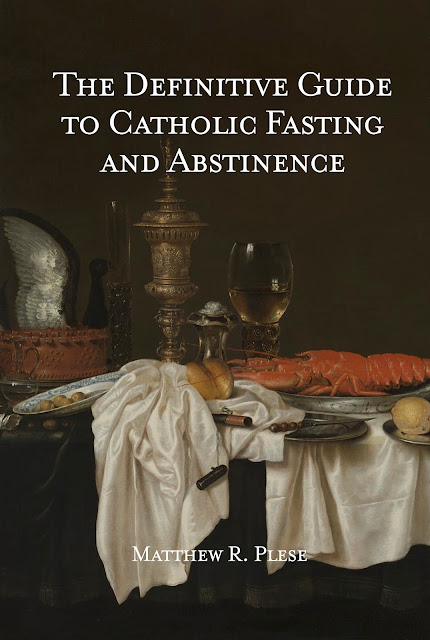

2. I do not believe my food allergy was the cause. I have attended retreats in both retreat centers in Phoenix and in Connecticut before and they both happily honored my dietary request for no shellfish and to cook the dishes separately when shellfish were served.   
3. The real issue here is that the SSPX seems to think that modernism entered the Church in 1963 and that all practices in place in 1962 were good. They were not. Pope St. Pius X rightfully condemned modernism decades before. And part of that modernism was the New Church's allowing of meat to be eaten during the 40 days of Lent. To violate that abstinence is a sin regardless of what the SSPX thinks. I am not on a crusade to force SSPX priests or Mass-goers to abide by those laws, which are surely still valid, but your refusal to allow me to keep Catholic Tradition is the real reason I was not invited. The 1983 Code is not a valid Code. And I do not violate the traditional tenets of our Faith, including the Lenten abstinence rules. This is not my personal preference - this is true Church law. 
I have already pulled my financial support for the SSPX and will not be assisting at their chapels any further. It was made manifestly clear by the retreat house and by your response that I am not welcome.
No response was ever received. 

Why do I share this story? 

I share this because I know for many years, especially when I was newer to Traditional Catholicism, I viewed the SSPX has the epitome of pre-Vatican II Catholicism. However, after experiencing life in their chapels for many years I can say first-hand that I've met many priests who are extremely hard to talk to, dismissive, and lacking in charity. I still believe Archbishop Marcel Lefebvre was a hero, but that does not mean the modern SSPX is perfect.

In recent years, the resurgence of interest in the more traditional 1954 missal, with its octaves and untouched Holy Week ceremonies, has gained popularity in many Traditional Catholic groups but not in SSPX chapels. They continue to hold firm to the semi-modernized 1962 missal and 1961 breviary with the deletion or downgrading of dozens of feasts and octaves, not to mention the liberalizing 1962 Week reforms. To assert that the 1954 Missal is wrong, as I've heard in SSPX groups, is scandalous. But what is even more scandalous is the SSPX's views that the fasting and abstinence laws of 1962, which eliminated the Lenten fast and countless of other fasts on vigils, are to be observed. And even worse, if I were to observe the pre-1962 fasting periods I am refused admission to their retreat house.

The SSPX are not the embodiment of Catholic Tradition. I have met very committed Catholics who regularly attend SSPX chapels but I've found Catholic Traditions in other chapels and communities. I would advise great caution with accepting completely everything said by an SSPX priest, especially when their statements contradict pre-1962 Tradition or result in uncharitable actions towards others. We are all called to be missionaries of Traditional Catholicism and we do not do so by only preaching with fire and brimstone. We can save many by living a pre-Vatican II (that is pre-1960s lifestyle) and doing so in a way that shows others great love and charity and concern. 

My advice: do not attend an SSPX retreat and only attend an SSPX chapel if a Mass said according to the pre-1955 is not available.

Reject the 1962 Missal. Restore the 1954 Missal. Reject the 1983 Code of Canon Law. Observe the 1917 Code. Reject the modernistic fasting that was practiced in 1962, which Pope Benedict XIV surely would have condemned. Practice the traditional fasting done by our grandfathers and their grandfathers. 
Read more >>
Thursday, October 24, 2019
Mission Sunday

"Pere Marquete and the Indians" by Willhelm Lamprecht. Raynor Library, Marquette University. Public Domain. Source: Wikimedia Commons

Last Sunday, the second to last Sunday of October, was World Mission Sunday. Mission Sunday was created in 1926 by Pope Pius XI as a day of prayer for missions and for the Propagation of the Faith. An additional collect for the propagation of the faith was in the Tridentine Mass required to be said on World Mission Sunday

We should not underestimate the impact we can have on the missions and the conversions of pagan souls to the True Faith instituted by our Divine Lord.

One year after naming World Mission Sunday, Pope Pius XI in 1927 named both St. Francis Xavier and St. Therese of Lisieux as the patron saints of missions. St. Francis Xavier was a prolific missionary. Despite language problems, lack of funds, and resistance from the Europeans as well as the natives, he persevered. St. Francis converted more people in his life than anyone since the Apostle St. Paul. He baptized over 50,000 in 10 years, converted the entire town of Goa in India, and he labored long in Japan.

But why St. Therese of Lisieux, along with St. Francis Xavier? She died at the young age of 24, after spending several years in a cloistered monastery. She did not teach catechism, she did not baptize anyone, and she did not go on any foreign missionary trips. So why is she a co-patron of missions? Pope Pius XI recognized that prayer and the contemplative life were essential to support those who were active in the mission fields. St. Therese, in her own autobiography, wrote:
“Our vocation is not go to reap in the fields of the mature crops; Jesus doesn’t tell us: ‘Lower your eyes, look at the fields and go and reap’. Our mission is more sublime still. Here are Jesus’ words: ‘Lift your eyes and see. See how in heaven there are empty places, he asks you to fill them. You are my praying Moses on the mountain; request workers of me, and I will send them. I only wait for a prayer, a sigh of your heart! The apostolate of prayer, is it not so to say, higher than that of preaching? Our mission, as Carmelite, is one of forming evangelical workers that will save millions of souls whose mothers we will be”
We can join the work of St. Therese by praying on Mission Sunday and even daily for the conversion of non-Catholics, for the reversion of lapsed Catholics, and for the success of foreign missionaries. Missionaries are needed in both foreign lands and in many of our own cities and streets. We pray for all of them to be successful. We pray for the Lord to send more missionaries into the harvest.

Collect Prayer for the Propagation of the Faith:

O God, Who willest that all men should be saved and should come to the knowledge of the truth: we beseech Thee, send forth laborers into Thy harvest, and grant them grace to speak Thy word with all boldness, so that Thy word may spread swiftly and be glorified, and all nations may know Thee, the only God and Him Whom Thous hast sent: even Jesus Christ, Thy Son, our Lord: Who with Thee liveth and reigneth.
Read more >>
Wednesday, October 23, 2019
Formal vs. Material Heresy

Heresy is a mortal sin. As stated by the Baltimore Catechism: "The denial of only one article of faith will make a person a heretic and guilty of mortal sin, because the Holy Scripture says: 'Whosoever shall keep the whole law but offend in one point is become guilty of all'" (Q. 1171). Sadly, there are many in the Church today who are heretics - many in the hierarchy who are formal heretics and many of faithful lay Catholics in the pews who are led astray into material heresy.


The Catholic Church rightfully asserts and teaches that its doctrines are the authoritative understandings of the Faith taught by our Savior Jesus Christ and that the Holy Ghost protects the Church from falling into error when teaching these doctrines. To deny one or more of those doctrines, therefore, is to deny the faith of Christ entirely. Heresy is both the non-orthodox belief itself, and the act of holding to that belief. However, the Church makes several distinctions as to the seriousness of an individual heterodoxy and its closeness to true heresy. Only a belief that directly contravenes an Article of Faith, or that has been explicitly rejected by the Church, is labelled as actual "heresy."

An important distinction is that between formal and material heresy.

The difference is one of the heretic's subjective belief about his opinion. The heretic who is aware that his belief is at odds with Catholic teaching and yet continues to cling to his belief pertinaciously is a formal heretic. This sort of heresy is sinful because in this case the heretic knowingly holds an opinion that, in the words of the first edition of the Catholic Encyclopedia, "is destructive of the virtue of Christian faith ... disturbs the unity, and challenges the Divine authority, of the Church" and "strikes at the very source of faith." Material heresy, on the other hand, means that the individual is unaware that his heretical opinion denies, in the words of Canon 751, "some truth which is to be believed by divine and Catholic faith." The opinion of a material heretic may produce the same objective results as formal heresy, but because of his ignorance he commits no sin by holding it. The penalty for a baptised Catholic above the age of 18 who obstinately, publicly, and voluntarily manifests his or her adherence to an objective heresy is automatic excommunication ("latae sententiae") according to Can. 1364 par.1 CIC.

A belief that the church has not directly rejected, or that is at variance with less important church teachings, is given the label, sententia haeresi proxima, meaning "opinion approaching heresy." A theological argument, belief, or theory that does not constitute heresy in itself, but which leads to conclusions which might be held to do so, is termed propositio theologice erronea, or "erroneous theological proposition". Finally, if the theological position only suggests but does not necessarily lead to a doctrinal conflict, it might be given the even milder label of sententia de haeresi suspecta, haeresim sapiens, meaning "opinion suspected, or savoring, of heresy."

Source: Heresy in the Catholic Church
Read more >>
Friday, October 18, 2019
The Traditional Vigils and Feastdays of the Apostles


The Feasts of the Apostles as Holy Days

For over 100 years, the Holy Days of Obligation on the Universal Calendar have remained largely the same. But the number of Holy Days in previous times was significantly larger.

In 1911, Pope St. Pius X reduced the number of Holy Days of Obligation from 36 to 8, although which places observed the holy days were not uniform at all beforehand.  Shortly thereafter, the 1917 Code of Canon Law increased the number to 10 by adding back Corpus Christi and Ss. Joseph. Those ten on the Universal Calendar have remained the same ever since.

However, the Holy Days up until 1911 reveal something quite interesting as all of the feasts of the Apostles were Holy Days of Obligation on the Universal Calendar. The feasts of the Apostles were raised to public holidays in 932 AD as Father Weiser relates (p. 279).

The 36 Holy Days of Obligation on the Universal Calendar back in 1642 under Pope Urban VIII included:

1. Nativity of our Lord
2. Circumcision of our Lord
3. Epiphany of the Lord
4. Monday within the Octave of the Resurrection
5. Tuesday within the Octave of the Resurrection
6. Ascension
7. Monday within the Octave of Pentecost
8. Tuesday within the Octave of Pentecost
9. Most Holy Trinity
10. Most Holy Body of Christ
11. Finding of the Holy Cross
12. Purification of the Blessed Virgin Mary
13. Annunciation of the Blessed Virgin Mary
14. Assumption of the Blessed Virgin Mary
15. Nativity of the Blessed Virgin Mary
16. Dedication of St. Michael
17. Nativity of St. John Baptist
18. Ss. Peter and Paul
19. St. Andrew
20. St. James
21. St. John (the December feastday)
22. St. Thomas
23. Ss. Philip and James
24. St. Bartholomew
25. St. Matthew
26. Ss. Simon and Jude
27. St. Matthias
28. St. Stephen (the December feastday)
29. The Holy Innocents
30. St. Lawrence
31. St. Sylvester
32. St. Joseph
33. St. Anne
34. All Saints Day
35. The Principle Patrons of One’s Country, City, etc.

The Immaculate Conception of the Blessed Virgin Mary was added in 1708 so it not on 1642 list.

The Church, by reducing the number of Holy Days of Obligation, removed the feasts of the Apostles. And this has diminished their importance in the lives of the average Catholic. How many Catholics can even name all 12 Apostles? How many know the name of the traitor or the name of the Apostle who took his place? Catechesis has failed the modern Catholic.

Make a special effort to observe the feast of all of the Apostles by Mass attendance, if possible, or at least by praying the Collect prayer for their feastdays. You can also try to pray the Divine Office on their feastdays. And you should at the very least remember to implore their intercession on their feastdays.

Observing the Vigil of the Apostles

The term “vigil” is used in several ways.  It may refer to an entire day before a major feast day (e.g. the Vigil of Christmas is all day on Dec 24th). This kind of vigil is a feast day in itself. Before the changes to the Roman Calendar in 1955, nearly all feasts of the apostles were preceded by a special Vigil Day. And the Church put those days in place to help us prepare for the importance of a feast of an apostle. Sadly, the observance of fasting on the vigils of the apostles in many places disappeared back in the 1700s.

Note: A Mass with the Sunday propers and fulfilling one’s Sunday obligation that is anticipated on a Saturday evening is sometimes, though incorrectly, called a vigil. This practice though is a novelty and not part of Catholic Tradition, so I always encourage Catholics to never attend such “vigil masses” on Saturday evenings.

We have lost the importance of the feast of the apostles, I believe, in part due to losing the vigils. We can change that by observing those in our own prayer lives. And the same is true for the Vigil of the Immaculate Conception or the Vigil of All Saints (Halloween), traditional days when we would fast and abstain from meat, but which are neither found in the Novus Ordo calendar nor even in the 1962 Missal.

You can easily find online listings of the pre-1955 Catholic liturgical calendar which include these unique vigil days of preparation.
Read more >>
Tuesday, October 8, 2019
Book Review: Sapiens by Yuval Noah Harari

It is unfortunate that this book is so highly read by academics and elite business professionals ranging from those in Silicon Valley to Wall Street. Dr. Harari, an atheist, has written a book that is not only logically flawed but written in a way with only contempt for religious - especially Catholics. 

Writing for The Catholic Thing, Francis Beckwith summarizes the logical errors in some of the professor's thinking in his piece: Materialistic Dogmas and Bad Conclusions.

I picked up a copy of the book and flipped through only a few pages where I read some of the many attacks against the Catholic Faith including:

  • "The Catholic alpha male abstains from sexual intercourse and raising a family, even though there is no genetic or ecological reason for him to do so"
  • "The Catholic Church has survived for centuries, not by passing on a celebacy gene from one one to the next, but by passing on the stories of the New Testament and of Catholic canon law."
  • "According to this story, if a Catholic priest dressed in sacred garments solemnly said the right words at the right moment, mundane bread and wine turned into God's flesh and blood. The priest exclaimed 'Hoc est corpus meum' and hocus pocus - the bread turned into Christ's flesh...millions of devout French Catholics behaved as if God really existed in the consecrated bread and wine."
Firstly, Dr. Harari seems to forget that there is a reason for priests to abstain from sexual intercourse and raising a family so that they are more conformed to Christ's life, are able to focus entirely on ministry, and in fulfillment of Christ's own words (cf. Matthew 19:12)

Secondly, Canon Law was only first created by Pope St. Pius X in 1917. The Catholic Church exists to transmit the Faith as taught by Christ Himself and the Apostles and to transmit the Sacraments instituted by the Redeemer. It has not survived for centuries by passing on canon law. Any historian should find that claim absurd.

Thirdly, Dr. Harari's blasphemy against the Real Presence stands in sharp contrast to the many Eucharistic miracles confirming Transubstantiation (Miracle of Lanciano, Siena, Orvieto, etc) as well Christ's own words.

This atheistic work is both historically inaccurate, blasphemous, opposed to divine revelation, and founded on faulty logic. It is fit only for the trash heap or the burn pile.
Read more >>
Sunday, October 6, 2019
Why Women Cannot be Doctors of the Church

The title of "Doctor of the Church" is bestowed on certain individuals not only for their faith but for their skillful defense of it. The first saints given this title on September 20, 1295, by Boniface XIII included Saint Ambrose, Saint Augustine, Saint Jerome, & Saint Gregory the Great. The next added was St. Thomas Aquinas and since then has grown to include thirty-three saints.

In the post Vatican II Church, the attacks on Traditional Catholic views and beliefs include far more than just the Tridentine Mass. While it is praiseworthy to see more and more people seeking out and supporting the Traditional Latin Mass, it is disheartening to still see many of these groups believing some or many of the novelties that came after Vatican II.


What are these novelties? 

  • The Luminous Mysteries of the Rosary are one. They were invented by John Paul II in an attempt to change the Rosary which had been given in its 3 set of mystery format directly from the Blessed Virgin Mary. 
  • Other novelties include the drastic change in the canonization process in 1983 that cause reasonably doubt on the infallibly of modern canonizations, especially those of liberal popes like Paul VI who did all he could to abolish the Tridentine Mass.  
  • Another such novelty is the 1983 Code of Canon Law which reduced the Eucharistic Fast to only one hour, another change that Traditionalists need to reject.
But one novelty that few Traditionalists seem to care about is the addition of female saints to the list of Doctors of the Church. St. Teresa of Avila, St. Catherine of Siena, St. Thérèse of Lisieux, and St. Hildegard of Bingen were added to this list post Vatican II. And while their writings and work are certainly praiseworthy they cannot be called Doctors of the Church. To do so would be a violation directly against apostolic teaching attested to by St. Paul and recorded in Sacred Scripture.

An explanation on this was some years ago penned by Bishop Richard Williamson on why recent Popes' actions to declare some women saints as Doctors of the Church is to be rejected against Catholic Tradition. I quote:
A few days ago I met in Rome a gracious Roman lady who asked me why in a sermon several years ago I had been opposed to the papal declaration of St. Catherine of Sienna as a Doctor of the Church. The problem, I replied, lies in the confusion of roles. 
Recent Popes have declared three women Saints to be Doctors of the Church: Catherine of Sienna, Theresa of Avila and Therese of Lisieux. Now no Catholic in his right mind would call in question either the orthodoxy or the great usefulness of each of their writings. We have only to thank God for their inspired and intuitive wisdom. Nevertheless for the Pope to declare them Doctors, i.e. teachers, is to encourage Catholic women to set up in public as teachers. St. Thomas Aquinas (IIa IIae, 177, art 2) has three reasons against this. 
Firstly he quotes St. Paul (II Tim II, 12): “I suffer not a woman to teach, nor to use authority over the man: but to be in silence.” St. Thomas distinguishes here public from private teaching: in the home a mother must teach her children, in a quasi-domestic setting a woman may well teach, especially girls and little boys. 
Secondly, any woman set up in public view is liable to arouse unclean desire in men.
Thirdly, “women in general are not so perfect in wisdom as to be entrusted with public teaching.”

I hope more Traditionalists will seek to live an authentic Traditional Catholic life which is not focused merely on the exteriors of the Mass but on the Faith itself. And that Traditional Faith is still under assault even from priests in the FSSP, Institute of Christ the King, SSPX, or other Traditional groups. Reject the Luminous Mysteries, reject the modernized fasts enshrined in the 1983 Code of Canon Law, and reject the title of Doctor of the Church being given to female saints. 


Seek to live out the Catholic Faith in the same manner (i.e. the Mass) but also with the same beliefs as our grandfathers and their grandfathers. The Catholic Faith cannot change because God does not change. What was true in the past must be true now. And if St. Paul's teachings were true in the past, they must be true now. We cannot change what is of apostolic origin.
Read more >>
Thursday, September 26, 2019
Blessed Dalmatius Monerio

Beloved Dominican Saints, a painting by Bernadette Carstensen, commissioned by the St. Joseph Province for the 800th jubilee of the Order of Preachers, portrays 24 Dominican saints and blesseds. St. Dominic, the founder, appears kneeling in the center left. Image courtesy of the artist, Bernadette Carstensen, © Dominican Province of St. Joseph, 2015

Today in the Dominican Order, the Feast of Blessed Dalmatius is celebrated. Little information exists for this truly heroic saint online aside from the text from the Short Lives of the Dominican Saints published originally in 1901.  As the life of this truly holy man is worth imitating, here is an excerpt from that book:
Blessed Dalmatius Moner was born of pious and respectable parents at a small town in Catalonia, about A.D. 1291. From childhood he was distinguished for innocence and piety. He received a good education at Girona, which was completed at the University of Montpellier. Entering the Dominican Order at the age of twenty-five, he made it his lifelong study perfectly to conform his conduct to the requirements of the Rule and the Constitutions. He was employed for many years in teaching, but at length humbly resigned this office from a desire to devote himself more closely to the service of God. 
Blessed Dalmatius led a life of extreme penance and mortification. He seldom ate anything but herbs and vegetables, almost raw, and in the burning heat of a Spanish summer would entirely abstain from drinking for as many as twenty consecutive days. His scanty rest was taken on the bare ground; he afflicted his body with continual fasts, disciplines, and other austerities, and devoted himself day and night to the exercises of prayer and contemplation.  Continue reading... 
Collect:

O God who didst make Thy humble servant Dalmatius glorious for many miracles and virtues, and didst wonderfully inflame him with Thy love, to the despising of all earthy things, grant, we beseech Thee, through his intercession, that we may be disengaged from all earthy affections and freed from all adversities, and have no desire but for the things of heaven. Through Christ our Lord. Amen.
Read more >>
Monday, September 23, 2019
Pope Francis: Man Must Obey the U.N.

Guest Post By David Martin

2000 years ago, Christ instituted the Roman Catholic Church with the commission that it enlighten all peoples on the path of salvation and provide a sure means of attaining it. As Christ sees it, the Roman Catholic Church is the one central world authority to which all peoples should be subjugated.

In 1945, the archenemies of Christianity founded the United Nations with the objective of destroying Christianity and submerging the world’s peoples under the tyranny of communistic one-world government. The U.N. today is that central world force that is generating the present day revolt against the Faith, with special emphasis on children’s rights, feminist rights, abortion rights, LGBT rights, and all the Masonic rights that were created to separate man from God. The U.N. asserts that these “rights” are to be respected everywhere by all peoples.

Pope Francis agrees. During a September 10 press conference on route to Rome from Madagascar, the pope insisted that when the United Nations speaks, man must listen.
“When we acknowledge international organizations and we recognize their capacity to give judgment, on a global scale—for example the international tribunal in The Hague, or the United Nations—If we consider ourselves humanity, when they make statements, our duty is to obey … We must obey international institutions. That is why the United Nations were created.” 
So according to Francis, when the U.N. says that homosexuals must be free to express their sexual orientation and that women must be guaranteed their right to abortion, the world must obey. Hard to believe? Let us not forget that the pope on several occasions has invited U.N. abortion advocates like Jeffery Sachs and Ban Ki moon to speak at the Vatican concerning their Sustainable Development Goals of making “mother earth” a safer place through population control.

On April 29, 2015, the Vatican officially endorsed their United Nations Goals (SDGs), which include contraception, abortion, and euthanasia. Moreover, the pope in May 2019 was calling for a supranational, legally constituted body to enforce these U.N. Sustainable Development Goals.

Since his election, Francis has advocated that we look to this global elite for our instruction, as expressed in his encyclical Laudato Si: “There is urgent need of a true world political authority.” Wasn’t the authority of the King of kings good enough? The U.N. is the infamous brood of vipers that is perverting the nations and bringing them to a collision course, so why is Francis commending the flock of Christ to them?

Francis Executing Internationalist Plan

It is no secret that the U.N. was founded in 1945 by the CFR members of the Illuminati, a satanic secret society that works conjointly with the Freemasons. What these internationalists advocate is a universal break from the past and a merger of all peoples into an ecumenical one-world government/religion, which the Second Vatican Council was instrumental in advancing. Pope Francis advocates this departure from the past and merger with other religions, which has elicited praise from globalists and Freemasons the world over.

For instance, In July 2013, commemorating his friend and late Cardinal Ersilio Tonini, the Masonic Grand Master Gustavo Raffi (Grand Orient of Italy) launched this tribute to Pope Francis:
“Humanity today is poorer and poorer, as is also the Catholic Church. But the one of Pope Francis is a church that promises to be respectful of the otherness and to share the idea that the secular state promotes peace and coexistence of different religions.”
On September 21, 2013, during the celebrations by the Freemasons of the Grand Orient of Italy, Grand Master Gustavo Raffi also stated, inter alia:
“Pope Francis launches messages of humanity that are in tune with what we have been saying for years….This is a living Masonry, talking to people [in dialogue].” [One Peter Five]
On and on the praises go, the reason being that this pope from the beginning has done the bidding of Freemasons to down-talk Church tradition, even dubbing “schismatic” those who hold tenaciously to the old teachings, while continually emphasizing that we move forward with this Masonic plan to unite the Catholic Church with the world. 

Pope Calling for “Global Pact” for a “New Humanism”

And now the pope acting as a U.N. pawn has announced he is hosting an initiative for a “global pact” to create a “new humanism.”

“A global educational pact is needed to educate us in universal solidarity and a new humanism,” Francis said in a recent video message to launch the initiative. Pope Francis invites religious, political leaders to sign ‘Global Pact’ for ‘new humanism’  As if Christ didn’t already give us the solution for world peace and unity! The implication is that Christ’s instruction through tradition is ineffective so that this new humanism is now needed.

What is needed is a universal return to God and His Divine Laws, which means a universal rejection of the secular humanism that Francis is peddling for his global masters. He cannot bow to Jesus Christ and to globalists at the same time. He cannot advocate a new church of man and be truly Catholic at the same time. For our unity is with Christ, not with the world.

What Christ requires of the hierarchy is that they reject humanism and restore His Church to its former position of honor as it stood before Vatican II. For the Freemasons infiltrated Vatican II and engendered the new order of change that is fast coming to a head under Francis, so our duty as Catholics is to resist this new order of temptation and to remain ever faithful under siege, remembering the exhortation of St. Paul for withstanding these days of Antichrist:

“Therefore, brethren, stand fast; and hold the traditions which you have learned, whether by word, or by our epistle.” (2 Thessalonians 2:14)
Read more >>


Copyright Notice: Unless otherwise stated, all items are copyrighted under a Attribution-NonCommercial-NoDerivatives 4.0 International License. If you quote from this blog, cite a link to the post on this blog in your article.

Disclosure of Material Connection: Some of the links on this blog are “affiliate links.” This means if you click on the link and purchase the item, I will receive an affiliate commission. As an Amazon Associate, for instance, I earn a small commission from qualifying purchases made by those who click on the Amazon affiliate links included on this website. I am disclosing this in accordance with the Federal Trade Commission’s 16 CFR, Part 255: “Guides Concerning the Use of Endorsements and Testimonials in Advertising.”