Showing posts sorted by relevance for query Lent. Sort by date Show all posts
Tuesday, March 7, 2006
Stational Churches

St. Ignatius Church, Rome, Italy (c) A Catholic Life Blog, 2016

Stations of Lent:

Ash Wednesday
Thursday after Ash Wednesday
Friday after Ash Wednesday
Saturday after Ash Wednesday

First Sunday of Lent
Monday in the First Week of Lent
Tuesday in the First Week of Lent
Wednesday in the First Week of Lent
Thursday in the First Week of Lent
Friday in the First Week of Lent
Saturday in the First Week of Lent

Second Sunday of Lent
Monday in the Second Week of Lent
Tuesday in the Second Week of Lent
Wednesday in the Second Week of Lent
Thursday in the Second Week of Lent
Friday in the Second Week of Lent
Saturday in the Second Week of Lent

Third Sunday of Lent
Monday in the Third Week of Lent
Tuesday in the Third Week of Lent
Wednesday in the Third Week of Lent
Thursday in the Third Week of Lent
Friday in the Third Week of Lent
Saturday in the Third Week of Lent

Laetare Sunday
Monday in the Fourth Week of Lent
Tuesday in the Fourth Week of Lent
Wednesday in the Fourth Week of Lent
Thursday in the Fourth Week of Lent
Friday in the Fourth Week of Lent
Saturday in the Fourth Week of Lent

Passion Sunday
Monday in the Fifth Week of Lent
Tuesday in the Fifth Week of Lent
Wednesday in the Fifth Week of Lent
Thursday in the Fifth Week of Lent
Friday in the Fifth Week of Lent
Saturday in the Fifth Week of Lent

Palm Sunday
Monday in Holy Week
Tuesday in Holy Week
Wednesday in Holy Week
Holy Thursday
Good Friday
Holy Saturday

Stations of Easter Week:

Easter Sunday: Saint Mary Major
Easter Monday: Saint Peter’s in the Vatican
Easter Tuesday: Saint Paul outside the Walls
Easter Wednesday: Saint Laurence Outside the Walls
Easter Thursday: Twelve Apostles
Easter Friday: Saint Mary of the Martyrs (the Pantheon)
Easter Saturday: Saint John in the Lateran
Low Sunday, the Octave Day of Easter: Saint Pancras on the Janiculum Hill

Stations from Ascension through Pentecost:

Ascension Thursday: Saint Peter’s in the Vatican
Saturday, the Eve of Pentecost: Saint John in the Lateran
Pentecost Sunday: Saint Peter’s in the Vatican
Pentecost Monday: Saint Peter’s in Chains
Pentecost Tuesday: Saint Anastasia
Pentecost Wednesday: Saint Mary Major
Pentecost Thursday: Saint Lawrence outside the Walls
Pentecost Friday: Twelve Apostles
Pentecost Saturday: Saint Peter’s in the Vatican

Stations of Advent:

First Sunday of Advent: Saint Mary Major (on the Esquiline Hill)
Second Sunday of Advent: Holy Cross in Jerusalem
Third Sunday of Advent: Saint Peter’s in the Vatican
Wednesday: Saint Mary Major (on the Esquiline Hill)
Friday: Twelve Apostles (near Piazza Venezia)
Saturday: Saint Peter’s in the Vatican
Fourth Sunday of Advent: Twelve Apostles (near Piazza Venezia)

Stations of the Christmas Season:

First Mass of Christmas at Midnight: Saint Mary Major (in the Chapel of the Crib)
Second Mass of Christmas at Dawn: Saint Anastasia
Third Mass of Christmas at Midnight: Saint Mary Major (on the Esquiline Hill)
December 26rd: Saint Stephen on the Celian Hill
December 27th: Saint Mary Major
December 28th: Saint Paul outside the Walls (on the Ostian Way, Metro ‘San Paolo’)
January 1st: Saint Mary in Trastevere
January 6th: Saint Peter’s in the Vatican
Read more >>
Sunday, February 26, 2012
Stational Churches of Lent

Our modern observance of the stational liturgy traces its roots back to the practice of the Bishop of Rome celebrating the liturgies of the church year at various churches throughout the city, a tradition dating back as far as the late second or early third century. One reason for this was practical: with the church in Rome being composed of diverse groups from many cultures, regular visits by the bishop served to unify the various groups into a more cohesive whole. Another reason, particularly following the legalization of Christianity in A.D. 313 which permitted public worship, was to commemorate certain feast days at churches with a special link to that celebration. Therefore, Good Friday came to be celebrated at the Basilica of the Holy Cross in Jerusalem and Christmas at St. Mary Major, where a relic of the manger was venerated. In time, the original churches in the city, known as tituli (sing. titulus) because they often bore the name of the donor, took on an additional significance as the places that held the relics of the martyrs and the memory of the early history of the church in this city.1

As time passed the schedule of these visits, which had earlier followed an informal order, took on a more formalized structure. By the last half of the fifth century, a fairly fixed calendar was developed, having the order of the places at which the pope would say Mass with the church community on certain days throughout the year. In the weeks before the beginning of Lent, the three large basilicas outside the walls were visited, forming a ring of prayer around the city before the season of Lent began. During Lent, the various stations were originally organized so that the Masses were held in different areas of the city each day. During the octave of Easter the stations form a litany of the saints, beginning with St. Mary Major on Easter Sunday and continuing with St. Peter, St. Paul, St. Lawrence, the Apostles, and the martyrs.2

The liturgy of these Masses had several elements, many of which developed over time. According to the structure of the late first millennium, the people would gather in mid-afternoon with the pope at one church, known as the collectum. There, after some prayers, the group would move in procession to the statio, at which Mass would be said. The use of the term statio for this ending point has a connection with the practice of fasting on these days. The Christians of this time made a comparison of their fasting and prayer during Lent with the guard duty of soldiers, seeing their actions as something to be approached with a similar seriousness of purpose. The term statio came to be applied to the Eucharistic celebrations that took place on fast days. Later the term came to be used for all churches at which the major liturgical celebration in the city was to be held on a certain day.3

The order of the stations, originally organized in the fifth century, would undergo several changes over the following three centuries. The current order was essentially fixed by the time of the Council of Trent. Over the last several centuries, two of the original stations have been lost, although most older liturgical books still list their name as the station for their original day. The church of St. Augustine has taken the place of St. Tryphon, an older church which once stood on a nearby site. The second lost church is that of St. Cyriacus, which originally stood near the Baths of Diocletian. Having fallen into ruin, its stational day was transferred to Santa Maria in Via Lata, possibly because a monastery, also dedicated to St. Cyriacus, once stood behind this church. The other churches have not passed the centuries without their difficulties either: many have been destroyed and rebuilt; some fell into ruins, being saved only when on the verge of final collapse; all have been modified in various ways throughout the ages. Yet what remains through all the changes is the memory of those past Christians who worshiped at these places. While other cities, such as Jerusalem, Constantinople, and Milan once had similar stational liturgies, Rome is the only city in which these continue in some regular form. Therefore, just like the writings of the Fathers of the Church and the art of the early Christian era, the stational cycle comes down to us as a monument of the early church, a living connection to those days when the witness of the martyrs was still fresh and the echo of the apostles’ voices could still be heard in the city’s streets.
___________________
1Pp. 147-153
2 Pp. 153-158
3 Pp. 143-144; 161-162

Source: Pontifical North American College


Stational Churches:

Please join me in spiritually journeying to each of the Stational Churches this Lent.  Please bookmark this post and refer back to it.

Ash Wednesday
Thursday after Ash Wednesday
Friday after Ash Wednesday
Saturday after Ash Wednesday

First Sunday of Lent
Monday in the First Week of Lent
Tuesday in the First Week of Lent
Wednesday in the First Week of Lent
Thursday in the First Week of Lent
Friday in the First Week of Lent
Saturday in the First Week of Lent

Second Sunday of Lent
Monday in the Second Week of Lent
Tuesday in the Second Week of Lent
Wednesday in the Second Week of Lent
Thursday in the Second Week of Lent
Friday in the Second Week of Lent
Saturday in the Second Week of Lent

Third Sunday of Lent
Monday in the Third Week of Lent
Tuesday in the Third Week of Lent
Wednesday in the Third Week of Lent
Thursday in the Third Week of Lent
Friday in the Third Week of Lent
Saturday in the Third Week of Lent

Laetare Sunday
Monday in the Fourth Week of Lent
Tuesday in the Fourth Week of Lent
Wednesday in the Fourth Week of Lent
Thursday in the Fourth Week of Lent
Friday in the Fourth Week of Lent
Saturday in the Fourth Week of Lent

Passion Sunday
Monday in the Fifth Week of Lent
Tuesday in the Fifth Week of Lent
Wednesday in the Fifth Week of Lent
Thursday in the Fifth Week of Lent
Friday in the Fifth Week of Lent
Saturday in the Fifth Week of Lent

Palm Sunday
Monday in Holy Week
Tuesday in Holy Week
Wednesday in Holy Week
Read more >>
Wednesday, February 22, 2012
Everything Lent

Please bookmark this post and/or share it via email, Facebook, Twitter, etc using the links at the bottom of this post.  This post is a collection of all of my past posts for Lent.  This is meant to be a guide for you to find prayers, devotions, and liturgical information for this holy season.


Q: Why are the forty days called Lent?

A: They are called Lent because that is the Old English word for spring, the season of the year during which they fall. This is something unique to English. In almost all other languages, its name is a derivative of the Latin term, or 'the forty days.' Lent is a time in the Church year lasting forty days (excluding Sundays) from Ash Wednesday to Holy Thursday. It is a period of penance leading up to the joy of Easter.

Words to contemplate throughout Lent: "All things, even humiliation and death, help to save us."

General Lenten Information:

The Origin of Lent
The Purpose of Lent according to Monsignor Massimo Camisasca
Isaiah 53:4-6

Fasting & Abstinence:

Fasting and Abstinence Rules
History of Lenten Fasting: How to Observe the Traditional Lenten Fast
Abstinence from Meat and Animal Products on Sundays in Lent

Prayers:

Fat Tuesday Prayer
Ash Wednesday Prayer
General Lent Prayer
Prayer to Our Lord Jesus Crucified
Stational Churches for Each Day of Lent
Lenten Prayer I
Lenten Prayer II
Prayer before a Crucifix
Stations of the Cross
Prayer for the Grace of the Passion
Prayer in the Steps of the Passion
Lenten Prayer of St. Ephraim
Litany of the Passion

Traditional Mass Propers:

Good Friday

Ash Wednesday:

What is Ash Wednesday, and what are the rules of this day?
Ash Wednesday Prayer
Ash Wednesday Traditional Mass Propers

Holy Week General Information:

Top Ten Suggestions for Holy Week
Palm Sunday
Spy Wednesday - Wednesday before Holy Thursday
Why Do We Celebrate Holy Thursday?
Holy Thursday Plenary Indulgence
Good Friday
Good Friday Indulged Prayer to the Cross
Good Friday Reproaches (Popule Meus) 
The passion of Our Lord Jesus Christ According to St. John (in Gregorian Chant)
Holy Saturday Sermon

Quotations/Letters/Documents:

The Dolorous Passion of Our Lord Jesus Christ
St. Benedict's Words on Lent
St. Leo the Great's Words on Lent
St. Leo the Great's Words on Charity
Advice from the St. Andrew Daily Missal
Pope Benedict XIV (1714) on the Strictness of Lent
Homily For Passion Sunday by Bishop Antoine Godeau

Scripture:

Isaiah 53:11b-12
Read more >>
Saturday, February 27, 2021
Abstinence from Meat & Animal Products on Sundays in Lent

It is a long-standing practice that fasting is never practiced on Sundays. However, is the same true for abstinence and how has this changed over the Church's history? And specifically, what is meant by abstinence as it concerns Sundays in Lent.

Fasting & Abstinence Defined

Before addressing these questions, a recap is in order of fasting as compared with abstinence. 

Fasting refers to how much food we eat. It means taking only one meal during a calendar day. The meal should be an average-sized meal as overeating at the one meal is against the spirit of the fast. Fasting generally means that the meal is to be taken later in the day. Along with the one meal, up to two snacks (technically called either collations or frustulum) are permitted. The collation became permitted around the 8th century and became widespread since the 14th century. The practice of an additional morning snack (called the frustulum) was introduced only in the 18th century around the time of St. Alphonsus as part of the gradual relaxation of discipline.

Abstinence in this context refers to not eating meat. Meat refers to the fleshmeat of mammals or fowl. Beef, poultry, lamb, etc are all forbidden on days of abstinence. Fish is permitted along with shellfish and other cold-blooded animals like alligators. In times past, days of fast were always days of abstinence as well; however, not all days of abstinence were days of mandatory fasting. Abstinence also during Lent prohibited lacticinia (i.e., animal by-products like cheese, butter, milk, or eggs) until only the 19th century (exceptions aside).

Lenten Fasting & Abstinence

The observance of Lent stretches back as far as Apostolic times. Lent was for centuries observed as forty days of fasting in the Roman Church with Sundays excluded. That is, from Ash Wednesday (since its institution) through Holy Saturday were days of fasting. And until the relatively modern era, days of fasting were by definition days of abstinence from meat. What is meant by abstinence here? Father Weiser in "Feasts and Customs":

"In a letter to Saint Augustine of Canterbury (604), Pope Saint Gregory the Great announced the final form of abstinence which soon became the law: 'We abstain from flesh meat and from all things that come from flesh, as milk, cheese, eggs' (and butter of course). For almost a thousand years this remained the norm of abstinence for all except those who were excused for reasons of ill health."

Thus, Lent was kept as forty days of fasting and forty-six days of abstinence (Durandus). However, we know that Sundays do not count towards the forty days of Lent and deserve special consideration.

Sunday Abstinence from Meat

Fasting on Sundays was never obliged and never encouraged in the Roman Church at any point in history. The Decretum Gratiani from the 12th century, which was a collection of canon law compiled at the time stated that “the fast is not to be lifted in Lent except on Sundays.” It also adds that Pope St. Gregory the Great in the 6th century specifically exempted Sundays in Lent and says the faithful distinguish themselves from some heretics who did fast on Sundays. It would not be appropriate to fast during Lent on a Sunday. 

However, abstinence is not the same as fasting and while fasting was neither obligatory nor encouraged on Sundays, abstinence was actually mandatory for centuries.

There is no question that during the holy season of Lent the faithful were obliged to abstain from meat. The first major weakening of discipline and rupture with the immemorial prohibition of meat during Lent came in 1741 when Pope Benedict XIV granted permission to eat meat on fasting days. This is where partial abstinence comes from - meat was allowed at the one meal but not during the collation. He also explicitly forbade the consumption of both fish and flesh meat at the same meal on all fasting days during the year, in addition to the Sundays during Lent. 

Beforehand, the forty days of Lent were held as days of complete abstinence from meat. Sundays in Lent, for centuries, were unequivocally days of abstinence from meat. On this point, historical evidence is unwavering. Now, for the first time, meat was permitted on Sundays in Lent.  

Sunday Abstinence from Animal Products

Besides meat though, abstinence even on the Sundays of Lent included animal products, for centuries. The Catholic Encyclopedia article on Lent states in part:

"From what has been said it will be clear that in the early Middle Ages Lent throughout the greater part of the Western Church consisted of forty weekdays, which were all fast days, and six Sundays. From the beginning to the end of that time all flesh meat, and also, for the most part, "lacticinia", were forbidden even on Sundays, while on all the fasting days only one meal was taken, which single meal was not permitted before evening."

The Modern Catholic Dictionary by Fr. John Hardon SJ, p. 306 explicitly states that lacticinia was avoided on the Sundays of Lent in the early middle ages: "Milk (Latin, lac) and milk products, e.g., butter and cheese, and eggs or animal products formerly prohibited during Lent, along with flesh meat. In the early Middle Ages, lacticinia was forbidden even on Sundays during the Lenten season."

However, the prohibition of animal products during Lent extended further than just the Middle Ages. Until the time of Pope Leo XIII, abstinence by definition included not only abstinence from meat but also generally from eggs and dairy products, though exceptions were granted in various localities. Father Anthony Ruff relates, in his article “Fasting and Abstinence: The Story,” the changes made by Pope Leo XIII in the document entitled Indultum quadragesimale:

“In 1886 Leo XIII allowed meat, eggs, and milk products on Sundays of Lent and at the main meal on every weekday [of Lent] except Wednesday and Friday in the [United States]. Holy Saturday was not included in the dispensation. A small piece of bread was permitted in the morning with coffee, tea, chocolate, or a similar beverage.”

Writing regarding the then-new 1917 Code of Canon Law, Rev. Charles Augustine, OSB in "A Commentary on the New Code of the Canon Law, Volume 6" stated the following regarding a subsequent change in discipline also under Leo XIII:

"The indult of Aug 3, 1887, granted by the Holy See reads: (a) The use of flesh meat, eggs, and lacticinia is allowed on every Sunday of Lent, at every meal, and on every Monday, Tuesday, Thursday, and Saturday of Lent at the principal meal, expect on the Saturdays of Ember week and Holy Week. There is added a clause forbbding the promiscuous use of meat and fish; this clause is now abolished by can. 1251§ 2 (b) Lacticinia and eggs are permitted on every day of Lent on which no flesh meat is allowed at the mail meal and lunch (supper)... (e) Lard or fat may be used for cooking. No indult required. (f) Those exempt from the law of fasting may eat flesh meat, eggs, and lacticinia several times a day on all days on which their use is permitted to all the faithful (as on the Sundays of Lent)." 

The Catechism of Father Patrick Powers, published in Ireland in 1905, mentions that abstinence includes refraining from flesh meat and “anything produced from animals, as milk, butter, cheese, eggs.” However, Father Patrick notes, “In some countries, however, milk is allowed at collation.” The United States was one of those nations, whereas Ireland and others were not granted such dispensations. Fr. Francis Weiser in "Handbook of Christian Feasts and Customs" from 1952 some clarification on those regional exceptions:

"Abstinence from lacticinia (milk foods), which included milk, butter, cheese, and eggs, was never strictly enforced in Britain, Ireland, and Scandinavia because of the lack of oil and other substitute foods in those countries. The Church using common sense granted many dispensations in this matter in all countries of Europe. People who did eat the milk foods would often, when they could afford it, give alms for the building of churches or other pious endeavors."

The Irish Ecclesiastical Record from 1881 further confirms the prohibition against animal products up until the time of Pope Leo XIII:

"The Fast of Lent includes the obligation of abstinence in its strictest form; so that where its rigour has not been tempered by usage or by dispensation, the use even of lactincinia, as well as of eggs or meat, is absolutely prohibited, even at the principal meal, on every day in Lent."

The Record further elaborates specifically and clearly on Sundays in Lent:

"But although the Sundays in Lent are not fasting days, there can be no question that, by the common law of the Church, they are days of most rigorous abstinence. By referring to any theological treatise on the subject, it will be seen that the ecclesiastical law prohibits the use, not only of meat, but even of eggs and lactincinia, not merely on the forty fasting days of Lent, but on every day during the Lenten time, that is to say, on Sundays, as well as weekdays, from Ash Wednesday to Holy Saturday." 

As indicated above, it was not until the late 1880s that this changed. And in only a few more decades, the whole of Lent and all other days of obligatory fastings permitted animal products:

"The law of abstinence prohibits meat and soups made of meat but not of eggs, milks, and other condiments, even if taken from animals" (1917 Code, Canon 1252 § 4). [Translation taken from THE 1917 OR PIO-BENEDICTINE CODE OF CANON LAW in English Translation by Dr. Edward Peters]

Conclusion

While many more Catholics are becoming aware of what we have lost in regard to fasting and abstinence due to the weakening faith of the modern era, only recently have more Catholics become aware of just how far we have fallen. While I am happy to know of several Catholics who are this year observing Lent as forty days of fasting and abstinence, few were initially aware of just how much has changed with even Sunday penance during Lent.

Indeed, for centuries, Catholics marked the end of merriment with Mardi Gras and bade farewell to meat - the derivation of the word 'carnival' - and with meat, all that came from animals. In England, pancakes became a popular meal for using up all the eggs and milk which were forbidden throughout Lent. For this reason, Easter Eggs became popular as eggs would have only returned to diets on Easter Sunday. And remnants of this remain even to the present day since the Church prescribes specific blessings for eggs or meat on Holy Saturday in anticipation of their use on Easter Sunday.

To truly observe Lent as our forefathers observed it with great devotion, zeal, and discipline, we would do well to know that only the Lord's Resurrection on Easter brings the end to our discipline. While Sundays are a small reprieve on that journey, our penance remains until we hear the bells at Holy Mass sound once again during the Gloria and we celebrate the most important moment in the history of the world - when the soul of our Lord was reunited with His Body in the Resurrection. 

Please join me in observing this Lent as forty days of fasting and forty-six days (Sundays included) of abstaining from meat and lacticinia. 

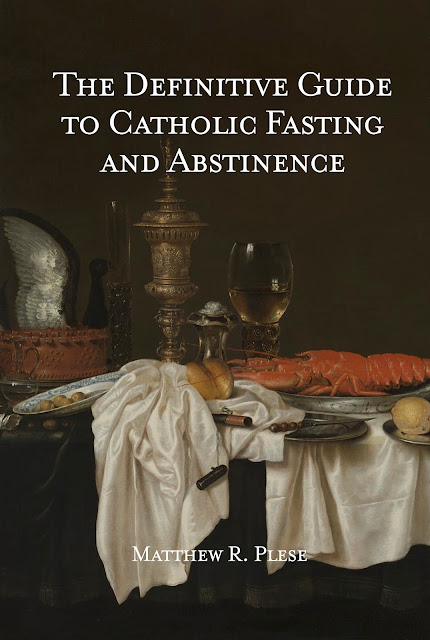
Want to learn more about the history of fasting and abstinence? Check out the Definitive Guide to Catholic Fasting and Abstinence.

Read more >>
Sunday, February 27, 2022
How the Traditional Latin Mass Reinforces Lent as a Fast

It is lamentable that so few Catholics keep the Traditional Lenten fast as practiced by our forefathers in the Faith for centuries. The Traditional Lenten fast - which was greatly watered down since the 1700s - generally constituted the following:

  • Fasting applies for those age 18 or older (but not obligatory for those 60 years of age or older)
  • Ash Wednesday and Good Friday: If possible, no solid food. Only black coffee, tea, or water.
  • Mondays through Saturdays: Only one meal preferably after sunset or at least until not before 3 PM. A morning frustulum and evening collation (i.e. the two "snacks") are permitted but not required. No meat or animal products are allowed for anyone, regardless of age - that included even fish in the Early Church.
  • Sundays: No meat or animal products allowed. Abstinence remained on Sundays even when fasting did not.
  • Holy Week (except Good Friday which is covered above): Only Bread, Salt, and Herbs are permitted for the main meal. Frustulum and collation permitted (of bread, herbs, and salt) but omitted if possible.
  • Holy Saturday: No food until Noon. Abstinence including from all animal products continues until Easter begins.

While we have happily seen an increase in the number of Traditional Latin Masses offered over the past decade, few Catholics have promoted a return to the fasting that our ancestors knew and practiced religiously. In fact, even the rules in place as of 1962 are substantially harder than what the average Catholic observes today. The laws of fasting and abstinence were as follows, as described in Moral Theology (copyright 1961) by Rev. Heribert Jone and adapted by Rev. Urban Adelman, for the “laws and customs of the United States of America”:

“Complete abstinence is to be observed on all Fridays of the year, Ash Wednesday, the Vigils of Immaculate Conception and Christmas. Partial abstinence is to be observed on Ember Wednesdays and Saturdays and on the Vigil of Pentecost. Days of fast are all the weekdays of Lent, Ember Days, and the Vigil of Pentecost.”

One highly interesting liturgical facet particular to the season of Lent is that every Lenten feria has its own propers. That is, each day of Lent has its own Introit, Collect, Epistle reading, Gospel reading, Offertory verse, Communion verse, and Post Communion Prayer. Lent further adds a prayer over the people immediately after the Post Communion. Dom Gueranger notes:

"Each feria of Lent has a proper Mass; whereas, in Advent, the Mass of the preceding Sunday is repeated during the week. This richness of the lenten liturgy is a powerful means for our entering into the Church's spirit, since she hereby brings before us, under so many forms, the sentiments suited to this holy time... All this will provide us with most solid instruction; and as the selections from the Bible, which are each day brought before us, are not only some of the finest of the sacred volume, but are, moreover, singularly appropriate to Lent, their attentive perusal will be productive of a twofold advantage."

Now the actual text of the Lenten Masses underscores the importance of the Lenten fast and repeatedly refers to the fasting done by the Faithful at this time. The Church in Her liturgy assumes and expects the Faithful in attendance at the Traditional Latin Mass to at least be keeping the fasting rules in place as of 1962 - if not the more robust fasting practiced before the mitigations of the preceding centuries.

The Preface for instance not only underscores the ongoing 40-day bodily fast but also mentions some of the benefits of this healing remedy:

It is truly meet and just, right and for our salvation, that we should at all times and in all places give thanks to Thee, holy Lord, Father almighty, eternal God: Who by this bodily fast dost curb our vices, lift our minds, strength and rewards bestow; through Christ our Lord. Through Whom Angels praise Thy Majesty, Dominations worship, Powers stand in awe. The Heavens and the hosts of heaven with blessed Seraphim unite, exult, and celebrate. And we entreat that Thou wouldst bid our voices too be heard with theirs, singing with lowly praise...

The collect for Ash Wednesday also highlights that day as the beginning of the fast of Lent and not a mere one day fast:

Grant, O Lord, to Thy faithful people, that they may undertake with fitting piety this period of fasting, and complete it with steadfast devotion.

The collect for Friday after Ash Wednesday for instance continues the reference to the Lenten fast:

Further with Thy gracious favor, we beseech Thee, O Lord, the fasts which we have begun: that the bodily observance which we keep, we may be able also to practice with sincere intention. 

And likewise with the collect for Saturday after Ash Wednesday:

O Lord, hearken to our supplications: and grant that we may celebrate with devout service this solemn fast, which Thou hast ordained for the healing both of soul and of body.

In the Mass Propers for the First Sunday of Lent, fasting is referenced in the Epistle while the Gospel reading recounts our Lord's forty days of fasting in the desert. And the collect, while not mentioning fasting, does mention abstinence, as our ancestors regularly kept abstinence even the Sundays of Lent up until the 1800s:

O God, Who dost purify Thy Church by the yearly observance of Lent: grant to Thy household, that what we strive to obtain from Thee by abstinence, we may achieve by good works.

Likewise, in the Divine Office, the ordinary of Lent refers to the bodily fast of Lent. It is a known peculiarity to the traditional Breviary that the ordinary of the Lenten season only begins with First Vespers for the First Sunday in Lent. The first four weekdays of Lent use the ordinary for time throughout the year, a holdover from ancient times before Ash Wednesday was established as the beginning of Lent. 

Starting therefore on the First Sunday of Lent, the prayers of the Breviary further underscore the traditional Lenten fast. In the hymn for Matins for this time, the hymn implores us to keep the Lenten fast. This hymn begins as follows:

The fast, as taught by holy lore, We keep in solemn course once more: The fast to all men known, and bound In forty days of yearly round. 

The law and seers that were of old In diverse ways this Lent foretold, Which Christ, all seasons’ King and Guide, In after ages sanctified. 

More sparing therefore let us make The words we speak, the food we take, Our sleep and mirth, —and closer barred Be every sense in holy guard. 

Avoid the evil thoughts that roll Like waters o’er the heedless soul; Nor let the foe occasion find Our souls in slavery to bind.

The little chapter of Terce taken from Joel 2:12-13 refers to fasting as does the antiphon of Sext: "With the armor of justice let us give ourselves to much patience and fasting." And the same can be seen in the hymn of Vespers which begins as follows:

O kind Creator, bow thine ear 

To mark the cry, to know the tear 

Before thy throne of mercy spent 

In this thy holy fast of Lent.

Turning again to the propers for the Mass, the references to fasting continue repeatedly and include the collect of Monday in the First Week of Lent; the Lesson, Collect, and Gospel for Ember Wednesday in Lent; the collect for Monday, Wednesday, Thursday, Friday, and Saturday in the Second Week of Lent; the secret prayer for Thursday in the Second Week of Lent; and more. The collect for Friday in the Second Week of Lent for instance prays:

Grant, we beseech Thee, O Almighty God, that cleansed by this holy fast, we may arrive in the right dispositions at the holy feast which is to come.

By the third week of Lent the references continue to refer to the ongoing fast of Lent as expressed for instance in the collect for Monday in the Third Week of Lent:

Pour forth in Thy mercy, O Lord, we beseech Thee, Thy grace into our hearts: that as we abstain from bodily food, so we may also restrain our senses from hurtful excesses.  

The collect two days later on Wednesday asks pardon from God for those who are undertaking "wholesome fasting" who also "abstain from harmful vices."

Abstinence is explicitly mentioned in the collect for Thursday in the First Week of Lent. And temperance - which is strengthened by both fasting and abstinence - is mentioned by name in the collect on Tuesday of the Third Week of Lent. 

The Gradual on Thursday in the Third Week of Lent, which is the exact middle of the Lenten fast, is taken from Psalm 144 and references God providing "meat in due season," which is certainly a reference to the upcoming celebration of the Lord's Resurrection on Easter Sunday when abstinence ends. Hence, by the time Lent reaches its midpoint, the faithful have heard either exhortations or references to fasting in the collects over a dozen times. And it does not end there as the next day's collect on Friday in the Third Week of Lent asks God to "bless our fasts" with His gracious favor as "in body we abstain from food, so we may fast from sin in mind." Similar words occur in the collect for Saturday in the Third Week of Lent.

This is a mere sampling. References to fasting continue. In one more example, the collect for Wednesday in the Fourth Week of Lent prays:

O God, who through fasting grantest to the just the reward of their merits and to sinners forgiveness: have mercy on Thy clients, that confession of our guilt may enable us to obtain pardon for ours sins.

When Passiontide begins on the Fifth Sunday in Lent, the focus in the Breviary and the Mass shifts from the corporal punishment we bear for our sins to an awareness of the suffering we cause our Lord. But even with this focus change, fasting references do not end as seen in the collect for Monday of Passion Week:

Hallow our fasts, we beseech Thee, O Lord: and mercifully grant us the forgiveness of all our faults.

Consequently, the Church in Her Liturgy through both the propers of the Mass and through the Breviary references and expects the Christian faithful to be observing Lenten fasting and abstinence. These repeated references to the Lenten fast unequivocally illustrate how the Lenten fast should be kept by every one of fasting and/or abstinence age who attends the Tridentine Mass. To attend the Traditional Mass and to keep the watered-down, virtually non-existent fast prescribed in the 1983 Code of Canon Law would be schizophrenic. Keep the Traditional Lenten fast and all traditional fasts. 

And for those looking for ideas on what to make to eat on fasting days, the Lenten Cookbook produced by Sophia Institute Press has a section on vegan recipes that is worth checking out.

Read more >>
Sunday, February 19, 2023
The Importance of 40 Hours at the Beginning & End of Lent

 "I have fought a good fight, I have finished my course, I have kept the faith" (2 Timothy 4:7)

As we prepare to enter into the holy season of Lent, we should prepare to observe a strict routine of prayer, fasting, and almsgiving. Below are 13 articles worth reading at this time:

  1. Fasting and Abstinence Rules
  2. History of Lenten Fasting: How to Observe the Traditional Lenten Fast
  3. Why do we fast? St. Thomas Aquinas Explains
  4. Lenten Embertide Fast
  5. How the Traditional Latin Mass Reinforces Lent as a Fast
  6. Stational Churches for Each Day of Lent
  7. What is Ash Wednesday & what are the rules for this day?
  8. Read One Spiritual Book this Lent
  9. Book Recommendations for Lent
  10. 10 Traditional Catholic Charities: Almsgiving During Lent
  11. Each Feria Day in Lent has a Proper Mass
  12. Holy Communion in Lent: The Most Pleasing to God
  13. Printable Lent Preparation Guide

While it is important that we observe prayer, fasting (including abstinence from meat), and almsgiving throughout all of Lent, there should be a particular focus on beginning and ending Lent well. This can take the form of starting and ending with 40 intense hours.

Why 40 Hours?

40 hours is significant because Our Blessed Lord was dead for 40 hours before His Resurrection. 40 is also a number of completion as shown by His 40 day fast in the desert, the Great Flood which lasted 40 days, and the 40 years of wandering in the desert by the Chosen People after their deliverance from Egypt.

40 Hours is also connected with Mardi Gras immediately preceding Lent. As a result of the excesses of Fat Tuesday and the carnival season, the Church instituted the practice of observing the 40 Hours Devotion in front of the Blessed Sacrament. Father Weiser remarks:

In order to encourage the faithful to atone in prayer and penance for the many excesses and scandals committed at carnival time, Pope Benedict XIV, in 1748, instituted a special devotion for the three days preceding Lent, called ‘Forty Hours of Carnival,’ which is held in many churches of Europe and America, in places where carnival frolics are of general and long-standing tradition. The Blessed Sacrament is exposed all day Monday and Tuesday, and devotions are held in the evening, followed by the Eucharistic benediction.

The Church also instituted the Votive Feast of the Holy Face of Our Lord Jesus Christ Deformed in the Passion for the Tuesday after Quinquagesima (i.e., Fat Tuesday) as a means of making reparation for the sins of Mardi Gras. In fact, our Blessed Lord Himself asked for such reparation to His Holy Face in apparition to Mother Pierina in 1938:

See how I suffer. Nevertheless, I am understood by so few. What gratitude on the part of those who say they love me. I have given My Heart as a sensible object of My great love for man and I give My Face as a sensible object of My Sorrow for the sins of man. I desire that it be honored by a special feast on Tuesday in Quinquagesima (Shrove Tuesday – the Tuesday before Ash Wednesday). The feast will be preceded by novena in which the faithful make reparation with Me uniting themselves with my sorrow.

Start And End Lent Well

Beyond making reparation this Tuesday for the sins of Mardi Gras and the mortal sins of those who will violate the laws of fast and abstinence, we can start Lent well by observing a 40 hour fast. In fact, as St. Thomas Aquinas relates, the Lenten Fast at his time was characterized by no food taken on either Ash Wendesday or Good Friday, if possible. This is a significant sacrifice, far beyond the "one meal and two smaller meals" statement which most Catholics associate with fasting days.

Beyond beginning our Lenten fast with a 40 hour fast from all solid food, which should open our minds to heavenly things and allow us to perform penance, we should conclude Lent with the same vigour. In honor of the 40 hours our Blessed Lord's soul was separated from His Body in death, let us offer an intense beginning and end of Lent this year for the honor of God, as far as our health permits us to do so.

May God grant us the strength to begin and end well so that, like St. Paul, we may say: "I have fought a good fight, I have finished my course, I have kept the faith."

Want to learn more about the history of fasting and abstinence? Check out the Definitive Guide to Catholic Fasting and Abstinence.

Read more >>
Friday, February 21, 2020
Make Real Progress & Resolutions This Lent

Read more >>
Wednesday, March 8, 2023
Can I Eat Meat on St. Patrick's Day on a Friday in Lent?

Lent is the most solemn of all fasting times in the Church. From Apostolic times until 1741, meat was never allowed in Lent. Even after it was permitted at some meals, Fridays and Saturdays remained mandatory days of complete abstinence in Lent into the early 1900s. Friday in particular, the most solemn of all days on account of our Lord's death on the Cross on Friday, was a mandatory day of abstinence all year round (and it still is!) Up until the 1917 Code of Canon Law, meat was not even allowed on Holy Days of Obligation which fell on a Friday outside of Lent. The Friday fast, like Sunday Mass, is integral to Catholic life. This post is based heavily on the research which is incorporated in "The Definitive Guide to Catholic Fasting and Abstinence." Read the full book for much more information relevant to this topic.

Definition of Fasting vs. Abstinence

Fasting refers to how much food we eat and, historically, when we eat it. It means taking only one meal during a calendar day. The meal should be an average-sized meal as overeating at the one meal is against the spirit of the fast. Fasting generally means that the meal is to be taken later in the day. Along with the one meal, up to two snacks (technically called either a collation or frustulum) are permitted. These are optional, not required. Added up together, they may not equal the size of the one meal. No other snacking throughout the day is permitted. 

Abstinence in this context refers to not eating meat. Meat refers to the fleshmeat of mammals or fowl. Beef, poultry, lamb, etc are all forbidden on days of abstinence. Abstinence does not currently prohibit animal byproducts like dairy (e.g. cheese, butter, milk) or eggs, but in times past they were prohibited. Fish is currently permitted along with shellfish and other cold-blooded animals like alligators. In times past, days of fast were always days of abstinence as well; however, not all days of abstinence were days of mandatory fasting.

The Church's Law in 1917

The days of obligatory fasting as listed in the 1917 Code of Canon Law were the forty days of Lent (including Ash Wednesday, Good Friday, and Holy Saturday until noon); the Ember Days; and the Vigils of Pentecost, the Assumption of the Blessed Virgin Mary, All Saints, and Christmas. Partial abstinence, the eating of meat only at the principal meal, was obligatory on all weeks of Lent (Monday through Thursday). And of course, complete abstinence was required on all Fridays, including Fridays of Lent, except when a holy day of obligation fell on a Friday outside of Lent. Saturdays in Lent were likewise days of complete abstinence.

The Church's Law in 1962

By 1962, the laws of fasting and abstinence were as follows as described in "Moral Theology" by Rev. Heribert Jone and adapted by Rev. Urban Adelman for the "laws and customs of the United States of America" copyright 1961: "Complete abstinence is to be observed on all Fridays of the year, Ash Wednesday, the Vigils of Immaculate Conception and Christmas. Partial abstinence is to be observed on Ember Wednesdays and Saturdays and on the Vigil of Pentecost. Days of fast are all the weekdays of Lent, Ember Days, and the Vigil of Pentecost." If a vigil falls on a Sunday, the law of abstinence and fasting is dispensed that year and is not transferred to the preceding day. Father Jone adds additional guidance for the Vigil of the Nativity fast: "General custom allows one who is fasting to take a double portion of food at the collation on Christmas Eve (jejunium gaudiosum)."

The Modern Church Law

The National Conference of Catholic Bishops issued a statement on November 18, 1966. Abstinence was kept obligatory on all Fridays of Lent, except Solemnities (i.e. First Class Feasts), on Ash Wednesday, and on Good Friday. Abstinence on all Fridays throughout the year was "especially recommended," and the faithful who did choose to eat meat were directed to perform an alternative penance on those Fridays outside of Lent, even though the US Bishops removed the long-establish precept of requiring Friday penance. The document stated in part: "Even though we hereby terminate the traditional law of abstinence binding under pain of sin, as the sole prescribed means of observing Friday, we ... hope that the Catholic community will ordinarily continue to abstain from meat by free choice as formerly we did in obedience to church law." And finally, fasting on all weekdays of Lent was "strongly recommended" but not made obligatory under penalty of sin.

The 1983 Code of Canon Law largely took Paul VI's apostolic constitution aside from the modification of the age at which fasting binds. Per the 1983 Code of Canon Law, the age of fast was changed to begin at 18 - previously it was 21 - and to still conclude at midnight when an individual completes his 59th birthday. Friday penance is required per these laws on all Fridays of the year except on Solemnities, a dramatic change from the previous exception being only on Holy Days of Obligation.

Per the 1983 Code of Canon Law, fasting and complete abstinence per these rules are required only on Ash Wednesday and Good Friday. The notion of "partial abstinence," introduced under Pope Benedict XIV in 1741, was also removed. By this point, the days of obligatory fast had been reduced to merely two days. And most Catholics only abstained from meat on the 7 Fridays in Lent.

Fridays in Lent

Thus, even as the fast and abstinence requirements deteriorated, Friday abstinence remained mandatory on Fridays in Lent. To intentionally violate Friday abstinence is a mortal sin - it is not a small matter. In fact, in former times, Catholic nations made the sale of meat a crime as The Definitive Guide to Catholic Fasting and Abstinence discusses in the context of 16th century England.

History of St. Patrick's Day in Lent
    
For the Irish (and for Irish Americans), St. Patrick's Day is both a cultural milestone and, traditionally, a very significant spiritual day. Sadly, this element has also been lost, which is ultimately why so many feel it necessary to seek out dispensations from Friday abstinence on the feastday of a saint who, ironically, was a fearless champion of fasting!

The first record of dispensation from Lenten fast and/or abstinence on St. Patrick's Day was early in America's history at a time when all of Lent, aside from Sundays, were days of mandatory fasting for those between the ages of 21 and 60 (health exceptions aside). With the growing number of Irish immigrants to America in the early 1800s, special attention was given to dispense from fasting when St. Patrick's Day fell on a Friday. This was done for the members of the Charitable Irish Society of Boston in 1837 and would become customary in the United States. The dispensation granted in 1837 "was granted on the proviso that all diners gave a small sum to charity." But this was in Boston, which was an epi-center of Irish Americans.

Back in Ireland, St. Patrick's Day was a Holy Day of Obligation and still, without special dispensation, a day of mandatory fasting and abstinence. Interestingly, "The Catholic's Pocket Prayer-Book," published by Henri Proost & Co. in 1924, notes that for Australia and New Zealand, all days in Lent were days of fasting "except Sundays and St. Patrick's Day." The same pocket guide lists the days of fasting and abstinence for Ireland and lists no such exception. Yet even for Australia and New Zealand, no exception for abstinence existed on St. Patrick's Day in 1924.

The Dispensations for St. Patrick's Day in 2023


As St. Patrick's Day falls on a Friday this year, dioceses have already been granting dispensations or statements declining to do so. The responses so far, illustrated in an interactive graphic via the Catholic News Agency fall into the categories of: dispensation granted, dispensation granted only in certain situations (otherwise abstinence is binding under pain of mortal sin), or no dispensation. Follow the link for more detailed information as changes are happening on a daily basis.

Conclusion: The True Celebration of a Catholic, St. Patrick's Day

Despite the changes he introduced to Lenten fasting in 1741, Pope Benedict XIV implored:

"The observance of Lent is the very badge of the Christian warfare. By it we prove ourselves not to be enemies of the cross of Christ. By it we avert the scourges of divine justice. By it we gain strength against the princes of darkness, for it shields us with heavenly help. Should mankind grow remiss in their observance of Lent, it would be a detriment to God's glory, a disgrace to the Catholic religion, and a danger to Christian souls. Neither can it be doubted that such negligence would become the source of misery to the world, of public calamity, and of private woe."

Modern Lent is no longer a 40 day fast. The days of abstinence for the average Catholic are appallingly few (it used to be roughly 1/3 of the year!) We would be violating the entire spirit of Lent by availing ourselves even of a valid dispensation from Lenten abstinence. Dom Gueranger accordingly writes:

But it will be asked: “Are there, then, no lawful dispensations?” We answer that there are; and that they are more needed now than in former ages, owing to the general weakness of our constitutions. Still, there is great danger of our deceiving ourselves. If we have strength to go through great fatigues when our own self-love is gratified by them, how is it we are too weak to observe abstinence? If a slight inconvenience deters us from doing this penance, how shall we ever make expiation for our sins? For expiation is essential painful to nature.

It must be clearly stated there is no incompatibility between fasting and abstaining and celebrating the saints. Even Sundays of Lent used to be required days of abstinence (but not fast). Let us fast and abstain always on St. Joseph's Day, Annunciation Day, and St. Patrick's Day each year during Lent. Our adherence to and preservation of the Traditional Catholic Faith requires this. Even with the fast, it is possible to honor St. Patrick’s Day with a loaf of traditional Irish soda bread. Check your local bakery or grocery store and get a loaf to have at dinner.

As Catholics, we abstain on Fridays in Lent, just as we go to Mass on Sundays. As traditional Catholics, we must maintain Friday abstinence and should encourage everyone else to do so for the honor of God and for the glory of St. Patrick. Let us offer up additional prayers and penances this year on St. Patrick's Day for the many who will mortally sin against our Lord and mock His sacrifice on the Cross by eating meat. While it may seem to be a small offense, it was the eating of a forbidden fruit that brought about original sin and the loss of paradise in the Garden of Eden. If we love God, surely we can say no to flesh meat on at least Friday in Lent. Right?
Read more >>
Sunday, February 19, 2012
20 Pious Practices for Lent: What Should I Give Up for Lent?

Our Lord tells us, as recorded in Scripture, "Unless you shall do penance, you shall all likewise perish" (Luke 13:3). And St. John the Baptist announced the coming of the Savior with the ominous admonition, "Do penance: for the kingdom of heaven is at hand." (Matt. 3:2).

With regard to prayer, St. Paul tells us to "Pray without ceasing." (1 Thess. 5:17). And Our dear Lord advises us, "Amen, amen I say to you: if you ask the Father anything in my name, he will give it you." (John 16:23). Also He said, "If you abide in me [i.e., "live in Me," or "stay in the state of grace"], and my words abide ["live"] in you, you shall ask whatever you will, and it shall be done unto you." (John 15:7). Further, Our Lord has said, "Watch ye, therefore, praying at all times, that you may be accounted worthy to escape all these things that are to come, and to stand before the Son of man." (Luke 21:36). And in the Book of Judith we read, "Know ye that the Lord will hear your prayers if you continue with perseverance in fastings and prayers in the sight of the Lord." (Judith 4:11).

Our obligation to do apostolic work, no matter who we are, is seen in the general admonition of St. John the Baptist, ". . .make straight the way of the Lord . . ." (In. 1:23; Is. 40:3). The Church has used this counsel in her Advent liturgy, so we know it applies to all—at least to the extent that all must pray and do penance for the success of the Church's missionary activity, help support it financially—and wherever possible take an active part in the conversion or reversion of those we know.

The primary purpose of Lent, of course, is to help us become truly holy—and we should work toward this goal during Lent by extra prayer, penance, good works, almsgiving, attendance at Mass and reception of the Sacraments (the chief sources of grace). When many Catholics neglect to practice Lent to the fullest, here are 20 ways to improve your Lent and to observe a Traditional Catholic Lent.

20 PIOUS PRACTICES FOR CATHOLICS TO PRACTICE DURING LENT:

1. Abstain from Meat

We should all know that Catholics are required to abstain from all meat on Ash Wednesday, Good Friday, and all the Fridays of Lent.  This is the minimum requirement and violation of this law is a mortal sin and, if you die without Confession and Contrition, for this sin your soul will be damned.

Yet, certainly, we can do more than the simple minimum practice for Lent.  Traditionally, Catholics would fast and partially abstain from meat all days of Lent, except for Fridays and Saturdays (which were full abstinence). By partial abstinence, a person can eat meat only at the major meal. Some Catholics will maintain the older practice of not only fasting but abstaining entirely from all meat on all 40 days of Lent, since even partial abstinence was a modern mitigation of the traditional fast that our forefathers in the Faith observed. See Fasting & Abstinence Rules for Lent.

This Lent resolve to abstain from meat all 40 days. You could even pick up the older custom of abstaining from all animal products (e.g. dairy, eggs, et cetera) and observing the strict Lenten abstinence of our ancestors. If you can not say no to meat or eggs or milk, how can you say no to sin?

2. Fasting

On Ash Wednesday and Good Friday, all Catholics are bound under pain of mortal sin to fast.  Those between 18 and 59 years of age are also bound to fast on these two days. Only one normal-sized meal and two smaller meals that do not equal the normal meal are allowed. Eating between meals, however, is prohibited although fruit juices and milk are allowed. This is the minimum under the current Code of Canon Law.

What should a pious Catholic do?   All days of Lent aside from Sundays were in times past observed with a strict fast. If you fast all of these days, you will have fasted the 40 Days of Lent, as Christ did in the desert. See Fasting & Abstinence Rules for Lent.

3. Limit (i.e. Remove) your Television During Lent

Even if you have not read Television: The Soul at Risk (and I do highly recommend it), television is by most accounts, an occasion of sin.  Limit your television to only a few hours a day for your entire family or - better yet - unplug it all together.  Television is a passive activity not only leading to obesity and passivity but allowing indecent speech and dress as well as suggestive dialogue and environments into our very homes.  Unplug it for Lent.  And think about keeping it unplugged afterward.

4. Daily Rosary

If you are not praying the daily Rosary, you should be. This was the central request of Our Lady of Fatima. On May 13, 1917, Our Lady told Lucia, Jacinta, and Francisco: "Say the Rosary every day to obtain peace for the world and the end of the war." In an apparition on July 13, she requested devotion to her Immaculate Heart and Communions of reparation on the first Saturday of each month. In a September 13th apparition, the Blessed Mother stressed the importance of the daily Rosary, and in her final apparition, she said, "I am the Lady of the Rosary." Pray the Rosary daily and use Lent to start if you need to.

So pray the Rosary daily and use Lent to start if you need to.

5. Wear the Brown Scapular

If you were not properly invested in the Brown Scapular (or if you are uncertain), find a traditional Catholic priest to be properly enrolled in the Confraternity of the Brown Scapular.  Recall that by the wearing of the Brown Scapular, Mary promises to pray for us at the hour of death. And more than that, she will intercede with God to obtain the graces we need to remain in the state of grace. And if we are in a state of mortal sin, she will intercede for us that sanctifying grace may come back into our soul before we die. Our Lady also promises that the Scapular will be “a safeguard in danger.”

While those who wear the Scapular are required to fast on Wednesdays and Saturdays in addition to the daily prayer of the Little Office of the Blessed Virgin Mary, priests nearly always dispense the Faithful to instead simply pray the Rosary Daily.

If you lost your Brown Scapular, simply purchase one online.  The Brown Scapular does not have to be blessed before it is worn, unlike most Sacramentals. Consider buying one for a family member who does not regularly wear one.

6. Saturday Devotions to the Blessed Virgin Mary

If you don't already, set aside the First Saturday of this and next month as a time for special reparation and prayers to the Mother of God.  See Saturday Devotions to the Blessed Virgin Mary for more ideas on how to sanctify this day.

7. Go to an extra Mass or more each week of Lent.

The Holy Sacrifice of the Mass is the greatest prayer there is. Sacrifice time and make the effort to attend the Traditional Latin Mass more often than just on Sundays.

8. Add a Holy Hour, once a week, twice a week, or each day. 

"If we really loved the good God, we should make it our joy and happiness to come and spend a few moments to adore Him, and ask Him for the grace of forgiveness; and we should regard those moments as the happiest of our lives" (St. John Vianney on Adoration of Jesus in the Most the Blessed Sacrament).

“Of all devotions, that of adoring Jesus in the Blessed Sacrament is the greatest after the sacraments, the one dearest to God and the one most helpful to us" (St. Alphonsus Liguori)

9. Pray for the Souls in Purgatory

We have an obligation to pray for our relatives and for anyone we may have harmed by our sins. A Rosary before the Blessed Sacrament after Mass is extremely efficacious for the Poor Souls and can lead to the gaining of a plenary indulgence—all other conditions for this being fulfilled.

We should pray fervently and frequently for the souls in Purgatory.  Start by adding the St. Gertrude Prayer to your daily prayers. Our Lord told St. Gertrude the Great that 1,000 souls would be released from Purgatory every time this is said. This prayer has now even been "extended to living sinners which would alleviate the indebtedness accrued to them during their lives."

Additionally, it should be widely promoted for the Faithful to ask the clergy to offer the Holy Sacrifice of the Mass with the intention of freeing the souls in Purgatory.  Many souls are released from Purgatory by the graces from the Mass.  Furthermore, we should seek to gain Indulgences for the souls in Purgatory. One such way to do so is by visiting a cemetery and saying a prayer for the dead.

Lastly, the souls in Purgatory are greatly aided when we offer our Holy Communions for them.  Make it a practice to offer your Holy Communion at least once weekly for the souls in Purgatory.


10. Pray for those in Danger of Dying

Such prayers should be offered to Our Lady to apply as she desires, for she sees clearly who really needs the extra graces at any given time.   

11. Pray for anyone you may have had the misfortune to lead into sin. 

Not only should you make prayers of reparation, but you must seek out these souls and seek to repair the damage.  Lent is an opportune time for this. 

12. Pray & Work for the End of Abortion

We should not neglect to pray for an end to abortion which robs children of life, brings excommunication on all those involved in the murder of the child, and bars the innocent life from Baptism and the beatific vision. Work to end abortion. Support pro-life charities that are in line with Catholic values this Lent.

13. Go to Weekly Confession

Confession is the only means that our Lord instituted for the forgiveness of sins.  If you are out of the habit of going regularly, now is the opportune time. Encourage others who have been away for awhile to use this time to receive true forgiveness.

14. Make an Examination of Conscience at Lunch and before Sleep

As recommended in the Spiritual Exercises of St. Ignatius, make your examination of conscience at lunch and then again before sleep.  At lunch, reflect on your words, thoughts, and deeds (or lack thereof) for each hour of the day up until then.  If you have sinned, make a sincere Act of Contrition.  Remember to confess these sins at your next Confession.  In the evening, again make an examination of conscience on each hour of the day starting with lunch until the present moment. This practice helps us notice trends in our life and helps us know what to confess.

15. Make Voluntary acts of Daily Penance

To Sr. Lucy of Fatima, Our Lord revealed that "The penance I now ask and require is that necessary for the fulfillment of My law and the performance of one's daily duties." 

16. Perform Good Works of Mercy
  • Increase your donation at Church.
  • Give to traditional monasteries and convents.
  • Support good traditional Catholic schools.
  • Support crisis pregnancy centers.
  • Support local soup kitchens.
  • Help those who are poor. 
17. Do Apostolic Work
18. Perform 15 minutes of Spiritual Reading Daily

Read from the Bible Daily or the Lives of the Saints.  The monks of the order of St. Benedict have long required spiritual reading by all of their members during Lent.  Spiritual reading helps us turn to the Lord and become deeper in our prayer life.  In the words of St. Thomas Aquinas, "Union with God consists in knowing God perfectly. For the better one is known, the more perfectly one is loved." There are many traditional Catholic books freely available online for reading.


19. Consecrate Your Life Each Day to God

Each day of Lent, pray and renew both your Consecration to the Sacred Heart of Jesus and your Consecration to the Immaculate Heart of Mary.

20. Talk as Little as Possible

Vain speech is of little avail for eternal life.  During Lent, mirror the practices of the religious orders and speak only when necessary. As said in the Rule of St. Benedict, "Indeed, so important is silence that permission to speak should seldom be granted even to mature disciples, no matter how good or holy or constructive their talk, because it is written: In a flood of words you will not avoid sin (Prov 10:19); and elsewhere, The tongue holds the key to life and death (Prov 18:21). Speaking and teaching are the master's task; the disciple is to be silent and listen"

BONUS: 21. Pray the Stations of the Cross

The Stations of the Cross are often prayed on Fridays at Catholic Churches during Lent. Make it a resolution to go each Friday to the stations. If you can't attend in person, you can still pray the Stations at home. Pray the Stations for instance by listening to Fr Benedict Groeschel's Stations of the Cross said for the benefit of the Poor Souls. Also, keep in mind the necessary requirements for earning an indulgence for the Stations of the Cross.

Conclusion

As you can see none of these practices included "giving up" candy, chocolate, dessert, et cetera.  There is a modern misconception that Lent is about dieting or about "giving up" time wasters in order to increase productivity.  This is not further from the Truth.  For those of you out there who think Lent is about getting in shape and increasing efficiency, "you have received your rewards" (cf. Matthew 6:5) and the discipline of Lent has done little to help your immortal soul.

This Lent, use the two and a half week period of Septuagesima leading up to Lent to get a plan in place. What sacrifices will you make? What alms will you give? What fasting and abstinence will you undertake? What additional prayers will you say?
Read more >>


Copyright Notice: Unless otherwise stated, all items are copyrighted under a Attribution-NonCommercial-NoDerivatives 4.0 International License. If you quote from this blog, cite a link to the post on this blog in your article.

Disclosure of Material Connection: Some of the links on this blog are “affiliate links.” This means if you click on the link and purchase the item, I will receive an affiliate commission. As an Amazon Associate, for instance, I earn a small commission from qualifying purchases made by those who click on the Amazon affiliate links included on this website. I am disclosing this in accordance with the Federal Trade Commission’s 16 CFR, Part 255: “Guides Concerning the Use of Endorsements and Testimonials in Advertising.”